Keywords
Partial adrenalectomy, total adrenalectomy, unilateral adrenal tumor, surgical outcome, clinical outcome

Partial adrenalectomy, total adrenalectomy, unilateral adrenal tumor, surgical outcome, clinical outcome
The adrenal gland is a triangle-shaped gland on the top of each kidney and consists of the cortex and medulla, which produce hormones, including glucocorticoids, mineralocorticoids, sex hormones, catecholamines, epinephrine, and norepinephrine.1,2 Enlargement of the adrenal gland, either benign or malignant, can alter hormone production. Approximately 55% of primary adrenal tumors are functional. Hyperfunctional tumors can be classified as tumors with Cushing’s syndrome, tumors with primary hyperaldosteronism, and tumors with adrenogenital syndrome.3
Based on the European Society of Endocrinology clinical practice guidelines for adrenal adenoma, the lesion is considered malignant if more than four centimeters inhomogeneous or has >20 Hounsfield units (HU) on unenhanced computed tomography (CT) imaging. Surgery is always indicated in patients with functionally benign or malignant adrenal tumors. In benign cases, surgery is indicated only if the mass causes clinically significant hormone excess. Minimally invasive adrenalectomy was recommended.4 Moreover, the laparoscopic approach has been the standard treatment for benign adrenal tumors since 1992.3
Adrenal tumors can occur bilaterally or unilaterally. In the management of unilateral adrenal tumors with clinically significant hormone excess, whether benign or malignant, total adrenalectomy (TA) is considered the standard approach. However, TA leads to adrenal insufficiency requiring corticosteroid replacement therapy, which may cause complications such as adrenal crisis, Cushing syndrome, obesity, immunodeficiency, and cardiovascular disease.5 Partial adrenalectomy (PA) was then performed to preserve residual adrenal function and minimize the need for lifelong corticosteroid therapy. Partial adrenalectomy for adenoma management was first reported by Walz et al. in 1996.6 Since then, there has been an increasing tendency toward PA in adrenal tumor surgery.
Currently, the accepted indication for partial adrenalectomy in adenomas is bilateral adenoma and adenoma in a solitary adrenal gland.6 The efficacy and safety of partial adrenalectomy for unilateral adrenal tumors have been investigated in a few studies and have shown similar therapeutic surgical and biochemical results to total adrenalectomy. However, higher recurrence rates with PA need to be considered compared with those with TA.6–8 Given the variability of outcomes from recent studies, there is no clear justification for performing partial adrenalectomy in unilateral adrenal tumors with suspected benign lesions. A higher level of evidence is needed to compare the outcomes of PA and TA, specifically in patients with unilateral adrenal tumors. Therefore, we performed this study to compare the outcomes of TA and PA in patients with unilateral adrenal tumors.
This systematic review followed the Preferred Reporting Items for Systematic Reviews and Meta-Analyses (PRISMA).9 We registered our protocol in PROSPERO (ID CRD420251024942) on April 2, 2025. A systematic literature search was performed in PubMed, Embase, and Cochrane Central Register of Controlled Trials. We used specific keywords, such as “unilateral adrenal tumor,” “partial adrenalectomy,” and “total adrenalectomy.” The keywords used in each database are listed in Table 1. We also identified another study by “snowballing” using Litmaps and looking through all the articles that cited the papers included in the eligible study.
| Database | Search query | Hits |
|---|---|---|
| PubMed |
Sort by: Most Recent
Sort by: Most Recent
Sort by: Most Recent
Sort by: Most Recent
Sort by: Most Recent
| 27 |
| CENTRAL |
| 1 |
| Embase.com |
| 25 |
The following inclusion criteria were used: (1) randomized and non-randomized studies; (2) patients with unilateral adrenal tumors; (3) comparison between partial unilateral adrenalectomy and total unilateral adrenalectomy; and (4) benign suspicious lesions. Case reports, case series, review articles, systematic reviews, meta-analyses, conference abstracts, comments, and editorials were excluded.
Data will be extracted independently by at least two independent researchers (YAEG and TA) to resolve the differences. Data extracted included the first author’s name, year, study type, sample size (N), mean age, sex, tumor site, tumor size, pathology results, surgical approach, postoperative outcome (operative time (min), blood loss (mL), hospital stay (days), complications), and clinical outcome (hypertension, aldosterone plasma level, potassium level). Dichotomous outcomes will be presented using pooled odds ratio (OR). Continuous outcomes will be presented as mean differences (MD).
Risk of bias was assessed using Cochrane RoB-2 for randomized studies and ROBINS-I for non-randomized studies. Data were independently assessed by at least two people (YAEG, TA, and FR) to resolve differences. The senior author (A) will be involved if there is no agreement between the YAEG, TA, and FR. Additional information will be sought from the study investigators if the required information is unclear or unavailable in the study publications/reports.
We performed a meta-analysis using the Review Manager software (version 5.3.3, provided by Cochrane). The data from each study are presented in table. The chi-square test and I2 statistic were used to assess the heterogeneity between each study. Considerable heterogeneity was indicated by a chi-square test P-value greater than 0.1 or I2 statistic over 50%. A fixed-effects model (Mantel-Haenszel method) was used if heterogeneity was minimal; otherwise, a random-effects model was applied. Statistical significance was set at p < 0.05.
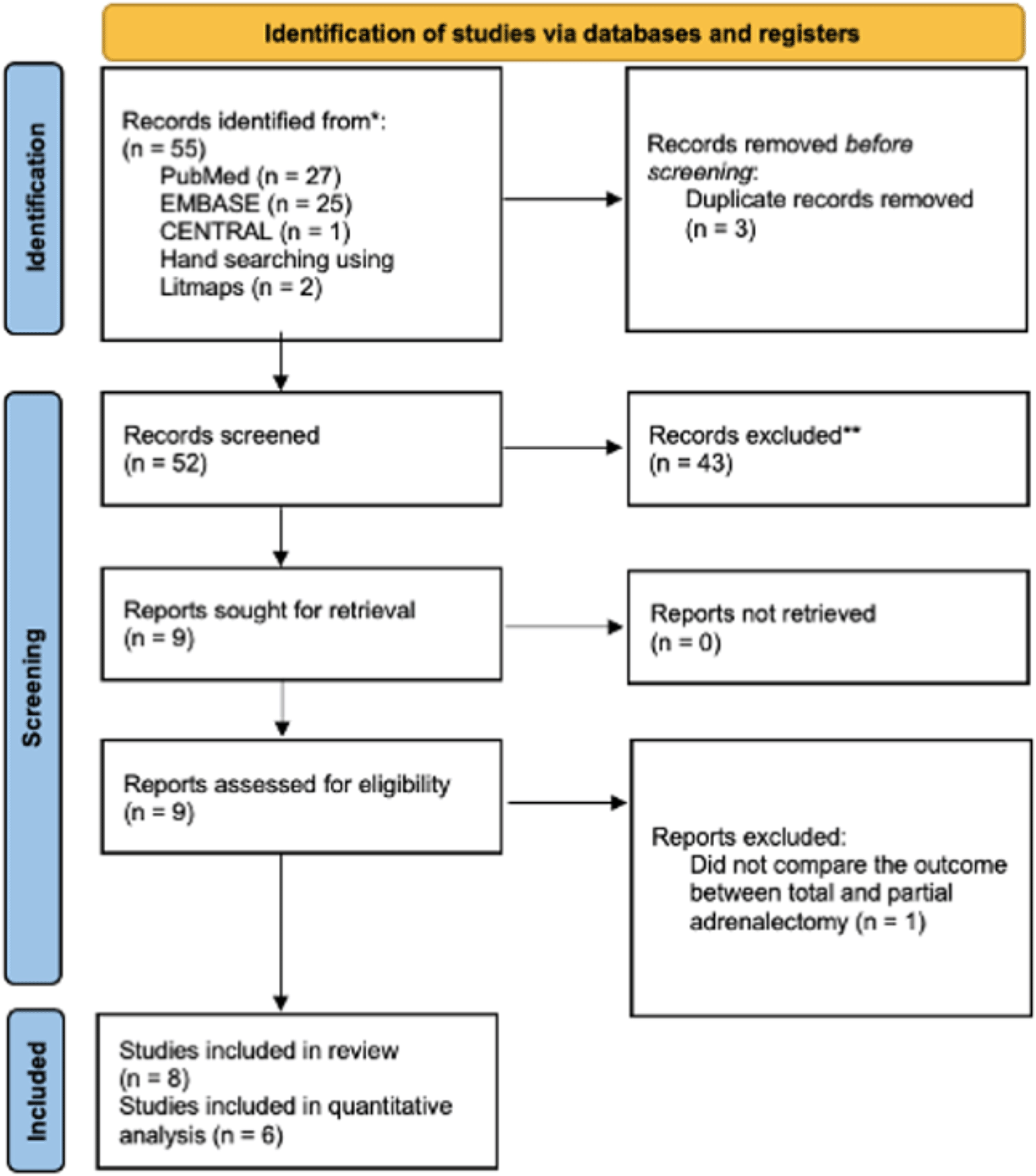
A total of 55 studies were identified from the three databases and manually searched using Litmaps (https://www.litmaps.com/). Three duplicate articles were excluded from analysis. After title and abstract screening, 43 articles were excluded, leaving 9 articles for full-text screening. After full-text screening, one article was excluded because it did not compare partial and total adrenalectomies. The study selection process, following the PRISMA flowchart, is shown in Figure 1.
Therefore, eight studies involving 982 patients (362 in the PA group and 620 in the TA group) with unilateral adrenal tumors (adrenal adenoma, adrenal pheochromocytoma, adrenal hyperplasia, and other pathologies) were included. The eight studies consisted of four cohort studies, three non-randomized trials, and one randomized controlled trial. Table 2 shows the outcomes of each study. Two studies (Ishidoya et al. and Simforoosh et al.) also included patients with bilateral adrenal tumors. We attempted to contact the corresponding author from each study to collect primary data only for unilateral adrenal tumor cases. However, the authors did not respond, and we decided to exclude the studies from the quantitative analysis. Surgical outcomes included operative time, intraoperative blood loss, length of hospital stay, and complications. Biochemical outcomes were hypertension and hypokalemia. Only one study reported 2 cases of recurrence in PA and no cases of recurrence in TA.
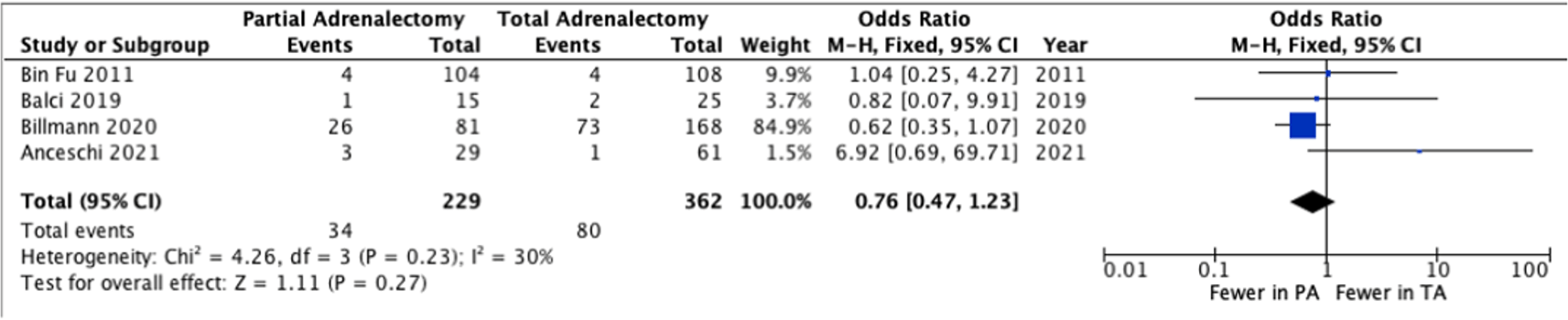
Meta-analyses were performed to compare the operative time, intraoperative blood loss, hospital stay, overall complications, persistent hypertension, and persistent hypokalemia. The follow-up period was discharge from hospital. The forest plot is shown in Figures 2–7. A meta-analysis of surgical outcomes only showed a significant reduction in hospital stay in patients who underwent partial adrenalectomy (MD -0.49 days; 95% CI −0.78 to −0.21; I2 = 0%; p = 0,0006).10–13 We found no significant differences between partial adrenalectomy and total adrenalectomy in operative time (MD -4.96 minute; 95% CI -11.96 to -2.03; I2 = 93%; p = 0.16)10–12,14 and intraoperative blood loss (MD -0.68 ml; 95% CI −22.98 to 20.62; I2 = 94%; p = 0.95),10–12,14 and overall complication (OR 0.76; 95% CI 0.47 to 1.23; I2 = 30%; p = 0.27).10,12,13,15 For biochemical outcomes, meta-analysis showed no significant difference between partial adrenalectomy and total adrenalectomy in postoperative hypertension (OR, 0.75; 95% CI 0.50 to 1.14; I2 = 0%; p = 0.18)12–14 and persistent hypokalemia (OR, 1.24; 95% CI 0.56 to 2.74; I2 = 0%; p = 0.6).12–14





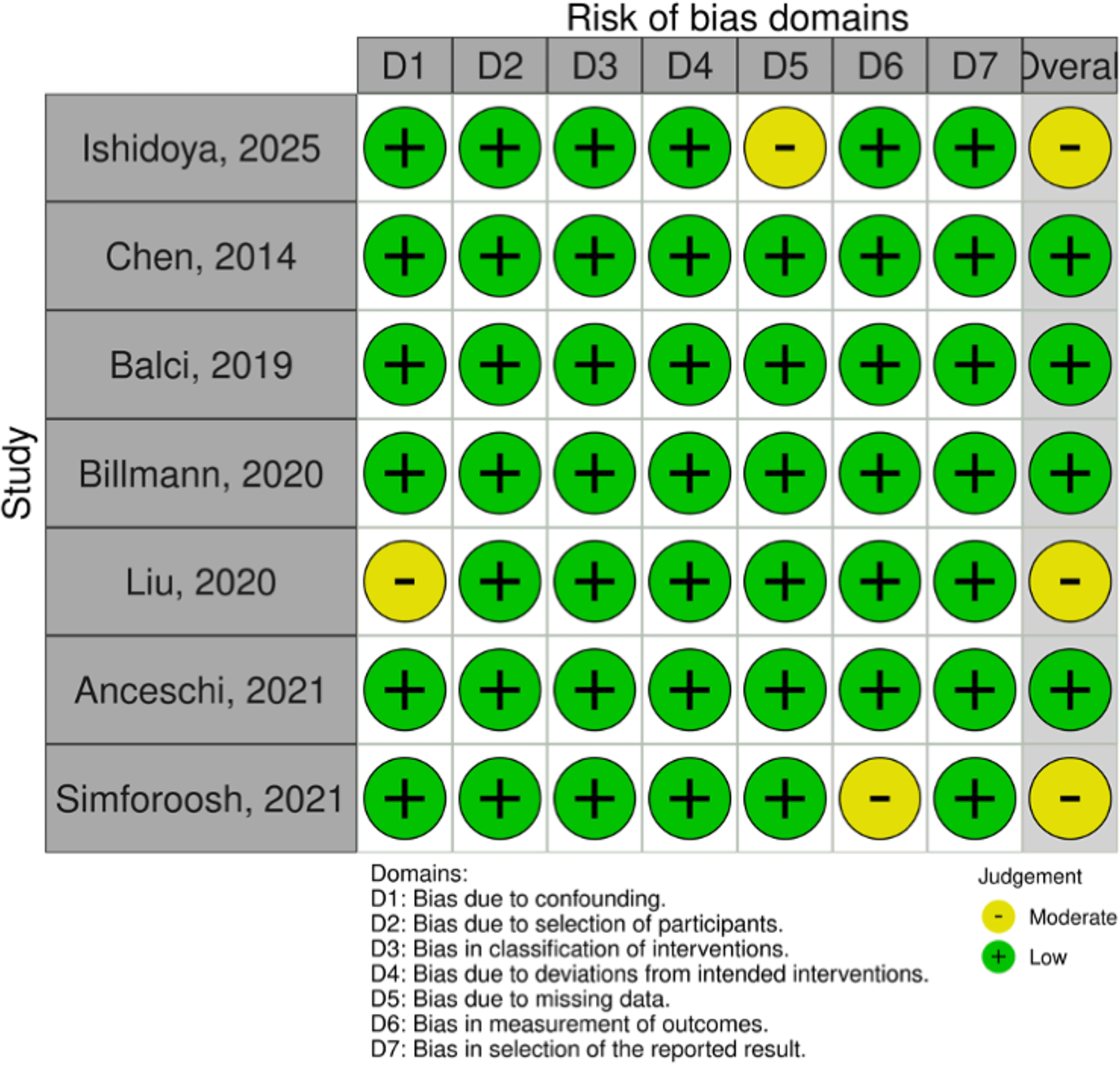
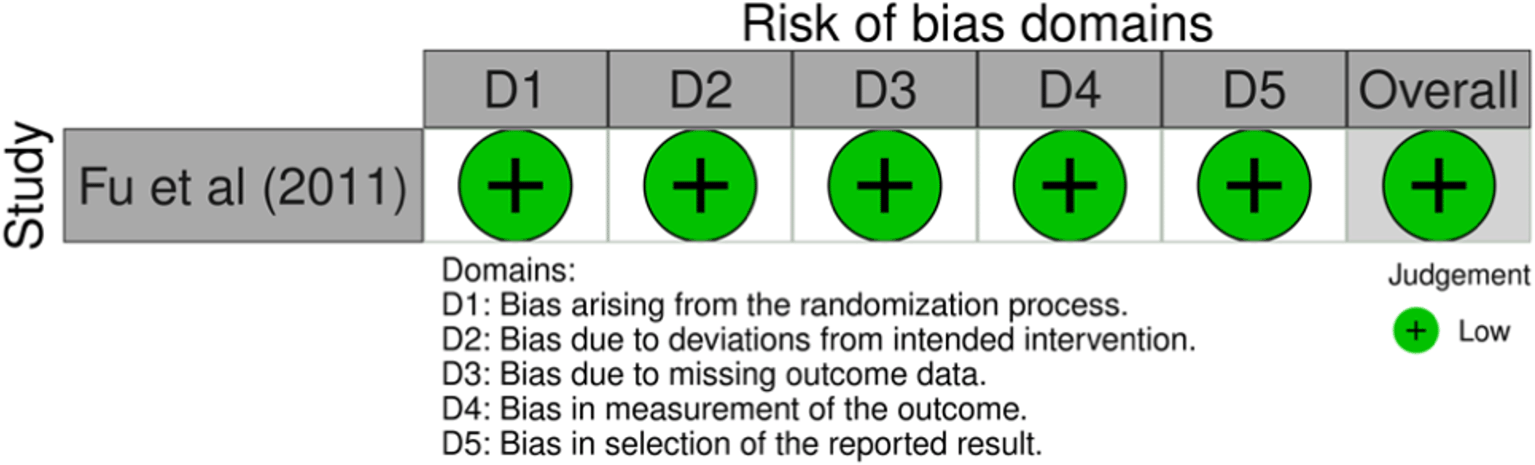
Based on ROBINS-1, four studies yielded low bias and three studies yielded moderate bias. Sources of bias were identified as selection bias, missing data, and measurement of outcomes, as shown in Figure 8. Based on the RoB 2.0, the study yielded a low risk of bias, as shown in Figure 9.
In this study, we identified three main pathologies of unilateral adrenal tumors: adrenal adenoma, adrenal pheochromocytoma, and adrenal hyperplasia. We included only tumors with benign characteristics. These tumors lead to secondary hypertension, which has a higher rate of cardiovascular complications, metabolic dysfunction, and target organ damage than primary hypertension does. Therefore, surgical removal of adrenal tumors is more beneficial than conservative treatment. However, total removal of adrenal tumors can lead to adrenal insufficiency that requires lifetime hormone replacement therapy.1,16,17
In our study, 620 tumors underwent TA and 362 tumors underwent PA. This shows that there are more cases of adrenal tumors that were surgically removed with TA than that surgically removed with PA. This means that many urologists are unwilling to perform partial adrenalectomy because of technical difficulties. Adrenal glands are a pair of organs, and unilateral TA does not affect the physiology, which is preferred due to its risk-to-benefit ratio, especially when the tumor size is small.7,18 This was also confirmed by our meta-analysis, which showed comparable outcomes between TA and PA. Our meta-analysis showed only a significant reduction in hospital stay (MD -0.49 days; 95% CI −0.78 to −0.21; I2 = 0%; p = 0,0006). This is also in line with previous studies that reported comparable outcomes between PA and TA.7,8,10–15
Hypertension is a common complication of adrenal tumors. Controlling blood pressure after tumor removal is considered an important parameter for effective therapy. Although not statistically significant, partial adrenalectomy resulted in a lower risk of persistent hypertension (OR, 0.75; 95% CI 0.50 to 1.14; I2 = 0%; p = 0.18). This may be influenced by the coexistence of primary hypertension, patient age, and vascular remodelling, which has been investigated in most studies. In most studies, patients required spironolactone preoperatively. Although not statistically significant, PA was associated with a higher risk of persistent hypokalemia than TA (pooled OR, 1.24; 95% CI 0.56 to 2.74; I2 = 0%; p = 0.6). However, these results show that the biochemical outcomes of PA and TA were comparable.
Brauckhoff et al. and Kaye et al. investigated the critical size of the residual adrenal tissue after partial adrenalectomy, which had the least impact on adrenal function. They found at least 15-30% residual adrenal tissue is necessary to preserve adequate adrenal function. With residual function from the remaining adrenal tissue, most patients do not need steroid replacement therapy during the follow-up period.18,19 In addition to the residual adrenal tissue, the adrenal vein should be preserved. The adrenal vein is important for maintaining hemostasis and ensuring a functioning stump to avoid congestion of the gland by adequate drainage into the minor venous plexuses of the retroperitoneal space.20 Therefore, the size of the tumor also needs to be considered when deciding whether PA or TA should be used to surgically remove patients with unilateral adrenal tumors so that the residual adrenal tissue is about 15-30% of the functional adrenal tissue. In addition, tumor characteristics need to be considered, whether benign or malignant. Based on the European Society of Endocrinology clinical practice guidelines for adrenal adenoma, the lesion is considered malignant if more than four centimetres inhomogeneous or has >20 Hounsfield units (HU) on unenhanced computed tomography (CT) imaging. For malignant cases, total adrenalectomy is the standard management of choice.4
Recurrence was found in only two cases in Liu et al.14 This is consistent with the results of previous studies. Nagaraja et al. performed a meta-analysis to compare partial adrenalectomy and total adrenalectomy in adrenal tumors and reported a low recurrence rate (8%). Brauckhoff et al. also found that residual adrenal tissue has a negligible malignancy rate and low recurrence rate after partial adrenalectomy.19 In addition, a meta-analysis by Nagaraja et al.21 showed that the local recurrence rate of partial adrenalectomy is infrequent in benign cases (8% (95% CI 0.05-0.12)). Partial adrenalectomy is a method used to preserve the adrenal gland in cases of future contralateral adrenal surgery.21
Some studies have also included adrenal hyperplasia, Cushing’s syndrome, and Conn’s disease. There is little concern about this pathology because it affects the entire adrenal gland. Logically, these lesions should have evidence of recurrence or biochemical and clinical partial or absent responses due to an unresected hyperplasia gland. However, it did not occur in most cases because there was no recurrence observed in the study that included adrenal hyperplasia, Cushing syndrome, and Conn’s disease.
In this pathology, hyperplasia was not homogenously distributed throughout the gland. Previous studies have shown evidence of hormonally active micronodules or aldosterone-producing cell clusters (APCC). Some studies have shown that this cluster may exist concurrently with unilateral aldosterone-producing adenomas. Therefore, resection should involve hormonally active micronodules or APCC.22–24 However, there is no recent method to clinically identify the area, and the presence of these structures tends to limit the effect of partial adrenalectomy in adrenal hyperplasia, Cushing syndrome, and Conn’s disease.
In conclusion, partial adrenalectomy is associated with a shorter hospital stay than total adrenalectomy in patients with unilateral adrenal tumors. Some outcomes showed high heterogeneity and wide confidence intervals; therefore, these findings should be interpreted with caution.
| Views | Downloads | |
|---|---|---|
| F1000Research | - | - |
|
PubMed Central
Data from PMC are received and updated monthly.
|
- | - |
Provide sufficient details of any financial or non-financial competing interests to enable users to assess whether your comments might lead a reasonable person to question your impartiality. Consider the following examples, but note that this is not an exhaustive list:
Sign up for content alerts and receive a weekly or monthly email with all newly published articles
Already registered? Sign in
The email address should be the one you originally registered with F1000.
You registered with F1000 via Google, so we cannot reset your password.
To sign in, please click here.
If you still need help with your Google account password, please click here.
You registered with F1000 via Facebook, so we cannot reset your password.
To sign in, please click here.
If you still need help with your Facebook account password, please click here.
If your email address is registered with us, we will email you instructions to reset your password.
If you think you should have received this email but it has not arrived, please check your spam filters and/or contact for further assistance.

Comments on this article Comments (0)