Keywords
Integrative Health, Integrative Medicine, Complementary medicine, Alternative medicine, Non-communicable disease

This article is included in the Health Services gateway.
This article is included in the Global Public Health gateway.
Integrative Health, Integrative Medicine, Complementary medicine, Alternative medicine, Non-communicable disease
Over the past century, conventional medicine and public health strategies - such as vaccination programs, sanitation, and acute care interventions - have markedly reduced global mortality and morbidity. Nonetheless, the global rise of non-communicable diseases (NCDs), responsible for nearly 70% of deaths and the majority of disability-adjusted life years (DALYs),1,2 reveals the limits of conventional healthcare. While indispensable, conventional approaches often fail to address the multifactorial nature of NCDs, particularly in the absence of patient engagement in self-care.3
One way to address the rise in NCDs is augmenting conventional medicine with complementary and lifestyle modalities. Complementary medicine encompasses diverse practices not traditionally part of mainstream medical systems, including acupuncture, herbal and dietary supplements, meditation, massage therapy, chiropractic care, yoga, and tai chi.4 Lifestyle medicine, which overlaps with both conventional and complementary domains, focuses on preventing and managing NCDs through behavioral interventions including nutrition, physical activity, stress reduction, social connectivity, avoidance of harmful substances, and sleep hygiene.5 These approaches are not only widely used but are also supported by scientific evidence, demonstrating their potential to improve health outcomes. However they often remain unavailable through conventional healthcare practitioners, which may lead individuals to seek alternative healthcare on their own. In this context, integrative healthcare synthesizes conventional medicine with complementary and lifestyle modalities into a unified, evidence-informed framework that aims to optimize health outcomes and enhance patient well-being.6
Given the multifactorial nature of NCDs, the collective use of conventional, complementary, and lifestyle approaches could achieve greater impact than any of these domains in isolation. This is the central promise of integrative healthcare: an evidence-based, whole-person, and sustainable model of care that addresses the biological, psychological, social, and behavioral dimensions of health ( Figure 1). Nonetheless, integrative healthcare remains overlooked as a distinct model for managing NCDs.
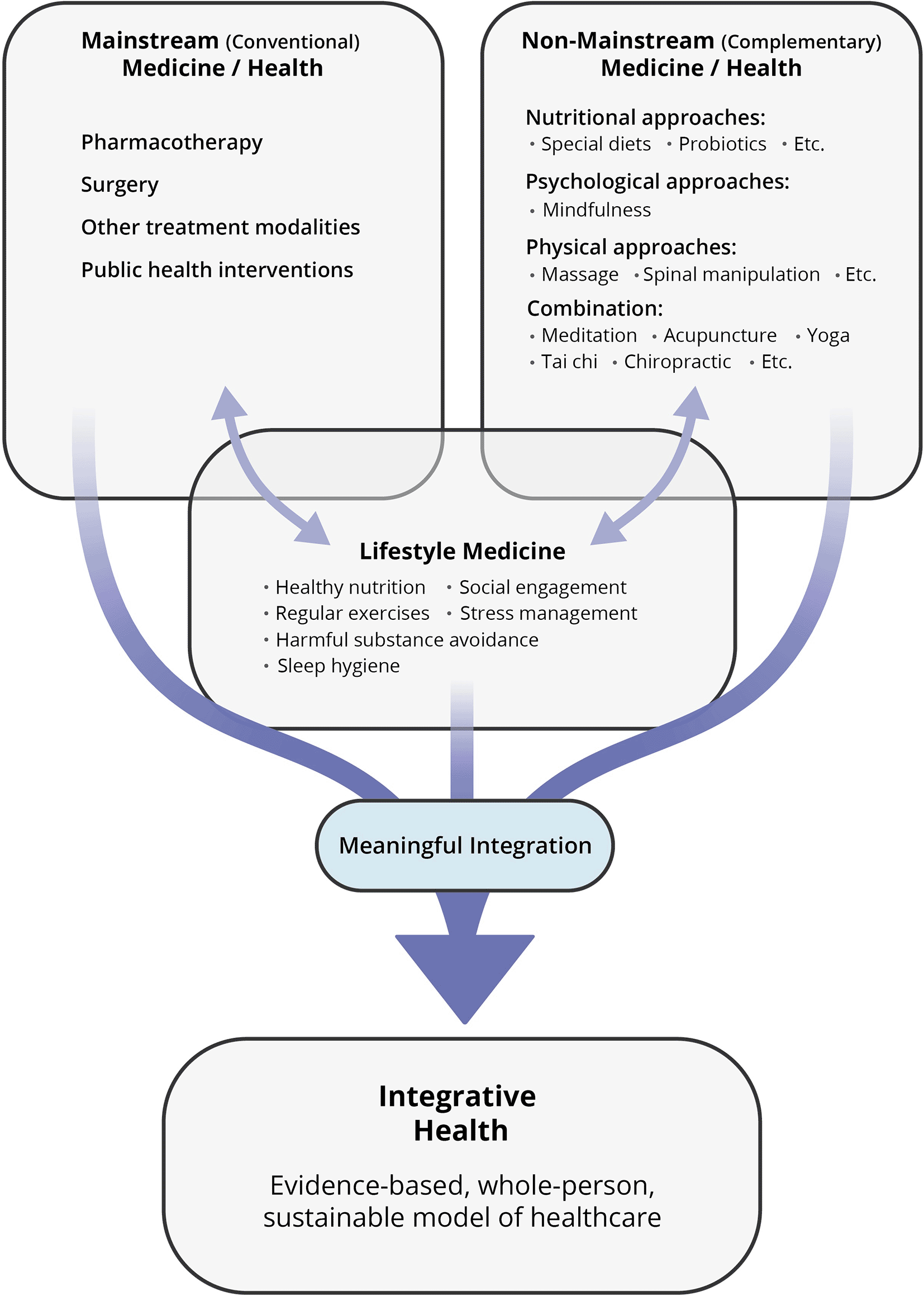
We argue that the primary challenge facing integrative healthcare for NCDs is not a lack of efficacy, but its marginalization within the mainstream evidence hierarchy. Integrative healthcare is rarely incorporated, despite the fact that existing trials suggest added value over conventional care alone. This commentary illustrates how integrative healthcare currently appears in the literature and outlines key steps toward a research agenda more closely aligned with the realities of integrative healthcare.
It is helpful to review the literature in order to assess the clinical impact of integrative healthcare. Over the past five years, only 14 randomized controlled trials comparing integrative interventions with standard conventional care have been published in high-impact, peer-reviewed medical journals (The New England Journal of Medicine, the Lancet, the BMJ, and JAMA) ( Table 1). These trials spanned diverse settings and involved participants of varying ages, sexes, and educational backgrounds. Across these studies, integrative healthcare approaches were generally more effective than conventional care alone. In patients with various health conditions (including Parkinson’s disease, primary insomnia, and depression), integrative approaches reduced overall symptom severity. Similar added benefits were observed in trials assessing obesity, type 2 diabetes, ageing-associated decline, Crohn’s disease, and pain, where integrative healthcare improved clinical outcomes beyond those achieved with conventional treatment alone. A subset of studies included follow-up beyond six and twelve months, suggesting sustained benefits over time.
| Patient symptoms and clinical diagnosis | Conventional care | Integrative health | Outcome and conclusion | Reference |
|---|---|---|---|---|
| Motor neuron disease (amyotrophic lateral sclerosis; progressive muscular atrophy; or primary lateral sclerosis) | Standard care, including medication for motor neuron disease and related symptoms; treatments such as non-invasive ventilation, physiotherapy, and gastrostomy; and access to other hospital-based and community-based services (such as equipment and adaptations, orthotics, respiratory, gastroenterology, clinical psychology, neuropsychology and counselling, and social care services) N=94 | Along with conventional care, participants received Acceptance and Commitment Therapy (a combination of acceptance, mindfulness, motivation, and behavior change techniques to assist engagement in life-enriching activities in the presence of distressing thoughts and feelings) N=95 | Integrative health demonstrated clinical effectiveness in maintaining or improving quality of life | Gould, 202422 |
| Motor symptoms and constipation in patients with Parkinson's disease | Levodopa Combination of oral lactulose or rectal glycerin N=83 | In addition to conventional care, participants received electroacupuncture. N=83 | Integrative health enhanced bowel movements, reducing symptoms of constipation. Improved functional motor activity | Li, 202323 |
| Quality of sleep in patients with Parkinson's disease | Sleep hygiene guidance from sleep clinic physicians with continued use of anti-Parkinson medication and sham acupuncture N=41 | In addition to conventional care, participants received acupuncture N=42 | Integrative health improved sleep quality | Yan, 20224a |
| Mental disorders (depression, primary insomnia, post-traumatic stress disorder [PTSD], panic disorder, or agoraphobia) | Standard outpatient interventions, including psychological (cognitive behavioral therapy, psychoanalysis, systemic therapy) and pharmacological treatments N=201 | In addition to conventional care, participants engaged in an exercise program (ImPuls) (evidence-based, moderate-to-vigorous intensity outdoor exercises lasting 30 min, combined with behavioral change techniques targeting motivational and volitional determinants of exercise behavior) N=199 | Integrative health demonstrated superior efficacy in reducing global symptom severity | Wolf, 202425 |
| Insomnia in patients with depression | Recommendations to engage in regular exercise, follow a healthy diet, manage stress levels, and continue regular administration of antidepressants, sedatives, or hypnotics N=90 | In addition to conventional care, participants received electroacupuncture N=90 | Integrative health alleviated insomnia among patients with depression | Yin, 202226b |
| Post-operative ileus secondary to resection of colorectal cancer | Multimodal analgesia, patient-controlled analgesia plus non-steroidal anti-inflammatory drugs, early oral feeds, and early mobilization N=35 | In addition to conventional care, participants received electroacupuncture at one of two different locations on the body N=35 for each group | Integrative health enhanced bowel function recovery following post-operative ileus | Yang, 202227c |
| Crohn's disease | Combination of mesalazine, corticosteroids, azathioprine, or methotrexate N=33 | In addition to conventional care, participants received acupuncture N=33 | Integrative health induced and maintained remission of active Crohn’s disease, improved intestinal flora, and lowered recurrence rates | Bao, 202228 |
| Insomnia and pain in patients with chronic spinal pain | Best evidence pain management (person-centered care; pain neuroscience education and cognition-targeted exercise therapy) N=62 | In addition to conventional care, participants received cognitive behavior therapy (sleep education, self-monitoring of sleep patterns, time-in-bed restriction, stimulus control, sleep hygiene, cognitive restructuring, and relaxation) N=61 | Integrative health improved sleep quality and reduced the severity of insomnia, but provided no significant pain relief | Malfliet, 202429 |
| Pain relief in urolithiasis | Diclofenac and sham acupuncture N=40 | In addition to conventional care, participants received acupuncture N=40 | Integrative health provided fast and substantial pain relief to patients with renal colic compared with sham acupuncture in the emergency setting | Tu, 202230a |
| Obesity | Low-calorie diet and liraglutide N=49 | In addition to conventional care, participants engaged in an exercise routine comprising moderate to vigorous aerobic activity and strength training N=48 | Integrative health preserved bone mineral density at clinically important fracture sites during weight loss | Jensen, 202431 |
| Obesity | Liraglutide N=41 | Along with conventional care, participants engaged in an exercise routine (150 min/week of moderate-intensity aerobic physical activity, 75 min/week of vigorous-intensity aerobic physical activity, or an equivalent combination of both) N=40 | Integrative health improved healthy weight loss maintenance more than liraglutide alone one year after initiation of the trial | Lundgren, 202132d |
| Obesity | Liraglutide N=49 | In addition to conventional care, participants engaged in an exercise routine (150 min/week of moderate-intensity aerobic physical activity, 75 min/week of vigorous-intensity aerobic physical activity, or an equivalent combination of both) N=48 | Integrative health promoted healthy weight maintenance after treatment termination compared with obesity pharmacotherapy alone and maintained body weight and composition 2 years after initiation of the trial | Jensen, 202433d |
| Type 2 diabetes | Standard care (glucose-lowering, lipid-lowering, and blood pressure-lowering medications) N=34 | In addition to conventional care, participants received individualized meal plans and structured exercise plans N=64 | Integrative health improved physical components of health-related quality of life, while mental components remained unchanged | MacDonald, 202134 |
| Aging-associated illness | Primary health care, including health education flyers and lab test results N=199 | In addition to conventional care, participants engaged in a multidomain intervention (physical exercise, cognitive training, nutrition, and disease education) N=199 | Integrative health improved the quality of life | Lee, 202135 |
a These studies compared the standard of care and sham treatments to integrative health, accounting for placebo effects.
b This study had 3 arms: one group received conventional care, one group received conventional care and sham acupuncture and the third group received conventional care and acupuncture.
Beyond clinical outcomes, integrative healthcare emphasizes shared decision-making and patient empowerment. Patients receiving integrative healthcare report higher satisfaction, greater alignment with personal values, and a stronger sense of being heard and respected by their providers.7–10 Integrative healthcare has been associated with reduced polypharmacy, improved adherence to healthy behaviors, and enhanced long-term health outcomes.11 When appropriately implemented, integrative healthcare can also reduce medical costs and yield improved health outcomes.12,13 These observations pose an important question: if integrative healthcare approaches enhance outcomes and patient experience, why are they not more systematically implemented in NCD management?
Despite its promise, the widespread adoption of integrative healthcare faces several barriers. Most healthcare professionals receive limited training in complementary and lifestyle medicine, restricting their ability to implement integrative approaches effectively.14,15 One way to address this would be to foster interdisciplinary collaboration, allowing healthcare professionals from different fields to effectively address patient care.16,17 In this context, developing policies to incentivize education and research in integrative healthcare and implementing culturally-appropriate, evidence-based guidelines can streamline integrative healthcare approaches.16–18 The lack of reimbursement mechanisms for integrative healthcare poses a significant obstacle to access and scalability. A shift away from fee-based service toward value-based care, which links reimbursement to health outcomes and overall patient satisfaction, may result in more widespread adoption of holistic, integrative healthcare.16,19 By prioritizing prevention and resource optimization, integrative healthcare offers a pathway toward more sustainable and equitable health systems.20,21
Emerging evidence supports the integration of complementary and lifestyle-based interventions into conventional care as a viable strategy for managing chronic disease and enhancing patient outcomes. Findings from recently published high-quality clinical trials presented here show the promise of integrative health. Given the widespread global use of complementary and lifestyle approaches, advancing research in integrative healthcare may support the development of more sustainable, evidence-informed health systems worldwide.
During the preparation of this work the author(s) used Microsoft Copilot (Free version) in order to lightly edit the manuscript. After using this tool/service, the authors reviewed and edited the content as needed and take full responsibility for the content of the published article.
| Views | Downloads | |
|---|---|---|
| F1000Research | - | - |
|
PubMed Central
Data from PMC are received and updated monthly.
|
- | - |
Provide sufficient details of any financial or non-financial competing interests to enable users to assess whether your comments might lead a reasonable person to question your impartiality. Consider the following examples, but note that this is not an exhaustive list:
Sign up for content alerts and receive a weekly or monthly email with all newly published articles
Already registered? Sign in
The email address should be the one you originally registered with F1000.
You registered with F1000 via Google, so we cannot reset your password.
To sign in, please click here.
If you still need help with your Google account password, please click here.
You registered with F1000 via Facebook, so we cannot reset your password.
To sign in, please click here.
If you still need help with your Facebook account password, please click here.
If your email address is registered with us, we will email you instructions to reset your password.
If you think you should have received this email but it has not arrived, please check your spam filters and/or contact for further assistance.

Comments on this article Comments (0)