Keywords
Website Quality, E-Loyalty, Customer Knowledge Management, Consumer Electronic Loyalty, Content quality, Design quality, Organizing quality, and Ease of use.

This article is included in the Fallujah Multidisciplinary Science and Innovation gateway.
Website Quality, E-Loyalty, Customer Knowledge Management, Consumer Electronic Loyalty, Content quality, Design quality, Organizing quality, and Ease of use.
Introducing new products and services in larger-scale undertakings and taking steps in terms of digital transformation. This will help face and compete in different innovation markets.1 There is no doubt that the importance of modern technologies plays important role towards achieving sustainable development at both the local and global levels.2 Developments and changes in the banking environment, as well as increased competition among them, have compelled banks to focus their efforts on retaining existing customers while also acquiring new ones. Modern organizations rely heavily on customer satisfaction and loyalty to the services and products they provide, as well as their ability to create a mental image that is acceptable to customers. This will have a positive impact on improving the organization's performance processes and achieving adequate profits due to sales activities for services and goods in the labor market.3 There is no doubt that the continuity of customers' dealings with the bank depends mainly on the mental image and impression they have of the banking services provided. Among the factors that can enhance customer loyalty to the bank is the bank's website and the level of quality in its design, which reflects the fulfillment of needs and the provision of information on the various activities and services provided by the bank. Implementing the principle of customer knowledge management is necessary to improve the quality of banking-related websites. This entails methodically documenting customer preferences and expectations related to the website's banking services and providing insights into these preferences and expectations.4
Banks strive to retain their current customers by ensuring their satisfaction with the services they provide. This can be achieved by delivering high-quality electronic services. On the other hand, banks strive to achieve a high level of customer loyalty through ongoing efforts and effective strategies in this area. Moreover, since customer loyalty involves multiple interactions between customers, the bank, and other customers, they will not relinquish their loyalty to these banks without genuine justification. Hence, banks can achieve great success by providing distinguished services to their customers, which contributes to the formation of a positive mental image of the customer.5 On the one hand, it highlights the need to focus on the online interactions that consumers have in the banking sector. Long-term online banking will encourage client loyalty and motivate them to focus more on user retention than consumer attraction.6,7 Kaya et al., (2019) have investigated in their work how website familiarity affects the associations between e-service quality, e-satisfaction, and e-loyalty in the context of an emerging economy. The results show a relationship between e-satisfaction, e-loyalty, and e-service quality. This has a direct impact on e-loyalty and an indirect effect on electronic satisfaction. Miguens and Vázquez have developed a model that describes how loyalty is formed for individual users of online banking. The results indicate that e-satisfaction, e-trust, and switching barriers have a direct impact on e-loyalty. In
In addition, e-trust creates e-loyalty with e-satisfaction as an intermediary.8 Al-Hashem approved that knowledge management processes have an impact on e-services and e-loyalty.9 Cyr et al., found that the high-quality design of a firm's website fosters interaction between clients and the site.10 This will enhance consumers' e-loyalty, consequently. Yao et al., have found that knowledge sharing has a positive relationship with e-loyalty.11 Karim et al., and Dianat et al., concluded that consumer e-loyalty has been affected by e-customer relationship management.12,13 This study aims to investigate the impact of website quality criteria on e-loyalty, as well as the mediating role of customer knowledge management in the relationship between website quality criteria and e-loyalty.
With the massive expansion of information and communication technology and the global advances in this field, the quality of institutions' websites plays a vital role in the actions, procedures, and operations of different organizations. The Internet has changed the way organizations interact with consumers. This has compelled companies to create websites as the primary means of distribution for businesses to clients in “business-to-consumer” (B2C) transactions, with an emphasis on the channel's quality and customer service.14 The set of services introduced throughout websites has increased over time, mainly in the banking sector. Achieving optimal financial performance in banking services presents a significant challenge.15 The attention and direction of researchers towards studying and evaluating the websites of banks and their quality aim to understand and realize the nature of electronic services provided by banks. This could be through the level of quality of bank websites and the extent to which they adhere to standards for website quality. The various studies in this context aim to evaluate the quality, effectiveness, and ease of use of websites, as well as the volume of services they provide to customers.13,16 It is essential to adopt the highest quality standards for websites. This could be achieved by considering the customer's perspective in terms of their evaluation of specific features and preferences.17 The quality standards of an institutional website play a crucial role in maintaining and reinforcing consumers' intentions to use and purchase products through the website. When consumers shop online, they expect websites to contain high-quality content.18 It is one of the fundamentals of electronic business models for commercial activities. Website quality criteria like; “design consideration, operation of the website, website user accordance Contact, design, organization, and user-friendly” represents famous and standard measures for the quality of firm’s websites.19,33 Alternatively, service refers to a website, and its quality is one of the elements that determine customer happiness.4 Previous studies have adopted the most critical website quality criteria. Table 1 reveals the main website quality criteria in this respect.
| Authors | Website quality criteria |
|---|---|
| 19 | Design consideration, operation of the website, website user accordance |
| 20 | Design, Easy to Use, Content, Organizing, and Trust |
| 21, 22 | Functionality, Reliability, Usability, Efficiency, Maintainability, Portability, Content, Design, Organizing, Usability |
| 23, 24 | Design, Easy to Use, Access, and Efficiency |
| 25 | efficiency, contact, design, privacy |
| 26 | Design, usability, product, security, service quality, fulfilment |
| 27 | Relevance, Familiarity, Accessibility |
| 28 | Design, credibility, and usability |
| 29 | Design, Credibility & Accountability, Participation, Usability, Relevance, Accuracy |
| 30 | Routing, Information, Delivery, Apparent Features, Security, Reputation, Society, Entertainment, Provided goods and services, Reliability, Trust |
| 31 | Security, Site design, Accessibility, Usability, Fulfillment, Response time, Privacy |
| 32 | Contact, Efficiency, Delivery, design |
| 33 | Contact, design, organization, and user-friendly |
| 34 | Credibility, reliability, accuracy, readability, and evaluation |
| 35 | Usability, content, and organizing |
| 36 | Usability, information quality, and interaction quality |
Based on the website quality criteria shown in Table 1 and the direction of the current work, four criteria “content, design, organization, and ease of use” have been selected for use in the research model. Researchers such as Scott; Fransen et al. found that any organization's website needs to be not only essential but also rich in content. The importance of design, color palette, and straightforward navigation within the website is very crucial. These features create attractive and engaging websites that provide helpful information for target groups and individuals.37,38 Stefko et al stated that the website of any firm should have a proper structure. This means that the structure and layout of the text should be adapted to the end use, ensuring readability, responsibility, and reliability.39 Al-dweeri et al highlighted that the quality of ease of use of a website, as well as the quality of organization of the web structure and standards of content clarity, ease of searching, speed of access, and flexibility of users’ control over the advanced tools on the web page, have a positive impact on increasing the level of electronic customer loyalty.40 Moreover, Bowen, McCain proposed that the dimensions of website quality could include usability, content, and organization.41
Consumer retention is a complex process and a key factor in an organization's success.42 Online loyalty is similar to the concept of traditional loyalty to an organization. In other words, loyalty to an organization can influence customer purchasing behavior, leading to more frequent visits to stores.43 The quality of a website's design refers to all the parts and components that make the website interactive with customers, such as the ease of navigation within the website, the presence of information appropriate to customer needs, and the customer ordering process.44 The issue of internet loyalty, also known as electronic loyalty, has been the subject of various marketing research studies. This is because clients are a company's most important asset, as is customer retention. It becomes more profitable, and internet buyers can easily compare products from all over the world at low or no cost. Developing customer loyalty is a strategic objective for most businesses and organizations. Today, most companies are trying to retain customers and increase their share of each customer.45 Due to increased online competition and diminishing e-commerce company loyalty, academics and practitioners are interested in e-loyalty research. This may be because virtual customer searches are cheaper. Switching behavior is common since people can easily compare prices and services online. The study of e-loyalty is a field that captures the attention of scholars and professionals alike. This is primarily due to the intense competition in the online market and declining customer loyalty towards e-commerce websites. One possible explanation for this phenomenon is the reduced search costs that customers experience in the online realm. Switching behavior has become a prevalent trend among consumers, who now have the convenience of easily navigating and comparing prices and service offers online.46 Loyalty is a commitment to continue buying goods or services from the same seller, rather than switching to a different one. Advancements in technology have given rise to the development of digital loyalty programs that operate within an online environment. E-loyalty refers to the consistent revisiting of a website due to a preference for shopping on that site without seeking alternatives elsewhere.47,48 Organizations must gain a deeper understanding of the correlation between customer satisfaction and loyalty. This requires allocating loyalty in the online environment between marketing efforts, specifically between satisfaction initiatives and loyalty programs.49
Gibbert et al.50 have primarily advocated the concept of customer knowledge management (CKM), where companies and major brands transform their customers from passive beneficiaries of products and services to empowered knowledge partners. They also described this notion as a strategic process to transform. CKM improves the absorptive capacity of the enterprise. This can be viewed as a valuable asset that enables companies to acquire, absorb, manage, and enhance external knowledge over time.51 CKM could be divided into four types: First, knowledge about consumers. This will indicate what the organization wants to know about the customer, such as personal preferences. This type of knowledge also includes information about the customer's personal life, age, family situation, and how we communicate and interact with the customer. Second, knowledge for consumers includes all the knowledge that an organization provides to its customers. Customers want to know about your organization. To provide customers with information about the organization in terms of products and identities. Research and Development.52 This information will help firms decide which products to purchase and how to utilize them. Effectively, customer knowledge encompasses all the information that enables a customer to make an informed purchasing decision. Third, knowledge from consumers: This type of knowledge encompasses information that customers possess about products and suppliers. Organizations can benefit from them as they generate new ideas and continuously improve their products. Involve customers in the creation of new products and the improvement of R&D programs. And fourth, knowledge from consumer to consumer; this knowledge manifests itself through the interactive relationships between the organization's customers. Liaison and communication with customers contribute a great deal of experience, expertise, and opinion about the organization and its products. This interaction also enables the generation of shared knowledge among customers, but this kind of knowledge can create an atmosphere of ignorance. Customers will be important, but much of an organization's reputation is formed through them in the process of getting to know them.53 Customer knowledge is tacit and imprinted in the customer's mind, so accessing it requires considerable effort. Throughout CKM, clients are encouraged to share their long-standing experiences with other customers and collaborate to solve problems. What knowledge workers can do: Benefit from these experiences and extract useful information from them. These become essential sources of innovative ideas and competitive advantages.54 CKM involves receiving consumer data, processing it, and then preparing and developing customer knowledge. Data is sourced from: The client then performs storage, encoding, and processing steps on this data to create and utilize it in appropriate situations. Indeed, CKM is the latest and most advanced variety of information processing.55
The research methodology employed in this study adopted a quantitative approach, utilizing a structured questionnaire as the primary tool for collecting the main data. The author determined that a quantitative approach would be the most suitable. It facilitates statistical aggregation and comparison by allowing researchers to analyze a larger sample size with a predetermined set of variables. Additionally, the method of choice was determined by the study's objectives. Respondents were informed of their views to the questionnaire regarding the objectives of the current work, and it was clarified that their participation was voluntary. Informed consent was obtained from participants before data collection.
In this rapidly changing world, large organizations, including financial institutions such as banks, are embracing new trends in digital transformation—a rapidly growing field of e-commerce. The Internet was used to support this, as it is one of the primaries (or fundamental) sources that people use to obtain the information they need. Within this changing world, Banks should pay more attention to electronic services provided by focusing on the “quality” of their site. This is evident in the positive correlation with the number of customers and, consequently, their interests. Research questions can be determined by asking the following questions:
1- Does website content affect e-loyalty?
2- Does website design affect e-loyalty? Does the website's organization affect e-loyalty? Does the website's ease of use affect e-loyalty?
3- Do web quality criteria affect consumer knowledge management?
4- Does consumer knowledge management mediate the relationship between website quality criteria and e-loyalty?
To address the questions raised in the research problem section, the author develops a model of e-loyalty that integrates website quality and consumer knowledge management. In this model, e-loyalty is measured using some website quality criteria and consumer knowledge management.
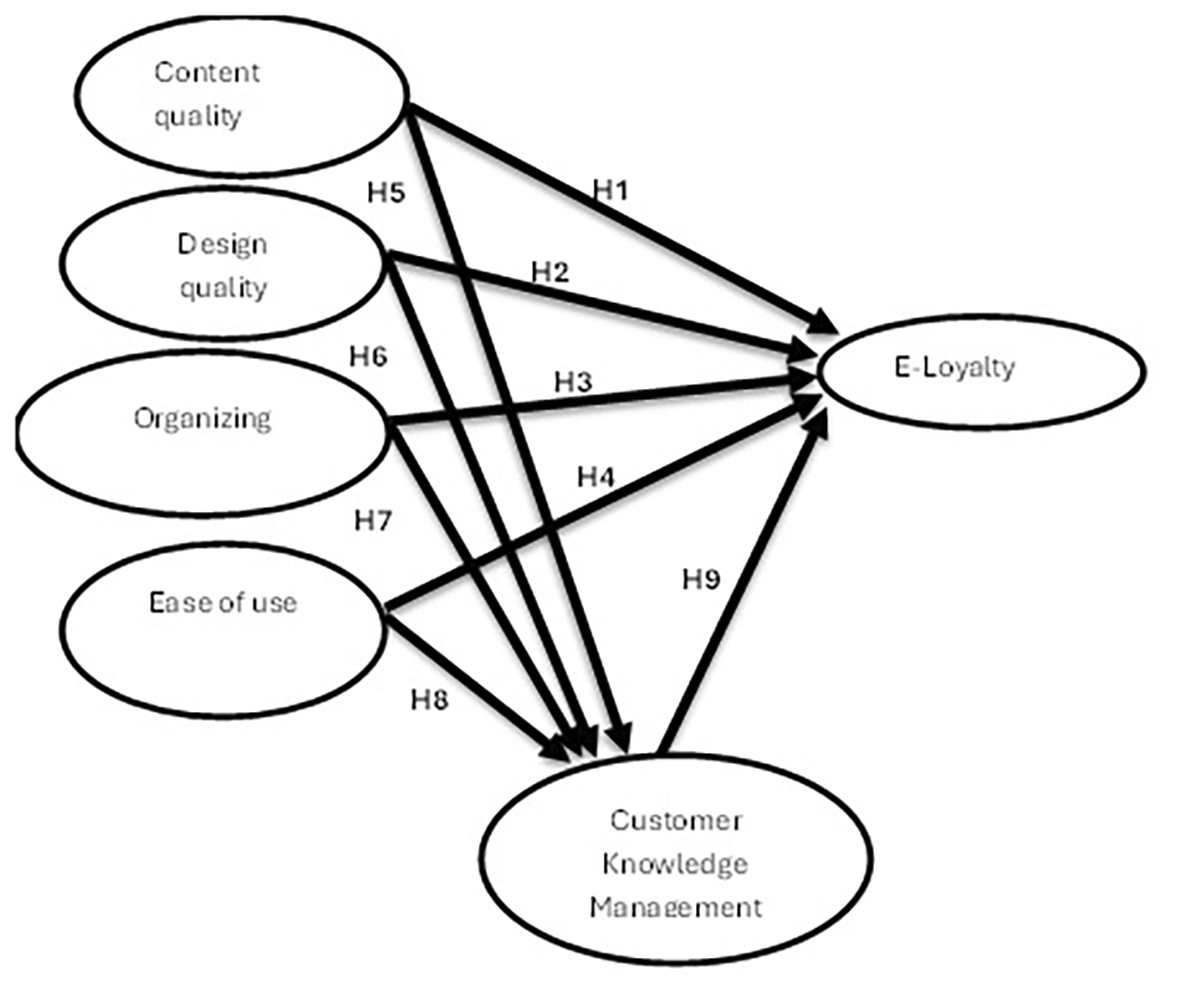
Consumer loyalty, including returning to visit and evaluating a firm’s website, is crucial for online companies that prioritize content quality.56 Earlier studies57,58 mainly focused on website design with its relative impact on online customer loyalty. Dumbrell, Steele indicated that good, well-performed website quality content is well affecting e-loyalty.59 Similarly, Boateng; Valacherry, Pakkeerappa founds that both the content and design of the website positively affect consumer e-satisfaction and e-loyalty.60,61 Correspondingly, Casaló et al.; Lee, Kozar confirmed that quality content, organization, and design quality influence consumer e-loyalty.62,63 Similarly, Shankar et al., have concluded that the ease of use and organization of websites affect the level of consumer e-loyalty.64 Also, Gibbert et al., refers to the website quality criteria, such as organization, content, and efficiency, have a good relation and impact on e-loyalty.50 Furthermore, Mocanu discovered that both website content and design quality play vital roles in enhancing consumers' e-loyalty.65 Moreover, in the context of the influence of website criteria quality on customer knowledge management, Gebert et al. have found that website content quality and organizational quality will help the firm retain and attract consumers. This plays a role in helping firms gain a deeper understanding of their consumers.66 Zanjani et al., have discussed the involvement of website indicators, such as ease of use, in customer knowledge management.67 In addition, Taherparvar et al; Rastgar et al., have referred to the effect of the way the firm designs, organizes, and manages its web presence on gaining knowledge from Customers, and Knowledge about Customers.68,69 This will have a crucial effect on the consumer e-loyalty. Garg, Jain; Chou et al., approved that website usability, reliability, content, and ease of use are playing a critical role in consumers re-visiting the web, which tends to lead to e-loyalty.70,71 Depending on the above discussion, the following hypotheses have been posited:
Content quality has a positive effect on e-loyalty.
Design quality has a positive effect on e-loyalty.
Organizing quality has a positive effect on e-loyalty.
Ease of use quality has a positive effect on e-loyalty.
Content quality has a positive effect on consumer knowledge management.
Design quality has a positive effect on consumer knowledge management.
Organizing quality has a positive effect on consumer knowledge management.
Ease of use quality has a positive effect on consumer knowledge management.
Consumer knowledge management has a positive effect on e-loyalty.
A convenient sampling method has been employed for the primary collection of data. The subjects of this study were consumers of Rafidain Bank in Nineveh; random samples were selected from different locations. The survey was conducted from October 2023 to December 2023, spanning three months. After screening the questionnaire and sending it to 550 consumers, 311 valid responses were received. This is a large enough sample size for PLS-SEM. Data analysis yielded meaningful results. Another part of the questionnaire asked the sample representatives to provide their age, gender, education, and profession. In the second part, participants have given their assessment of the research constructs. For this study, non-probabilistic simple random sampling was employed to select the target sample, as it was deemed the most suitable approach for this research. Additionally, the researcher faced unique time pressures to collect data and comply with consumers' requirements simultaneously.
For this study, the questionnaire serves as the primary research tool. The original form of the questionnaire was written in Arabic. After that, it has been translated into English. Based on the variables examined in the study, a research tool was created. The tool incorporates elements from earlier research, modified to meet the needs of the present study. The survey was broken down into four primary sections. The first section (1) includes information concerning demographics, and the second section (2) includes additional information. Comprises survey questions about the quality of the information on his website. The third part (3) consists of survey questions about E-Loyalty, and the fourth part (4) consists of survey questions about Customer Knowledge Management.
Data collection
For this study, probabilistic simple random sampling has been adopted to select the target sample as it was deemed suitable for this study. The questionnaire was developed by applying a 5-point Likert scale to evaluate and explore the opinions provided by individuals. There are five levels on the rating scale, including “Strongly Disagree” (1), “Disagree” (2), “Neutral” (3), “Agree” (4), and “Strongly Agree” (5). The questionnaire consisted of 42 items. It included: (A) 18 items of34,35 relating to Website Quality with four dimensions: Content Quality (five items: e.g., “the website easy navigation and readability of information on the website”); Design quality (five items: e.g., “the website has been designed to ensure effective search functions and to attractive consumers”); Organizing Quality (four items: e.g., “the website is well-structure and the ability of quick access the needed information”); Example of use (four items: e.g., “the website loads quickly and works very well technically”) (B) 8 items of7,40 associated with the E-Loyalty (e.g., “I used to recommend this site to other people” “I am a regular visitor of this sit”) and (C) 16 items of58,60 relating to Customer Knowledge Management (e.g., “The bank used to make surveys in to know more about consumers satisfaction” “The bank reacts quickly and flexibly to customer inquiries.”). The survey was given out in May 2025. As a valuable method for gathering data and information on this topic, the survey employed a self-administered questionnaire. Questionnaires can be sent to multiple samples using the self-administered method, thereby reducing interview costs and minimizing interview bias. The survey was created in Google Forms and was designed to take no more than 10 minutes to complete. A total of 410 questionnaires were distributed, with 311 responses, for a response rate of 76%.
Informed consent
The current study included a group of adult participants. Informed verbal consent was obtained prior to data collection. No minors participated in the study; therefore, parental consent was not required. The sample of the study consisted of a random group of bank customers who had been previously informed of the research objectives and their participation. Because the questionnaire was electronic and anonymous, no written consent was required from respondents, and the questionnaire did not collect any personal information or pose any risks.
Before proceeding to analyze the relationships between variables, it is necessary to first describe the demographic characteristics of the study sample, as this information provides a deeper understanding of the context in which the data was collected, and contributes to a more accurate interpretation of the results. Table 2 presents the characteristics of the respondents targeted in this work.
To highlight the variables used in this work, the author has developed a specific model to support the study's orientations. Figure 1 below refers to the said model.
In this section, several tests were adopted to ensure the quality criteria of variables:
Table 3 presents the kurtosis and skewness measures used to determine whether the data are typically distributed. According to the scale, data are considered normally distributed if the skewness value falls within the range of ±2 and the kurtosis value fall within the range of ±7. According to the results mentioned in Table 3 below, the data are typically distributed. Note that Smart Pls can be applied to normally or abnormally distributed data.
Table 4 above explained the convergent validity of the measurement, using both Cronbach's Alpha and CR, which are adopted as measures of the internal consistency reliability of the research variables. As the value of Composite Reliability should be between 0.7-0. 99 As for Cronbach’s Alpha, it is assumed that it is limited to 0.6-0. 99. By reading the table above, the scale used to measure the variables is reliable and carries great credibility because all values are within the acceptable range. The AVE index, which indicates the degree of variance explained by each variable in the study, is shown in Table 4. AVE states that the relationship of each variable to itself must be greater than the relationship of the same variable with other variables in the matrix. The Factor Loadings indicator is concerned with determining the suitability of the questions or items used to measure each of the research variables. It also indicates that these elements are suitable for measuring a variable without others. Referring to the data from the current research, the Factor Loadings for all indicators are greater than 0.5, indicating the validity of the questions used to measure each variable.
Whereas the VIF indicator has been used to measure the linear relationship between the independent variables, it is assumed that there are no such relationships between the independent variables. To be sure, the values of VIF are confined between 0.10 and 10.00 for each independent variable. Referring to the data in Table 5, it is clear that there are no significant relationships between the independent variables, indicating that the current research data are sound and ready for analysis using the SmartPLS program.
According to Table 5 above, the Fornell-Larcker criterion is employed to verify the discriminant validity of the measurement models. The square root of the mean variance extracted by the item itself must be greater than the correlation between the item and any other item within the construction.
Through Table 6 “above”, which represents the (HTMT) standard, it is considered one of the statistical techniques used to evaluate discriminant validity in business administration research. It is assumed that the acceptable level of discriminant validity must be less than 0.90, which is consistent with the results presented in Table 6 above.
| Constructs | (1) | (2) | (3) | (4) | (5) | (6) |
|---|---|---|---|---|---|---|
| Content | ||||||
| Customer Knowledge Management | 0.745 | |||||
| Design | 0.409 | 0.538 | ||||
| Ease of Use | 0.656 | 0.819 | 0.433 | |||
| Organizing | 0.586 | 0.815 | 0.431 | 0.656 | ||
| e-Loyalty | 0.692 | 0.861 | 0.474 | 0.855 | 0.840 |
From the findings of Tables 5 and 6, each variable has a greater relationship with itself than with any other variable. This confirms the distinction between the questions used and their suitability for measuring each variable.
Table 7 “above” and Figure 2 introduce the findings of the developed hypotheses. As shown in Figure 2, Organizing quality and Ease of Use quality have a positive effect on e-loyalty, with β = 0.224 (p < 0.01) and β = 0.244 (p < 0.01), respectively, supporting H3 and H4. In contrast, Content quality (β = 0.036, p < 0.01) and Design quality (β = 0.004, p < 0.01) are negatively related to e-loyalty; H1 and H2 are rejected. The researcher believes that the above results cannot be generalized, and further research is needed on this issue to expand the sample size and include a larger number of participants. In the other hand, Content quality, Organizing quality, and Ease of use quality are positively related to Customer knowledge management with (β = 0.254, p < 0.01), (β = 0.342, p < 0.01), (β = 0.330, p < 0.01) supporting H5, H7, and H8. Contrary to expectations, Design quality doesn’t show a positive effect on Customer knowledge management, H6 is rejected. The path between Customer knowledge management and e-loyalty is significant (β = 0.429, p < 0.01), indicating that Customer knowledge management is positively related to e-loyalty (supporting H9).
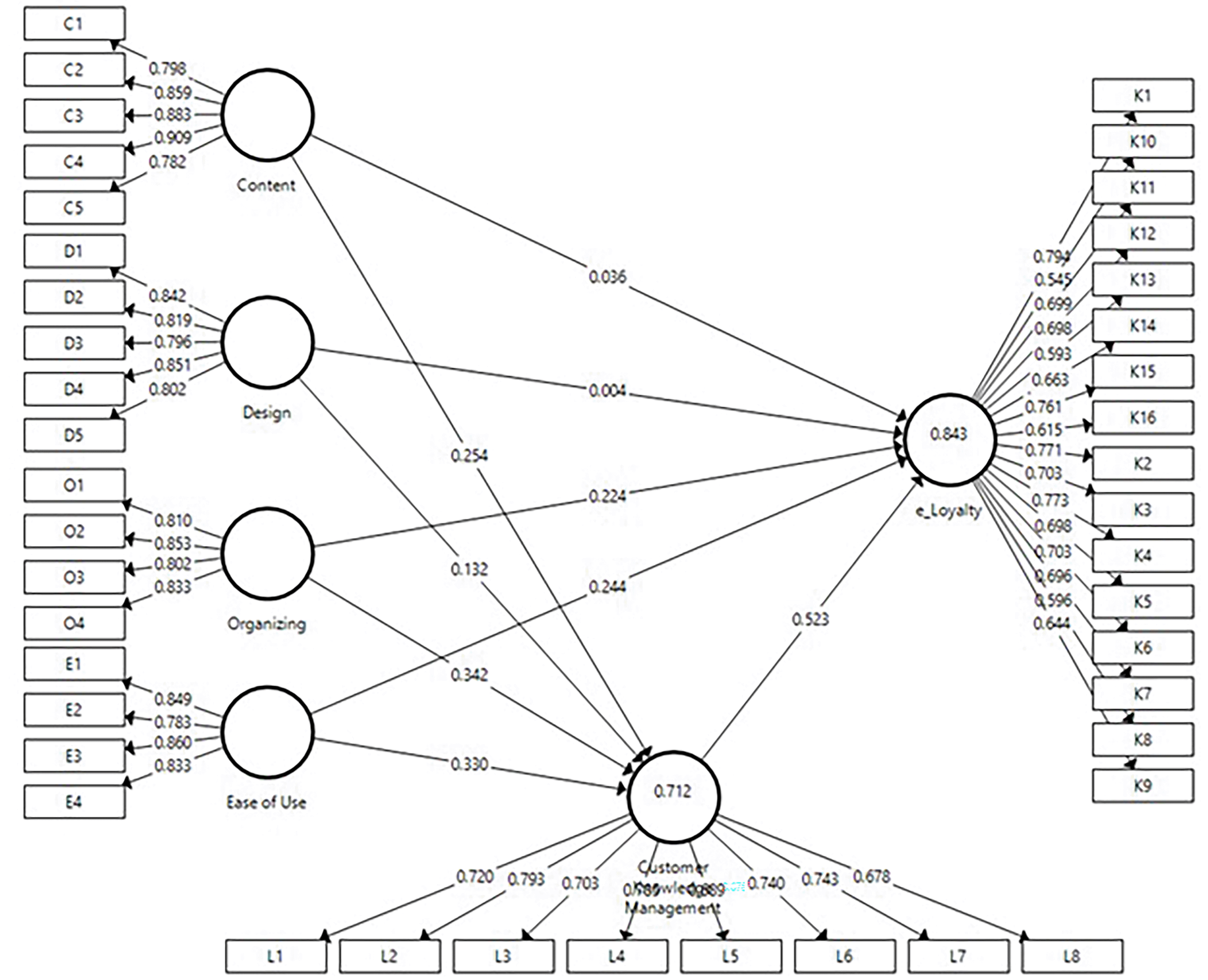
As such, it is rational to conclude that the effect of website quality criteria is positively related to e-loyalty through the mediating effect of Customer knowledge management. In this respect, Customer knowledge management has played a key role as a mediator in this study, and H9 was supported. H1 and H2 are not supported because they do not fulfill the relationship with e-loyalty. The P-value indicates the likelihood of accepting or rejecting the hypotheses, as well as interpreting the relationship between the variables, which depends on the chosen significance level (typically 0.05, 0.01, or 0.0001). The table data indicates that all relationships between constructions are strong and have been accepted, except for H1 and H2. As for the T-statistic values, they are associated with P-values. The stronger the relationship (P < 0.000), the higher the T values. As for F2 values, it is used to measure the size of the effect of the independent variable on the dependent variable. If the F2 values are equal to or less than 0.02, it indicates a weak effect. If it equals 0.15, it indicates the average impact; if it equals 0.35 or more, it indicates a strong and influential impact.
The findings of this work represent a highly valuable contribution to the theoretical and empirical evidence on the importance of website quality, customer knowledge management, and e-loyalty. The statistical analysis revealed that website organization and ease of use were positively correlated with e-loyalty. Earlier investigations are in line with this finding, with the quality of organization and ease of use being identified as significant determinants of website criteria that influence e-loyalty.50,64 However, the findings unexpectedly show that the design and content quality have no relation to e-loyalty. These results are in line with the investigations of Jeon, Jeong.72 The low impact of both website content and design on e-loyalty may be due to the quality of substantive and contextual information, as well as the quality of representative data. Furthermore, the quality of accessibility information may not meet the desired level, or consumers may be unable to find the information they want, as noted by (Hur et al., and Giao et al.73,74). Moreover, empirical results indicate that Content quality, organizing quality, and Ease of use quality are positively related to Customer knowledge management, as these findings align with the outcomes of Gebert et al. and Widagdo, Roz.66,75 In contrast to expectations, the path analysis of design quality on Customer knowledge management was lower than other indicators. This may be due to unsuccessful system function and website design that fail to provide clients with the ability to browse for pertinent service information and share their personal knowledge, ideas, and related experiences.76 Conversely, Customer knowledge management has played a key role as a mediator in this work, and H9 was supported.
Empirical findings suggest that the quality of a company's website has a positive impact on satisfaction and consumer loyalty.43 Similarly, Kaya, found that familiarity and cognition of website quality moderate the relationship between consumers’ e-loyalty and e-satisfaction.7 The outcome of this work differs from that of Giao et al.,74 which showed that e-trust, perceived enjoyment, and e-satisfaction have successfully mediated the influence of website quality on customers’ loyalty. The current work, in addition to discovering direct and indirect relationships between the variables, has used CKM as a moderating variable to examine the relationship and impact of website quality on e-loyalty. Moreover, this study differs from that of Tsai, which suggests that the “functional, emotional, and symbolic dimensions” of website design quality affect e-loyalty.32 In contrast, this study has examined website criteria, such as content, design, organization, and ease of use, to be adopted for achieving e-loyalty, including e-trust and e-satisfaction. Additionally, CKM was used as a moderated variable.
First, as with any study, several research limitations of the current study should be considered. The current study was conducted in a specific region of the country (Iraq), represented by Nineveh Governorate, and therefore does not reflect the entire country. Similarly, the current work was carried out at the Rafidain Bank branch in Nineveh Governorate, so there may be differences in other branches of the bank located in different cities. Second, the sample size of the current study, comprising 311 participants, is considered acceptable but could be maximized for future generalizability. A larger sample size could be even more beneficial. Third, the study focused on the services provided by banks and did not address industrial companies with specific products in terms of testing website quality. Investigate the quality of industrial companies' websites and examine their impact on other variables.
The results of the current study could enrich the body of knowledge. Understanding Iraqi bank customer behavior through the Internet involves designing a website and determining its quality standards, managing customer knowledge online, assessing the loyalty level of current customers, and maintaining this loyalty. Therefore, banks have the potential to manage customer knowledge, encompassing knowledge about customers, knowledge about customer interactions, and knowledge about customer preferences, through their websites. Furthermore, through website quality, banks can gain customer trust in the services provided and the resulting satisfaction and loyalty. Based on these results, banks can now improve the quality of their websites and incorporate advanced, modern standards to have a significant impact on increasing customer satisfaction, trust, and online loyalty.
The results of this study shed light on several important issues related to the concepts of Website Quality, E-loyalty, and Customer Knowledge Management. Not addressed in previous studies (Locally). First, the study confirms that website quality, especially its criteria features such as organization and ease of use, has a significant impact on launching E-loyalty through a direct relationship. In contrast, website criteria such as content and design have been shown to hurt e-loyalty.
In addition, this concept will be significantly enhanced when we use customer knowledge management as a moderator between Website Quality and E-loyalty (Indirect Impact). In the context of banks, e-loyalty is a significant challenge to reach. This is due to the establishment of the consumer's mental image, which is crucial for the first interface design in marketing strategies, particularly in terms of ease of navigation and usability. Hierarchical multiple regression analysis showed that moderators of customer knowledge management partially mediated the satisfaction Relationship between website quality and E-Loyalty. Banks also need to ensure their websites are visually appealing and update the information and user guides provided.
The research presented in this article had limitations. The author deliberately selected the most common methods for evaluating websites for banks, focusing on improving methods for E-loyalty.
This study involved human participants. Formal ethical approval was not required according to the institutional guidelines of the authors’ affiliated institution, as no institutional review board (IRB) or ethics committee is currently in place for this type of research. Nevertheless, the study was conducted in accordance with internationally accepted ethical principles for research involving human participants. Participation was voluntary, informed consent was obtained from all participants, anonymity and confidentiality were assured, and no personally identifiable information was collected. The research posed no risk to the wellbeing of participants.
| Views | Downloads | |
|---|---|---|
| F1000Research | - | - |
|
PubMed Central
Data from PMC are received and updated monthly.
|
- | - |
Provide sufficient details of any financial or non-financial competing interests to enable users to assess whether your comments might lead a reasonable person to question your impartiality. Consider the following examples, but note that this is not an exhaustive list:
Sign up for content alerts and receive a weekly or monthly email with all newly published articles
Already registered? Sign in
The email address should be the one you originally registered with F1000.
You registered with F1000 via Google, so we cannot reset your password.
To sign in, please click here.
If you still need help with your Google account password, please click here.
You registered with F1000 via Facebook, so we cannot reset your password.
To sign in, please click here.
If you still need help with your Facebook account password, please click here.
If your email address is registered with us, we will email you instructions to reset your password.
If you think you should have received this email but it has not arrived, please check your spam filters and/or contact for further assistance.

Comments on this article Comments (0)