Keywords
Cryptocurrencies, US Financial markets, Portfolio Optimization, Autoregressive Distributed Lag, ARDL.

This article is included in the Fallujah Multidisciplinary Science and Innovation gateway.
Cryptocurrencies, US Financial markets, Portfolio Optimization, Autoregressive Distributed Lag, ARDL.
Following their characterization as a bubble, cryptocurrencies have developed to the point where various central banks are now actively contemplating the issuance of their own digital currencies. Cryptocurrencies represent a relatively recent category of investment that has seen growing interest from investors. While certain cryptocurrency tokens can serve payment purposes akin to fiat currency, they are often acquired primarily for resale in the secondary market and are frequently viewed as an investment. According to https://www.coingecko.com/en/global-charts , the global cryptocurrency market cap is $3.96 Trillion (August 2025), 80.93% change one year ago ( Global Cryptocurrency Market Cap Charts, 2025). Despite the increasing interest from both investors and researchers in this emerging market, cryptocurrencies as an asset class remain less explored compared to more established investment options. This opens numerous research avenues to gain deeper insights into how cryptocurrencies serve as diversifiers, act as a hedge against risks, or whether they can enhance portfolio performance and be seen as suitable for long-term investments versus mere speculative trading. While traditional assets may offer consistent returns, investors are always in search of ways to boost portfolio results. One major obstacle in the exploration of cryptocurrencies is comprehending and measuring their volatility. In contrast to conventional financial assets like stocks and foreign currency, cryptocurrency markets function around the clock, lack centralized oversight, and are particularly vulnerable to external disruptions, the impact of social media, and technological changes. Given these intricacies, precise risk evaluation and volatility modeling are essential for investors, financial entities, and policymakers aiming to maneuver through this swiftly changing market. Therefore, this paper aims to contribute to the analysis of the reflection of cryptocurrencies on optimization of the US financial markets portfolio.
Recently, the emergence of cryptocurrencies, a blockchain technology that facilitates peer-to-peer trading and aims to revolutionize financial markets, has attracted widespread attention. The development of online payment platforms using blockchain technology, known as “cryptocurrencies,” has contributed to their integration into formal payment systems. Due to the increasing interest in encrypted currencies, it is necessary to review the current research literature on encrypted currencies and determine the areas of future studies (Bulut, 2018). Unlike paper currencies, cryptocurrencies provide safe, fast and unknown transactions without the need for a central or commercial bank. The total market value of more than (18,000) cryptocurrencies reached (1.7) trillion US dollars on March 7, 2022, as the market value of Bitcoin amounted to (725) billion US dollars, valued at 42.3% of the total coded currency market dominance, followed by Ethereum and a market value of (303) US dollars (Ahmed et al., 2023). Critics were called these cryptocurrencies speculative commodities, bubbles, and Ponzi schemes (Dowd, 2014; Popper, 2018),virtual currency supporters expect a potential replacement of paper currencies (Baur et al., 2020; Popper, 2018). But Roth (2024) believes that the direct impact of the cryptocurrencies on financial markets and global trade will be probably negative. And since cryptocurrencies do not perform money functions, but are speculative assets, the growing and continuous interconnection with the broader financial system poses a threat to financial (global) stability, with the negative effects of financial markets and global trade. As digital gold, Bitcoin (BTC) attracts a largely non -monetary Internet economy for its advantages, which includes the transparency of continuous prices, the absence of restrictions, turmoil and supervision of external parties and (Baur et al., 2020; Bedi & Nashier, 2020; Korauš et al., 2021). However, most Bitcoin experimental studies have been described as an investment asset due to its high fluctuation, which means that it cannot be used as a means of exchange. Prices in the cryptocurrency field often undermined its ability to work as a way to exchange value in the long run (Baur et al., 2020). As a blatant example of encrypted currencies, Bitcoin was launched in early 2009 without a sensation, but it is now widely known as a revolutionary technique in the world of money and payments. The pre-determined schedule is prohibited from reducing its value. The technique of distributed ledger enables individuals to conduct their transactions with a borrowed identity without relying on a trusted third party. Its open-source code has inspired thousands of alternative cryptocurrencies, or what is known as alternative currencies. It will not be surprising that, a hundred years later, in bitcoin along with ATMs, recovered banknotes, and the excluded edge, as remarkable progress in payment technology (Luther & Sridhar, 2022).
Cryptocurrencies are the first pure digital assets listed by asset managers. Although there are some similarities between it and the traditional assets, each of them has its own nature, and its behavior is still under study and analysis (Fang et al., 2022). Regarding one of the two most important cryptocurrencies, (Mokni et al., 2025) refer that Bitcoin and Ethereum, and the factors that affecting efficiency, using daily data from August 7, 2016, to February 15, 2023, the adjusted market inefficiency magnitude (AMIMs) measure and quantile slope show with evidence, time variation in the levels of market efficiency for Bitcoin and Ethereum. Interestingly, the quantile regressions indicate that global financial pressures negatively affect the (AMIMs) measures across all quantiles. Notably, the liquidity of cryptocurrencies positively and significantly affects (AMIMs) regardless of the level of efficiency, while the positive effect of money flow is significant when the markets of both cryptocurrencies are efficient. (Umar et al., 2020) supported (Mokni et al., 2025) by a large and chief chronic conditional relationship between most cryptocurrencies and stock market indicators, and that negative shocks play a greater role than similar positive shocks. In all, his results explore the possible ways to diversify investor investments in cryptocurrencies and major stock markets. The basic indicators of the US economy are weak at the Bitcoin price against the US dollar. It has been proven that cryptocurrency is an effective investment asset with high returns and high fluctuations (Baranovskyi. et al., 2021). In the same vein, (Murzello, 2025) put forward that investor behavior has shifted, since the market participants often interact with the trends of encrypted currencies, and thus integrate digital assets into their comprehensive investment strategies, this emphasizes the importance of understanding the interaction between encrypted currencies and traditional financing, which indicates that with the acquisition of encrypted currencies, their ability to disable existing financial mechanisms can reshape market dynamics.
Financial markets play a pivotal role in allocating resources in modern economies (Goldstein, 2023). There are several different types of markets: (stock market, over the counter market, bond market, monetary market, derivatives market, Forex market, commodity market, cryptocurrency market), each focuses on the types and categories of tools available in it (Hayes, 2025). It, like bond and stock markets, is necessary to enhance economic efficiency by directing money from people who do not use it as a product to those who use it. In fact, financial markets that work efficiently are a major factor in achieving high economic growth, and the deficient performance of financial markets is one of the reasons for many countries of the world to remain in extreme poverty. Financial market activities also have direct effects on personal wealth, companies and consumers, and the periodic performance of the economy (Frederic et al., 2024). Since Fama [1970], this central issue was treated based on the concept of market information and the ability to predict revenue. According to the hypothesis of market efficiency (EMH), since rational investors' expectations for information are quickly reflected in market prices, price fluctuations are not predictable. This has been tested in stock markets, bonds, foreign currencies and other emerging markets (Yi et al., 2023). The market is economically efficient when the stock prices reflect all information, and the rates of returns are not achieved than those achieved by the purchase and retaining strategy (“buy-and-hold”). In a broader sense, the efficiency market hypothesis (EMH) is applied to other markets in addition to stocks, including cryptocurrencies. In theory, the information efficiency of the encrypted currency market can be justified since blockchain technology provides direct and rapid access to information related to all transactions, although investors may lack the technical tools or skills needed to analyze the blockchain, and may not be able to take the optimal use of the abundance of information that it provides. This is difficult for investors to determine whether it is a specific encrypted currency rigorously evaluated by the market, with the reflection of all information in its prices, which makes this market an information efficient (Łęt et al., 2022). The prices of cryptocurrencies showed a noticeable decrease in efficiency during the sample. However, there are indications of improving the efficiency of all cryptocurrencies, all of which have seen a noticeable decrease in Adjusted Market Inefficiency Magnitude (AMIM). Cryptocurrency markets are witnessing a remarkable improvement, with the improvement of trading volume and low fluctuations (Tran & Leirvik, 2020). There is an effect to introduce financial derivatives in the new and relatively volatile cryptocurrency field, which should cause the concerns of traders, hedgers, investors and organizational bodies (Kristjanpoller et al., 2024). Madichie et al. (2023) refute the idea that the encrypted assets deserve to be treated like an independent asset category. It is interesting that the results of the causal tests for Wavelet Granger do not show any causal relationship between the Bitcoin, Ethereum and Litecoin price chain. The degree of market efficiency varies over time in the markets (Noda, 2021). Effective investment portfolio management strategies are very important considering the impact of cryptocurrencies on traditional financial markets. Studies that underwent review emphasize the importance of observing the interconnection between the main cryptocurrencies, the impact of volatility on investment decisions, and the importance of short -term strategies in dealing with market dynamics (Sahu et al., 2024). Protecting the value of money from factors such as high inflation and low interest rates lead investors to invest in alternative forms of investment instead of traditional. The investment process is the one that guarantees, after an accurate analysis, the safety of the capital and a satisfactory return (Hashemkhani Zolfani et al., 2022). Bitcoin is 3.3 times more volatile than the Standard & Poor's 500 (S&P 500) index, 4.6 times more volatile than gold. Bitcoin siding more than 26 times higher than the global average, and ten times higher than the Standard & Poor's 500 index. It is also important to take into account energy consumption and sustainability of investments when evaluating their feasibility and long-term risks. In some cases, investments in companies with strong sustainability and low carbon fingerprint may be considered less risky. Due to Bitcoin's dependence on a network of computers to verify the authenticity of transactions based on the proof of work, a consensus mechanism for energy consumption may be seen in investment in Bitcoin as more risky (Qezelbash et al., 2023). (Sahu et al., 2024) Analysis submitted can guide decision making, risk management strategies, and investment portfolio building technologies in the encrypted currency market. By integrating the methodology of reducing surface (kurtosis) and diversifying investment portfolios using encrypted currencies, adopting regular balance practices, and giving priority to risk management, investment portfolios and investors can deal with the complications of encoded currency market with more effectively and improve their returns. High volatility and lower correlation are the distinctive features of encrypted asset markets, while traditional markets feature low fluctuations or high correlation (Kaplan Yıldırım et al., 2025). The use of Marquitz's method of selecting a portfolio, with all restrictions, is desirable, possible and applied, but it suffers from serious restrictions in terms of neglecting the costs of transactions, exchange rates, and actual trading in the stock market (Poljašević & Grujić, 2022). The enhancement of investment portfolios in alternative cryptocurrencies improves the performance of the portfolio and the efficiency frontier, compared to the traditional investment portfolios. This improvement is increasingly increasing among investors looking for risk (Youssef et al., 2023).
Research Problem: The research problem is defined as an attempt to understand and analyze the impact of cryptocurrencies, as intangible financial assets characterized by rapid expansion, high price volatility, and the accompanying high risk of returns, as one of the determinants of optimal investment portfolios, on financial market indices in the United States, the largest market in terms of trading volume in this type of asset. The problem is crystallized through the following question:
What is the extent and direction of the impact of cryptocurrencies on the performance of US financial market indices?
Significance of Research: The research derives its importance from revealing the extent to which cryptocurrencies, a modern type of intangible investment tool, impact traditional financial market indicators as a benchmark for the efficiency of traditional investment and comparing it to investment in cryptocurrencies. It also contributes to assisting investors in making decisions related to building their investment portfolios within the framework of their trade-off between return and risk.
1. Review the theoretical literature related to the concept of cryptocurrencies, financial markets, and forming investment portfolios, considering the presence and spread of cryptocurrencies.
2. Recognize the relationship between cryptocurrencies and US financial market indices.
3. Identify the impact of cryptocurrencies on US financial market indices and the nature of that impact.
4. Analyze investors’ preferences for investing in both cryptocurrencies and traditional US financial markets based on the risk-return dichotomy.
Research Hypotheses: To achieve the research objectives, the following hypotheses were proposed:
The research hypothesis can be formulated as a main hypothesis, from which three sub-hypotheses emerge, as follows:
Main Hypothesis: There is a statistically significant impact of cryptocurrencies on the performance of US financial market indices.
Sub-hypotheses:
• There is a statistically significant impact of the prices of the five major cryptocurrencies (Bitcoin, Ethereum, Tether USDt, XRP, BNB) on the performance of the DJIA Index.
• There is a statistically significant impact of the prices of the five major cryptocurrencies (Bitcoin, Ethereum, Tether USDt, XRP, BNB) on the performance of the S&P 500 Index.
• There is a statistically significant impact of the prices of the five major cryptocurrencies (Bitcoin, Ethereum, Tether USDt, XRP, BNB) on the performance of the NASDAQ Composite Index.
The target population for the research was cryptocurrencies, in addition to US market indices. The research sample included the five largest currencies by market capitalization on December 29, 2024, as shown in Table 1.
| Rank | Name | Ticker symbol | Market cap. |
|---|---|---|---|
| 1 | Bitcoin |  BTC
BTC | $1,852,181,077,889.93 |
| 2 | Ethereum |  ETH
ETH | $403,511,585,313.05 |
| 3 | Tether USDt |  USDT
USDT | $138,695,668,673.10 |
| 4 | XRP |  XRP
XRP | $120,169,966,773.41 |
| 5 | BNB |  BNB
BNB | $99,905,620,070.53 |
Where market capitalization = current price × the supply and circulation of the cryptocurrency (the amount of the currency being mined, plus the amount of currency in circulation among investors).
The sample also included three of the highest-performing indices in the United States, as listed in Table 2.
| Rank | Name | Ticker Symbol |
|---|---|---|
| 1 | Dow Jones Industrial Average | DJI |
| 2 | S&P 500 | SPX |
| 3 | NASDAQ Composite | IXIC |
The time sample for the research was the monthly data for the period 2020-2024 for both the explanatory and dependent variables.
A quantitative model was developed to illustrate the direction and impact of the relationship between the prices of the five major cryptocurrencies (Bitcoin, Ethereum, Tether USDt, XRP, BNB) and the performance of the three US financial market indices (Dow Jones Industrial Average, S&P 500 Index, and Nasdaq Composite Index). Data for these variables and a time series were used for the period from January 2020 to December 2024, with daily data and a total number of observations for the time series (60).
a) Dependent variables: These variables were the three US financial market performance indices:
b) Independent variables (cryptocurrencies): These were the prices of the five main cryptocurrencies:
The estimation models are formulated in the form of three mathematical functions that are used to construct three standard equations that reflect the impact of cryptocurrencies on the performance indicators of US financial markets, expressed as market returns, as follows:
1. Dow Jones Industrial Average (DJIA) Model:
DJIA=f [BTC, ETH, USDT, XRP, BNB]
DJIA=β0+β1·BTC+β2·ETH+β3·USDT+β4·XRP+β5·BNB+
2. S&P 500 Index Model:
S&P500=f [BTC, ETH, USDT, XRP, BNB]
S&P500=β0+β1·BTC+β2·ETH+β3·USDT+β4·XRP+β5·BNB+
3. NASDAQ Composite Index Model:
NASDAQ=f [BTC, ETH, USDT, XRP, BNB]
NASDAQ=β0+β1·BTC+β2·ETH+β3·USDT+β4·XRP+β5·BNB+
The time series data graphs shown in Figure 1, along with the results of the Phillips-Perron (1988) unit root test in Table 3, show that some of the study variables' time series are non-stationary at the level. To address this, first differences were taken. After re-applying the test, the time series data became stationary at their first differences. This stability is demonstrated by the calculated values of the Phillips-Perron test, which showed statistical significance across the three formulas (None, Intercept, Intercept, and Trend), with probability values (Prob.) less than (0.05). This confirms the rejection of the unit root hypothesis and supports the stability of the series after taking their first differences.
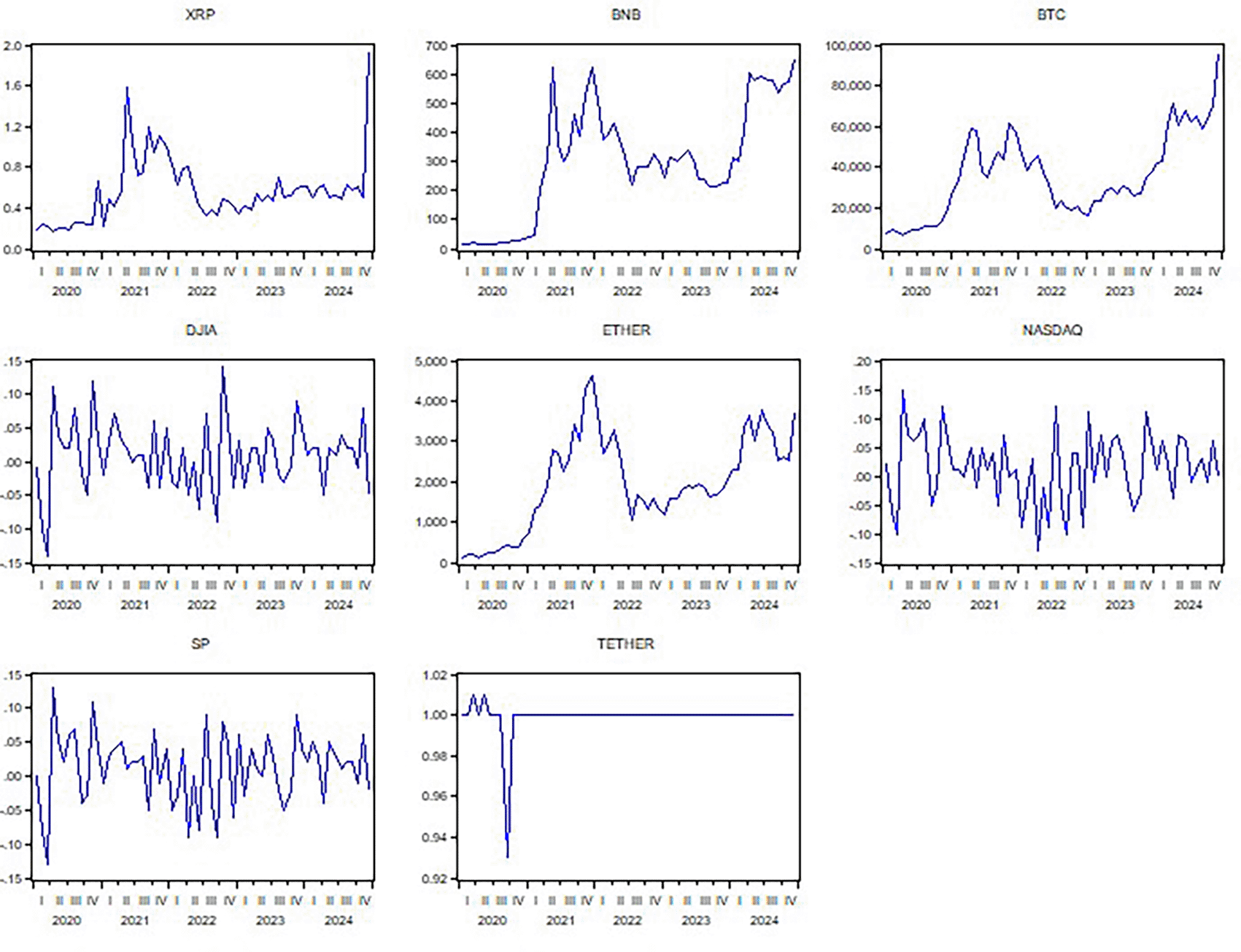
It illustrates the time series for each of the independent research variables (the five currencies tested in the research) as mentioned in Table 1, in addition to the dependent variables in the research, which are the financial market indicators that are the subject of the research as mentioned in Table 2.
Since the time series of the model variables are stationary within the level and the first differences are maximum, and do not exceed the first differences limits, these time series meet the preconditions for conducting the cointegration test. By using the (bound test) after selecting the most accurate and significant model, which represents the relationship between cryptocurrencies and the performance of financial markets, to verify the existence of a long-term cointegration relationship between the variables of each of the three models, the results of the cointegration test were reached according to the ARDL model, as shown in Table 4.
The results of the bound test confirm the existence of a cointegrating relationship between cryptocurrencies and financial market performance for the three models, at a significant level of 5%. The calculated F value exceeded the upper critical bounds at this level of significance, reflecting the existence of a long-term relationship extending from the five cryptocurrencies (Bitcoin, Ethereum, Tether USDt, XRP, and BNB) to the performance of the three US financial market indices (the Dow Jones Industrial Average, the S&P 500, and the Nasdaq Composite).
Based on the results of the bound test indicating the existence of cointegration between the model variables, the long-term parameters were estimated, the results of which are included in Table 5.
To reveal the extent of structural stability of the estimated model coefficients during the study period, the cumulative stability test (CUSUM) and the cumulative stability squares (CUSUMSQ) were adopted, the results of which are listed in Figures 2, 3 and 4, which clearly indicate that the model coefficients maintained their structural stability throughout the study period, which supports and proves the existence of a stable relationship between the study variables as well as the consistency of the model. This conclusion is reinforced by the position of the graph of the CUSUM and CUSUMSQ test within the critical limits and at the 5% level, which indicates that the long-term estimators of the model enjoy a degree of stability that is consistent with the short-term parameters, which makes them suitable for analysis.
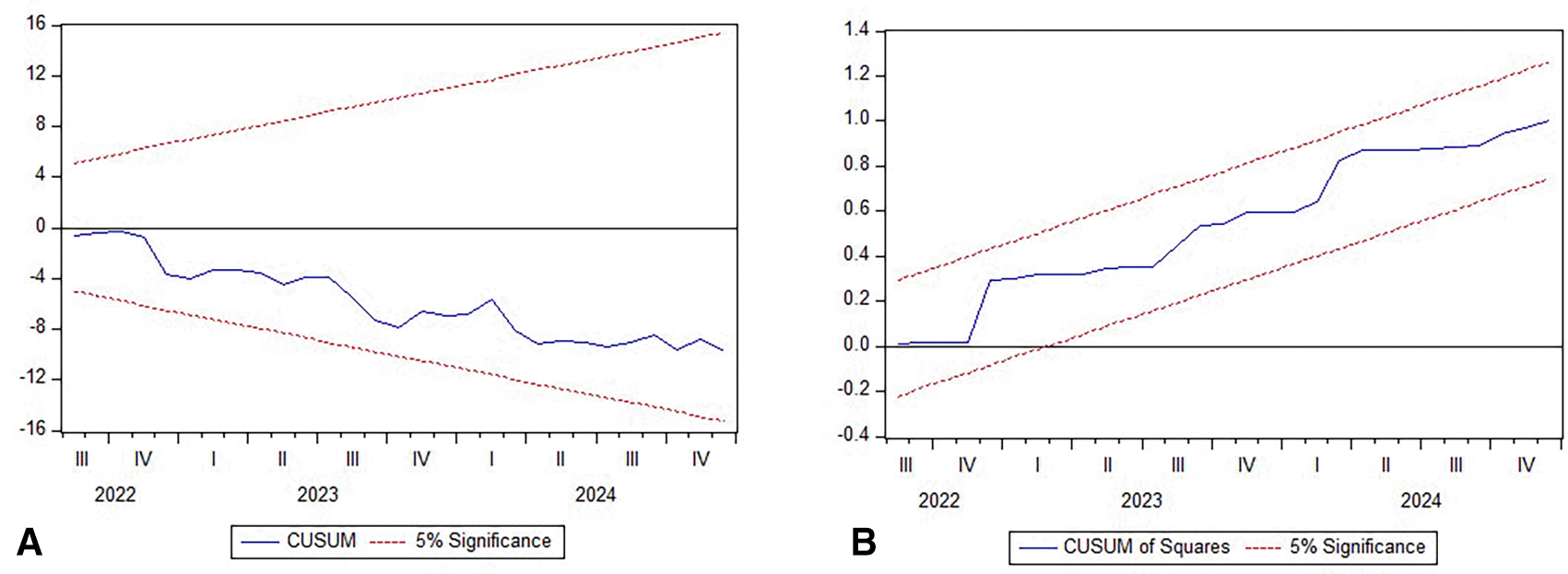
The figure prepared by the researcher is based on the results of the (Eviews 10) program, for the purpose of illustrating the stability analysis of the first model, which relates to NASDAQ Composite market index.
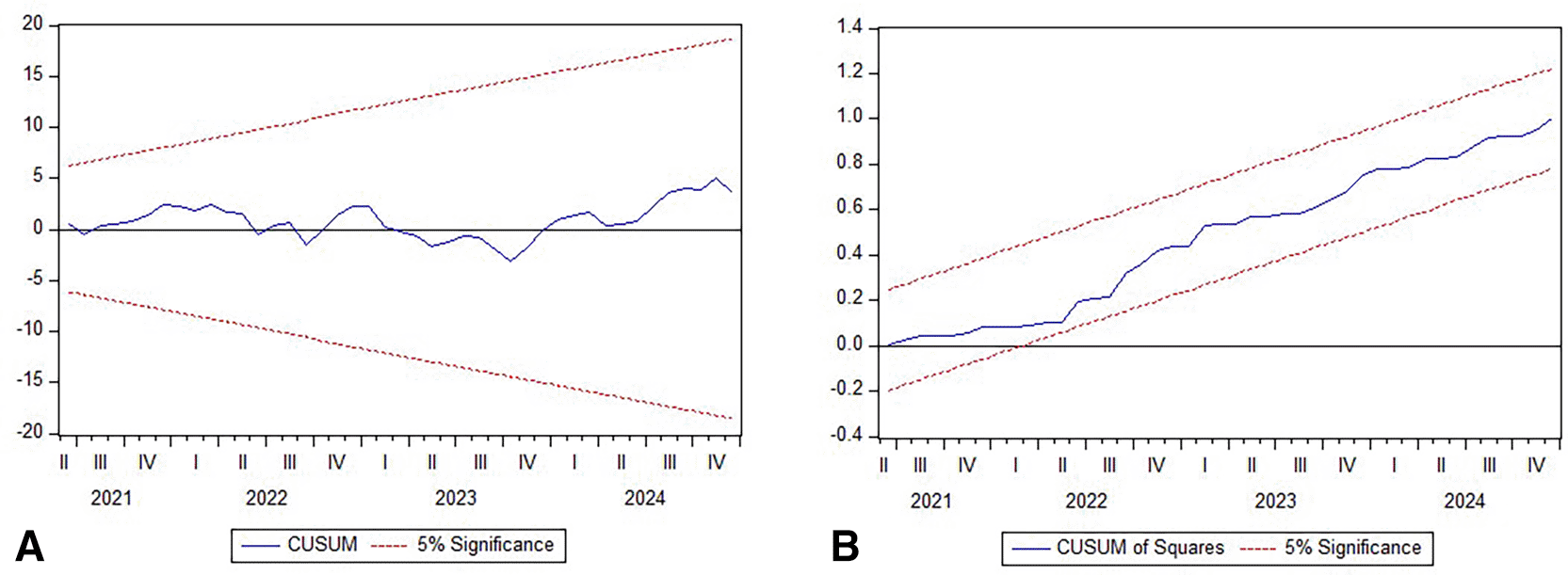
Illustrate the stability analysis of the second model, which relates to Dow Jones Industrial Average index.
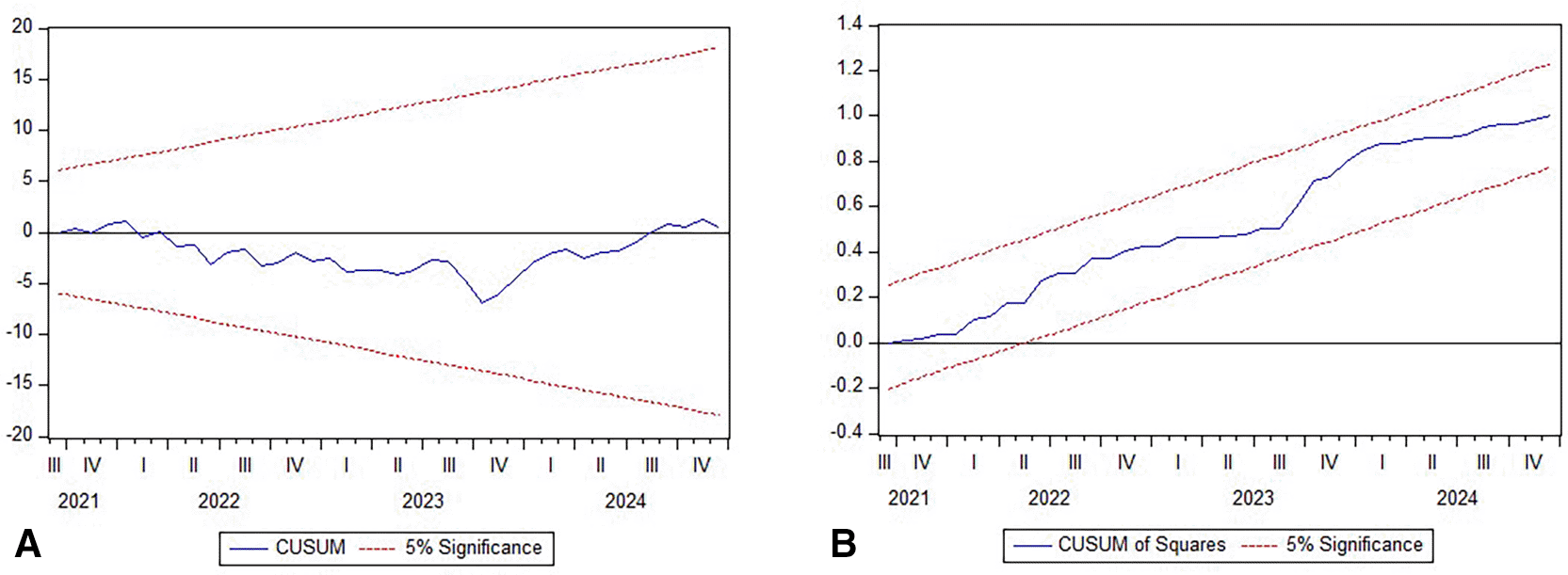
The figure prepared by the researcher is based on the results of the (Eviews 10) program, illustrates the stability analysis of the third model, which relates to S&P 500 (standard & poor's 500) index.
The results in Tables 5 and 6 showed the following:
• The first model: the NASDAQ index:
The long-term results showed various effects of cryptocurrencies on the index. Bitcoin and Tether had a significant and positive impact on the NASDAQ index, with impact coefficients of 0.00000235 and 4.6818, respectively, with statistical significance of 0.0263 and 0.0044, respectively. Conversely, reflecting their important role as a safe-haven asset, Ethereum had a negative and significant impact, reaching -0.0000418 and a statistical significance of 0.0193, while BNB and XRP had no significant impact. In the short term, the results revealed a rapid correction of imbalances, with the error correction coefficient reaching -1.470403 at a significance level of 0.0000. It was also noted that changes in Bitcoin and Tether prices had the greatest impact on the index in the short term, with their impact clearly statistically significant.
• The second model: the DJIA index:
Bitcoin had a positive impact on the DJIA index, albeit at a lower significance level 0.0534, while Ethereum's negative impact was strongly evident at a coefficient of -0.0000211 and a significance level of 0.0078. BNB, XRP, and Tether showed no significant impact. In the short term, the error correction coefficient showed a negative value -1.814353 at a significance level of 0.0000, indicating a good ability to restore balance. The index was primarily affected by the short-term price fluctuations of Ethereum and Tether, with these relationships clearly demonstrating statistical significance.
• The third model: the S&P 500 Index
The long-term results showed that Tether and Bitcoin had a positive and significant impact, with coefficients of 1.0405 and 0.000000760, respectively, at a significant level of 0.0363 and 0.0243, respectively. The remaining currencies had no significant impact, while BNB, XRP, and Ether had no significant impact. In the short term, the error correction coefficient was -1.893157 at a significance level of 0.0000, reflecting a high degree of correcting imbalances. The short-term impact was primarily focused on the price fluctuations of Ethereum and Tether, with the results demonstrating clear statistical significance for these relationships.
1. Based on the research findings, it can be argued that the positive impact of Bitcoin and Tether on the performance of all US stock market indices may indicate that they act as an investment asset that supports the growth of financial markets, especially in the long term. This suggests the possibility of considering Bitcoin and Tether as a guiding indicator for the performance of investment portfolios.
2. In the context of Ethereum's negative performance across all indicators, investors are likely to shift to other currencies or traditional assets. This may be interpreted as a potential hedging instrument at certain times, making it a safe haven during adverse market conditions.
3. BNB and XRP did not show any statistically significant impact on stock indices in most models, indicating their limited current role in influencing major financial markets, suggesting they are not considered effective tools for influencing the US financial markets studied.
1. Develop clearer regulatory frameworks that enable the integration of Bitcoin and Tether alongside traditional investment products into investment portfolios.
2. Include Bitcoin in long-term investment portfolios at certain rates, while Tether can be used as a primary hedge against sharp market volatility.
3. Developers should also assess the impact of ongoing technical updates on the attractiveness of investing in this Ethereum currency. Investors are advised to adopt short-term trading strategies rather than long-term investments in this currency, focusing on monitoring the performance of the currency index.
4. Enhance the realistic use cases of the BNB and XRP currencies, by developing strategic partnerships with major financial institutions in a manner that can contribute to increasing the impact of these currencies.
5. At the general level, the need to create a specialized observatory appears to monitor the dynamic relationship between cryptocurrencies and financial markets, as well as developing advanced analytical tools that integrate technical indicators of currencies with the basic indicators of shares in a way that contributes to deepening the understanding of these complex relationships.
| Views | Downloads | |
|---|---|---|
| F1000Research | - | - |
|
PubMed Central
Data from PMC are received and updated monthly.
|
- | - |
Provide sufficient details of any financial or non-financial competing interests to enable users to assess whether your comments might lead a reasonable person to question your impartiality. Consider the following examples, but note that this is not an exhaustive list:
Sign up for content alerts and receive a weekly or monthly email with all newly published articles
Already registered? Sign in
The email address should be the one you originally registered with F1000.
You registered with F1000 via Google, so we cannot reset your password.
To sign in, please click here.
If you still need help with your Google account password, please click here.
You registered with F1000 via Facebook, so we cannot reset your password.
To sign in, please click here.
If you still need help with your Facebook account password, please click here.
If your email address is registered with us, we will email you instructions to reset your password.
If you think you should have received this email but it has not arrived, please check your spam filters and/or contact for further assistance.

Comments on this article Comments (0)