Keywords
Physical literacy; problem-based learning; fitness application; grit; physical education; self-regulated learning

Physical literacy; problem-based learning; fitness application; grit; physical education; self-regulated learning
Physical literacy has become a central construct in contemporary physical education scholarship, reflecting a paradigm shift from narrowly defined motor-skill outcomes toward holistic human development through movement (Jefferies et al., 2019). Physical literacy is commonly conceptualized as an integrated capability comprising motivation, confidence, physical competence, knowledge, and understanding that enables individuals to engage in physical activity across the life course (Foulkes et al., 2020). This multidimensional framing positions physical education not merely as a site for short-term skill acquisition, but as a foundational educational domain that supports lifelong health, well-being, and social participation. On this basis, physical literacy is increasingly discussed as a primary curricular outcome rather than an incidental by-product of participation in physical activity programs (Jefferies et al., 2019).
Embedding physical literacy within school curricula is therefore intended to cultivate not only movement proficiency but also psychosocial resources that support sustained engagement in physically active lifestyles (Durden-Myers & Bartle, 2023). Physical-literacy-enriched physical education has been argued to contribute to learners’ motivation and confidence, alongside their physical competence, by foregrounding learner agency and meaning-making (Durden-Myers & Bartle, 2023). In addition, links have been drawn between physical literacy and adaptive capacities such as resilience in children and youth, reinforcing its relevance for students who must navigate diverse physical and social demands across schooling and beyond (Jefferies et al., 2019).
Despite growing consensus regarding the importance of physical literacy, concerns persist about the suitability of traditional instructional approaches for achieving its multidimensional aims. Conventional pedagogies in physical education have often been characterized by teacher-centered instruction, repetitive drills, and standardized performance benchmarks, which can privilege technical execution while underemphasizing learner autonomy and reflective engagement (Pot et al., 2018). Such patterns may limit students’ opportunities to develop the motivational and cognitive dispositions required for lifelong participation in meaningful movement contexts (Durden-Myers & Bartle, 2023).
Within this pedagogical landscape, problem-based learning (PBL) has gained recognition as a promising instructional model for physical education because it positions movement learning within inquiry and collaborative problem solving. Evidence from a physical education intervention suggests that the interactive and student-centered nature of PBL can be associated with higher student motivation and engagement, particularly when learning tasks require collaboration and peer support (Luo, 2019). This heightened engagement is particularly relevant in physical education contexts, where active participation is central to meaningful learning and skill development. Evidence from a physical education intervention in badminton reported that PBL facilitated skill development and increased students’ learning motivation, while also providing structured opportunities for students to interact and support one another during learning (Luo, 2019). At the same time, implementation challenges have been noted. In work discussing PBL in physical education disciplines, (Sharipova, 2024) highlighted that students may experience negative emotions if they are insufficiently prepared for the self-directed demands of PBL, and that the approach can require substantial instructional time and high teacher readiness.
Alongside pedagogical innovation, digital technology has rapidly expanded in the broader physical activity ecosystem, with mobile fitness applications becoming particularly prominent beyond formal school contexts. A brief report in Technologies noted that the number of health and fitness applications increased by over 21% between 2019 and three quarters into 2020, alongside high smartphone accessibility (Domin et al., 2021). Mobile fitness applications are also diverse in their functionalities, including goal setting, activity monitoring, exercise history, and the ability to share progress (Sousa Basto & Ferreira, 2025). These features have made fitness apps attractive as tools for tracking and feedback, and have prompted interest in how they might support learning and engagement when thoughtfully aligned with physical education goals.
Mechanistically, mobile fitness applications may influence motivation and persistence by supporting psychological needs and self-regulatory processes. In a qualitative investigation of fitness app users, (Southcott & Jooste, 2024) found that app features such as workout personalisation, goal setting, and private activity logs were experienced as enhancing autonomy and behavioural control. The same study reported that visual performance data and progress tracking were perceived as strengthening competence and confidence, thereby increasing the likelihood of continued exercise engagement (Wilson et al., 2017). In addition, social connectivity features—such as adding friends and participating in peer challenges—were described as fostering relatedness and, for some users, competitive drive through benchmarking and rivalry (Southcott & Jooste, 2024).
However, these affordances do not guarantee educational or health benefits. (Kao & Liebovitz, 2017) cautioned that although many apps allow users to track heart rate, few provide real-time feedback that meaningfully supports appropriate intensity regulation, and they recommended user education in coordination with exercise professionals rather than reliance on apps alone. (Hamari et al., 2018) also noted that motivational effects can vary depending on users’ goal orientations and how individuals experience app features such as notifications and social comparison. Collectively, this evidence suggests that fitness applications can function as powerful supports for monitoring and motivation, but their effects are likely conditional on pedagogical integration, user readiness, and individual differences.
In physical education research, studies examining inquiry-oriented pedagogy and those examining mobile fitness technologies have often developed in parallel. For example, PBL research in physical education has emphasized learning and motivational benefits that emerge from structured inquiry and collaboration (Luo, 2019), while mobile fitness application studies have focused on motivational mechanisms such as autonomy support, competence feedback, and social connectedness (Southcott & Jooste, 2024). In school-based contexts, emerging work also suggests that fitness tracker applications may enhance engagement and motivation in physical education when implemented as part of instruction (Rusmitaningsih et al., 2024). What remains less clear is how fitness applications function when embedded within PBL cycles (problem orientation, inquiry, solution testing, and reflection), and whether digital monitoring and feedback act as catalysts for deeper learning or as distractions that compete with inquiry processes.
Beyond pedagogy and technology, growing literature highlights the role of non-cognitive dispositions in shaping students’ responses to challenging learning environments. Grit is commonly defined as perseverance and passion for long-term goals (Duckworth et al., 2007). In educational and health research, grit is frequently operationalised through two facets—perseverance of effort and consistency of interest—capturing sustained effort and stable goal pursuit over time (Dunston et al., 2022). In physical education, recent scale-development work has treated grit as a salient disposition for learners who must persist through demanding practice and learning tasks (González-Bernal et al., 2022; Guelmami et al., 2022). Empirical studies have also examined how grit relates to physical activity–related behaviours, including moderate-to-vigorous physical activity and sport participation (Daniels et al., 2023).
In technology-supported PBL, grit is theoretically relevant because students must persist through iterative cycles of problem solving while engaging consistently with monitoring and feedback demands. Where PBL can impose substantial self-direction and sustained effort requirements, fitness applications may either amplify these demands (e.g., by increasing the volume of performance data students must interpret) or scaffold them (e.g., by making progress visible and reinforcing effort) (Southcott & Jooste, 2024). An interactional perspective is therefore needed to clarify whether fitness-application integration benefits all learners similarly or provides compensatory support for students who struggle to persist.
Vocational high schools have an essential role in preparing competent workers for industry, and graduates are commonly expected to be ready for immediate entry into the working world (Sudana et al., 2019). However, industry feedback has repeatedly highlighted concerns about vocational graduates’ competence and soft skills, pointing to persistent gaps between schooling and workplace expectations (Sudana et al., 2019).
International research on vocational education further indicates substantial heterogeneity in vocational learning contexts and learner readiness, which has important implications for how students engage with instructional innovations. For example, evidence from China indicates that vocational education and training systems are characterised by uneven learning conditions, including pronounced rural–urban and regional disparities, historical legacies of weak infrastructure in some vocational high schools, and strong local governance effects, all of which shape institutional quality and learning opportunities (Zhao & Liu, 2019). Accordingly, vocational students’ engagement and responsiveness to instructional innovations—including technology-enhanced approaches—may vary across learners and contexts, rather than being uniform across vocational settings.
Against this backdrop, the present study examines the effects of a fitness application–integrated PBL approach on vocational secondary school students’ physical literacy outcomes, while explicitly modelling grit as a moderating variable. Given that many vocational pathways involve sustained physical demands and occupational health considerations, physical literacy may represent a particularly relevant educational outcome for supporting adaptable and safe movement participation beyond school. By testing conditional effects, the study aims to clarify whether and for whom technology-enhanced PBL strengthens physical literacy development, thereby contributing a more nuanced understanding of how pedagogical models, digital tools, and learner dispositions can be aligned to support equitable outcomes in physical education.
This study employed a 2 × 2 factorial between-subjects experimental design to examine the main and interaction effects of instructional model and student grit level on physical literacy outcomes. The first factor was instructional model, consisting of problem-based learning integrated with a fitness application (PBL–App) and problem-based learning without application integration (PBL–NonApp). The second factor was grit, categorized into high and low levels based on pre-intervention assessment. The intervention was implemented as a field-based classroom experiment within regular physical education lessons to maintain ecological validity.
The study was conducted in a public vocational secondary school in Indonesia during the regular physical education program. Participants were Grade XI students enrolled in compulsory physical education. A total of 64 students participated in the study (57 males and 7 females), reflecting the natural gender composition of the school’s automotive engineering program. Gender was not treated as an analytical variable. Given the highly unbalanced gender distribution, gender was not included as a factor in the statistical analyses.
The intervention was implemented over approximately 12 weeks, comprising 16 scheduled physical education lessons (intervention lessons). In addition, baseline and post-intervention assessments were conducted over two class sessions each (Section 2.6), scheduled alongside the regular timetable. All participants followed the same curricular content and instructional duration; experimental groups differed only in the mode of activity monitoring and feedback.
This study adopted a randomized classroom trial design. Intact classes were randomly assigned to either the PBL–App or PBL–NonApp condition prior to the start of the intervention. Grit was measured at baseline and classified using a median-split procedure, resulting in high-grit and low-grit groups. Although grit is frequently treated as a continuous variable, a categorical approach was adopted in this study to facilitate clear interpretation of interaction effects within the factorial experimental framework. Preliminary analyses indicated no significant baseline differences in grit scores across instructional conditions.
The factorial design produced four experimental conditions (n = 16 per group): (1) PBL–App with high grit, (2) PBL–App with low grit, (3) PBL–NonApp with high grit, and (4) PBL–NonApp with low grit.
2.4.1 Core problem-based learning structure
Problem-based learning was implemented using a five-phase instructional sequence adapted for physical education: (1) problem orientation, (2) hypothesis formulation, (3) self-directed information gathering, (4) solution presentation, and (5) reflection. Problems were ill-structured and contextually relevant, such as designing weekly fitness plans or analysing barriers to maintaining physical activity outside school. Teachers acted as facilitators, guiding inquiry and reflection without providing prescriptive solutions. Reflection activities included journaling, peer discussion, and review of individual fitness goals. As part of each problem-based learning cycle, students were also assigned structured independent physical activity tasks to be completed outside scheduled lesson time. These tasks were derived from the problem orientation and hypotheses developed in class and were intended to be implemented in students’ home or community environments, before being revisited during subsequent solution presentation and reflection phases.
Teachers received prior orientation and written instructional guidelines to ensure consistent implementation across experimental conditions.
2.4.2 PBL–App condition
In the PBL–App condition, students used the Strava mobile fitness application to monitor daily physical activity. Application features included step tracking, goal setting, and progress visualisation. Activity data collected outside scheduled lessons were reviewed at the beginning of each class and integrated into the PBL cycle to support reflection, discussion, and strategy revision.
2.4.3 PBL–NonApp condition (Pedometer and manual activity log)
In the PBL–NonApp condition, students monitored daily physical activity using a clip-on waist-mounted pedometer (spring-lever mechanical pedometer). This commonly used non-digital device was attached to the waistband or belt during daily activities and recorded steps based on vertical hip movement. The pedometer provided basic step-count feedback without digital connectivity, automated data storage, or real-time feedback features.
Students also completed a daily paper-based activity log. The log sheet required documentation of: (a) the type of physical activity performed, (b) the total number of steps per day, and (c) the duration of physical activity. To support accountability and parental awareness, each daily log included a section for parent or guardian acknowledgement signature. Logs were collected weekly and reviewed and countersigned by the physical education teacher.
2.5.1 Physical literacy
Physical literacy was assessed using the Canadian Assessment of Physical Literacy, Second Edition (CAPL-2), which measures four domains: Physical Competence, Daily Behaviour, Motivation and Confidence, and Knowledge and Understanding. Scoring followed CAPL-2 guidelines to produce an overall physical literacy score on a standardised 100-point scale.
A minor modification was applied to the physical competence component (CAMSA) to accommodate contextual constraints and participant age. Specific movement tasks were adapted while retaining the core constructs of physical competence assessed in the original CAPL-2 framework. Content validity of the adapted tasks was ensured through expert review by physical education specialists. Reliability of questionnaire-based domains was examined using Cronbach’s alpha (α = 0.81), indicating acceptable internal consistency, while reliability of physical competence measures was assessed using intraclass correlation coefficients (ICC > 0.90), reflecting excellent measurement reliability. These procedures are consistent with prior cross-cultural applications of the CAPL-2 instrument.
2.5.2 Grit
Grit was measured using the Physical Education Grit Scale (PE-Grit). The instrument was translated and culturally adapted for Indonesian vocational students through forward–backward translation and expert validation. Content validity was established through expert judgement during the adaptation process. Reliability analysis from pilot testing demonstrated good internal consistency (Cronbach’s α = 0.81). Given that the PE-Grit scale has been previously validated using confirmatory factor analysis by its original developers, the present study focused on cultural adaptation and reliability testing rather than re-establishing construct validity.
Baseline assessments of grit and physical literacy were conducted in Week 1 across two class sessions to ensure complete administration of CAPL-2 domains and the PE-Grit questionnaire within the constraints of lesson time. The instructional intervention itself was implemented over approximately 12 weeks, comprising 16 physical education lessons. Post-test assessments were conducted in Week 13 and were also administered across two class sessions using identical procedures. Importantly, the pre-test and post-test sessions were assessment sessions and were not counted as part of the intervention lessons. Daily physical activity data were collected throughout the intervention using either application logs or pedometer/manual logs, depending on group assignment. In line with CAPL-2 procedures, step-monitoring devices were issued during the baseline assessment period and were used to support Daily Behaviour monitoring during the intervention; devices/logs were checked periodically and final records were collected at post-test. These data represented students’ task-based independent physical activity, which contributed directly to the Daily Behaviour domain of the CAPL-2, while motivation, confidence, and knowledge domains were assessed through questionnaire-based components in accordance with CAPL-2 guidelines.
Treatment fidelity was monitored through periodic classroom observations conducted by the research team and through structured teacher checklists aligned with the PBL implementation guidelines to ensure adherence to instructional protocols.
Statistical analyses were conducted using SPSS version 27 (IBM Corp.) with a significance level of α = 0.05. Assumptions of normality and homogeneity of variance were examined using the Shapiro–Wilk and Levene’s tests. Descriptive statistics were computed for each experimental group.
Primary analyses employed two-way ANOVA to test the main and interaction effects of instructional model and grit on physical literacy outcomes. Pre-test physical literacy scores were examined and found to be comparable across groups; therefore, two-way ANOVA on post-test scores was considered appropriate for examining group differences and interaction effects. Effect sizes were reported using partial eta squared (ηp2). Where significant interaction effects were identified, post hoc comparisons were conducted using Tukey’s HSD test.
Ethical approval was obtained from the Research Ethics Committee of Universitas Pendidikan Indonesia (No. 336/UN40.K/PT.01.01/2025). Written informed consent was obtained from students and their parents or guardians prior to participation. All data were anonymised and stored securely.
The data generated in this study involve secondary school students, including minors, and therefore contain sensitive educational and behavioral information. In accordance with the approval granted by the Research Ethics Committee of Universitas Pendidikan Indonesia (No. 336/UN40.K/PT.01.01/2025), the datasets are not publicly available to protect participant confidentiality and minimize the risk of re-identification.
All data were anonymized prior to analysis and are stored securely by the research team. Researchers who wish to access the anonymized dataset may submit a reasonable request to the corresponding author. Access will be considered on a case-by-case basis and is conditional upon a clear description of the intended academic use, confirmation that the data will be used solely for non-commercial research purposes, and, where required, approval from an appropriate institutional ethics committee. No data containing personally identifiable information will be shared.
Materials associated with the intervention, including lesson plans, problem scenarios, and scoring procedures, are available from the corresponding author upon reasonable request.
A total of 64 Grade XI vocational students were included in the analysis, resulting in four balanced factorial cells (n = 16 per cell): PBL–App/High grit (A1B1), PBL–App/Low grit (A1B2), PBL–NonApp/High grit (A2B1), and PBL–NonApp/Low grit (A2B2).
Baseline equivalence. Baseline (pre-test) CAPL-2 total scores are summarised in Table 1. Consistent with random class assignment and balanced cell sizes, the group means were close in magnitude, suggesting no substantial baseline imbalance. (Because the dissertation chapter reports assumption checks on baseline data but does not report an inferential baseline-equivalence test for CAPL-2 pre-test, the manuscript reports baseline comparability descriptively.)
| Grit level | PBL–App (A1) | PBL–NonApp (A2) | Marginal mean |
|---|---|---|---|
| Low grit (B2) | 46.29 ± 7.27 | 43.55 ± 7.79 | 44.92 |
| High grit (B1) | 44.29 ± 8.34 | 49.94 ± 12.62 | 47.12 |
| Marginal mean | 45.29 | 46.75 | 46.02 |
All participants (N = 64) completed both the pre-test and post-test assessments; therefore, no cases were excluded and no missing outcome data were present.
Assumptions for parametric testing were satisfied. Normality screening did not indicate significant deviation from normality (Kolmogorov–Smirnov p = 0.087; Shapiro–Wilk p = 0.071). Homogeneity of variance was also met (Levene’s test: pre-test p = 0.223; post-test p = 0.310). Therefore, post-test CAPL-2 total scores were analysed using a two-way ANOVA.
Post-test CAPL-2 total scores by factorial cell are summarised in Table 2. The highest post-test mean was observed in the PBL–NonApp/High-grit group (A2B1), whereas the lowest mean was observed in the PBL–NonApp/Low-grit group (A2B2).
A two-way ANOVA tested the main effects of instructional model and grit, and their interaction, on post-test CAPL-2 total scores ( Table 3). The main effect of instructional model was not statistically significant, whereas the main effect of grit and the instructional model × grit interaction were statistically significant.
Given the significant interaction ( Table 3), follow-up comparisons were conducted to clarify the pattern of differences. In line with the dissertation analysis, these comparisons focus on the four theoretically relevant contrasts: (i) grit differences within each instructional model and (ii) instructional-model differences within each grit level.
For transparency, Table 4 reports each contrast as a mean difference with the corresponding standard error computed from the pooled ANOVA error term (MS_error = 81.927; df = 60) and equal cell sizes (n = 16). An adjusted significance threshold was applied across the four planned contrasts (Bonferroni α_adj = 0.0125).
Figure 1 presents the interaction between instructional model and grit level on post-test physical literacy scores.
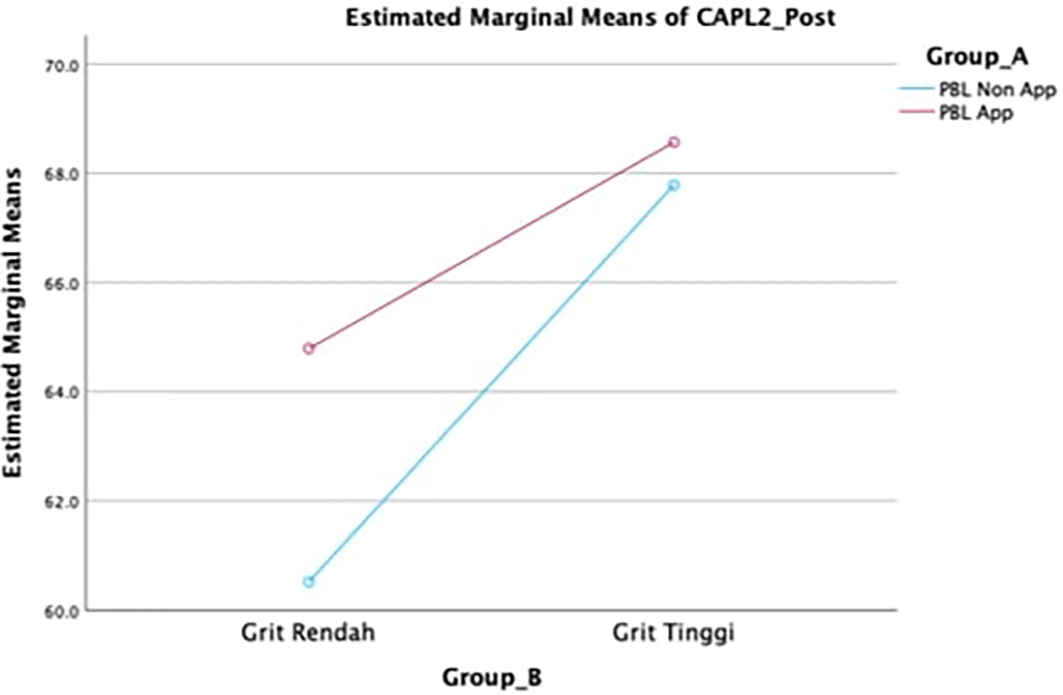
The interaction plot shows a non-parallel pattern, indicating that the effectiveness of the instructional model varied depending on students’ grit levels. Specifically, the difference between the PBL–App and PBL–NonApp conditions was more pronounced among students with low grit, whereas this difference was substantially reduced among students with high grit. This pattern suggests that see technology-integrated problem-based learning particularly benefits students with lower levels of grit, while students with higher grit demonstrated relatively comparable outcomes across instructional conditions. These findings are consistent with the significant interaction effect observed in the two-way ANOVA, confirming that the impact of instructional model on physical literacy outcomes is conditional upon students’ grit levels.
This study examined whether integrating a mobile fitness application into problem-based learning (PBL) improves vocational secondary school students’ physical literacy and whether these effects differ by students’ grit levels. The results support a conditional effectiveness pattern. Grit was positively associated with post-test physical literacy, the instructional model showed no statistically significant overall advantage when averaged across all students, and the instructional model × grit interaction indicates that the added value of app integration varies across grit levels.
The positive association between grit and physical literacy is consistent with the view that persistence and sustained effort can support engagement across physically and cognitively demanding learning cycles in physical education. This interpretation aligns with broader evidence linking grit-related self-regulatory tendencies to educational engagement and performance, while also reflecting critiques that grit effects are typically modest and context-dependent and should not be treated as a single, deterministic explanation of learning outcomes (Credé, 2018; Muenks et al., 2017). In the present context, grit may help students maintain effort during repeated phases of goal setting, practice, feedback use, and reflection that are central to PBL.
The absence of a significant main effect of instructional model suggests that technology integration should not be assumed to function as a universal enhancer. Prior work on digitalisation in physical education emphasizes that outcomes depend on pedagogical alignment and implementation quality, not merely the presence of technology (Osmanović et al., 2021). The most important finding is therefore the significant interaction between instructional model and grit. The interaction pattern is best characterized as an ordinal (non-cross-over) interaction, in which the magnitude of the instructional difference changes across grit levels without requiring intersecting lines. Substantively, app-supported PBL appears to provide greater added value for students with lower grit, whereas high-grit students achieve comparable outcomes with or without app support.
Physical literacy is multidimensional and includes affective and cognitive components alongside physical competence and daily behavior. These domains are likely shaped by sustained engagement, follow-through, and willingness to persist when tasks become challenging. From this perspective, students with higher grit may be better positioned to benefit from PBL even when scaffolds are minimal because they are more likely to continue practicing, reflect on progress, and complete independent tasks. At the same time, the critical literature on grit cautions against overinterpreting grit as a stable, universally beneficial trait, and encourages attention to contextual supports that may amplify or compensate for differences in persistence (Credé, 2018). This balanced view fits the present findings, where grit appears most informative when examined as a moderator of instructional conditions rather than as an isolated predictor.
The compensatory pattern for lower-grit students can be interpreted through a self-regulated learning lens. PBL requires learners to sustain effort across multiple phases, and students who struggle with perseverance may show inconsistent engagement during iterative cycles, especially when a substantial portion of activity practice occurs outside scheduled lesson time. In contrast, fitness applications can function as external scaffolds by structuring monitoring routines, making progress visible, and providing feedback cues that support adherence to planned activities. Such scaffolding is most likely to matter when technology outputs are not treated as an add-on, but are brought back into classroom inquiry and reflection so that the data become part of the problem-solving process.
In this intervention, app-based monitoring was integrated into the PBL cycle by using students’ activity records as inputs for discussion, evaluation of hypotheses, and revision of weekly strategies. This integration may have reduced the self-regulatory load for lower-grit learners by converting activity goals into concrete, trackable actions and by strengthening the link between independent activity tasks and classroom learning. This interpretation is consistent with scholarship arguing that technology-enhanced instructional models are most effective when tools are tightly aligned with pedagogy and used to support reflective learning processes rather than merely recording behavior (Cojocaru et al., 2022).
For higher-grit students, the limited incremental benefit of app integration suggests that these learners may already possess the persistence and self-regulatory capacity needed to profit from PBL without additional digital scaffolding. Evidence from educational psychology indicates that learners with stronger self-regulation sometimes demonstrate smaller marginal gains from external supports because their internal goal-maintenance and monitoring processes are already robust (Muenks et al., 2017). However, this finding should not be interpreted as evidence that fitness applications are irrelevant for high-grit students. Instead, it indicates that the added value of the application was smaller for this subgroup under the current implementation. Different designs, including more advanced goal personalization or tasks that require explicit interpretation of activity data, may yield different results.
The vocational context strengthens the relevance of a “for whom and under what conditions” interpretation. Vocational students often display heterogeneous learning readiness and engagement profiles, and instructional designs that rely heavily on sustained self-direction may therefore produce uneven benefits across students. The present findings suggest that integrating app-based monitoring into PBL can serve as an adaptive scaffold, particularly for students who may otherwise disengage during independent activity components. At the same time, this implication depends on implementation quality. Scholarship on digitalisation in physical education underscores that benefits are unlikely when technology is used superficially or without coherent integration into lesson goals (Osmanović et al., 2021). The current integration approach, which used monitoring data as a basis for collaborative reflection and revision, may therefore be a central feature supporting the observed conditional benefits.
These results suggest that physical education teachers and schools may consider differentiated technology integration rather than uniform requirements for all students. For learners who demonstrate lower persistence or weaker follow-through on independent activity tasks, fitness applications can provide additional structure through monitoring routines and feedback cues, potentially supporting more equitable physical literacy development.
The findings also reinforce that technology use should be pedagogically purposeful. Teachers can connect app outputs, such as step counts and activity summaries, to inquiry questions and reflection prompts so that data are used for learning and decision-making rather than for tracking alone. Implementation support is likely to be important, particularly professional learning that helps teachers design inquiry tasks around monitoring data and manage classroom routines for reviewing and interpreting activity records.
Finally, technology adoption should be accompanied by attention to practical and ethical considerations, including student access to devices, data privacy, and clear policies for appropriate use in school contexts (Bopp & Stellefson, 2020). These issues may be especially salient in vocational settings where access and resources can vary.
Several limitations should be considered when interpreting the findings. The study involved one vocational secondary school and a highly male-dominated program, which may limit generalizability to other vocational majors and more gender-balanced cohorts. Instructional conditions were assigned at the intact-class level. While this strengthens ecological validity, it also introduces the possibility of class-level clustering; future studies can address this through multilevel modeling or by increasing the number of classes per condition.
Grit was categorized into high and low groups to fit the factorial design, which may reduce sensitivity compared with continuous moderation approaches. Future studies could model grit continuously to capture more nuanced conditional effects. In addition, CAPL-2 was adapted to suit older adolescents and contextual constraints. Although expert review supported alignment with the intended constructs, further validation work is needed to strengthen adolescent-appropriate physical literacy measurement models.
Finally, the PBL–NonApp condition relied on pedometers and paper logs, which may be more vulnerable to recording error or non-compliance than app-based monitoring. Although signatures and teacher checks were used to enhance accountability, differential measurement precision across conditions should be acknowledged.
Future research can extend this work by testing whether the observed benefits for lower-grit students persist beyond the intervention period using longer follow-up designs. Mechanism-focused studies can examine whether self-monitoring, feedback interpretation, or peer accountability mediates the conditional effect of app-integrated PBL. Studies involving more diverse vocational majors and multiple schools would strengthen external validity and help identify contextual boundary conditions.
Analytically, future work may benefit from regression-based moderation with continuous grit and from multilevel models that account for class-level clustering. Examining CAPL-2 domain-level outcomes could also clarify whether technology-enhanced PBL primarily affects daily behavior, motivation and confidence, knowledge and understanding, or physical competence. Taken together, the findings indicate that integrating fitness applications into PBL can function as an adaptive scaffold for learners who need more support to sustain engagement and self-regulation, highlighting the importance of aligning pedagogy, technology, and learner dispositions in vocational physical education.
This study shows that the effectiveness of fitness application–integrated problem-based learning (PBL) in vocational secondary school physical education is conditional on students’ grit. While the instructional model did not demonstrate a uniform advantage when averaged across all students, the significant instructional model × grit interaction indicates that app integration provides greater added value for students with lower grit. This pattern suggests that fitness applications can function as compensatory scaffolds that support follow-through on independent physical activity tasks and help sustain learning processes within PBL cycles, whereas high-grit students appear able to achieve comparable outcomes with or without app-based support.
These findings support a differentiated approach to technology use in physical education, where digital tools are integrated purposefully and targeted to learners who benefit most, rather than applied uniformly. The study also highlights a measurement consideration for physical literacy research with adolescents. CAPL-2 was adapted to fit the motor-skill level and contextual constraints of students aged 15–18, underscoring the value of developing and validating adolescent-appropriate physical literacy assessments. Overall, the results strengthen the case for aligning pedagogy, technology, and learner dispositions to foster more inclusive and effective physical literacy development in vocational school settings.
| Views | Downloads | |
|---|---|---|
| F1000Research | - | - |
|
PubMed Central
Data from PMC are received and updated monthly.
|
- | - |
Provide sufficient details of any financial or non-financial competing interests to enable users to assess whether your comments might lead a reasonable person to question your impartiality. Consider the following examples, but note that this is not an exhaustive list:
Sign up for content alerts and receive a weekly or monthly email with all newly published articles
Already registered? Sign in
The email address should be the one you originally registered with F1000.
You registered with F1000 via Google, so we cannot reset your password.
To sign in, please click here.
If you still need help with your Google account password, please click here.
You registered with F1000 via Facebook, so we cannot reset your password.
To sign in, please click here.
If you still need help with your Facebook account password, please click here.
If your email address is registered with us, we will email you instructions to reset your password.
If you think you should have received this email but it has not arrived, please check your spam filters and/or contact for further assistance.

Comments on this article Comments (0)