Keywords
Non-Academic activities, Extra-curricular activities, Medical Education, Impact, Scoping Review

Non-Academic activities, Extra-curricular activities, Medical Education, Impact, Scoping Review
Medical education demands mastery of complex knowledge and the development of professional competence under significant psychological pressure (Benerji et al., 2024). While academic achievement is often linked to cognitive ability, a growing body of research highlights the role of extracurricular or non-academic activities (ECAs) in shaping student success and holistic development (Leksuwankun et al., 2022). These activities, which include leadership, research, community service, athletics, and peer tutoring, help cultivate essential skills such as time management, communication, teamwork, and resilience. Together, these skills support learning and contribute to future clinical performance (Arif et al., 2025; Aryal, 2024).
Participation in ECAs can also reduce burnout, foster a sense of belonging, and enhance motivation, all of which are consistently associated with improved academic outcomes (Kim et al., 2023). Yet, much of the literature remains fragmented and tends to explore single activity types or psychosocial outcomes rather than direct academic performance. A systematic overview is needed to integrate existing findings and clarify how ECAs influence medical students’ academic achievement.
While prior integrative reviews such as Kim et al. (2023) and Leksuwankun et al. (2022) have mapped the landscape of extracurricular activities mainly in relation to student engagement and psychosocial outcomes, this protocol extends the existing evidence base in two important ways.
First, it expands the analytical scope beyond descriptive mapping by adopting a dual-theory synthesis that integrates Self-Determination Theory (SDT) and Holistic Education Theory (HET) to interpret how motivational and developmental processes jointly influence academic achievement. This theoretical integration enables a deeper understanding of why and how non-academic activities contribute to academic success, rather than focusing only on whether they do.
Second, the review applies a broader temporal range from 2005 to 2025 and includes diverse indicators of academic performance such as GPA, examination scores, and academic honors. This approach allows for a more comprehensive and contemporary synthesis that reflects the evolving definitions of student achievement in medical education.
This protocol follows the Joanna Briggs Institute (JBI) framework for scoping reviews and adheres to the PRISMA-P 2015 checklist for protocol reporting.
Non-academic activities are structured or informal activities undertaken outside the official academic curriculum that contribute to a student’s educational, social, emotional, and professional growth. These activities are typically not credit-bearing and are not part of required coursework, yet they often complement formal academic learning and are integral to the holistic development of the individual (Javed and & Strivastava, 2024).
These activities encompass a broad spectrum, including but not limited to: organizational and leadership roles, community service and volunteering, extracurricular academic enrichment and research activities, cultural and artistic pursuits, physical education and sports, part-time employment or entrepreneurship, peer tutoring and mentoring, involvement in student organizations and clubs, and personal enrichment activities such as public speaking, wellness initiatives, or skills-building workshops (Kim et al., 2023).
Non-academic activities, particularly those focused on physical health and activity, can enhance the academic success of medical students by mitigating stress and burnout, and by improving overall well-being (Connelly et al., 2023; Habashi & Simanton, 2024). Certain activities, such as writing, can directly contribute to learning and the development of critical thinking skills (Kim et al., 2021). However, it is important to note that not every non-academic activity has a clear or immediately measurable effect on academic grades.
To provide a robust framework for understanding the relationship between medical student academic performance and extracurricular activities (ECAs), this review will draw upon two prominent theories: Self Determination Theory (SDT) and Holistic Education Theory.
Self-Determination Theory (SDT) provides a motivational framework for understanding how participation in non-academic activities can enhance learning and achievement among students (Ganotice et al., 2023). According to SDT, intrinsic motivation thrives when three basic psychological needs, namely autonomy, competence, and relatedness, are fulfilled (Şen, 2025). Extracurricular activities such as student leadership, volunteering, peer tutoring, and research involvement offer opportunities for individuals to exercise autonomy by selecting meaningful roles and setting personal goals (Aryal, 2024). They also promote competence by enabling the development of new skills, offering constructive feedback, and allowing students to achieve success beyond traditional academic settings (Aryal, 2024). In addition, engagement in group-based activities or student organizations nurtures a sense of relatedness, strengthening feelings of connection and belonging. Together, these elements reinforce intrinsic motivation and encourage positive learning behaviors, which can ultimately improve academic achievement (Oliveira et al., 2024).
Holistic Education Theory provides a broader context for considering the contributions of ECAs to medical education (Yen-Ju Lin et al., 2019). Holistic education emphasizes the development of the whole person, encompassing cognitive, emotional, social, physical, ethical, and, in some interpretations, spiritual dimensions of learning (Johnson, 2023; Mahmoudi et al., 2012). This theory posits that students learn most effectively when they are engaged as multidimensional human beings, and that the development in one aspect (e.g., identity or emotional well-being) can stimulate growth in other areas (e.g., academic achievement) (Mahmoudi et al., 2012). ECAs are integral to this holistic approach because they offer avenues for self-discovery, empathy, community engagement, and reflective practice, all of which are crucial for cultivating well-rounded and compassionate medical professionals (Shrivastava et al., 2024).
By integrating Self-Determination Theory and Holistic Education Theory, this review adopts a dual-theory framework for exploring the potential academic benefits of extracurricular activities. These two theories complement each other, providing a comprehensive understanding of both the intrinsically motivated underpinnings and the holistic, whole-person outcomes that ECAs can yield. This theoretical foundation offers a robust basis for comprehending how non-curricular experiences influence academic performance in medical schools (De Moura Torres et al., 2025).
Beyond the immediate scope of this review, integrating SDT and HET also carries broader theoretical implications. The convergence of motivation and holistic development aligns closely with the emerging principles of competency-based medical education (CBME) and programmatic assessment. Understanding how extracurricular participation supports autonomy, competence, relatedness, and professional identity formation provides an evidence-informed foundation for designing assessment frameworks that value longitudinal growth, reflective capacity, and self-regulated learning alongside traditional academic metrics. Thus, this review contributes not only to mapping existing evidence but also to advancing theoretical discourse on how medical curricula can more comprehensively capture the multidimensional development of medical students.
To ensure theoretical coherence, the conceptual framework integrates Self-Determination Theory (SDT) and Holistic Education Theory (HET) to explain how participation in extracurricular activities (ECAs) may influence medical students’ academic achievement. SDT emphasizes the fulfillment of three basic psychological needs autonomy, competence, and relatedness as drivers of intrinsic motivation, persistence, and self-regulated learning. HET, on the other hand, broadens this perspective by addressing the cognitive, emotional, ethical, and social dimensions of learner development, positing that students perform optimally when growth occurs across multiple domains of the self.
This integration provides a dual-pathway explanation: ECAs enhance motivation through satisfaction of psychological needs (SDT) and simultaneously foster holistic development across intellectual, emotional, and social dimensions (HET). Both pathways converge through mediating mechanisms such as improved time management, resilience, belonging, and professional identity formation that contribute to enhanced academic performance.
Figure 1 illustrates this integrated conceptual model, showing how extracurricular engagement feeds into motivational and developmental processes that ultimately enhance learning outcomes and academic achievement.
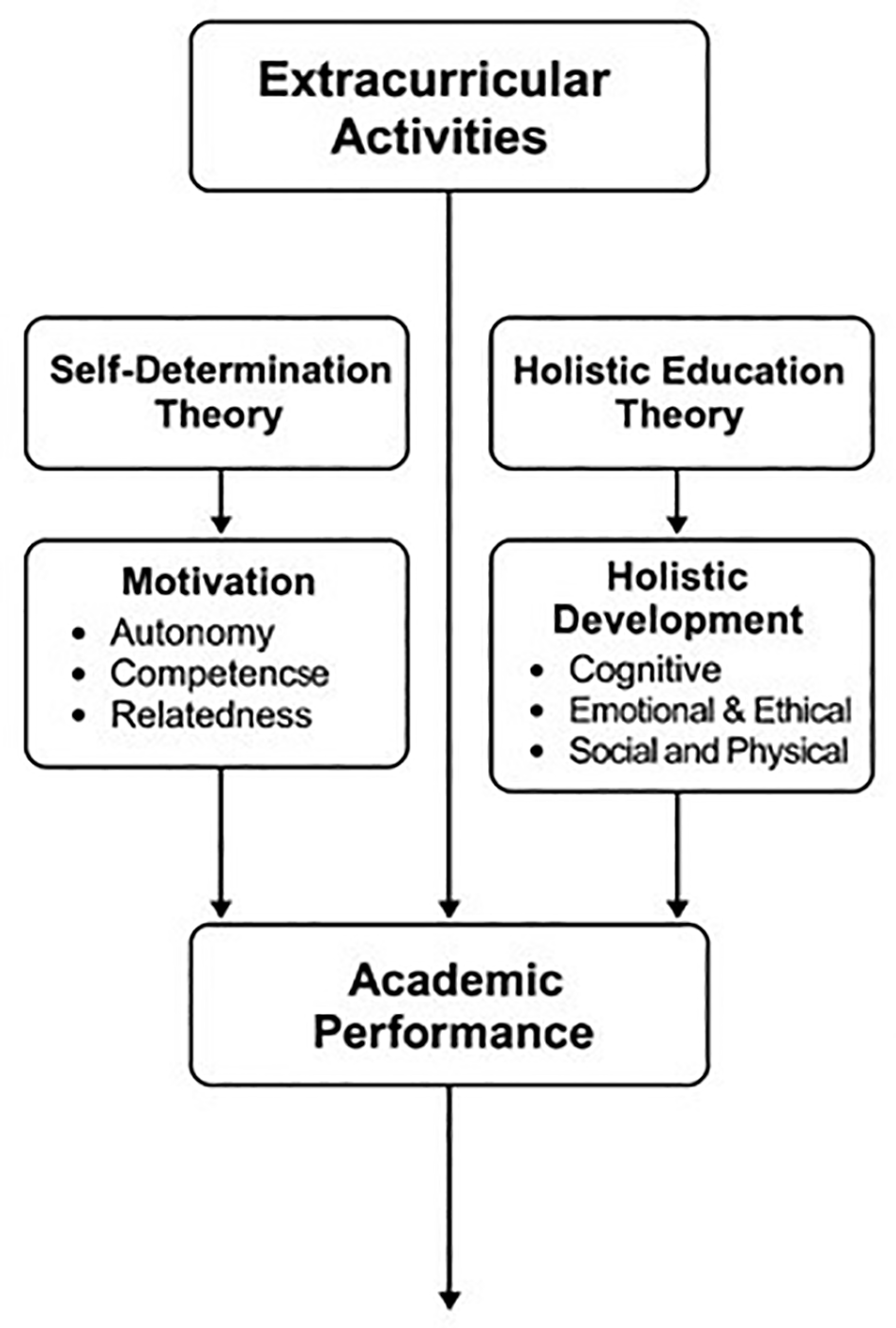
Extracurricular participation enhances autonomy, competence, and relatedness (SDT) while promoting cognitive, emotional, ethical, and social development (HET). These combined processes foster engagement, well-being, and professional growth, culminating in improved academic performance.
Objective: The purpose of this scoping review is to systematically search for, map, and synthesize existing evidence on the association between extracurricular (non-academic) activity participation and academic achievement in medical students. The review seeks to describe the type of extracurricular activities that have been studied in literature, the measures of academic achievement used to quantify success, and the theoretical or practical reason given for any identified association. Through the synthesis of existing evidence, the review seeks to provide a comprehensive picture of how participation in non-academic activities might affect success in medical education and to highlight gaps in the literature that must be addressed by future research.
Methods and analysis: The scoping review will use the Joanna Briggs Institute’s scoping review study method, with a search across multiple databases and grey literature. Research on PubMed, Scopus, and Google Scholar will be conducted with keywords of extracurricular activities, non-academic engagement, co-curricular activities, and academic performance in medical education. Screening and resolving conflict will be aided by the Covidence Systematic Review software. The reference lists of included studies will be manually searched for other relevant literature. Two members of the research team will independently screen and extract data, with resolution of disagreement by a third member. Iteratively, inclusion and exclusion criteria will be decided in accordance with the emerging key research themes. Data will be summarized qualitatively and quantitatively in tables or diagrams through narrative synthesis. Synthesis will follow data on participation in extracurricular activities during medical education and their correlation with academic performance, with identification of key patterns, conceptual models, and gaps in evidence. The protocol follows PRISMA-P 2015 guidelines for transparent reporting of review protocols.
This scoping review is guided by a primary research question and several sub-questions, designed to systematically map the existing evidence on the relationship between extracurricular activity participation and academic achievement among medical students.
What is known about the relationship between extracurricular activity participation and academic achievement among medical students?
What types of extracurricular activities are most commonly associated with improved academic outcomes? How is academic performance defined and measured in this context?
What theoretical explanations or mechanisms are proposed for the impact of ECAs on performance?
This scoping review will consider studies for inclusion based on predefined criteria related to population, concept, context, outcomes, study design, language, and publication period. These criteria are designed to ensure that the review captures all relevant evidence while maintaining focus on the research questions.
Population: Studies involving undergraduate medical students (e.g., MBBS, MD, DO) will be included. This ensures the focus remains on the specific educational stage relevant to the review.
Concept: Studies that explore participation in extracurricular or non-academic activities will be considered. This includes, but is not limited to, the following types of activities:
Student government and leadership roles
Student clubs or societies
Research involvement
Volunteering/community service
Peer-assisted learning or tutoring
Sports, arts, or cultural activities
Context: Studies conducted in medical education settings across any country will be included, allowing for a broad international perspective on the topic.
Outcomes: Academic performance must be reported as a primary or secondary outcome. Examples of academic performance measures include Grade Point Average (GPA), exam scores, class rank, and academic honors. This ensures that the review directly addresses the impact on academic achievement.
Study Design: A wide range of study designs will be included to capture diverse perspectives. Quantitative designs (e.g., randomized controlled trials, quasi-experimental, cohort, cross-sectional, and pre–post studies) will be analyzed alongside qualitative and mixed-methods research. Review articles, dissertations, and institutional reports will also be considered if they provide sufficient detail for extraction. Exclusion criteria will apply to editorials, commentaries, and studies lacking academic performance data.
Language: Only articles published in English will be included to ensure accurate interpretation and synthesis of findings.
Publication Period: Studies published between 2005 and 2025 will be included. This timeframe ensures the inclusion of contemporary research while also capturing a significant period of evolving medical education practices.
The context of this scoping review is the influence of extracurricular (non-academic) activities on academic performance in medical school. Particular attention will be given to how these activities contribute to defining academic success and enriching students’ overall educational experience. The review seeks to examine how participation in activities outside the formal curriculum, including student leadership, volunteering, peer teaching, research involvement, sports, and cultural engagement, may enhance or be associated with improved academic outcomes among medical students. It will also explore the types of extracurricular activities described in the literature, the academic performance indicators used, and the theoretical or practical explanations proposed to support any observed relationships.
This review will be situated within the broader landscape of local and international undergraduate medical education. It seeks to provide an in-depth overview of the current evidence supporting the educational benefits and potential trade-offs associated with extracurricular activity engagement. Furthermore, a key objective is to identify specific areas within the literature where further study is required, thereby guiding future research efforts and informing educational policy and practice.
A wide range of study types will be considered for inclusion in this scoping review to capture the full breadth of evidence on the relationship between extracurricular activity participation and academic performance in medical students. This inclusive approach is crucial for comprehensively mapping the existing literature and understanding the multifaceted nature of this relationship.
Quantitative research designs will be included to provide measurable insights into the effects of extracurricular engagement on academic outcomes. These designs encompass:
Randomized Controlled Trials (RCTs): While less common in educational interventions of this nature, any available RCTs will be included for their high internal validity in establishing causal relationships.
Quasi-experimental Studies: Studies that involve interventions but lack random assignment will be considered, as they can provide valuable insights into real-world educational settings.
Cohort Studies: Longitudinal studies tracking groups of medical students over time will be included to observe the long-term impact of extracurricular involvement on academic trajectories.
Cross-sectional Studies: These studies, which examine data from a population at a single point in time, will be used to identify associations and prevalence of certain extracurricular activities and academic outcomes.
Pre-post Intervention Studies: Studies that measure academic performance before and after an extracurricular intervention will be included to assess immediate impacts.
To explore students’ experiences, motivations, and perceptions related to extracurricular involvement, qualitative methods will also be included. These methods provide rich, in-depth understanding that quantitative data alone cannot capture. Examples include:
Interviews: One-on-one discussions with medical students to gather their personal perspectives and experiences.
Focus Groups: Group discussions to explore shared understandings and diverse viewpoints on extracurricular engagement.
Case Studies: In-depth examinations of specific individuals, groups, or institutions to provide detailed insights into particular contexts.
Mixed-methods studies, which integrate both quantitative and qualitative data, will be highly valued as they offer a more comprehensive understanding of this complex relationship by triangulating findings from different data sources.
In addition, existing systematic reviews, meta-analyses, and survey-based studies will be considered. Systematic reviews and meta-analyses are crucial for summarizing broader trends and synthesizing evidence from multiple primary studies. Survey-based studies can capture institutional or regional variations and highlight gaps in the current literature by providing a snapshot of practices and perceptions across larger populations. Including this wide range of study types ensures that the topic is approached from multiple perspectives and reflects its multidimensional nature, providing a robust foundation for the scoping review.
The literature search will cover PubMed, Scopus, ERIC, Web of Science, Embase, PsycINFO, and Google Scholar (for grey literature). These databases together capture biomedical, educational, and psychological research relevant to medical education. Reference lists of included studies will also be screened manually to identify additional sources.
A comprehensive and iterative search strategy will be developed in consultation with a medical librarian to ensure maximal sensitivity and specificity in identifying relevant literature. The search strategy will combine keywords and Medical Subject Headings (MeSH) terms (where applicable) related to extracurricular activities, non-academic engagement, medical students, and academic performance. Boolean operators (AND, OR, NOT) will be used to refine and combine search terms effectively. Truncation symbols (e.g., *) will be employed to capture variations in word endings.
Initial preliminary searches have been conducted to identify key terms and inform the development of the comprehensive search strings. The following databases will be systematically searched using tailored strategies:
PubMed: To retrieve biomedical and health sciences literature, including studies related to medical student development and academic outcomes.
ERIC (Education Resources Information Center): To capture research on educational practices, student engagement, and academic achievement in higher education.
Scopus: To retrieve multidisciplinary studies, ensuring broad coverage.
Web of Science: For high-impact and peer-reviewed literature in medical education and related fields. Google Scholar: To capture grey literature and additional unpublished studies.
Below is an example of a detailed search strategy that will be adapted for PubMed. Similar comprehensive strategies will be developed for each of the other selected databases, taking into account their specific indexing systems (e.g., Emtree for Embase, thesaurus for ERIC) and search functionalities.
(“extracurricular activities”[MeSH Terms] OR “extracurricular activities”[TIAB] OR “non-academic activities”[TIAB] OR “co-curricular activities”[TIAB] OR “student activities”[TIAB] OR “student engagement”[TIAB])
AND
(“students, medical”[MeSH Terms] OR "medical student*"[TIAB] OR “medical education”[MeSH Terms] OR “medical school*”[TIAB])
AND
(“academic performance”[MeSH Terms] OR “academic achievement”[TIAB] OR “GPA”[TIAB] OR “grade point average”[TIAB] OR “exam scores”[TIAB] OR “class rank”[TIAB] OR “academic success”[TIAB] OR “educational measurement”[MeSH Terms])
AND
(2005[PDAT]: 2025[PDAT])
Concept 1 (Extracurricular Activities): Includes MeSH terms and keywords related to various forms of non academic engagement. The * truncation is used to capture variations like
‘student’ to include ‘students’ or ‘student’s’. * Concept 2 (Medical Students): Focuses on the target population using MeSH terms and keywords. * Concept 3 (Academic Performance): Covers various measures and terms associated with academic success. * Publication Date (PDAT):* Limits the search to the specified timeframe (2005-2025).
In addition to database searches, the reference lists of all included studies will be manually reviewed to identify any additional relevant literature that may not have been captured in the initial database searches. This process, often referred to as ‘citation chaining’ or ‘snowballing,’ helps to ensure comprehensive coverage of the literature.
An iterative and rigorous screening process will be followed to ensure the comprehensive capture of all relevant studies while minimizing bias. Two independent reviewers will screen the search results in two distinct stages, utilizing systematic review software (e.g., Covidence) to manage the process and facilitate collaboration.
In the first stage, titles and abstracts of all retrieved records will be independently screened by two reviewers against the predefined inclusion and exclusion criteria. Reviewers will categorize each record as ‘include,’ ‘exclude,’ or ‘maybe.’ Any discrepancies between the two reviewers will be discussed, and if a consensus cannot be reached, a third reviewer will be consulted to resolve the conflict. This stage aims to quickly filter out clearly irrelevant studies.
All records deemed ‘include’ or ‘maybe’ from the title and abstract screening stage will proceed to full-text review. In this stage, the full text of each article will be independently assessed by two reviewers against the same inclusion and exclusion criteria. Again, any disagreements will be resolved through discussion, and if necessary, by consultation with a third reviewer. The reasons for exclusion at the full-text stage will be recorded to ensure transparency and will be presented in the final PRISMA-ScR flow diagram.
Consistent with the methodological framework of Arksey and O’Malley (2005) and the Joanna Briggs Institute (JBI) guidance, a stakeholder consultation phase will be incorporated to enhance the interpretive validity of the findings. This phase will occur after the initial synthesis of evidence and is expected to take 4–6 weeks.
Participants: A purposive sample of approximately 8–12 stakeholders will be invited, including medical educators, curriculum designers, assessment specialists, and senior medical students from the College of Medicine and Health Sciences (CMHS), UAE University.
Procedure: Stakeholders will receive a concise summary of the preliminary thematic findings one week in advance. Individual or group sessions (45–60 minutes each) will be conducted virtually or in person. Feedback will focus on (a) confirming the accuracy and completeness of themes, (b) identifying any missing dimensions, and (c) assessing the practical relevance of findings to medical education.
Data capture and management: Sessions will be documented through notes and audio recordings (with consent). Transcripts will be analyzed in NVivo 14, and modifications to thematic categories will be recorded in an audit trail maintained in Covidence.
Bias control: Two reviewers will independently code stakeholder feedback; discrepancies will be resolved by consensus. This structured process ensures transparency, reproducibility, and integration of end-user perspectives.
To ensure consistency in decision-making during the screening and data extraction phases, inter-rater reliability will be calculated using Cohen’s κ statistic. This metric will quantify the level of agreement between independent reviewers beyond chance, thereby enhancing methodological transparency and reliability. A kappa value of ≥0.75 will be considered indicative of excellent agreement, consistent with established standards for scoping and systematic reviews. Disagreements between reviewers will first be discussed to reach consensus; if unresolved, they will be referred to a third reviewer. All stages of reviewer agreement and resolution will be documented within the Covidence software for full auditability.
Throughout the screening process, particularly during the initial stages of title, abstract, and full-text review, an iterative approach will be used to refine the inclusion and exclusion criteria. If new themes, terms, or patterns emerge, such as types of extracurricular activities not previously identified or variations in how academic performance is measured across studies, the criteria will be adjusted accordingly. This flexibility is essential for a scoping review because it enables a more accurate and comprehensive mapping of the evidence landscape while accommodating the nuances revealed in the literature. All revisions to the criteria will be documented to ensure transparency and reproducibility.
A detailed record of all decisions made during the screening process, including reasons for exclusion at the full text stage, will be maintained. This documentation will ensure transparency and reproducibility of the review process, allowing others to understand how studies were selected and excluded.
Data will be summarized using a structured charting framework that captures study design, sample characteristics, type of extracurricular activity, academic performance measures, and contextual mechanisms. This form will be developed and pilot-tested on a subset of included articles to ensure its comprehensiveness and clarity. Two members of the research team will independently extract data from each included study. Any discrepancies will be resolved through discussion, and if consensus cannot be reached, a third reviewer will arbitrate.
The data extraction form will capture key study characteristics and relevant findings to address the research questions. The following categories of information will be extracted:
Study Identification: Author(s), year of publication, country of origin.
Study Characteristics: Study design (e.g., quantitative, qualitative, mixed-methods, review), sample size, participant demographics (e.g., year of study, gender distribution if reported).
Extracurricular Activity Details: Type of extracurricular activity studied (e.g., leadership, volunteering, sports, research), duration of involvement, intensity of participation.
Academic Performance Outcomes: Specific measures of academic achievement used (e.g., GPA, exam scores, class rank, academic honors), how these outcomes were measured, and the reported results.
Mechanisms/Contextual Factors: Any reported theoretical explanations, proposed mechanisms, or contextual factors influencing the relationship between extracurricular engagement and academic success (e.g., time management skills, well-being, motivation).
The extracted data will be charted and summarized using tables and visual diagrams to provide a structured overview of the existing literature. A sample of the data charting Table 1 is provided below, illustrating the type of information that will be systematically extracted and presented.
This table serves as a template and will be populated with data from all included studies. Additional columns may be added as new themes or relevant data points emerge during the extraction process. The charted data will form the basis for the narrative synthesis and thematic analysis.
The analysis of the data extracted from the included studies will involve a descriptive synthesis to summarize and present the findings. This approach will allow for a comprehensive overview of the current state of knowledge regarding the influence of extracurricular activities on academic performance in medical students, as well as insights into promising practices and directions for future inquiry. The following steps will be undertaken:
The types of extracurricular activities identified in the included studies will be systematically categorized and described. This categorization will provide a clear overview of the range of non-academic activities medical students engage in, such as leadership roles, peer teaching, research, volunteering, sports, and arts. This step will help in understanding the diversity of extracurricular engagement and its potential impact on academic outcomes.
Following Braun and Clarke (2006), an inductive thematic analysis will identify recurring concepts related to motivation, well-being, skill acquisition, and professional identity. Codes will be iteratively refined and organized into themes aligned with Self-Determination Theory (autonomy, competence, relatedness) and Holistic Education Theory (cognitive, emotional, social dimensions).
Comparative analysis will examine patterns across studies such as differences by activity type, geographic region, and academic performance measure to highlight contextual variations and consistencies in findings.
The review will highlight effective strategies and conditions under which extracurricular activities appear to be most beneficial for academic success. These insights will be drawn from recurring features in studies that report positive or significantly correlated outcomes between ECA participation and academic performance. This will provide practical implications for medical schools and students seeking to optimize the benefits of extracurricular engagement.
A targeted gap analysis will identify under-researched activity types, inconsistent outcome measures, and methodological shortcomings (e.g., lack of longitudinal designs). These findings will guide recommendations for future research and policy.
To ensure conceptual and methodological coherence, the analytic plan is explicitly linked to the research questions and theoretical framework. Table 2 illustrates how each research question will be addressed through corresponding data variables, analytic approaches, and expected thematic or descriptive outputs. This mapping ensures that all stages, from data extraction to synthesis, remain systematically aligned with the objectives of the review and the guiding frameworks of Self-Determination Theory (SDT) and Holistic Education Theory (HET).
| Research question | Data variables extracted | Analytical technique | Expected outputs/Thematic categories | Theoretical linkage (SDT/HET) |
|---|---|---|---|---|
| 1. What is known about the relationship between extracurricular activity participation and academic achievement among medical students? | Study design, type of activity, academic outcome measure (GPA, exam scores, honors), effect direction | Descriptive synthesis and comparative tabulation | Frequency and distribution of ECAs linked to academic success; overall strength of evidence | SDT – competence (academic mastery), HET – cognitive development |
| 2. What types of extracurricular activities are most commonly associated with improved academic outcomes? | Activity type, duration, intensity, participation rate | Quantitative aggregation and frequency analysis | Ranked or categorized list of ECAs by academic benefit (leadership, research, sports, volunteering, etc.) | SDT – autonomy (voluntary engagement), HET – social and physical well-being |
| 3. How is academic performance defined and measured in these studies? | Outcome variables (GPA, test score, rank), instruments used, grading system | Cross-comparison of outcome measures | Identification of dominant and divergent academic metrics | SDT – competence (achievement), HET – cognitive dimension |
| 4. What theoretical explanations or mechanisms are proposed for the impact of ECAs on performance? | Reported mediators or explanatory models | Thematic analysis (Braun & Clarke, 2006) | Themes such as motivation, time management, stress buffering, belonging, professional identity | SDT – autonomy, competence, relatedness; HET – emotional and ethical growth |
| 5. What gaps and limitations exist in the literature on this topic? | Missing variables, underrepresented populations, unmeasured outcomes | Gap analysis and evidence mapping | Identification of conceptual, methodological, and contextual research gaps | Both frameworks – holistic and motivational dimensions needing further exploration |
During thematic analysis, extracted data will be coded according to recurring motivational and developmental themes informed by Self-Determination Theory. Anticipated high-level coding categories include:
• Autonomy: Self-initiated participation, personal goal-setting, leadership choice.
• Competence: Mastery of academic and professional skills, confidence, performance improvement.
• Rlatedness: Peer bonding, mentorship, group belonging, social support.
• Cross-Theoretical Integration (HET): Cognitive growth, empathy, ethical reasoning, resilience, and balance.
This mapping provides a transparent analytic roadmap that links research intent with theoretical grounding and expected interpretive outcomes, ensuring methodological clarity and reproducibility.
This protocol follows the methodological framework of the Joanna Briggs Institute (JBI) and complies with PRISMA-P 2015 reporting guidelines for review protocols. The inclusion of multiple databases such as PubMed, Scopus, ERIC, Web of Science, and Google Scholar enhances the breadth and diversity of the search. The use of a dual-theory framework, drawing on Self-Determination Theory and Holistic Education Theory, provides conceptual depth and interpretive rigor. The study design incorporates an iterative screening process, standardized data extraction procedures, and independent reviewer verification to minimize selection bias.
However, several limitations should be acknowledged. First, only English-language studies will be included, which may lead to language bias and exclusion of relevant research published in other languages. Second, the reliance on published and grey literature may miss unpublished or institution-specific data. Third, as this is a scoping review rather than a systematic review, the study will not formally assess the methodological quality or risk of bias of included studies. Finally, the synthesis will depend on the completeness and consistency of reporting in the included literature, which may limit the comparability of findings across contexts.
All protocol amendments, if any, will be documented transparently in an appendix and described in the final published review to ensure reproducibility and traceability.
The anticipated outcomes of this review include a comprehensive mapping of the literature on extracurricular (non-academic) activities and their association with medical students’ academic achievement. The synthesis is expected to identify common categories of extracurricular activities such as leadership, volunteering, research involvement, sports, and peer tutoring, along with their reported relationships to different measures of academic performance (for example, GPA, examination results, and academic honors). The thematic analysis is likely to reveal recurring mechanisms such as enhanced motivation, improved time management, increased resilience, and stronger social connectedness as mediators of academic success.
The review will also highlight conceptual and methodological gaps in the current evidence base, including limited longitudinal data, inconsistent definitions of academic achievement, and underrepresentation of diverse cultural or institutional contexts. By providing a structured overview of existing evidence and theoretical linkages, this review aims to inform medical educators, curriculum designers, and policy-makers about the academic and developmental value of non-academic engagement. Ultimately, the findings will contribute to evidence-based recommendations for integrating extracurricular activities into student support and educational policy frameworks within medical education.
No ethical approval is required as all data will be collected from published and grey literature. Findings will be disseminated at relevant conferences and submitted for publication in peer-reviewed journals.
This scoping review will synthesize data from already published and publicly available grey literature. As such, no primary data will be collected from human participants, and therefore, no ethical approval is required for the conduct of this review. The ethical considerations primarily revolve around accurate and unbiased reporting of the synthesized evidence.
To ensure transparency and reproducibility, the methodology of this scoping review has been meticulously detailed in this protocol. Any deviations from this protocol during the review process will be documented and justified in the final manuscript.
The findings of this scoping review will be disseminated through multiple channels to reach a broad audience of researchers, educators, policymakers, and medical students. Plans for dissemination include:
Conference Presentations: The results will be presented at relevant national and international medical education and health professions education conferences. This will allow for engagement with the academic community and facilitate discussion and feedback.
Peer-Reviewed Publication: The full manuscript of the scoping review will be submitted for publication in a reputable, peer-reviewed journal specializing in medical education or health professions education. This will ensure that the findings undergo rigorous peer scrutiny and contribute to the formal academic literature.
Institutional Reports/Briefs: Where appropriate, summarized findings or policy briefs may be developed for relevant medical schools or educational institutions to inform their policies regarding extracurricular activities and student support services.
Open Access Principles: Efforts will be made to publish the review in an open-access format or repository, to ensure that the findings are freely accessible to all interested parties, promoting wider reach and impact.
| Views | Downloads | |
|---|---|---|
| F1000Research | - | - |
|
PubMed Central
Data from PMC are received and updated monthly.
|
- | - |
Provide sufficient details of any financial or non-financial competing interests to enable users to assess whether your comments might lead a reasonable person to question your impartiality. Consider the following examples, but note that this is not an exhaustive list:
Sign up for content alerts and receive a weekly or monthly email with all newly published articles
Already registered? Sign in
The email address should be the one you originally registered with F1000.
You registered with F1000 via Google, so we cannot reset your password.
To sign in, please click here.
If you still need help with your Google account password, please click here.
You registered with F1000 via Facebook, so we cannot reset your password.
To sign in, please click here.
If you still need help with your Facebook account password, please click here.
If your email address is registered with us, we will email you instructions to reset your password.
If you think you should have received this email but it has not arrived, please check your spam filters and/or contact for further assistance.

Comments on this article Comments (0)