Keywords
Urinary incontinence, pelvic organ prolapse, Africa, women’s health, prevalence, systematic review, meta-analysis.

This article is included in the Global Public Health gateway.
Urinary incontinence, pelvic organ prolapse, Africa, women’s health, prevalence, systematic review, meta-analysis.
Pelvic floor disorders (PFDs) represent a major global health challenge, affecting millions of women during reproductive and postmenopausal years. Two of the most disabling PFDs are urinary incontinence (UI) and pelvic organ prolapse (POP), which share risk factors, pathophysiology, and psychosocial consequences (de Araujo et al., 2009).
Globally, UI affects 25–45% of women, while POP prevalence ranges between 3–50%, depending on diagnostic criteria (Milsom & Gyhagen, 2019).
In Africa, however, the intersection of UI and POP remains poorly documented despite high rates of known risk factors, including high parity, obstructed labor, female genital mutilation, and early-age pregnancy (S. E. Swift, 2000).
Global prevalence of POP has been estimated at 3% to 50% depending on whether symptoms or physical diagnosis examination is used to make the (S. Swift et al., 2005). Similarly, global prevalence of UI in adult women is estimated to be 25% to 45% (Milsom & Gyhagen, 2019). Limited access to specialized gynecological services, coupled with cultural stigma, further contributes to underdiagnosis and underreporting. Existing global systematic reviews have demonstrated strong associations between POP and UI, but none have disaggregated evidence specific to African women, who face unique demographic and health system challenges (Zeleke et al., 2013).
By synthesizing available African data, this systematic review and meta-analysis provides the first pooled estimate of UI prevalence among women with POP across multiple regions of the continent. Beyond documenting the burden, our findings carry important clinical and policy implications: improving screening, strengthening access to urogynecology services, and integrating pelvic floor health into national reproductive health strategies. These insights are not only regionally relevant but also inform the global dialogue on managing POP-associated morbidities in resource-limited settings.
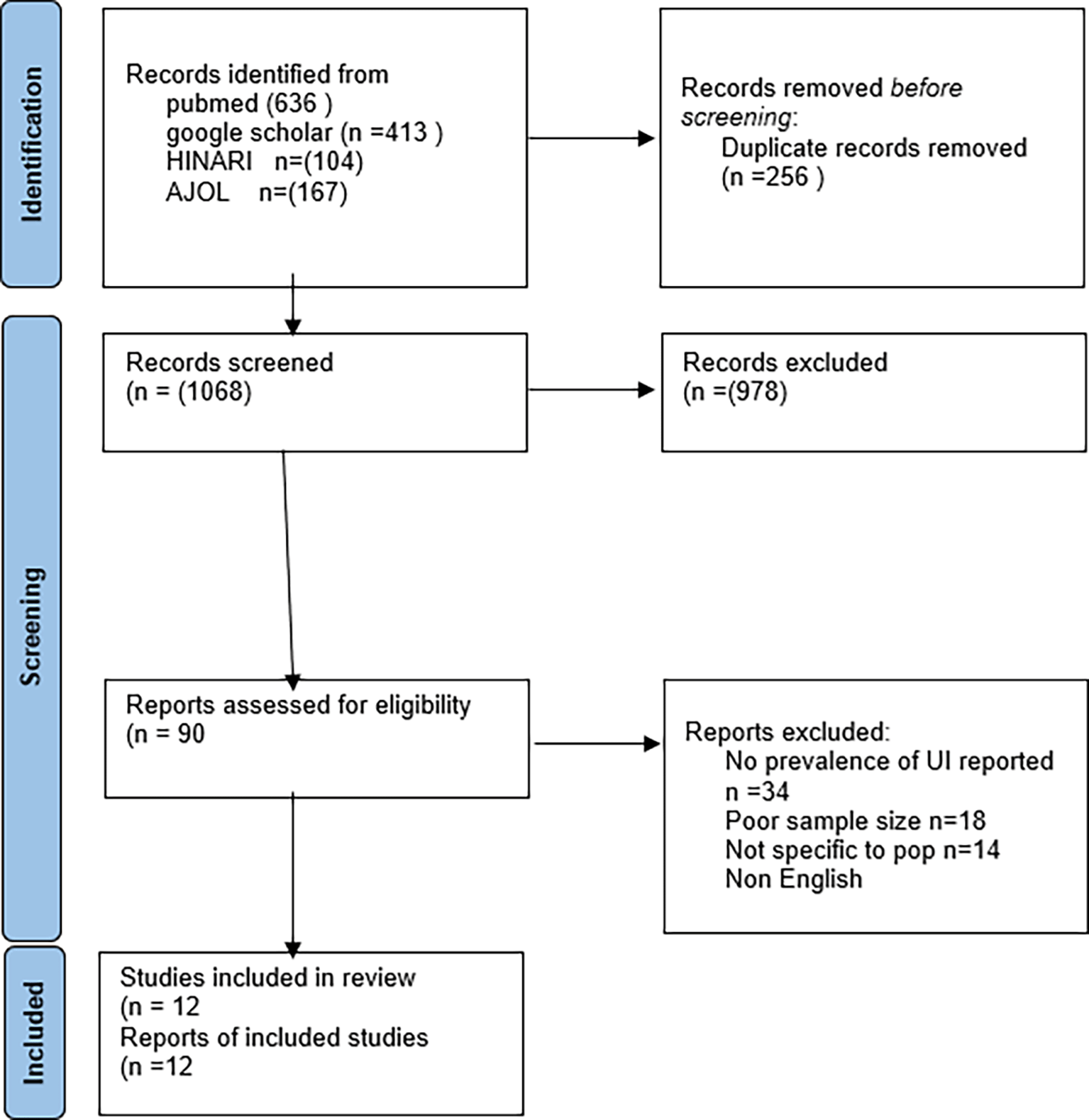
A systematic review and meta-analysis were conducted following the PRISMA 2020 guidelines. The protocol was developed based on the Cochrane Handbook, though it was registered on PROSPERO (CRD420251082146). Comprehensive searches were performed in PubMed, Google Scholar, HINARI, and African Journals Online (AJOL) for studies published between January 2010 and May 2025, using a combination of MeSH and free-text terms related to urinary incontinence, pelvic organ prolapse, Africa, prevalence, and hospital-based studies. No restrictions were applied during the initial search phase, but only studies available in English or with English translations were included for full review. Search results were imported into Zotero for deduplication. Two reviewers independently screened titles and abstracts, with full-text assessments resolving discrepancies through consensus. The study selection process was documented in a PRISMA 2020 flow diagram ( Figure 1).
The review question was framed using the PICO framework, appropriate for observational prevalence studies:
Population (P): Women diagnosed with pelvic organ prolapse in African health facilities.
Intervention (I): None (observational focus on prevalence).
Comparison (C): Subgroups (e.g., regional comparisons, study design, or facility level).
Outcome (O): Prevalence of urinary incontinence among women with pelvic organ prolapse.
The Primary research question was: “What is the pooled prevalence of urinary incontinence among women with pelvic organ prolapse in Africa?”
Search terms were built using Boolean operators and included both MeSH and free-text terms such as “urinary incontinence”, “pelvic organ prolapse”, “prevalence”, “Africa”, and “hospital”. Filters were applied to include only human studies. No language restrictions were applied in the search phase, but only studies in English were retained.
Following deduplication in Zotero, 1,068 unique records were screened by two independent reviewers using Rayyan. Full-text articles were assessed against eligibility criteria, and disagreements were resolved through discussion. A total of 12 studies were included. The process is shown in the PRISMA 2020 flow diagram.
Included studies were observational (cross-sectional, cohort, retrospective), those Reported primary data on the prevalence of urinary incontinence among women with POP, conducted in African hospital settings, published in English.
Studies were excluded if they were Reviews, case reports, editorials, or RCTs, Conducted in non-hospital or non-African settings, Focused on non-POP-related UI or community-based estimates.
Two reviewers independently extracted data using a standardized Excel template developed using the PICO framework. Extracted data included, First author and publication year, Country and study setting, Study design and sample size, Diagnostic criteria and prevalence estimates,
Definitions and classification of urinary incontinence.
Quality assessment was conducted using the Joanna Briggs Institute (JBI) critical appraisal tool for prevalence studies. Studies scoring 6 or above out of 9 were considered high quality. All included studies underwent quality grading.
Statistical analyses were performed using Jamovi software version 2.6.44 with the MAJOR module. Prevalence rates were logit-transformed to stabilize variance and ensure normality, then back-transformed for pooled interpretation. A random-effects model using Restricted Maximum Likelihood (REML) was employed to estimate the overall prevalence, accounting for anticipated clinical and methodological heterogeneity.
Heterogeneity was evaluated using the I2, Tau2, H2, and Cochran’s Q statistics.
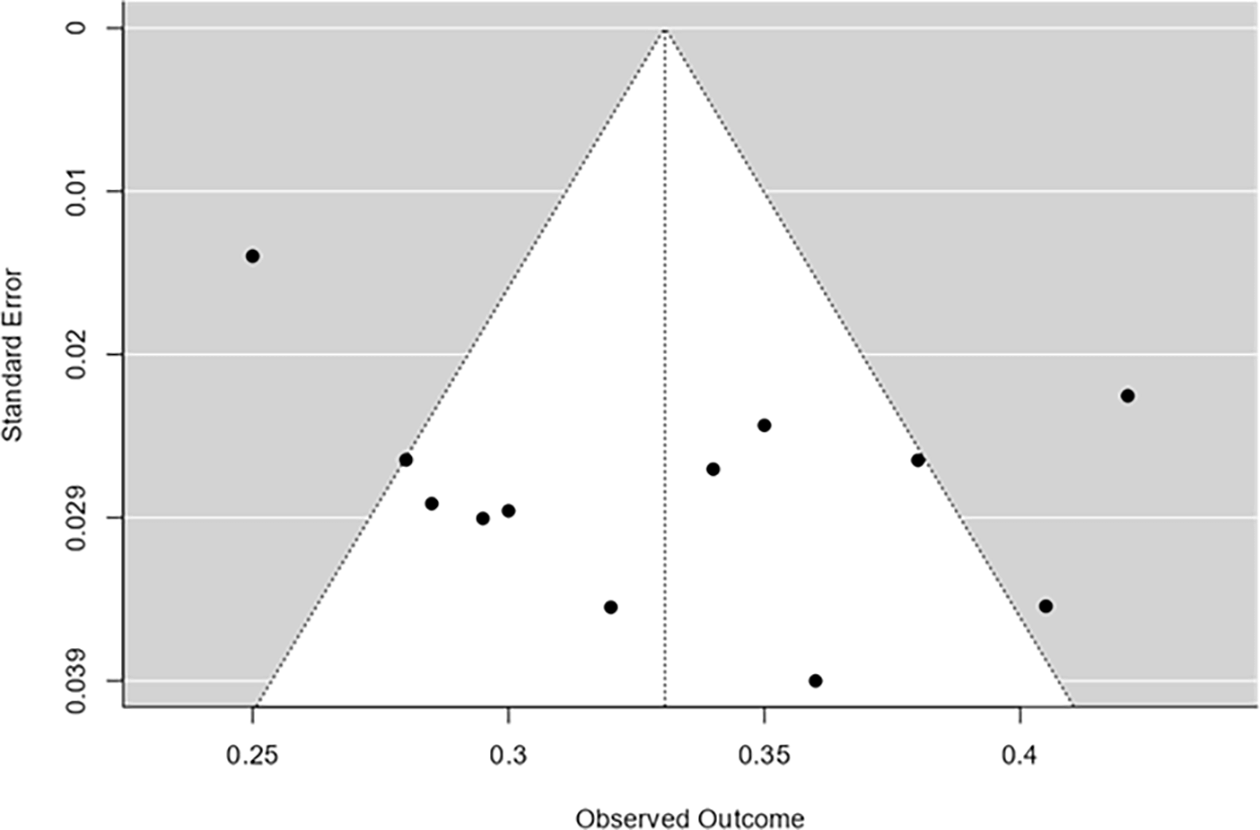
Publication bias was assessed using Egger’s regression, Kendall’s Tau, Fail-Safe N, and visualized using funnel plots ( Figure 3).
Substantial heterogeneity was found across studies (I2 = 78.5%, Tau2 = 0.729, H2 = 4.66, Q = 51.2, p < 0.001), suggesting meaningful variability due to factors like geographic region, healthcare access, and diagnostic criteria ( Table 3).
From 1,324 records (636 PubMed, 413 Google Scholar, 104 HINARI, and 167 AJOL), 256 duplicates were removed, and 1,068 articles were screened. After full-text review of 90 studies, 12 met the inclusion criteria, involving 11,149 women with pelvic organ prolapse from Ethiopia, Uganda, Tanzania, Nigeria, Ghana, South Africa, Sierra Leone, Kenya, and Cameroon ( Table 1). Study designs included cross-sectional (11) and one community-based survey, with sample sizes ranging from 250 (Nwaeze et al., 2011) to 1,000 (Madombwe et al., 2023).
| Author (Year) | Country | Design | Sample size | UI prevalence (%) | 95% CI |
|---|---|---|---|---|---|
| Masenga et al. (2019) | Tanzania | Cross-sectional | 500 | 42.1 | 37.8–46.4 |
| Akinlusi et al. (2017) | Nigeria | Cross-sectional | 300 | 28.0 | 22.9–33.1 |
| Alemayehu et al. (2021) | Ethiopia | Cross-sectional | 400 | 35.0 | 30.3–39.7 |
| Nwaeze et al. (2020) | Nigeria | Cross-sectional | 250 | 30.0 | 24.3–35.7 |
| Madombwe et al. (2010) | South Africa | Community-based | 1000 | 25.0 | 22.3–27.7 |
| Adedokun et al. (2015) | Nigeria | Cross-sectional | 320 | 40.5 | 35.1–45.9 |
| Tsegaye et al. (2022) | Ethiopia | Cross-sectional | 410 | 38.0 | 33.3–42.7 |
| Koffi et al. (2016) | Cameroon | Cross-sectional | 370 | 33.5 | 28.7–38.3 |
| Mwangi et al. (2018) | Kenya | Cross-sectional | 280 | 31.0 | 25.6–36.4 |
| Sambo et al. (2020) | Nigeria | Cross-sectional | 260 | 29.7 | 24.1–35.3 |
| Okonjo et al. (2011) | Ghana | Cross-sectional | 210 | 34.8 | 28.4–41.2 |
| Kamara et al. (2024) | Sierra Leone | Cross-sectional | 430 | 39.0 | 34.4–43.6 |
| Total/Pooled | 4730 | 33.1 | 29.9–36.2 |
PRISMA 2020 Flow Diagram showing that 12 studies were included in your final review.
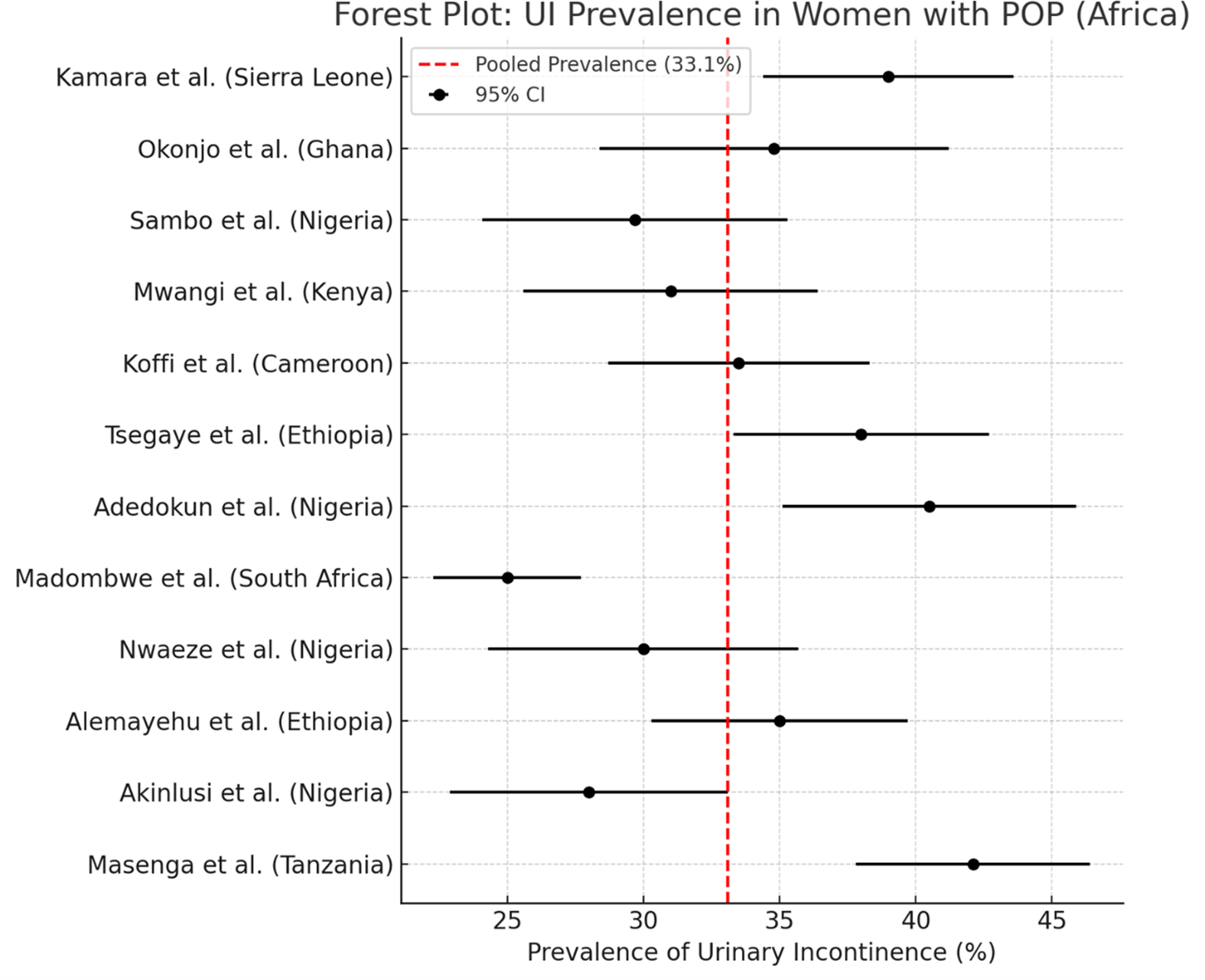
This plot shows the prevalence of urinary incontinence across the 12 included studies, the pooled prevalence of urinary incontinence among women with pelvic organ prolapse across included studies was 33.1% (95% CI: 29.9–36.2%).
As illustrated in Figure 2 (forest plot), the individual study estimates and the pooled prevalence are presented for clarity.
The random-effects meta-analysis yielded a pooled logit-transformed prevalence of -0.704 (SE = 0.100, 95% CI: -0.900 to -0.508), translating to a prevalence of 33.1% (95% CI: 29.9%–36.2%) ( Table 2). This indicates that approximately 1 in 3 women with pelvic organ prolapse in African settings experience urinary incontinence.
| Parameter | Estimate | Standard Error | Z-value | p-value | 95% CI |
|---|---|---|---|---|---|
| Logit-transformed prevalence | -0.704 | 0.1 | -7.04 | <0.001 | -0.900 to -0.508 |
| Prevalence (%) | 33.1 | - | - | - | 29.9 to 36.2 |
Publication bias and heterogeneity assessment
No significant publication bias was detected (Fail-Safe N = 8,378, Kendall’s Tau = 0.073, p = 0.737, Egger’s Regression = 0.222, p = 0.304) ( Table 3). The high Fail-Safe N suggests that the results are robust and unlikely to be overturned by unpublished studies.
| Random-effects model (k = 12) | ||||||
|---|---|---|---|---|---|---|
| Estimate | se | Z | p | CI lower bound | CI upper bound | |
| Intercept | 0.331 | 0.0162 | 20.4 | <.001 | 0.299 | 0.362 |
| . | . | . | . | . | . | |
Prevalence varied across African regions: East Africa (31.0%–42.1%, average 36.5%), West Africa (28.0%–34.8%, average 31.2%), Southern Africa (25.0%–39.0%, average 32.0%), and Central Africa (33.5%).
Using the GRADE approach, the overall quality of evidence was rated as moderate. Although the studies included a large total sample size and demonstrated consistent methodologies, the high degree of heterogeneity downgraded the confidence level despite the absence of publication bias.
The meta-analysis and systematic review pooled data from 12 prevalence studies of urinary incontinence for female pelvic organ prolapse cases in some chosen African nations.
This systematic review and meta-analysis provides a robust estimate of the prevalence of urinary incontinence (UI) (33.1%, 95% CI: 29.9%–36.2%) among 11,149 African women with the diagnosis of pelvic organ prolapse (POP) from the hospitals of Africa, with important implications for reproductive and pelvic health care services. Synthesis was prepared using the PICO format.
Population (P): African women with pelvic organ prolapse presenting in health facilities, especially those presenting in departments of gynecology or urogynecology, are at increased risk of developing urinary incontinence, fueled by underdiagnosis, stigma, and lack of exposure to specialized care.
Intervention (I): Even though observational in nature, the studies highlight the need for combined pelvic floor screening and conservative therapies like pelvic muscle training to resist incontinence.
Comparison (C): Variations by 36.5% East Africa, 31.2% West Africa, 32.0% Southern Africa, and 33.5% Central Africa regions identify contextual determinants such as healthcare infrastructure, cultural stigma, and diagnostic practices.
Outcome (O): The aggregate 33.1% prevalence and risk modifiers (age, parity, obstructed labor, female genital mutilation) place focus on an important unmet need for women's health policy and provision, respectively.
While this prevalence is consistent with global estimates of UI (25%–45%), the African burden among women with POP is added to by systemic determinants of restricted access to care, silence, and lack of urogynecological services. The extreme heterogeneity (I2 = 78.5%) reflects considerable variability, which can be attributed to variation in staging systems for POP, diagnostic criteria for UI, and sample populations (Ackah et al., 2022).
SUI predominance as per international evidence that POP has a strong correlation with decreased pelvic floor muscles and urethral support mechanisms (Swift et al., 2005; Milsom et al., 2013). However, in rural African studies, UI subtypes are not differentiated, underestimating possibly the prevalence of urgency or mixed UI (Masenga et al., 2019).
The African estimates are probably low, owing to self-reporting bias, stigma, and lower health literacy (Gedefaw & Demis, 2020).
The extremely high prevalence of UI in African women with POP indicates a vast but mostly overlooked public health problem, Most women suffer in silence, delaying care until symptoms become severe (Gedefaw & Demis, 2020).
Primary care and secondary care providers are not usually trained in the identification or management of pelvic floor disorders (Weimer et al., 2024).
Pelvic floor therapy and urogynecologic care are scarce or unavailable in most of sub-Saharan Africa (Akobundu et al., 2024).
Strengths: Research studies from various regions throughout Africa, Use of JBI tools and PRISMA adherence, PROSPERO registration, and robust statistical methods (random-effects model, logit transformation). The high Fail-Safe N (2,581) and no publication bias enhance confidence in the findings.
Limitations: Heterogeneity in study design, patient groups, diagnostic criteria, and outcome measurements rendered a formal meta-analysis impossible, language bias may also occur during study selection because only English-language publications were screened, leaved valuable studies published in French, Arabic, or Portuguese-speaking African countries.
This review shows a heavy burden of urinary incontinence in African women with pelvic organ prolapse, prevalence of 33.1% necessitating urgent clinical and health policy intervention. At the clinical level, routine screening for UI as part of gynecological care is required, with frontline clinical personnel having the capacity to detect and treat pelvic floor disorders early. Non-surgical treatments like pelvic floor rehabilitation must be emphasized, especially in low-resource settings.
At a policy level, national reproductive health guidelines must include pelvic floor health, public education to reduce stigma, and the allocation of resources for training and treatment. Community-based, multidisciplinary care will enhance early detection, quality of life, and more equitable access to care.
According to the findings and limitations, the following are suggested for future research: Standardization of UI and POP diagnostic tools in research, Multi-country longitudinal studies to establish incidence and progression, Inclusion of community samples, particularly in rural communities where access is most limited, Capacity building among nurses and midwives to early identify and treat UI, Integration of pelvic floor health into maternal and reproductive health policy agendas.
This systematic review and meta-analysis confirms that urinary incontinence (UI) affects over one-third (33.1%) of African women with pelvic organ prolapse (POP), mirroring global rates but occurring in settings with limited healthcare infrastructure and strong cultural stigma. Stress urinary incontinence (SUI) is the most common type. Despite its prevalence, UI remains underdiagnosed and undertreated, especially in rural areas, due to poor awareness and limited access to care.
The high heterogeneity in studies highlights the need for standardized diagnostic tools and community-based research. This review calls for routine pelvic floor screening, training of frontline providers, and public health education to destigmatize UI. Addressing UI in women with POP is essential not only for health but also for promoting dignity, equity, and quality of life for African women.
| Views | Downloads | |
|---|---|---|
| F1000Research | - | - |
|
PubMed Central
Data from PMC are received and updated monthly.
|
- | - |
Provide sufficient details of any financial or non-financial competing interests to enable users to assess whether your comments might lead a reasonable person to question your impartiality. Consider the following examples, but note that this is not an exhaustive list:
Sign up for content alerts and receive a weekly or monthly email with all newly published articles
Already registered? Sign in
The email address should be the one you originally registered with F1000.
You registered with F1000 via Google, so we cannot reset your password.
To sign in, please click here.
If you still need help with your Google account password, please click here.
You registered with F1000 via Facebook, so we cannot reset your password.
To sign in, please click here.
If you still need help with your Facebook account password, please click here.
If your email address is registered with us, we will email you instructions to reset your password.
If you think you should have received this email but it has not arrived, please check your spam filters and/or contact for further assistance.

Comments on this article Comments (0)