Keywords
waveguide, photonic crystal fiber, coupled mode theory, supermodes, nonlinear optics, COMSOL Multiphysics

This article is included in the Fallujah Multidisciplinary Science and Innovation gateway.
waveguide, photonic crystal fiber, coupled mode theory, supermodes, nonlinear optics, COMSOL Multiphysics
Integrated optics includes optical devices that are operated without free space propagation and depend on waveguides that are used either planar or channel waveguides (fibers). Also, the optical devices can be divided into types includes passive components as (splitters, coupler, and interferometers Mach Zehnder and Bragg grating) and active components as (laser amplifiers and lasers) can be achieved in an integration mode,1 These devices have showed promise as a technology for optical communication networks; however, a sophisticated optical network necessitates a variety of implementation features, including phase modulation, optical switching, and wavelength division multiplexing.2–4 The ultrafast response time of optical nonlinearities (several femtoseconds) makes these devices an appealing technique for employing third-order nonlinearity in optical waveguides in a transparent and high-speed manner.2 The coupled optical waveguide offers the possibility of using in the all-optical switch first introduced by Jensen. This device can be operated as a linear coupler at low input power, while at high input power, it operates as a nonlinear coupler by creating a change in the phase matching for both of the waveguides.5 Also, the photonic crystal fiber can operate as an all-optical switch, which is a new class of waveguides that guide light either by the total internal reflection (TIR) mechanism, where ( or by using a photonic band gap (PBG) effect, where ( , which gives a unique property impossible to achieve in traditional optical fibers.6
One of the most crucial parts of integrated optics is an optical waveguide coupler, which is used to control light by varying the refractive index between two waveguides. The evanescent electric fields between the two waveguides exhibit weak overlap when optical power is transferred between the two cores, allowing light to propagate in both independently and causing a coupling between them where light switches back and forth for the coupling length when the change in refractive index between waveguides is very small or constant while the largethe refractive index occurs mismatch phase between waveguides leads to the total power exchange is not happened as a linear coupler above a critical input power.1,3,7,8
Numerous research methodologies have been used in recent years to examine the theoretical and practical switching characteristics of the two core waveguides, as well as their linear and nonlinear interaction,5,7,8 and for the PCF coupler,4,9–15 then evaluate linear and nonlinear coupling and switching two core PCF coupler designed as a multiplexer-demultiplexer.16–22 Moreover, a numerical study of the soliton switching in a two-core nonlinear directional PCF coupler was coupled with the nonlinear Schrodinger equations to evaluate the transmission characteristics.
This work investigates the impact of linear and nonlinear effects in photonic crystal fibers (PCFs) on the coupling behaviour of various directional coupler designs, using COMSOL Multiphysics/based FEM. We validate the theoretical predictions and analyze the symmetric (even) and asymmetric (odd) supermodes for waveguide and PCF-based nonlinear directional couplers, indicating the potential for a new application of the coupler, such as power division, routing, splitting, switching, and WDM wavelength division multiplexing.
The optical waveguide coupler, which controls by altering the refractive index between two waveguides, is one of the most important components of integrated optics. Light will propagate independently in both waveguides and induce a coupling between them when the optical power between the two cores causes a modest overlap of the evanescent electric fields between the two waveguides, enabling light to switch back and forth for the coupling length.1,4,8
The linear coupler occurs between two waveguides placed close to each other, with a distance between the cores of the waveguides of several micrometres, and this distance has a strong effect on the coupling between waveguides Figure 1.
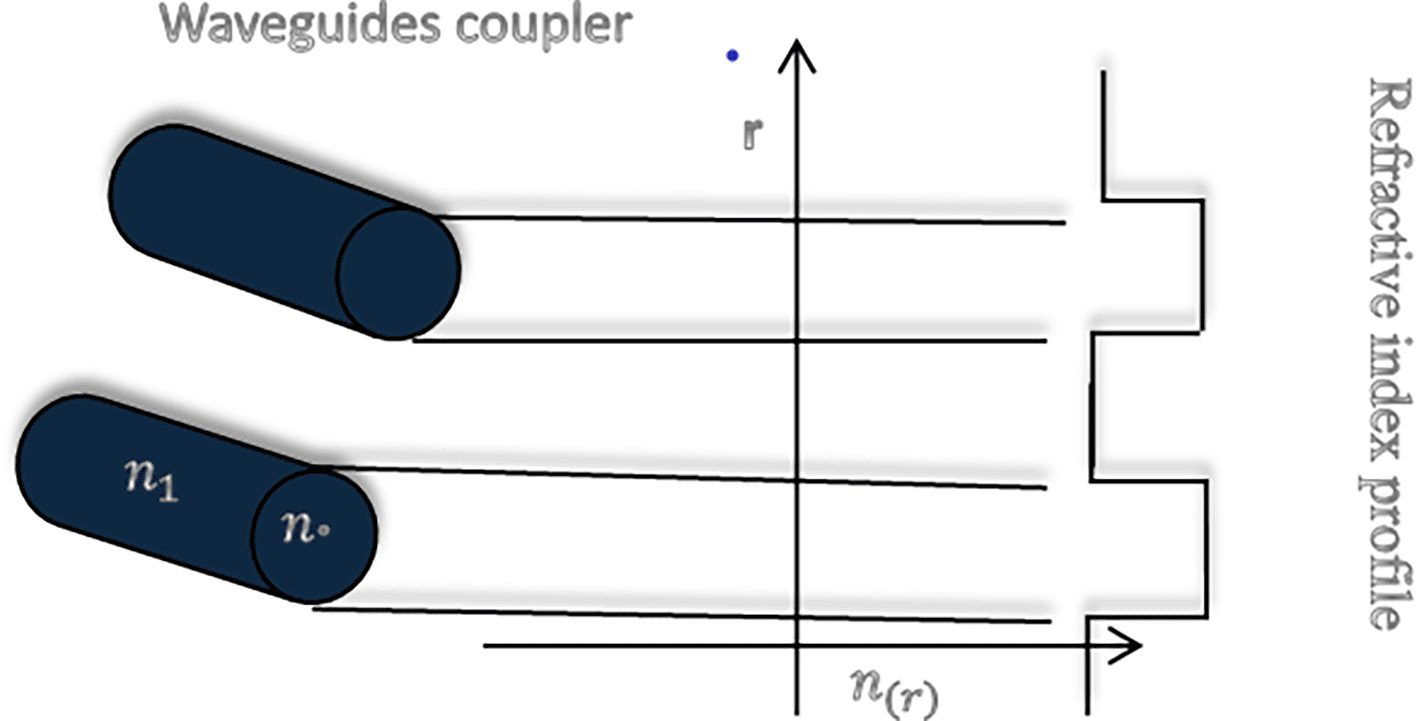
In general, coupled mode theory may explain the coupling between waveguides when two waveguides are positioned infinitely far apart, and their amplitudes are and with propagation constants and for propagation along the z-direction unperturbed as the Equation 1-3.
When there is a weak coupling between two waveguides in an evanescent field, the mode amplitude of one waveguide will affect the second waveguide, and the coupled equations will look as follows8,23–27
Also, the coupling can be expressed according to supermode theory as two individual modes, either a symmetric (identical) supermode, where the phase between these modes is synchronous or an anti-symmetric (non-identical) supermode that has out-of-phase, depending on the structure parameter of waveguides.1–3 The value of the effective index of the mode splitting is determined by the coupling strength κ, which becomes a perturbation of the individual modes. The effective index of even and odd supermodes and their corresponding propagation constants can be calculated to determine the coupling strength and coupling length using COMSOL Multiphysics, which relies on FEM to solve the modes easily. The coupling strength can then be obtained from;
The analytical solution of these equations can find the power distribution in each waveguide when these waveguides are identical, i.e. = = and = = .
The power in one waveguide is and the other is , at z = 0, the light is only the input of one waveguide and .
The light is initially confined to one waveguide and completely transferred to another waveguide within a distance , where the power in each waveguide oscillates sinusoidally back and forth due to the light propagation, and the coupling length is a measure of the coupling between the two cores along the propagation distance 1–2,8,29 Consequently, the minimal distance at which a maximum power transfer between the waveguides occurs is known as the coupling length, and then 100% of the optical power can be transferred when two waveguides are identical.2,8 The linear coupling can be used as a fiber beam-splitter, and the splitting ratio of power depends on both the coupling strength κ and the length of the coupler L, when z = , show 50% of power is transferred, and the coupler in this length is defined as -3dB coupler because the loss is (10 log 0.5 = -3dB), then the coupler is a 1:1 beam splitter.2,11,29
Linear coupler results from evanescent field coupling, where the overlap between the modes of each core, input power to the waveguide is low, follows a sinusoidal pattern. As a result, only the coupling length and coupling strength, which are based on the refractive index difference between the waveguide’s core and cladding, can determine the output power ratio. Since Equation 3 states that the same waveguide is constant when the refractive indices are taken into account, the cross-phase-induced coupling is typically negligible and can be disregarded.28 But the nonlinear coupling is due to the cross-phase modulation, and the input power to the waveguide will increase the linear coupler and consequently become power uncoupled, as a result a change in refractive index. Therefore, when calculating nonlinear coupling, it should add the phase to the linear coupler equation as follows8,30,31:
Here = represent the nonlinear coefficient, and the term μ has been described. Since the self-generated nonlinear phase γ assumes the nonlinear effect, take into consideration μ = 0 for the phase that is caused by the nonlinear interaction from one mode to the other mode in the adjacent waveguide.22 When the weak coupling is taken into account by the amplitudes alone, the nonlinear Equation 7 may then be solved analytically using the Jensen approximation,8,30 where the solution for the linear coupler is obtained when m .
When m =1, the value of the input power (where ) is called the critical power which is the power that corresponds nonlinear phase shift of about 2 occurred in the coupling length, where the coupling length reaches infinity at this power and is found to be inversely proportional to the coupling length.5,32
Although the coupling is linear at m = 0, the smallest value of z at which the waveguide’s power drops from an initial value of to zero has been represented by the coupling length, ,
, therefore, the coupling length is defined as.8
But the input power is critical when m >1, the solution is
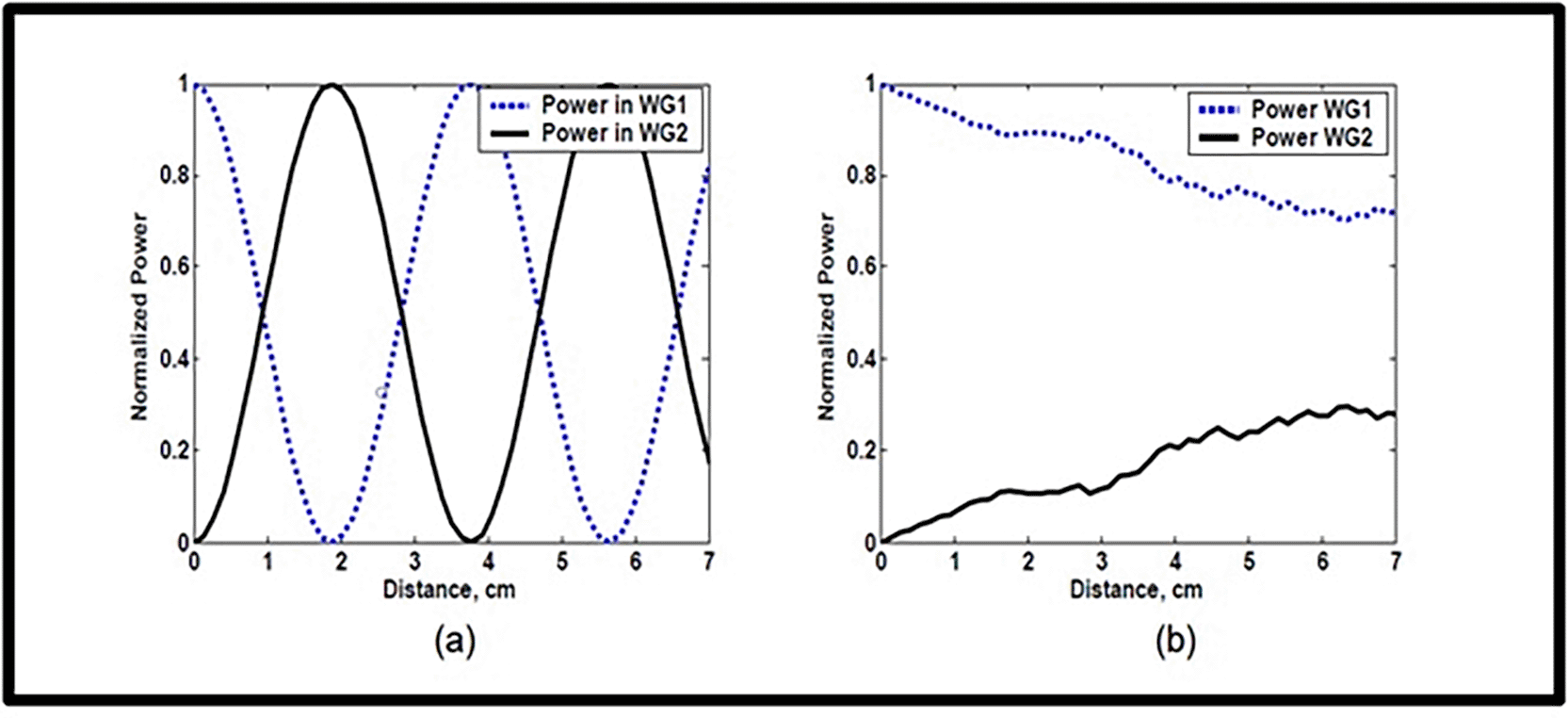
From Equation 11, for a linear coupler with m = 0 and low input power, light couples back and forth sinusoidally between two waveguide cores with a periodicity of . The value of m, on the other hand, rises with increasing input power, suggesting that full power transfer is preserved between the two waveguide cores. The oscillation period also rises with increasing power, the coupling length increases, and the solution starts to diverge from the linear coupler solution.
As the input power P0 increases to the critical power Pc at m = 1, the coupling duration period gets closer to infinity. This indicates that the light is distributed equally between the coupler’s two cores, see Figure 2-a. When the coupler is given extremely high power at m > 1, the light propagation period of oscillation decreases with a periodicity of Lc. The induced phase that results from the nonlinear effects subsequently stops the two waveguides from connecting where the phase-mismatch rises.8 Light cannot, therefore, be entirely linked from one waveguide to another; rather, it remains in the waveguide into which it was first released,8,32,33 as illustrated in Figure 2-b.
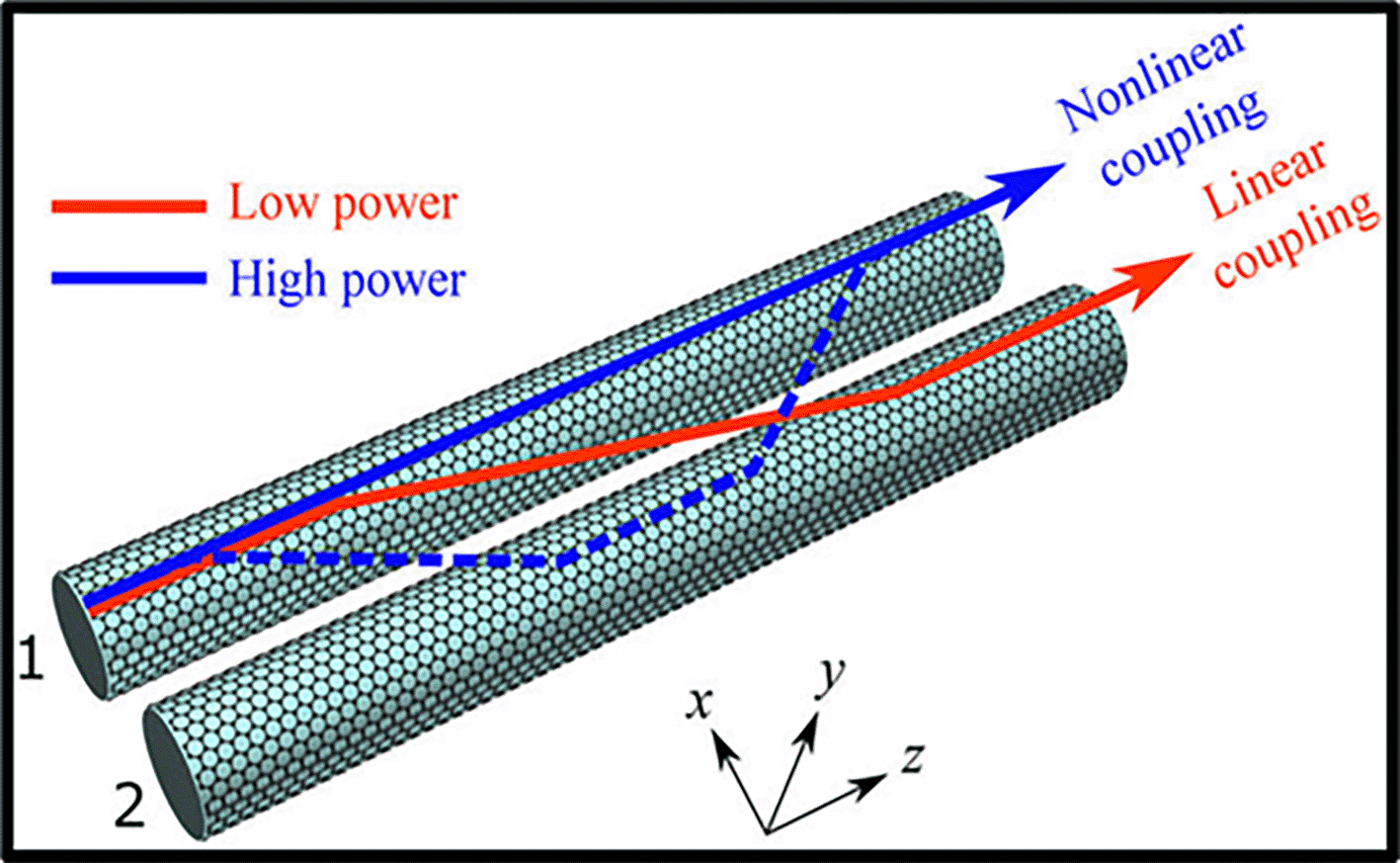
Also, the linear coupler cannot be controlled on the output power ratio of a fixed length, but by using nonlinear coupler it possible to control it by amount uncoupled power, therefore, nonlinear coupler works as optical switch in photonic circuits for all optical powers, and by choosing the desired intensity can be obtained on clearly switching between two cores of PCF coupler as the Figure 3.25
The current study uses a simulation based on the finite element method (FEM) in COMSOL Multiphysics to design two-core structures with various geometries and examine how these designs impact the assessment of the propagation properties between the coupler’s different coupling core types. Using a scalar wave equation that explains the propagation of the transverse electric field, Equation (12), the COMSEL software uses Maxwell’s equations to govern the propagation of electromagnetic waves through the coupler10,18:
We design a numerical simulation waveguide and PCF directional coupler using COMSOL Multiphysics software for silica material. The parameters of the waveguide directional coupler are and , the separation distance between to cores couplers is D = 3 μm at wavelength 1.55 μm, the waveguide coupler with a height of 12 μm, a width of 18 μm and a length of 2.2 μm, as shown in Figure 4. While the PCF directional coupler has a hole pitch of = 5 μm, the hole diameter is = 1.16 μm and core diameter is 5 μm, as shown in Figures 4 and 5.
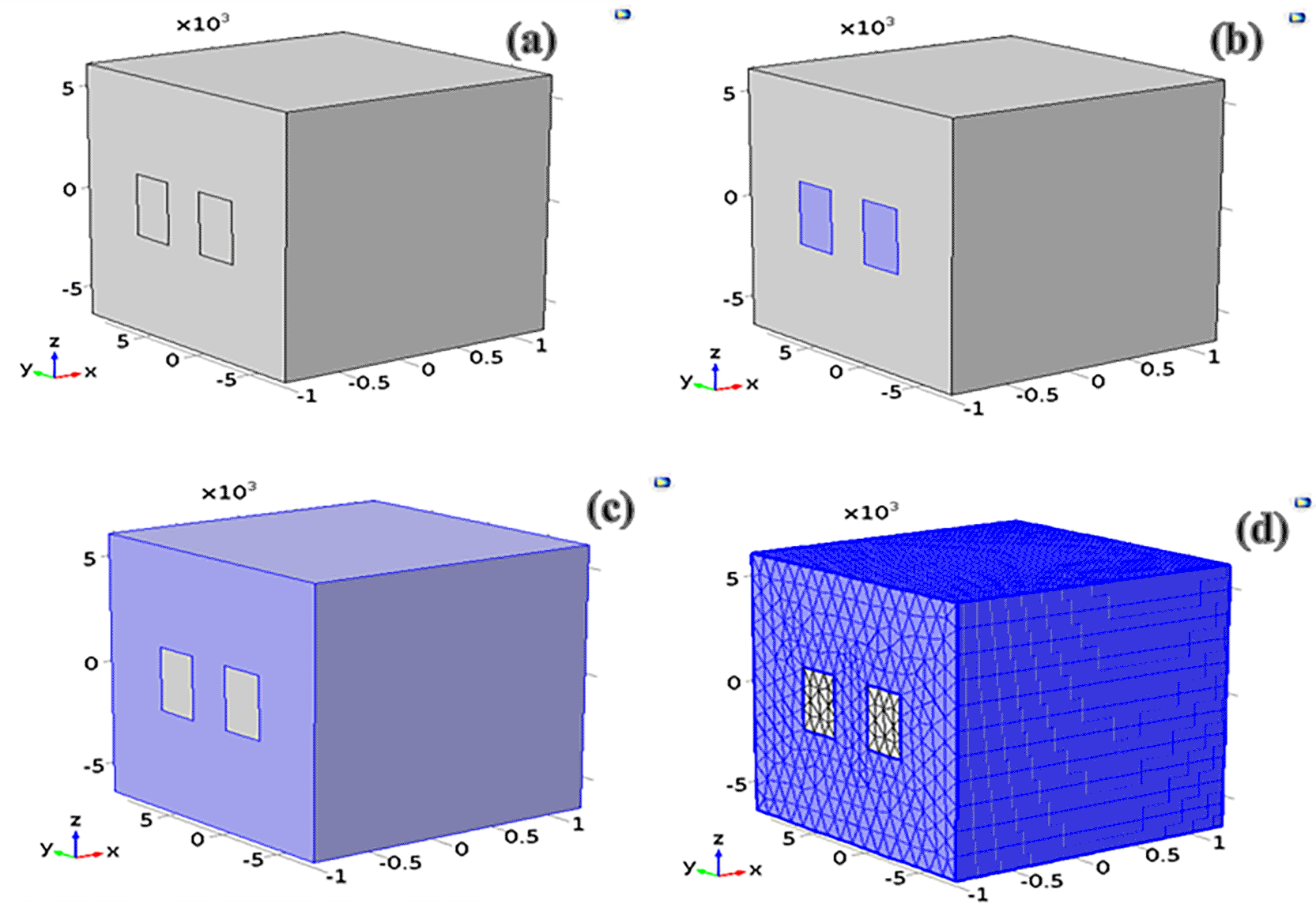
(a) The coupler is made of silica material. The design parameters are height is 12 μm, width is 18 μm, and the length is 2.2 μm, and the core separation (d = 3 μm). (b) Insert core material, (c) Insert cladding material and (d) The finite element triangular mesh at wavelength 1.55 μm.
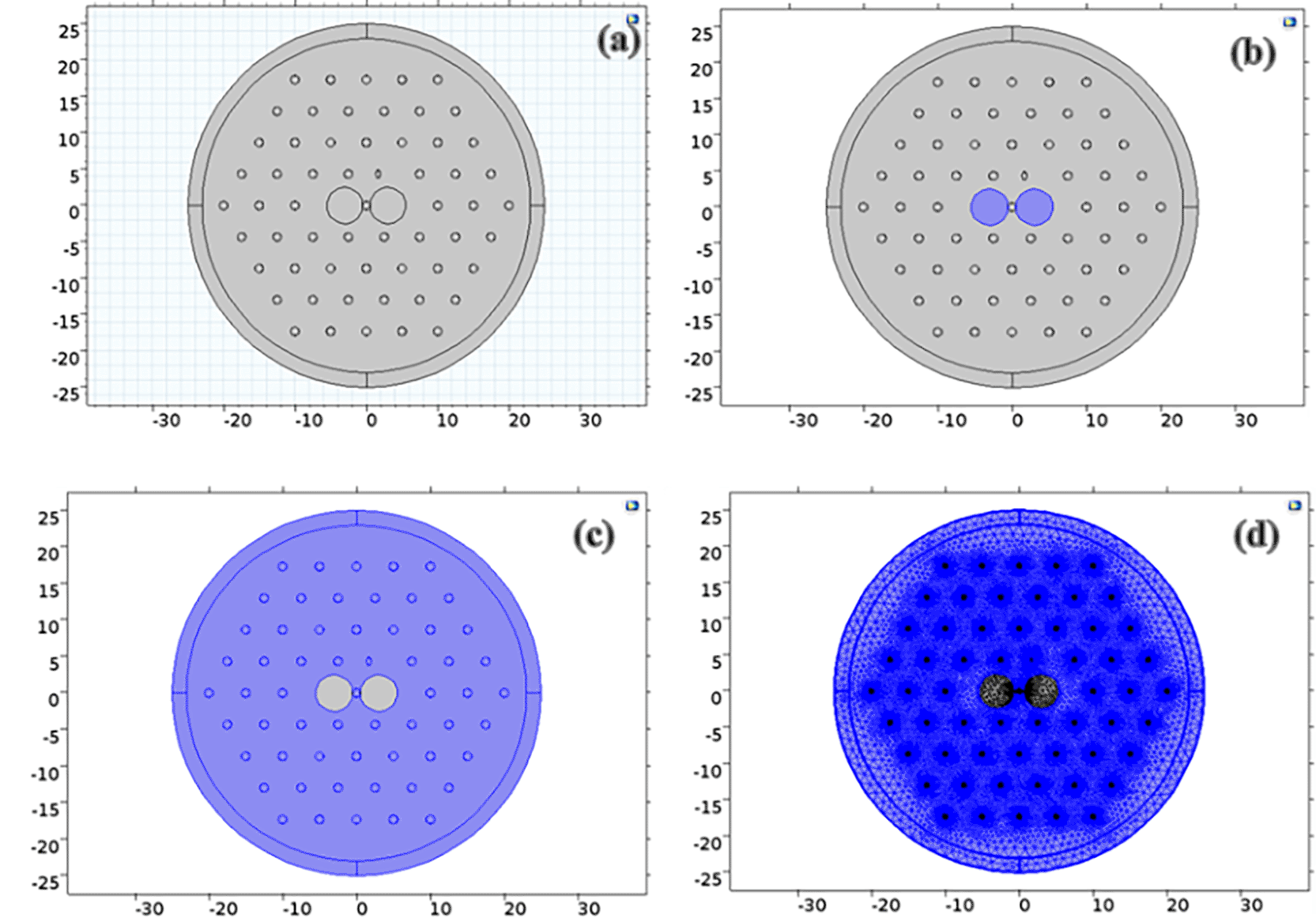
(a) The coupler is made of silica material, the design parameters are is hole pitch is = 5 μm, the hole diameter is = 1.16 μm and core diameter is 5 μm and the core separation (d = 3 μm) (b) Insert core material (c) Insert cladding material (d) Finite element triangular mesh at wavelength 1.55 μm.
Then, to investigate the mode analysis, we use the physical model as the electromagnetic wave-domain frequency. Next, we specify the boundary condition, such as a perfectly matched layer (PML). Figures 4 (d) and 5 (d) depict the two cores. FEM enables us to solve the problem of light propagation in the coupler. A mesh-free triangular mesh is used to divide the cross-section of the two-core coupler structure into small finite elements (the mesh’s maximum and minimum element sizes are λ μm and λ/2 μm with a curvature factor of 0.6). The study is then chosen for the mode analysis. We find with effective mode index 1.4596 for even mode and 1.4594 for odd mode both of the and polarizations components and the effective refractive index for even and odd modes are 0.0002, then the coupling lengths are 3.8751 μm. While PCF directional coupler is hole pitch is = 5 μm, the hole diameter is =1.16 μm and core diameter is 5 μm, effective mode index 1.4382 for even mode and 1.4375 for odd mode and the effective refractive index for even and odd modes are 0.0007 then the coupling lengths are 1.107 μm both of the and polarizations components, this shows in the Figures 6 and 7.
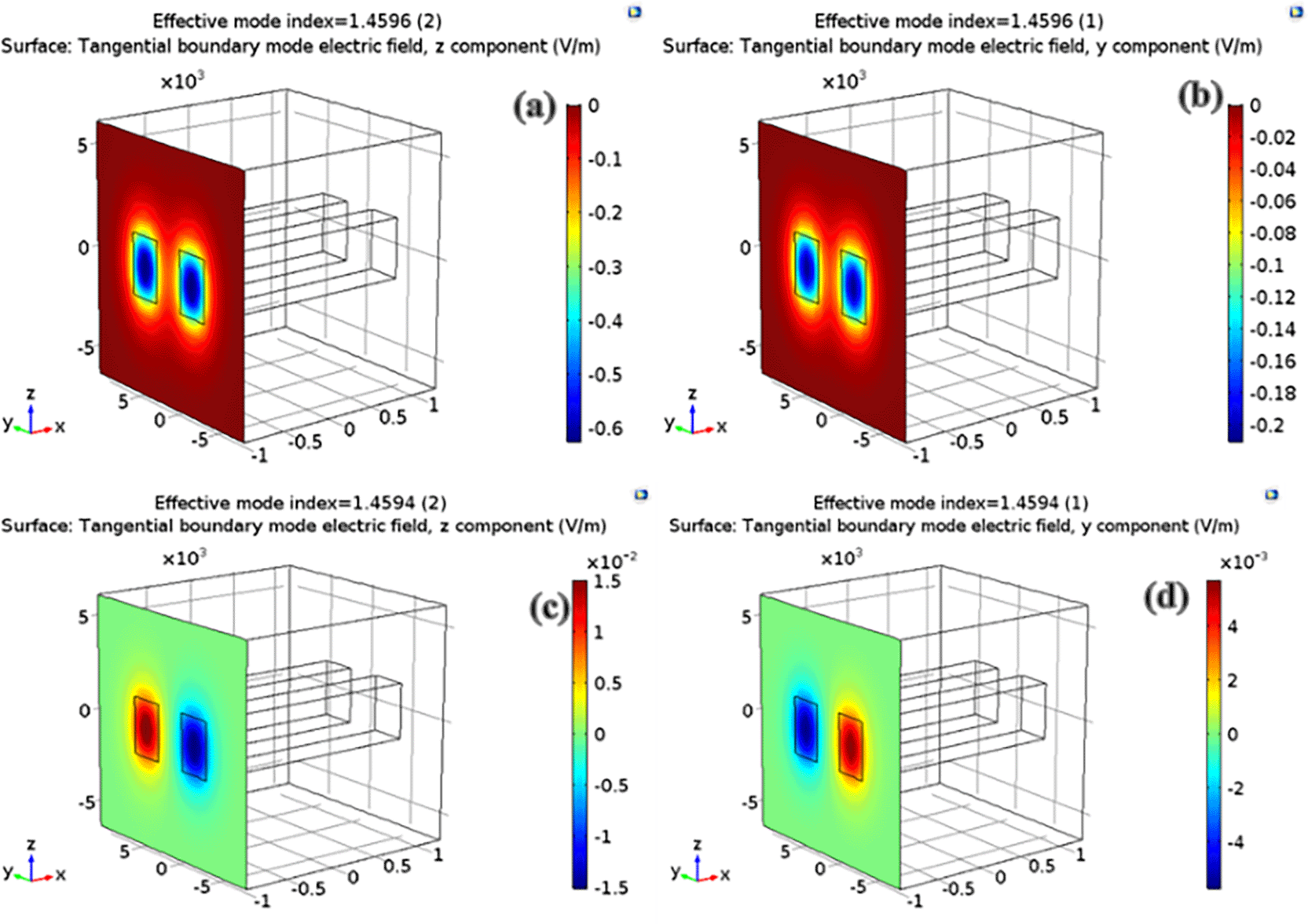
Effective mode index for even modes, Surface: Tangential boundary mode electric field of and polarizations components (V/m) for odd (antisymmetric) modes in (b and c). with core separation 3μm at wavelength 1.55μm for 3D waveguide coupler.
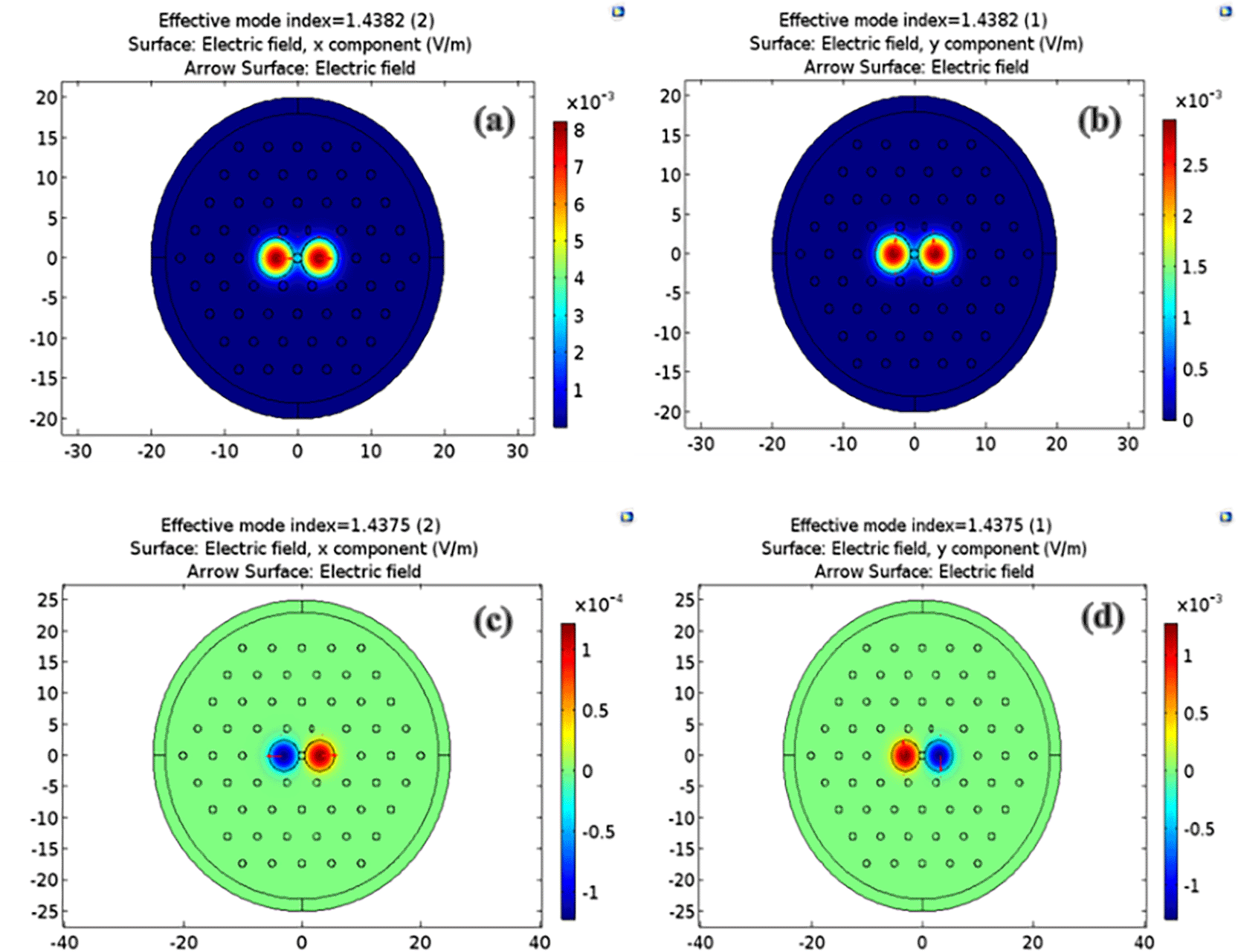
Effective mode index for even modes, Surface: Electric field of and polarizations components (V/m) for odd (antisymmetric) modes in (b and c) with core separation D = 3 μm at wavelength 1.55 μm for 2D PCF coupler.
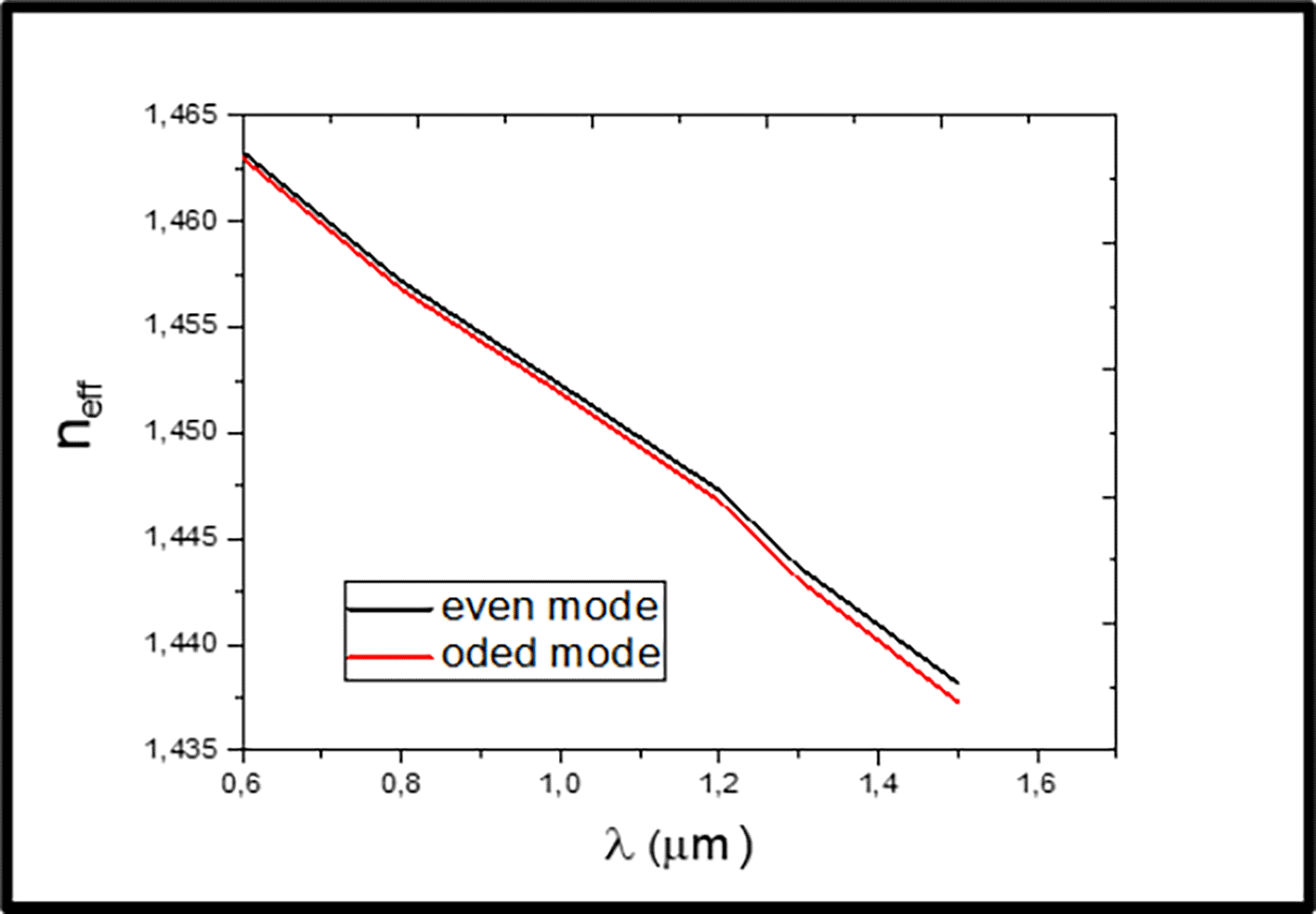
Figure 8 illustrates how the effective refractive index difference between the even and odd modes of both polarization modes ( and or and directional coupler) is very small at short wavelengths and begins to increase at long wavelengths.35,36
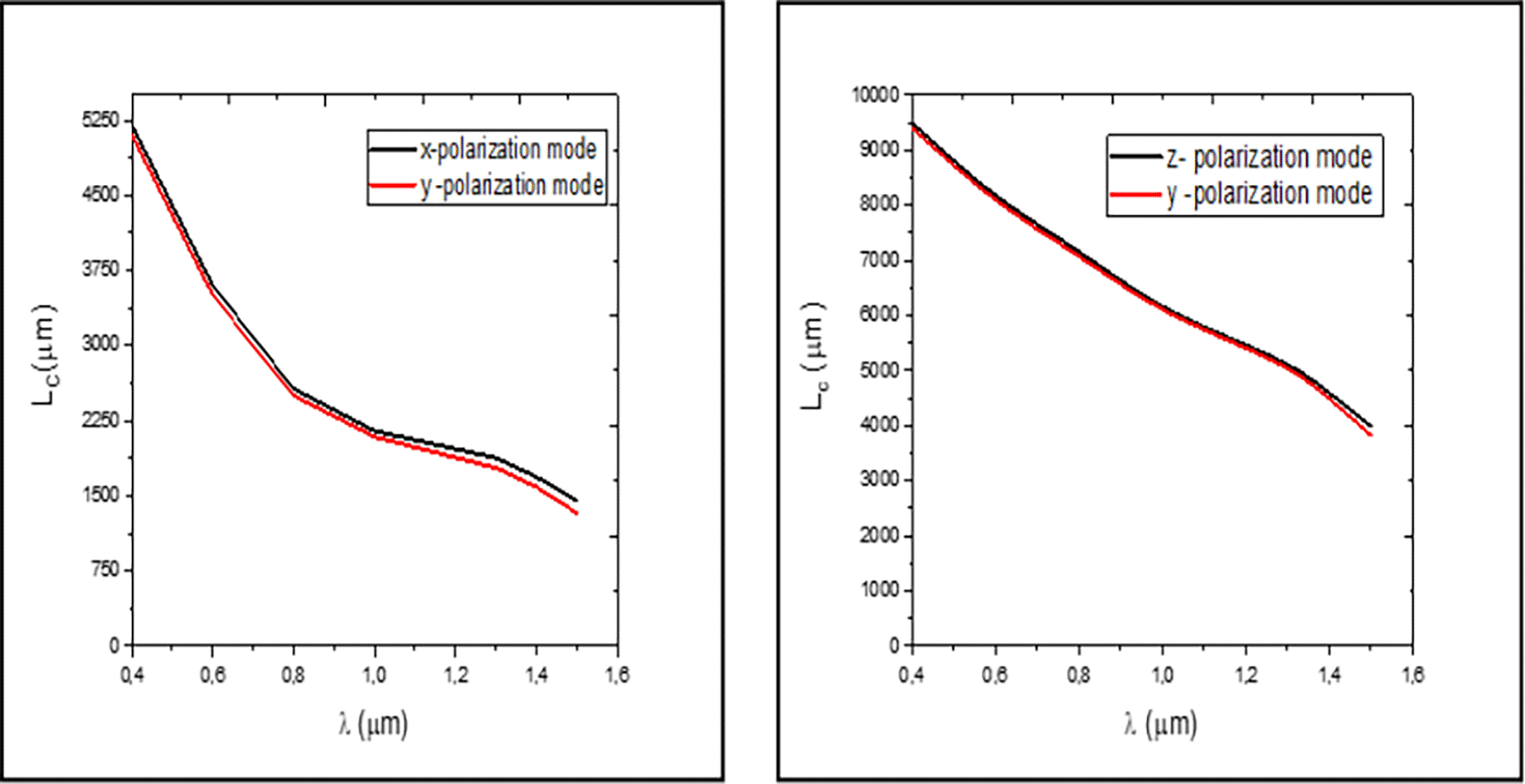
Also, the variation of coupling lengths with wavelengths for both polarization modes and or and or both the waveguide and PCF coupler, as shown in Figure 9. The coupling length decreases as the wavelength increases; at short wavelengths, it takes on a large value due to the difference between the even and odd modes’ effective refractive indices for both polarization modes, x and y or z and y are lower than begin to sharply decrease when the wavelength increase so this difference between even and odd modes for both and polarization modes or and will relatively increase with increased wavelength. However, the material dispersion of silica glass, which manages the abrupt fall in the coupling length at short wavelengths, is more significant in evaluating the differences between even and odd modes than at long wavelengths. From these results, it is possible to know the significance of the short wavelength for application as multiplexer-demultiplexer PCFs, the simulation results exposed similarity to coupling properties.10,35,36
To investigate the coupling between the coupler’s cores, power was initially supplied into the central core. Analytical solutions containing Jacobi elliptic functions in Equations 8, 10, and 11, and numerical solutions of the coupled-mode equations using COMSOL are shown. After determining the coupling length, we determine that the coupling coefficients between the two identical cores for the waveguide and PCF couplers are k = 0.000405 μm and = 0.001418 μm at a wavelength of 1.55 μm, then the nonlinear parameter is calculated about with a nonlinear refractive index 36 The numerical solutions for the initial powers launched into one core waveguide and PCF couplers are P = 1W/m, 70 W/m and 100 W/m. Therefore, one can discuss these initial powers as:
1- When one of the coupler’s cores receives low power input P = 1 W/m for waveguide and PCF coupler as shown in Figure 10, the nonlinearity becomes unimportant, and the coupled-mode equations are approximated to Jacobi elliptic functions of the linear coupling, where the amplitudes in each core undergo periodical oscillations as sinusoidal waves in two cores according to the equation P = [1 + cos (2 kz)] and the two-core coupler completely transfers the optical power, the power in each core approaches 50% of the input power.
2- When the input power is increased to P = 70 W/m for the waveguide coupler, and 20 W/m for the PCF coupler, periodical oscillations as sinusoidal waves continue to transfer the power between the core coupler, and the nonlinear effect begins to grow. The effect on the inter-core coupling that is related to the crosstalk between the coupler leads to reducing the coupling between them, and thus the amount of transfer power to the other core is less than 50% of the input, as shown in Figure 11. The power flow in the two-core coupler deviates from the cosine function and obeys the relation of the Jacobi elliptic functions P = (1/2) (1 + cn(2 kz/m)), i.e. occurs according to cn nature that is below critical power , from Equation (9) where the critical power of the waveguide coupler was 83 W/m and for the PCF coupler 29 W/m, this shows that the critical power changes with changing the coupling coefficients, and also the critical power is changed with the wavelength. Therefore, both and γ are changed depending on the wavelength that is used.
3- When increasing power to the input P = 100 W/m and 60 W/m for waveguide and PCF coupler respectively, the coupling between cores is dramatically decreased, the transferred power to the other core is decreased and become uncoupled, and ultimately, as the nonlinear coupling depicted in Figure 12, the majority of the power returns to the original core that it was fed into, with just a very little portion of the connected power going to the other core, where the power flow occurs to be of dn nature above critical power and coupler strength is low, where 90% of the power remains into initial core coupler and only low couple ratio 10% of power exchanged between them.
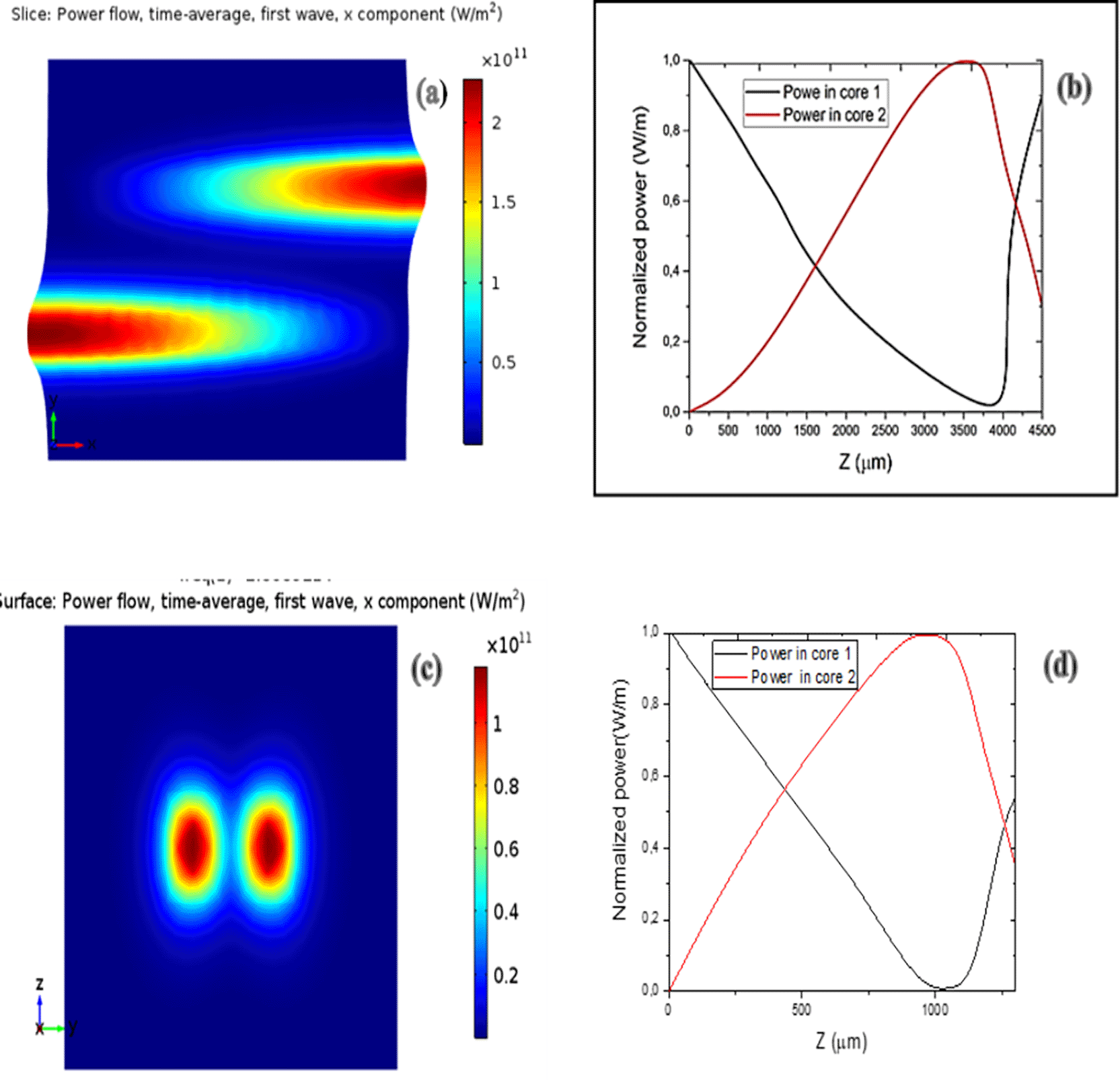
The power flow in the two cores of the PCF coupler is illustrated from the right (c) for the waveguide and (d) for PCF.
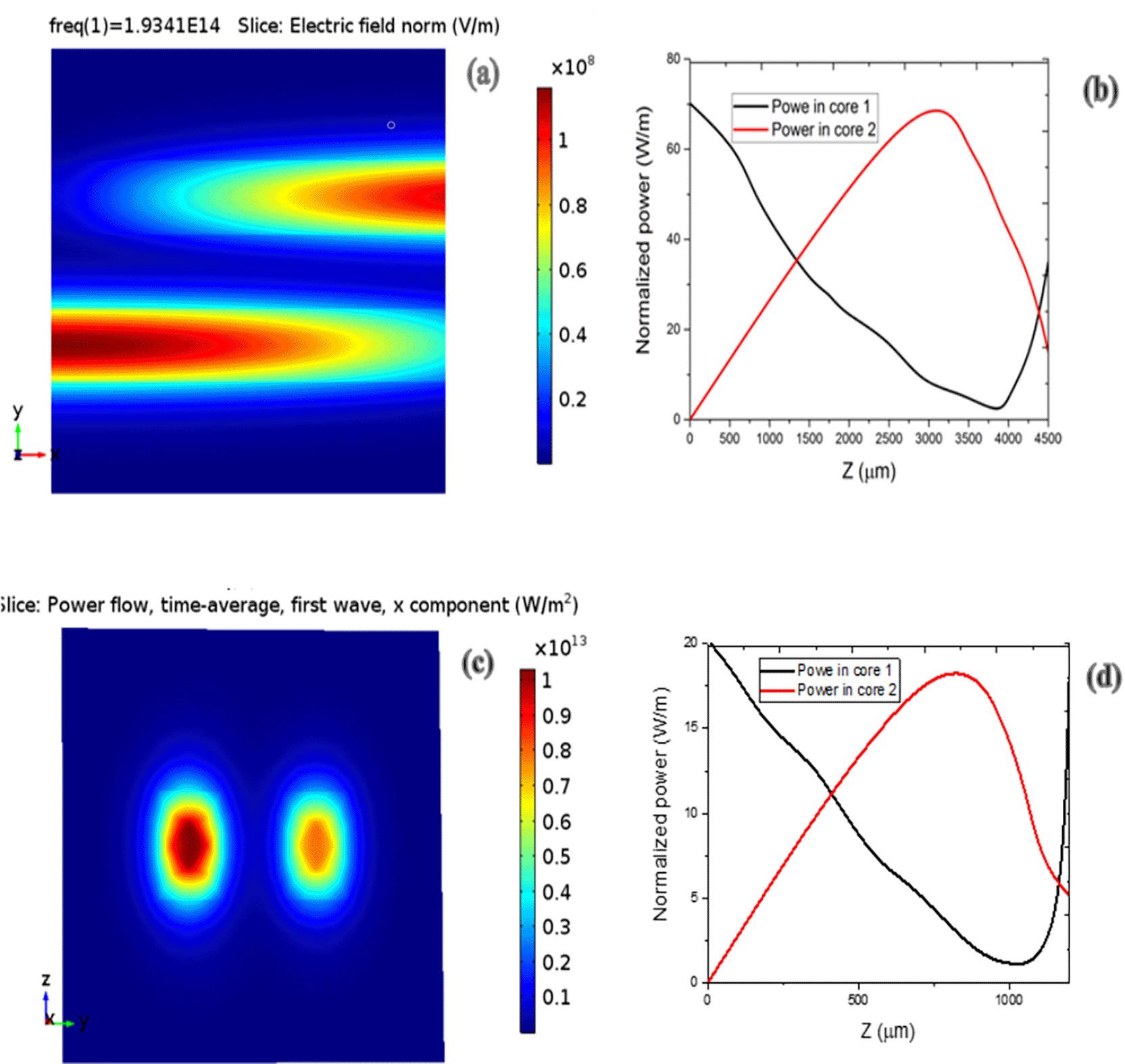
The power flow in the two cores of the PCF coupler is shown from the right for (c) the waveguide and (d) PCF.
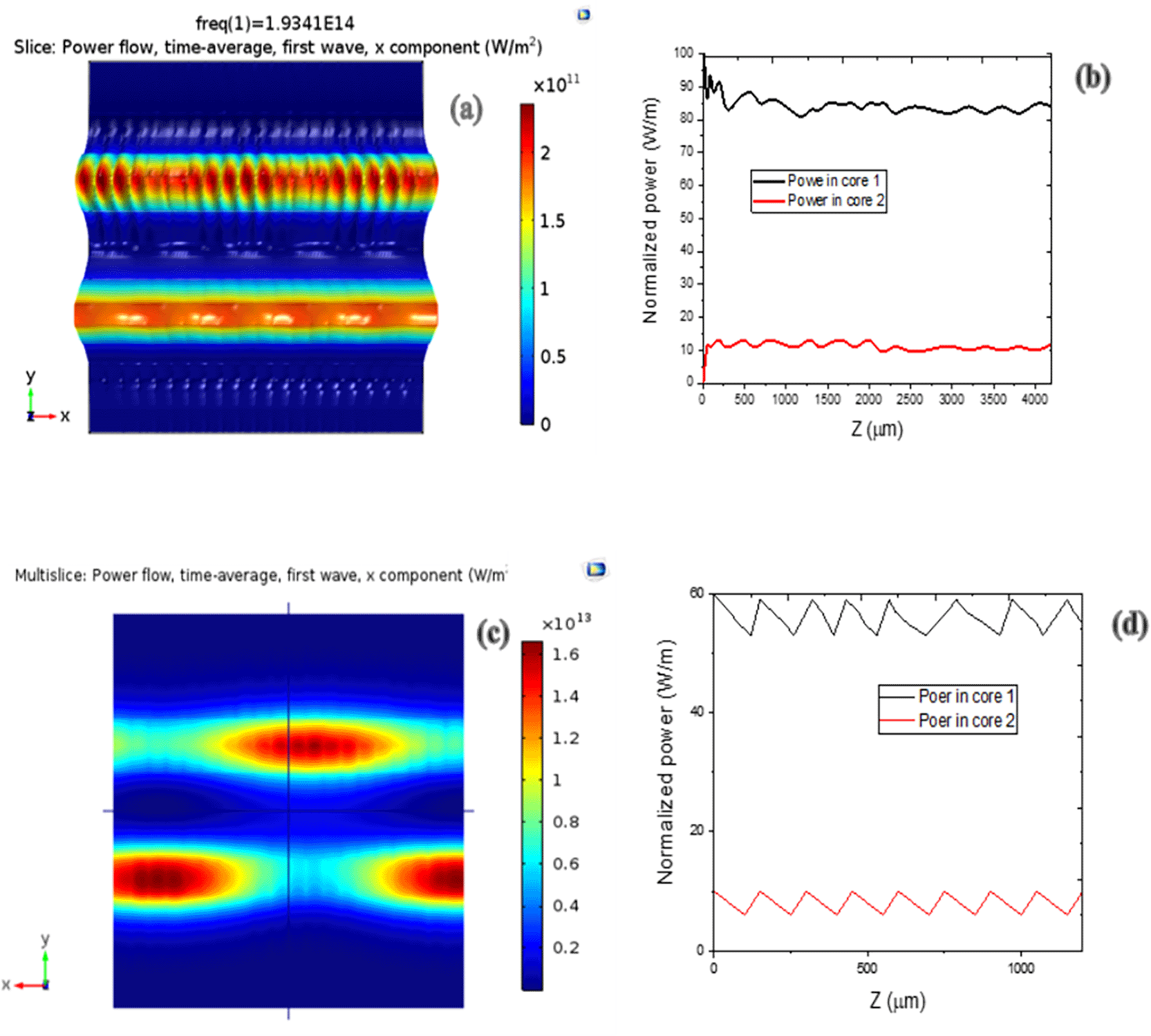
The power flow in the two cores of the PCF coupler is shown from the right for (c) the waveguide and (d) PCF.
The results of the numerical simulation by COMSOL Multiphysics reveal that the waveguide and PCF coupler have linear and nonlinear coupling and switching properties nearly similar to the waveguide and PCF coupler where the numerical results are consistent with the results reported in studies,9,11 which used two-core coupler designs for both waveguides and optical crystal fibre, and appear in a very good agreement with Jensen’s theory reported in.5,37
COMSOL Multiphysics was used to do a numerical analysis of the two-core waveguide and PCF coupler’s linear and nonlinear coupling properties. Coupled mode theory was used to calculate the coupling. The findings demonstrated that the coupling behaviour is consistent in both the linear and nonlinear domains, regardless of the coupler’s geometric design. Furthermore, the PCF coupler exhibits a shorter coupling length than the waveguide coupler, which leads to a stronger connection. Furthermore, compared to the waveguide, the PCF needs less input power to accomplish decoupling between the cores in the nonlinear area. The linear regime allows for equal power transmission between the cores, but the coupling is determined by the input power. As a result, the linear coupling regime cannot be controlled by the output power for a given length, whereas in the nonlinear regime, the output power is dependent on the input power and may be adjusted accordingly. Increasing the input power greatly reduces coupling strength and increases coupling length. When power increases, the self-phase modulation (SPM)-induced phase difference between the modes’ refractive indices varies with the input, resulting in enhanced mode confinement within the core.
This confinement prevents core-to-core connection while reducing inter-core crosstalk. The numerical results are in great accord with Jensen’s theoretical predictions and are consistent with the results reported in studies,9,11 which used two-core coupler designs for both waveguides and optical crystal fibre. Further research into coupling mechanisms could help to build sophisticated integrated photonics applications such as mode converters, power dividers, routers, optical switches, modulators, and multiplexers/demultiplexers.
| Views | Downloads | |
|---|---|---|
| F1000Research | - | - |
|
PubMed Central
Data from PMC are received and updated monthly.
|
- | - |
Provide sufficient details of any financial or non-financial competing interests to enable users to assess whether your comments might lead a reasonable person to question your impartiality. Consider the following examples, but note that this is not an exhaustive list:
Sign up for content alerts and receive a weekly or monthly email with all newly published articles
Already registered? Sign in
The email address should be the one you originally registered with F1000.
You registered with F1000 via Google, so we cannot reset your password.
To sign in, please click here.
If you still need help with your Google account password, please click here.
You registered with F1000 via Facebook, so we cannot reset your password.
To sign in, please click here.
If you still need help with your Facebook account password, please click here.
If your email address is registered with us, we will email you instructions to reset your password.
If you think you should have received this email but it has not arrived, please check your spam filters and/or contact for further assistance.

Comments on this article Comments (0)