Keywords
PCOS, Ghrelin, Leptin, Insulin, SHBG

This article is included in the Fallujah Multidisciplinary Science and Innovation gateway.
PCOS, Ghrelin, Leptin, Insulin, SHBG
Despite established diagnostic criteria, the medical and scientific understanding of the etiology of polycystic ovary syndrome (PCOS) remains incomplete. The condition involves a complex interaction of genetic, environmental, and epigenetic factors.1 Intrauterine growth may also contribute to the development of PCOS features.2 Hypersecretion of androgens by the theca and stromal cells of the polycystic ovary subsequently leads to the characteristic manifestations of the syndrome.3
Since androgens are one of the ovulation mechanisms that inhibit the growth of immature follicles, PCOS is regarded as an endocrine gland disorder that affects young people in the early stages of reproduction. The disease is characterized by an increase in the secretion of gonadotropin and androgen, and it affects up to 13% of women worldwide who are of childbearing age.4 In addition, PCOS represents a complex, multifactorial disorder that occurs due to environmental, genetic, hormonal, and metabolic factors in the bodies of patients with this syndrome.5
Disturbances in the ovarian response to the pituitary gland, excessive pulses of GnRH from the hypothalamus, stimulation of testosterone secretion by the ovary, a drop in FSH levels, or they may remain constant and unchanged all contribute to the pituitary gland’s hypersecretion of LH.6
Ovarian androgen production is strongly stimulated by insulin through a distinct insulin receptor that does not exhibit insulin resistance. Because insulin prevents the liver from producing SHBG, a glycoprotein that binds most sex hormones, it increases both the action of LH and the degree of hyperandrogenism. Therefore, high body weight exacerbates the underlying hormonal abnormalities (increased androgen and insulin levels), free androgen levels rise, and women with polycystic ovarian syndrome exhibit the clinical signs.7 Overweight people make up around 40% of patients with PCOS. Adipokines and other mediators, including cytokines, have been secreted by adipose tissue, leading to low-grade chronic inflammation and insulin resistance, both of which are factors in ovarian disorders. However, not all obese women have PCOS, and not all PCOS patients are obese. Moreover, lowering body fat may successfully lessen the syndrome’s severity.8
The body mass index (BMI) in patients with polycystic ovary syndrome is greater than 30 kg/m² of visceral fat (fat that is concentrated in the abdominal area and not the entire body) and the waist-to-hip ratio is also increased. This increase is a common finding in obese women with polycystic ovary syndrome,9 and obesity mainly contributes to infertility in PCOS patients through its effect on hyperandrogenism, hyperinsulinemia, and insulin resistance.10
Changes in lifestyle are part of the treatment for polycystic ovarian syndrome. The syndrome and its symptoms can be eliminated by increasing daily activity and eating a diet high in fiber and low in sugar, which will help reduce excess weight and maintain a healthy waist circumference.11 The most important treatment used in addition to medication therapy is metformin, which helps stimulate ovulation and egg formation by lowering blood glucose levels by increasing insulin sensitivity without increasing insulin concentration. Additionally, it lessens miscarriage in women with polycystic ovarian syndrome and enhances and controls the menstrual cycle.12
Along with Clomid (clomiphene citrate), it is the most popular therapy for polycystic ovarian syndrome and one of the ovulation drugs. It aids in promoting the development of eggs, the expansion of follicles, and the doubling of their quantity.13 The goal of the current research was to evaluate the levels of the hormones leptin and ghrelin with specific biochemical characteristics in obese women with polycystic ovarian syndrome in Fallujah, as the levels of these hormones declined while those of diagnostic markers rose.
The samples used in this study were taken between October 15, 2024, and January 15, 2025, from the labs of the Fallujah Teaching Hospital in the Anbar Governorate as well as a few private laboratories connected to Fallujah city. Seventy samples of obese women between the ages of 18 and 45 who were of reproductive age were included in the research. The two groups were divided as follows:
• Control group: 35 women who were randomly chosen from among Fallujah city’s population and in excellent health had their blood samples taken.
• Patient group: Thirty-five obese women with polycystic ovarian syndrome had their blood samples taken. Following testing for the illness and a referral to a specialized physician following an ultrasound examination (sonar), their infection was verified as having the condition.
The competitive concept is the foundation of the hormone test, which measures insulin, LH, SHBG, leptin, and ghrelin. The enzyme competes with the hormone-bound antibodies in the samples to bind to the antibodies when samples are added to wells coated with hormone-bound antibodies. As the concentration of hormones in the sample increases and the enzyme unbound to the washing process is eliminated, TMB solution is added and incubated for a predetermined amount of time to produce a change in blue color. Following the addition of the stopping solution to halt the reaction, the samples’ absorbance is measured at 450 nm. According to the manufacturer Monobind Inc., USA, these hormones were tested in blood serum using the ELISA test technique, using a measuring kit for each measurement.
Serum glucose level was measured by the Spanish company BioSystems, using a test kit equipped with the enzymatic method followed by Young (2001).14
The t-test was used to assess the variance between two groups at a probability threshold of (P ≤ 0.001) in the Completely Randomized Design-CRD technique of the Statistical Package for the Social Sciences-SPSS. Sensitivity and specificity were also determined by calculating the ROC and determining its values and calculating its values (Curve). The association between the variables under investigation was also discovered using the basic linear correlation coefficient.
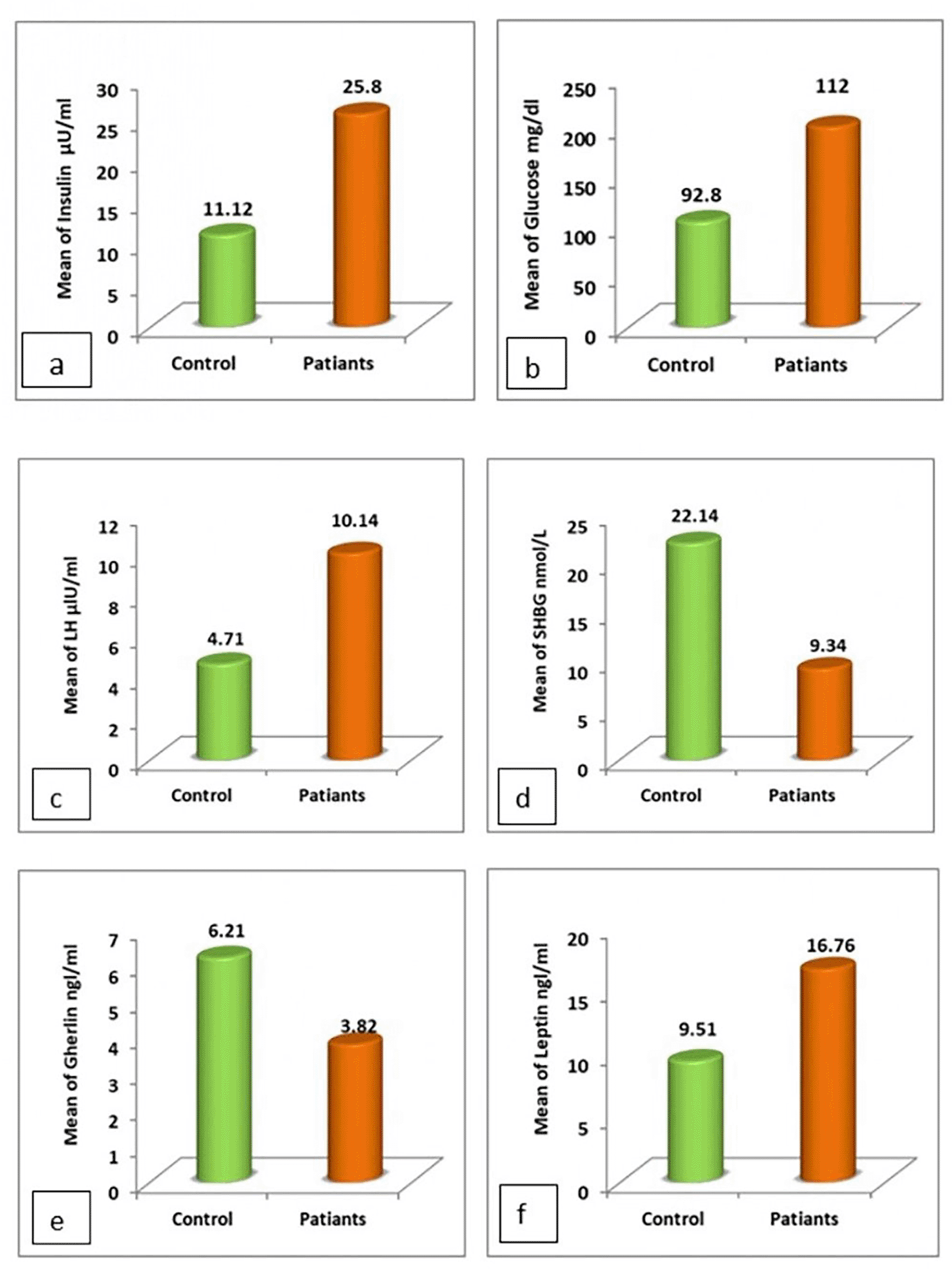
Table 1 shows the mean ± standard deviation of biochemical parameters (Insulin, Glucose, LH, SHBG, Gherlin and Leptin) and diagnostic markers for each of the two research groups.
The present study’s findings indicated that all four levels—insulin, glucose, leptin, and LH—had significantly increased. At a probability threshold of P < 0.001, the blood serum of obese women with polycystic ovarian syndrome showed a substantial drop in both SHBG and Ghrelin when compared to the control group, which consisted of healthy individuals ( Figure 1).
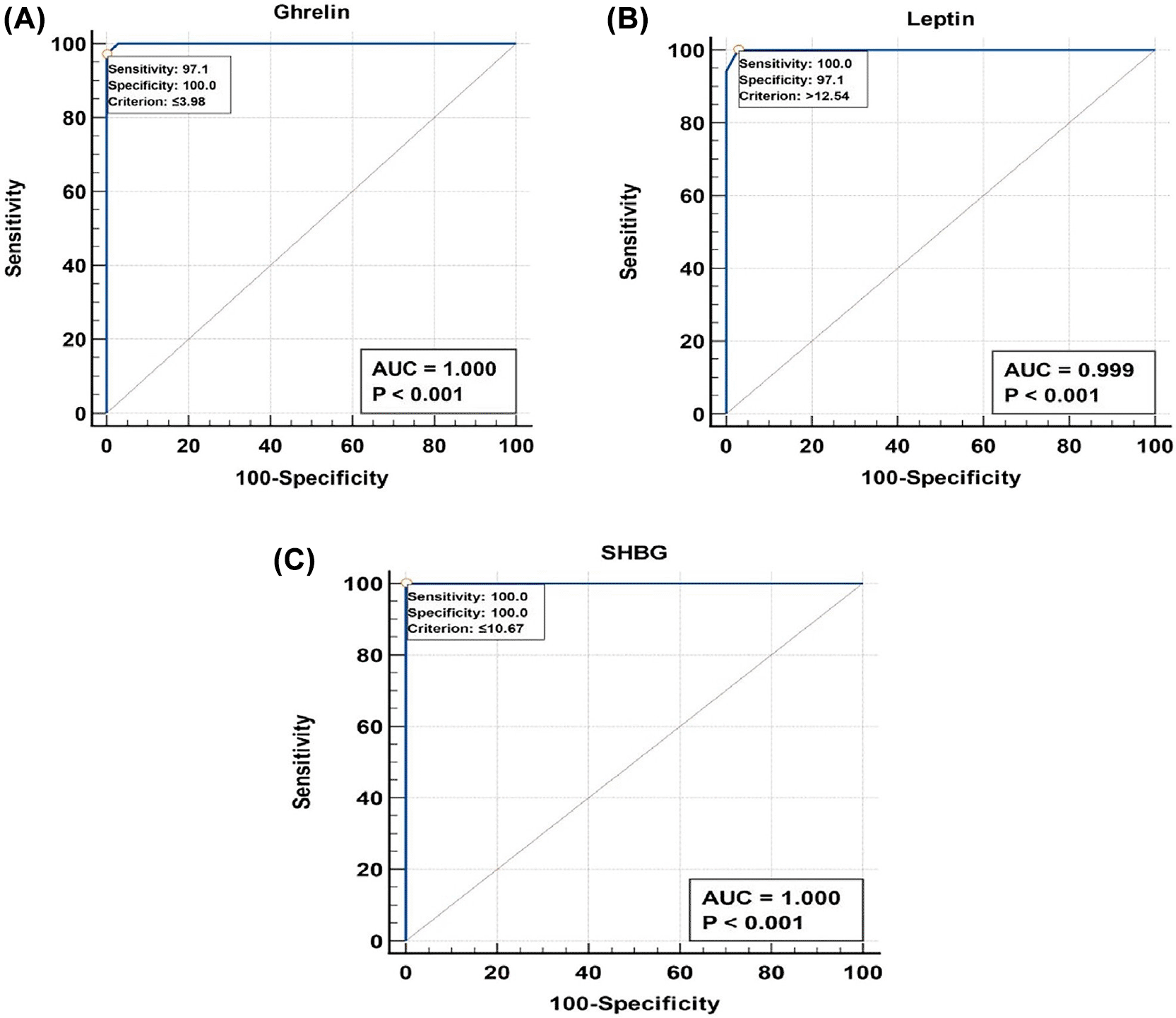
The ROC curve was calculated for the diagnostic and biochemical variables of obese patients with PCOS, represented by (SHBG, Gherlin, Leptin) in addition to the healthy group, as shown in Table 2.
| Parameters | AUC | Cut off | Sensitivity % | Specificity % | Accuracy | P-value |
|---|---|---|---|---|---|---|
| Ghrelin | 1.000 | ≤3.98 | 97.06 | 100.00 | 0.9706 | <0.001 |
| Leptin | 0.999 | >12.54 | 100.00 | 97.06 | 0.9706 | <0.001 |
| SHBG | 1.000 | ≤10.67 | 100.00 | 100.00 | 1.0000 | <0.001 |
The results of the hormone ghrelin showed that the value of the area under the curve (AUC) was (1) and (Cut off ) was (≤3.98) and the sensitivity ratio was (97) while the specificity ratio was (100). As for the hormone leptin, the value of the area under the curve (AUC) was (0.999) and (Cut off ) was (>12.54) and the sensitivity ratio was (100) while the specificity ratio was (97.06). As for SHBG, the value of the area under the curve (AUC) was (1) and (cut-off ) was (≤10.67) and the sensitivity was (100) while the specificity ratio was (100) at a probability level (P < 0.001) for the groups of patients and healthy people ( Figure 2).
The relationship between the SHBG level and the level of the data under study was studied, as shown in the Table 3.
The continuous rise in the level of insulin and glucose hormones leads to dysfunction in cellular functions and the development of several diseases such as diabetes, obesity, and polycystic ovary syndrome. The reason for this increase may be attributed to the rise in several hormones related to metabolism in the body such as weight gain (obesity) in the abdominal area, high blood pressure, and insulin resistance.15
The current study’s findings are consistent with those of researchers H. Zhao et al.16 and A. Purwar et al.,17 who found that obese patients with PCOS had higher levels of the insulin hormone. They also concur with J. Gupta et al.,18 who found that the blood sugar levels of obese PCOS patients had clearly increased significantly.
Patients with PCOS have insulin resistance (IR), which is defined by primary hyperinsulinemia (HI), a reduced insulin response in the body, and hyperglycemia. IR is caused by impaired insulin action in multiple target tissues in the body. HI-induced tissue IR is crucial in PCOS pathophysiology because the majority of the body’s systems and organs and tissues are impacted by PCOS, and insulin functions in these tissues in various ways to balance the body’s nutritional needs.19 Insulin resistance in women with PCOS affects the body’s metabolism and the mitotic pathways in insulin target tissues (such as the liver, skeletal muscle, and adipose tissue) as well as non-traditional target tissues (such as the ovary and pituitary gland).20 Additionally, inflammatory cytokines, lipid accumulation, hyperandrogenism, and other systemic factors all affect the IR process of peripheral tissues.21
The LH hormone, which works in conjunction with FSH in controlling the menstrual cycle, also stimulates the release of the egg from the ovary in the middle of the menstrual period, which is known as ovulation, as LH levels rise rapidly just before ovulation in females.22 The result of the rise in LH hormone is consistent with the result of E. Khashchenko et al.23 and S. M. Alhassan et al.24 The reason for the increase is due to the theca cells in the ovaries that enlarge as a result of increased LH stimulation, which also leads to the accumulation of follicular fluid that forms cystic structures along the periphery of the ovary, giving it the appearance of a string of pearls. Due to the increased follicles and the expression of essential enzymes involved in androgen synthesis, an excess amount of androgen is produced.25
Ghrelin is one of the hormones that are related to polycystic ovary syndrome through its negative effect on the hypothalamic-pituitary-ovarian axis. It is likely that it regulates the ovarian secretion of androgens. It is believed that the abnormal activity of the corpus luteum in women with polycystic ovary syndrome is related to ghrelin. These relationships require further studies to determine the causal and inverse relationship and whether it actually plays a role in polycystic ovary syndrome.26 In addition, studies have shown that ghrelin has effects on reproduction, as high levels of ghrelin inhibit the luteinizing hormone responsible for egg production in women.27
Ghrelin is a hormone secreted during fasting or hunger and is related to food intake and energy balance. It enhances appetite and reduces fat utilization, thus increasing obesity. Ghrelin is produced mainly in the stomach and the main ghrelin binding sites are in the hypothalamus. It represents a signal to the endocrine glands that links the peripheral mechanisms for sensing calories with the brain centers and energy balance. When ghrelin is expressed in the stomach, its circulating level rises during fasting and falls after eating, suggesting that food intake or associated factors like insulin levels regulate ghrelin secretion. Given that the ovary has been shown to have a high density of ghrelin binding sites, the gonads may be a significant target for ghrelin activity. Additionally, in stimulatory circumstances, ghrelin inhibits steroidogenic enzymes.28
Leptin is one of the proteins secreted by fat cells and plays a role in metabolism, as its secretion increases when one is full and decreases when one is hungry. It also plays a role in reproduction, in addition to its role in storing energy. It reduces appetite and increases energy consumption, and at its normal levels in the blood, it has a stimulating role on the hypothalamic-pituitary axis and ovary, while in the case of obesity, the increase in the hormone leptin has an inhibitory effect on the formation of follicles and leptin suppresses the increased IGF in the interstitial cells that are stimulated by the luteinizing hormone LH and is able to intervene naturally in the maturation of the egg and ovulation. Leptin levels may change in polycystic ovary syndrome29 and the result of its increased levels in obese women with PCOS was consistent with the result of (Baldani et al).30
Leptin affects the secretion of sex hormones necessary to initiate and maintain reproductive function31 through its effect on the hypothalamus and thus negatively affects the regulation of the activity and secretion of the gonadal-releasing hormone (GnRH) and causes obstruction of the secretion of the FSH and LH hormones. Through several signaling pathways including neuropeptide Y, proopiomelanocortin, and kisspeptin, specifically the GnRH-kisspeptin pathway associated with fertility disorders, high levels of leptin also alter the sensitivity of the pituitary gland to GnRH, causing resistance to GnRH and thus negatively affecting the ovary, causing a disturbance in the production of sex steroid hormones from granulosa cells, which hinders the ovulation process and causes fertility disorders.32,33
Although the present study demonstrated significant alterations in ghrelin and leptin levels among obese women with PCOS, the relationship of these metabolic hormones with Sex Hormone-Binding Globulin (SHBG) warrants further clarification. Previous studies have reported that SHBG is strongly influenced by metabolic and endocrine disturbances, particularly insulin resistance and adipokine dysregulation, which are key features of PCOS.
Several researchers have shown an inverse association between ghrelin and SHBG. Reduced ghrelin levels observed in obesity and PCOS contribute to increased insulin resistance, which subsequently suppresses hepatic SHBG synthesis. Reported that women with PCOS who had lower ghrelin levels also exhibited significantly reduced SHBG, suggesting an indirect metabolic link mediated primarily through insulin resistance rather than a direct hormonal interaction Karkanaki A., et al.34
Similarly, leptin shows a well-established negative correlation with SHBG. Hyperleptinemia in obese PCOS patients inhibits SHBG production both directly through its action on hepatocytes and indirectly through its strong association with hyperinsulinemia Casanueva F., et al.35 Demonstrated that elevated leptin concentrations were significantly associated with lower SHBG levels, supporting the hypothesis that adiposity-related hormonal changes contribute to reduced SHBG in PCOS. These findings align with the known pathophysiology of PCOS, in which adipokine imbalance and metabolic dysfunction collectively down regulate SHBG, thereby intensifying androgen bioavailability and worsening clinical manifestations. Overall, the relationship between SHBG, ghrelin, and leptin in the context of PCOS reflects the complex metabolic-endocrine interactions that characterize the disorder. Alterations in these hormones may contribute to the progression of hyperandrogenism and reproductive dysfunction through their combined effects on insulin sensitivity, hepatic hormone-binding protein production, and ovarian steroidogenesis.
| Views | Downloads | |
|---|---|---|
| F1000Research | - | - |
|
PubMed Central
Data from PMC are received and updated monthly.
|
- | - |
Provide sufficient details of any financial or non-financial competing interests to enable users to assess whether your comments might lead a reasonable person to question your impartiality. Consider the following examples, but note that this is not an exhaustive list:
Sign up for content alerts and receive a weekly or monthly email with all newly published articles
Already registered? Sign in
The email address should be the one you originally registered with F1000.
You registered with F1000 via Google, so we cannot reset your password.
To sign in, please click here.
If you still need help with your Google account password, please click here.
You registered with F1000 via Facebook, so we cannot reset your password.
To sign in, please click here.
If you still need help with your Facebook account password, please click here.
If your email address is registered with us, we will email you instructions to reset your password.
If you think you should have received this email but it has not arrived, please check your spam filters and/or contact for further assistance.

Comments on this article Comments (0)