Keywords
Dentistry, stress, COVID-19, Job satisfaction, employment, Peru.

Dentistry, stress, COVID-19, Job satisfaction, employment, Peru.
In this version, the writing, consistency, and presentation of the methodology and results have been improved. The comments from reviewer 1 were very helpful and strengthen the study. All the suggested recommendations have been followed, mainly improving the text, the presentation of results and the clarification of several points of the research.
To read any peer review reports and author responses for this article, follow the "read" links in the Open Peer Review table.
The COVID-19 pandemic has caused significant stress among healthcare workers, including dentists in both public and private sectors globally.1 Their work involves direct exposure to saliva and aerosols during dental procedures, increasing their risk.2 Dental treatments have a high risk of exposure to viruses and microorganisms present in the oral cavity and respiratory system.3 This is due to direct communication with patients, exposure to body fluids and the use of instruments that generate microdroplets and aerosols. The use of aerosols increases the risk of contagion and contamination, which represents a danger in both invasive and non-invasive treatments.4
Pandemic-related stress disrupts dentists’ psychological, emotional, and social well-being, which in turn affects their job performance and job satisfaction.5 Chronic stress is linked to cardiovascular disease, hypertension, peptic ulcers, musculoskeletal pain, asthma, reduced quality of life, and depression.6 Work-related stressors include lack of control, limited promotion opportunities, restricted decision-making participation, and poor collegial relationships.7 The pandemic introduced additional burdens, such as rising material costs and concerns about COVID-19 infections.8,9 Job satisfaction is essential in the management of human resources in dentistry. High levels of stress and low satisfaction can lead to emotional exhaustion and decreased confidence with patients.10
We aimed to identify the relationship between job satisfaction and stress in dentists in Lima during the COVID-19 pandemic, as intense exposure to the virus, biosecurity measures, economic challenges, and changes in the provision of dental services have increased stress in these professionals. Understanding this relationship is crucial to addressing challenges, ensuring wellness and efficiency in dental work.
We conducted a cross-sectional study in a cohort of dentists in Lima during the first outbreak of COVID-19 in 2020. Peru, a South American country with about 33 million inhabitants, began COVID-19 restrictions in March 2020.11 This viral disease has impacted all sectors of Peru (mainly in the economic and health sector) and, in view of the lack of effectiveness of prevention and control measures for this disease, it is the country with the highest mortality.12 This study follows STROBE guidelines.13
The Association of Dentists of Peru (Colegio Odontológico del Perú, COP) gathers 22,096 active dentists of both genders.14 For our research, we used a probabilistic sampling method considering a confidence interval of 95%, 80% of power, and 5% of error. Therefore, through a screening process conducted according to the flowchart, we ultimately determined a final sample of 545 dentists from public and private medical centers ( Figure 1). The inclusion criteria covered adult dental professionals of both genders who were working during the pandemic and who voluntarily agreed to participate in the study.
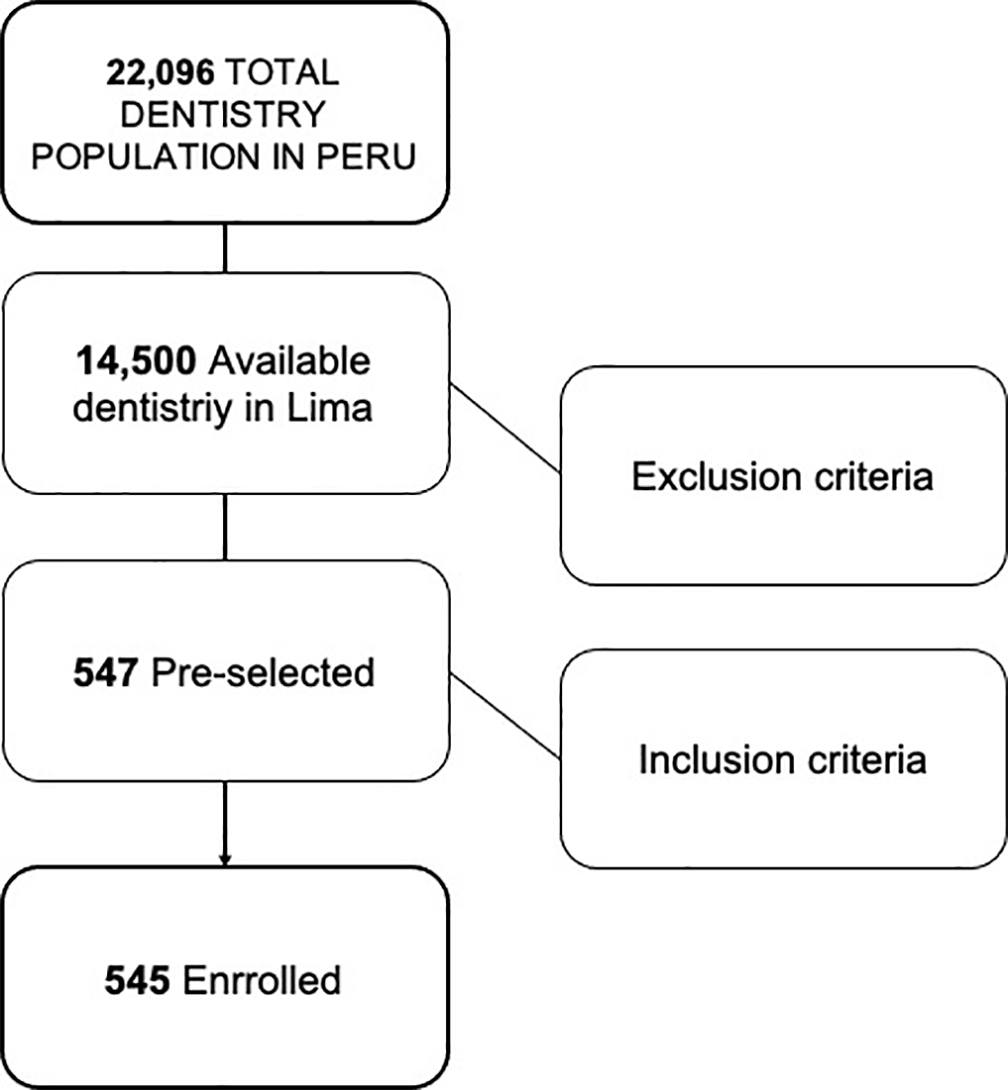
For data collection, an online questionnaire was implemented using Google Forms (Google, CA, US), which included two Likert-like evaluation instruments: Palma's Work Climate Scale (SL-SPC)15,16 and the stress questionnaire developed by Marquina-Lujan & Adriazola.17 The SL-SPC questionnaire was composed of 23 items that were grouped into four different dimensions: task importance, working conditions, personal recognition and economic benefits. The questionnaire was scored as very satisfied (>117 points), satisfied (103-116 points), average (89-102 points), dissatisfied (75-88 points), and very dissatisfied (47 or less). On the other hand, the stress questionnaire comprised a total of 36 questions organized into five dimensions: symptoms, overload or strain, cognitive-emotional aspects, habits and adaptation. This questionnaire was scored as very high (>161 points), high (120-160 points), medium (81-119 points), low (41-80 points), and very low (<40 points) stress level.
In respect of procedures, participating dentists were required to complete questionnaires distributed via e-mails and social networks such as Messenger, WhatsApp, and Facebook (Meta, CA). The answers were stored in GoogleForms, ensuring the anonymity of the 547 participating dentists. Data were coded in SPSS v24.0 (Armonk, US), where descriptive analysis was initially performed. The normality of the data was verified with the Kolmogorov-Smirnov test and we used Pearson's Chi-square test to demonstrate differences between stress level and SL-SPC dimensions. When the analyzed demographic variables required a correction, the Yates correction test was used. In addition, we found the Odds ratio (OR) with the categories of “Not satisfied” and “Satisfied” for each SL-SPC dimension versus high and normal stress levels. Finally, we performed a linear regression analysis in crude and adjusted models for the influential variables considering for all analyses a p-value <0.05 (significant association) and a 95% confidence interval (CI) as statistically significant.
This study followed the Helsinki guidelines18 and was approved by the Ethics and Research Committee of Universidad Nacional Federico Villareal with Registration Certificate No. 02-2021-UIIE-EUPG-UNFV.
The mean age of the 545 dentists in the Peruvian capital was 38.02 ± 8.5 years (26 to 49 years) 53.4% (291/545) were male. Regarding age groups, 54.5% (297/545) of the dentists were under 39 years of age. In addition, 51% (278/545) of the respondents were not married and 88.3% (481/545) were housemates. Finally, 61.3% (334/545) of all the dentists surveyed worked exclusively in the private sector. 73.7% (402/545) of dentists had high stress levels ( Table 1).
Dentists who did not express dissatisfaction with the importance of their task had significantly high stress (p < 0.001) in all sociodemographic categories. This tendency was particularly prominent in males, over 38 years of age, married, are housemates, and who worked in both public and private sectors. These groups showed an increased risk of experiencing significant stress levels compared to those who expressed satisfaction with the importance of their work ( Table 2).
N = 545. All with p < 0.001.
Similarly, it was found that dentists who did not express satisfaction with their working conditions experienced significantly elevated stress levels (p < 0.001) in all sociodemographic categories. This correlation was particularly strong among males, over 38 years of age, married, those living alone, and working in both the public and private sectors. These groups had a significantly higher risk, with OR rates of 8.07 (95%CI: 4.42-14.75), 11.62 (95%CI: 5.84-23.12), 8.22 (95%CI: 4.30-15.74), 7.22 (95%CI: 2.08-25.08) and 49.52 (95%CI: 10.73-228.57), respectively, of developing high stress levels compared to those who expressed satisfaction with their working conditions ( Table 3).
N = 545. All with p < 0.001, except for *p = 0.001, **p = 0.003.
Dentists who perceived a lack of job recognition showed significantly elevated stress (p < 0.001) across all sociodemographic categories. Compared with those satisfied with personal recognition, the odds of elevated stress were 24 times higher in males (OR = 24.56; 95% CI: 7.22–83.50), nearly 18 times higher in those under 39 years (OR = 17.88; 95% CI: 5.78–55.34), 10 times higher in married dentists (OR = 10.55; 95% CI: 3.63–30.64), and 14 times higher in those living with housemates (OR = 14.35; 95% CI: 6.38–32.25) ( Table 4). Regarding job performance, no increased stress risk was identified, as no dentists were satisfied with job performance in either the public or private sector.
N = 545. All with p < 0.001, except for *p = 0.001, **p = 0.011.
Dissatisfaction with economic benefits was also significantly associated with elevated stress (p < 0.001) across all sociodemographic categories. This association was particularly pronounced among males, those older than 38 years, married individuals, those living with housemates, and dentists exclusively in the public sector. These groups had substantially higher odds: ORs of 26.65 (95% CI: 13.91–51.06), 28.66 (95% CI: 13.85–59.32), 33.18 (95% CI: 15.57–70.75), 20.84 (95% CI: 12.49–34.77), and 55.00 (95% CI: 6.05–499.96), respectively ( Table 5).
N = 545. All with p < 0.001.
Additionally, a significant relationship was identified between general dissatisfaction in the work environment and the presence of high stress levels in dentists (p < 0.001) in all categories of sociodemographic factors. This relationship of experiencing elevated stress levels stands out in males (OR = 18.04; 95%CI: 9.37–34.74), older than 38 years (OR = 22.18, 95%CI: 10.46–47.02), married (OR = 21. 62, 95%CI: 10.53–44.37), living alone (OR = 14.09, 95%CI: 3.57–55.60) and exclusively engaged in the public sector (OR = 55.00, 95%CI: 6.05–499.96) ( Table 6).
N = 545. All with p < 0.001.
In the initial regression model, task importance (p = 0.006), personal recognition (p < 0.001), and perceived economic benefit (p < 0.001) emerged as significant drivers of elevated stress. Working conditions showed no effect (p = 0.386). An adjusted logistic model including only these three factors revealed that dentists dissatisfied with task importance (OR = 2.22, 95% CI: 1.24–4.00), personal recognition (OR = 5.92, 95% CI: 2.40–14.57), or economic benefit (OR = 10.52, 95% CI: 5.91–18.71) had a higher risk of stress than those satisfied across all three dimensions ( Table 7).
This study highlights the importance of job satisfaction for dentists’ mental health. We observed significant associations between multiple dimensions of job satisfaction and stress, shedding light on the factors that contribute to the psychological well-being of dental professionals. Factors such as task importance, personal recognition, and financial gain play a crucial role in the stress experience of these professionals. Addressing these factors may reduce the risk of substantial stress in this profession, given that 7 out of 10 dentists experienced high stress while providing care during the COVID-19 lockdown.
Firstly, the study was conducted at a critical time during the first outbreak of the COVID-19 pandemic, which provides valuable information on the influence of the crisis on job satisfaction and stress in dentists. Secondly, to the best of the authors’ knowledge, this is the first Peruvian study to include a set of work and economic factors associated with stress in dentists. Although there are several Peruvian studies that have evaluated one of these variables during the pandemic,19–22 our results highlight the link between stress and working factors. Another strength is the wide demographic diversity, i.e., the dentists enrolled were of different ages, genders, marital status, and working sectors, which increases the representativeness and applicability of the results in diverse contexts.
The WHO recommends a dentist-to-population ratio of 1:7,500 to balance supply and demand and ensure an optimal professional-patient relationship.23 However, according to the COP, the current ratio is approximately 1 dentist per 600–700 Peruvian inhabitants.24 This oversupply relative to WHO guidelines may create practice imbalances. Notably, a higher density of dentists does not translate into proportional improvements in oral health outcomes, despite the existence of 41 dental schools nationwide.25
Furthermore, pursuing dentistry in Peru entails substantial educational costs, yet remuneration is often inadequate, while work hours and professional demands remain high.26 Many dentists lack formal employment contracts, adding to professional instability. These factors undermine not only economic security but also overall welfare, quality of life, social protection, and work-life balance for dental professionals in Peru.
The pandemic has had a significant impact on the provision of dental services in Peru. Since the onset of the health crisis, dentists have faced additional challenges and new restrictions, which have led to the adoption of rigorous biosecurity protocols to ensure the safety of both care providers and patients. These new guidelines have established a solid foundation for the performance of emergency and urgent treatments, incorporating practices such as the use of personal protective equipment, antisepsis of the oral cavity, and thorough disinfection measures.27 During this period, stress has increased in the general population of Latin America,28 and healthcare professionals, including dentists, have faced an additional burden on their mental health.29,30 In fact, this study aligns with several previous findings,7,19–22,31 demonstrating that factors such as being male, being older than 38 years, experiencing dissatisfaction with working conditions, being married or living with housemates, and working in both the public and private sectors are related to higher stress levels.
These findings are supported by several studies of Peruvian dentists. Olivera,19 in his research which involved 362 professionals from the Peruvian Ministry of Health, revealed a moderate stress level and well-being during the pandemic. On the other hand, Mamani's study,20 which focused on 90 dentists in the Peruvian highlands, identified a low level of personal accomplishment accompanied by high stress levels and poor job performance. In a sample of 82 dentists from the northern coast of Peru, only 40% were reported to be satisfied with their work, although no direct association was found with work performance during the first outbreak of COVID-19.21
Similarly, a study conducted by another group of researchers22 with 350 dentists in the Peruvian highlands showed that 34% of the participants experienced job dissatisfaction and 67% had moderate to high levels of absenteeism. These studies together highlight the challenges and concerns that Peruvian dentists have faced in the context of the COVID-19 pandemic, addressing aspects such as stress, work well-being, job performance and satisfaction. The key points of this research offer a more complete perspective of the experiences of dental professionals in the country and highlight the importance of implementing measures to support and care for their mental health and well-being in these challenging times.
This regulation requires policy improvement and not self-regulation according to the “supply-demand” market that has been overwhelmed during the pandemic.32,33 Dentistry is essential to a society, which must reposition itself by ensuring the quality of services and professional welfare, and be one of the pillars of health care. However, integrating biosecurity measures and adapting to the changing demands of care in the midst of the pandemic have posed significant challenges for dentists.1,2,7,8,34 While these efforts are essential for the health of patients and staff, it is also critical to address the psychological and emotional consequences that this situation has imposed on dental professionals. Understanding these factors can guide the implementation of support and wellness strategies aimed at mitigating the negative effects of stress in this population.
Although the study included many dentists in Lima, the generalizability of the results may be limited to other geographic populations and time points. While validated questionnaires were used, participants’ subjective self-assessments of job satisfaction and stress levels may be influenced by cognitive and emotional biases, potentially affecting the accuracy of the results. Another limitation relates to the influence of workload and the risk of COVID-19 exposure, which were not measured in this study due to significant variability among participants. It is important to consider that these factors can shape the study results and should be considered in future research. Finally, other factors, such as personal, family, or social factors, could limit the full understanding of the observed relationships.
This study highlights the complex interaction between job satisfaction and stress levels among dentists during the COVID-19 pandemic. The findings underscore the importance of factors such as task importance, personal recognition, and economic benefits that influence stress levels. Understanding these relationships is critical to design specific interventions and strategies that promote the well-being of dental professionals and, consequently, contribute to the provision of high-quality dental care. Further research could delve into specific interventions designed to address these influential dimensions and ultimately foster a healthier and more resilient dental workforce.
| Views | Downloads | |
|---|---|---|
| F1000Research | - | - |
|
PubMed Central
Data from PMC are received and updated monthly.
|
- | - |
Provide sufficient details of any financial or non-financial competing interests to enable users to assess whether your comments might lead a reasonable person to question your impartiality. Consider the following examples, but note that this is not an exhaustive list:
Sign up for content alerts and receive a weekly or monthly email with all newly published articles
Already registered? Sign in
The email address should be the one you originally registered with F1000.
You registered with F1000 via Google, so we cannot reset your password.
To sign in, please click here.
If you still need help with your Google account password, please click here.
You registered with F1000 via Facebook, so we cannot reset your password.
To sign in, please click here.
If you still need help with your Facebook account password, please click here.
If your email address is registered with us, we will email you instructions to reset your password.
If you think you should have received this email but it has not arrived, please check your spam filters and/or contact for further assistance.

Comments on this article Comments (0)