Keywords
Conditional values, Consumer attitude, Consumer values, Emotional values, Epistemic values, Functional values, Phygital Patronage Intension, Social values

Conditional values, Consumer attitude, Consumer values, Emotional values, Epistemic values, Functional values, Phygital Patronage Intension, Social values
Over the past decade, the retail industry has undergone a significant transformation, evolving from traditional brick and mortar models to multichannel and omnichannel strategies combining elements of both digital and physical experiences (Lee et al., 2024). Omni-channel retailing is a business model that operates across both physical and online channels integrates physical with the information rich technology interactions (S. Mishra et al., 2021a). The digitalization of the retail industry is transforming the role of physical stores from mere points of transaction into experiential spaces that facilitate social interactions (Alexander & Varley, 2025). The COVID-19 pandemic has notably accelerated the integration of digital technologies within physical retail environments (Stan et al., 2024). This shift is critical, as research indicates that 50% of consumers prefer engaging with physical and digital platforms simultaneously, demonstrating a 31% higher lifetime value than single-channel users (Banik, 2021). Phygital retailing as a transformation of omnichannel is the integrates physical and digital experiences (Pangarkar et al., 2022; Lawry, 2022), enhance consumer experiences (Batat, 2024), and fostering deeper engagement through ecosystems such as interactive kiosks (Banik & Gao, 2023).
Phygital is a new transformative way of omnichannel retailing Pangarkar et al. (2022) evolved with the development of retailing. The concept of Phygital has been explored in the literature however term Phygital lacks a clear definition (Mele et al., 2023). Phygital concerns connectivity phenomenon where everyday objects interconnect with the environment, gathering information from it and adapting their performance accordingly Mele et al. (2023) describing the connection between employing internet technologies or digital platforms and innovative online methods that create an ecosystem connecting brands and customers across both physical and digital domains (Švec & Madleňák, 2017). New physical store refers to Phygital once technology is integrated to it (Mikheev et al., 2021). It is identified that 50% of consumers are willing to experience physical and digital platforms together rather than relying on single channels (Banik, 2021). Hence Phygital is applied in various industries where retailing has transformed with integrated smart technologies to physical. Creating smart stores with self-service Technologies (SST) integrating smart technologies like “Scan and Go units” considered as phygital (Bonfanti et al., 2023). Integrating digital in terms of Self-Service Technologies (SST) changes customer experience. Integrating SST for physical stores is identified in extant literature (Sharma et al., 2021; Stan et al., 2024) used to navigate the retailer’s digital environment while simultaneously engaging with the physical aspects of the store enabling creating a seamless customer experience (Banik, 2021).
In retailing, the shopping experience is shaped by multiple values that influence consumers’ purchasing decisions with utilitarian, hedonic and social values (Huré et al., 2017). Research shows that emotional and social experiences significantly impact purchase intention, with sensory experiences indirectly influencing it through emotional and social mediators (Amir et al., 2013). In the online context, customer experience, comprising hedonic elements, aesthetics, and functional aspects, is directly proportional to purchase intention (Maitlo et al., 2017). Perceive value on SST and behaviour is explored (Stan et al., 2024). Thus, values derived from both digital and physical experiences have been identified separately in existing literature as significant predictors of consumer behavior. Furthermore, the multidimensional perspective of the theory linking consumption values to behavioral outcomes has been extensively emphasized in marketing research (Mason et al., 2023; Tanrikulu, 2021).
However, it has been identified that the relationship between consumer values (CV) and consumer behavior (CB) remains unclear across different contexts due to the lack of studies conducted on consumption values. Furthermore, there are contradictory findings regarding the relationship between consumer values and behavior (Mason et al., 2023) hence extant literature argues that consumption values have impact on behavioral outcome (Chakraborty et al., 2023) while social emotional conditional values have negative effect on behavioral responses (Khan & Mohsin, 2017; Mohd Suki & Mohd Suki, 2015). Based on the Theory of Consumption Values, it is identified that (1) consumer decision-making is driven by multiple consumption values, (2) each value contributes differently depending on the specific choice context, and (3) these consumption values operate independently (Sheth et al., 1991) however theory is lack of empirical applications (Kim, 2025). Thus, this study argues that the relationship between consumer values and behavior in phygital retailing with SSTs remains an underexplored area due to unclear relationships and contradictory findings. This study aims to address research questions concerning the impact of consumer values on customer attitudes and the impact of customer attitudes on phygital patronage intention in the retailing sector.
Consumption value is a multifaceted concept that encompasses multiple attributes, offering a holistic perspective on a complex phenomenon (Confente et al., 2020). Value is defined with regard to various product and service aspects in the extant literature and use concerns service quality for service consumers (Yuan et al., 2022).
In cognitive perspective relative advantage is identified with the available alternatives (Stankevich, 2017). Therefore, the consumptions choices backed with the high perceived value consumers emphasize among the available alternatives. As per the extant literature it is identified that motives of shopping on firsthand and revealed it is not just the products and services motivating the shopping (Tauber, 1972) later extended the consideration with pleasure, feeling, aesthetics, emotions and enjoyment as additional shopping motivation. Shopping value is defined as the overall experience of shopping, encompassing all aspects of the shopping process with experience rather acquisition of products (Babin et al., 1994). According to Davis and Hodges (2012), consumers reported seeking emotional benefits like enjoyment and pleasure when shopping in department stores, while prioritizing functional benefits in large discount stores.
After the main consideration on utilitarian and hedonic, social dimension has been suggested as a key motive for consumer behavior (Solomon, 1999) identified with value creation in retailing. Various Dimensions of consumer values is identified as utilitarian and hedonic values (Babin et al., 1994). As utilitarian aspects monetary savings, quality, and convenience identified and as hedonic value expression, exploration, and entertainment with regarding to the retailing (Candan et al., 2013) associated with attribute-based features of store outlets, including ambiance, services, staff interactions, product availability, and levels of crowding (Cottet et al., 2006). Sensory, emotional, cognitive, pragmatic, lifestyle, and relational elements influence both utilitarian and hedonic value (Gentile et al., 2007). Perceptions of merchandise value are influenced by social, design, and ambient factors, which shape views on merchandise quality, monetary pricing, time and effort costs, as well as psychological costs in shopping (Baker et al., 2002). In the context of department stores in retail, total shopping value can be broken down into utilitarian value, which encompasses cost savings and convenience; social value, which relates to status and self-esteem; and hedonic value, which includes aspects of enjoyment and discovery, highlighting both utilitarian and hedonic dimensions (Rintamäki et al., 2006). Additionally, hedonic shopping-trip value is defined by the store's emotional appeal, the product's social significance, and its experiential or hedonic qualities (Diep & Sweeney, 2008).
With the consideration given for the retailing experience consumer behavior was not backed solely on hedonic and utilitarian values. Economic, functional, emotional and symbolic value are key in retailing (Rintamäki et al., 2006). Experiential value, consisting of efficiency, service excellence, aesthetics, and playfulness identified extending the initial consideration given for the functional and product related attributes in retailing (Keng et al., 2007). According to recent study, experiential retail environments—such as culturally engaging shops— enhance customer engagement and purchase behavior through multichannel design, highlighting the influence of psychological and emotional values on retail experiences (Ustazah et al., 2025). Utilitarian value encompasses functional and excellence-based attributes, while hedonic value includes aesthetic appeal, pleasure, and experiential elements. Symbolic value represents self-expression and social significance (Bin Kim & Jung Choo, 2023).
Theory of Consumption values has been identified with regarding to the marketing literature and widely used in explaining the choice of the consumers (Sheth et al., 1991) which identified consumers choice predicted with five aspects of functional, emotional, social, epistemic and conditional values. Theory of consumption values identified with five values of Emotional, Conditional, Social, Functional, and Epistemic values (Sheth et al., 1991) later classified into eight stages as efficiency, excellence, status, esteem, play, aesthetics, ethics, spirituality (Sánchez-Fernández et al., 2008). However, few studies have applied theory of consumer value in consumer behavior. Furthermore, it has been identified in the extant literature as a marketing framework that provides understanding into consumer behavior by exploring the concept of consumption value (Tanrikulu, 2021). This variability may stem from the subjective or contextual nature of the studies. Regarding contextual factors, research has demonstrated significant variations in how customers perceive mall value across different settings (Kashyap & Kumar, 2019).
Functional values considered as the perceived utility acquired from an alternative’s capacity for functional, utilitarian, or physical performance (Sheth et al., 1991) reflecting the value for money, quality, price, reliability and durability (Mason et al., 2023). Functional values as a positive predictor of behavioral responses identified in the extant literature in terms of satisfaction (Peng et al., 2020) and enhancing the likelihood of purchasing (Baek & Oh, 2021). Utilitarian values included in functional values thus utilitarian shopping value refers to the efficient acquisition of products and/or information, emphasizing a more task-focused, cognitive, and practical approach to shopping, with minimal emotional involvement and identified as predictor of satisfaction of the consumers in retailing (Jones et al., 2006).
In digital “functional values refers service efficiency, personalization, and social interaction with regard to services (Zhang et al., 2021). In e retailing functional values referred to ease of finding products, completing transactions and resolving issues (Ahmad et al., 2023). Functional values or perceived utility impacts on attitudes of consumers (Lin & Dong, 2023) functionality creates effective distinct benefits” and consumer attitudes have been shown to mediate the effect of functional drivers on purchase intention (Samanta et al., 2025).
Functional values important along with integration of technology and humans evaluate novel technological advancements in terms of their practical applicability, efficiency and ability to address problems (Tanrikulu, 2021) people are using the functional usage of the technologies (Omigie et al., 2017). Thus, retailing as a service consumers prefer efficiency and convenience and effectiveness. Along with the phygital strategies efficiency is enhanced with technology based initiatives such as Scan and Go units and digital devices and personalized services (Bonfanti et al., 2023). Convenience of purchasing is facilitated with time consumption as less waiting time with self-centered technology-based initiations. This study argues that phygital strategies in retailing satisfy the functional values of consumers in retailing. Thus, this study argues that functional values of efficiency, convenience and other utilitarian aspects satisfy with phygital impacts on attitudes of consumers and first hypothesis developed as,
Functional values is positively associated with attitude of consumers in phygital retailing.
Social value refers to the perceived utility acquired from an alternative’s association with one or more specific social groups (Sheth et al., 1991). When consumers believe that purchasing and using a product will lead to social acceptance or enhance their social image, they are more likely to develop positive attitudes toward the product, which can ultimately drive their purchasing decisions (Hur, 2020). This reflects whether the person belonged to a particular social group. Social value predictor of purchase intension is identified (Jamrozy & Lawonk, 2017) (Lin & Dong, 2023). Contradictory findings on social values and behavioral response is also identified in extant literature (Amin & Tarun, 2020; Chakraborty et al., 2023).
Belongingness, social connection, and self-expression play a crucial role in shaping individual attitudes towards the adoption and acceptance of these technologies (Tanrikulu, 2021). Social values can encompass aspects like virtual social events, shared spaces for interaction, and the ability to connect with others in immersive digital environments (Dwivedi et al., 2022). This value reflects the importance of social interactions and the influence of group affiliations on consumer decision-making and preferences (Lin et al., 2019). Consumer attitude has also been shown to mediate the effect of marketing stimuli on purchase intention (Samanta et al., 2025) where social factors considered as stimuli. Applying phygital retailing this study argues that consumers’ social values are facilitated along with the Self-Service Technologies of Scan Go units in phygital retailing. Thus, it is identified in this study social values along with family, friends is satisfied with digital and physical integrated (phygital) retailing as Sri Lankan consumers prefer collectivistic society based on prioritizing family, wide relationships and partnerships (Ranasinghe et al., 2025). Therefore, this study argues that social values consumers refer to in retailing is facilitated with phygital retail setting thus the second hypothesis developed as,
Social Values positively associated with consumer attitudes in phygital retailing.
According to Sheth et al. (1991) The perceived benefit gained from an alternative's ability to evoke emotions or affective responses. Emotional value, which encompasses the personal and affective reactions associated with a product. Extant literature identified the relationship between the emotional values and the purchase intension (Koay et al., 2022). Furthermore it is argued that pleasant feelings affect consumer attitudes (Chang & Geng, 2022). Emotional values sense of earning pleasure and comfort impacts on attitudes of consumers (Lin & Dong, 2023) attitude (Zhang et al., 2020). Multisensory, fantasy and emotive aspects of the shopping experience includes as the hedonic values of shopping In retailing it is identified that satisfaction and behavioral outcomes of consumers are mostly related with the hedonic values than utilitarian values (Jones et al., 2006).
The integration of technology into everyday lives has a profound influence on our perceptions and attitudes, with emotional experiences being a key factor in this process (Amin & Tarun, 2020). Emotional values pertain to the positive feelings individuals experience when engaging with virtual hospitality products, such as joy, excitement, comfort, and relaxation (Hsu & Lin, 2015). P-A-D model or the dimensional approach identifying emotions with pleasure, arousal and dominance. Pleasure is the cognitive evaluation or judgement on how pleasant or unpleasant an individual feels about something. Arousal is defined as the level of mental alertness and individual alertness and activation related with high and low stimulus activity. Dominance refers to the stimulus potency and feeling of control and influence over the surroundings of an individual (Robbins, 1997). This study argues that emotions as a value having significant importance in retail shopping facilitated with digital physical integration (phygital). Thus, in retailing emotional values considered to have impact on consumer attitudes and third hypothesis is developed as,
Emotional values positively associated with consumer attitudes in phygital retailing.
Epistemic value is defined as the perceived utility acquired from an alternative’s capacity to arouse curiosity, provide novelty, and/or satisfy a desire for knowledge (Sheth et al., 1991). “Epistemic value, which represents the knowledge and curiosity aspects that a product fulfills. It has the potential to spark curiosity, fulfill the quest for knowledge, and introduce a sense of novelty (Sheth et al., 1991). This creates knowledge and sense of discovery. Some studies argued that epistemic values positively influence on purchase intension (Jamrozy & Lawonk, 2017) and towards the attitude (Karjaluoto et al., 2019). The greater the epistemic value a customer perceives in a premium, the more likely they are to develop a positive attitude toward the brand or retailer providing it” (Teng, 2019).
In retailing mobile app usage has applied Theory of consumer values and identified epistemic values as utilitarian benefits that consumers seeking. These apps provide opportunities for users to explore product features, functionalities, and usage patterns through informative product descriptions, customer reviews, or educational content shared by retailers. Epistemic Value refers to the benefit a consumer derives from a product's ability to satisfy their need for novelty, knowledge, or variety-seeking. It is closely linked to the arousal of curiosity or the desire for unique experiences. Consumers with a high epistemic value are more inclined to adopt new products or services that align with their quest for novel and diverse offerings (Sheth et al., 1991). The primary motivational factor driving consumers to seek epistemic value is their inherent innovativeness. Epistemic value seeking consumers are exploratory consumers and they look for variety significance of identifying the innovativeness (Candan et al., 2013). As per the literature, it is identified that purchase tendencies are associated especially with technological products. Thus, this study identifies the novelty created with SST of Scan and Go units along with phygital provides the epistemic value of retailing with innovativeness and novelty in shopping experience (Bonfanti et al., 2023) thus the fourth hypothesis is conceptualized as,
Epistemic values positively associated with consumer attitudes in phygital retailing.
Conditional “Value is the perceived utility acquired by an alternative as a result of the specific situation or set of circumstances facing the choice maker (Sheth et al., 1991). Conditional value, which considers the situational or contextual significance (Sheth et al., 1991). In the study of consumer behavior, time and place are often used to describe conditional factors. Initially examined within psychology, these factors began gaining attention in marketing research from the 1970s onward. Consumer behaviors are shaped by individuals' interactions with conditional (Candan et al., 2013). Key elements such as “time, place, and environment” are regarded as the primary components in defining these conditional factors. Some products and services are associated with seasonality factor and others attached with emergencies or specific occurrences. Extant literature identifies the impact of conditional values on purchase intension (Chakraborty et al., 2023) and having significant positive relationship with attitude (Suhartanto et al., 2022; Woo & Kim, 2019). The impact of conditional value on human behavior has been explored within the marketing field since the 1970s and identified as a significant factor influencing consumers' behavior and decision-making when selecting from available” products (Lin & Huang, 2012). These contextual elements serve as moderators, impacting the relative importance and intensity of other value perceptions in specific circumstances (Lin et al., 2019). Applying physical and digital integration with conditional values can be referred to as the experience created in retail location along with different phygital strategies and the time saving along with using novel phygital strategies and contextual benefits facilities in retail setting along with physical and digital integration.
In phygital retailing time, place and environment experience is enabled with technological initiatives embedded in physical stores. Thus, the fifth hypothesis is developed as,
Conditional values positively associated with consumer attitudes in phygital retailing.
Existing “literature identifies purchasing intention in relation to both products and services. Purchase intention reflects what consumers anticipate buying, where a higher willingness to purchase a product indicates a greater likelihood of buying, although it does not necessarily guarantee actual purchasing (Sawaftah et al., 2020). In retailing, store patronage intension is the intention towards the store. Store Patronage Intension refers to the likelihood of both intending and recommending the store to the others (Baker et al., 2002). Study in the retail stores identified that consumer’s psychological connections to products significantly influence their Patronage Intension (Fullerton, 2005). Consequently, Customer Engagement has positive association with the Patronage Intension of the customers in supermarket sector as a psychological state (Banik, 2021). This positive correlation and enhanced experiential encounters contribute to approaching behavior and foster a keen interest in engaging with the retailer. Attitudes and purchase intention link are identified in extant literature with regard to green products and regional products applying to different contexts. Research indicates that attitudes significantly influence patronage intentions, with brand perceptions frequently serving as a mediating factor (Wang, 2009). In the realm of green hotels, the Behavioral Reasoning Theory highlights that attitudes are the most significant predictor of patronage intentions, with opposing reasons coming in as the next influential factor (Ling-Ling et al., 2021). Thus, applying to phygital retailing this study argues that attitudes of consumers as antecedent of phygital patronage intension and hypothesized as,
Attitudes of the consumers positively associated with patronage intension in phygital retailing.
Customers of supermarkets with phygital initiatives have been selected in Sri Lanka. This study identified the phygital initiatives of Scan and Go units established in the supermarkets (Bonfanti et al., 2023). Data collected from customers from August- November 2023 in peak and off-peak hours. In selecting the respondents, two screening questions were used to determine whether they use phygital initiatives. Due to budget and time limitations, convenience sampling is more suitable for this study, as it has been employed in similar research (Kumar et al., 2023; Banik, 2021) also convenience sampling is widely used in social science researches (Shanxia Chen et al., 2025). Two pre-screening questions were asked (1) Have you ever visited this Supermarket outlet in the past 6 months? (2) Have you ever used phygital initiatives in the outlets? such as “Scan and Go Units” (Banik, 2021).
All research participants gave informed-verbal consent before being involved in the study. The use of verbal consent was acceptable given the anonymous nature and low risks associated with the study. The participants were well informed about the objectives and voluntary participation in the study, while ensuring the confidentiality of the information given. Only those above the age of 18 were selected to participate in the study. Verbally informed consent was considered sufficient as the study did not involve the collection of privacy-related or sensitive personal data and posed minimal risk to participants.
Questionnaire is developed with previously validated scales. A pilot survey was conducted determining the validity of the instrument and refined the questionnaire accordingly. Consumer values of functional, emotional, social, conditional and epistemic values customer attitude, phygital patronage intention (Lin & Dong, 2023; Banik, 2021) identified as the main variables in the study with five -point Likert scale is used with strongly disagree (1) to strongly agree (5). 30 respondents based on a pilot study prior to the data collection to check the consistency and validity of the items used in the scale.
To enhance the relevance and accuracy of the dataset, the study included only customers with recent exposure to the selected phygital self-service technologies, specifically Scan and Go units. A total of 385 individuals were initially approached, of whom 378 were screened for eligibility; 350 met the inclusion criteria based on the pre-screening requirements, which included having visited the supermarket recently and having used the relevant phygital initiatives. After data cleaning and validation, responses with missing values, incomplete answers, or failure to fully satisfy the screening criteria were removed, resulting in 312 complete and usable cases for analysis, yielding an overall completion rate of 81.04%. As data were collected through a single cross-sectional survey, no participants were lost to follow-up. The final sample size was considered adequate for analysis based on the inverse square root method (Hair & Alamer, 2022), and it met the recommended thresholds for Partial Least Squares Structural Equation Modelling (PLS-SEM), which is recognised for its robustness to smaller sample sizes and suitability for complex models involving latent constructs.
This research employed Structural Equation Modelling (SEM) via SmartPLS 4.0 for data analysis, aligning with the study's exploratory nature and the complexity of the research model, which incorporates multiple latent constructs and mediation paths. The use of PLS-SEM was justified due to its robustness against non-normal data distribution and suitability for prediction-oriented research (Legate et al., 2023). Bootstrapping with 5,000 subsamples was employed to test model significance and hypotheses. Reliability and validity assessments were conducted using Cronbach's alpha, Composite Reliability (CR), and Average Variance Extracted (AVE), alongside discriminant validity tests (Fornell-Larcker, cross-loadings, and HTMT ratio).
To assess the potential for Common Method Bias (CMB), the study employed the full collinearity assessment approach proposed by Kock (2015). According to this method, the occurrence of a Variance Inflation Factor (VIF) greater than 3.3 indicates pathological collinearity and may also signal that the model is contaminated by common method bias. Therefore, if all VIFs in the inner model resulting from a full collinearity test are equal to or below the threshold of 3.3, the model can be considered free of CMB. In the present study, all constructs recorded VIF values below 3.3, confirming that the dataset does not suffer from common method bias (Kock, 2015).
The demographic profile of the respondents shows in Table 1 indicates a diverse representation across gender, age, and education levels. A majority of participants were female (58%), while males accounted for 42%. In terms of age distribution, most respondents were between 26–35 years (44%), followed by those aged 18–25 years (36%), indicating that the sample is largely composed of younger adults. Smaller proportions represented the 36–45 age group (12%), 46–55 age group (6%), and those aged 56 and above (2%). The educational background of respondents shows that nearly half (48%) possessed tertiary or graduate qualifications, while 23% had completed a master’s or postgraduate degree, reflecting a highly educated sample. Additionally, 24% had advanced-level qualifications, and a small percentage had only completed ordinary-level education (4%) or higher studies above postgraduate level (1%). Overall, the demographic distribution demonstrates a predominantly young, female, and well-educated participant base.
The SEM measurement model in Figure 1, showing the relationships between latent constructs and their corresponding indicators.
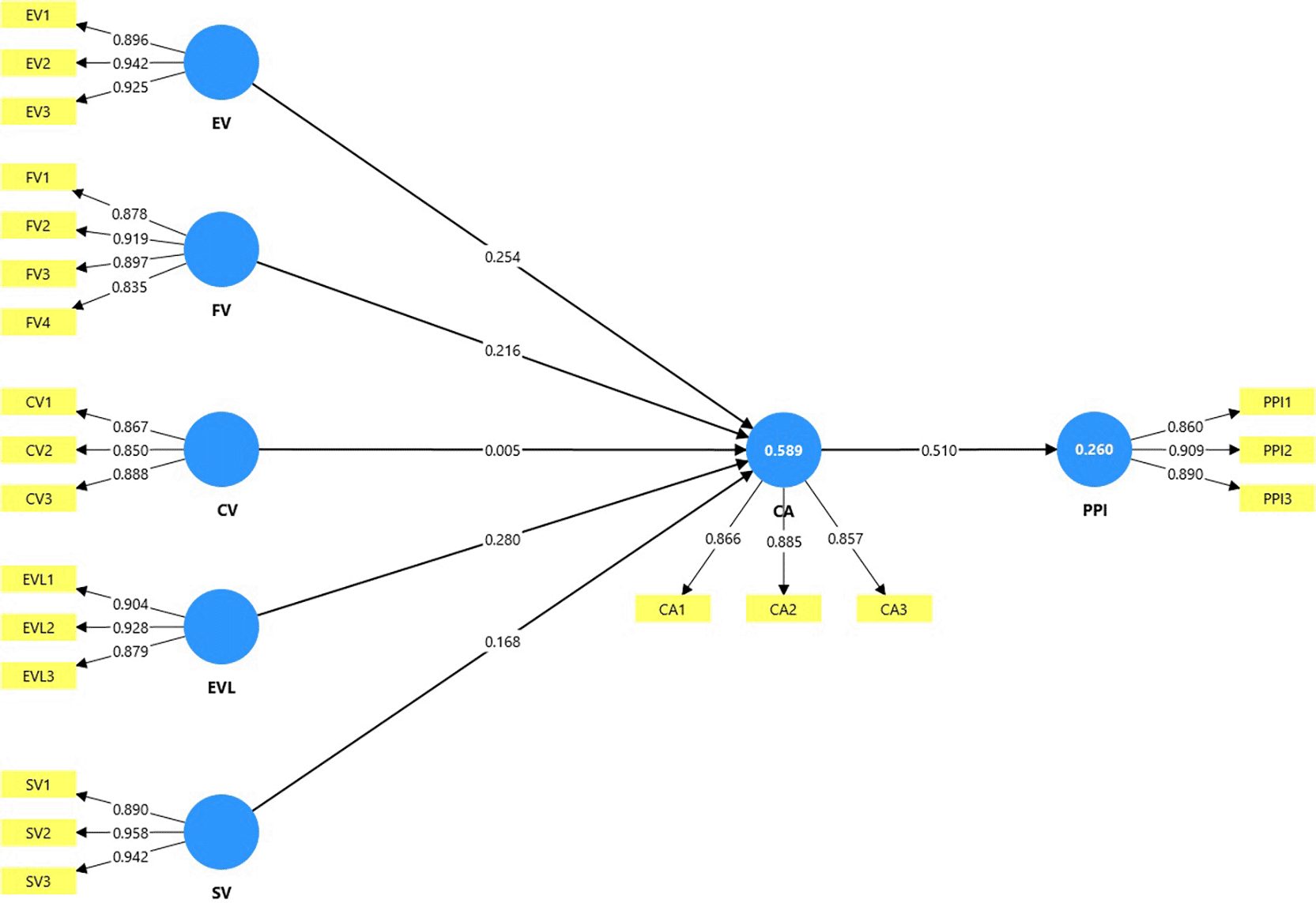
This figure illustrates the relationships between the latent constructs and their corresponding indicators.
Source: Authors' illustration, extracted from Smart PLS.
Reliability and validity were further evaluated through statistical analyses, including Cronbach's alpha, composite reliability, and average variance extracted, all of which indicated satisfactory levels, as shown in Table 2. This confirms the robustness and quality of the measurement model. The internal consistency of the model variables was assessed using Cronbach's Alpha, with values ranging from 0.0838 to 0.922, which exceeds the recommended threshold of 0.7 (Ahmed et al., 2024; Nunnally, 1978). Composite reliability was assessed further, confirming construct reliability with values ranging from 0.902 to 0.951. The validity of the model variables was assessed using AVE, with values above the recommended threshold of 0.5 (Bagozzi & Yi, 1988; Fornell & Larcker, 1981). The factor loadings of most indicators were above the recommended threshold of 0.7 however, some factor loadings were slightly below but still acceptable (Hair & Alamer, 2022). These findings confirm the robustness and quality of the measurement scales used in the study (Fornell & Larcker, 1981; Joseph F et al., 2013).
In Table 3, cross-loadings that each indicator has the highest loading on its associated construct compared to other constructs. This indicates that all items are strongly related to their respective constructs, confirming discriminant validity based on the cross-loading criterion (Hair & Alamer, 2022).
According to Fornell and Larcker (1981), discriminant validity was further assessed using the Fornell-Larcker criterion in Table 5. Based on this approach, every construct's square root of the average variance extracted (AVE) should be more than its correlation with any other construct. The study confirmed that every construction satisfied this standard. Additionally, the square root of the AVE values was CA at 0.869, CV at 0.868, EV at 0.921, EVL at 0.904, and PPI at 0.886,SV at 0.930 These values exceed the correlations between constructions, significantly the relationship between CA and PPI (0.510) and between EV and EVL (0.741) (Fornell & Larcker, 1981). The Fornell-Larcker criterion therefore satisfied (See Table 4) and provided further evidence of discriminant validity for the measurement model.
| CA | CV | EV | EVL | FV | PPI | SV | |
|---|---|---|---|---|---|---|---|
| CA | 0.869 | ||||||
| CV | 0.491 | 0.868 | |||||
| EV | 0.658 | 0.403 | 0.921 | ||||
| EVL | 0.684 | 0.490 | 0.741 | 0.904 | |||
| FV | 0.648 | 0.600 | 0.573 | 0.651 | 0.889 | ||
| PPI | 0.510 | 0.531 | 0.388 | 0.508 | 0.552 | 0.886 | |
| SV | 0.522 | 0.697 | 0.418 | 0.425 | 0.588 | 0.557 | 0.930 |
Methodological literature proposes several approaches for assessing discriminant validity (Ab Hamid et al., 2017). Foundational methods include the Fornell-Larcker criterion and cross-loading comparisons (Fornell & Larcker, 1981). However, the Heterotrait-Monotrait (HTMT) ratio, introduced by Henseler, Ringle, and Sarstedt, now offers a more reliable measure. However, the Heterotrait-Monotrait (HTMT) ratio introduced by Henseler et al. (2015) has emerged as a more reliable measure of discriminant validity. Widely adopted in partial least squares path modelling Ronkko et al. (2016) and structural equation modelling (Voorhees et al., 2016). HTMT is favoured for its robust performance (Henseler et al., 2015). This study employs HTMT, maintaining a conservative perspective on assessing discriminant validity, as advocated by Ab Hamid et al. (2017) and (refer to Table 5).
Furthermore, as seen in Table 6 the model fit indices show a generally good fit, with a focus on the Standardized Root Mean Square Residual (SRMR) and Normed Fit Index (NFI) values (Henseler et al., 2015). The SRMR values are 0.051 for the saturated model and 0.091 for the estimated model, which is slightly above the ideal threshold of 0.08 but still suggests a good fit (Henseler et al., 2015; Hu & Bentler, 1999; Kline, 2016). The d_ULS (Unweighted Least Squares discrepancy) and d_G (Geodesic discrepancy) are higher in the estimated model (2.081 and 0.552, respectively), reflecting greater discrepancies (Sarstedt et al., 2017). The Chi-square values of 963.422 (saturated) and 1035.771 (estimated) suggest some misfit, as lower values are preferred. The NFI decreased slightly from 0.835 to 0.822, yet remains above the acceptable threshold of 0.80, indicating that the model fits the data well (Ahmed et al., 2024).
| Saturated model | Estimated model | |
|---|---|---|
| SRMR | 0.051 | 0.091 |
| d_ULS | 0.655 | 2.081 |
| d_G | 0.495 | 0.552 |
| Chi-square | 963.422 | 1035.771 |
| NFI | 0.835 | 0.822 |
Using Smart PLS 4.0, the conceptual model of research is analysed, which is shown in Figure 2. Bootstrapping with 5000 subsamples was employed to test and validate the hypothesis model (Hayes et al., 2017).
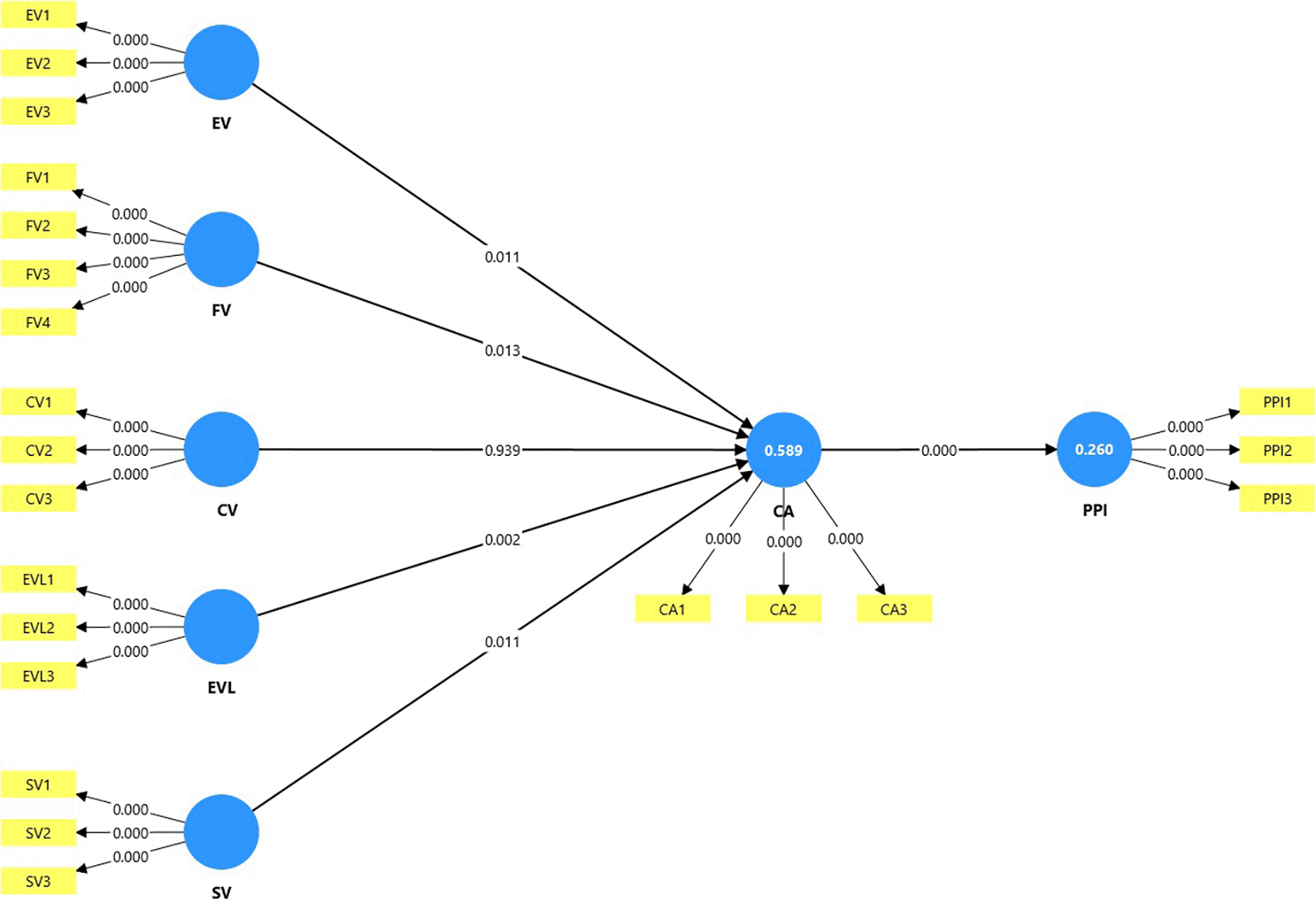
This figure shows the relationships between the constructs in the structural model and their corresponding path coefficients.
Source: Authors' illustration, extracted from Smart PLS.
Table 7 reveals significant relationships between the constructs in the model. CV has an insignificant impact on CA. EV has a weak positive influence on CA, indicating that a credible source is perceived as having a lower risk. EVL has a significant weak positive impact on CA, implying that greater trust reduces the perceived risk. FV weakly positive influences CA, meaning that a credible source lower perceived risk. Furthermore, SV is weak and positively influences CA, reinforcing its critical role in shaping purchase intentions.
These results suggest that the relationships between the constructs are robust and statistically significant, with p-values ≤ 0.001 in all cases (Ronkko et al., 2016). The 95% confidence intervals for all path coefficients fall entirely above or below zero, indicating the absence of a zero within the interval range (Hair & Alamer, 2022; Sarstedt et al., 2017). This confirms the statistical significance of the hypothesised relationships between the constructs, except for conditional values. The t-statistics for all structural paths exceed the critical value of 1.96, indicating that all relationships in the model are statistically significant at the 5% level. The strong path coefficient between SV and CA highlights the significant role of trust in online communities in influencing purchase intention. Similarly, the positive path from CA to PPI underscores the importance of source credibility in mitigating perceived risk. Overall, the model demonstrates strong predictive power and reliability, confirming that the indicators of each construct make distinct and meaningful contributions without redundancy (Henseler et al., 2015).
The analysis presented in Table 8 revealed that consumer values significantly shape consumer attitudes, which subsequently influence phygital patronage intention. Functional values (β = 0.110, p = 0.021) demonstrated that perceptions of convenience and usefulness positively enhance consumer attitudes. Emotional values (β = 0.130, p = 0.015) highlighted that feelings of enjoyment and satisfaction foster favourable attitudes toward phygital platforms. Social values (β = 0.086, p = 0.019) indicated that recognition, peer influence, and social acceptance contribute to shaping consumer perceptions. Epistemic values (β = 0.143, p = 0.005) emerged as the strongest driver, showing that curiosity, novelty-seeking, and innovation are highly influential in motivating consumers toward phygital patronage. However, conditional values (β = 0.002, p = 0.939) were not significant. Collectively, these results confirm that consumer attitude mediates the relationship between consumer values and phygital patronage intention, underscoring the importance of intrinsic value dimensions over temporary situational incentives.
This study examines how consumption values impact patronage intention within the innovative phygital retail context, utilising the Theory of Consumption Values (Zolfaghari et al., 2025). The amalgamation of physical and digital retail channels creates a multifaceted consumer environment where diverse value dimensions drive decision-making. Consistent with extant research (R. Mishra et al., 2021b), the findings underscore that functional, social, emotional, and epistemic values distinctly impact consumer attitudes, which in turn shape patronage intentions, indicating a significant positive impact. However, conditional values indicated an insignificant effect on consumer attitude.
Functional values have a weak, yet significant, positive influence on consumer attitude, which aligns with the extant literature. Functional value serves as a fundamental determinant, as consumers prioritize convenience, efficiency, and reliability qualities enhanced by phygital initiatives such as “Scan and Go” units that streamline shopping processes and reduce friction (Naeem, 2025). These utilitarian benefits resonate strongly in technologically augmented retail formats, reinforcing positive consumer attitudes.
Social values have a weak, yet significant, positive influence on consumer attitude. Social value plays a significant role, particularly in the Sri Lankan context, characterised by collectivistic cultural tendencies that emphasise social affiliation and status (Freeman, 1997). The phygital retail environment facilitates social connectivity by integrating digital social features alongside physical interactions, satisfying consumer needs for social acceptance and community engagement (Pangarkar et al., 2022).
In addition, emotional value emerges as salient due to phygital retail's capacity to evoke pleasurable and immersive experiences through SSTs such as Scan and Go units, which enhance shopping enjoyment and foster emotional engagement (Pandey, 2025; Patil et al., 2025). These arguments from the literature are consistent with the study's findings, indicating weak, but significant, positive influences on consumer attitude. This hedonic aspect is crucial for cultivating consumer loyalty and favourable attitudes.
The epistemic value dimension addresses consumers' curiosity and desire for novelty, which phygital retail satisfies by offering innovative, exploratory shopping experiences via digital-physical integration (Zolfaghari et al., 2025) through SSTs such as Scan and Go Units. Such novelty-seeking behaviour aligns with consumer innovativeness and enhances their engagement with the retail environment; thus, the findings indicated a significant, weak positive impact on consumer attitude.
The conditional value reflects the influence of situational and contextual benefits, such as time savings and personalised promotions, which are amplified in phygital settings through the seamless coordination of online and offline touchpoints (Mele et al., 2024). However, the findings of the study are contradictory, as they do not significantly impact consumer attitude.
Moreover, consumer attitudes function as a pivotal mediator between these consumption values and patronage intentions, integrating cognitive and affective evaluations that ultimately guide behavioural intentions (Alsaggaf & Althonayan, 2018; Enrique Bigné et al., 2008). This mediating role confirms that values shape not only motivations but also perceptual processes critical to consumers' willingness to engage with phygital retailers (Kumar et al., 2023; Lawry, 2022). Theoretically, this study advances the contribution to the Theory of Consumption Values by contextualising it in the novel hybrid retail model of phygital environments, an area underexplored in the existing literature (Yao et al., 2024). By incorporating consumer attitudes as a mediator, it clarifies prior contradictory empirical evidence regarding the value-behaviour link and enriches the decision-making process in technology-integrated retail settings (Marinova et al., 2017).
Phygital retailing represents a transformative approach to integrating physical and digital elements, offering seamless customer experiences. In Sri Lanka, this emerging trend has been embraced by supermarkets, implementing various Phygital strategies of SST’s such as Scan and Go Units to enhance consumer engagement. This study addresses a critical gap in the existing literature by highlighting the underexplored application of the Theory of Consumer Values (TCV) within Phygital retailing contexts. By incorporating consumer attitudes as a mediating factor, this research contributes to the theoretical advancement of TCV, extending its relevance to modern retail paradigms. The study proposes a conceptual model based on a systematic review of consumer behavior theories, paving the way for empirical validation in future research. From a practical perspective, it provides valuable managerial insights, emphasizing the importance of leveraging consumer values such as functional, epistemic, social, conditional, and emotional values to design and implement effective Phygital strategies. These strategies are instrumental in fostering seamless customer experiences and enhancing patronage intentions, offering a robust foundation for decision-makers to navigate the evolving retail landscape with phygital strategies.
This study was conducted in accordance with the ethical standards, with reference number MBA/22/6555, of the Postgraduate Institute of Management (PIM) University of Sri Jayewardenepura. All participants provided informed consent before participating, and their responses were anonymized to ensure confidentiality. Ethical approval was obtained from the Research Committee Coordinator of the Postgraduate Institute of Management (PIM) University of Sri Jayewardenepura.
| Views | Downloads | |
|---|---|---|
| F1000Research | - | - |
|
PubMed Central
Data from PMC are received and updated monthly.
|
- | - |
Provide sufficient details of any financial or non-financial competing interests to enable users to assess whether your comments might lead a reasonable person to question your impartiality. Consider the following examples, but note that this is not an exhaustive list:
Sign up for content alerts and receive a weekly or monthly email with all newly published articles
Already registered? Sign in
The email address should be the one you originally registered with F1000.
You registered with F1000 via Google, so we cannot reset your password.
To sign in, please click here.
If you still need help with your Google account password, please click here.
You registered with F1000 via Facebook, so we cannot reset your password.
To sign in, please click here.
If you still need help with your Facebook account password, please click here.
If your email address is registered with us, we will email you instructions to reset your password.
If you think you should have received this email but it has not arrived, please check your spam filters and/or contact for further assistance.

Comments on this article Comments (0)