Keywords
participatory communication, gender-inclusive governance, social capital, capacity development, small-scale fisheries, sea cucumber conservation

This article is included in the Agriculture, Food and Nutrition gateway.
This article is included in the Ecology and Global Change gateway.
participatory communication, gender-inclusive governance, social capital, capacity development, small-scale fisheries, sea cucumber conservation
Coastal fisheries underpin the livelihoods, nutrition, and cultural identities of millions of Indonesians, particularly in small-island and rural coastal communities. Yet escalating pressures—including overfishing, habitat degradation, and weak governance are rapidly depleting high-value taxa such as sea cucumbers.1 The sandfish sea cucumber (Holothuria scabra) is both ecologically important in benthic systems and economically vital to artisanal fisheries. Convergent evidence from fishery histories, field surveys, and population genetics across Southeast Asia and the broader Indo-Pacific documents steep declines largely driven by the lucrative bêche-de-mer trade and chronically weak regulatory enforcement.2–7
In the Philippines, sustained exploitation has produced genetic bottlenecks and reduced diversity—signals of heavy depletion and constrained recovery potential.5,7 In Fiji, even prolonged closures have not yielded rebounds where recruitment remains depressed.6 This regional crisis has direct implications for Indonesian stocks, which face comparable market incentives and oversight challenges, including weak monitoring and illegal, unreported harvesting that further erode populations.8 Consequently, many sea cucumber stocks are now severely overexploited or collapsed, underscoring the urgency of credible enforcement and adaptive co-management to reverse declines and rebuild populations.9,10
In response, marine governance has increasingly moved toward community-based conservation, emphasizing local participation, knowledge co-production, and empowerment as pathways to more effective and equitable management.11–13 Capacity development—understood here as strengthening individual and collective capabilities, bolstering institutional support, and coordinating across governance levels—is central to this agenda.14 Yet, in practice, many capacity-building initiatives remain technocratic and weakly embedded in local realities. Top-down designs that fail to navigate political dynamics or align with specific sociocultural contexts often flounder, limiting uptake, compliance, and long-term effectiveness.15–17 Two design gaps recur in particular—gender blindness and underinvestment in participatory communication—which the next sections address.
In small-scale fisheries, capacity development that integrates individual skills, collective organization, and cross-level institutions is foundational to effective governance.14 Cross-sector evidence—from agriculture, water management, and public administration—likewise shows that capacity development is a first-order lever for performance, not a peripheral add-on. Multi-level approaches that pair skills upgrading with organizational strengthening and procedural reform enable actors to use resources more effectively and coordinate across institutions.18–20 Training and development consistently improve task performance and work environments, and integrated programs strengthen the application of new knowledge.21–23
Community-oriented capacity development also builds self-reliance and social capital, enhancing co-management performance.24,25 At the same time, capacity development is a long-term, endogenous process; external support is most effective when facilitative and adaptive to local learning trajectories.26 Persistent weaknesses in evaluation—especially failures to link capability gains to implementation outcomes can obscure design problems and blunt learning.27,28 Taken together, these lessons suggest that in Indonesian coastal fisheries, aligning individual skills, organizational mandates, and system-level rules is likely to strengthen compliance and improve conservation effectiveness.
Persistent barriers prevent nominal inclusion from translating into substantive influence. Formal quotas rarely secure voice where entrenched norms and organizational cultures persist.29 Even within conservation initiatives that profess inclusivity, conventional governance arrangements often sideline women from agenda setting and resource decisions.30 Weak institutional infrastructure compounds the problem: gender-disaggregated data and outcome metrics remain uneven, rendering women’s contributions invisible and their needs unaddressed.31,32 Evidence from Melanesia shows that many programs still aim merely to “reach” women rather than to “benefit,” “empower,” or “transform” gender relations, underscoring the need for explicit institutional commitments, adequate resourcing, and clear accountability mechanisms.33
Translating these insights into practice yields actionable design implications. Effective capacity development must be tailored to stakeholder contexts, integrate diverse knowledge rather than narrow technical themes, and be scaffolded by partnerships that align incentives across agencies and communities.33 Participatory communication functions as the connective tissue of such arrangements: two-way, dialogic processes that surface local priorities, negotiate trade-offs, and build legitimacy, thereby aligning collective action with locally meaningful goals.34,35
By contrast, top-down technical messaging rarely resonates and can undermine ownership.36 Participatory monitoring further makes gendered activities and profitability visible—demonstrating that fisherwomen’s work is as complex and economically consequential as men’s—and, in turn, informs fairer rules, services, and market access.37 Operational pathways include mainstreaming gender through data systems and outcome mapping31,32; targeted empowerment programs that open leadership pipelines, as demonstrated in Ghana’s fisheries reform38; and sectoral roadmaps that close engagement gaps, such as those developed for marine recreational fisheries in Spain.39 Crucially, training alone is insufficient: without institutional uptake, accountability, and opportunities to exercise authority, skills rarely translate into durable governance change.40
This study compares two Indonesian small-island sites Karimunjawa and an eastern counterpart, both reliant on sea cucumber fisheries but with distinct socioecological and institutional contexts. We present an empirically grounded model integrating gender and participatory communication into capacity development, highlighting how local context shapes governance design and effectiveness, and identifying enabling factors, institutions, norms, benefit-sharing, and communication for inclusive marine governance. Technical capacity alone is insufficient; sustainable conservation requires gender inclusivity and participatory communication at the core.
The framework integrates participatory communication with gender-responsive capacity development for marine governance, fostering inclusive, co-designed training and decision-making spaces, especially for marginalized groups. Drawing on Habermas’s communicative rationality and Freire’s dialogic learning, it emphasizes safe, egalitarian dialogue and mutual learning through workshops, participatory appraisal, and peer exchanges. These approaches enhance social learning, trust, and collective capacity—essential for managing shared marine resources in archipelagic settings. Gender-responsive strategies remove barriers such as childcare or scheduling constraints and recognize women’s unique knowledge of coastal resources, embedding gender analysis into governance and ensuring equitable participation beyond generic community involvement.
The justification for this inclusivity is twofold. Beyond being an issue of social justice, it is a matter of institutional effectiveness. Research consistently shows that including women introduces different knowledge, leadership styles, and a broader focus on community well-being, which enhances problem-solving capabilities. As De La Torre-Castro41 contend, “including all genders in the management process is needed and the inclusion itself can generate new ways to solve problems”. This perspective challenges a simplistic view of communication as mere information transmission, engaging with critical scholarship on how meaning and power are constructed and contested. Whose voices are amplified and whose are silenced is not incidental but central to governance outcomes.
This framework fosters equitable dialogue by training facilitators to address power imbalances using methods such as breakout groups and anonymous feedback. Integrating participatory communication with gender-responsive facilitation empowers marginalized voices and gradually shifts collective norms and perceptions.42
Effective governance must fit local contexts, as cultural norms around gender, authority, and communication shape participation and knowledge sharing in many coastal communities, expectations limiting women’s public roles constrain involvement, but context-sensitive measures such as facilitated dialogues and flexible scheduling can improve participation.
Governance implementation is shaped by sociopolitical, geographic, and environmental contexts. In Karimunjawa National Park, co-management requires balancing power among leaders and officials, with inclusive forums enhancing representation, fairness, compliance, and ecological outcomes. Island isolation, high transport costs, limited infrastructure, and resource dependence favor in-person, decentralized engagement like village workshops. Context mapping ensures interventions reflect local realities, strengthening legitimacy, participation, and long-term sustainability.
Achieving participatory and gender-inclusive marine governance depends on aligned institutional, normative, and communicative conditions. Supportive institutions—such as cooperatives and women’s associations provide representation and continuity, as seen in Madagascar’s fisherwomen’s network and the Coral Triangle Initiative’s Women Leaders Forum, which expanded women’s policy engagement. Partnerships with NGOs and universities further strengthen technical capacity and access to resources. Equally vital are social norms that promote collaboration and shared responsibility, which can be fostered through strategic communication using local role models and trusted voices. As communities witness tangible benefits from cooperation, acceptance of gender-equitable participation grows.
Equitable benefit-sharing is central to legitimacy. In places like Karimunjawa, community co-ownership of tourism or shared park revenues connects conservation with real livelihood gains; when decisions and outcomes are seen as fair, inclusion gains economic value and lasting support. Transparent communication through accessible language, local translation, and timely updates broadens participation and accountability, while trust and skilled facilitation help manage conflict and foster learning. Collectively, these factors transform formal inclusion into genuine influence, reinforcing progress toward resilient, gender-inclusive marine governance ( Figure 1).
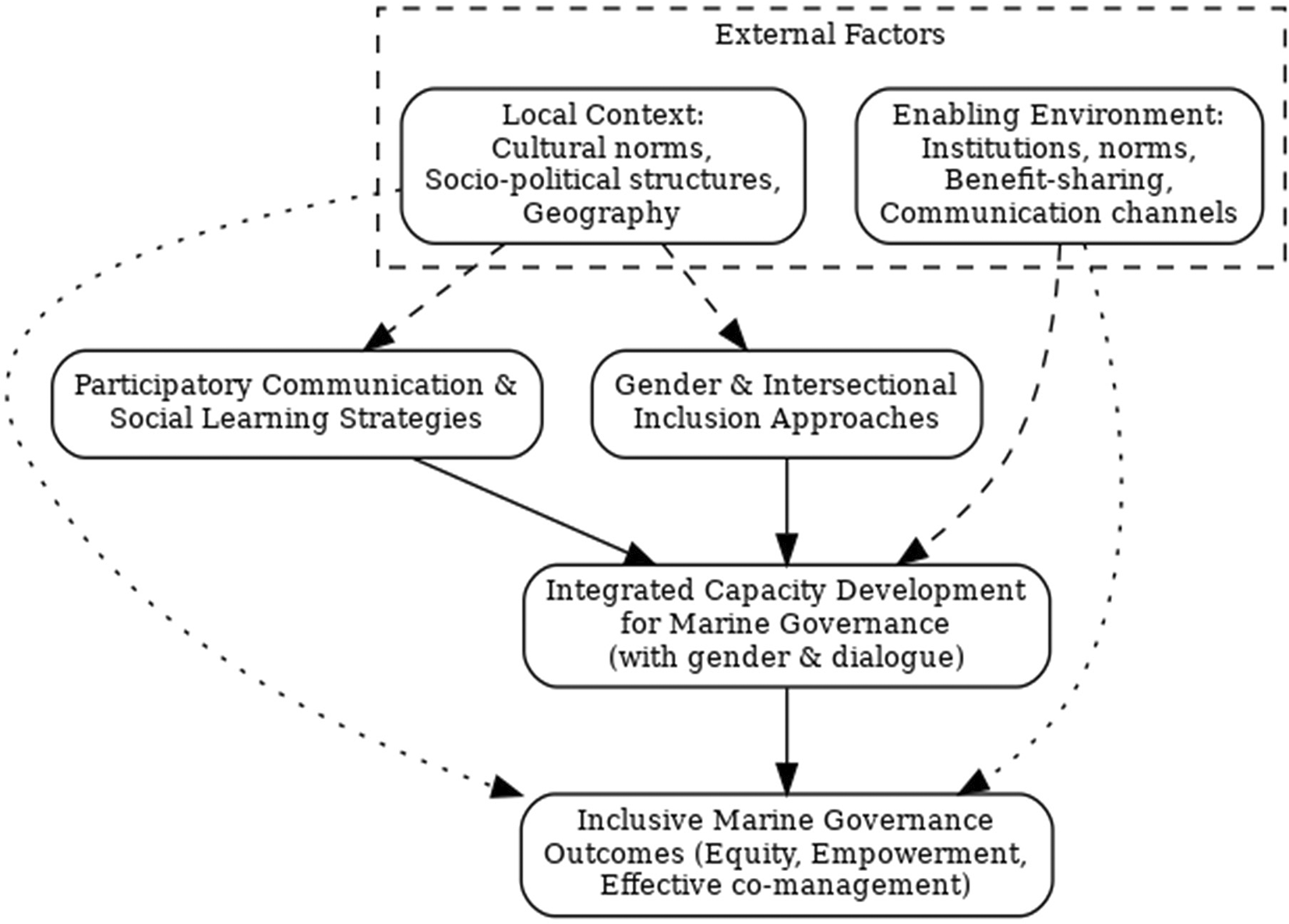
The model argues that inclusive marine governance arises when participatory communication and gender-responsive strategies are integrated into capacity development and adapted to local contexts within supportive environments. It connects (i) external conditions, (ii) core processes, and (iii) resulting outcomes, emphasizing that local norms, sociopolitical structures, geography, institutions, equitable benefit-sharing, and transparent communication together shape intervention design and effectiveness.
At the model’s core is the integration of participatory communication and gender-inclusive practices within all capacity-building activities. Dialogic forums, representative decision spaces, and inclusive training promote both technical and social learning. These processes enhance technical skills and collective capacities for decision making, conflict resolution, and shared implementation. The outcomes include fairer participation, stronger community influence on policy, and more effective co-management of marine resources. A reinforcing feedback loop ensures that equitable benefit-sharing and transparency strengthen social norms trust, reciprocity, and gender equity further supporting future collective action.
Applied to Karimunjawa, the model follows a clear sequence: first, map local context, including cultural norms, institutions, and gendered roles; next, conduct facilitated dialogues and capacity-building that amplify women’s voices and local knowledge through co-designed rules and mixed-gender teams; then, secure tangible benefits—improved livelihoods, access, and shared authority—to foster trust and legitimacy; finally, build enduring partnerships among communities, NGOs, and universities to sustain learning, adaptation, and resource stewardship, ensuring all members have a voice and stake in collective management.
The framework is built on clear definitions. Inclusive marine governance expands participation and distributes benefits across diverse groups. Participatory communication involves dialogic processes and social learning to balance power and knowledge among stakeholders. A gender and intersectionality lens addresses barriers and acknowledges distinct contributions of women and other groups. Local context is a primary determinant of success, requiring cultural and political fit in interventions. Enabling factors supportive institutions, fair benefit-sharing, and transparent communication provide the structural support for inclusive processes. Together, these components promote marine governance that is ecologically effective and socially just.
This study adopts a conceptual framework based on Eade,43 which conceives community capacity building as three interrelated dimensions: (a) human resources, (b) institutional/organizational support, and (c) network systems ( Table 1). Fieldwork was conducted in the Karimunjawa Islands, Indonesia, from June to July 2025. The site was selected for its ecological significance as a key habitat for sandfish sea cucumber (Holothuria scabra) and for the community’s pronounced economic dependence on sea cucumber fisheries. Eligible respondents were men and women from small-scale fishing communities in the productive age range (15–64 years) who were currently or previously engaged in harvesting sandfish sea cucumbers or other echinoderms. Individuals not directly involved in coastal or marine-related occupations were excluded.
The questionnaire evaluated individual and group experiences in community capacity development, gender participation, and participatory communication in marine conservation across 234 items covering domains like human capital, participation, benefits, culture, regulation, and rules of the game. Trained local enumerators, familiar with Karimunjawa fisheries, collected data following protocols on informed consent, confidentiality, and neutral interviewing, ensuring cultural sensitivity and accurate responses aligned with community practice.
Thirteen key informants, including fishery unit heads, community leaders (Javanese, Bugis, Madurese), female fishers, NGO facilitators, and local authorities, were interviewed for their extensive knowledge and experience in local fisheries. Ethical approval was obtained, informed consent secured, and instruments authorized under Decree No. 060/KE.01/SK/4/2022 by the Ethics Commission Chair (April 20, 2022).
Survey data were cleaned, coded, and analyzed via cross-tabulations by gender and site (Karimunjawa Islands). In-depth interviews were transcribed and thematically coded following Braun and Clarke’s (2006) guidelines to identify recurring patterns, culturally embedded narratives, and site-specific challenges in gender inclusion and participatory communication.44 Findings were triangulated across methods to enhance credibility. Quantitative analyses used structural equation modeling in SmartPLS, with indicators from the framework of Eade43 scored on a four-point scale. Qualitative analysis guided interpretation quantitative evidence to assess links between capacity development, gender participation, participatory communication, and inclusive marine governance.
Content validity was confirmed by three experts in marine policy, gender, and social science, including a gender professor from Bogor Agricultural Institute and fisheries socio-economics researchers from the National Research and Innovation Agency.
Construct validity was ensured by aligning indicators with the study’s theoretical foundations, specifically Eade’s (1998)43 capacity-development dimensions and the participatory governance elements described by Jentoft and Chuenpagdee.45
A pilot test involving 30 respondents from non-sample villages (Nyamuk Village) was conducted to refine item clarity and logic. Feedback led to minor wording adjustments without major revisions. Reliability was assessed using Cronbach’s alpha, and items scoring below 0.70 were revised before full implementation.
Methodological triangulation integrated qualitative interviews and quantitative surveys to strengthen credibility. Pilot testing showed general comprehension, but several items were revised for clarity, plain language, and gender inclusivity before full deployment.
All items met reliability criteria (outer loadings >0.50; Table 2). Three constructs achieved AVE >0.50 ( Table 3), supporting convergent validity, while constructs below this threshold still showed adequate loadings and internal consistency (Cronbach’s α >0.70; composite reliability >0.70; Tables 4–5). Due to their theoretical importance, these constructs were retained in the structural model, though path interpretations are made cautiously, and future refinement such as revising or removing weaker indicators is recommended.
Reliability diagnostics from SmartPLS indicate strong internal consistency overall: Table 4 reports Cronbach’s α > 0.70 for all constructs, and Table 5 shows composite reliability > 0.70 across the board. These results justify proceeding to the structural analysis. Structural model performance is summarized in Table 6. Coefficients of determination (R2) indicate that the model explains a moderate proportion of variance in Y1 (R2 = 0.657) and Y2 (R2 = 0.678), a substantial proportion in Y3 (R2 = 0.751), and a weak proportion in Y4 (R2 = 0.315) (using common PLS benchmarks). The corresponding unexplained variance shares are 34.3%, 32.2%, 24.9%, and 68.5%, respectively (see Figure 2).
| Variables | R -square | Information |
|---|---|---|
| Variable Y1 | 0.657 | Moderate |
| Variable Y2 | 0.678 | Moderate |
| Variable Y3 | 0.751 | Strong |
| Variable Y4 | 0.315 | Weak |
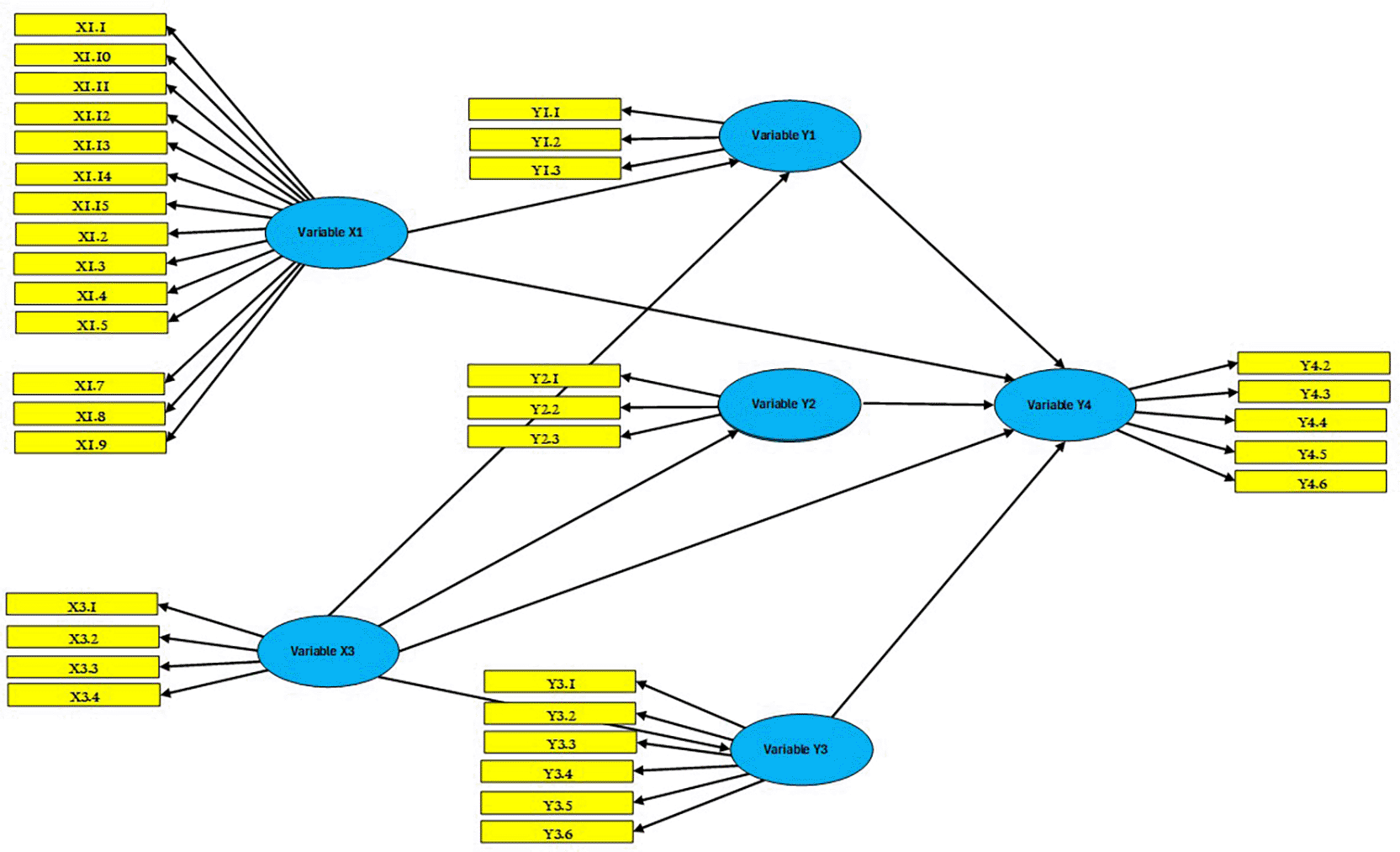
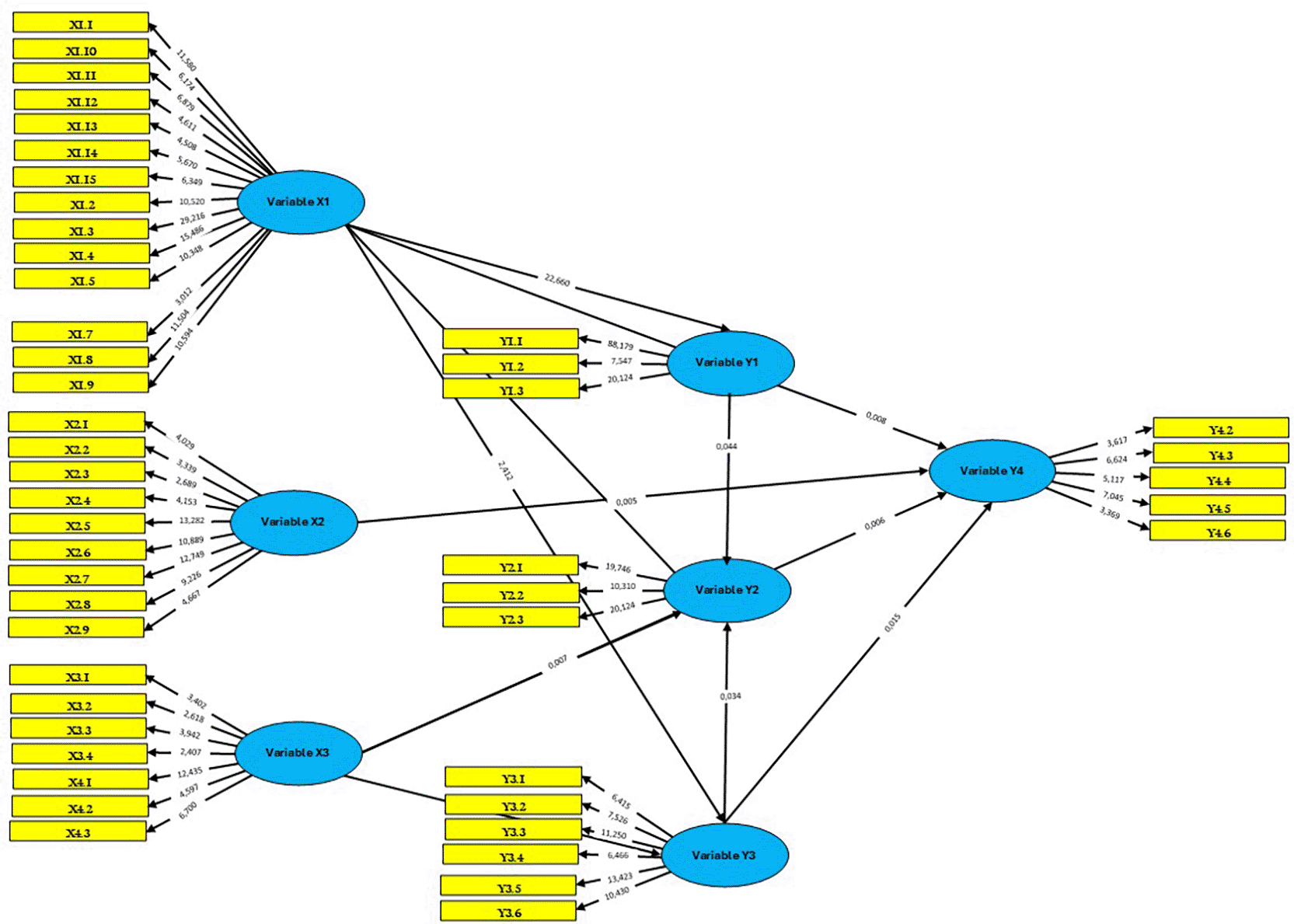
Predictive relevance statistics corroborate these findings. Figure 3 and Table 7 report Q2 > 0 for Y1–Y4, indicating predictive relevance for all endogenous constructs. Hypothesis tests are presented in Table 8. There were significant positive effects of X1 → Y1 (p < 0.001), X1 → Y2 (p = 0.005), and X1 → Y3 (p < 0.001) ( Table 9). In addition, X3 → Y3 was significant and positive (p = 0.005), and Y3 → Y4 was significant and positive (p < 0.001), implying a significant indirect pathway from X3 to Y4 via Y3. Collectively, these results support the proposed relationships and the model’s explanatory and predictive capacity.
| Dependent variable | Q-square |
|---|---|
| Variable Y1 | 0.417 |
| Variable Y2 | 0.527 |
| Variable Y3 | 0.448 |
| Variable Y4 | 0.173 |
Social capital variables in the community development framework
Structural equation modeling shows that the human-resources dimension aligns with social capital (X1), supporting control (Y1), benefits (Y2), and community culture (Y3).46,47 Fourteen of fifteen indicators attitude, cooperation, social network, structural, relational, altruism, conscientiousness, sportsmanship, civic virtue, courtesy, harmony, reliability, concern, and reciprocity capture how Karimunjawa fishers leverage social capital to sustain marine resources, including sandfish sea cucumbers (Holothuria scabra).
The study site is a small-scale fisheries community (ages 15–62) of Javanese, Madurese, Bugis, and Mandarese. Fishing mostly uses vessels ≤5 GT with simple gear. Seaweed cultivation occurs via Ministry training and investor collaborations. Processing, mainly by fishers’ wives, is limited—sea cucumber processing depends on market demand, while other activities (e.g., anchovy drying) are intermittent. Local sales are coordinated among fishers, cultivators, and processors, with sub-district collectors aggregating products for external markets.
Daily social interactions in Karimunjawa reflect strong tolerance and mutual support. Interethnic exchanges are fluid, with residents often switching languages, while collective help arises naturally during illness or family events. Shared efforts—like beach clean-ups and peer learning in seaweed farming—demonstrate cooperation, reciprocity, civic engagement, and respect, aligning closely with the social-capital indicators validated in the measurement model.
Community development focuses on fostering collective problem-solving, encompassing both the process of enhancing capacity to act together and the outcome of sustained collective action that improves physical, environmental, cultural, social, political, or economic conditions.48
Community-based management applies this approach by promoting human-centered development and giving communities direct responsibility for local resource management. Planning generally follows stages of problem identification, goal setting, action, and evaluation. Strategies may focus on economic growth, social welfare, shared responsibility through self-help and external support, or a holistic combination of ethical and practical actions.
In Karimunjawa, fisheries communication mainly occurs within business groups at the hamlet and village levels. Although occasional tensions often arise over policies seen as favoring certain hamlets, they are usually resolved through norms of mutual respect, with competition reflecting local loyalties rather than serious division. Overall, these dynamics indicate that social capital, reflected in the fourteen validated indicators, serves as a practical foundation for community development; when directed through structured, participatory processes, it can strengthen legitimacy, participation, and compliance to support sea cucumber recovery and wider marine conservation efforts.
Variable participation in the community development framework
Community development goals can be specific rather than multi-purpose. Drawing on Long’s research as cited by Buye,49 approaches illustrate this range: a community approach, problem-solving, experimental innovation, power-conflict mobilization, natural-resource management, and urban environmental improvement. Building on this idea of tailored pathways, Coote as cited in Beck and Purcell50 proposes three normative objectives that orient community development toward transformational ends: social justice (equal opportunities and meaningful participation), environmental sustainability (living within ecological limits across generations), and a more equal distribution of power (formal and informal means for people to influence decisions at multiple scales).
Structural equation modeling in this study shows that participation (X3) indirectly influences the network system (Y4). Participation encompasses conservation, private and group enterprises, and household economic activities, while the network system includes infrastructure, resource potential, finance access, markets, production capacity, and cooperation. These results suggest that broader community engagement enhances connections to resources and partners, thereby strengthening network capacity.
In the Karimunjawa Islands, fishing communities actively engage in marine conservation, such as mangrove and coral reef management, in collaboration with the National Park Agency. These efforts reflect awareness that healthy habitats sustain local fisheries, including sandfish. Environmental care is also evident in the adoption of selective, low-impact fishing gear. Livelihoods, however, remain fluid; when new markets emerge, communities diversify into small enterprises like construction, furniture, and fish processing. Group-based organization supports this diversification, with many households combining fishing, seaweed farming, and processing. Through these networks, communities access infrastructure, credit, and wider markets via investor partnerships. While these connections build capacity and economic opportunity, they also increase pressure on fish stocks particularly sandfish highlighting the need to balance market integration with conservation safeguards.
Conceptually, community development is best understood as both process and outcome. Phillips and Pittman48 define it as developing the ability to act collectively (process) and realizing improvements across community domains—physical, environmental, cultural, social, political, and economic—through sustained collective action (outcome). Planning typically proceeds through problem presentation and analysis, goal setting, action planning, implementation, and evaluation. Strategy choice can vary with context. Pangandaran51 highlights models that (a) build skills and independence to address locally identified problems, (b) mobilize community action to strengthen the capabilities of marginalized groups, and (c) pursue gender-focused efforts to redress inequalities between women and men. Classic typologies echo this range: Rothman’s three models—locality development, social planning, and social action—respectively emphasize participatory place-based improvement, data-informed policy and program design, and organized efforts to secure structural justice.52
Participation in Karimunjawa fisheries serves not merely as a procedural ideal but as a capacity-building mechanism, enhancing networks through improved infrastructure, finance, market linkages, and cooperative production; achieving Coote’s objectives of justice, sustainability, and redistributed power requires coupling participation with safeguards against over-extraction and gender-responsive designs that ensure equitable benefits and decision-making.
The role of gender in current fisheries community activities
In the Karimunjawa community, fisheries practices are shaped by household income needs and limited awareness of sandfish sea cucumber stewardship. Harvesting, mainly by fisherwomen with tacit household support, treats sea cucumbers as one of several interchangeable income sources, reflecting weak recognition of ecological risk. Gender participation is visible in production and supply chains, yet women remain underrepresented in decision making, constraining the community’s capacity to align short-term livelihoods with long-term conservation goals.
Strengthening human resources is crucial, as skills in stewardship, rights literacy, negotiation, and data use enhance community control, bargaining power, and policy engagement, while clear program benefits and supportive organizational culture align incentives with conservation outcomes, fostering fishing practices that sustain livelihoods and promote Holothuria scabra recovery.
This discussion synthesizes the study’s findings to argue that sustainable marine governance in small-scale fisheries hinges on the mutually reinforcing interplay of social capital, gender inclusion, and participatory communication. Evidence from Karimunjawa shows that strengthening these elements in tandem is essential for building community capacity and achieving durable conservation outcomes. Social capital—expressed in trust, norms of reciprocity, and dense networks among fishers—was closely associated with higher perceptions of community control and benefits, catalyzing collective action consistent with broader evidence that social capital fosters cooperation and reduces competitive overexploitation.53 Bonding ties visible in traditions of mutual aid and inter-ethnic tolerance have underwritten joint activities such as communal beach cleanups and facilitated collective problem-solving during resource stress.
The analysis highlights that bridging and linking ties must be actively cultivated, as gaps in networks and uneven engagement with authorities limit the flow of diverse voices into decision making; treating social capital as a strategic resource mobilized through subgroup facilitation, transparent communication, and inclusive leadership can shift governance from top-down control toward cooperative, norm-based co-management.53
A key finding is the gap between women’s substantial fisheries labor and their limited role in conservation decision-making; continued sand sea cucumber harvesting, driven by economic need and limited conservation knowledge, reflects this management blind spot, consistent with global trends showing that women’s underrepresentation undermines policy and stewardship, whereas their active participation enhances social and ecological outcomes.54 Closing this gap enhances both equity and institutional effectiveness, as incorporating gendered knowledge improves anticipation of livelihood trade-offs, compliance challenges, and enforcement options.
Real progress requires moving beyond tokenistic consultation toward genuine participatory communication, understood here as a dialogic, two-way process that enables marginalized stakeholders to share knowledge and co-create solutions.55 In practice, this means creating regular, well-facilitated forums where women participate as equals and where their situated knowledge is recognized as decision-relevant. Such fora build local ownership, sharpen problem diagnosis, and improve the fit between rules and lived realities, thereby enhancing the durability of conservation measures.55 Implementing these processes, however, demands intentional design choices that confront entrenched power asymmetries. Measures such as women-only discussion spaces, facilitation that counters status hierarchies, and meeting schedules aligned with caregiving and market obligations help ensure that women can speak and be heard. For participation to be transformative, it must also confer real decision authority and be backed by institutional commitments and accountability mechanisms that translate deliberation into policy change.56
The Karimunjawa case shows that inclusive governance broadens solutions for complex problems, as diverse perspectives reveal synergies between conservation and livelihoods, enabling adaptive rules and enforcement while enhancing fairness and compliance.41 When stakeholders view processes as fair and transparent, they are more likely to accept short-term costs for longer-term collective gains, an effect amplified by social learning—communities discussing, experimenting, and iterating together rules and practices over time.
Taken together, these findings converge with the growing call for blue justice in ocean governance—an agenda that foregrounds equity, social inclusion, and recognition of historically marginalized groups.54 Designing co-management bodies and village forums to “level the playing field” aligns justice and effectiveness: inclusive procedures leverage community knowledge and networks, making policies more legitimate and resilient. Social capital drives collective action, participatory communication guides it, and gender-responsive capacity building translates deliberation into lasting rule changes.
For sand sea cucumbers, governance that integrates women’s knowledge of harvesting, markets, and household risks can better calibrate closures, size limits, and gear rules while guiding livelihood alternatives to ease pressure. Strengthening bridging and linking ties through transparent engagement, feedback loops, and shared success metrics enhances compliance and reduces conflict. Embedding gender equity and dialogic communication fosters proactive stewardship, creating a feedback loop where conservation strengthens trust, participation, and local commitment.41,53–55
In conclusion, this study proposes an empirically grounded framework indicating that sustainable sea cucumber conservation in small-scale fisheries succeeds when capacity development is socially embedded, gender-responsive, and dialogic. Social capital trust, reciprocity, and bridging ties emerged as the main driver of perceived control, benefits, and positive organizational culture, underscoring collective efficacy as key for co-management. Participation strengthened network capacity by linking conservation and livelihood activities to infrastructure, finance, and market access. Human-capital gains alone were insufficient, highlighting the need for training to combine with institutional uptake, accountability, and authority opportunities.
Three key policy implications arise: first, embed participatory communication via regular forums, transparent information, and local monitoring to strengthen legitimacy and compliance; second, advance gender inclusion by developing women’s leadership and linking benefits to inclusive decision-making; third, ensure equitable benefit-sharing through co-owned enterprises, park-fee revenue, or livelihood alternatives to align conservation with community well-being and sustain engagement.
The model was reliable, though some AVE values and network-system variance were modest. Future studies should refine measures, use longitudinal designs, and test multi-site validity. Findings emphasize that “blue justice” through gender equity and dialogic governance is key to converting social capital into resilient, adaptive conservation outcomes.
| Views | Downloads | |
|---|---|---|
| F1000Research | - | - |
|
PubMed Central
Data from PMC are received and updated monthly.
|
- | - |
Provide sufficient details of any financial or non-financial competing interests to enable users to assess whether your comments might lead a reasonable person to question your impartiality. Consider the following examples, but note that this is not an exhaustive list:
Sign up for content alerts and receive a weekly or monthly email with all newly published articles
Already registered? Sign in
The email address should be the one you originally registered with F1000.
You registered with F1000 via Google, so we cannot reset your password.
To sign in, please click here.
If you still need help with your Google account password, please click here.
You registered with F1000 via Facebook, so we cannot reset your password.
To sign in, please click here.
If you still need help with your Facebook account password, please click here.
If your email address is registered with us, we will email you instructions to reset your password.
If you think you should have received this email but it has not arrived, please check your spam filters and/or contact for further assistance.

Comments on this article Comments (0)