Keywords
pygmalion effect, teacher expectations, self-fulfilling prophecy, academic achievement, higher education, classroom climate

pygmalion effect, teacher expectations, self-fulfilling prophecy, academic achievement, higher education, classroom climate
First, a methodological clarification was added to Section 2.3 (Exploratory Factor Analysis) to explicitly state that items with factor loadings below .40 on all retained factors were excluded from the model. This criterion is now also referenced in the Results section (Section 3.1) where the exclusion of the Response Opportunities dimension (ND1-D4) is reported.
Second, the Limitations section was expanded to include a notation regarding the number of Level 2 units (n = 30 faculty members), which is somewhat below the sample sizes typically recommended for reliable multilevel parameter estimation at the group level. Readers are advised to interpret faculty-level coefficients with appropriate caution, while noting that the overall findings remain valid given the robustness of the Level 1 student sample.
Third, the Limitations section was further expanded to frame the marginally significant effects of Negative Interactions (FE2; p = .092) and Student-Perceived Faculty Expectations (FE3; p = .055) as theoretically meaningful trends consistent with established research, rather than interpreting them solely on statistical grounds.
Fourth, a direct reference to the FigShare repository was added to the Data Availability section to facilitate access to complete item-specific information for researchers interested in replicating the study.
No changes were made to the study design, data, analyses, results, or conclusions reported
To read any peer review reports and author responses for this article, follow the "read" links in the Open Peer Review table.
The study by Rubie-Davies and Hattie (2024) highlights the substantial contribution of Merton’s introduction of the theory of the self-fulfilling prophecy in 1948 to scholarly discourse. According to Merton’s theory, the beliefs of a third party can shape the reality experienced by another individual. Eden (1992) further argues that McGregor first elucidated the theoretical underpinnings of the Pygmalion effect in 1960 when he formulated a theory of organizational behavior. This was a foundational contribution to the field, as was Likert’s (1961) work, which emphasized the importance of communication in achieving high levels of performance. Bushra (2024) notes that the concept of the Pygmalion effect also emerged in the 1960s from the studies of Rosenthal and Jacobson (1968). These studies demonstrated that students identified as high performers by their teachers exhibited significantly greater improvement compared to their peers who lacked similar expectations.
Since then, numerous researchers have engaged with this area of study to determine which student and teacher characteristics lead educators to hold high or low expectations for students and how these expectations affect academic performance. Sitnikova (2023), in her systematic review, notes that historical approaches to the subject have included a range of methodologies, from positivist paradigms to more critical and qualitative approaches. Furthermore, she indicates that the concept is now accepted as a social process influenced by structural and cultural factors. The Pygmalion technique has been observed in educational settings and business environments. In the professional sphere, it has been used to enhance worker efficiency and productivity (Farrukh et al., 2025; Yilmaz & Bayram, 2023).
The Pygmalion effect, which has been examined in relation to the impact of parents’ expectations on students’ academic performance, has been the focus of research (Muñoz, 2023). In the medical field, this effect has been used to enhance students’ motivation, confidence, and self-esteem. However, its appropriate implementation is crucial to prevent students who do not receive such positive attention from feeling marginalized or undervalued (Homayouni-Zand & Kalantarion, 2023). As Bergold and Steinmayr (2023) have noted, previous studies have shown that educators tend to overestimate their students. Furthermore, these studies demonstrate that underestimation has adverse effects on students, whereas overestimation has beneficial effects.
Gentrup et al. (2020) found that teachers’ expectations are often inaccurate, which can influence student performance. Therefore, this study is based on the premise that the social environment and teachers’ beliefs are malleable and influential factors that play a key role in determining academic success. This stance contrasts with deterministic perspectives that attribute performance to genetic predispositions (Matthews et al., 2024).
When discussing the Pygmalion effect and the self-fulfilling prophecy, it is important to consider their interrelationship, as in both cases, expectations or beliefs are delegated to third parties, rendering the subject passive and leading them to conform to the imposed prophecy (Quintero et al., 2022). This phenomenon examines the impact of implicit beliefs on behavior, particularly with regard to cognitive and emotional loads. In this context, it is important to note that the quality, not the quantity, of teacher-student interaction shapes teachers’ perceptions of each student at the individual level (Nolkemper et al., 2019).
Recent studies, including those by Rubie-Davies and Hattie (2024) and Papageorge et al. (2020), have reported significant improvements when high expectations are placed on students. In this context, educational psychology must address and harness the Pygmalion effect.
Nevertheless, the phenomenon continues to raise theoretical questions about its origins. For example, one might question whether teaching professionals unconsciously form expectations about their students in the classroom. Furthermore, if such expectations are indeed present, it is imperative to identify the underlying mechanisms that give rise to them and the factors that drive them. A related question concerns whether the Pygmalion effect occurs in a conventional educational context. In such an environment, students must recognize that teachers have higher expectations for some students than for others and subsequently act accordingly.
These questions motivate the present research, which aims to examine the impact of teacher expectations on the academic performance of first-semester students at the Universidad Técnica del Norte (UTN; Technical University of the North) through the lens of the Pygmalion effect.
To achieve this objective, an evaluation was conducted using a two-level multistage model. The first level consists of teachers. Within this level, we sought to examine teachers’ expectations, their implicit theories about intelligence, and their perceptions of students’ potential. The second level consists of students, where we assessed their perceptions of their teachers’ expectations and the classroom environment.
This research is being conducted at the university’s Faculty of Education, Science, and Technology (FECYT), a key setting for professional training. This context provides valuable evidence in the region and addresses a gap in Latin American literature, given the preponderance of North American and European studies.
The proposed research employed a non-experimental, observational, explanatory, and applied design, utilizing a quantitative approach. Furthermore, it follows deductive reasoning, incorporating correlational and predictive analyses. The study aims to identify how faculty expectations influence the performance of first-semester students at FECYT, employing multilevel statistical analysis within the educational context.
Additionally, this study is grounded in the existing theory of the Pygmalion effect and seeks to identify the factors of the theoretical model that play a role in the context of university students and professors.
The target population consisted of first-semester students and faculty members from the Faculty of Education, Science, and Technology (FECYT). Non-probabilistic convenience sampling was employed, inviting the entire available student and teaching population of the Faculty’s first level to participate. No exclusion criteria were established, with the objective of maximizing sample representativeness. Consequently, from January 15, 2025, to March 16, 2025, responses were obtained from 476 students and 30 professors, achieving total participation from the faculty and a response rate exceeding 90% from the first-semester student body.
The study protocol was reviewed and approved by the Research Ethics Committee of the Universidad Técnica del Norte (approval number: UTN-FECYT-CEI-2025-003-C; date: 13 January 2025) and was conducted in accordance with the Declaration of Helsinki. Prior to participation, written informed consent was obtained from all subjects via electronic forms.
For the development of this study, two levels of analysis were established: Pygmalion from the faculty level and the student level. For the faculty level, the following instruments were applied: the Teacher Expectation Questionnaire (TEQ), aimed at measuring faculty expectations; the Implicit Theories of Intelligence Scale (ITIS), focused on the fixed or malleable view of intelligence; and the Student Potential Perception Scale (SPPS), which evaluates faculty perception of student potential.
For the student level, the Student Perception of Expectations (SPED), which collects the student’s perception of the teacher’s expectations, and the Classroom Climate Scale (CCS), which measures classroom climate from the student perspective, were utilized.
All instruments were adapted and validated specifically for this research, based on previously established theories and constructs, which allowed for structuring key dimensions for the analysis of the Pygmalion effect and identifying its main components in the higher education context.
Classroom climate was assessed using an adaptation of the Classroom Climate Scale (CCS), developed and validated for the Ecuadorian context based on both Latin American and international theoretical and empirical references. The version used was grounded in three key studies: the three-dimensional model proposed by Sriklaub et al. (2015), oriented towards student-centered learning; the TCCS scale by Sørlie and Hukkelberg (2023), which evaluates climate from the faculty perception; and the work of López et al. (2018), who validated a classroom climate instrument in Chilean students using a mixed approach and mass application.
For the construction of the instrument evaluating the perception of faculty expectations (SPED) regarding the Pygmalion effect, the definition of the constructs was primarily based on the study by Witty and Debaryshe (1994), which allowed for structuring parallel items for faculty and students, grouped into dimensions clearly defined through factor analysis. Complementarily, empirical and theoretical references were incorporated from Ardiles and Escobar (1997), who addressed student expectations regarding the teaching role in personal, pedagogical, and technical dimensions; from Gürşimşek (1999), whose work evidenced the differential perception of teacher treatment towards students of different performance levels; and from López et al. (2018), who validated a classroom climate scale from a Latin American perspective.
The design of the Student Potential Perception Scale (SPPS) instrument was based on the study by Ceroni et al. (2016), who identified three key dimensions in faculty perception of the student body: academic potential, learning difficulties, and inappropriate behavior. Based on this theoretical and psychometric structure, the original items were adapted and expanded for application in the Ecuadorian higher education context. The questionnaire allowed for obtaining a reliable measure of the faculty’s anticipatory judgment regarding the student’s future performance, an essential component of the Pygmalion effect.
The present research relies on the work of Abd-El-Fattah and Yates (2006), who present a scale with 14 items on entity and incremental intelligence beliefs, grounded in the underlying theory. The ITIS is supported by an exploratory and confirmatory factor analysis, affirming the existence of two differentiated and psychometrically solid factors. These reliability coefficients indicate that the subscales of the obtained factors exceed.75, which is considered acceptable. Structural equivalence was also verified in student samples completing questionnaires at universities in Australia and Egypt, as well as between males and females, supporting the cross-cultural validity of the scale’s use. Additionally, the results presented by Liu (2021) are included, arguing the influence that these types of beliefs exert on achievement and intrinsic motivation. Through this scale, this work seeks to answer how the beliefs faculty hold regarding the nature of intelligence affect the expectations they set for their students, which constitutes the core of the Pygmalion effect.
The design of the Teacher Expectation Questionnaire (TEQ) instrument is fundamentally based on the theoretical model developed by Brophy (1983), which systematized research on educational expectations and the role they play in generating self-fulfilling prophecies within the school context. This author stated that the expectations education professionals have regarding their students’ capabilities translate into observable interaction patterns, particularly in affective climate, feedback, level of demand, and opportunities for participation, which configured the design of the TEQ. The contributions of Cooper (1979), who formulates a model on the diffusion of expectations and the impact they have on performance, were also added, as well as those of Rubie-Davies (2006), whose empirical research showed that teacher expectations cumulatively affect the academic self-evaluation students grant themselves.
It should be noted that each instrument was composed of various dimensions measured through Likert-type scale items. The organizational structure is detailed in Figure 1.
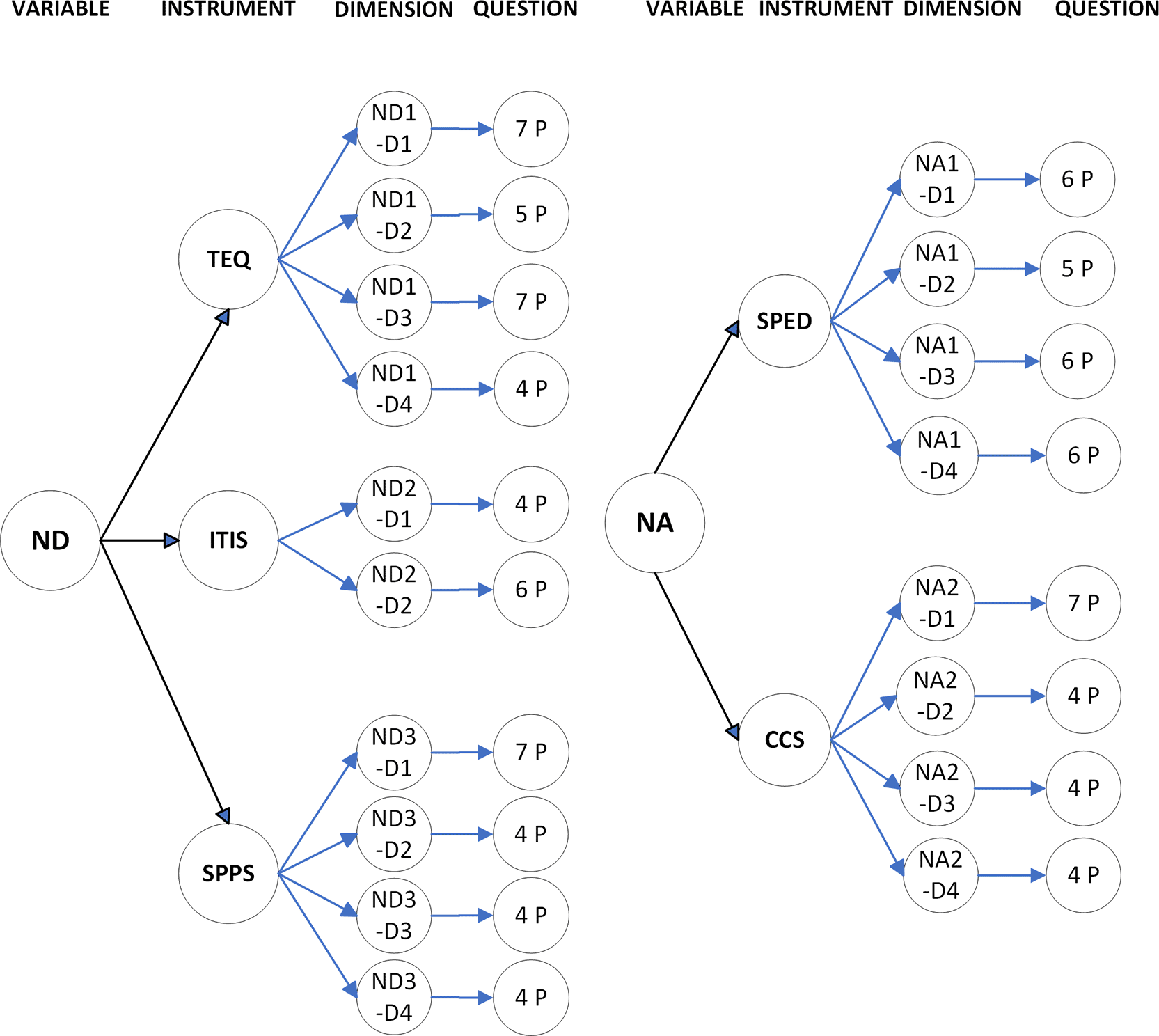
Note: ND = Faculty Level (from Spanish Nivel Docente). TEQ = Teacher Expectation Questionnaire. ND1-D1 = Emotional climate. ND1-D2 = Feedback. ND1-D3 = Level of demand and instruction. ND1-D4 = Response opportunities. ITIS = Implicit Theories of Intelligence Scale. ND2-D1 = Fixed view. ND2-D2 = Malleable view of intelligence. SPPS = Student Potential Perception Scale. ND3-D1 = Potential in the classroom. ND3-D2 = Learning difficulties. ND3-D3 = Inappropriate behavior. ND3-D4 = Socioemotional skills. NA = Student Level (from Spanish Nivel Alumno). SPED = Student Perception of Expectations. NA1-D1 = Promotion of student participation and involvement. NA1-D2 = Personal consideration toward the student. NA1-D3 = Avoidance of negative interactions. NA1-D4 = Lack of recognition or praise. CCS = Classroom Climate Scale. NA2-D1 = Physical environment. NA2-D2 = Faculty-student interactions. NA2-D3 = Peer relationships. NA2-D4 = Faculty orientation toward learning. P = Number of questions per dimension.
The validation and relevance of the instruments’ content were evaluated through expert judgment (n = 3), ensuring that the items adequately reflect and cover the construct measured in each category. Aiken’s V coefficient was utilized to quantify the consensus among the judges regarding the pertinence of each item. Subsequently, the Delphi method was applied to consolidate consensus regarding the final structure of the instruments.
Aiken’s V test showed high content validity: the TEQ obtained a V coefficient of .85; ITIS, .88; and SPPS, .90. Regarding the student level, the SPED and CCS obtained V coefficients of .87 and .89, respectively. This demonstrates that, in all cases, the items present a significant degree of agreement among the experts, supporting their content validity.
Internal consistency was evaluated using Cronbach’s α coefficient, yielding the following results: for the TEQ, a coefficient of .81; ITIS, .79; and SPPS, .85, regarding the student-level instruments, the SPED and CCS reached coefficients of .83 and .88, respectively. This reflects satisfactory and consistent reliability, confirming the psychometric adequacy of the instruments for application in the study.
Data processing and statistical analysis were performed using Jamovi 2.3 software, based on the R language, utilizing robust extraction methods.
Spearman correlation matrices were constructed to explore bivariate relationships between the dimensions of the instruments administered to faculty and students. This preliminary analysis allowed for evaluating the strength and direction of associations between variables, as well as verifying the statistical suitability of applying Exploratory Factor Analysis (EFA) by identifying significant covariation patterns among the items.
An EFA was conducted with the purpose of reducing the dimensionality of faculty and student perceptions and revealing the underlying structure within each dimension. In the case of students, eight theoretical dimensions related to classroom climate, faculty expectations, and negative interactions were grouped. For this purpose, the Minimum Residuals (MinRes) method was employed—suitable when multivariate normality is not assumed—along with an orthogonal Varimax rotation to obtain interpretable factors.
The number of factors was determined using Horn’s Parallel Analysis, which compares actual eigenvalues with those generated from random matrices, supported by Kaiser’s criterion (eigenvalues >1). This procedure indicated the retention of three factors which, after Varimax rotation, collectively explained 69.23% of the total variance:
• Student Factor 1 (FE1) – Classroom Climate
• Student Factor 2 (FE2) – Negative Interactions
• Student Factor 3 (FE3) – Faculty Expectations
In terms of proportional explained variance, FE1 accounted for 42.25%, FE2 for 29.16%, and FE3 for 28.60% of the factorial model. Factor loadings greater than 0.40 were considered significant, ensuring that each item was solidly associated with a single factor, thus guaranteeing a clear and coherent conceptual structure for subsequent use in regression models.
The EFA for the faculty scale was conducted using the same methodological strategy, applying the MinRes method and Varimax rotation. In an initial stage, all proposed dimensions were included; however, items that did not reach a factor loading of .40 on any factor were excluded to ensure parsimony and structural clarity. Specifically, the “Opportunities” dimension (ND1_D4) was excluded because its dominant loading fell below this threshold (i.e., it did not reach .40 on any retained factor).
Subsequently, three factors emerged with loadings greater than .40, labeled according to the predominant dimensions:
• Faculty Factor 1 (FD1) – Theories of Intelligence
• Faculty Factor 2 (FD2) – Faculty Expectations
• Faculty Factor 3 (FD3) – Perception of Student Potential
These three factors explained 59.20% of the total cumulative variance. Of the variance explained by the model, FD1 contributed 34.83%, FD2 contributed 35.20%, and FD3 contributed 30.08%, reflecting a balanced distribution among the identified constructs.
To evaluate the predictive capacity of the factors identified in the EFA regarding academic achievement, a hierarchical modeling strategy was followed. In a first phase, a robust regression model was fitted, including exclusively the student-level factors (Level 1). In this initial stage, all student dimensions showed statistically significant effects on academic performance.
Subsequently, to incorporate the hierarchical structure of the data and comply with the multilevel approach, faculty-level factors (Level 2) were introduced, specifically those linked to expectations (FD2). The inclusion of second-level predictors generated a variation in the student-level coefficients, showing that faculty expectations act as a determinant predictor of performance.
Thus, it was possible to demonstrate that the inclusion of the second level of analysis offers a more complete perspective of educational dynamics, suggesting that the effect of student perceptions can be moderated or enhanced through faculty expectations.
The proposed hierarchical multilevel model was:
Where:
: academic achievement of student i in classroom j.
: global intercept (general average of achievement).
: student factor 1 (FE1 – Classroom Climate).
: student factor 2 (FE2 – Negative Interactions).
: student Factor 3 (FE3 – Faculty Expectations).
: faculty factor (FD2 – Faculty Expectations).
: estimated regression coefficients (fixed effects).
: random effect of the faculty level (variance between professors).
: random error of the student level (residual variance).
This mathematical model validates the multilevel analysis by decomposing the error term into two components: the variability attributed to the faculty member ( ) and the individual variability of the student ( ).
The findings obtained from the analysis of faculty and student perceptions in relation to academic achievement are presented below, in order to identify the manifestation of the Pygmalion Effect in the university context.
Initially, an Exploratory Factor Analysis (EFA) was conducted with the purpose of revealing the latent structure underlying the evaluated dimensions. This procedure allowed for the identification of several distinct conceptual factors for both faculty and students based on the original dimensions.
Based on this factorial structure, composite variables were generated which were subsequently employed as predictors in the regression models. These models allow for analyzing how the perceptions collected through the Faculty Level (ND) and Student Level (NA) instruments are associated with academic performance, empirically evidencing the factors that configure the Pygmalion effect in higher education.
In Figure 2, significant positive associations are evidenced among the Emotional Climate (ND1-D1), Feedback (ND1-D2), and Level of Demand and Instruction (ND1-D3) dimensions of the TEQ instrument. Spearman correlation coefficients of between Emotional Climate and Feedback, between Emotional Climate and Level of Demand, and between Feedback and Level of Demand are identified, all with high statistical significance (p < .001). This covariation suggests the presence of a strong shared latent component linked to explicit expectations.
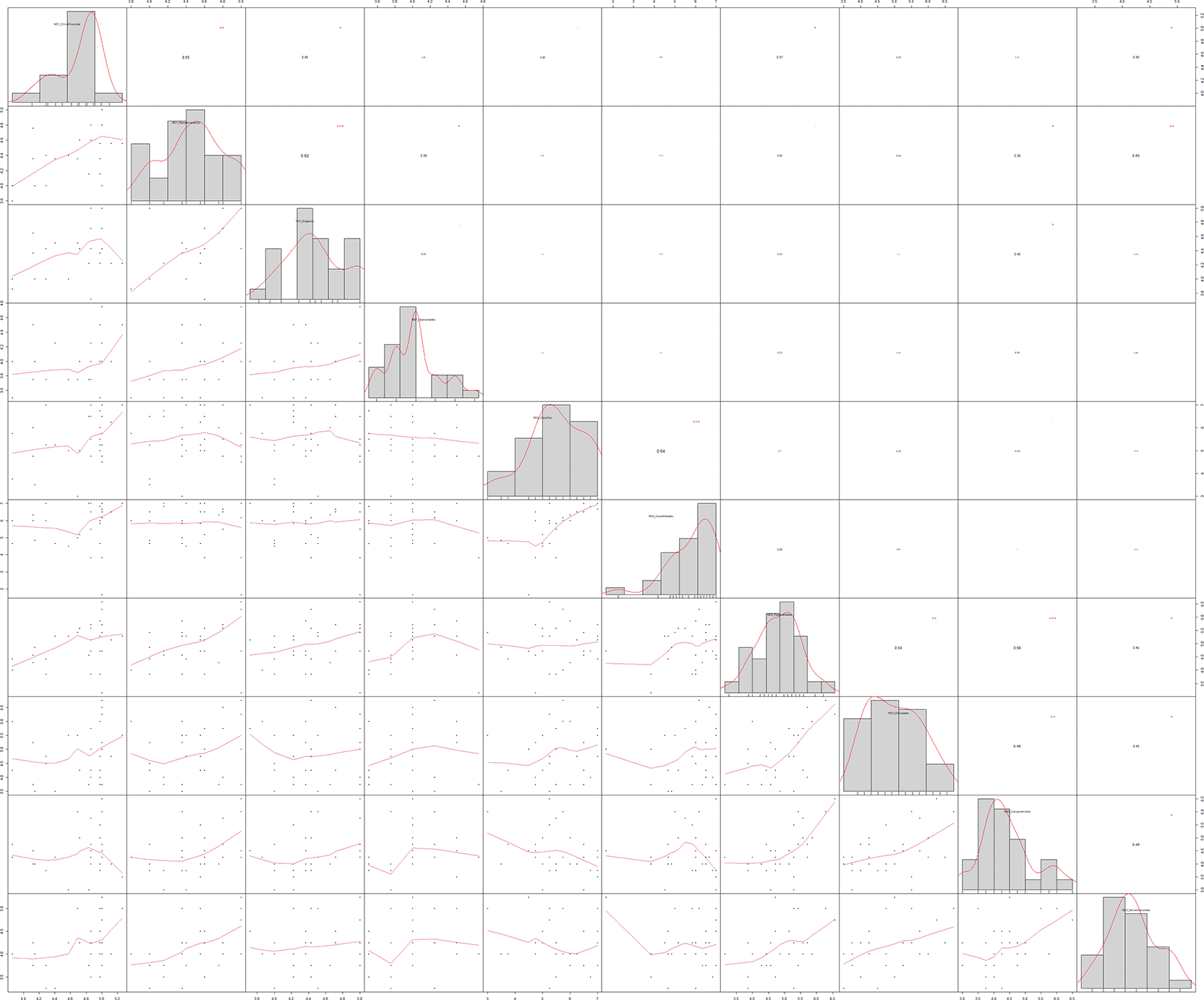
The main diagonal displays the distribution of each variable. The lower triangle presents the scatterplots, and the upper triangle indicates the Spearman correlation coefficients (r). Asterisks indicate statistical significance: * p < .05, ** p < .01, *** p < .001. ND = Faculty Level (from Spanish Nivel Docente).
Regarding the Malleable View of Intelligence (ND2-D2) dimension, results show a significant correlation with the Potentialities (ND3-D1) dimension ( , p = .001). In contrast, the Learning Difficulties (ND3-D2) and Inappropriate Behavior (ND3-D3) dimensions present weaker correlations ( between .40 and .43) with the remaining variables, and in several cases do not reach statistical significance. This reinforces the notion that these variables represent differentiated constructs with a lower degree of structural dependence within the faculty model.
In Figure 3, significant positive correlations are observed among the student-level dimensions. Of note is a strong association between Faculty-student interactions (NA2-D2) and Peer relationships (NA2-D3), with a coefficient of (p < .001), as well as between Physical environment (NA2-D1) and Faculty-student interactions ( , p < .001). These results reflect a structured covariation pattern among the Classroom Climate Scale (CCS) dimensions.
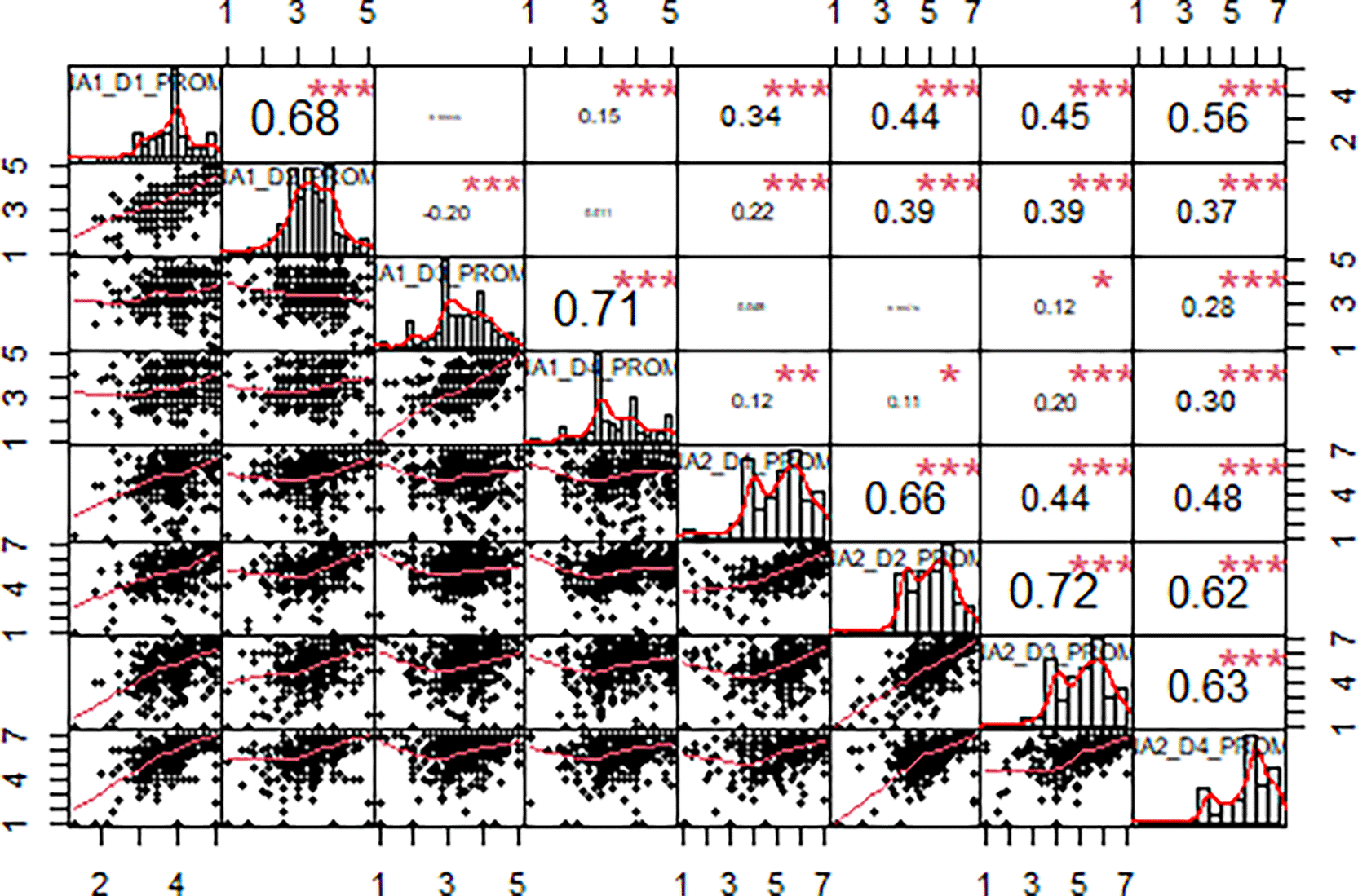
The main diagonal displays the density of the variables. The upper triangle contains the correlation coefficients (r) and the lower triangle the corresponding scatterplots. * p < .05, ** p < .01, *** p < .001. NA = Student Level (from Spanish Nivel Alumno).
Likewise, relevant correlations are identified among the SPED instrument dimensions, particularly between Promotion of student participation and involvement (NA1-D1) and Personal consideration toward the student (NA1-D2) ( ), as well as between Avoidance of negative interactions (NA1-D3) and Lack of recognition or praise (NA1-D4) ( ). These findings suggest a coherent student perception regarding faculty treatment and its emotional and motivational implications.
Figure 4 presents the faculty-level factor loadings, organized into three latent factors.
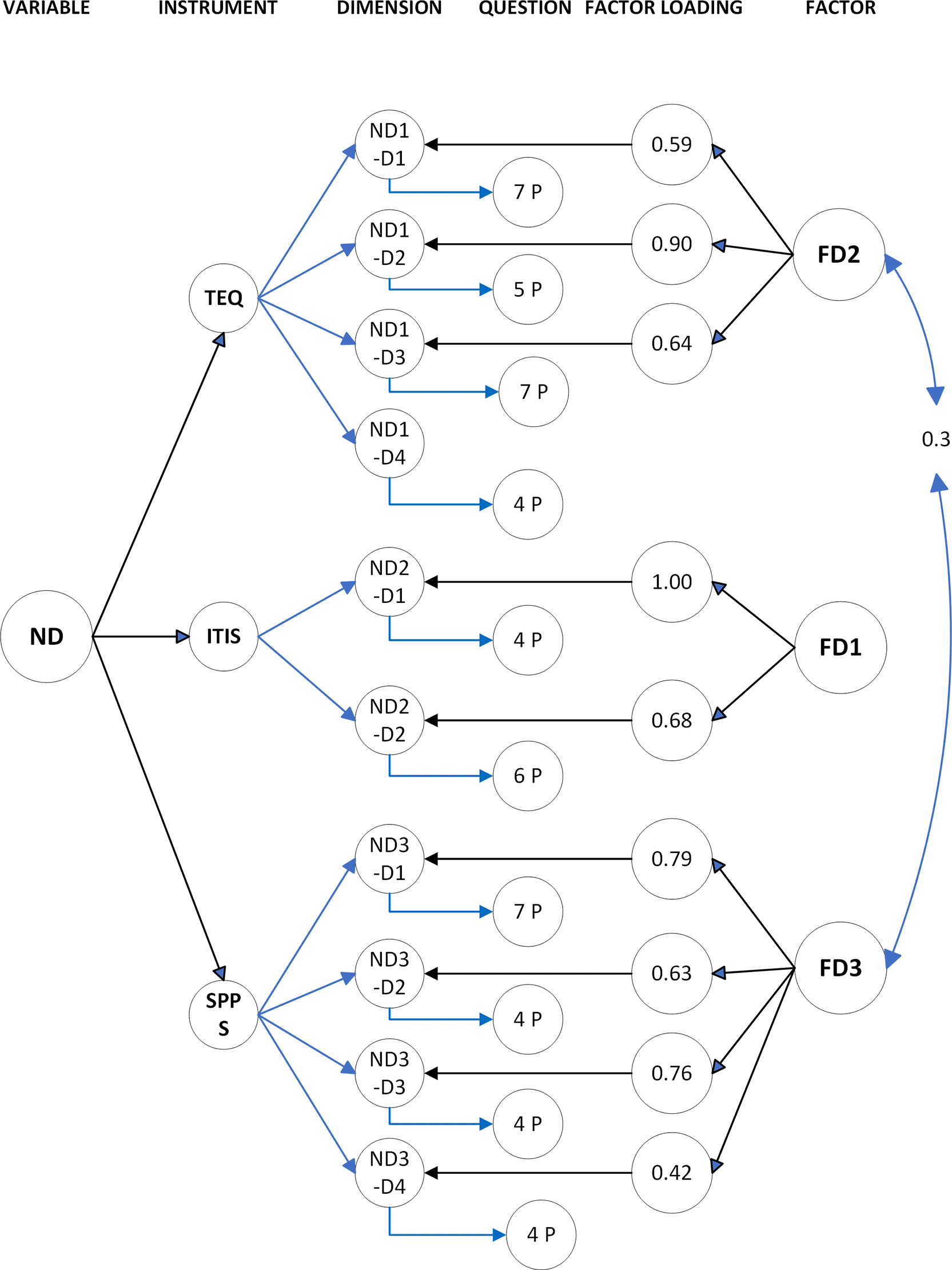
The diagram shows the factor loadings (λ) obtained in the EFA. FD1 = Theories of intelligence; FD2 = Faculty expectations; FD3 = Perception of potential. Curved arrows indicate correlations between latent factors. ND = Faculty Level (from Spanish Nivel Docente).
The first factor, Theories of Intelligence (FD1), integrates Fixed View (ND2-D1) (λ = 1.00) and Malleable View (ND2-D2) (.68). Both dimensions, evaluated with the Implicit Theories of Intelligence Scale, reflect faculty beliefs regarding the student’s cognitive plasticity. The high loading of the Fixed View indicates that this dimension centrally defines the construct.
The second factor, Faculty Expectations (FD2), groups the dimensions of the Teacher Expectation Questionnaire: Emotional Climate (ND1-D1) (.59), Feedback (ND1-D2) (.90), and Level of Demand and Instruction (ND1-D3) (.64). These dimensions evidence that expectations are operationalized in the creation of an affective environment, the quality of feedback, and academic rigor.
The third factor, Perception of Student Potential (FD3), derived from the Student Potential Perception Scale, includes Potential in the Classroom (ND3-D1) (.79), Learning Difficulties (ND3-D2) (.63), and Inappropriate Behavior (ND3-D3) (.76). The lowest loading was observed in Socioemotional Skills (ND3-D4) (.42). These associations indicate that faculty judgment is a multidimensional construction encompassing positive attributes and perceived deficits.
Finally, the Response Opportunities (ND1-D4) dimension was excluded from the model due to presenting an insufficient loading (below .40 on all retained factors).
Figure 5 details the factorial structure of the student level, identifying three conceptual factors that explain student perception regarding the Pygmalion effect in the university context.
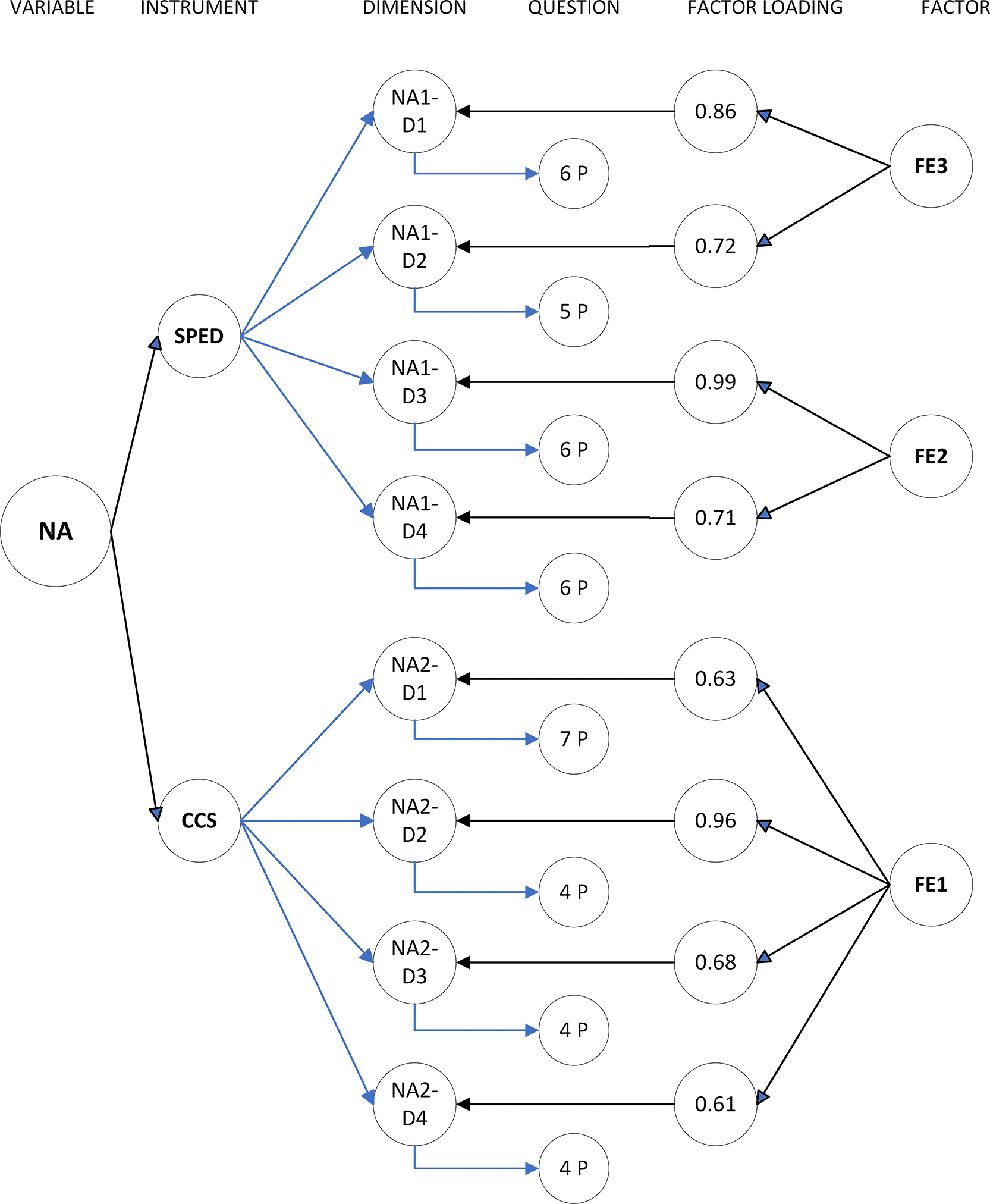
Factor loadings (λ) are presented on the unidirectional arrows. FE1 = Classroom Climate; FE2 = Negative Interactions; FE3 = Faculty Expectations. NA = Student Level (from Spanish Nivel Alumno).
The first factor, Classroom Climate (FE1), groups the dimensions of the Classroom Climate Scale. The Faculty-student interactions dimension (.96) acts as the principal component, followed by Peer relationships (.68), Physical environment (.63), and Faculty orientation toward learning (.61). This reflects high structural cohesion, suggesting that the pedagogical relationship is the core that defines the student’s global perception of the environment.
The second factor, Negative Interactions (FE2), integrates Avoidance of negative interactions (NA1-D3) (.99) and Lack of recognition or praise (NA1-D4) (.71). These dimensions describe a pattern of emotional distancing and absence of faculty encouragement.
The third factor, Faculty Expectations (FE3), is composed of Promotion of student participation and involvement (NA1-D1) (.86) and Personal consideration toward the student (.72). This construct reflects the support, trust, and motivation that the faculty member projects.
Based on the analysis of the maximum loadings (.96 for interaction and .99 for avoidance), it is evidenced that behavioral and affective components are the central markers of the student experience.
The relationship between faculty- and student-level factors and academic achievement is fundamental to understanding how perceptions and beliefs influence student performance. Regression analysis allows for the estimation of the specific weight of each identified factor.
To analyze the joint effects, a model with six variables was initially fitted ( Table 1). However, preliminary multicollinearity analysis revealed significant statistical redundancy among the faculty-level factors. Furthermore, substantial shared variance was evidenced between Theories of Intelligence (FD1) and Perception of Potential (FD3) with Faculty Expectations (FD2). This suggests that explicit expectations (FD2) act as the integrating construct that crystallizes underlying beliefs. Consequently, considering model parsimony and estimation stability, FD2 was retained as the main predictor.
| Variable | Coefficient (B) | Standard error | t | p |
|---|---|---|---|---|
| (Intercept) | 0.08 | 1.22 | 0.06 | 0.95 |
| Student Level (NA) | ||||
| FE1 Classroom Climate | 0.1 | 0.05 | 2.22 | .027* |
| FE2 Negative Interactions | 0.09 | 0.05 | 1.67 | 0.095 |
| FE3 Perceived Expectations | 0.15 | 0.07 | 2.07 | .039* |
| Faculty Level (ND) | ||||
| FD2 Faculty Expectations | 1.18 | 0.22 | 5.31 | < .001*** |
Table 2 presents the fit of the hierarchical multilevel model. At Level 1 (Student), it is observed that FE1 Classroom Climate has a positive and significant effect (B = 0.10; p < .05), implying that as the perception of the environment improves, average performance increases. FE2 Negative Interactions shows a positive coefficient (B = 0.09), although its significance level (p = .092) suggests a marginal effect. Regarding FE3 Student-Perceived Faculty Expectations (p = .055) results indicate a favorable positive trend.
| Fixed effects | Coefficient (B) | Robust SE | t | p |
|---|---|---|---|---|
| (Intercept) | 0.08 | 1.49 | 0.05 | 0.959 |
| Level 1: Student | ||||
| FE1 Classroom Climate | 0.1 | 0.05 | 2.04 | .041* |
| FE2 Negative Interactions | 0.09 | 0.05 | 1.69 | 0.092 |
| FE3 Perceived Expectations | 0.15 | 0.08 | 1.92 | 0.055 |
| Level 2: Faculty | ||||
| FD2 Faculty Expectations | 1.18 | 0.26 | 4.5 | < .001*** |
At the Faculty Level, FD2 Faculty Expectations presents a strong coefficient (B = 1.18; p < .001). This indicates that faculty expectations constitute the most relevant predictor of academic achievement, surpassing individual variables. This finding provides solid evidence of the Pygmalion effect in university environments.
This allows for generating the equation:
Where:
: estimated academic average of student i with faculty member j.
: global model intercept.
: perceived classroom climate (NA).
: negative interactions (NA).
: perceived expectations (NA).
: faculty expectations (ND).
: residual random error.
The coefficient associated with FE1 (0.10) indicates that for each unit increase in positive climate perception, a 0.10-point increase in the average is expected. The coefficient corresponding to FD2 (1.18) suggests that a one-unit increase in faculty expectations is associated with a 1.18-point increase in the group’s average academic achievement. This effect was statistically significant (p < .001), conferring high inferential robustness.
The present research, explanatory in design and utilizing a quantitative approach, allowed for analyzing the manifestation of the Pygmalion effect in the university context through a multilevel model, integrating faculty and student perceptions. The Pygmalion effect, understood as the influence expectations exert on performance, was operationalized using five validated psychometric instruments (TEQ, ITIS, SPPS, SPED, and CCS), with adequate indicators of content validity (Aiken’s V > 0.85) and internal reliability (Cronbach’s α > 0.79). The exploratory factor analysis allowed for identifying three structural factors at both the faculty level (ND) and the student level (NA), explaining 59.20% and 69.23% of the total variance, respectively.
Classroom climate constitutes an essential structural component of the school environment, with direct implications for the academic, emotional, and social development of the university student body. Regarding this, Van der Sijde and Tomic (1992) point out that faculty behavior significantly impacts students’ climatic perception. For their part, Wikman et al. (2024) indicate that this psychosocial space is one of the main contexts for development and well-being protection. This is corroborated by the results of this study, where the Classroom Climate factor (FE1) had a significant positive effect on academic achievement (B = 0.10; p = .041), being consistent with Ramírez Hernández et al. (2024), who highlight classroom climate, along with eudaimonic well-being, in explaining a large part of student engagement.
These findings have relevant clinical implications from a public health and university well-being perspective. The confirmation that classroom climate predicts academic achievement suggests that the pedagogical environment acts as a social determinant of mental health. A growing psychosocial risk factor caused by an inadequate classroom climate or low expectations not only depresses academic achievement but can also be capable of exacerbating anxiety and stress conditions. Therefore, faculty interventions should not deal only with didactic strategies, but must contemplate mental health-promoting mechanisms that diminish student burnout.
Negative Interactions (FE2) prove relevant, as empirical evidence demonstrates. This factor describes the absence of recognition and emotional support, being associated with an affectively impoverished environment that may limit or reduce performance. Although its statistical effect was lower (B = 0.09; p = .092), its latent impact suggests important risks. Hafen et al. (2015) warn that negative faculty perceptions toward disruptive students are persistent; furthermore, Timmermans and Rubie-Davies (2023) point out that disadvantaged groups are susceptible to these effects to a greater extent. The absence of praise generates frustration and deviant behaviors, which reinforces the importance of mitigating these interactions (Letuma, 2025).
A favorable trend toward achievement was observed (B = 0.15; p = .055) regarding Perceived Faculty Expectations (FE3). Meichenbaum et al. (1969) and Karabenick (1994) demonstrated that induced expectations and perceived support foster motivation and capability, being consistent with the findings of this study. For their part, Yusupova et al. (2022) state that these expectations can be influenced by prior performance, creating a feedback loop.
Regarding the faculty level, Theories of Intelligence (FD1) showed that the fixed view had a dominant loading (λ = 1.00). As Tao et al. (2021) point out, this is critical, as a fixed view diminishes faculty motivation to intervene pedagogically. Conversely, Zhang and He (2025) indicate that the belief that intelligence can be developed (malleable view) is associated with better outcomes, especially in favorable environments. Additionally, Perception of Potential (FD3)—which explains 30.08% of the variance in the EFA—correlated significantly with this malleable view ( ; p < .001). Although FD3 was excluded from the predictive model due to collinearity, authors such as Alsultan et al. (2024), Camiel et al. (2017), and Loucif et al. (2020) suggest that faculty members with growth beliefs tend to better personalize academic trajectories and value student capabilities.
Among the distinct factors analyzed, Faculty Expectations (FD2) stood out due to its predictive robustness regarding academic achievement (B = 1.18; p < .001), surpassing the influence of student perceptions. Regarding this, Brophy (1983), Rubie-Davies et al. (2006), and Wang et al. (2018) corroborate that faculty beliefs directly impact educational attainment. Furthermore, the strong correlation between emotional climate, feedback, and expectations ( ) suggests that high expectations do not operate in a vacuum, but rather in supportive and challenging pedagogical environments.
A key question is whether these expectations operate unconsciously. The results suggest that this occurs, at least in part, insofar as they are influenced by underlying beliefs regarding intelligence and manifest in concrete faculty practices such as emotional tone and feedback quality. Likewise, results indicate that it is not strictly necessary for the student to be conscious of these expectations for the Pygmalion effect to occur; faculty attitude (FD2) proved to be more determinant than student perception (FE3). Consequently, the effect can happen provided the faculty member acts coherently based on their positive expectations.
This study supports the formulation of proposals at three levels from an applied perspective: a) In faculty training, recommending the inclusion of content on biases and non-explicit beliefs. b) In pedagogical interventions, seeking to enhance positive recognition and avoid negative interactions. c) In institutional policies, suggesting the design of monitoring tools that evaluate faculty expectations as early indicators of academic risk.
It must be considered that this study has certain limitations that should be recognized for an adequate interpretation of the findings. Given it is a cross-sectional design, establishing strict causal relationships is not possible; although regression models suggest directionality, bidirectionality cannot be ruled out. The use of self-report measures may entail social desirability biases. Therefore, future lines of research should incorporate direct observational measures of classroom interaction and longitudinal designs that evaluate the sustainability of the Pygmalion effect throughout the university trajectory.
Regarding the multilevel structure of the design, it is important to note that the number of Level 2 units (n = 30 faculty members) is somewhat below the sample sizes typically recommended for obtaining reliable and stable parameter estimates at the group level in multilevel models. Although this does not invalidate the overall findings —since the Level 1 student sample is robust and the Level 2 estimates are consistent with theoretical expectations— readers should interpret the faculty-level coefficients with appropriate caution, and future studies in larger institutional contexts would strengthen the generalizability of these results. Additionally, although the effects associated with Negative Interactions (FE2; p = .092) and Student-Perceived Faculty Expectations (FE3; p = .055) did not reach conventional levels of statistical significance (p < .05), these trends are theoretically meaningful and consistent with an extensive body of research linking affective environments and perceived support to academic achievement (Hafen et al., 2015; Meichenbaum et al., 1969; Timmermans & Rubie-Davies, 2023). Their inclusion in the model is therefore justified on theoretical grounds, and they should be interpreted as preliminary evidence warranting replication rather than null findings.
However, these methodological limitations do not detract validity from the evidence presented, as it constitutes a robust and necessary empirical contribution in the Latin American university context. This justifies the implementation of pedagogical strategies focused on faculty expectation management.
The present research allowed for modeling the latent structure of the Pygmalion effect in higher education, identifying two hierarchical levels of influence. At the Student Level, three dimensions were identified: Classroom Climate (FE1), Negative Interactions (FE2), and Perceived Expectations (FE3); while at the Faculty Level, Faculty Expectations (FD2), Implicit Theories (FD1), and Perception of Potential (FD3) were validated.
One of the study’s most relevant findings is the primacy of Faculty Expectations (FD2) as the most robust determinant of academic achievement, significantly surpassing student perception variables. Thus, it is empirically confirmed that the Pygmalion effect does not operate as an isolated belief in university contexts, but as a systemic construction where practices such as emotional climate, feedback, and level of demand interact to shape a learning environment that conditions achievement. The model suggests that when practices are coherently articulated by the faculty member, a cumulative effect is produced that enhances group performance.
A theoretical and statistical connection between faculty beliefs and their pedagogical judgment was satisfactorily established. Professors who tend to perceive greater potential in their students are those who hold a malleable or incremental view of intelligence. On the other hand, at the student level, it was evidenced that classroom climate acts as a protective and stimulating factor; however, its impact depends largely on faculty expectations. This validates the multilevel nature of the phenomenon.
It is imperative to implement institutional policies that intervene in classroom culture, restructuring faculty beliefs and attitudes through targeted professional development, thus transcending the traditional approach of technical training. These interventions—aimed at raising faculty expectations—would have a multiplier effect on educational quality, even more so in the first semesters of training, as this is a critical stage where these expectations possess greater academic transformational capacity.
The study was conducted in accordance with the Declaration of Helsinki and approved by the Research Ethics Committee of the Universidad Técnica del Norte (Protocol code: UTN-FECYT-CEI-2025-003-C; Date of approval: 13 January 2025). Written informed consent was obtained from all subjects involved in the study via electronic forms to participate and for the use of their anonymized data for research purposes. All participating students were legally adults (18 years or older) at the time of data collection. Therefore, no minors were involved in this study and no guardian consent was required.
| Views | Downloads | |
|---|---|---|
| F1000Research | - | - |
|
PubMed Central
Data from PMC are received and updated monthly.
|
- | - |
Provide sufficient details of any financial or non-financial competing interests to enable users to assess whether your comments might lead a reasonable person to question your impartiality. Consider the following examples, but note that this is not an exhaustive list:
Sign up for content alerts and receive a weekly or monthly email with all newly published articles
Already registered? Sign in
The email address should be the one you originally registered with F1000.
You registered with F1000 via Google, so we cannot reset your password.
To sign in, please click here.
If you still need help with your Google account password, please click here.
You registered with F1000 via Facebook, so we cannot reset your password.
To sign in, please click here.
If you still need help with your Facebook account password, please click here.
If your email address is registered with us, we will email you instructions to reset your password.
If you think you should have received this email but it has not arrived, please check your spam filters and/or contact for further assistance.

Comments on this article Comments (0)