Keywords
Gait, Rehabilitation, Stroke, Stroke rehabilitation, Patient discharge

This article is included in the Health Services gateway.
Gait, Rehabilitation, Stroke, Stroke rehabilitation, Patient discharge
Stroke is a major global health concern, ranking as the second leading cause of death and the third leading cause of death and disability combined (as expressed by disability-adjusted life-years [DALYs] lost) in the world. The burden of stroke has increased by 70% in the last three decades, with a global incidence of 13.8 million and an annual death toll of 5.5 million.1,2 In 2019, stroke accounted for 5.7% of the global disease burden.1 In Finland, stroke is the fourth leading cause of DALYs, with an incidence of 182 per 100,000 people and a prevalence of 1686 per 100,000 people in 2019.3 The economic burden of stroke is substantial, amounting to €745 billion globally (1.12% of the global gross domestic product, GDP). In Finland, the healthcare cost of stroke in 2017 was €640 million (3.1% of total healthcare costs), with a total DALYs cost of €1.1 milliard (0.5% of the GDP).4 These costs include immediate medical care, hospitalization, medications, and rehabilitation services, emphasizing the importance of post-stroke rehabilitation in achieving better functional outcomes and reducing long-term disability.
Motor impairment of the lower extremities is one of the most important determinants of long-term disability.5 Conventional rehabilitation of stroke includes physical therapy among speech and occupational therapies. Part of physical therapy is gait rehabilitation with the guidance of physiotherapists and sometimes the use of a treadmill. Compared to conventional rehabilitation recent literature highlights the positive impact of robot-assisted gait training (RAGT) on functional outcomes in patients with severe stroke.6 RAGT has demonstrated effectiveness in improving gait parameters, including walking speed, step length, and symmetry.7 Furthermore, this technology provides the therapist with objective measures of the patient’s performance during the therapy and enables targeted intensive, task-specific training in a controlled environment to individual patient needs. RAGT is a more effective mode of rehabilitation for certain patient groups, e.g., individuals with severe to moderate impairments in walking abilities and functional mobility than conventional approaches.4,6 However, other studies, including the LEAPS trial by Duncan et al. and meta-analyses by Merholz et al. and Yamamoto et al., have questioned the superiority of RAGT compared to conventional training.8–10 These mixed findings highlight the need to understand better which patient groups may benefit most from RAGT. Therefore, more research is needed to define the effectivity of RAGT.11
Although RAGT therapy is used increasingly, there is still a knowledge gap between RAGT's efficacy, i.e., performance under ideal and controlled circumstances and its effectiveness, i.e., how well it works in normal clinical settings. These data are important as the economic costs for post-stroke care are substantial.4
Real-world data (RWD) generates additional evidence to that found in clinical research settings. Robust RWD can bridge the gap between research and clinical practice to better understand the clinical profile of patients as well as the value of using different treatment options. With this study, the aim was to increase understanding of RAGT for stroke patients based on retrospectively collected RWD from Soite, one of the 21 wellbeing services counties of Finland. The secondary aim was to describe how RAGT was administered in a real-world hospital-based setting as well as to extrapolate the potential benefits of rehabilitation robots in broader healthcare contexts in Soite.
This observational retrospective study was conducted in Finland in the Wellbeing Services County of Central Ostrobothnia (Soite). The structured data was collected from patients who had a stroke between 2017 and 2022 and were treated in Soite’s hospital, focusing on the time of RAGT from late 2018 to 2022 (Table 1). Patients were excluded if their clinical condition rendered robotic therapy unsafe or unbeneficial. Otherwise, all patients meeting the inclusion criteria were eligible. Additionally, information from the patient’s medical history was collected from the system from 2010 onwards. Due to the registry-based nature of the study, informed consent was not required from the subjects (Act on the Secondary Use of Health and Social Data (552/2019)). The study was granted a research permit approved by the Wellbeing Services County of Central Ostrobothnia on 9.1.2023. This study was not preregistered.
Data were gathered in the spring of 2023 retrospectively from electronic medical record (EMR) systems (Lifecare®, Tietoevry Oy, Espoo, Finland), Functional Independence Measure (FIM) score registry (FIM®-järjestelmä, FCG, Finnish Consulting Group Oy, Helsinki, Finland), and from the rehabilitation robot (Lokomat®, Hocoma AG, Volketswil, Switzerland) that was used at the Kokkola Central Hospital located in the Soite wellbeing services county.
The structured EMR data included data on inpatient days, procedures, emergency department (ED) visits, physician, nurse, physiotherapist and other healthcare professional visits and consultations over the phone, diagnostics as well as sex, age, height, weight, and municipality of residence. The severity of the stroke was evaluated from the first recorded measurement, baseline, of the FIM score after the stroke had occurred. The patients were grouped into two groups (mild to moderate, and severe) according to the FIM score severity of the symptoms caused by the stroke, the FIM score can range between 18 = complete dependence/total assistance, and 126 = complete independence. Mild to moderate group scores were 65 or above and severe group scores were below 65. The patient data measured by the robot, and extracted from it, included distance in meters and number of steps, duration of the session, walking speed, body weight support, and guidance force. Body weight support is decreasing the amount of weight the patient needs to support with their lower extremities, and guidance force is the extent to which the patient’s movements are guided by the orthoses of the robot while walking.12 EMR data, the patient data extracted from the robot, and the FIM-score registry had been registered with the patient's unique identity code. The data were pseudonymized. The gathering, linking, and pseudonymising of data were done by Soite´s internal IT service.
The study includes adult patients who experienced their first stroke between January 1, 2017, and December 31, 2022. Specifically, the study focuses on individuals who received robotic rehabilitation with the Lokomat® rehabilitation robot at Kokkola Central Hospital from late 2018 onwards, encompassing the years 2019–2022. The study population inclusion criteria were as follows: 1) stroke diagnosis [International Classification of Diseases 10th Revision (ICD-10) diagnostic codes I60-I68] recorded for the first time between January 1, 2017 and December 31, 2022, 2) acute hospitalisation (less than 90 days from stroke onset) in Soite’s hospital, 3) at least one RAGT session during the acute hospitalisation, and 4) municipality of residence in the Soite wellbeing services county. RAGT sessions were started according to the evaluation of the physiotherapists based on the patient’s general condition and the attending physician permission to start rehabilitation.
The Lokomat® is a technologically advanced RAGT device used in neurological rehabilitation centres to complement conventional therapies. Over two decades ago, it was developed to enhance the rehabilitation of people with spinal cord injuries but nowadays it is used in numerous other conditions including stroke.13 Lokomat® rehabilitation robot is used to automate motor activities. It consists of a dynamic body weight supporting system used in conjunction with integrated exoskeleton robotic orthosis and treadmill which replicates the lower limb biomechanics of walking on the ground. Lokomat® measures and records information during the therapy sessions and that information was utilised in the study. Walking speed and guidance force were initially determined by physiotherapists based on each patient's clinical presentation. Adjustments were made dynamically across sessions to match improvements in strength, coordination, and tolerance. Speed was gradually increased, and guidance force was asymmetrically tailored to support the hemiplegic side. In addition to the aforementioned parameters, the Lokomat® measures and records biofeedback from the hip and knee in the stance and swing phases of the gait.
Data were entered and analysed with R (version 4.3.0, R Core Team (2022). URL (https://www.R-project.org/). Normality was tested using Shapiro-Wilk’s normality test. Data are expressed as mean (SD) and median (IQRs) for continuous normally and non-normally distributed variables, respectively, and frequencies along with the number of cases (percentage) for categorical variables. The change over time in robot rehabilitation parameters (steps, duration, average body weight support %-average) was analysed using simple linear regression with the rehabilitation parameter as a dependent variable and the number of sessions as an independent variable. Progression of parameters was shown with regression lines for individual patients (with thin lines) and for all the patients with a 95% confidence interval (CI) (with thick lines). The significance of the slope was tested using a t-test. A two-sided p-value <0.05 was considered statistically significant.
The results entail a description of patient characteristics (Table 2), information on RAGT administration (Table 3), development during the RAGT rehabilitation period in gait characteristics (Figure 1) and FIM scores, and data on where the patients were discharged from the hospitalisation period.
| Patient characteristics | All | Mild to moderate, baseline FIM score ≥ 65 | Severe, baseline FIM score < 65 | Baseline FIM score not available |
|---|---|---|---|---|
| Number of patients | 31 | 7 | 17 | 7 |
| Gender | ||||
| Female | 12 (39 %) | <5 | 9 (53 %) | <5 |
| Male | 19 (61 %) | ≥5 | 8 (47 %) | ≥5 |
| Age, years | 70 (62–80) | 62 (56–74) | 73 (63–80) | 69 (60–75) |
| Diagnosis group | ||||
| I63, Cerebral infarction | 22 (71 %) | ≥5 | 12 (71 %) | ≥5 |
| Other | 9 (29 %) | <5 | 5 (29 %) | <5 |
| Number of wards per patienta | ||||
| 1 | 23 (74 %) | ≥5 | 11 (65 %) | ≥5 |
| >1 | 8 (26 %) | <5 | 6 (35 %) | <5 |
| Number of RAGT sessions, sessions/patient | 7 (3–15) | 3 (2–15) | 9 (3–14) | 3 (2–13) |
| Frequency of RAGT sessions, sessions/week/patient | 2.0 (1.1–2.7) | 2.5 (1.3–4.4) | 1.8 (1.1–2.3) | 2.0 (1.5–2.7) |
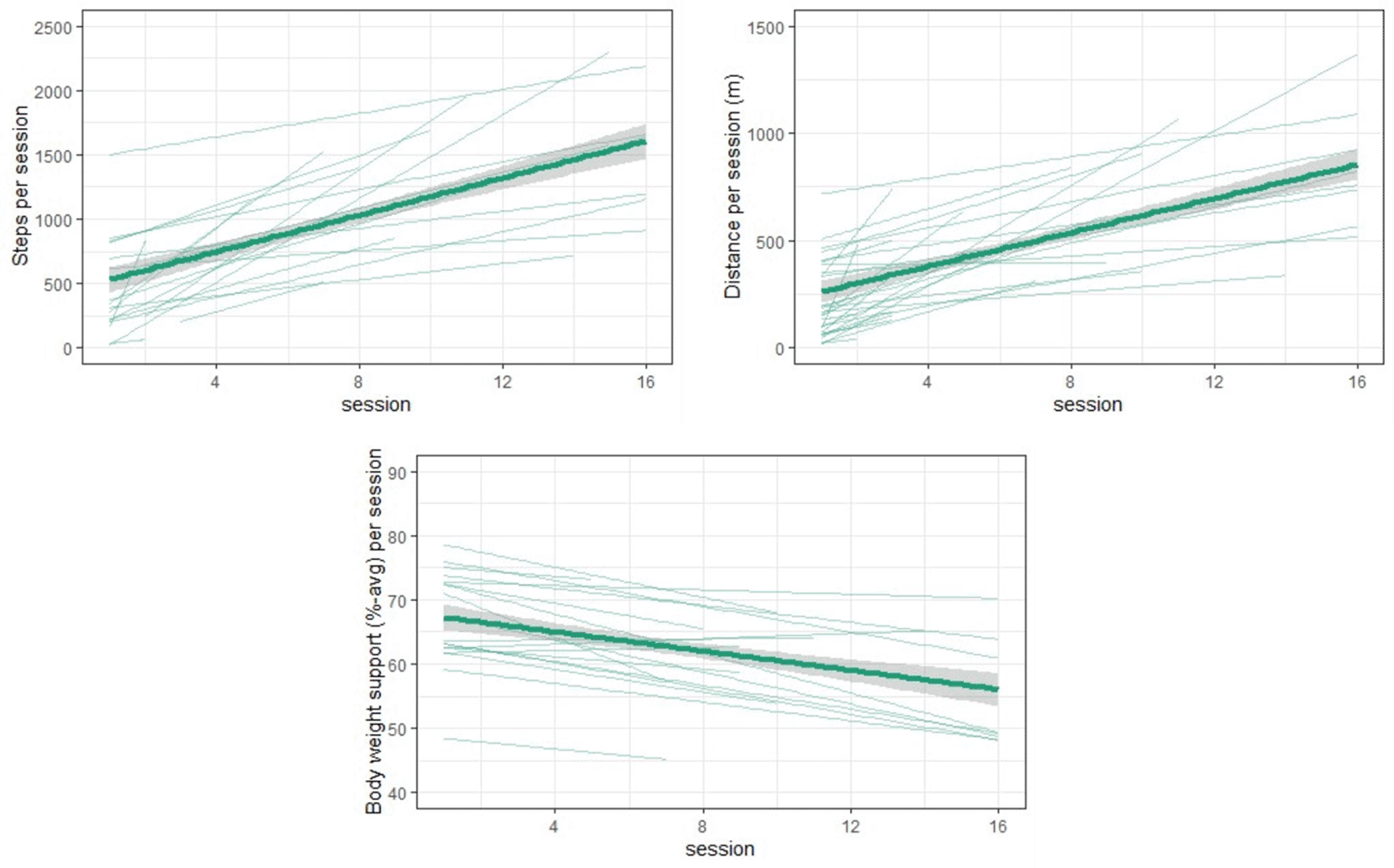
Legend: Thin lines present regression lines for individual patients and thick lines median with a 95% confidence interval for all the patients. The number of patients was 24, 31 and 18 for step count, walking distance and body weight support %-average, respectively.
A total of 31 patients met all the inclusion criteria. Variations in the number of patients analysed per parameter are due to incomplete data or early therapy termination. Twenty-four (77%) of the 31 patients had been through FIM evaluation at the beginning and at the end of their RAGT period and were assigned into groups according to the severity. One in three (eight patients, 33%) of the patients who had been through FIM evaluation used wheelchair as their main aid for locomotion before the rehabilitation.
The progression of step count, walking distance and body weight support %-average over the course of rehabilitation of the patients is shown in Figure 1 for all the patients (thick line with 95% CI) and individual patients (thin lines). Step count increased significantly during RAGT sessions from 563 steps (95% CI 466–661) in the first session to 1534 steps (95% CI 1435–1633) in the 16th session (Figure 1). Consequently, the walking distance increased from 305 meters (95% CI 252–357) in the first session to 783 meters (95% CI 725–842) in the 16th session (P<0.0001). Body weight support %-average decreased during RAGT sessions from 67%-average (95% CI 65–69) in the first session to 56%-average (95% CI 54–57) in the 16th session.
Twenty-four (77%) of the 31 patients who received RAGT had their FIM evaluation at the beginning of their rehabilitation and at the end of their rehabilitation. The total scores improved by median of 39 (IQR 26–50) points. The cognitive scores improved by 2 (IQR 0–6) points and the motor scores by 35 (IQR 27–48) points. The total FIM scores at the beginning of the rehabilitation were median of 53 (IQR 37–70) points, while cognitive scores were 30 (IQR 20–33) and motor scores 26 (IQR 19–37). At the end of rehabilitation, the total FIM scores were median of 94 (IQR 74–110) points meanwhile cognitive scores were 31 (IQR 26–33) points and motor scores 68 (IQR 45–77) points.
Twenty-one (68%) of the 31 patients who received RAGT were discharged from the hospital to home, and ten to assisted living facilities. The majority (76%, n = 16) of those discharged home was discharged independently (or with the support of family members) without the assistance of home care. Half (53%, n = 9) of the 17 severe stroke patients were discharged to home, and six (67%) of them did not need the assistance of home care.
In the past two decades, robot-assisted rehabilitation after stroke has been studied as a promising approach associated with improved functional outcomes and quality of life for individuals recovering from stroke. Our study undertook a thorough evaluation of the effectiveness of RAGT by integrating multiple key findings.
Firstly, step count and walking distance increased over the course of rehabilitation, while body weight support decreased, suggesting improvements in mobility and ambulation among patients receiving RAGT.
This tangible progress is particularly significant in the context of stroke recovery, where the restoration of ambulatory function is a pivotal goal. This finding is consistent with previous research that has shown that RAGT rehabilitation can improve substantially walking ability in people with stroke.14,15 Stroke survivors prefer improvements in their walking distance rather than their walking speed.16 In consistent to our data, a recent study has shown that intensive walking therapy can increase the step count during physical therapy substantially. In Klassen et al. study, the mean step count in the conventional rehabilitation was 580 steps per session, whereas in the intensive therapy group mean step count was over three-fold higher. Moreover, walking endurance benefits achieved were retained over the first year poststroke.17 Especially, RAGT in combination with conventional rehabilitation has shown better results than conventional rehabilitation on its own.14,18
FIM scores improved clinically significantly during the rehabilitation period in patients receiving RAGT. According to the literature the minimal clinically important difference (MCID) for FIM score is 22 (total FIM), 17 (motor FIM), and 3 (cognitive FIM).19 The improvements observed in this study, 39 points for the total FIM score and 35 points for the motor FIM score, were two-fold compared to the MCID. The cognitive FIM change was a little less than the proposed MCID. This is most likely due to higher cognitive scores at the baseline measurement which can be a reason for changes that are below MCID.19 Sufficient motor and cognitive functions are important measures of functional independence, and our findings suggest that RAGT may be associated with substantially improved ability to perform activities of daily living. Other studies have also found that RAGT is effective in improving e.g., FIM and other scores that measure gait independence.20,21 Consistent with our data, Peters et al. found that the high-intensity gait training may improve participants’ cognitive function modestly more effectively than the usual care.22
We found that guidance forces were applied asymmetrically between limbs, often providing more support to the hemiplegic side. This was an intentional clinical strategy to encourage symmetry and assist the impaired side while minimizing compensatory reliance on the unaffected side. This is supported by the data indicating that stroke is more common in the left hemisphere, and thus, more guidance force is needed for the right lower limb.23–25 This is likely because the left hemisphere is responsible for motor control, and damage to the left hemisphere can lead to more severe walking impairments. van Vliet et al have highlighted the importance of targeting rehabilitation interventions more specifically to individual stroke patients.26 RAGT is a preferred model as it allows this kind of rehabilitation tailored to the individual needs.
Notably, a large proportion of patients with severe stroke receiving RAGT were discharged from hospital to home rather than to assisted living facilities. This outcome may reflect a potential cost-effectiveness of RAGT and the association between RAGT and increased patient independence and self-sufficiency, although causal inference cannot be drawn due to the study design. One study has found that of all stroke patients 78% were discharged to home and 22% to assisted living facilities.27 That study had included also patients with mild strokes and therefore the likelihood of being discharged to assisted living facilities was even lower compared to our study.27
In future more research, especially from randomized clinical trials, is needed to define the effectivity of RAGT. Robust RWD can bridge the gap between research and clinical practice to better understand the clinical profile of patients as well as the value of using different treatment options. Future research should investigate the long-term effects of RAGT on walking ability and function in people with stroke. Additionally, it is recommended that future real-world evidence research should include a bigger patient population to investigate the effectiveness of RAGT compared to other rehabilitation methods for stroke patients. A larger and more diverse patient population should be considered to thoroughly evaluate the comparative effectiveness of RAGT in contrast to alternative rehabilitation methods for individuals recovering from stroke. Additionally, future research employing a randomized controlled trial with a control group is necessary to confirm the observed trends and establish definitive causal relationships.
It is essential to acknowledge certain limitations inherent in our study. Firstly, the number of patients with stroke receiving RAGT was notably small, which may impact the generalizability of our findings to a broader population. Additionally, due to retrospective data limitations, stroke subtype (ischemic vs haemorrhagic), NIHSS scores, cognitive assessments, and comorbidities were not consistently recorded or able to be retrieved from the EMR systems. Future studies should aim to include this information to better characterize treatment response and subgroup differences.
The average session duration in this study was shorter than the 45–60 minutes commonly recommended in the literature. This reflects real-world clinical constraints, such as patient fatigue, scheduling limitations, and availability of trained staff. Furthermore, patients in the subacute phase may tolerate only shorter durations in body weight support level exceeded 50%, which is above the typically recommended threshold. This was necessary due to the severity of motor impairment and early stage of recovery in many patients. Although higher support levels may reduce active muscle effort, they were essential to ensure patient safety and facilitate consistent stepping patterns early in therapy.
Furthermore, our study exclusively draws data from one wellbeing services county in Finland, potentially limiting the broader applicability of our results to a more diverse range of settings or regions. We also observed substantial variability in the number of RAGT sessions per patient (ranging from 2 to 15). This likely reflects clinical judgment, individual tolerance, and recovery trajectory. Future research could examine whether greater session frequency correlates with improved outcomes in a dose-response model.
To thoroughly assess the effectiveness of RAGT, it would be valuable to compare outcomes with a control group or baseline measures to isolate the impact of the robotic intervention beyond typical recovery. Additionally, analysing patient characteristics and concurrent interventions can offer deeper insights into how RAGT influences post-stroke rehabilitation outcomes. These factors should be considered when interpreting and applying the implications of our study findings. Additionally, session parameters such as speed, body weight support, and guidance force were determined dynamically by the therapist rather than a fixed algorithm. While this approach enhances patient individualization, it may limit reproducibility and generalizability of the findings.
In conclusion, our study has several important implications for the treatment of stroke patients. It suggests that early RAGT after stroke can improve walking ability, function, and discharge to home. These findings collectively advocate for the incorporation of RAGT into comprehensive stroke rehabilitation programs, paving the way for improved patient outcomes and post-stroke recovery trajectories.
According to Finnish legislation, registry-base studies require a research permit from the health authority who owns the registry (Act on the Secondary Use of Health and Social Data; 552/2019, Finland). Ethical approval from ethics committee is needed only for interventional studies (Medical Research Act; 488/1999, Finland). Therefore, ethical approval was not required for the study. The study was granted a research permit approved by the Wellbeing Services County of Central Ostrobothnia on 9.1.2023. They also waived the need for ethical approval and informed consent, given the retrospective register-based study design. We confirm that all methods were carried out in accordance with relevant guidelines and regulations.
| Views | Downloads | |
|---|---|---|
| F1000Research | - | - |
|
PubMed Central
Data from PMC are received and updated monthly.
|
- | - |
Provide sufficient details of any financial or non-financial competing interests to enable users to assess whether your comments might lead a reasonable person to question your impartiality. Consider the following examples, but note that this is not an exhaustive list:
Sign up for content alerts and receive a weekly or monthly email with all newly published articles
Already registered? Sign in
The email address should be the one you originally registered with F1000.
You registered with F1000 via Google, so we cannot reset your password.
To sign in, please click here.
If you still need help with your Google account password, please click here.
You registered with F1000 via Facebook, so we cannot reset your password.
To sign in, please click here.
If you still need help with your Facebook account password, please click here.
If your email address is registered with us, we will email you instructions to reset your password.
If you think you should have received this email but it has not arrived, please check your spam filters and/or contact for further assistance.

Comments on this article Comments (0)