Keywords
Financial, Inclusion, Electronic payment, Digital awareness, Ease of use

This article is included in the Fallujah Multidisciplinary Science and Innovation gateway.
Financial, Inclusion, Electronic payment, Digital awareness, Ease of use
In recent decades, there has been a radical transformation in the nature of financial services owing to technological advancement. Electronic payment systems have become one of the fundamental pillars in building an integrated digital economy. These systems serve as a driving force for achieving financial inclusion, which in turn is one of the Sustainable Development Goals (SDGs), as it contributes to enable individuals and institutions to access formal financial services in a convenient and secure manner.1 Numerous studies have emerged regarding electronic payment and financial inclusion for various reasons related to economic, technological, and social developments. Notably, several of these studies have been conducted as early as 2000s. In 2015,2 studied the relationship between digital financial services and financial inclusion in India, highlighting the importance of providing financial services to everyone, especially in rural areas. It showed that financial inclusion is crucial for economic growth, and banks should be supported in raising awareness and offering affordable financial services. It also indicated that the impact of electronic payments on financial inclusion is limited in the absence of trust and sufficient digital literacy. In 2016,3 The study on Sub-Saharan Africa has found that digital payment adoption boosts financial inclusion, especially when it is supported by trust-building and financial literacy campaigns4 presents a study on technology-driven financial innovation and its impact on financial inclusion. The study has concluded that individuals with higher levels of education and income have greater access to financial services, reflecting a clear positive correlation among educational attainment, income level, and financial inclusion in this context. In 2025, a study has been conducted by5 confirms that electronic payment effectively contributes to increase the number of people engaging with the formal financial system, facilitating transactions, and reducing costs-factors that enhance financial inclusion, particularly among rural populations.
As a result, it can be said that the majority of studies indicate a positive relationship between electronic payment and financial inclusion. However, some studies-particularly those using mediation analysis models have shown that psychological and behavioural factors such as trust and ease of use may not play a clear mediating role in all contexts. In Iraq, as the digital transformation in the banking sector accelerates, some banks such as Al-Rafidain Bank, have begun adopting and expanding electronic payment services, including smart cards, mobile applications, and digital wallets. Nevertheless, the actual impact of these services on broadening financial inclusion remains unclear, particularly in the light of challenges related to infrastructure; trust in technology, and weak digital financial literacy.6
Against this backdrop, this study aims at analysing the relationship between electronic payment and financial inclusion, with a focus on the mediating role of a set of important individual variables: trust, ease of use, and digital awareness. The literature suggests that these factors may either enhance or weaken the impact of using electronic payment on individuals’ behaviour toward formal financial services. To achieve this goal, the study has conducted the PROCESS Macro tool in SPSS to analyse the mediation model and tests the relationships among variables, using field data collected from customers of Al-Rafidain Bank in Iraq.
The study adopts a descriptive analytical approach. Data have been collected using a questionnaire directed at customers of Al-Rafidain Bank. The PROCESS Macro tool within SPSS is used for data analysis and testing mediation models. Consequently, the research hypotheses consist of:
Trust has no significant effect on electronic payments.
Ease of use has no significant effect on electronic payment.
Digital awareness has no significant effect on electronic payment.
Electronic payment systems have no significant effect on financial inclusion.
Trust does not mediate the relationship between electronic payment and financial inclusion.
Ease of use does not mediate the relationship between electronic payment and financial inclusion.
Digital awareness does not mediate the relationship between electronic payment and financial inclusion.
The mediating variables have no indirect effect on financial inclusion.
The sample of study has been selected using a non-probability (accidental or convenience) sampling method, whereby an electronic questionnaire has been distributed via social media to collect data from participants. The number of participants in the study is 100, and they have been selected based on their availability and response to the questionnaire.
This sample represents a group of university students and employees from different backgrounds, who are easily accessible electronically. Although the sample is not statistically accurate and representative of the population as a whole, it provides useful preliminary indications of the study’s topic.
Although the study is trying to come up with a precise scientific methodology, there are some methodological limitations that should be taken into account when interpreting the results. One of the most common limitations, the small sample size, that has been avoided by expanding the distribution of the questionnaire electronically via a dedicated link, which allows access to a wider segment of the study population and helped improve the generalizability of the results. Moreover, there are some other limitations, including the adoption of a non-random sampling method, which may affect the sample’s full representation of the study population.
Furthermore, the study has used an analytical role of mediating variables in explaining the relationship between the independent and dependent variables. But the descriptive nature of the research design and the reliance on data collected over a short period of time prevents it from demonstrating definitive causal relationships between the variables. Therefore, the results have indicated the existence of correlations and potential mediation models, but they do not constitute conclusive evidence of causality.
Financial inclusion has recently gained an increasing attention across the globe, both developed and developing, due to its vital role in supporting economic and social stability. Technological advancements, particularly in software, have accelerated the pace of financial inclusion. Given the challenges facing many Arab countries, such as weak financial inclusion indicators and rising poverty and unemployment rates, it is crucial to focus on this issue as a key pillar for achieving comprehensive economic and social stability.
Financial inclusion has referred to the availability and use of all financial services for all segments of society through formal channels, such as bank accounts, payment and transfer services, insurance, and financing. It aims to protect consumer rights, encourage sound money management, and reduce reliance on informal and potentially unsafe financial systems. Financial inclusion seeks to expand access by improving both supply and demand.7 The term Financial Inclusion has only emerged in its modern sense in the late 20th century, but becomes formalized and structured in the early 21st century. International institutions have noted that large portions of the global population lack access to formal financial services. Bangladeshi economist Muhammad Yunus was among the first to implement financial inclusion practically through Grameen Bank in the 1970s. The bank focused on providing microloans to the poor without collateral, particularly women a pioneering model of financial inclusion. Later, institutions such as the UN, World Bank, and the World Economic Forum have adopted and expanded upon these ideas.8 There are efforts that are required to enhance financial inclusion focusing on Strengthening financial infrastructure, protecting financial service consumers, developing inclusive financial products, promoting financial education, and creating a financially literate society.7
Payment methods represent the ways individuals settle obligations or pay for goods and services. These have been evolved over time from barter systems, to cash, to modern electronic payment systems. Today, electronic payments include various forms such as credit and debit cards, smart cards, electronic checks, e-money, digital wallets, and electronic fund transfers.9 These systems operate through the internet using encrypted data to ensure secure, fast, and efficient financial transactions.10 Their key features include simplicity, clarity, speed, and security.9
As e-commerce has emerged as a key factor in modern transactions, the need for payment methods that are compatible with the digital nature of this type of trade has emerged.11
3.2.1 Types of electronic payment systems
Many electronic payment methods have emerged, representing some of the most prominent tools used to complete these commercial transactions, the most prominent of which are11:
1. Credit Cards:
Credit cards are one of the most widely used electronic payment methods, especially for online transactions. This category includes credit and debit cards, although credit cards are more widely used. Cards such as Visa and MasterCard are among the most popular, widely used for online purchases owing to their ease and speed of payment.
2. E-Wallets:
A type of prepaid account that stores the user’s financial data and allows them to make electronic payments with ease. Prominent examples of these wallets include PayPal, Google Pay, and Apple Pay.
An e-wallet works by opening a bank account and then downloading the bank’s wallet application onto their smartphone. Through this application, they can pay merchants, transfer funds to other e-wallets, receive funds, pay bills, and conduct cash transactions.
3. Electronic Money:
Electronic money is a modern form of money used for online transactions. It differs from traditional currencies in that it is entirely digital and does not have a physical presence.
Ernst & Young defines it as: “A set of protocols and digital signatures that enable electronic messages to replace traditional financial transactions.” Electronic money is thus a digital counterpart to paper or metal money.
4. Mobile Payment:
Payment via smartphone is one of the fastest-growing electronic payment methods, due to its ease of use and constant availability, facilitating purchases and direct payments without the need for cash or bank cards.
3.2.2 Relationship between financial inclusion and electronic payment
Electronic payment serves as a crucial tool in achieving financial inclusion, especially in societies with limited access to traditional banking services. It allows individuals and businesses—particularly marginalized groups—to access financial services via smart devices and mobile phones. This reduces the need for traditional banking, facilitates faster and more efficient transactions, lowers transaction costs, and increases transparency. These factors together promote financial inclusion by expanding access, simplifying transactions, supporting e-commerce, and enhancing trust in the financial system.7
3.2.3 Mediating variables between electronic payment and financial inclusion
Mediating variables play a supporting or inhibiting role in the relationship between electronic payment and financial inclusion. This research focuses on three key variables:
1. Customer Trust
Trust is the foundation of any relationship and exists when both parties believe in each other’s credibility. In banking, customer trust reflects confidence in the institution’s integrity and reliability, along with lower anxiety and greater comfort.12
2. Ease of Use
Electronic payments are generally easier and faster than traditional methods such as cash or checks. Online banking apps and digital wallets allow users to conduct transactions anytime and anywhere, improving daily convenience.13
3. Digital Awareness
Digital awareness involves understanding how digital technologies work and using them safely and responsibly. It includes knowledge of online security, digital literacy, and responsible digital behaviour. Enhancing digital awareness increases adoption and effective use of electronic payment systems.14
This section covers the empirical part of the study, which involves analysing the data collected via a structured questionnaire. The questionnaire is designed to assess the impact of transitioning to electronic payment on financial inclusion, while considering the influence of several mediating variables. The questionnaire is published electronically to obtain data from a sample consisting of a number of Rafidain Bank customers, who are chosen from among those dealing with the bank’s branches, in order to measure their opinions and experiences with electronic payment service the aim of obtaining quantitative data that can be analysed statistically. The number of respondents to the questionnaire is (100) customers. The data is analysed using the PROCESS Macro in SPSS, based on the nature of the data and the study model. The analysis aims to test the proposed hypotheses and determine the strength of the relationship between the independent variable (electronic payment systems) and the dependent variable (financial inclusion), while assessing the role of mediating variables in strengthening or weakening this relationship.
The following Table 1 presents a description of the characteristics of the sample used in data collection, including gender, age, educational level, and employment status:
1. Gender
The table shows that 60% of the sample is male, while 40% is female.
2. Age Group
The age distribution of participants indicates that the majority belongs to younger age groups. Specifically, 32% of participants are aged 25 and younger, while the largest percentage, 49%, are aged 26 to 35. This indicates that more than 80% of participants are aged 35 or younger, highlighting the demographics dominated by young people. In contrast, 17% of participants are aged 36 to 45, and only 2% are aged 46 or older.
3. Educational Level
The educational background of the respondents: Half of them (50%) hold a technical diploma, making it the most common educational level among the group surveyed. Meanwhile, 32% of participants hold a bachelor’s degree, it indicates that a large percentage of them have university qualifications. Additionally, 15% of participants reported having a high school diploma or less, it indicates an average representation of individuals with low formal education. Only a small minority, 3%, pursued postgraduate studies. This distribution suggests that the sample is predominantly composed of individuals with technical or university education, which may influence their perspectives, skills, and areas of expertise relevant to the study.
4. Employment Status
The distribution of employment status among participants shows a diversity of professional backgrounds. Government employees represent the largest segment, representing 33% of participants, followed closely by self-employed individuals, representing 31% of the sample. Unemployment constitutes 20% of the sample, indicating that a significant proportion of the sample is not currently employed in formal jobs. Private sector employees represent the smallest segment, representing only 16% of the total. This distribution suggests a greater skew in the labour force toward the public sector and self-employment, which may reflect economic conditions or preferences within the sample.
This section presents a descriptive overview of the study variables, including electronic payment, financial inclusion, and the mediating variables: customer trust, ease of use, and digital awareness, as shown in Table 2. It can be observed from Table 2 that the means of all variables range between 3.69 and 4.10, indicating that participants responses varied from moderate to high levels. This reflects a relatively positive tendency towards the statements related to these variables, based on the standard Likert five-point scale. Moreover, the standard deviations, ranging from 0.60 to 0.75, indicate low dispersion in participants’ responses, suggesting a relative homogeneity in their opinions. The coefficient of variation, ranging from 14.63% to 20.33%, further confirms this conclusion, reflecting a low to moderate degree of variability, which supports the reliability of the computed means for these variables.
4.2.1 Reliability test
To assess reliability, the questionnaire must be tested to ensure the validity and consistency of its elements. This is done by calculating the Reliability Coefficient.
4.2.2 Reliability coefficient
SPSS 27. As shown in Table 3 the overall alpha value is 91, which is considered excellent, since the statistically acceptable threshold is 0.60, and values between 0.70 and 0.90 are considered optimal (Al-Omari, 2018). Specifically, the Cronbach’s Alpha for the Electronic Payment variable is 0.80, and for Financial Inclusion, it is also 0.80, both high values. For the mediating variables, the coefficients are 0.76 for Customer Trust, 0.69 for Ease of Use, and 0.76 for Digital Awareness, respectively. The overall reliability for all combined mediating variables is 0.91. The Cronbach’s alpha values, which ranges from 69% to 84%, indicate a good to very good level of reliability. This is as an evidence of the internal consistency of the items for each variable, reflecting the validity and reliability of the study instrument.
Table 4 presents the correlation coefficients between the study variables as follows:
The results of the correlation coefficient indicate that there is a strong and significant positive relationship between the independent variable and the dependent variable (r = 0.69, sig = 0.001), which indicates that an increase in the independent variable is associated with a clear increase in the dependent variable. The results also show the presence of moderate and significant positive correlations between the independent variable and each of the mediating variables (r between 0.53 and 0.55). And also between the dependent variable and these intermediate variables (r between 0.48 and 0.59), which reflects the possibility of an indirect effect of the independent variable on the dependent variable through the intermediate variables. Since all correlation coefficients are statistically significant at the 0.001 significance level, this supports the strength of the relationships and the reliability of the results and indicates the possibility of constructing a statistical mediation model to test the direct and indirect relationships between the variables. The results of the correlation coefficients among the studied variables, as shown in Table 4, range between 0.48 and 0.69, indicating moderate to relatively strong relationships. This reflects a logical overlap and coherence among the variables within the framework of the study.
Mediating variables are among the key factors that help to explain the relationship between independent and dependent variables. They represent the variables that intervene in this relationship, influencing how—or to what extent—the independent variable affects the dependent variable. In other words, the effect of the independent variable does not transfer directly to the dependent variable, but rather passes through a mediator, which may either strengthen or weaken this effect. Understanding the role of mediating variables contributes to building more accurate explanatory and analytical models and reveals the mechanisms or processes through which the independent variable influences the desired outcomes. Therefore, analysing mediating variables is a crucial step in understanding complex relationships in social, educational, and administrative research.
4.4.1 The effect of electronic payment
The following Table 5 elucidates the effect of electronic payment systems on each mediating variable and the statistical significance of that effect. The mediating variables, namely Customer Trust, Ease of Use, and Digital Awareness, are denoted by the symbols M1, M2, and M3, respectively.
| Mediating Variable | B (Effect) | p-value | Statistical significance |
|---|---|---|---|
| M1 – Customer Trust | 0.576 | 0.000 | Significant |
| M2 – Ease of Use | 0.505 | 0.000 | Significant |
| M3 – Digital Awareness | 0.602 | 0.000 | Significant |
It is evident that electronic payment has a statistically significant effect on the mediating variables M1, M2 and M3. This leads to rejecting the null hypotheses H1 and H2, indicating that electronic payment significantly affects M1 and M2 and M3.
4.4.2 The effect of X, M1, M2, and M3 on financial inclusion (Y)
Table 6 presents the effect of the independent variable (X: Electronic Payment Systems) and the mediating variables (M1: Customer Trust, M2: Ease of Use, M3: Digital Awareness) on the dependent variable (Y: Financial Inclusion). From Table 6, it is evident that in the presence of the mediating variables, the effect of electronic payment on financial inclusion remains strong and direct. This leads to the rejection of hypothesis H4, indicating that electronic payment systems have a statistically significant effect on financial inclusion. However, none of the mediating variables show a significant mediating effect, except M1, which leads to the acceptance of the null hypotheses H6, H7, and reject H5.
| Variable | B | p-value | Significance |
|---|---|---|---|
| E-payment (X) | 0.4150 | 0.0000 | Highly significant |
| M1 | 0.2384 | 0.0031 | Significant |
| M2 | 0.0514 | 0.5485 | Not significant |
| M3 | 0.045 | 0.5482 | Not significant |
4.4.3 Indirect effects (Mediation)
Table 7 shows the indirect effect of the mediating variables on the financial inclusion. The total indirect effect is 0.1949, with a confidence interval [Boot LLCI – Boot ULCI] of [0.0423,0.3395]. This effect is statistically significant. The results in Table 7 reveals that among the three proposed mediating variables, only customer trust demonstrates a statistically significant mediating effect. In contrast, ease of use and digital awareness do not achieve statistical significance. Accordingly, the main hypothesis is rejected, as its overall assumption that none of the mediators would have a significant effect was not fully supported. The significance of customer trust suggests its potentiality as a key mediating factor in the model.
| Path (via) | Effect | Boot LLCI | Boot ULCI | Result |
|---|---|---|---|---|
| Via M1 | 0.1374 | 0.0376 | 0.2441 | Significant |
| Via M2 | 0.0429 | 0.0630 | −0.0976 | Not significant |
| Via M3 | 0.0147 | 0.0661 | −0.1182 | Not significant |
| Total | 0.1949 | 0.0423 | 0.3395 | Significant |
This finding suggests that the relationship between the independent variable and the dependent variable is direct, not mediated by the tested variables. It is possible that other missing mediating variables that are more effective than those used in the research. The Figure 1 above illustrates the mediation model used to analyse the impact of electronic payments on financial inclusion. The results indicate a direct and statistically significant impact of electronic payments on financial inclusion (β = 0.415, p = 0.001). The mediating variables also appear to have an impact on electronic payments, whereas electronic payment contributes positively to enhance customer trust (β = 0.580, p = 0.000) and ease of use (β = 0.510, p = 0.000), in addition to digital awareness (β = 0.608, p = 0.000), which represents the most influential factor on electronic payment.
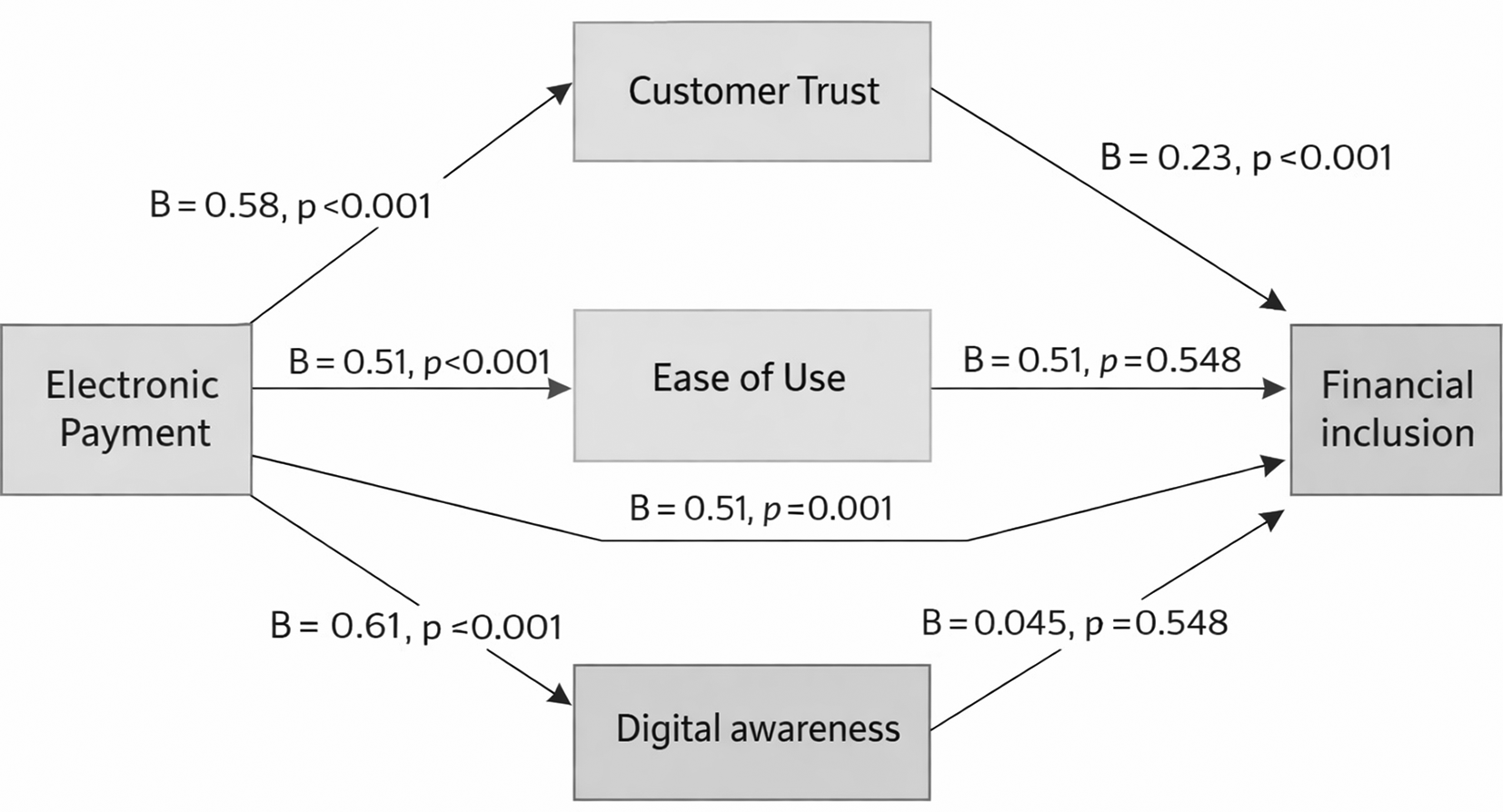
The figure shows the structural equation mediation model examining the two types of relationships (direct and indirect) between electronic payment and financial inclusion through customer trust, ease of use, and digital awareness. Regression coefficients (B) and corresponding p-values are displayed for each structural path. Electronic payment illustrates significant positive impacts on customer trust (B = 0.58, p < 0.001), ease of use (B = 0.51, p < 0.001), and digital awareness (B = 0.61, p < 0.001). Customer trust has a significant positive effect on financial inclusion (B = 0.23, p < 0.001), whereas the paths from ease of use (B = 0.51, p = 0.548) and digital awareness (B = 0.045, p = 0.548) to financial inclusion are not statistically significant. The direct effect of electronic payment on financial inclusion remains significant (B = 0.51, p = 0.001).
Abbreviation: B = standardized regression coefficient.
However, neither ease of use nor digital awareness demonstrate a significant mediating role between electronic payments and financial inclusion. In contrast, customer trust demonstrates a significant mediating role, with its relationship with financial inclusion being statistically significant (β = 0.230, p = 0.000).
These results indicate that the mediating variable M1 plays a true mediating role in the relationship between the independent variable (X) and the dependent variable (Y), i.e., it represents a partial mediation path. As for M2 and M3, although they are affected by X, the lack of a significant relationship with Y indicates that they do not contribute effectively to explain the change in the dependent variable.
Therefore, the hypothesized relationship model supports only a partial indirect effect of the independent variable on the dependent variable through M1, with no mediation paths through M2 and M3. This can be explained by the fact that M2 and M3 either do not represent true mediators in this context, or their effect is limited and insufficient to produce a significant effect on Y.
It is noted in the figure that the black arrows represent statistically significant relationships, while the red arrows indicate non-statistically significant relationships, which enhances the clarity of the model and confirms that “ease of use” is the most influential mediating factor in the relationship between electronic payment and financial inclusion.
Based on the practical aspect, a set of conclusions has been reached:
1. There is a statistically significant direct effect of the independent variable, Electronic Payment, on the dependent variable, Financial Inclusion. This indicates a relatively strong relationship that does not rely on mediating variables, confirming the importance of electronic payment as a key determinant of financial inclusion in the theoretical model.
• The independent variable, Electronic Payment, is significantly correlated with two mediating variables: Customer Trust and Ease of Use. This significant association suggests that electronic payment impacts some internal dimensions or processes (the mediating variables), but this effect does not transmit to the dependent variable, financial inclusion.
• The absence of a significant effect of the mediating variables on the dependent variable indicates that these variables do not serve as actual mediators and do not contribute to explain the relationship between the independent and dependent variables.
• The lack of indirect effect and the weak total effect of the mediating variables reflect the possibility that the relationship between the independent and dependent variables is inherently direct, or that other more effective mediating variables are not included in the model may exist.
• The internal consistency of the instrument, as measured by Cronbach’s alpha, is high (73% – 88%) with relatively low dispersion (coefficient of variation between 14% – 20%), indicating the quality and reliability of the research instrument.
In light of the findings, this study presents a set of practical recommendations. These recommendations are classified into three main categories:
First: Recommendations for financial policymakers.
1. To enhance customer confidence in electronic payment systems by enacting clear legislation that protects user data and imposes strict security standards on electronic payment service providers, thus reducing fraud and cyber breaches.
2. Require financial institutions and digital service providers to apply the highest standards of transparency and disclosure regarding security mechanisms, user rights, and how to handle complaints and financial disputes.
Second: Recommendations for financial institutions and electronic payment service providers
1. Focusing on building trust as a strategic element by investing in modern cybersecurity technologies and developing effective communication mechanisms with customers that demonstrate the institution’s commitment to protect their interests.
2. Although the study results do not show a significant impact of ease of use, this does not diminish its importance, as it is a contributing factor in enhancing customer satisfaction and continued use of services. Therefore, we recommend that institutions simplify registration and payment procedures while maintaining a high level of security.
Third: Recommendations for Future Studies
1. To retest the research model by including new variables that may mediate the relationship between ease of use or digital awareness and financial inclusion, such as satisfaction or intention to use digital financial services.
2. Conducting comparative studies across different groups, as it is useful to analyze the impact of trust and digital factors on different demographic groups (such as age groups, income levels, or geographic regions) to determine whether the relationship varies according to the socioeconomic context.
Note: Declaration of generative AI and AI-assisted technologies in the writing process During the preparation of this work, the author(s) used chat Gpt in order to improve readability and language of the work. After using this service, the author(s) reviewed and edited the content as needed and take(s) full responsibility for the content of the publication.
This study was approved by the Ethics Committee of Center of Technical Research, Northern Technical university, under approval number (ref 5 date 12/1/2026.)
At the time of conducting this study, formal ethical approval was not obtained because no institutional or local ethics committee existed at the study site that could formally review and approve research proposals. The institution where the data were collected does not currently have an established Institutional Review Board (IRB) or equivalent ethics committee responsible for issuing ethical approvals for questionnaire-based research.
The study involved non-invasive data collection using a self-administered questionnaire, did not include vulnerable populations, and did not collect any personally identifiable or sensitive information. Participation was entirely voluntary, and respondents were informed about the purpose of the study, assured of anonymity, and given the right to decline or withdraw at any stage without any consequences. Completion of the questionnaire was considered to indicate informed consent.
Due to these factors, the study was considered to pose minimal to no risk to participants, and therefore formal ethical approval was not mandated under local research practices at the time the study was conducted.
| Views | Downloads | |
|---|---|---|
| F1000Research | - | - |
|
PubMed Central
Data from PMC are received and updated monthly.
|
- | - |
Provide sufficient details of any financial or non-financial competing interests to enable users to assess whether your comments might lead a reasonable person to question your impartiality. Consider the following examples, but note that this is not an exhaustive list:
Sign up for content alerts and receive a weekly or monthly email with all newly published articles
Already registered? Sign in
The email address should be the one you originally registered with F1000.
You registered with F1000 via Google, so we cannot reset your password.
To sign in, please click here.
If you still need help with your Google account password, please click here.
You registered with F1000 via Facebook, so we cannot reset your password.
To sign in, please click here.
If you still need help with your Facebook account password, please click here.
If your email address is registered with us, we will email you instructions to reset your password.
If you think you should have received this email but it has not arrived, please check your spam filters and/or contact for further assistance.

Comments on this article Comments (0)