Keywords
Determinants, Early ANC utilization, Bule Hora, West Guji, Oromia, Ethiopia

Determinants, Early ANC utilization, Bule Hora, West Guji, Oromia, Ethiopia
Antenatal care (ANC) is a care for providing essential treatments to decrease pregnancy related problems, provide birth and emergency preparedness counseling, and improve new born health outcomes.1 The world health organization (WHO) defines ANC as the care provided by skilled health care professionals to pregnant women and adolescent girls to ensure the best health conditions for both mother and baby during pregnancy.2 ANC originated in the early 20th century as a preventive strategy to reduce maternal and perinatal mortality, evolving over time into a comprehensive approach that includes health education, screening, and management of pregnancy-related risks.3,4
Globally, pregnancy-related deaths and diseases continue to pose significant challenges.5,6 Despite substantial progress, recent data highlights that these issues remain alarmingly prevalent.7 In 2021, an estimated 287,000 women died from pregnancy-related causes, and approximately 2.5 million neonates died within the first 28 days of life. Additionally, about 2.4 million stillbirths occurred during the same period.1,2
Socio-economic status and education levels are significant predictors of ANC utilization. Lower socio-economic status often correlates with reduced access to healthcare services, including ANC, due to financial constraints and limited healthcare infrastructure.8,9 Additionally, educational attainment influences health literacy, affecting women’s ability to seek and adhere to ANC recommendations.5,10 Cultural practices and accessibility issues also play a crucial role in determining ANC uptake. In many communities, traditional beliefs and practices may either discourage or delay seeking formal medical care, including ANC.5,11 Furthermore, geographic and logistical barriers, such as the distance to healthcare facilities and inadequate transportation, exacerbate the challenge of accessing timely and regular ANC services.12,13
Despite limited recent research on the determinants of early ANC utilization in the study area, previous related studies in Ethiopia have identified key factors influencing early ANC uptake among postpartum mothers at public health facilities. Addressing these gaps through focused research can provide crucial insights for developing targeted interventions and policies. Understanding how knowledge of ANC, obstetric history, service-related factors, and environmental and cultural influences affect early ANC utilization is essential to improving maternal and fetal health outcomes. This study aims to assess these determinants among pregnant women attending antenatal services at Bule Hora University Teaching Hospital, West Guji Zone, Oromia, Ethiopia. The findings will equip healthcare providers and facilities to design effective interventions to increase early ANC utilization, help identify institutional barriers linked to maternal and newborn mortality, and support policymakers, planners, and program managers in enhancing ANC services. Moreover, this research will serve as a foundation for future studies focused on improving early ANC initiation and optimal ANC follow-up in the region.
This study was carried out in Bule Hora Town, which is located West Guji Zone of the Oromia region in the lowlands of southern Ethiopia. According to the West Guji Zone health and demographic surveillance department dataset, which is derived from the 2007 census by 2.4% inflation.14 The town, which is located 365 kilometers from the capital city of Addis Ababa along the main connecting road, is under zonal administration and has a total population of 157,148. The town is characterized by an urban setting, a mostly agrarian economy, and a population that is mostly from the Oromo ethnic group, namely the Guji agro-pastoral community. A facility-based unmatched case-control study design was employed. To address the determinants of early antenatal care utilization, the study followed specific procedures conducted between June and July 2025.
Quantitative data were collected using structured questionnaire. The study population consisted of pregnant women who attended ANC at Bule Hora University Teaching Hospital during the study period and were randomly selected. Cases were defined as women who initiated ANC before 12 weeks of pregnancy (early initiators), while controls were those who started ANC at or after 12 weeks (late initiators).15 Eligible participants included were women aged 18 and older, as well as mature minors under 18, who had resided in the study area for more than six months. Women with unknown gestational ages at their first visit, hearing or speech impairments, serious pregnancy complications, or mental illness were excluded from the study. The study participants were approached by the principal investigator and interviewers with extensive experience in quantitative research.
Dependent/Outcome variable: Early ANC initiation, defined as initiation before 12 weeks of pregnancy (early initiators/cases = 1), versus initiation at or after 12 weeks (late initiators/controls = 0).
Independent/Exposure variables: Sociodemographic factors (age, residence, marital status, personal and husband’s education and occupation, income, and distance to a health facility); knowledge-related factors (awareness of ANC importance, timing, number of visits, services, danger signs, and information sources); individual and obstetric factors (parity, gravidity, previous and current ANC timing, delivery location, history of abortion/stillbirth, past ANC use, family planning, pregnancy planning, complications, and transportation access); and finally, health facility and cultural factors (facility proximity, service costs, drug availability, waiting times, provider attitude, husband accompaniment, community support and norms, and cultural barriers).
The sample size was calculated using a double population proportion formula in Epi-Info version 7.2.2.6, based on a key determinant from prior literature.16 The first calculation produced 416 participants with a power of 90%, a 95% confidence level, a case-to-control ratio of 1:3, an exposure proportion of 35.7% among controls, and an adjusted odds ratio of 2.15. The final sample size was 456 (114 cases and 342 controls) after accounting for a 10% non-response contingency. Simple random sampling was used to choose study participants from the hospital’s antenatal care register. The Epi-Info random number generator was used to classify eligible pregnant women at random.
Data quality was ensured through pretested and refined questionnaire before deployment on KoboToolbox. Data collectors received two-day training on protocols and digital data collection using KoboToolbox to ensure tool use, data accuracy, and ethical procedures for two days. Built-in validation checks (such as skip logic, range limits, and required fields) were applied to minimize entry errors. Supervisors review submitted forms daily for completeness and consistency, whereas the principal investigator performs random cross-checks and downloads the data periodically to identify anomalies or missing values. After collection, all data was cleaned, verified for completeness, and exported to statistical software for final consistency checks before analysis.
The data was collected using face-to-face interviews from pregnant women who can provide informed consent using Kobocollect app. The questionnaire was adapted from Ethiopian Demographic and Health Survey and different related literature.17,18 Informed consent was obtained before conducting the interviews. The data collectors are professionally Nurses or health officer, or midwives have experience of working in the ANC unit from other facilities were participated and one supervisor was recruited from zonal health office.
All complete questionnaires were checked for accuracy, consistency, and completeness before being entered into KoboToolbox and exported to SPSS version 27 for analysis. To find factors linked to early ANC utilization, descriptive statistics, bivariable and multivariable logistic regression analyses were carried out; variables with p ≤ 0.25 in the bivariable analysis were included in the multivariable model to assess confounding effects; statistical significance was set at p < 0.05; the Hosmer-Lemeshow test was used to verify model fitness before final analysis.
Early ANC: Pregnant women who visit the ANC unit before 12 weeks of pregnancy (i.e., early initiators of ANC).15
Knowledge of ANC: Assessed by questions on key ANC topics (early booking, danger signs, complications, timing, importance, services, gestational age). Scoring ≥50% is classified as good knowledge; <50% as poor knowledge.19
Long Waiting Time: The total time a pregnant woman waits at registration, triage, and diagnostic units before seeing a provider. A cumulative waiting time of ≥120 minutes is considered long.20
Ethical clearance was obtained from Bule Hora University following the Declaration of Helsinki and was approved by Institutional Research Ethics Review Committee (BHU/IRERC) with protocol number of BHU/IRERC/030/17. A support letter was obtained from the Bule Hora Town health department to the hospital. All participants were informed about the purpose and the procedures of the study. All responses were kept confidential and anonymous. The study protocol was approved by the Bule Hora University Institutional Review Board (IRB). Prior to enrollment, informed consent was obtained from all participants: written consent was obtained from those with formal literacy, while witnessed verbal consent was obtained from participants unable to read or write.
A total of 448 pregnant women were included, with 112 cases and 336 controls, yielding a response rate of 98.2%. Most participants were urban residents, 394 (87.9%). The majority were married, 441 (98.4%), with slightly fewer in controls, 108 (96.4%) vs. 333 (99.1%) in cases. Secondary education was the most common level, 123 (27.5%), and housewife was the dominant occupation, particularly among cases, 208 (61.9%) vs. 37 (33.0%) in controls. Husbands of 142 (31.7%) participants had higher education, slightly more among controls, 41 (36.6%). Low household income (<8,319 ETB) was reported by 273 (60.9%) participants, more so in cases, 213 (63.4%) vs. 60 (53.6%) in controls ( Table 1).
Most participants knew the importance of ANC, 436 (97.3%), and its benefits, 433 (96.7%). Knowledge of early ANC booking was higher among controls, 106 (94.6%), than cases, 154 (45.8%). Fewer cases, 67 (19.9%), knew the correct time to start ANC (<12 weeks), compared to 71 (63.4%) controls. Monitoring maternal and fetal health was reported by 309 (71.4%), while early detection of complications was noted by 295 (68.1%). Only 138 (30.8%) correctly identified the first trimester as the appropriate time to begin ANC. Regarding necessary ANC visits, most participants believed fewer than 4 visits were sufficient 276 (61.6%). Knowledge of pregnancy danger signs was 189 (42.2%), with vaginal bleeding being the most recognized sign, 125 (66.1%). The main sources of ANC information were community health workers, 170 (37.9%), and health workers, 116 (25.9%).
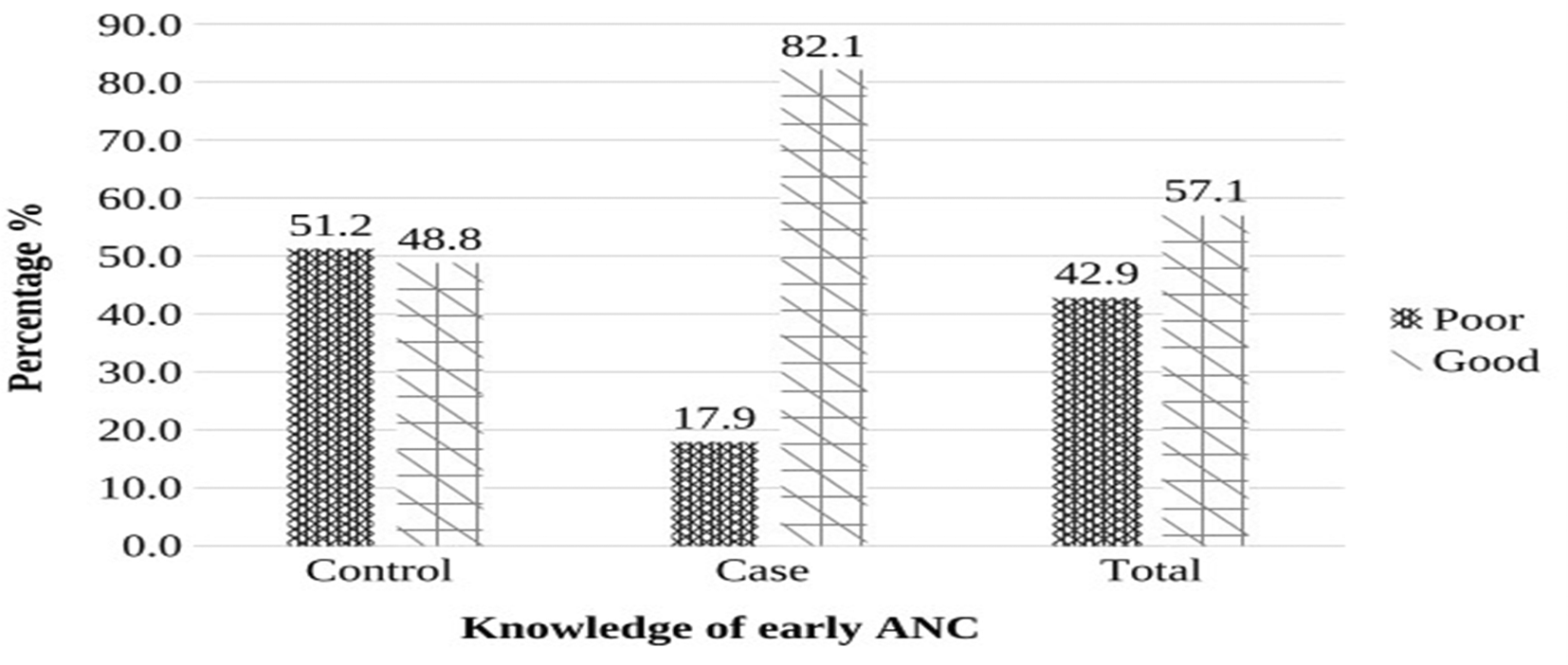
As shown in the figure below, overall knowledge of ANC was higher among early ANC utilizers (cases) with 92 (82.1%) demonstrating good knowledge, compared to 164 (48.8%) of late utilizers (controls). Overall, 256 (57.1%) of participants had good knowledge, while 192 (42.9%) had poor knowledge of ANC ( Figure 1).
Out of 448 participants, 135 (30.1%) were nulliparous, 126 (28.1%) primiparous, and 187 (41.7%) multiparous. Regarding gravidity, 139 (31.0%) were primigravida and 309 (69.0%) multigravidas. In their last pregnancy, only 49 (17.2%) initiated ANC in the first trimester, while 142 (49.8%) started in the second trimester, and 29 (10.2%) in the third. Place of previous delivery showed that 245 (54.7%) gave birth at a health institution, 69 (15.4%) at home, and 9 (2.0%) on the way. A total of 70 (15.6%) had a history of abortion and 33 (7.4%) experienced stillbirths. Family planning use before pregnancy was reported by 250 (55.8%), and ANC attendance in a previous pregnancy by 274 (64.6%). Pregnancy was planned by 331 (73.9%), and 117 (26.1%) experienced complications.
Out of the participants, 309 (69.0%) of participants reported proximity to a health facility, with a higher proportion among cases 101 (90.2%) than controls 208 (61.9%). Long waiting times (>120 minutes) were experienced by 178 (39.7%), predominantly among controls 172 (51.2%) versus only 6 (5.4%) cases. Most participants rated provider attitudes as good or very good: 421 (94.0%). In terms of socio-cultural and support factors, husband accompaniment to ANC was reported by 221 (52.1%), and 321 (71.7%) were exposed to maternal health messages through media. Perceived community support for ANC was reported by 359 (80.1%), and 397 (88.6%) believed ANC attendance was a community norm. Decision-making regarding ANC was self or jointly made by 403 (90.0%) participants and 13 (54.2%) reported husband accompaniment.
In the bivariate analysis, variables with early ANC (p < 0.25) and were included in the multivariable logistic regression. After adjusting for potential confounders, the multivariate logistic regression analysis showed that younger pregnant women aged 15–24 were nearly three times more likely to delay ANC initiation compared to those aged 35–44 (AOR = 2.79, 95% CI: 1.12, 6.96). Women with poor knowledge of ANC were about four times more likely to delay ANC than those with good knowledge (AOR = 4.19, 95% CI: 2.24, 7.82). Those who experienced long waiting times before seeing a provider were four times more likely to delay ANC (AOR = 4.02, 95% CI: 2.23, 7.24). Similarly, women in polygamous marriages had higher odds of delayed ANC initiation (AOR = 3.74, 95% CI: 1.53, 9.16), and those perceiving poor community support for ANC were over three times more likely to delay seeking care (AOR = 3.63, 95% CI: 1.44, 9.17) ( Table 2).
| Early ANC utilization | |||||
|---|---|---|---|---|---|
| Variables | Control | Case | |||
| n (%) | n (%) | COR (95% CI) | AOR (95% CI) | P-Value | |
| Age in years | |||||
| 15–24 | 75 (62.5) | 45 (37.5) | 4.333 (1.969,9.538) | 2.791 (1.120, 6.957) | 0.028* |
| 25–34 | 196 (77.2) | 58 (22.8) | 2.137 (1.003,4.552) | 1.121 (0.480, 2.618) | 0.791 |
| 35–44 | 65 (87.8) | 9 (12.2) | 1 | 1 | |
| Place of residence | |||||
| Rural | 48 (88.9) | 6 (11.1) | 1 | 1 | |
| Urban | 288 (73.1) | 106 (26.9) | 2.944 (1.224,7.080) | 1.117 (0.402, 3.102) | 0.832 |
| Maternal education level | |||||
| No formal education | 123 (82.6) | 26 (17.4) | 1 | 1 | |
| Primary | 83 (74.1) | 29 (25.9) | 1.653 (0.909,3.006) | 1.346 (0.668, 2.710) | 0.406 |
| Secondary & above | 130 (69.5) | 57 (30.5) | 2.074 (1.227,3.507) | 1.200 (0.635, 2.269) | 0.574 |
| Pregnancy planned | |||||
| No | 100 (85.5) | 17 (14.5) | 1 | 1 | |
| Yes | 236 (71.3) | 95 (28.7) | 2.368 (1.344,4.173) | 1.495 (0.776, 2.882) | 0.230 |
| Pregnant women in polygamous marriages | |||||
| No | 288 (73.3) | 105(26.7) | |||
| Yes | 48(87.3) | 7 (12.7) | 2.500 (1.097–5.698) | 3.742 (1.528, 9.163) | 0.004* |
| Knowledge of ANC | |||||
| Poor | 172 (89.6) | 20 (10.4) | 1 | 1 | |
| Good | 164 (64.1) | 92 (35.9) | 4.824 (2.843,8.186) | 4.189 (2.244, 7.818) | <0.001* |
| Long wait before seeing provider | |||||
| No | 167 (64.5) | 92 (35.5) | |||
| Yes | 169 (89.4) | 20 (10.6) | 4.655 (2.743–7.899) | 4.020 (2.232, 7.242) | <0.001* |
| Exposure to maternal health in media | |||||
| No | 120 (81.6) | 27 (18.4) | 1 | 1 | |
| Yes | 216 (71.8) | 85 (28.2) | 1.749 (1.075–2.847) | 1.662 (0.878,3.148) | 0.119 |
| Perceived poor community support for ANC | |||||
| No | 83 (93.3) | 6 (6.7) | 1 | 1 | |
| Yes | 253 (70.5) | 106 (29.5) | 5.796 (2.455,13.683) | 3.630 (1.437, 9.173) | 0.006* |
This unmatched case-control study found that delayed ANC initiation was more likely among younger women, those with poor knowledge of ANC, those who experienced long waiting times before seeing a provider, women in polygamous marriages, and those who perceived poor community support for ANC. The study results revealed that younger pregnant women were more likely to delay ANC initiation compared to older women. This study result was consistent with a study conducted in Central Ethiopia,21 in Southwest Ethiopia22 and in Shisong, Cameroon.23 The possible reason for the late ANC utilization among younger women may be attributed to limited experience, lack of awareness, and increased fear or anxiety about pregnancy. This finding suggests the need for targeted health education and counseling programs to build confidence and promote early ANC initiation among younger pregnant women.
The findings showed that women with poor knowledge of ANC were more likely to delay ANC initiation compared to those with good knowledge. This study result was in line with a study conducted in Central Ethiopia,21 in Addis Ababa city, Ethiopia,24 and in Northwest Ethiopia.25 This delayed ANC initiation among women with poor knowledge underscores the critical role of health literacy, suggesting that strengthening educational interventions is essential to promote early ANC attendance across all groups of women.
The analysis indicated that pregnant women who experienced long waiting times before seeing a provider were more likely to use early ANC services. This study result was in line with a study conducted in Addis Ababa, Ethiopia,26 south west Ethiopia,27 and Cameroon.23 This may due to the association between long waiting times and early ANC use may indicate that women strategically arrive earlier to secure a shorter wait, suggesting that improving clinic efficiency and appointment systems could help distribute attendance more evenly.
This study demonstrated that pregnant women in polygamous marriages were significantly more likely to delay ANC initiation. This study result was supported with a study previously conducted in Ugandan women.28 The significant association between delayed ANC initiation and polygamous marriage may be due to women being second or third wives in the household, which can lead to fear of accessing healthcare services or prioritizing the needs and business of their partners over their own health. This implies that law enforcement and gender-sensitive policies need to be strengthened to protect the rights of women in polygamous marriages and ensure equitable access to maternal healthcare services. Additionally, by community engagement and targeted awareness programs, women can be empowered to seek timely ANC services, while addressing social and cultural barriers that contribute to delayed care.
The results revealed that women who perceived poor community support were more likely to delay ANC initiation, highlighting the importance of strong community engagement in promoting timely ANC utilization. This study result was agreed with a study conducted in south west Ethiopia,27 and western Ethiopia.19 This may due to the perceived community support; however, this can be reduced by cultural barriers such as traditions like bride hiding, which physically restrict women’s mobility. This indicates that interventions must not only engage community leaders but also actively work to address and transform specific restrictive norms that prevent early ANC initiation.
The findings of this study highlight the critical role of maternal knowledge, polygamous marriages, and community support in promoting early ANC utilization. To build on these insights, health facilities should strengthen health education during ANC visits, particularly focusing on pregnancy danger signs and complications. Reducing waiting times, improving provider–client communication, and ensuring respectful and dignified care are essential to enhance service satisfaction and encourage early attendance. Policymakers and stakeholders should invest in community awareness initiatives, including active involvement of male partners, to promote timely and informed ANC utilization. Furthermore, ongoing and future research is recommended to explore the deeper, context-specific factors influencing ANC service quality.
This institutional-based case-control study has several limitations. Firstly, it cannot establish causal relationships for all significant associations. Secondly, recall and social desirability biases may affect the accuracy of self-reported data, particularly regarding missed doses and socioeconomic status.
This unmatched case-control study was conducted among pregnant women attending antenatal care services. The findings showed that delayed ANC initiation was more likely among younger women, those with poor knowledge of ANC, those who experienced long waiting times before seeing a provider, women in polygamous marriages, and those who perceived poor community support for ANC. Overall, the study indicates that timely ANC utilization is influenced by women’s awareness, access to health information, service quality, and community support. These findings highlight the need for coordinated efforts among healthcare providers, policymakers, and community leaders to promote early ANC initiation.
| Views | Downloads | |
|---|---|---|
| F1000Research | - | - |
|
PubMed Central
Data from PMC are received and updated monthly.
|
- | - |
Provide sufficient details of any financial or non-financial competing interests to enable users to assess whether your comments might lead a reasonable person to question your impartiality. Consider the following examples, but note that this is not an exhaustive list:
Sign up for content alerts and receive a weekly or monthly email with all newly published articles
Already registered? Sign in
The email address should be the one you originally registered with F1000.
You registered with F1000 via Google, so we cannot reset your password.
To sign in, please click here.
If you still need help with your Google account password, please click here.
You registered with F1000 via Facebook, so we cannot reset your password.
To sign in, please click here.
If you still need help with your Facebook account password, please click here.
If your email address is registered with us, we will email you instructions to reset your password.
If you think you should have received this email but it has not arrived, please check your spam filters and/or contact for further assistance.

Comments on this article Comments (0)