Keywords
Fiscal discipline, digital transformation, central bank efficiency, foreign reserves.

This article is included in the Fallujah Multidisciplinary Science and Innovation gateway.
Fiscal discipline, digital transformation, central bank efficiency, foreign reserves.
Title and Construct Modification: Following your precise critique, the dependent variable has been formally changed from "Central Bank efficiency" to "Foreign Reserve Adequacy", as the international reserves-to-GDP ratio is a globally recognized metric for adequacy, not administrative efficiency. The title has been amended to provide an explicit causal framing:
"The Impact of Fiscal Discipline and Digital Governance on Foreign Reserve Adequacy: Evidence from the ARDL Cointegration Approach in Iraq for the Period (2004–2024)"
Abstract Overhaul: The Abstract has been fully rewritten into a structured format (Objectives, Methodology, Findings). It now includes strict quantitative precision (directional signs and significance), structural alignment with the theoretical mechanisms, and a clear explanation of the identification strategy.
Sample Size Discrepancy: The structural data framework has been transparently clarified in the text. To overcome the low-frequency annual data constraint and improve estimation efficiency, the annual series was transformed into a continuous high-frequency quarterly time series via EViews.
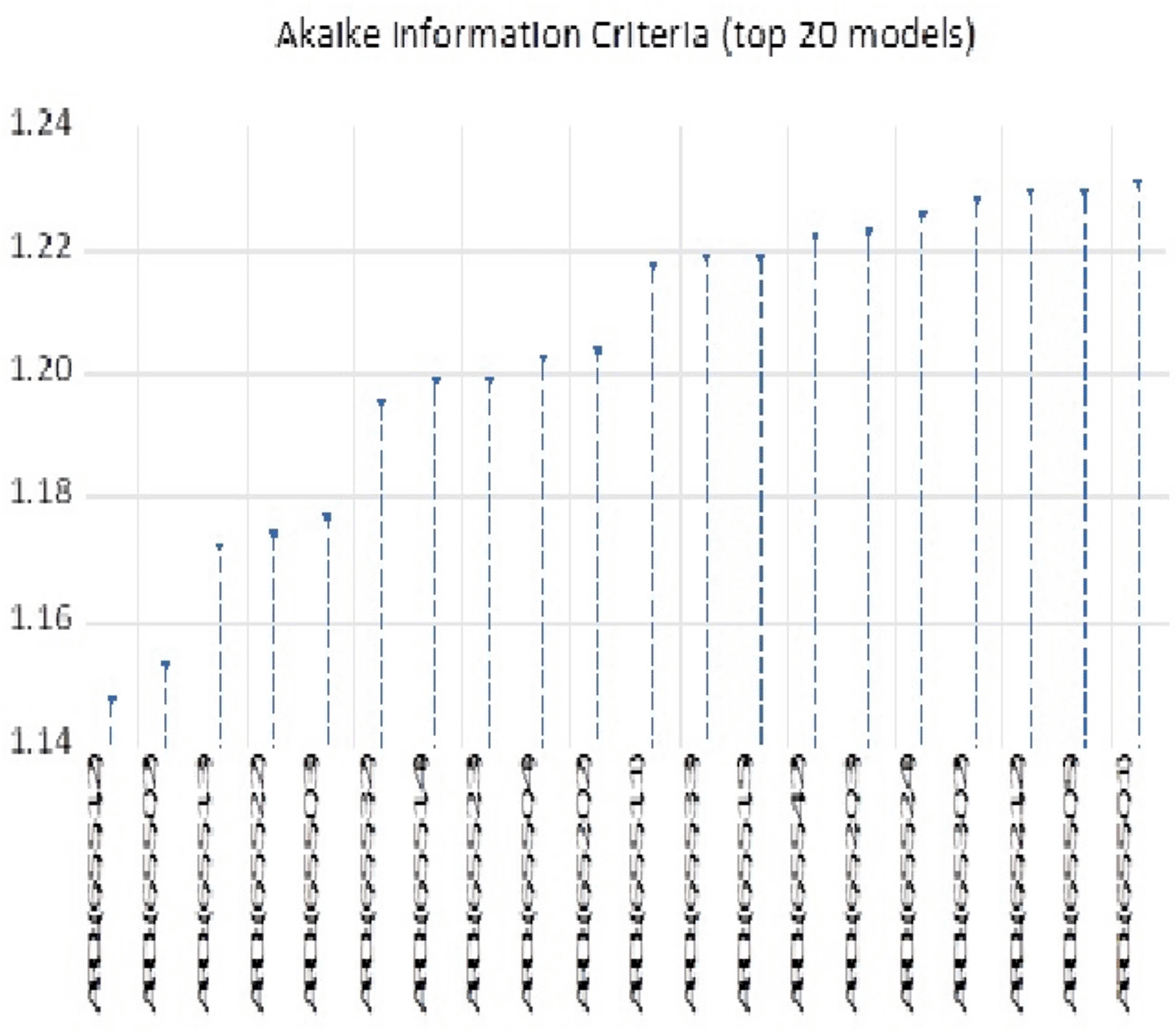
Lag Structure Selection: The optimal lag lengths were strictly determined based on the Akaike Information Criterion (AIC) to ensure statistical discipline and prevent overfitting, as explicitly detailed and illustrated in Table 6 and Figure 3.
Robustness and Full Diagnostic Suite: To ensure model validity, we executed and appended comprehensive diagnostic checks:
Multicollinearity: Evaluated using the Variance Inflation Factor (VIF) and tabulated in Table 10.
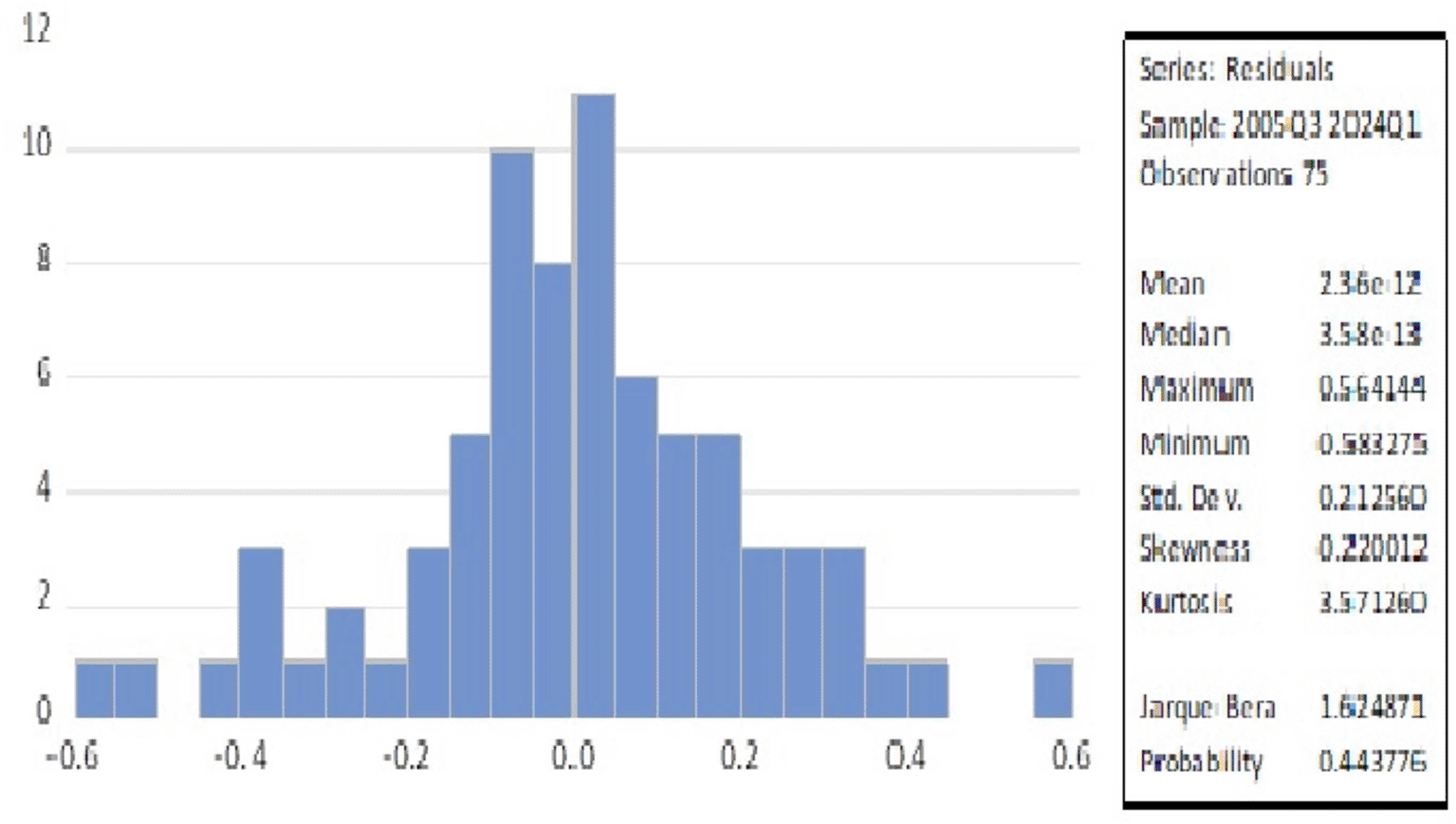
Normality Test: Verified and illustrated via the residual distribution in Figure 4.
Parameter Stability: Confirmed using structural break diagnostics through CUSUM and CUSUMSQ stability plots, now displayed in Figure 5.
Discussion and Economic Logic: The interpretation of the findings has been entirely revised to align with macroeconomic logic and the Fiscal Theory of the Price Level (FTPL). All policy recommendations have been directly tied to the empirical coefficients.
To read any peer review reports and author responses for this article, follow the "read" links in the Open Peer Review table.
Fiscal discipline and digital transformation are among the most important modern economic topics of interest to many public finance professionals and governments alike. This is particularly true following the increase in economic crises, the rise in the general budget deficit, and the volume of public debt in many countries around the world, particularly developing countries. Furthermore, interest in the issue of foreign reserves and their management has increased in recent decades. Maintaining an optimal volume of foreign reserves has become a safety valve for the economy and the national currency against internal and external shocks, as well as a key factor in maintaining financial and monetary stability. This is particularly true given that the Iraqi economy suffers from a lagging and weak digital infrastructure, as well as the problem of weak financial discipline. As a rentier economy, this has led to an expansion in public spending, particularly consumer spending, during years of financial abundance. When oil revenues decline, this leads to an imbalance in public finances and pressure on foreign reserves.
Therefore, in recent decades, the Iraqi government has sought to achieve fiscal discipline and focus on digital transformation in public finances as two fundamental pillars for enhancing Adequacy of foreign reserves at the Central Bank. Fiscal discipline contributes to reducing the fiscal deficit in the general budget and public debt, thus enhancing the government’s ability to manage its financial resources. Meanwhile, digital transformation in public finances is linked to the government financial information system, the financial analysis system for expenditures, revenues, and public debt, and other systems that help increase the accuracy and transparency of the government’s general budget, thereby enhancing fiscal discipline and foreign reserve management.
The importance of the research lies in the fact that the rentier nature of the Iraqi economy requires linking the rules of fiscal discipline with the government’s digital transformation to present fiscal policy in a new style using the latest innovative financial technologies, contributing to enhancing the efficiency of foreign reserves and achieving financial and monetary stability.
The Iraqi economy suffers from a lack of financial policy stability and its reliance on volatile rentier resources, in addition to weak progress in the field of digital transformation in financial and regulatory institutions. These challenges negatively impact Adequacy of foreign reserves at the Central Bank of external pressures on them. Hence, the research problem is defined by answering the following question: “To what extent did financial discipline and digital transformation contribute to enhancing the adequacy of foreign reserves management in Iraq during the research period?”
The research is based on the hypothesis that “there is a long-term, positive, equilibrium relationship between indicators of financial discipline, digital transformation, and the Central Bank’s foreign reserves adequacy index.”
The research aims to demonstrate the role of financial discipline and digital transformation in enhancing Foreign Reserve Adequacy, by measuring the impact of financial discipline and digital transformation indicators on the foreign reserves adequacy index for the period (2004-2024).
This research relies on a combination of the descriptive-deductive approach to present the economic concepts related to the research variables, and standard quantitative methods to test the research hypothesis using time series data comprising 21 observations for the period (2004-2024), which have been divided into quarterly data using the (Eviews) program, to be sufficient for standard model tests using the (ARDL) methodology.
In order to arrive at solid research results, the research was divided into two main parts preceded by an introduction. The first part addressed the conceptual framework of financial discipline, digital transformation, and foreign reserves, while the second part measured the relationship between indicators of financial discipline, digital transformation, and the optimal foreign reserve size index using the Autoregressive Lag-Down Time Delay (ARDL) model.
previous studies:
1- Studie ( Kadhum & Al-Hamdi, 2017), The reality of foreign reserves and criteria for determining their optimal level in Iraq for the period (2004-2014).
Based on the great importance of international reserves and the diversity of their fields, the research aims to determine the effectiveness and role of foreign reserves in influencing economic performance, in addition to evaluating the management of foreign reserves during the research period in terms of the adequacy of these reserves, The most important finding of the research Determining the optimal size for holding official reserves depends on the objective of holding them, which must be determined by those responsible for forming and managing official reserves in light of the available legal, political, economic and financial situation.
The most recommendations of the research, strategy has been developed by the Central Bank and the Iraqi Ministry of Finance regarding the management and composition of foreign reserves in order to determine their objectives and the risks to which they are exposed, in order to determine their optimal size and invest any surplus official reserves in the local market to support the economy while at the same time achieving the objectives of the Central Bank of Iraq.
2- Studie ( Al-Jabri & Al-Mahdawi, 2022) Digitization of public finance and its impact on the effectiveness of fiscal policy. Selected experiences with special reference to Iraq.
The research aims to Identifying the levels of financial performance of a sample of research countries (UAE, India, and Iraq) in light of the paths of digitizing public finances, The most important finding of which was that the role of the government is one of the basic variables in the success of digitizing public finances.
The most recommendations of the research, Providing a legislative and regulatory framework with an emphasis on building government strategies within a specific time period to develop government financial technology, with the need to provide a safe environment for it.
3- Studie ( Abdullah, 2023), Digital transformation mechanisms and financial discipline (India case study).
The aim of the research is to highlight the important role played by modern digital transformation mechanisms and tools in supporting and achieving financial discipline in India, The most important finding of The research concluded that modern digital transformation mechanisms and tools have contributed to supporting and achieving financial discipline in India.
The most recommendations of the research, It is necessary to have a strong and appropriate strategy designed when carrying out financial discipline, in light of the existence of a set of appropriate financial rules that are established to achieve financial discipline.
4- Studie (Ibrahim & Issa 2024) The role of the Central Bank of Iraq in promoting digital transformation and the use of financial technology in Iraq for the period (2017-2023).
The research objective was demonstrated by the contribution of the Central Bank of Iraq to digital transformation and financial technology, The most important finding of, the most prominent of digital transformation in Iraq are weak, which affected keeping pace with developments in financial technology indicators in Iraq.
The most recommendations of the research, Central Bank of Iraq must work broader directions towards digital transformation through a policy of emphasizing the banking and non-banking sectors.
5- Study ( Al-sultany, 2025) The role of financial digitization in achieving financial discipline - experiences of selected countries with the possibility of benefiting from them in Iraq.
This research presents the concept of financial digitization, its importance from an economic perspective and the digital systems that use it in addition to the requirements for achieving financial digitization and the obstacles that hinder it. The research also discusses the concept of financial control, its mechanisms, the factors that help achieve it, and the financial rules that govern the financial control policy, The most important finding in this research is the existence of a large digital gap separating Iraq and the selected sample countries in the field of public finance digitization, as well as the positive and effective role of financial digitization technologies in achieving financial control in the sample countries.
The main recommendations in Al-sultany’s (2005) study, is the need for the Iraqi government to develop a comprehensive plan that includes all the requirements for digital transformation in public finances, to be implemented in annual stages with financial and legal support, and to expand the scope of digital inclusion to deliver digital financial services to the greatest extent possible.
6- Study ( Evans, 2020), Fiscal discipline, financial development & economic growth in Nigeria.
Evans (2020) aims to empirically investigates the effects of fiscal discipline in the form of policy uncertainty, corruption, budgeting reforms, fiscal policy sustainability and crowding-out on financial development and economic growth using the (ARDL) model. This study shows that policy uncertainty, corruption and fiscal deficits have a significant negative relationship with financial development and economic growth both in the short and long-run. Higher levels of uncertainty, corruption and fiscal deficits will lead to reduced levels of financial development and economic growth.
7- Study ( Ibrahim, 2025). Monetary and fiscal policies in iraq under structural challenges: An econometric analysis for the period (2004-2024).
This research aims to analyze and describe the financial and monetary economy situation in Iraq from 2004 to 2024, a period marked by profound structural transformations. The research focuses on evaluating the effectiveness of monetary policy tools used by the Central Bank of Iraq, specifically the foreign currency auction window, in achieving monetary stability. It also examines the nature of rentier fiscal policy and its dominant impact on macroeconomic variables, the study shows that the Autoregressive Distributed Lag (ARDL), the analysis indicates that fiscal policy, directly linked to oil revenues, has the greatest impact on economic activity, while the effectiveness of monetary policy remains limited due to dollarization, weak credit access for the banking sector, and the dominance of budget financing requirements.
The main recommendations of this research, the research recommends adopting structural reforms aimed at diversifying the economy, strengthening the independence of the central bank, and developing the financial sector to enhance the efficiency of resource allocation and support sustainable growth.
8- Study (Al Rifai & Al Kubaisi, 2024): The impact of external public debt on the foreign reserves of the Central Bank of Iraq for the period (2004-2022).
This study aims to explain the impact of external public debt on the foreign reserves of the Central Bank of Iraq. The research concluded that there is an inverse relationship between the independent variable (External public debt) and the dependent variable (foreign reserves), as foreign reserves decrease by (0.13%) when the external public debt increases by (1%).This is consistent with the economic theory, which states that higher external public debt leads to a decrease in foreign reserves. The research also recommends that the state borrows to finance short-term current spending,the short-term debt must be less than a year, since current spending often does not return a financial return and in order to avoid exacerbating the servicing of the debt burden. However, in the case of debt to finance investment spending, it can be long-term debt, since investment projects in their nature achieves a financial return, and thus these projects can cover the burden of debt.
9- Study (Ibrahim & Issa, 2024): The role of the Central Bank of Iraq in promoting digital transformation and the use of financial technology in Iraq (2017-2023).
This research aims to clarify the contribution of the Central Bank of Iraq to digital transformation and financial technology. The most important finding of the research is that digital transformation indicators in Iraq are weak, which has hindered the country’s ability to keep pace with developments in financial technology indicators. The most prominent recommendation is the necessity for the Central Bank of Iraq to pursue broader approaches to digital transformation through policies that strengthen both the banking and non-banking sectors.
1-1 The concept and importance of financial discipline.
The term fiscal discipline has been widely used in public finance economics without a specific definition being defined for it, whether by economists, academics, or specialized international organizations (Yilin, 2003: 5). Since the subject of fiscal discipline is relatively new, it has received wide attention from many developing and developed countries in order to maintain their financial stability, which is one of the basics for creating a stable and predictable economic environment (Petkov, 2014: 47). In 1989, economist John Williamson presented a political vision for development in developing countries, a list that included ten items for reforming economic policies. This vision was known as the “Washington Meeting,” as its items were summarized as (fiscal discipline, reform of the tax system, reducing public expenditures, liberalizing the interest rate, liberalizing trade, floating the currency, opening the way to foreign direct investment, privatizing the public sector, guaranteeing property rights, and limiting state intervention). This vision was widely accepted in economic circles in Washington, as this vision was primarily directed at implementing economic reforms in all Latin American countries. The economist indicated: Williamson, in its first paragraph, emphasized the necessity of adopting a disciplined fiscal policy and avoiding a large fiscal deficit as a percentage of GDP (Williamson, 2004: 1). From here, the term “fiscal discipline” was defined and its various meanings multiplied. It was defined as a set of financial rules established to deter extravagance and financial waste, enhance the credibility of public finances, and reduce the costs of public debt, to achieve a sustainable fiscal policy that supports macroeconomic stability (Ahmed et al., 2023: 476). The importance of fiscal discipline lies in the following: (Badawi, 2023: 1401).
• It helps the state promote long-term economic growth.
• It enables the state to overcome the backwardness of its financial systems.
• It enables the state to overcome its fiscal deficit in its general budget.
• It maintains the stability of the state’s financial environment during economic crises.
1-2 The concept and importance of digital transformation.
The clear developments in the field of digital transformation have provided a significant opportunity for growth and continued use of innovative methods, including banking and non-banking financial institutions. With the emergence and development of digital technologies, particularly telephone communication technology, the era of digital financial technologies has emerged, bringing about a qualitative shift in the provision of financial services. Prior to this development, banking and non-banking financial institutions relied on traditional information technology and analog communication technologies. However, with the emergence of the era of digital transformation, new horizons have opened up for the development of digital financial services. Hence, digital transformation is defined as the use of computer and internet technologies in financial and banking transactions, achieving the highest levels of effectiveness and efficiency. This concept, in its broadest sense, is interpreted as a set of variables upon which modern technologies are based, in the methods of implementing operations and transactions, the mechanisms for interacting with them, managing them, and their impact on society and individuals, not just organizations and economic systems (Ibrahim and Issa, 2024: 137). The importance of digital transformation lies in the following: (Abdullah, 2023: 450).
• Reducing and saving energy, effort, and costs, which contributes to improving and regulating operational efficiency.
• Facilitating the oversight of workflow by officials and opening up the scope for innovation in the delivery of services to the public.
• Contributing to the rapid expansion of companies and institutions and their access to the largest possible audience.
• Allowing customers to learn about their business activities and conduct sales and purchase transactions at any time and place.
1-3 The concept and importance of foreign reserves.
The term “foreign reserves” is one of the terms used in economic literature. It is also referred to as “external reserves” or “international reserves.” It represents the assets held by governments, such as foreign currency reserves. These assets, which are subject to the control of the central bank (the monetary authorities), constitute part of the national wealth and are important for countries that apply fixed exchange rates and seek to avoid economic turmoil and achieve economic stability (Dominguez et al., 2011: 2).
The importance of foreign reserves lies in the following: (International Monetary Fund, 2001: 4)
• Enhancing confidence in exchange rate policy and money supply management, and ensuring the presence of foreign currency assets to support the local currency and enhance its value.
• Reducing exposure to external risks by providing foreign currency liquidity to enhance the monetary authority’s ability to absorb shocks in times of crisis.
• Enhancing confidence in external financial markets in the country’s ability to meet its external obligations.
• Assisting the government in meeting its foreign exchange needs to meet its external needs arising from its imports and external debt, as well as to confront disasters or emergency situations.
1-4 Foreign reserve adequacy
The concept of foreign reserve adequacy refers to the appropriate size of foreign reserves that monetary authorities, represented by central banks, should strive to maintain to ensure a safe and sound financial position to protect their economy from unexpected shocks to the balance of payments, such as rising import prices, declining export revenues, difficulty in obtaining external debt, or rising interest rates, etc. At the same time, the cost of holding foreign reserves should be kept within economically acceptable limits ( Belkacem, 2009: 48).
In this context, economic literature has presented a set of measures used as indicators of the adequacy of foreign reserves since (1947). However, these measures have witnessed remarkable development, and they began to increase significantly in the late (1970s), as many indicators were presented to determine the optimal size of foreign reserves. Among these measures are the following: (Kazem and Al-Hamdi, 2017b: 83).
‐ Foreign reserves as a percentage of GDP.
‐ Foreign reserves as a percentage of money supply.
‐ Foreign reserves as a percentage of imports.
‐ It maintains the stability of the state's financial environment during economic crises.
1-5 Analyzing the relationship between financial discipline indicators, digital transformation, and indicator Foreign Reserve Adequacy.
To analyze the relationship, financial discipline indicators were defined as (the ratio of public spending to GDP, net budget to GDP, and the ratio of public debt to GDP), and the digital transformation index as (the development of digital government). This index is a weighted average of three important e-government indicators: (the Internet service index, the human capital index, and the communications infrastructure index), which represent the independent variables. Meanwhile, the indicator the ratio of foreign reserves to GDP reflects Foreign Reserve Adequacy as a dependent variable, as shown in Table 1.
Data from Table 1 show that the ratio of public expenditures to GDP has increased, exceeding the international standard ratio as an indicator of fiscal policy discipline, which is 35%. The ratio exceeded 40% in most years of the research period. This indicates an inverse relationship with the ratio of foreign reserves to GDP. This means that expansionary public spending was not accompanied by an increase in the ratio of foreign reserves, nor did it reflect Foreign Reserve Adequacy. This is due to the fact that the largest proportion of public expenditures is allocated to consumer expenditures, while the proportion of investment expenditures is weak. The ratio of the budget deficit to GDP varied between surplus and deficit. The general budget surplus was not reflected sustainably in the ratio of foreign reserves to GDP, as the years of deficit contributed to its decline. This indicates that this indicator directly affects foreign reserves. This is due to the government’s resort to financing the financial deficit through foreign reserves. The public debt-to-GDP ratio witnessed a significant decline after 2004, from 268.20% to less than the international standard ratio of 60%. The ratio ranged between 19.8% and 54.51% for most of the research period. This indicates an inverse relationship with the foreign reserves-to-GDP ratio. The decline in this indicator also contributed to enhancing foreign reserves, because of increased oil revenues and the government’s repayment of a large portion of its debt. Meanwhile, the government digital transformation ratio witnessed a gradual development from 35% at the beginning of the research period to 45% in 2024. However, the noticeable increase began after 2019, which coincided with a rise in the foreign reserves-to-GDP ratio. This indicates a direct relationship between the two. It also demonstrates the government’s recent serious efforts and its emphasis on developing digital infrastructure, particularly the government’s digital transformation in financial management, which has helped enhance foreign reserves.
2- Results of measuring the impact of the role of financial discipline and digital transformation in Foreign Reserve Adequacy in Iraq for the period (2024-2004).
After presenting the theoretical aspect of the research variables in the first part, this part aims to describe the standard model used, and present and analyze the standard results that the researcher will reach by relying on the economic measurement program (Eviews12), to determine the impact of financial discipline and digital transformation in Foreign Reserve Adequacy in Iraq for the period (2024-2004) in Iraq for the period (2004-2024), through describing the standard model, and analyzing the statistical time series characteristics of the standard model variables, in addition to using the joint integration methodology according to the (ARDL) model to estimate the equilibrium relationship in the short and long term. According to the requirements of this model, the time series must have a large sample size, so the research period was divided into quarterly data, to be sufficient for testing the standard model used.
2-1 Describing the measurement model used.
Describing the standard model means identifying the economic relationship between the research variables. This stage is one of the most important stages of model development, given the precision required in selecting indicators for the variables to be included in the research. Furthermore, any description of any standard model relies on the foundation of economic theory, in addition to the results extracted from previous studies, to ensure the identification of the research variables and the precise formulation of the relationship between them. The standard model description stage includes the following steps:
2-1-1 Identifying the variables included in the standard model used.
Table 2 shows the functional description of the indicators of the research variables and the special codes for each indicator that will be used in the standard aspect. The indicators of the independent and dependent variables were identified through economic analysis of financial discipline, digital transformation, and foreign reserve Adequacy, in addition to relying on a number of previous studies, as all research indicators were percentages.
2-1-2 Formulating a function and equation for the measurement model used.
The quantitative measurement method is one of the primary means for understanding the dimensions of the economic relationship and interpreting the content of economic theories. This is achieved by including and formulating economic variables and their indicators within the research content within the form of mathematical functions and equations, consistent with the foundations of economic relationships according to economic theory. In a related context, it should be noted that the research topic consists of several independent indicators and one dependent indicator. Since the standard model relies on one dependent indicator and an unspecified number of independent indicators, based on the research data, this section will estimate a single standard model to test and estimate the relationship and measure the impact of financial discipline and digital transformation indicators on foreign reserve Adequacy index in Iraq for the period (2004-2024). The measurement model to be tested and estimated will take a function and a mathematical equation according to the following formulas:
FRGDP: Dependent variable, (X1, X2, X3, X4) Independent variables.
β: Short-run slope, λ: Long-run slope, μ i: Random error term.
2-2 Time series stationarity test.
Detecting the stationarity of a time series is extremely important and must be performed before estimating the standard model. This is because a non-stationary time series can give misleading results, does not provide a true economic interpretation of the estimated parameters, and may contain spurious bias. Therefore, the stationarity of the time series of the research indicators will be tested using the histogram test and unit root tests, as follows:
2-2-1 Results of the histogram test for the research variables.
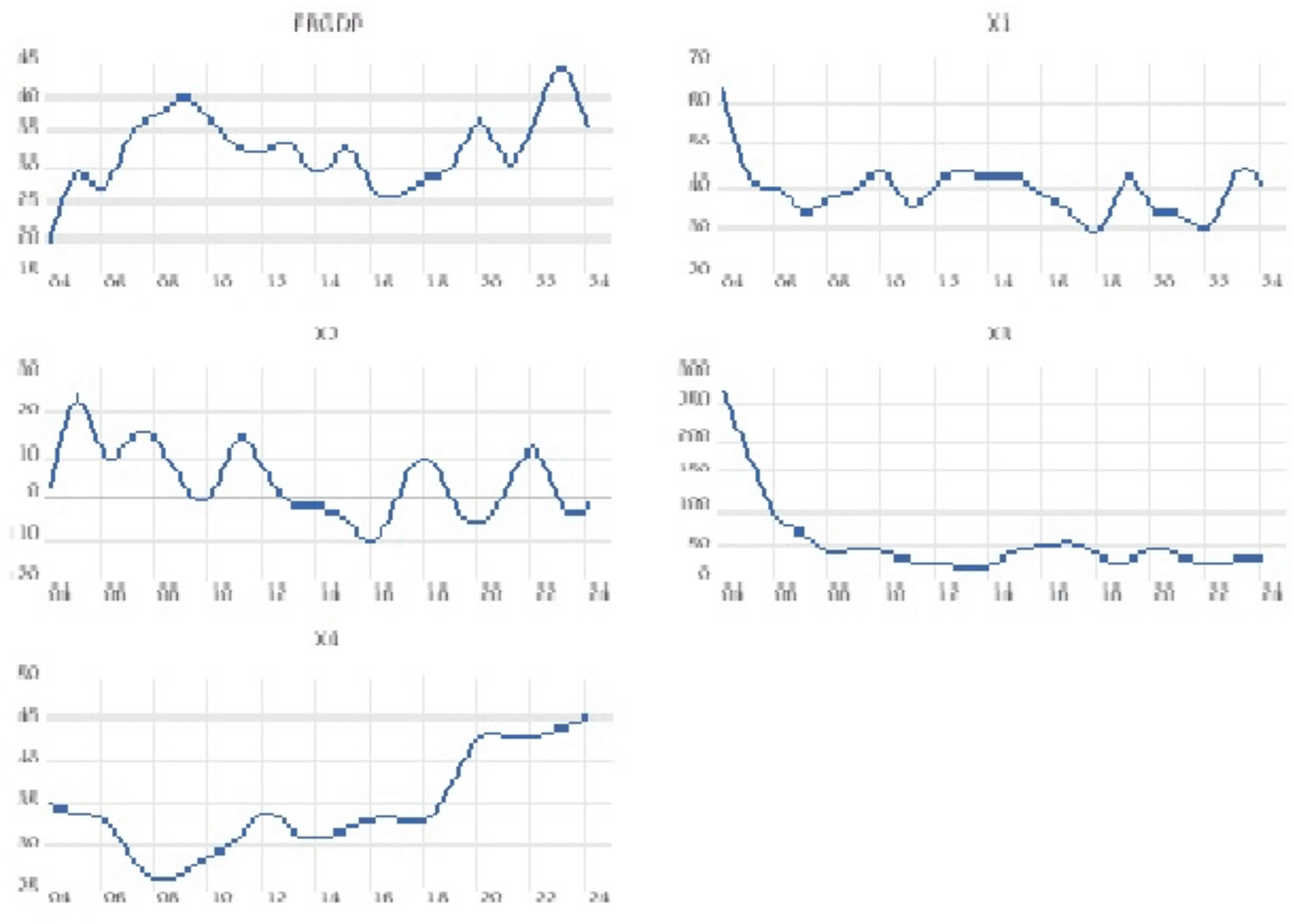
This test is one of the first simple tests used to draw a preliminary picture of the stationarity of the time series of the research variables used. However, it cannot be relied upon alone as a stationarity test, as it produces preliminary, uncalculated results and does not accurately determine the degree of stationarity or integration of the time series. Figure 1 shows the time series curves for the independent variables and the dependent variable at their original level. The graph shows that all time series data curves are non-stationary, given the presence of a general time trend that explains the fluctuations in the time series over time.
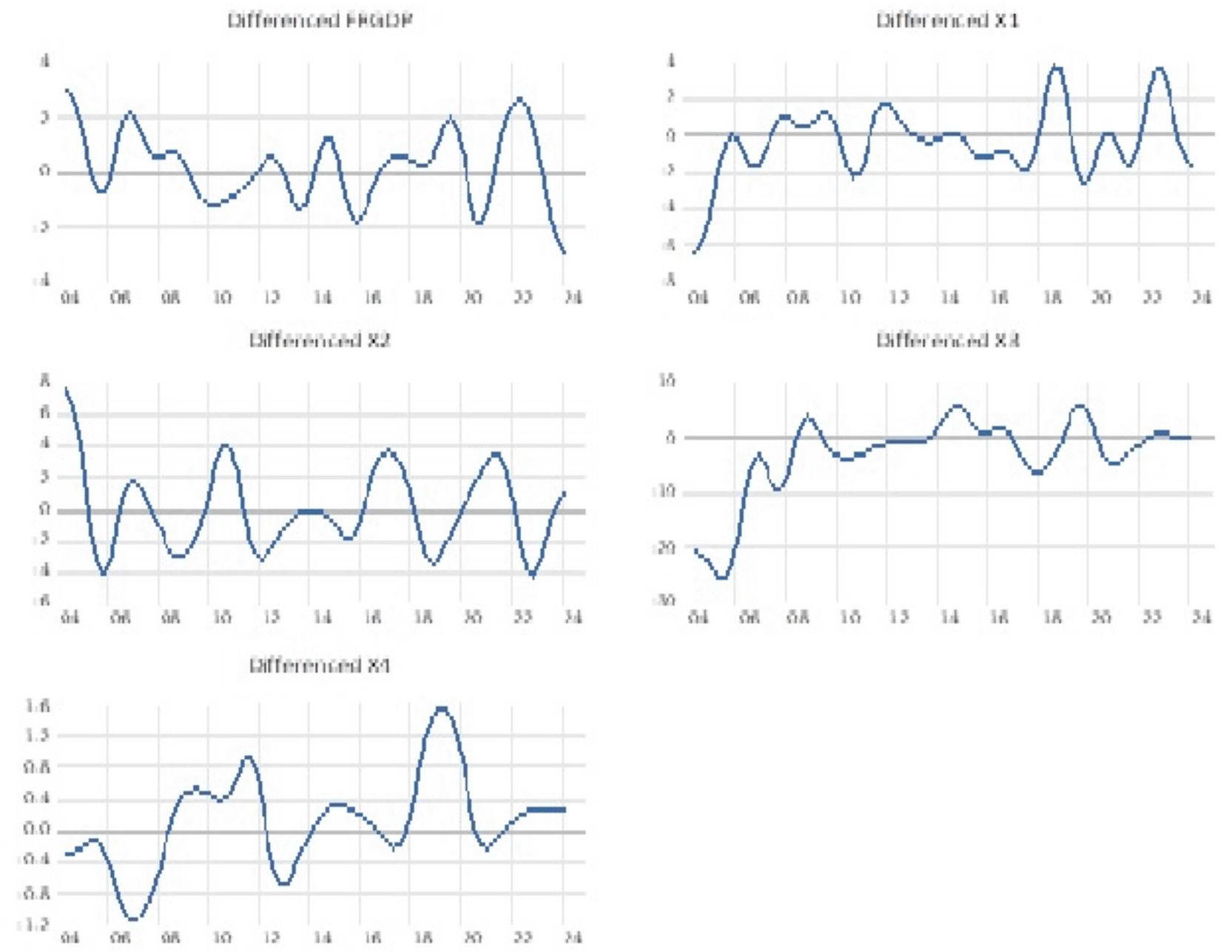
As a result of the non-stationarity of the time series of the research variables, their first difference was taken and represented graphically as in Figure 2, which shows the time series curves of the independent variables and the dependent variable at the first difference. It is clear from the graph that all the time series data curves became stationary at the first difference, in terms of the fluctuation of the time series and their spread around the relatively constant arithmetic mean over time.
2-2-2 Results of unit root tests for stationarity.
To more accurately verify the stationarity of the time series of the economic variables under study, detect the unit root problem, and determine the stationarity of the time series of the research variables, there are more than one test used to show the results of the unit root for stationarity, including the augmented Dickey-Fuller test and the Phillips-Perron test, which were used by the researcher as they are among the most accurate and reliable tests for detecting the stationarity of time series. Therefore, the research variables must pass both tests to determine the appropriate model for measuring the impact of financial discipline indicators and digital transformation in foreign reserve Adequacy index in the Iraqi economy, as follows:
2-2-2-1 Results of the augmented Dickey-Fuller (ADF) test.
Table 3 shows the results of the unit root test according to the augmented Dickey-Fuller test, which is used to test the null hypothesis (H_0:B=0), which confirms the presence of a unit root (i.e., the time series data for a variable are non-stationary), versus the alternative hypothesis (H_1:B≠0), which confirms the absence of a unit root (i.e., the time series data are stationary). The results of the research variables’ indicators showed that most of them are non-stationary at the level The original with the presence of the constant term, the constant term and the time trend, and without them at all levels except for indicators (FRGDP, X2), the calculated (t) value was less than the table (t) value at the significance level (1%, 5%), which means accepting the null hypothesis (H_0:B=0) and rejecting the alternative hypothesis (H_1:B≠0). However, the economic indicators of the research variables became mostly stationary after taking the first difference with the presence of the constant term, the constant term and the time trend, and without them at all levels (1%, 5%), as the calculated (t) value is greater than the table (t) value, which means rejecting the null hypothesis (H_0:B=0) and accepting the alternative hypothesis (H_1:B≠0), which states that the series of these research variables are stationary and do not have a unit root and are integrated of order (I(0), I(1)), and it is worth noting that some indicators, namely (d (FRGDP) and (d(X4)), did not appear significant at the 5% significance level. When using the With Constant & Trend test, this does not usually affect the results of the first difference if the rest of the tests are significant.
2-2-2-2 The results of the Phillips-Perron (PP) test.
Table 4 shows the results of the unit root test according to the Phillips-Perron test. It was found that the results of this test are almost identical to the Dickey-Fuller test and did not differ much, which gives greater credibility. The results of the research variables showed that they were not stationary at the original level with the presence of the constant term, the constant term and the time trend, and without them at all levels, except for some variables. The calculated (t) value was less than the tabular (t) value at a significance level of (1%, 5%). This means accepting the null hypothesis (H_0:B=0) and rejecting the alternative hypothesis (H_1:B≠0). Therefore, the first difference was taken and the economic indicators of the research variables became mostly stationary with the presence of the constant term, the constant term and the time trend, and without them at all levels (1%, 5%), as the calculated (t) value is greater than the tabular (t) value. This means rejecting the null hypothesis (H_0:B=0) and accepting the alternative hypothesis (H_1:B≠0), which states that The series of these research indicators are stationary and do not contain a unit root and are integrated of order (I(0), I(1)) and it is worth mentioning that some indicators, namely ((d(X3) and (d(X4)), did not appear significant at the 5% significance level when using the (With Constant & Trend) test, but this does not usually affect the results of stationarity at the first difference if the rest of the tests are significant.
2-3 Selecting the appropriate standard model.
After conducting time series stationarity tests for the research variable indicators using the histogram test and unit root stationarity tests (Adapted Dickey-Fuller test and Phillips-Perron test), it was found that the research indicators are stationary at the original level and first difference. Therefore, it is appropriate to use the Autoregressive Distributed Lag (ARDL) model to estimate the impact of financial discipline and digital transformation indicators on the index that reflects Foreign Reserve Adequacy in Iraq.
2-4 The standard model for analyzing the impact of financial discipline and digital transformation indicators in the index of reflects foreign reserve adequacy in Iraq for the period (2004-2024).
2-4-1 Preliminary estimation of the foreign reserves-to-GDP ratio model.
Table 5 shows the results of the initial estimation of the ARDL model, which illustrates the relationship between the independent variables, financial discipline indicators represented by (the ratio of public spending to GDP, the ratio of budget deficit to GDP, and the ratio of public debt to GDP), and the digital transformation index (the development of digital government), with the dependent variable, the index of reflects foreign reserve adequacy, represented by (the ratio of foreign reserves to GDP) in Iraq. It is clear that the coefficient of determination (R^2) reached (0.99), which gives explanatory power to the model under study, meaning that the independent variables explain (99%) of the changes that occur in the dependent variable, while the remaining percentage, amounting to (1%), represents the effect of other variables that were not included in the model. The value of the (F) test, amounting to (373.7231), indicates the significance of the model used in estimating the model parameters. As for the corrected coefficient of determination (R̅ 2), it reached (0.99), as the value of (R-squared) which was less than the value of Durbin-Watson stat)) this indicates the absence of spurious regression between the indicators and thus we proceed with the integrity of the initial model to estimate the joint integration relationship between the variables under study.
2-4-2 Testing optimal lag periods.
It is clear from Table 6 and Figure 3, which show the optimal lag periods according to the Akaike Information Criteria (AIC) for the ARDL model and through comparison between several models, that the rank of the standard model chosen according to the ARDL methodology is (6, 5, 5, 1, 2), according to the optimal lag period testing criteria (HQ, BIC, AIC). The lag period was chosen according to the AIC criterion because it represents the lowest value for this criterion.
2-4-3 Cointegration test using the bounds test.
In order to test the existence of cointegration (a long-term equilibrium relationship) between the indicators of financial discipline, digital transformation, and the index of Foreign Reserve Adequacy for the period (2004-2024), the Bounds Test is adopted by calculating the F-statistic and comparing it with the critical or tabular values for the upper and lower limits. Table 7 shows the results of the cointegration test for the ARDL model.
| F-Bounds test | Null hypothesis: No levels relationship | |||
|---|---|---|---|---|
| Test statistic | Value | Signif. | I(0) | I(1) |
| F-statistic | 5.589813 | 10% | 2.2 | 3.09 |
| K | 4 | 5% | 2.56 | 3.49 |
| 2.5% | 2.88 | 3.87 | ||
Table 7 shows that the calculated F value was (5.589813), and when compared with the tabular values, we find it was greater than the maximum tabular F value of (4.37) at a significance level of (1%). Therefore, the calculated F value is greater than the upper limit of the critical values. We reject the null hypothesis stating the absence of a long-term equilibrium relationship and accept the alternative hypothesis stating the existence of a long-term equilibrium relationship between the research variables during the research period. This means the existence of a long-term equilibrium relationship moving from the independent variables (fiscal discipline and digital transformation) toward the dependent variable, which is the subject of the research (foreign reserves to GDP ratio). This requires estimating the short- and long-term response and the error correction parameter to determine the direction and nature of the relationship.
2-4-4 Results of estimating the short- and long-term parameters and the error correction parameter for the foreign reserves to GDP ratio model.
After conducting stationarity tests, estimating the initial model, testing the limits, and verifying the existence of a long-term equilibrium relationship moving from the independent variables (indicators of financial discipline and digital transformation) towards the dependent variable (the ratio of foreign reserves to GDP), and after the model passes these tests, the short- and long-term parameters and the error correction parameter (ECM) should be estimated. This is shown in Table 8, which shows the results of estimating the long- and short-term responses according to the ARDL model for the relationship between the independent variables and the dependent variable in the Iraqi economy for the period (2004-2024), as follows:
Table 8 shows the relationship between financial discipline indicators and digital transformation the index of foreign reserve adequacy in Iraq for the period (2004-2024), according to the ARDL model. An economic explanation is provided for the standard model used and its consistency with the research hypothesis, the logic of economic theory, and the reality of the Iraqi economy, as follows:
• The estimation showed the existence of a joint integration relationship between the independent and dependent variables. This was confirmed by the error correction parameter in the model, which amounted to (-0.076117), as it was negative and highly statistically significant, reaching (0.0003) at a significance level of less than (1%). Thus, the basic condition for this parameter is met, as its negative sign and statistical significance, in addition to being less than one, confirm the existence of joint integration between the explanatory variables and the dependent variable. This value indicates that the adjustment speed is balanced, since (7.6%) approximately of the imbalance resulting from moving away from the equilibrium position is corrected in every quarter of a year, which means that the period required for the system to return to the equilibrium state after the shock occurs is approximately (13) quarters per year to return to a state of equilibrium after the financial shock, which is approximately three years and three months. This speed is relatively slow, as a result of the structural imbalances that the Iraqi economy suffers from and the excessive dependence on oil revenues, which makes the response of fiscal policy and foreign reserves to shocks take longer to return to a state of equilibrium.
• The estimated parameter for the ratio of public expenditures to GDP (X1) indicates a direct and statistically insignificant relationship with the index of Foreign Reserve Adequacy, represented by (the ratio of foreign reserves to GDP) in the short term. The coefficient of the index of the ratio of public expenditures to GDP in the short term reached (0.19), meaning that an increase in the index of the ratio of public expenditures to GDP by one unit leads to an increase in the index of (the ratio of foreign reserves to GDP) by (0.19). In the long term, the parameter indicates an inverse and statistically insignificant relationship. The coefficient of the variable of the ratio of public expenditures to GDP reached (-0.59), meaning that an increase in the index of the ratio of public expenditures to GDP by one unit leads to a decrease in the index of (the ratio of foreign reserves to GDP) by (0.59). Assuming other indicators remain constant, this is consistent with the economic logic in rentier economies such as Iraq, since increasing public spending in the short term may temporarily stimulate economic activity, but in the long term, expanding consumer spending at the expense of investment spending leads to the depletion of foreign reserves instead of strengthening them.
• The estimated parameter for the general budget deficit ratio to GDP (X2) indicates an inverse and statistically insignificant relationship with the index of Foreign Reserve Adequacy, represented by (the ratio of foreign reserves to GDP) in the short term. The coefficient of the general budget deficit ratio to GDP reached (-0.159), meaning that an increase in the general budget deficit ratio to GDP by one unit leads to a decrease in the (ratio of foreign reserves to GDP) by (0.159). In the long term, the parameter indicates a statistically significant direct relationship. The coefficient of the general budget deficit ratio to GDP reached (0.308), meaning that an increase in the general budget deficit ratio to GDP by one unit leads to an increase in the (ratio of foreign reserves to GDP) by (0.308). Assuming other indicators remain constant, which is contrary to economic logic, the reason for this is attributed to the mechanism of financing the general budget in the Iraqi economy, as the financial deficit is often a planned deficit that is covered by increasing oil production and exports or by external borrowing, which increases foreign financial flows that raise the size of foreign reserves.
• The estimated parameter for the public debt-to-GDP ratio (X3) indicates a direct and statistically insignificant relationship with the index of Foreign Reserve Adequacy, represented by (the ratio of foreign reserves to GDP) in the short term. The coefficient of the public debt-to-GDP ratio index reached (0.057), meaning that an increase in the public debt-to-GDP ratio index by one unit leads to a decrease in the (ratio of foreign reserves to GDP) index by (0.057). In the long term, the parameter indicates a statistically significant inverse relationship. The coefficient of the public debt-to-GDP ratio index reached (-0.48), meaning that an increase in the public debt-to-GDP ratio index by one unit leads to a decrease in the (ratio of foreign reserves to GDP) index by (0.48). Assuming other indicators remain constant, and this is consistent with economic theory, the reason for this is that the high ratio of public debt to GDP puts increasing pressure on the adequacy of foreign reserves, as a result of the high costs of servicing public debt, which leads to the depletion of foreign reserves in the long term.
• The estimated digital government development ratio (X4) parameter indicates a statistically significant inverse relationship with the index of Foreign Reserve Adequacy, represented by the foreign reserves-to-GDP ratio, in the short term. The coefficient of the digital government development ratio index reached (-0.865), meaning that a one-unit increase in the digital government development ratio index leads to a decrease in the foreign reserves-to-GDP ratio index by (0.865). In the long term, the parameter indicates a direct and statistically insignificant relationship. The coefficient of the digital government development ratio index reached (0.44), meaning that a one-unit increase in the government digital transformation ratio index leads to an increase in the foreign reserves-to-GDP ratio index by (0.44). Assuming other indicators remain constant, and this is consistent with economic theory, the reason for this is that digital transformation in the short term requires large capital investments in technological infrastructure, and this technology is often imported, which explains the negative impact in the short term. In the long term, the impact turns positive, indicating that digital transformation has begun to contribute to raising the efficiency of monitoring and collection and reducing financial waste. However, its lack of significance indicates that Iraq is still in the early stages of transformation.
2-5 Diagnostic tests to test the quality of the estimated model.
After estimating the initial model, testing for cointegration, and estimating the results of the short- and long-term parameters and the error correction parameter to measure the impact of financial discipline indicators and digital transformation in the index of Foreign Reserve Adequacy in Iraq for the period (2004-2024), it is necessary to verify the quality of the estimated model through a set of diagnostic tests and ensure that it is free of standard problems. The most important of these tests will be conducted according to the following:
2-5-1 Autocorrelation test and heteroscedasticity test for the foreign reserves-to-GDP ratio model.
Table 9 shows the results of the autocorrelation test based on the Lagrange factorial test for serial correlation (BGLM), which is the most appropriate test for detecting the presence of autocorrelation between the data of a random variable series. It is clear that the model does not suffer from the problem of serial autocorrelation, as the probability value associated with both the F test and the chi-square test was greater than 5%. The probability value of the F statistic was 0.6846, and the probability value of the chi-square statistic was 0.5418. This means accepting the null hypothesis that the estimated model is free of the serial correlation problem. It is also noted from the table showing the results of the heterogeneity of variance test that the model for the ratio of foreign reserves to GDP does not suffer from the problem of heterogeneity of variance, as the calculated value of the F statistic was 0.825327 at a probability level of 0.6963, meaning that the error variance is homogeneous.
| Breusch-godfrey serial correlation LM test: | |||
|---|---|---|---|
| Null hypothesis: No serial correlation at up to 2 lags | |||
| F-statistic | 0.382089 | Prob. F(2,46) | 0.6846 |
| Obs*R-squared | 1.225584 | Prob. Chi-Square(2) | 0.5418 |
2-5-2 The Jarque-Bera test for normal distribution of random errors.
The problem of normal distribution of random errors can be detected using the Jarque-Bera test, which tests the null hypothesis (H0), which states that the residuals are normally distributed, against the alternative hypothesis (H1), which states that the residuals are not normally distributed. Therefore, the Jarque-Bera test value indicates that the null hypothesis should be accepted because the probability value of (0.4437760) is greater than (0.05), meaning that the residuals are normally distributed, as shown in Figure 4. This is a good indicator of the statistical quality of the estimated model.
2-5-3 Multicollinearity test (VIF).
The Variance Inflation Inflation (VIF) test is a standard tool for measuring the degree of Interco linearity between independent variables within regression models. Its importance stems from its ability to reveal levels of overlap that may weaken the accuracy of statistical parameter estimation and distort the economic interpretation of results. High multicollinearity does not invalidate the model, but it does limit its explanatory power, which requires careful evaluation within standard analysis. Table 10 shows that the results of the Variance Inflation Inflation (VIF) test showed that all centered values of the independent variables fell below the standard threshold of (10). The value of (X1) was approximately (2.3), (X2) was approximately (1.76), (X3) was approximately (2.66), and (X4) was approximately (1.15). These values indicate that the estimated model does not suffer from the problem of multicollinearity, and that the correlation between the independent variables falls within the statistically acceptable limits, which enhances the validity of the estimation. And the reliability of the results obtained.
2-5-4 Results of the Ramsey reset test.
Table 11 shows the validity test of the estimated model’s functional form. This is evident from the calculated t-statistic value of 0.584842, with a probability value of 0.5615, which is greater than 5%. The calculated F-statistic value of 0.342041, with a probability value of 0.5615, which is greater than 5%, also indicates the acceptance of the null hypothesis stating the validity of the functional form used in the estimated model.
2-5-5 Results of the structural stability test for the ARDL model.
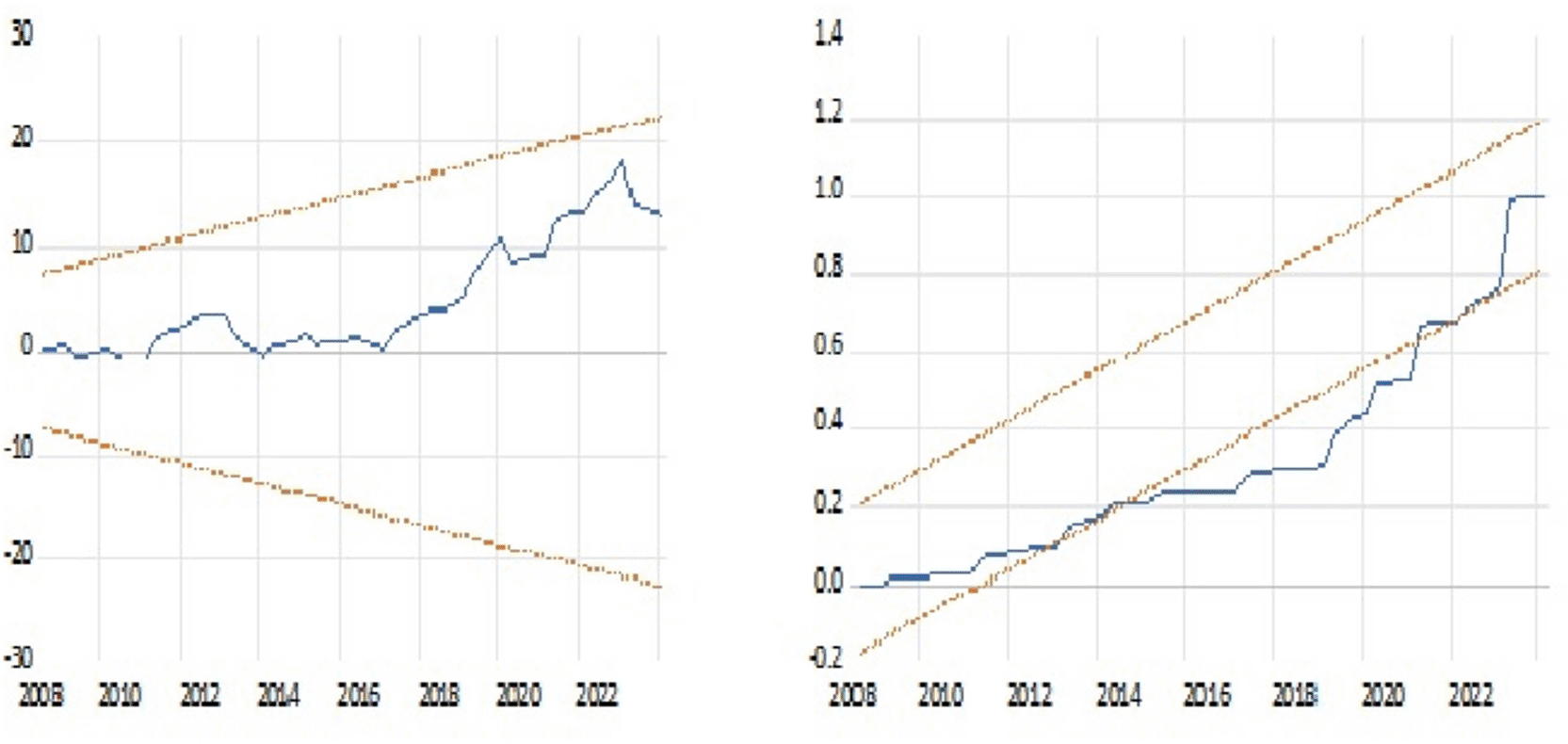
Figure 5 shows that the cumulative sum of residuals (CUSUM) test statistic fell within the critical limits at a significance level of (5%), and the squared residuals (SQ-SUSUM) also fell within the critical limits, despite their deviation as a result of economic shocks, but they returned to being within the critical limits. This means that the estimated coefficients of the used restricted error correction model are structurally stable over the research period and that there is consistency between the short- and long-term estimates.
2-5-6 Results of the quality control test of the estimated ARDL model.
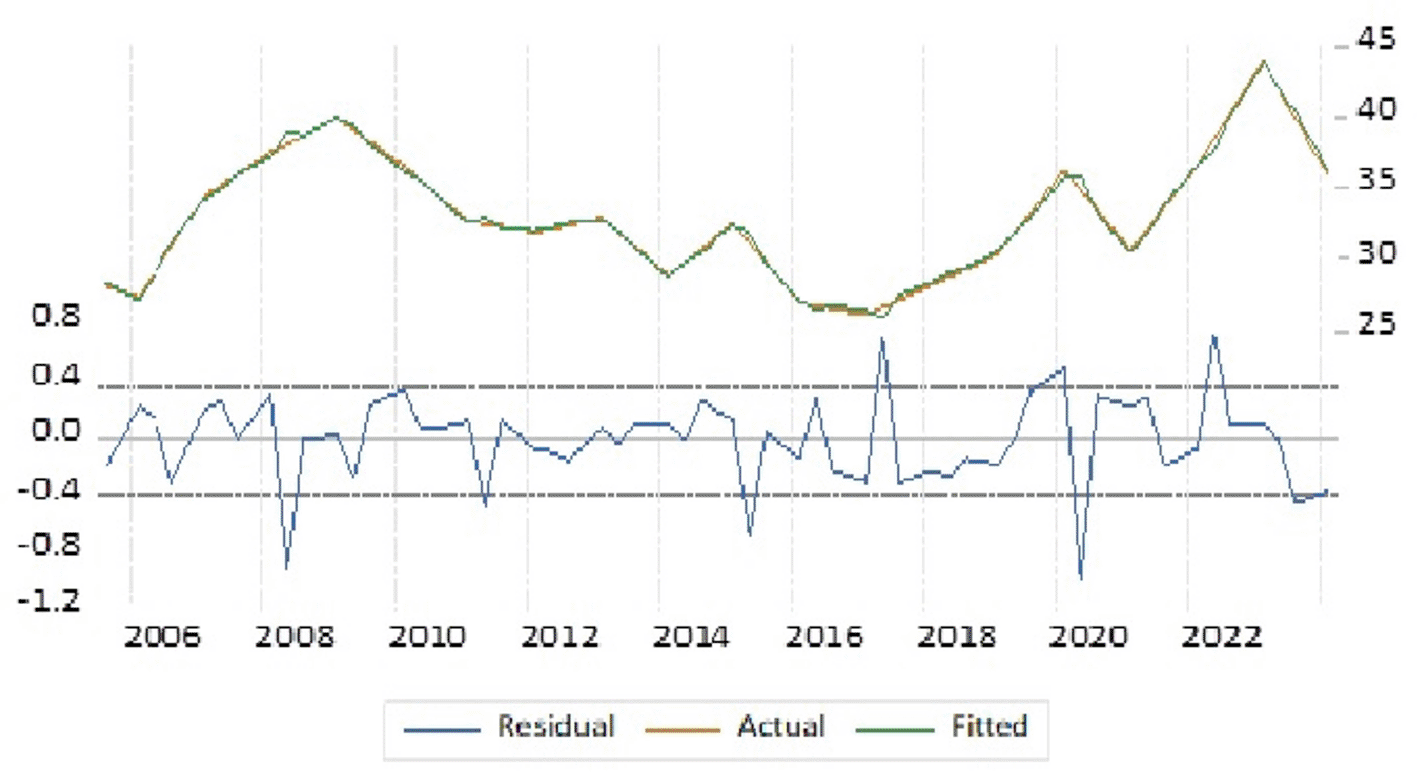
Figure 6 shows the quality control test of the standard model for the impact of financial discipline and digital transformation in Foreign Reserve Adequacy. There is a convergence between the actual and estimated values, and the residuals are lower than these values in this model. This confirms the statistical quality of the estimated model.
2-5-7 Results of the predictive performance test of the estimated ARDL model.
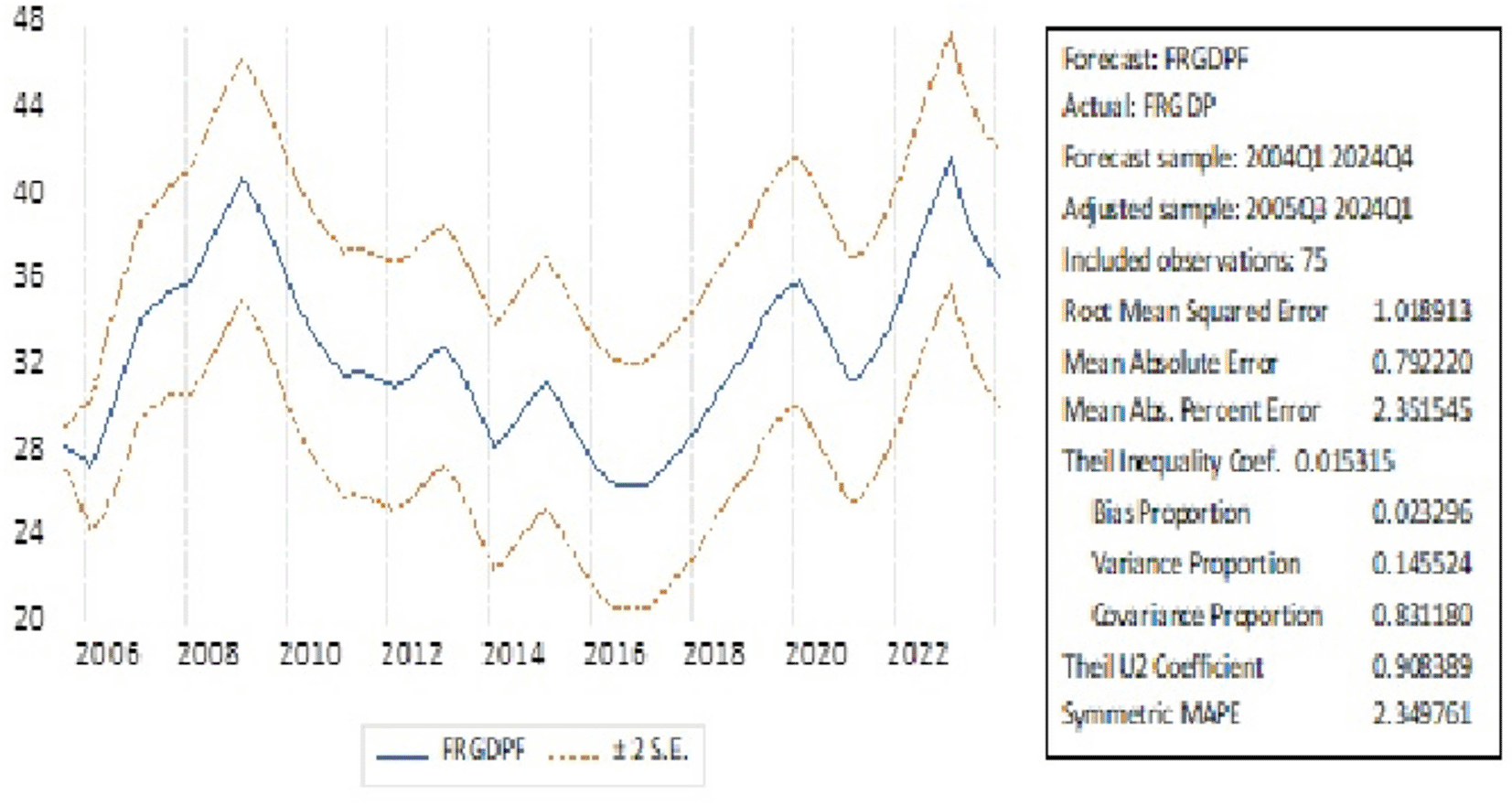
After the estimated model was subjected to stability tests, verification of the efficiency of independent coefficients, and ensuring the integrity of the time series used from any interruptions or structural transformations, and since the model showed high explanatory power, the researcher decided to move to the Theil inequality coefficient test, in addition to analyzing the sources of error, in order to verify the efficiency of the model for the ratio of foreign reserves to gross domestic product in predictive performance, and measure its ability to simulate the Iraqi economic reality to an acceptable degree during the research period. It is clear from Table 12 and Figure 7 that the value of the Theil Inequality Coefficient during the research period reached (0.015315), which is a small value less than one and close to zero, which reflects the high efficiency of the model in simulating reality. The Bias Proportion ratio reached (0.023296), which is a value that indicates the smallness of the error resulting from the deviation of the averages between the expected and actual values, while the Variance Proportion ratio reached (0.015315). (0.145524) is less than one, which confirms the model’s ability to accurately represent the degree of fluctuation of the actual time series. The covariance proportion reached (0.831180), which is close to one, which means that most of the forecast error is due to random factors that are difficult to control, and not to a systematic deficiency in constructing the model. Thus, it can be concluded that the model of the ratio of foreign reserves to GDP in Iraq for the period (2004-2024), which is estimated, has a high ability to predict, and therefore its results can be relied upon in analysis and interpretation in the Iraqi economy.
2-6 Results of the cumulative dynamic multiplier.
2-6-1 The impact of the public expenditure-to-GDP shock on the foreign reserves-to-GDP ratio.
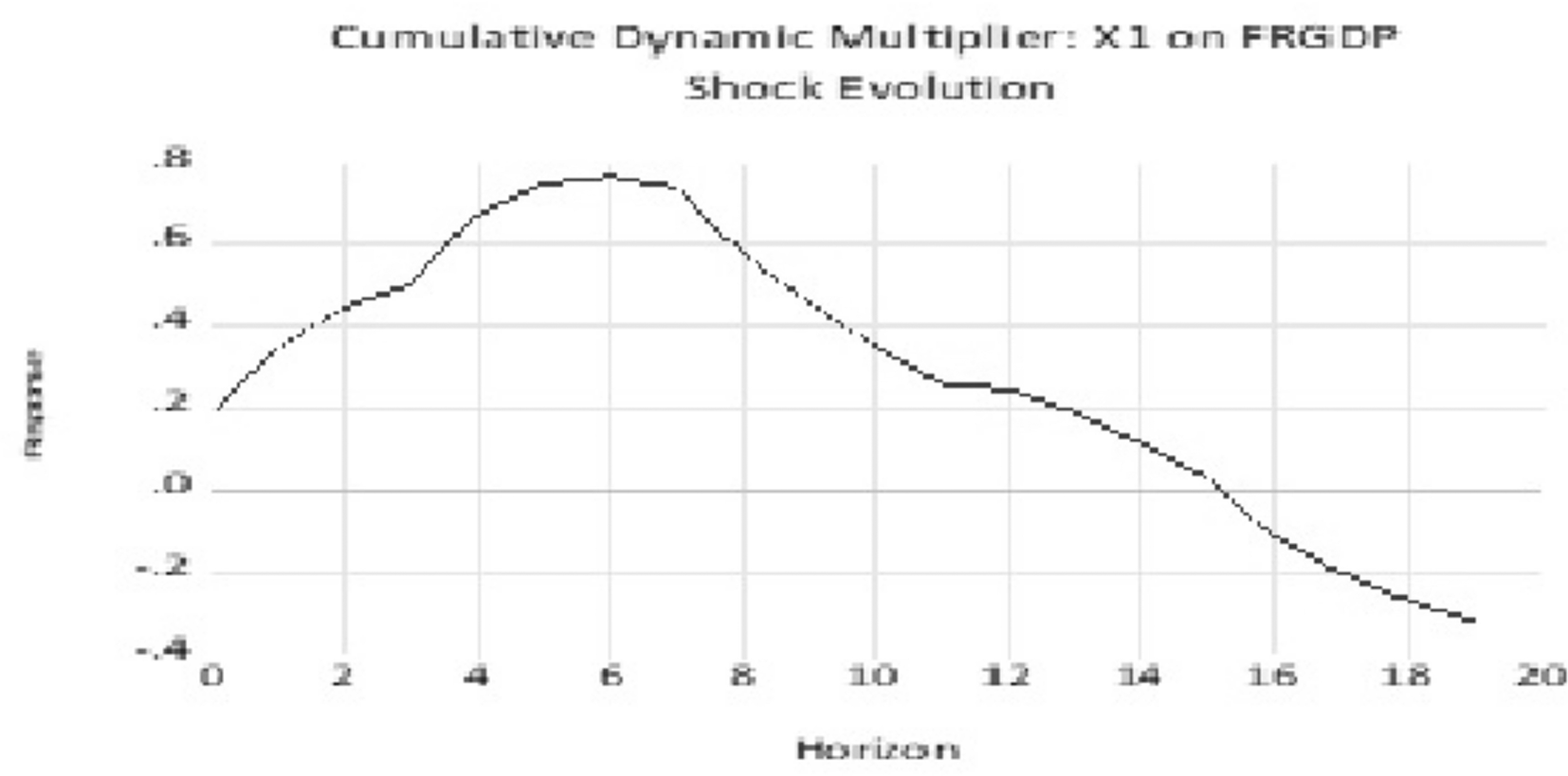
Figure 8 shows that the response of the foreign reserves-to-GDP ratio to the public expenditure-to-GDP shock begins positively from the first period, with a value of approximately (0.2). Given that the data are quarterly, but the graph displays responses on a semi-annual basis (i.e., each period is equivalent to six months), the peak is achieved at period (6), equivalent to three years, with a value of approximately (0.8). Thereafter, the response gradually declines, losing its strength over time, entering negative territory starting at period (15), equivalent to seven and a half years, and continuing to decline until the end of period (20), equivalent to ten years, at a level of approximately (-0.3). The reason for this is that the largest proportion of public expenditures is allocated to consumer spending, which burdens the general budget and increases financing pressures, weakening Foreign Reserve Adequacy in Iraq.
2-6-2 The impact of the general budget deficit-to-GDP ratio shock on the foreign reserves-to-GDP ratio.
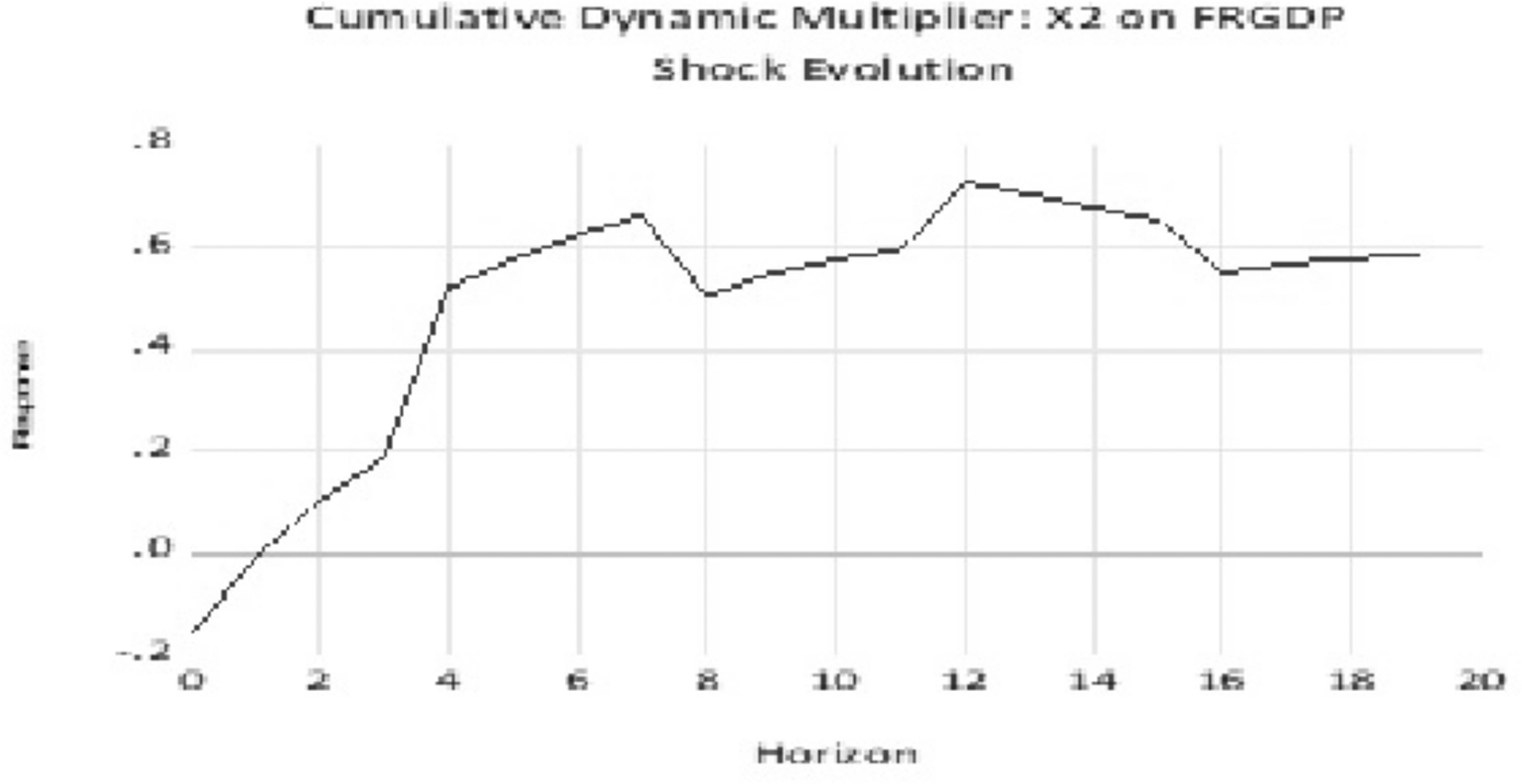
Figure 9 shows that the response of the foreign reserves-to-GDP ratio to the general budget deficit-to-GDP shock begins negatively from the first period, with a value of approximately (-0.1). However, after approximately period (1), the effect turns positive, peaking at period (12), equivalent to six years, with a value of approximately (0.8). After that, the response declines but remains positive until the end of the period, reaching a value of approximately (0.6). This indicates that the budget deficit transforms over time into a support for foreign reserves, as a result of the rentier nature of Iraq’s economy and the budget’s reliance on oil revenues and external debt for financing.
2-6-3 The impact of the public debt-to-GDP shock on the foreign reserves-to-GDP ratio.
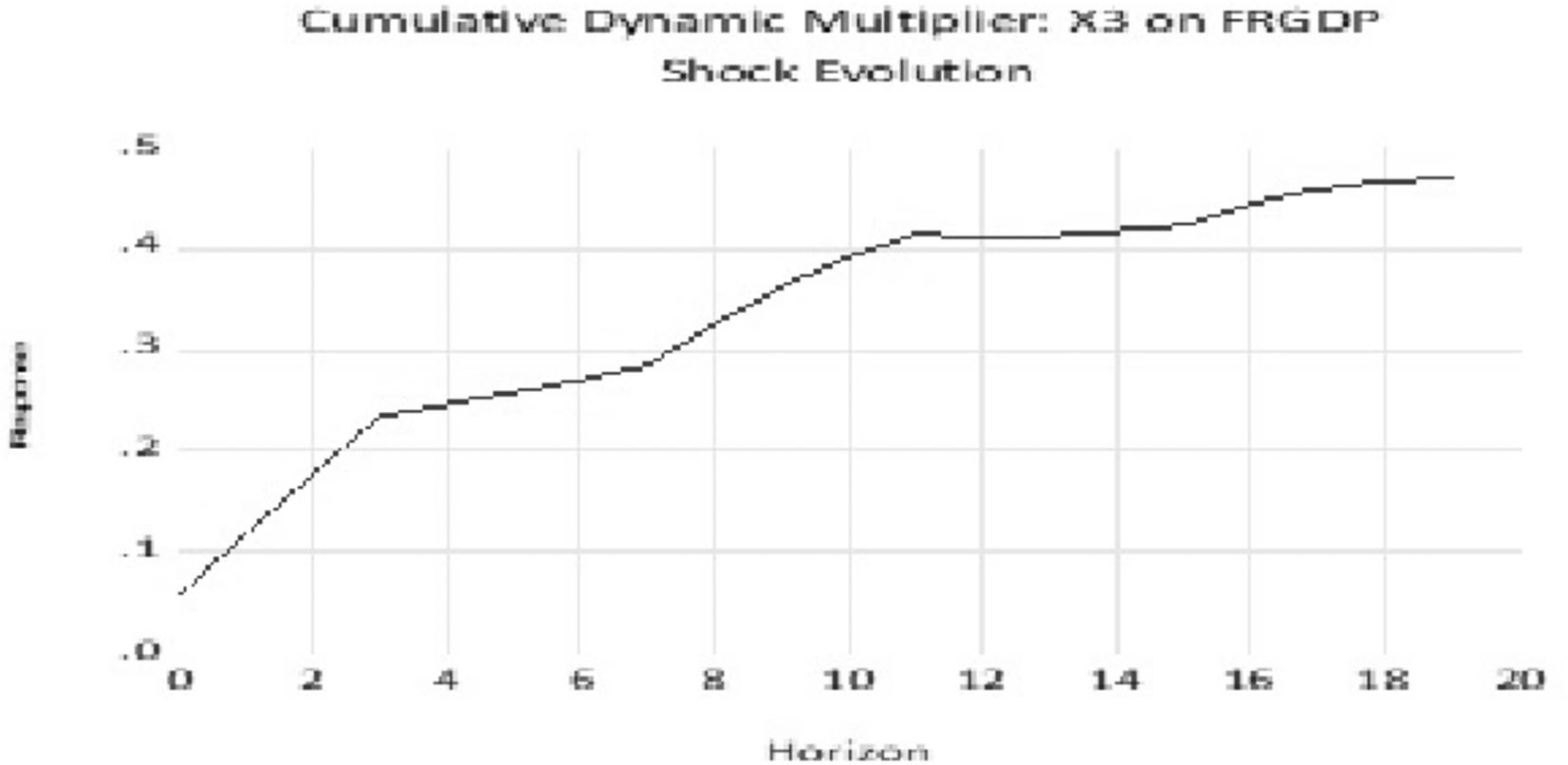
Figure 10 shows that the response of the foreign reserves-to-GDP ratio to the public debt-to-GDP shock begins positively from the first period, with a value close to 0.1. The positive effect then increases and continues until the end of the period, stabilizing at approximately 0.5. This indicates that the public debt shock had a positive impact on enhancing Foreign Reserve Adequacy in Iraq. This is attributed to the increase in oil revenues, which contributed to reducing the size of the public debt.
2-6-4 The impact of the government digital transformation shock on the foreign reserves-to-GDP ratio.
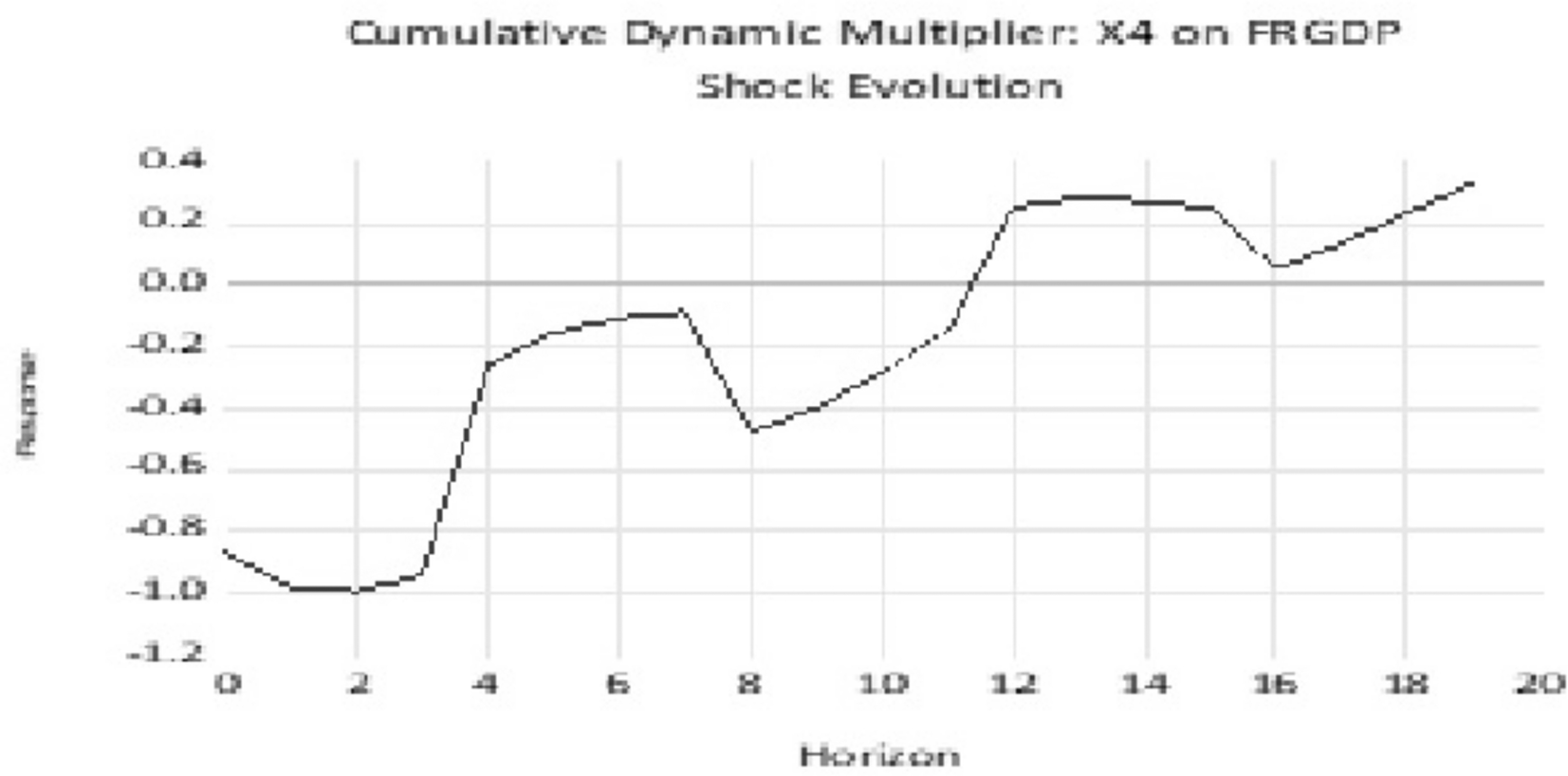
Figure 11 shows that the response of the foreign reserves-to-GDP ratio to the government digital development shock begins negatively from the first period, with a value close to (-1). However, after approximately 11 years, the effect turns positive, peaking at the end of the period with a value close to (0.4). This indicates that the government’s digital development is transforming over time into a support for foreign reserves. This is attributed to the pressures of public expenditures on digital infrastructure, which represents a burden on foreign reserves in the short term. However, in the long term, government investment in digital transformation has a positive impact, benefiting Foreign Reserve Adequacy reserves by improving the efficiency of fiscal and monetary policies.
1. The results of the standard model estimation (ARDL) proved the existence of a long-term equilibrium relationship that moves from the explanatory variables, represented by (indices of fiscal discipline and digital transformation), towards the dependent variable, which is the subject of the research, represented by (the index of the adequacy of foreign reserves in Iraq). This confirms that foreign reserves in the Iraqi economy are not only related to monetary authority, but are also related to the quality of fiscal policy and digital transformation.
2. The error correction parameter showed that it was negative, less than one, and statistically significant, as its value reached (-0.076117), which indicates the existence of a self-correction mechanism towards long-term equilibrium, meaning that about (0.076) of the imbalance in the short term is automatically corrected over time and returns to a state of equilibrium in the long term. This indicates that the Iraqi economic system needs (13) quarters to overcome financial shocks, and this rate of adjustment is relatively low, which reflects the rigidity of the financial structure and the excessive dependence on oil resources.
3. The results of the budget deficit estimates to GDP showed a positive effect on the foreign reserves adequacy index represented by (the ratio of foreign reserves to GDP) in the long term, as a result of the fact that public spending is often financed through oil revenues and external debt, both of which are cash flows in foreign currency and this indirectly enhances foreign reserves.
4. The results of the estimates of the index of the ratio of public expenditures to GDP showed a negative and insignificant effect, while the index of the ratio of public debt to GDP showed a negative and significant effect on the index of the adequacy of foreign reserves represented by (the ratio of foreign reserves to GDP) in the long term, which reflects the weakness of the current fiscal policy and its weak financial productivity, as most of the public expenditures and public debt are directed towards consumer spending and not towards productive sectors that generate alternative financial returns, and this raises the cost of public debt and increases the depletion of foreign reserves. The results showed that the Digital Transformation Index has a positive but insignificant impact on the Central Bank’s efficiency index in managing foreign reserves in the long term. This is consistent with the research hypothesis, the logic of economic theory, and the reality of the Iraqi economy, given that Iraq is considered one of the lagging countries in this field. However, it underscores the supportive and growing role of government digital transformation in enhancing and sustaining foreign reserves.
5. The results of the Digital Government Development Index estimates showed a positive but not significant impact on the foreign reserves adequacy index, represented by (the ratio of foreign reserves to GDP) in the long term. This confirms the supportive and growing role of financial technology in reducing waste and enhancing financial transparency, which paves the way for strengthening and sustaining foreign reserves once the stage of institutional maturity in digital transformation is reached.
1. The government must adopt a program to restructure public spending by reducing inflated consumer spending in favor of investment spending in exportable productive sectors, to ensure that fiscal policy contributes to generating foreign currency inflows that strengthen the central bank’s foreign reserves. The government must work to reduce the size of public debt to finance the fiscal deficit by diversifying funding sources and reducing unproductive borrowing, thus reducing the burden of public debt on foreign reserves.
2. The need to work on setting a binding ceiling for public debt, and linking external borrowing to the financing of productive projects with economic feasibility that are capable of paying their obligations, in order to avoid depleting foreign reserves in servicing installments and interest on unproductive consumer debts.
3. The need to accelerate the promotion of government digital transformation and complete the digital transformation project in financial institutions, not only as an administrative tool but also as a mechanism to control financial transfers and border crossings in order to reduce the illicit demand for foreign currency.
4. The need to activate coordination channels between the financial authority and the monetary authority to ensure that government financial expansion programs and plans are aligned with foreign reserve adequacy standards, thus ensuring that there is no conflict between financial expansion policies and the stability of the local currency exchange rate.
5. The need for the central bank to adopt more modern models for measuring the adequacy of foreign reserves (such as the IMF model) instead of relying on simple ratios.
The data supporting the findings of this study are openly available in [Zenodo] at [ https://doi.org/10.5281/zenodo.18937755], under the Creative Commons Attribution 4.0 International (CC BY 4.0) license. (Awad & AL-Jumaili, 2026).
Repository name: [The role of financial discipline and digital transformation in enhancing the efficiency of the Central Bank of Iraq in managing foreign reserves in Iraq for the period (2004-2024)]. [https://doi.org/10.5281/zenodo.18937755]. (Awad & AL-Jumaili, 2026).
The project contains the following underlying data:
[Fiscal Discipline, Digital Transformation, and Central Bank Efficiency Index (2004-2024).xlsx] (Primary time-series data compiled from Central Bank of Iraq annual bulletins and UN Digital Government Development Index reports).
Data are available under the terms of the Creative Commons Attribution 4.0 International license (CC BY 4.0).
| Views | Downloads | |
|---|---|---|
| F1000Research | - | - |
|
PubMed Central
Data from PMC are received and updated monthly.
|
- | - |
Provide sufficient details of any financial or non-financial competing interests to enable users to assess whether your comments might lead a reasonable person to question your impartiality. Consider the following examples, but note that this is not an exhaustive list:
Sign up for content alerts and receive a weekly or monthly email with all newly published articles
Already registered? Sign in
The email address should be the one you originally registered with F1000.
You registered with F1000 via Google, so we cannot reset your password.
To sign in, please click here.
If you still need help with your Google account password, please click here.
You registered with F1000 via Facebook, so we cannot reset your password.
To sign in, please click here.
If you still need help with your Facebook account password, please click here.
If your email address is registered with us, we will email you instructions to reset your password.
If you think you should have received this email but it has not arrived, please check your spam filters and/or contact for further assistance.

Comments on this article Comments (0)