Keywords
Christian learners, transitioning, career choice, medicine, career trajectory

Christian learners, transitioning, career choice, medicine, career trajectory
It is unclear why there is little appeal in general practice and, ultimately, the decline in primary healthcare globally. Measures to improve interest in general practice such as an undergraduate education of high quality includes practical experiences; ensure professional autonomy; reconciliation of work-family; and job stability (Mahlknecht, Engl, Barbleri, Bachler, Obwegeser, Piccolion, and Wledermann 2024, 1). In addition, the World Health Organization (WHO) emphasizes the gap between the supply and demand of the healthcare industry, predicting a shortage of approximately 18 million by 2030 (World Health Organization 2016). The health and care workforce (HCWF) needs to respond as effectively as possible to the health crises and the health needs that are changing in “ageing populations, a rise in chronic conditions and growing inequality” in order to ensure future global health security. “COVID-19 has drawn attention to an impending HCWF crisis with a large projected shortfall in numbers against need. Addressing this crisis requires countries to move beyond a focus on the number of doctors, nurses, and midwives to consider what kinds of healthcare workers can deliver the services needed; are more likely to stay in the country, in rural and remote areas, and in health sector jobs; and what support they need to deliver high-quality services’ (McPake, Dayal, Zimmermann, and Williams 2024, 879).
The choice of whether to attend a higher institution such as a university, once the learners have completed their high school education, is life-changing, as their choice determines who they eventually become (Williams 2020, 1). Nel et al. (2009, 974, and 987) opine that transitioning successfully from school to university is of utmost importance for academic success, particularly in the first year. Many students are not well prepared for university as there is a gap between school and university; the inequalities in the school system do not prepare the students adequately, and the universities are not well-equipped to accommodate such learners, especially those from disadvantaged backgrounds. Academic, social, emotional, cultural, and financial factors play important roles in the transition from school to university. This calls for integrated and holistic pre-university interventions in schools. The emphasis is on developing intellectually and professionally, but their emotional, mental, and spiritual development is also considered, in some cases, more so (Williams 2020, 1).
Limited career counselling in South Africa results in many gifted learners not completing their schooling, and their high school grades are not sufficient to qualify for university. As a result, the unemployment crisis in Africa has been exacerbated (Maree 2019, 218). Career intentions encourage medical students to be committed to their career and to remain in the medical profession (Shi and Who, 2024). Transition patterns play a crucial role in the changes that occur in medical students’ trajectory intentions and in identifying the ideal time to intervene in an effort to prevent medical student attrition. There were learners who opted for a gap year. Taking a gap year (or more) before entering medical school affords students time to explore other career avenues and opportunities and to gain life experiences (Guang, Eltorai, Durand, and Daniels 2019, 611). In particular, where Christian students are faced with a medical career decision, they can be reminded of the goodness, faithfulness, and presence of God in Jeremiah (NIV 29,1) – “for I know the plans I have for you”, declares the Lord,” plans to prosper you and not to harm you, plans to give you hope and a future” (Davidson, Davidson, and Campbell 2017, 213).
The main research question guiding this study is: What are the lived experiences and their meanings for Grades 11 and 12 Christian learners and first-year medical students: to make a medical career choice based on their faith (including other pulling forces), transitioning to university, and deciding on a medical career trajectory? The aim of this study was to uncover and portray the meaning of the participants’ experiences and their meanings in the research question, which can contribute to the field of career development/counseling.
As a result of the many demands of students, maintaining a healthy lifestyle is often neglected. For example, declining physical activity, unhealthy eating habits, poor sleeping patterns, and sedentary behaviours negatively impact their health, wellbeing and academic success (Krpalek, Javaherian-Dysinger, and Hewitt 2017, 36). During the transition period from pre-university to university, self-identified Christian students who live out of their religious identities can be destabilized. The diverse social differences and backgrounds among Christian students, as well as non-religious social factors, often lead them to question, modify, or even lose their religious identities. However, enacting their faith helps them carry their pre-university life experiences to that of their university careers. Their religious beliefs and practices help them develop a sense of familiarity as well as cultural resources to forge relationships with like-minded students (Sharma and Guest 2013, 59). In this study, it was their religious identity that propelled them to choose medicine as a career.
Based on Goel, Angeli, Dhirar, Singla, and Ruwaard’s (2018, 1) findings that there is a great shortage of health workers (medical doctors) in the world, it is necessary to establish what motivates students to choose medicine as a career choice and recruit qualifying learners in doing so. As the courses in pre-Med become more advanced, the attrition rates that were initially high dropped. It was found that learning strategies contributed the most to predicting grade averages (Musso, Hernández, and Cascallar 2020, 875).
Piedmont and Robra (2015, 1, 12) found that human medicine students have a clear career aim and want to complete their studies quickly. Their interest in working with, as well as for, people is far above average. They are likely to believe that their university education is practical and research-relevant, and that they are prepared for their medical careers. Nevertheless, they feel that they have less support in some competency areas that they need later on, such as developing independence, having the ability to problem-solve, a critical ability, and an ability to engage in teamwork. Although they are prepared regarding practical relevance and career preparation, their theoretical and practical skills are not sufficient to meet the demands of the profession.
Altruism is linked to the medical profession, as medical history reveals. Those who wish to study medicine are drawn to it for its altruistic values, dedication to service, and the desire to alleviate suffering and promote healing (Vearrier 2020, 147). However, a threat to altruism is “empathy erosion” (ibid. 150), which develops in medical schools as a result of student burnout. “Burnout causes deterioration in mental and physical health leading to increased substance abuse, depression, and suicidality” (Vearrier 2020, 150).
Jha, Shankar, Al-Betar, Mukhia, Hada, and Palanian (2022, 927) explained that the role of AI is becoming increasingly important in the education of healthcare and health professions. In their study, they found that medical students were very willing to learn about AI, which is a good sign to make successful future changes in the curriculum, such as AI-related topics and machine learning. The delay in teaching AI to medical students can result in them being unprepared regarding handling threats and challenges on a personal as well as professional level, which justifies an urgent call to educate future doctors on AI.
In 1 Corinthians 12: 4–7 (NIV 2005),
There are different kinds of gifts, but the same spirit. There are different types of services, but the same Lord. There are different kinds of work, but the same God works all of them in all men. Now, the manifestation of the spirit is given for the common good. To one there is given through the Spirit the message of wisdom to another the message of knowledge by means of the same Spirit, to another faith by the same Spirit, to another kind of healing by that one Spirit ….
Calling is relevant to faith-work integration, as there is an overlap of religion, spirituality, and vocational development (Alayan 2021, 18). Being able to actively engage in expressing their gifts as a way to glorify God and serve the common good is a necessary component to faithfully integrate their faith and work (Dik 2020, 146). In their study, Laura, Friedrich, Mehdi, and Céline (2022, 662–663) found that doctors who felt a calling seemed “to find what they were and are looking for”; that is, that they are in “the right place.” Bonvin, Stiefel, Gholam, and Bourquin (2022, 2) state that students who have a calling to study medicine are more confident about their study choice, that is, there is choice consistency.
People who try to find their calling also try to cope with fundamental aspects of their faith. There are complex links between religious and career identities and feelings such as doubt, anger, and emptiness. It is advised that religious/spiritual advisors assist career counsellors in their work. A student’s relationship with God needs to be discussed, and church attendance, prayer, and communication are important in finding their calling (Hernández, Foley, and Beitin 2011, 82).
Alayan (2021, ii, and 11) found in her study that many highly religious undergraduate students have their career development processes influenced by their religious belief systems. “Christians are ordinarily (and appropriately) encouraged to pursue a prayerful discernment strategy in which they carefully seek God’s will” (Dik 2020, 144), hence Christianity is the religion appropriate for this study. Since Christians need to “influence the world” and be “reformers” reformers’(in this case, medical doctors) in all areas of life, it is considered accommodating Christianity. Thus, Christians need to adopt an integral Christian worldview in order to effectively and continuously influence the world as it “addresses the economy, politics, society, culture, religion, education and society as a whole” (Theron and Lotter 2009, 467).
When making a career choice, one should consider one’s “skills and abilities, gifts and talents, passions, beliefs, and values and be all in with our hearts and minds. This may lead to doing and being all we are meant to be.” Hence, those who believe in God and have a relationship with Him will play a very important role in their career choice (Miraz 2022, 3–7). Miraz (2022, 10–11) postulates that work is not just a job; it is fulfilling the call of God. It is the Christian’s vocation that their faith in God is manifesting God’s grace and love in an active way in their everyday life. “Medicines’ commitment to beneficence and service to humanity coincides with fundamental aspirations of Christians.” Consequently, practicing believers find the field of medicine attractive (Knight and Kim in Peteet and D’Ambra 2011, 106).
In this study, we used a qualitative approach to explore Christian learners’ transition from school to medicine as a career choice, which aligns with our research question. We used the phenomenological method of inquiry, reflecting on the data of learners’ lives through experiences and memories. Data collection tools included semi-structured interviews (transcripts), drawings (Creswell 2009, 114) and essays. Field notes have also been used (Koopman and Koopman 2020, 49).
To ensure trustworthiness, we asked the participants whether the extent of congruency of the findings to reality had a credible shared relationship. Triangulation was performed by member-checking the participants during face-to-face interviews. Transferability was ensured by detailed data collection and timeframes that portrayed rich circumstances to apply to other peoples’ situations. By bracketing, we were as objective as possible to ensure confirmability by upholding non-involvement and choosing natural environments (Stahl and King 2020, 27).
The participants were chosen selectively (purposive sampling); that is, they had experienced the phenomenon being studied in order for the researcher to arrive at a common understanding (Creswell 2007, 62) “according to the intensity with which the interesting features, processes, experiences, and so on are given or assumed in them” (Flick 2023, 165). Thus, the findings are transferable to readers’ own experiences (Koopman and Koopman 2020, 53). All three participants, as indicated in Table 1, were selected from a city in Mpumalanga province. The participants were allocated pseudonyms and comprised one Grade 11 female learner (black) in a private school (LS), one Grade 12 learner (white) in a public school (LK), and one colored first-year university (in Gauteng Province) female student (UK). Written informed consent was obtained from the parents of the participants LS and LK as well as assent was obtained from the two 18 years old and under participants (LS and LK). Participant UK provided written informed consent to participate.
Since epoché is an ongoing, analytical process, we used introspection to identify personal bias, to exclude personal involvement and preconceptions, and not to allow our lived experiences to influence the participants’ lived experiences (Patton 2002, 484–485). We engaged deeply with interview transcriptions, participant illustrations, and essays by way of reading, writing reflectively, reading again, and writing again. As revised understandings emerged, we used “a qualitative image-based interpretative research approach” (İnözü 2018, 177) as a way to analyze the drawings. The interviews were used to verify the drawing interpretations and “to provide a window into the students’ minds” (ibid. 177). These actions ensured rigor (Neubauer, Witkop, and Varpio 2019). We organized descriptions, notes, and illustrations into themes regarding participants’ experiences. We categorized them as reflexively questioned the themes as well as the categories and checked whether the different themes belonged to a particular group. We chose to apply value coding, as it reflects the participants’ values (V), attitudes (A), and beliefs (B) that represent their “perspectives or worldview” (Saldaña 2013, 110) pertaining to the title. Once we gained sufficient information that enabled us to replicate the LK study and additional information was gleaned, it did not necessitate more coding, which meant that data saturation had been reached (Fusch and Ness 2015, 1408). The summary of the process is indicated in Table 2 which provides the codes, categories and phenomological themes.
The experiences described via the three data collection tools were still ongoing and dynamic, hence the participants’ transitioning and trajectory had not yet reached Maslow’s hierarchy of needs’ apex namely, self-actualization, as it is a “lifelong process” that is unfolding (Hernández et al. 2011, 70).
In the following discussion, the themes ( Table 2) are arranged chronologically (from the earliest to latest). The participants’ quotes clearly show their lived experiences of the phenomenon and what it means to them. That meets the aim of hermeneutic phenomenology: “The research of hermeneutic phenomenology does not look for ‘truth’ but for the participants’ perceptions of ‘their truth’ – their own experiences as they perceive them (Sloan and Bowe 2014, 1300). Bringing the phenomena to light is the result of the study and the contribution to knowledge” (ibid. 1302).
Each participant’s interview responses (doi.org/10.25399/UnisaData.3069355) were set out as follows: first, LS; second, LK; and third, UK; thereafter, their essays and illustrations follow, and snapshots of the findings are provided. The themes are closely related, and many similarities and integration are evident, whereas opinion and speculation are not valued as data and are discarded/ignored. The research question was adequately answered by following the above procedure, as described below.
Interview responses
LS marks have improved since Grade 9, and she is expecting high marks in Grade 11. In Grade 11, she upped her game. LS believes that her marks have improved since she involved God in her academic life, and she admits that, “Oh, I know I am smart. I just always had to do more voluntary stuff, yeah, that’s exactly what I am aiming to do right now. Be more in a hospital, be more involved because when you are doing things like cleaning out after someone, like without having to get any money for it, it’s like the money will motivate you, but then you learn that it is not about the money. It’s about life and then you grow a passion for it, you will give it your 100 percent.” LS’s quotes prove her already lived experiences, what they mean to her, and how they have influenced her transition and trajectory.
LK found it difficult to transition from primary school where it was a safe environment and she was able to excel academically, in sports and all rounds, whereas high school had more challenges to contend with, such as demanding academics and high learner numbers. LK has put much thought into arriving at her decision, even though she still feels she needs to delve deeper, to take it “one step at a time,” and not to rush into a life decision. LK acknowledges that transitioning from school to university is stressful, challenging, and frightening. Despite these challenges, she became aware that she was confident and adaptable. LK considers initiation at university as important because it affords one the opportunity to know the other students around you and those in your residence as well, and to bond with them. If you do not participate in the initiation, then you can feel like an outsider and not feel like a part of the student community. Currently, her main purpose is to work hard and to endeavor to achieve good marks and to “keep my faith strong and then just wait for the direction”. Yu, Kreijkes, and Aro (2023) found in their study that students who strove for good grades were more likely to perform better; however, those who had a strong need to learn seemed to have greater well-being. LK has proven lived experiences of transitioning, and these have brought her to realize the implications of her medical career choice and the sacrifices and demands that are made on her going forward.
UK realized that she had to work hard in Grades 10 to 12, and it was the beginning of her transition period even though earlier, in Grade 6, she started thinking about becoming a doctor. “I think in the highlight of my high school career is just the balance that I had in terms of my social life, my sports, my academics. I was always really excelling at everything.” In 2024, she participated in a doctoral program in which doctors would offer lectures regarding the profession and allow them to do some practical work in preparation for what to expect at university. This was a way to ensure and obtain confirmation of her decision. “It was like one of the best experiences and I left there just like even more confident in my choices.”
UK applied for medicine at seven universities and was accepted only for a BSc at one university. At the last moment, she was accepted for medicine at one university, “… it was a lovely moment; we were all crying with joy … we are very grateful. It’s great, all our prayers were answered.” Having transitioned into university life, she finds competition to be the biggest hurdle. The students were all high achievers in high school (including herself ) and they continued to excel, striving to pass Cum Laude and “now that I am here, I might just want to pass.” She also feels that practicals are challenging, stressful, and pressurized, forgetting to put stress on God. Bonvin, Stiefel, Gholam, and Bourquin (2022, 10) explain that the learning context is experienced as stressful, frustrating, discouraging, and lacking social life and motivation, resulting in them becoming disillusioned and doubting their choice of study, and even quitting.
UK said that her university studies are just an extension of her matric year, however, she feels “I was drifting from God, I was back sliding”; she is unhappy as she stays an hour away from the university and needs to travel by bus daily; struggling with the workload; lecturers do not care, whereas at school teachers help you; there is just a lot going on. For UK to overcome these challenges, she explains: “Surrounding yourself with like-minded Christians, they will really pull you up and lift you up. I try to attend UGroups, so it’s just Christians from the same church meeting every week and discuss a topic together with each other.” UK assigned a second-year student to mentor her. He helps her in aspects such as residence, travelling academics, social life, and Christianity. Her “cousin, I speak to her a lot, she helps me, she also keeps me back on track.” The best predictors for a student to complete a degree are their coping strategies. Background information also has “the largest predictive weight” for identifying a student who will drop out (Musso, Hernández, and Cascallar 2020, 875).
UK’s quotes reflect her lived experiences, recognizing her strengths and weaknesses, influential people and role models in her life, and how they ultimately resulted in her medical career choice and the continued experiences she is living as a consequence thereof.
Grades 11 and 12 participants’ promotion marks are a clear indication of their commitment to their transition from school to university and their trajectory in the medical field as medical practitioners. The participants’ average promotion marks (PM) in 2024 point to their aspirations to study medicine. LS Grade 10 PM was 77%, LK Grade 11 PM was 88%, and UK Grade 12 PM was 81.8%. An example of the Admission Point Score (APS): the highest is 42 points for medical studies (80%–100% will attain 7 points; 70%–79% will attain 6 points etc., providing English attains 5 points and Maths attains 6 points). Zhang et al. (2020:1) found that antecedents of persistence include academic preparedness before college (e.g., SAT scores and high school GPA) and college performance (e.g., grades in pre-med courses)”.
For a believer, faith has an impact on one’s life, that is, what to say, do, and how to act. Hence, faith in God plays an important role in one’s career choice (Miraz 2022, 7 and 23). With reference to medical career preference, it is a phenomenon that is dynamic and ever-evolving; hence, there is an interplay of internal and external factors, such as the influence of the medical school, suitability of the specialty and belonging, and fitting in (Singh and Alberti 2021, 41).
Interview responses
LS explained that “I have always wanted to become a doctor …” and never doubted her decision. “Yes prophecy, I think it had the biggest impact …. and God said, and yet it’s still not finished.” LS has faced challenges, such as domestic violence, financial problems, and a dysfunctional family. However, these challenges have made her more determined in her choice to be a doctor. “For me the Lord has been my driving force. God has been the foundation of it all and it’s a thing of, because it’s all about God there is no way I can be without Him, so I have to do it in a way that is pleasing to Him because I do owe it all to Him.”
LS shares her admiration for her role model, a head girl three years ago, and that she strives to be like her as she was a great leader, having a great heart for it and being passionate about it – and God was the center of her life. LS recognizes her gifts and talents; that is, a person’s person even though she is introverted and “aptitude tests say I am good with numbers.” She is also gifted while singing and acknowledges that she has leadership skills and can lead by example. She is a good communicator and manages projects well at the school. Therefore, she opines that God wants her to use her gifts in a serving and patient way, and to be a helper that brings her joy. LS’s lived experiences regarding the pulling forces to study medicine are essentially reflected in her faith, recognition of her strengths, and acknowledging her dysfunctional family challenges, which influenced her determination to study medicine.
LK still enjoys learning, which is a pulling force that stands out above all the others. Life sciences and physical sciences are her pet subjects, “I love those two subjects.” This does not mean that a high school grade point average (GPA) results in strong intrinsic motivation; however, minimum grades are required by most medical schools since this extrinsic motivation may become depleted once the student is in medical school. To study medicine, personal preferences play a pivotal role in motivation (Goel, Angeli Dhirar, Singla, and Ruwaard 2018, 1). Other related factors, such as gender, family, and personal choice, also play an important role in motivation.
LK has also considered other avenues such as other medically related careers and chemical engineering. The indecision currently calls for her to pray and ask the Lord to make the right decision as it will impact her life going forward as her faith plays the main part and “that I just know that what I have to do … It will come with time”. She consulted a psychologist who administered tests that indicated medicine as an option, among others. She also attended an open day in 2024 at Stellenbosch University, University of Pretoria, and North West University, and got a sense of the university environment, such as the campuses and auditoriums that are overwhelming in their expanse.
“I think it’s rather a motivation than a calling.” She feels she is motivated in a good direction and to get there. To do so, the patient shadowed an eye specialist. She explains that “I would say, first, I belong to myself and then the Lord of course.” Others, her parents in particular, had never made decisions for her. She listened to their advice but did not necessarily follow their advice or opinion. She is very independent, focused, takes responsibility, and hardworking, which she believes is a good attribute to become a doctor.
LK realizes that there are also challenges that she will need to face when studying medicine; for example, the course is very expensive and she will need to apply for a bursary, as her parents will not be able to afford the costs. Time is also a factor to consider, as the course is very long and it will take up a large part of her life. Deciding to study medicine is very important; therefore, she needs to be completely convinced that medicine is her final career choice. To be able to show people caring, kindness, helpfulness, and compassion stands out for her in the medical profession. LK’s responses to the interview questions reflect her recognition of her family dynamics, her strong leadership, academic skills, independence, determination, and her drive for excellence (as her school marks reflect). She still needs to make a final career choice and depends on God for guidance. Her experiences point to a goal-oriented, purposeful person who “thinks before she leaps.”
For UK, faith was the main driving force towards medicine as a career choice, stemming from her main purpose in her Christianity: “helping people … the focus on the lives you save, or the lives you help or prolong”. She got “prophecies from a pastor,” a career counsellor, and others who confirmed her choice and purpose in life. She admits that there was a moment of doubt since her application to Wits University was rejected. Furthermore, “I might not earn that much money to be financially stable from my future family or that part of losing patients as sensitive as I am, it was a lot of things that could turn you off from the degree.” Subsequently, she prepared a “backup plan” to study a BSc to ensure she would be accepted for medicine. She prayed about it and “… God heard my prayers and delivered that prophecy for me.”
UK was also motivated by her grandfather who had Parkinson’s disease and how the surgeon applied “deep brain stimulation surgery … made me want to just be that person that other people can trust with their loved one’s lives …” Further, UK also has a cousin who is studying medicine overseas and who had a great influence on her as they grew up together and had the same ideal to become a doctor. Besides her relationship with God, her parents also play a major role in her life. Her father, being a preacher, is always there to lead her on her spiritual path and to keep her on track when she feels like “drifting” and losing hope (that she was not being accepted for medicine). “I get all my purpose from my Christianity; I don’t think I would ever have made it through even high school without God.”
Further, UK says that people say she is academic, very smart, diligent, and kind, which is why she can study medicine. She has leadership qualities and is a deputy head girl at her school in 2024. She maintains that she is strong, has good ability to listen, and is approachable. She does admit that she is shy and sensitive but “you focus on the lives you save, rather than the ones you lose.” UK’s lived experiences, as reflected in her responses, evidence the strong religious beliefs and good Christian foundations laid by her father, dependence on God, and her involvement with church activities. Her career choice is mainly God-driven and purposed to be a pioneer for her family to uplift them out of a poverty mentality and strive for advancements in life. Perceived self-efficacy is pivotal in children’s career choices and their development (Bandura, Barbaranelli, Caprara, and Pastorelli 2001, 187), and “… deeply held religious values can certainly provide a source of meaning” (Hernández et al. 2011, 64) as evidenced in UK’s responses.
How prepared students are before entering medical school depends on issues such as SAT scores and GPAs in high school, which are predictors of continuing the course and qualifying as a doctor. Hence, students who are more eligible for medical school are those who perform well in high school and college, as well as their socioeconomic status (Zhang, Kuncel, and Sackett 2020, 1,12).
Interview responses
LS is convinced that one needs to “do it while scared, because yes it’s something new, so there will be that fear, but then it’s like I am going to do it while scared because I am not going to miss out on the opportunity.” She is currently feeling overwhelmed as she meditates on her medical career trajectory, since it is a very male-dominated place (university). It will demand her to do her best and stand up by being herself and to put her “whole heart into it.” Youth who are fragile should be disciplined by their church leaders to see God not only as an attachment figure, but also to draw close to him – to be the “light of the world” and the “salt of the earth” salt of the earth’. “This is God’s ultimate agenda in a dysfunctional world … not for fame, professional advancement, or personal gain but for the upliftment of others and for the greater good” (Counted 2016, 168). Light (related to this study and referred to Matt. 7:7–8, 2022) is used in spectroscopy, which includes CT scans, MRIs, and the like for diagnostic purposes (Murray 2022). LS sees herself practicing as a doctor and not just having a job, because working with people means you have to have the “heart for it … give it your all and be a good role model.” “Right now, you find that they (students) were so excited in the first year and then 7 years later the light has dimmed.”
LS explains that becoming a doctor is a calling for her, recognizing that there will be sleepless nights; however, it is her profound purpose. She also realizes that one needs to put in special effort, such as remembering patients’ names. Others feel that they are called to the profession due to the nature of the work or by their faith or religious social networks, which is similar to religions such as Buddhists and Muslims (Flanigan 2010, 72). Curlin, Serrano, Baker, Carricaburu, Smucker, and Chin (2006, 953) also note that there are other religions that deem it important to provide health care to poor people.
LK feels that she does not just want to live her life, but also wants to have a purpose in life that she can achieve by helping people in the world in a medical career. “I want to have a career that I enjoy, where I can make a difference in the world. It’s like I need a purpose.” LK shares that “I would rather work on my career than have a marriage or children. I personally do not want children at all, any time in my life.” Her reasoning is that hard work as a doctor will not allow her time with her children, or taking them to school, looking and helping them, and not being able to support them. She would want a mentor who she can look up to, someone kind, compassionate, but also strict, responsible, and motivated, taking things seriously as it will motivate her to do the same – having a good role model. Mentorship experiences can influence students’ decisions regarding “rotation choices, residency programs, field of practice, and career trajectory” (Bhatnagar, Diaz and Bucur 2020, 1).
It’s just, it’s lovely to see all the things that he is doing in my life and the fact that I can walk in that, the path that he has made for me, and that I am able to walk in it. My favourite scripture its Romans 8–28, it’s, the ones it’s like ‘All things work together for those who love the Lord … ‘I think it’s one thing that’s kept me sane …” She refers to the money aspect as a doctor – she is considering working in the public sector to do her part where the most help is needed. “I want to help as much as I can … it’s my purpose, it’s my calling and God won’t give you something that you can’t handle. So, I definitely think that I will get through this degree, I will get through well, I will get to the end intact, and I will be able to practice in this career throughout the rest of my life …” The UK’s experience of knowing herself strengthens her belief that she is capable and determined to qualify as a doctor.
Central and pivotal to the participants’ responses to the three data collection tools can be related, is relevant, manifested, and underscored in Bible scripture: James: 4:13–15, verse 13. “Now listen, you who say, ‘Today or tomorrow we will go to this or that city, spend a year there, carry on business and make money.’ Verse 14: “Why, you do not even know what will happen tomorrow. What is your life? You are a mist that appears for a little while and then vanishes.” Verse 15: “Instead, you ought to say, ‘If it is the Lord’s will, we will live and do this or that. (The Holy Bible, New International Version 2005, 1006–1007).
There is much overlapping with theme 3 in this theme that complement one other.
Interview responses
LS describes the medical profession as a calling, being passionate, and putting emotions first. It is not only related to a patient’s physical well-being and health. People go through “stuff” at different stages of their lives and the challenge is “being important to others” and “to stand out from the rest of the doctors and to reach the patients on an emotional level – someone that you can lay your burdens on, because you can see they are anointed”.
A study conducted by Kaminsky and Behrend (2014, 383) found that a calling has “unique predictive power” for the expectations of career outcomes, interests, and goals. Dik (2020, 146) found that by living a calling, one can experience work as a calling and the impact one has on the world in which they live. “Expressing one’s agency and engaging in an active process of expressing one’s gifts to glorify God and serve the common good is a crucial component of faithfully integrating faith and work” (Dik 2020, 146).
The challenge is to constantly learn new things to keep up to date with new developments in the medical field. “Keeping up with technology especially, how it advances, it advances very fast. I think it’s mostly that I feel like I have a purpose, and I am doing good in the world.” In addition. She will be doing something that she enjoys for the rest of her life. The challenges she realized are that “… maybe patients that are not easy to deal with and that can affect you as well”. She also acknowledges other factors that can make life hard as a doctor, for example, time management, conducting operations on people, and dangerous situations, where a patient dies that can have a negative effect on you, not being able to handle the pressure, and becoming depressed.
For junior doctors, foundation years/internships are important for them to use their knowledge and become clinically competent. It informs them regarding how to continue with their careers. (Zhao, Mbuthia, Blacklock, Gathara, Nicodemo, Molyneux, and English 2023, 97). There are gender differences as female doctors’ needs point to “partner work and carer responsibilities,” while male doctors’ needs are oriented toward spending time with family and meeting the family’s needs (Gurney, Sullivan, McGRail, and Martin 2022, 330).
After students have graduated and qualified as junior doctors, they face many demands. Social connections and the support they need to deal with long and stressful working hours are interrupted by training rotations in distant hospitals and job changes, and then they need to spend their weekends preparing for expensive exams. The result is that they may regret their career choices (Petrie, Gayed, and Havey 2023, 254–255).
AI is able to “revolutionise the healthcare industry by using its capacity to process many technologies.” It can enhance patient care and streamline administrative procedures in organizations such as pharmaceutics. Robots will be able to “assume”’ all of the healthcare provision and medical facilities that can be fitted with technologies that will be able to efficiently diagnose sicknesses and prescribe the best remedies as soon as within the hour. Machine learning (MI) skills can use a data set (e.g., health records), and deep learning can be used in radiological images to classify and detect anomalies (Afridi 2023, 118). There is a need for “better integration of robotic surgery training into medical curricular to prepare future surgeons for the evolving surgical landscape” (San, Rahman, Hee, Brahmbhatt, George, Mahmood, Seabrook, and Bowrey 2024, 389).
UK explains that doctors should be invested in their patients and have sympathy, and not just be interested in getting the job done. It is not just about curing, but “it’s about your lifestyle after checking in once you have been cured”. She feels patients get preconceived ideas from social media and doctors need to deal with these ideas, particularly Christian doctors: “… they don’t have the same value as you … like dealing with homophobic people… I don’t think that AI would ever diminish our role as doctors …. To be a successful doctor, I would have to stay rooted because I can let a lot of outside things cloud my judgement and that’s where I rely heavily on my religion. So, for me to stay rooted and to remember why I am here, why I am doing this, and put myself like you said in the position of the patient. To give them the most effective care because that is the goal at the end of the day. I think I would definitely be the type to pray for my patients, pray for guidance on how to counsel them, to speak to them, and how to help them, like just a lot of, before anything I do, after anything I do I pray.
Distress among undergraduates must not be ignored, as it could lead to depression and burnout. Thus, resilience is imperative for doctors’ professional identity. It helps if the student accepts that “self-doubt is a universal phenomenon” and that it is not only he/she that has these thoughts; then they are more able to accept it as surmountable (Lovell 2015, 406). Where one’s gifts fit with one’s work environment, there is more work satisfaction than for those who do not have a good fit (Dik 2020, 143–144).
There is an increase in doctors migrating from underdeveloped countries to countries that are more advanced, and global health systems can be detrimentally influenced, which calls for interventions that should be taken to reduce brain drains. Reasons for doctors’ dissatisfaction, such as in Pakistan, include low salaries, stressful working environments, and poor professional growth (Sohail and Habib 2016, 189).
The essays
LS writes that she is currently living out of the prophecy described earlier; however, she doubts her academic abilities: would she be able to meet the stringent admission criteria for medical school? Notwithstanding the doubts, she believes that “I’ll end up exactly where I am meant to be (as a doctor) because my steps are ordered by the Lord, the One who holds it all together.”
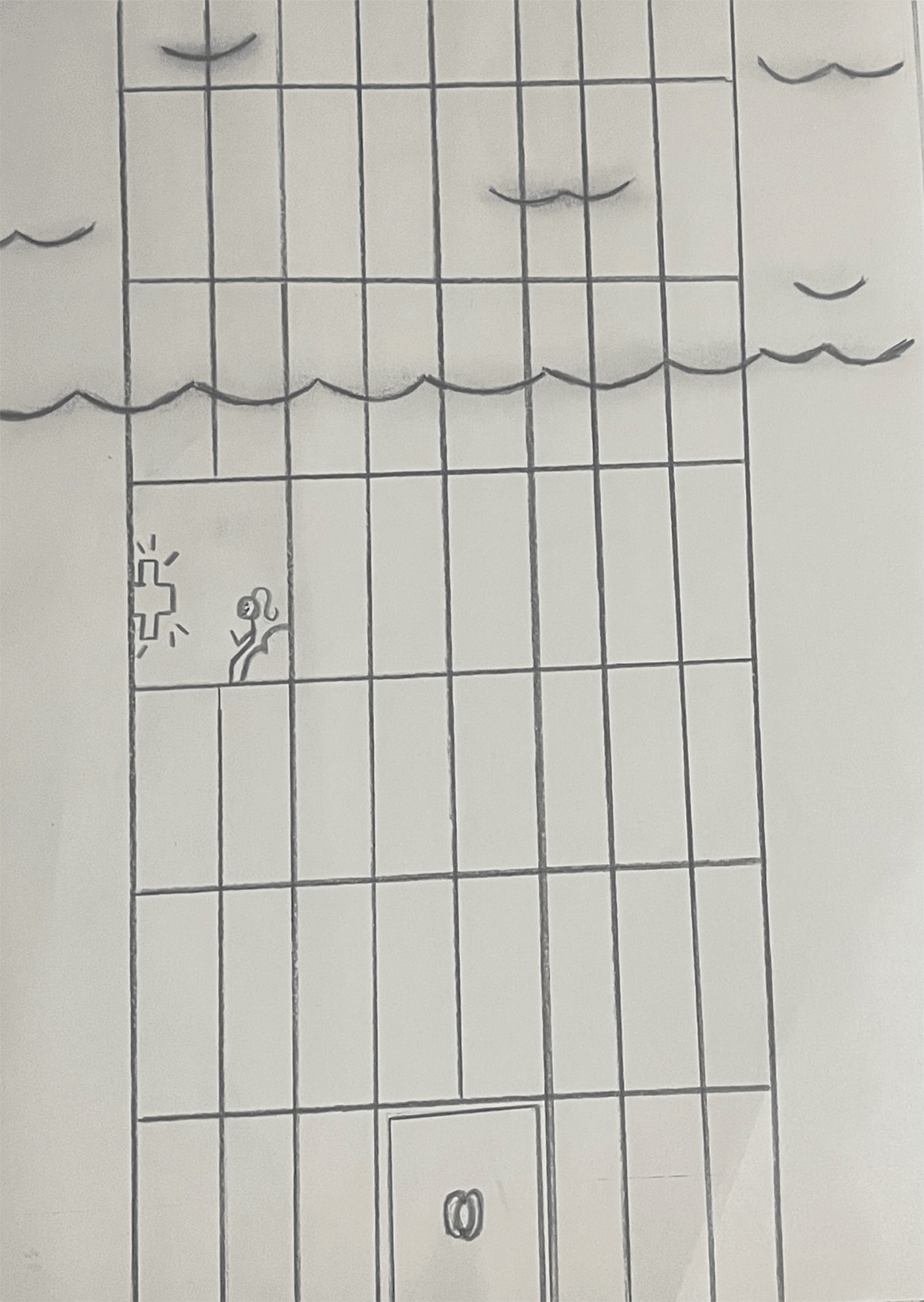
LS writes about her confirmation of becoming a doctor in a dream she had at the age of nine, in Grade 4, a “deep routed desire.” This dream coincides with her illustration, which is the tall building reaching beyond the clouds that represents a hospital, and we cannot see where it ends, and her interview responses. She considers it a symbol of “what God has planned for me in my near future … unable to see the end result of it”. In Grade 5, she attended a conference where she received a prophecy, “that I am called to rise through the ranks of school and receive scholastic opportunities through this blessing.” Even though her Grade 5 average was 60%, this “declaration” gave her hope and motivated her to pursue her dream of becoming a doctor.
LK is currently in Grade 12. Before moving to Witbank, she and her family lived on a plot, but now she lives with her parents, older sister, and grandmother. Both parents have office jobs and earn sufficient money to live comfortably, but “we are not a rich family.” Her sister was the first in the family to attend university and was in her second year of teaching.
LK explains that she has been interested in nature as God’s creation, and since a young age, she would spend time outside exploring nature and “my grandmother especially played a big role in my love for nature.” We planted flowers or were busy with animals, which led her to want to become a veterinarian. In primary school, she excelled in schoolwork, netball, and public speaking, and was chosen as a head girl. It was in recent years that she developed a love for science subjects, particularly biology, which she believed triggered her passion for medicine. As she grew older, she developed a sense of contributing and having a purpose in life. At this time, she started to consider medicine as a career choice and her purpose was twofold: to help others and to learn more about God’s creation of the human body. She believes she “will make the right decision when the time comes.”
In high school, she realized that academics were a priority (keeping in mind her decision to choose medicine as a career) and maintained a place among the top ten students every year. Her favorite subjects are Biology and Physics. She no longer participated in sports but still participated in debates and was chosen as a deputy head girl. Transitioning from high school to university is exciting, but at the same time daunting. She realizes that medicine as a career choice means ‘long years of study and hard work’ and is a very difficult study field and could be stressful, “but I believe that my faith in God will motivate and help me through the hard times”. Despite these challenges that make her nervous, she is “very excited to start a new chapter in my life and to finally take the next step towards making a difference in my lifetime”.
UK explained that she attended the same school from grades RR to 12. UK comes from an uneducated family and “… my hope is to pave the way for my younger cousins and end the cycle of poverty and a lack of further education”. Her greatest pulling force to study medicine is her faith and that it is a calling as she “… spoke to God about it all the time. He confirmed it in many ways, which included a prophecy, leaning on God resulting in excellent results in Grades 11 and 12, attending a career programme, and completing a Basic Life Saving certificate. She accepted to study medicine at a South African university. Transitioning to university was a great adjustment, which includes, among others, living alone; making new friends; much travelling by bus to and fro; “the content is heavy”; and competition is rife, resulting in much pressure. She was not prepared for it, “However, God has been my rock, though it all and remains the only constant in my life. If the university has taught me anything, it’s that a positive mindset is essential to your experience.” However, the experiences were amazing and exciting, and she enjoyed the most practical part, as she was able to interact with patients regarding how to take blood pressure, blood glucose, blood samples, and more.
She said, “I don’t want to be a doctor because I’m smart, I’m smart because I want to be a doctor.” She wants to make a difference and use her appreciation of life that propels her to help others and to “experience life in the best way possible, with no pain.” “I want to be the doctor that God has made me to be. I want to be Dr … (name),” and people will have peace, knowing that she is their doctor. “The verse that got me through matric is Romans 8:28, ‘All things work together for good to them that love God, to them who are called according to His purpose.’ As much as this verse still resonates with me, the verse I lean on now is Deuteronomy, 31:6: ‘God will never leave you, nor forsake you.’ I can already see the finish line, and I hope that anyone else who is called to this path will have just as good of an experience.”
The illustrations
The illustration in Figure 1 portrays a hospital with glass windows and a door that opens where there is energy and passion for doctors to save lives – a door opening the medical field for her, where people are struggling; doctors bring light and life. She sees a bright light that represents a feeling of comfort, that someone is with her, comforting scriptures and trees representing life, an ecosystem. In addition, a prayer room where she is praying and giving thanks, and a cross that resembles the bright light of Christ signifies life and not death. The clouds indicate that there is no ending beyond them and that it is meaningful. When drawing, she felt a heart of gratitude, comfort, motivation, and affirmation. It is a calling, not just wanting money, as one will stay.
LK explains that the drawing in Figure 2 symbolizes a road, a path going forward. She pointed to the different locations indicated in the drawing. The bottom-left location represents where she is at the moment, that is, grade 12. The bend in the road shows a cross with an arrow, which is a road sign (on every bend there is such a sign), which means her faith and God will help her to stay on the right path and keep her on track. Furthermore, is an arrow that signifies that she has been accepted at a university. Furthermore, she illustrates her matric certificate at the end of the year, and the illustrated bumps (which appear all along the road) mean there are some challenges and difficult situations. For example, exam time, hard exams, stress, too many things at school, and insufficient time for everything like applying for something. The following is her metric certificate at the end of the year: She aims to get good marks and to do that she will work hard for the rest of the year. In the next section, more bumps appear on her academic journey up to gaining her degree and graduating. After graduation, she wants stability: to have a job, a place to stay, and a good career, and only then will she be able to help others achieve “a stable healthy life”. The scale means there are still challenges – “I think there will always be challenges” – and completing university studies will be different as she will need to adjust to her new life and it can be a struggle. After achieving a stable life, she will be able to reach her life purpose, which is to help others through her medical degree. Phillipians, 4:13, in the top left-hand corner, is her motivation and end purpose.
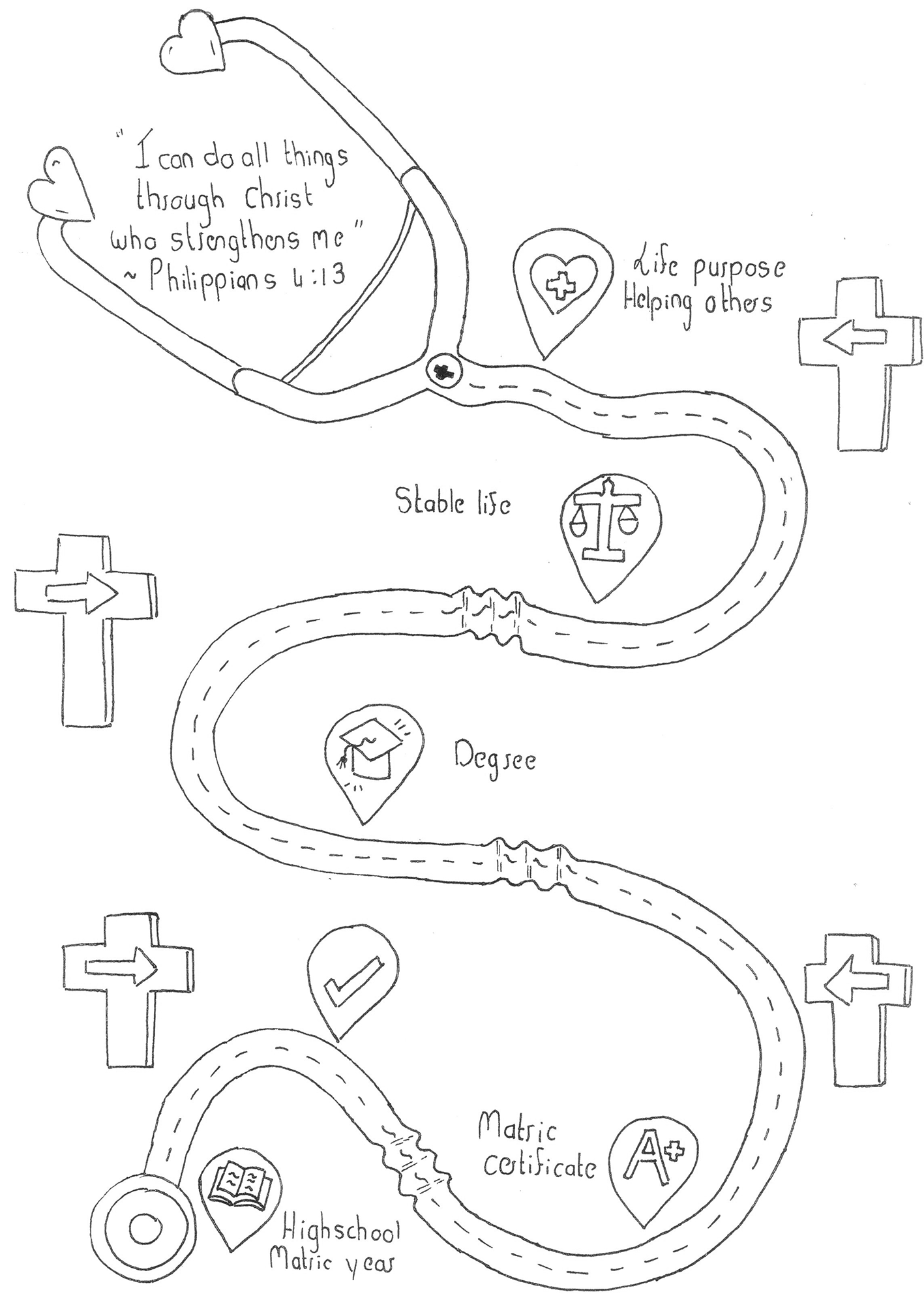
The drawing “made me realize that I must actually start deciding what I want to study … it gave me a wake-up call again”. Crosses that appear all along the road are a reminder that God is always there for her and to keep her on track. She explains that she is a little stressed about going to university as it is a new and different environment, living in a residence. However, “I absolutely want to do this, that I am sure this is the path I want to take and I am entitled to it.”
In relation to Figure 3, UK provided the following meaning to the symbol illustrations:
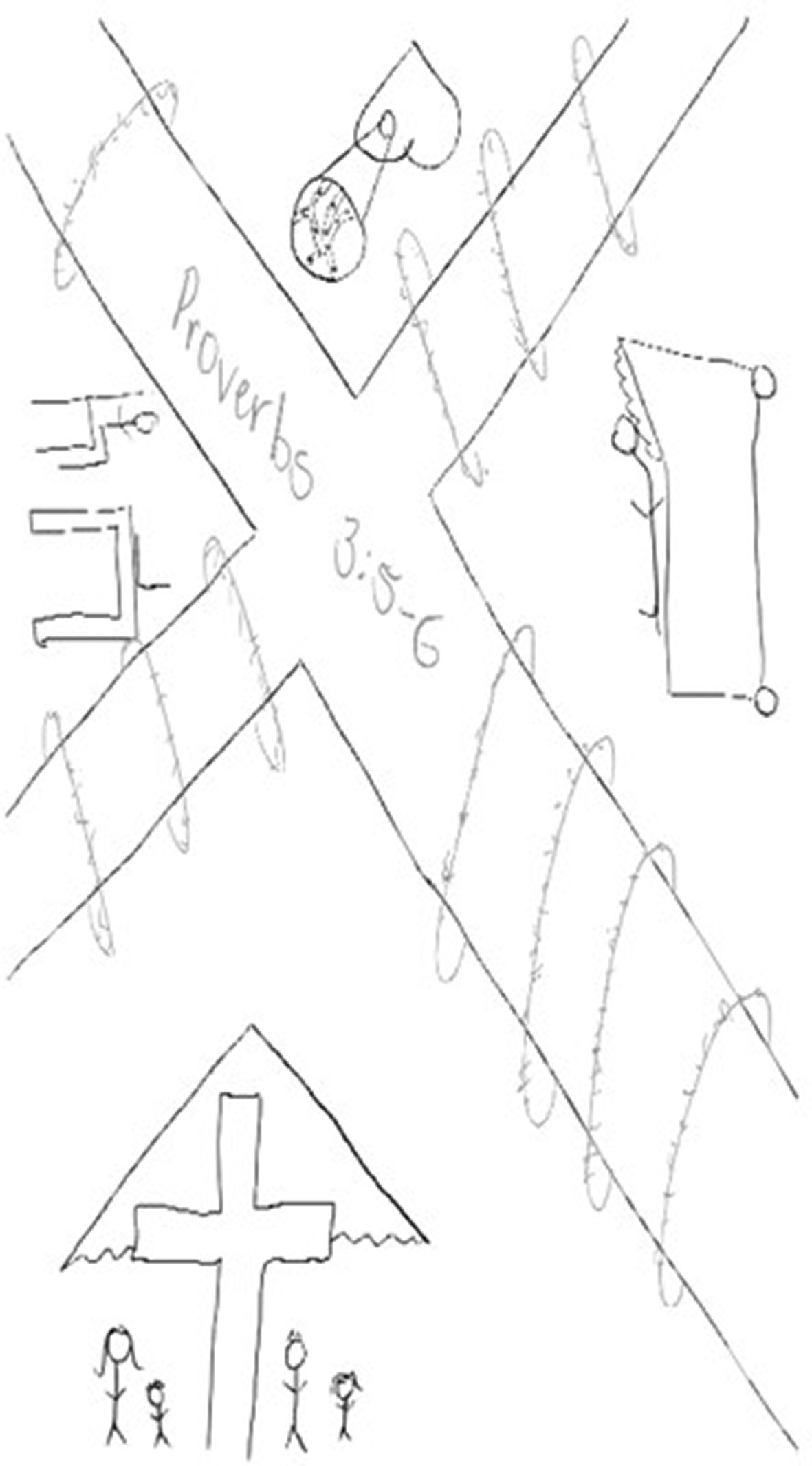
*The cross*: “Written on the cross is the verse, Proverbs, 3: 56, which says ‘Trust in the LORD with all your heart and lean not on your own understanding’. The cross represents my path that God has set out for me and the thorns that surround it represent the trials and tribulations that I encountered on this path. Although it is not easy, I trust the Lord and his purpose for me.”
*The heart*: “The heart is a representative of the profession I’d like to specialise in (cardiology) as well as a representative of my heart which has Christ at its centre and religion which runs through my blood – represented by the small crosses in my veins.”
*The desk*: “The desk represents an important aspect of my life that has gotten me to where I am and will allow me to successfully complete this degree. This aspect is hard work and diligent studying.”
*The hospital bed*: “This is a representation of the reason I chose to transition into this field – to save lives. I will choose to focus on helping as many people as possible and celebrate every win.”
*The house*: “This is meant to represent my future family which will be rooted in Christ and the cross shows God’s protection over the household. As much as I am driven in my career, I would also like to have a family one day and make time to be a present mother and Godly wife. This part of the illustration is future-oriented and shows what I aspire for outside of work.”
There are similarities with LS’s illustration ( Figure 1), but differences with LK’s ( Figure 2); that is, they are more career-oriented.
“Windows into the participants’ minds” (İnözü 2018, 177)
In conclusion, throughout the participants’ responses to the different data collection tools, similar aspects were featured and could be integrated into each theme. These included the passion to become a doctor by the leading of God’s life purpose for each participant (at an early stage); realization of work hard; stress and pressure for good grades 11 and 12 marks; doubt as demands increased; challenges before, during, and after transitioning (university for UK); university application outcomes; final decision to study medicine; participants were aware of their strengths and weaknesses; and ultimately, the greatest outcome – to qualify as a medical doctor. There was considerable overlapping and repetition within the themes, as the participants’ values, attitudes, and beliefs came into play and influenced their responses, mainly their faith and God’s will for them to become doctors as their assignment in life; all three of them were intrinsically motivated by elements of extrinsic motivation. According to the self-determination theory, the type of motivation is emphasized more than the quantity of motivation. Thus, autonomous motivation (intrinsic motivation) of students results in better learning outcomes than controlled motivation (extrinsic motivation) (Wouters, Bakker, Van Wyk, Croiset, and Kusurkar 2014). None of the participants considered a gap year before transitioning into university life, mainly because the course was too long.
Participants’ lived experiences and the meaning of their experiences need to be extrapolated without being contaminated or influenced by the researcher’s preconceived ideas. Thus, the researchers needed to exercise epoché that was difficult to control during the data-collection process. Other factors that played a limiting role were finding participants to qualify for the criteria in a mining town in Mpumalanga, with only a few secondary schools to choose from. Only a few learners were interested in choosing medicine as their career, and only girls qualified according to the criteria.
To enable us to reach our aim and answer our research question, the use of hermeneutic phenomenology was the most appropriate approach for excavating, mining, and delving into participants’ experiences and meanings from an epoché position. In this way, we were able to establish that calling, passion, motivation, Christian worldview, and steadfast faith in God were the main driving forces that led participants to choose medicine as a career path, to initiate transitioning, and ultimately a medical career trajectory.
Participants exhibited unique differences. Where the student, UK was determined to qualify as a doctor for reasons other than selfish ones, she wanted to be a vessel and role model for other family members to strive for university qualifications and lift them up from a poverty mindset. She also had aspirations for being married and having a family. LK, on the other hand, does not wish to have children but wishes to dedicate her life to the medical profession and God’s purpose for her life. LS believes that she is called a doctor, and that is what God has for her life.
We recommend that the criteria to select participants be more flexible, that is, to include participants from other religions and to include schools from neighboring towns where a larger sample of participants can be selected, including males. This will enable researchers to gain a broader and more diverse perspective of the pulling forces that draw the youth to choose medicine as a career and what their experiences and meanings are, and how their trajectories may diverge into far more expected and life-fulfilling outcomes.
It has come to the attention of the authors that, in all three cases, their pastors have played a significant role in their lives and that their religious life is the foundation upon which they live their lives for the goodwill of humanity and according to God’s will. The participants were aware that they had talents and gifts to study medicine and ultimately be God’s vessels by serving the sick and the needy and evangelizing as Christian doctors. A good example is the programme, “Doctors without borders”.
They are also related to their experiences with doctors and how their idea of being a successful doctor is to act in the service of humanity and to be empathetic and caring. In this study, the participants’ emphasis was to be more Christ-like and strive to bring healing to all. Jesus Christ is the greatest healer of all, as scripturally recorded in the Holy Bible:
Matthew 11:4-5: Jesus replied, ‘Go back and report to John what you hear and see: The blind receive sight, the lame walk, those who have leprosy are cured, the deaf hear, the dead are raised, and the good news is preached to the poor’ (The Holy Bible, New International Version 2005, 812).
It would be amiss not to face the reality of fast-moving technological developments, such as AI. AI can be used effectively in the medical field and can simultaneously spread the gospel in various ways. The brain drain that is taking place in South Africa, among others, is due to foreign countries offering better job opportunities and lifestyles, where chaos, crisis, and warring are of great concern, as burnout is imminent as a result. South Africa needs to improve its medical training, support, facilities, and resources. In this study, it was found that few learners were interested in a medical career, as evidenced by the difficulty the researchers had in scouting learners to meet the criteria and participate in the research. The most significant finding was that the participants felt that they had a call from God at an early age to serve humanity by saving lives and bringing healing to sick and diseased patients and depending on God’s guidance. Due to the lack of pre-university guidance in schools, to make a medical career more attractive, aspiring Christian medical students need guidance from parents and family, practicing doctors (shadowing), teachers, career guidance counsellors, university student advisors, church leaders, and pastors, and should be made aware of university preparation courses, such as the one UK attended in the latter part of her Grade 12 year. The learners need to prepare in advance, early in their secondary school years, to do research relating to the medical profession, work hard, and prepare a good academic trial and other activities such as sports, culture, and leadership roles; to have evidence of efforts to engage in community activities; to apply to university well in advance; and to meet with university student advisors. Considering the gap year to unravel doubts and exploring alternative career avenues is an option worth considering.
We consider these findings to contribute to the body of knowledge in the field of education.
| Views | Downloads | |
|---|---|---|
| F1000Research | - | - |
|
PubMed Central
Data from PMC are received and updated monthly.
|
- | - |
Provide sufficient details of any financial or non-financial competing interests to enable users to assess whether your comments might lead a reasonable person to question your impartiality. Consider the following examples, but note that this is not an exhaustive list:
Sign up for content alerts and receive a weekly or monthly email with all newly published articles
Already registered? Sign in
The email address should be the one you originally registered with F1000.
You registered with F1000 via Google, so we cannot reset your password.
To sign in, please click here.
If you still need help with your Google account password, please click here.
You registered with F1000 via Facebook, so we cannot reset your password.
To sign in, please click here.
If you still need help with your Facebook account password, please click here.
If your email address is registered with us, we will email you instructions to reset your password.
If you think you should have received this email but it has not arrived, please check your spam filters and/or contact for further assistance.

Comments on this article Comments (0)