Keywords
Generative AI, Human Intelligence, Higher Education, Teaching and Learning, Assessment, Sociocultural Theory

Generative AI, Human Intelligence, Higher Education, Teaching and Learning, Assessment, Sociocultural Theory
The rapid expansion of generative AI, exemplified by systems such as ChatGPT and GPT-4, has reshaped the intellectual landscape of higher education worldwide.1, 2 Generative AI comprises computational systems capable of producing human-like text, images, analytical outputs, and problem solutions by identifying patterns across extensive datasets. 3 In contrast, human intelligence reflects critical thinking, creativity, ethical judgement, contextual reasoning, and reflective understanding cultivated through sustained academic engagement. 4 Universities now operate within hybrid cognitive environments in which machine-generated outputs coexist with human intellectual effort. 5 This shift prompts fundamental questions concerning how teaching practices, student learning processes, and assessment systems evolve, and how these transformations influence the development and valuation of human intelligence in higher education.
Generative AI increasingly informs pedagogical practice. Educators use AI systems to develop instructional materials, design interactive activities, and provide rapid feedback. 6 This integration repositions the educator from primary knowledge transmitter to facilitator of inquiry, critical evaluation, and ethical engagement with AI-generated content. 7 Pedagogical emphasis shifts towards higher-order thinking, interpretative judgement, and creative synthesis, capacities that remain distinctly human and require intentional cultivation.
Student learning processes similarly reflect AI integration. 8 Learners employ AI tools to explore complex concepts, simulate scenarios, refine arguments, and receive iterative feedback. 9 When guided effectively, AI can broaden exposure to diverse perspectives and enhance analytical depth. 10 Unstructured reliance, however, risks diminishing independent reasoning and reflective engagement. The quality of learning therefore depends not merely on AI availability, but on structured interaction that sustains metacognitive awareness and evaluative judgement.
Assessment systems represent the most visible site of disruption. 11 Traditional written examinations and take-home essays face challenges in contexts where AI can rapidly generate coherent responses. 12 Institutions respond by emphasising authentic, process-oriented, and competency-based assessment designs. Reflective tasks, collaborative inquiry, oral examinations, and real-time demonstrations of understanding increasingly serve to evaluate reasoning, originality, and contextual application. 13 Assessment thus functions not only as a measurement mechanism but as a driver of intellectual standards in AI-mediated environments. 14
Recent scholarship highlights AI’s capacity to enhance instructional efficiency, personalise feedback, and improve student productivity. 15 Studies also document concerns regarding academic misconduct, superficial learning, and cognitive dependency. 16 Much of the existing research concentrates on immediate performance outcomes, ethical regulation, institutional policy, or technological adoption. Limited attention has been directed towards understanding how AI integration influences the long-term development of human intelligence within higher education systems.
A significant gap persists in conceptualising AI not merely as a technological tool, but as a cognitive mediator that interacts with teaching practices, learning processes, and assessment structures. The Sociocultural Theory of cognitive development offers a relevant lens to address this gap. Sociocultural Theory conceptualises learning as a socially mediated process shaped by interaction, guidance, and the use of cultural tools. Applying this perspective enables examination of generative AI as a mediating artifact that can either scaffold or constrain the internalisation of higher-order cognitive strategies. Despite its relevance, few studies systematically employ this theoretical framework to analyse how AI reshapes the cultivation of critical thinking, creativity, and ethical reasoning across global higher education contexts. The absence of such theoretically grounded synthesis limits understanding of AI’s broader implications for intellectual development.
Higher education institutions confront ongoing uncertainty in balancing technological innovation with the preservation of rigorous intellectual standards. 17 Generative AI challenges established assumptions about authorship, originality, and the assessment of learning outcomes. 18 Educators face difficulties in designing tasks that authentically capture student understanding, while students navigate evolving expectations concerning acceptable AI use. 19 Assessment models developed in pre-AI contexts often inadequately capture genuine cognitive engagement in hybrid learning environments. 20 Without an integrated analytical framework linking AI integration to the development of human intelligence, institutions risk either constraining innovation or compromising academic integrity.
Clear conceptual insight is necessary to guide sustainable responses to generative AI in higher education. Policymakers require evidence-based foundations for regulatory and ethical guidelines. Educators need structured approaches to design pedagogy that strengthens critical engagement rather than encourages cognitive outsourcing. Students benefit from learning environments that cultivate reflective, creative, and ethically grounded capacities alongside technological fluency. By synthesising existing scholarship and applying a sociocultural lens to interpret emerging trends, this narrative review contributes to a more coherent understanding of how generative AI can coexist with and potentially enhance human intelligence.
The purpose of this study is to examine how the rise of generative AI shapes the role and development of human intelligence in higher education globally, with particular attention to teaching practices, student learning experiences, and assessment approaches.
The specific objectives are to:
• Explore how AI integration reshapes pedagogical strategies and the educator’s facilitative role.
• Analyse changes in student learning behaviours, cognitive engagement, and reflective practice within AI-supported environments.
• Investigate adaptations in assessment systems that promote authentic demonstration of knowledge and higher-order thinking.
• Develop an integrative framework explaining the interaction between generative AI and human intelligence across diverse higher education contexts, informed by SCT to illuminate mediating mechanisms.
The study adopted a systematic thematic literature review approach to synthesise both empirical and theoretical insights on AI-mediated higher education and its alignment with sociocultural theory as shown in Figure 1. This method enabled a comprehensive exploration of how generative AI reshapes cognitive processes, pedagogical practices, assessment systems, and ethical considerations across higher education contexts globally. Emphasis was placed on literature published between 2020 and 2025 to capture the most recent advances and applications of AI technologies in education.
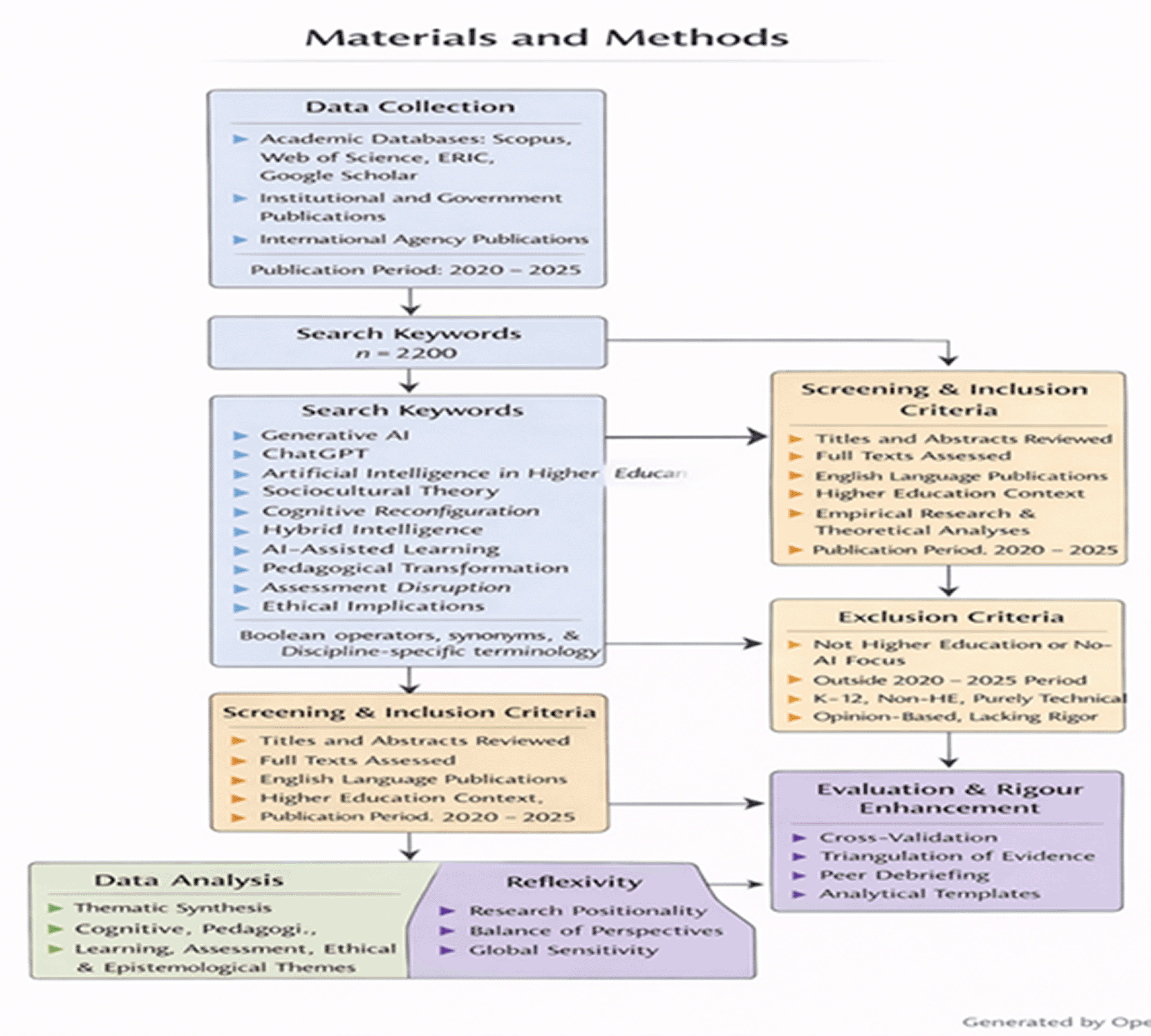
Data were collected from major academic databases, including Scopus, Web of Science, ERIC, and Google Scholar, to ensure broad coverage of peer-reviewed research. Additional materials were retrieved from institutional reports, government policy documents, and international agency publications to provide a holistic view of both practice and policy. The selection aimed to capture insights from diverse educational programmes, including computer science, engineering, business, medical, and humanities disciplines, reflecting the multidisciplinary implications of AI integration in higher education.
A structured set of keywords guided the literature search to ensure comprehensive coverage. Keywords included terms such as “generative AI,” “ChatGPT,” “artificial intelligence in higher education,” “sociocultural theory,” “cognitive reconfiguration,” “hybrid intelligence,” “AI-assisted learning,” “pedagogical transformation,” “assessment disruption,” and “ethical implications of AI.” Boolean operators, synonyms, and discipline-specific terminology were employed to refine searches and identify studies that bridged technological applications with theoretical and pedagogical frameworks.
The literature underwent a multi-stage screening process. Initially, titles and abstracts were reviewed for relevance to AI integration, cognitive reconfiguration, pedagogical transformation, and assessment in higher education. Full-text reviews followed for studies meeting the preliminary criteria. Inclusion criteria focused on studies published between 2020 and 2025, addressing higher education contexts, empirical research, theoretical analyses, or case studies demonstrating practical applications. Only English-language publications were considered to ensure interpretive accuracy.
Studies were excluded if they did not focus on higher education, AI-mediated learning, or sociocultural perspectives of learning. Research exclusively targeting K-12 contexts, non-human AI applications, or purely technical AI development without pedagogical relevance was omitted. Publications outside the 2020–2025 timeframe, as well as opinion pieces or non-empirical commentaries lacking methodological rigour, were also excluded to maintain analytical depth and reliability.
Selected studies were analysed using thematic synthesis. Key themes identified included cognitive reconfiguration, metacognitive regulation, hybrid intelligence, pedagogical transformation, assessment reform, ethical and epistemological repositioning, and equity in AI access. Patterns, contradictions, and gaps were examined across disciplines, geographic contexts, and pedagogical models. Findings were systematically mapped to the sociocultural theory framework to evaluate alignment and tension between AI-mediated practices and principles of guided learning, mediated interaction, and collaborative knowledge construction.
Rigour was enhanced through cross-validation of sources, triangulation of empirical and theoretical evidence, and repeated searches across multiple databases. Standardised data extraction templates captured study characteristics, methodology, context, key findings, and theoretical alignment. Peer debriefing and academic discussions were conducted to minimise subjective interpretation and strengthen analytical reliability.
The review process incorporated reflexive consideration of researcher positionality, acknowledging prior familiarity with AI technologies and sociocultural learning theory. Potential biases in source selection, interpretation of AI capabilities, and focus on well-resourced educational contexts were carefully considered. Reflexivity also involved recognising global and institutional disparities in technology access, ensuring that conclusions and recommendations account for diverse higher education settings.
This review is grounded in the Sociocultural Theory of cognitive development advanced by Lev Vygotsky in 1978 as shown in Figure 2. 21, 22 Sociocultural Theory conceptualises human intelligence as emerging through socially mediated interaction rather than through isolated individual cognition. Cognitive development unfolds through engagement with cultural tools, symbols, and collaborative practices embedded within specific historical and institutional contexts. A central construct within the theory is the Zone of Proximal Development, which describes the distance between independent performance and potential development achieved through guided support from more knowledgeable others. Learning, from this perspective, precedes and drives development. Intellectual growth therefore reflects participation in structured social activity mediated by tools that reshape the organisation and function of higher mental processes. 23
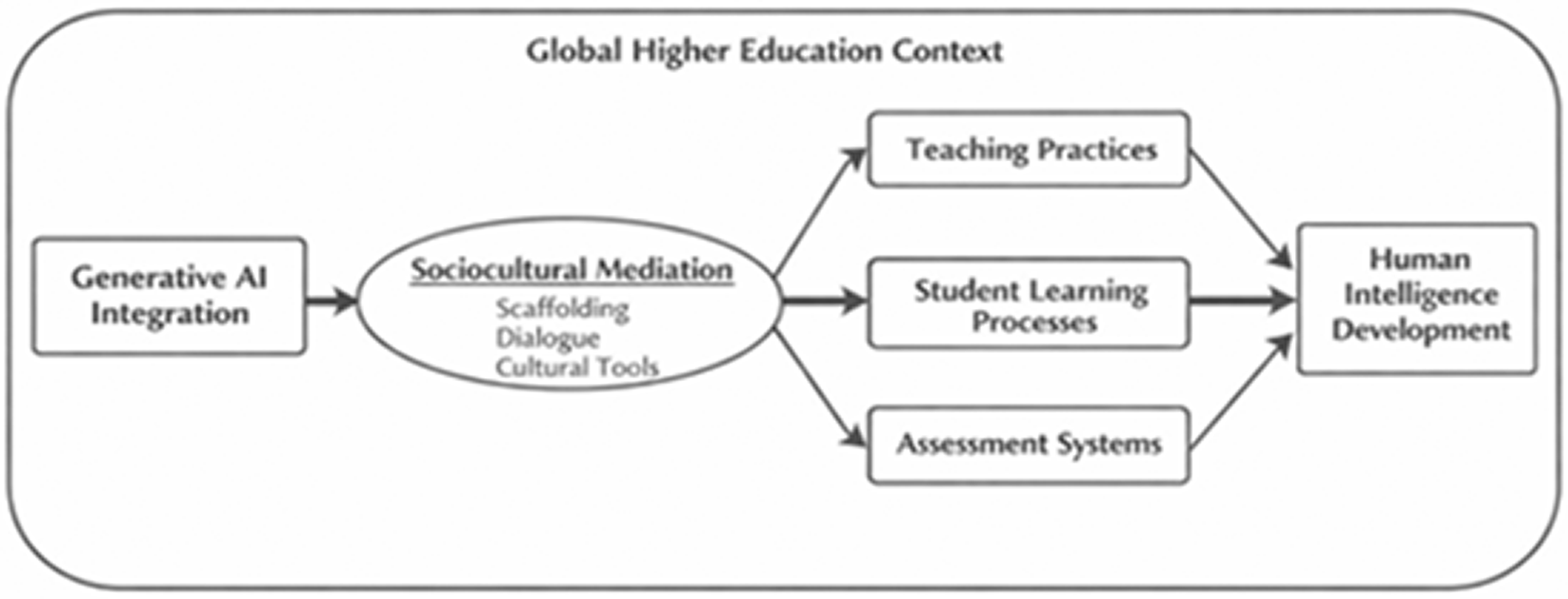
Within the context of higher education, generative artificial intelligence operates as a contemporary mediational tool. Systems such as ChatGPT function not merely as assistive technologies but as cultural artefacts capable of influencing reasoning, argument construction, and knowledge production. Sociocultural Theory posits that tools extend and reorganise cognitive activity; they do not simply support thinking but transform its structure. Generative AI systems, which can simulate analytical reasoning and generate structured discourse, may therefore alter how learners interpret information, formulate ideas, and approach complex intellectual tasks. When integrated within structured pedagogical environments, such tools can expand cognitive reach by enabling engagement with problems that might otherwise exceed independent capability.
The theory further clarifies the pedagogical role of guided mediation. Educators design learning environments that scaffold movement from supported participation to autonomous mastery. In AI-integrated classrooms, lecturers mediate the use of generative systems by modelling critical evaluation, contextual interpretation, and ethical reasoning. This guided interaction shapes the development of higher-order cognitive capacities, including critical thinking, creativity, and metacognitive awareness. Sociocultural Theory predicts that these dimensions of human intelligence evolve through purposeful engagement with mediating tools under expert guidance, rather than through unstructured exposure to technological outputs. 23
Sociocultural Theory also provides a principled foundation for rethinking assessment. If cognitive development arises through socially mediated processes, evaluation systems must account for reasoning pathways, reflective dialogue, and contextual application rather than focusing exclusively on final products. In educational environments influenced by generative AI, assessment approaches that emphasise authentic tasks, collaborative inquiry, iterative feedback, and real-time demonstration of understanding align with this theoretical perspective. Such approaches position AI as a scaffold that supports higher-order thinking while preserving intellectual accountability. 23, 24
The significance of Sociocultural Theory in this review lies in its capacity to reframe generative AI as a cultural tool whose developmental consequences depend on the quality of mediation embedded within teaching, learning, and assessment practices. AI integration interacts with human intelligence development through socially structured engagement. By anchoring the analysis within this theoretical framework, the study establishes a coherent foundation for examining how higher education institutions can harness generative AI to strengthen, rather than erode, their core intellectual mission.
Figure 3 illustrates how generative AI shapes human intelligence in higher education settings in diverse contexts.
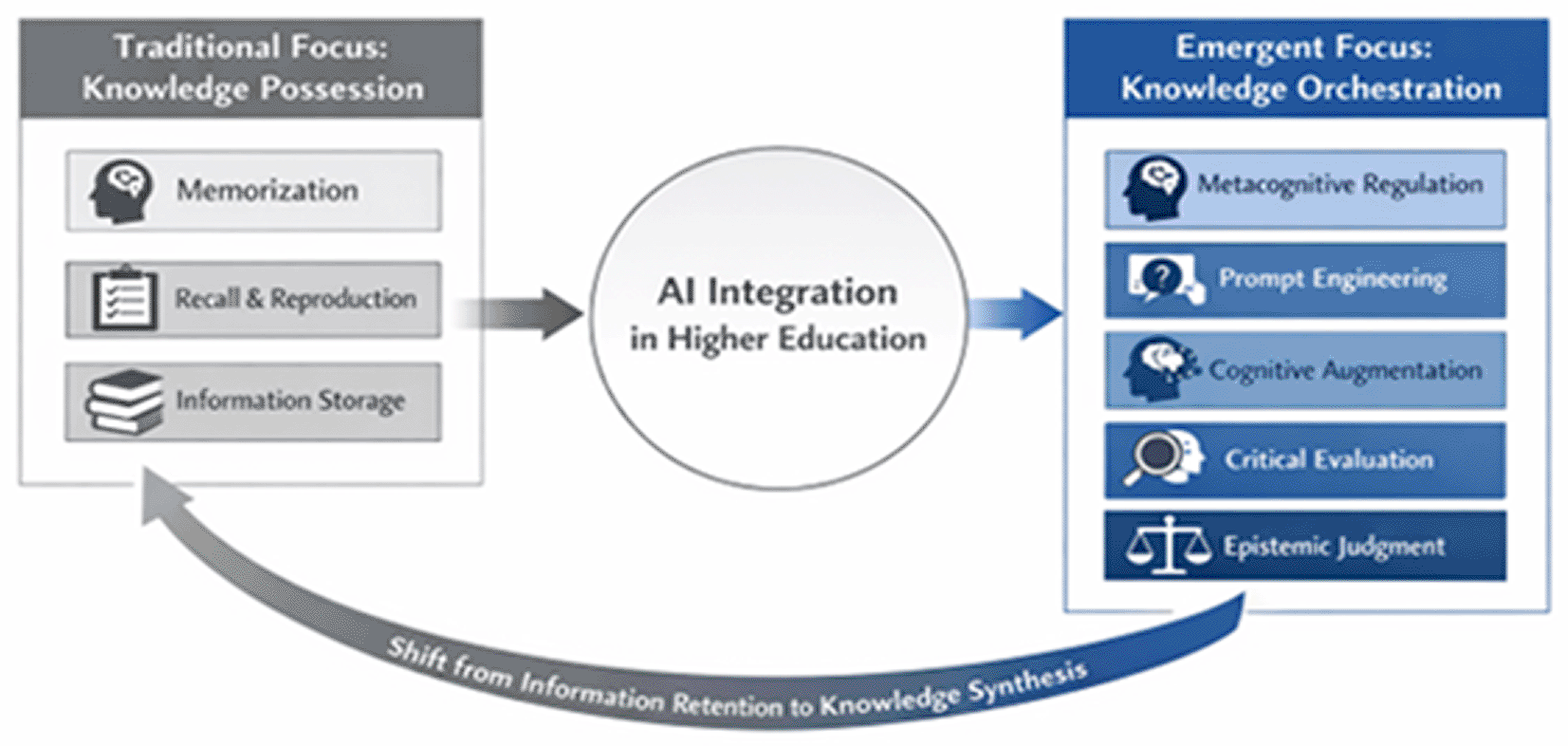
The integration of generative artificial intelligence into higher education has prompted a profound cognitive reconfiguration, shifting the focus from knowledge possession toward knowledge orchestration. 25 Historically, academic success relied heavily on memorisation, recall, and reproduction of disciplinary content. 26 The widespread availability of systems such as ChatGPT has disrupted this paradigm by providing instant access to information retrieval and first draft generation. 27 Consequently, human intelligence is increasingly defined not by storage of information but by the ability to direct, evaluate, and integrate machine-generated outputs within complex intellectual tasks. This transition reflects a redistribution of cognitive effort from retention toward regulation, synthesis, and epistemic judgement.
Metacognitive regulation emerges as a central feature of this transformation. When students use AI to draft essays, summarise literature, or simulate case analyses, they must assess the appropriateness of AI assistance, evaluate the adequacy of responses, and revise outputs to meet disciplinary standards. 28, 29 Research across universities in North America and Europe indicates that structured AI-supported assignments enhance reflective monitoring when learners are required to critique and iteratively refine AI-generated drafts. 30, 31 In Singapore and South Korea, guided AI writing initiatives have demonstrated improvements in planning and self-evaluation when students compare AI outputs with peer-reviewed sources and structured rubrics. 32, 33 In this context, intelligence becomes supervisory and reflective, characterised by the capacity to monitor cognitive processes rather than simply produce content.
The emergence of prompt engineering as an academic competence further exemplifies this reorientation. Crafting precise and context-sensitive prompts requires conceptual clarity, awareness of disciplinary conventions, and strategic anticipation of potential outputs. 34 In Australian business programmes, students refining AI-generated market analyses must iteratively adjust prompts to specify sectoral variables and analytical depth, demonstrating strategic reasoning rather than content recall. 35 Law and public health programmes in Brazil and Kenya have incorporated structured prompt design exercises, requiring students to define jurisdictional scope, ethical boundaries, and evidentiary standards before generating outputs. 36, 37 These exercises reinforce contextual reasoning and analytical precision, shifting the intellectual effort from retrieval to constructing parameters within which knowledge is generated.
Generative AI also introduces the possibility of cognitive offloading, in which routine tasks such as summarising texts or formatting reports are delegated to AI systems. 38 Research indicates that unstructured reliance on AI may weaken deep processing and conceptual retention. 39 Studies in Germany and Canada reveal that students who accept AI-generated explanations without critical engagement demonstrate lower long-term comprehension compared with peers who actively interrogate and revise outputs. 40, 41 However, alternative instructional models show that AI can function as a tool for cognitive augmentation when learners attempt independent reasoning before using AI to expand or challenge their perspectives. 42 In engineering programmes in India, assignments requiring manual problem solving prior to AI-assisted optimisation have been associated with enhanced integrative reasoning and improved transfer of knowledge to novel contexts. 43 The distinction between cognitive offloading and augmentation depends less on the technology itself and more on pedagogical design and learner engagement.
Critical evaluation of AI outputs constitutes another defining element of this cognitive shift. 44 Generative systems may produce fabricated references, subtle inaccuracies, or culturally embedded biases. 45 Detecting these distortions demands analytical scrutiny and epistemic vigilance. Universities in the United Kingdom and South Africa have implemented verification exercises in which students cross-check AI-generated citations against academic databases, strengthening research literacy and source evaluation skills. 46, 47 In Japan and Finland, media studies curricula incorporate analyses of algorithmic bias and linguistic framing in AI-produced narratives, cultivating critical awareness of technological mediation. 48, 49 Human intelligence increasingly manifests as the capacity to interrogate and contextualise information rather than accept it uncritically.
At a broader epistemic level, intelligence is redefined through the capacity for judgement. 50 The abundance of machine-generated text requires learners to evaluate credibility, integrate diverse sources, and justify claims within disciplinary norms. 51 Comparative research across higher education systems in the United States and Norway demonstrates that explicit instruction in AI literacy and source triangulation enhances argumentative coherence and ethical awareness. 52, 53 Students trained to validate AI outputs against peer-reviewed evidence and disciplinary standards exhibit stronger reasoning and greater sensitivity to bias. Consequently, the intellectual centre of gravity shifts toward validation, synthesis, and contextual application.
Across diverse cultural and institutional settings, this cognitive reconfiguration demonstrates that generative AI does not replace human intelligence. Instead, it transforms its operational core. 54 Knowledge orchestration, encompassing metacognitive regulation, strategic prompt construction, balanced cognitive augmentation, critical scrutiny, and epistemic judgement, emerges as the defining competence in AI-mediated higher education. 55 The development of intelligence depends not on the mere presence of AI systems but on the educational structures that shape learner engagement. 56 Higher education is therefore navigating a transition in which intellectual excellence is measured less by information accumulation and more by the ability to direct, evaluate, and integrate knowledge within complex cognitive ecosystems.
Generative artificial intelligence systems such as ChatGPT have accelerated a profound pedagogical transformation in higher education, repositioning academics from traditional content transmitters to facilitators of intellectual development. 57 Historically, university teaching relied heavily on lectures, with lecturers positioned as the primary authority and principal source of disciplinary knowledge. 26 The proliferation of digital repositories and AI-driven platforms has decentralised this authority, providing learners with immediate access to high-quality information. 58 Contemporary scholarship emphasises that the lecturer’s role now centres on designing learning environments that foster analysis, synthesis, and evaluative reasoning rather than reproducing content. 59 This shift signifies a structural redefinition of academic authority, where expertise lies in guiding interpretation, modelling critical inquiry, and curating reliable sources within complex information ecosystems.
The redefinition of lecturer authority does not diminish professional expertise; instead, it recasts it as epistemic stewardship. 60 Faculty members now interpret, contextualise, and critically evaluate AI-generated outputs alongside students, modelling disciplinary judgement in real time. 61 Evidence from universities in Europe and North America demonstrates that when lecturers openly critique AI-generated responses during classroom discussions, students develop stronger evaluative skills and a deeper understanding of methodological rigour. 62, 63 Academic authority therefore becomes dialogical and analytical, grounded in modelling intellectual standards rather than controlling access to information.
AI-integrated pedagogy further illustrates this transformation. Educators embed AI into lesson planning, flipped classroom models, and project-based learning environments. In flipped models, students engage with AI-assisted summaries or simulated case materials before class, while classroom time is devoted to critical interrogation and application. 64 In business and engineering programmes, project-based modules encourage students to produce preliminary analyses with AI support and then refine them through empirical validation and peer review. 65, 66 This positions AI as a cognitive partner rather than a substitute for independent reasoning, promoting reflective and analytical engagement with knowledge.
Structured scaffolding of AI use is essential to ensure ethical and purposeful engagement. Without guidance, students risk overreliance on automated outputs, which can weaken analytical development. 67 Practical strategies include staged assignments in which learners first construct independent arguments, then compare these with AI-generated suggestions, and finally reflect on divergences. Such designs enhance metacognitive awareness and promote responsible use of AI tools, strengthening critical thinking and academic integrity. 68
Human-AI collaborative learning models represent another critical dimension of contemporary teaching practice. These models orchestrate iterative cycles of student reasoning and AI assistance, where learners justify modifications to AI outputs, articulate reasoning pathways, and identify conceptual gaps. 69, 70 Across multidisciplinary programmes, evidence shows that such interaction enhances knowledge transfer and supports higher-order thinking, ensuring that learners remain cognitively active while engaging with AI systems. Pedagogy therefore shifts toward facilitating productive dialogue between human cognition and algorithmic output.
Digital and AI literacy instruction underpins this transformation by embedding algorithmic awareness and data literacy into curricula. 71 Students are introduced to the mechanisms underlying large language models, including how training data shape outputs and how algorithmic bias can arise. Learners who understand these processes demonstrate greater scepticism toward automated claims and stronger evaluative competence. Embedding such literacy across disciplines ensures that AI integration reinforces intellectual autonomy rather than undermining it. 72, 73
Teaching practice in the AI era thus evolves into cognitive coaching, where lecturers cultivate analytical resilience, ethical awareness, and critical judgement in AI-mediated environments. 74 Authority resides in intellectual modelling, curricular design, and mentorship rather than exclusive control over information. 75 The combination of AI-integrated pedagogy, structured scaffolding, collaborative reasoning frameworks, and embedded digital literacy redefines the educational mission of higher education, not as a diminution of expertise, but as a strategic reorientation toward guiding learners through increasingly complex cognitive landscapes shaped by generative technologies.68, 76
The integration of generative artificial intelligence into higher education has fundamentally transformed student learning, shifting it from an exclusively individual cognitive endeavour to a hybrid process in which human intelligence and AI-generated outputs interact dynamically.57 Traditionally, learners relied on independent reasoning, memorisation, and knowledge synthesis within the limits of time and cognitive capacity. 77 With AI systems such as ChatGPT, students can access immediate explanations, generate drafts, and simulate problem-solving scenarios, creating learning environments where human and machine intelligence operate in tandem. 78 This hybridisation shifts the focus of cognitive activity from simple content acquisition to orchestration, evaluation, and creative synthesis.
Generative AI enables personalised and adaptive learning by producing explanations, examples, and feedback tailored to individual comprehension levels. 79 In computer science programmes in the United States, AI-assisted tutoring systems guide learners through coding exercises, adjusting hints in response to individual progress and error patterns, thereby enhancing engagement and accelerating skill development. 80 In medical schools in Singapore and South Korea, AI-driven case simulations adapt complexity according to learner performance, supporting iterative mastery while allowing students to focus on conceptual reasoning. 81, 82 These applications demonstrate that hybrid intelligence expands learning pathways, allowing students to engage with material in ways that would be impractical without AI support.
Self-regulated learning presents both opportunities and challenges in AI-mediated environments. 83 When learners strategically use AI to draft ideas, verify logic, or cross-check sources, their capacity for planning, monitoring, and evaluating cognitive processes is strengthened. 84 Conversely, overreliance on AI may undermine independent effort, as students might bypass reflective thinking and iterative revision, substituting algorithmic outputs for personal reasoning. 85 Evidence from higher education indicates that learners who receive structured guidance in iterative AI use develop superior metacognitive awareness compared with peers who use AI passively. 86 The impact of AI on self-regulation therefore depends on careful pedagogical scaffolding and the intentionality of engagement.
AI integration also redefines creativity and originality. 87 Creative processes increasingly involve co-generation, in which students propose concepts and AI produces drafts, visualisations, or simulations that are then refined and contextualised by human judgement. 88 In design schools in Australia and Canada, students collaboratively prototype architectural concepts with AI assistance, while maintaining control over aesthetics, functionality, and ethical considerations. 89, 90 Similarly, in literature and media programmes in Brazil and Japan, students use AI to generate narrative structures and then critically evaluate and modify outputs to preserve authenticity and originality. 91, 92 These practices illustrate a transition from solitary creative ideation to hybrid co-creation, in which human intelligence orchestrates and contextualises machine contributions.
The introduction of AI also brings the risk of dependency and automation complacency. 93 Overreliance can reduce effortful cognitive engagement, leading to superficial understanding despite increased efficiency. In engineering courses in Germany and Finland, learners who outsource problem-solving entirely to AI demonstrate lower conceptual mastery and reduced adaptability compared with students who combine AI-assisted work with active reasoning. 94, 95 This highlights a critical balance between efficiency and cognitive depth, as AI can accelerate output production but does not inherently guarantee deep learning without reflective engagement.
Across global higher education contexts, these developments illustrate that learning is no longer confined to the individual mind but emerges through interaction with AI as a mediating cultural tool. Hybrid intelligence requires students to cultivate skills in evaluation, integration, and creative orchestration while maintaining metacognitive oversight and ethical judgement. Human intelligence is reshaped rather than replaced, underscoring the necessity for pedagogical frameworks that guide interaction, scaffold critical engagement, and balance efficiency with deep learning.
The emergence of generative artificial intelligence has caused profound disruption to traditional assessment systems, exposing structural instability in conventional methods of evaluating student learning. 18 Assignments that previously served as reliable indicators of individual competence, such as essays, problem sets, or examinations, now face an authenticity challenge, as AI can generate high-quality responses rapidly. 96 In the United States, law students using AI to draft case analyses demonstrate the difficulty instructors face in distinguishing human reasoning from machine-generated content. 97 Similarly, in South Korean engineering programmes, students can produce polished design solutions with minimal independent effort, highlighting the need for assessment approaches that prioritise the evaluation of cognitive processes rather than the final product. 98 This shift has prompted higher education institutions worldwide to reconsider the metrics used to gauge intellectual growth, focusing on how knowledge is constructed, reflected upon, and applied.
In response, in-class and oral assessments are increasingly adopted to preserve evaluative rigour. 99 In medical education in Singapore, viva voce and bedside assessments require students to articulate diagnostic reasoning in real time, ensuring that understanding is authentic and independent. 100 In European business schools, scenario-based presentations simulate market decision-making under time constraints, allowing instructors to probe reasoning pathways and evaluate problem-solving agility. 101 These approaches reduce opportunities for students to rely solely on AI outputs and place greater emphasis on immediate demonstration of critical thinking and analytical competence.
Assessment practices are evolving to foreground the evaluation of thinking processes. 102 In Australia, architecture programmes incorporate iterative design portfolios where students submit drafts, annotate AI-assisted contributions, and reflect on changes over time. 103 Similarly, in Brazilian public policy courses, students engage in policy simulation exercises where reflections and peer feedback form a substantial part of the evaluation. 104 These process-oriented methods capture metacognitive engagement and the evolution of reasoning, enabling instructors to assess depth of understanding and adaptability to novel challenges. By valuing the cognitive journey over final presentation, these practices reinforce the development of human intelligence in AI-mediated learning environments.
Designing AI-resistant tasks has become a critical strategy to ensure assessment integrity. 105 In Canadian computer science programmes, instructors employ complex, context-specific problem-solving projects that require students to integrate multiple sources of information and provide unique interpretations. 106 In Dutch engineering courses, case-based tasks are structured so that AI outputs must be critically analysed, justified, and modified, ensuring that the final submission reflects student reasoning rather than automated output. 107 Collaborative projects in Singaporean and South African universities further combine human analysis with AI suggestions, creating a hybrid evaluative framework that emphasises higher-order thinking while retaining student accountability. 108, 109
Finally, academic integrity frameworks are being redefined to regulate AI use responsibly. 110 In the United Kingdom, universities have introduced guidelines that distinguish acceptable AI-assisted learning from misuse, emphasising transparency in documenting AI contributions. 111 In India, higher education institutions integrate AI ethics modules into curricula, requiring students to reflect on the reliability, bias, and ethical implications of AI-generated content. 112 These frameworks reinforce intellectual accountability, ensuring that AI acts as a tool for enhancing human cognition rather than replacing it. Collectively, these innovations illustrate a global trend in transforming assessment systems from product-based to process-based models. By prioritising reasoning, reflection, and ethical engagement, institutions safeguard the authenticity of student learning and preserve the development of human intelligence in the era of generative AI.
The integration of generative artificial intelligence into higher education has prompted a profound ethical and epistemological reconsideration of human intelligence. 113 As AI increasingly contributes to knowledge production, institutions are compelled to reconsider the nature of intellectual originality, the attribution of authorship, and the competencies that define capable graduates. 114 Traditional indicators of intelligence, including independent reasoning, creativity, and disciplined inquiry, now coexist with collaborative engagements between humans and AI systems. 115 This evolution necessitates a reassessment of evaluative and normative frameworks within academic institutions.
Determining authorship in AI-supported work is a pressing concern for educators. 116 In Canadian universities, students are required to explicitly disclose the extent to which AI tools such as ChatGPT contribute to their assignments. Instructors also require reflective commentary on the use of AI, ensuring that human intellectual agency remains central. 41 At the University of Oxford, pilot initiatives in law and humanities courses ask students to annotate AI contributions in research essays. 117, 118 This approach encourages critical engagement with machine-generated content rather than passive acceptance, thereby maintaining ownership of the final output.
Generative AI also raises critical issues related to bias and epistemic justice. 119 AI systems trained on datasets dominated by particular cultural or linguistic perspectives may reproduce or amplify existing inequalities. 120 African students using AI-supported literature summarisation tools have reported outputs that prioritise Eurocentric perspectives, illustrating the risk of cultural bias. 121 In Japan, media studies courses have introduced AI bias audits where learners critically assess machine-generated summaries for framing distortions. 122 These activities enhance students’ capacity for epistemic vigilance, encouraging the evaluation of information beyond surface-level acceptance.
Equity in AI access is a further ethical consideration. 123 In India, government-led programmes have distributed AI-enabled tablets to higher education institutions in rural areas, allowing students from under-resourced communities to engage in AI-enhanced learning. 124 In contrast, elite universities in the United States provide high-speed computing and personalised AI support for all students, demonstrating disparities in opportunity and highlighting the necessity for policies that promote equal access. 125 Ensuring equitable participation supports the development of diverse cognitive capabilities across socioeconomic contexts and reinforces the principle that human intelligence must be nurtured universally.
Moral responsibility in AI-assisted outputs is increasingly central to academic practice. 126 In medical schools in Singapore, students use AI to generate differential diagnoses but are required to verify and justify each output prior to submission. 127 This protocol fosters reflective practice and ensures accountability for the accuracy and reliability of knowledge. At Delft University of Technology in the Netherlands, engineering students critically assess AI-generated design solutions to evaluate both technical validity and ethical implications. 128 These exercises reinforce professional judgement and cultivate moral reasoning alongside technical competence.
Aligning human intelligence with the demands of AI-integrated workforces has become an imperative for higher education. 129 In Australian business programmes, students participate in AI-supported scenario planning exercises, analysing market trends, evaluating strategic recommendations, and refining decisions based on machine-generated insights. 130 Public administration students in Brazil engage in AI policy simulations that require integrating algorithmic suggestions with ethical and social considerations. 131 These experiences demonstrate that intelligence is increasingly defined by the ability to interpret, critically evaluate, and apply knowledge in complex hybrid environments rather than by memorisation or individual content production.
Across diverse global contexts, these examples illustrate that the ethical and epistemological repositioning of human intelligence extends beyond theoretical discourse. Institutions must ensure that intellectual agency is preserved, access to AI tools is equitable, and moral and epistemic responsibility is cultivated. Human intelligence is now measured by the capacity to integrate, validate, and ethically deploy knowledge in AI-mediated learning environments, redefining the standards for academic competence in the twenty-first century.
The literature review is critically analyzed as shown in Figure 4.
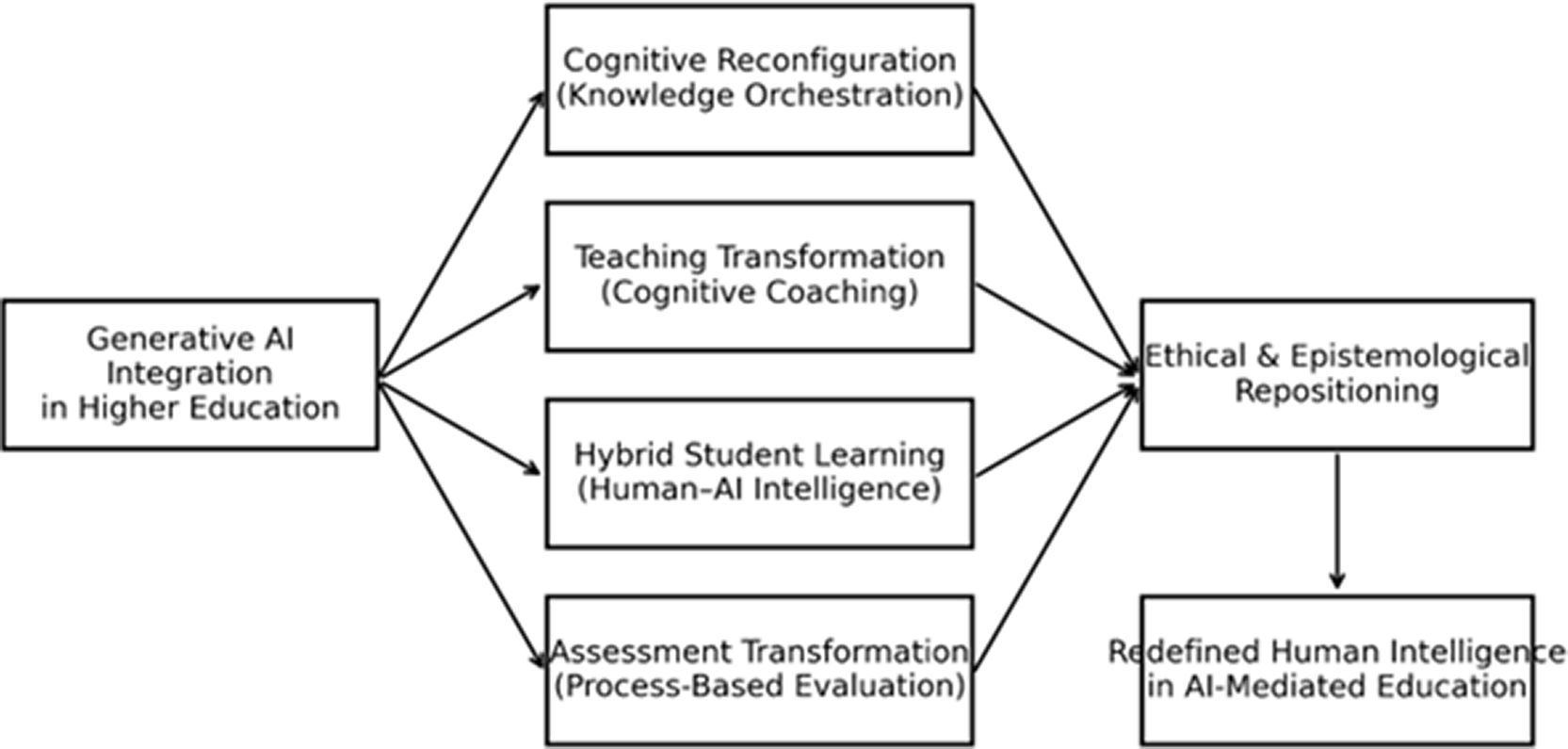
Scholarly literature consistently reports a shift in higher education from knowledge possession toward knowledge orchestration as generative artificial intelligence becomes embedded in academic environments. Research examining the educational use of systems such as ChatGPT indicates that students increasingly perform supervisory cognitive roles that involve evaluation, synthesis, and metacognitive monitoring rather than simple recall of disciplinary knowledge. 25, 27, 30 Empirical investigations conducted in universities across North America, Europe, and parts of Asia demonstrate that structured AI-supported tasks improve reflective learning when students critically examine and iteratively refine machine-generated outputs. 31–33 These findings correspond with earlier scholarship on metacognition and digital learning environments, which emphasised reflective regulation and self-monitoring as essential components of higher-order cognition. 34, 44 Evidence related to prompt engineering also supports this cognitive reorientation, as studies reveal that designing effective prompts requires conceptual precision, contextual awareness, and strategic reasoning within disciplinary frameworks. 35– 37 Contradictions nevertheless appear in the literature concerning the cognitive consequences of AI dependence. Some studies report that AI-supported learning strengthens integrative reasoning and knowledge transfer when learners attempt independent analysis before consulting AI tools. 42, 43 Other investigations reveal weaker conceptual retention among students who accept AI-generated explanations without critical interrogation. 39–41 Differences between these findings largely reflect variations in pedagogical structure, institutional regulation, and learner engagement. Educational models that incorporate verification exercises, source triangulation, and iterative revision demonstrate stronger epistemic judgement and research literacy, 46, 47, 52 whereas unstructured AI use often leads to superficial comprehension and passive learning behaviours.
Literature analysis also reveals important research gaps that require further scholarly attention. Existing empirical evidence concentrates largely on technologically advanced higher education systems in North America, Europe, and East Asia, leaving limited understanding of cognitive transformation in institutions across Africa, Latin America, and other developing educational contexts where technological infrastructure and pedagogical practices differ significantly. 31, 33, 37 Longitudinal evidence examining the sustained cognitive effects of generative AI remains scarce, particularly regarding whether metacognitive improvements translate into long-term disciplinary expertise and independent reasoning capacity. Ethical judgement and critical verification also remain underexplored areas, despite persistent concerns about fabricated references, algorithmic bias, and contextual inaccuracies in AI-generated content. 45, 48, 49 These gaps highlight the need for comparative and longitudinal studies examining AI literacy, prompt engineering competence, and verification practices across disciplines and institutional environments. Policy interventions should therefore prioritise the development of institutional AI literacy frameworks that emphasise critical verification, ethical reasoning, and responsible knowledge integration. Universities should embed AI-supported learning within structured pedagogical models requiring independent reasoning prior to AI engagement and systematic evaluation of machine-generated outputs. 42, 43, 52 National higher education regulators should also develop governance frameworks that standardise responsible AI use, strengthen academic integrity policies, and support faculty training in AI-integrated teaching and assessment. Strategic investment in interdisciplinary research examining AI-mediated cognition would further support evidence-based policy development, ensuring that generative AI strengthens analytical reasoning, epistemic judgement, and responsible knowledge orchestration in contemporary higher education systems. 54–56
Scholarly literature consistently indicates that generative artificial intelligence is reshaping pedagogical practices in higher education by shifting academic roles from content transmission toward cognitive facilitation. Traditional lecture-centred models historically positioned lecturers as the primary custodians of disciplinary knowledge, with learning largely organised around the transmission and reproduction of information.26, 57 Rapid expansion of digital repositories and generative AI platforms has decentralised this structure by enabling students to access explanations, summaries, and analytical drafts instantly. 58 Contemporary research therefore highlights a pedagogical shift in which educators design learning environments that emphasise analytical reasoning, synthesis of diverse information sources, and evaluation of evidence rather than passive reception of content. 59 Comparative evidence from universities in Europe and North America demonstrates that classroom practices in which lecturers critically interrogate AI-generated responses with students strengthen evaluative reasoning and methodological awareness. 62, 63 Studies examining flipped classrooms and project-based learning environments similarly report that AI-supported preparatory materials enable classroom time to focus on interpretation, application, and debate, thereby enhancing conceptual understanding and disciplinary judgement. 64–66 These findings align with broader scholarship on digital pedagogy that conceptualises academic authority as epistemic stewardship, where lecturers model analytical standards, guide interpretation, and curate credible sources within complex knowledge ecosystems. 60, 61 Evidence also suggests that structured pedagogical scaffolding is essential in this context, since unregulated reliance on AI-generated content may weaken analytical development and independent reasoning. 67 Instructional designs that require students to formulate independent arguments before comparing them with AI-generated outputs demonstrate stronger metacognitive reflection and improved academic integrity practices. 68
Research also identifies emerging pedagogical models that integrate human reasoning with AI-supported learning processes, emphasising collaborative cognitive engagement rather than technological substitution. Human–AI collaborative learning frameworks encourage iterative cycles in which students produce initial analyses, engage AI tools to expand or challenge perspectives, and justify subsequent revisions through disciplinary reasoning. 69, 70 Evidence across multidisciplinary programmes indicates that such interaction supports higher-order thinking and facilitates knowledge transfer to novel contexts, ensuring that students remain cognitively active while interacting with algorithmic systems. Digital and AI literacy education represents a critical foundation for these models because understanding the functioning of large language models, including the influence of training data and potential algorithmic bias, strengthens students’ capacity to evaluate automated outputs critically. 71–73 Empirical studies show that learners who receive structured instruction on AI mechanisms demonstrate stronger scepticism toward machine-generated claims and improved research verification skills. Teaching practice in the AI era therefore evolves toward cognitive coaching, where lecturers guide reflective reasoning, ethical awareness, and disciplined inquiry in technologically mediated learning environments. 74, 75 The integration of AI-informed pedagogy, structured scaffolding, collaborative reasoning frameworks, and embedded digital literacy programmes reflects a broader transformation in which academic expertise resides in mentoring analytical judgement and designing intellectually rigorous learning environments rather than controlling access to information.68, 76
Scholarly literature indicates that generative artificial intelligence is transforming student learning processes by shifting cognition from an individual activity toward a hybrid interaction between human reasoning and algorithmic outputs. Traditional learning environments emphasised memorisation, independent reasoning, and personal synthesis of disciplinary knowledge within the limits of individual cognitive capacity.57, 77 Integration of systems such as ChatGPT now enables students to generate explanations, explore alternative perspectives, and simulate analytical tasks instantly, creating learning environments where human and machine intelligence operate interactively. 78 Empirical research demonstrates that AI-supported tutoring and simulation systems promote adaptive and personalised learning experiences. Studies conducted in computer science programmes in the United States show that AI-assisted coding tutors dynamically adjust guidance based on student performance, strengthening engagement and accelerating skill acquisition. 79, 80 Medical education programmes in Singapore and South Korea similarly use AI-driven diagnostic simulations that adapt case complexity according to learner progress, allowing students to focus on clinical reasoning rather than procedural repetition. 81, 82 These findings correspond with broader research on hybrid intelligence, which suggests that AI can extend cognitive capacity by enabling learners to explore multiple scenarios, receive immediate feedback, and refine conceptual understanding through iterative engagement. Self-regulated learning also emerges as a central factor shaping outcomes in these environments. Evidence indicates that students who strategically use AI for drafting ideas, verifying reasoning, and comparing interpretations develop stronger planning and monitoring skills than learners who passively accept automated responses. 83, 84 Educational studies demonstrate that structured instructional guidance improves metacognitive regulation and reduces the likelihood of superficial learning behaviours associated with uncritical AI reliance. 85, 86
Hybrid intelligence also reshapes creativity and knowledge production by introducing collaborative forms of ideation in which students interact with AI-generated suggestions while maintaining intellectual control over interpretation and refinement. Research in design and architecture programmes in Australia and Canada demonstrates that students use generative AI to prototype visual concepts and structural models, after which human judgement determines aesthetic coherence, contextual relevance, and ethical implications. 87, 89, 90 Literature and media studies in Brazil and Japan reveal similar practices in which AI-generated narrative structures serve as exploratory tools that students subsequently critique, modify, and contextualise to maintain originality and authenticity. 88, 91, 92 These developments highlight the emergence of co-creative learning processes that expand ideational possibilities while preserving human evaluative authority. Literature also identifies important risks associated with excessive reliance on AI systems. Automation complacency may reduce effortful cognitive engagement when learners outsource analytical tasks entirely to algorithmic tools, producing efficient outputs but weaker conceptual understanding. 93 Empirical evidence from engineering programmes in Germany and Finland shows that students who rely exclusively on AI-generated problem solutions demonstrate lower conceptual mastery and reduced adaptability compared with peers who combine AI assistance with independent reasoning. 94, 95 These findings emphasise the need for pedagogical frameworks that balance technological efficiency with deep cognitive engagement. Hybrid intelligence therefore represents a transformation in the structure of learning rather than a replacement of human cognition. Effective educational practice requires structured interaction models that promote critical evaluation, iterative reasoning, and ethical awareness so that students learn to orchestrate AI capabilities while preserving intellectual autonomy and deep disciplinary understanding.
Scholarly literature indicates that generative artificial intelligence has destabilised conventional assessment models in higher education by challenging the reliability of product-based evaluation methods. Traditional assessment systems historically relied on written assignments, examinations, and problem sets as indicators of individual competence and disciplinary mastery.18 The capacity of generative AI systems to produce coherent essays, analytical summaries, and technical solutions within seconds has complicated the ability of educators to verify authorship and independent reasoning. 96 Empirical observations in law programmes in the United States reveal that AI-assisted case analyses often resemble sophisticated student submissions, making it increasingly difficult for instructors to differentiate machine-generated text from authentic reasoning processes. 97 Similar patterns appear in engineering education in South Korea, where AI-supported design solutions allow students to present technically refined outputs despite limited personal analytical engagement. 98 These developments have prompted a global reconsideration of assessment frameworks, shifting emphasis toward evaluating the reasoning processes through which knowledge is constructed, interpreted, and applied rather than relying solely on the final product. Educational institutions increasingly adopt in-class assessments, oral examinations, and scenario-based presentations to ensure authenticity and intellectual accountability. Medical programmes in Singapore employ viva voce assessments that require students to explain diagnostic reasoning in real time, allowing evaluators to probe conceptual understanding and clinical judgement directly. 99, 100 European business schools similarly utilise simulated decision-making presentations that require learners to respond to evolving market scenarios, enabling instructors to evaluate analytical agility and reasoning pathways under time constraints. 101 These approaches reinforce evaluative rigour by focusing on how students think rather than solely on the outputs they produce.
Assessment systems are also evolving to capture the development of cognitive processes through reflective and iterative evaluation mechanisms. Educational programmes increasingly incorporate portfolios, project documentation, and reflective narratives that trace the evolution of student reasoning across multiple stages of learning. 102 Architecture programmes in Australia illustrate this approach through iterative design portfolios in which students document conceptual development, annotate AI-supported contributions, and reflect on revisions throughout the design process. 103 Public policy education in Brazil similarly employs simulation exercises that combine collaborative analysis, reflective commentary, and peer evaluation, enabling instructors to observe how reasoning evolves in response to complex policy challenges. 104 Efforts to design AI-resistant assessment tasks further support this transformation by requiring contextual interpretation and critical justification that automated systems alone cannot replicate easily. Computer science programmes in Canada implement complex problem-solving projects that integrate diverse datasets and demand unique analytical perspectives, ensuring that final submissions demonstrate student reasoning rather than automated synthesis. 105, 106 Engineering programmes in the Netherlands adopt case-based tasks requiring students to critique, validate, and modify AI-generated outputs before presenting conclusions, reinforcing analytical ownership of the work produced. 107 Collaborative projects in universities in Singapore and South Africa extend this approach by combining human interpretation with AI-assisted insights within structured evaluation frameworks that emphasise higher-order reasoning and accountability. 108, 109 Academic integrity policies are evolving in parallel, as universities introduce guidelines that distinguish responsible AI-assisted learning from misuse and require transparency in documenting AI contributions. 110, 111 Integration of AI ethics instruction within higher education curricula, as observed in institutions in India, further encourages students to reflect critically on reliability, bias, and ethical implications associated with AI-generated information. 112 Collectively, these developments demonstrate a structural transition in assessment systems that prioritises reasoning processes, reflective engagement, and ethical awareness as the core indicators of learning in AI-mediated academic environments.
Scholarly discourse increasingly recognises that the integration of generative artificial intelligence into higher education is reshaping ethical and epistemological conceptions of intelligence, particularly regarding originality, authorship, and intellectual responsibility. Traditional academic paradigms defined intelligence through independent reasoning, creativity, and disciplined knowledge production, whereas AI-enabled environments introduce collaborative interactions between human cognition and algorithmic outputs. 113–115 Universities therefore face the challenge of redefining academic norms to ensure that human intellectual agency remains central despite the growing presence of AI-supported knowledge generation. Questions surrounding authorship and intellectual ownership illustrate this transformation. Several institutions have introduced disclosure mechanisms requiring students to document AI contributions within academic work to preserve transparency and accountability. 116 Canadian universities, for instance, require students to indicate explicitly how AI systems contributed to assignments and to provide reflective commentary describing how the technology influenced their reasoning processes.41 Similar initiatives implemented in law and humanities courses at the University of Oxford require students to annotate sections of essays influenced by AI-generated suggestions, encouraging critical evaluation rather than passive adoption of machine outputs. 117, 118 These practices reinforce the principle that intellectual authority should remain anchored in human judgement even when AI systems assist in knowledge production. Ethical concerns also extend to epistemic justice, as generative AI systems trained on historically dominant datasets may reproduce cultural and linguistic biases within generated outputs. 119, 120 Reports from African higher education contexts demonstrate that AI-supported literature summaries often privilege Eurocentric perspectives, highlighting the risk of marginalising local knowledge traditions. 121 Educational programmes in Japan have responded by incorporating AI bias audit exercises in which students analyse machine-generated texts to identify framing distortions and omissions, strengthening epistemic vigilance and critical media literacy. 122
Ethical repositioning also encompasses issues of equitable access and moral accountability in AI-mediated knowledge production. Disparities in technological infrastructure across educational systems influence the extent to which students can benefit from AI-supported learning environments. Policy initiatives in India illustrate efforts to address such inequalities through government programmes that distribute AI-enabled digital devices to students in rural institutions, enabling participation in emerging AI-supported pedagogies. 123, 124 Contrastingly, well-resourced universities in the United States often provide advanced computational infrastructure and personalised AI learning support, revealing persistent global disparities in access to technological resources. 125 Ethical frameworks within higher education increasingly emphasise that responsible AI integration must combine technological capability with moral judgement and professional accountability. Medical education programmes in Singapore require students to verify and justify AI-generated diagnostic suggestions before submission, ensuring that clinical reasoning and responsibility remain grounded in human expertise. 126, 127 Engineering education at Delft University of Technology in the Netherlands adopts similar practices in which students critically evaluate AI-generated design outputs for both technical validity and ethical implications. 128 Professional preparation in AI-integrated disciplines further illustrates the evolving definition of intelligence. Business education in Australia incorporates AI-supported scenario planning exercises that require students to interpret algorithmic recommendations, assess strategic implications, and refine decisions through human judgement. 129, 130 Public administration programmes in Brazil similarly employ AI policy simulations where learners must reconcile algorithmic suggestions with ethical, social, and governance considerations. 131 These developments demonstrate that intelligence in contemporary higher education increasingly reflects the ability to evaluate, contextualise, and ethically deploy knowledge within hybrid human–AI systems. Institutional policies that promote transparency in AI use, address structural inequalities in access, and cultivate ethical reasoning are therefore essential to ensuring that technological innovation strengthens rather than undermines intellectual autonomy and epistemic responsibility.
The study examines relationship between literature review and the underpinning theoretical framework thereby identifying the persistent challenges and eminent gaps as shown in Figure 5.
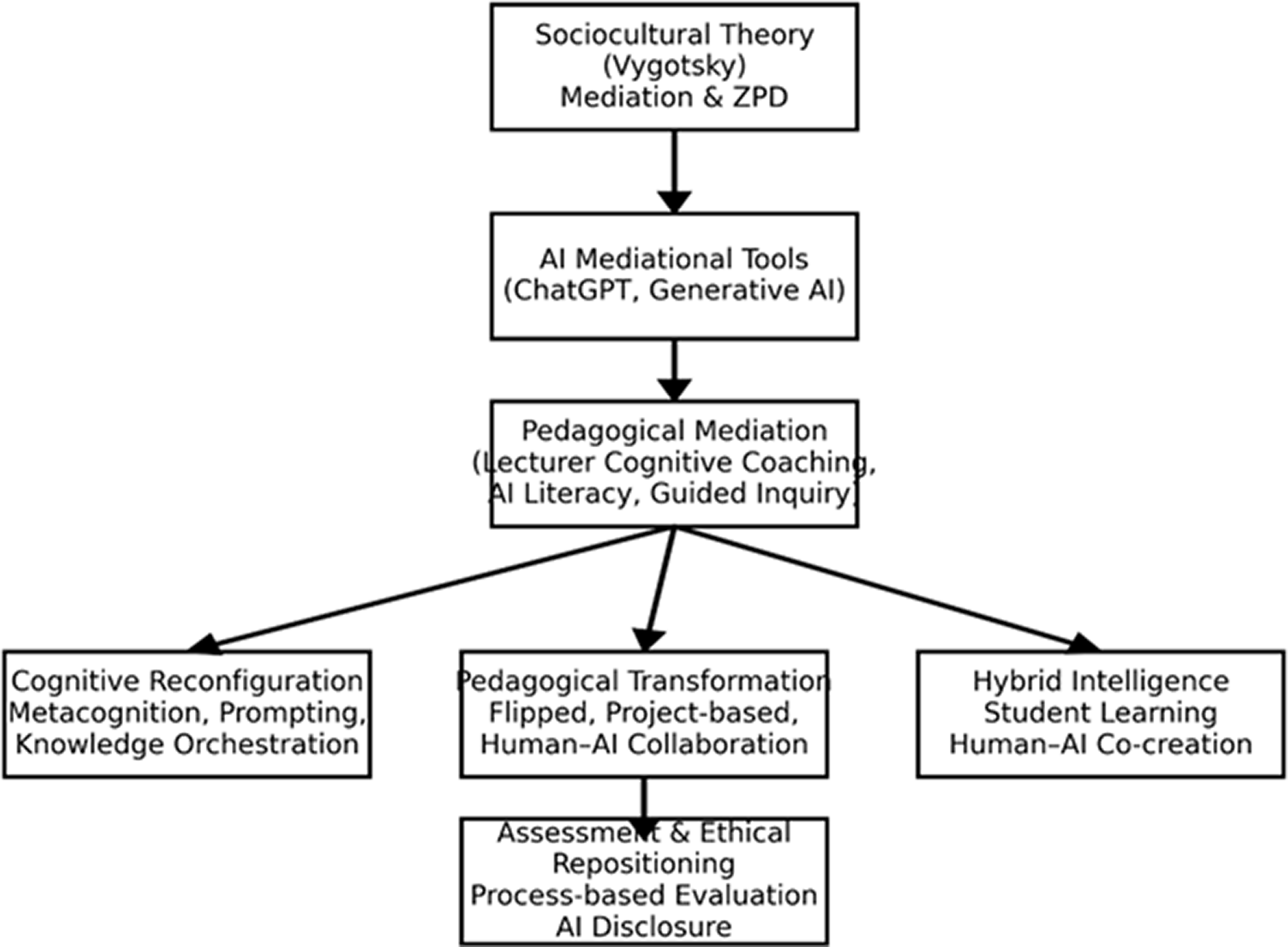
The literature on cognitive reconfiguration in AI-mediated higher education demonstrates substantial conceptual alignment with the sociocultural theory of cognitive development advanced by Lev Vygotsky, which conceptualises learning as a socially mediated process shaped through interaction with cultural tools and guided participation. 21, 22 Generative artificial intelligence platforms such as ChatGPT function within this framework as contemporary mediational artefacts that reorganise cognitive activity by enabling learners to interact dynamically with knowledge systems rather than merely store information. 23 Empirical literature describing knowledge orchestration, metacognitive monitoring, prompt engineering, and critical evaluation reflects the theoretical premise that intellectual development occurs through engagement with tools that extend reasoning capacity and facilitate movement within the Zone of Proximal Development. 25, 30, 34, 44 Evidence from higher education contexts demonstrating improved reflective monitoring and analytical reasoning when AI-supported learning is scaffolded aligns with sociocultural expectations that guided mediation by educators fosters higher-order cognition. 31, 32, 52 Contradictions nevertheless emerge where AI use occurs without structured pedagogical mediation. Studies reporting cognitive offloading, superficial comprehension, and reduced conceptual retention when students rely passively on automated outputs highlight a tension between technological affordances and sociocultural principles of guided participation. 39– 41 These findings reveal persistent challenges in operationalising the theory within digitally mediated learning environments. A significant gap concerns the limited empirical examination of how AI-mediated interaction influences collaborative knowledge construction, peer discourse, and shared reasoning processes that lie at the core of sociocultural learning. Much of the literature emphasises individual cognitive orchestration rather than collective knowledge formation, suggesting an incomplete translation of sociocultural principles into AI-integrated pedagogy.
Policy responses must therefore strengthen institutional structures that operationalise sociocultural mediation within AI-supported learning environments. Universities should develop curricular frameworks that embed structured AI literacy, prompt design training, and verification practices within disciplinary teaching so that generative systems function as scaffolding tools that extend cognitive capability rather than replace intellectual effort. 34, 46, 53 Pedagogical policies should encourage collaborative inquiry models in which students jointly analyse AI-generated outputs, critique reasoning pathways, and construct shared interpretations, thereby restoring the social dimension of learning emphasised within sociocultural theory. 23, 24 Assessment reforms also require alignment with this theoretical perspective by prioritising iterative portfolios, reflective documentation, and oral reasoning demonstrations that capture developmental learning processes rather than static outputs. 25, 50 National higher education regulators and institutional governance bodies should introduce guidelines requiring transparent disclosure of AI use, integration of ethical evaluation of machine-generated knowledge, and professional development programmes enabling lecturers to perform effective cognitive mediation in AI-supported classrooms. 52, 56 Targeted investment in research examining collaborative human–AI learning dynamics across diverse educational contexts remains essential to address current evidence gaps and ensure that AI integration advances the developmental goals of higher education while preserving intellectual agency and epistemic responsibility.
The literature describing the transformation of teaching practices from content delivery to cognitive coaching demonstrates strong theoretical convergence with the sociocultural perspective of cognitive development articulated by Lev Vygotsky. Sociocultural Theory conceptualises learning as a socially mediated process in which intellectual growth emerges through interaction with cultural tools and guided participation within structured learning environments. 21, 22 Generative artificial intelligence platforms such as ChatGPT operate within this framework as contemporary mediational tools capable of reshaping the organisation of cognitive activity. 23 The reviewed literature emphasising lecturer roles in modelling critical inquiry, facilitating dialogical engagement with AI outputs, and scaffolding analytical reasoning reflects the theoretical principle that educators guide learners through the Zone of Proximal Development toward higher levels of intellectual autonomy. 57, 59, 61 Evidence from universities in Europe and North America showing improved evaluative reasoning when lecturers critique AI-generated responses with students further illustrates the importance of guided mediation in shaping higher-order cognition. 62, 63 Pedagogical models such as flipped classrooms, project-based learning, and human–AI collaborative inquiry similarly reinforce sociocultural assumptions that knowledge construction occurs through interactive engagement rather than passive reception. 64, 65, 69 Persistent tensions nevertheless appear in the literature. Research indicating that unstructured AI use encourages overreliance and reduces analytical engagement highlights a gap between theoretical expectations of guided mediation and actual pedagogical implementation. 67, 68 A further conceptual limitation concerns the relatively limited empirical exploration of collective learning processes within AI-mediated classrooms. Many studies focus on individual cognitive interaction with AI systems rather than examining how collaborative dialogue, peer mediation, and shared knowledge construction evolve when generative technologies are integrated into teaching practice.
Addressing these challenges requires institutional and policy interventions that strengthen socioculturally grounded mediation in AI-supported pedagogy. Higher education institutions should implement structured professional development programmes enabling lecturers to function as cognitive coaches who model critical evaluation, contextual interpretation, and ethical reasoning when engaging with AI-generated knowledge. 60, 74 Curriculum frameworks should integrate AI literacy, algorithmic awareness, and collaborative inquiry activities that require students to interrogate AI outputs collectively and justify interpretations through disciplinary reasoning. 71, 72 Teaching guidelines should promote staged learning designs where independent reasoning precedes AI consultation, ensuring that technological tools extend rather than substitute intellectual effort. 68, 70 Assessment policies should also align with sociocultural principles by emphasising reflective documentation, collaborative problem solving, and real-time reasoning demonstrations that capture developmental learning processes rather than static outputs. 23, 24 National education authorities and institutional governance bodies should establish regulatory frameworks requiring transparency in AI use, embedding ethical evaluation of machine-generated information, and supporting interdisciplinary research examining how mediated interaction with AI influences collaborative learning dynamics across diverse educational contexts. 73, 76 Such policy directions would ensure that pedagogical transformation in the AI era reinforces guided intellectual development and preserves the foundational social processes through which human intelligence evolves.
The literature on student learning transformation through generative AI illustrates a convergence with sociocultural theory, which posits that cognitive development emerges through interaction with mediational tools and socially structured guidance. 21, 22 AI platforms such as ChatGPT function as contemporary cultural artefacts that extend cognitive capacity, enabling learners to access information, generate drafts, and simulate problem-solving scenarios beyond the limits of independent reasoning.57, 78 Empirical studies demonstrate that AI-supported adaptive tutoring, case simulations, and co-generation activities promote iterative mastery, self-regulated learning, and creative synthesis in computer science, medical, design, and literature programmes. 80, 81, 89, 91 These findings align with the sociocultural principle that intellectual growth is mediated through engagement with tools within guided learning environments, highlighting the importance of scaffolding and structured interaction to move students through the Zone of Proximal Development. 23, 24 Contradictions arise where AI is used without pedagogical guidance; unstructured reliance on algorithmic outputs has been shown to reduce reflective thinking, metacognitive awareness, and conceptual depth, illustrating the risk of undermining the developmental processes central to sociocultural theory. 85, 94 A significant gap in the current literature is the limited focus on collaborative hybrid learning dynamics, including peer-to-peer mediation and collective reasoning when AI is integrated, which remains underexplored despite its centrality to socially mediated cognitive development.
Policy and institutional interventions are critical to ensuring that AI integration supports the development of hybrid intelligence while preserving educational equity and ethical responsibility. Higher education institutions should establish structured pedagogical frameworks that promote staged engagement with AI, combining independent reasoning, iterative interaction with AI outputs, and reflective evaluation to strengthen metacognitive oversight. 84, 86 Curriculum design must integrate co-creative learning activities that encourage students to critically evaluate, adapt, and contextualise AI-generated outputs collaboratively, thereby restoring the social dimension of knowledge construction emphasized by sociocultural theory. 88, 90 Regulatory policies should mandate transparent documentation of AI use, embed digital and AI literacy, and provide professional development for faculty to act as cognitive coaches who guide both individual and collaborative learning processes. 71, 74 Investment in longitudinal research is needed to examine how hybrid human–AI intelligence evolves in different disciplinary and cultural contexts, particularly in fostering creativity, problem-solving, and ethical decision-making. 92, 95 Collectively, these interventions would operationalise the sociocultural vision of learning, ensuring that AI functions as a mediational tool that enhances intellectual development without compromising critical reasoning, reflective capacity, or equitable access.
The literature on AI-induced assessment disruption and ethical repositioning demonstrates significant alignment with sociocultural theory, which frames learning as a socially mediated process shaped by tools, guidance, and collaborative engagement. 21, 22 Traditional product-based assessment models, emphasising essays, problem sets, and examinations, are challenged by the ease with which AI systems such as ChatGPT generate high-quality outputs, creating authenticity and authorship concerns. 96, 97, 116 Sociocultural theory’s emphasis on the Zone of Proximal Development underscores the importance of process-oriented evaluation, where intellectual growth is captured through guided engagement, reflection, and collaborative reasoning. 23, 24 Empirical studies illustrate that in-class assessments, iterative portfolios, scenario-based simulations, and hybrid human–AI evaluative frameworks enhance metacognitive engagement, reasoning depth, and ethical judgement, aligning assessment practice with sociocultural principles. 100, 103, 108 However, gaps remain in examining how these practices consistently foster collective epistemic responsibility, particularly in contexts where AI contributions are unevenly understood or where collaborative dynamics are under-researched, highlighting a persistent challenge in operationalising theory across diverse institutional settings. 121, 122
Policy interventions are necessary to consolidate the developmental and ethical goals of AI-mediated assessment. Institutions should implement guidelines requiring explicit disclosure and reflective annotation of AI contributions, ensuring that student authorship and intellectual agency remain central.41, 118 Curriculum and assessment design must prioritise iterative, process-based tasks that capture cognitive journeys, integrate peer review, and scaffold critical engagement with AI outputs. 104, 107 Equity-focused policies are essential to mitigate disparities in AI access, providing necessary infrastructure, digital literacy training, and adaptive learning tools for under-resourced contexts while maintaining uniform academic standards. 124, 125 Embedding AI ethics and epistemic vigilance within programmes across disciplines reinforces accountability, cultivates moral reasoning, and develops graduates capable of critical evaluation in hybrid intelligence environments. 127, 128 National and institutional regulators should support professional development for faculty to model ethical engagement with AI, guide process-based assessment, and design tasks resistant to superficial AI reliance. Such policy directions ensure that higher education preserves authentic learning, promotes equitable development of cognitive skills, and aligns assessment systems with the redefined standards of intelligence in AI-mediated learning environments. 110, 129
The literature review demonstrates a clear conceptual alignment with the Sociocultural Theory of cognitive development by illustrating how generative artificial intelligence functions as a mediational cultural tool within higher education environments. Empirical examples drawn from universities in Canada, the United Kingdom, Japan, and Singapore illustrate structured interactions between learners, educators, and AI systems that mirror Vygotsky’s concept of guided participation within the Zone of Proximal Development. 116, 117, 122, 127 These cases reveal that AI-mediated learning environments can extend cognitive engagement through scaffolded intellectual interaction, particularly where educators actively guide students in evaluating machine-generated outputs and reflecting on epistemic responsibility. Such practices correspond with the theoretical assertion that cognitive development occurs through socially organised activity supported by culturally embedded tools. 21, 22 The literature review also reflects the theory’s emphasis on mediation by highlighting reflective disclosure of AI use, bias auditing exercises, and critical annotation of AI-generated content, all of which demonstrate the pedagogical processes through which learners internalise higher-order reasoning capacities.41, 122 Persistent challenges emerge in the uneven institutionalisation of guided mediation across global higher education systems. Many institutions continue to emphasise output-based assessment and individualised authorship without sufficiently recognising AI-supported collaborative cognition. This misalignment reveals an epistemological tension between traditional conceptions of intelligence and the sociocultural understanding that knowledge production increasingly occurs through human–technology interaction. The literature therefore exposes a critical gap in institutional frameworks that have not fully adapted assessment models, authorship norms, and academic integrity policies to reflect the mediated nature of contemporary learning environments. 114, 115, 118
The literature review also reveals structural inequalities and ethical complexities that Sociocultural Theory alone does not fully resolve, particularly regarding equitable access to mediational tools and epistemic representation in AI-generated knowledge systems. Studies documenting Eurocentric bias in AI summarisation tools used by African students illustrate the reproduction of epistemic hierarchies embedded within training datasets, thereby constraining the cultural inclusivity central to sociocultural learning processes. 120, 121 Unequal technological infrastructure across regions further limits the capacity of many institutions to create mediated learning environments that support meaningful cognitive development, as evidenced by disparities between elite universities in the United States and under-resourced institutions in other regions. 124, 125 These disparities highlight a critical theoretical–practical gap: Sociocultural Theory emphasises collaborative mediation and access to cultural tools, yet global higher education systems do not uniformly provide the technological and pedagogical conditions necessary to realise this principle. Addressing these gaps requires coordinated policy interventions that reposition AI governance within higher education. Institutions must develop explicit frameworks for AI disclosure, reflective authorship practices, and bias auditing within curricula to safeguard epistemic integrity and intellectual agency. 116, 122 Governments and regulatory bodies must also prioritise equitable digital infrastructure and inclusive AI training datasets to ensure that all learners can engage meaningfully with emerging cognitive tools. Such policy responses would operationalise the sociocultural principle that intellectual development depends on access to mediated learning environments while reinforcing ethical accountability in AI-supported knowledge production. 123, 126
The review indicates that the integration of generative artificial intelligence has immediate implications for curriculum design and teaching practice within higher education institutions. Universities must restructure instructional approaches so that AI systems function as cognitive scaffolds rather than substitutes for human reasoning. Teaching practice therefore requires deliberate pedagogical mediation in which lecturers guide students to analyse, question, and refine AI-generated information. Learning activities should emphasise critical interpretation, prompt construction, evidence verification, and reflective engagement with machine-generated outputs. Such practices ensure that students develop analytical judgement, creativity, and metacognitive awareness while interacting with AI tools. Pedagogical models that promote collaborative inquiry, project-based learning, and case analysis offer practical mechanisms through which students can critically evaluate automated responses and construct knowledge through structured dialogue with both peers and digital systems. These approaches reposition lecturers as facilitators of cognitive development who support students in navigating complex knowledge environments where human and artificial intelligence interact continuously.
Practical implications also extend to institutional assessment systems and academic governance. Conventional product-oriented assessments centred on essays or written assignments no longer provide reliable evidence of independent reasoning because generative systems can produce sophisticated outputs. Higher education institutions must therefore redesign evaluation practices to capture intellectual processes rather than static products. Authentic assessments such as oral examinations, reflective portfolios, scenario-based problem solving, and real-time analytical demonstrations allow educators to observe reasoning pathways, conceptual understanding, and the ability to evaluate AI-generated content critically. Transparent institutional guidelines requiring disclosure of AI use and reflective explanation of how automated outputs contributed to academic work can reinforce intellectual accountability while enabling responsible technological engagement. Equity considerations further require universities and national education authorities to expand digital infrastructure, ensure equitable access to AI learning tools, and embed AI literacy within academic programmes. Such measures prepare graduates to operate effectively in hybrid knowledge environments where professional competence increasingly depends on the capacity to interpret, evaluate, and ethically apply machine-generated insights.
The review demonstrates that the integration of generative artificial intelligence is transforming the foundations of human intelligence within higher education. Evidence across global contexts shows that the traditional emphasis on memorisation and knowledge possession is progressively giving way to knowledge orchestration, where intellectual capability is defined by the ability to regulate, evaluate, and integrate machine-generated information. Cognitive reconfiguration emerges as a central outcome of this transformation, with metacognitive regulation, prompt design, and epistemic judgement becoming critical competencies in academic learning. These developments illustrate that AI does not replace human cognition; instead, it redistributes cognitive effort toward higher-order processes such as analytical reasoning, synthesis, and reflective oversight. When supported by structured pedagogical mediation, generative AI functions as a powerful cognitive scaffold that expands the scope of inquiry, supports personalised learning, and enhances opportunities for complex problem solving. The review also demonstrates that the reconfiguration of intelligence aligns strongly with sociocultural perspectives of learning, which emphasise the role of tools, guided interaction, and collaborative reasoning in shaping intellectual development. AI systems therefore operate as contemporary cultural artefacts that extend human cognitive capacity while requiring deliberate educational guidance to ensure meaningful engagement.
Pedagogical transformation represents another defining dimension of this shift. Teaching practices in higher education are evolving from the transmission of disciplinary knowledge toward the facilitation of intellectual development through cognitive coaching. Lecturers increasingly function as interpreters, mentors, and epistemic stewards who guide students in critically engaging with AI-generated information. Educational strategies that incorporate project-based learning, collaborative inquiry, and iterative evaluation demonstrate the capacity to strengthen analytical reasoning and metacognitive awareness in AI-supported environments. The review highlights that learning processes are becoming hybrid in nature, where human reasoning and AI-generated outputs interact dynamically to support creative synthesis and adaptive problem solving. These developments expand learning opportunities through personalised feedback, simulated case analysis, and collaborative knowledge construction. Effective learning in such environments depends on maintaining a balance between cognitive augmentation and independent reasoning. Structured pedagogical frameworks that encourage students to analyse AI outputs critically, compare automated responses with disciplinary evidence, and reflect on reasoning processes strengthen intellectual autonomy while preventing passive reliance on algorithmic assistance.
The review also identifies profound implications for assessment and academic governance. Conventional product-based assessment models are increasingly inadequate in contexts where generative AI can produce sophisticated outputs with minimal effort. Educational institutions are therefore transitioning toward process-oriented evaluation methods that emphasise reasoning pathways, reflective documentation, and real-time demonstration of understanding. Oral examinations, iterative portfolios, scenario-based simulations, and collaborative problem-solving tasks provide mechanisms for evaluating intellectual development more authentically. These approaches emphasise the cognitive journey rather than the final artefact and reinforce accountability in AI-mediated learning environments. Revisions to academic integrity frameworks further highlight the importance of transparency in documenting AI contributions, ensuring that students maintain responsibility for interpretation, validation, and contextual application of knowledge.
Ethical and epistemological considerations also emerge as critical components of the transformation of higher education. The increasing involvement of AI in knowledge production requires institutions to reconsider the meaning of originality, authorship, and intellectual responsibility. The review highlights concerns related to algorithmic bias, unequal access to AI resources, and the reproduction of epistemic inequalities embedded within training datasets. These challenges reveal that technological advancement alone does not guarantee equitable educational outcomes. Addressing such disparities requires institutional and policy frameworks that expand digital infrastructure, promote inclusive datasets, and embed ethical awareness within curricula. Educational programmes that emphasise verification practices, bias detection, and critical engagement with machine-generated information strengthen epistemic vigilance and cultivate responsible intellectual behaviour in AI-mediated environments.
The synthesis of evidence across cognitive, pedagogical, learning, assessment, and ethical domains illustrates that higher education is undergoing a comprehensive transformation. Human intelligence in contemporary academic contexts is no longer defined solely by individual cognitive capacity but by the ability to interact productively with complex technological systems while maintaining critical judgement and ethical responsibility. Institutions that intentionally integrate AI within pedagogical structures, assessment frameworks, and governance systems can harness its potential to enhance intellectual development and expand access to knowledge. Educational environments that neglect such structural guidance risk reinforcing superficial learning, cognitive dependency, and inequitable participation.
The findings therefore emphasise the need for strategic institutional leadership and coherent policy frameworks that support responsible AI integration. Universities must cultivate learning environments where technological tools enhance rather than diminish human intellectual agency. Investments in educator training, AI literacy programmes, and research examining human–AI collaboration will be essential to sustaining meaningful academic development in this evolving landscape. The future of higher education depends not on resisting technological change but on guiding it thoughtfully to reinforce the fundamental mission of universities: the cultivation of critical reasoning, creative inquiry, ethical judgement, and socially responsible knowledge production. Generative AI represents a transformative catalyst within this mission, reshaping the operational definition of intelligence while reaffirming the enduring importance of human intellectual oversight.
The review demonstrates that the integration of generative artificial intelligence is transforming the foundations of human intelligence within higher education. Evidence across global contexts shows that the traditional emphasis on memorisation and knowledge possession is progressively giving way to knowledge orchestration, where intellectual capability is defined by the ability to regulate, evaluate, and integrate machine-generated information. Cognitive reconfiguration emerges as a central outcome of this transformation, with metacognitive regulation, prompt design, and epistemic judgement becoming critical competencies in academic learning. These developments illustrate that AI does not replace human cognition; instead, it redistributes cognitive effort toward higher-order processes such as analytical reasoning, synthesis, and reflective oversight. When supported by structured pedagogical mediation, generative AI functions as a powerful cognitive scaffold that expands the scope of inquiry, supports personalised learning, and enhances opportunities for complex problem solving. The review also demonstrates that the reconfiguration of intelligence aligns strongly with sociocultural perspectives of learning, which emphasise the role of tools, guided interaction, and collaborative reasoning in shaping intellectual development. AI systems therefore operate as contemporary cultural artefacts that extend human cognitive capacity while requiring deliberate educational guidance to ensure meaningful engagement.
Pedagogical transformation represents another defining dimension of this shift. Teaching practices in higher education are evolving from the transmission of disciplinary knowledge toward the facilitation of intellectual development through cognitive coaching. Lecturers increasingly function as interpreters, mentors, and epistemic stewards who guide students in critically engaging with AI-generated information. Educational strategies that incorporate project-based learning, collaborative inquiry, and iterative evaluation demonstrate the capacity to strengthen analytical reasoning and metacognitive awareness in AI-supported environments. The review highlights that learning processes are becoming hybrid in nature, where human reasoning and AI-generated outputs interact dynamically to support creative synthesis and adaptive problem solving. These developments expand learning opportunities through personalised feedback, simulated case analysis, and collaborative knowledge construction. Effective learning in such environments depends on maintaining a balance between cognitive augmentation and independent reasoning. Structured pedagogical frameworks that encourage students to analyse AI outputs critically, compare automated responses with disciplinary evidence, and reflect on reasoning processes strengthen intellectual autonomy while preventing passive reliance on algorithmic assistance.
The review also identifies profound implications for assessment and academic governance. Conventional product-based assessment models are increasingly inadequate in contexts where generative AI can produce sophisticated outputs with minimal effort. Educational institutions are therefore transitioning toward process-oriented evaluation methods that emphasise reasoning pathways, reflective documentation, and real-time demonstration of understanding. Oral examinations, iterative portfolios, scenario-based simulations, and collaborative problem-solving tasks provide mechanisms for evaluating intellectual development more authentically. These approaches emphasise the cognitive journey rather than the final artefact and reinforce accountability in AI-mediated learning environments. Revisions to academic integrity frameworks further highlight the importance of transparency in documenting AI contributions, ensuring that students maintain responsibility for interpretation, validation, and contextual application of knowledge.
Ethical and epistemological considerations also emerge as critical components of the transformation of higher education. The increasing involvement of AI in knowledge production requires institutions to reconsider the meaning of originality, authorship, and intellectual responsibility. The review highlights concerns related to algorithmic bias, unequal access to AI resources, and the reproduction of epistemic inequalities embedded within training datasets. These challenges reveal that technological advancement alone does not guarantee equitable educational outcomes. Addressing such disparities requires institutional and policy frameworks that expand digital infrastructure, promote inclusive datasets, and embed ethical awareness within curricula. Educational programmes that emphasise verification practices, bias detection, and critical engagement with machine-generated information strengthen epistemic vigilance and cultivate responsible intellectual behaviour in AI-mediated environments.
The synthesis of evidence across cognitive, pedagogical, learning, assessment, and ethical domains illustrates that higher education is undergoing a comprehensive transformation. Human intelligence in contemporary academic contexts is no longer defined solely by individual cognitive capacity but by the ability to interact productively with complex technological systems while maintaining critical judgement and ethical responsibility. Institutions that intentionally integrate AI within pedagogical structures, assessment frameworks, and governance systems can harness its potential to enhance intellectual development and expand access to knowledge. Educational environments that neglect such structural guidance risk reinforcing superficial learning, cognitive dependency, and inequitable participation.
The findings therefore emphasise the need for strategic institutional leadership and coherent policy frameworks that support responsible AI integration. Universities must cultivate learning environments where technological tools enhance rather than diminish human intellectual agency. Investments in educator training, AI literacy programmes, and research examining human–AI collaboration will be essential to sustaining meaningful academic development in this evolving landscape. The future of higher education depends not on resisting technological change but on guiding it thoughtfully to reinforce the fundamental mission of universities: the cultivation of critical reasoning, creative inquiry, ethical judgement, and socially responsible knowledge production. Generative AI represents a transformative catalyst within this mission, reshaping the operational definition of intelligence while reaffirming the enduring importance of human intellectual oversight.
The findings highlight the need for comprehensive policy frameworks that guide the responsible integration of generative artificial intelligence in higher education. Policymakers at institutional and national levels should establish clear governance structures that define acceptable uses of AI in teaching, learning, and assessment. Such frameworks should emphasise transparency, accountability, and ethical use while recognising the educational benefits of AI-assisted learning. Universities should develop formal guidelines requiring students and lecturers to disclose the use of AI tools in academic work, including explanations of how machine-generated outputs were utilised and critically evaluated. Establishing these policies can promote academic integrity while enabling constructive engagement with emerging technologies. Furthermore, regulatory frameworks should support continuous monitoring of AI applications in education to ensure that technological adoption aligns with academic values, intellectual autonomy, and responsible knowledge production.
In terms of educational practice, curriculum design should be revised to integrate AI literacy as a foundational academic competency. Students require structured training not only in how to use AI tools but also in how to critically interpret their outputs, identify potential inaccuracies, and evaluate underlying assumptions embedded within machine-generated responses. Embedding AI literacy across disciplines can help students develop the analytical judgement necessary to navigate complex digital knowledge environments. Universities should therefore introduce learning activities that require students to interrogate AI-generated content, compare it with scholarly sources, and refine their reasoning through reflective critique. Such pedagogical approaches encourage deeper cognitive engagement and prevent passive reliance on automated systems. Integrating AI literacy into existing courses rather than confining it to specialised technology modules will ensure that all graduates acquire the competencies required for responsible AI use in academic and professional contexts.
Institutional policy should also prioritise professional development for academic staff. Lecturers require ongoing training to understand both the pedagogical opportunities and limitations of generative AI. Professional development programmes should equip educators with practical strategies for designing AI-supported learning activities, guiding students in prompt development, and facilitating critical discussions about machine-generated knowledge. These programmes can also support lecturers in redesigning assessments that capture intellectual processes rather than static outputs. When educators are adequately prepared to work with AI technologies, they can guide students more effectively and maintain high standards of academic rigour. Institutions should therefore invest in structured training initiatives, interdisciplinary teaching communities, and knowledge-sharing platforms that allow educators to exchange experiences and best practices in AI-mediated instruction.
Assessment reform is another critical area requiring policy attention. Traditional written assignments are increasingly vulnerable to automated generation, making it necessary for universities to adopt more authentic forms of evaluation. Educational policies should encourage assessment designs that emphasise reasoning, reflection, and real-time intellectual engagement. Methods such as oral examinations, iterative project work, research portfolios, and collaborative problem-solving tasks can provide richer evidence of students’ analytical capabilities. Assessment frameworks should also include reflective components that require students to explain how AI tools were used during the learning process and how they evaluated the reliability of generated information. By focusing on intellectual processes, such assessment models preserve academic integrity while recognising the reality that AI tools will remain embedded within contemporary learning environments.
Equitable access to digital infrastructure represents another important policy priority. The benefits of AI-assisted education cannot be realised if students and institutions experience unequal access to technological resources. Governments and university administrations should therefore invest in reliable internet connectivity, digital learning platforms, and institutional AI tools that are accessible to all students. Such investments are particularly important for universities in resource-constrained contexts where digital divides may otherwise intensify educational inequalities. Policies supporting open educational technologies and collaborative partnerships between institutions can help reduce disparities in access to advanced learning tools. Ensuring equitable technological access is essential for maintaining fairness and inclusivity in AI-mediated educational environments.
Ethical oversight should also form a central component of institutional practice. Universities should establish interdisciplinary committees or governance bodies responsible for evaluating the ethical implications of AI use in academic settings. These bodies can review issues such as algorithmic bias, data privacy, and the representation of diverse knowledge systems within AI-generated outputs. Ethical review mechanisms can also provide guidance to lecturers and students on responsible engagement with generative technologies, particularly in research contexts where data sensitivity and intellectual ownership require careful consideration. Embedding ethical reflection within policy structures ensures that technological innovation remains aligned with broader educational values and societal responsibilities.
Finally, collaboration between universities, governments, and industry stakeholders should be strengthened to support the sustainable development of AI-integrated education systems. Partnerships can facilitate knowledge exchange, provide access to emerging technologies, and support research on effective pedagogical practices. Industry collaboration may also help universities align academic training with evolving labour market requirements, ensuring that graduates possess the skills necessary to operate within technology-enhanced professional environments. At the same time, policymakers must ensure that such collaborations preserve academic independence and prioritise educational objectives over purely commercial interests.
One limitation of this review is its reliance on existing literature that predominantly focuses on individual cognitive interactions with AI, rather than exploring collaborative or collective learning processes. While the review provides extensive insights into how generative AI reshapes personal cognition, metacognitive regulation, and hybrid intelligence, it offers limited understanding of how students engage in shared reasoning, peer mediation, and co-constructed knowledge within AI-mediated environments. This narrow emphasis restricts the generalisability of findings to broader sociocultural learning contexts where collaboration plays a central role in cognitive development.
A second limitation is the uneven representation of global higher education contexts, with much of the evidence drawn from well-resourced universities in North America, Europe, and parts of Asia. Under-resourced institutions, particularly in Africa, Latin America, and rural regions, are underrepresented, creating a knowledge gap regarding the practical challenges of AI access, infrastructure, and equity. Consequently, the review may overstate the applicability of AI-mediated pedagogical strategies and hybrid intelligence development in contexts where technological and institutional support is limited, highlighting the need for more inclusive, diverse empirical research.
| Views | Downloads | |
|---|---|---|
| F1000Research | - | - |
|
PubMed Central
Data from PMC are received and updated monthly.
|
- | - |
Provide sufficient details of any financial or non-financial competing interests to enable users to assess whether your comments might lead a reasonable person to question your impartiality. Consider the following examples, but note that this is not an exhaustive list:
Sign up for content alerts and receive a weekly or monthly email with all newly published articles
Already registered? Sign in
The email address should be the one you originally registered with F1000.
You registered with F1000 via Google, so we cannot reset your password.
To sign in, please click here.
If you still need help with your Google account password, please click here.
You registered with F1000 via Facebook, so we cannot reset your password.
To sign in, please click here.
If you still need help with your Facebook account password, please click here.
If your email address is registered with us, we will email you instructions to reset your password.
If you think you should have received this email but it has not arrived, please check your spam filters and/or contact for further assistance.

Comments on this article Comments (0)