Keywords
CEO Education, CEO Age, CEO Tenure, Sustainability Report, Tax Avoidance

CEO Education, CEO Age, CEO Tenure, Sustainability Report, Tax Avoidance
The increasing public attention to sustainable business practices has encouraged companies to no longer focus solely on financial performance, but also on the social and environmental impacts of their operational activities. Pressure from investors, regulators, and the public demands transparency and non-financial information, shifting the paradigm of corporate reporting towards more comprehensive reporting (Fernández et al., 2014).
In response to these demands, sustainability reports have evolved as a strategic instrument for communicating companies’ commitment to sustainability while building trust among stakeholders (Barker, 2025). However, on the other hand, companies are still faced with aggressive tax management practices through tax avoidance. Although legal, tax avoidance is often perceived as contrary to the spirit of sustainability because it has the potential to reduce companies’ contributions to state revenue (Nasih et al., 2025). A number of studies even show a contradiction between sustainability disclosure and companies’ tendency to engage in tax avoidance (Mitroulia, 2025).
This contradiction confirms that sustainability reporting and tax avoidance policies are greatly influenced by the strategic decisions of top management, particularly the Chief Executive Officer (CEO). Based on Upper Echelons Theory, the characteristics of top leaders reflect the values, risk preferences, and perspectives that influence the direction of company policy (Hambrick & Mason, 1984). In line with Agency Theory and Stakeholder Theory, CEO decisions are not only influenced by shareholder interests, but also by personal interests and the demands of broader stakeholders (Freeman et al., 2020).
Previous studies have shown inconsistent results regarding the influence of CEO characteristics on sustainability reports and tax avoidance. CEO education is generally found to have a positive effect on sustainability reports (Malik et al., 2020; Saha et al., 2023; Ghardallou, 2022), but CEO age and tenure show mixed results. Similar inconsistencies are also found in studies of tax avoidance (Huang & Zhang, 2019; James, 2020; Souguir et al., 2023). In addition, most studies still examine sustainability reports and tax avoidance separately.
Based on these gaps, this study aims to analyze the simultaneous effects of CEO characteristics, including CEO education, age, and tenure, on sustainability reports and tax avoidance. It uses panel data regression on SRI-KEHATI Index companies listed on the Indonesia Stock Exchange. The SRI-KEHATI Index was selected based on the relatively homogeneous characteristics of companies in terms of ESG commitment and transparency, enabling observation of the influence of CEO characteristics on sustainability report disclosure. In addition, the high level of supervision of companies in this index makes tax avoidance practices more controlled, making it relevant to examine how CEO strategic decisions continue to influence sustainability and taxation policies.
Based on the Upper Echelons Theory according to Hambrick & Mason (1984), CEO characteristics influence corporate strategic decisions, including sustainability report disclosure. CEOs with higher levels of education tend to have a better understanding of sustainability issues and stakeholder demands, thereby encouraging broader sustainability report disclosure (Saha et al., 2023). In addition, CEO age is related to risk preferences, where more senior CEOs tend to be more cautious and oriented towards compliance and corporate legitimacy (Malik et al., 2020). Meanwhile, CEOs with longer tenures have greater influence and experience within the organization, which can encourage consistency in sustainability reporting practices (Al-Duais et al., 2021). Based on these arguments, the hypothesis proposed are:
CEO education influences sustainability reports.
CEO age influences sustainability reports.
CEO tenure influences sustainability reports.
CEO characteristics also influence risk preferences and attitudes toward tax compliance. Based on Upper Echelons Theory (Hambrick & Mason, 1984), corporate strategic decisions, including tax policy, reflect the values, experiences, and risk preferences of top management. CEOs with higher levels of education tend to consider the legal and reputational risks of tax avoidance practices, thereby potentially reducing the level of tax avoidance (Huang & Zhang, 2019). CEO age reflects differences in risk tolerance, with younger CEOs tending to be more aggressive in their decision-making, including in tax strategy (James, 2020). In addition, CEOs with longer tenure have a better understanding of the company’s internal systems and tax planning opportunities, which can increase the tendency for tax avoidance (Neifar & Huesing, 2023). Thus, the research hypothesis is formulated as follows:
CEO education influences tax avoidance.
CEO age influences tax avoidance.
CEO tenure influences tax avoidance.
Sustainability reports serve as a mechanism that reflects a company’s ethical orientation and legitimacy in responding to stakeholder pressures. Sustainability report disclosure policies are the result of strategic decisions made by top management, which are influenced by CEO characteristics, as explained in Upper Echelons Theory (Hambrick & Mason, 1984). Furthermore, the level of disclosure in sustainability reports shapes the boundaries of reputation and public scrutiny that influence corporate behavior in tax management, thereby potentially curbing aggressive tax avoidance practices (Rini et al., 2023). Based on these arguments, the research hypothesis is formulated as follows:
Sustainability Reports mediate the relationship between CEO characteristics and tax avoidance.
The data was analyzed using panel data regression with the help of Eviews 13 software. The panel data regression method was chosen because it is able to combine cross-section and time-series dimensions, thereby capturing variations between companies and the dynamics of change between observation periods. The selection of the panel data regression model was carried out through several stages of testing, namely the Chow test to determine the selection between the Common Effect Model (CEM) and the Fixed Effect Model (FEM), the Hausman test to choose between the Fixed Effect Model (FEM) and Random Effect Model (REM), and the Lagrange Multiplier (LM) test to determine the choice between the Common Effect Model (CEM) and Random Effect Model (REM). The best model was selected based on the results of these tests (Gujarati & Porter 2009 and Wooldridge 2013). In addition, to examine the mediating role of the sustainability report variable in the relationship between CEO characteristics and tax avoidance, a Sobel test was conducted to determine whether the indirect effect of CEO characteristics on tax avoidance through sustainability reporting was statistically significant.
The data in this study were obtained from the sustainability reports and annual reports of companies listed on the SRI KEHATI Index during the period of 2018–2024. The research sample consisted of 25 companies, selected based on the availability of sustainability reports and annual report data during the observation period. Based on these criteria, 172 panel data observations were obtained, of which 24 companies had complete data for seven years, while PT Avia Avian Tbk (AVIA) was only available for the 2021–2024 period.
The indicators used in this study were carefully selected to ensure comprehensive measurement of the research variables, which included CEO characteristics, sustainability reports, tax avoidance, and control variables. The selection of indicators was based on previous literature and considerations of their relevance to the context of companies listed on the SRI KEHATI Index. Each variable was measured using a set of indicators that represented theoretical aspects while also reflecting the empirical conditions of the company. Control variables were included to minimize potential bias and isolate the influence of the main variables on tax avoidance. Details of the indicators and measurements of each variable are presented systematically in Table 1.
| No | Types of variables | Indicators | Source | |
|---|---|---|---|---|
| 1. | CEO Characteristic (X) | CEO Education (X1) |
| Ghardallou, (2022) |
| CEO Age (X2) | Age of CEO 0: CEO aged above 50 1: CEO aged below 50 years | James (2020) | ||
| CEO Tenure (X3) | Tenure years | Neifar & Huesing (2023) | ||
| 2. | Sustainability report (Y1) | Sustainability report | GRI index | Rini et al., (2023) |
| 3. | Tax avoidance (Y2) | Tax avoidance | Effective Tax Rate (ETR)
| Rini et al., (2023) |
| 4. | Control Variable | SOE (State Owned Enterprise) | 0: Non-state-owned enterprises Company 1: State-owned enterprises Company | Malik et al., (2020) |
| Firm Size | Ln (Total Assets) | Saha et al., (2023) | ||
| Firm Age | Firm Age = Observation Year – Year of Company IPO | Suherman et al., (2023) | ||
| Fixed Assets | Property + Plant + Equipment | Neifar & Huesing (2023) | ||
| ROA | Neifar & Huesing (2023) | |||
| ROE | Saha et al. (2023) | |||
| DER | Nebie & Cheng (2023) | |||
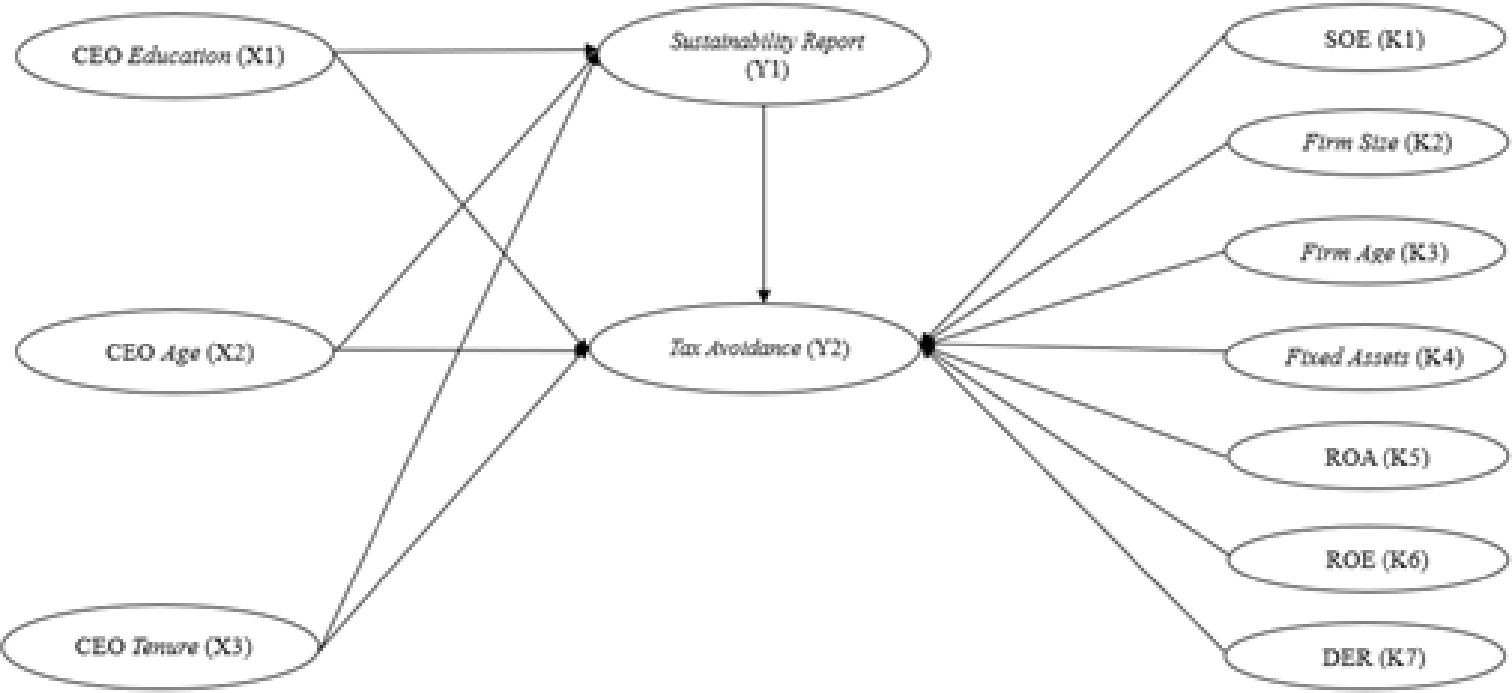
Based on the variable indicators described above, this study develops a conceptual framework to illustrate the relationships among the research variables. The framework explains how CEO characteristics influence corporate strategic decisions, particularly in relation to sustainability reporting and tax avoidance practices. In addition, sustainability reporting is proposed as a mediating variable that potentially links CEO characteristics with corporate tax avoidance. Control variables are also included in the framework to account for other factors that may influence corporate tax behavior. The conceptual framework of this research is presented in Figure 1.
This section presents the results of hypothesis testing based on the regression analysis. The detailed statistical outputs are presented in Tables 2–4, followed by a summary of hypothesis testing results in Table 5.
H2: CEO age influences sustainability reports
Table 5 shows that CEO age (H2) has a coefficient of 0.733 with a p-value of 0.094 in its effect on sustainability reports. These results indicate a positive but insignificant relationship at a 5 percent significance level. This finding is reinforced by the 95% confidence interval ranging from −0.119 to 1.585, which still includes zero, indicating that the effect of CEO age on sustainability report disclosure cannot be statistically confirmed. Thus, hypothesis 2 is not supported.
H3: CEO tenure influences sustainability reports
CEO tenure (H3) has a coefficient of −0.558 with a p-value of 0.205, as reported in Table 5. This result shows a negative and insignificant relationship. This is reinforced by the 95% confidence interval ranging from −1.417 to 0.301, which includes zero, indicating that CEO tenure has not been empirically proven to affect the level of sustainability report disclosure. Thus, hypothesis 3 is not supported.
H4: CEO education influences tax avoidance
CEO education (H4) has a coefficient of 0.018 with a p-value of 0.407 in its effect on tax avoidance. This result shows a positive and insignificant relationship, as shown in Table 5. In addition, the 95% confidence interval is in the range of −0.025 to 0.061, which includes zero, indicating that the effect of CEO education on tax avoidance cannot be empirically confirmed. Thus, hypothesis 4 is not supported.
H5: CEO age influences tax avoidance
According to Table 5, CEO age (H5) has a coefficient of 0.007 with a p-value of 0.000 in its effect on the effective tax rate (ETR). This result shows a positive and significant relationship, indicating that the higher the CEO age, the higher the company’s ETR, resulting in a lower level of tax avoidance. This finding is reinforced by the 95% confidence interval ranging from 0.004 to 0.010, which is entirely above zero, confirming the significance and consistency of the direction of influence. Thus, hypothesis 5 is supported.
H6: CEO tenure influences tax avoidance
CEO tenure (H6) has a coefficient of −0.008 with a p-value of 0.000 as reported in Table 5 in its effect on the effective tax rate (ETR). This result shows a negative and significant relationship, indicating that the longer the CEO’s tenure, the lower the company’s ETR, resulting in a higher level of tax avoidance. This finding is reinforced by the 95% confidence interval ranging from −0.011 to −0.004, which is entirely below zero. This confirms that the negative effect of CEO tenure on ETR is consistent and statistically significant. Thus, hypothesis 6 is supported.
H7: The Sustainability Report mediates the relationship between CEO Characteristics and Tax Avoidance
The Sustainability Report (H7) has a mediation coefficient of −0.0004 with a p-value of 0.284 in mediating the relationship between CEO characteristics and tax avoidance, as shown in Table 5. These results indicate that the Sustainability Report does not significantly mediate the effect of CEO characteristics on tax avoidance. This finding is reinforced by the 95% confidence interval ranging from −0.00114 to 0.00033, which includes zero, indicating that the mediating effect of the Sustainability Report cannot be empirically proven. Thus, hypothesis 7 is not supported.
The first hypothesis in this study states that CEO education influences sustainability reports. CEO education characteristics were chosen because education reflects cognitive capacity, analytical skills, and CEO understanding of long-term strategic issues, including sustainability and corporate social responsibility issues. Based on the results presented in Table 2, CEO education has a coefficient of −10.827 with a p-value of 0.039, indicating a negative and statistically significant relationship with sustainability reports at the 5 percent significance level.
One possible explanation for this negative relationship is that CEOs with higher educational backgrounds may adopt a more financially oriented perspective in strategic decision making. Advanced management education, particularly MBA or finance-oriented programs, often emphasizes efficiency, cost control, and shareholder value maximization. From this perspective, sustainability reporting may be perceived as a costly disclosure practice that does not always generate immediate financial benefits. As a result, highly educated CEOs may prioritize operational efficiency and financial performance over expanding voluntary disclosures related to sustainability. In this context, sustainability reporting can also be viewed as a form of costly signalling, where the benefits in terms of reputation and legitimacy may not always outweigh the associated reporting and compliance costs.
Based on Upper Echelon Theory, CEO education influences how CEOs process information and make strategic decisions. CEOs with higher education tend to have broader insights into ESG issues, sustainability regulations, and the long-term impact of company business practices. From the Agency Theory perspective, sustainability reports serve as a means to reduce information asymmetry between management and stakeholders. CEOs with higher educational backgrounds tend to be more aware of agency risks, including reputational risks and potential conflicts with investors. Therefore, improving the quality and quantity of sustainability reports can be seen as an effort by CEOs to increase corporate transparency and accountability.
In addition, Stakeholder Theory explains that highly educated CEOs generally have greater sensitivity to increasingly complex stakeholder demands, such as ESG-oriented investors, regulators, and the community. This awareness encourages CEOs to adopt sustainability reporting practices in order to meet stakeholder expectations and maintain the company’s legitimacy.
The results of this study indicate that CEO education has a negative and significant effect on sustainability reports, which means that these findings support hypothesis H1. However, these results are not in line with the studies by Malik et al. (2020), Saha et al. (2023), and Ghardallou (2022), which found a positive relationship between CEO education and sustainability report disclosure.
These differences in results may be influenced by several methodological factors and characteristics of the previous research samples. Malik et al. (2020) used logistic regression, which is different from the method used in this study. That model emphasizes the probability of a company disclosing sustainability information, rather than variations in the intensity or level of disclosure, so the sensitivity of the results to CEO characteristics, including education, is different.
Saha et al. (2023) studied all banks listed on the Dhaka Stock Exchange (30 banks), so the industry context is very specific and highly regulated, making the influence of CEO education on sustainability disclosure easier to identify. Ghardallou (2022) used a sample of public companies in Saudi Arabia from 2015 to 2020, focusing on a market context that is strengthening the ESG transition and still emphasizes individual characteristics as determinants of sustainability policy direction.
The second hypothesis in this study states that CEO age affects sustainability reports. The CEO age variable was chosen because age reflects the level of experience, risk preferences, and long-term decision-making orientation. Age differences are believed to influence how CEOs respond to sustainability demands and corporate social legitimacy. As shown in Table 2, CEO age has a coefficient of 0.733 with a p-value of 0.094, indicating a positive but statistically insignificant relationship with sustainability reports at the 5 percent significance level.
Based on Upper Echelon Theory, CEO age is related to values, attitudes, and cognitive patterns that influence strategic decisions. More senior CEOs generally have lower risk preferences and tend to be cautious in their decision-making. In the context of sustainability reports, this caution encourages CEOs to increase sustainability disclosure in an effort to maintain the company’s reputation and long-term sustainability.
From the perspective of Agency Theory, older CEOs tend to avoid decisions that could potentially lead to legal and reputational risks, including risks resulting from low transparency of non-financial information (Jensen and Meckling, 1976). Sustainability reports can be used as a control mechanism to reduce agency conflicts and increase investor confidence, so that CEOs who are older in age are theoretically more inclined to expand such disclosures.
In addition, according to Stakeholder Theory, older CEOs generally have a higher awareness of stakeholder expectations, including regulators, institutional investors, and the public. Extensive experience in the business world makes CEOs more aware of the importance of maintaining long-term relationships with stakeholders through sustainability reporting practices.
The results show that CEO age has a positive effect on sustainability reports, but the relationship is not statistically significant. These findings indicate that the direction of the relationship is consistent with several previous studies, but the empirical evidence is not yet strong enough to fully support the hypothesis. These results are not in line with the studies by Malik et al. (2020) and Oh et al. (2016), which found that more senior CEOs have a significant influence in supporting sustainability practices.
This difference is due to the fact that Malik et al. (2020) used a larger sample of companies listed on the Pakistan Stock Exchange, while Oh et al. (2016) studied manufacturing companies based in the United States during the period 2004–2009, which is a very different context from the companies in the Kehati SRI Index that were the subject of this study.
The third hypothesis in this study states that CEO tenure affects sustainability reports. CEO tenure was chosen as one of the main characteristics because it reflects the level of control over the organization, the power of influence in strategic decision-making, and the CEO’s ability to direct the company’s long-term policies. As shown in Table 2, CEO tenure has a coefficient of −0.558 with a p-value of 0.205, indicating a negative but statistically insignificant relationship with sustainability reports at the 5 percent significance level. These results suggest that the length of a CEO’s tenure does not significantly influence sustainability report disclosure.
Based on Upper Echelons Theory, CEOs with longer tenures have a deeper understanding of internal processes, organizational culture, and company strategy. This understanding theoretically enables CEOs to encourage the implementation of more consistent and integrated sustainability practices, including through broader disclosure of sustainability reports.
From the perspective of Agency Theory, CEOs with long tenures have greater managerial authority. This authority can be used to strengthen reporting mechanisms as a means of legitimacy and conflict reduction. In this context, sustainability reports serve as a signal to shareholders and stakeholders that the company is managed responsibly and with a long-term orientation.
Meanwhile, according to Stakeholder Theory, CEOs who have been in office for a long time tend to have stronger relationships with key stakeholders, such as institutional investors, regulators, and the community. These long-term relationships encourage CEOs to maintain the company’s reputation through increased transparency and accountability, one of which is through sustainability reports.
However, empirical research results show that CEO tenure has a negative and insignificant coefficient on sustainability reports. This finding indicates that CEO tenure does not directly increase the level of sustainability disclosure, so hypothesis H3 is not supported. These results contradict the findings of Saha et al. (2023) and Ghardallou (2022), who found a positive effect of CEO tenure on sustainability reports.
This difference in findings may be due to the characteristics of the sample and control variables used. Saha et al. (2023) used a sample of all banks listed on the Dhaka Stock Exchange, so the industry context was very specific and in a relatively strict regulatory environment. In addition, Saha et al. (2023) included control variables such as bank capital, growth, and net interest income (NII), which differ from this study. These differences in industry context and model structure have the potential to influence the direction of the CEO tenure coefficient, so it is reasonable that the two studies produced findings that are not entirely consistent.
Ghardallou’s (2022) research found that CEO tenure has a positive effect on the effectiveness of CSR practices. Using a sample of public companies in Saudi Arabia from 2015 to 2020 and including control variables such as sales growth, the study found that the longer a CEO serves, the stronger their commitment to integrating sustainability principles into corporate strategy.
The fourth hypothesis in this study states that CEO education influences tax avoidance. The CEO education variable was chosen because education reflects cognitive capacity, analytical skills, and an understanding of the legal and reputational risks inherent in corporate strategic decisions, including taxation policy. As shown in Table 3, CEO education has a coefficient of 0.018 with a p-value of 0.407, indicating a positive but statistically insignificant relationship with tax avoidance at the 5 percent significance level.
Based on Upper Echelons Theory, CEOs with higher levels of education tend to have a more rational and comprehensive perspective in assessing the long-term consequences of managerial decisions. In the context of taxation, highly educated CEOs are expected to give more consideration to the risks of litigation, tax penalties, and the impact on the company’s reputation, thus tending to avoid aggressive tax avoidance practices.
From the perspective of Agency Theory, higher education can improve CEOs’ ability to align the interests of management with those of shareholders and regulators. Highly educated CEOs are assumed to be more aware of the potential agency costs arising from tax avoidance practices, such as increased scrutiny by tax authorities and policy uncertainty in the future.
The results of this study indicate that CEO education has a positive coefficient on the effective tax rate (ETR) but is not statistically significant, indicating that CEO education does not have a significant effect on tax avoidance. Thus, hypothesis H4 is not supported. These findings show that although CEO education is theoretically expected to reduce tax avoidance, in practice, this effect is not empirically significant.
These results are not in line with the findings of Huang and Zhang (2019), who found that CEOs with higher levels of education tend to reduce the level of tax avoidance. This difference in results may be due to differences in institutional context and sample characteristics. Huang and Zhang (2019) used a sample of Standard and Poor’s (S&P) 1500 companies from 1993 to 2013 and excluded companies in the financial industry, whereas in the context of companies included in the SRI KEHATI Index, tax policies are likely to be more influenced by corporate governance structures, audit committees, and external tax consultants than by the individual characteristics of CEOs.
In addition, tax avoidance practices are technical and collective decisions involving the tax and finance departments, so that the discretion of highly educated CEOs in determining tax strategies is relatively limited. This condition may explain why CEO education does not show a significant influence on tax avoidance in this study.
The fifth hypothesis in this study states that CEO age affects tax avoidance. The CEO age variable was chosen because age reflects the level of experience, maturity of decision-making, and risk preferences of top leaders in determining company strategic policies, including taxation policies. As shown in Table 3, CEO age has a coefficient of 0.007 with a p-value of 0.000, indicating a positive and statistically significant relationship with tax avoidance at the 5 percent significance level. The p-value of 0.000 indicates a very strong level of statistical significance (p < 0.001), meaning that the probability of this relationship occurring by chance is extremely small.
Based on Upper Echelons Theory, CEO age influences perspectives and risk tolerance in decision-making. More senior CEOs generally tend to be more cautious and conservative, and prioritize company stability and sustainability over short-term profit. In the context of taxation, this cautious attitude encourages CEOs to avoid aggressive tax avoidance strategies due to the potential for legal and reputational risks. From the perspective of Agency Theory, older CEOs tend to have a more stable career orientation and greater concern for their personal reputation towards the end of their tenure. This condition makes senior CEOs more likely to suppress risky tax avoidance practices, as the potential agency costs that arise, such as regulatory scrutiny and tax penalties, can have a negative impact on managerial reputation.
The results of this study indicate that CEO age has a positive and significant coefficient on the effective tax rate (ETR). This finding indicates that the older the CEO, the higher the company’s ETR, resulting in lower tax avoidance. Thus, hypothesis H5 is supported.
The results of this study are in line with the findings of James (2020) and Neifar and Huesing (2023), which show that more senior CEOs tend to avoid aggressive tax avoidance practices. The similarity of these results may be due, in part, to the method used, which is the same panel data regression method. However, these findings differ from those of Souguir et al. (2023), who found a positive effect of CEO age on tax avoidance. This difference in results may be due to differences in methods and sample characteristics. The method used by Souguir et al. (2023) is Ordinary Least Squares (OLS) Regression, and the sample includes companies listed in France from 2009 to 2021.
The sixth hypothesis in this study states that CEO tenure affects tax avoidance. CEO tenure was chosen as a research variable because it reflects the CEO’s level of control over the company’s internal structure, decision-making processes, and understanding of regulatory loopholes that can be exploited in tax planning. As shown in Table 3, CEO tenure has a coefficient of −0.008 with a p-value of 0.000, indicating a negative and statistically significant relationship with tax avoidance at the 5 percent significance level. The p-value of 0.000 indicates a very strong level of statistical significance (p < 0.001), meaning that the probability of this relationship occurring by chance is extremely small.
Based on Upper Echelons Theory, CEOs with longer tenures have more in-depth organizational experience and knowledge, enabling them to devise more complex strategies, including in taxation policy. This experience allows CEOs to identify opportunities for efficient tax planning without having to explicitly violate tax regulations. From the perspective of Agency Theory, CEOs with long tenures have greater power and influence within the organization, thereby weakening oversight from the board of commissioners and other governance mechanisms. This condition can increase the likelihood of opportunistic managerial behavior, including a tendency to engage in tax avoidance to improve short-term financial performance or meet certain targets.
Empirical test results show that CEO tenure has a negative and significant coefficient on the effective tax rate (ETR). This finding indicates that the longer the CEO’s tenure, the lower the company’s ETR, which means the higher the level of tax avoidance. Thus, hypothesis H6 is supported.
This finding is in line with research by Neifar and Huesing (2023), which shows that CEOs with longer tenures tend to be more inclined to pursue aggressive tax planning strategies. James (2020) also confirms that the influence of CEO tenure on tax avoidance is highly dependent on the effectiveness of corporate governance and oversight mechanisms. This may be due, in part, to the similarity of the methods used, namely panel data regression.
In the context of companies included in the SRI KEHATI Index, even though companies have a strong sustainability orientation, CEOs with long tenures still have the opportunity to engage in more aggressive tax planning technically, as long as these practices remain within legal limits and do not directly conflict with stated sustainability policies. This indicates a potential disconnect between sustainability commitments and corporate tax policies, which is influenced by the characteristics of top management.
The seventh hypothesis of this study tests the role of sustainability reports as a mediating variable in the relationship between CEO characteristics and tax avoidance. Conceptually, this mediation test is based on the assumption that CEO characteristics not only directly influence tax policy, but also indirectly through corporate sustainability disclosure policies. Based on Upper Echelons Theory, CEO characteristics shape the values, ethical orientation, and risk preferences reflected in the company’s strategic policies, including sustainability report disclosure. Furthermore, from the perspective of Stakeholder Theory, sustainability reports are seen as a mechanism for companies to respond to pressure from stakeholders, including the government and the public, which can indirectly limit tax avoidance practices.
However, based on the test results presented in Table 4, none of the CEO characteristic variables (education, age, and tenure) show a p-value below 0.05, either in the one-tailed or two-tailed tests. This indicates that the sustainability report (SUSR) does not act as a significant intervening variable in the relationship between CEO characteristics and tax avoidance. Although the mediation coefficients (A and B) indicate certain directions of influence, the effects are statistically insignificant. These results suggest that although CEO characteristics may influence sustainability reports and tax avoidance directly, the two policies are not connected through a strong mediation mechanism.
These findings can be explained through Agency Theory, which emphasizes that decisions related to tax avoidance are more influenced by economic incentives and managerial discretion rather than by symbolic policies such as sustainability report disclosure. In this context, sustainability reports tend to function as a tool for legitimacy and reputation, while tax avoidance decisions are more technical and financial in nature, so they do not always reflect the sustainability commitments expressed by companies. Therefore, the results of this study imply that sustainability reports have not yet become an effective control mechanism in suppressing tax avoidance practices, nor have they been able to function as a mediating channel between CEO characteristics and corporate tax policy. These findings also highlight that the relationship between top leadership characteristics, sustainability disclosure, and corporate taxation is complex and not always linear, particularly in sustainability-oriented companies in developing countries.
This study examines how CEO characteristics, that includes CEO education, age, and tenure, influence sustainability report disclosure and tax avoidance practices in companies listed on the SRI KEHATI Index in Indonesia. Empirical results show that CEO education has a significant effect on sustainability report disclosure, while CEO age and tenure have a significant effect on tax avoidance as measured using the effective tax rate (ETR). These findings indicate that differences in the background and experience of top management are reflected in risk preferences and the use of managerial discretion in strategic decision-making. The coefficient of determination (R2) of 0.137 indicates that approximately 13.7% of the variation in sustainability report disclosure can be explained by the CEO characteristics included in the model, while the remaining 86.3% is influenced by other factors not captured in this study. Similarly, the R2 value of 0.137 in the tax avoidance model indicates that 13.7% of the variation in tax avoidance can be explained by the independent variables, while the remaining 86.3% is affected by other determinants outside the scope of this research.
From a theoretical perspective, the findings of this study support Upper Echelons Theory, which asserts that the characteristics of individual CEOs influence the direction of company policy. At the same time, the results of this study also reinforce Agency Theory, particularly in the context of tax avoidance decisions that are more influenced by economic support and managerial discretion rather than by expressed sustainability commitments. However, Stakeholder Theory only received partial support, as sustainability reports were not proven to be an effective mechanism for suppressing tax avoidance practices.
Furthermore, this study found that sustainability reports do not mediate the relationship between CEO characteristics and tax avoidance. This finding indicates a separation between sustainability disclosure policies and corporate tax strategies. In other words, companies can improve the quality of their sustainability report disclosures without having to substantially reduce their level of tax avoidance, as long as such practices remain within legal limits. This reflects that sustainability reports tend to function as a tool for legitimacy and reputation, while tax decisions remain technical and oriented towards financial efficiency.
In practical terms, the results of this study have important implications for companies and regulators. For companies, especially those that are sustainability-oriented, these findings emphasize the need for stronger alignment between sustainability commitments and tax policies to ensure that they are consistent in substance, not just symbolically. For policymakers and capital market authorities, the results of this study indicate that improvements in the quality of sustainability reports need to be accompanied by more effective oversight and governance mechanisms to ensure that sustainability practices are aligned with tax compliance and contributions to state revenue.
This study has several limitations that need to be considered. First, this study uses a sample of companies listed on the SRI KEHATI Index, which are relatively homogeneous in terms of their commitment to sustainability and compliance with ESG principles because they have undergone a continuous selection and evaluation process. Although the companies in this index come from various industrial sectors, the relatively uniform level of regulatory discipline and sustainability standards has the potential to limit the variation in sustainability report disclosures and tax policies, so that the results of the study cannot always be generalized to companies outside the SRI KEHATI Index. Therefore, further research is recommended to expand the sample coverage or compare companies that are included and not included in the sustainability index, in order to obtain a wider variety of characteristics and increase the generalizability of the research findings.
Second, this study only focuses on three CEO characteristics, namely education, age, and tenure, while previous literature shows that CEO characteristics are multidimensional and also include other aspects such as gender and nationality. In addition, the differences in results with several previous studies, particularly regarding the influence of CEO education on sustainability reports, indicate that the relationship between variables can be contextual and sensitive to methodological approaches. Therefore, further research is recommended to expand the characteristics of CEOs studied and use alternative methodological approaches, such as ordinary least squares (OLS) regression conducted by Al-Duais et al. (2021) and Souguir et al. (2023), to retest the consistency and robustness of the research findings.
| Views | Downloads | |
|---|---|---|
| F1000Research | - | - |
|
PubMed Central
Data from PMC are received and updated monthly.
|
- | - |
Provide sufficient details of any financial or non-financial competing interests to enable users to assess whether your comments might lead a reasonable person to question your impartiality. Consider the following examples, but note that this is not an exhaustive list:
Sign up for content alerts and receive a weekly or monthly email with all newly published articles
Already registered? Sign in
The email address should be the one you originally registered with F1000.
You registered with F1000 via Google, so we cannot reset your password.
To sign in, please click here.
If you still need help with your Google account password, please click here.
You registered with F1000 via Facebook, so we cannot reset your password.
To sign in, please click here.
If you still need help with your Facebook account password, please click here.
If your email address is registered with us, we will email you instructions to reset your password.
If you think you should have received this email but it has not arrived, please check your spam filters and/or contact for further assistance.

Comments on this article Comments (0)