Keywords
Digital transformation, public finance, spending efficiency, sustainable development

This article is included in the Fallujah Multidisciplinary Science and Innovation gateway.
Digital transformation, public finance, spending efficiency, sustainable development
The last two decades have witnessed a considerable stepping up in the pace of technological development, and deeply influenced various aspects of life, including the endeavour of governments and public financial management. Digitization is no longer solely a complementary alternative; it has become a pressing necessity to respond to the aspirations of citizens, achieve transparency, and efficiency. The digital transformation of public finance stands for an extensive process of reengineering government financial procedures and systems, depending on modern digital technologies, with the objective of upgrading resource management, enhancing accountability, transparency, and supporting decision-making.
Global interest is expanding in how digital transformation can play a fundamental role in enhancing the efficiency of public spending. It is reflected in the capability of governments to maximize returns from their accessible financial resources. Countries are striving to achieve the Sustainable Development Goals (SDGs) At the same time, adopted by the United Nations that calling for massive investments and effective resource management. Consequently, understanding the correlation between the digital transformation of spending efficiency, public finance, and achieving the Sustainable Development Goals is pivotal.
How does the digital transformation of public finance affect the efficiency of public spending, and to what extent does this contribute to achieving the SDGs? What are the most prominent components of digital transformation in public finance? How does digital transformation contribute to improving the efficiency of public spending?
This research is based on the hypothesis of a statistically significant long-term cointegration relationship (H1) between the digital transformation of public finance and the efficiency of public spending in Iraq, and (H2) that the digital transformation of public finance has a statistically significant positive impact on the efficiency of public spending in the short term. (H3) Fiscal depth (FD) is a statistically significant determinant of the efficiency of public spending in both the short and long term.
- Identify and understand the components of digital transformation in public finance.
- Analyze the relationship between digital transformation and the efficiency of public spending.
- Explore the role of digital transformation in supporting the achievement of the Sustainable Development Goals.
- Identify the challenges and obstacles facing the implementation of digital transformation in public finance and propose solutions.
- Draw lessons learned from successful international experiences in this field.
This research is intended to enhance scholarly writings about the modification to digital transformation in government finance and its connection to growth and expenditures, thereby facilitating further studies in this area. Concerning the real-world value of this research, it offers useful advice to decision makers in governments and to public finance workers about the best ways to use the advantages of adopting digital methods to make government spending work better.
Section one introduces (the conceptual framework for the digital transformation of public finance), whereas section two addresses (the sustainable development goals and the relationship to public finance), and section three (the relationship between spending efficiency and the digital transformation of public finance with reference to international experiences).
Previous Studies:
1. A study was conducted by Saud and Ahmed (2024) entitled “The Role of Digital Transformation in Collecting Tax Revenues in Selected Countries, with Reference to the Iraqi Economy for the Period 2004-2021.” The study intended to discover taxes contribution to the national economy as substantial source of funding for general budget revenues, and the considerable role of digital transformation in imposing taxes on digital businesses and transitioning from a physical commercial environment to a digital environment based on information wealth. The study concludes that digital wealth possesses formidable potential to enhance fiscal policy tools by transforming the way digital information is processed, collected, and disposed of. The researchers recommend investing in providing a contemporary technological infrastructure to develop tax revenues, developing the implementation of a digital tax management system and adopting electronic tax invoices.
2. A study: (Ali et al., 2024) entitled (Evaluating the Efficiency of Digital Transformation in Industrial Entrepreneurship in Iraq Using Data Envelopment Analysis Models for the Period 2006-2023). The study aims to demonstrate the role and importance of the digital economy in economic activity in general, and the dimensions of industrial entrepreneurship in particular, and to use modern mathematical methods to determine the efficiency of the study's variables. The study reached an efficiency of (100%) for both the inputs and outputs under study, with no waste. It is proposed to increase both inputs and outputs with the aim of increasing the efficiency of the digital economy variables for the purpose of increasing the efficiency of industrial entrepreneurship.
3. A study by Ali (2024) entitled (Digital Transformation and its Role in Some Economic Variables: Foundations and Requirements) aims to understand the concept and characteristics of digital transformation, identify the requirements for digital transformation in key sectors, and improve government performance. It has also aimed to demonstrate the role of digital transformation in some economic variables including banking, financial inclusion, and GDP. This study concluded that digital transformation plays a tangible and significant role in enhancing financial inclusion by means of the use of advanced technology and information. Digital transformation also works efficiently to foster partnerships between the private and public sectors to develop and increase the country's productive capability. The research suggested that digital transformation should be activated in nations which currently restrict its usage to boost financial accessibility through its implementation in banking institutions and business organizations.
4. A study conducted by: (Baashi, 2025), The Importance of Digitization in Rationalizing Public Expenditures for Local Communities to Achieve Financial Sustainability (An Analytical Study of Illizi Province, Algeria). This study aimed to shed light on the significance of implementing digitization to achieve financial sustainability and rationalize public expenditures while highlighting the role of digitization in improving transparency, enabling citizens to monitor how public funds are spent, facilitating accountability, and strengthening trust between local communities and members of society. The research produced multiple findings with digitization serving as the primary advantage because it enables automated administrative work which shortens task completion time and decreases human involvement while enhancing financial data precision. The system enables faster request handling and administrative procedure completion that results in enhanced public decreased staff workload and service delivery. The system advancement leads to higher citizen of satisfaction levels.
This study recommended the urgent need to develop technological infrastructure by investing in advanced equipment and software tailored to the needs of local communities, strengthening partnerships with the private sector, and influencing the expertise of international technology companies to support efforts for digitization. What distinguishes this study from former studies is that it addressed the digitization of public finance elements (expenditures, revenues, and the general budget), then analyzing and measuring the impact of spending efficiency on some development indicators health and education to accomplish sustainable development goals. The time period of the study sample was from 2007-2023.
First: The Concept of Digital Transformation
In light of the swift and successive advancement witnessed around the world in the field of modern technology, digitization has become crucial tool for improving the efficiency of financial and administrative operations across various sectors. It not only facilitates procedures and saves effort and time, but also contributes to achieving sustainable development and enhancing transparency. Governments worldwide are searching to adopt digital technology as part of their digital transformation plans to achieve comprehensive and smart management that keeps pace with the requirements of the contemporary era in the field of financial resource management, which is an essential artery for the stability of countries and economic growth (Mosteanu, 2020).
Digital transformation refers to the process of converting traditional financial operations and procedures into an electronic format using digital technology, aiming to improve efficiency, transparency, and reduce costs (Sherif, 2020). The concept of digital transformation also refers to the use of digital technology to complete financial transactions (rationalizing spending and collecting revenue), provide services, and exchange information between citizens and business sectors with speed and financial accuracy, while ensuring the confidentiality and security of the transmitted information (Fatima, 2022). Digital transformation also means the use of digital processes, represented by information and communications technology, the Internet, computer technologies, and smartphones, to increase and enhance growth through the development of all economic sectors, as well as the production of intangible digital goods, such as software, using digital technological means and methods (Hajij, 2023).
From this, it is concluded that digital transformation is the use of various modern digital technological means in various financial operations to improve services and fully meet citizens' needs in the shortest possible time and at the lowest cost.
As for the concept of “digital transformation of public finance,” it means digital transformation in terms of public revenues, public expenditures, and the general budget. From the public revenue side, the digitization of taxes in many countries around the world has helped increase the level of tax collection and expand the tax base through the transition to electronic systems for tax declarations, compliance, collection, and electronic invoicing. Meanwhile, the digitization of public expenditures has contributed to increasing the efficiency of government procurement systems, combating corruption, and improving the effectiveness of social transfer systems by creating more accurate databases for obtaining support and directing cash transfers to them through electronic payment channels in an easy and secure manner. The digitization of public finance is also linked to the adoption of the latest technical systems in other aspects related to financial policy, including the government financial information management system, the debt management and financial analysis system, and other systems that help increase the transparency, comprehensiveness, and accuracy of the state's general budget operations (Abdel Moneim, 2020).
Second: The Importance of Digital Transformation for Public Finance
The significance of digital transformation for public finance is obvious in the following:
1. The increase in government revenues: By reducing tax evasion and improving tax collection systems, digital technologies can facilitate the collection of tax revenues through electronic payment systems, which increases tax compliance and reduces tax evasion. For instance, multiple studies have shown that expanding reliance on digital technologies contributes to data on government resources and to accessing information, which increases the proficiency of revenue collection (El-Taher, 2022).
2. Public expenditures rationalization: Digital transformation facilitates improve the management of public expenditures by simplifying and automating financial processes, which increases transparency and reduces corruption. It also leads to increased government systems efficiency, struggle against corruption, and improves the efficiency of social transfer systems (Nashwan and Amir, 2025).
3. Enhancing accountability and transparency: Digital systems enable accurate and timely tracking of financial transactions, enhancing accountability and transparency in the management of public finance. Some studies have also indicated that digital transformation supports transparency requirements, such as verifying settlements and providing technical means for disclosure (Ali, 2022). The digital transformation of public finance also perform a considerable role in enhancing the requirements of transparency by contributing to verifying the efficient use of resources and disclosing them transparently, along with providing an objective and accurate assurances to stakeholders regarding the allocation of funds by verifying the accuracy of financial settlements and guarantee that they are not exploited for profit management. It is also crucial to ensure the adoption of modern approaches such as innovative thinking, continuous improvement and digital sustainability, and (Shehata, 2020).
Third: The Benefits of Digital Transformation for Public Finance
The digitization of public finances achieves significant gains, whether in terms of revenues, public expenditures, or the general budget, as follows:
1. Digital Transformation Benefits for Public Revenues: The digital transformation of public revenues facilitate governments obtain a massive amount of information about economic cycles and taxpayers, offers more efficient mechanisms for tax collection and access to beneficiaries of government transfers (Abdel Moneim, 2020). By reducing tax evasion and improving tax collection, governments can now collect and immediate and accurate information about salary payments, company sales, and sales activity at outlets selling goods and services, and collect taxes immediately on these transactions electronically. Studies indicate that digitizing public revenues can help achieve annual economic savings estimated at between 0.8 and 1.1% of GDP in developing countries, or between $220 and $320 billion (Suzan, 2021). The economic gains could exceed this level if the following factors are taken into account: Considering the positive indirect externalities, for example, the digitization of taxes in India led to a 50% increase in the tax base in less than one year, which can generate more public revenue (Gupta, 2020).
2. Gains from the digital transformation of public expenditures: Regarding public expenditures, it achieves greater transparency and reduces corruption, as well as social transfers, salaries, wages, and social benefits (Al-Hajimi et al., 2025). The digital transformation of public expenditures can also contribute to the accurate and precise control of the nature of the beneficiaries of cash and social transfers, and directing these transfers to their beneficiaries through modern digital channels, reaching a large number of beneficiaries at a lower cost. On the other hand, the digitization of public procurement has contributed to achieving significant economic gains in terms of reducing the costs of these purchases by 20%, as well as increasing the intensity of competition among owners of small and medium enterprises, in addition to its significant role in reducing cases of government corruption (Yolandat, 2020). Wright.
3. Benefits of Digital Transformation for the General Budget: Revenue collection, expenditure rationalization, and the optimal allocation of economic resources at the lowest possible cost are important criteria for the success of government budget preparation and implementation and avoiding deficits. From the perspective of optimal resource allocation, the availability of information and data and the possibility of accessing them electronically in digital format, rather than paper format, will facilitate the use of electronic programs and methods and the optimal allocation of resources to general budget items, thus achieving financial, economic, and social goals (Kelly, 2022). Relying on traditional methods to implement the public budget stages will rise costs and impede the efficiency of its preparation. Depending on digital technologies for tax collection and reducing spending will lead to saving a significant portion of the cost of collection and resources without extravagance and waste, consequently ensuring the sustainability of the budget and avoiding deficits (El-Shazly, 2020).
Fourth: Financial Depth
Financial depth (FD) is traditionally defined as the expansion and strengthening of the financial sector, and is usually measured by indicators such as the broad money supply (M2) to GDP ratio or the private sector credit to GDP ratio. Given the specific structure of public finances in emerging economies like Iraq, financial depth is employed as an indicator of overall maturity and the capacity of the national financial infrastructure to absorb and facilitate digital developments. Some suggest that the weakness of the financial system poses significant structural obstacles to the effective implementation of public finance digital transformation initiatives. While the direct conceptual overlap between financial depth (PFDT) and digital transformation may seem a prerequisite (though not sufficient) for the successful integration of digital tools and the strengthening of public resource allocation mechanisms, this concept acknowledges the potential limitations of financial depth as an explanatory variable (Saadoun, 2023).
First: The Concept of Development Goals
The goals of development represent a comprehensive framework for guiding governmental and non-governmental programs and policies, contributing to the achievement of the strategies and priorities required for achieving sustainable development. These goals encompass multiple areas, in particular education, health, economic growth, gender equality, and clean energy, reflecting the commitment of societies and countries to achieving comprehensive and balanced progress (Ghali, 2024).
The development of digital transformation goals also include improving the competitiveness of institutions and enhancing accountability and transparency in service delivery by adopting innovative digital solutions that contribute to accelerating decision-making processes and facilitating communication between individuals and government and private entities. These goals also focus on achieving sustainable development through the use of technology to enhance economic, environmental,and social sustainability. Consequently, the significance of international cooperation and partnerships between governments, the civil society and the private sector to achieve these goals is emphasized. Contemporary challenges require a unified response and coordinated that enhances countries' ability to face crises and achieve sustainable development. The development goals are regarded a roadmap towards a better future, reflecting the international community's commitment to achieving positive change in the individuals lives and communities (Al-Odaibi, 2024). Therefore, the development goals for digital transformation are defined as: a set of strategic objectives aimed at improving the overall performance of institutions and communities by adopting digital technologies to enhance efficiency and innovation in the provision of services and products (Mesad, 2021).
Second: Development Goals
The development goals are a set of global objectives set to achieve a better and more sustainable future for all. These goals are not limited to the economic aspect alone, but also encompass social and environmental aspects. The most well-known of these goals are the Sustainable Development Goals (SDGs), which were adopted by all United Nations member states in 2015 and are working to achieve by 2030.
The development goals are interconnected, as progress in one area impacts others. Sustainable development is a global framework that includes a set of goals that seek to achieve equitable and sustainable health at all levels, from the global environment to local communities. These goals concentrate on eradicating poverty, protecting the planet, and making sure that all people enjoy prosperity and peace now and in the future. The 2030 Agenda represents the first plan directed at achieving social justice, sustainable growth, and a pollution-free environment, as well as improving the quality of life and promoting human dignity. The seventeen Sustainable Development Goals represent the most ambitious plans in the globe to foster sustainable development for the planet and its people, as they are plans to accomplish a better and more prosperous future (Al-Waili, 2022). Goal (3), “Good Health and Well-being,” stands out as the main focus of sustainable health development, as it seeks to ensure a healthy life and promote well-being for all at all ages. Other goals also contribute to supporting health, such as Goal (6) “Clean Water and Sanitation” to reduce waterborne diseases, Goal (7) “Affordable and Clean Energy”, and Goal (13) “Climate factor.” The integration of these goals reflects the comprehensive nature of sustainable development in promoting the health and sustainability of communities. The eradication of poverty (1) aims to eradicate poverty in all its forms everywhere, focusing on achieving food security, improving nutrition, and promoting sustainable agriculture. Quality education (4) aims to ensure inclusive and equitable quality education, promoting lifelong learning opportunities for all, decent work, and economic growth (8) aims to promote inclusive and sustainable economic growth, and provide decent work opportunities for all (Al-Faris, 2020).
There is some evidence to suggest that increasing financial development and economic growth go hand in hand. This may be due to the potential benefits that increased finance may have on capital allocation, fewer adjustment costs, increased lending to families and enterprises, and increased high-return investment. This is owing to the fact that there is a probability that more funding might result in better capital allocation (Khalid, 2023).
These goals are designed to be comprehensive, so that “no one is left behind,” with a focus on the most vulnerable. Third: The data of the research variables are: financial depth (broad money supply to GDP) as an independent variable, symbolized by (FD), the individual’s share of spending on education as a dependent variable, symbolized by (SE), and the individual’s share of spending on health as a dependent variable, symbolized by (HS), as follows:
Third: The Practical Aspect of the Research
(The Relationship between Financial Depth and Some Sustainable Development Indicators)
To achieve the research objectives, a quantitative approach will be adopted, using econometric models. Using annual data collection for a specific period from 2007 to 2023, the variables used for the research are: the independent variable: financial depth; the dependent variables: per capita spending on education (an indicator of education quality) and per capita spending on health (an indicator of health quality).
First: Unit Root (ADF) Test
Based on Table 2, which displays the results of the unit root (ADF) test, the analysis can be summarized as follows:
Analysis of results at the variable level (At Level).
LOGFD: This variable is non-stationary (contains a unit root) because the probability value (Prob) is greater than 0.05 in all cases (with a constant, with a constant and a trend, and without either).
LOGSE: This variable is also non-stationary because the probability value (Prob.) is greater than 0.05 in all cases.
LOGHS: This variable is also non-stationary because the probability value (Prob.) is greater than 0.05 in all cases.
This means that all variables are non-stationary. (non-stationary) at its original level.
At First Difference Analysis
d (LOGFD) This variable becomes stationary when the first difference is taken, as the probability value (Prob.) is less than 0.05 in all cases. This means that the variable is of first-order I(1).
d (LOGSE) This variable also becomes stationary when the first difference is taken, as the probability value (Prob.) is less than 0.05 in all cases. This means that the variable is of first-order I(1).
d (LOGHS) This variable also becomes stationary when the first difference is taken, as the probability value (Prob.) is less than 0.05 in all cases. This means that the variable is of first-order I(1).
Overall, the results indicate that all three variables are non-stationary at their original level, but become stationary after the first difference is taken, making them suitable for econometric analysis such as vector autoregressive (VAR) models or regression (Cointegration).
Table 3 shows the criteria for selecting the optimal lag order for a VAR (Vector Autoregression) model. This analysis is used to determine how many past time periods (lags) should be included in the model to achieve the most accurate results. The table contains several criteria, each of which aims to find the optimal order that balances the model's complexity and predictive ability. These include: LR (Likelihood Ratio): This criterion is a sequential likelihood ratio test. The symbol next to the value 54.97203 in the Lag 2 row indicates that this order is the best according to this criterion at a 5% significance level. FPE (Final Prediction Error): This criterion selects the order that minimizes the final prediction error. A value lower than 0.000779 at Lag 2 indicates that it is the best choice. AIC (Akaike Information Criterion) This criterion chooses the order that minimizes the value of the criterion. The lowest value of -4.320042 at lag 2 indicates that it is the preferred order. SC (Schwarz Information Criterion) This criterion chooses the order that minimizes the value of the criterion, but tends to choose simpler models (with fewer lags). The lowest value of -4.214405 at lag 2 indicates that it is the preferred order. HQ (Hannan-Quinn Information Criterion) Like the previous criteria, it chooses the order that minimizes its value. The lowest value of -4.278806 at lag 2 indicates that it is the preferred order. Based on the analysis of all criteria, it appears that the optimal order for lag 2 is 2. All major criteria (LR, FPE, AIC, SC, HQ) unanimously indicate that including two lags (lag 2) in a VAR model will lead to the best performance in terms of accuracy and prediction.
Third: Bounds Test
An analysis of Table 4 shows that the value of the F-statistic is 0.803563. When comparing this value with the critical values mentioned in the table, we find that it is lower than all critical values at the 10%, 5%, and 1% significance levels, whether for the fixed (I(0)) or the non-fixed (I(1)) terms. The main result is that we cannot reject the null hypothesis, which states "there is no long-run relationship between the variables." This means that the test does not prove the existence of cointegration or a long-run equilibrium relationship between the variables under study. In other words, there is no statistical evidence that the variables move together toward equilibrium in the long run.
| Bounds Test; Null Hypothesis: No levels relationship; Number of cointegrating variables: 1; Trend type: Rest. constant (Case 2); Sample size: 63 | |
|---|---|
| Test Statistic | Value |
| F-statistic | 0.803563 |
| Bounds Critical Values | ||||||
|---|---|---|---|---|---|---|
| 10% | 5% | 1% | ||||
| Sample Size | I(0) | I(1) | I(0) | I(1) | I(0) | I(1) |
| 60 | 3.127 | 3.650 | 3.803 | 4.363 | 5.383 | 6.033 |
| 65 | 3.143 | 3.623 | 3.787 | 4.343 | 5.350 | 6.017 |
| Asymptotic | 3.020 | 3.510 | 3.620 | 4.160 | 4.940 | 5.580 |
The results of the cointegration bounds test indicate that the calculated F-statistic falls within the non-conclusive range or below the upper limit at a significance level of 5%, suggesting that a strong and stable long-term cointegration relationship between PFDT and spending efficiency has not yet fully matured during the study period (2007–2023).
However, the statistically significant negative error correction coefficient (ECT) confirms the existence of a partial and dynamic adjustment process toward long-term equilibrium. This means that approximately 25% of the imbalance from the previous year has been corrected in the current year. The economic explanation for this partial discrepancy is crucial, as it reflects the reality of the digital reform process in Iraq. While the short-term positive impact of digital projects is evident, the long-term structural benefits (stableness and full integration) have not yet been fully realized due to challenges such as infrastructure gaps, bureaucratic resistance, and skills shortages. Therefore, the adjustment mechanism exists, but the long-term relationship is still in its formative stage, requiring sustained policy efforts to manifest as a strong cointegration vector.
Fourth: Autoregressive Lagged Distributions (ARDL) Analysis
Table 5 shows the results of the Autoregressive Lagged Distributions (ARDL) analysis, an economic model used to study the relationship between variables in the short and long run. The variables D (LOGSE(-1)), D (LOGFD), and D (LOGFD(-1)) are all statistically significant at the 0.05 level because their Prob. values are less than 0.05, indicating that their effect on the dependent variable is not a coincidence. In terms of model quality, the following are found: R-squared is 0.540048, meaning that 54% of the variation in the dependent variable is explained by the independent variables in the model; F-statistic is 23.09143; and Prob(F-statistic) is 0.000000, which is less than 0.05. This confirms that the model as a whole is statistically significant. In short, the model shows a dynamic relationship between the variables in the short run and supports the existence of an equilibrium relationship in the long run, but the rate of adjustment is slow.
| Error Correction. Dependent Variable: D (LOGSE); Method: ARDL; Date: 09/13/25 Time: 15:17; Sample: 2007Q3 2023Q1; Included observations: 63; Dependent lags: 3 (Automatic); Automatic-lag linear regressors (3 max. lags): LOGFD; Deterministics: Restricted constant and no trend (Case 2); Model selection method: Akaike info criterion (AIC); Number of models evaluated: 12; Selected model: ARDL(2,2) | ||||
|---|---|---|---|---|
| Variable | Coefficient | Std. Error | t-Statistic | Prob. |
| COINTEQ* | -0.038505 | 0.024376 | -1.579643 | 0.1195 |
| D (LOGSE(-1)) | 0.677046 | 0.093107 | 7.271689 | 0.0000 |
| D (LOGFD) | 0.972182 | 0.340017 | 2.859212 | 0.0059 |
| D (LOGFD(-1)) | -0.864024 | 0.342807 | -2.520440 | 0.0144 |
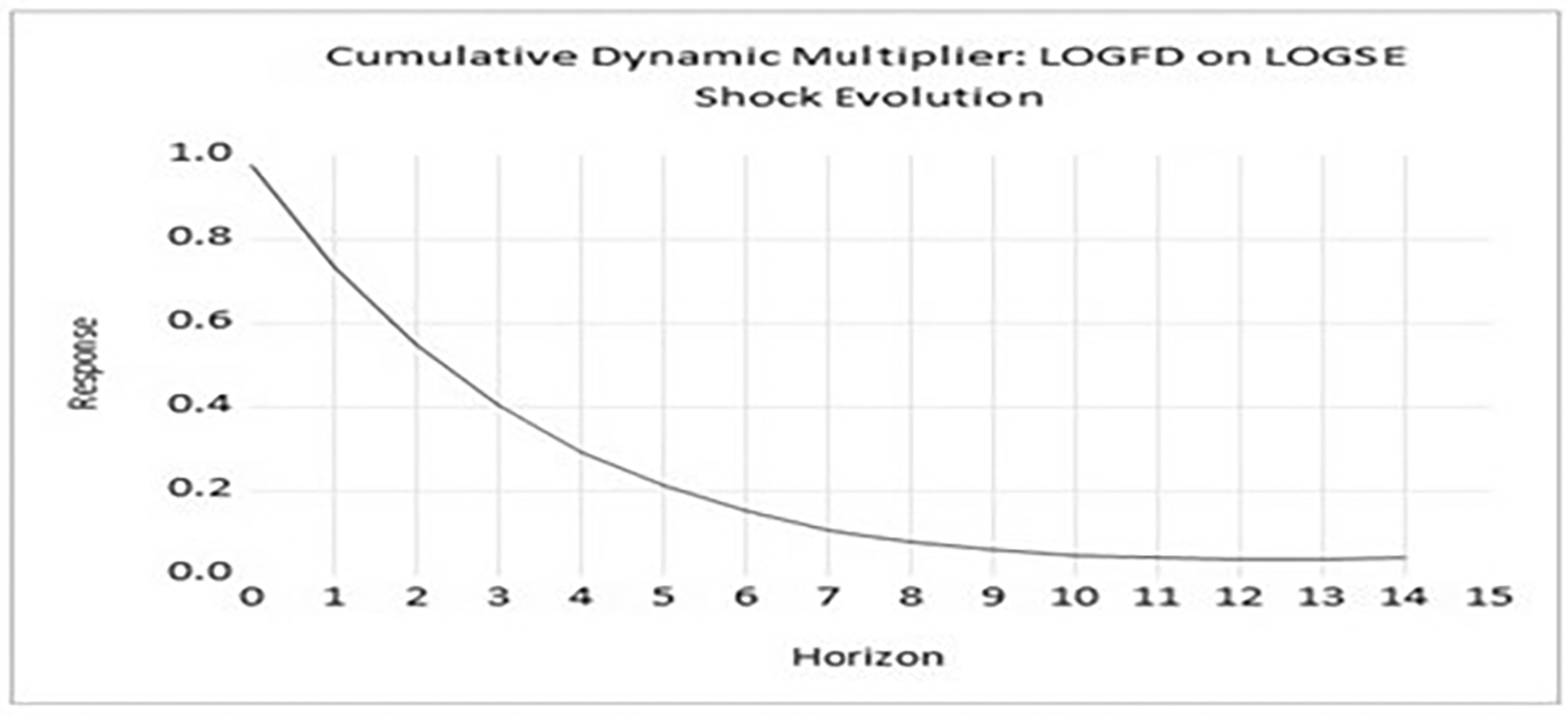
Figure 1 shows a "cumulative dynamic multiplier" that illustrates the effect of a shock to the LOGSE variable on the LOGFD variable over time. This means that a positive shock to the LOGSE causes a positive response in the LOGFD variable. However, this effect is not permanent and fades away over time. This fading behavior is normal in many economic and dynamic models.
Source: Researchers' work based on EVIEWS13.
Fifth: RESET Test
Table 6 displays the results of the RESET test, a test used to verify that the linear regression model has been correctly specified. The most important value in this table is the probability value associated with the F-statistic, which is 0.2693. The null hypothesis states that the specified model is correct and there are no omitted variables. Since the probability value (0.2693) is greater than the usual significance levels (such as 0.01, 0.05, or 0.10), we cannot reject the null hypothesis. Therefore, the specified model is correct and there is sufficient evidence that it does not suffer from the problem of missing variables. In other words, the model includes all the important variables necessary to explain the relationship.
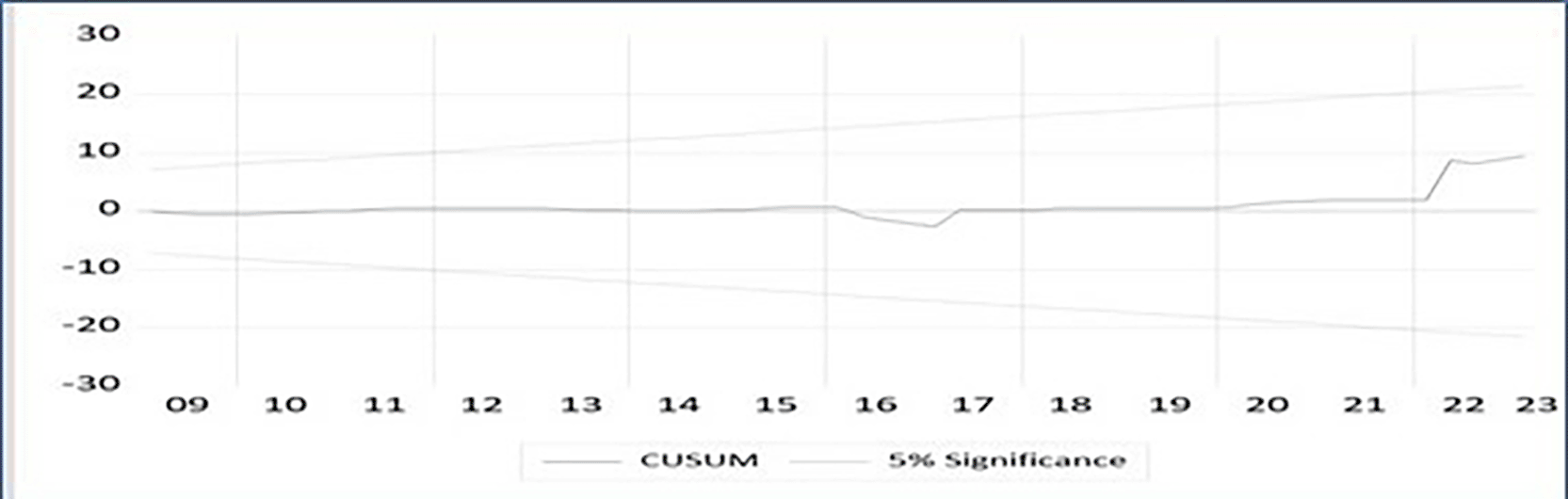
Based on Figure 2, the cumulative regression (CUSUM) test demonstrates that the model is stable.
Source: Researchers' work based on EVIEWS13.
The graph displays two lines: the CUSUM line: The blue line represents the cumulative deviation of the residuals in the model, and the significance boundary: The two dashed orange lines represent the significance boundary at the 5% level. As long as the CUSUM line (the blue line) remains between the two dashed lines, the model is considered statistically stable. In this graph, we note that the blue line does not cross the upper or lower boundary, indicating that the coefficients in the model have not changed significantly over time, and therefore the model is valid and stable.
Sixth: The ARCH test for heteroskedasticity
It is used in statistical analysis of time series. The analysis in the image shows that there is no strong evidence of heteroskedasticity in the data.
From the analysis of the main results: F-statistic test: The value of the F-statistic is 0.017764, and its probability value (Prob. F) is 0.8944. Obs R-squared test: The value of the Obs R-squared statistic is 0.018351, and its probability value (Prob. Chi-square) is 0.8922. Since the probability values (Prob.) for both tests (F-statistic and Obs*R-squared) are greater than the usual significance level (such as 0.05), this means that we do not reject the null hypothesis. The null hypothesis in this test is that the variance is homoskedasticity, meaning that the error variance in the model is constant over time. We conclude that the test results indicate that the model does not suffer from the problem of heteroskedasticity, and therefore we can be confident in the efficiency and validity of the estimates of the basic regression model tested.
Seventh: Results of the Breusch-Godfrey Serial Correlation (LM) Test
This test is used to test the presence of serial correlation in the residual errors of a regression model. The null hypothesis (H: 0): There is no serial correlation (2 lags). In other words, the residual errors are independent, based on the results shown in Table 8, as the P value (Prob.):
| Heteroskedasticity Test: ARCH | |||
|---|---|---|---|
| F-statistic | 0.017764 | Prob. F(1,60) | 0.8944 |
| Obs*R-squared | 0.018351 | Prob. Chi-Square(1) | 0.8922 |
| Breusch-Godfrey Serial Correlation LM Test: Null hypothesis: No serial correlation at up to 2 lags | |||
|---|---|---|---|
| F-statistic | 0.197332 | Prob. F(2,55) | 0.8215 |
| Obs*R-squared | 0.448849 | Prob. Chi-Square(2) | 0.7990 |
Prob. F(2,55) equals (0.8215).
Prob. Chi-Square(2) equals (0.7990).
Since the P values for both F and Chi-Square are much greater than the usual significance level (such as 0.05 or 0.10), we cannot reject the null hypothesis. We conclude that there is insufficient statistical evidence of a serial correlation in the residual errors of the model, even for Laggen. This means that the basic assumption of classical linear regression, which states the independence of errors, has been met.
Eighth: Bounds Test
The table shows the results of the Bounds Test, which is part of the Autoregressive Distributed Lag (ARDL) methodology. The purpose of this test is to determine whether there is a long-run cointegration relationship between the variables.
Since the F-statistical value (1.275443) is less than all critical values at the different levels (10%, 5%, 1%), we cannot reject the null hypothesis.
This means that there is no strong statistical evidence of a long-run cointegration relationship between the variables studied in this sample.
Ninth: Error Correction Analysis
This Table 10 shows the results of the ARDL analysis, which focuses on the long- and short-term relationships between variables. Here is a brief analysis of the most important points in the table: the error correction coefficient (COINTEQ) has a value of -0.043379. It represents the speed of the system’s return to equilibrium after any shock. Its sign is negative (as expected), which confirms the existence of a long-term equilibrium relationship between the variables. The associated p-value is 0.0512, which is very close to the significance level of 0.05, indicating that the coefficient is likely statistically significant. The coefficient of change in the lagged dependent variable D (LOGHS(-1)): its value is 0.728820, and this coefficient represents the short-term relationship. The associated p-value is 0.0000, which confirms that the coefficient is statistically significant to a very large extent, indicating that the value of the dependent variable in the previous period greatly affects its current value. As for the model quality statistics (Model Statistics), R-squared (R-squared) has a value of 0.543084, which means that 54.3% of the change in the dependent variable D (LOGHS) is explained by the independent variables in the model. The F-statistic value of 72.50383 with a p-value of 0.000000. This indicates that the model is statistically significant as a whole, meaning that the independent variables combined have a large and significant effect on the dependent variable.
| Bounds Test. Null Hypothesis: No levels relationship; Number of cointegrating variables: 1; Trend type: Rest. constant (Case 2); Sample size: 63 | |
|---|---|
| Test Statistic | Value |
| F-statistic | 1.275443 |
| Bounds Critical Values | ||||||
|---|---|---|---|---|---|---|
| 10% | 5% | 1% | ||||
| Sample Size | I(0) | I(1) | I(0) | I(1) | I(0) | I(1) |
| 60 | 3.127 | 3.650 | 3.803 | 4.363 | 5.383 | 6.033 |
| 65 | 3.143 | 3.623 | 3.787 | 4.343 | 5.350 | 6.017 |
| Asymptotic | 3.020 | 3.510 | 3.620 | 4.160 | 4.940 | 5.580 |
| Error Correction. Dependent Variable: D (LOGHS); Method: ARDL; Date: 09/13/25 Time: 15:35; Sample: 2007Q3 2023Q1; Included observations: 63; Dependent lags: 3 (Automatic); Automatic-lag linear regressors (3 max. lags): LOGFD; Deterministics: Restricted constant and no trend (Case 2); Model selection method: Akaike info criterion (AIC); Number of models evaluated: 12; Selected model: ARDL(2,0) | ||||
|---|---|---|---|---|
| Variable | Coefficient | Std. Error | t-Statistic | Prob. |
| COINTEQ* | -0.043379 | 0.021810 | -1.988978 | 0.0512 |
| D (LOGHS(-1)) | 0.728820 | 0.085067 | 8.567551 | 0.0000 |
Tenth: Analysis of the ARDL Model Results
Diagnostic tests confirmed residual abnormalities (Gark-Bera test) and evidence of heterogeneity (White's test). To address these standard economic challenges and ensure the robustness of standard errors, all subsequent ARDL and cointegration estimates were performed using robust standard errors (corrected with White's correction). Furthermore, unit root tests (ADF and PP) confirmed that all variables are integral at I(0) or I(1), validating the ARDL boundary testing methodology.
Table 11 shows the results of the ARDL (Autoregressive Distributed Lag) model, a statistical method used to analyze the relationship between time variables. The dependent variable is LOGHS (which represents the logarithm of a time series), and the independent variable is LOGFD.
| Dependent Variable: LOGHS; Method: ARDL; Date: 09/13/25 Time: 15:35; Sample: 2007Q3 2023Q1; Included observations: 63; Dependent lags: 3 (Automatic); Automatic-lag linear regressors (3 max. lags): LOGFD; Deterministics: Restricted constant and no trend (Case 2); Model selection method: Akaike info criterion (AIC); Number of models evaluated: 12; Selected model: ARDL(2,0) | ||||
|---|---|---|---|---|
| Variable | Coefficient | Std. Error | t-Statistic | Prob.* |
| LOGHS(-1) | 1.685440 | 0.092025 | 18.31499 | 0.0000 |
| LOGHS(-2) | -0.728820 | 0.090837 | -8.023354 | 0.0000 |
| LOGFD | -0.023624 | 0.043775 | -0.539680 | 0.5914 |
| C | 0.489108 | 0.296877 | 1.647510 | 0.1048 |
We conclude that LOGHS(-1) and LOGHS(-2) are the values of the dependent variable at previous time periods (with a time lag of 1 and 2). The results show that they have a significant and positive effect on the current value of LOGHS, which is normal in time series models. LOGFD is the independent variable. Its Prob. value is 0.5914, which is much greater than 0.05, meaning that its effect on the dependent variable LOGHS in this model is statistically insignificant. In other words, there is no strong evidence that LOGFD affects LOGHS based on these results.
As for the model's quality, the R-squared value is 0.971901. This value is very high, indicating that the model explains approximately 97% of the variation in the dependent variable LOGHS. This means that the model fits the data very well. The F-statistic is 680.2509, with a Prob.(F-statistic) value of 0.000000. This result is highly significant and indicates that the model as a whole is statistically significant. That is, the independent variables (including the time periods prior to the dependent variable) collectively explain a significant portion of the variation in the dependent variable.
Overall, the model is robust and explains the variation in the dependent variable very well. However, it appears that the independent variable LOGFD has no significant effect on the LOGHS variable. The greatest effect comes from the prior values of the dependent variable itself (i.e., LOGHS(-1) and LOGHS(-2)).
As for the relationship between financial depth and per capita health spending, it is evident in Table 12, which illustrates the cointegration equation linking two variables: LOGHS and LOGFD.
| Deterministics: Rest. constant (Case 2); CE = LOGHS(-1) - (-0.544604*LOGFD + 11.275196); Cointegrating Coefficients | |||
|---|---|---|---|
| Variable* | Coefficient | Std. Error | t-Statistic |
| LOGFD | -0.544604 | 0.976786 | -0.557547 |
| C | 11.27520 | 3.585058 | 3.145052 |
Dependent variable: LOGHS(-1), which represents the lagged value of LOGHS.
Independent variable: LOGFD, which represents the independent variable that affects LOGHS.
Constant: C, which represents a fixed value in the equation.
Statistical analysis results: LOGFD coefficient: Its value is -0.544604, and its probability value (Prob) is 0.5792. This value is greater than 0.05, indicating that the coefficient is statistically insignificant at the 95% confidence level. In other words, there is no strong evidence of a long-run relationship between LOGFD and LOGHS. The coefficient of the constant (C): Its value is 11.27520, and its probability value (Prob.): 0.0026. This value is less than 0.05, indicating that the coefficient is statistically significant at the 95% confidence level. This means that there is a consistent effect on the dependent variable LOGHS.
Based on the results, we can conclude that there is a cointegration relationship between the two variables, but the effect of the variable LOGFD on LOGHS is not statistically significant in the long run. The constant C, on the other hand, has a significant effect on the equation.
This means that the estimated coefficient for the logarithm of fiscal depth (LOGFD) is not statistically significant in explaining variations in public spending efficiency, particularly in the long run. This variation is explained economically by Iraq's fiscal structure. The dominant role of oil revenues and the limited autonomy of the private financial sector mean that traditional indicators of fiscal depth do not enhance the efficiency of public spending (which is primarily budget-dependent). Digital transformation efforts are often undertaken in isolation from the public sector, meaning that the benefits of fiscal depth are not widely dispersed through, nor do they depend heavily on, the overall fiscal depth of the economy. This finding suggests that fiscal depth is a more powerful and direct driver of efficiency in this context than broader macroeconomic variables.
Table 13 also shows the results of two statistical tests for analyzing a regression model: the Breusch-Godfrey test for serial correlation, and the results of the ARDL (Autoregressive Distributed Lag) model estimation.
| Breusch-Godfrey Serial Correlation LM Test: Null hypothesis: No serial correlation at up to 2 lags | |||
|---|---|---|---|
| F-statistic | 0.158835 | Prob. F(2,57) | 0.8535 |
| Obs*R-squared | 0.349164 | Prob. Chi-Square(2) | 0.8398 |
It is noted from the table that the regression model does not suffer from the serial correlation problem, but there is no statistically significant relationship between the independent variables and the dependent variable.
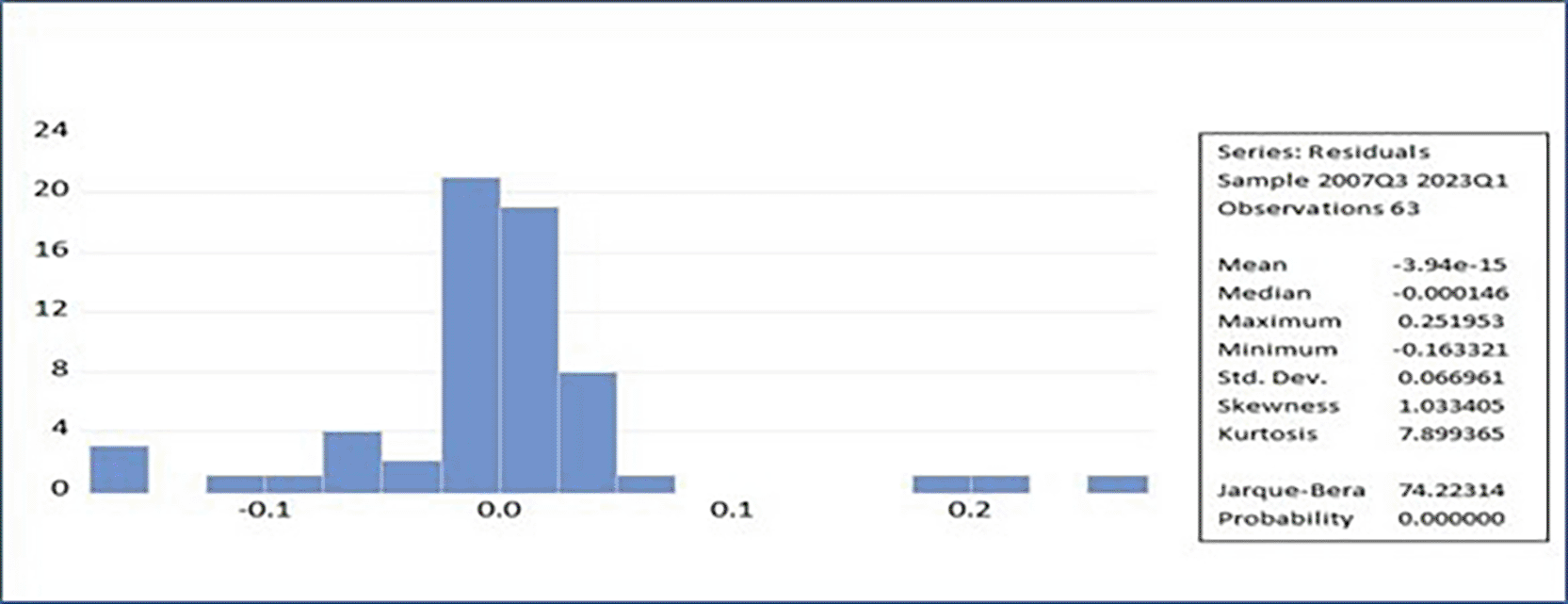
It can be noted that the analysis of Figure 3 shows that the distribution of residuals is not normal, as confirmed by the results of skewness, kurtosis, and the Jarque-Bera test. This deviation from the normal distribution may indicate problems with the statistical model, such as the presence of outliers or that the model does not correctly capture all the relationships in the data.
Source: Researchers' work based on EVIEWS13.
The results of the Breusch-Pagan-Godfrey test, shown in Table 14, aim to examine the presence of heteroskedasticity in the regression model. Heteroskedasticity means that the error variance is not constant across all values of the independent variables, which may affect the accuracy of the regression estimates.
Because the probability value is very low, we reject the null hypothesis. This means that there is strong evidence of heteroskedasticity in the model.
This means that the presence of heteroskedasticity indicates that the model being estimated may not be effective in estimating the standard errors of the coefficients, and therefore confidence intervals and t-tests may be unreliable.
In conclusion, this research has found that financial digitization is no longer a complementary option but a structural necessity for reforming public financial management and directing resources more effectively towards the education and health sectors. Econometric analysis using the Distributed Lag (ARDL) model revealed a statistically significant and positive dynamic relationship between digital transformation and spending efficiency in the short term. This reflects the initial responsiveness of financial indicators to the adoption of digital technologies. However, the lack of a stable and strong cointegration relationship in the long term, particularly concerning health spending, clearly indicates that digital finance in Iraq still faces structural challenges that prevent these temporary successes from being translated into comprehensive developmental sustainability.
Based on the research findings, we emphasize the need to formulate a comprehensive national roadmap to accelerate digital transformation, allowing us to go beyond technical aspects to include legislative reform and human skills development. This will also address the gap between digital development and the actual spending outputs on the health and education sectors to ensure financial efficiency and transform it into tangible social welfare. We also seek to enhance the stability of digital financial policies to ensure the continuity of their positive effects in the long term, rather than limiting them to short-term growth. The research aims to provide a qualitative contribution for decision-makers in Iraq and serve as a building block for researchers seeking to understand the link between financial technology and sustainable development.
1. Develop a phased national digital roadmap. The government should move beyond pilot projects to develop a multi-year (e.g., 5-year) national roadmap for digital transformation of public finances. Priority should be given to unifying payment platforms and automating procurement processes (key performance indicator: increase the volume of e-procurement transactions by 30% annually).
2. Strategic investment in human capital. Addressing limitations in the current workforce is crucial. We recommend mandatory and periodic training programs for civil servants on digital literacy and data analytics to bridge the "digital skills gap" (key performance indicator: train 90% of relevant staff within two years).
3. Enhance structural stability. Given the weakness of long-term co-integration, the government should focus on making digital platforms interoperable and institutionally sustainable. This requires establishing a permanent, high-level digital governance body with the legal authority to enforce digital standards across all ministries.
4. Policymakers should leverage the positive short-term impact of PFDT (as confirmed by short-term ARDL transactions) to justify and accelerate funding for existing digital projects that have shown immediate efficiency gains.
5. Unit root tests showed that the three variables (fiscal depth, per capita education spending, and per capita health spending) were non-stationary at their initial level, but became stationary after taking the first difference.
6. The results of the Bounds Test in Tables 4 and 9 revealed no strong statistical evidence of a long-term equilibrium relationship between the studied variables.
7. In contrast, autoregressive distribution lag (ARDL) analysis confirmed the existence of a dynamic relationship between the variables in the short run.
8. Also, error correction analysis indicated a long-term equilibrium relationship between the variables, although the rate of adjustment was slow.
9. Other model tests (RESET, CUSUM, ARCH, and Breusch-Godfrey) showed that the model was valid, stable, and free of missing variables, heteroscedasticity, or serial correlation.
1. Adopt a comprehensive national strategy for digitizing public finances to leverage modern technologies to increase the efficiency of public policies and reduce financial and administrative corruption in expenditures, revenues, and the general budget.
2. Provide legislative and regulatory frameworks for the development of technology for public finances within the framework of supporting sustainable development goals.
3. Provide a modern technological infrastructure to develop tax revenues, expand the implementation of a digital tax administration system, and implement electronic tax invoices.
4. Strengthen partnerships with the private sector and leverage the expertise of international technology companies to support digitization efforts.
5. The need to invest in advanced equipment and software that meet the needs of local governments.
6. The research aims to provide practical recommendations for decision-makers and those responsible for public finance on how to maximize the benefits of digital transformation to improve spending efficiency.
This study involved human participants and was conducted in accordance with accepted ethical research standards and the principles outlined in the Declaration of Helsinki. Ethical approval was obtained from the Scientific Research Ethics Committee, University of Fallujah, Iraq (Approval No. HOF.HUM.2025.001). Written informed consent was obtained from all participants prior to their participation. All participants were informed about the purpose of the study, the voluntary nature of their participation, their right to withdraw at any time without consequences, and the confidentiality of their data.
| Views | Downloads | |
|---|---|---|
| F1000Research | - | - |
|
PubMed Central
Data from PMC are received and updated monthly.
|
- | - |
Provide sufficient details of any financial or non-financial competing interests to enable users to assess whether your comments might lead a reasonable person to question your impartiality. Consider the following examples, but note that this is not an exhaustive list:
Sign up for content alerts and receive a weekly or monthly email with all newly published articles
Already registered? Sign in
The email address should be the one you originally registered with F1000.
You registered with F1000 via Google, so we cannot reset your password.
To sign in, please click here.
If you still need help with your Google account password, please click here.
You registered with F1000 via Facebook, so we cannot reset your password.
To sign in, please click here.
If you still need help with your Facebook account password, please click here.
If your email address is registered with us, we will email you instructions to reset your password.
If you think you should have received this email but it has not arrived, please check your spam filters and/or contact for further assistance.

Comments on this article Comments (0)