Keywords
Unintended pregnancy, Uptake, Family planning, Osun State, Women, Reproductive

Unintended pregnancy, Uptake, Family planning, Osun State, Women, Reproductive
Unintended pregnancy is defined as a desired or unwanted pregnancy that occurs in a woman who was not planning to have any (more) children or that was mistimed, in that it occurred earlier than desired and independent of the outcome of the pregnancy (abortion, miscarriage, or unplanned birth), synonymous with unplanned pregnancy (Bearak et al., 2022). It is usually an outcome of an array of social, economic, and cultural factors, including non-use of contraception, contraceptive discontinuation, contraceptive failure, inconsistent and incorrect use of contraception, lack of access to contraception, inadequate sex education, or even due to sexual coercion or violence, and limited reproductive rights (Abame et al., 2019).
Unintended pregnancy is a substantial global public, clinical, and social health concern that affects women of reproductive age, especially those who are sexually active, with significant repercussions on women’s health, economic stability, and societal well-being (Abame et al., 2019). Unintended pregnancy poses a wide array of health risks for both the mother and child. These risks include malnutrition, illness, abuse, neglect, and death. Unintended pregnancies can further contribute to ongoing cycles of high fertility, as well as reduced educational and employment opportunities, and increased poverty, all of which can span many generations (WHO, 2019). It has been reported that, out of over 200 million pregnancies that occur each year, approximately 121 million pregnancies each year fall into the category of being unintended, including mistimed or unwanted pregnancies at the time of conception (UNFPA, 2022). Recent statistics indicate that the rate of unplanned pregnancies in sub-Saharan Africa (SSA) is as high as 33.9%, signifying that over one-third of pregnancies in the region are unintended (Ameyaw et al., 2019; Bain et al., 2020).
Although several reproductive health interventions have been implemented in Nigeria, there is limited evidence of the effectiveness of these interventions in reducing unintended pregnancies in Osun State. Local data on the prevalence of unintended pregnancy in Osun State are also lacking, creating a significant knowledge gap. Most studies focus on broad national data without addressing regional variations or the local context. Therefore, local variations in socioeconomic factors, cultural practices, and healthcare access require state-specific research for precise understanding (Solo & Festin, 2019). Estimating the prevalence of unintended pregnancies in Osun State provides a clear picture of the extent of this issue. The findings of this study provide insights specific to this area and serve as a baseline for future interventions tailored to meet the needs of women in Osun State.
The study employed a mixed-method design of quantitative and qualitative methods among women of reproductive age (15–49 years) residing in Osun State. Women of reproductive age 15–49 years old irrespective of their marital status residing in the selected local government areas within Osun State, women who had a history of ever being pregnant irrespective of the outcome of the pregnancy, and women with or without current contraceptive use at the time of study were included in the study. Women who were less than 15 or over 49 years old during the study period and those who were residing outside the selected local government areas within Osun State during the study period were excluded from the study. The sample size was estimated to be 198, calculated using Le Fischer’s formula (n = z2pq/d2).
A multistage sampling technique was used to select respondents for the quantitative study;
Stage One: Simple random sampling technique by ballot method was used to select three local government areas (LGAs) from each senatorial district and federal constituency. Thisselection comprised of two rural and one urban LGA from each category, thus ensuring a comprehensive representation of respondents from diverse settings.
Stage Two: Purposive sampling technique was used to select two high-volume markets from each selected LGA, giving a total of 12 markets.
Stage Three: Systematic random sampling technique was used to select market units. This involved determining the sampling interval by dividing the total number of market units by the desired sample size. The starting point was then chosen by randomly selecting an number between one and the sampling interval. Subsequent market units were identified by adding the sampling interval to the serial number of the first sampled market unit.
Stage Four: In unit, market women were screened using specific eligibility criteria. After obtaining informed consent from the eligible women, they were recruited for the study. This analysis was performed until the total sample size was achieved.
Thirty-two women of reproductive age were selected for this qualitative study using purposive sampling. The 32 participants participated in the focus group discussions, while key informant interviews were conducted with the permanent secretary of the Osun State Ministry of Health and the family planning program coordinator for Osun State. Quantitative data were collected using a pretested interviewer-administered questionnaire. To assess the prevalence of unintended pregnancy, the researchers developed a questionnaire informed by the London Measure of Unplanned Pregnancy (LMUP), a psychometrically validated tool comprising six items. Since the LUMP questionnaire was not used directly, there was no need to obtain a copyright license. Qualitative data were collected using open-ended questions. The primary objective of the qualitative component was to identify the barriers women at risk of unwanted pregnancies encounter when seeking and using family planning services. This study ensured validity and reliability (Cronbach’s alpha, α = 0.85). The quantitative data were collected by six trained research assistants. Doctors, nurses, and other healthcare professionals collected qualitative data. Quantitative data were entered and analyzed using SPSS version 24, with the significance level set at p ≤ 0.05. Qualitative analysis was performed using Atlas ti, version 24.
Sociodemographic characteristics of respondents
A significant proportion of the respondents, 48(24.2%), were within the age range of 30–34 years, comprising nearly one-quarter of the total study population. The mean age of the respondents was 33.3 ± 7.6 years. Ninety-six respondents (48.5%) had attained a secondary education. The majority of the respondents 166(83.8%) were married and living with their partners. Most respondents 157(79.3%) had more than two children. The majority were rural dwellers 132(66.7%), and over half of the respondents 107(54.0%) practiced Islam, while 91(46.0%) were Christians. The respondents were predominantly Yoruba, accounting for 99.0% (196) of the study population. A large proportion of respondents, 147(74.2%), were business owners or traders. A significant proportion of respondents 107(54.0%) earned between 10,001 and 50,000 nairas ( Table 1).
Prevalence of unintended pregnancy
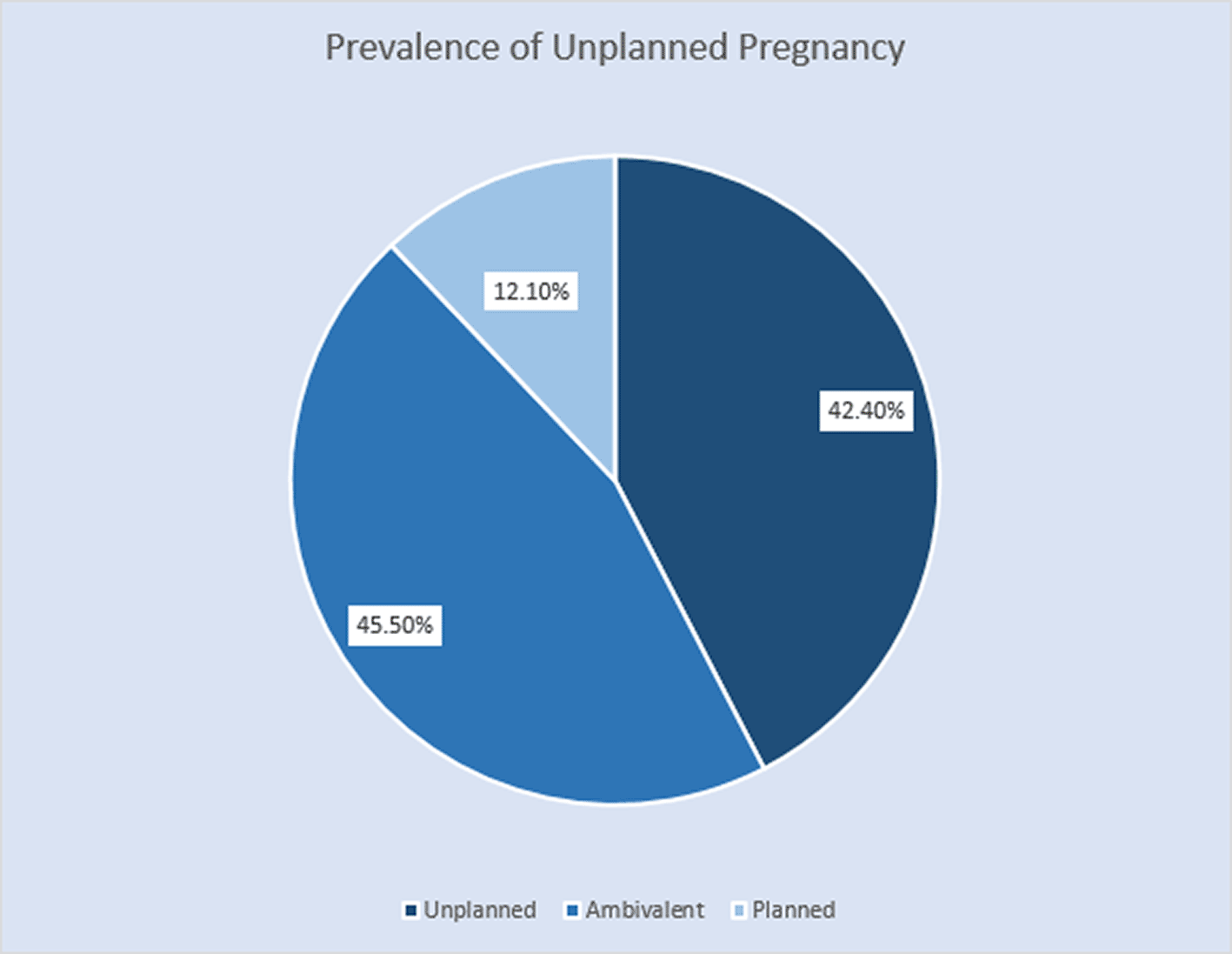
Among the total respondents, 100 (50.5%) reported experiencing at least one unintended pregnancy, of which 83% had one unintended pregnancy. Ninety-eight (49.5%) participants expressed a desire to have a baby, 16(8.1%) had mixed feelings about having a baby at the time of pregnancy, and 84(42.4%) did not want to have a baby at all ( Table 2). However, the LMUP assessment revealed that only 42.4% of the patients experienced unintended pregnancy (Fig. 1).
Associated factors with unplanned pregnancy
At the bivariate level, age (p < 0.001), marital status (p < 0.001), number of children (p < 0.001), residence (p = 0.002), and religion (p = 0.007) were significantly associated with unplanned pregnancy. At the multivariate level using regression analysis, age was significantly associated, such that respondents aged 45–49 had less likelihood of unintended pregnancy (B = 0.151, p < 0.001, C. I = 0.075–0.266). Marital status was associated with unplanned pregnancy such that women who had never married were twice as likely to have an unplanned pregnancy than married women (B = 2.626, p = 0.030, C.I = -0.499 to −0.262). Women living in rural areas were twice as likely to experience unplanned pregnancy when compared to those living in urban areas (B = 2.109, p < 0.001, C.I = 1.153–3.066). Additionally, religious affiliation was associated with unplanned pregnancy, such that they had a higher likelihood of unintended pregnancy (B = 1.848, p < 0.001, C.I = −2.777 to −0.918).
A total of 34 participants were involved in the study, 32 of whom participated in the focus group discussions, and two were part of the key informant interviews. ( Table 3).
Some of these are reasons related to family factors, such as when a couple has a desire for a child of a particular gender, when the husband or wife has uncontrolled sexual urge, or because a couple wants to be sure of fertility before marriage and ends up having an unplanned pregnancy. One other person also said that unplanned pregnancy could arise from rivalry in a polygamous home where women just want to get pregnant in order to make a point in the family without considering the consequences. Some of the women explained the following:
‘I feel like maybe some families that maybe they’ve been giving birth to female children all the time and maybe they want a male child or give birth to a male child and not a female child. It can also, yes, sex preference. Yes, it can also cause it.’ years (30 – 34 years, FGD).
‘It happened to me when my husband and I were facing difficult times. We cohabited and it resulted to unwanted pregnancy. I eventually gave birth to the child. Unwanted pregnancy could be as a result of certain condition we find ourselves; the man may not be patient with the women.’ (25–29 years, FGD).
‘Jealousy is another factor. Wives of a polygamous marriage could be jealous of one another. They may be competing as per number of children. It is also in the bible.’ (40–44 years, FGD).
Another factor that could cause women to have unplanned pregnancies is ignorance and a lack of sex education. This could arise from poor family upbringing, poor sex education, or ignorance about family planning and how it operates. Some of the responses are as follows.
‘…. you can even say the level of education, am not talking about formal education now, am talking about education as per use of family planning, that one can also contribute. Some people, their level of awareness or level of education about family planning is nothing to write home about.’ (Official Ministry of Health, KII).
‘I have like ignorance as well. Inadequate knowledge on sex education’ (15 – 24 years, FGD).
‘Polygamous family. So some people came from a polygamous family where there is no unity, there is no proper care. So through that, they have to go out, mingle with others. From that, it leads to unwanted pregnancy.’ years (25–29 years, FGD).
Interviewees also spoke about how social factors could contribute to unplanned pregnancy. One of these is the impact of general public unfavorable attitudes towards family planning, and public stigmatization of women who take family planning, such as considering them to be seeking excuse to be promiscuous or generally making them feel odd. It could also result from peer pressure to become pregnant or the impact of religious doctrines or practices that may not favor the adoption of family planning practices.
‘I think one of those things is the perceptions of women about family planning. Some still think that family planning is meant for women or ladies that are promiscuous.’ (Official Ministry of Health, KII).
‘And again in some societies, the situation sigma they attach to especially women who are on family planning.’ (Official Ministry of Health, KII).
‘People are pleasuring to get pregnant, something like that …’ (15 – 24 years, FGD).
‘And even some religious organizations still believe that there is no need for family planning.’ (Official Ministry of Health, KII).
Ultimately, unplanned pregnancy results from unprotected sex without the use of family planning programs. Some women expressed their thoughts as follows:
‘When you constantly have intimacy with your partner, constant unprotected sex’ (25–29 years FGD).
‘So low uptake is a major factor that do affect unintended pregnancy because you know, once a woman is not protected, automatically, there might be experience of unplanned pregnancy.’ (Family Planning Official, KII).
The LMUP, a well-validated tool for assessing pregnancy intention, has provided valuable insights into the family planning experiences of women in Osun State. The results showed that 42.4% of the pregnancies were unplanned, 45.5% were ambivalent, and 12.1% were planned. Notably, the LMUP data suggested a lower rate of unintended pregnancy (42.4%) than the self-reported rate of 50.5%, with a difference of 8.1%. The slight discrepancy between the two figures might be due to a social desirability bias, where participants may be less likely to report unplanned pregnancies due to social stigma. The LMUP’s ability to capture a wider range of intentions beyond simply ‘intended’ or ‘unintended’ provides a more comprehensive picture of reproductive health realities in Osun State. Woldesenbet et al. (2021) reported a higher prevalence of unintended pregnancies (51.6% among pregnant women in South Africa), whereas another study found an even higher rate of 65.6% among women with disabilities, highlighting the potential impact of access to family planning services and sociodemographic factors (Tenaw et al., 2023). These discrepancies might be due to differences in participant age range, study location, or the use of LMUP versus self-reported data.
This study identified several key factors that could predict unplanned pregnancies. Age was found to be associated with pregnancy, such that younger women were more likely to experience unplanned pregnancies. This is supported by findings from the focus group discussion, where the participants revealed concerns among some young women that family planning services could be seen as promoting promiscuity among younger women, and that they are therefore discouraged from accessing the services even when needed. This aligns with findings that reported higher pregnancy rates among younger women (Wellings et al., 2013). Marital status was also significantly associated, such that unmarried women had a higher likelihood of unintended pregnancy. This is consistent with the findings of previous studies that reported a similar association (Ayele et al., 2024; Barrow et al., 2022). This study highlighted the correlation between marital status and unintended pregnancies. Social norms are likely to play a role in this association. In cultures where marriage strongly precedes childbearing, single individuals might face pressure to delay or avoid pregnancy outside marriage. This pressure could lead to less open communication about contraception with potential partners, thereby hindering effective life planning. Additionally, unmarried couples might encounter disapproval or stigma around using contraception, potentially affecting their willingness to adopt these methods. Economic factors and logistical challenges can further disadvantage individuals. Beyond social norms and access to resources, relationship dynamics also play an important role. Married couples might have more open communication about family planning goals and contraceptive use than unmarried couples.
A study found that Muslims are less likely to experience unintended childbearing than Christians (Oyediran et al., 2020). Women who were identified as Christians had a higher likelihood of unintended pregnancies. This can be explained by the concept of ex post rationalization. Studies have found that ex post rationalization varies by women’s characteristics, with women who have higher parity being more likely to revise their pregnancy intentions after delivery. Considering that Muslim women in Nigeria tend to have a higher parity than Christian women, they may be more likely to rationalize an unintended pregnancy. These findings suggest that religious doctrines may influence family planning attitudes (Hall et al., 2019).
The strengths of the study include the use of a questionnaire that was informed by a validated measure (LMUP), which provides a more accurate report of unplanned pregnancies among respondents. However, this study had some limitations, including the limited generalizability of the findings beyond Osun State.
The study concluded that there was a high prevalence of unplanned pregnancies among the respondents. Age, marital status, place of residence, and religion were significantly associated with unplanned pregnancies. These data will fill critical knowledge gaps and provide a detailed understanding of the specific sociocultural and economic factors contributing to unplanned pregnancies in this region. Health education programs should be tailored to address the specific needs and concerns of different groups within Osun State.
Approval for this study was obtained from the Osun State Health Research Ethics Committee (OSHREC) of the Ministry of Health with the reference number OSHREC/PRS/569 T/566. This study was conducted in accordance with the Declaration of Helsinki for Medical Research involving Human Subjects. Written informed consent was obtained from each study participant after adequate information regarding the study was provided. For the participants under 18 years, written consent was obtained from parents (or husbands) of the participant, while verbal assent was obtained from the participants. Permission to gain entrance into the communities was sought from the market and community leaders.
| Views | Downloads | |
|---|---|---|
| F1000Research | - | - |
|
PubMed Central
Data from PMC are received and updated monthly.
|
- | - |
Provide sufficient details of any financial or non-financial competing interests to enable users to assess whether your comments might lead a reasonable person to question your impartiality. Consider the following examples, but note that this is not an exhaustive list:
Sign up for content alerts and receive a weekly or monthly email with all newly published articles
Already registered? Sign in
The email address should be the one you originally registered with F1000.
You registered with F1000 via Google, so we cannot reset your password.
To sign in, please click here.
If you still need help with your Google account password, please click here.
You registered with F1000 via Facebook, so we cannot reset your password.
To sign in, please click here.
If you still need help with your Facebook account password, please click here.
If your email address is registered with us, we will email you instructions to reset your password.
If you think you should have received this email but it has not arrived, please check your spam filters and/or contact for further assistance.

Comments on this article Comments (0)