Keywords
Comprehensive Sexuality Education (CSE), Global Governance, Norm Contestation, Policy Translation, and Southeast Asia

Comprehensive Sexuality Education (CSE), Global Governance, Norm Contestation, Policy Translation, and Southeast Asia
CSE has been widely promoted as a key global strategy to improve adolescent sexual and reproductive health throughout the life cycle. (UNESCO, 2018). Globally, around 1.3 billion people, or about 16% of the total population, are adolescents aged 10–19 years, with the majority living in low- and middle-income countries, facing limited access to adequate sexual and reproductive health information and services (UNICEF, 2019; WHO, 2024). This condition places CSE as an important issue not only in education policy but also in the global health and human development agenda.
The WHO emphasizes that early adolescence, which generally begins at the elementary school age, is a critical developmental period during which knowledge, attitudes, and norms related to health begin to form (WHO, 2017). In line with that, UNESCO defines CSE as a curriculum-based learning process that encompasses the cognitive, emotional, physical, and social aspects of sexuality, and is designed to be age-appropriate and developmentally suitable for learners. CSE is gradually introduced from elementary school age, with an initial focus on understanding the body, safe relationships, and self-protection. CSE is also positioned as a promotive and preventive intervention that contributes to the prevention of various health risks, including early pregnancy, sexually transmitted infections (STIs), and gender-based violence (UNESCO, 2018; UNFPA, 2020). Therefore, providing accurate and age-appropriate health information before adolescence becomes an important foundation in shaping protective health behaviors in the next stages of life (WHO, 2017).
Additionally, CSE has been integrated into the global development agenda and linked to the achievement of the Sustainable Development Goals (SDGs), particularly SDGs 3 on health and well-being, SDGs 4 on quality education, and SDGs 5 on gender equality (UNESCO, 2018). However, research by (Chavula et al., 2022) shows that in many low- and middle-income countries, the integration of CSE into the education system remains partial and highly dependent on the context of the education system and the national policy environment, despite these countries having declared their commitment to the global agenda of adolescent sexual and reproductive health (Chavula et al., 2022).
The condition of partial integration cannot be separated from the strong social and political contestation that accompanies the formulation of CSE policies at the national level. Although promoted as a global standard, CSE remains a debated policy area in many countries. Rejection or restriction of CSE is often not based on scientific considerations, but rather rooted in moral values, cultural norms, and domestic political dynamics (UNESCO, 2018; UNFPA, 2020). This tension becomes even more pronounced when CSE is applied to elementary school children, as discourses about child protection, family roles, and religious sensitivities dominate policy debates. Policy studies in Indonesia, such as the research by (Todesco et al. 2023) and (Myat 2024), show that the term “sexuality education” is often viewed as problematic and replaced with more socially acceptable terminology, such as reproductive health education or character education, as a compromise to public resistance (Myat, 2024; Todesco, 2023). These findings align with the analysis by (Chavula et al., 2022), which shows that in many low- and middle-income countries, CSE is often integrated into other subjects, such as health education or life skills, and is rarely institutionalized as a standalone educational policy (Chavula et al., 2022).
The contestation of CSE norms is also clearly visible in the Philippines and Vietnam, although in different forms. In the Philippines, the research by Michele Jorvina, Cabate, and Delgaco (2023) and Ordinado et al. (2025) shows that school-based CSE is formally recognized in adolescent health and education policies. However, its implementation, especially at the elementary school level, is limited by the influence of family values and religious institutions, leading to CSE content often being reframed as healthy relationship education and violence prevention (Michelle Jorvina et al., 2023; Ordinado, 2025). Meanwhile, Khanh Chi, (2021) conducted research in Vietnam showing that CSE rarely appears as an explicit policy with global terminology, but is integrated into the framework of life skills education and adolescent health policies with restrictions on certain topics considered culturally sensitive (Khanh Chi, 2021). This pattern identifies the existence of a policy negotiation process in the integration of CSE, where the scope and content of CSE are adjusted to domestic social, cultural, and political norms (Chavula et al., 2022).
Thus, the contestation against CSE not only reflects differences in moral, cultural, and domestic political values but also shapes the boundaries and direction of public health policy, particularly in promotional and preventive efforts to reduce the risks of adolescent sexual and reproductive health (Parker et al., 2009). In this context, the debate over CSE policy has direct implications for the country’s ability to provide prevention-based health interventions from the early school life phase, which is recognized by the global health framework as a critical period for the formation of long-term health behaviors (UNESCO, 2018; WHO, 2017).
Most previous research on CSE has focused on program effectiveness and implementation challenges at the school level. Cross-country empirical reviews show that CSE can enhance health knowledge and risk awareness among adolescents (WHO, 2017; Myat, 2024). However, the focus on the implementation outcomes relatively neglects the question of how global CSE norms are produced, debated, and translated in national policy discourse. Studies that systematically analyze the role of cultural values, political structures, and power dynamics in shaping CSE policies, particularly in middle-income countries, are still limited (UNESCO, 2018; UNFPA, 2020).
The theory of norm contestation developed by Antje Wiener will be used to analyze the conflict of CSE norms, which posits that international norms do not have a single meaning, but rather that international norms are the result of continuous interactions among actors according to their different experiences, values, and interests. Thus, the process of interpreting a norm is inseparable from the process of debate, negotiation, and redefinition of the norm’s meaning when it transforms from one context to another. According to Wiener, contestation cannot be understood as a complete rejection of the norm, but rather as a process in which contending actors use normative experiences—be they social, historical, or cultural—to interpret, evaluate, or question an international norm (Wiener, 2014).
Indonesia, the Philippines, and Vietnam are middle-income countries that are actively involved in the global development agenda in the fields of health and education, and are formally committed to achieving the SDGs, particularly SDG 3 (health and well-being) and SDGs 4 (quality education). However, these three countries have different political systems, institutional structures, and configurations of cultural and religious values, which influence the relationships between the state, society, and international actors. These contextual variations make Indonesia, the Philippines, and Vietnam relevant cases for analyzing how the same global norms can produce different national policies, particularly on sensitive issues such as sexuality education for children and adolescents.
Based on this background, this study aims to analyze how global norms on CSE are debated and translated in the national policy discourse in Indonesia, the Philippines, and Vietnam during the 2015–2024 period, which is the era of SDG implementation. This study employs a comparative qualitative policy discourse analysis of global and national documents, including international guidelines, youth education and health policies, and official state reports to the United Nations (UN). By tracing patterns of meaning, differences in framing, and contradictions in policy discourse, this research contributes to the literature on the diffusion and contestation of global norms by showing that CSE is not a single norm adopted uniformly, but rather a policy negotiated within the national political, social, and cultural context.
This research uses a qualitative approach with a comparative policy discourse analysis design to examine how the global norms of CSE are debated and translated into national policy frameworks in Indonesia, the Philippines, and Vietnam during the period 2015–2024. The design of this research is interpretative and document-based, focusing on how policy language, institutional positions, and normative justifications shape domestic meanings of the global CSE standards. A comparative approach is used to enable a systematic analysis of the similarities and differences in policy framing in three middle-income countries with different political, ideological, and socio-religious configurations.
This research fully utilizes publicly available documents. Primary documents include national laws, curriculum policies, adolescent health strategies, official government reports to United Nations bodies, as well as international technical guidelines published by UNESCO (2018), UNFPA (2014, 2020, 2023), and WHO (2017, 2023, 2024). These global documents are used as reference points to identify the content and framing of CSE norms at the international level.
National-level documents are identified thru structured searches on the official websites of relevant ministries (education, health, women’s empowerment, and child protection), national legal databases, and international institutional repositories. The keywords used include combinations of terms such as “sexuality education,” “comprehensive sexuality education,” “reproductive health education,” “adolescent health,” as well as relevant national terminology in each country.
Documents are included in the analysis if they meet the following criteria:
1. Published between 2015 and 2024.
2. Officially issued by recognized national government institutions or international organizations.
3. Explicitly discuss sexuality education, adolescent reproductive health education, or related curriculum frameworks.
4. Publicly accessible and verifiable.
Documents that do not directly discuss sexuality education or adolescent reproductive health policies are excluded from the analysis.
The analysis of this research is based on the norm contestation theory developed by Wiener (2014, 2017), which views international norms as social constructs that are continuously negotiated and reinterpreted in various political and cultural contexts. Norm contestation is not understood as a total rejection of global norms, but rather as a process of evaluation, adjustment, and reframing of norms according to domestic value systems (Wiener, 2014, 2017).
In this research, the contestation of norms is operationalized thru three analytical dimensions:
1. Framing and adaptation of terminology (for example, the use of the term CSE or reproductive health education).
2. Institutional position of sexuality education (standalone subject or integrated into other curricula).
3. Reference to domestic value frameworks such as religion, morality, political ideology, or public health.
These three dimensions are consistently applied to the three countries to ensure the comparability of the analysis.
Document analysis is conducted using a qualitative thematic analysis approach that is consistent with the document analysis method in qualitative research. The analysis process follows the interactive model of (Miles et al., 2014), which consists of three stages: data reduction, data presentation, and conclusion drawing and verification (Miles et al., 2014).
First, all documents are read repeatedly and manually coded based on thematic categories derived from the norm contestation framework. The coding categories include:
1. Normative orientation (rights-based, health-based, or risk prevention-based).
2. Forms of adaptation, restriction, or reframing of global norms.
3. Institutional integration in the education system.
4. Explicit reference to global standards.
5. Reference to moral values, religion, or national ideology.
Second, the coded data is organized into a comparative matrix based on country and theme to identify patterns of similarities and differences. Third, the findings are analyzed thru cross-case comparison by combining an inductive approach (based on empirical findings) and a deductive approach (based on the theory of norm contestation).
The validity of the analysis is strengthened thru source triangulation by comparing national policy documents, international guidelines, and related academic literature. Coding categories were consistently applied across all cases to ensure comparability between countries. Since all the analyzed documents are publicly available, this research process is transparent and allows for independent verification of the interpretations produced.
This section presents the empirical findings of the research organized into two levels of analysis: (1) the framing of Comprehensive Sexuality Education (CSE) in global institutional guidelines, and (2) the translation and contestation of CSE norms in the national policy discourse in Indonesia, the Philippines, and Vietnam. The findings are presented comparatively to identify patterns of normative convergence and divergence at various levels. Empirically, this analysis presents three interconnected sets of evidence. First, the findings show that the global CSE norm is not singular but is framed differently by major international organizations. Second, the norm is translated into national policies in diverse ways. Third, the analysis explains how value-based contestation shapes the direction and boundaries of adaptation at the national level.
To systematically develop this argument, the findings are presented in three sequential sets of evidence. Each series gradually builds the argument, tracing how CSE norms are constructed at the global level before being translated and debated in the national context. The first set of evidence focuses on internal diversity within the global CSE guidelines.
The initial body of evidence shows that the norms of CSE at the global level are not consolidated as a single fully coherent standard, but rather constructed thru different institutional orientations among major international organizations. UNESCO frames CSE within a rights-based pedagogical paradigm with an emphasis on empowerment, gender equality, and human rights; WHO positions it within a public health framework oriented toward adolescent reproductive health outcomes and risk prevention; while UNFPA highlights the implementational dimension, including structural barriers and socio-political resistance.
Differentiation in definitions, policy priorities, and normative language indicates that global CSE guidelines represent a plural and layered normative field, where the rationalities of education, health, and human rights operate simultaneously but with different emphases. Thus, even at the global level, CSE norms contain elements of differentiation and potential internal contestation. Table 1 presents a comparative summary of definitional elements, policy orientations, dominant normative language, and indications of contestation in the main global CSE guideline documents.
| Global actor | Core definition of CSE | Primary policy orientation | Dominant normative language | Evidence of norm contestation | Reference |
|---|---|---|---|---|---|
| UNESCO | Curriculum-based teaching and learning on the cognitive, emotional, physical, and social aspects of sexuality. | Social transformation through education; development of agency and lifelong well-being. | Human rights, gender equality, empowerment, dignity, agency. | CSE is explicitly described as non-prescriptive, voluntary, and requiring adaptation to national contexts; topics are acknowledged as culturally sensitive and potentially contested. | UNESCO (2018, pp. 12–13, 16–18) |
| WHO | Provision of accurate, age-appropriate information on sexuality and sexual and reproductive health essential for health and survival. | Public health intervention aimed at risk reduction and protection of children and adolescents. | Health outcomes, evidence-based policy, risk reduction, child protection. | Frames CSE primarily as a health and safeguarding measure rather than a rights-driven or transformative agenda, diverging from UNESCO’s normative emphasis. | WHO (2023) |
| UNFPA | Rights-based sexuality education delivered both in-school and out-of-school, adapted to diverse social contexts. | Inclusive and context-sensitive empowerment of young people, especially marginalized and out-of-school populations. | Rights, inclusion, empowerment, cultural relevance, contextual adaptation. | Explicitly recognizes social resistance, moral sensitivity, and legal constraints, and promotes multiple institutional models of CSE delivery. | UNFPA (2020, pp. 9–10, 12–15) |
The Table 1. presents a comparative overview of how CSE is defined and framed at the global level by three key international actors: UNESCO, WHO, and UNFPA. Drawing on official technical and programmatic guidance documents, the table includes the definitions of CSE, key policies, and the dominant normative language used by each organization. UNESCO’s international technical guidance conceptualizes CSE as a curriculum-based educational process grounded in human rights, gender equality, empowerment, and individual agency. WHO guidance, meanwhile, frames CSE primarily as an evidence-based public health and child protection intervention, with an emphasis on health outcomes, risk reduction, and well-being. UNFPA’s programmatic guidance emphasizes rights-based yet context-sensitive delivery of CSE, including the implementation of models outside the formal school system. Taken together, these documents provide an empirical basis for examining variations and contestations in global CSE norms before they are translated into national policy contexts.
Research findings show that CSE does not constitute a uniform global norm but is produced through diverse normative frameworks within international institutions. Analysis of key guidance documents shows that UNESCO constructs CSE as a transformative education project based on a curriculum grounded in human rights, gender equality, empowerment, and individual agency. In contrast, WHO positions CSE more as an evidence-based public health intervention focused on improving health outcomes, reducing sexual and reproductive risks, and protecting children and adolescents. Meanwhile, UNFPA promotes an adaptive, rights-based model of CSE, with an emphasis on contextual relevance, inclusion of marginalized groups and out-of-school youth, and sensitivity to social, legal, and cultural constraints. Both UNESCO and UNFPA explicitly assert that CSE is not prescriptive and requires contextual adaptation, reinforcing the indication that global CSE norms are plural, discursively negotiated, and not entirely coherent or universally binding.
Unlike the rights-based pedagogical approach in UNESCO guidelines, WHO documents explicitly place CSE within the framework of public health, particularly through adolescent health strategies such as AA-HA! and related guidelines. Within this framework, CSE is positioned as a preventive intervention to reduce adolescent sexual and reproductive health risks, including sexually transmitted infections and adolescent pregnancy, with an emphasis on risk management, protection of vulnerable groups, and the achievement of measurable health indicators. Consequently, the legitimacy of CSE policy in WHO discourse is built more on health rationality, epidemiological evidence, and program effectiveness, rather than on normative arguments about rights, empowerment, or social transformation, which are more dominant in the UNESCO and UNFPA frameworks.
Table 2 summarizes the main elements of health framing, including risk focus, preventive orientation, and the normative language used in WHO strategy documents.
| Evidence | Analysis evidence | Figure | Source link |
|---|---|---|---|
| CSE as a health intervention | In the WHO Adolescent Health Strategy (AA-HA!), sexuality education is positioned as part of promotive and preventive health interventions to reduce the risk of adolescent pregnancy and sexually transmitted infections. This approach demonstrates that at the global health level, CSE is not understood as a values-based educational agenda, but rather as a technocratic instrument assessed based on health outcomes. This emphasizes that global norms for CSE are not singular but rather dependent on the institutional mandates that frame them. | 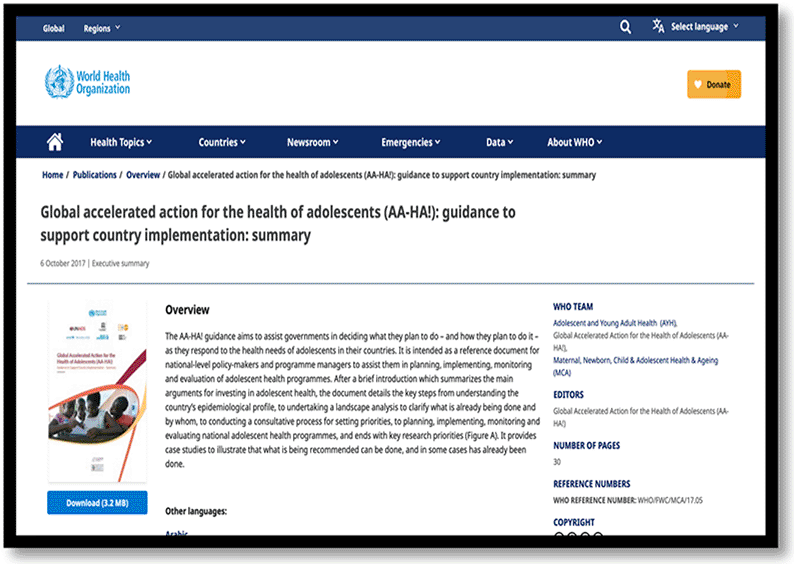
| https://www.who.int/publications/i/item/WHO-FWC-MCA-17.05 |
| Risk focus (STIs, teenage pregnancy) | In the WHO Adolescent Health Strategy (AA-HA!), sexuality education is positioned as part of promotive and preventive health interventions to reduce the risk of adolescent pregnancy and sexually transmitted infections. This approach demonstrates that at the global health level, CSE is not understood as a values-based educational agenda, but rather as a technocratic instrument assessed based on health outcomes. This emphasizes that global norms for CSE are not singular but rather dependent on the institutional mandates that frame them. | 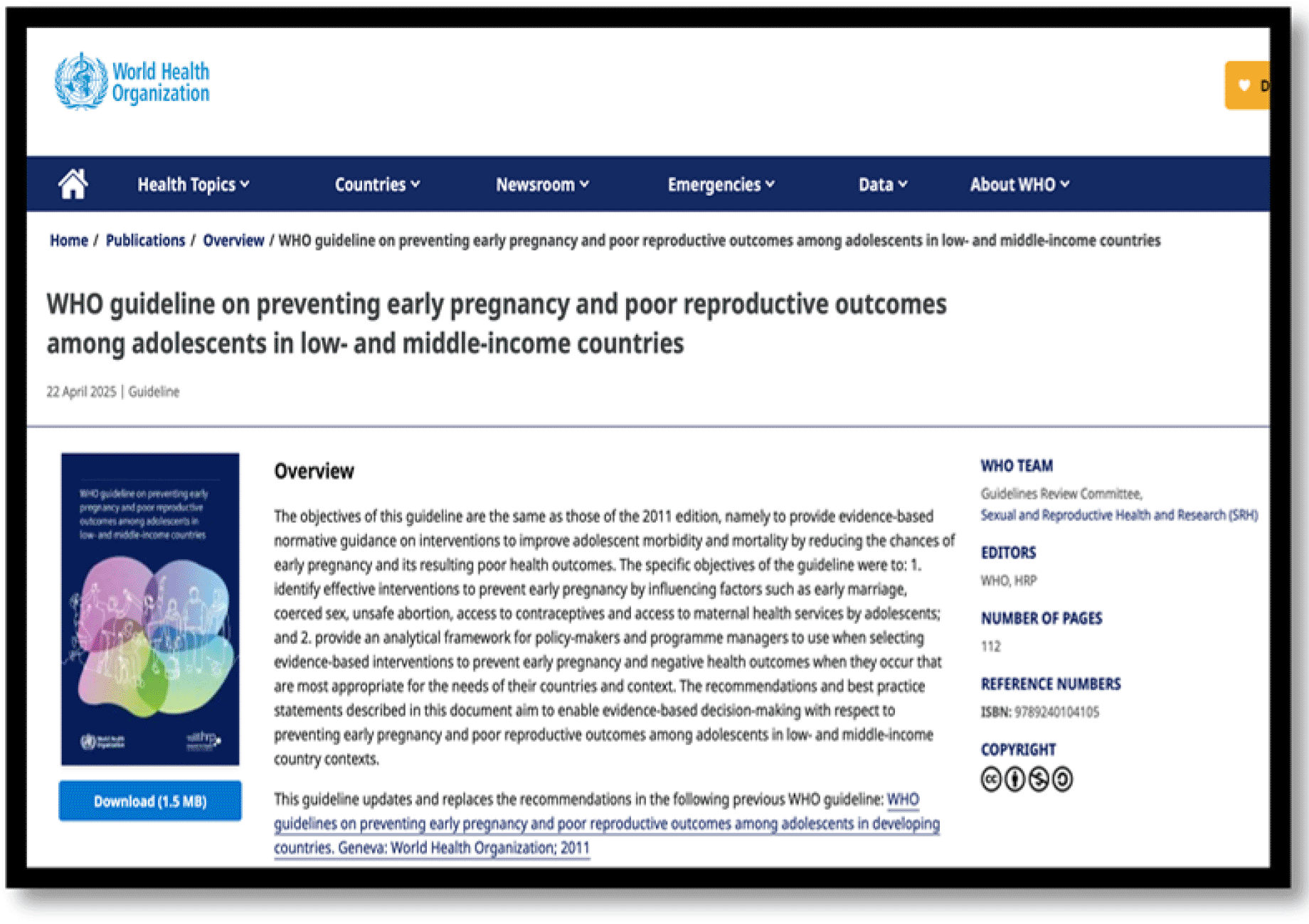
| https://www.who.int/publications/i/item/9789240104105 |
WHO’s analysis of global health documents shows that sexuality education, including elements consistent with CSE is primarily framed as a risk prevention-based public health intervention, particularly to reduce teenage pregnancy and sexually transmitted infections (STIs). Within the framework of the Global Accelerated Action for the Health of Adolescents (AA-HA!), WHO positions sexuality education as part of a promotive and preventive strategy to reduce the burden of disease and long-term health impacts on adolescent populations.
This framework emphasizes that the legitimacy of sexuality education in WHO documents is largely determined by its contribution to measurable and evaluable health outcomes, such as reductions in STIs incidence, adolescent pregnancy, and maternal health complications at a young age. In line with the latest global health literature, this framing reflects an epidemiological rationale that assesses interventions based on their effectiveness in reducing adolescent sexual and reproductive health risk factors, so that CSE norms in WHO discourse tend to be instrumental and technocratic, with an emphasis on risk control, disease prevention, and health intervention efficiency (WHO, 2023).
Unlike UNESCO and WHO, which emphasize normative and sectoral dimensions, the UNFPA document shows how CSE is negotiated more concretely in implementation practices in various national contexts. The focus is not only on conceptual orientation or policy legitimacy, but also on structural barriers, cultural resistance, and political dynamics that influence the translation of global norms into national policies and programs. This approach highlights the importance of contextual adaptation, inclusion of marginalized groups, and flexibility of implementation outside the formal education system. Therefore, Table 3 summarizes the implementational dimensions of CSE as well as the forms of contestation that arise during the process of adopting and adapting global norms in diverse social, legal, and institutional contexts.
| Evidence | Analysis evidence | Figure | Source link |
|---|---|---|---|
| Obstacle | The global CSE norms promoted by UNFPA are not singular, homogeneous, or culturally neutral, but rather are the result of normative constructions born from the international human rights framework, the principle of gender equality, and scientific evidence-based approaches. In practice, these norms must confront diverse local value systems, national political structures, and social power configurations, so that the implementation of CSE often experiences adjustments, reductions, or even open rejection. This shows that CSE operates in a contested normative arena, not as a global standard automatically accepted by all countries. | 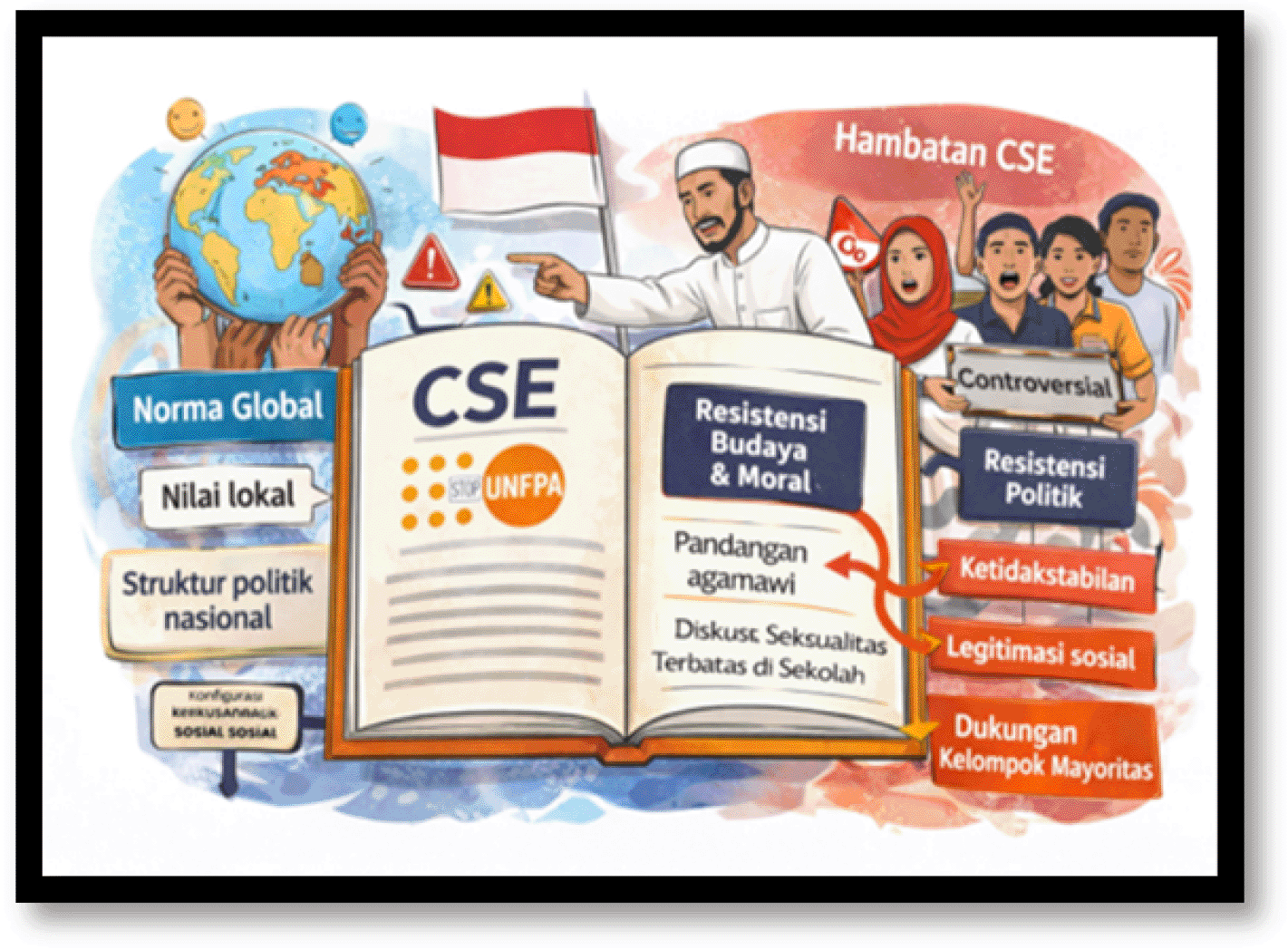
| https://indonesia.unfpa.org/en/submission/cancelled-unfpaidnrfq24003-assessment-curriculum-and-implementation-adolescent#:~:text=UNFPA%20Indonesia%20%7C%20UNFPA/IDN/,Sexuality%20Education%20(CSE)%20in%20Indonesia |
| Cultural & political resistance | The global CSE norms promoted by UNFPA are not singular, homogeneous, or culturally neutral, but rather are the result of normative constructions born from the international human rights framework, the principle of gender equality, and scientific evidence-based approaches. In practice, these norms must confront diverse local value systems, national political structures, and social power configurations, so that the implementation of CSE often experiences adjustments, reductions, or even open rejection. This shows that CSE operates in a contested normative arena, not as a global standard automatically accepted by all countries. | 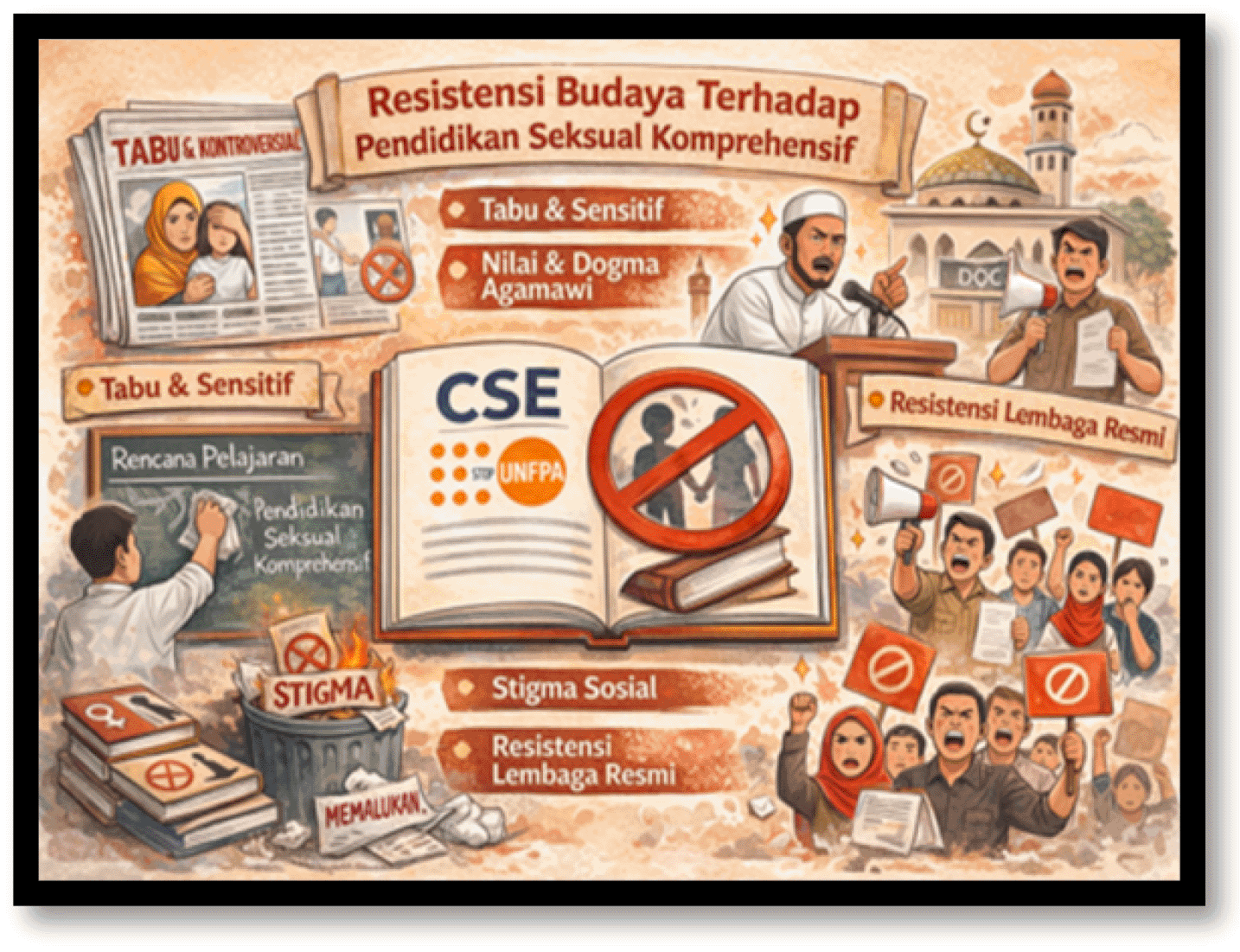
| https://scholarhub.ui.ac.id/kesmas/vol20/iss3/2/ |
Based on an analysis of UNFPA global implementation documents and the supporting evidence presented in the table, this study’s findings indicate that CSE does not operate as a neutral and uniform global standard, but rather as a normative construct derived from an international human rights framework, gender equality principles, and evidence-based approaches. In its practical implementation at the national level, global CSE norms must navigate the complexities of local values, national political structures, and diverse configurations of social power.
The findings also indicate that the adoption and implementation of CSE often undergo adjustments, reductions, or even outright rejection. This reflects that CSE operates in a contested normative arena, where policy legitimacy is determined not solely by scientific evidence or recommendations from international institutions, but also by domestic cultural, moral, and political dynamics. As a result, sexuality education in schools tends to be implemented partially and selectively, and does not fully reflect the comprehensive and rights-based principles of CSE. After demonstrating that global CSE norms are plural and not entirely coherent, the subsequent analysis shifts to the national level to trace how these norms are translated into domestic policies. If at the global level there are variations in framing among institutions, the next question is how these layered norms are adapted, negotiated, or constrained within the context of national policies. The second piece of evidence examines the process of translating CSE norms in Indonesia, the Philippines, and Vietnam to identify patterns of convergence and divergence in policy adoption.
The second body of evidence examines how the global CSE norms are translated within the framework of national policies in Indonesia, the Philippines, and Vietnam. This analysis highlights variations in terminology, substantive coverage, and normative limitations that emerge in adolescent education and health documents in each country. The findings show that although referring to similar global sources, the translation process results in non-identical policy configurations.
The analysis begins with the case of Indonesia as the first context for the translation of global CSE norms. Although there are references to adolescent reproductive health principles and international commitments, Indonesia does not directly adopt the terminology or framework of CSE. On the contrary, these norms are integrated into policy language that emphasizes child protection, family resilience, and sensitivity to cultural and religious values.
Table 4 presents a synthesis of evidence on sexuality education policies in Indonesian schools, classified into three main sources: national curriculum documents, adolescent reproductive health strategies, and national reports to the UN. First, regarding adolescent health curriculum documents, the Indonesian Ministry of Education has integrated health materials, including reproductive health, into the Independent Curriculum (Kurikulum Merdeka) through the development of cross-ministerial teaching materials. However, sexuality education is not positioned as a standalone subject, but rather embedded within thematic health learning. This situation indicates that sexuality education in schools has not yet received adequate space as a strategic and comprehensive pedagogical issue.
| Evidence | Evidence analysis | Figure | Source link |
|---|---|---|---|
| Adolescent health curriculum/education documents | The Indonesian Ministry of Education has integrated health materials, including reproductive health (as part of the health topic), into the Independent Curriculum (Curriculum Merdeka) through teaching materials developed jointly by the Ministry of Education, Culture, Research, and Technology (Kemendikbudristek) and the Ministry of Religious Affairs (Kemenag). However, in practice, sexuality education instruction in elementary schools remains very limited and does not yet stand alone as a comprehensive subject. | 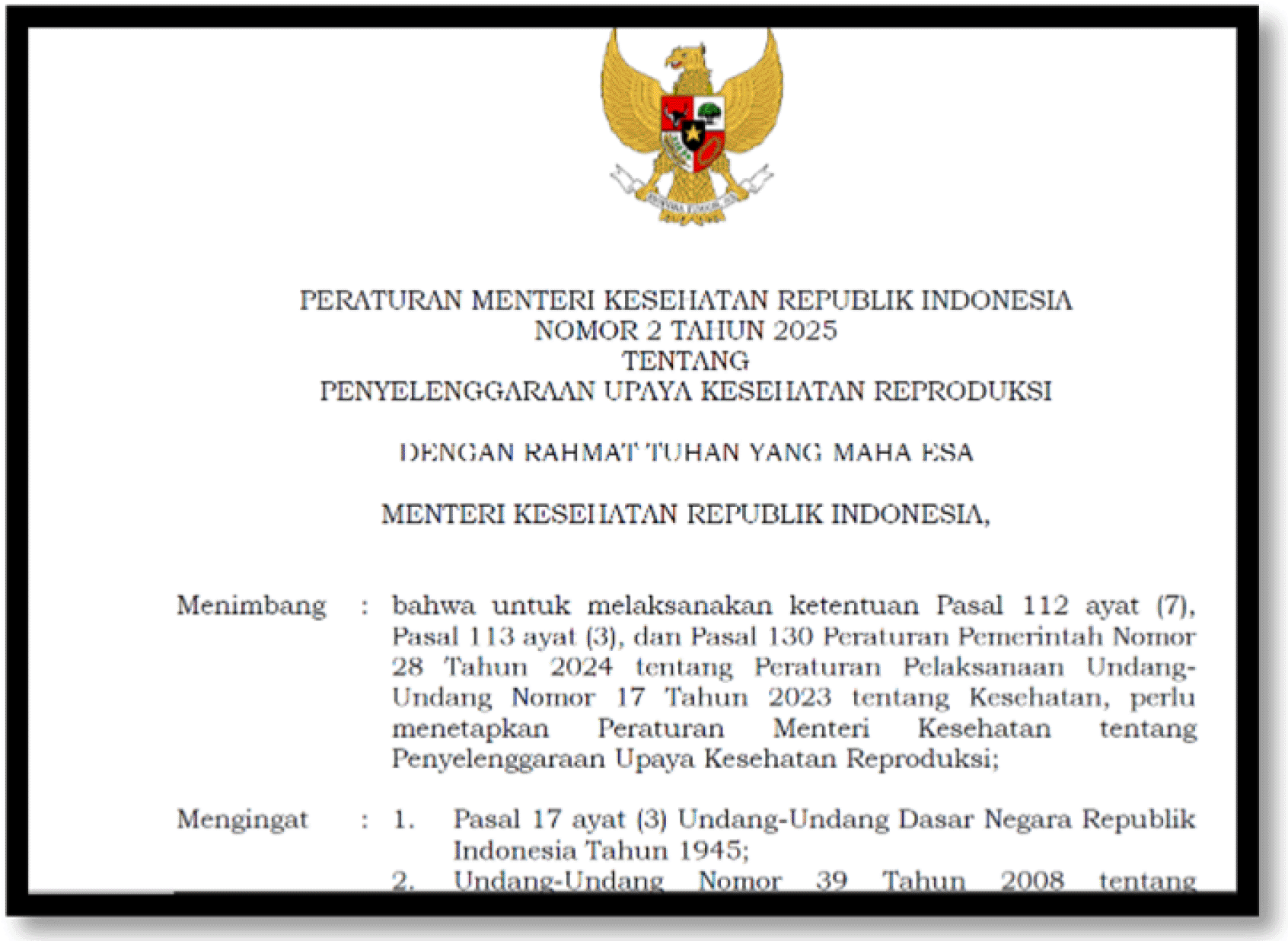
| https://peraturan.bpk.go.id/Download/375490/permenkes-no-2-tahun-2025.pdf?utm_source=chatgpt.com |
| Adolescent reproductive health strategies | The Indonesian Ministry of Education has integrated health materials, including reproductive health (as part of the health topic), into the Independent Curriculum (Curriculum Merdeka) through teaching materials developed jointly by the Ministry of Education, Culture, Research, and Technology (Kemendikbudristek) and the Ministry of Religious Affairs (Kemenag). However, in practice, sexuality education instruction in elementary schools remains very limited and does not yet stand alone as a comprehensive subject. | 
| School-based Interventions of Menstrual Hygiene Management in Indonesia: Systematic Literature Review |
| National reports to UN agencies | The Indonesian government periodically prepares national reports for submission to UN agencies, particularly regarding children’s rights and the fulfillment of the right to health and education, including reproductive health issues that touch on sexuality education. This document was prepared by the Ministry of Women’s Empowerment and Child Protection (Kemen PPPA), as a response to recommendations from the UN Committee on the Rights of the Child. This document outlines efforts related to the fulfillment of children’s rights, including the right to health and education relevant to adolescents. | 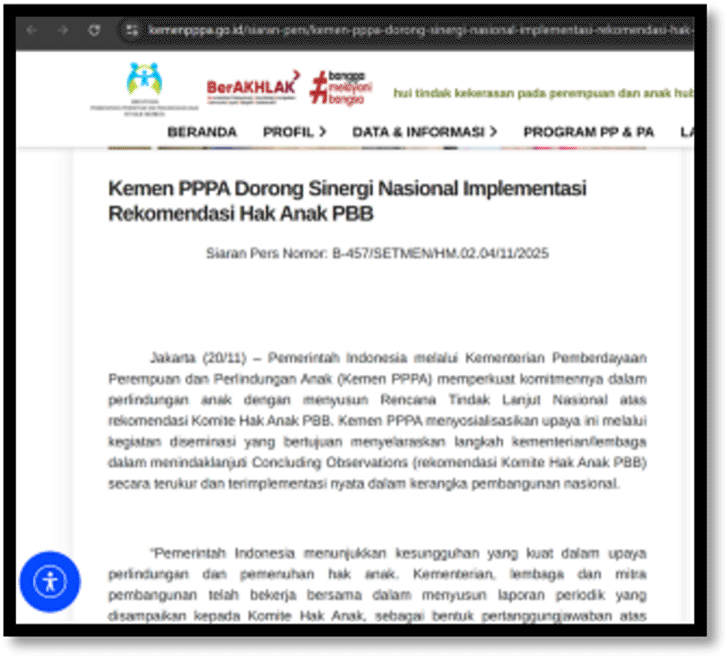
| https://www.kemenpppa.go.id/siaran-pers/kemen-pppa-dorong-sinergi-nasional-implementasi-rekomendasi-hak-anak-pbb |
Second, regarding adolescent reproductive health strategies, the Ministry of Health has developed a national policy that positions adolescents as a vulnerable group in need of protection, particularly from unwanted pregnancies, sexually transmitted infections, and HIV. This strategy emphasizes the role of families, communities, and health services, but does not explicitly integrate a comprehensive school-based sexuality education framework. Thus, sexuality education is understood more as a public health intervention than as a continuing formal education process.
Third, national reports to the UN demonstrate the Indonesian government’s normative commitment to fulfilling children’s rights, including the right to education and reproductive health. A report compiled by the Ministry of Women’s Empowerment and Child Protection (KemenPPPA) confirms that reproductive health and sexuality education have become part of the national agenda. However, the report also indicates that the implementation of sexuality education in schools remains general and has not been standardized nationally. Overall, the findings above indicate a gap between national policy commitments and the implementation of sexuality education at the school level. Sexuality education in Indonesia tends to be confined to the realm of health and child protection policies, but has not yet been fully institutionalized within the formal education system as comprehensive, systematic, and rights-based sexuality education.
Continuing the case of Indonesia, the Philippines presents a contrasting configuration of global norm translation. Unlike Indonesia, which integrates CSE indirectly and health-oriented, the Philippines institutionalizes CSE thru explicit legislative reforms, particularly thru the Responsible Parenthood and Reproductive Health Act (RA 10354). However, this formal institutionalization does not eliminate normative contestation. On the contrary, it actually strengthens public debate, especially regarding religion, morality, and the limits of state authority in regulating the realms of family and sexuality.
Table 5 below synthesizes key policy documents and documented controversies to show how global CSE norms are reinterpreted, negotiated, and politically mediated in the context of the Philippines.
| Key analytical points | Documented phenomena | Documentation types | Documentation | Sources and links |
|---|---|---|---|---|
| The controversial legal basis of CSE/RH | RA 10354 became the basis for reproductive health education, but sparked public debate due to issues of religion, family, and sexuality. | Legislation + contextual coverage | - | Official Gazette – RA 10354: https://lawphil.net/statutes/repacts/ra2012/ra_10354_2012.html |
| Contestation of religious and moral values in sexuality education | Sexuality education in schools is being debated because it is considered to be contrary to Catholic values and family norms. | International media investigation | 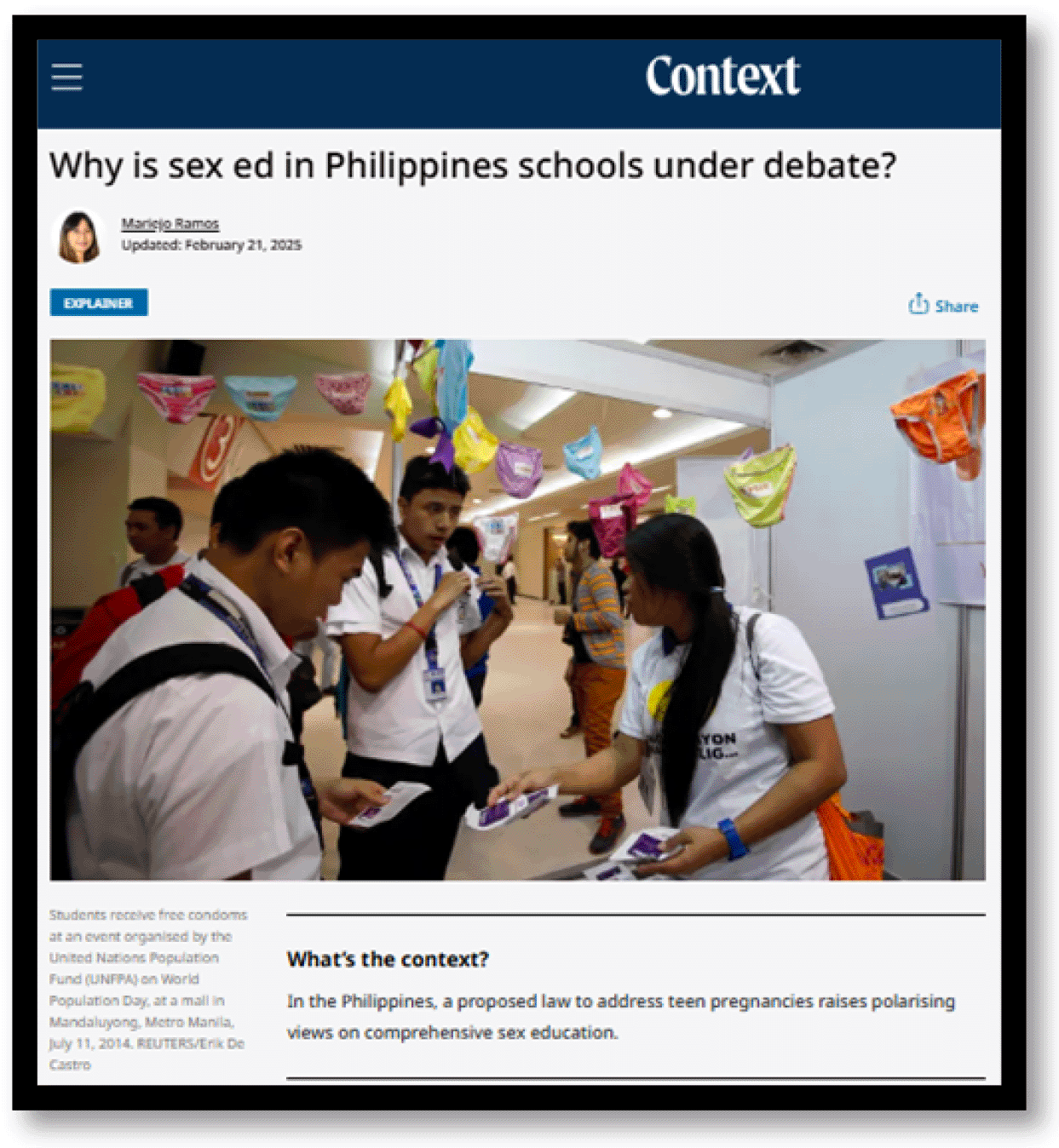
| Reuters/Context News – Why is sex ed in Philippines schools under debate? https://www.context.news/socioeconomic-inclusion/why-is-sex-ed-in-philippines-schools-under-debate |
| Framing CSE as a social risk response | CSE is associated with teenage pregnancy, HIV, and sexual violence, not sexual autonomy. | Data-driven media reports | 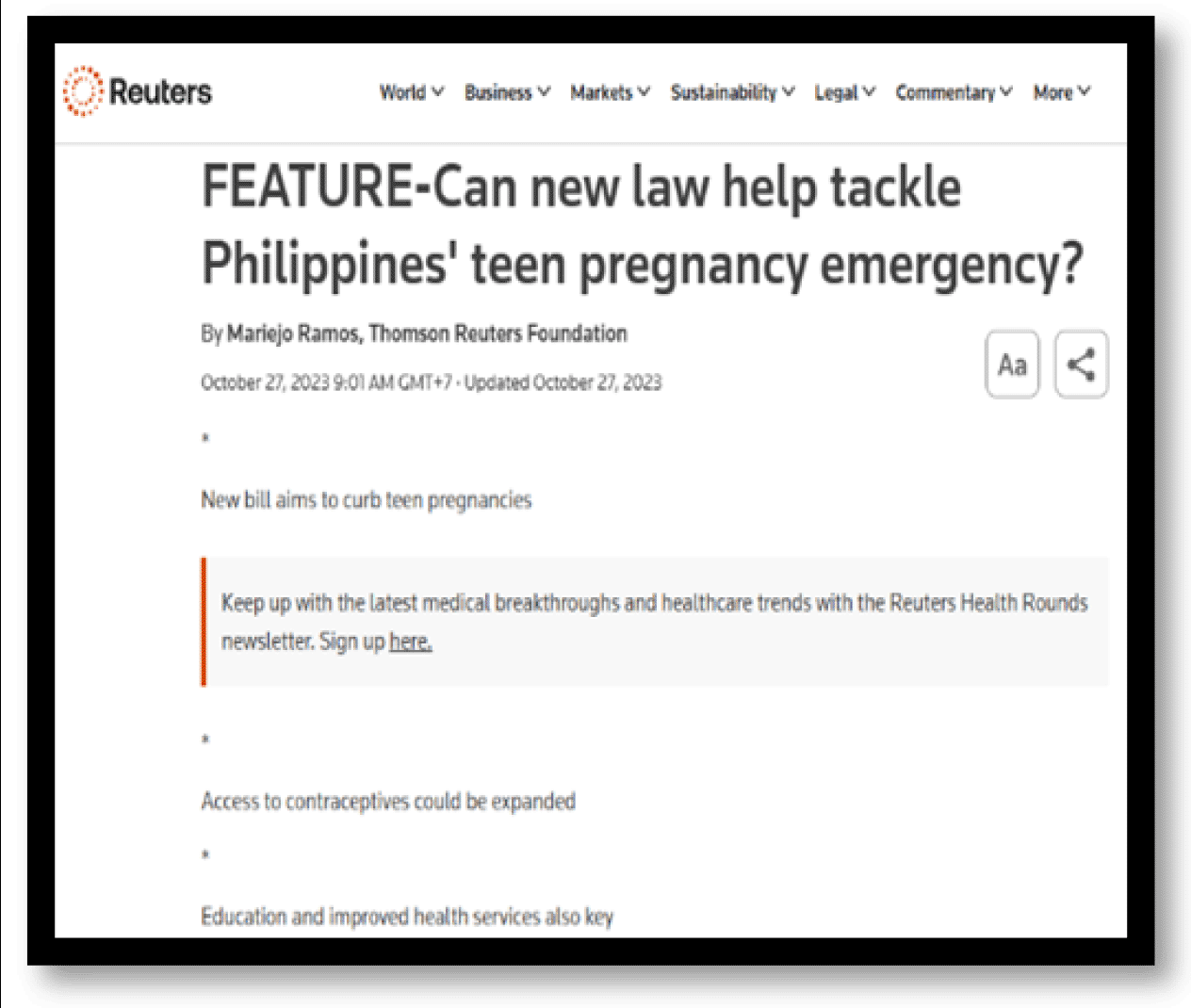
| Reuters – Can new law help tackle Philippines’ teen pregnancy emergency? https://www.reuters.com/article/business/healthcare-pharmaceuticals/feature-can-new-law-help-tackle-philippines-teen-pregnancy-emergency-idUSL8N39P1WS/ |
| Integrated & restricted CSE education policy | CSE is not taught as a standalone subject, but is integrated into the curriculum and is constrained by social sensitivity. | Official policy document | - | Department of Education (DepEd) Order No. 031 (2018): https://www.deped.gov.ph/wp-content/uploads/2018/07/DO_s2018_031-1.pdf |
| Local implementation variations & resistance | Teachers and schools adapt or minimize CSE materials due to moral concerns and parental reactions. | Academic case study | - | Kim et al. (2023), International Journal of Educational Development: https://doi.org/10.1016/j.ijedudev.2023.102778 |
| Dependence on non-state actors | The implementation of reproductive health education is often assisted by NGOs due to limited state capacity. | NGO & policy reports | - | Education Profiles (UNESCO–IIEP): https://education-profiles.org/eastern-and-south-eastern-asia/philippines/~comprehensive-sexuality-education |
| Social urgency (child & adolescent pregnancy) | The surge in child pregnancies is used as an argument for the need for SRH education and services. | International organization reports | 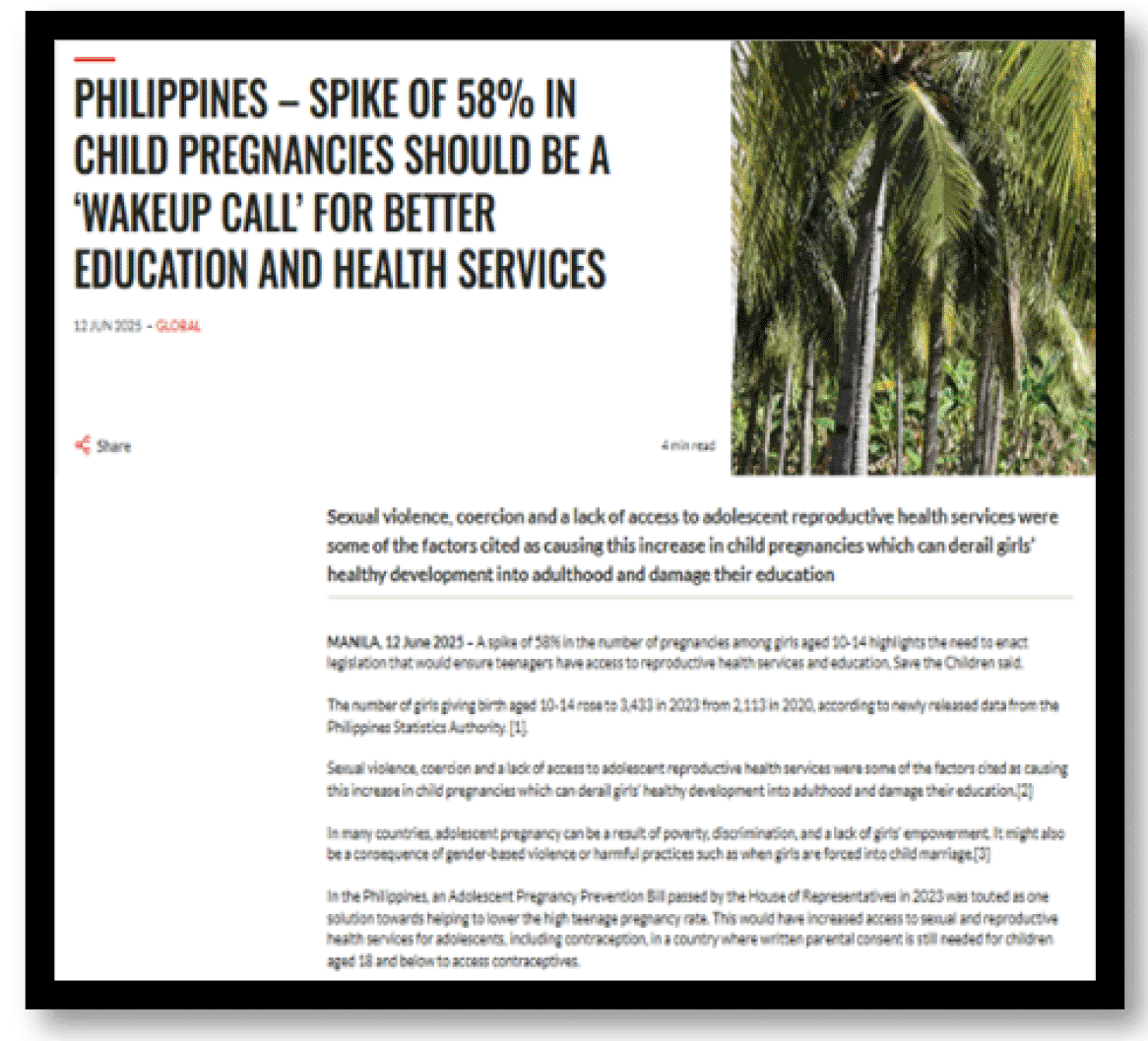
| Save the Children – Spike in child pregnancies in the Philippines: https://www.savethechildren.net/news/philippines-spike-58-child-pregnancies-should-be-wakeup-call-better-education-and-health |
| CSE global norms as a comparison | UNESCO promotes holistic, rights-based, and sexuality-positive CSE | Global norms document | 
| UNESCO – Comprehensive Sexuality Education: https://www.unesco.org/en/health-education/cse |
The documentation in the Table 5 presents documentary-based evidence on the legal, policy, and social contexts that shape the translation of CSE in the Philippines. Sources used include national laws, education policy guidelines, international media coverage, academic studies, and reports from international and non-governmental organizations. At the legal level, national legislative documents provide the official framework for reproductive health education. At the policy level, Department of Education guidelines define and regulate the implementation of CSE in schools. At the social level, media documentation and organizational reports describe public debates, the social conditions underlying the policy, and the dynamics of implementation on the ground. Academic studies complement this documentation with empirical findings on learning practices and the involvement of education and health actors. Overall, this table illustrates that global CSE norms in the Philippines are not uniformly adopted, but rather negotiated through national moral, risk, and governance frameworks in their formulation, debate, and implementation.
The translation of global CSE norms in the Philippines has been contestatory and layered, reflected in regulations, education policies, international media, and reports from global organizations and academic studies. Legally, Republic Act No. 10354 forms the basis for national reproductive health education, but it has sparked public controversy because it links sexuality education to religious, family, and moral values. At the policy level, the Department of Education guidelines emphasize the integration of CSE into the school curriculum primarily as a response to social risks such as teenage pregnancy and HIV, rather than as a means of strengthening sexual autonomy. Media documentation and organizational reports also show ongoing debate in the public sphere, particularly from religious and conservative groups, while academic evidence reveals variations in implementation in schools, including modifications of materials by teachers and reliance on non-governmental organizations due to limited state capacity.
Unlike the case of the Philippines, which shows open public contestation after legal institutionalization, the case of Vietnam reflects a pattern of norm translation that is more state-centered and technocratic. (Republic of the Philippines, 2012) CSE was not adopted as an explicitly standalone framework; instead, the substance of CSE was embedded in adolescent health policies, life skills education, and population programs (Republic of the Philippines, 2012). The following Table 6 synthesizes documentary evidence showing how global CSE norms are selectively integrated into the agenda of education and youth development in Vietnam, with an emphasis on social stability, development priorities, and culturally moderated implementation, rather than thru open normative debates.
| Data evidence | Data analysis | Key points | Documentation | Sources and links |
|---|---|---|---|---|
| Vietnam National Framework 2020–2025 | The term Comprehensive Sexuality Education (CSE) has not been officially adopted by the Vietnamese Government into the national framework. | The Vietnamese government uses the term Reproductive Health and Sexual Healthcare for Adolescents and Youth in both educational and health contexts. | 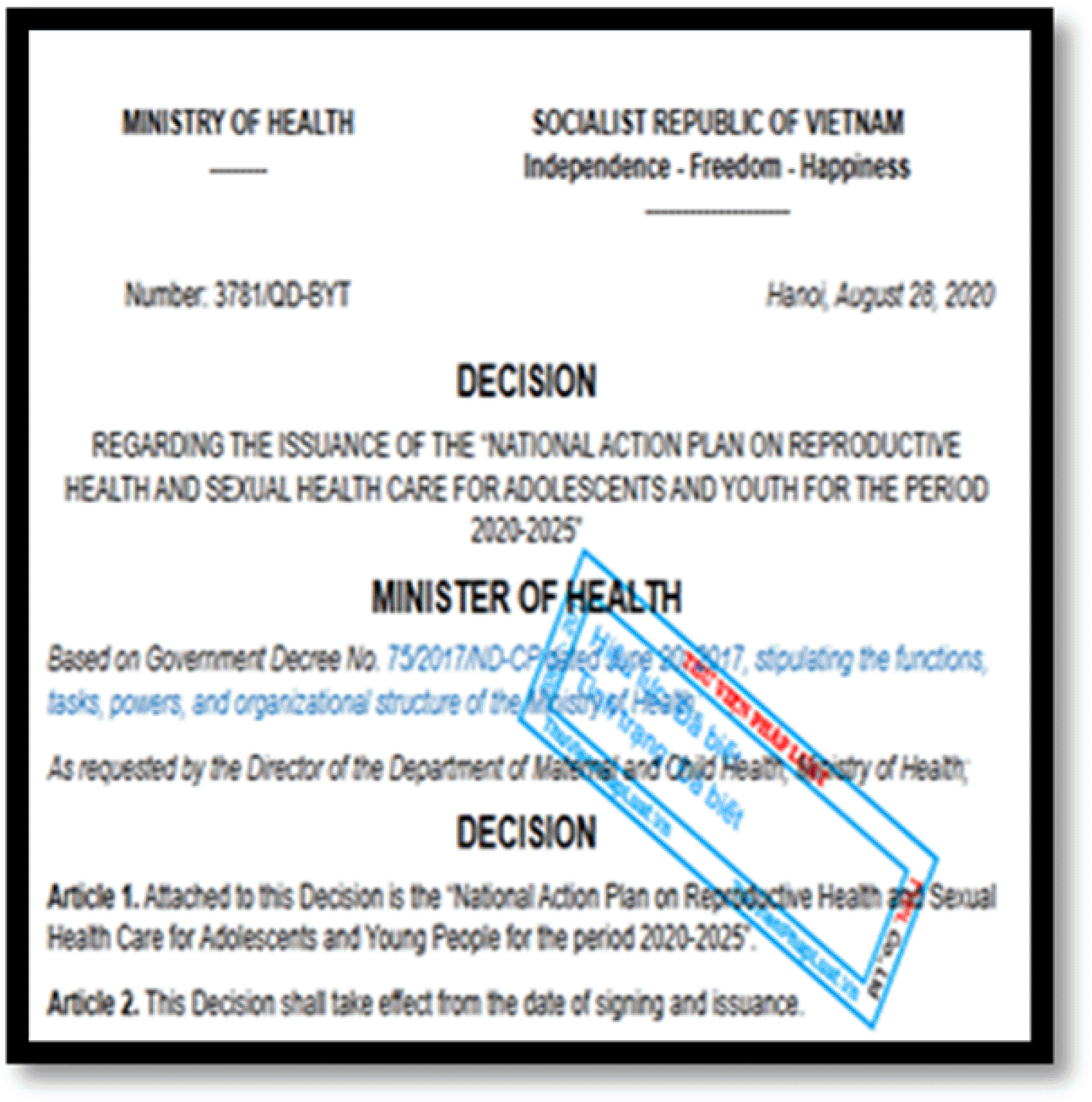
| https://thuvienphapluat.vn/van-ban/the-thao-y-te/quyet-dinh-3781-qd-byt-2020-cham-soc-suc-khoe-sinh-san-vi-thanh-nien-thanh-nien-2020-2025-451344.aspx |
| Adolescent reproductive health strategies | The Vietnamese government through the Ministry of Education and Training (MoET), the Ministry of Health and related agencies emphasizes the importance of integrating adolescent reproductive health into the national framework. | CSE is provided to adolescents with an approach that emphasizes providing comprehensive and non-judgmental information about increasing awareness regarding life skills, sexual health and healthy relationships in an age- and culturally appropriate context. | - | https://thuvienphapluat.vn/van-ban/the-thao-y-te/quyet-dinh-3781-qd-byt-2020-cham-soc-suc-khoe-sinh-san-vi-thanh-nien-thanh-nien-2020-2025-451344.aspx |
| Framing of CSE in Vietnam is intended as a response to social risks rather than based on rights. | The CSE norms were adopted as a framework to prevent unwanted pregnancies, unsafe sex, and sexually transmitted infections among adolescents, as well as to increase awareness of parents and teachers about sexual and reproductive health. | Vietnam’s sex education policy focuses on preventing social and health risks, resulting in some sensitive global CSE points being omitted or not fully adopted, such as not including rights dimensions such as freedom of sexual orientation and gender equality in accordance with international sex education standards. | 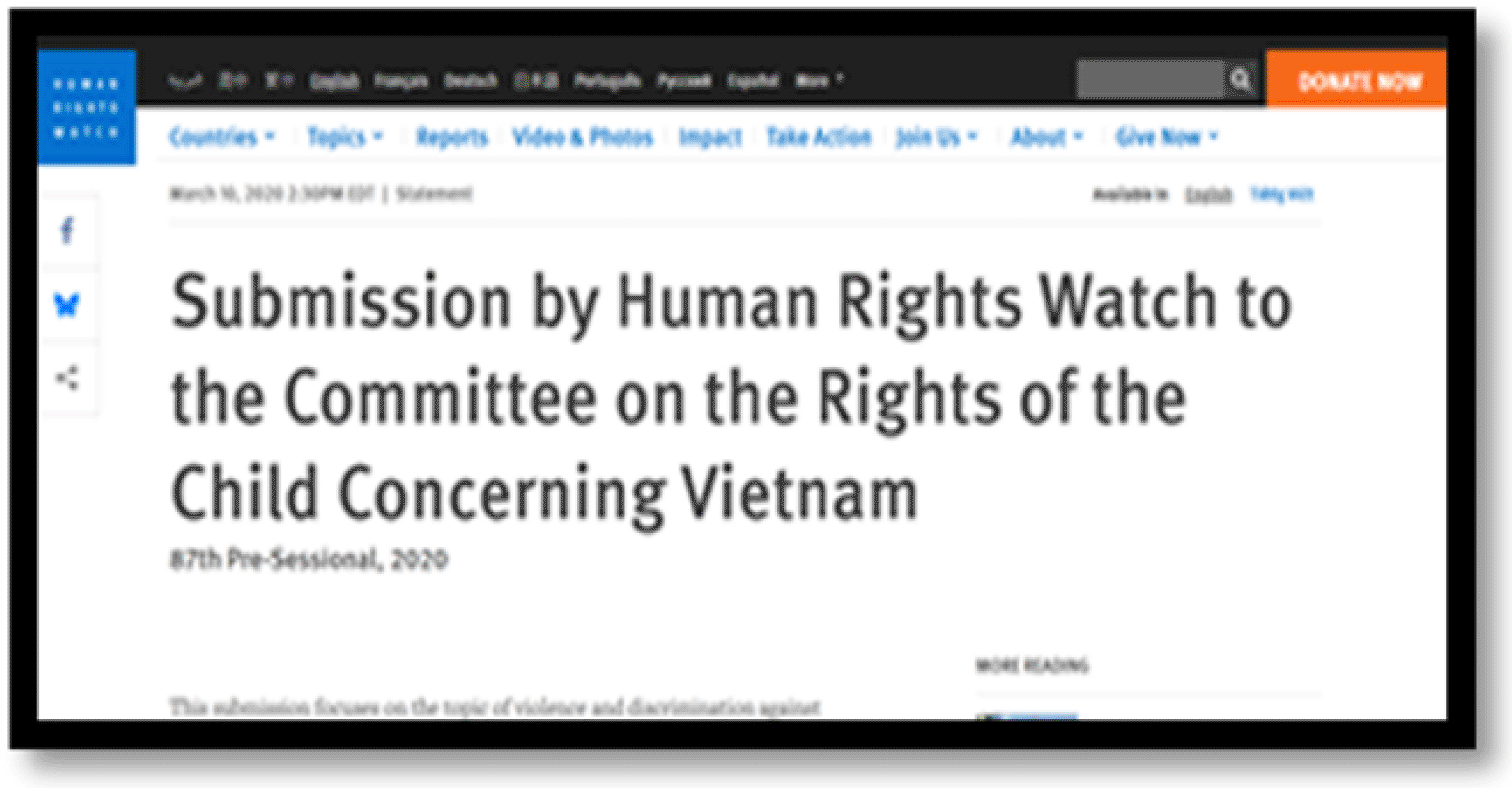
| https://www.hrw.org/news/2020/03/10/submission-human-rights-watch-committee-rights-child-concerning-vietnam?utm |
| Sexuality in Vietnam is still considered sensitive and taboo. | The sexuality education curriculum in Vietnam has not been fully implemented because the topic of sexuality is still considered sensitive. | Both students and teachers feel uncomfortable discussing sexual issues, so the implementation of sex education curricula in Vietnam is not yet comprehensive. Therefore, sensitive topics such as contraception, sexual relations, and bodily autonomy are often minimised or not fully adopted as defined in the global CSE. | 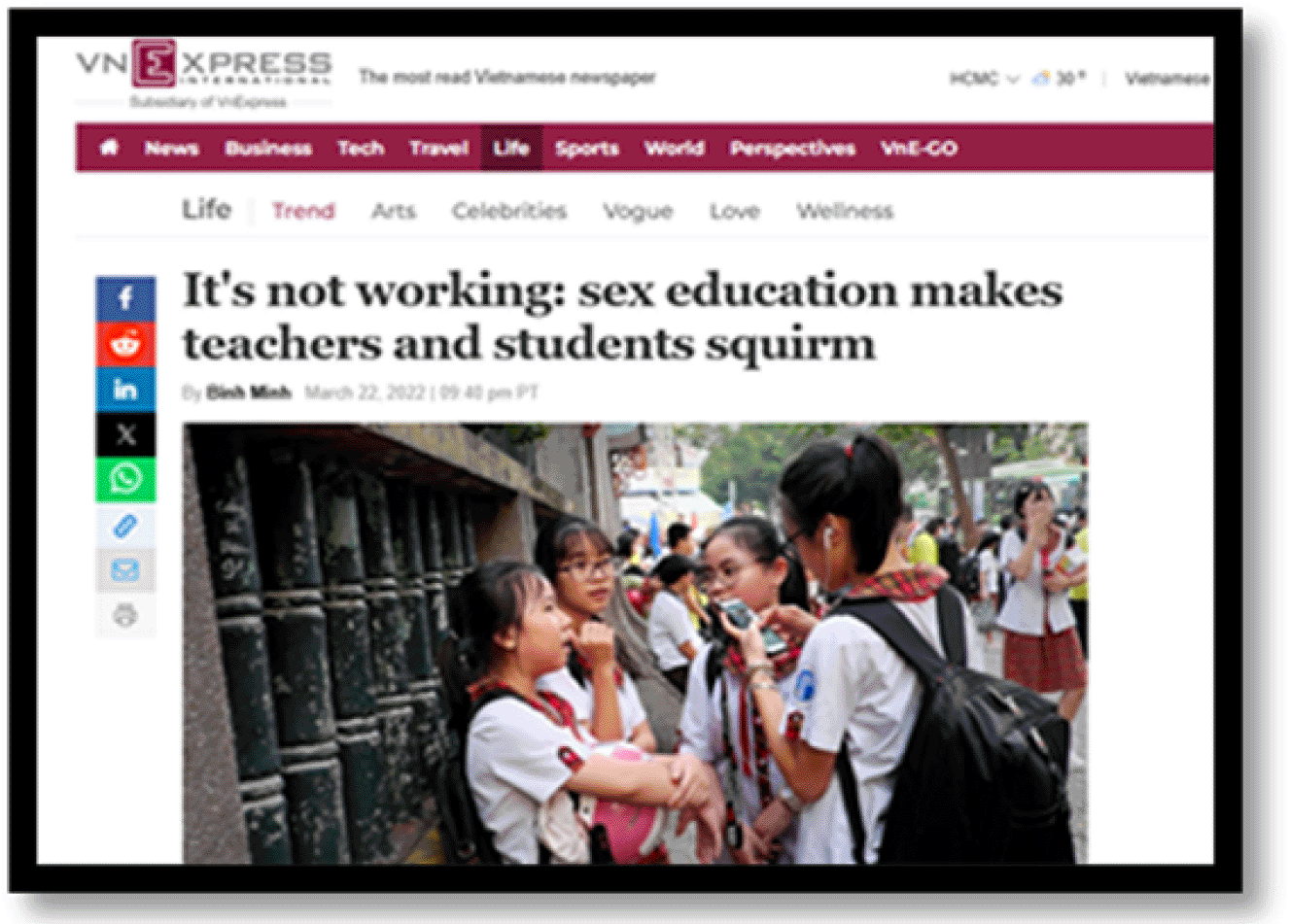
| https://e.vnexpress.net/news/trend/its-not-working-sex-education-makes-teachers-and-students-squirm-4441290.html?utm |
| CSE is not integrated into specific subjects | CSE in Vietnam is not specifically translated into separate subjects | The Vietnamese government is encouraging the implementation of CSE at all levels of school from primary to secondary level, but it is not made an independent subject but is integrated into selected subjects only. | 
| https://education-profiles.org/eastern-and-south-eastern-asia/viet-nam/~comprehensive-sexuality-education?utm |
| The adoption of CSE in Vietnam was influenced by political ideology | Although the Government has a formal framework for more comprehensive sexual education, the determination of curriculum policy in Vietnam is determined by socialist political resistance. | The global definition of CSE has not been fully implemented because the determination of educational quality and quality content related to education must be adjusted to the logic of political ideology in Vietnam. | 
| https://riseprogramme.org/sites/default/files/2023-03/The_Politics_of_Education_and_Learning_in_Vietnam_0.pdf?utm |
The findings in Table 6 show that Vietnam does not fully adopt the global norm of CSE, but rather adapts it within the framework of reproductive health, risk education, and the socio-political values of a one-party socialist state. The term CSE is not used officially; sexuality issues are placed within the framework of Reproductive Health and Sexual Healthcare for Adolescents and Youth, which emphasizes safe behavior, health, and risk prevention, such as teenage pregnancy and sexually transmitted infections, rather than a rights-based and identity-based approach. Although the policy mentions the importance of “comprehensive” information, its scope remains limited to topics that are considered socially safe and in line with national political values.
Social taboos surrounding sexuality in public spaces and schools also limit the translation of these norms. Sensitive topics such as contraception, intimate relationships, bodily autonomy, sexual identity, and sexual rights are often avoided in teaching practices. In addition, CSE is not taught as a separate subject, but is scattered across various subjects without an integrated curriculum, reflecting a selective adoption with a focus on basic health and life skills. This policy direction is influenced by the state’s logic of placing education as a means of moral formation and social stability, so that global CSE norms are reinterpreted into a more protective, technocratic, and state-centered approach.
Overall, the case of Vietnam further emphasizes that the global CSE norms are not adopted uniformly or literally. On the contrary, the norm is selectively reinterpreted within an ideological framework and national governance that prioritizes social stability, moral order, and state-determined development goals. This shows that the translation of norms is a process mediated politically and shaped by domestic structures. Furthermore, the next layer of analysis focuses on the role of value-based controversies in shaping the direction, scope, and boundaries of sexuality education policies. In all three countries, debates regarding religion, morality, family authority, and state legitimacy emerged as the main determining factors in deciding which elements of the global CSE norms are adopted, modified, or restricted.
This section deepens the analysis in the Indonesian context to show how value-based controversies concretely shape the direction of CSE policy. Compared to the previous two cases, the dynamics in Indonesia reveal a higher level of open and explicit public debate, particularly regarding issues of religion, morality, child protection, and the state’s legitimacy in regulating sexuality content in schools. Documentary evidence shows that the government’s response is not only technical but also normative, with an emphasis on language adjustment, moral framing, and the avoidance of terms considered sensitive.
Table 7 below presents evidence illustrating how the value controversy has influenced the formulation and institutional positioning of CSE within the national education system.
| Evidence | Evidence analysis | Figure | Source link |
|---|---|---|---|
| Minister’s speech | The Ministry of Women’s Empowerment and Child Protection (KemenPPPA) is encouraging educational institutions to provide reproductive health education to students, especially girls, as part of fulfilling children’s rights in education and health. This statement was issued by the Deputy for Fulfillment of Children’s Rights at the Ministry of Women’s Empowerment and Child Protection. | 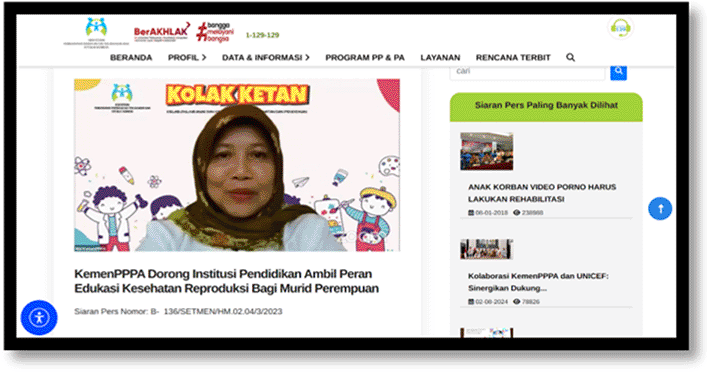
| https://www.kemenpppa.go.id/index.php/siaran-pers/kemenpppa-dorong-institusi-pendidikan-ambil-peran-edukasi-kesehatan-reproduksi-bagi-murid-perempuan |
| Ministry of Press and Broadcasting | “The Ministry of Women’s Empowerment and Child Protection officially encourages educational institutions to play a role in providing reproductive health education to students as part of fulfilling children’s rights to education and health.” (Ministry of Women’s Empowerment and Child Protection, Press Release, April 4, 2023). “The Minister of Women’s Empowerment and Child Protection emphasized that knowledge about reproductive health must be instilled from an early age as part of strategies for child protection and the prevention of sexual violence.” (Ministry of Women’s Empowerment and Child Protection, Press Release, April 11, 2022) | 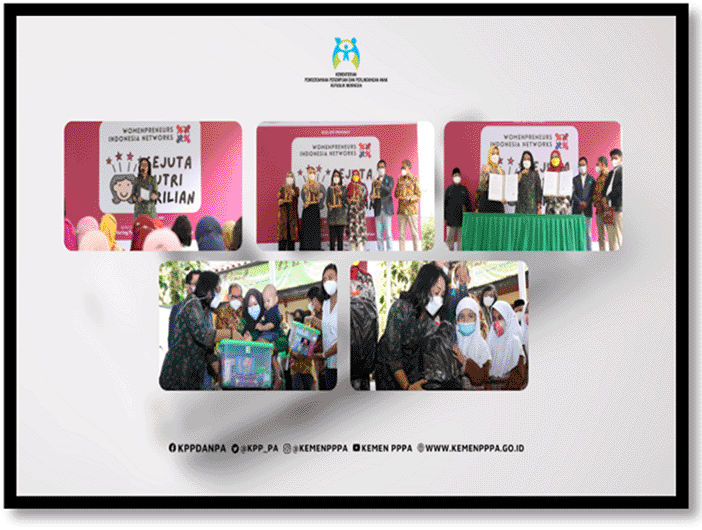
| https://www.kemenpppa.go.id/index.php/siaran-pers/menteri-pppa-cegah-kekerasan-seksual-melalui-pendidikan-kesehatan-reproduksi-sejak-dini |
| Public statements about sex education | The Head of the National Population and Family Planning Agency (BKKBN) stated that sexual education for children is “not taboo” and should be provided from an early age. This demonstrates a shift in values at the policy-making level, from a moralistic approach to reproductive health and risk prevention. However, this statement also sparked public controversy because it clashed with still-strong social and religious norms, resulting in slow implementation of sexuality education policies and the lack of explicit inclusion in the formal curriculum. | 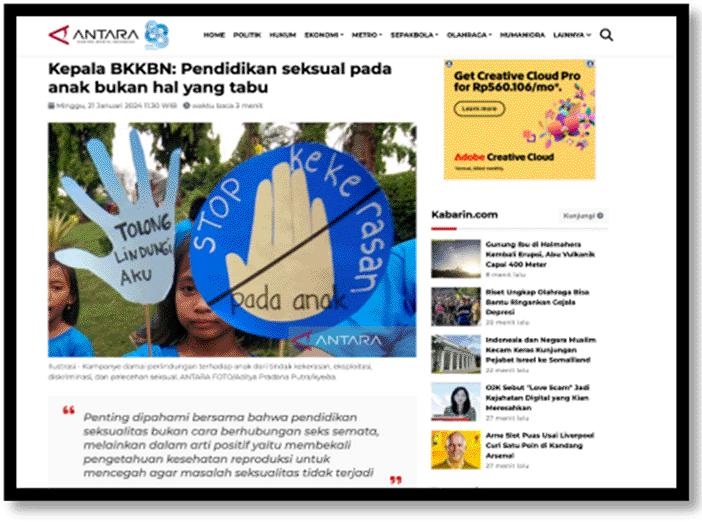
| https://www.antaranews.com/berita/3925479/kepala-bkkbn-pendidikan-seksual-pada-anak-bukan-hal-yang-tabu |
According to official statements from the Indonesian government, reproductive health education is positioned as part of fulfilling children’s rights to education and health, as well as a strategy for child protection and prevention of health risks and sexual violence. Through speeches and official press releases, the Ministry of Women’s Empowerment and Child Protection (KemenPPPA) consistently encourages educational institutions to take an active role in delivering reproductive health education to students, particularly girls, by emphasizing the preventive and promotive dimensions of health.
Correspondingly, public statements by heads of population institutions affirming that sexuality education for children is “not taboo” reflect a shift in policy discourse from a moralistic approach to reproductive health and risk prevention. However, this dynamic has also been accompanied by social resistance and public controversy, demonstrating the strong influence of social and religious norms in shaping national policy direction. This cautious approach and health-based policy framing are consistent with UNESCO guidelines, which acknowledge that the implementation of sexuality education in various countries is often constructed through negotiations of cultural and social values. Consequently, countries tend to adapt the language and scope of policies to achieve social acceptance.
The findings in Table 7 indicate that value-based controversies significantly influence the framing and institutional positioning of sexuality education in Indonesia. This dynamic goes beyond public debate and shapes how the global norms of CSE are interpreted and strategically operationalized. Based on this analysis, the next table examines how normative pressures are translated into concrete policy adjustments, including modifications of terminology, restrictions on the scope of materials, and an emphasis on health-based narratives. Table 8 will presents documentary evidence showing how policy actors negotiate international standards with domestic social and cultural expectations.
| Supporting theme evidence 3 | Key evidence and findings | Source link |
|---|---|---|
| Global opposition to CSE | Global reports indicate that resistance to CSE in various countries is primarily fueled by misinformation, political opposition, and moral framing, despite the widely recognized benefits of evidence-based CSE. | UNFPA – The Journey Towards Comprehensive Sexuality Education: Global Status Report https://www.unfpa.org/publications/journey-towards-comprehensive-sexuality-education |
| Political and moral debate in the Philippines | The expansion of CSE in the Teenage Pregnancy Prevention Bill has sparked heated debate among legislators, religious groups, and children’s rights activists. Opposition focuses on religious and cultural values, rather than the academic substance of the CSE curriculum. | Reuters – Mariejo Ramos (2025) https://www.reuters.com/world/asia-pacific/why-is-sex-ed-philippines-schools-under-debate-2025-02-21/ |
| Misinformation as a tool of political mobilization | Conservative groups spread claims that CSE teaches masturbation and corrupts children’s morals, even though these claims are not included in official policy. This misinformation has become a key strategy of policy opposition. | Reuters – konteks Filipina https://www.reuters.com/world/asia-pacific/why-is-sex-ed-philippines-schools-under-debate-2025-02-21/ |
| International anti-gender movement | The global anti-gender movement opposes CSE, gender equality, and sexual rights, framing them as “gender ideology” that threatens traditional families, religion, and the social order. This movement operates across borders. | Wikipedia – Anti-gender movement https://en.wikipedia.org/wiki/Anti-gender_movement |
| Religious backlash in Western countries | The introduction of compulsory sex and relationships education in England, including LGBT+ topics, has sparked protests from parents and faith-based schools. Opposition focuses on morality and parental rights, rather than the effectiveness of the education. | Thomson Reuters Foundation – Rachel Savage (2019) https://www.reuters.com/article/us-britain-lgbt-education-idUSKCN1QF1XZ |
The findings suggest that the debate over CSE is primarily driven by conflicting values and political interests, rather than by differing scientific views on the effectiveness or knowledge base of CSE. Globally, the UNFPA report asserts that resistance to CSE often manifests itself in the form of misinformation and ideological opposition, despite extensively documented empirical evidence of CSE’s health and social benefits (UNFPA, 2014, 2023). In the Philippine context, CSE has become an arena for political contestation between legislators, religious groups, and conservative actors, with public discourse dominated by moral and cultural claims, such as accusations that CSE undermines family values or encourages certain sexual behaviors. Similar patterns are also seen in Western countries, such as the United Kingdom, where mandatory sex education policies have sparked resistance based on parental rights and religious beliefs. Furthermore, the international anti-gender movement systematically frames CSE as a “foreign ideology” that threatens the social order. Overall, this evidence confirms that the CSE controversy stems from value and identity politics, rather than scientific debate.
The value-based contestation does not only appear in public debates but is also reflected in the formal design of national education policies. In various contexts, constitutional provisions and legislative frameworks explicitly incorporate moral, religious, and ideological considerations in determining the curriculum content. Table 9 presents documentary evidence showing how the legal and policy foundations in Indonesia, Vietnam, and the Philippines integrate these value references, thereby shaping the boundaries and direction of CSE implementation.
| Data evidence | Data analysis | Sources and links |
|---|---|---|
| Determination of education policy in Indonesia must be based on religious values and national unity. | CSE norms in Indonesia cannot be integrated comprehensively into the education curriculum because the reference for determining education policies in Indonesia must be based on the state constitution, namely the 1945 Constitution, especially Article 31 paragraphs 3 and 5 which stipulate that educational progress must uphold religious values and national unity, so that CSE norms that conflict with religion such as LGBT+ cannot be accepted in Indonesia. | Article 31 Paragraphs 3 and 5 of the Constitution of the Republic of Indonesia https://peraturan.bpk.go.id/Details/101646/uud-no |
| Education policy in Vietnam is influenced by political ideology | The global definition of CSE has not been fully implemented because determining educational quality and related content must be aligned with Vietnam’s political ideology. In Vietnam’s socialist political system, which positions education as a tool for moral formation and social control, broader discussions of sexuality are seen as ideologically risky. | https://riseprogramme.org/sites/default/files/2023-03/The_Politics_of_ Education_and_ Learning_in_Vietnam_0.pdf?utm |
| The determination of education policies in Vietnam is based on laws related to children’s rights which emphasize the importance of protecting children’s morals. | The 2016 Law on Children (Law on Children) outlines various children’s rights but does not explicitly address sexuality education. However, this policy emphasizes the importance of maintaining moral protection for children, thus influencing the development of comprehensive sex education policies in Vietnam. Therefore, the CSE norms cannot be fully adopted in Vietnam, as they adhere to Vietnamese standards for the moral protection of children. | https://www.economica.vn/Content/files/LAW%20%26%20REG/ 102_2016_QH13%20Law%20on%20Children.pdf?utm |
| The formation of reproductive health programs must take into account the religious and cultural values of the community. | Based on Republic Act 10354: The Responsible Parenthood and Reproductive Health Act of 2012, especially sections 3 and 14 emphasize that reproductive health and sexual education programs must consider religious values and community opinions. Section 3 states “The active participation of non-governmental organizations (NGOs), women’s and community organizations, civil society, faith-based organizations, the religious sector, and communities is essential to ensure that reproductive health policies, plans, and programs …”, Section 14 states “Flexibility in the preparation and implementation of curriculum content, coverage, and appropriate methods at each educational level or group is only allowed after consultation with parent-teacher-community associations, school officials, and other interest groups.” So that global CSE norms that conflict with the religion and culture of Vietnamese society cannot be adopted in their entirety. | Republic Act 10354: The Responsible Parenthood and Reproductive Health Act of 2012 https://lawphil.net/statutes/repacts/ra2012/ra_10354_2012.html |
In Indonesia, the constitutional foundation places religion and national unity as the primary framework for educational development, so any policy deemed potentially contradictory to religious moral values tends to be rejected (Indonesia, 1945a, 1945b). Meanwhile, in Vietnam, the socialist state’s political orientation positions education as an instrument for character building and social stability, making more comprehensive issues of sexuality sensitive and requiring restrictions. The legal framework related to child protection also emphasizes the importance of maintaining local cultural morality and ethics in all forms of educational intervention. In the Philippines, the process of formulating reproductive health and sexual education policies actually opens up space for consideration of religious values, community groups, and faith-based organizations, which must be involved before final decisions are made.
These patterns demonstrate that CSE policymaking is not simply a technocratic process, but rather a continuously negotiated interaction between global norms and domestic values. Thus, the differences in CSE implementation across the three countries arise not from the scientific substance of CSE itself, but from the context of values, morals, and politics inherent in each country’s education system and policy governance.
This research shows that CSE does not operate as a global norm with a single and stable meaning, but rather as a norm that from the outset contains a plurality of interpretations. The differences in framing between UNESCO, WHO, and UNFPA show that CSE is produced thru different institutional rationalities, ranging from a rights-based and gender equality approach, a public health approach based on risk reduction, to an implementational approach emphasizing contextual adaptation (UNESCO, 2018; UNFPA, 2020; WHO, 2017). This variation shows that the plurality of meanings has become inherent at the global production stage, so that differentiation at the national level cannot be understood merely as a deviation from international standards, but rather as a continuation of the contestation of meanings that has already been ongoing at the global level.
When the norm is translated into national policies, this study found that Indonesia, the Philippines, and Vietnam do not adopt CSE identically despite referring to the same global source. Variations in terminology, curriculum design, and normative legitimacy indicate that countries act as actors who actively reinterpret and adapt these norms according to domestic political, institutional, and social structures (Chandra-Mouli et al., 2015). These findings align with studies showing that the integration of CSE in middle-income countries is often partial and heavily influenced by the context of the national education system (Chavula et al., 2022).
In the context of Indonesia, social barriers and public sensitivity toward sexuality education have also been identified in previous research (Kurniasih et al., 2020). In the Philippines, the institutionalization of laws related to reproductive health shows that formal recognition does not always eliminate normative debates influenced by religious values and morality (Kim et al., 2023). Meanwhile, in the context of Vietnam, the political structure and the state’s ideological orientation play a crucial role in shaping the direction of youth education and health policies (Khanh Chi, 2021; London & Duong, 2023). Thus, the policy variations found in this study do not reflect implementation failures, but rather the process of contextual norm translation.
The comparative design of this research shows patterns of both convergence and divergence among cases. Convergently, the three countries show selective adaptation to the global CSE norms. There is no total rejection of the goals of adolescent sexual and reproductive health, as emphasized in the global health literature that recognizes the importance of prevention-based education from the early stages of adolescence (Myat, 2024; WHO, 2017). However, all of them reframed the issue by emphasizing health dimensions, child protection, or risk prevention, rather than explicitly adopting the global CSE terminology. This pattern confirms that global norms can be accepted in a moderated form and adjusted to domestic value structures.
On the other hand, divergence arises in the political configuration and legitimacy mechanisms that shape policy direction. Indonesia demonstrates a protective framing model heavily influenced by constitutional references and religious values, resulting in a cautious and symbolic policy approach. The Philippines displays an explicit configuration of legal institutionalization thru national laws, yet remains accompanied by open and ongoing public contestation. Vietnam reflects a state-mediated technocratic integration model, with strong ideological control and limited public deliberation space. These patterns show that the contestation of norms produces policy configurations that can be systematically identified and are not random (Le Mat et al., 2020).
Theoretically, these findings reinforce the argument that international norms do not have a final meaning and are always negotiated in conditions of value diversity (Wiener, 2014, 2017). This research shows that the three main dimensions in the theory of norm contestation can be empirically operationalized in the context of adolescent health education policy. At the global level, the plurality of framing among international organizations reflects the production of contested meanings from the early stages of norm formation. At the national level, policy translation practices demonstrate how states reinterpret and restrict norms thru curriculum design and terminology choices. At the domestic level, the legitimacy of norms is determined thru value-based validation, where references to religion, morality, and ideology serve as mechanisms for evaluating the conformity of international norms. Thus, this research not only applies the theory of norm contestation but also demonstrates that these three dimensions operate simultaneously and multilayeredly, rather than linearly (The National Assembly of Vietnam, 2016).
Furthermore, this research shifts the reading of policy variation from the compliance paradigm to the legitimacy negotiation paradigm. The literature on the effectiveness of CSE often emphasizes the success of program implementation and its impact on health behavior (Haberland & Rogow, 2015; Myat, 2024). Although this perspective is important, an approach that is overly focused on effectiveness can overlook the political dynamics and meaning negotiations that precede implementation. By using the framework of norm contestation, this research shows that policy variation is not merely a matter of capacity or conservative resistance, but rather the result of a structured normative evaluation of the alignment of global norms with the domestic context. As emphasized by Wiener (2014), contestation is not an indication of the weakness of norms, but rather a productive mechanism that allows norms to gain contextual legitimacy (Wiener, 2014).
The policy implication of this finding is that the promotion of CSE as a global norm requires a more dialogic approach that is sensitive to the dynamics of domestic legitimacy. Prescriptive and uniform strategies have the potential to strengthen symbolic resistance, especially in the context of societies with high value pluralism. On the contrary, recognizing the process of meaning negotiation can open up more constructive deliberative spaces between global and national actors. This approach aligns with the literature that emphasizes the importance of contextual adaptation in the integration of CSE in middle-income countries (Chavula et al., 2022).
This study has limitations because it focuses on the analysis of policy documents and official discourse, thus not yet exploring implementation at the school level or the direct experiences of educational actors. Moreover, the coverage of three countries limits the generalization of findings to a broader regional or global context. Further research could expand the analysis thru local implementation studies, interviews with policymakers and educators, or cross-regional comparisons to test whether the patterns of contestation identified in this study also emerge in different political and cultural contexts.
Overall, this research asserts that CSE is not merely a technical instrument of health and education policy, but rather a normative arena where global governance, national political structures, and social value systems interact and are dynamically negotiated. Understanding contestation as a mechanism for norm formation allows for a more accurate reading of policy variations while enriching the literature on the diffusion of global norms in the context of value diversity.
This study did not require formal ethical approval because it is based exclusively on qualitative analysis of publicly available policy documents and official reports. The research does not involve human participants, primary data collection, interviews, surveys, identifiable personal data, or confidential information. All analyzed materials were obtained from publicly accessible government websites and international organizational platforms. The study adheres to principles of academic integrity, transparency, and responsible use of publicly available data.
| Views | Downloads | |
|---|---|---|
| F1000Research | - | - |
|
PubMed Central
Data from PMC are received and updated monthly.
|
- | - |
Provide sufficient details of any financial or non-financial competing interests to enable users to assess whether your comments might lead a reasonable person to question your impartiality. Consider the following examples, but note that this is not an exhaustive list:
Sign up for content alerts and receive a weekly or monthly email with all newly published articles
Already registered? Sign in
The email address should be the one you originally registered with F1000.
You registered with F1000 via Google, so we cannot reset your password.
To sign in, please click here.
If you still need help with your Google account password, please click here.
You registered with F1000 via Facebook, so we cannot reset your password.
To sign in, please click here.
If you still need help with your Facebook account password, please click here.
If your email address is registered with us, we will email you instructions to reset your password.
If you think you should have received this email but it has not arrived, please check your spam filters and/or contact for further assistance.

Comments on this article Comments (0)