Keywords
Color blindness, Ishihara color test, Allele frequency,, Protan, Deutan, Basrah population

Color blindness, Ishihara color test, Allele frequency,, Protan, Deutan, Basrah population
A person who is color blind cannot recognize color; this disease can be acquired or inherited (congenital) (Fareed et al., 2015). The most common X-linked genetic disorder in humans is congenital color vision deficits, which cause a person to miss one or more hues. Men are more likely to have this illness than women. The hues of red, yellow, and green, as well as blue-green and grey, are the most frequently confused with each other Piro (2019). Red-green color vision deficiency is the most common type. (Marey et al., 2014), and the gene for color blindness cannot be detected on the Y chromosome. This has resulted in genotype differences between female and male colorblind individuals (Anwar & Hutagalung 2018).
In general, colorblind people are classified into two types: partial, and total color blindness. When a person possesses only one or no color pigments, they are considered totally color blind, allowing the patient to perceive only black, white, and gray (Dhika et al., 2014)“Red-green color blindness” is the definition of partial color blindness given by Husain et al. (2020). Certain individuals suffering from color blindness that includes red-green colors may find it difficult to distinguish between red, green, and yellow hues, such as orange and brown. According to Gupta et al.,(2017) red-green color blindness is the most prevalent color deficiency (Gupta et al., 2017). The X-chromosome’s long arm contains the red and green pigment genes, while chromosome 7 has the blue pigment gene (Fareed et al., 2015). Human color vision requires at least three cone photopigments “Blue, green, and red cone pigments “exhibit short, middle, and long-wavelength sensitivity, respectively. Deutan describes the lack of intermediate cones, whereas protan refers to the absence of long cones (Neitz & Neitz, 2000).
In acquired form, various factors contribute to the development of color vision deficit, which disrupts the visual system and creates problems with color signal reception and transmission to the brain (8). Among these factors include visual illnesses such as cataracts, refractive errors, glaucoma, retinal diseases, neurological problems, and diabetes. (Ostadimoghaddam et al., 2014; Niwa et al., 2014; Langina-Jansone et al., 2020; Garip et al., 2021; Vidal et al., 2022), metabolic factors, medications, senescence and viral illnesses like COVID-19 (Raman et al., 2018; Saftari & Kwon 2018; Rosen et al., 2019; Virgo & Mohamed 2020; Ahadi et al., 2021; Machluf et al., 2022). Impaired color vision can significantly impact daily activities like working and studying and raise the risk of traffic accidents (Ugalahi et al., 2016).
Risk factors for color blindness include a family history of color vision problems, male sex, and consanguineous marriage (Khairoalsindi et al., 2019). The incidence of color vision impairment varies by country and people. Color vision deficiency is common in Europe, with 6.0% of males and 0.25% of women affected (Momeni-Moghaddam et al., 2014). In an additional investigation, the prevalence of CVD in the Swedish population was 0.7% in girls and 4.9% in boys. (Niwa et al., 2014), whereas in the Asian population, it was variable. Hashemi et al.,(2019) reported that the prevalence of males was 15.85% and females 12.96% in the Iran population. The research by Kuo et al., (2023) found that the prevalence of congenital red-green in Taiwan was 0.14% in females and 3.46% in males Research by Mashige (2019) found that congenital color vision affects 0.6% of girls and 4.2% of boys in South Africa.
Determine the genotype, phenotype, and gene frequency of color blindness, as well as self-awareness of the disorder among various Basrah populations. Color blindness data in Iraq is limited, and population studies are insufficient. Our research attempts to provide knowledge to fill these gaps.
From September 2023 to June 2024, random samples were taken from 2760 students (1448 male and 1312 female) in various areas of Basrah Governorate, located in southern Iraq. These samples were obtained from elementary and secondary school pupils aged 10 to 18 to assess color blindness deficit. Each individual’s data was collected, including their age and gender. Ishihara’s color deficiency test (24-plate version) was administered individually to each student with both eyes exposed in bright daylight. The plates were spaced roughly 75 cm apart, and each plate included dots of various sizes and colors. All dots on plates are organized in certain ways to generate numbers or figures that people use (Ardiyan et al., 2019).
Written informed consent was obtained from the parents or legal guardians of all minor participants, and written assent was obtained from the students themselves before their participation in the study. This process was conducted in accordance with the ethical approval granted by the Ethical Committee of the College of Medicine, University of Basrah, and the Directorate of Education of Basrah (Letter No. 31, dated 2/10/2022).
Each individual’s color blindness phenotype was noted, and allele frequencies were calculated using a gene-counting technique and the Hardy-Weinberg equation. With the SPSS version, descriptive statistical analyses were carried out. Chi-square (X2) analysis was utilized to find significant differences at the 0.05 acceptable level. They applied the Hardy-Weinberg law. To calculate the frequencies of impacted (q) and normal (p) alleles, assuming populations are in equilibrium. as previously carried out by Fareed et al. (2015).
The allele frequency is: p + q = 1.
The frequency of the genotype is: p2 + 2pq + q2 = 1
Hence, p = 1-q.
Thus, p = 1-q.
Table 1 demonstrates that males and females had significantly different phenotypic frequencies of color blindness in all regions of Basrah. The prevalence of colorblindness was 6.4% in men and 0.91% in women. These findings were very similar to the study by Abdulrahman (2017) observed in Duhok City, where the prevalence rate among males was 6.36 and females was 0.84. Our study indicated that the incidence of color blindness among students differed from an Iraqi study in Erbil city, which found that 6.25% of students (8.47% males and 1.37% females) had red-green color blindness (Karim & Saleem, 2013). Another study conducted by Memarzadeh & Ganji (2019) on primary pupils in Koya, Iraq, discovered that males have a color vision impairment of 3.39%, while females have no colorblindness.
However, some investigations yielded different outcomes. The Iranian population had a higher prevalence of color vision deficits (13.93% in the entire study group; 15.85% in males and 12.96% in females) (Hashemi et al., 2019). An Egyptian study at Menofia University (Semary & Marey, 2014) and a Turkish survey on 503 young men (Teberik & Altıaylık., 2015) revealed prevalence rates of color vision deficits were 8.75 and 7.0 percent respectively. In Pakistan, the color vision deficiency in males is 1.4% and in females 0.4% (Chhipa et al., 2017).
In Saudi Arabia, the occurrence of colorblindness is lower (3.5% in males and 0.5% in females) (Khairoalsindi et al., 2019). Indonesia similarly has a lower frequency of color blindness deficits in males (2.9%) and females (0.33%) (Wahyunita & Armaijn, 2019; Oktarianti et al., 2020). Color blindness prevalence rates in Northern India ranged from 5.26% to 11.36% and 0–3.03% among males and females respectively. (Fareed et al., 2015).
These variations in the prevalence of color deficiency are due to population, race, tribe, and ethnicity (Karolina et al., 2019). Deutan was the most frequent kind of color blindness, with an occurrence of 52.69% in boys and 58.33% in girls, followed by protan, which had a prevalence of 47.31% and 41.67% in males and females, respectively. Furthermore, this study found that the incidence of deutan is higher than protan for both sexes in all Basrah regions except Abu Al-Khasib, Shatt Al-Arab, and Al-Qurna, where the proportion of protan was higher than that of deutan (table 1). This finding is consistent with numerous studies conducted in Duhok city, Iraq (Azad & Samim 2022) and various countries, including Jordan (Al-Aqtum & Al-Qawasmeh 2001), India (Fareed et al., 2015), Turkey (Teberik & Altıaylık., 2015),Palastine (Mohammad et al., 2021) and Saudi Arabia (Al-Ghamdi et al., 2018), where the most prevalent pattern of color vision impairments was the deutan kind. Unlike this investigation, Hashemi et al. (2019) found a higher prevalence of deutan than protan in the Iranian population.
Table 2 displays the findings of comparing the observed and expected numbers of phenotypic patterns in Basrah regions using the Hardy-Weinberg equilibrium, indicating that there are no significant variations from the equilibrium conditions in all Basrah regions.
Table 3 and Figure 1 show that the allele frequency of colorblind students in Basrah was 0.084 in both sexes. Males and females had colorblind allele frequencies of 0.064 and 0.095, respectively. The allele frequency of color blindness is higher in children from North India (0.065) (Fareed et al., 2015), elementary pupils from Indonesia (0.021) (Oktarianti et al., 2022), and Nigerian students (0.02) (Fakorede et al., 2022).
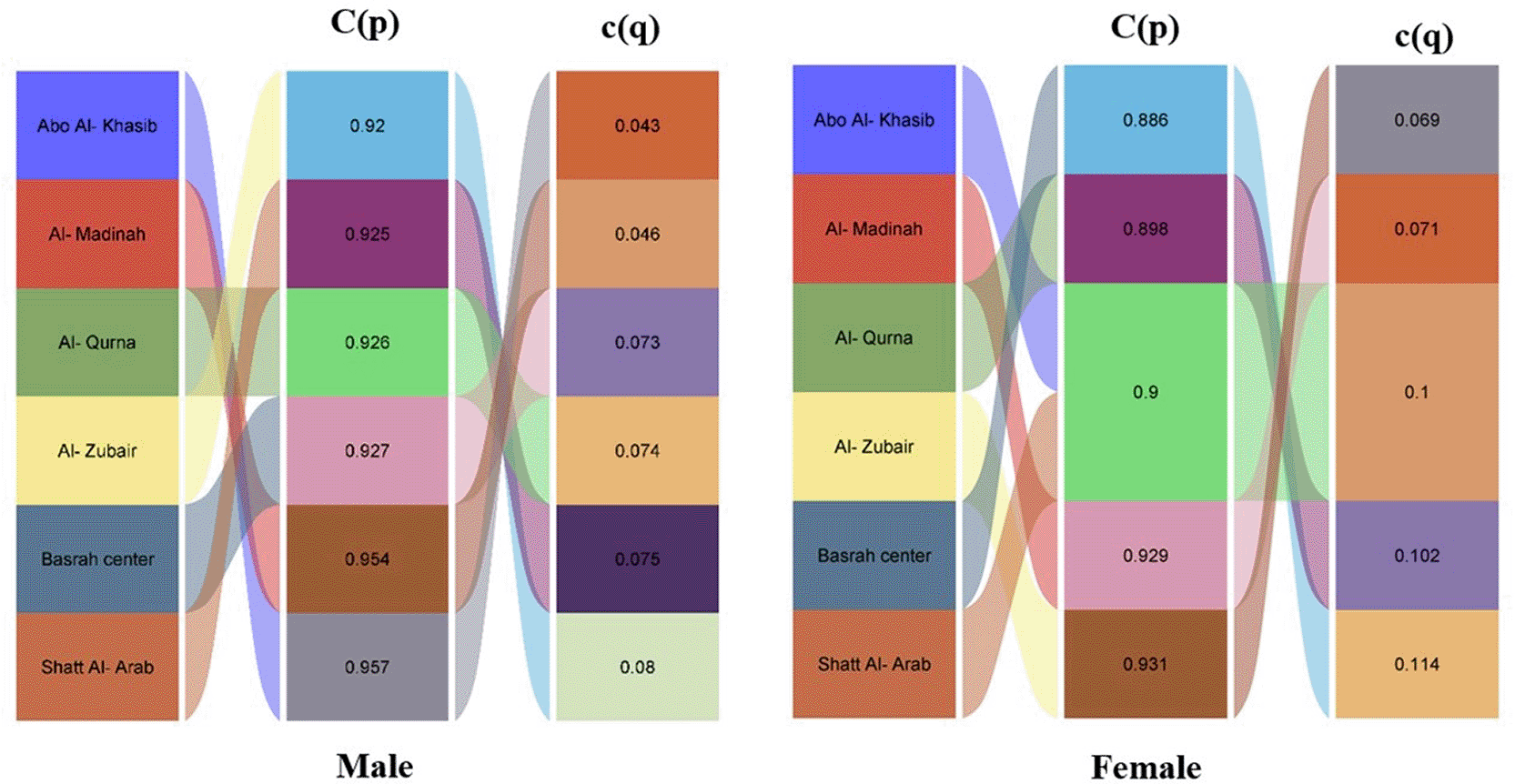
The findings showed that there are more male colorblind people than female colorblind people, showing that color blindness is an X-linked recessive condition that is inherited as a disability due to a recessive gene (c) (Nazeer et al., 2019). Since males only have one X chromosome, the gene that causes colorblindness is easily expressed in them (Moudgil et al., 2016). Males are thus impacted, and females act as carriers. Men with color vision deficiencies only pass on their color vision deficiencies, but female carriers of the defective gene have a 50% chance of developing aberrant color vision in their sons.
X-chromosomes to daughters, so that all daughters are carriers and sons are colored normally perception (Ebrahim et al., 2016).
Males have the same genotypic and allelic frequencies for p and q since they have one X chromosome.
Table 4 illustrates the possible gene recombination patterns in females, which include p2 (homozygous dominant), pq (heterozygous dominant), and q2 (homozygous recessive).
So, the genotypic frequencies for p2 were 0.785. 0.810, 0.867, 0.810, 0.809, and 0.864 in different Basrah regions. The center of Basrah has the greatest heterozygote pq frequency (0.202), followed by Al-Qurna (0.181) students, and 0.180 for Shatt Al Arab and Abo Al-Khasib.
The prevalence of color blindness varies by ethnic group. The current research investigates the distribution of dominant and recessive alleles in Basrah populations, including female heterozygosity. Identifying color-deficient individuals may reduce the risk of passing on the disorder to kids through preconception counseling and prenatal evaluation (Fareed et al., 2015). Since most color blindness sufferers have normal vision, the ailment is often asymptomatic and nonfatal. To prepare colorblind people for future careers and help them avoid mistakes in potentially fatal situations, early discovery of colorblindness is essential. Many professions, including medical offices, traffic enforcement, and driving, depend on the ability to recognize color (Fakorede et al., 2022).
The color vision deficit was found in 3.80 percent of the examined individuals. All cases were of the red-green type (Deutan and Protan). The majority of the people were unaware of the illness. The frequency of the colorblind allele was 0.084, while the normal allele was 0.916. The genes are transmitted from mother to son or father to daughter.
| Views | Downloads | |
|---|---|---|
| F1000Research | - | - |
|
PubMed Central
Data from PMC are received and updated monthly.
|
- | - |
Provide sufficient details of any financial or non-financial competing interests to enable users to assess whether your comments might lead a reasonable person to question your impartiality. Consider the following examples, but note that this is not an exhaustive list:
Sign up for content alerts and receive a weekly or monthly email with all newly published articles
Already registered? Sign in
The email address should be the one you originally registered with F1000.
You registered with F1000 via Google, so we cannot reset your password.
To sign in, please click here.
If you still need help with your Google account password, please click here.
You registered with F1000 via Facebook, so we cannot reset your password.
To sign in, please click here.
If you still need help with your Facebook account password, please click here.
If your email address is registered with us, we will email you instructions to reset your password.
If you think you should have received this email but it has not arrived, please check your spam filters and/or contact for further assistance.

Comments on this article Comments (0)