Keywords
Randomized controlled trial; non cardiac chest pain in ED; non cardiac chest pain; ED re-presentations; psychological intervention

Randomized controlled trial; non cardiac chest pain in ED; non cardiac chest pain; ED re-presentations; psychological intervention
Emergency and Critical Care Health Services in Australia are experiencing increasing utilisation over time and Emergency Department (ED) re-presentations present an ever-increasing component of that utilisation. Whilst some individuals present to the ED for life-threatening or serious conditions, there is at least a proportion of presentations which are for conditions that may at first appear to be medically serious but for which there is no identified medical cause upon investigation. These are generally subsumed under the broad rubric of Functional Somatic Symptoms or Medically Unexplained Symptoms (MUS).1 Non Non-cardiac chest Pain (NCCP) can be one such presentation.1 Chest pain in general is the most frequently presenting condition in the ED and represents an entity that consumes significant resources within the health care sector.2 Patients present with NCCP frequently to the ED in both Australia and internationally. NCCP accounts for around 50%3 of all chest pain presentations in the US and 58.7% in Ireland.4 In one Queensland major tertiary hospital, research conducted over a 27-month period (November 2008 – Feb 2011)2 indicated that 11.1% of all ED presentations for chest pain were for Acute Coronary Syndromes (ACS), 20.8% were for other cardio-vascular conditions, but the majority (67.2%), though not confirmed as being FSS/MUS, were not cardiac-related. NCCP is most common in patients aged 40-50 years old.5 Since this is a very productive age group, the costs incurred by NCCP are substantial to the health service and also more broadly to society in terms of productivity costs. About a third of patients with NCCP also have cardiac risk factors, and other symptoms such as over-breathing, tension headaches and bowel motility disorders.6
It has been recognised that presentation complexity in ED has a significant impact on subsequent outcomes, including length of admission and re-presentations. This recognition does not necessarily translate to effective patient management either in ED or subsequently.7 Non-cardiac chest pain, might therefore be a relatively benign disorder from a cardiac perspective, but it incurs a significant cost for the health service (e.g., 25% of all ED presentations in US are for non-cardiac chest pain). Despite the ubiquity and the cost of NCCP, there are no standardised treatment guidelines6
Whilst there are increasingly reliable diagnostic algorithms and management guidelines for cardiac chest pain, there has been less focus on treatment for non-cardiac chest pain. The main intervention for NCCP consists of reassuring the patient that there is no medical issue. There is an implied expectation that this approach will alleviate the condition and symptoms, however previous research8,9 has found that individuals with NCCP continue to re-present with NCCP, and continue to have disability similar to those individuals with cardiac chest pain.
All the above factors serve to make NCCP a complex clinical entity for effective management.
Given its complex biopsychosocial character, NCCP tends to persist unless underlying psychological factors are adequately addressed.6 There is evidence to support the efficacy for psychological treatment for non-cardiac chest pain6 including a Cochrane review10 and a systematic review and meta-analysis.9 The Cochrane review included 17 RCTs involving any form of psychological intervention for chest pain with normal anatomy, which collectively resulted in a significant reduction in chest pain in the first 3 months following the intervention. However, psychological intervention was limited to CBT, hypnotherapy, autogenic training, group support, nurse-led brief intervention, relaxation training, and breathing retraining. There was mixed evidence from the meta-analyses, which included 11 RCTS involving CBT. The authors concluded that further studies (in particular, RCTs) are required.9 The authors also identified that individuals with NCCP had significant psychological morbidity which was comparable to that found in chest pain of cardiac origin.9,11 Psychological therapies have been found to be effective in managing distress in routine clinical care including inpatient and outpatient settings.12 Studies13 have also found that continued chest pain is related to psychological distress and poor Quality of Life (QoL), and suggest that Non- Cardiac Chest pain patients in the ED might benefit from psychological therapies to manage their chest pain.8,6
Since improvement in health outcomes is associated with lower risk of presentation to ED, the current study is designed to investigate whether the provision of psychological intervention/therapy to patients with NCCP reduces the risk of ED re-presentations.
Secondarily, we seek to determine whether this reduced risk of re-presentations is also accompanied with an improvement in the quality of life and reduction in psychological distress and symptomatology, and finally whether this intervention is cost effective. For the purposes of the study, ED re-presentation will be defined as any re-presentation to ED within 6 months following inclusion in the study.
To study the effectiveness of a psychological intervention in reducing ED representations amongst individuals with NCCP.
This protocol follows the SPIRIT guideline14 This is a single-blind randomised controlled trial in which the assessor is blind to treatment versus standard care condition. All individuals who meet the eligibility criteria will be invited to participate in the research. Consenting participants who meet the eligibility criteria, will be randomly allocated to either -:
A) Psychological treatment group (treatment arm) consisting of 6 sessions of psychotherapy over 6-8 weeks, which will be conducted by a qualified clinical Psychologist
B) Usual care/Wait list controls (Wait list controls have been included to ensure that all patients in the trial have access to treatment eventually should they so desire, since this treatment is evidence based)
Outcomes will be assessed for both groups at baseline, 8 weeks, 16 weeks and 24 weeks using an intention to treat approach.
This study is projected to be a single center project and conducted at Townsville Hospital and Health Service (THHS).
Inclusion criteria:
All patients aged 18 to 65 years of age who present to THHS ED with a final diagnosis of NCCP during the study period, and are discharged from ED.
Exclusion criteria:
In the interest of controlling for confounding variables, individuals with the following health related conditions will be excluded from this study:
• underlying cardiac pathology
• co-morbid neurological condition
• co-morbid psychiatric condition (that is being treated with psychotropic medication)
• current and active suicidal ideation
• individuals with chest pain which can be attributable to a diagnosable medical condition
Individuals who are unable to provide informed consent (e.g., due to intellectual disability, underlying medical condition such as dementia, or who are intoxicated) will be excluded.
Additionally, since the proposed psychotherapeutic intervention will be a standard psychotherapeutic intervention (i.e. not modified to suit individuals from culturally diverse backgrounds) and therefore requires proficiency with English language, the following are excluded from this RCT in the interest of controlling for relevant variables:
All individuals who present to ED with chest pain and are subsequently given a diagnosis of non-cardiac chest pain will be flagged as potential participants for the research. Participants will be provided with the 10 item Kessler Psychological Distress scale (K -10) at the time of discharge from the ED, and provided with patient information leaflet 1 The leaflet contains information regarding the purpose of the study, including that participation is voluntary and that unless they opt out of the study, someone from the team will make contact to discuss their participation further. Those individuals who return their completed K-10 and returned it to the ED clinician at the point of discharge will be contacted and the study discussed further ( Figure 1). Patients who agree to participate in the study over the phone will be sent relevant Information. Patients will be advised that their participation will involve completing questionnaires at baseline, 8 weeks, 16 weeks and 24 weeks They will also be advised that they may be allocated to the intervention group or standard care/wait-list control group (where patients have the opportunity to take up the intervention in 6-month time).
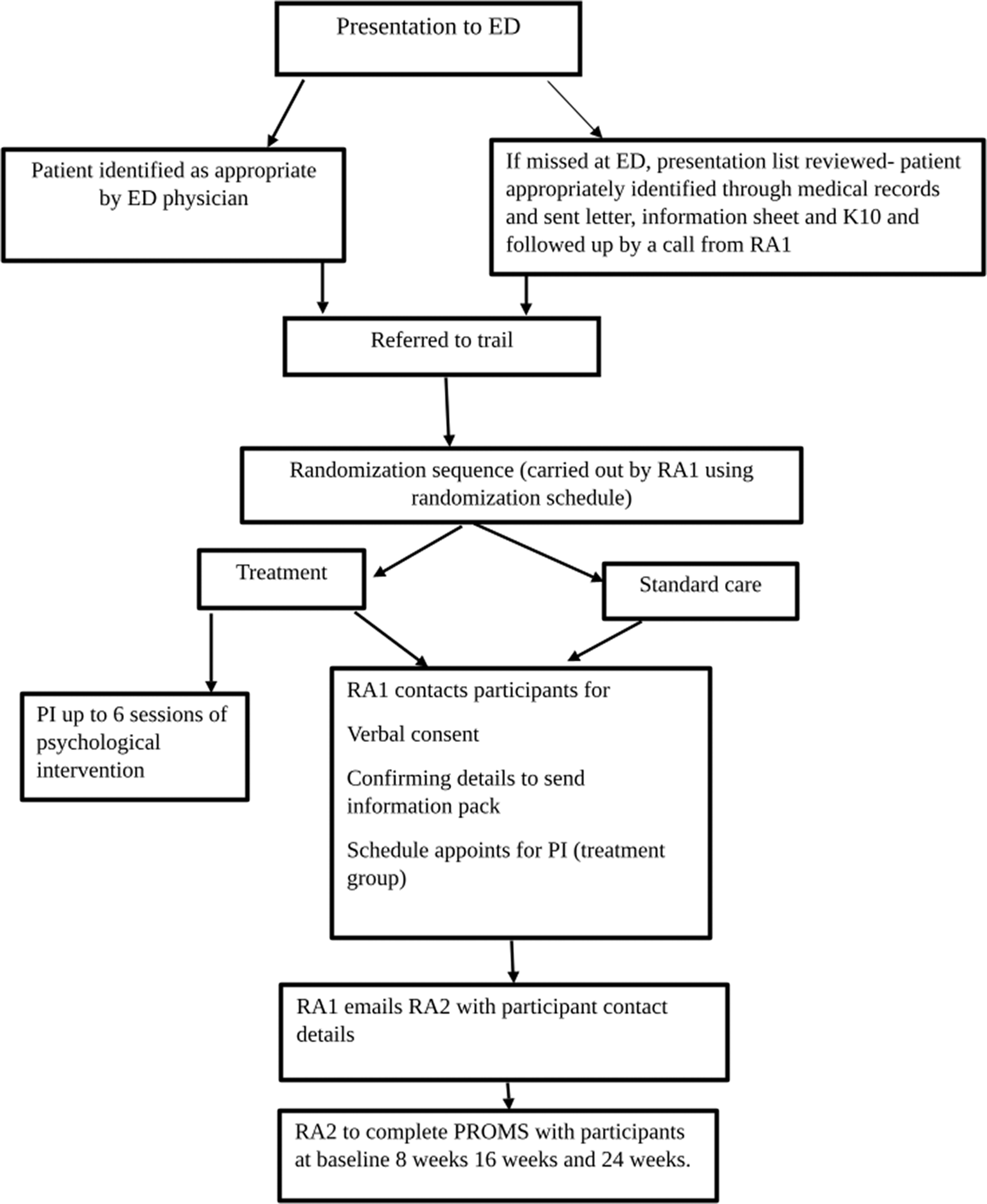
Since it is possible that some individuals might not receive information regarding the trial at the point of discharge from ED, these would be contacted later following a review of their medical records by RA1 ( Figure 1) and consent obtained to participate over the phone following which these individuals could be recruited into the study.
Written consent will be obtained from all participants.15
The participants in the treatment group will be offered up to 6 sessions of psychotherapy over 6 to 8-week focussing on management of chest pain and associated factors, and followed up at stipulated intervals. This treatment will be conducted at THHS at no cost to the patient, by a registered psychologist. Patients in the control group will be advised that they will be followed up at the stipulated intervals, and also advised that they are on a wait list for the treatment.
The intervention arm is to consist of CBT based psychotherapeutic intervention. Patients in the control arm will be provided standard care which is currently provided in ED. This involves the patient being advised that there is no current or imminent threat to life based on the results of the investigations carried out in ED and that they need to contact their GP for further investigations and advice as appropriate. The control arm consists of standard care because the aim is to study if psychotherapy is more effective than standard care for NCCP. However, there will be an option for the participants in the control arm to be offered therapeutic intervention at the end of follow up period.
Therapeutic intervention: 6 sessions of CBT based intervention will be provided to the intervention group.
Since psychotherapeutic interventions are seldom one size fits all interventions, CBT interventions will also be based on initial case formulation. Whilst CBT has the most evidence for interventions in NCCP, most of the evidence is derived from non-emergency settings, therefore it is possible that some modification could be required. If that is found to be the case, rationale for the modification/alterations would be provided. All sessions will be provided by PI who is a registered clinical psychologist. The intervention strategies are based on CBT model for NCCP as described by Marks et al.6 The focus of the interventions will be as follows:
• Motivational Interviewing (MI): to gauge the level of motivation to engage in psychotherapy.
• Establishing pre-cursors to chest pain: to establish linkages between stressors/lifestyle/cognitive and behavioural factors and their links to NCCP
• Psychoeducation: regarding the relationships between thoughts feelings and actions which forms the basis of all CBT
• Mindfulness-based relaxation techniques: for arousal reduction strategies to manage anxiety. Anxiety is one of the concomitants of chest pain
• Activity scheduling: to assist with increasing activity in graded manner. Physical activity has several benefits. It is known to assist with management of both anxiety and depression and is one of the cornerstones of CBT. Increasing activity in case of NCCP is also known to build self-efficacy
• Problem solving: as a coping skills training measure in order to better manage anxiety
• Cognitive re-appraisal strategies: attributional style is implicated in both; anxiety and depression and so cognitive re-appraisal is known to assist in more efficacious management of both
• Relapse prevention: to manage NCCP post discharge from therapy. These strategies reinforce the links between NCCP antecedents and its effective management. It focuses on effective identification of the early warning signs that anxiety symptoms were re-emerging and strategies for its management.
To ensure consistency across and between psychotherapy sessions, the following will be used:
This information will be kept confidential.
1. To ensure continued medical safety and continuation of medical care, the patient information leaflet unequivocally states that the study does not replace regular care and individuals should feel free to continue to use the health services for their health needs.
2. Red flags regarding classical cardiac presentation will be discussed with the cardiology department and in all cases where there is a suspicion that the phenomenon under observation is angina rather than NCCP, these cases will be referred to cardiology for further investigation following a discussion with the department.
3. Occasionally it is possible that an individual with a real cardiac risk/event could present with NCCP. To mitigate this risk, detailed information regarding the nature of chest pain will be elicited at the commencement of the study and frequency and interference with daily activities elicited during the regular follow up.
• In case of an acute episode/episode of concern – if the patient is in the session, hospital patient emergency procedures will be activated following which the patient will be admitted to ED and receive appropriate care
• In case the chest pain appears to be increasing in severity or frequency as per patient report during any session, they will be referred to GP to rule out any other medical issue and to refer to cardiology as warranted
• In addition to both the above, fortnightly meetings will be held with cardiology to discuss and raise any concerns regarding study participants as a part of a formal referral pathway for these patients as appropriate.
• All of the above events, should they occur, will be documented for the purpose of risk management and as a part of governance
4. To manage any risk associated with psychological morbidity, (such as extremely high scores on the depression subscale with the attendant risk of self-harm on DASS), the HP3 psychologist RA will carry out a full risk assessment and refer to services as appropriate. Any risk identified in a therapy session/or in a clinical interview will be similarly managed by PI
5. In all cases of high health or mental health risk as identified above, Psychotherapy sessions will be paused or ceased as appropriate and medically advised.
6. All regular concomitant cares are permitted during the trial.
The benefits for study participation comprise the expected gains from psychotherapy which will be provided at no cost to them. It is expected that not only will psychotherapy assist in amelioration of NCCP but that it will also assist in managing underlying depression and/or anxiety.
Since this is noninvasive, a low-risk psychological intervention to which patients are committing voluntarily there is a very low likelihood of adverse events i.e. should individuals suspect that they are having a genuine cardiac event they are likely to present to ED and would be encouraged to do so. As a part of routine psychological post-intervention care, relapse prevention strategies will be discussed pre- termination of therapy. Additionally, patients in the post-trial phase will continue to have access to regular ongoing psychological care through GP mental health care plan as required and appropriate.
Primary outcome measure (ED representations):
The primary outcome measure is number of re-presentations to ED in the 12-month period following inclusion in the study.
Secondary outcome measures:
Several validated Patient Reported Outcome Measures (PROMS) will be assessed throughout the study. Patients will be contacted by a member of the research team (the assessor) and asked these questions via telephone. Specifically, for chest pain two standardized instruments will be used:
• Chest pain frequency (Chambers et al 2014)
• Chest Pain severity and problem ratings (Chambers et al 2014)
Together, these measures will provide information on presence of chest pain, description, frequency, intensity, and interference with daily activities.
For Psychological distress, outcomes include:
Both K-10 and DASS are standardized and well-validated instruments. The information regarding these forms will be collated in a data collection form ( Table 1):
| Patient name | Patient A baseline | 8 weeks | 12 weeks | 24 weeks |
|---|---|---|---|---|
| DASS Dep | ||||
| DASS anxiety | ||||
| DASS stress | ||||
| Total Score |
For quality-of-life measurement, the AQoL 8D will be used as a validated and standard instrument. For healthcare utilization cost calculations, cost information will be obtained from the THHS clinical costings unit.
The results of this study (if the intervention is shown to be effective) are expected to be practice changing for ED and more broadly for care of individuals with NCCP. It is expected to benefit the patients through providing them with better and more effective treatment pathways and improving their quality of life. It is expected to have a positive impact on the Australian Healthcare system through more effective resource utilization.
Since there have been no previous studies involving the effect of psychological intervention in patients with NCCP using ED re-presentation as an outcome measure, sample size calculations can only be estimated. For the purposes of the calculation, previous (unpublished) data on ED re-presenters conducted within THHS will be used. These data indicated that among ED re-presenters, the mean ED representation rate was 4.16 representations per month. We hypothesise that there will be no change to the mean of 4.16 representations in the control group in this study, but there will be a reduction to <3 in our intervention group. This represents a mean change in ED representations of 1.16 (SD=1.5). To detect a between group difference of this magnitude in ED re-presentations with 90% power and alpha = 0.05, a total of 80 participants will be required (40 intervention and 40 control).
To ensure that sufficient participants are included in the study for the required analyses, and allowing for loss to follow-up, we estimate that it will be necessary to recruit 160 participants (80 intervention; 80 control). This is an approximate rate of recruitment of 20 cases per month over 6-8 months with a further 6-month follow up. Anecdotal evidence suggests that this is feasible
The two research assistants and the principal investigator will work closely with ED to ensure referrals to the trial. In addition, other pathways will be explored should there be insufficient referrals through this pathway.
Individuals will be randomized to either the treatment or non-treatment conditions following the obtaining of consent by RA. Block randomization will be used to ensure there are approximately equal numbers of participants allocated to intervention and control groups (ratio of 1:1). For randomization, a computer-generated code will be used, using the site www.randomization.com.
The study will be single-blinded. The assessors responsible for collecting the information at baseline, and the 8 weeks, 16 weeks and 24 weeks follow up will be blind to the treatment group to which patients have been randomized ( Table 2). It will not be possible to blind the participants. Those who are allocated to the treatment condition will be informed that as a part of the study they will be required to attend up to six sessions with a psychologist at the hospital. Participants will be allocated an outpatient appointment through the psychology clinic. Unless there are significant risk issues to life and safety, information collected by the psychologist during therapy sessions, will be confidential between the psychologist and the patient, and will not form a part of the patient’s medical record that is accessible to other hospital staff included the blinded RA. All participants will be followed up at the intervals of 8 weeks, 16 weeks and 24 weeks by the research team. The participant information will be collated and stored by admin RA in password protected documents to which only the admin RA and the PI will have access. The PI will not access this information until such time as the study is to be unblinded.
In order to manage the non-specific effects attributable to the Hawthorne Effect, both the treatment and the control group will be subjected to similar follow up.
The trial could be unblinded if any of the participants face an adverse health outcome for any reason or in case of any unforeseen health emergency.
For continuous variables, independent samples t-tests will be used to determine whether there are differences between groups at baseline. Chi-squared tests will be used for categorical variables. At each follow-up point, difference scores will be calculated to represent the difference between baseline score and follow-up score at that time point. Between group analyses will then be conducted to assess differences on the various outcome measures, adjusting for relevant confounding variables. In addition, event rates will be calculated for each outcome measure, and relative risks calculated (event rate in intervention group divided by event rate in control group). This relative risk will then be used to calculate a range of relevant relative and absolute measures (Relative Risk Reduction, Absolute Risk Reduction, Number Needed to Treat).
Local research governance office (RGO) policies and procedures will be followed in all instances of adverse outcomes. Since this is a clinical trial for psychotherapy outcomes – any case of cardiac related mortality during the trial will be reported. All adverse events will be escalated through standard hospital procedures for risk escalation and management.
All protocol amendment will be communicated through the RGO processes.
Information will be disseminated through conferences and publications. It should also be noted that this study is part of a wider programme of research comprising the research higher degree of the Principal Investigator. The study will also be described in the relevant research higher degree thesis which will be submitted for examination
Somatization disorders are common in ED and in ED frequent presenters. These disorders are expensive for any healthcare system. Effective management of these disorders has the potential to reduce cost of care and has other benefits for care provision in ED. The current protocol addresses one of the most common functional somatic symptoms in ED i.e. NCCP. The aim of this RCT is to determine if the provision of CBT interventions assists in reducing the risk of re-presentations to ED. CBT interventions have been chosen as being supported by available evidence. Should the RCT be successful in demonstrating reductions in ED presentations in the intervention arm, it could be practice changing for care provided to somatization disorders, especially NCCP in ED.
This protocol has been approved by the Townsville Hospital and Health Service Human Research Ethics Committee (Reference number: HREC/2018/QTHS/47872, approved on 19/10/18).
This research involving human participants adheres to the Declaration of Helsinki
The participants will provide written consent to participate in the research. Please find patient consent on the following link
All authors have reviewed and approved the final manuscript draft for publication.
SPIRIT checklist: https://doi.org/10.6084/m9.figshare.31288612
Participant consent information: https://doi.org/10.6084/m9.figshare.31288615
| Views | Downloads | |
|---|---|---|
| F1000Research | - | - |
|
PubMed Central
Data from PMC are received and updated monthly.
|
- | - |
Provide sufficient details of any financial or non-financial competing interests to enable users to assess whether your comments might lead a reasonable person to question your impartiality. Consider the following examples, but note that this is not an exhaustive list:
Sign up for content alerts and receive a weekly or monthly email with all newly published articles
Already registered? Sign in
The email address should be the one you originally registered with F1000.
You registered with F1000 via Google, so we cannot reset your password.
To sign in, please click here.
If you still need help with your Google account password, please click here.
You registered with F1000 via Facebook, so we cannot reset your password.
To sign in, please click here.
If you still need help with your Facebook account password, please click here.
If your email address is registered with us, we will email you instructions to reset your password.
If you think you should have received this email but it has not arrived, please check your spam filters and/or contact for further assistance.

Comments on this article Comments (0)