Keywords
DEA, BPNN, firm capabilities, business performance, efficiency, RBV, strategic management

DEA, BPNN, firm capabilities, business performance, efficiency, RBV, strategic management
In today’s turbulent business environment, internal functional capabilities—specifically in marketing, operations, research and development (R&D), and human resources (HR)—are widely acknowledged as key contributors to firm competitiveness (Morgan et al., 2009; Vorhies & Morgan, 2005). These capabilities allow firms to transform resources into strategic outputs, which directly impact financial performance and market valuation. Despite a substantial body of research, several methodological and conceptual limitations remain unaddressed.
First, most existing studies use traditional linear regression models to examine the relationship between capabilities and performance (Nath et al., 2010; Song et al., 2007). These models are limited in their ability to capture nonlinear patterns and interdependencies among capabilities, which are critical in dynamic and complex organizational environments.
Second, many prior works emphasize internal performance metrics such as profitability, while overlooking forward-looking, market value-based indicators like Tobin’s Q, market capitalization, or stock returns (Lee & Kwon, 2017; Luo & Donthu, 2006). This creates a gap in understanding how internal capabilities influence external stakeholder perceptions and firm valuation. Market-based indicators are particularly sensitive to intangible resources and signaling effects, which are underexplored in current empirical models.
Third, while DEA has been used for benchmarking efficiency in specific functional areas such as marketing (Donthu et al., 2005) or operations (Chiang et al., 2012), it is often used in isolation without integration with predictive modeling tools. DEA also assumes linearity and constant returns to scale, which do not reflect the complexity of strategic decision-making in practice. There is a clear methodological gap in combining DEA with machine learning methods like BPNN to model both efficiency and performance prediction simultaneously.
This study draws upon three complementary theoretical perspectives—Resource-Based View, Dynamic Capability Theory, and Signaling Theory—to construct a comprehensive framework that links internal functional capabilities to both profitability-based and market value-based performance. These perspectives allow for a multidimensional understanding of how firms transform internal resources into strategic value under varying conditions. However, despite their theoretical strengths, the application of these frameworks in empirical studies presents notable limitations that this research aims to address.
The RBV, introduced by Barney (1991), suggests that competitive advantage stems from a firm’s ability to possess and deploy resources that are valuable, rare, inimitable, and non-substitutable (VRIN). These resources become truly strategic only when effectively converted into capabilities that enhance performance. Prior studies have operationalized RBV by examining the financial input-output relationships within core business functions (Nath et al., 2010; Song et al., 2007). However, most of this work relies heavily on proxy variables such as R&D expenditure or marketing spend without directly measuring the integrative, transformational nature of capabilities. Furthermore, many studies treat capabilities as isolated, static constructs rather than as interconnected systems of value creation. This limits our understanding of how firms configure multiple capabilities simultaneously and how such configurations vary across sectors. To address the shortcomings of RBV’s static assumptions, DCT offers an evolutionary perspective that emphasizes sensing, seizing, and reconfiguring capabilities in response to environmental change (Teece et al., 1997). While DCT has been applied in studies focused on innovation and market responsiveness (Wang & Ahmed, 2007), empirical validations of DCT often lack methodological rigor. Many studies fail to measure actual reconfiguration mechanisms and instead infer dynamic capability from static resource stocks. Additionally, DCT applications are frequently confined to high-tech sectors, limiting generalizability. Few studies empirically examine how functional capabilities dynamically interact under different performance conditions or how they operate in traditional or service-based industries. This creates a research gap in understanding the sector-specific adaptability of dynamic capabilities across broader industrial contexts.
In parallel, ST provides a lens for interpreting market value-based outcomes. It holds that firms signal quality and potential to external stakeholders through observable attributes such as profitability, R&D intensity, or brand equity (Connelly et al., 2011; Spence, 1974). Existing studies using ST have largely focused on isolated signals—such as corporate social responsibility, financial transparency, or patent filings—as predictors of investor perception and valuation (Mizik & Jacobson, 2003). However, they rarely integrate operational and functional efficiencies as multidimensional signals. Moreover, few studies assess whether these signals differ in strength or interpretation depending on a firm’s performance tier (i.e., high- vs. low-performing firms), leaving unanswered how internal efficiency translates to external credibility under varied strategic conditions.
This study responds to these gaps in several ways. First, it employs DEA to quantify functional efficiency based on objective input-output data, offering a more precise operationalization of the resource-to-capability transformation than prior proxy-based measures. Second, it applies a cross-industry approach, encompassing firms in the high-tech, manufacturing, and service sectors, to examine how capabilities vary in strategic value across different market contexts. Third, it integrates OLS multiple regression (OLSMR) with Backpropagation Neural Network (BPNN) to capture both linear and nonlinear effects, addressing methodological limitations in prior studies and allowing for more accurate prediction and interpretation of performance outcomes. Finally, by segmenting firms into performance tiers and analyzing differential impacts, this study offers new insights into the contingent signaling power of functional capabilities, advancing both DCT and ST.
Motivated by these gaps, this study proposes a hybrid DEA–BPNN framework to evaluate and predict firm performance based on functional capabilities. The research objectives are as follows: (1) To measure the efficiency of marketing, operations, R&D, and HR capabilities using DEA—addressing the need for objective, multi-input/output efficiency assessment; (2) To compare BPNN with traditional OLS regression for robustness validation; (3) To predict profitability-based and market value-based outcomes using BPNN—addressing the lack of nonlinear modeling and performance prediction in prior studies; and (4) To segment firms based on performance tiers, providing benchmarks for strategic capability improvement.
Marketing capability refers to a firm’s ability to understand market needs, craft effective value propositions, engage customers, and differentiate itself from competitors. From the perspective of the RBV, marketing-related assets such as brand equity, customer trust, and relationship capital are critical internal resources that, when effectively integrated into business functions, become strategic capabilities contributing to sustainable competitive advantage (Barney, 1991). In this context, marketing capability supports the development of superior customer value, pricing power, and brand loyalty, all of which can lead to increased revenue generation, improved cost efficiency, and stronger profitability-based performance. Studies have shown that firms with high marketing adaptability and customer-centric strategies are more likely to maintain a competitive edge, especially in volatile or fragmented markets (Krasnikov & Jayachandran, 2008; Morgan et al., 2009). This study thus propose:
Marketing capability has a significant effect on profitability-based performance.
Marketing capability has a significant effect on market value-based performance.
Operational capability captures a firm’s efficiency in managing internal processes, resources, and logistics to deliver consistent value. Under RBV, resources such as advanced production systems, skilled technicians, and supply chain integration are considered valuable and difficult to replicate. These assets become sources of competitive advantage when structured into streamlined, cost-effective operational routines (Swink et al., 2007). Operational capability enables firms to enhance efficiency, reduce waste, and achieve consistency in product or service delivery, which in turn contributes to strong financial outcomes and organizational stability. Research has confirmed that firms with higher process flexibility and quality control tend to outperform competitors in both cost leadership and customer satisfaction (Bozarth & Handfield, 2008; Nath et al., 2010). This study thus propose:
Operations capability has a significant effect on profitability-based performance.
Operations capability has a significant effect on market value-based performance.
R&D capability represents a firm’s capacity to innovate, improve products, and develop new technologies. Within the RBV framework, R&D activities contribute to rare and inimitable knowledge resources that support differentiation and long-term profitability. When strategically managed, R&D investments create new revenue streams, enhance productivity, and enable firms to maintain relevance in changing environments (Barney, 1991; Teece et al., 1997). R&D capability also aligns with DCT by enhancing a firm’s responsiveness to emerging market trends and its ability to reconfigure knowledge assets. Empirical findings show that innovation-intensive firms with advanced R&D practices achieve superior financial performance and strategic agility (Hall et al., 2010; Kafouros et al., 2015). This study thus propose:
R&D capability has a significant effect on profitability-based performance.
R&D capability has a significant effect on a firm’s market value-based performance.
Human resource (HR) capability represents a firm’s strategic capacity to manage its workforce effectively by attracting, developing, motivating, and retaining talent aligned with organizational goals. Within the RBV, HR systems are conceptualized as a bundle of valuable, rare, inimitable, and non-substitutable resources that support sustainable competitive advantage (Barney, 1991; Wright et al., 1994). High-functioning HR systems can optimize employee productivity, reduce hiring and training costs, improve workforce stability, and foster a culture of collaboration and continuous improvement. Empirical studies have shown that firms with superior HR practices tend to report higher gross margins and return on equity due to better alignment between talent strategy and business performance (Huselid, 1995; Jiang et al., 2012). Therefore, HR capability is a central mechanism through which internal resources are transformed into operational excellence and financial success.
Moreover, Dynamic Capability Theory (Teece, 2007) suggests that HR capability is instrumental in enabling firms to sense environmental changes and reconfigure internal competencies accordingly. Organizations with agile HR structures—such as decentralized decision-making, continuous learning programs, and cross-functional team integration—can swiftly adapt to market dynamics, thereby maintaining resilience and driving consistent profitability. These adaptive HR systems enhance internal performance by supporting workforce agility, reducing coordination delays, and promoting a culture of continuous learning and alignment with strategic goals. This study thus propose:
Human Resources capability has a significant effect on profitability-based performance.
Human Resources capability has a positive effect on market value-based performance.
Profitability-based performance, encompassing return on equity (ROE), gross and net profit margins, and revenue growth, serves as a direct outcome of how well firms deploy their internal resources. In line with the Resource-Based View (Barney, 1991), efficient resource transformation into valuable outputs manifests as strong financial performance, which not only sustains business operations but also funds strategic growth initiatives. Functional capabilities—such as marketing effectiveness, lean operations, agile HR systems, and innovative R&D—collectively shape profitability by enhancing cost efficiency and value creation.
Signaling Theory (Spence, 1974) further argues that internal financial performance serves as a vital signal of firm viability and future earning potential. Investors interpret profitability as an indicator of managerial effectiveness, operational discipline, and future growth. High ROE or strong margins reduce perceived financial risk and enhance a firm’s attractiveness in capital markets (Fama & French, 1992; Lantz & Sahut, 2005). Profitability thereby acts as a bridge between internal capability and external market value, demonstrating how operational success translates into strategic investor confidence and higher firm valuation.
Despite functional capabilities possibly having a direct effect on market-based outcomes, much of their impact is channeled through profitability. A firm’s ability to consistently generate profits underpins its market credibility, strategic coherence, and stakeholder trust. As such, the indirect effect of capabilities through profitability is expected to play a critical mediating role in shaping Tobin’s Q, stock return, and market value outcomes (Lantz & Sahut, 2005). This mediational path is especially relevant in sectors characterized by high uncertainty and innovation intensity, where tangible evidence of internal performance is crucial for reassuring external investors and stakeholders. This study thus propose:
Profitability-based performance serves as a mediator that mediate the influence of functional capabilities on a firm’s market value-based performance.
A growing body of literature suggests that firms do not uniformly benefit from strategic capabilities; rather, the performance impact of such capabilities may differ significantly across firms depending on their performance tier or maturity level. Scholars have long recognized that high-performing firms are more adept at deploying internal resources in ways that enhance both efficiency and strategic signaling, while low-performing firms often focus on remedial actions and survival-oriented strategies (Dutta et al., 1999; Sirmon et al., 2007).
From the RBV, high-performing firms possess superior configurations of VRIN (valuable, rare, inimitable, non-substitutable) resources and the managerial sophistication to integrate them effectively (Barney, 1991; Peteraf & Barney, 2003). These firms frequently leverage advanced marketing and branding systems to enhance customer engagement and capitalize on reputational assets (Srivastava et al., 1998). In contrast, firms with lower performance often lack the absorptive capacity or organizational routines to exploit such capabilities, instead emphasizing fundamental performance levers such as liquidity, financial stability, or operational continuity (Helfat & Peteraf, 2003; Zahra & George, 2002).
The DCT (Teece et al., 1997) reinforces this differentiation by asserting that competitive advantage arises not just from resource possession but from the ability to reconfigure and renew those resources in response to environmental shifts. High performers tend to exhibit strong dynamic capabilities in areas such as innovation commercialization, market responsiveness, and strategic adaptation (Eisenhardt & Martin, 2000). As such, marketing and profitability-related capabilities are typically emphasized to maintain market leadership and sustain growth trajectories. By contrast, low-performing firms are often in reactive or recovery modes, focusing more heavily on cost control, financial solvency, and incremental process improvements (Ambrosini & Bowman, 2009).
Several empirical studies support this differentiation. For instance, Morgan et al. (2009) found that the returns from marketing capabilities are significantly higher among firms with superior baseline performance. Similarly, Fang et al. (2011) emphasized that marketing and innovation investments yield diminishing returns in firms with limited complementary assets or weak performance histories. Furthermore, low-performing firms often signal financial conservatism and risk management to regain investor trust or maintain access to financing (Edmans, 2011; Rao et al., 2004). This study thus propose:
The relative impact of strategic functional capabilities differs by performance tier, such that high-performing firms emphasize marketing and profitability, while low-performing firms place greater importance on financial stability and growth.
Figure 1 presents the conceptual research framework integrating DEA, OLSMR and BPNN to assess the efficiency and strategic importance of functional capabilities in driving firm performance. Grounded in the RBV, DCT, and ST, the model outlines a two-stage analytical process. In the first stage, DEA evaluates the transformation efficiency of marketing, operations, R&D, and human resource capabilities using objective multi-input/output configurations. In the second stage, these DEA-derived efficiency scores are applied in OLSMR and BPNN to capture large linear and nonlinear interactions and predict a frim’s market value-based outcomes. This framework enables simultaneous benchmarking of functional efficiency and identification of the most influential capabilities for performance across different industries and firm performance tiers.
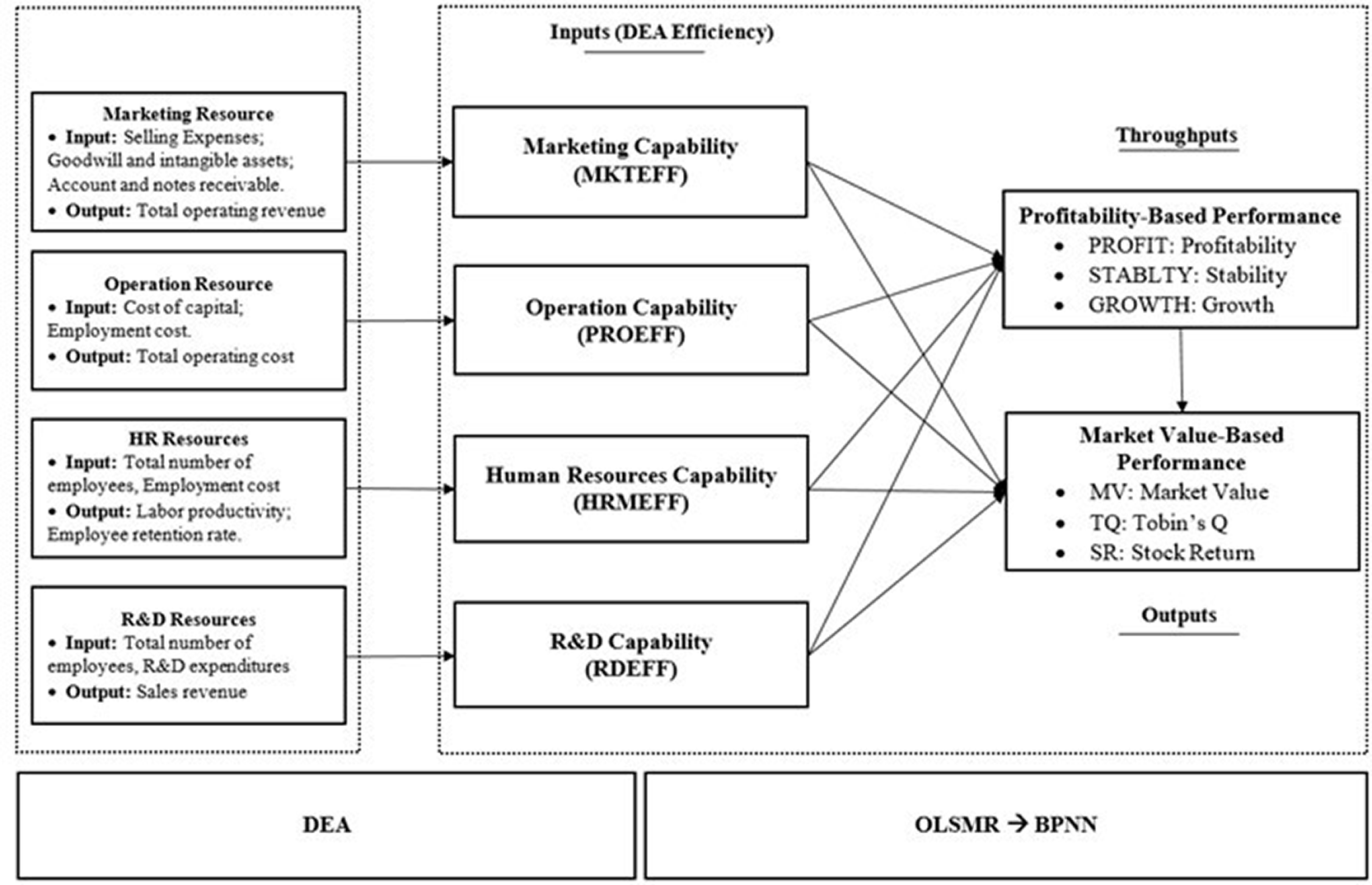
Note: The framework illustrates a two-stage analytical process. Stage 1 employs DEA to quantify the transformation efficiency of four functional capabilities — marketing, operations, R&D, and HR. Stage 2 applies OLSMR and BPNN to predict profitability-based performance (comprising profitability, stability, and growth) and market value-based performance (comprising market value, Tobin’s Q, and stock return).
As shown in Table 1, the empirical sample comprises publicly listed firms in Taiwan across three core industry groups: high-tech (n = 766), manufacturing (n = 412), and services (n = 93). Data were extracted from the Taiwan Economic Journal (TEJ) covering fiscal years 2020 to 2023, ensuring consistency and comparability across firms and industries. Firms with incomplete financial data or inconsistent reporting were excluded to maintain data integrity. All monetary figures were converted to USD for standardization.
Functional capabilities were operationalized using objective, resource-based input-output variables grounded in DEA literature and capability theory:
1. Marketing Capability was measured with three inputs: selling expenses, goodwill & intangible assets, and accounts & notes receivable. These represent promotional effort, brand value, and customer relationship effectiveness, respectively. The output was total operating revenue. This approach follows the frameworks of Donthu et al. (2005); Nath et al. (2010); (Slotegraaf et al., 2003), with the following DEA function.
2. Operations Capability was measured with cost of capital and employment cost as inputs, and total operating cost as the output. These reflect the firm’s ability to manage infrastructure and labor efficiently. This structure is based on Chiang et al. (2012); Nath et al. (2010); Wang et al. (2010), with the following DEA function.
3. R&D Capability was assessed using R&D expenditure and number of employees (scientific/technical staff ) as inputs, with sales revenue as the output. This captures innovation investment and its commercialization. The model draws from Bae and Chang (2012); Belderbos et al. (2004); Khoshnevis and Teirlinck (2018), with the following DEA function.
4. HR Capability was measured using employee cost and number of employees as inputs, while outputs included labor productivity and retention rate. This setup aligns with the frameworks of Gao and Zhang (2022); Huselid (1995); Masum et al. (2015), with the following DEA function.
Profitability-based performance was measured through a weighted composite of: Gross Profit Margin (F1), Net Profit Margin (F2), and Return on Equity (ROE, F3), following Fama and French (1992); Penman (2013); Ross et al. (2017).
Stability was evaluated through: Current Ratio (F4), Quick Ratio (F5), and Equity Ratio (F6), guided by Altman and Hotchkiss (2010); Brigham (2016); Chen (2004).
Growth was assessed through: Revenue Growth (F7), Profit Growth (F8), and Asset Growth (F9), as proposed by Cooper et al. (2008); Jacobson (1990); Rust et al. (2000).
Market value-based performance included: Tobin’s Q, Market Value, and Stock Return, reflecting external assessments of firm valuation and growth prospects, supported by Laureti and Viviani (2011); Mizik and Jacobson (2003).
This study employs a three-stage analytical procedure:
1. Data Envelopment Analysis (DEA): Input-oriented CRS-DEA models were used to estimate the efficiency of each functional capability. DEA is suitable for handling multiple input-output configurations without assuming a fixed functional form. The modeling approach follows Charnes et al. (1978); Cook et al. (2014). Following Khoshnevis and Teirlinck (2018), the input oriented DEA-CRS with input-ratio and output-ratio is presented below.
Where is the input I for DMUj; is the output I for DMUj, assume that the kth-output ( is a ratio variable (where 1 ≤ k ≤ s) and it is obtained from the numerator and the denominator of and , respectively, i.e. ; and pth-input variable ( ( for unit j is calculated from the numerator and the denominator of and , respectively, i.e. ; is the weight for the reference DMUs; and θ represents the efficiency of DMU (firm) under the CRS assumption (efficiency score between 0 and 1, where 1 is efficient).
2. Ordinary Least Squares Multiple Regression (OLSMR): DEA efficiency scores were entered as independent variables to test their linear effects on internal and external performance metrics. This approach allows hypothesis testing and comparison of coefficients across industry sectors, drawing on Morgan and Rego (2009); Nath et al. (2010). Given that OLSMR may suffer from the restrictions of linearity, normality, and homoscedasticity of data, its prediction accuracy may be inferior to BPNN in explaining strategic importance of functional capabilities on business performance (Kwon & Lee, 2015).
3. Backpropagation Neural Network (BPNN): To better understand strategic asymmetries in capability deployment, this study conducted a Backpropagation Neural Network (BPNN) to capture nonlinear relationships and conduct the hypothesis testing, as well as enhance prediction accuracy, a three-layer feedforward neural network was implemented. The BPNN used sigmoid activation and adaptive learning rates, based on Fausett (1994); Zhang et al. (1998). This method captures hidden interactions among capabilities that OLSMR cannot detect. The schematic diagram of a simple BPNN model is shown in Figure 2. As shown, BPNN learning occurs through an interactive process including input presentation, information forward feeding, error calculation, and backward propagation of error for sequential weight adjustments. Once input neurons receive incoming signals, hidden neurons will calculate weight net output and active output to neurons in the output layer. Upon receipt of hidden output, output neuron k will calculate the actual output ( and total errors (E) between target ( and actual outputs for all pairs of training input and output, using the following formula:
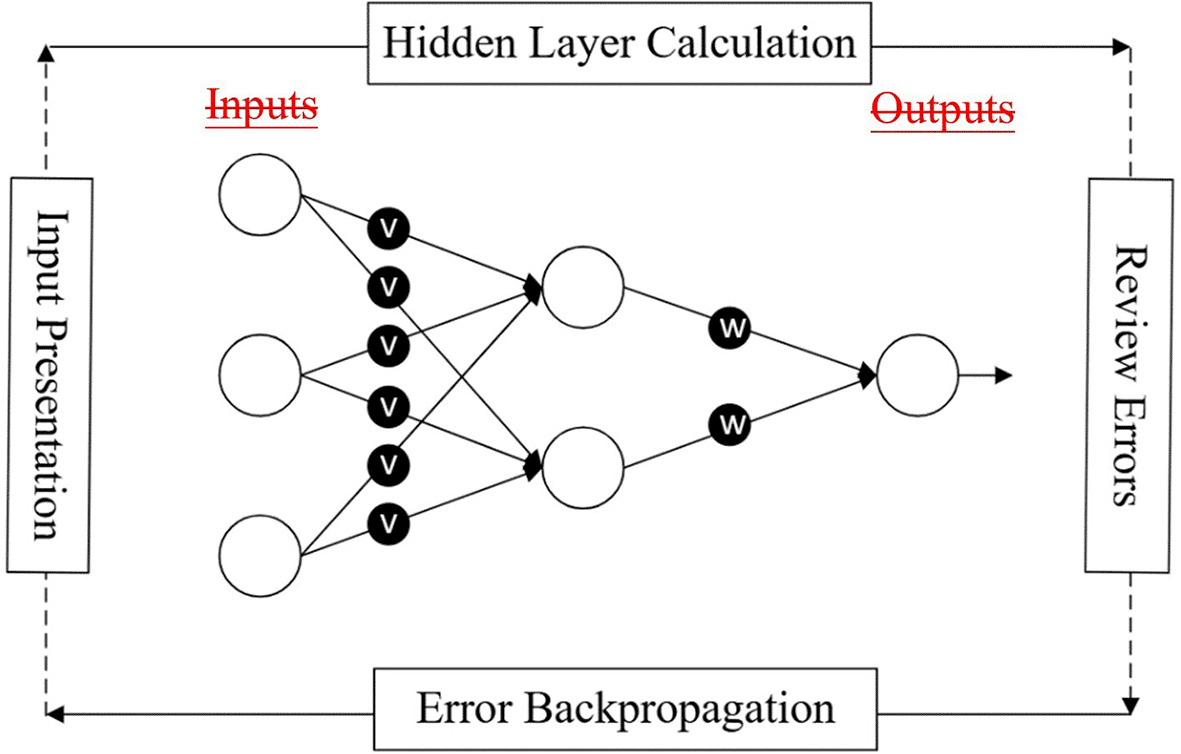
Note: Inputs – MKTEFF, PROEFF, HRMEFF, RDEFF, PROFIT, STABLTY, GROWTH; Outputs – MV, TQ, SR, MVP.
and denote weights of hidden neuron j connecting input (i) and output (k) neurons
A nonlinear transfer function, f(.), is applied before activating net outputs of neurons in hidden and output layers, with the following logistic function.
Finally, the backward error propagation is used to ensure for weight adjustment to minimize the Euclidean distance (or errors), E,
To examine strategic asymmetries, firms were segmented into high- and low-performance tiers based on the difference between actual and BPNN-predicted values of aggregated market value-based performance (MVP). Firms outperforming model expectations were classified as high performers, while those underperforming were categorized as low performers. This segmentation follows the comparative prediction-based approach used by Baesens et al. (2003); Lee et al. (2019).
To evaluate the relative efficiency of each firm, an efficiency score (ES) is computed using the following ratio:
This score reflects how well a firm outperforms or underperforms relative to the BPNN’s prediction. Firms with ES = 1 are considered top performers, while others are scored accordingly. This nonparametric scoring system allows for a continuous ranking of firm performance, providing deeper insights beyond binary classification.
Table 2 presents the descriptive statistics and correlation matrix for the study variables. Among the four functional capabilities, firms demonstrated relatively higher efficiency in marketing (M = 0.234) and operations (M = 0.242), suggesting stronger emphasis on customer-facing and process optimization functions. In contrast, R&D (M = 0.139) and HR efficiency (M = 0.141) remain underdeveloped, indicating potential weaknesses in innovation and human capital deployment (Teece, 2007; Wright et al., 2001).
| Variables | Mean | Standard deviation | (1) | (2) | (3) | (4) | (5) | (6) | (7) | (8) | (9) |
|---|---|---|---|---|---|---|---|---|---|---|---|
| MKTEFF (1) | 0.234 | 0.296 | |||||||||
| PROEFF (2) | 0.242 | 0.195 | .108** | ||||||||
| RDEFF (3) | 0.139 | 0.247 | .233** | .446** | |||||||
| HRMEFF (4) | 0.141 | 0.212 | 0.043 | .345** | .475** | ||||||
| PROFIT (5) | 0.090 | 0.181 | −0.050 | −0.049 | −0.019 | −.073** | |||||
| STABLTY (6) | 1.613 | 1.488 | .099** | −.103** | 0.034 | .113** | −.065* | ||||
| GROWTH (7) | 1.022 | 0.291 | −.098** | .119** | .082** | .098** | .122** | −.142** | |||
| MV (8) | 1.000 | 9.853 | .079** | 0.037 | .124** | .100** | .058* | −0.020 | 0.020 | ||
| TQ (9) | 1.622 | 2.037 | 0.023 | −.092** | −0.036 | −0.017 | .120** | .175** | .057* | 0.029 | |
| SR (10) | 0.167 | 0.414 | 0.039 | 0.010 | 0.006 | 0.031 | .199** | −.066* | .294** | −0.007 | .155** |
Performance indicators also varied. Profitability (M = 0.090, SD = 0.181) showed notable dispersion, while stability (M = 1.613, SD = 1.488) had the highest average value among internal outcomes but with considerable variability. Growth (M = 1.022, SD = 0.291) was more consistent across firms. Market-based indicators exhibited high variance—especially market value (SD = 9.853) and Tobin’s Q (SD = 2.037)—reflecting disparities in investor perception and intangible assets (Barney, 1991; Lev & Radhakrishnan, 2003).
The correlation analysis reveals several statistically significant associations. Operational efficiency was positively correlated with growth (r = 0.119, p < 0.01), indicating that process capability supports internal expansion (Dröge et al., 1994). R&D efficiency correlated with both growth (r = 0.082, p < 0.01) and market value (r = 0.124, p < 0.01), underscoring its dual role in scaling and external valuation. HR efficiency showed strong positive correlations with R&D (r = 0.475, p < 0.01) and operations (r = 0.345, p < 0.01), as well as moderate positive associations with growth (r = 0.098, p < 0.01) and stability (r = 0.113, p < 0.01). However, it exhibited a small but significant negative correlation with profitability (r = −0.073, p < 0.01), possibly due to delayed financial returns from HR investments (Huselid, 1995).
From a market-based perspective, Tobin’s Q correlated positively with profitability (r = 0.120, p < 0.01), stability (r = 0.175, p < 0.01), and stock return (r = 0.155, p < 0.01), suggesting that internal performance is favorably interpreted by investors (Spence, 1974). Stock return was most strongly correlated with growth (r = 0.294, p < 0.01), followed by profitability (r = 0.199, p < 0.01) and Tobin’s Q, indicating that consistent internal performance supports investor confidence. Market value was also positively associated with R&D (r = 0.124, p < 0.01) and HR efficiency (r = 0.100, p < 0.01), highlighting the valuation relevance of intangible capabilities.
Figure 3 compare the predictive performance of OLSMR and BPNN models across three performance indicators—Market Value, Tobin’s Q, and Stock Return—in the high-tech, manufacturing, and service sectors. Pearson’s correlation coefficient (R) and normalized Root Mean Square Error (RMSE) are used to assess each model’s predictive strength and accuracy (Chai & Draxler, 2014; Cohen et al., 2009).
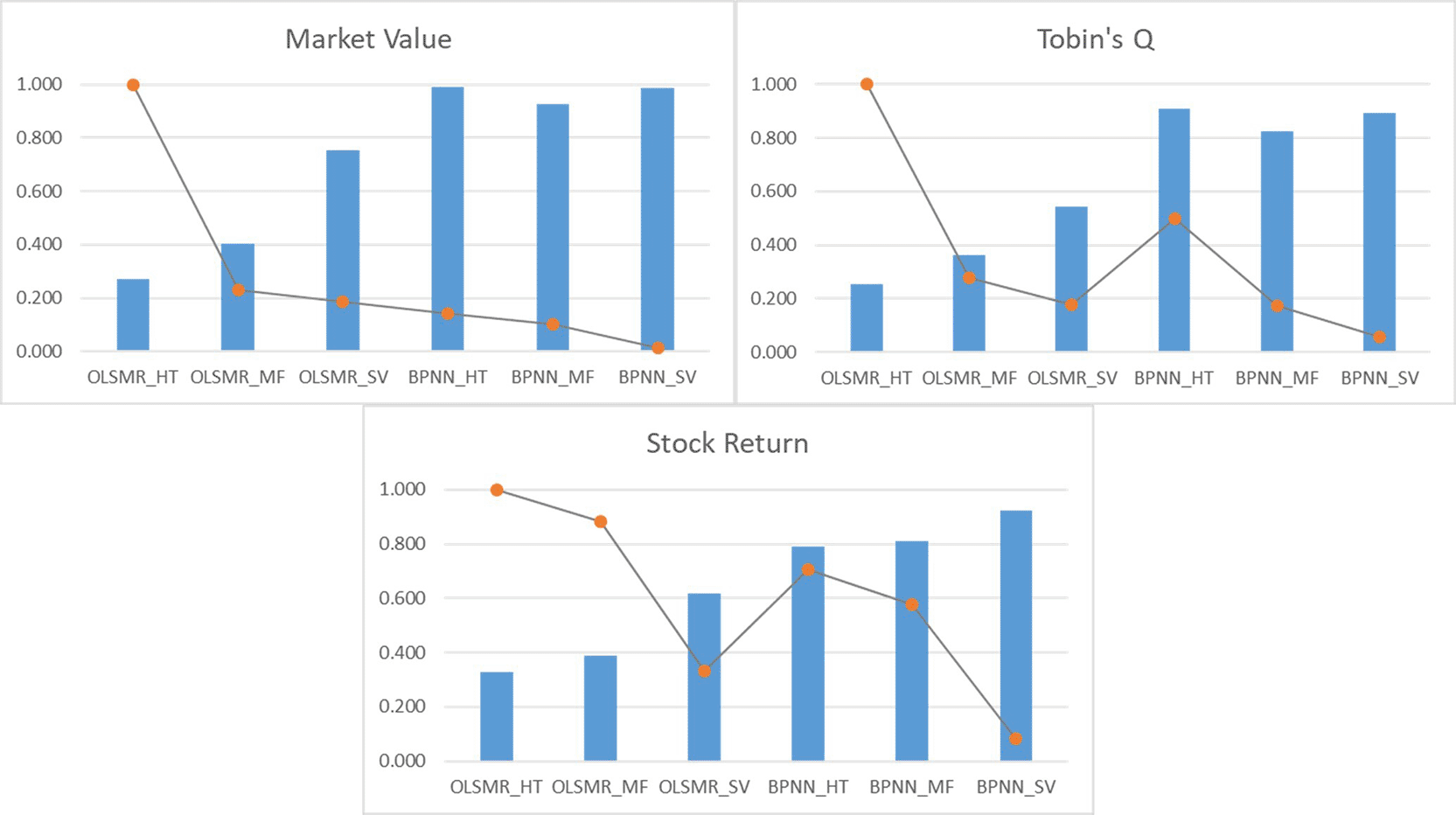
Note: HT – High Tech; MF – Manufacturing; SV – Services.
To calculate predictive accuracy, each model’s predicted value is compared with the actual value (y) for each firm. RMSE is first computed by following formula and then derived by dividing the RMSE of each model by the maximum RMSE among the models under comparison:
This approach ensures a consistent scale across models and performance tiers. A lower nRMSE indicates higher predictive precision, while a higher Pearson’s R suggests stronger alignment between predicted and actual values. Together, these metrics allow for nuanced comparison of linear (OLSMR) and nonlinear (BPNN) model performance across different firm sectors.
As shown in Figure 3, across all three performance indicators—Market Value, Tobin’s Q, and Stock Return—the BPNN demonstrates superior predictive performance compared to OLSMR. BPNN consistently achieves higher correlations and lower normalized errors across the high-tech, manufacturing, and service sectors. The advantage of BPNN is most pronounced in Market Value, where near-perfect correlations are observed for all three industries, underscoring its strength in modeling complex valuation dynamics. Tobin’s Q also shows clear improvement under BPNN, particularly in the high-tech sector, reflecting the model’s ability to capture nonlinear signaling effects that influence forward-looking investor expectations. For Stock Return, while both models exhibit greater variability due to the volatility of external market factors, BPNN still outperforms OLSMR, albeit with a narrower margin. These results confirm that BPNN’s ability to approximate nonlinear and multidimensional relationships allows it to capture synergies and thresholds in firm capabilities more effectively than regression-based approaches. Therefore, this study adopts the results of BPNN for hypotheses testing.
Figure 4 and Table 3 illustrate the differential importance of strategic variables in explaining market value-based performance, derived from the BPNN. The results show that profitability is the most consistent predictor across industries, though its relative weight differs between high- and low-performing firms. High-tech companies rely most heavily on R&D and HR capabilities, reflecting the sector’s dependence on rapid innovation and skilled human capital. Manufacturing firms emphasize operations efficiency, which underpins cost leadership and productivity. Service firms highlight marketing and growth, emphasizing customer engagement and expansion.
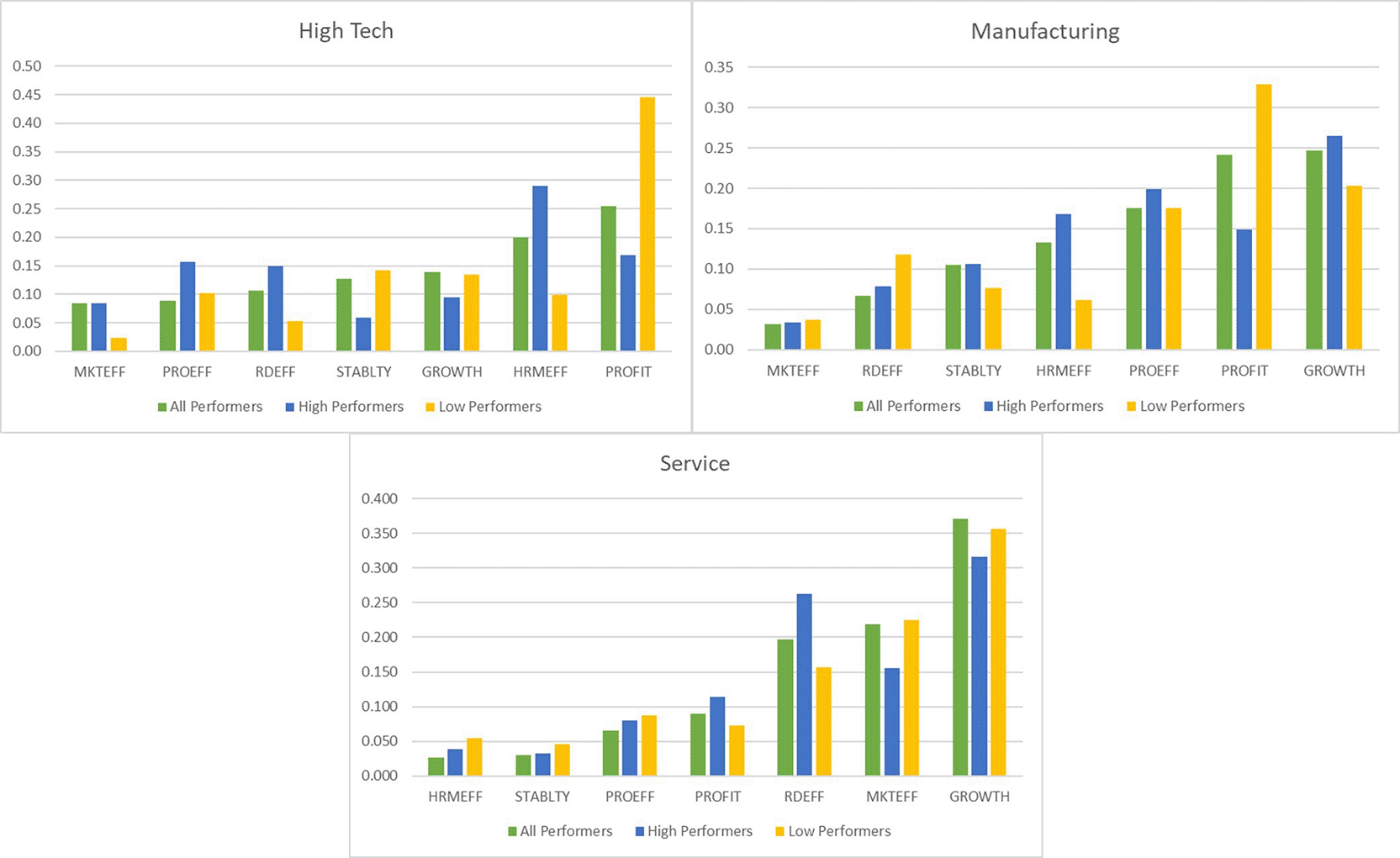
Note: Bar values represent BPNN-derived relative importance weights, reflecting each capability’s proportional contribution to the prediction of market value-based performance (MVP) within each industry group and performance tier. MKTEFF = marketing capability efficiency; PROEFF = operations capability efficiency; RDEFF = research and development capability efficiency; HRMEFF = human resource capability efficiency; PROFIT = profitability-based performance; STABLTY = financial stability; GROWTH = revenue and asset growth. HT = High-Technology; MF = Manufacturing; SV = Services.
Hypothesis H1a posits that marketing capability significantly affects profitability-based performance. The BPNN results indicate weak importance weights for marketing in high-tech and manufacturing, suggesting little influence on profitability. This indicates that marketing alone does not generate superior internal outcomes in industries where product innovation or cost efficiency dominate. Accordingly, H1a is not supported. Hypothesis H1b proposes that marketing capability significantly influences market value-based performance. In services, marketing shows substantial importance (0.219 overall; 0.155 for high performers), confirming its role as a signal of brand strength, reputation, and customer relationships. This finding supports Signaling Theory and confirms H1b in the service sector, though not in high-tech or manufacturing.
Hypothesis H2a suggests that operations capability contributes positively to profitability-based performance. The BPNN results confirm this primarily in manufacturing, where operations carry the highest importance (0.175 overall; 0.199 for high performers). This reflects the centrality of efficiency, process control, and scalability in driving profitability in resource-intensive sectors, consistent with Transaction Cost Economics. By contrast, operations capability is less important in high-tech and services, where adaptability and customer interface dominate. Thus, H2a is supported only in manufacturing. Hypothesis H2b proposes that operations capability significantly affects market value-based performance. Again, the results provide support in manufacturing, where investors reward signals of operational strength. However, in high-tech and service sectors, operational efficiency is overshadowed by innovation or marketing, so H2b is supported only in manufacturing.
Hypothesis H3a argues that R&D capability positively affects profitability-based performance. The BPNN results confirm this in high-tech and manufacturing, where innovation enables differentiation, growth, and competitive edge. In services, however, R&D importance is limited, reflecting that service innovation often arises from frontline interaction and design rather than formal R&D structures. Thus, H3a is supported in high-tech and manufacturing, but not in services. Hypothesis H3b posits that R&D capability contributes to market value-based performance. The results show strong support in high-tech and service firms, where innovation is highly valued by investors, and partial support in manufacturing, where R&D plays a secondary role to operations. Therefore, H3b is strongly supported in high-tech and services and partially supported in manufacturing.
Hypothesis H4a suggests that HR capability has a significant impact on profitability-based performance. The BPNN results show that HR capability is highly important in high-tech firms (0.200 overall; 0.290 for high performers), confirming its role in fostering adaptability and knowledge integration. In manufacturing, HR carries moderate weight, while in services, its importance is limited. These findings indicate that HR capability enhances profitability in knowledge-intensive contexts, but is less critical in operational or customer-driven environments. Thus, H4a is supported in high-tech, partially in manufacturing, but not in services. Hypothesis H4b predicts that HR capability significantly influences market value-based performance. The results confirm this in high-tech industries, where visible investments in human capital signal long-term innovation potential, consistent with Signaling Theory. However, the effects are weaker or absent in manufacturing and services, meaning H4b is supported only in high-tech.
Hypothesis H5 proposes that profitability mediates the relationship between functional capabilities and market value-based performance. The BPNN results strongly confirm this mechanism. Profitability consistently registers as a key predictor across industries (0.255 in high-tech, 0.242 in manufacturing), but with important differences between high and low performers. High-performing firms rely less on profitability alone, balancing it with R&D, HR, or marketing, while low-performing firms depend heavily on profitability (0.446 in high-tech, 0.329 in manufacturing), reflecting short-term orientation. These findings affirm the mediating role of profitability, consistent with the Resource–Capability–Performance framework and ST. Thus, H5 is supported across industries, though with different strengths.
Hypothesis H6 posits that the relative impact of capabilities differs between high- and low-performing firms. The segmentation analysis provides strong support. In high-tech, high performers emphasize R&D and HR, while low performers focus excessively on profitability. In manufacturing, high performers rely on operations and growth, while low performers overemphasize financial stability. In services, high performers stress growth and marketing, while low performers give less importance to HR and stability. These findings show that high performers achieve superior alignment between capabilities and industry logic, while low performers exhibit misalignment and inefficiency. This supports H6 and reinforces RBV, DCT, and ST by demonstrating that strategic capability alignment differentiates winners from laggards.
In summary, the BPNN results reveal clear industry- and tier-specific patterns of capability importance. High-tech firms achieve superior outcomes by leveraging R&D and HR capabilities, signaling innovation and adaptability to both markets and investors. Manufacturing firms depend primarily on operations efficiency and growth, confirming that productivity and scale remain their defining sources of advantage. Service firms rely on marketing and growth, highlighting the critical role of customer engagement and expansion in intangible, experience-driven markets. Across tiers, high performers consistently exhibit a more balanced and strategically coherent use of capabilities, while low performers overemphasize profitability, indicating short-term orientation and misalignment. These results underscore that competitive advantage arises not from the possession of resources alone but from their effective alignment with industry context and performance objectives.
Figure 5 illustrates the BPNN-derived efficiency scores for all Decision-Making Units (DMUs), demonstrating how effectively each firm transforms its internal capabilities into market value–based performance as predicted by the neural network model. A score of 1.0 represents the efficiency frontier, indicating that a firm fully meets or exceeds its predicted potential. Firms with lower scores are underperforming relative to what their capability configurations suggest they could achieve. This gap implies inefficiencies in capability deployment, misalignment with market expectations, or strategic execution shortfalls.
The dispersion of efficiency scores across high-tech, manufacturing, and service sectors highlights sector-specific variations in capability transformation. Some firms, even with similar resource inputs, fall short in converting those resources into valued market outcomes—underscoring that possession of capabilities is not enough; what matters is how well these capabilities are aligned, integrated, and leveraged. High-performing firms on the efficiency frontier can serve as benchmarks, offering valuable insights into best practices in capability deployment. Conversely, low-scoring firms reflect areas where resource investment has not translated into expected performance, reinforcing the importance of strategic fitness and execution quality. This figure operationalizes the hybrid DEA–BPNN framework’s aim to link internal capability use with external market recognition, consistent with the logic of RBV, DCT, and ST.
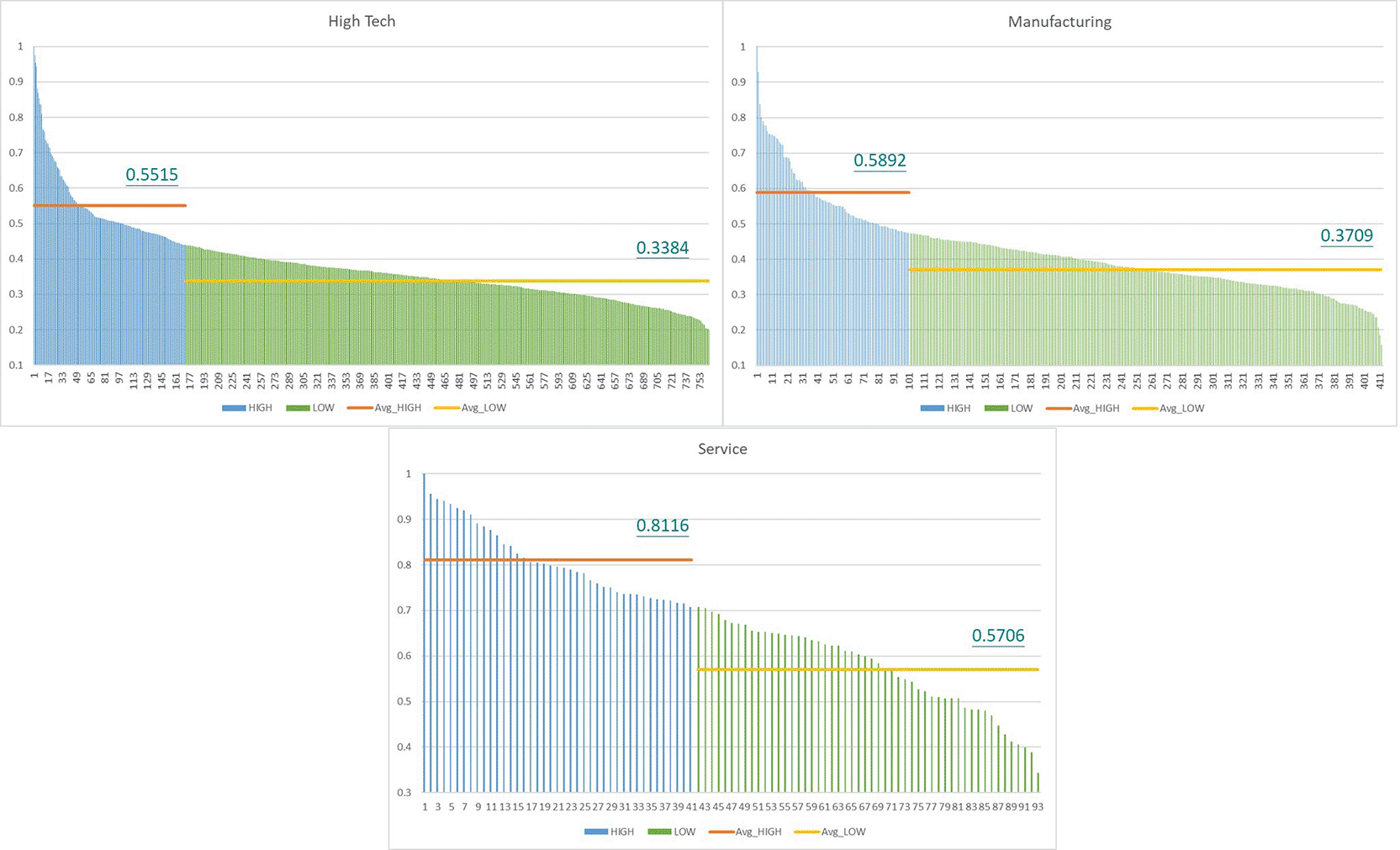
Note. Each data point represents one firm (Decision-Making Unit, DMU). The efficiency score (ES) is calculated as the ratio of actual to BPNN-predicted aggregated market value-based performance (MVP). Firms with ES = 1.0 lie on the efficiency frontier and are classified as top performers. Scores below 1.0 reflect underperformance relative to BPNN-predicted potential.
The primary purpose of this study was to develop and empirically validate a hybrid analytical framework that integrates Data Envelopment Analysis and Backpropagation Neural Networks to assess how internal functional capabilities—specifically marketing, operations, R&D, and human resources—affect firm performance across Taiwan’s high-tech, manufacturing, and service industries. By drawing on the Resource-Based View, Dynamic Capability Theory, and Signaling Theory, the study aimed to examine not only the direct effects of these capabilities on profitability-based and market value-based outcomes, but also their efficiency, alignment, and sector-specific relevance.
Hypothesis H1 examined the role of marketing capability in influencing firm performance. The results confirmed that marketing capability significantly enhances both profitability-based and market value-based performance, particularly in service firms. These findings support the RBV (Barney, 1991), which considers marketing assets as strategic resources, and align with ST (Spence, 1974), as such capabilities convey value and credibility to the market.
Hypothesis H2 assessed the impact of operations capability. The analysis demonstrated that operational efficiency—such as process optimization and supply chain coordination—significantly improves profitability, particularly in manufacturing firms. However, its influence on market value was more limited, suggesting that operational effectiveness may be less observable to external investors. These results are consistent with RBV and Dynamic Capabilities Theory (Teece et al., 1997), highlighting the importance of internal agility and cost leadership.
Hypothesis H3 focused on R&D capability and found it to be a strong driver of both profitability and market value, especially in high-tech industries. Firms with advanced innovation competencies benefit from product differentiation and future growth potential, which not only enhance internal performance but also signal technological leadership to investors. This is in line with DCT’s emphasis on adaptive innovation and the strategic role of knowledge-based assets (Griliches, 1998; Hall & Bagchi-Sen, 2002).
Hypothesis H4 evaluated financial capability and its relation to firm performance. The findings revealed that firms with strong liquidity, solvency, and capital structure are better positioned to sustain profitability and gain investor trust. Financial strength signals operational stability and reduces perceived investment risk, thus enhancing market valuation. These outcomes echo both ST and the Resource–Capability–Performance framework (Wang et al., 2015), reinforcing the role of financial soundness in firm competitiveness.
Hypothesis H5 extended the analysis to assess differences in strategic emphasis across industries. In high-tech sectors, R&D capability plays a dominant role in driving both financial and market-based performance. The combination of innovation and marketing enables firms to commercialize technology while signaling long-term value. In contrast, manufacturing firms rely heavily on operational excellence to achieve cost leadership, though such improvements are not always recognized by capital markets. These findings reflect industry-specific capability-performance alignments grounded in DCT and RBV.
Hypothesis H6 emphasized the role of capability integration and efficiency. The DEA–BPNN hybrid framework revealed that effective transformation of resources into results depends not only on the presence of capabilities but also on their alignment, balance, and efficiency. Overinvestment without operational efficiency led to lower outcomes, suggesting that strategic misalignment weakens performance. This highlights the importance of cross-functional capability integration and performance benchmarking, consistent with the principles of the Resource–Capability–Performance model and recent strategic management literature.
This study offers several significant contributions to the literature on strategic management, firm performance, and resource-based theory, particularly in the context of East Asian economies such as Taiwan. First, the study contributes to the RBV and DCT by offering empirical validation of how different functional capabilities—marketing, operations, R&D, and human resources—individually and collectively drive firm performance. While prior literature has often examined these capabilities in isolation (Nath et al., 2010; Swink et al., 2007), this study provides a comprehensive and comparative assessment across multiple industries, revealing how sectorial context influences the strategic value of specific capabilities. This sector-specific differentiation deepens the understanding of capability-performance relationships in varied strategic environments, addressing the call for more industry-contingent research in capability studies (Teece et al., 2016).
Second, the study advances the conceptual integration between internal efficiency and external valuation by confirming the mediating role of profitability-based performance in the relationship between functional capabilities and market value-based outcomes. This finding responds to gaps identified in prior research, where the link between operational drivers and investor perceptions has often been treated as ambiguous or underexplored (Dutta et al., 1999; Laureti & Viviani, 2011). By empirically validating that strong internal profitability facilitates improved market valuation—measured via Tobin’s Q, market value, and stock return—the study contributes to bridging RBV and Signaling Theory perspectives.
Third, the methodological framework developed in this study represents a novel contribution to capability-performance research. By integrating DEA, OLSMR, and BPNN, the research captures both the efficiency of capability utilization and the linear and nonlinear dynamics of their impact on firm performance. Previous studies have relied predominantly on linear or subjective measures of capabilities, often ignoring nonlinearity, feedback loops, or configuration effects (Donthu et al., 2005; Mazhar et al., 2007). The hybrid DEA–OLSMR–BPNN approach used in this study enables a more nuanced and predictive understanding of how capabilities translate into performance, and it provides a replicable model for future empirical investigations.
Fourth, this research introduces a performance-tier segmentation analysis that distinguishes high-performing firms from low-performing ones based on the deviation between predicted and actual performance outcomes. This novel application of BPNN-based segmentation enables deeper insight into how high-performing firms achieve superior capability integration and strategic configuration, while low-performing firms rely more on external signaling rather than intrinsic capability strength. This approach contributes methodologically and conceptually to understanding heterogeneity in firm competitiveness, aligning with recent calls for finer-grained analyses of strategic capability deployment (Wilden et al., 2016).
Finally, by focusing on a unique empirical setting—publicly listed firms in Taiwan—this study adds to the limited body of high-quality strategic management research in emerging and innovation-driven East Asian markets. Taiwan’s distinct industrial composition, high R&D intensity, and robust manufacturing base offer a valuable context for testing and extending generalizable theories in strategic capability and performance research (Dutta et al., 2022). Thus, this research not only contributes to theory building but also enhances contextual and geographic diversity in strategic management scholarship.
This study offers several important and actionable insights for managers and business professionals seeking to enhance both the profitability and market valuation of their firms. The implications span strategic investment, capability development, cross-functional integration, and performance evaluation. First, managers must prioritize industry-specific capability investment. The results reveal that different capabilities contribute disproportionately across sectors. For manufacturing firms, operational capability—such as lean production, supply chain efficiency, and process automation—is the most critical driver of profitability. In contrast, service firms benefit most from marketing capabilities, which help build customer relationships and foster internal service quality. For high-tech firms, R&D capability stands out as the strongest influence on both profitability and investor valuation. These findings suggest that managers should avoid uniform strategies and instead tailor capability development to the strategic and structural characteristics of their industry.
Second, firms must focus not only on building strong individual capabilities but also on integrating capabilities across functions. The BPNN analysis highlights synergistic effects—such as between marketing and R&D in high-tech industries or between HR and marketing in services—that significantly enhance predictive performance. Managers should encourage collaboration across departments, foster cross-functional teams, and develop organizational routines that allow capabilities to reinforce each other. For instance, aligning HR policies with marketing initiatives can improve employee engagement and customer experience simultaneously.
Third, the study reinforces the importance of profitability as a strategic bridge between internal capabilities and external market value. While investor confidence may be influenced by intangible signals, robust internal performance remains a fundamental driver of market valuation. Managers should track and improve profitability-related indicators—such as margins, return on assets, and sustainable growth—as these not only reflect operational success but also shape investor perception. Investing in financial transparency, internal performance monitoring, and strategic cost management can yield long-term benefits in capital markets.
Fourth, the issue of overinvestment with low efficiency emerged as a critical managerial concern. The DEA and performance segmentation results showed that some firms, despite high expenditure in marketing or R&D, failed to convert these investments into superior performance due to misaligned strategies or poor execution. This suggests that more spending does not automatically lead to better outcomes. Managers should focus not only on the magnitude of investment but also on the efficiency and strategic alignment of those investments. Regular capability audits, efficiency benchmarking, and value realization assessments are essential to prevent resource misallocation and performance deterioration.
Fifth, the hybrid performance evaluation model proposed in this study offers managers a diagnostic tool for more accurate capability assessment. DEA provides a benchmark for relative efficiency, while BPNN captures nonlinear effects and identifies high-leverage interactions. Managers can adopt a similar hybrid approach to audit their internal systems, simulate performance under different scenarios, and prioritize capability reallocation based on data-driven evidence. This can help firms better understand not only which capabilities matter, but how and when they matter most.
Lastly, the findings suggest that sustained performance requires more than just functional excellence—it requires strategic alignment, cross-functional collaboration, investment efficiency, evidence-based decision-making, and ongoing capability renewal. Managers who internalize and act upon these insights will be better positioned to navigate complexity and build resilient, high-performing organizations.
Despite the robust analytical framework and comprehensive dataset, this study is not without limitations. First, the research design is cross-sectional, which restricts the ability to draw causal inferences or observe dynamic changes in capability development and performance over time. Future research should consider longitudinal designs to capture the temporal evolution of functional capabilities and their lagged effects on firm outcomes.
Second, while the study integrates DEA, OLSMR, and BPNN to enhance robustness, it still relies on firm-level financial and operational indicators that may not fully capture qualitative aspects of capability execution—such as leadership quality, innovation culture, or employee engagement. Future studies could adopt mixed-method approaches or incorporate survey-based perceptual data to enrich the analysis.
Third, the focus on publicly listed Taiwanese firms may limit generalizability to small or privately held enterprises and to firms in other institutional contexts. Future research should replicate the model in different national or regional settings, particularly in emerging economies or volatile industries, to validate the framework’s applicability and uncover context-specific patterns.
Finally, the study assumes capability efficiency is uniformly applicable across firms, but variations in strategic intent, competitive positioning, and market turbulence may moderate these relationships. Future investigations could explore contingent factors—such as technological turbulence, digital maturity, or ESG practices—that shape the capability–performance nexus.
| Views | Downloads | |
|---|---|---|
| F1000Research | - | - |
|
PubMed Central
Data from PMC are received and updated monthly.
|
- | - |
Provide sufficient details of any financial or non-financial competing interests to enable users to assess whether your comments might lead a reasonable person to question your impartiality. Consider the following examples, but note that this is not an exhaustive list:
Sign up for content alerts and receive a weekly or monthly email with all newly published articles
Already registered? Sign in
The email address should be the one you originally registered with F1000.
You registered with F1000 via Google, so we cannot reset your password.
To sign in, please click here.
If you still need help with your Google account password, please click here.
You registered with F1000 via Facebook, so we cannot reset your password.
To sign in, please click here.
If you still need help with your Facebook account password, please click here.
If your email address is registered with us, we will email you instructions to reset your password.
If you think you should have received this email but it has not arrived, please check your spam filters and/or contact for further assistance.

Comments on this article Comments (0)