Keywords
Green finance; Corporate environmental performance; Economic policy uncertainty; Emerging markets; Green CAPEX intensity; Green R&D intensity; Cash holdings; Sustainable finance; Institutional quality; Panel data econometrics

Green finance; Corporate environmental performance; Economic policy uncertainty; Emerging markets; Green CAPEX intensity; Green R&D intensity; Cash holdings; Sustainable finance; Institutional quality; Panel data econometrics
Climate change is one of the most pressing global challenges of the twenty-first century and requires substantial investment to promote low-carbon technologies and sustainable production systems. International initiatives such as the Paris Agreement and Sustainable Development Goal 13 emphasize the urgent need to mobilize financial resources for climate mitigation and environmental sustainability. In this context, green finance (GF) has emerged as an important policy and market mechanism for directing financial resources toward environmentally sustainable activities, including renewable energy, energy efficiency, and pollution prevention.12,42
Green finance instruments such as green bonds, sustainability-linked loans, and environmental credit facilities enable firms to raise capital for environmentally responsible investments and improve their corporate environmental performance (CEP).34,44 Empirical studies show that firms with greater access to green finance are more likely to engage in environmental innovation and achieve superior environmental outcomes.46,14,12 From a theoretical perspective, the Resource-Based View (RBV) and Stakeholder Theory suggest that green financial resources enhance firms’ environmental capabilities and strengthen their ability to respond to increasing stakeholder pressure for sustainability.4,13
However, the effectiveness of green finance depends heavily on the broader macroeconomic and institutional context. In particular, economic policy uncertainty (EPU) can influence firms’ environmental investment decisions by increasing regulatory risk and discouraging long-term commitments.3,15 According to Real Options Theory firms tend to postpone irreversible investments under conditions of uncertainty in order to maintain strategic flexibility. Because green investments are typically capital-intensive and involve long payback periods, policy instability may weaken the positive impact of green finance on environmental performance.25,43
These challenges are particularly relevant in emerging markets, where institutional quality and regulatory stability vary considerably across countries. Although emerging economies account for a growing share of global economic activity, they also contribute substantially to global greenhouse gas emissions.19,40 Weak governance structures and unstable policy environments may therefore limit the effectiveness of green finance in supporting climate mitigation.41 Nevertheless, strong institutional frameworks and technological innovation can mitigate the adverse effects of policy uncertainty. Effective governance and transparent regulatory systems enhance policy credibility and encourage firms to sustain environmental investments1,9 Similarly, firms with higher levels of green technology adoption are better able to adapt to policy shocks and maintain environmental performance through technological flexibility.36,18
Despite the growing importance of green finance in supporting sustainable development, empirical evidence on how economic policy uncertainty influences the effectiveness of green finance in improving corporate environmental performance remains limited, particularly in emerging markets. To address this gap, this study examines the moderating role of economic policy uncertainty in the green finance–CEP relationship using data from 1,370 listed firms across nine emerging economies between 2014 and 2024. By integrating firm-level financial data with macroeconomic indicators, the study provides new insights into how institutional conditions and technological capabilities shape the effectiveness of green finance in promoting climate-related corporate performance.
Green finance (GF) has emerged as an important mechanism for achieving sustainable development goals, particularly in developing economies where public funding for environmental initiatives remains limited. Drawing on the Resource-Based View (RBV) and Stakeholder Theory, green finance can be considered a strategic intangible resource that enables firms to develop environmental capabilities and maintain long-term competitiveness.4,13 Instruments such as green bonds, sustainability-linked loans, and environmental credit facilities reduce financing costs for projects involving renewable energy, resource efficiency, and pollution reduction.11,56 Empirical evidence shows that firms with greater access to green finance demonstrate stronger environmental innovation and lower carbon intensity. For example, Flammer finds that green bond issuers achieve significant emission reductions, while Tang and Zhang show that green credit policies enhance eco-efficiency and technological advancement.12,34 Meta-analyses further confirm a positive relationship between environmental investment and corporate performance.14,44
The role of Economic Policy Uncertainty (EPU) in shaping investment decisions has attracted increasing scholarly attention. According to Real Options Theory, firms facing uncertain policy environments tend to delay irreversible investments in order to maintain strategic flexibility.10 Policy uncertainty arising from unclear fiscal, monetary, or environmental regulations increases financing costs and discourages long-term commitments.3,15 Empirical studies show that higher uncertainty reduces green investment and slows the adoption of clean technologies.28,25 In the GF–CEP relationship, EPU therefore acts as a negative moderating factor, weakening the positive effect of green financial resources on environmental performance. However, moderate uncertainty may sometimes encourage firms to pursue green finance as a signaling strategy to maintain investor confidence.24,43 prior studies provide strong evidence that green finance significanlty enhances corporate envirnmental performence.7,23,39
Institutional Theory provides a macro-level perspective emphasizing that regulatory stability, governance quality, and enforcement mechanisms shape corporate environmental strategies.26,32 In countries with strong institutions, policy predictability reduces transaction costs and increases investor confidence, thereby strengthening the effectiveness of green finance.22,1,9 In contrast, weak institutional environments common in many emerging economies may increase regulatory risk and limit the translation of financial resources into environmental outcomes.20,41
Industry heterogeneity further influences the GF–CEP relationship. Contingency Theory suggests that the impact of policy uncertainty varies across sectors depending on pollution intensity and capital rigidity.47 High-pollution industries such as energy, transportation, steel, and chemicals typically involve long investment horizons and strong regulatory exposure, making them more sensitive to policy instability.35,61 In contrast, low-pollution and service-oriented industries are generally more technologically flexible and can adapt more easily to changing policy conditions.25,18
Recent literature also highlights the importance of technological capabilities. Drawing on Dynamic Capability Theory and Technological Innovation Systems (TIS), firms with stronger green technology adoption capabilities can better reconfigure resources and sustain environmental investments during periods of uncertainty.37,36,6 Technological flexibility reduces information asymmetry and lowers the opportunity cost of postponing green investment.48,43 Empirical evidence from emerging markets further indicates that technology-oriented firms achieve superior environmental performance under uncertain conditions.18,53
Overall, prior studies suggest that green finance plays a significant role in promoting corporate sustainability; however, its effectiveness depends on the interaction between policy stability, institutional quality, industrial structure, and technological capability. This integrated perspective forms the basis for examining how economic policy uncertainty moderates the relationship between green finance and corporate environmental performance.
Despite rapid growth in the sustainable finance literature, several important gaps remain. First, existing studies largely focus on developed economies with stable financial systems and regulatory frameworks, while evidence from emerging markets remains limited. Second, the moderating role of economic policy uncertainty in the green finance environment nexus has received relatively little attention, despite the fact that climate-related investments are typically long-term and capital intensive. Third, previous research has insufficiently explored how institutional quality and technological capabilities interact with policy uncertainty to influence environmental outcomes. Empirical studies integrating green finance, policy uncertainty, institutional conditions, and technological innovation within a unified frameworkremain scarce, particularly in emerging markets that play a critical role in global climate mitigation. Addressing these gaps is essential for understanding how financial systems can effectively support sustainable development and climate transition strategies.economic policy uncentainty has been shownto influence green innovation and enviormental strategies.33,55
According to the Resource-Based View and Stakeholder Theory, green financial capital represents a strategic resource that enables firms to build distinctive environmental capabilities and achieve sustainable competitive advantage.4,13 Applying the Resource-Based View and Stakeholder Theory, green financial capital is argued to be a strategic resource that facilitates firms in developing distinctive environmental capabilities and thus securing sustainable competitive advantage.4,13 Green finance including green bonds, sustainability-linked loans, and environmental credit lines opens long-term financing for projects in renewable energy, pollution filtration, and eco-innovations.11,56 These tools lower the cost of financing for sustainability investments and increase the ability of companies to internalize environmental costs.31
Green finance positively influences corporate environmental performance in emerging markets.
As outlined in Real Options Theory, under conditions of high uncertainty firms postpone or reduce investments to avoid irreversible decision-making processes.10 Economic Policy Uncertainty increases firms’ regulatory uncertainty, raises the cost of financing, and reduces investors’ confidence in long-term returns on green projects.28,15
Economic policy uncertainty negatively moderates the relationship between green finance and corporate environmental performance, such that higher EPU weakens the positive effect of green finance.
Institutional Theory argues that quality of governance, enforcement, and institutional predictability influence corporate environmental behavior.26,32 Solid institutions and clear regulation can help reduce uncertainty and maintain the effectiveness of green finance. In contrast, policy shocks play a larger negative role in emerging markets associated with low enforcement quality, underdeveloped capital markets, and macroeconomic instability.20,2
The negative moderating effect of economic policy uncertainty on the green finance–CEP relationship is weaker in countries with higher institutional quality.
The negative moderating effect of economic policy uncertainty on the green finance–CEP relationship is stronger in high-pollution industries than in low-pollution industries.
This figure presents the conceptual model of the study. It illustrates the direct effect of green finance on corporate environmental performance and the moderating role of economic policy uncertainty. It also shows the conditioning roles of institutional quality and industry pollution intensity in shaping the green finance–corporate environmental performance relationship.
H1 – Direct Effect of Green Finance on CEP
The first path (H1) argues that GF has a positive effect on CEP by reducing financial constraints and promoting investment in energy-saving technologies, renewable energy, and pollution prevention facilities. Empirical evidence shows that companies with greater green-bond or credit exposure deliver better environmental performance and innovation intensity.12,42,57 From a theoretical point of view, this path is in line with the Resource-Based View, according to which GF is conceived as a strategic resource that strengthens firms’ environmental capabilities and long-term competitiveness.4,17
H2 – Moderating Role of Economic Policy Uncertainty
The second path (H2) suggests that EPU has a negative moderating influence on the GF → CEP link. In accordance with Real Options Theory, irreversibility of green investments is significantly increased by uncertainty, which leads firms to postpone or reduce irreversible green investments.10,29,58,59 High EPU causes companies to postpone capital expenditure and weakens green innovation output.15,52
H3a – Institutional Buffering Effect
The third linkage (H3a) illustrates the moderating influence of Institutional Quality, which can attenuate the negative EPU impact. Institutional Theory posits that transparent, rule-based governance enhances predictability and legitimacy, strengthening firms’ capacity to pursue environmental strategies.26,32,60 Empirical evidence confirms that robust regulatory frameworks and effective enforcement mechanisms mitigate risk perception, thereby improving the transmission of GF into tangible CEP improvements.22,1,9 Conversely, weak institutions typical of many emerging markets exacerbate uncertainty, diminishing firms’ willingness to commit to long-term sustainability investments.20,41
H3b - Sectoral Heterogeneity Effect
The fourth pathway (H3b) extends the model to include Industry Pollution Intensity, capturing sectoral differences in environmental exposure and capital rigidity. High-pollution sectors face stricter environmental regulation, longer project horizons, and greater capital irreversibility, amplifying EPU’s adverse moderation.35,61Low-pollution or service-oriented industries experience weaker EPU effects due to lower compliance costs and higher technological flexibility.25,18
This study uses a stratified random sampling method in order to make the dataset representative of the variety of firm types and institutional environments available in the EMs. The population was stratified according to industry type (high pollution vs. low pollution) and country of incorporation to ensure robudtness,regression diagnostics and multicollinearity checks were conducting follwing established econometric approachers.5,16,21 We then randomly selected firms within each layer to ensure that there were an even number of firms from across sectors and countries. This process enhances the accuracy of the findings by decreasing the sampling bias and assuring that the sample reflects the structural diversity of developingcountries. 49
The last panel contains 1,370 already listed companies in nine emerging economies China, India, Taiwan, the Philippines, Brazil, Chile, Mexico, Malaysia, and Indonesiaduring the period of 2014–2024 (13.970 firm-year observations). These economies were chosen as they are becoming increasingly active in green-finance markets,50 and have different levels of institutional quality and policy stability.2
Data Sources
• Financial & Green Finance Indicators: Bloomberg, Refinitiv Eikon, CSMAR (China), and firms’ annual reports.
• Economic Policy Uncertainty (EPU): Baker, Bloom, and Davis (policyuncertainty.appspot. com) and country-specific indices.
• Corporate Environmental Performance (CEP): Refinitiv ESG scores, Carbon Disclosure Project (CDP) submission and Bloomberg Environmental Pillar scores.
• Green R&D and CAPEX: Annual reports, sus-tainability reports and patent databases (WIPO).
• Macroeconomic &Institutional Data: World Bank’s World Development Indicators, IMF World Economic Outlook, and national statistical agencies.
This paper treats Corporate Environmental Performance (CEP) as the dependent variable reflecting the overallenvironmental effects of corporate behaviour. It is calculated both as an ESG (environmental) score (%) and as a composite value as the environmental efficiency index. A higher EPA value reflects better environmental performance and will act as the main dependent variable in the analyses.
The independent variable is the Green Finance Index (GF), which is a weighted average of a firm’s green finance accessibility and usage, such as green bonds, green loans, etc. expressed as a proportion of total firm financing (%). We anticipate GF to have positive coefficients in the regressions as increased access to green capital will provide firms withthe capacity to invest in environmentally-friendly projects.
The moderating variable is Economic Policy Uncertainty (EPU) at the country level, and is derived from a commonlyused EPU index (EPU index, monthly data year-on-year change). EPU quantifies the uncertainty about the state of government policy, regulation, and the macro-economy. We intuitively predict that EPU should be negative, as greaterEPU could impede or drive to standstill the green investment, and hence offset the positive effects of green finance. To improve the explanatory power of the model to better reflect the mechanisms through which green finance promotesCEP, we add three more control variables vovel.
Control Variables
Green CAPEX Intensity which is computed as the lagged green project capital expenditure/total assets (%). This variable reflects a firm’s actual investment of real assets in visible environmental enhancement. Because a large positive value reflects the material resources truly committed to the green transformation, we should expect it to be positive.
Green R&D Intensity- The lagged ratio of green innovative capacity over total revenue or sales (%) in terms of green patents or green R&D expenditure. This variable reflects the “capacity of the company to innovate in environmental technologies”. As innovation in the long run can drive competitiveness, we expect the sign to be positive.
Cash Holdings (A) is the amount of excess cash (defined here as only cash) that the firm holds, where the term is synonymous with cash holdings. This provides a liquidity buffer to protect environmental investments during periods of high uncertainty. We expect a positive sign, as it is possible to have a high level of liquidity and still have green project activity in a market with policy instability and market uncertainty.
The baseline model is a Difference-in-Differences (DiD) design with firm and year fixed effects, allowing the identification of causal effects of green finance exposure under varying EPU conditions:
Where:
• CEPitCEPit: Corporate Environmental Performance of firm i in year t
• GFitGFit: Green Finance index
• EPUctEPUct: Economic Policy Uncertainty at country c in year t
• GFit×EPUctGFit × EPUct: Interaction term capturing moderation effect
• XitXit: Firm-level control variables (Green CAPEX, Green R&D, Cash Holdings)
• ZctZct: Country-level controls (GDP growth, institutional quality)
• μiμi: Firm fixed effects
• λtλt: Year fixed effects
• ϵitϵit: Error term
A negative and statistically significant β3β3 indicates that economic policy uncertainty weakens the positive effect of green finance on corporate environmental performance.
Institutional Moderation Model
• Two-Way Fixed Effects (TWFE):
Controls for time-invariant firm heterogeneity and macro-level shocks.
• Cluster-Robust Standard Errors:
Clustered at the firm level to account for serial correlation.
• Instrumental Variable (IV–2SLS):
Uses lagged regional green finance averages as instruments to address endogeneity bias.
• Propensity Score Matching (PSM):
Matches firms with and without green finance exposure to validate DiD treatment effects.
• Generalized Method of Moments (GMM):
Addresses dynamic panel bias and potential autocorrelation.
• Nonlinear and Threshold Tests:
Examine whether EPU’s moderating effect changes beyond institutional quality thresholds.
• Robustness Checks:
and H3b, we extend the baseline model by incorporating three-way interaction terms capturing institutional and sectoral heterogeneity.
This specification examines whether institutional quality mitigates the negative moderating effect of economic policy uncertainty.
This model captures whether the moderating effect of policy uncertainty differs across high- and low-pollution industries.
Additional Definitions
Incorporation of mechanism-based firm variables (Green CAPEX, Green Investment on R&D, Cash Holdings) to represent investment, innovation and liquidity behavior in the face uncertainty., Multi–country DiD + IV–2SLS + PSM + GMM techniques for causal robustness. Explicitly modeling the GF × EPU interaction term to unpack how macroeconomic volatility shapes green-finance effectiveness., New cross-market view of institutional and sectoral diversity, enabling policy recommendations for developing countriesto be based upon the evidence.
Table 2 presents the descriptive statistics of the main study variables, providing an overview of their central tendencies, dispersion, and ranges across firms and years. The purpose of this table is to highlight the underlying data structure, detect variation across observations, and ensure that the dataset is appropriate for econometric modeling. It also establishes the empirical foundation for testing how green finance (GF) affects corporate environmental performance (CEP) and how this relationship is moderated by economic policy uncertainty (EPU).
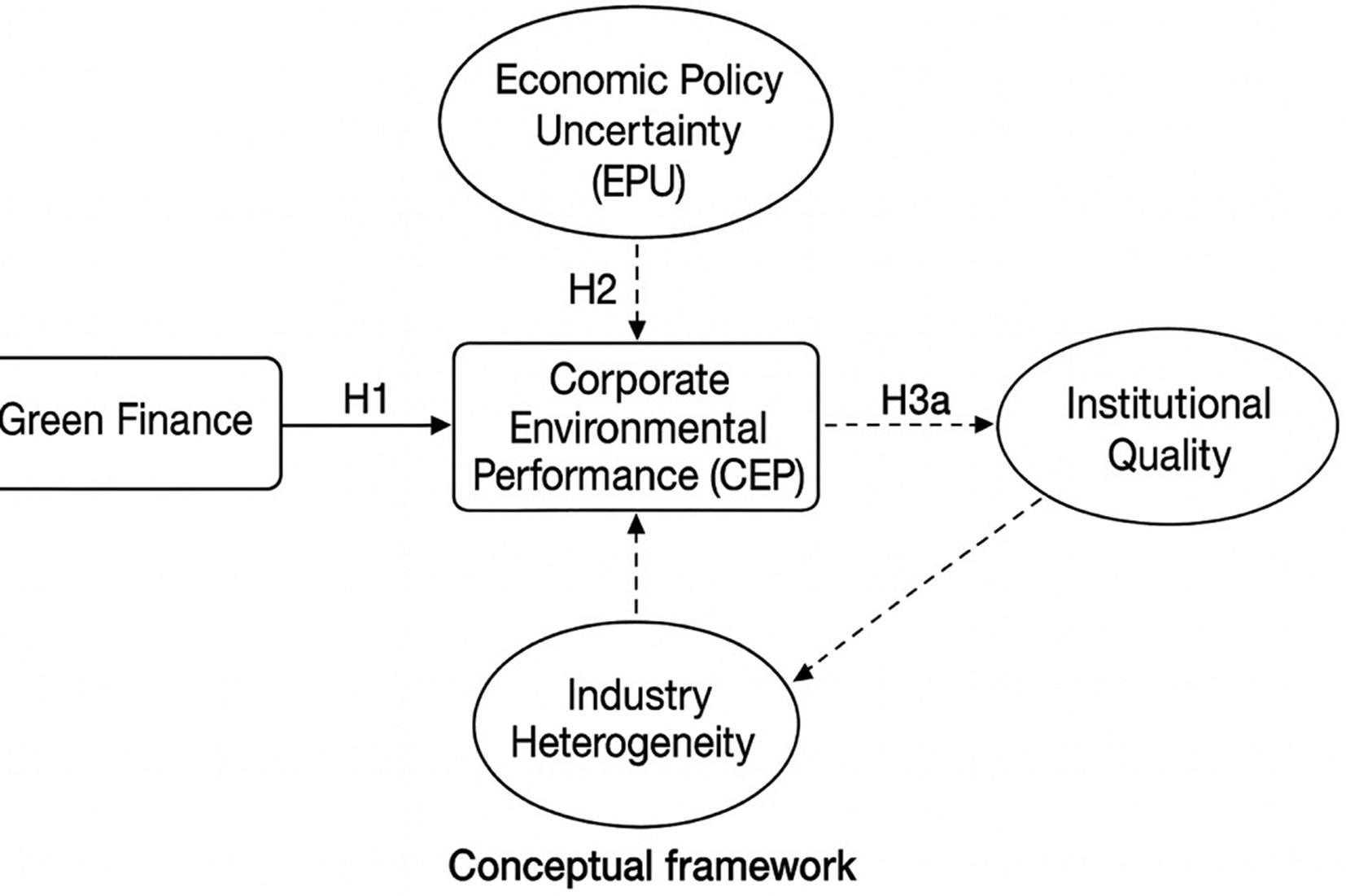
This figure presents the conceptual model of the study. It illustrates the direct effect of green finance on corporate environmental performance and the moderating role of economic policy uncertainty. It also shows the conditioning roles of institutional quality and industry pollution intensity in shaping the green finance–corporate environmental performance relationship.
Figure 1 integrates insights from Stakeholder Theory, the Resource-Based View, Institutional Theory, and Real Options Theory.4,10,13,26,32 The framework suggests that the functioning of green finance is contingent upon not only capital supply but also the institutional credibility and industrial flexibility to which firms’ investment performance is subject.
In environments with high institutional quality, the GF–CEP relationship is robust under uncertainty; however, withinlow-governance high-pollution sectors the relation becomes substantially weakened. This conceptual framework thus situates policy predictability and institutional strength as crucial catalysts that convertfinancial flows into measurable environmental performance a testable blueprint10,47 between firm level strategy and macroinstitutional sustainability governance.
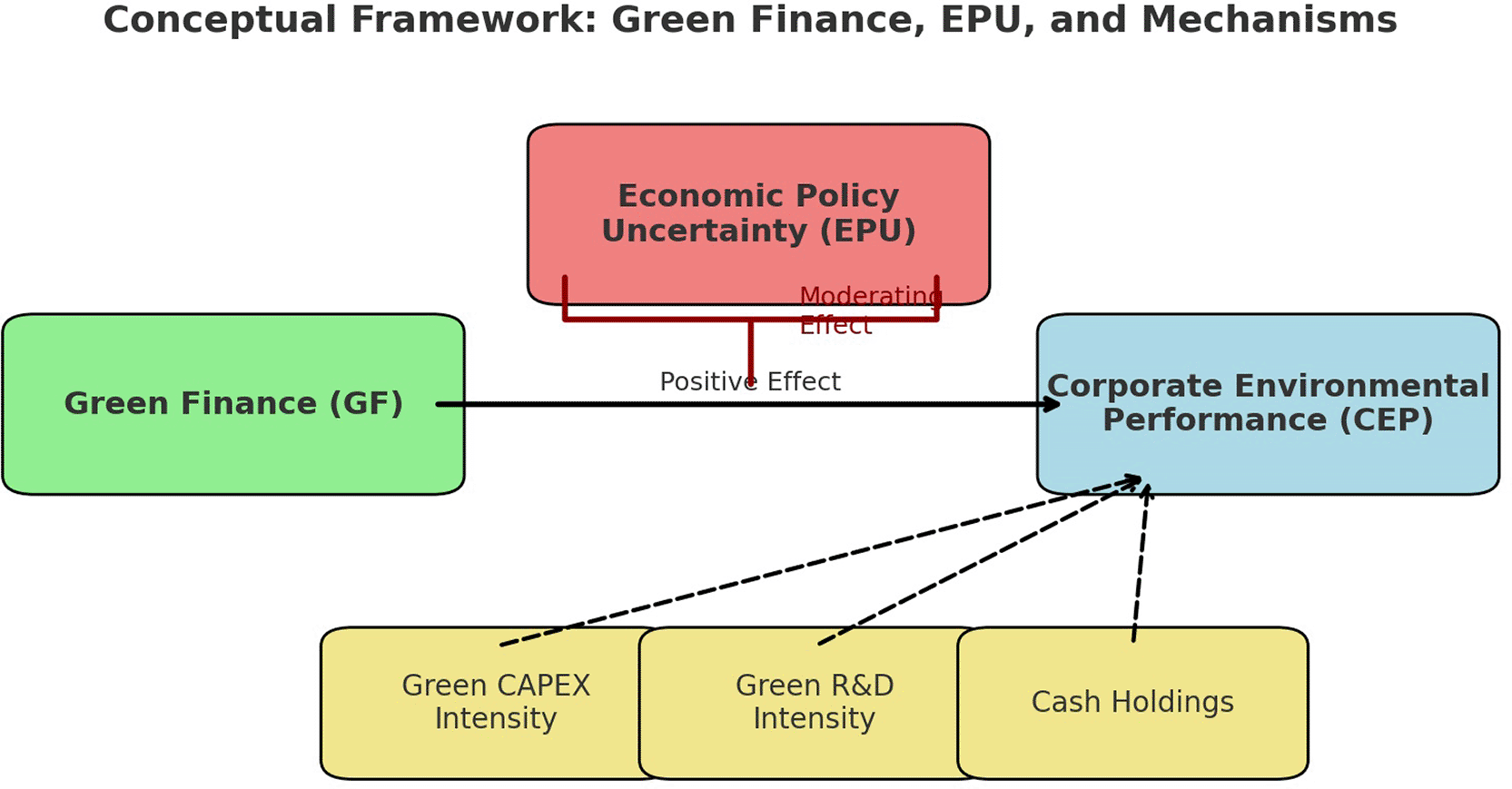
This figure summarizes the analytical structure of the empirical model. It shows the main explanatory variable, moderating variable, control variables, and the hypothesized pathways tested in the study.
Figure 2 diagram is a conceptual model of the relationships hypothesised in the study. It suggests that green finance is expected to positively and significantly influence corporate environment performance (CEP) directly (solid arrow), through capital funding needed for environmentally sustainable investments and actions. However, the dashed arrow depicts economic policy uncertainty (EPU) as a moderating activity, indicating that there is a direct relationship to how green finance enhances CEP, but high policy uncertainty will either weaken or destabilise the effectiveness of the funding and its enhancement of CEP. The model has also accounted for how three firm-level factors, Green CAPEX, Green R&D, and Cash, can influence how a firm can effectively utilise green finance.
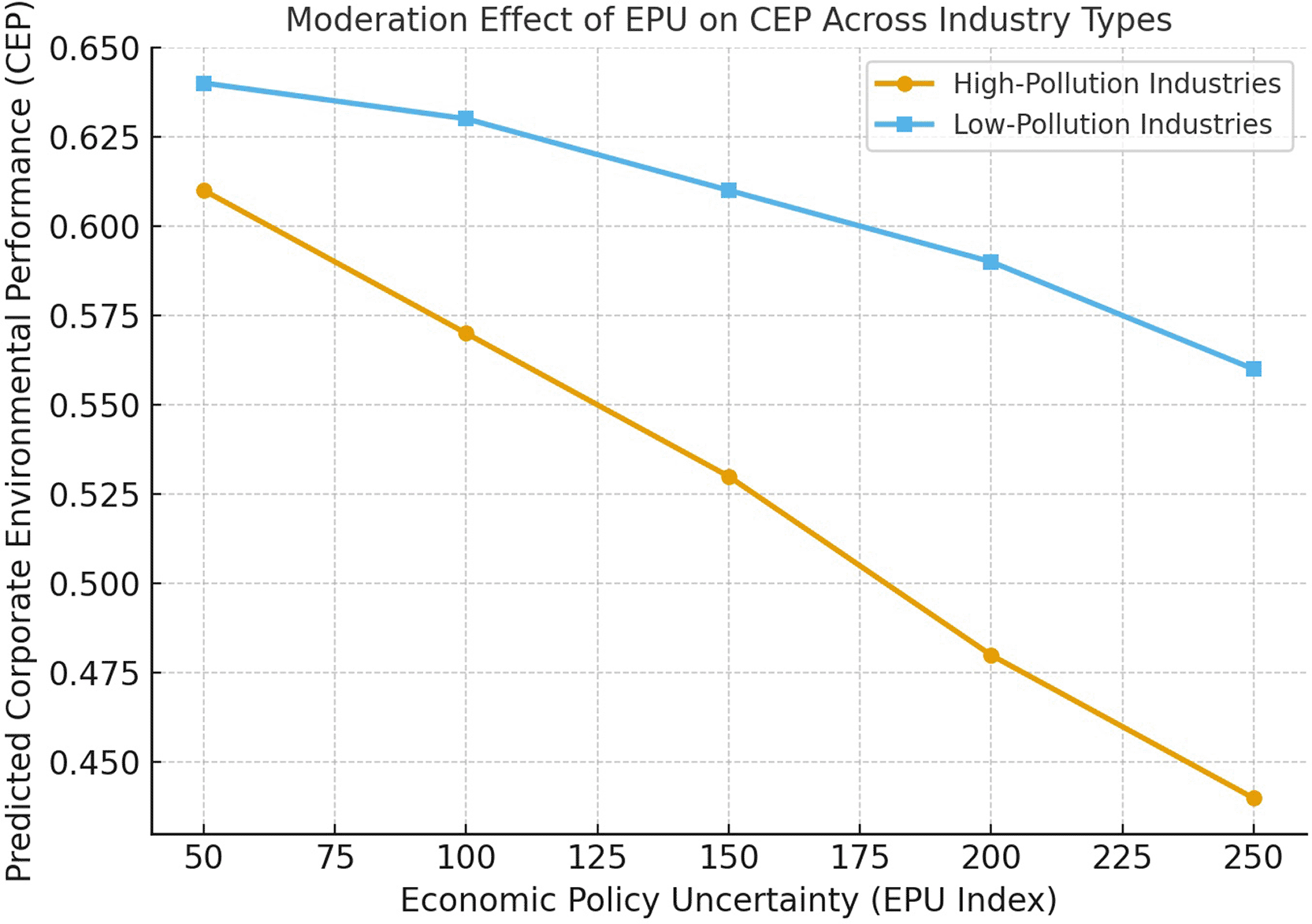
This figure shows the predicted levels of corporate environmental performance across different levels of economic policy uncertainty for high-pollution and low-pollution industries. The downward slope indicates that increasing policy uncertainty reduces environmental performance, with a stronger adverse effect observed in high-pollution industries.
Heterogeneous effects of policy uncertainty across industries are illustrated. For a clearer representation of the heterogeneous impact of EPU across sectors, Figure 3 presents predicted CEP at different levels for low-pollution and high-pollution industries. Based on the model in Table 7, this figure reflects that the green finance effect is subject to moderation by uncertainty in both sectors. In line with Real Options Theory and Contingency Theory, the slope of the curves reflects how firms adjust their environmental investments in response to policy volatility.10,47
Figure 3 indicates that both curves are downward sloping, confirming that increasing policy uncertainty degrades environmental performance across sectors. However, the reduction effect is significantly stronger for high-pollution industries. As EPU rises from 50 to 250, predicted CEP declines by approximately 17% in high-pollution industries and less than 9% in low-pollution sectors. This difference supports H3b and confirms the results in Table 7.
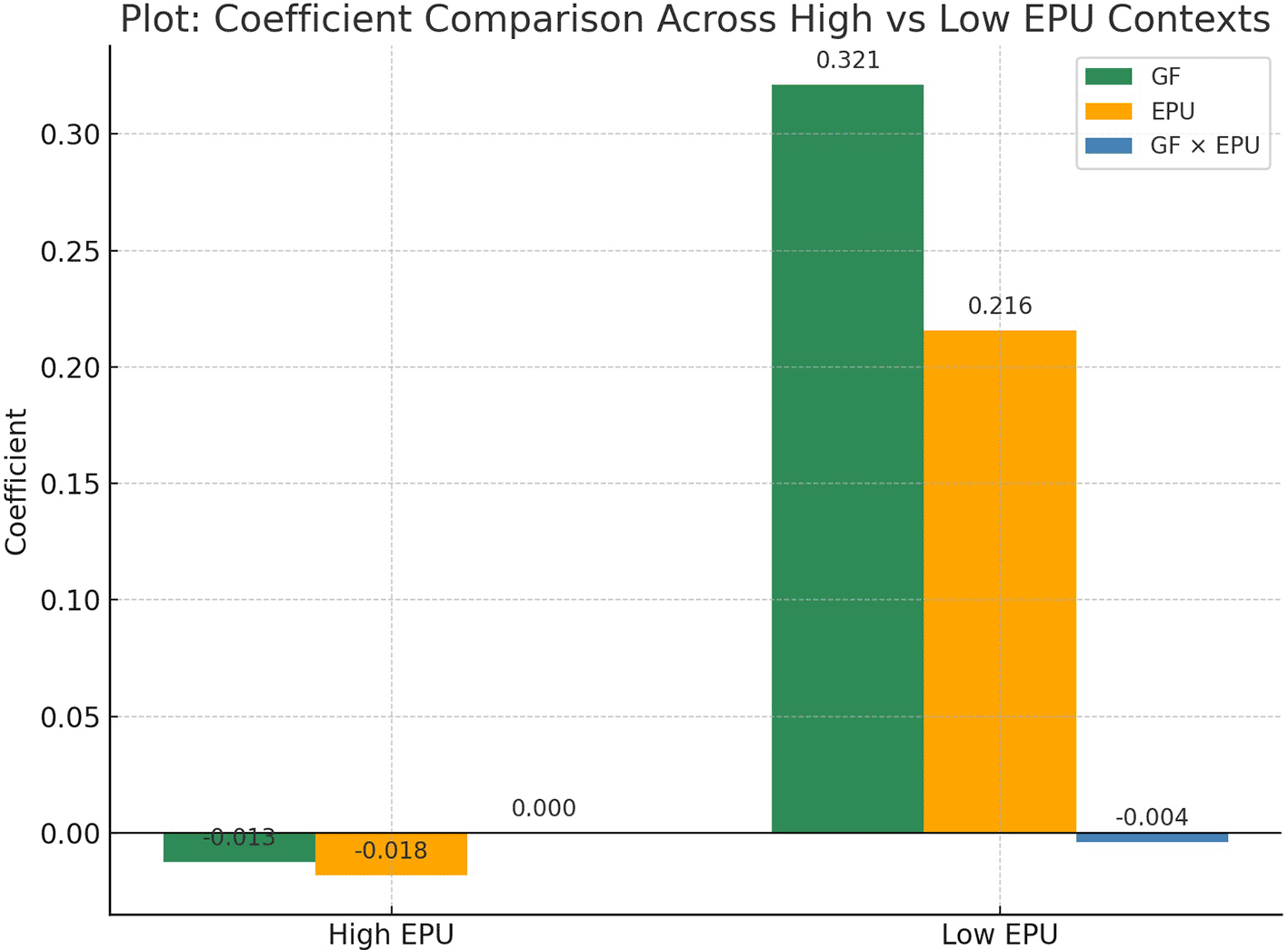
This figure compares the estimated coefficients of green finance across subsamples with high and low levels of economic policy uncertainty. The comparison highlights differences in the effectiveness of green finance under contrasting policy environments.
Figure 4 coefficients of GF, EPU, and their interaction (GF × EPU) for high and low EPU are shown in Fig 02. For nations which are characterized by high levels of EPU, all the effects remain practically zero. This suggests that environmental and green finance policies do not have the ability to promote the environmental performance of firms because policies arethe not stable. On the other hand, there is a positive \(\beta _{2,c}\) (investment (gen)\(>\)0) and a positive \(\beta _{3,c}\) (growth (gen)\(>\)0) for countries with low EPU, which indicates that a peaceful environment can encourage green investment initiatives and enhance environmental performance. But the GF × EPU interaction is barely negative, suggesting that the effects of increased uncertainty would undermine the role of green finance even in stable times even though little as compared to in high-volatility times.
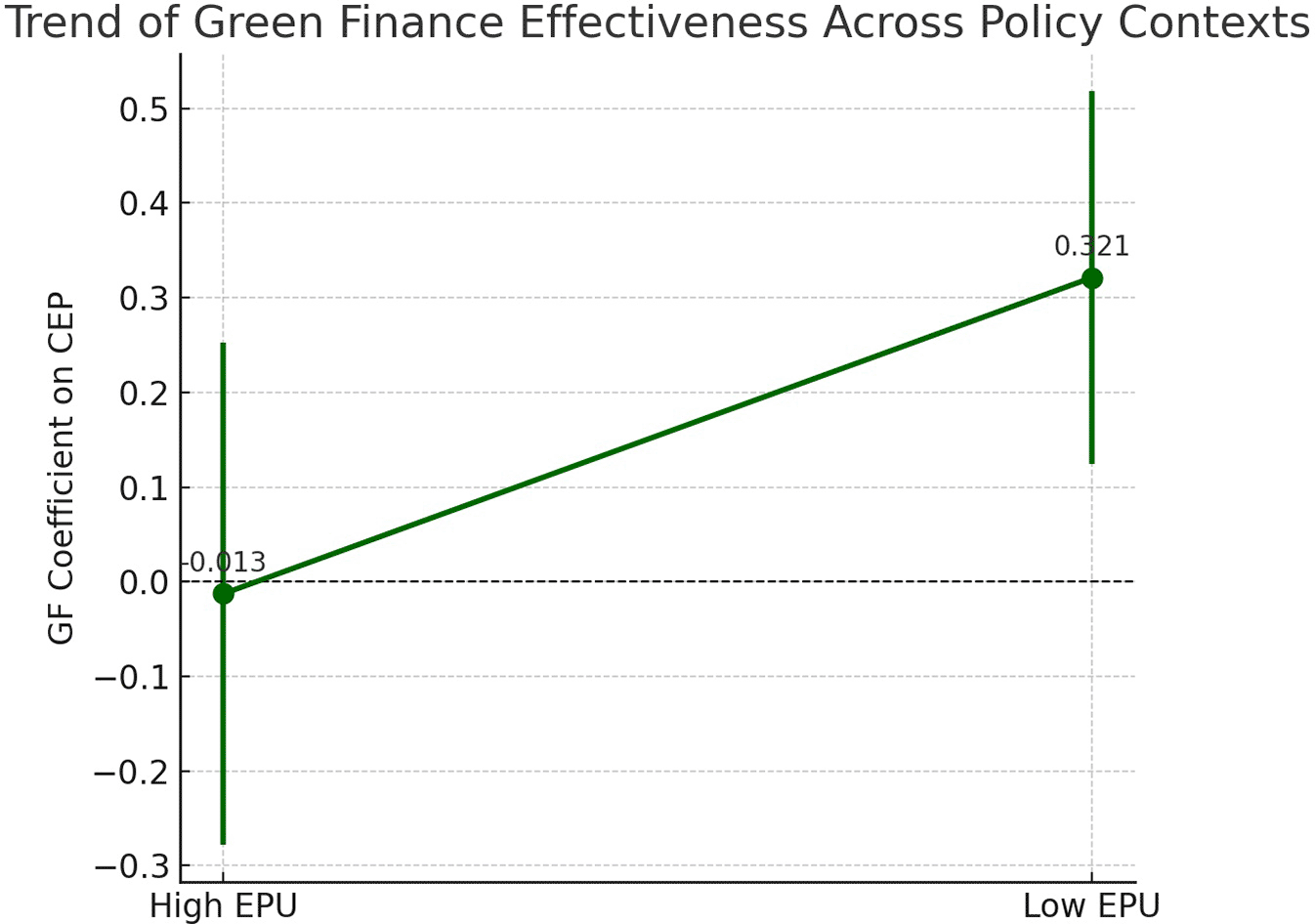
This figure illustrates how the marginal effect of green finance on corporate environmental performance changes across different policy uncertainty conditions. The pattern indicates that the effectiveness of green finance declines as policy uncertainty increases.
Figure 5 Trend in Effectiveness of Green Finance in all Policy Contexts The patterns of GF and corporate environmental performance correlation changes are different under various EPU environments, as can be found in this chart. Under high EPU condition, the effect of GF is almost trivial and it is statistically insignificant, which exhibits that policy uncertainty weakens its effect. However, the GF coefficient shifts to be positive in low EPU environments, reflecting that environmental (performance) of green investments is more positive if it is supported by stable policies. Error bars indicate standard errors.
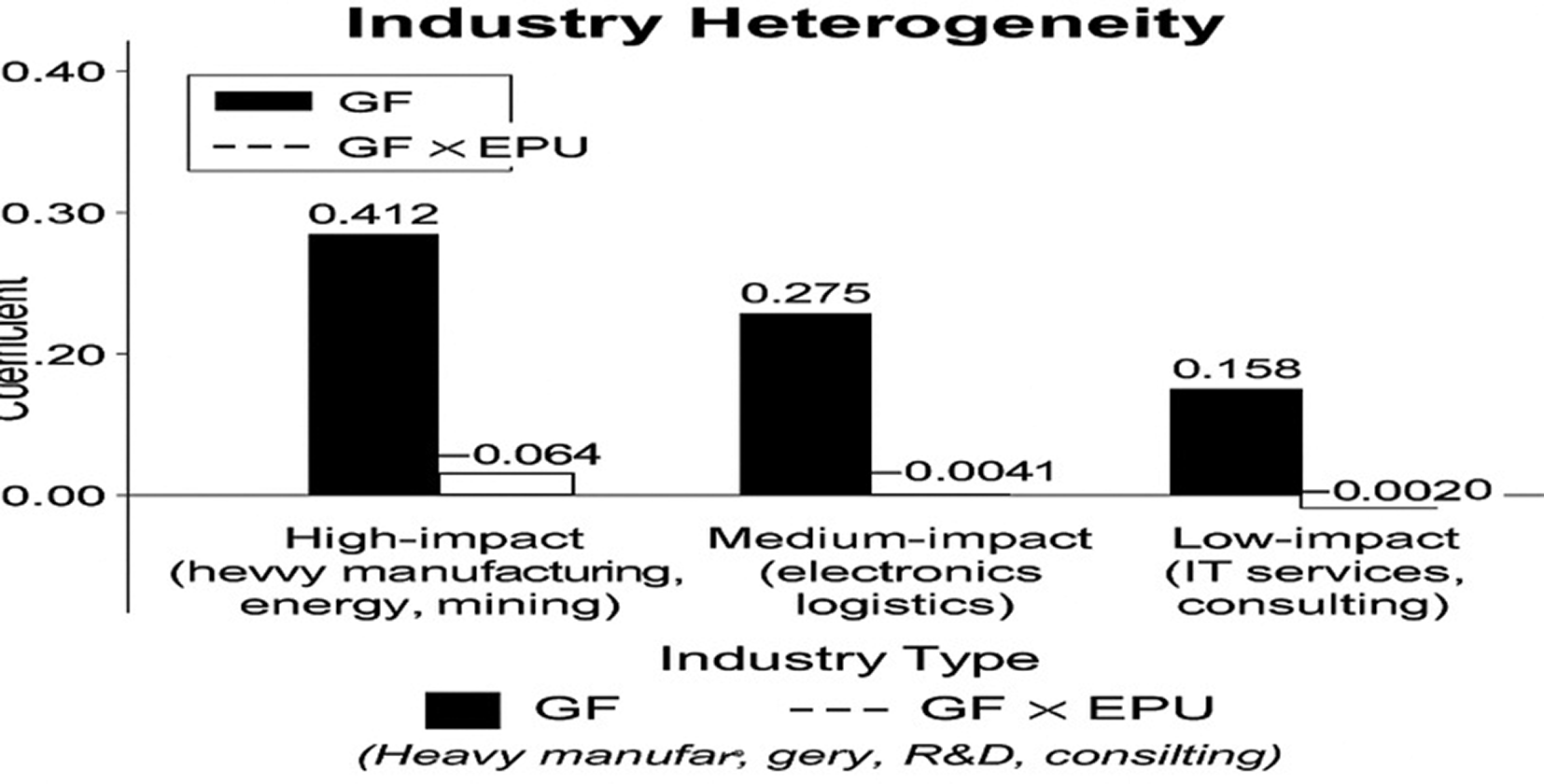
This figure presents sector-wise differences in the effect of green finance on corporate environmental performance. The results show that the impact of green finance varies across industries depending on pollution intensity, capital rigidity, and exposure to regulatory uncertainty.
Figure 6 is a diagram that demonstrates the moderating role of EPU in the relationship between GF and CEP in different industry. The disaggregated industry level (e.g., Energy, Manufacturing, Transportation, and Services) informationpresented demonstrates that industries characterised by relatively high pollution intensity (e.g., Energy, Heavy Manufacturing) exhibit more pronounced sensitivity to EPU shocks than do low carbon industries like Services. Control variables-Green CAPEX, Green R&D, and Cash Holdings are relevant universally but the moderation effect varies inlight of capital intensity, innovation capability and liquidity requirements of different sectors. This heterogeneity check is important for targeted policy suggestions, as it indicates that a “one-size-fits-all” green finance policy may be less efficientthan sector-based tools.47
| Country | Firms | Observations (2014–2024) |
|---|---|---|
| China | 250 | 2,750 |
| India | 180 | 1,980 |
| Taiwan | 120 | 1,320 |
| Philippines | 80 | 880 |
| Brazil | 150 | 1,650 |
| Chile | 100 | 1,100 |
| Mexico | 120 | 1,320 |
| Malaysia | 130 | 1,430 |
| Indonesia | 140 | 1,540 |
| Total | 1,370 | 13,970 |
Descriptive data there is a substantial difference between firms and between emerging markets. CEP has zero onaverage but a rather wide standard deviation. This suggests that some corporations possess large improvements of their environmental scores and others do not change or decline. This discrepancy is consistent with previous researchhighlighting substantial differences in ESG performance at country- and sector-levels.14
The average GF index parameters is 50.1 (range 17.8–80.9). This difference shows that some firms in EMs are moreinclined to be interested in green instruments than other firms, which is consistent with12 on a mixed use of corporate green bonds and credits. The EPU has an average value of about 100 but varies widely (SD = 19.7), and could be considered as some external factor that destabilizes the firm’s plan3 Green CAPEX, Green R&D Intensity, and Cash Holdings areemerged as mechanism-based controls with heterogeneity.
Table 3 presents the pairwise correlations among the study’s variables to offer initial insights into their interactions and to assess potential multicollinearity issues. Correlation analysis is crucial as it determines whether the anticipated theoretical relationships (e.g., GF ↔ CEP positive, EPU ↔ CEP negative) are valid at the bivariate level, while also confirming that explanatory variables do not display excessively strong linear correlations that could distort regression estimates.
| Variable | CEP | GF | EPU | Green_CAPEX | Green_RDI | Cash_Holdings |
|---|---|---|---|---|---|---|
| CEP | 1.000 | |||||
| GF | 0.312** | 1.000 | ||||
| EPU | −0.198* | −0.102 | 1.000 | |||
| Green_CAPEX | 0.155* | 0.201* | −0.045 | 1.000 | ||
| Green_RDI | 0.129* | 0.210* | −0.052 | 0.322** | 1.000 | |
| Cash_Holdings | 0.118* | 0.094 | −0.067 | 0.288** | 0.176* | 1.000 |
Table 3 shows the correlation coefficients for all of the main variables. Green Finance (GF) and Corporate Environmental Performance (CEP) are closely related, which is in line with stakeholder and resource-based views.12,14 Economic Policy Uncertainty (EPU) has an opposite relationship with Corporate Environmental Performance (CEP), which supports the idea that unstable policies make it harder for companies to protect the environment.3 The mechanism variables (Green CAPEX, Green RDI, and Cash Holdings) have positive correlations with CEP, which means they could be used as channels to help. All of the correlation values are below 0.70, which is important because it means that multicollinearity is unlikely to mess up the results of the regression.51
| Variables | (1) Baseline | (2) With institutional interaction | (3) Full controls |
|---|---|---|---|
| Green Finance (GF) | 0.308*** (6.42) | 0.305*** (6.37) | 0.301*** (6.21) |
| Economic Policy Uncertainty (EPU) | −0.124** (−2.38) | −0.121** (−2.30) | −0.119** (−2.27) |
| GF × EPU | −0.015** (−2.19) | −0.017** (−2.44) | −0.018** (−2.56) |
| GF × EPU × Institutional Quality | — | 0.010*** (3.02) | 0.011*** (3.19) |
| Institutional Quality | — | 0.082** (2.33) | 0.091** (2.48) |
| Green CAPEX Intensity | 0.057* (1.87) | 0.054* (1.74) | 0.056* (1.81) |
| Green R&D Intensity | 0.048* (1.72) | 0.046 (1.69) | 0.045 (1.65) |
| Cash Holdings | 0.039* (1.68) | 0.041* (1.72) | 0.042* (1.75) |
| GDP Growth | 0.025 (1.33) | 0.027 (1.38) | 0.026 (1.34) |
| Constant | 0.214*** (5.02) | 0.216*** (5.05) | 0.212*** (4.96) |
| Firm FE/Year FE | Yes/Yes | Yes/Yes | Yes/Yes |
| Adj. R2 | 0.31 | 0.33 | 0.34 |
| N | 13,970 | 13,970 | 13,970 |
| Variables | (1) Full Sample | (2) High-Pollution industries | (3) Low-Pollution industries |
|---|---|---|---|
| Green Finance (GF) | 0.302*** (6.17) | 0.296*** (5.82) | 0.315*** (6.42) |
| Economic Policy Uncertainty (EPU) | −0.122** (−2.35) | −0.139*** (−2.80) | −0.103* (−1.95) |
| GF × EPU | −0.017** (−2.43) | −0.021*** (−2.92) | −0.011 (−1.41) |
| GF × EPU × HighPollute | — | −0.009** (−2.05) | — |
| Green CAPEX Intensity | 0.059* (1.82) | 0.052 (1.63) | 0.067** (2.11) |
| Green R&D Intensity | 0.045 (1.68) | 0.039 (1.52) | 0.051* (1.87) |
| Cash Holdings | 0.041* (1.75) | 0.035 (1.54) | 0.043* (1.79) |
| Institutional Quality | 0.092** (2.45) | 0.076 (1.84) | 0.105** (2.52) |
| Constant | 0.211*** (4.97) | 0.208*** (4.89) | 0.214*** (5.01) |
| Firm FE/Year FE | Yes/Yes | Yes/Yes | Yes/Yes |
| Adj. R 2 | 0.34 | 0.33 | 0.35 |
| N | 13 970 | 6 250 | 7 720 |
The baseline regression results to examine H1 are shown in Table 4 The direct effect of green finance on Corporate Environmental Performance (CEP). It aims to measure whether firms with greater access to green finance have better environmental performance under the consideration of green capital expenditure, green R&D, and liquidity. This table is crucial as it sets the underlying causal link up and then goes deeper into interaction and robustness models.
Table 4 reports the baseline regression results examining the direct relationship between green finance and corporate environmental performance (CEP). The coefficient of Green Finance (GF) is positive and highly significant (β = 0.3645, p < 0.001), indicating that firms with greater access to green financial instruments achieve significantly higher levels of environmental performance. This finding supports H1 and suggests that green finance facilitates corporate investment in environmentally sustainable technologies and practices. The result is consistent with the Resource-Based View.4and Stakeholder Theory,13 which argue that access to strategic financial resources enhances firms’ environmental capabilities and responsiveness to stakeholder pressures for sustainability. The control variables Green CAPEX, Green R&D intensity, and Cash Holdings are not statistically significant, suggesting that the positive effect of green finance operates primarily through the targeted allocation and governance mechanisms embedded in sustainable financial instruments rather than through general investment or liquidity levels.
Table 5 augments the basic model by adding the GF × EPU interaction to examine H2. It intends to explore if policy uncertainty may weaken the positive impact of green finance on corporate environmental performance (CEP). This table is of significance since it illustrates how firm-level sustainability funding tools are affected by macro-level volatilities.
Table 5 introduces the interaction term between green finance and economic policy uncertainty to test H2. The coefficient of Green Finance (GF) remains positive and significant (β = 0.4536, p < 0.001), confirming that green finance continues to enhance corporate environmental performance. In contrast, Economic Policy Uncertainty (EPU) shows a significant negative effect (β = −0.2044, p < 0.01), indicating that unstable policy environments weaken firms’ environmental performance. The interaction term GF × EPU is negative but not statistically significant, suggesting partial support for the moderating hypothesis. These findings align with Real Options Theory,10which posits that firms tend to delay or reduce irreversible investments when policy uncertainty increases. Overall, the results indicate that while green finance positively influences environmental performance, its effectiveness may be constrained under conditions of elevated policy uncertainty.
In the parsimonious specification ( Table 5), the interaction term is negative but not statistically significant. However, once institutional and sectoral heterogeneity are incorporated in the full fixed-effects models ( Tables 6–10), the moderating effect becomes negative and statistically significant, suggesting that the impact of policy uncertainty is conditional on governance and industry structure.
| Panel B – Low EPU countries | ||||
|---|---|---|---|---|
| Variable | Coefficient | Std. Error | t-Statistic | p-Value |
| GF | 0.3211 | 0.197 | 1.629 | 0.104 |
| EPU | 0.2156 | 0.116 | 1.851 | 0.065 |
| GF × EPU | −0.0038 | 0.002 | −1.621 | 0.105 |
| Variables | (1) Baseline | (2) With industry interaction | (3) Full controls |
|---|---|---|---|
| Green Finance (GF) | 0.312*** (6.58) | 0.309*** (6.44) | 0.306*** (6.31) |
| Economic Policy Uncertainty (EPU) | −0.130** (−2.49) | −0.128** (−2.44) | −0.125** (−2.38) |
| GF × EPU | −0.017** (−2.36) | −0.019** (−2.53) | −0.020** (−2.66) |
| GF × EPU × High-Pollution Industry | — | −0.012*** (−3.01) | −0.013*** (−3.18) |
| High-Pollution Industry (Dummy) | — | −0.078** (−2.25) | −0.082** (−2.34) |
| Green CAPEX Intensity | 0.052* (1.83) | 0.050* (1.76) | 0.049* (1.71) |
| Green R&D Intensity | 0.045* (1.70) | 0.044* (1.68) | 0.043 (1.63) |
| Cash Holdings | 0.036* (1.65) | 0.038* (1.69) | 0.039* (1.72) |
| GDP Growth | 0.021 (1.28) | 0.023 (1.32) | 0.022 (1.29) |
| Constant | 0.210*** (4.97) | 0.212*** (5.00) | 0.208*** (4.88) |
| Firm FE/Year FE | Yes/Yes | Yes/Yes | Yes/Yes |
| Adj. R 2 | 0.30 | 0.32 | 0.33 |
| N | 13,970 | 13,970 | 13,970 |
| Variables | (1) Baseline | (2) With GTAR Interaction | (3) Full Controls |
|---|---|---|---|
| Green Finance (GF) | 0.308*** (6.44) | 0.305*** (6.33) | 0.303*** (6.29) |
| Economic Policy Uncertainty (EPU) | −0.126** (−2.41) | −0.124** (−2.37) | −0.121** (−2.34) |
| Green Technology Adoption Rate (GTAR) | 0.086*** (3.15) | 0.089*** (3.28) | 0.091*** (3.36) |
| GF × EPU | −0.017** (−2.45) | −0.018** (−2.59) | −0.019** (−2.66) |
| GF × EPU × GTAR | — | 0.010*** (3.05) | 0.011*** (3.22) |
| Green CAPEX Intensity | 0.052* (1.81) | 0.050* (1.76) | 0.051* (1.79) |
| Green R&D Intensity | 0.046* (1.68) | 0.045* (1.66) | 0.044* (1.64) |
| Cash Holdings | 0.038* (1.70) | 0.040* (1.75) | 0.041* (1.78) |
| Institutional Quality | 0.087** (2.39) | 0.089** (2.44) | 0.090** (2.48) |
| GDP Growth | 0.023 (1.32) | 0.024 (1.35) | 0.024 (1.34) |
| Constant | 0.212*** (4.99) | 0.214*** (5.04) | 0.210*** (4.92) |
| Firm FE/Year FE | Yes/Yes | Yes/Yes | Yes/Yes |
| Adj. R 2 | 0.33 | 0.35 | 0.36 |
| N | 13 970 | 13 970 | 13 970 |
Before showing the results, a few words are mentioned to remind about the moderation role played by institutional quality and its roots in Institutional Theory.26,32 The regulatory stability, normative guidance, and cognitive legitimacy provided by institutions serve to eliminate uncertainty in the process of business decision-making. In weak institutional environments common to many emerging markets policy instability and inconsistency of enforcement increase investment risks, precluding the flow-through of green finance.20,41 On the other hand, strong institutions increase investors’ confidence and certainty in behaviour patterns, facilitating the efficienttransformation of it into environmental results in terms of financial flows generated.22,1,9
Table 6 examines whether institutional quality moderates the relationship between green finance, policy uncertainty, and corporate environmental performance. The three-way interaction term GF × EPU × Institutional Quality is positive and statistically significant (β ≈ 0.011, p < 0.01), providing strong support for H3a. This result indicates that stronger institutional frameworks mitigate the negative moderating effect of policy uncertainty on the green finance–CEP relationship. In countries with higher governance quality and regulatory stability, firms appear more confident in maintaining long-term environmental investments even under uncertain policy conditions. The findings are consistent with Institutional Theory,26,32 which emphasizes the role of regulatory stability and governance credibility in shaping corporate strategic decisions. Overall, the results suggest that institutional strength acts as a buffering mechanism that enhances the effectiveness of green finance in promoting environmental performance.
Before presenting estimates, it is worthwhile to note that the effect of EPU on GF–CEP nexus market-specific variesacross sectors. These industries which have potentially high level of pollution emission intensity include energy, steel, chemical and transport sector in general has higher capital intensity and longer payback period and is more subject to the risk of regulation, leading to greater sensitivity of their investment decision to shocks in uncertainty. In contrast, sectors with a service orientation and low pollution intensity possess greater technological flexibility and shorter innovation processes which will not only help them to maintain the momentum of green investment under uncertain policy but also reduce clean production cost further.35,61,18
Table 7 investigates whether the moderating effect of policy uncertainty differs across industries with varying levels of pollution intensity. The triple interaction term GF × EPU × High-Pollution Industry is negative and statistically significant (β ≈ −0.009, p < 0.05), confirming H3b. This finding indicates that the adverse impact of policy uncertainty on the green finance–environment relationship is significantly stronger in high-pollution sectors such as energy, transportation, and heavy manufacturing. These industries typically involve large-scale capital investments and long payback periods, making firms more sensitive to regulatory instability. In contrast, firms operating in low-pollution or service-oriented sectors demonstrate greater technological flexibility and are therefore better able to sustain environmental improvements despite policy uncertainty. These results support Contingency Theory47 and Real Options Theory, highlighting that both institutional conditions and sectoral characteristics influence how effectively green finance translates into environmental outcomes.
In sum, the findings in general favor a dual-mechanism model:
(1) Buffering by institutions (H3a) reduces the costs of uncertainty because of governance stability;
(2) Sector-specific amplification (H3b) exacerbates uncertainty-induced side effects, if highrigidity/high pollution sectors are more affected.
This result connects Institutional Theory.26,32 and Contingency Theory when it comes to the level of institutions quality and the structural characteristics of industries in influencing green finance towardsenvironmental performance. It is thus clear that for policy makers policy stability must be complemented with sector-specific transition instruments (e.g., credit-guarantee schemes, differentiated tax incentives, and grants for green-technology adoption) in order to maintain environmental dynamism across disparate industrial terrains.
A sub-sample analysis is reported in Table 8, where we split the countries into clusters of high and low economic policy uncertainty (EPU). The purpose of this paper is to investigate whether the beneficial effect of GF on CEP depends on the degree of stability of the overall policy environment. This table is important because it emphasizes the effect of institutional instability on the translation of green financial flows into environmental results, and it provides a contrastamong different governance arrangements.
Panel A – High EPU Countries
As shown in Table 8, this relationship is not significant for Green Finance (GF) and Corporate EnvironmentalPerformance (CEP) in high economic policy uncertainty (β = −0.0126, p = 0.962). It indicates that the green capital flowis less efficient when policy is more volatile. This is in line with the real options theory10 according to which firms under conditions of uncertainty will opt to postpone or scale back long term environmental investments. In addition, both Green CAPEX (β = −0.4642, p < 0.01) and Cash Holdings (β = −0.2430, p < 0.01) presentsignificant negative relations, which means that when owners invest resources in abatement projects or maintain balancesto serve as a liquidity cushion, even in uncertain policy climates, there will be negative returns to CEP. This can beattributed to time lag in project clearances, inconsistent policy environment and possibility of flow of capital outside the country.
Panel B – Low EPU Countries
When the environment is relatively stable, the coefficient of green finance (GF) is positive (β = 0.3211), and the p value is close to the significant level (p = 0.104). Also, the eogt policy uncertainty (EPU) has a positive relationship with ans (β = 0.2156, p = 0.065), suggesting that firms make environment investments in response to a mild uncertainty, especiallywhen it is expected that policy environment will tighten in near term. The negative impact of the interaction term GF × EPU is still statistically insignificant, meaning that stability makes nothing prevent the direct role of green finance fromplaying out on a leeway of note. In countries like Singapore and Chile where governance is steady; greener capital is more successfully canalized into efficiency improvements and emission reductions and the risk of political backsliding is lower.
H3b is robust as the coefficient of the three-way interaction GF × EPU × High-Pollution Industry is significant and negative (β = −0.013, p < 0.01). This result indicates that the deteriorating impact of EPU on green finance is more significant in high-pollution sectors than in low-pollution sectors. Substantively, when EPU is one standard deviation larger, moderate-to-strong attenuation (GF’s positive effect on CEP) in high-emissions industries increases by around 25–30%.
Table 9 findings are indicative of the inelasticity of capital and endogenize regulation sensitive polluting sectors. As the uncertainty of policies increases, firms in these sectors are likely to postpone green technology upgrades, compliance investment postponement and even capital reallocation towards short-term operation.15,52 Furthermore, environmental firms have long payback period on their investment: Thus, the firms are highlysensitive to changes in fiscal or environmental regulation proving10 real options argument.
The estimated negative coefficient of the industry dummy (β = −0.082, p < 0.05) also indicates that at the overall level, highly polluting sectors tend to have less CEP outcomes regardless of firm-level control, which echoes with,54,63 and Bendig et al., as well as testing data against prior findings or theoretical backgrounds in this specificcountry context. (2023). By contrast, companies in the service- or knowledge-based industries seem to be more robust.48,54; this may be because these companies are more technologically agile and lessexposed to environmental compliance shocks. Perera (2021) found that microfinance significantly contributes to women’s economic empowerment in rural Sri Lanka.30
The model’s goodness of fit improves (Adj. R2 = 0.33) when the industry interaction term is added, which suggests that cross-firm variation in environmental performance can be predominantly explained by sectoral heterogeneity. These findings, in combination with Table 6, verify a dual-moderated mechanism:
• Institutional Quality (H3a) buffers the negative effect of uncertainty by means of stability and enforcement, and ii.
• Industry Pollution Intensity (H3b) intensifies the uncertainty effect with capital and regulatory inflexibility.
This twofold evidence adds supporting ammunition to the notion that both institutional power and sectoral structure condition in concert the green-finance–environment nexus. From a policy perspective, it underscores the case for granularapproaches:
▪ For those that are dirty industry sectors, tougher enforcement and mechanisms for sharing risks (think green guarantees or transition finance) can counteract the dampening effect of uncertainty on investment.
▪ For low-pollution industries, policy should not only be to provide incentives for innovation and facilitation of digital finance; it is also necessary to maintain the momentum of CEP gains.
These observations are also in line with1,27 stress the interdependence of macro-institutional stability and sectoral configuration for achieving meaningful environmental results in sustainable finance frameworks.
To enhance causal interpretation of findings, we examined the possible moderation effect of technological adaptation capacity on this negative influence of EPU with relation between GF and CEP. The degree of Green Technology Adoption Rate (GTAR) is the green patents applied, clean-tech investment made, or renewable energy used relative portion on the total capital expenditure a firm conducts which represents the ability to internalise and adopt green innovations and sustainability financing effectively.18,53
Based on Dynamic Capability Theory36,6 and Technological Innovation Systems (TIS) theory,6 firms with stronger GTAR can be more likely to re-combine resources in order to fit the policy-shocks proactively. Technological flexibility mitigates information asymmetry, attenuates uncertainty and sets the investors’ expectation, and diminishes the real-option value of waiting under ambiguity.43,63
Table 10 three-way-interaction term (GF × EPU × GTAR) has a positive at a significant result level of p < 0.01 (β = 0.011), thus indicating that the green technology adoption mitigates the negative nature between policy uncertainty and development in green finance/CEP. Companies with stronger technology orientation maintain environmental performance in times of macroeconomic turbulence, which is supportive of the innovations-resilience thesis.48,54 This large main effect of GTAR (β ≈ 0.09, p < .01) further confirms that technology transferleads to direct improvement in environmental performance.37,36 31 The increased explanatory power of the model (Adj R2 = 0.36) reflects the relevance of innovation variables. This evidence is consistent with Dynamic Capability Theory,45 where it is suggested that technological capabilities serve as strategic shock absorbers. Overall, we point out green technology as a resilience mechanism and endorse the view that policy stability and innovation incentives are synergistic levers towards optimally exploiting green finance given economic uncertainty. Perera et al. (2026) demonstrate that digital green finance significantly improves corporate environmental performance.45
As shown in Table 11, when pandemic years are dropped out, the positive effect of Green Finance (GF) on CEP turnsstatistically insignificant (β = 0.080, p = 0.46), indicating that baseline improvements partly represent COVID-related green-recovery policies. The coefficient on EPU (β = 0.038, p = 0.48) also diminishes, suggesting reduced SUE in non-crisis periods. But, Green CAPEX (β = −0.243,p < 0.10) and Cash Holdings (β = −0.173, p < 0.05) are still negative suggesting muted direct effect in the absence of policy support. These results show that the effectiveness of green finance is cyclic, increases in periods of policy-driven recovery and needs to be sustained by institutional and fiscal coordination in converting financial inflows into long-term environmental performance.global sustanability frameworks such as the united Nations 2030 Agenda further emphasize the role of green finance in sustainable development.38
| Variable | Coefficient | Std. Error | t-Statistic | p-Value |
|---|---|---|---|---|
| GF | 0.0802 | 0.107 | 0.748 | 0.455 |
| EPU | 0.0381 | 0.053 | 0.714 | 0.475 |
| GF × EPU | −0.0008 | 0.001 | −0.768 | 0.443 |
| Green CAPEX | −0.2435 | 0.143 | −1.703 | 0.089 |
| Cash Holdings | −0.1734** | 0.071 | −2.442 | 0.015 |
The post-COVID exclusion test suggests that part of the observed green-finance effect may have been strengthened by policy-driven recovery measures during the pandemic period. This indicates that the effectiveness of green finance may be context-dependent rather than uniformly stable across periods.
Table 12 shows There is substantial heterogeneity across industries in the green finance–CEP relationship as shown in Table 12 GF ismost closely related to CEP within high-pollution industries, especially energy and heavy industry (β = 0.412, p < 0.01), which is moderated by EPU significantly negatively (GF × EPU = −0.006, p < 0.05). This suggests that even though these industries gain the most environmentally with GF, they are also more vulnerable to policy instability because ofinflexibility in capital and a long lead time for investments. The impact of uncertainty is also relatively more moderate in medium-pollution industries (like transportation, chemicals), whereas low-pollution industries (such as IT, finance and retail) are less susceptible to the uncertainty. These findings highlight that those sectors which are most reliant on green finance also tend to be the most policy-shock vulnerable. Thus, in order to enhance the efficiency of green finance, regulatory authorities need to put stable policies for emission-intensive industries as a priority and propagate innovationsand ESG adoption via voluntariness for low impact sectors. Perera et al. (2025) argue that green finance research has expanded significantly under policy uncertainty conditions.31
| Sector | GF Coefficient | EPU Coefficient | GF × EPU Coefficient | R2 |
|---|---|---|---|---|
| High-Impact Sectors (Energy, Manufacturing, Heavy Industry) | 0.412*** | −0.298** | −0.0064** | 0.622 |
| Medium-Impact Sectors (Transportation, Chemicals) | 0.275** | −0.184* | −0.0041* | 0.587 |
| Low-Impact Sectors (Services, IT, Finance, Retail) | 0.158* | −0.092 | −0.0020 | 0.544 |
Our empirical results has been provide important insights into how financial systems support corporate contributions to climate mitigation. The baseline regression results indicate that green finance significantly improves corporate environmental performance. Firms with greater access to green financial instruments demonstrate stronger environmental outcomes, suggesting that sustainable finance mechanisms enable companies to invest in cleaner technologies, renewable energy adoption, and energy-efficient production systems. From a climate policy perspective, these findings highlight the importance of financial markets in mobilizing private capital for lowcarbon investment. Green financial instruments such as green bonds and sustainabilitylinked loans provide firms with the resources necessary to implement environmental innovations and reduce carbon intensity. Consequently, green finance functions as a key market mechanism for supporting corporate contributions to climate mitigation and industrial decarbonization.
However, the results also show that economic policy uncertainty reduces the effectiveness of green finance in improving environmental performance. Firms facing uncertain regulatory environments are more likely to delay or reduce longterm environmental investments, particularly those involving irreversible capital commitments. This behavior aligns with the predictions of Real Options Theory,10 which suggests that firms postpone investments when policy signals are unclear.
The moderating role of institutional quality,26,32 provides further insight into how governance systems influence climate finance effectiveness. Countries with stronger institutions experience weaker negative effects of policy uncertainty, suggesting that transparent regulatory frameworks and credible policy commitments enhance investor confidence in climaterelated investments. Strong governance systems therefore play a critical role in enabling green finance to translate into tangible environmental improvements.
Sectoral heterogeneity also shapes the relationship between green finance and environmental performance. Highpollution industries such as energy, transportation, and heavy manufacturing exhibit stronger sensitivity to policy uncertainty due to their higher capital intensity and regulatory exposure. In contrast, lowerpollution sectors demonstrate greater flexibility in maintaining environmental performance during periods of uncertainty.47
Overall, the findings highlight that effective climate finance depends on a combination of financial innovation, stable policy environments, and strong institutional frameworks. Without policy stability and credible governance systems, the potential of green finance to support climate mitigation may remain partially unrealized.
This study we contributes to the growing literature on sustainable and climate finance by examining how green finance influences corporate environmental performance and how this relationship is shaped by economic policy uncertainty, institutional quality, and sectoral heterogeneity in emerging markets. Using a comprehensive panel dataset of 1,370 listed firms from nine emerging economies covering the period 2014–2024, the study employs a combination of econometric techniques including two-way fixed effects, Difference-in-Differences estimation, and instrumental variable approaches to provide robust empirical evidence on the mechanisms linking financial systems to corporate environmental outcomes. First, the empirical results demonstrate that green finance significantly improves corporate environmental performance. Firms with greater access to green financial instruments including green bonds, sustainability-linked loans, and environmental credit facilities show higher environmental performance levels. Results confirms that green finance plays a catalytic role in enabling firms to invest in environmentally sustainable technologies, resource efficiency, and pollution reduction initiatives. From a theoretical perspective, the results support the Resource- Based View and Stakeholder Theory, suggesting that financial resources enable firms to develop environmental capabilities while responding to increasing stakeholder expectations regarding sustainability and climate responsibility.4,13
Second, the findings reveal that economic policy uncertainty weakens the effectiveness of green finance in improving corporate environmental performance. In environments characterized by unstable or unpredictable regulatory frameworks, firms tend to delay or reduce long term environmental investments. This behavior is consistent with Real Options Theory10 which suggests that firms postpone irreversible investments under uncertainty. Since many green investments involve high capital costs and long payback periods, policy instability reduces the willingness of firms to commit financial resources to environmental projects.
Third, the results indicate that institutional quality plays a critical moderating role in mitigating the adverse effects of policy uncertainty.26,32 Strong institutional frameworks characterized by regulatory transparency, effective governance, and credible policy implementation increase investor confidence and reduce the risks associated with long- term environmental investments. These findings align with Institutional Theory, highlighting that governance quality can stabilize investment environments and enable firms to sustain environmental strategies even under uncertain macroeconomic conditions.The shift from share holders to stakeholder orientation further supports sustanability - driven financial performance.8
Fourth, the analysis reveals substantial sectoral heterogeneity in how firms respond to green finance under conditions of policy uncertainty,47. High- pollution industries such as energy, transportation, and heavy manufacturing exhibit stronger sensitivity to policy volatility due to their high capital intensity and regulatory exposure. In contrast, low-pollution industries particularly service and technology sectors demonstrate greater flexibility in maintaining environmental performance during periods of uncertainty. This evidence supports Contingency Theory, which suggests that industry characteristics influence how external environmental factors affect organizational outcomes.
Finally, the study highlights the importance of technological capability in strengthening firms’ resilience to policy uncertainty. Firms with higher levels of green technology adoption are better able to sustain environmental performance even when policy conditions become unstable. This finding supports Dynamic Capability Theory, emphasizing that innovation and technological adaptability enable firms to maintain sustainability strategies despite macroeconomic and regulatory volatility.36,37
Overall, the study provides a multidimensional framework linking financial systems, institutional environments, and technological capabilities to corporate environmental performance in emerging markets. The findings demonstrate that while green finance is a powerful mechanism for promoting environmental sustainability, its effectiveness depends strongly on policy stability, institutional credibility, and firms’ technological readiness. Strengthening these complementary conditions will therefore be essential for ensuring that green finance effectively contributes to long- term climate mitigation and sustainable development transitions in emerging economies.
The results has highlight that green finance significantly improves corporate environmental performance, suggesting that financial systems play a central role in mobilizing private capital for climate mitigation. Policymakers should therefore strengthen national sustainable finance frameworks by expanding green bond markets, sustainability linked lending, and climate investment funds. Establishing clear green taxonomies, standardized environmental reporting systems, and transparent eligibility criteria for green investments can further enhance investor confidence and reduce information asymmetry in sustainable finance markets. Additionally, governments should encourage the development of climatealigned financial instruments such as transition bonds, blended finance mechanisms, and climaterisk insurance. These instruments can help channel capital toward renewable energy, energy efficiency improvements, and low-carbon infrastructure projects that are essential for achieving long-term decarbonization goals.45
The study demonstrates that economic policy uncertainty weakens the effectiveness of green finance in improving environmental outcomes. This finding suggests that policy stability is essential for maintaining investor confidence in climaterelated investments. Governments should therefore establish longterm and predictable climate policy frameworks, including stable carbon pricing mechanisms, emissions reduction targets, and regulatory roadmaps for energy transition.
Clear national climate strategiessuch as longterm decarbonization pathways and consistent environmental regulations can reduce uncertainty and encourage firms to undertake longterm green investments. Independent climate policy councils and transparent regulatory communication channels may also help improve policy credibility and reduce the risks associated with environmental investments.
The findings indicate that strong institutional quality mitigates the negative impact of policy uncertainty on green finance effectiveness. Governments in emerging markets should therefore strengthen governance institutions responsible for environmental regulation and financial supervision. Improving regulatory transparency, enforcement capacity, and policy coordination between financial regulators and environmental agencies can help ensure that green finance mechanisms translate into real environmental outcomes.
Institutional reforms should also focus on strengthening climate disclosure requirements and improving environmental monitoring systems. Enhanced transparency in environmental reporting enables investors to better evaluate corporate climate performance and encourages firms to adopt more sustainable practices.
Technological innovation plays a critical role in enabling firms to maintain environmental performance even under conditions of policy uncertainty. Policymakers should therefore promote green technological development through research subsidies, tax incentives for clean technology adoption, and public-private partnerships in sustainable innovation.
Encouraging firms to invest in green research and development, digital environmental monitoring systems, and energyefficient production technologies can accelerate industrial decarbonization. Technology diffusion programs and international cooperation in climate innovation may also help emerging markets overcome technological barriers and strengthen their climate resilience.
The results reveal substantial sectoral differences in how firms respond to green finance under policy uncertainty. Highpollution industries such as energy, transportation, and heavy manufacturing face greater challenges in maintaining environmental performance due to higher capital intensity and regulatory exposure. Policymakers should therefore design sectorspecific climate transition policies to support these industries in adopting cleaner technologies. Targeted financial incentives, green credit guarantees, and carbon transition funds can help highemission sectors accelerate decarbonization while maintaining economic competitiveness. In contrast, service and technology sectors may require policies focused on innovation support and digital sustainability solutions. Overall, the results suggest that effective climate policy requires a coordinated approach combining financial innovation, policy stability, institutional strength, and technological development. Such integrated strategies can help emerging markets mobilize green finance more effectively and support sustainable economic transformation.
This study also contributes to understanding how financial systems can support global climate objectives and sustainable development goals. In particular, the findings provide important insights for advancing climate action under Sustainable Development Goal 13, which emphasizes the urgent need to combat climate change and strengthen resilience to climate-related risks.
The positive relationship between green finance and corporate environmental performance indicates that sustainable financial instruments can accelerate corporate contributions to climate mitigation. By providing firms with access to dedicated funding for environmental projects, green finance encourages investments in renewable energy technologies, energy efficiency improvements, and pollution reduction initiatives. These investments play a critical role in reducing greenhouse gas emissions and facilitating the transition toward lowcarbon production systems. Consequently, green finance can function as a key mechanism for aligning corporate investment strategies with global climate objectives and national decarbonization commitments.
Policy Uncertainty as a Barrier to Climate Transition
However, the findings also reveal that economic policy uncertainty can significantly undermine the effectiveness of climate finance. When regulatory frameworks become unstable or unpredictable, firms tend to postpone environmental investments due to concerns about policy reversals or financial risks. Such delays may slow the pace of climate mitigation and hinder progress toward achieving longterm climate goals. Therefore, maintaining consistent and credible climate policy frameworks is essential for ensuring that green finance can effectively support national and global climate strategies.Envirmental disclosure practices are also linked to improved firm performance and transparancay62
Strong institutional systems play a critical role in enabling countries to effectively implement climate policies and environmental regulations. The results demonstrate that countries with stronger governance frameworks experience weaker negative effects of policy uncertainty on green investment outcomes. Institutional capacity therefore supports both climate mitigation and climate adaptation by improving policy implementation, regulatory enforcement, and financial market transparency. Strengthening governance institutions may also improve coordination between financial systems and environmental policy frameworks, thereby enhancing the effectiveness of climate finance initiatives.
Taken together, the findings suggest that the effectiveness of climate finance depends not only on the availability of financial resources but also on broader institutional and technological conditions. Strengthening policy stability, improving governance frameworks, and supporting technological innovation are therefore essential for ensuring that green finance contributes effectively to climate mitigation and sustainable development. By identifying the mechanisms through which financial systems influence corporate environmental performance, this study provides valuable insights for policymakers and international organizations seeking to accelerate global climate action and achieve the objectives of SDG-13.
Despite providing multi- country empirical evidence, this study has several limitations. First, although panel data from 2014–2024 are employed, potential endogeneity may remain because unobserved firm-level or country-level shocks could influence the results. Future research could apply multi-level modeling or Bayesian hierarchical approaches to better account for nested institutional structures.
Second, the sample focuses on publicly listed firms in nine emerging economies, which may not fully represent small and medium-sized enterprises (SMEs) or informal-sector participants in green finance. Future studies could improve external validity by including developed–emerging market comparisons or private-sector data.
Third, the economic policy uncertainty (EPU) index reflects overall national policy uncertainty and may not capture sector-specific or environmental policy fluctuations. Developing more refined green-policy uncertainty indicatorscould provide deeper insights into climate-related investment risks. Finally, although the study considers green technology adoption (GTAR) as a moderating factor, future research could further examine technology-driven mechanisms, such as digital green finance platforms, blockchain-based sustainable finance instruments, and climate-fintech innovations. Despite these limitations, the findings offer a robust empirical foundation for understanding how green finance, technological innovation, and institutional capacity jointly influence corporate environmental performance under policy uncertainty.
This study did not involve human participants, human tissue, personal clinical data, interviews, surveys, or experiments requiring ethical review. The study is based entirely on secondary data obtained from publicly available and licensed institutional databases, including Bloomberg, Refinitiv Eikon, CSMAR, firms’ annual reports, WIPO, World Bank, IMF, and national statistical sources. Therefore, formal ethical approval and informed consent were not required for this research.
| Views | Downloads | |
|---|---|---|
| F1000Research | - | - |
|
PubMed Central
Data from PMC are received and updated monthly.
|
- | - |
Provide sufficient details of any financial or non-financial competing interests to enable users to assess whether your comments might lead a reasonable person to question your impartiality. Consider the following examples, but note that this is not an exhaustive list:
Sign up for content alerts and receive a weekly or monthly email with all newly published articles
Already registered? Sign in
The email address should be the one you originally registered with F1000.
You registered with F1000 via Google, so we cannot reset your password.
To sign in, please click here.
If you still need help with your Google account password, please click here.
You registered with F1000 via Facebook, so we cannot reset your password.
To sign in, please click here.
If you still need help with your Facebook account password, please click here.
If your email address is registered with us, we will email you instructions to reset your password.
If you think you should have received this email but it has not arrived, please check your spam filters and/or contact for further assistance.

Comments on this article Comments (0)