Keywords
Bilingual education, Khmer–Vietnamese, minority students, primary education, educational policy

Bilingual education, Khmer–Vietnamese, minority students, primary education, educational policy
Bilingual education has been widely adopted in multilingual and multiethnic contexts, yet it remains the subject of ongoing debate concerning its appropriateness for all learners (Bialystok, 2018). Despite such debates, it plays a crucial role in fostering communication and mutual understanding, particularly as more than half of the world’s population is bilingual (Ansaldo et al., 2018). Conceptually, bilingual education is a pedagogical model in which two languages function as media of instruction, integrating target language acquisition with the development of academic knowledge and skills. In this framework, the target language serves as a vehicle for content delivery, supporting learners’ bilingualism and biliteracy while simultaneously promoting academic achievement across disciplines (Baker, 2011; Cummins, 2000; García, 2011; Nguyen & Nguyen, 2019). Thus, bilingual education affirms its dual mission: fostering linguistic proficiency in both languages and ensuring strong academic outcomes (Baker, 2011; García, 2011).
Vietnam is widely recognized as a multiethnic nation, officially comprising 54 ethnic groups with distinct cultural and linguistic heritages (Nguyen & Tran, 2024). The Kinh account for more than 85% of the population, while the remaining 53 ethnic minority groups collectively represent nearly 15% (General Statistical Office of Vietnam, 2019). This demographic composition presents both opportunities and challenges for equitable policy-making and inclusive educational governance. Historically, institutional structures have been organized around the sociocultural and linguistic norms of the Kinh majority (Nguyen & Huynh, 2021). Since independence in 1945, Vietnamese—the mother tongue of the Kinh—has been enshrined as the national language, symbolizing state sovereignty and serving as the primary medium of instruction nationwide. However, this monolingual orientation, entrenched in both language policy and pedagogical practice, has perpetuated systemic inequalities in educational outcomes, granting structural advantages to majority students over their minority peers (Bhowmik et al., 2018; Nguyen & Ha, 2021; Truong, 2011).
Each of Vietnam’s officially recognized ethnic groups possesses a distinct linguistic system functioning as its mother tongue, with several groups also having developed codified writing systems. These vernacular languages serve not only as primary means of daily communication but also as crucial vehicles for sustaining cultural practices, transmitting collective knowledge, and maintaining social cohesion (Tran et al., 2023). For ethnic minority populations, Vietnamese functions as the second language (L2), while ethnic minority languages remain the first language (L1). According to Circular No. 34 issued by the Ministry of Education and Training in 2021, eight minority languages—Hmong, Ê Đê, Gia Rai, Ba Na, Cham, Thai, Mnong, and Khmer—were officially designated for instruction from Grade 1 through Grade 12. Despite increased recognition of linguistic inequities, educational practices in Vietnam still fall short of legitimizing the bilingual and multilingual repertoires of ethnic minority students as valuable assets for academic development. Mother-tongue education has been implemented through multiple modalities, including classroom-based instruction, continuing education, and community-based programs (MoET, 2020). Strengthening bilingual education is therefore essential for narrowing educational disparities between majority and minority students.
In the Mekong Delta, Khmer primary school students constitute one of the largest ethnic minority populations; however, they continue to face persistent barriers in accessing equitable and culturally sustaining education. Existing evidence identifies several interconnected challenges: (1) limited Vietnamese proficiency, which restricts students’ access to the mainstream curriculum (Ho, 2019); (2) shortages and inconsistencies in bilingual instructional materials, along with limited opportunities to use Khmer in formal schooling (Bui, 2022); (3) insufficient teacher bilingual competence, inadequate professional development, weak pedagogical continuity between primary and lower-secondary levels, delays in curriculum and textbook adaptation, and uneven support from families and communities (Tran et al., 2023); (4) assessment practices misaligned with the linguistic and academic needs of bilingual learners; and (5) persistent inequalities in educational resources, infrastructure, and policy implementation across rural areas (Nguyen et al., 2025). Collectively, these constraints reduce meaningful learner participation, narrow learning opportunities, and jeopardize the long-term sustainability of bilingual education for Khmer children.
Despite increasing recognition of these challenges, current research remains largely descriptive, isolated, and limited in explanatory power. Existing studies have yet to systematically investigate how multiple contextual, learner-related, and institutional factors interact to shape the implementation and effectiveness of Khmer–Vietnamese bilingual education (KhVBE) in primary schools. Moreover, there is a notable lack of empirical evidence—particularly quantitative, multi-province analyses—examining how internal learner factors, professional development activities, school conditions, and the availability of information channels jointly influence bilingual teaching and learning. This gap underscores the need for more comprehensive, theory-informed, and empirically grounded investigations to advance understanding and strengthen policy and practice in KhVBE. In light of the aforementioned points, this study aims to examine the extent to which contextual factors for bilingual education (CABE), internal learner factors (ILF), information channels (IC), situational factors (SF), and engagement in professional development activities (EPDA) influence the implementation of Khmer–Vietnamese bilingual education (KhVBE) for Khmer ethnic minority primary students across three Mekong Delta provinces. By adopting a multi-dimensional analytical approach, this study aims to generate empirical insights that can inform more effective policies and practices for advancing bilingual education equity in Vietnam.
Ball (2010) illustrates that bilingual and multilingual education programs have been, and continue to be, implemented across a wide range of national contexts. Simultaneously, theoretical insights into bilingual and multilingual acquisition, together with the diverse objectives for students’ linguistic development, have provided the conceptual underpinnings for designing and piloting multiple pedagogical frameworks in language education. In addition, the works of Leung (2005) and Griva et al. (2014) delineate several bilingual education models that are currently institutionalized and practiced in educational settings worldwide (see Table 1).
| Model | Definition | Orientation | Source |
|---|---|---|---|
| Transitional Bilingual Education (TBE) | Uses the mother tongue as a bridge to transition students into the majority language, usually for a limited time. | Shift students toward dominant language (often subtractive bilingualism) | Baker (2011); García (2009) |
| Maintenance/Developmental Bilingual Education (DBE) | Sustains and develops the minority language while introducing the majority language. | Promote long-term bilingualism and biliteracy (additive bilingualism) | Hornberger (2002); Cummins (2000) |
| Enrichment Bilingual Education | Provides bilingual education for majority-language speakers to learn an additional language. | Foster bilingualism and intercultural competence | Baker (2011) |
| Immersion Programs | Majority-language students are taught through the medium of a second language, often with little initial support in the first language. | Achieve high proficiency in a second language, academic achievement, and cultural understanding | Genesee & Lindholm-Leary (2013) |
| Two-Way Bilingual Education (TWBE) | Integrates minority- and majority-language students, teaching in both languages to both groups. | Develop bilingualism, biliteracy, academic success, and cross-cultural understanding | García (2011); Genesee & Lindholm-Leary (2013) |
Vietnam is a multiethnic and multilingual nation where diverse ethnic groups coexist within shared geographic spaces. This sociolinguistic diversity is most evident in the widespread bilingualism that emerges from the concurrent use of Vietnamese and ethnic minority languages—a dynamic that has profoundly shaped educational practices in minority regions (Nguyen & Nguyen, 2019). Currently, two major bilingual education models coexist in Vietnam: (1) Vietnamese–ethnic minority bilingual education and (2) Vietnamese–foreign language bilingual education (Nguyen & Nguyen, 2019). Within this context, the present study adopts the Two-Way Bilingual Education (TWBE) and Developmental Bilingual Education (DBE) models, as these frameworks are aligned with national policy directives and accurately reflect the educational practices implemented for ethnic minority students across the country.
Within the domain of bilingual education, TWBE and DBE constitute two theoretically robust and complementary frameworks that collectively advance equitable, sustainable, and context-responsive multilingual education. TWBE is conceptualized as an integrative model that brings together minority- and majority-language learners within the same instructional setting, where both languages are systematically employed as media of instruction. Grounded in the principles of additive bilingualism and sociocultural theory, TWBE aims to simultaneously promote high levels of bilingualism and biliteracy, academic achievement, and sociocultural competence (Genesee & Lindholm-Leary, 2013; García, 2011). By positioning both languages as equally legitimate epistemic resources, TWBE challenges entrenched linguistic hierarchies and fosters linguistic equity, while creating dialogic spaces in which learners negotiate identities across complex sociolinguistic and institutional contexts (Cummins, 2000; García & Wei, 2015). A substantial body of empirical research has demonstrated its long-term effectiveness in enhancing academic outcomes, intercultural competence, and social cohesion, particularly through affirming and leveraging the linguistic and cultural capital of minoritized learners (Collier & Thomas, 2004; Lindholm-Leary, 2012).
In parallel, DBE often referred to as maintenance bilingual education, is primarily oriented toward minority-language learners and is underpinned by Cummins’ interdependence hypothesis and threshold theory. These theoretical foundations posit that sustained development of the first language (L1) facilitates second language (L2) acquisition, cognitive development, and academic achievement (Cummins, 2000). In contrast to transitional models that prioritize rapid assimilation into the dominant language, DBE adopts a long-term perspective by maintaining the mother tongue as a central medium of instruction while progressively strengthening proficiency in the majority language (Thomas & Collier, 2002). This approach not only enhances learners’ metalinguistic awareness and higher-order cognitive functioning (Bialystok, 2011), but also reinforces cultural identity, learner agency, and educational engagement (Baker, 2011; García, 2009). Importantly, DBE offers a contextually adaptable framework, particularly in settings where demographic imbalances or institutional constraints render fully reciprocal two-way models impractical.
Taken together, TWBE and DBE provide a coherent and synergistic theoretical foundation for bilingual education. While TWBE foregrounds integration, reciprocity, and sociolinguistic equity across linguistic groups, DBE ensures the sustained linguistic, cognitive, and academic development of minority-language learners. Both frameworks converge in their commitment to additive bilingualism, epistemic justice, and inclusive education, thereby repositioning bilingual education as not merely an instructional approach but a transformative mechanism for addressing structural inequalities and promoting socially just educational systems in linguistically diverse contexts.
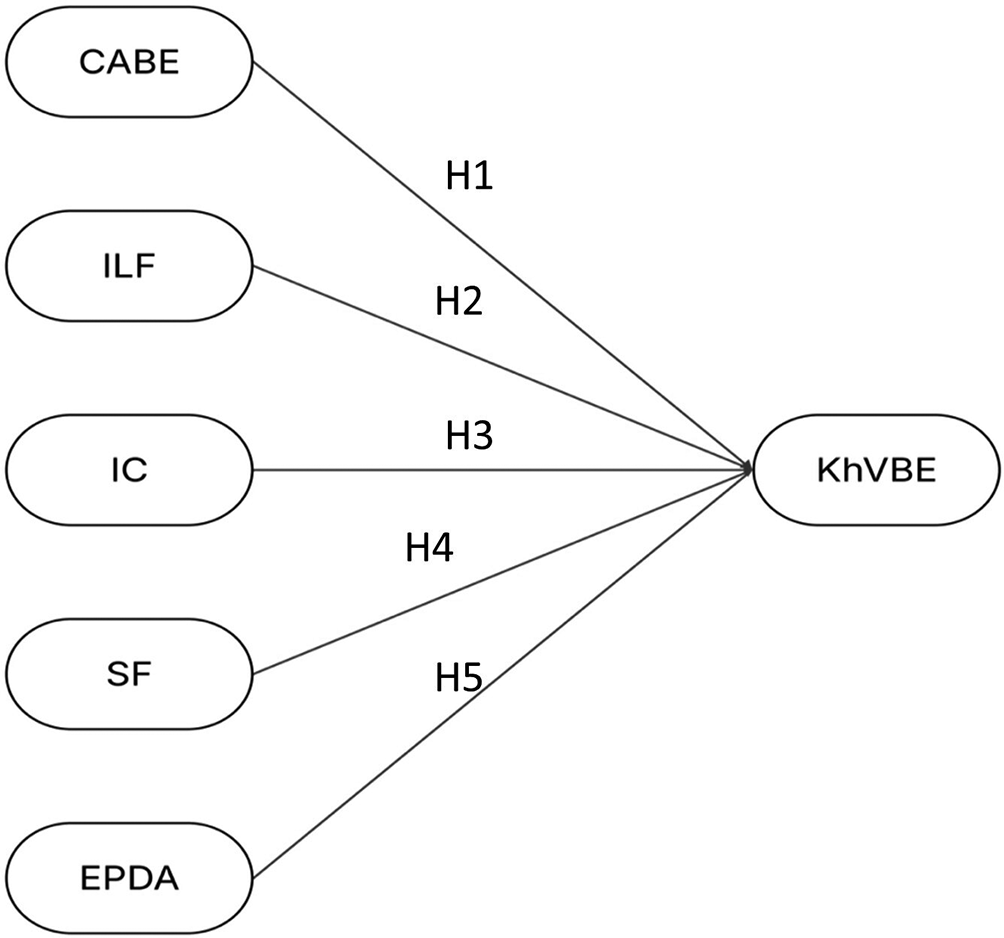
This research model, anchored in the theoretical underpinnings of the TWBE and DBE frameworks, delineates the hypothesized relationships (H1–H5) between critical independent constructs, namely CABE, ILF, IC, SF, EPDA and the dependent construct of the KhVBE. The empirical investigation, as illustrated in Figure 1, centers on Khmer ethnic minority primary students across three provinces in the Mekong Delta of Vietnam, thereby providing a contextually grounded analysis of bilingual education practices. Previous empirical investigations have demonstrated that the construct of CABE exerts a significant influence on the KhVBE, thereby underscoring the critical role of contextual factors in shaping the effectiveness and sustainability of bilingual education initiatives (Li et al., 2021; Udry & Berthele, 2025). Perez’s (2020) study demonstrates that ILF constitute critical determinants of bilingual competence among primary school students, thereby underscoring the imperative of designing pedagogical strategies that effectively cultivate these learner-specific capacities. Findings concerning the IC factor reveal that students’ engagement with online language resources critically influences their comprehension and retention outcomes, highlighting the pedagogical need to guide learners in the effective use of such information channels (Müller-Spitzer et al., 2018). Similarly, situational factors play a critical role in shaping the effectiveness of bilingual education for students. Empirical evidence further substantiates that these factors significantly influence educational outcomes, thereby extending the existing body of scholarship and providing a more robust empirical foundation for the design and evaluation of bilingual education programs (Castro et al., 2025). Finally, the EPDA dimension suggests that ongoing engagement in professional development is a key mechanism through which teachers adapt, refine, and sustain evidence-based instructional strategies, thereby ensuring long-term effectiveness and stability of bilingual education programs in primary schools (Echevarria et al., 2006). Drawing on these findings from the literature, we present the following hypotheses for our study:
CABE positively influence KhVBE.
ILF positively influence KhVBE.
IC positively influence KhVBE.
SF positively influence KhVBE.
EPDA positively influences KhVBE.
This study employed a cross-sectional quantitative research design using a structured questionnaire to investigate how five independent constructs: —contextual factors for bilingual education (CABE), internal learner factors (ILF), information channels (IC), situational factors (SF), and engagement in professional development activities (EPDA)—influence Khmer–Vietnamese bilingual education (KhVBE) for Khmer ethnic minority primary students. The study targeted educational administrators and teachers directly responsible for managing or delivering the Khmer–Vietnamese bilingual program in three provinces of the Mekong Delta—An Giang, Soc Trang, and Tra Vinh, regions with large Khmer communities (Le & Nguyen, 2021; Thach, 2021). A total of 300 participants, including educational administrators and teachers as key stakeholders in program implementation, were invited to take part in the survey. Given the context-specific nature of the study and the limited accessibility of this specialized population, purposive non-probability sampling was deemed appropriate to ensure the inclusion of information-rich respondents with direct program experience. Accordingly, 269 valid responses were collected via Google Forms between May and June 2025, yielding a response rate of 89.67%. This rate exceeds the minimum threshold commonly recommended for survey-based research in the social sciences and enhances the robustness and reliability of the dataset (Dillman, 2000).
Prior to completing the questionnaire, participants were presented with an informed consent statement at the beginning of the Google Form. The information sheet clearly outlined the purpose of the study, the voluntary nature of participation, assurances of confidentiality and anonymity, and participants’ right to withdraw at any time without penalty. Only participants who provided explicit informed consent were permitted to proceed with the survey by actively selecting a tick box indicating their agreement with the statement, “I agree to participate in this survey.” Data collection involved coordination with local Departments of Education and the distribution of survey links through official school communication channels. All completed questionnaires were screened for missing or inconsistent responses prior to analysis. Ethical approval for all study procedures was granted by the Ethics Review Board of the University of Social Sciences and Humanities, Vietnam National University Ho Chi Minh City.
Respondents provided demographic information and answered items relating to their experiences with Khmer–Vietnamese bilingual education, including contextual language use, learning situations, internal learner characteristics, information channels, and professional development activities. The sample consisted of 63.6% male and 36.4% female participants. Regarding qualifications, 65.1% held degrees in primary education, 23.4% majored in Khmer language teacher education, and the remainder specialized in other fields. In terms of educational attainment, 95.23% held bachelor’s degrees, 0.7% held master’s degrees, and the rest possessed other qualifications.
The study utilized a structured questionnaire consisting of items designed to measure the dependent construct—Khmer–Vietnamese bilingual education (KhVBE) (see Table 2)—and five independent constructs: contextual factors for bilingual education (CABE), internal learner factors (ILF), information channels (IC), situational factors (SF), and engagement in professional development activities (EPDA) (see Table 3).
| Variable | Construct items | Source | |
|---|---|---|---|
| KhVBE | KhVBE 1 | Help students form and develop the qualities of loving nature, family, school, and homeland | Adapted from MoET (2020); Leung (2005); Hoang (2007); Bui (2022); Dinh (2011) |
| KhVBE 2 | Promote minority languages in a linguistically diverse society | ||
| KhVBE 3 | Promote both majority and minority languages in a linguistically diverse society | ||
| KhVBE 4 | To gain deeper understanding of language and culture | ||
| KhVBE 5 | Help students initially form and develop bilingual competence | ||
| KhVBE 6 | Acquire basic knowledge of phonetics, writing systems, vocabulary, grammar, and communication activities | ||
| KhVBE 7 | Phonetics and script | ||
| KhVBE 8 | Numerals | ||
| KhVBE 9 | Pure Khmer words | ||
| KhVBE 10 | Common words of Pali-Sanskrit origin | ||
| KhVBE 11 | Loanwords from Pali-Sanskrit used in dictation | ||
| KhVBE 12 | Words, sentences, and the content of passages, essays, stanzas, and poems | ||
| KhVBE 13 | Content of a prose or poetic passage used for dictation | ||
| KhVBE 14 | Spelling rules for tonal or phonologically altered words | ||
| KhVBE 15 | Synonyms, antonyms, and homonyms | ||
| KhVBE 16 | Greeting customs according to Khmer traditions | ||
| KhVBE 17 | Khmer riddles | ||
| KhVBE 18 | Articles about traditional Khmer folk games and festivals | ||
| KhVBE 19 | Khmer folktale storytelling method | ||
| KhVBE 20 | Pattern-based practice | ||
| KhVBE 21 | Discussion | ||
| KhVBE 22 | Ongoing assessment throughout the learning process | ||
| KhVBE 23 | Continuous assessment within each lesson | ||
| KhVBE 24 | Teacher assessment of students | ||
| KhVBE 25 | Assessment through daily learning logs/records | ||
| Variable | Construct items | Source | |
|---|---|---|---|
| CABE | Measure the contexts for the application of bilingual education on a 5-point scale, where 1 = strongly disagree and 5 = strongly agree | Adapted from Dinh (2011); Mifsud et al. (2021); Mahdi (2014); Udry & Berthele (2025); Li et al. (2021) | |
| CABE 1 | Social context (residential communities) | ||
| CABE 2 | Political context (local political institutions) | ||
| CABE 3 | Local/community cultural context | ||
| CABE 4 | Respecting and promoting the status of minority languages and cultures | ||
| CABE 5 | Clear allocation of responsibilities and mechanisms for program monitoring and support | ||
| CABE 6 | Digital transformation context (application of technology and media in education) | ||
| CABE 7 | Use of multimedia software | ||
| CABE 8 | Use of social media platforms | ||
| CABE 9 | Use of computer-mediated communication tools | ||
| CABE 10 | Use of online reference materials | ||
| ILF | Measure the internal learner factors on a 5-point scale, where 1 = strongly disagree and 5 = strongly agree | Adapted from Perez (2020); Pavia et al. (2019); Baddeley (2003) | |
| ILF 1 | Students’ language proficiency | ||
| ILF 2 | Students’ learning progress | ||
| ILF 3 | Students’ sociocultural integration | ||
| ILF 4 | Students’ learning motivation | ||
| ILF 5 | Feelings of inferiority or low self-esteem | ||
| ILF 6 | Students’ health condition | ||
| ILF 7 | Living with extended family members (grandparents, aunts, uncles, etc.) | ||
| ILF 8 | Late acquisition of Vietnamese language by students | ||
| IC | Measure the information channels on a 5-point scale, where 1 = strongly disagree and 5 = strongly agree | Adapted from Müller-Spitzer et al. (2018); Udry & Berthele (2025) | |
| IC 1 | Through experiential learning activities | ||
| IC 2 | Through interdisciplinary educational activities | ||
| IC 3 | Through flag-raising ceremonies and weekly school assemblies | ||
| IC 4 | Through weekly homeroom/classroom management sessions | ||
| IC 5 | Through the school’s digital information channels | ||
| IC 6 | Through the school’s public announcement system | ||
| IC 7 | Through club and team activities | ||
| IC 8 | Through group-based/community activities | ||
| IC 9 | Through the school’s communication and awareness-raising campaigns | ||
| SF | Measure the situational factors on a 5-point scale, where 1 = strongly disagree and 5 = strongly agree | Adapted from Castro et al. (2025); Kwakkel et al. (2023) | |
| SF 1 | During school hours | ||
| SF 2 | Communicating with classmates | ||
| SF 3 | Communicating with teachers | ||
| SF 4 | Going to the pagoda | ||
| SF 5 | Visiting a clinic/hospital for medical check-ups | ||
| SF 6 | Communicating with family members | ||
| SF 7 | Communicating with neighbors | ||
| EPDA | Measure the engage in professional development activities on a 5-point scale, where 1 = strongly disagree and 5 = strongly agree | Adapted from Echevarria et al. (2006); Krulatz et al. (2024). | |
| EPDA 1 | Participate in conferences/seminars/forums on bilingual education | ||
| EPDA 2 | Participate in regular professional development sessions | ||
| EPDA 3 | Self-study through media platforms | ||
| EPDA 4 | Self-study via social media platforms | ||
| EPDA 5 | Attend short-term training courses | ||
| EPDA 6 | Attend language enhancement courses at educational institutions | ||
| EPDA 7 | Complete undergraduate training programs in the Khmer language | ||
| EPDA 8 | Complete postgraduate training programs in the Khmer language | ||
The instrument included 25 items for KhVBE and 43 items for the independent variables, all rated on a five-point Likert scale (1 = strongly disagree to 5 = strongly agree). These items were adapted from established measurement scales in bilingual education, educational psychology, and technology-enhanced learning. This study draws on established theoretical and empirical frameworks, including those proposed by Dinh (2011), Perez (2020), Müller-Spitzer et al. (2018), Castro et al. (2025), and Echevarria et al. (2006), thereby ensuring that each construct is conceptually grounded and empirically validated.
To ensure linguistic accuracy and contextual relevance, the questionnaire was translated into Vietnamese and reviewed by two experts: a Vietnamese language specialist with expertise in applied linguistics and an educational researcher with extensive experience in bilingual and minority education. Their review focused on preserving the semantic equivalence of items, improving clarity, and ensuring cultural appropriateness for respondents working in Khmer-language educational settings. Revisions were incorporated prior to dissemination. The final instrument also collected demographic information, including gender, professional specialization, and academic qualifications, to support descriptive profiling and subgroup analysis.
Data were analyzed using Partial Least Squares–Structural Equation Modeling (PLS-SEM) to examine the relationships among the study’s latent constructs. This approach was selected because it is appropriate for predictive modeling, complex structural relationships, and data that may not meet assumptions of normality. The analysis followed the standard two-step procedure recommended by Hair et al. (2019). First, the measurement model was evaluated to assess reliability and validity through factor loadings, Cronbach’s alpha, composite reliability, rho_A, average variance extracted (AVE), and discriminant validity criteria. Second, the structural model was assessed by examining multicollinearity, estimating path coefficients using bootstrapping, and calculating the model’s explanatory power (R2). These procedures ensured that the analytical framework was robust, replicable, and aligned with established PLS-SEM guidelines.
As shown in the Table 4, Khmer–Vietnamese bilingual education activities to Khmer ethnic minority primary students (KhVBE) was identified as the dependent variable of this research, which was constructed based on 25 items to measure factors. Factor loading values for items designed to measure each factor ranged from 0.700 to 0.882, all of which were greater than the threshold level of 0.6; the Cronbach’s coefficient was 0.986, which was higher than the threshold levels of 0.7, CR was 0.986, Λ was 0.986, and AVE was 0.580, which surpassed the allowable level of 0.7, 0.7, and 0.5, respectively and satisfied the requirement for a constructed variable in educational research. Based on the validation of construct reliability, it is concluded that the research construct of the Khmer–Vietnamese bilingual education activities to Khmer ethnic minority primary students in this study is reliable. These models explained 45.2% of the variance of the assessment of KhVBE (Adj. R2 = .452) which indicate the proportion of variance in each dependent variable that its predictors can explain by their respective pre-dictors, highlighting the strong predictive power of the model.
Table 5 presents the factor loadings, Cronbach’s alpha coefficients, Composite Reliability (CR), and Average Variance Extracted (AVE) for all independent constructs. The results demonstrate that Cronbach’s alpha values for all constructs exceeded the recommended threshold of 0.6, thereby ensuring satisfactory internal consistency among the indicators. Both the V and CR values were all above 0.70, confirming the stability and consistency of the indicators in measuring their respective constructs. Convergent validity was further established through AVE values, all of which surpassed the minimum threshold of 0.50, indicating that a substantial proportion of variance was captured by the constructs. Moreover, the factor loadings of each indicator on their associated constructs were consistently above 0.60, underscoring the strong convergent validity of the measurement model. Taken together, these results provide compelling evidence of the model’s robustness in terms of reliability and validity, thereby justifying its application for subsequent structural analyses.
Discriminant validity was evaluated using the Fornell–Larcker criterion (Fornell & Larcker, 1981), which stipulates that each construct must be empirically distinct from the others within the model. The results revealed that the square root of the AVE for each construct exceeded its correlations with other constructs, thereby providing evidence of discriminant validity. More specifically, the diagonal values - representing the square roots of the AVEs - were consistently higher than the corresponding inter-construct correlations. As shown Table 6 indicates that each construct shares greater variance with its own observed indicators than with any other construct in the model. Collectively, these findings substantiate the model’s robust discriminant validity and establish a solid foundation for confidently proceeding with the evaluation of the structural model.
Structural model testing and analysis are conducted following the validation and reliability of the measurement model. In assessing the structural model, the variance inflation factor (VIF) must be examined to ensure no multicollinearity issues among predictors. As presented in Table 7, multicollinearity diagnosis yielded no value of VIF in the regression models higher than 10 (in this research VIF = 1.351 to 2.343), indicating no risk of serious multicollinearity of the models (Hair et al., 2009; StataCorp, 1997).
| Relationship | VIF |
|---|---|
| CABE → KhVBE | 2.343 |
| ILF → KhVBE | 2.106 |
| IC → KhVBE | 1.431 |
| SF → KhVBE | 1.638 |
| EPDA → KhVBE | 1.351 |
Figure 2 presents the R2 values, which indicate the proportion of variance in each dependent variable that its predictors can explain. The R2 value for is 0.462, indicating that 46.2% of the variance in KhVBE is explained by CABE, ILF, IC, SF, and EPDA. This research exhibits the Beta coefficient (β) of attaining the KhVBE compared with not attaining such ones, with β > 0 indicates a positive effect, and β < 0 indicates a negative effect. The results of hypothesis testing for the proposed research model are presented in Table 8 and Figure 2. The assessment of the structural model yielded empirical evidence supporting all proposed hypotheses. The findings reveal that CABE is the sole construct lacking a statistically significant effect on KhVBE (β = −0.049, t = 0.646, p = 0.519). In contrast, KhVBE demonstrates significant associations with ILF and EPDA, reflected in the respective path coefficients of 0.156 (t = 2.130, p = 0.034) and 0.123 (t = 2.218, p = 0.027). Moreover, the path from IC to KhVBE is statistically significant, with a coefficient of β = 0.171 (t = 3.225, p = 0.001). Notably, the linkage between SF and KhVBE emerges as both highly significant and robust, as evidenced by a path coefficient of 0.487 (t = 8.343, p = 0.000).
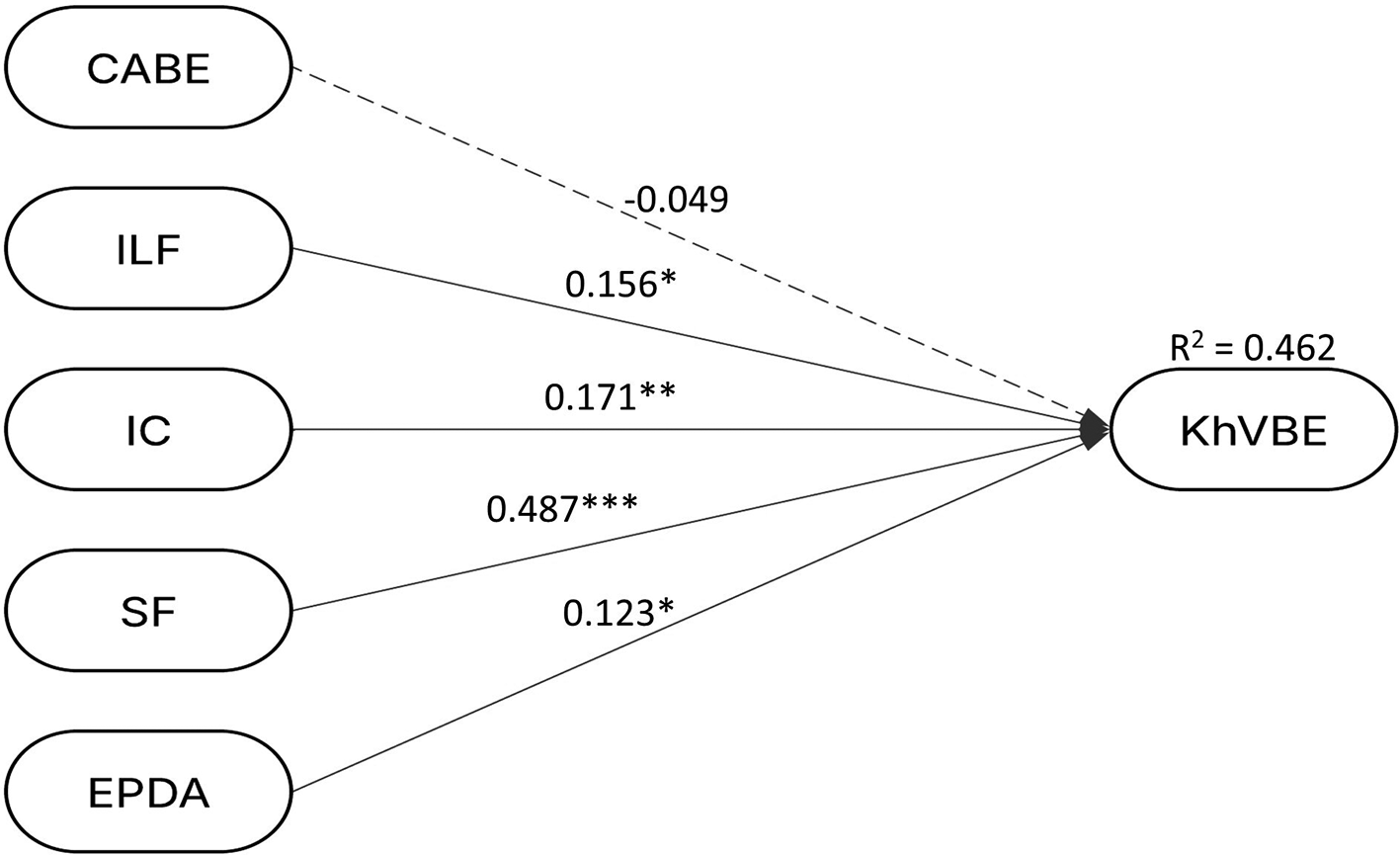
Note: ** p < 0.01; * p < 0.05.
This study investigated the factors shaping the effectiveness of Khmer–Vietnamese bilingual education (KhVBE) for Khmer ethnic minority primary students through a multidimensional model informed by the TWBE and DBE frameworks. The results, drawn from a sample of 269 educational administrators and teachers across three provinces in the Mekong Delta, offer a clear understanding of which conditions most strongly support successful bilingual learning in this context. Overall, the findings show that internal learner factors (ILF), information channels (IC), situational factors (SF), and engagement in professional development activities (EPDA) significantly contribute to KhVBE outcomes, while contextual factors for bilingual education (CABE) do not demonstrate a measurable influence. These results both reinforce and extend prior research in multilingual education and provide important insights for policy and practice.
A key finding concerns the non-significant influence of CABE on KhVBE. This result diverges from previous studies that identified contextual features—such as sociocultural environments, political structures, and digital transformation—as important drivers of bilingual learning (Li et al., 2021; Udry & Berthele, 2025). The lack of significance in this study suggests that broader contextual conditions alone may be insufficient to improve bilingual education outcomes unless they are accompanied by strong implementation mechanisms, adequate technological infrastructure, and teacher readiness. This highlights the need to explore mediating or moderating variables, such as school leadership capacity or teacher autonomy, in future research. At a policy level, although contextual improvements remain important, these findings reinforce the idea that effective bilingual education requires coherent support that directly reaches the classroom and learner experience.
In contrast, the significant effects observed for ILF, IC, SF, and EPDA confirm the centrality of learner, instructional, and environmental factors in bilingual learning. Internal learner factors (ILF) were found to meaningfully influence KhVBE, aligning with prior work emphasizing the roles of motivation, cognitive resources, sociocultural integration, and learning attitudes in second language acquisition (Perez, 2020; Pavia et al., 2019; Baddeley, 2003). These results underscore the need for instructional practices and assessment approaches that are sensitive to individual learner differences, particularly in linguistically diverse and resource-constrained contexts like the Mekong Delta.
Information channels (IC) also had a significant positive effect, highlighting the importance of access to diverse communication resources—both digital and school-based—in supporting bilingual development. This finding resonates with research showing that learners benefit from exposure to electronic resources, social media platforms, and audiovisual materials, which can enhance vocabulary learning, attention, and motivation (Müller-Spitzer et al., 2018; Almansour & Kurt, 2022; Balcı & Kartal, 2021; Namaziandost et al., 2025; Dizon & Dokkyo, 2021). For Khmer learners, who often lack consistent access to high-quality instructional materials, information channels appear to function not simply as supplementary tools but as essential components that broaden opportunities for language exposure within and beyond the school environment.
Situational factors (SF) emerged as the strongest predictor of KhVBE, providing compelling evidence that authentic, real-world language use is fundamental to sustaining bilingual learning. The significant influence of SF aligns with ecological and sociocultural perspectives on bilingualism, which emphasize that learners develop linguistic competence most effectively when they can use both languages in meaningful contexts (Castro et al., 2025; Dinh, 2011). Activities such as temple attendance, family communication, community interaction, and daily exchanges in Khmer and Vietnamese create natural opportunities for language practice. These results underscore the importance of strengthening home–school–community linkages and ensuring that bilingual education policies support both classroom instruction and everyday language practices.
Finally, the significant effect of EPDA highlights the essential role of teacher professional development in promoting effective bilingual instruction. This aligns with studies showing that ongoing professional learning enhances instructional quality, expands pedagogical strategies, and strengthens teachers’ professional identity in multilingual settings (Echevarria et al., 2006; Krulatz et al., 2024; Babinski et al., 2024). Within the TWBE framework, teacher expertise is a major determinant of bilingual program success, especially for ethnic minority learners who require instruction that is linguistically, culturally, and pedagogically responsive. The findings strongly suggest that investments in teacher training—whether through workshops, language enhancement courses, or formal degree programs—are critical for sustaining bilingual education in the Mekong Delta.
Taken together, these findings offer important theoretical and practical contributions. Theoretically, the study provides empirical validation of a multidimensional model of Khmer–Vietnamese bilingual education grounded in the integration of TWBE and DBE, thereby addressing a critical gap in the contextualized application of bilingual education theories in Vietnam. By combining the reciprocal language development focus of TWBE with the maintenance-oriented and context-sensitive approach of DBE, the study advances a framework that is both theoretically robust and adaptable to local conditions. Practically, the findings highlight key levers aligned with these frameworks, including learner-centered support, diversified communication channels, context-rich learning environments, and sustained teacher development. These dimensions support both bilingual proficiency and long-term academic growth, contributing to more equitable, culturally responsive, and sustainable education for ethnic minority students.
This study empirically examined the influence of CABE, ILF, IC, SF, and EPDA on the KhVBE outcomes through the integrated lens of TWBE and DBE. Drawing on data from 269 administrators and teachers across three Mekong Delta provinces and analyzed using PLS-SEM, the findings indicate a high level of stakeholder consensus supported by reliable and valid measures. Structural model results reveal that four factors: ILF, IC, SF, and EPDA—exert significant positive effects, while CABE shows no measurable impact. Interpreted through TWBE, these findings underscore the importance of reciprocal language development facilitated by communication and interactional resources, whereas DBE highlights the role of context-sensitive learning environments and sustained teacher capacity in supporting long-term bilingual development. Collectively, the study advances a contextually grounded framework explaining how learner characteristics, institutional supports, and sociolinguistic contexts jointly shape bilingual education outcomes among ethnic minority students in Vietnam.
The study provides both theoretical and practical contributions. Theoretically, it validates a comprehensive, multidimensional model of bilingual education within a context that has been understudied in existing literature, thereby strengthening empirical understanding of TWBE implementation in ethnic minority settings. Practically, the findings illuminate key leverage points for educational policymakers and school leaders. Strategies that enhance learner support, expand information and communication channels, strengthen home–school–community connections, and institutionalize continuous professional development for teachers are likely to contribute meaningfully to the improvement and sustainability of Khmer–Vietnamese bilingual programs.
While prior research has examined TWBE and DBE, empirical understanding of KhVBE within its contextual conditions in Vietnam remains limited. Addressing this gap, the present study adopts an integrated TWBE–DBE perspective to offer a more contextually grounded understanding of bilingual program implementation. By aligning reciprocal language development with maintenance-oriented and context-sensitive approaches, the findings provide actionable insights for policymakers and educators to design, adapt, and scale sustainable bilingual education initiatives for ethnic minority groups in Vietnam
Despite being carefully designed and conducted, the study has some flaws. The primary limitation lies in the fact that the survey sample was drawn exclusively from educational administrators and teachers directly involved in delivering the Khmer–Vietnamese bilingual education program to primary school students in three provinces of the Mekong Delta, Vietnam. Consequently, future research should broaden the sampling frame to encompass other provinces across the Mekong Delta and extend the scope of investigation to include Khmer ethnic minority students at the lower and upper secondary levels, thereby providing a more comprehensive understanding of Khmer–Vietnamese bilingual education within the general education system. In addition, incorporating further contextual and pedagogical factors would contribute to building a richer empirical database regarding teachers’ evaluations and experiences in implementing the Khmer–Vietnamese bilingual education program.
| Views | Downloads | |
|---|---|---|
| F1000Research | - | - |
|
PubMed Central
Data from PMC are received and updated monthly.
|
- | - |
Provide sufficient details of any financial or non-financial competing interests to enable users to assess whether your comments might lead a reasonable person to question your impartiality. Consider the following examples, but note that this is not an exhaustive list:
Sign up for content alerts and receive a weekly or monthly email with all newly published articles
Already registered? Sign in
The email address should be the one you originally registered with F1000.
You registered with F1000 via Google, so we cannot reset your password.
To sign in, please click here.
If you still need help with your Google account password, please click here.
You registered with F1000 via Facebook, so we cannot reset your password.
To sign in, please click here.
If you still need help with your Facebook account password, please click here.
If your email address is registered with us, we will email you instructions to reset your password.
If you think you should have received this email but it has not arrived, please check your spam filters and/or contact for further assistance.

Comments on this article Comments (0)