Keywords
Bibliometric mapping, virtual reality, keyword analysis, PRISMA, ethnoscience

Bibliometric mapping, virtual reality, keyword analysis, PRISMA, ethnoscience
Virtual reality (VR) is emerging as a dynamic and transformative force in educational technology, expanding far beyond its original purpose in gaming and simulations to new potentials in learning, particularly in STEM fields. Essentially, VR is a technology that utilizes computer-generated environments to simulate realistic or imaginary experiences, providing users with a sense of depth and immersion in their virtual space.1 This perception of physical presence in a non-physical world allows for higher levels of engagement and interaction than conventional learning.2 VR’s unique pedagogical potential comes from its ability to make abstract scientific concepts more sensory and understandable.3 Compared to traditional learning methods that rely on abstract symbols such as equations and diagrams, VR allows students to explore and interact with scientific phenomena in a physically impossible yet concrete, three-dimensional way. For example, students can be virtually shrunk to the size of a human cell to explore its organelles, navigate the vastness of the solar system, or conduct high-stakes experiments in a virtual laboratory.4,5 This ability to provide learning experiences that would otherwise be impossible for various reasons is a significant potential. Proponents of this technology have long predicted VR’s unique potential to revolutionize education at a fundamental level, transforming the cognitive processes of learning and enhancing conventional learning resources.
The core of VR in science education is the transition from symbolic representation to sensory experience. In fields like physics, chemistry, and biology, where students struggle to understand phenomena that are too big or too small to see, VR can help them visualize them.6 VR technology can help students learn in ways that traditional, passive learning cannot. For example, it lets students interact with virtual objects, try things out, and directly explore complex systems. This active, experience-based method is not just an extra tool; it changes the way science is taught and understood. Moreover, VR provides a distinctive opportunity to incorporate cultural context and local knowledge into scientific education through ethnoscience. VR can bring ethnoscience to life. Ethnoscience is the study of how different cultural groups understand and categorize the natural world. Students can virtually look at how a community used to do science. This method not only deepens their understanding of science, but it also helps them appreciate the variety of knowledge and how science is important in different cultures.7
The implications of integrating VR into ethnoscience research are significant, transcending mere pedagogical improvement to tackle concerns of cultural preservation and equity in science education.8 VR can validate and contextualize indigenous knowledge systems, such as traditional farming methods, herbal drinks, and traditional medicine, as rigorous forms of science by allowing researchers and students to experience them firsthand.9–11 This process shifts ethnoscience from a field that merely describes things to one that lets people experience them, helping Western and indigenous scientific paradigms better talk to each other. Crucially, VR can help safeguard intangible cultural heritage by creating persistent, immersive records of traditional practices and environments that may be vulnerable to modernization or environmental change, ensuring that this knowledge remains accessible for future generations.
Research on VR in education has grown rapidly to date, especially between 2016 and 2025, when the number of publications rose steadily and significantly. This marks a shift from an experimental to a well-studied and widely accepted area of educational technology. Since it was first conceived, VR technology has advanced rapidly, with new features, improvements, and advancements never seen before.12 There is a lot of research on using VR in science education, so we need to conduct a structured study to examine research trends over the last 10 years. In this regard, this article uses bibliometric analysis and a systematic literature review (SLR) to examine trends in VR research across publicly accessible academic databases.
SLR is an ideal method for systematically identifying and synthesizing prior studies on a specific topic. This approach minimizes bias by conducting a more comprehensive search than relying on a handful of studies. Then, to provide a quantitative map of research trends, a bibliometric analysis of keywords used in the selected studies was conducted. Overall, this study aims to identify research trends in VR for science learning over the past 10 years. This study is expected to answer the following questions: 1) What are the keywords that have become trends in VR research over time? 2) What is the overall trend of VR research in science learning? 3) What are the trends in VR research by location, year, level, type of research, and discipline?
Even though there are many new studies examining how virtual reality (VR) can be used in science education, most reviews have focused on how well the technology works, how well students learn, or how well VR-based learning environments are designed. Few studies examine how VR research and culturally grounded perspectives, such as ethnoscience, work together. Ethnoscience emphasizes the importance of integrating local environmental knowledge, indigenous knowledge, and cultural practices into formal science education.
However, the extent to which VR research has addressed this cultural dimension remains unclear. Consequently, there is a need for a comprehensive mapping of VR research trends in science education that not only identifies dominant themes and research patterns but also highlights opportunities for integrating VR with ethnoscience approaches. By combining a systematic literature review and bibliometric analysis, this study aims to provide an overview of global research trends in VR for science education and to explore its potential implications for ethnoscience-based learning.
This review was conducted qualitatively using the systematic literature review (SLR) method and quantitatively using bibliometric analysis, followed by knowledge synthesis of the obtained articles. The SLR in this study followed the PRISMA (Preferred Reporting Items for Systematic Reviews and Meta-Analyses) guidelines.13 Metadata was sourced from several academic databases, namely Scopus and CrossRef, using the Publish or Perish software. The search used the Boolean query (“virtual reality” OR “VR”) AND (“science education” OR “science learning”) to identify publications on immersive technologies in scientific instructional settings. To focus on the most recent research on VR-based science education, the search was limited to peer-reviewed journal articles published in English between 2016 and 2025. The last search took place in January 2026. The search was also limited to English-language research articles published between 2016 and 2025, thereby excluding review articles, non-English articles, and articles outside the specified time range. Data were collected and checked for duplicate data or data that did not meet the criteria. The PRISMA framework was used to do the screening process in two steps. First, we reviewed the titles and abstracts to exclude articles that weren’t about science education or only briefly mentioned virtual reality. Second, the full texts of the other articles were reviewed to ensure they met the Population–Concept–Context (PCC) framework’s inclusion criteria. We excluded articles that were difficult to access or lacked sufficient methodological information from the final dataset.
Inclusion and exclusion criteria followed the PCC (Population, Concept, and Context) format14 ( Table 1). Data were collected in a dataset with RIS format (.ris), which contains important metadata, such as title, author, year, volume, issue number, and keywords. A bibliometric analysis of the article dataset was conducted using VOSviewer. The analysis focused on keyword co-occurrence to identify dominant research themes and relationships among topics in the selected publications. VOSviewer generated network visualizations and temporal maps that illustrate the evolution of research topics. These visualizations were then interpreted qualitatively to understand the development of VR research in science education and to explore emerging links with ethnoscience-related contexts. Articles included in the bibliometric map were those that included “virtual reality” and “science education” among their keywords.
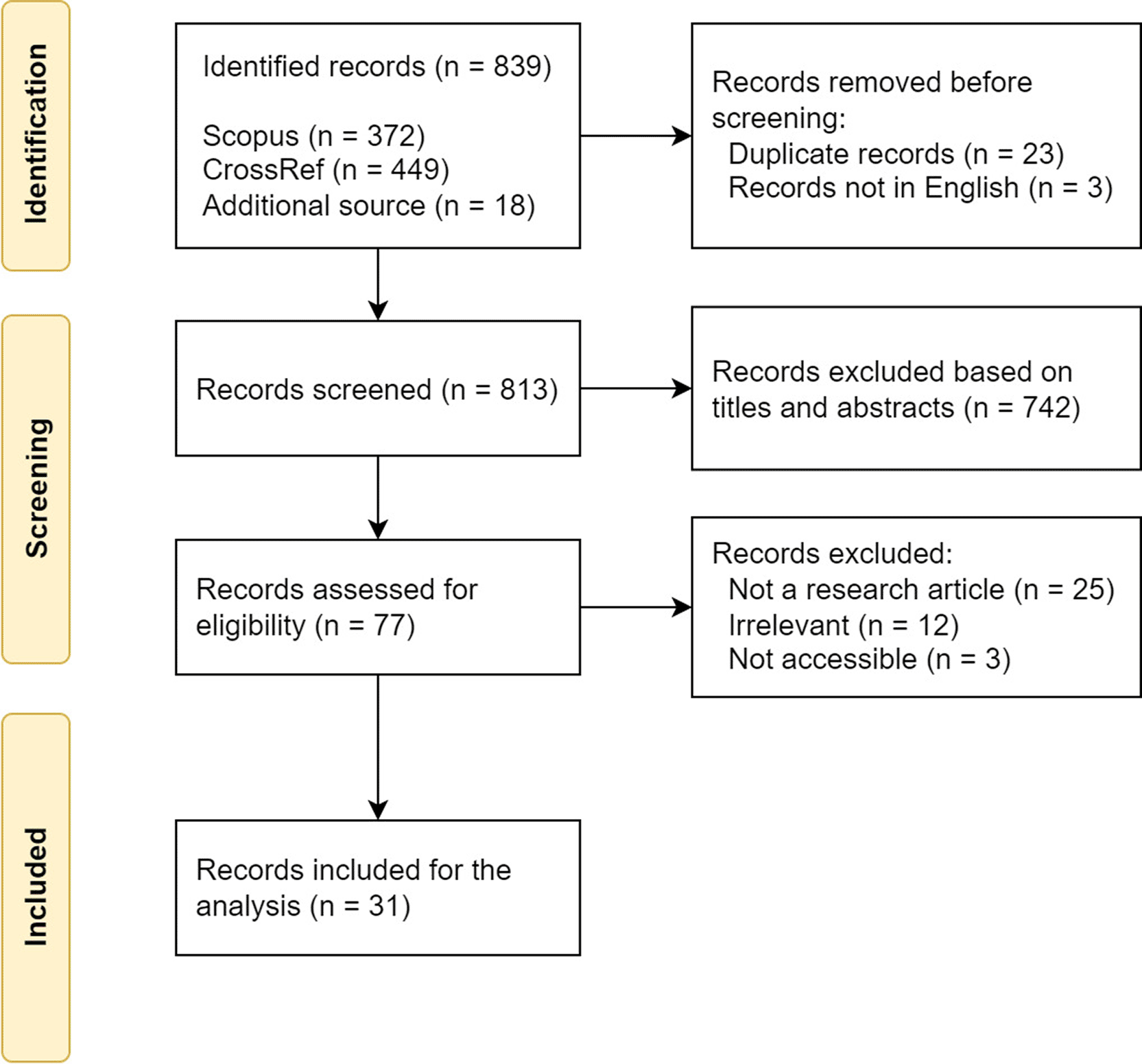
The initial search yielded 839 articles from Scopus (n = 372), CrossRef (n = 449), and additional sources (n = 18) ( Figure 1). Prior to screening, 26 duplicate and non-English documents were removed. The first screening screened non-research articles (reviews, grey papers, proceedings, theses/dissertations) and articles that did not meet the criteria based on their titles and abstracts, reducing the total to 813 articles. The number of articles after the initial screening was reduced to 77. The next screening involved reviewing the full texts of the articles, which also identified those that were inaccessible or locked behind paywalls. This stage reduced the number of articles to 31, which were deemed to cover VR and science education and were therefore included in the bibliometric analysis and systematic literature review ( Figure 1). The final dataset was small, but the strict inclusion criteria ensured that all selected articles focused on how virtual reality could be used in science education. This focused dataset allowed for a more in-depth analysis of thematic trends and research patterns in the field.
A dataset comprising 31 articles was uploaded to VOSviewer, and a bibliometric map was subsequently generated ( Figure 2). The results of the bibliometric analysis using VOSviewer identified dynamic research trends centered on VR applications in science education. The keyword map indicates that VR is the central keyword, with the highest frequency, serving as a primary link to other topics. Meanwhile, the temporal trend is evident through the color gradation from purple to yellow on the bibliometric map.
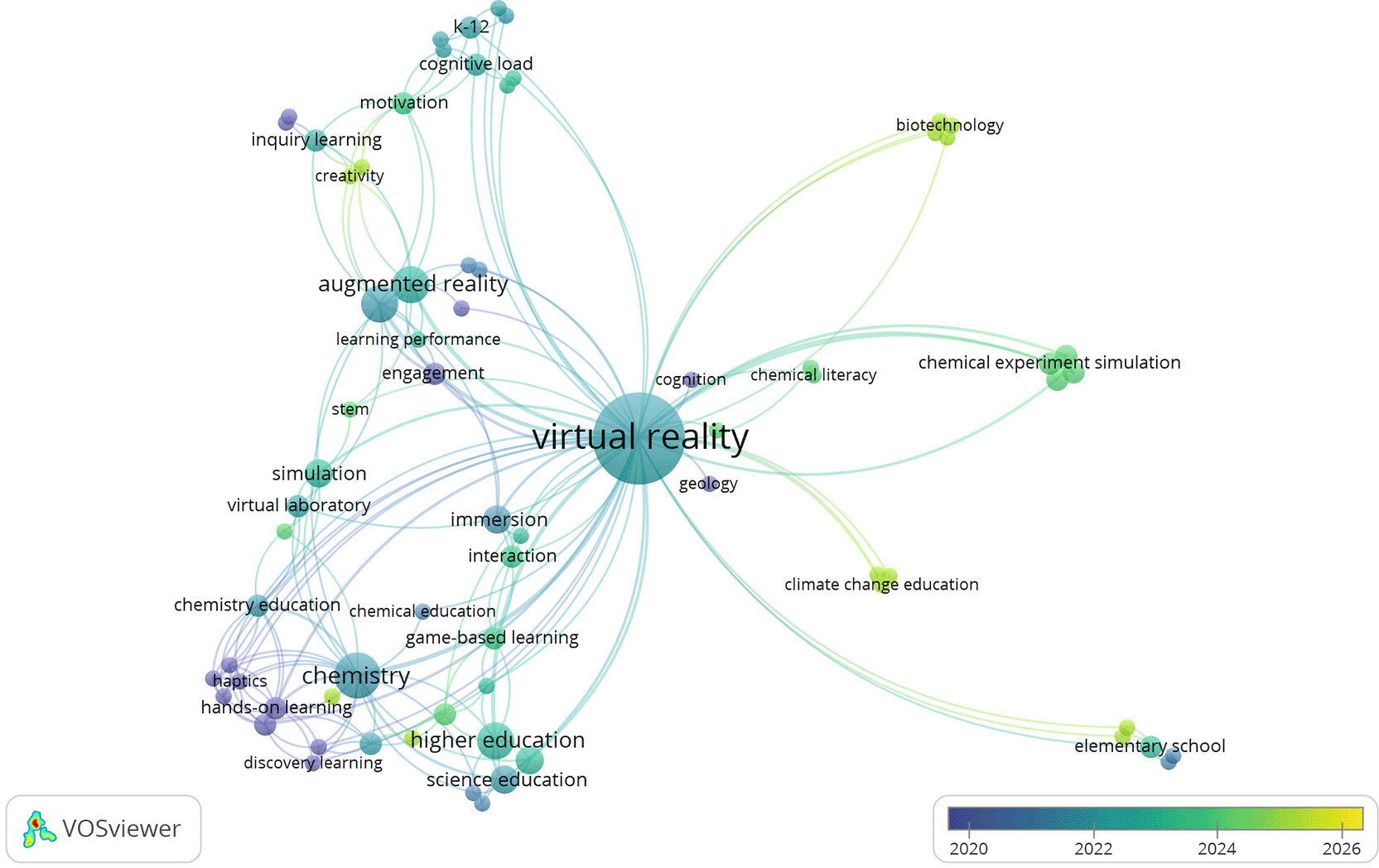
Cluster analysis shows that the research focus is split into a few main areas. The biggest cluster shows how this technology is being used in chemistry and physics classes. Words like “simulation” and “virtual laboratory” are very similar. This shows a strong trend toward using VR to create safe yet realistic lab experiences, such as using haptic technology to make learning-by-doing more effective. Another group of words is about the teaching and psychological effects of using technology in K-12 and STEM education. Some of these words are “learning performance,” “engagement,” and “cognitive load.” Another trend noticed is that topics such as “augmented reality,” “higher education,” and “chemistry” come up frequently. This is because people often compare augmented reality (AR) to virtual reality (VR). Both of these technologies aim to create a “virtual environment,” but VR is more immersive than AR.15 The keyword “higher education” indicates a trend toward VR in higher education. The things studied in higher education are often more complicated or even dangerous,16,17 which could explain this. The same reasons may also explain why VR is becoming more popular in chemistry classes.
Temporal analysis, visualized through color on the map, further clarifies the evolution of research topics. Keywords in blue, representing early publications circa 2020, tend to focus on the fundamental concepts of technology and its impact on learning. Over time, research trends shift, as indicated by the green cluster (2022–2025), which highlights applications in more specific and interdisciplinary fields, including “biotechnology,” “ethnoscience,” and “climate change education.” This shift indicates that the scientific community is moving from a general exploration of VR to utilizing it as a specific tool to raise awareness of interdisciplinary issues. Furthermore, the emergence of keywords in yellow, although small, indicates that research on the application of VR and AR at lower levels of education, such as “elementary school,” is expected to be a growing focus area in the future.18 Overall, this bibliometric map confirms that the use of virtual reality technology in science education is a rapidly developing field with significant potential for continued exploration across various disciplinary contexts ( Figure 2).
Most publications are from Asia, with 17 articles from 7 countries ( Table 2). China had the most publications, with six articles, followed by Taiwan and Indonesia, with 4 and 3 articles, respectively. America contributed four articles, with three from the United States and one from Mexico. Furthermore, Europe contributed significantly, with seven publications from five countries; Finland and the UK had the most, with two articles each. Furthermore, articles came from Australia and South Africa, with 2 and 1, respectively. It appears that publications are concentrated in Asia, particularly China, as a previous literature review found China to be the top publisher in VR research in education.19
Based on the year and publication volume, a positive trend in the use of virtual reality (VR) in science learning is observed from 2016 to 2025 ( Table 3). In the early years, the number of articles published was relatively small, with one article each in 2017 and 2018. Since 2019, interest has steadily increased, with the number of publications rising from 3 to 4 and peaking at 5 in 2021. Although there was a temporary decline to 2 articles in 2022, the research trend increased again and stabilized at four articles in 2023 and 2024.
The most significant peak in interest occurred in 2025, when the number of articles increased sharply to 6. By educational level, research on VR in science learning is predominantly concentrated at the tertiary level (17 articles), followed by secondary schools (middle and high; 9 articles) and elementary schools (4 articles). Only two articles did not specify the educational level or were intended for a general audience.20,21 These data indicate that research on the application of VR in science education is predominantly at the tertiary level. This is because learning at the tertiary level demands more complex skills and cognitive abilities, making VR-based visualization highly desirable.19
Meanwhile, by subject or discipline, research on VR in science education focuses most on chemistry (10 articles) and biology (7 articles). General subjects have six articles, while environmental science and physics each have five articles. The least research is found in geography and geology, with only 1 article per subject. This indicates that VR is currently being explored more in core science fields.
Meanwhile, based on the methods used, R&D (Research and Development) was the most dominant approach in the last ten years, occurring 20 times. This method indicates a strong focus on developing VR-based products or learning models. The second most frequently used method was experimental, with nine studies, indicating a tendency to test the effectiveness of the developed products. Meanwhile, case studies were used three times, whereas comparative, exploratory, and mixed methods were used only once each. These data suggest that research in this area is predominantly focused on development and testing rather than on comparative or exploratory analysis.22 However, these less frequent methods can provide new insights into VR research, such as one study comparing VR in a mobile physics laboratory with similar VR in a room-scale environment.23
Regarding data collection, there is a clear concentration of research publications that utilize specific methods. The most dominant methods are tests and questionnaires, which together account for over half of all publications, with 10 and 9 publications, respectively. This indicates a strong preference for quantitative data collection in this field. A second tier of methods, including feedback forms, case studies, and interviews, is used moderately, while a long tail of methods, such as group discussions, surveys, neuroimaging, and observations, are far less common, each appearing in only one or two publications. This trend suggests that the field relies heavily on a few key methods for data collection, with a limited number of studies employing more complex or less traditional approaches.
Further analysis revealed a variety of topics; some studies focused on delivering content knowledge, for example, through the visualization of molecular structures, while others focused on practical simulations or hands-on practice in virtual environments as a substitute for traditional laboratories ( Table 4).
| Subjects | Selected topics |
|---|---|
| Chemistry | Reaction rate (ethno-chemistry),26 colloid,25 molecule structure,38 organic chemistry,39 alloys,40 laboratory work,41 molecular geometry,42 atomic structure,6 FTIR spectroscopy43 |
| Biology | Ecology and biodiversity (teh oyol),24 biotechnology,44 forensic molecular biology,45 microscope experiment,46 microbiology,47 cells,4 anatomy48 |
| Unspecified/general | Climate change,49 renewable energy power plant,50 green energy21 |
| Physics | Quantum chemistry,51 motion,52 solar system5 |
| Environmental | Ocean coastal,53 ecosystem |
| Geography | Urban design fieldwork54 |
| Geology | Erosion and deposition55 |
Among this diversity of topics, a small number of studies identified the potential for an ethnoscience approach, as seen in the subtopics of reaction rates, colloids, ecology & biodiversity, and biotechnology.24–26 The use of VR in these topics can be interpreted as an effort to bridge the gap between formal science and local contexts and traditional practices. While still limited, these initial indications are worth examining further because they reveal a gap for VR to serve as a connecting medium between modern science and local wisdom. The emergence of these topics, although not yet mainstream research, warrants further study to better understand the implications of VR as a research and learning tool in the context of ethnoscience.
Ethnoscience, in anthropological studies, refers to a system of knowledge built to classify and interpret objects, activities, and events within a particular cultural community.27 In recent years, ethnoscience has begun to be recognized and integrated into formal science education, resulting in a positive trend in its publications.28,29 Ethnoscience-based learning involves integrating the teaching and learning process with knowledge derived from local cultures to make it more relevant and meaningful.30 Alongside the development of ethnoscience, VR technology has also experienced a significant increase in research on science education, as previously described. Therefore, the combination of these two major trends, namely the drive to contextualize science through ethnoscience approaches and the ability of VR to create immersive and authentic learning environments, has resulted in several studies specifically exploring the integration of VR and ethnoscience.31,32
VR is seen as an ideal technological medium because it can address the challenges of ethnoscience. The goal of an ethnoscience approach to create more relevant learning for students can be further realized through VR. Ethnoscience is essentially indigenous knowledge that is highly dependent on specific local contexts and conditions.33 For example, the Subak system in Bali, which combines hydrological and agricultural knowledge with specific social structures and religious philosophies, is closely linked to the environmental, ecosystem, and ecological conditions of the areas it inhabits.34 Similarly, the Baduy people’s conservation knowledge is closely tied to the environmental, ecosystem, and ecological conditions of the areas they inhabit. VR can bring these contextual examples directly into the classroom without sacrificing depth. With VR, students not only read descriptions of Subak or Bajo people’s conservation practices but can also experience an immersive simulation of being a Pekaseh (leader) managing water distribution, understanding the relationship between temples and rice fields, and observing seasonal planting cycles. They could also experience how Baduy people practice sustainable farming, using natural resources with respect for their sacred lands.35 This approach makes ethnoscience learning more engaging, authentic, and meaningful, allowing students to interact with local knowledge that is difficult to access.
In line with this, VR is also a new and engaging content-delivery medium for students, although it is not yet fully immersive or capable of simulating environments. Ethnoscience-based media with non-immersive VR on the spatial.io platform has also been developed into a virtual gallery, allowing students to explore the media while viewing the content, much like a museum or gallery.24,25 This approach offers the advantage of presenting content in a structured and narrative manner, which is invaluable in the ethnoscience context. In this virtual space, students can connect artifacts, scientific visualization models, and contextual information (such as descriptive text or videos of traditional processes) in a cohesive flow. Thus, this virtual gallery functions not only as an engaging new medium but also as an interactive digital archive that effectively facilitates in-depth contextual understanding, allowing students to build connections between elements of local knowledge independently.
However, to successfully combine VR and ethnoscience, people need to consider both the technical and cultural aspects. Accuracy and validation are the two main problems that need to be solved. First, there is the problem of being true to and correct about culture. Ethnoscience includes practices, rituals, and classification systems unique to a given culture. So, replication in VR needs to be done with high accuracy, and it would be best if it were checked by people who know what they are talking about.8
If this level of accuracy and authenticity is not maintained, cultural heritage can be distorted or misinterpreted. Second, there is the problem of how to check the validity. A lot of VR research in science uses tests and questionnaires to measure cognitive aspects. At the same time, the effectiveness of VR in ethnoscience must also be judged by how well it helps people understand the context and by its cultural appropriateness. Consequently, subsequent research must achieve methodological equilibrium by integrating additional qualitative techniques (e.g., comprehensive interviews, observations, and case studies) to validate and enhance the significance of the experiences provided by VR technology.
Virtual Reality (VR) has profound implications for science education and ethnoscience research, as this immersive technology enhances the learning experience through interactive simulations that promote comprehension of intricate scientific concepts and enable the meaningful representation of cultural contexts in education. STEAM-based VR media can improve many parts of science literacy, such as content, context, competence, and attitudes, among elementary school students. This is a big improvement over traditional methods.36 At the secondary level, the use of VR in biodiversity education enhances scientific literacy by offering immersive learning experiences that facilitate direct engagement with abstract environmental concepts.37 Furthermore, incorporating VR into a problem-based learning framework significantly enhances digital literacy and critical thinking, demonstrating that VR facilitates not only the comprehension of scientific concepts but also the cultivation of 21st-century technological skills. From an ethnoscience standpoint, VR facilitates the incorporation of indigenous knowledge and cultural practices into scientific frameworks, as demonstrated by research teams that have created educational models that merge local cultural values with VR to situate scientific learning within community traditions and practices.
Research on Virtual Reality (VR) in science education and ethnoscience also creates new opportunities for studies that combine science literacy, digital literacy, and knowledge of local cultures into a single teaching framework. From an ethnoscience standpoint, integrating ethnovlog media with VR rooted in local ecological contexts (e.g., tea ecology) offers culturally pertinent, interactive experiences that enhance students’ scientific process skills while embedding learning within community traditions. Consequently, VR research prompts educators and researchers to reevaluate pedagogical design to prioritize technological fluency, culturally relevant knowledge, and scientific reasoning, thereby cultivating educational environments that are both inclusive and significant for learners from diverse sociocultural backgrounds.
There are some problems with this study that we should keep in mind when interpreting the results. First, the dataset included only publications indexed in Scopus and CrossRef. This could mean that important studies from other academic databases, such as Web of Science, ERIC, or Google Scholar, were not included. Second, the search was limited to English-language publications, which may have made it harder to find studies published in other languages. Third, the dataset of 31 articles is small because of the strict inclusion criteria used in this study. However, it may not show the full range of VR research in science education. Finally, the bibliometric analysis depends on the accuracy of the keywords provided by the authors, which can vary across studies and affect how thematic clusters are identified. Subsequent research may augment the dataset by integrating additional databases and by utilizing supplementary analytical methods, such as citation or network analysis.
Virtual Reality (VR) has significant potential to address longstanding challenges in science learning, particularly in subjects such as physics and chemistry, by enabling the visualization of abstract and complex concepts through immersive, interactive simulations. Studies indicate that VR technology has been increasingly explored for its capacity to enhance instructional design, presence, and engagement in educational settings, with keyword mappings frequently highlighting virtual reality and science education as central themes in the literature. This shift in focus from foundational VR learning tools toward cross-disciplinary approaches suggests that VR is being positioned not only to support conceptual understanding but also to foster higher-order cognitive skills and deeper student engagement. The implications for VR’s application in ethnoscience research are particularly meaningful, as VR can serve as a bridge between students and culturally contextualized learning experiences that connect scientific understanding with local knowledge and cultural practices.
| Views | Downloads | |
|---|---|---|
| F1000Research | - | - |
|
PubMed Central
Data from PMC are received and updated monthly.
|
- | - |
Provide sufficient details of any financial or non-financial competing interests to enable users to assess whether your comments might lead a reasonable person to question your impartiality. Consider the following examples, but note that this is not an exhaustive list:
Sign up for content alerts and receive a weekly or monthly email with all newly published articles
Already registered? Sign in
The email address should be the one you originally registered with F1000.
You registered with F1000 via Google, so we cannot reset your password.
To sign in, please click here.
If you still need help with your Google account password, please click here.
You registered with F1000 via Facebook, so we cannot reset your password.
To sign in, please click here.
If you still need help with your Facebook account password, please click here.
If your email address is registered with us, we will email you instructions to reset your password.
If you think you should have received this email but it has not arrived, please check your spam filters and/or contact for further assistance.

Comments on this article Comments (0)