Keywords
face-to-face, mental health application, psychology, self-monitoring, online intervention, gamification

This article is included in the Social Psychology gateway.
face-to-face, mental health application, psychology, self-monitoring, online intervention, gamification
The global healthcare system faces challenges in managing mental health problems, primarily due to a gap between the demand for mental health services and the availability of trained professionals. This problem is particularly prevalent in developing countries including Indonesia, due to some important factors such as mental health workers shortages, stigma, and poorly funded mental health services.1 In this context, our study emphasizes the necessity of empowering individuals to manage their mental health proactively. Central to this empowerment is the enhancement of self-awareness, which forms the bedrock of emotional intelligence. Self-awareness, as conceptualized in this study, refers to an individual’s understanding of their internal states and interpersonal interactions.2 This research investigates the potential of gamified interventions, implemented via a smartphone application, to foster self-awareness in early adults.
The prevalent disparity between the escalating demands for mental health services and the limited number of healthcare professionals underscores the imperative of mental health management. This raises the question of how to empower individuals, families, and communities to effectively manage and enhance their mental well-being on a daily basis.3 This empowerment can begin with individuals enhancing their self-awareness when it comes to their mental health. Self-awareness forms the foundation of emotional intelligence, which is the capacity to consistently monitor one’s emotions.4 Self-monitoring is often used as a therapy to increase awareness of individual emotions.5 Awareness was associated with depressive mood in non-clinically depressed participants, while awareness only had an indirect relationship with QOL.6 Insights derived from individual reflection are connected to well-being, although the connection may not be direct.
Self-awareness can be broadly defined as the degree to which people are consciously aware of their internal states and their interactions or relationships with others.2 Self-awareness is a person’s knowledge and understanding of himself. In other words, self-awareness includes recognition of ourselves and the ability to be aware of ourselves. Developing self-awareness means that the person has a clear picture of characteristics, values, attitudes, interests, and needs. Self awareness is the realistic examinations, ideals, and potential and current abilities of ourselves and using them in decision makings so that it benefits ourselves and our relationship with others.7 Self-awareness refers to an individual’s understanding and knowledge of oneself. It involves recognizing and being conscious of our own thoughts, feelings, and behaviors. Developing self-awareness involves gaining a clear understanding of one’s characteristics, values, attitudes, interests, and needs. It also entails objectively assessing our strengths, weaknesses, and potential, and using this information to make informed decisions that benefit both ourselves and our relationships with others.
According to Duval and Wicklund (1972), self-awareness refers to the ability to observe oneself. In this case, a person actively recognizes, processes, and stores information about themselves.8 Self-awareness can be assessed experimentally by exposing individuals to stimuli that emphasize themselves, such as cameras, mirrors, viewers, and voice recordings from someone they know. These reminders of one’s own presence can reliably generate high self-awareness. Self-consciousness, on the other hand, is a concept that centers around the self. There are two distinct constructs that measure private self-consciousness, namely self-reflection and self-rumination.8 Self-reflection involves a genuine curiosity about oneself, where individuals are highly interested in understanding their emotions, values, thought processes, attitudes. This introspection often leads to positive outcomes, such as improved self-knowledge and better self-regulation, which are associated with good mental health. Meanwhile, self-rumination refers to an excessive focus on one’s worries and a failure to recognize one’s strengths. This form of attention typically leads to negative consequences.
Technology-based Interventions
Nowadays the use of smartphones has become a daily habit for many people. Numerous studies have examined internet-based intervention and show its potential practical in clinical psychological setting.9 Gamification techniques have been extensively utilized in psychological interventions to enhance long-distance engagement. Gamification methods can be an alternative to face-to-face interventions and increase engagement in Internet interventions. In this study, researchers used a mood tracker application that uses gamification principles. In this mood tracker, there are several gamification elements, including missions, badges, and progress bars. In this application, individuals are requested to engage in reflection regarding their daily emotional experiences using symbols and brief written expressions. By observing what they write, they are able to gauge their current mood based on the progress bar. Hasan et al.9 add that self-tracking was positively associated with feelings of accomplishment. Furthermore, Davis & Brock argued that people who write in the first person in reflection notes can increase self-awareness because I, myself, and mine indicate that the person is thinking about themselves.8 There are several common strategies used to increase self-awareness include reflective writing activities, personality frameworks, and Emotional Intelligence assessments.10 One of the most significant adaptive functions of self-awareness is self-regulation, which involves changing behavior, resisting temptation, managing mood, making choices from different options, and disregarding irrelevant information.8 Therefore, in this study, researchers used smartphone application-based gamification to examine self-awareness and its impact on oneself.
Studies employing gamification systems have demonstrated its efficacy in increasing participants’ self-confidence,11 enhancing engagement for the desired behavior,10,12 boost motivation,13,14 and mediate emotional engagement.15 It is important to note, however, that these outcomes are partly attributed to participants’ preference for gamified programs over traditional, non-gamified approaches,16 indicating that user’s personal characteristics can significantly influence the results obtained.17 Despite these findings, research examining the impact of gamification on individual self-awareness remains limited, even though self-awareness plays a crucial role in overall well-being.
The majority of health and well-being characteristics were predicted by self-awareness. Additionally, the results indicated that self-awareness can enhance wellbeing and health.18 Emerging evidence suggests that self-regulation, metacognitive awareness and reflective competence which is the cognitive component of self-awareness can be strengthened through gamification.19–21 Numerous studies indicate that gamification enhances engagement with programs designed to sustain or increase desired behaviors.21,22 If gamified applications can effectively support individuals in improving their mental health, they may help reduce the existing mental-health service gap. This study aims to examine whether a gamification-based approach can increase self-awareness and to determine whether outcomes differ between gamified interventions delivered with face-to-face meetings and those delivered without them.
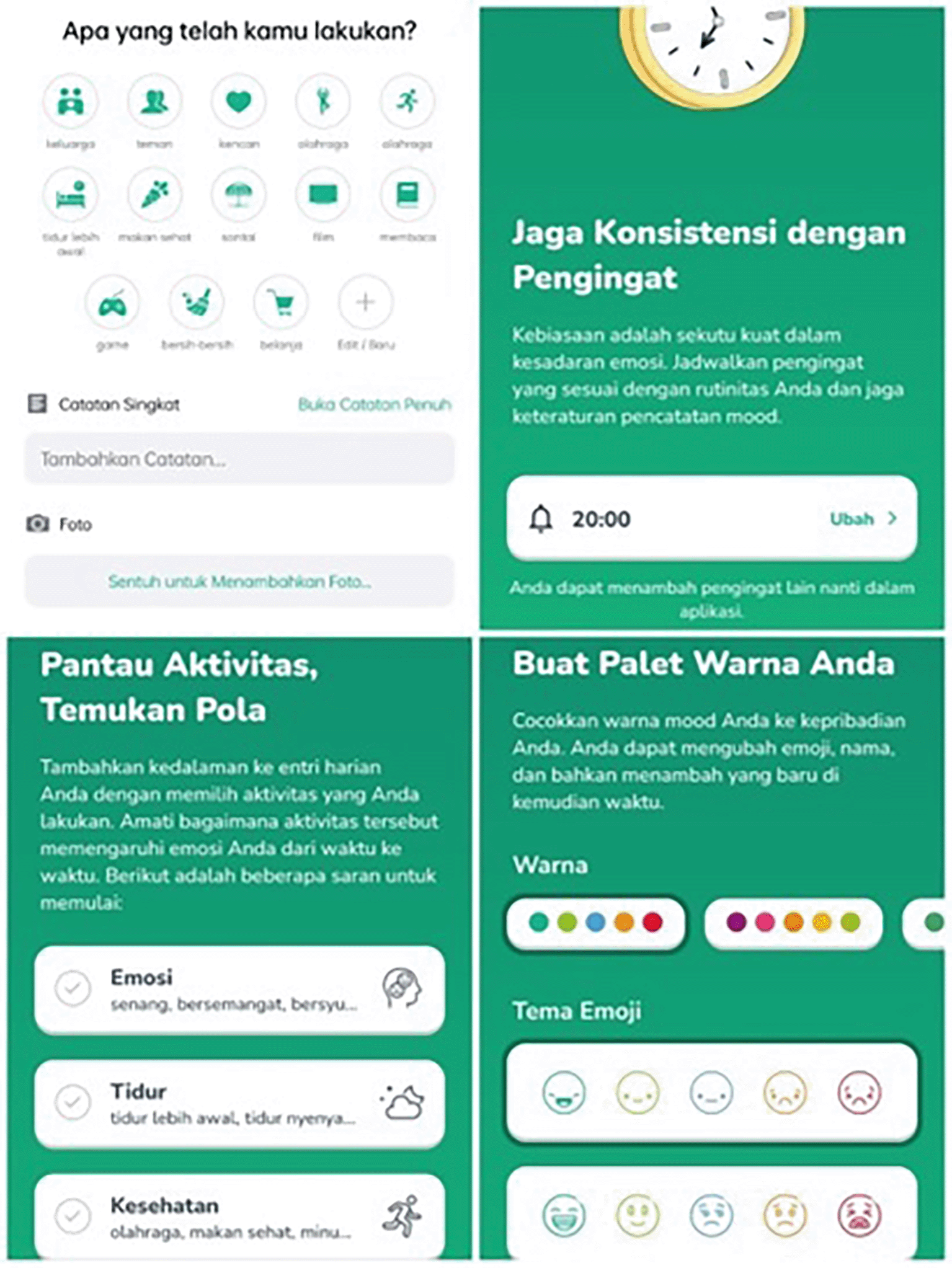
The gamification instrument used in this study is a smartphone application called Daylio, which incorporates several gamification elements, including progress bars, performance graphs, and achievement badges. These features enable users to engage in self-observation quickly and enjoyably. The application supports journaling in a more interactive format, not only through written entries but also by allowing users to select mood emoticons and activity icons in various colors. To reduce forgetting and increase user engagement, the application sends an automatic reminder at 8 p.m. each day.
Gamification in this study is implemented through a system in which participants select one of five emoticons that best represents their daily condition, ranging from the lowest to the highest mood. Participants may also add notes, photos, or symbols to provide context for the mood they report. Consistent daily entries earn participants badges as rewards, reinforcing regular engagement. The application also allows users to monitor their emotional development through weekly statistical summaries presented in full-color graphical displays. In addition, users can identify which activities influence their mood each day based on accumulated daily data. Through this design, gamification encourages participants to record their experiences in an engaging and visually appealing format. This study uses Daylio as the gamification platform (Figure 1).23
In this study, we employed Sutton’s conceptualization of self-awareness, which assesses an individual’s internal states and interactions with the environment based on observable outcomes. The instrument used in this research is the Self Awareness Outcomes Questionnaire (SAOQ), which was developed by Sutton in 20162 and adapted for this research with permission from the original author. The questionnaire was translated into Indonesian and demonstrated acceptable reliability, with a Cronbach’s alpha value greater than 0.7. It consists of 38 items, where lower scores indicate lower self-awareness and higher scores indicate higher self-awareness. Items are rated on a 5-point Likert scale (1 = never, 2 = rarely, 3 = sometimes, 4 = often, 5 = always). Higher scores reflect better adaptation and lower psychological distress. Total scores range from 38 to 190, representing the participant’s level of self-awareness. Data were analyzed using Jamovi 2.2,24 and the study received ethical approval from the Ethics Committee of the Faculty of Medicine, Sebelas Maret University/Dr. Moewardi Hospital (No. 1.388/VII/HREC/2023), granted on 31 July 2023.
To collect data, participants were selected based on willingness, and they were then put into the control group. We used the STROBE cohort checklist when writing our report.25 The next step is that participants complete the questionnaire before received the intervention. Researchers conducted two different experiments on different groups of participants.
Study 1
A pretest–posttest design was used to evaluate the effectiveness of the program. The study manipulated participants’ behavior through a gamified smartphone application used consistently over a 30-day period. The application incorporates gamification elements such as progress bars and badges, and its user-friendly interface allows participants to engage with it at any time. To assess the extent to which the gamification program increased self-awareness, the researchers conducted two experiments. The first experiment included weekly offline support-group discussions. Twenty-five participants initially took part in this phase; however, one participant did not complete the study, resulting in a final sample of 24 participants for Experiment 1.
Participants
The subjects used in this research were students at Sebelas Maret University, Surakarta, who were in the early adulthood phase, with an age range of 18 years to 22 years, who were active users of internet services and were willing to take part in the entire series of research activities. Before experimenting, Subjects were unaware of the connection between the inventory and experimental participation. The subject group was unaware of the manipulation they were experiencing in the experiment.
Evaluation
Pre-test measurements were carried out using the SAOQ (Self-awareness Outcomes Questionnaire) compiled by Sutton (2016)2 by referring to 4 main concepts and breaking them down into 38 items, namely understanding and influence on oneself, self-development and progress, built interactions, acceptance of other people, and business-related outcomes2 (Sutton, 2016). Psychometrically, the SAOQ has Cronbach’s alpha reliability > 0.7, which shows that the SAOQ scale has sufficient consistency in exploring respondents’ self-awareness. The results of the Barlett test on SAOQ also show significant results, where each item can describe the aspect to be measured well.
Pre-test and post test were delivered using an online questionnaire platform Once the data collection completed, we carried out data cleaning, coding and scoring following the SAOQ guidelines. All the data was uploaded in Open Science Framework DOI 10.17605/OSF.IO/QZCR8 https://osf.io/qzcr8/.
Experiment study 2
The second experiment was carried out by giving the same treatment to participants, but this experiment was carried out entirely online without face-to-face meetings. The researcher only gave reminders every week and let the subjects carry out the program independently. In this second experiment, 40 subjects participated, and two subjects failed, so the total number of subjects who took part in the experiment in this study was 38 people.
Participants study 2
The subjects used in this research had the same criteria as experiment I, namely students from Sebelas Maret University, Surakarta, who were in the early adulthood phase, with an age range between 18 years and 22 years, who were active users of internet services and were willing to take part in the entire series of research activities.
Evaluation study 2
The instrument in this research uses the SAOQ measuring tool and a gamification-based application. As in experiment I, SAOQ will be given as a pre-test and post-test, and then the results will be compared to determine the effect.
Analysis study 2
All data is done using a form. Researchers carried out cleaning, coding, and scoring following the SAOQ guidelines. Researchers use Jamovi in data processing. Paired sample t-tests are used to see the effectiveness of the intervention program. All the data was uploaded in Open Science Framework DOI 10.17605/OSF.IO/QZCR826 https://osf.io/qzcr8/.
A total of 25 participants filled out the questionnaire and then used the gamified application program. During the research process, 1 participant dropped out because he still needed to complete the data, so the total number of participants who completed the experiment until the end of the experiment was 24 people. Only 24 participants were able to complete the experiment completely. The descriptive statistics of our pre test and post test data is displated in Table 1.
| Study 1 | N | Age | Gender | Min | Max | Var | SE | ||||
|---|---|---|---|---|---|---|---|---|---|---|---|
| 18 yrs | 19 yrs | 20 yrs | 21 yrs | Female | Male | ||||||
| Pretest | 24 | 1 | 16 | 7 | 0 | 22 | 2 | 98 | 120 | 39.362 | 1.28 |
| Postest | 24 | 1 | 16 | 7 | 0 | 22 | 2 | 100 | 123 | 40.109 | 1.29 |
| N | Mean | Median | SD | SE | |
|---|---|---|---|---|---|
| Postest | 24 | 112 | 112 | 6.33 | 1.29 |
| Pretest | 24 | 111 | 111 | 6.27 | 1.28 |
The table present demographic and statistical data from a study involving two phases, there are pretest and posttest. It can be seen that in study 1, followed by 24 participants with an age range from 18 to 20. The participants consisted of 22 females and 2 males.
Based on this table, it can be seen that the post test was slightly higher than the pre test score. The standard error (SE) is also nearly the same, meaning the precision of the mean estimates remains stable ( Table 2).
The table comparing the result of self-awareness scores before and after an intervention. The increase in the mean score increased from 111 to 112, suggest a slightly improvement in self-awareness after the intervention. The p-value (0.001) indicates a statistically significant improvement, meaning the changes were unlikely to have occurred by chance. The effect size (Cohen’s d = 0.760) suggest that the intervention had a moderate to large impact on self-awareness ( Table 3).
The table showed a slight increase in the number of participant classified as having “good” self awareness from 7 to 8 participants. It is mean that the intervention give a small positive shift in self-awareness ( Table 4).
Since the p-value is less than 0.05, the difference between pre-test and post-test scores is statistically significant. The average increase in scores from pre-test to post-test is 1.58 points ( Table 5).
From the paired T-test, it was found that the gamification program had a significant role (p < .001), meaning less than .05, meaning H0 was rejected, and meaning there was a difference between the pre-test and post-test. Study 1 shows that the gamification program combined with regular face-to-face meetings has a significant influence on individual self-awareness. The calculations also show that it has a significant effect size, namely 0.760, meaning that the gamification program has a significant effect size on these changes.
The mean between the pre-test and post-test is 1 point, where the pre-test is 111 and the post-test is 112, which means there was an increase in self-awareness in participants after participating in the gamification program in Study 1. So, the gamification of study 1, where The gamification intervention program combined with face-to-face meetings, was able to increase individual self-awareness significantly (p < .001) and had a moderate effect size (0.760).
In study two, there were 40 participants who took part in study 2. In the process, two subjects dropped out, so there were 38 participants left for the process. The distribution of demographic characterictics of respondents displated in Table 4. The reason for dropping out was that the subject did not complete the data because he needed to remember and fill in the pre-test and post-test completely. This research uses jamovi as a data processing instrument. From the calculation results, the results obtained are as in the table below:
| N | Mean | Std. deviation | df | p | t | SE difference | Cohen’s d | |
|---|---|---|---|---|---|---|---|---|
| Before Intervention (Pretest) | 24 | 111 | 6.27 | |||||
| After Intervention (Postest) | 24 | 112 | 6.33 | 23 | 0.001 | 3.72 | 0.425 | 0.760 |
| Before intervention | After intervention | |||
|---|---|---|---|---|
| Category | N | % | N | % |
| Very Good | 0 | 0 | 0 | 0 |
| Good | 7 | 29.16 | 8 | 33.3 |
| Enough | 17 | 70.84 | 16 | 66.67 |
| Less | 0 | 0 | 0 | 0 |
| Very Bad | 0 | 0 | 0 | 0 |
| Total | 24 | 100 | 24 | 100 |
| statistic | df | p | Mean difference | SE difference | Effect size | ||||
|---|---|---|---|---|---|---|---|---|---|
| Postest | Pretest | Student’s t | 3.72 | 23.0 | 0.001 | 1.58 | 0.425 | Cohen’s d | 0.760 |
| Study 1 | N | Age | Gender | Min | Max | Var | SE | ||||
|---|---|---|---|---|---|---|---|---|---|---|---|
| 18 yrs | 19 yrs | 20 yrs | 21 yrs | Female | Male | ||||||
| Pretest | 38 | 4 | 30 | 3 | 1 | 32 | 6 | 100 | 121 | 26.1 | 0.829 |
| Postest | 38 | 4 | 30 | 3 | 1 | 32 | 6 | 101 | 121 | 29.9 | 0.887 |
| Before intervention | After intervention | |||
|---|---|---|---|---|
| Category | N | % | N | % |
| Very Good | 0 | 0 | 0 | 0 |
| Good | 10 | 26.32 | 12 | 31.57 |
| Enough | 28 | 73.68 | 26 | 68.43 |
| Less | 0 | 0 | 0 | 0 |
| Very Bad | 0 | 0 | 0 | 0 |
| Total | 38 | 100 | 38 | 100 |
| Paired T-test difference test | |||||||||
|---|---|---|---|---|---|---|---|---|---|
| statistic | df | p | Mean difference | SE difference | Effect size | ||||
| Postest | Pretest | Student’s t | 2.96 | 37.0 | 0.005 | 0.947 | 0.320 | Cohen’s d | 0.480 |
| N | Mean | Std. deviation | df | p | t | SE difference | Cohen’s d | |
|---|---|---|---|---|---|---|---|---|
| Before Intervention (Pretest) | 38 | 110 | 5.11 | |||||
| After Intervention (Postest) | 38 | 111 | 5.47 | 37 | 0.005 | 2.96 | 0.320 | 0.480 |
| N | Mean | Median | SD | SE | |
|---|---|---|---|---|---|
| Postes | 38 | 111 | 111 | 5.47 | 0.887 |
| Pretes | 38 | 110 | 110 | 5.11 | 0.829 |
There were 38 participants in the study 2, six of them were male and the rest were female. The range age was from 18 to 21 years, which was dominated participants aged 19 ( Table 6).
The table showed a slight increase in the number of participants classified as having “good” self-awareness from 10 to 12 participants. It means that the intervention gives a slight positive shift in self-awareness ( Table 7).
The difference between pre-test is less than 0.05, that showed the difference between before and after intervention was statistically significant. The average of increase number was 0.947 ( Table 8).
From the paired T-test, it was found that the gamification program had a significant role (P < .001). The results show an effect size of 0.480, meaning it has a low effect ( Table 9).
The table shows a mean difference between the pre-test and post-test, which was 1 point from 110 to 111, which means that the post-test score has increased compared to before receiving treatment. From these results, it can be concluded that the gamification program can significantly increase individual self-awareness (p < .001) and has a low effect size of 0.480 ( Table 10).
Based on experiment 1, gamification, together with regular face-to-face meetings, can increase self-awareness through the gamified self-monitoring method. This program has enormous potential to be developed into an internet-based intervention. Looking at the results of study 1, researchers want to see further the effects of implementing gamification if carried out by individuals independently without weekly FGD assistance from professionals.
In study 2, the results showed that there were differences before and after the gamification program intervention. Gamification can increase individual self-awareness significantly even though it has a low effect size. Gamification can maintain subject engagement in the intervention. This shows that gamification can help individuals to be actively involved with the intervention even though the facilitator is only a regular reminder to participants. This condition shows that gamified intervention has great potential to support the mental health movement that touches the subject’s independent domain.
Gamification helps subjects carry out self-observation in a fun way. From these two experiments, it was found that gamification with regular face-to-face meetings in study 1 and gamification without face-to-face meetings in study 2 showed the results of being able to maintain participants’ engagement in the gamification program and increase their self-awareness scores significantly. In the research, it was found that the effect size of gamification programs involving face-to-face interaction had a medium effect size (0.76), and gamification programs carried out online had a small effect size on increasing self-awareness (0.48).
Experiments 1 and 2 showed that there was an increase in self-awareness after subjects continuously participated in the gamification program to monitor their emotions. In the experiment, subjects consistently monitored their emotional conditions; this condition increased their self-monitoring abilities and influenced their self-awareness. In self-monitoring, they not only define the emotions they feel but also evaluate their lives every day. A person’s ability to monitor and evaluate is an essential component in self-regulation and goal-directed behavior.2
Self-monitoring used to see one’s progress often facilitates gamification through meaningful indicators and visualizations such as graphs and progress bars27 (Hassan et al., 2020). Observation of cognition, motivation, and consequences, which have self-focused consequences, can lead to self-awareness.28 Focusing on oneself can encourage someone to become consciously aware of one’s self. Increasing individual self-awareness can support individual mental health conditions. By knowing themselves, individuals can grow and develop mental health.29 As mentioned by Kauer et al. who, stated Increasing awareness of emotions is an essential therapeutic step in most psychotherapies for depression and other mental illnesses by preparing individuals for changing their cognitions, beliefs, and schemas.5
Gamification has shown strong potential for supporting psychological interventions by increasing individual engagement in treatment. It has become one of the leading technology-based engagement strategies in recent years.27 Self-monitoring, a key component of many gamified systems, helps individuals track their behaviors and performance, thereby increasing their self-awareness. This process of self-tracking is central to personal development and is directly relevant to the enhancement of self-awareness. Research indicates that monitoring one’s activities within a gamified context can provide meaningful benefits, including enjoyable flow experiences and increased motivation to engage with the intervention.27 Studies on internet-based interventions also demonstrate that such approaches promote greater independence in behavior change.30 This independence plays an important role in addressing the gap between the availability of mental-health professionals and the needs of the population.
Recalling personal events, and using cognitive processes can enable us to communicate with ourselves.8 Research shows the effectiveness of meaning therapy which can increase self-awareness.5 Self-awareness has an important role in self-awareness in a person’s life. Self monitoring is one way to assess behavior. Self-monitoring can also act as an intervention, because the existence of self-monitoring can cause reactivity in the subject, namely in the form of changes in behavior. A person who observes his own behavior is called self-monitoring where the observer and the person being observed are the same person.5 Research conducted by Webb et al shows that there is a relationship between self-monitoring and self-awareness. In experiments conducted by people with high self-monitoring, they were more easily influenced by manipulation of self-awareness.31 Study conducted by Kauer also shows that self-monitoring is able to increase a person’s emotional self-awareness.5 This research strengthens that self-monitoring can have an impact as seen from the impact of increasing a person’s self-awareness.
In this study, one of the elements of gamification is a progress bar. Participants will periodically fill in the emotions they feel and see the curve of their emotional condition in graphical form. Progress bars provide a feeling of satisfaction in themselves to encourage individuals to complete their targets and feel competent with the tasks that have been carried out.32 Looking at the notes they made themselves makes individuals more aware of themselves and gives them pleasure. Individuals feel they can track their condition and understand what and why they have certain emotions.
Participants’ discussions about the gamification program are an element of social diffusion that plays a significant role in this program. In regular meetings, participants are asked to volunteer to convey their feelings after using the gamification application for a week. Discussions about this application provide social support and influence other members to use the application. When users are involved in discussing the program, social diffusion occurs, which spreads ideas or behavior through examples that are similar to community members, which will encourage other members to engage with the program.12
Gamification makes individuals observe themselves; emoticons make them happy to fill in the journal in the application. The visuals of the game and ease of operation make gamification applications enjoyable. Previous research states that an excellent visual configuration will provide a feeling of pleasure.33 Feelings of pleasure are a reinforcement contingency that can strengthen individuals to carry out the same behavior.
Efforts to maintain mental health by utilizing technological advances are one of the considerations for researchers to see the effectiveness of the gamified self-monitoring program method in increasing the self-awareness of individuals who use applications on smartphones. In treatment, professional guidance is required. On the other hand, treatment can also be done independently, while gamification can be an alternative that brings the two together.
This research shows that weekly meetings are periodic check-ups that can make individuals more aware of the observations they make about themselves. In research based on self-monitoring and personalized feedback, it was found that the most frequently mentioned benefit was an increase in self-awareness, insight, and self-management.34 Through self-monitoring, individuals can learn to be aware of emotional states and identify and differentiate between different emotions in different contexts, leading to effective emotional communication and productive decision-making.5
Online health therapy is a concern because the need arises from limited personal contact and reaching people who need help in hard-to-reach places.35 Online intervention can be as effective as face-to-face intervention on various variables such as depression, anxiety, stress, burden, level of empowerment, and quality of life.35 Both online and face-to-face support groups show significant results in making treatment decisions. However, the results show that the face-to-face group shows better exchange of information, gaining recognition and concern with other patients than online intervention.36
This is in line with previous research, that guided and guided meetings in an intervention will have an impact. In research conducted by Karyotaki et al on depressed patients, it was shown that guided iCBT had more effective results than guided iCBT in depressed individuals, where guided intervention facilitated participants to meet with professionals, while guided intervention was carried out without professional/self-help treatment. This shows that treatment carried out with facilitator meetings or guided intervention has more optimal results than guided or self-help or those that do not hold meetings at all.37
Internet-based self help intervention can be an anonymous and flexible service alternative.38 Then it was also shown that internet-based therapy has flexible time, intensity, and focus on privacy and anonymity, compliance with internet-based programs is high.37,39 Based on research conducted on 300 participants who experienced chronic pain and depressive symptoms, it shows that internet-based interventions can be an alternative means to conventional face to face psychotherapy in the treatment of chronic illness patients. Internet-based interventions can be used to motivate engagement in face-to-face treatment and prepare patients for face-to-face therapy.38
Gamification is the use of elements in a non-game context.40 In line with these conditions, participants who interacted with the gamified application performed better than those who interacted with the non-gamified application.41 Experiments conducted on diabetes sufferers showed an increase in self-management, it is believed that gamification can improve self-management. Gamification can change the behavior of users and increase motivation to manage their conditions for the better.42 Comparisons showing that gamification is considered an interesting program compared to non-gamified programs make gamification an attractive solution.43
Experiment 1 shows that the effect size is larger compared to experiment 2. This could possibly be caused by the presence of face to face meetings. In research conducted by Eichenberg et al, it shows that there is no significant difference between the results of face-to-face based interventions and interventions carried out via remote settings44 (Eichenberg et al., 2022). This research also shows that the quality of the intervention results and the quality of self-report or self-monitoring do not differ. This is in line with the results of this research, where the two gamification programs both had significant results in increasing individual self-awareness. However, if we look at the effect size, it shows that the effect size of programs that involve relationships with professionals/therapists has a greater impact than subjects who carry out the program without being accompanied by a professional. This could be because in the intervention program relationships are important in the intervention process.
The large effect size is caused by approximately 30 days of implementation. In experiment 1, the effect size was greater than in experiment 2, the researcher assumed that the gamification program had the potential to be carried out independently and have a significant effect on its users. The effect will be greater if the gamification-based program is guided by a facilitator. A person’s ability to access and understand their internal conditions and use them to make behavioral decisions is a basic form of self-awareness.45 Self awareness is close to goal monitoring. Goal monitoring is a way for individuals to help them identify the limits they have as they pursue their goals.7
This research looks at the application of gamification if it is carried out involving offline FGD meetings and gamification which is carried out fully online without meetings and FGDs. This research did not use a control group in its implementation. This study presents limitations that should be noted.
Gamification is an alternative that has enormous potential to help subjects/participants. Gamification programs have the potential to help individuals process independently or simultaneously get guidance from professionals.
This study received ethical approval by Sebelas Maret University, Medical School in Moewardi Hospital, number 1.388/VII/HREC/2023 in 31 July 2023 as all procedures in accordance with applicable including the Declaration of Helsinki.
All research procedures were conducted in accordance with applicable ethical guidelines, including the Declaration of Helsinki. Participants in this study were fully informed about the purpose, procedures, and their rights, and they gave written informed consent before participating. Informed consent to participate in the study is being obtained from every participant. Furthermore, researcher provide copy of informed consent in https://osf.io/qzcr8/.26
| Views | Downloads | |
|---|---|---|
| F1000Research | - | - |
|
PubMed Central
Data from PMC are received and updated monthly.
|
- | - |
Provide sufficient details of any financial or non-financial competing interests to enable users to assess whether your comments might lead a reasonable person to question your impartiality. Consider the following examples, but note that this is not an exhaustive list:
Sign up for content alerts and receive a weekly or monthly email with all newly published articles
Already registered? Sign in
The email address should be the one you originally registered with F1000.
You registered with F1000 via Google, so we cannot reset your password.
To sign in, please click here.
If you still need help with your Google account password, please click here.
You registered with F1000 via Facebook, so we cannot reset your password.
To sign in, please click here.
If you still need help with your Facebook account password, please click here.
If your email address is registered with us, we will email you instructions to reset your password.
If you think you should have received this email but it has not arrived, please check your spam filters and/or contact for further assistance.

Comments on this article Comments (0)