Keywords
Digital Transformation, Innovation in Banking Services, Iraqi Private Banks.

This article is included in the Fallujah Multidisciplinary Science and Innovation gateway.
Digital Transformation, Innovation in Banking Services, Iraqi Private Banks.
Today, the world is experiencing a significant expansion of digital transformation, which has become a key driver for the development of all economic and service institutions, most notably the banking sector. Digital transformation involves adopting advanced digital technologies in the activities, operations, and internal and external systems of institutions, with the aim of improving operational efficiency and enhancing customer experience. This includes the use of tools such as modern technology, digital operations, databases, and skilled human resources. Considering this, innovation in banking services is a pivotal factor in building a competitive advantage, by offering new products and services or developing existing ones to keep pace with customer needs and desires and market changes. Innovation is evident in providing flexible and secure banking solutions, such as digital banks and smart financing services. Banks play a pivotal role in linking these two variables, as digital transformation is a suitable environment for supporting and expanding innovation within the banking institution. The more a bank’s ability to apply and employ digital transformation technologies increases, the more its opportunities expand to create and develop innovative services that contribute to increasing customer satisfaction and achieving financial sustainability. Based on the above, this research seeks to study the relationship between digital transformation and the level of innovation in banking services, and to analyze the extent to which this relationship affects banking performance and competitiveness within the context of the accelerating global digital transformation.
Many researchers today focus on the digital transformation of the banking sector due to its crucial role in boosting the adoption of financial transactions by making them easier and more secure. However, despite the advantages gained from using digital technologies, the banking sector faces several challenges related to both the application and adaptation of these technologies. (Diener and Špaček:2021) indicate that the digitization of banks currently represents the most significant challenge facing the banking sector considering the proliferation of digital transactions. Digital transformation in the financial and banking sector is linked to numerous obstacles that hinder the efficient implementation of its operations, according to the approaches adopted by its management. This issue has not been adequately addressed in the current academic literature.
Looking at the private banking sector in Iraq, we observe that the Iraqi banking sector faces several challenges related to keeping pace with technological advancements and transitioning to a digital environment. Despite efforts to digitize some processes, the level of innovation in banking services remains limited. This raises questions about the nature of the relationship between the extent of digital transformation undertaken by these banks and their ability to develop or innovate new banking services. Therefore, the research problem can be formulated as the following main question:
What is the relationship between digital transformation and the level of innovation in banking services in Iraqi private banks?
This question is divided into the following sub-questions:
1. What is the level of implementation of digital transformation in Iraqi private banks?
2. What is the level of implementation of innovation in banking services in Iraqi private banks?
3. What is the nature of the relationship between digital transformation and the level of innovation in banking services in Iraqi private banks?
1. Theoretical Importance: It contributes to bridging the knowledge gap regarding the relationship between digital transformation and banking Innovation in a developing banking environment, such as Iraq.
2. Practical Importance: It provides results and recommendations to help Iraqi private banks develop their competitive capabilities by developing innovation-oriented digital transformation policies.
The descriptive analytical approach was chosen to achieve the research objectives by collecting the responses of the research sample members and conducting statistical analysis to arrive at answers to the research hypotheses.
The Iraqi private banking sector, specifically banks operating in Anbar Governorate (United Investment Bank, Iraqi Islamic Bank for Investment and Development, Baghdad Bank, and Economic Investment Bank), was chosen as the focus of this research. This sector has witnessed significant growth in banking services in recent years through the opening of numerous new banks. This reflects a clear demand and interest from customers in the important services and facilities offered, leading to an increase in the number of clients. This growth has also prompted other private banks to enter the sector; drawn by the advantages it offers to both employees and customers. All private banks operating in the governorate were selected as the research sample, and the study period covered the year 2025. Researchers distributed 41 questionnaires to employees working in these banks. This number represents many employees involved in providing banking services, as this sector, despite its notable growth, has a relatively small number of employees compared to government banks. All distributed questionnaires were returned, and the number of questionnaires that were valid for analysis was (39) questionnaires, in addition to being valid for analysis and measurement. For verbal informed consent, the researchers conducted oral interviews with the sample members (employees working in these banks), during which we explained the reasons for choosing the banking sector and the objective of the study. Participants were given the freedom to answer the questionnaire items or not. This method was adopted because using official correspondence through bank management might have created a sense of obligation for employees to respond, which the researchers wished to avoid. Respondents were therefore free to decide whether to participate. The number of questionnaires mentioned in the research represents only the individuals who voluntarily responded.
In this part, we focus on the correlation and impact hypotheses between digital transformation and the level of innovation in banking services in Iraqi private banks.
The first main hypothesis:
There is a statistically significant correlation between digital transformation and the level of innovation in banking services in Iraqi private banks. From which sub-hypotheses branch out:
1- There is a statistically significant correlation between technology and the level of innovation in banking services in all its dimensions.
2- There is a statistically significant correlation between the digitization of processes and the level of innovation in banking services.
3- There is a statistically significant correlation between databases and the level of innovation in banking services.
4- There is a statistically significant correlation between human resources and the level of innovation in banking services.
The second main hypothesis:
There is a statistically significant influence relationship between digital transformation and the level of innovation in banking services in Iraqi private banks. From which two sub-hypotheses branch out:
1. There is a statistically significant influence relationship between technology and the level of innovation in banking services.
2. There is a statistically significant influence relationship between the digitization of processes and the level of innovation in banking services.
3. There is a statistically significant influence relationship between databases and the level of innovation in banking services.
4. There is a statistically significant influence relationship between human resources and the level of innovation in banking services.
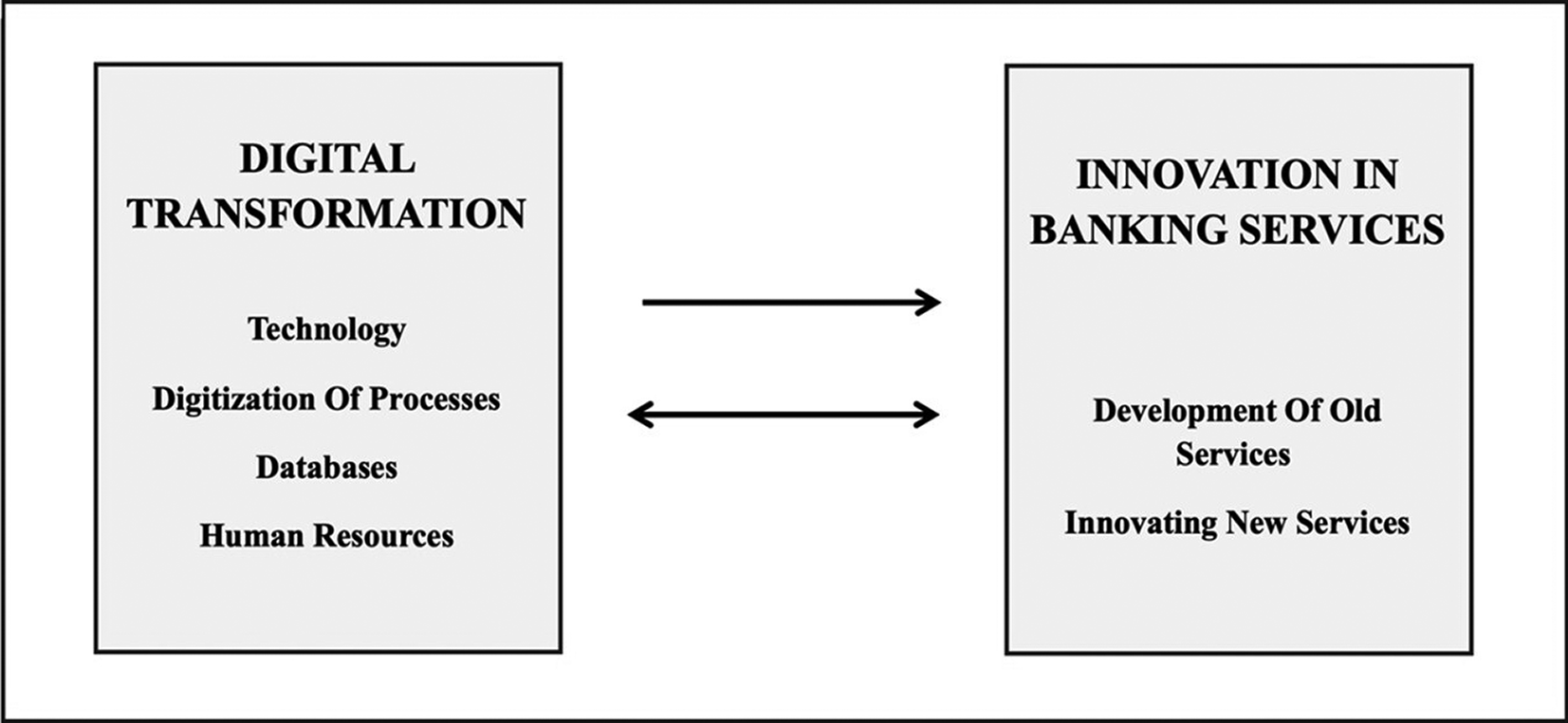
The hypothetical research plan illustrates the path of applying the practical aspect of the research variables, which include the dimensions of digital transformation (technology, digitization of operations, databases, human resources) as an independent variable and the dimensions of innovation in banking services (development of old services, innovating new services) as the dependent variable, As shown in Figure 1.
It is important for us to point out that digital transformation has become a significant topic today due to its widespread prevalence over the past few years. The development of artificial intelligence, robotics, algorithms, and machine learning - all of which are technologies that have become available to facilitate societies and organizations operating in a world that has also been called the Fourth Industrial Revolution (Verma & Rana, 2021: 2246). Today, digital transformation is a significant dynamic force working to find solutions to the radical changes that organizations are experiencing around the world (Marino-Romero & Folgado-Fernández, 2024: 2). It is a crucial process as it integrates digital solutions into our daily lives, in addition to its significant impact on businesses and industries. However, digital transformation not only improves traditional solutions for organizations, but it can also lead to innovative approaches (Bogdandy et al., 2020: 173).
Digital technologies can help organizations overcome shortcomings in their internal resources and capabilities and leverage external resources and capabilities to achieve expansion strategies into new markets and develop new services (Chen & Kim, 2023). Digital transformation is now being used at all levels by individuals (Kaplan et al., 2004). Its rapid adoption has forced organizations and industries to make significant organizational changes and adaptations to survive and thrive (Porfírio et al,2021:610), as evolving customer needs, habits, and behaviours have become more closely linked to them. Definitions of digital transformation vary according to the diverse opinions of many researchers, some of which can be addressed in the following Table 1.
| Hung et al., 2023 | It improves organizational performance by fundamentally transforming its characteristics by integrating information, computing, communications, and connectivity technologies. It helps organizations improve their ability to collect, disseminate, store, analyze, and display data, enhancing their ability to process data optimally. |
| Zeng & Wang, 2025 | A dynamic process through which organizations leverage digital technology to redefine their approach to value creation, restructuring business processes, organizational structures, and business models. This includes the use of information, communications, and communication technologies to keep pace with rapid digital developments, with the goal of maintaining a competitive advantage in their products and services. |
| Tafra & Vapa Tankosić, 2025 | The integration of digital technologies into all aspects of business, including financial management, represents fundamental Changes. This process brings many benefits, but it also poses challenges to financial operations within organizations. |
For our part, we define digital transformation as the process of organizations using digital technology to bring about radical changes in the way they operate to deliver services and interact with customers and society in a better and more flexible manner. Therefore, organizations must work to further enhance digital operations to enhance their ability to cope with the changes occurring within their environment, as well as enhance their ability to adapt to technological developments introduced by other organizations to deal with them more quickly.
Digital transformation has emerged as a critical and important strategic element for organizations facing the complexities of the modern business environment. It goes beyond digitization to encompass the restructuring of business processes, models, and overall customer experiences. Through the seamless integration of digital technologies, organizations can unleash their digital potential (Latief & Firman, 2023:121). Its importance is growing in information systems research and among practitioners, as it is a change process driven by the integration of digital technologies. It prompts organizations to review their strategies and values, restructure their core operations, and reconcile competing interests (Mozaffar & Candi, 2025:5). The importance of digital transformation lies in several areas, including (Abdul Ameer, 2025).
1. Reducing and saving effort, energy, and costs.
2. The speed of digital procedures exceeds that of traditional methods, making them easier and faster for beneficiaries
3. Facilitating how officials monitor workflow.
Therefore, investing in digital transformation today is a crucial and important factor, as it enhances organizations’ ability to adapt to the technological changes occurring within their environment, as well as enhancing the skills of employees within organizations to acquire new technological skills and expertise. Therefore, there are many goals that institutions seek to achieve by adopting digital transformation, including: (Baslyman, 2022):
1. Improving Operations: Digital transformation helps improve current business processes, production, and workforce.
2. Increasing Growth and Sustainability: Another important objective is to win or share gains with competitors.
3. Improving the Customer Experience: Providing customers with what they need, when they need it, and what they may need in the future.
Digital transformation can be measured using the dimensions identified by (Noor:2024), which were confirmed by the study (Abdul Ameer:2025), which was conducted afterward. These dimensions are as follows:
1. Technology: This dimension refers to the strategic roles adopted by the digital technology adopted by the organization. It emphasizes how technology improves its ability to effect change and enhances its capabilities in capitalizing on opportunities and addressing financial reports and breaches that could negatively impact the organization.
2. Digitization of Operations: Digitization of operations involves identifying and clarifying the organization’s processes, allowing it the opportunity to improve and increase its efficiency, and allowing time for innovation, continuous development, and excellence.
3. Databases: This represents a vital element in the digital transformation process due to its effective role in improving the ability to use, analyze, and classify data for decision-making and making the right choices among a range of alternatives.
4. Human Resources: Human resources are the key factor in achieving the desired goals of any organization. They are the physical transformation of resources into final products. The human factor is one of the essential dimensions of the success of any system, procedure, or organization. It consists of three main elements: competence, experience, training, and previous digital experience.
Innovation in banking services has become an important element in the financial sector today, due to the significant and vital advantages it brings to banks, especially considering the digital and technological transformation revolution that the world is experiencing today. Innovation is the application of ideal solutions that meet new requirements in current or future market needs. This is achieved through more effective products, processes, services, technologies, or ideas that are easily available to markets, governments, and society (Chalabi, 2020). Service innovation provides a fundamental foundation for banks to provide better and distinguished services to their customers, achieve a competitive advantage, maximize profitability, and continue to survive in this dynamic industry. Since banks work to provide similar basic services such as deposits, loans, money transfers, international payments, and electronic banking services. To compete and grow effectively, banks strive to innovate services to produce unique solutions and offer innovative services that differ from competitors to retain existing customers and attract new ones (Ngo et al., 2023). Innovation, in the common sense, relates to new technology, new products, new services, or even new processes. It relates to introducing a new product and a new production method to the market or capturing a market. New, or the use of new raw materials, or the creation of a new form of organization (Zair et al., 2020), We will discuss several definitions of innovation in banking services as shown in Table 2.
| Mugharbil, 2016 | It means making purposeful change to improve an organization’s products, services, programs, operations, processes, and business model, with the goal of creating new value for stakeholders. |
| Hanif & Asgher, 2018 | It is the process of implementing various scenarios in the services sector, including developing entirely new services or gradually improving existing ones. |
| Agolla et al.,2018 | It is the introduction and implementation of new business processes and technologies with the aim of improving existing systems within an organization, resulting in business benefits |
For our part, we define innovation in banking services as the process of developing and improving services, processes, or products in the banking sector to meet the evolving needs of customers, enhance efficiency and effectiveness, and achieve a competitive advantage over others in the market.
Innovation is gaining significant importance as a means of dealing with a changing environment and maintaining performance and growth. It is a key factor for an institution to ensure its long-term survival and development (Al-Hammad & Bogoua, 2022). (Agolla et al:2018) argue that the importance of innovation in banking services lies in the benefits it offers, including reducing the time required to complete financial transactions, enhancing customer convenience, and providing fast financial transfers for bank customers. The significance of innovation in banking services is evident in its ability to enhance a distinctive customer experience, which strengthens trust between customers and the bank. It also increases operational efficiency by accelerating financial transactions and improving the management of financial data. This, in turn, promotes growth and competitiveness and enhances the banks’ ability to attract the largest possible number of customers. Moreover, innovation improves banks’ capabilities to respond more quickly and effectively to changes in their environment.
The main reason for innovative banking activity is the high level of competition in the market, which encourages players in the sector to take advantage of the latest technologies. Although innovations require financial investment during the implementation phase, they usually lead to improved operations and savings in the long term. On the other hand, thanks to the development of an attractive and modern range of products, they ensure a high retention rate and enable the attraction of new customers. The size of the customer base has become the decisive factor in determining the profitability of banks considering rising cost pressures (Zaleska & Kondraciuk:2019). There are many reasons that drive institutions, including banks, to adopt service innovation. The most prominent of these reasons, according to (Maier:2018):
1. Current services do not meet consumer needs due to changing tastes.
2. Changing environmental conditions and the emergence of new needs in the markets.
3. Accelerating decline in current services due to the development of new services and technologies by competitors.
4. Limited growth due to the overall size of the market and intense competition.
There are several dimensions to measure the level of Innovation in banking services. The dimensions adopted by (Abbas, 2024) are as follows:
1. Developing old services: This is the process of modifying existing services and changing some of their characteristics by developing a better design and presenting them in a new form to the market. This represents an important source for providing services with new specifications that distinguish them from competitors in the market. This goal is to maintain the institution’s market share, gain an opportunity to achieve growth, obtain a competitive advantage, and continuously meet customer needs and desires.
2. Innovating new services: This means offering services that are fundamentally different from the services currently provided by the institution, i.e., services that the institution has never previously dealt with and offer a new benefit that did not exist previously. Services can be considered new in several cases:
The process of statistically describing the study variables is considered one of the fundamentals required in analyzing the data under study. The statistical program SPSS (v. 27) was used to find the means, standard deviations, and relative importance of each dimension, and thus the main variables. The questionnaire’s reliability, internal consistency, and other pretests will also be determined. The program AMOS (v.24) will also be used to test the study’s hypotheses regarding correlation and influence relationships.
The research sample consisted of 39 individuals whose responses and opinions were collected. The study sample consisted of employees of private Iraqi banks in Anbar Governorate. The questionnaire included personal information, which included variables such as gender, age, educational attainment, and years of service.
The questionnaire, prepared by the researchers, was distributed to the research sample after an oral interview with the respondents. During the interviews the researchers explained their reasons for choosing the banking sector and the study’s objective. Respondents were given the option to answer the questionnaire items or not. This approach was adopted because it helped the researchers obtain logical answers without management interference. The researchers’ role at this stage was limited to clarifying certain questions that participants encountered while answering, explaining their meaning in a simplified manner.
This section will describe the demographic data of the study sample. This section aims to describe the general information of the individuals being studied, as shown in Table 3:
• Gender: Males accounted for 90% of the respondents, while females accounted for 10%.
• Age: The age group of 30 years or younger accounted for 56.4% of respondents, the 31–35 age group accounted for 15.4%, the 36–40 age group accounted for 10.3%, the 41–45 age group accounted for 2.6%, the 46–50 age group accounted for 2.6%, and the age group of 51 years or older accounted for 12.7%.
• Educational Attainment: Respondents with a diploma accounted for 12.8%, those with a bachelor’s degree accounted for 84.6%, and those with a higher diploma accounted for 2.6%. No respondents held a master’s or doctoral degree.
• Years of Employment: Respondents with five or fewer years of employment accounted for 66.7%, those with 6–10 years accounted for 15.3%, 11–15 years accounted for 7.7%, 16–20 years accounted for 0%, 21–25 years accounted for 2.6%, and more than 25 years accounted for 7.7%.
In this part of the research, we highlight the description of the study variables to identify their most important results to determine their stability or dispersion and their relative importance, as follows:
1. Description and Diagnosis of the Independent Variable: (Digital Transformation): This variable included the following dimensions:
1-1. Technology: This section describes the results of the technology dimension, as shown in Table 4:
The technology dimension includes variables (X1–X5). The average score for this dimension was 3.882, with a response intensity of 77.641% and a standard deviation of 0.763. It also recorded a general agreement rate (strongly agree, agree) of 74.88%, a general disagreement rate (disagree, strongly disagree) of 5.64%, and a neutral opinion rate of 19.48%. To compare the variables within the technology dimension:
- Variable X1 (banks use modern technologies to improve service quality) had the highest response intensity at 83.590%, with an average of 4.018 and a standard deviation of 0.721.
- Variable X3 (banks rely on artificial intelligence technologies to provide some services) recorded the lowest response intensity at 74.358%, with an average of 3.718 and a standard deviation of 0.887.
1-2. Digitization of Operations: This section describes the results of the digitization of operations dimension, as presented in Table 5:
The Digitization of Operations dimension includes variables X6–X10. The average score for this dimension was 3.923, with a response intensity of 78.462% and a standard deviation of 0.703. It also recorded a general agreement rate (strongly agree, agree) of 77.94%, a general disagreement rate (disagree, strongly disagree) of 2.58%, and a neutral opinion rate of 19.48%. In comparing the variables within this dimension:
- Variable X9 (there are clear digital procedures for processing transactions) had the highest response intensity at 80.00%, with a mean score of 4.000 and a standard deviation of 0.607.
- Variable X7 (customers can complete their transactions without having to visit the branch) recorded the lowest response intensity at 77.948%, with a mean score of 3.897 and a standard deviation of 0.852.
1-3. Databases: This section describes the results of the database dimension, as shown in Table 6.
The Database dimension includes variables X11–X15. The average score for this dimension was 3.954, with a response intensity of 79.077% and a standard deviation of 0.790. It also recorded a general agreement rate (strongly agree, agree) of 71.79%, a general disagreement rate (disagree, strongly disagree) of 2.58%, and a neutral opinion rate of 25.64%. In comparing the variables within this dimension:
- Variable X11 (Banks have integrated digital databases on customers) had the highest response intensity, at 82.052%, with an average score of 4.103 and a standard deviation of 0.754.
- Variable X12 (Customer data is analysed to provide customized services) recorded the lowest response intensity, at 76.924%, with an average score of 3.846 and a standard deviation of 0.709.
1-4. Human Resources: This section describes the results of human resources dimension, as shown in Table 7. below:
The Human Resources dimension includes variables X16–X20. The average score for this dimension was 3.969, with a response intensity of 79.384% and a standard deviation of 0.863. It also recorded a general agreement rate (strongly agree, agree) of 78.96%, a general disagreement rate (disagree, strongly disagree) of 7.72%, and a neutral opinion rate of 13.32%. When comparing the variables within this dimension:
- Variable X16 (Employees receive continuous training on the use of digital technologies) had the highest response intensity, at 82.564%, with an average score of 4.128 and a standard deviation of 0.695.
- Variable X20 (Specialized cadres are employed in digital fields) recorded the lowest response intensity, at 74.872%, with an average score of 3.744 and a standard deviation of 1.044.
2. Description and identification of the independent variable: (Innovation in banking services): This variable included the following dimensions:
2-1. Developing old services: This section describes the development of legacy services within banks, and Table 8 shows the most important results obtained from the statistical analysis.
The Developing Old Services dimension includes variables Y1–Y5. The average score for this dimension was 3.769, with a response intensity of 75.384% and a standard deviation of 0.875. It also recorded a general agreement rate (strongly agree, agree) of 71.30%, a general disagreement rate (disagree, strongly disagree) of 11.28%, and a neutral opinion rate of 17.42%. When comparing the variables within this dimension:
- Variable Y1 (Traditional services are being improved to keep pace with digital developments) had the highest response intensity, at 80.0%, with an average score of 4.000 and a standard deviation of 0.725.
- Variable Y2 (The time required to complete legacy banking services is being reduced) recorded the lowest response intensity, at 72.820%, with an average score of 3.641 and a standard deviation of 0.778.
2-2. Innovating new services: This section describes the dimension of innovating new services, and Table 9 shows the most important results obtained from the statistical analysis.
The Innovating New Services dimension includes variables Y6–Y10. The average score for this dimension was 3.836, with a response intensity of 76.718% and a standard deviation of 0.819. It also recorded a general agreement rate (strongly agree, agree) of 72.80%, a general disagreement rate (disagree, strongly disagree) of 7.18%, and a neutral opinion rate of 20.02%. When comparing the variables within this dimension:
- Variable Y7 (Banks provide digital financial services that were not previously available) had the highest response intensity, at 79.488%, with an average score of 3.974 and a standard deviation of 0.778.
- Variable Y9 (Some completely new services rely on artificial intelligence or big data) recorded the lowest response intensity, at 73.846%, with an average score of 3.692 and a standard deviation of 0.977.
As stated above, Table 10 shows the relative importance of the two variables (digital transformation and innovation in banking services) based on the responses of a sample of employees of private Iraqi banks in Anbar Governorate, as follows: It is noted that the digital transformation variable had the highest relative importance, amounting to 78.641%, while the innovation in banking services variable had a relative importance of 76.051% in the studied sample.
Feldt and Brennan (1989) classified the reliability test coefficient values into two levels. Values greater than 70% were considered high-level values, while values less than 70% were considered low-level values. The stratified alpha coefficient was calculated, as shown in Table 11. and it is noted that the alpha coefficient value reached 0.95, which is greater than 0.70% for the study variables. Therefore, it can be said, based on the alpha coefficient, that the study variables are stable.
Internal consistency aims to find correlations between questions within a single dimension. The internal consistency measure can also be used to measure the interconnectedness of questions within a single primary variable. This measure is achieved by finding the mean (absolute) correlation coefficients between pairs of correlations for questions within a single dimension or variable. Wu, M. et al. (2016) determined that the value (0.3) is the value below which the correlation coefficient value must be greater for internal consistency to be achieved. From Table 12, it is noted that there is internal consistency at the level of the main variables, as indicated by the absolute value of the arithmetic mean of the correlations (Mean), whose values appeared to be (0.38, 0.41), which are also greater than 0.3.
One of the most important sources of common method bias is the lack of diversity in data sources, the frequent tendency to respond “yes” regardless of the question, and the large number of items in the questionnaire, which can lead to respondent fatigue due to its length. The presence of such bias results in weak correlations between variables, which do not accurately reflect the true relationships. Instead, other factors may be influencing the results, leading to misleading conclusions.
To test for common method bias, the Harman single-factor test was employed. According to Bagozzi and Yi (1991), if the value of this test exceeds 50%, it indicates the presence of common method bias. The test value was calculated using SPSS. for the studied data, the test value (%CMB = 39.906) is less than 50%, indicating that the data does not suffer from common method bias.
To determine the appropriate estimation methods to achieve the analytical hypotheses, a test of the regression of variables to a normal distribution is required. One of the most used tests is the Kolmogorov-Smirnov test. Failure to meet the assumption that variables regress to a normal distribution led to misleading estimates when using traditional methods. In this case, alternative estimation methods are required that do not require the assumption of a normal distribution for the studied variables.
From the results shown in Table 13, it is noted that the P value for the innovation variable in banking services was equal to 0.000, which is less than 0.05, meaning the null hypothesis was rejected and the alternative hypothesis was accepted, which states that the innovation variable in banking services is not distributed according to a normal probability distribution. As for the digital transformation variable, the P value was equal to 0.052, which is greater than 0.05, meaning that the digital transformation variable is distributed according to a normal probability distribution.
A. Correlation Analysis:
The correlation coefficient is a measure that determines the strength and type of relationship between two variables. The correlation coefficient indicates the type of relationship between the two variables, whether positive or negative. The correlation coefficient value also represents the strength of the relationship between them. The closer the correlation coefficient value is to one, whether positive or negative, the stronger the relationship between the two variables. Furthermore, the correlation coefficient may be significant or insignificant, which is determined by the P value. If the P value is less than 0.05, this indicates that the correlation coefficient is significant, and vice versa.
The first main hypothesis: There is a statistically significant correlation between the digital transformation variable and the Innovation variable in banking services. and the Table 14 shows the results of testing the first main hypothesis:
| The first variable | direction relationship | The second variable | Link value | 95% Confidence interval | value probability | |
|---|---|---|---|---|---|---|
| Upper | P-value | |||||
| digital transformation | ⬌ | Innovation in banking services | 0.74 | 0.890 | 0.002 | |
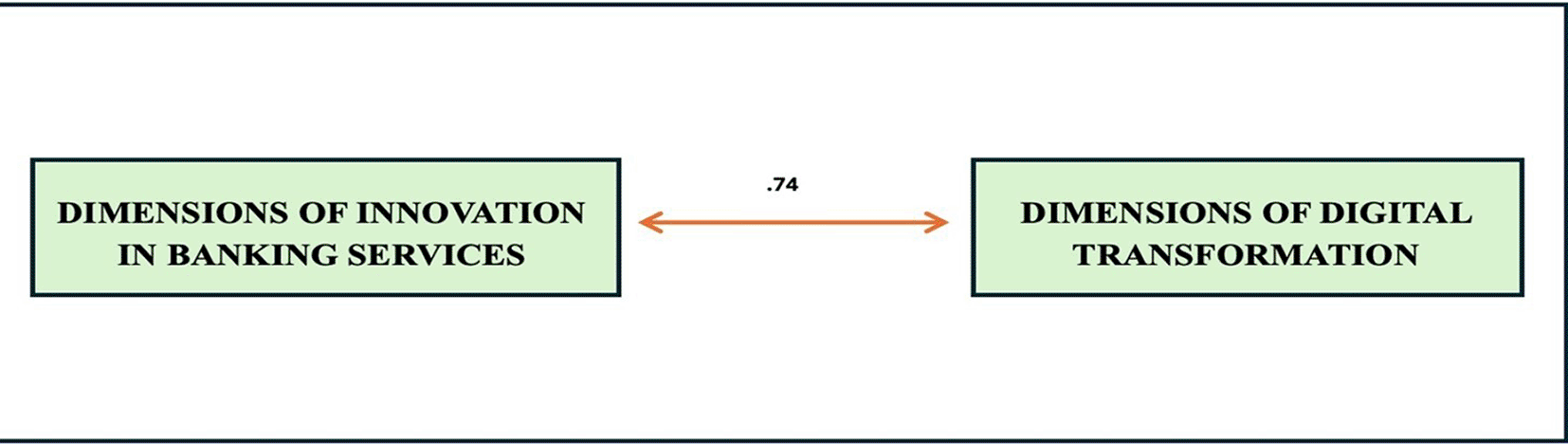
From the table above, it is noted that the correlation coefficient between the digital transformation variable and the innovation variable in banking services is positive, indicating a direct relationship between the two. The correlation coefficient was 0.74, which is statistically significant, with a p-value of 0.002, less than the 0.05 threshold. Furthermore, the 95% confidence interval for the correlation coefficient ranged from 0.538 to 0.890, with both limits sharing the same positive sign, confirming the significance of this correlation at the 0.05 level. These results indicate a significant positive correlation between digital transformation and innovation in banking services. Figure 2 shows the nature of this relationship.
The following hypotheses emerge from the first main hypothesis:
1- There is a statistically significant correlation between the technology dimension and the innovation variable in banking services.
2- There is a statistically significant correlation between the digitization of operations dimension and the innovation variable in banking services.
3- There is a statistically significant correlation between the database dimension and the innovation variable in banking services.
4- There is a statistically significant correlation between the human resources dimension and the innovation variable in banking services.
And the table 15, shows the results of the hypothesis testing above:
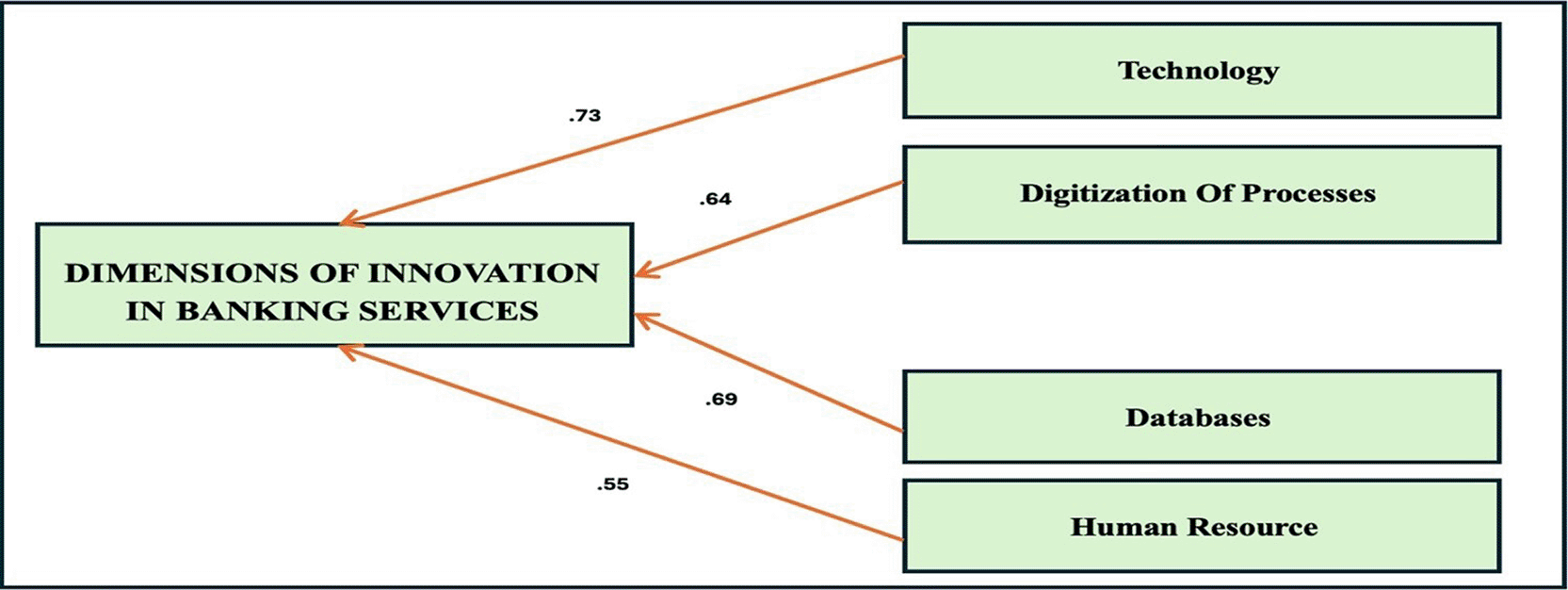
From the table above, it is noted that all dimensions of the digital transformation variable appeared to have a direct relationship with the innovation variable in banking services, as indicated by the positive sign of the correlation coefficient values. The correlation coefficient values for the dimensions (technology, digitization of operations, databases, and human resources) were (0.55, 0.69, 0.64, and 0.73), respectively. Furthermore, all dimensions of the digital transformation variable appeared to have significant significance, as their P-values were less than 0.05. Moreover, the confidence limits for the dimensions of the digital transformation variable had similar signs, indicating the significance of their correlation coefficients. Figure 3 shows the correlation relationship between the dimensions of the independent variable and the dependent variable.
B- Impact analysis:
Second main hypothesis: There is a statistically significant effect of the digital transformation variable on the innovation variable in banking services. Table 16 shows the results of testing the second main hypothesis:
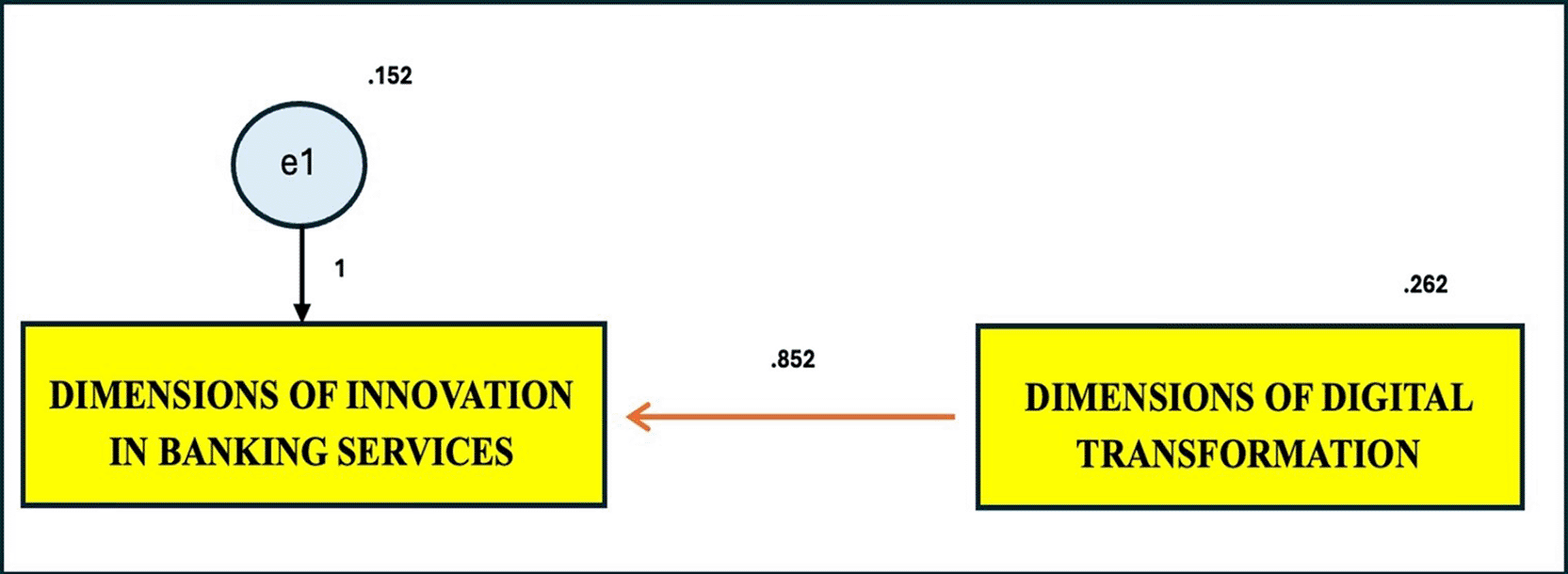
The impact of the digital transformation variable on the innovation variable in banking services is demonstrated by the estimated parameter of 0.852, indicating a direct positive relationship between digital transformation and innovation. The standard error (S.E.) for this estimate was 0.111. Moreover, this impact was statistically significant, as the p-value of 0.003 is less than the 0.05 threshold. The 95% confidence interval for the parameter estimate ranged from 0.618 to 1.062, with both limits sharing the same positive sign, further confirming the significance of the relationship. Based on these results, the alternative hypothesis—that the digital transformation variable has a significant impact on the innovation variable in banking services—can be accepted, as shown in Figure 4.
The following hypotheses emerge from the second main hypothesis:
1. There is a statistically significant impact of the technology dimension on the Innovation variable in banking services.
2. There is a statistically significant impact of the process digitization dimension on the Innovation variable in banking services.
3. There is a statistically significant impact of the database dimension on the Innovation variable in banking services.
4. There is a statistically significant impact of the human resources dimension on the innovation variable in banking services.
The Table 17 shows the results of testing the above hypotheses:
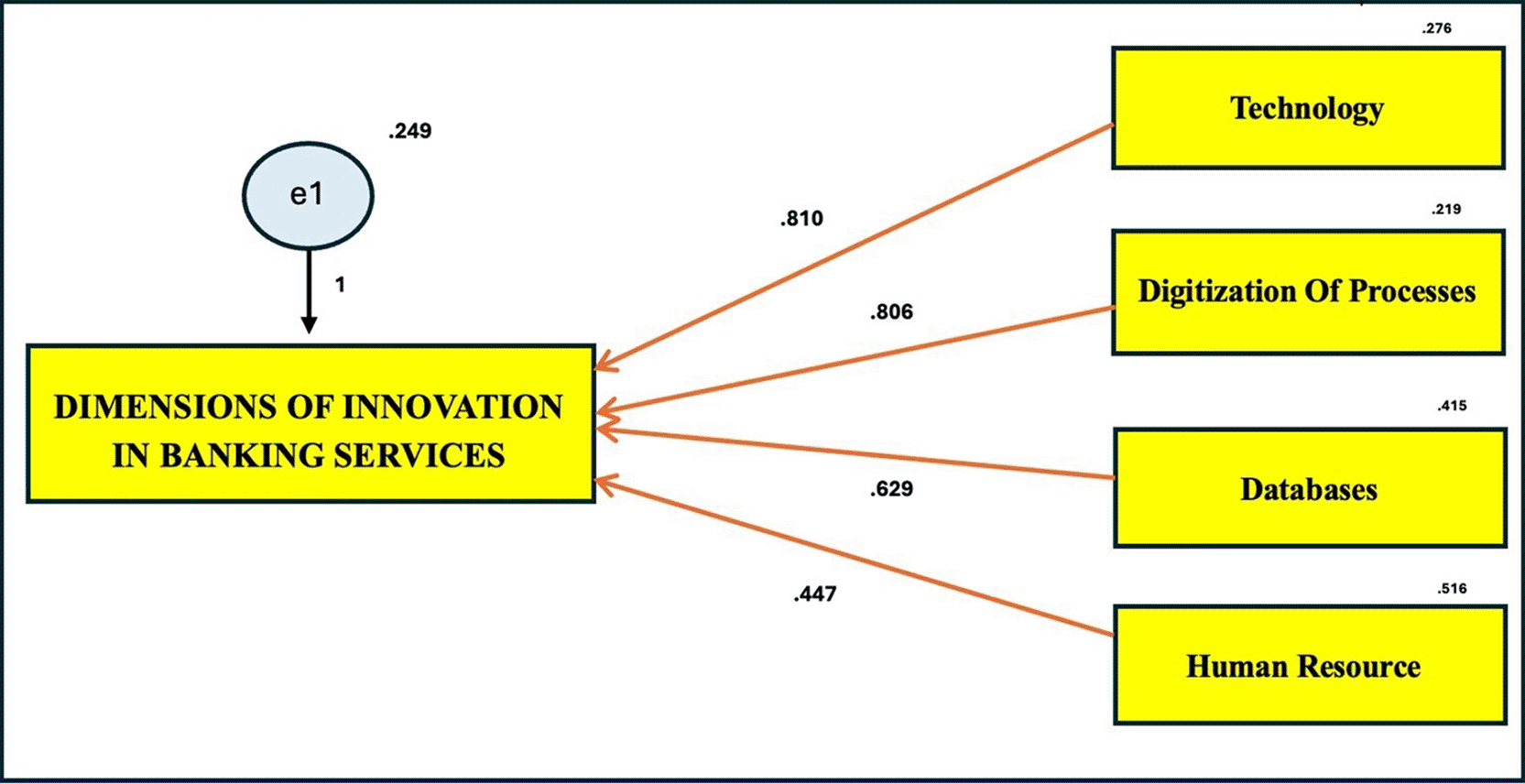
From the table above, it is noted that all dimensions of the digital transformation variable appeared to have a direct relationship with the Innovation variable in banking services, as indicated by the positive sign of the estimated parameter values. The estimated parameter values for the dimensions (technology, digitization of operations, databases, and human resources) were (0.447, 0.926, 0.806, and 0.810), respectively. Furthermore, all dimensions of the digital transformation variable appeared to have significant significance, as their P-values were less than (0.05). Furthermore, the confidence limits for the dimensions of the digital transformation variable had similar signs, indicating the significance of the associated dimensions, and Figure 5 shows the relationship of influence between the dimensions of the independent variable (digital transformation) in the dependent variable.
In continuation of the hypotheses mentioned, we analyze the relationship of influence between digital transformation and dimensions of innovation in banking services:
- There is a statistically significant impact of the digital transformation variable on the dimension of developing legacy services, Table 18 shows the results of testing the hypothesis:
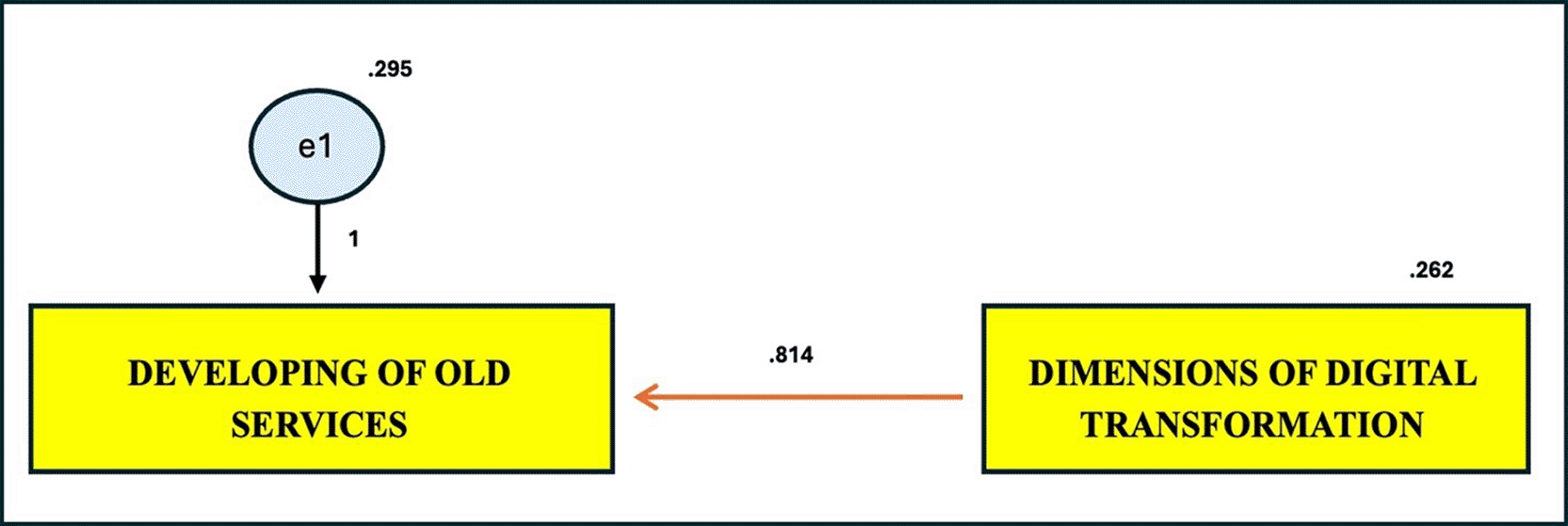
The impact of the digital transformation variable on the Developing Old Services dimension is demonstrated by the estimated parameter of 0.814, indicating a direct positive relationship between digital transformation and the developing old services dimension. The standard error (S.E.) for this estimate was 0.134. Furthermore, this impact was statistically significant, as the p-value of 0.003 is less than the 0.05 threshold. The 95% confidence interval ranged from 0.556 to 1.098, with both limits sharing the same positive sign, confirming the significance of the relationship, as shown in Figure 6. Based on these results, the alternative hypothesis that the digital transformation variable has a significant impact on the developing old services dimension can be accepted. Table 19 shows the results of testing the second main hypothesis:
- There is a statistically significant impact of the digital transformation variable on the dimension of Innovating new services.
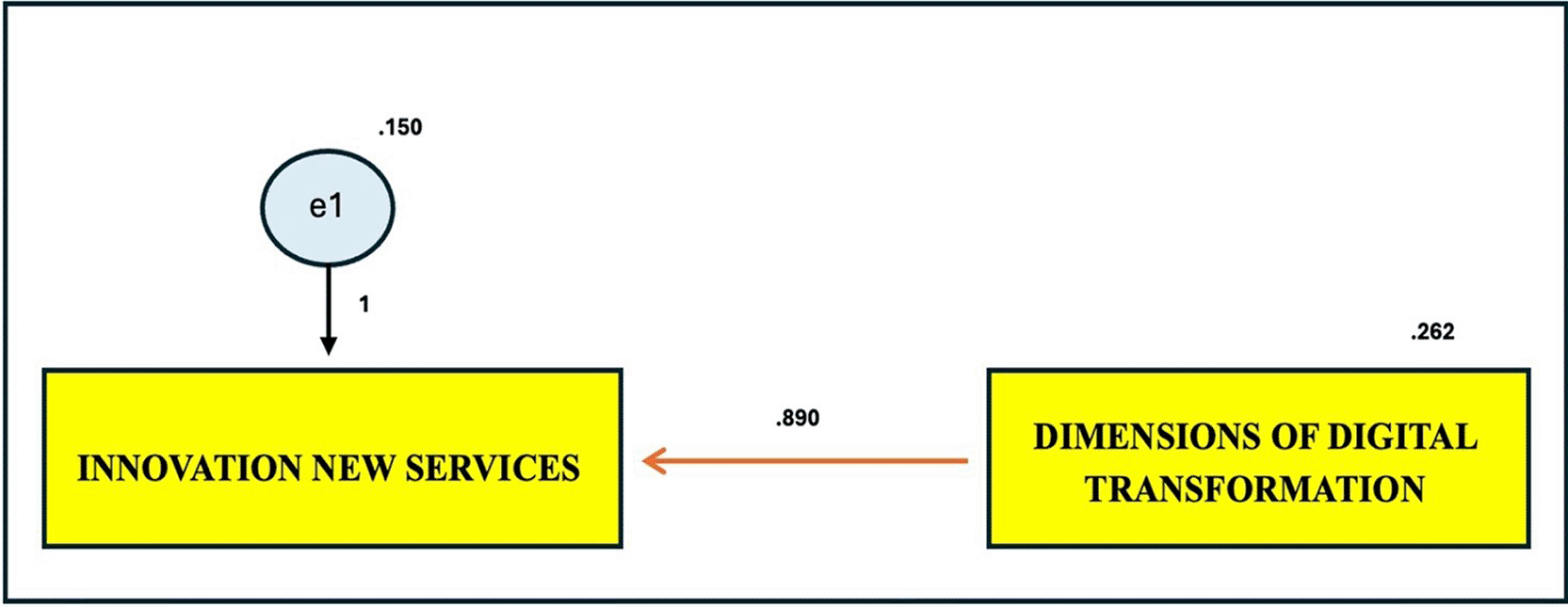
The impact of the digital transformation variable on the Innovating New Services dimension is demonstrated by the estimated parameter of 0.890, indicating a direct positive relationship between digital transformation and the innovating dimension of new services. The standard error (S.E.) for this estimate was 0.149. Furthermore, this impact was statistically significant, as the p-value of 0.001 is less than the 0.05 threshold. The 95% confidence interval ranged from 0.612 to 1.199, with both limits sharing the same positive sign, confirming the significance of the relationship, as shown in Figure 7. Based on these results, the alternative hypothesis that the digital transformation variable has a significant impact on the innovating dimension of new services can be accepted.
The results of the research reached by the researchers show that there are a statistically significant correlation and direct effect between the two research variables in Iraqi private banks. This indicates that digital transformation has significant positive effects that contribute to enhancing innovation in banking services within Iraqi banks, as it provides significant and important facilities that enhance the quality and speed of completing financial tasks, in addition to reducing errors resulting from traditional work on an ongoing basis and for long periods, as digital transformation works to accelerate the pace of work and reduce the level of errors committed by employees in the banking sector. The results of the statistical analysis also showed that the technology dimension has the greatest impact on completing tasks, and this is a natural matter reflected in the nature of the programs used by banks. The more modern the technology and programs used and the greater the capabilities, the better it is in completing tasks. Meanwhile, the results of the statistical analysis showed a weakness in the human resources dimension, which reflects a great fear that technology will gradually replace the human role in completing these tasks, on the one hand, in addition to the fact that these banks are owned by non-governmental entities, which makes them work at a continuous pace towards reducing the number of employees. Therefore, it is necessary to manage these banks, it is necessary to enhance the presence of competent employees, as this plays a major and important role in completing financial tasks. Despite the importance of technology, it remains restricted in its achievement without the human element.
Ethical approval involved two aspects:
- To obtain data related to the scientific aspect of the research, the researchers conducted field visits during which they met with officials from these banks to inform them of the importance of the study, and they obtained verbal approval from some of their administrations to distribute a questionnaire to the targeted research sample.
- After that, Approval was obtained from the Scientific Research Ethics Committee at the College of Administration and Economics, University of Fallujah., the approval was submitted to the Department of Scientific Affairs at the Presidency of the University of Fallujah, granted to conduct the study.
Below is the license issued by the Department of Scientific Affairs at the Presidency of the University of Fallujah.
UOF. HUM.2025.001.
| Views | Downloads | |
|---|---|---|
| F1000Research | - | - |
|
PubMed Central
Data from PMC are received and updated monthly.
|
- | - |
Provide sufficient details of any financial or non-financial competing interests to enable users to assess whether your comments might lead a reasonable person to question your impartiality. Consider the following examples, but note that this is not an exhaustive list:
Sign up for content alerts and receive a weekly or monthly email with all newly published articles
Already registered? Sign in
The email address should be the one you originally registered with F1000.
You registered with F1000 via Google, so we cannot reset your password.
To sign in, please click here.
If you still need help with your Google account password, please click here.
You registered with F1000 via Facebook, so we cannot reset your password.
To sign in, please click here.
If you still need help with your Facebook account password, please click here.
If your email address is registered with us, we will email you instructions to reset your password.
If you think you should have received this email but it has not arrived, please check your spam filters and/or contact for further assistance.

Comments on this article Comments (0)