Keywords
loneliness; trust; ecological momentary assessment; social interactions

This article is included in the Social Psychology gateway.
loneliness; trust; ecological momentary assessment; social interactions
Loneliness presents a motivational paradox, intensifying the desire for connection while heightening the impulse to guard against social harm. This tension is thought to vary as a function of the temporal profile of loneliness, with state (i.e., momentary fluctuations) and trait (i.e., more stable, dispositional levels) loneliness having distinct consequences (Maes & Vanhalst, 2025; Qualter et al., 2015). While this idea has been explored for prosocial behavior and social threat appraisals (Archer Lee et al., 2022; Reissmann et al., 2021; Shao et al., 2026), less is known about its link to interpersonal trustworthiness beliefs. As diminished trust constitutes a key barrier to the reconnection that loneliness simultaneously motivates, understanding whether this barrier operates at the momentary or dispositional level may be crucial in elucidating when and how the motivational paradox of loneliness can be resolved. The present study therefore uses a two-week EMA design to disentangle these state and trait effects, examining how each relates to appraisals of daily social interactions and interpersonal trustworthiness beliefs.
Loneliness is defined as the distressing discrepancy between desired and actual social relationships (Perlman & Peplau, 1982). According to the evolutionary theory of loneliness and the reaffiliation framework (Cacioppo et al., 2014; Qualter et al., 2015), transient loneliness functions as a motivational signal that triggers heightened vigilance toward the social environment. This vigilance is functionally adaptive insofar as it both mobilizes caution in environments where social threat may be genuine and increases the likelihood of attending to more suitable social environments for reaffiliation. When such reconnection efforts fail, however, this functional vigilance may consolidate into stable, negatively biased interpretive tendencies with self-reinforcing withdrawal tendencies, and thus persisting loneliness.
Most studies aiming at disentangling different temporal loneliness dynamics have employed ecological momentary assessment (EMA) designs, as these allow decomposition of short-term and more stable dynamics. In partial support of differential loneliness profiles, these studies showed that greater variability in state loneliness has been associated with more unstable social threat appraisals, an effect moderated by trait loneliness such that those higher in trait loneliness showed stronger coupling between loneliness and social threat appraisals (Shao et al., 2026). Along these lines, adults with high average loneliness scores across a 10-day EMA period, but not those with low ones, showed decreased prosocial behaviors on days with elevated state loneliness (Archer Lee et al., 2022). In addition, average loneliness levels predicted more variance in social appraisals than momentary fluctuations (Piejka et al., 2024). Collectively, these findings are consistent with the notion that more stable, dispositional forms of loneliness are characterized by more entrenched socio-cognitive patterns.
Whether such differential dynamics extend to interpersonal trustworthiness beliefs has, to the authors’ knowledge, not yet been investigated. Interpersonal trustworthiness beliefs can be understood as the perceived probability that an interaction partner will behave with integrity, benevolence, and competence (Bauer, 2019; Mayer et al., 1995). By entrenching the tendency to perceive and experience social situations more negatively, it is more persistent loneliness that has been theorized to breed distrust toward other people in general (Langenkamp, 2023). Indeed, the association between trait loneliness and interpersonal trust appears robust across countries and operationalizations (Nyqvist et al., 2016; Rotenberg, 1994), and longitudinal work suggests a directional link: loneliness prospectively predicted reductions in generalized trust beliefs — the belief that most people can be trusted (Robbins, 2022) — up to two years later (Langenkamp, 2023), though other evidence points to potentially reciprocal relations between the two (Chen et al., 2026).
Taken together, this body of work supports an account in which loneliness, particularly in its more stable, dispositional form, is related to more entrenched negative appraisals of the social surroundings and reduced interpersonal trustworthiness beliefs. However, it remains unclear whether momentary fluctuations in loneliness show analogous associations with interpersonal trustworthiness beliefs and to what extent these within-person associations depend on individuals’ trait loneliness levels. Resolving these questions is crucial for clarifying how the motivational paradox of loneliness unfolds across different timescales.
The present study addresses these gaps using a two-week EMA design that sampled momentary loneliness, evaluations of the most recent social interaction, and trustworthiness beliefs toward interaction partners twice daily, alongside baseline measures of trait loneliness and generalized trust. Based on previous accounts linking loneliness with more negative socio-cognitive patterns (Spithoven et al., 2017), we hypothesized that higher momentary loneliness predicts – at the next prompt – more negative social appraisals (H1), and reduced interpersonal trustworthiness beliefs (H2). Consistent with theoretical accounts suggesting that trait loneliness amplifies negatively biased social processing, we predicted that trait loneliness would moderate these within-person associations, such that the negative associations between momentary loneliness and social appraisals (H3a) and trustworthiness beliefs (H3b) would be stronger among those higher in trait loneliness. Furthermore, we predicted that trait loneliness would exert a significant main effect on both social appraisals and interpersonal trustworthiness beliefs, independent of momentary fluctuations.
The study protocol and analysis plan were preregistered on the Open Science Framework (https://doi.org/10.17605/OSF.IO/R46A2). The final study deviates from the preregistered plan for reasons detailed in the “Deviations from Preregistration” section below. Data were collected from 127 individuals (age > 18, German fluency) between December 2024 and February 2025. We included only those participants in our analyses who indicated in more than one-third (> 9) of the 28 possible prompts that they had a social interaction since the previous prompt. This threshold was set to ensure sufficient within-person variability in social interaction experiences, a prerequisite for modeling how momentary evaluations of such interactions relate to loneliness and interpersonal trustworthiness beliefs. An independent samples t-test revealed no significant difference in trait loneliness (UCLA-Loneliness Scale, Russell et al., 1980) between excluded and included participants, t(8.81) = 0.17, p = .87, 95% CI [−0.51, 0.60]. Including participants with very few or no reported interactions would have limited the interpretability of within-person effects and may have introduced noise rather than informative data. Four participants reported no social interactions at all and nine participants had fewer than nine prompts following a social interaction, which resulted in a final data set of 114 individuals (mean age = 22.59, SD = 5.37 years; 98 women, 15 men, one did not indicate their gender). These participants responded on average to 25.8/28 prompts (i.e., 92% compliance; SD = 3.04, range = 14–28) and 19 prompts on average (SD = 4.37) targeted social interactions (n = 2169 total social prompts). We preregistered 100 participants and calculated the power using the ema.powercurvefunction from the R-package EMATools (Kleiman, 2017). With our compliance rate, 114 participants, two surveys per day over 14 days and an intra-class correlation (ICC) of.19–.34 (see results), our sample was well powered to detect medium-to-large effects targeted at the main effects as hypothesized in H1 and H2. Participants earned €0.50 for each prompt answered, a bonus of €1 for answering all prompts, and an additional €7 for completing the intake survey, which included demographic information, trait questionnaires, and an explanation of the study procedure, resulting in a maximum total of €22 (or the equivalent in course credits for psychology students). The study was carried out by the recommendations of the “Ethical Guidelines” of “The Association of German Professional Psychologists” (“Berufsethische Richtlinien, Berufsverband Deutscher Psychologinnen und Psychologen”). All participants provided written informed consent by the Declaration of Helsinki before participating in the studies.
First, participants completed a series of online questionnaires, collecting detailed data on socio-demographic characteristics, as well as several trait measures, including trait loneliness (University of California Los Angeles [UCLA] loneliness scale; Russell et al., 1980), generalized trust (inclusive general trust scale [IGTS]; Yamagishi et al., 2015). Following this, participants started a 14-day EMA phase. During this period, participants received two daily prompts at randomized times between 11 a.m. and 1 p.m. and between 5 p.m. and 7 p.m. These prompts were administered via the m-Path smartphone application (m-path.io), directing them to complete a short questionnaire tailored to their recent experiences. In case a social interaction has occurred since the previous prompt, participants were asked to evaluate the interaction, reflecting on its quality, their self-esteem during the encounter (not relevant for the current analyses), and their momentary feelings of loneliness and interpersonal trustworthiness beliefs. If no interaction has taken place, they completed an alternative questionnaire of equal length to avoid response biases. This version inquired about the activity they were engaged in, whether their solitude was voluntary and enjoyable, and their current general affect, and feelings of loneliness and trustworthiness beliefs.
EMA Survey
In the EMA survey, the following items were rated on a 7-point scale (1) not at all to (7) very much: For the assessment of state loneliness, participants indicated how much they agree with the statement “I feel lonely” (van Roekel et al., 2014). The items on trust and the evaluation of social interaction were answered in relation to the most recent social interaction since the last prompt. Interpersonal trust was assessed by the question “To what extent did you trust the person(s)?” (Weiss et al., 2021). The evaluation of the most recent social interaction was measured with the following items: “I feel threatened by this person/people”, “I feel judged by this person/people”, “I feel the other person(s) dislike me”, “I feel accepted by this company”, “I feel excluded” (van Roekel et al., 2014), “I feel valued” (Kirtley et al., 2021), “I feel comfortable in this company” (van Roekel et al., 2014). For exploratory reasons, we also assessed momentary self-esteem using the items “I feel good about myself” (Unger, 2023) and “I feel self-confident” (Kirtley et al., 2021). As contextual variables, we assessed whether the last social interaction took place at the moment, within the last 30 minutes or whether there was no social interaction since the last prompt. We asked participants about the context in which the interaction took place (e.g., private, work or study-related), whether it was face-to-face or virtual, whether they interacted with one or multiple individuals, whether their interaction partner(s) were romantic partner, colleague(s), family, friend(s), or stranger(s), and which gender they attributed to the other person.
All analyses were conducted in R version 4.5.2. Predictors were decomposed into within-person (WP; person-mean centred) and between-person (BP; grand-mean centred) components following the recommendations of Bolger and Laurenceau (2013). Within-person deviations were computed prior to lagging, such that lagged predictors reflect deviations from each person’s own mean at the preceding prompt. All models were estimated using maximum likelihood to allow likelihood-ratio comparisons.
Deviation from preregistration
Our manuscript deviates from the preregistered plan in three main ways, primarily stemming from a necessary shift in the study’s primary focus following recruitment challenges. First, the primary research question was changed. The study was initially designed to test hypotheses concerning the relationship between socio-political disaffection, loneliness, and interpersonal trustworthiness beliefs. Following recruitment challenges that yielded insufficient variance in the socio-political variables, we shifted the analytical focus to disentangle the state and trait effects of loneliness on social appraisals and interpersonal trust beliefs. Second, the primary statistical models were revised. The preregistered plan specified concurrent multilevel models (outcomet ~ predictort). Consistent with the refined theoretical focus on loneliness dynamics, we revised the primary analyses to use a one-prompt lagged structure (outcomet ~ predictort–1), which better supports prospective inference. Third, several preregistered variables were handled differently. As a consequence of the shifted focus, analyses pertaining to the collected socio-political variables, satisfaction with democracy (Neu et al., 2023), populism (Neu et al., 2023; Vehrkamp & Merkel, 2020), perceived political influence (Langenkamp & Stepanova, 2024), party affiliation, and self-assessed social status (MacArthur Scale; Adler et al., 2000) were removed from the main manuscript. Furthermore, one additional baseline measure was not included in the current study: trait self-esteem (Rosenberg Self-Esteem Scale; von Collani & Herzberg, 2003), which was part of a separate research project. For full transparency, all preregistered analyses for the current research project are provided in the Extended Data (https://doi.org/10.17605/OSF.IO/VP2EJ).
Preliminary analyses
To examine the factor structure of the seven social evaluation items, we conducted a parallel analysis to determine the optimal number of factors, followed by an exploratory factor analysis (EFA; minres extraction, varimax rotation). We then compared a one-factor and a two-factor multilevel confirmatory factor analysis (CFA) fitted to the nested data structure (observations within persons). Given the high interfactor correlation observed in the two-factor solution, we formed a single composite social appraisal score (mean of all seven items after reverse-coding) for use in all main analyses. Intraclass correlation coefficients (ICCs) were computed for each relevant EMA variable. Paired-samples t-tests compared momentary loneliness and trust between social-interaction and non-social prompts.
H1 and H2: Lagged effects of loneliness on social appraisals and trust beliefs
To test H1, we estimated a linear mixed-effects model predicting social appraisal quality at time point t from the WP deviation of momentary loneliness at t–1, controlling for autoregressive appraisal at t–1 and BP mean loneliness. To test H2, the analogous lagged model predicted trust at t from WP loneliness deviation at t–1, controlling for autoregressive trust and BP mean loneliness. All main models included random intercepts for participants. In the H1 model, the random-intercept variance converged to zero (singular fit), such that the BP mean is estimated but effectively absorbs all between-person variance; in H2, the BP mean loneliness coefficient reflects stable between-person differences in loneliness beyond the random intercept. To aid replication, the models were specified as follows:
appraisal_(t) ~ loneliness_WP_(t–1) + loneliness_BP + appraisal_(t–1) + (1|participant)
trust_(t) ~ loneliness_WP_(t–1) + loneliness_BP + trust_(t–1) + (1|participant)
H3: Trait loneliness as moderator
To test H3, we examined whether trait loneliness (grand-mean centred UCLA score) moderated the within-person loneliness–appraisal (H3a) and loneliness–trust (H3b) associations. For both models, a random slope for WP loneliness at t–1 was included when feasible.
appraisal_(t) ~ loneliness_WP_(t–1)* trait loneliness + loneliness_BP + appraisal_(t–1) + (1 + loneliness_WP_(t–1)|participant)
trust_(t) ~ loneliness_WP_(t–1)* trait loneliness + loneliness_BP + trust_(t–1) + (1 + loneliness_WP_(t–1)|participant)
Parallel analysis suggested retaining two factors. The EFA (varimax rotation) yielded a social belonging factor (MR1: accepted = .74, valued = .80, comfortable = .71) and a social safety factor (MR2: not threatened = .64, not judged = .57, not disliked = .65, not excluded = .61), together accounting for 59% of total variance. Multilevel CFA confirmed superior fit for the two-factor model (CFI = .976, TLI = .962, RMSEA = .053 [.046, .060], SRMRwithin = .026, SRMRbetween = .051) compared to the one-factor solution (CFI = .932, TLI = .898, RMSEA = .087), Δχ2(2) = 298.7, p < .001. However, the two factors were strongly correlated at both the within-person (r = .845) and between-person level (r = .789), indicating substantial shared variance. In line with the principle of parsimony, all main analyses therefore used a single social appraisal composite score (mean of all seven items after reverse-coding; M = 6.05, SD = 0.51, ICC = .27).
For a detailed overview of the study’s main variables, see Table 1. State (r = −.28) as well as trait loneliness (r = −.50) correlated significantly and negatively with momentary trustworthiness beliefs, and the appraisal composite score (r = −.52 ≤ r ≤ −.49, see Figure 1). Momentary trustworthiness beliefs and the appraisal composite score were positively correlated with each other (r = .62). 87% of the interactions reported in our study were face-to-face, 21% with partners, 36% with family, 26% with friends and the rest with colleagues or known persons. Accordingly, 83% of the interactions were private and 14% were work-related.
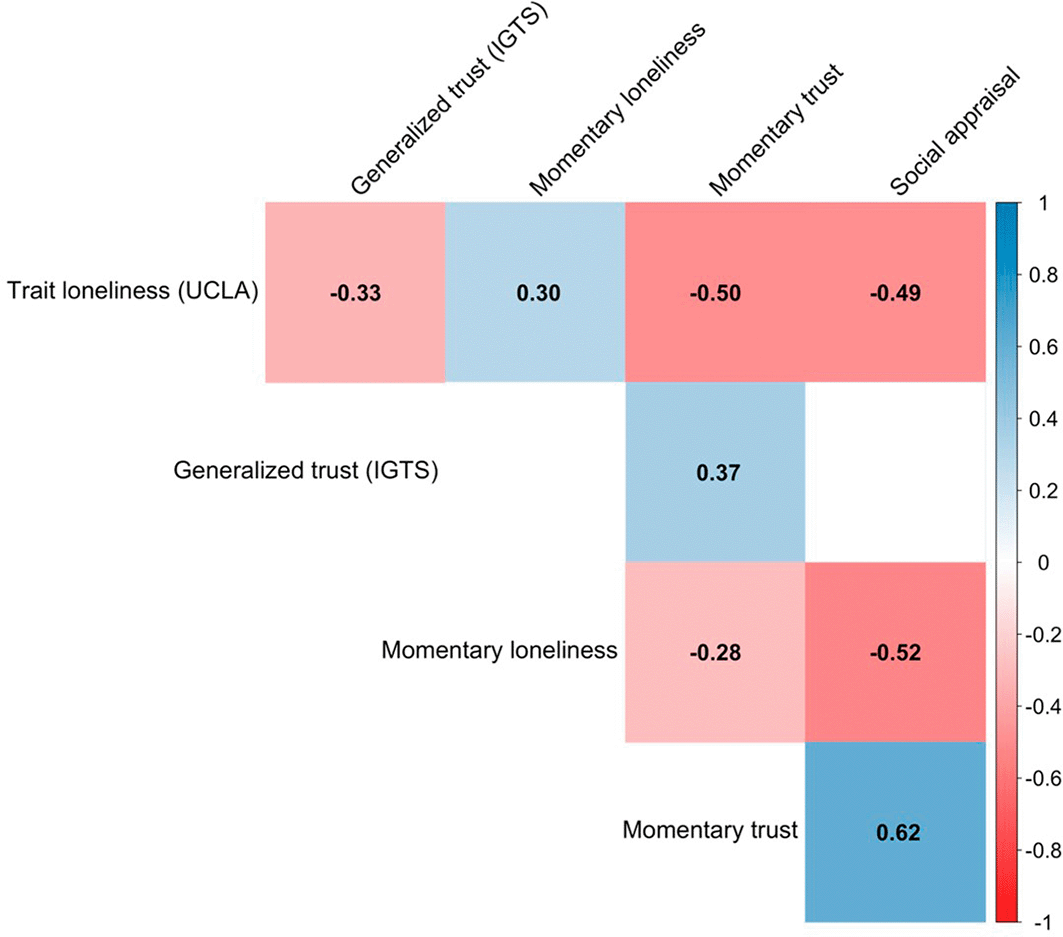
The paired t-tests showed that momentary loneliness was lower after social interactions compared to when no interaction took place (t(54) = −5.94, p < .001). Momentary trustworthiness beliefs were likewise significantly higher at social compared to non-social prompts (t(54) = 2.90, p = .005). Note that only 55 participants reported that no interaction has taken place since the previous prompt. ICCs indicated that approximately one third of variance in momentary loneliness was attributable to stable between-person differences (ICC = .34), with the remaining two thirds reflecting within-person fluctuation. Momentary trustworthiness beliefs showed somewhat lower between-person stability (ICC = .19), and the social appraisal composite fell in between (ICC = .27). These ICC values confirm sufficient within-person variability to support the lagged multilevel analyses.
H1: Loneliness Predicting Subsequent Social Appraisals
H1 was not supported: WP deviations in momentary loneliness at t–1 did not significantly predict social appraisal quality at t (B = −.002, SE = .02, p = .932, see Figure 2). Autoregressive stability of social appraisals was significant (B = .07, SE = .02, p = .002). The random-intercept variance was estimated at zero (singular fit), so the model effectively reduces to a fixed-effects specification. The marginal R2 was .091; the conditional R2 was.247; this value primarily reflects the between-person loneliness predictor (B = −.32, SE = .05, p < .001) rather than the focal loneliness predictor.
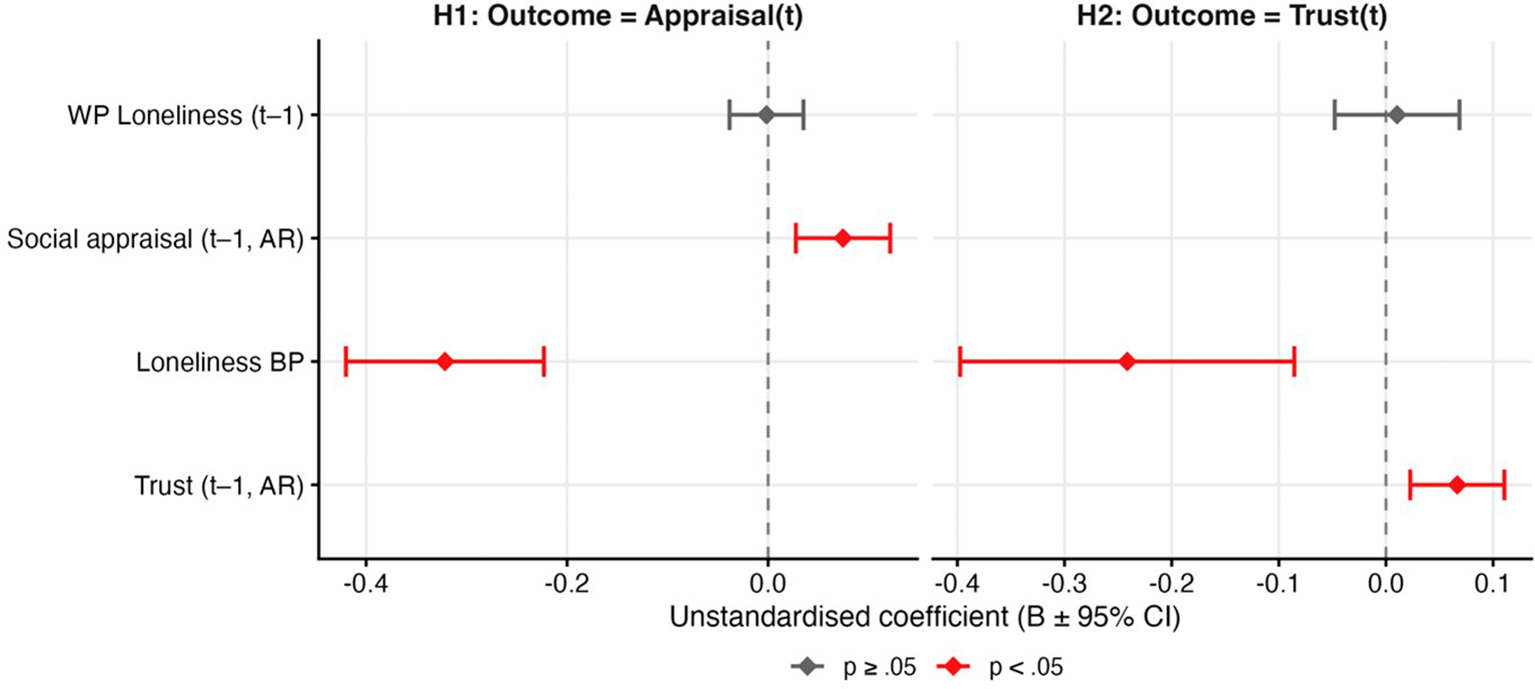
Panel H1 shows predictors of social appraisal quality at t; panels H2 and Joint show predictors of interpersonal trustworthiness beliefs at t (trust(t)). Red diamonds indicate effects significant at p < .05; grey diamonds indicate non-significant effects. AR = autoregressive control (outcome at t–1). BP = between-person. All models estimated with maximum likelihood; H2 included random intercepts (N = 114), while the H1 random-intercept variance converged to zero (singular fit).
H2: Momentary Loneliness Predicting Subsequent Trustworthiness Beliefs
H2 was similarly not supported: WP loneliness deviation at t–1 did not significantly predict momentary trust at t (B = .01, SE = .03, p = .727, see Figure 2). Trust showed modest autoregressive stability (B = .07, SE = .02, p = .003). The BP mean loneliness was significantly associated with trust (B = −.24, SE = .08, p = .003), indicating that more persistently lonelier individuals reported lower momentary trust overall. The marginal R2 of the WP-loneliness model was small (.023); the conditional R2 was.174, reflecting substantial between-person variance captured by the random intercept and BP term.
H3: Trait Loneliness as Moderator
H3a was only partially supported: the interaction between WP loneliness deviation at t–1 and trait loneliness marginally predicted subsequent social appraisal quality (B = .07, SE = .04, p = .057, see Figure 3A), but in the opposite direction of what we expected. The interaction indicates that the negative within-person association between momentary loneliness and subsequent social appraisals was moderated by trait loneliness: individuals lower in trait loneliness showed a stronger negative coupling, whereas this association was attenuated and reversed among those higher in trait loneliness. A random slope for WP loneliness was included and supported (σ2 = .011, intercept–slope r = .47). Trait and BP loneliness exerted a significant negative main effect on subsequent social appraisals (trait: B = −.32, SE = .07, p < .001, BP: B = −.25, SE = .05, p < .001). The within-person deviation of loneliness at t–1 did not significantly predict subsequent social appraisals as a main effect (B = −.01, SE = .02, p = .732).
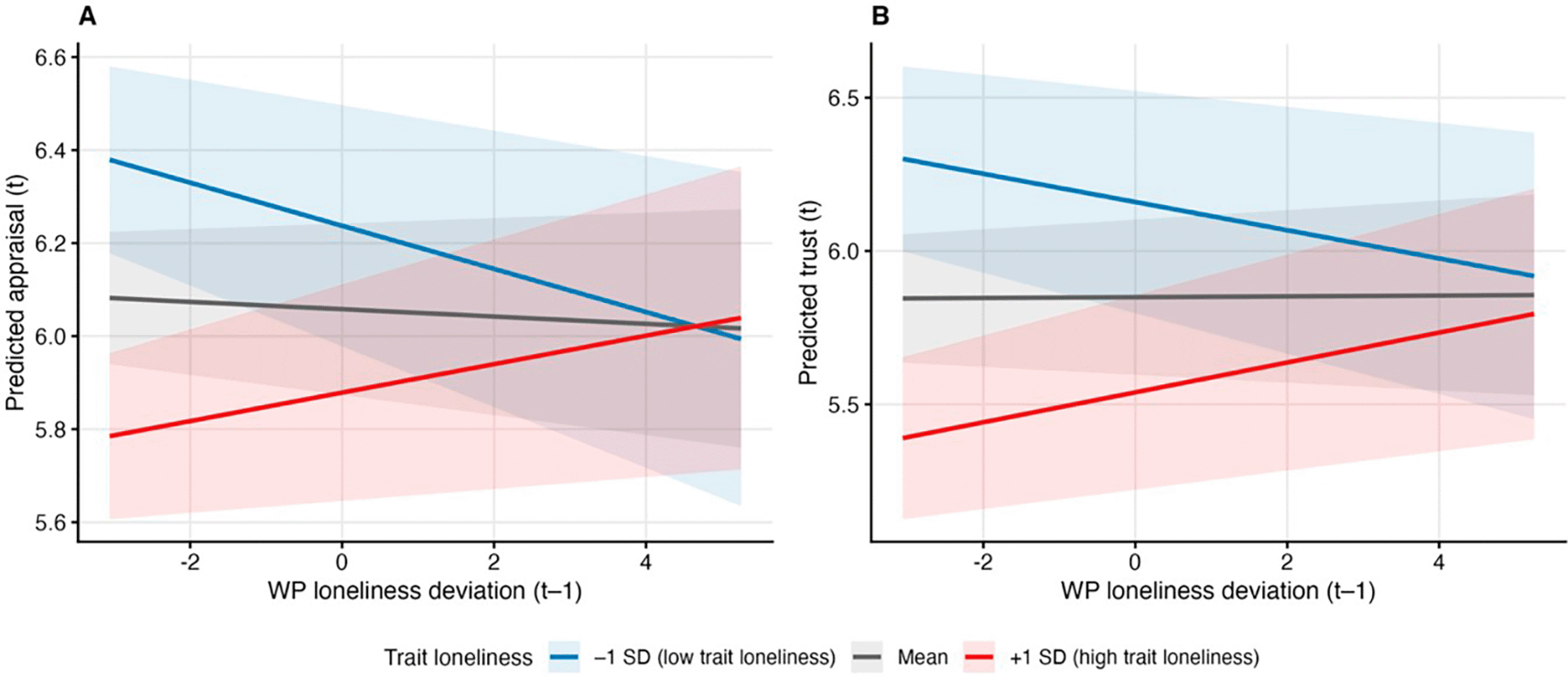
Shaded bands represent 95% confidence intervals. Panel A displays predicted social appraisal quality as a function of within-person loneliness deviation at t–1 (H3a; interaction p = .057). Panel B displays predicted momentary trustworthiness beliefs as a function of within-person loneliness deviation at t–1 (H3b; interaction p = .070). Predictions were computed using marginal means holding all other covariates at their observed values.
H3b was similarly only partially supported: the interaction between WP loneliness at t–1 and trait loneliness did not reach significance (B = .08, SE = .05, p = .070, see Figure 3B), though the direction mirrored H3a: the negative WP association was attenuated and reversed among individuals higher in trait loneliness. Due to singularity of the random slope model, a random intercept-only structure was retained. However, trait loneliness showed a pronounced negative main effect on subsequent trustworthiness beliefs (B = −.55, SE = .10, p < .001), indicating that individuals higher in trait loneliness reported substantially lower momentary trustworthiness beliefs overall. The BP loneliness control was non-significant in this model (B = −.12, SE = .07, p = .119). Prior trustworthiness beliefs positively predicted subsequent ones (B = .07, SE = .02, p = .002), indicating moderate temporal stability. The within-person deviation of loneliness at t–1 did not predict subsequent trustworthiness beliefs (B = .00, SE = .03, p = .964).
The present study employed a two-week EMA design to examine whether state and trait loneliness differ in their associations with daily social appraisal processes and interpersonal trustworthiness beliefs. We found that within-person fluctuations in momentary loneliness did not predict subsequent social appraisals or interpersonal trustworthiness beliefs, whereas trait loneliness was associated with more negative appraisals and lower trustworthiness beliefs overall. The hypothesized moderation by trait loneliness was not supported at the mean level, though a trend emerged in the opposite direction. The negative within-person coupling between momentary loneliness and subsequent social appraisal quality and interpersonal trustworthiness beliefs, respectively, was stronger among individuals lower in trait loneliness and even reversed among those higher in trait loneliness. The present findings provide partial support for theoretical accounts proposing that transient and more stable forms of loneliness are characterized by distinct socio-cognitive profiles (Maes & Vanhalst, 2025; Qualter et al., 2015). Notably, however, supplementary analyses revealed significant concurrent associations between momentary loneliness and both social appraisal quality and interpersonal trustworthiness beliefs, suggesting that these within-person relationships exist at the momentary level but do not persist to the subsequent assessment point. The lagged null effects may thus reflect the temporal boundedness of these associations rather than their absence. It should be noted that concurrent associations are susceptible to shared method variance, as loneliness and appraisals were assessed at the same time point. Mood-congruent reporting cannot be fully excluded as an alternative explanation. With this in mind, the concurrent and lagged results may speak to the differential profiles account: momentary loneliness appears to elicit immediate socio-cognitive reactivity that does not carry forward to subsequent moments, whereas the socio-cognitive correlates of trait loneliness appear to be more stable across time, a temporal dissociation that constitutes preliminary evidence for the hypothesized distinction between state and trait loneliness (Piejka et al., 2024). The present findings extend this work by suggesting that interpersonal trustworthiness beliefs may follow an analogous logic, thereby supporting the idea that prolonged experience of feeling lonely likely fosters distrust against other people (Langenkamp, 2023). The directionality of this relationship remains an open question, however, as it may be equally plausible that interpersonal trust beliefs precede loneliness, or that the two constructs are bound in a reciprocal relationship (Chen et al., 2026; Langenkamp, 2023; Tong et al., 2024).
The entrenchment account, however, was partially complicated by an unexpected moderation trend: rather than trait loneliness amplifying the within-person coupling between momentary loneliness and subsequent social appraisal quality and interpersonal trustworthiness beliefs, the opposite pattern emerged. While a floor effect may account for the attenuation of the negative slope at mean levels of trait loneliness, it does not readily explain the sign reversal observed at +1 SD. This reversal, though only a trend, may instead align with findings that trait-lonely individuals retain some motivational sensitivity to positive social experiences: research has documented heightened reactivity to social reward among those higher in trait loneliness (van Roekel et al., 2014, 2016, 2018), which complicates a straightforward entrenchment account and introduce additional heterogeneity in momentary appraisal responses. Whether this pattern reflects genuine motivational sensitivity to social reward, variance restriction at higher levels of trait loneliness, or some combination of these processes remains an open question that future studies with greater appraisal heterogeneity and larger samples would be better positioned to address.
The present findings should be interpreted against several limitations. First, the sample consisted predominantly of young female students with comparatively low loneliness levels and high interpersonal trustworthiness ratings, restricting variance and limiting generalizability. Second, measurement differences between state and trait loneliness, namely a single-item direct measure versus a validated 20-item indirect scale, may partially account for discrepancies in their observed associations, as these approaches likely tap into distinct conceptual facets of the construct (Buecker et al., 2020; Mund et al., 2025). Relatedly, momentary trust beliefs were assessed without accounting for contextual features known to systematically shape interpersonal trust such as social interdependence (Weiss et al., 2021). Future studies should incorporate such contextual dimensions to more precisely delineate the conditions under which reduced loneliness-linked trustworthiness beliefs emerge and intensify. Third, the correlational and lagged nature of EMA data precludes causal inference - in particular with respect to interpersonal trustworthiness beliefs and loneliness where bidirectional relationships have been discussed - and leaves unobserved confounding unresolved. Experimental and longitudinal designs will be necessary to establish directional pathways. Fourth, loneliness does not operate in isolation as a form of social disconnection but is conceptually and empirically intertwined with related constructs such as ostracism and social exclusion (Langenkamp, 2025). Disentangling the specific contribution of loneliness relative to these overlapping experiences represents an important task for future research.
Taken together, the present study provides preliminary support for the account that state and trait loneliness are characterized by distinct socio-cognitive profiles, and extends this account to interpersonal trustworthiness beliefs. The temporal dissociation between bounded concurrent reactivity and stable between-person associations offers a preliminary answer, suggesting that loneliness-related distrust is more deeply rooted in its more stable than its momentary, transient form, though whether this reflects a causal pathway, a reciprocal dynamic, or a shared dispositional substrate remains to be established. Lastly, the trend suggesting that even trait-lonely individuals may retain motivational sensitivity to social reward (van Roekel et al., 2016) cautions against purely entrenchment-based accounts and points to important individual differences in when and for whom reconnection remains a viable motivational signal.
This study protocol was reviewed and approved by the local ethics committee of the Department of Psychology of the Julius-Maximilians-University of Würzburg, Germany. All research procedures involving human participants were conducted in accordance with the relevant guidelines and regulations, including the Declaration of Helsinki. The ethics approval was granted under approval number GZEK 2024–47 on 14.10.2024.
Informed consent was obtained electronically from all participants prior to their participation in the study. Before beginning the online survey, participants were presented with detailed information outlining the purpose of the study, procedures, potential risks and benefits, confidentiality measures, and their right to withdraw at any time. Consent was indicated by ticking an “I agree” box on the online form. No data were collected from individuals who did not provide consent.
| Views | Downloads | |
|---|---|---|
| F1000Research | - | - |
|
PubMed Central
Data from PMC are received and updated monthly.
|
- | - |
Provide sufficient details of any financial or non-financial competing interests to enable users to assess whether your comments might lead a reasonable person to question your impartiality. Consider the following examples, but note that this is not an exhaustive list:
Sign up for content alerts and receive a weekly or monthly email with all newly published articles
Already registered? Sign in
The email address should be the one you originally registered with F1000.
You registered with F1000 via Google, so we cannot reset your password.
To sign in, please click here.
If you still need help with your Google account password, please click here.
You registered with F1000 via Facebook, so we cannot reset your password.
To sign in, please click here.
If you still need help with your Facebook account password, please click here.
If your email address is registered with us, we will email you instructions to reset your password.
If you think you should have received this email but it has not arrived, please check your spam filters and/or contact for further assistance.

Comments on this article Comments (0)