Keywords
neuroplasticity, education, university, pedagogical strategies, academic performance.

neuroplasticity, education, university, pedagogical strategies, academic performance.
Neuroplasticity, defined as the brain’s capacity to reorganize neural networks in response to experience, has gained increasing relevance in higher education. Pedagogical strategies grounded in neuroplastic principles have been proposed as alternatives to traditional teaching methods; however, their educational impact remains methodologically heterogeneous.
To systematically synthesize the scientific evidence on the impact of neuroplasticity-based pedagogical strategies on academic performance, long-term knowledge retention, motivation, and soft skills development in university students.
A systematic literature review was conducted following PRISMA 2020 guidelines. The PICO framework was used to formulate the research question. An exhaustive search was performed in Scopus on November 25, 2024, using the search equation: TITLE-ABS (“neuroplasticity” AND “students” OR “neuroscience”) with filters for open-access journal articles published between 2020 and 2024 in English or Spanish. Studies outside neuroscience, arts, and multidisciplinary areas were excluded. From 838 records initially identified, 54 studies met the inclusion criteria after screening and eligibility assessment. Data were synthesized through qualitative thematic analysis.
Evidence suggests that neuroplasticity-based strategies—such as gamification, experiential learning, immersive technologies, and collaborative approaches—are associated with improved academic performance, enhanced long-term retention, increased student engagement, and strengthened soft skills. However, institutional resistance, limited teacher training, methodological variability, and restricted technological resources were identified as key implementation barriers.
The heterogeneity of study designs, variability in outcome measurement, and restriction to a single database may limit generalizability.
Neuroplasticity-based pedagogical strategies represent a promising educational innovation in higher education. Their sustainable implementation requires institutional support, teacher training in applied neuroscience, and the development of standardized evaluation frameworks.
Registration
The review protocol was not prospectively registered.
The human brain develops from the embryo to preschool age, with critical stages that include the formation and tuning of neural networks, then regional maturation that allows the development of sensory, language and higher cognitive functions (Foster & Lopez, 2022). It has an incredible ability to adapt and renew itself known as neuroplasticity that allows learning, loving, thinking, creating and experiencing emotions, as well as innovating, adapting and developing. However, there is little awareness that these capabilities can be improved and learning can be enhanced with practical methods (Díaz Rodríguez, 2024).
Neuroplasticity is the ability of developing brains and adults to respond and adjust to different coexisting levels, the ability of the nervous system to form new neuronal connections in response to information from the digital environment, affecting learning and the development of skills and competencies. It sustains cognition and functions such as thought, memory, learning, language, perception, emotion and attention, allowing human adaptation to a changing environment (Nájera González et al., 2021). This ability allows the brain to reorganize and modify its neuronal connections (Dietsch et al., 2023).
The brain adapts to strenuous cognitive challenges. Interpreters and translators who require high cognitive control are ideal models for studying neuroplasticity (Korenar et al., 2023). The coupling between brains, essential for social communication, shows inter-brain plasticity that persists after social interaction and facilitates social closeness. Transcranial direct current stimulation modulates cortical excitability and promotes neuroplasticity, especially in the motor cortex (Gellner et al., 2024).
Neuroplasticity is maximum during development and decreases in adulthood, most notably in the sensory cortices, while the motor and prefrontal cortices maintain plasticity for life (Sarı & Lunghi, 2023). This plasticity can be beneficial as detrimental and improved therapeutically (Chen et al., 2023). Evidence of sleep-dependent changes in microstructural neuroplasticity is scarce, although it is related to the reorganization of functional networks by learning.
Neuroscience, neuroplasticity and higher nerve functions contribute to pedagogical practices and promote more meaningful learning for students (Costa, 2023). Habits influence learning and memorization, and to optimize them, performance must be improved, reviewing factors such as diet, sleep and sustained attention (Rodrigues and Carvalho, 2023). Neurodevelopment is based on plasticity of the nervous system, a biological and dynamic capacity of the CNS to adapt structurally and functionally. The brain, through plasticity, responds to stimuli by adapting, but this capacity decreases with age; however, an increase in prefrontal activation has been observed, suggesting an adaptive brain that uses compensatory scaffolding to face deterioration (Hill et al., 2023).
Among the contributions of neuroscience we have: neurophysiological effects of robotic verticalization training in patients with a state of minimal consciousness, comparing a group with traditional treatment and another with the robotic device Erigo (Hanson et al., 2023). Studies of the implications of neuroplasticity in educational neuroscience highlight the responsibility of the student when it comes to connecting socially, so that they are aware to improve their executive functions, and the role of the social environment for their self-regulation (Choudhury and Wannyn, 2022)
A systematic literature review (SRL) was developed, applying the PICO methodology (Population, Intervention, Comparison, Results) to formulate the research question in a structured and precise manner. Table 1
As a result of applying the PICO methodology, the following research question was proposed: How do pedagogical strategies based on neuroplasticity impact academic performance and long-term knowledge retention of university students, compared to traditional teaching methods? Other research questions were: What are the main challenges in implementing pedagogical strategies based on neuroplasticity in university environments? In what way do strategies based on neuroplasticity influence student motivation and commitment compared to traditional methods? What impact do strategies based on neuroplasticity have on the development of soft skills of university students?
On November 25, 2024, an exhaustive search was conducted in the indexed database Scopus (https://www.scopus.com), due to its wide multidisciplinary coverage in areas such as neuroscience, education and pedagogy. The search strategy was based on key terms: neuroplasticity, students and neuroscience. The following search equation was used: TITLE-ABS (“neuroplasticity” AND “students” OR “neuroscience”) AND PUBYEAR > 2019 AND PUBYEAR < 2025 AND (LIMIT-TO (OA, “all”)) AND (LIMIT-TO (SUBJAREA, “NEUR”) OR LIMIT-TO (SUBJAREA, “ARTS”) OR LIMIT-TO (SUBJAREA, “MULT”)) AND (LIMIT-TO (LANGUAGE, “English”) OR LIMIT-TO (LANGUAGE, ") Spanish”). Table 2.
In the initial selection process, 838 records were identified. Of these, 557 were excluded because they did not meet the periodicity criterion (2020-2024), leaving a total of 281 eligible records. Subsequently, 20 additional records were eliminated because they were not in the selected languages (English or Spanish), leaving 261 records for evaluation. Finally, the remaining records were reviewed to verify access and 207 records were eliminated due to lack of free access to the full text, which left 54 studies that met the inclusion criteria and were considered for qualitative and quantitative analysis.
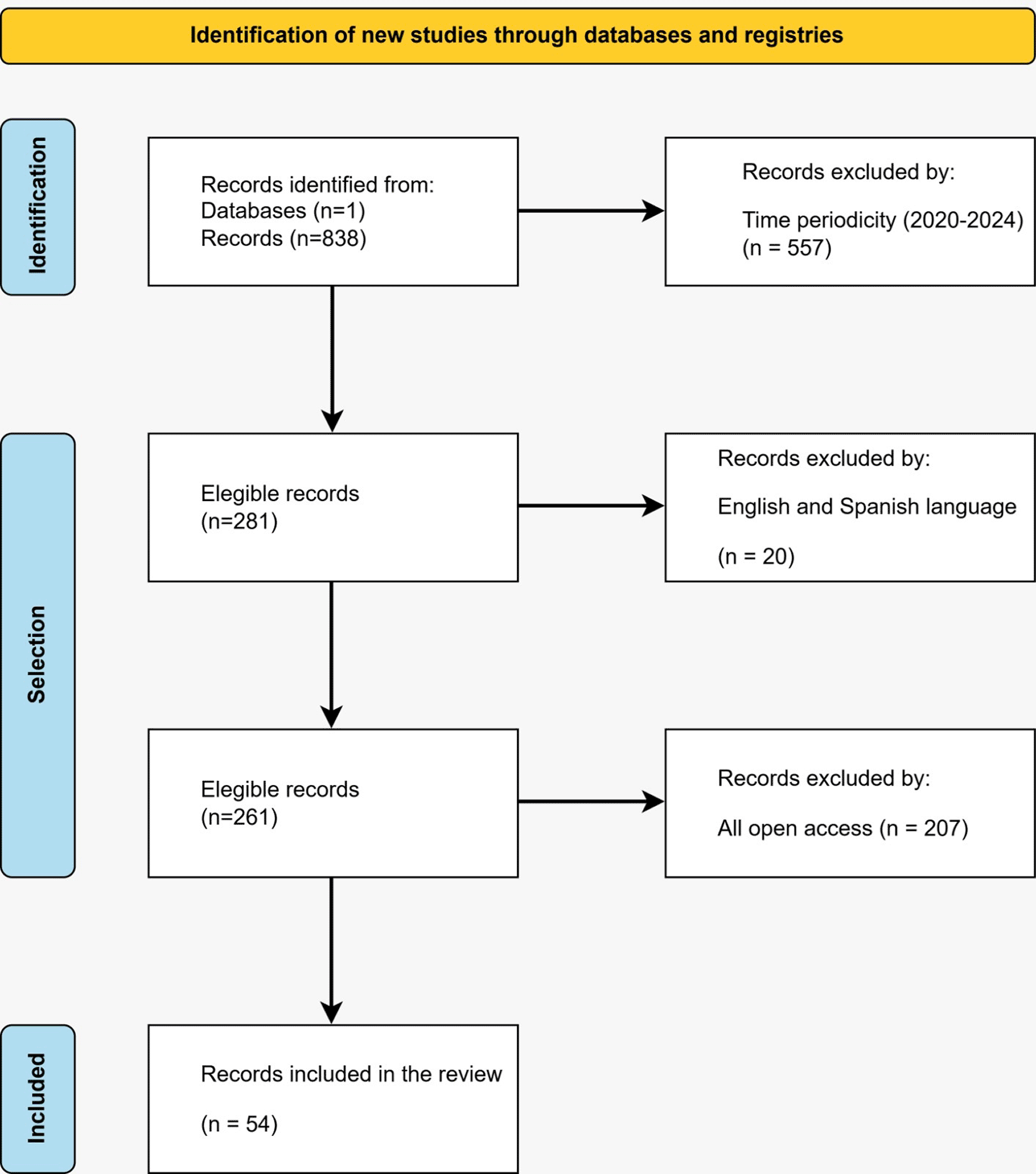
Table 3 shows that research in neuroscience has shown that neuroplasticity is key in the acquisition and consolidation of knowledge. Pedagogical strategies based on neuroplasticity emerge as innovative alternatives to traditional methods, optimizing academic performance and favoring long-term knowledge retention (Bigio et al., 2023; Kozlowska et al., 2022; Le Franc et al., 2022).
| Author | Description |
|---|---|
| (Bigio et al., 2023; Kozlowska et al., 2022; Le Franc et al., 2022; Armstrong et al., 2024; Fekonja et al., 2024; Ho & King, 2021) | Academic performance and knowledge retention are optimized, promoting a more inclusive and personalized learning environment. |
| (Barnett et al., 2020; McEwen & Akil, 2020; Trenado et al., 2023; Artru & Rabeyron, 2021; Egger et al., 2024) | Approaches such as active learning and gamification favor the formation of new neural connections, improving long-term retention. |
| (Hishikawa et al., 2023; Karim et al., 2021; Yin et al., 2020) | Pedagogical approaches that incorporate neuroplasticity can overcome the limitations of passive learning, promoting effective teaching. |
| (Li et al., 2020; Shang & Bieszczad, 2022; Sumner et al., 2021; Tsay & Winstein, 2021; Pan & Monje, 2020; Singewald et al., 2023) | It allows personalizing teaching according to the needs of the student, ensuring meaningful and lasting learning. |
| (Mattson et al., 2020; Price & Duman, 2020; Scher, 2024) | They favor cognitive flexibility and emotional regulation, impacting knowledge retention and academic performance. |
Neuroplastic learning is based on the ability of the brain to reorganize itself in response to new experiences. Strategies such as active learning, gamification and problem solving strengthen neural networks and improve information retrieval (Barnett et al., 2020; McEwen & Akil, 2020; Trenado et al., 2023). Unlike traditional approaches, these methodologies encourage interaction with the content, promoting solid synaptic connections and facilitating the application of knowledge (Armstrong et al., 2024; Fekonja et al., 2024; Ho & King, 2021).
Experiential learning and social interaction are essential to consolidate knowledge, since they promote cognitive flexibility and emotional regulation, key elements in academic performance and intellectual autonomy (Egger et al., 2024; Pan & Monje, 2020; Singewald et al. al., 2023). Strategies that integrate these principles can improve academic performance and strengthen the ability of students to face intellectual challenges (Mattson et al., 2020; Price & Duman, 2020; Scher, 2024).
Table 4 describes the institutional resistance to change by teachers and administrators, who prefer traditional models, hindering curricular and pedagogical transformation (Artru & Rabeyron, 2021; Hamrick & Stranahan, 2020; Wang et al., 2022). This reluctance is aggravated by the lack of specific training in neuroscience and innovative pedagogy, which limits its correct implementation (Bennett et al., 2020; Eldaief et al., 2022; Lee et al., 2023; Sokołowska, 2024).
| Author | Description |
|---|---|
| (Berns et al., 2020; McEwen & Akil, 2020; Shang & Bieszczad, 2022; Artru & Rabeyron, 2021; Hamrick & Stranahan, 2020; Wang et al., 2022) | Institutional resistance to change and the tradition of conventional methods hinder the adoption of innovative approaches. |
| (Barnett et al., 2020; Ho & King, 2021; Lehmann et al., 2021; Arida & Teixeira-Machado, 2021; Fair & Yeo, 2020; Yin et al., 2020) | The lack of teacher training in neuroscience and innovative pedagogy represents a barrier to the effective implementation of these strategies. |
| (Araújo et al., 2020; Artru & Rabeyron, 2021; Bennett et al., 2020; Lee et al., 2023; Mattson et al., 2020) | The scarcity of financial and technological resources limits investment in tools such as virtual reality and interactive platforms necessary for these methodologies. |
| (Lee et al., 2023; Pan & Monje, 2020; Sokołowska, 2024) | Inadequate infrastructure and lack of access to advanced technologies hinder the integration of pedagogical strategies based on neuroplasticity. |
| (Duffau, 2021; Le Franc et al., 2022; Marfia et al., 2022; Artru & Rabeyron, 2021; Goldberg, 2022; Lee et al., 2023; Sokołowska, 2024) | The diversity of learning styles and the variability in brain plasticity of students complicate the standardization of these methodologies. |
Another relevant challenge is the scarcity of financial and technological resources. The implementation of these strategies requires advanced technologies, such as virtual reality and interactive platforms, which implies significant investments in infrastructure and training (McEwen & Akil, 2020; Shang & Bieszczad, 2022; Nishio et al., 2024). The diversity in learning styles makes standardization difficult, since brain plasticity varies between individuals, which requires flexible and personalized approaches (Duffau, 2021; Le Franc et al., 2022; Marfia et al., 2022).
From a methodological approach, evaluating the effectiveness of these strategies remains a challenge, since traditional methods of measuring academic performance do not accurately capture their benefits (Armstrong et al., 2024; Ekman et al., 2022; Gomutbutra et al., 2022). Longitudinal studies and innovative evaluation approaches are required to validate their impact on the consolidation of knowledge and the development of cognitive and socioemotional skills (Scher, 2024; Soliman et al., 2021).
Table 5 shows that pedagogical strategies based on neuroplasticity strengthen student motivation and commitment compared to traditional methods, which are usually more passive and focused on memorization (Artru & Rabeyron, 2021; Bennett et al., 2020; Sokołowska, 2024). These methodologies generate dynamic and interactive environments, promoting a greater connection of the student with the academic content (Araújo et al., 2020; Eldaief et al., 2022; Lee et al., 2023).
| Author | Description |
|---|---|
| (Gomutbutra et al., 2022; Shang & Bieszczad, 2022; Trenado et al., 2023; Criscuolo et al., 2022; Sokołowska, 2024; Wang et al., 2022) | Gamification, virtual tasks and training in simulated environments enhance motivation and commitment by allowing students to visualize their progress and receive immediate feedback. |
| (Bigio et al., 2023; Karim et al., 2021; Nishio et al., 2024; Tsay & Winstein, 2021; Artru & Rabeyron, 2021; Goldberg, 2022; Lee et al., 2023; Mattson et al., 2020; Singewald et al., 2023; Wang et al., 2022) | They stimulate curiosity, creativity and experimentation, which strengthens intrinsic motivation and the involvement of students in the learning process. |
| (Ekman et al., 2022; Lehmann et al., 2021; Yin et al., 2020; Bennett et al., 2020; Goldberg, 2022; Hamrick & Stranahan, 2020; Mattson et al., 2020; Pan & Monje, 2020) | Immediate feedback and multisensory learning facilitate student adaptation, favoring knowledge retention and academic engagement. |
| (Barnett et al., 2020; Duffau, 2021; Fair & Yeo, 2020; Pal, 2021) | It strengthens self-efficacy and emotional connection with the content, increasing student confidence and autonomy. |
| (Kozlowska et al., 2022; Le Franc et al., 2022; Tortella et al., 2021; Araújo et al., 2020; Bennett et al., 2020; Eldaief et al., 2022; Lee et al., 2023; Sokołowska, 2024) | The personalization of learning through neuroplasticity allows content to be adapted to the individual styles of students, favoring their motivation and improving their academic performance. |
The use of active strategies such as gamification, experiential learning and immersion in virtual environments stimulates curiosity and creativity, key to sustaining intrinsic motivation (Gomutbutra et al., 2022; Shang & Bieszczad, 2022; Trenado et al., 2023). In addition, by providing immediate feedback, students can adjust their learning in real time, strengthening their self-efficacy and confidence (Ekman et al., 2022; Lehmann et al., 2021; Yin et al., 2020).
Finally, these strategies promote collaborative and multisensory learning environments, strengthening student belonging and involvement in their training (Bennett et al., 2020; Hamrick & Stranahan, 2020; Mattson et al., 2020). Evidence indicates that neuroplasticity enhances motivation and commitment, overcoming limitations of traditional approaches.
Table 6 shows that pedagogical strategies based on neuroplasticity favor the development of soft skills in university students. Unlike traditional methods focused on memorization, these strategies promote active learning, experimentation and social interaction, facilitating the acquisition of key interpersonal skills for the academic and professional field (Araújo et al., 2020; Artru & Rabeyron, 2021; Wang et al., 2022).
| Author | Description |
|---|---|
| (Gomutbutra et al., 2022; Shang & Bieszczad, 2022; Trenado et al., 2023; Criscuolo et al., 2022; Eldaief et al., 2022; Hong et al., 2023; Sokołowska, 2024) | They stimulate creativity and improve student confidence, facilitating the application of knowledge in various contexts and strengthening the capacity for experiential learning. |
| (Arida & Teixeira-Machado, 2021; Berns et al., 2020; Marfia et al., 2022; Sumner et al., 2021; Araújo et al., 2020; Artru & Rabeyron, 2021; Bennett et al., 2020; Lee et al., 2023; Mattson et al., 2020; Pan & Monje, 2020; Singewald et al., 2023; Sinha et al., 2021; Wang et al., 2022) | They positively impact effective communication, teamwork, problem solving and empathy, preparing students for the professional field. |
| (Ekman et al., 2022; Lehmann et al., 2021; Yin et al., 2020; Barnett et al., 2020; Duffau, 2021; Fair & Yeo, 2020; Pal, 2021) | They contribute to the development of empathy, adaptability and emotional intelligence, improving social interaction and leadership capacity in professional environments. |
| (Armstrong et al., 2024; Fekonja et al., 2024; Ho & King, 2021; McEwen & Akil, 2020; Kozlowska et al., 2022; Le Franc et al., 2022; Tortella et al., 2021) | They generate a dynamic learning environment that enhances collaboration, resilience and critical thinking, promoting self-efficacy and stress management. |
A central benefit of these methodologies is the stimulation of creativity and confidence, essential for problem solving and critical thinking (Gomutbutra et al., 2022; Shang & Bieszczad, 2022; Trenado et al., 2023). They also strengthen resilience and self-awareness, allowing better adaptation to dynamic environments (Bigio et al., 2023; Karim et al., 2021; Nishio et al., 2024; Tsay & Winstein, 2021).
The impact of neuroplasticity on generating socioemotional skills, such as empathy and adaptability, promoting greater emotional intelligence and self-efficacy (Barnett et al., 2020; Duffau, 2021; Pal, 2021). These skills optimize communication and teamwork, favoring labor insertion (Artru & Rabeyron, 2021; Goldberg, 2022; Mattson et al., 2020).
In addition, the use of virtual environments and gamification enhances student confidence and self-assessment, facilitating stress management and reflection on their learning (Criscuolo et al., 2022; Price & Duman, 2020; Scher, 2024). However, further empirical validation is required to consolidate its long-term effectiveness (Duffau, 2021; Egger et al., 2024; Janušonis et al., 2023; Peng et al., 2022).
Pedagogical strategies based on neuroplasticity impact academic performance, motivation and the development of soft skills in university students. In contrast to traditional methods, these strategies optimize the consolidation of knowledge, personalize learning and adapt to individual differences (Bigio et al., 2023; Kozlowska et al., 2022; Lee et al., 2023). This is due to the ability of the brain to reorganize itself to specific stimuli, which favors the acquisition of cognitive and socioemotional skills (Shang & Bieszczad, 2022; Sumner et al., 2021; Tsay & Winstein, 2021).
One of the most relevant effects is its influence on student motivation and commitment. Neuroplastic learning, supported by active interaction and technological tools such as virtual reality and gamification, fosters curiosity and creativity, promoting a deeper connection with academic content (Gomutbutra et al., 2022; Marfia et al., 2022; Tsay & Winstein, 2021). This approach contrasts with traditional methods, whose rigidity can generate demotivation and reduce student participation (McEwen & Akil, 2020; Lehmann et al., 2021).
Likewise, its impact on the development of soft skills, essential for labor insertion, is highlighted. Strategies such as collaborative learning and problem-solving strengthen communication, resilience and leadership, improving the professional preparation of students (Berns et al., 2020; Fair & Yeo, 2020; Wang et al., 2022). However, its implementation faces challenges: institutional resistance, lack of teacher training in applied neuroscience and insufficient technological infrastructure (Bennett et al., 2020; Goldberg, 2022; Lee et al., 2023).
To guarantee its sustainability, it is necessary to adopt academic policies that promote pedagogical innovation, investment in technology and continuous training of teaching staff (Duffau, 2021; Egger et al., 2024). These strategies represent an innovative alternative to optimize learning in higher education, increasing retention of knowledge, motivation and student commitment, as well as promoting the development of key skills for the professional world.
The methodological variability of the studies analyzed makes it difficult to generalize the results. Although there is evidence on the positive effects of these strategies, the heterogeneity in approaches and evaluation criteria limits the possibility of establishing definitive conclusions about their effectiveness in different educational contexts.
The challenge of measuring its impact. Traditional instruments do not always accurately capture the benefits of learning based on neuroplasticity, which suggests the need to develop accurate assessment methodologies to measure knowledge consolidation and long-term retention.
In addition, infrastructure and access to advanced technology represent significant barriers. Strategies such as virtual reality and gamification require investments in equipment and teacher training, which limits their application in institutions with restricted resources.
From a theoretical perspective, it is still necessary to identify the specific neural mechanisms that underlie the improvement of learning through these strategies. While neuroplasticity has been widely studied in clinical and experimental contexts, its application in education requires further exploration of how the reorganization of neural networks impacts academic performance and the development of socioemotional skills.
Future research should focus on longitudinal studies that evaluate the sustainability of these strategies over time, as well as the comparison of neuroplastic approaches to identify which generate greater benefits according to the student profile and the educational environment. The development of measurement tools based on cognitive neuroscience is recommended, incorporating techniques such as neuroimaging or biometric data analysis to evaluate changes in brain plasticity associated with learning.
The research process involved reviewing the literature based on a population that was defined as shown in the PRISMA diagram ( Figure 1). The documents analysed were extracted from the SCOPUS database. The study was conducted in accordance with the ethical principles of the Declaration of Helsinki.
The study was conducted in accordance with the research guidelines established by Señor de Sipán University, as well as the ethical principles set forth in the Declaration of Helsinki and current national regulations.
| Views | Downloads | |
|---|---|---|
| F1000Research | - | - |
|
PubMed Central
Data from PMC are received and updated monthly.
|
- | - |
Provide sufficient details of any financial or non-financial competing interests to enable users to assess whether your comments might lead a reasonable person to question your impartiality. Consider the following examples, but note that this is not an exhaustive list:
Sign up for content alerts and receive a weekly or monthly email with all newly published articles
Already registered? Sign in
The email address should be the one you originally registered with F1000.
You registered with F1000 via Google, so we cannot reset your password.
To sign in, please click here.
If you still need help with your Google account password, please click here.
You registered with F1000 via Facebook, so we cannot reset your password.
To sign in, please click here.
If you still need help with your Facebook account password, please click here.
If your email address is registered with us, we will email you instructions to reset your password.
If you think you should have received this email but it has not arrived, please check your spam filters and/or contact for further assistance.

Comments on this article Comments (0)