Keywords
Teacher self-efficacy; Pedagogical motivation; ICT utilization; Technology-integrated pedagogy; PLS-SEM

Teacher self-efficacy; Pedagogical motivation; ICT utilization; Technology-integrated pedagogy; PLS-SEM
The rapid growth of digital technologies has changed the conversation about teaching quality. The question is no longer simply whether schools have access to devices and platforms, but whether teachers can use them in ways that genuinely enrich learning. Within the TPACK tradition, effective digital pedagogy is understood as the ability to align technology with pedagogy and subject matter so that ICT supports interaction, assessment, and meaningful learning rather than merely digitizing routine instruction (Mishra & Koehler, 2006; Koehler & Mishra, 2009; Voogt et al., 2013; Falloon, 2020). Recent syntheses and measurement studies likewise show that the quality of instruction increasingly judges technology integration in terms of the extent to which it enables, the extent to which it empowers learners, and the pedagogical purposes it actually serves (Wohlfart & Wagner, 2023; Consoli et al., 2023; Tzafilkou et al., 2023).
Even so, teachers’ classroom use of digital pedagogy remains uneven across countries and school systems. Evidence from China, Israel, Bahrain, Norway, Rwanda, Spain, and other settings suggests that technology integration varies with digital competence, pedagogical beliefs, institutional support, prior experience, and the extent to which teachers use technological resources in their everyday work (Lai & Jin, 2021; Lin et al., 2023; Hershkovitz et al., 2023; Afari et al., 2023; Almerich et al., 2024; Vandeyar & Adegoke, 2024). This continuing variation reinforces a long-standing point in the literature: internal barriers such as beliefs, confidence, and pedagogical orientation can be just as influential as infrastructure, and in some cases even more so (Ertmer, 1999; Hew & Brush, 2007; Ertmer & Ottenbreit-Leftwich, 2010). This pattern is also consistent with evidence emphasizing teacher beliefs, infrastructure, access, and perceived utility as determinants of ICT use (Ertmer et al., 2012; Gil-Flores et al., 2017; Farjon et al., 2019; Chand et al., 2020; Backfisch et al., 2021a).
Among these internal conditions, teacher self-efficacy remains one of the strongest predictors of meaningful technology integration. From a social cognitive perspective, self-efficacy shapes how much effort teachers invest, how they respond to instructional difficulty, and whether they are willing to persist when new practices feel demanding (Bandura, 1997). Studies across a range of contexts show that teachers with stronger technology-related self-efficacy are more likely to engage in higher-quality ICT use, benefit from professional development, and sustain digital change in the classroom (Barton & Dexter, 2020; Bowman et al., 2022; Paetsch et al., 2023; Yang et al., 2024). At the same time, recent work suggests that self-efficacy matters most when it is tied to pedagogical use, not simply to technical operation (Hatlevik, 2017; Howard et al., 2021; Tzafilkou et al., 2023). Conceptually, this also aligns with broader work on teacher efficacy, learning, and technology acceptance linking efficacy beliefs to persistence, intention, and TPACK-related use (Tschannen-Moran & Hoy, 2001; Schunk, 2012; Teo, 2011; Joo et al., 2018; Dong et al., 2020).
Still, confidence by itself does not fully explain why some teachers convert readiness into sustained instructional innovation while others remain at occasional or surface-level use. Work informed by self-determination theory and expectancy-value theory points to the importance of motivation, perceived value, and expectancy beliefs in explaining whether teachers start, maintain, and deepen technology use in practice (Deci & Ryan, 2000; Ryan & Deci, 2020; Cheng et al., 2020; Cheng, 2024). Recent research also suggests that teachers’ digital competence develops more strongly when schools support autonomy, competence, and collaborative professional learning (Chiu et al., 2024; Pongsakdi et al., 2021). From a self-determination perspective, sustained engagement is more likely when autonomy, competence, and relatedness are supported and when teachers can adapt to changing instructional demands (Deci & Ryan, 1985, 2020; Gagné & Deci, 2005; Vansteenkiste et al., 2020; Collie & Martin, 2017).
ICT utilization, in turn, is the behavioral expression of these psychological conditions in everyday teaching. What ultimately matters for digital pedagogy is not only whether teachers feel confident or motivated, but whether they repeatedly enact that readiness through lesson planning, classroom facilitation, assessment, and learner support. Research on digital teaching competence and technology-enhanced instructional quality increasingly points to actual classroom use of ICT as the bridge between teacher beliefs and pedagogical transformation (Lin et al., 2023; Gao et al., 2024; Tzafilkou et al., 2023; Yan et al., 2025).
Although this body of literature is growing, several issues remain unresolved. First, many recent studies still focus on pre-service teachers, teacher educators, review-level syntheses, or emergency teaching contexts, which means that the everyday digital pedagogy of in-service secondary teachers is still less visible than it should be (Peciuliauskiene et al., 2022; Wohlfart & Wagner, 2023; Bertram et al., 2023). Second, the field remains somewhat fragmented across separate conversations about self-efficacy, motivation, digital competence, and technology use, even though recent reviews note that technology integration is inherently multidimensional and often measured inconsistently (Consoli et al., 2023; Almerich et al., 2024). Third, evidence from Indonesia is still relatively limited, despite the importance of understanding how teachers translate psychological readiness into digital practice under uneven infrastructural and institutional conditions.
Against this backdrop, the present study examines an integrative model in which teacher self-efficacy provides the psychological foundation, pedagogical motivation acts as an internal energizer, and ICT utilization functions as the behavioral pathway toward technology-integrated teaching. By testing direct, indirect, and sequential relationships among these constructs through PLS-SEM with senior high school teachers in Riau Province, Indonesia, this study moves beyond single-factor explanations and offers a contextually grounded account of how teachers’ beliefs become digital pedagogical practice (Mishra & Koehler, 2006; Tondeur, van Braak, et al., 2017; Howard et al., 2021).
The integration of digital technologies into education has undoubtedly reshaped instructional practice, yet contemporary research no longer treats integration as a simple matter of access. Digital teaching is now widely understood as a multidimensional professional competence that involves pedagogical judgment, ethical awareness, classroom orchestration, and the purposeful alignment of technology with subject matter and learning goals (Mishra & Koehler, 2006; Voogt et al., 2013; Falloon, 2020). Recent umbrella and systematic reviews reach a similar conclusion: research on technology integration increasingly centers on instructional quality and learner empowerment, even as definitions and measurement tools remain highly varied (Wohlfart & Wagner, 2023; Consoli et al., 2023). This broader TPACK-oriented literature has also been shaped by reviews of construct operationalization and teacher knowledge frameworks (Abbitt, 2011; Chai et al., 2013).
Within this broader field, self-efficacy has become a key explanatory construct because it shapes whether teachers feel able to experiment with new tools, persist through technical setbacks, and sustain instructional change. In Bandura’s (1997) social cognitive theory, self-efficacy refers to beliefs about one’s capability to organize and carry out actions needed to achieve desired outcomes. In educational technology research, it has repeatedly been linked to stronger confidence, more effective professional learning, and higher-quality classroom use of ICT (Ertmer & Ottenbreit-Leftwich, 2010; Barton & Dexter, 2020; Bowman et al., 2022; Paetsch et al., 2023). Even so, self-efficacy does not operate in a vacuum. Its influence depends in part on whether teachers also have supportive pedagogical beliefs, enabling contexts, and real opportunities to turn confidence into practice (Almerich et al., 2024; Yang et al., 2024).
Motivation offers an important complementary lens for understanding how that conversion happens. Self-determination theory emphasizes that people are more likely to sustain goal-directed action when they experience autonomy, competence, and relevance, while expectancy-value theory highlights the combined role of perceived capability and perceived value (Deci & Ryan, 2000; Ryan & Deci, 2020; Cheng et al., 2020; Cheng, 2024). In educational technology research, these perspectives help explain why positive attitudes toward technology do not always develop into sustained technology-integrated pedagogy. Recent studies suggest that motivation becomes instructionally meaningful when it is supported by collaborative professional development, repeated practice, and school cultures that legitimize experimentation (Pongsakdi et al., 2021; Chiu et al., 2024; Vandeyar & Adegoke, 2024).
Alongside these psychological variables, ICT utilization represents the observable behavioral side of digital transformation. It captures whether teachers move beyond intention and use technology in concrete instructional tasks such as planning, facilitation, interaction, assessment, and feedback. Emerging evidence on digital teaching competence and technology-enhanced instruction suggests that active engagement with ICT is a decisive pathway through which beliefs and motivation are translated into pedagogical action (Lin et al., 2023; Gao et al., 2024; Tzafilkou et al., 2023; Yan et al., 2025). For that reason, treating ICT utilization as a mediator provides a more informative explanation than treating it only as an outcome or contextual factor.
From a methodological standpoint, earlier research on technology-integrated teaching has often relied on correlational designs, isolated predictors, or inconsistent measures of technology integration, making it difficult to see how psychological and behavioral variables work together (Scherer et al., 2019; Consoli et al., 2023). Many studies also focus on pre-service teachers or higher education settings, while the everyday digital practice of in-service secondary teachers remains comparatively underexamined (Instefjord & Munthe, 2017; Bertram et al., 2023; Wohlfart & Wagner, 2023). To address these conceptual and empirical gaps, the present study proposes a model in which teacher self-efficacy serves as a psychological foundation, motivation as an internal driver, and ICT utilization as the behavioral pathway leading to technology-integrated pedagogy. By using PLS-SEM to test direct and indirect relationships simultaneously, this study offers a more integrated account of how teachers’ beliefs are translated into digital teaching practice in secondary education. Related work on teacher preparation and professional agency likewise suggests that technology integration is strengthened through coherent training experiences and institutional support (Tondeur et al., 2018; Kukul, 2023; Nagel et al., 2023).
This study used a quantitative explanatory survey design and tested the proposed relationships through Partial Least Squares Structural Equation Modeling (PLS-SEM). The design was chosen because the study aimed to explain how teacher self-efficacy, pedagogical motivation, ICT utilization, and technology-integrated teaching practices are connected, including both direct and mediated relationships. PLS-SEM was considered appropriate because it is well-suited to prediction-oriented research involving multiple latent constructs and interrelated mediation effects, particularly when the data may not fully meet multivariate normality assumptions. All analyses were conducted in SmartPLS 4 to evaluate both the measurement model and the structural model. Within the conceptual framework, teacher self-efficacy was treated as the main exogenous psychological factor, motivation as an internal driver of professional engagement, and ICT utilization as the behavioral mechanism through which digital pedagogy is enacted in classroom practice.
The study involved 408 senior high school teachers from districts and municipalities across Riau Province, Indonesia. Participants were recruited through purposive sampling based on two inclusion criteria: they had to be actively teaching at the time of the study and have prior experience using ICT in instructional activities. The sample included both urban and rural school contexts and covered ten regencies and two municipalities, providing broad geographical and institutional representation. For PLS-SEM, this sample size was adequate and offered sufficient statistical power to estimate a relatively complex structural model with mediation effects. Participation was entirely voluntary, and responses were collected anonymously to protect confidentiality and reduce the risk of socially desirable responding.
Data were collected through a structured, closed-ended questionnaire that used a four-point Likert scale ranging from 1 (strongly disagree) to 4 (strongly agree). The instrument measured four latent constructs: teacher self-efficacy, pedagogical motivation, ICT utilization, and technology-integrated teaching practices. Teacher self-efficacy was represented by indicators related to instructional planning, technology integration, digital classroom management, and ICT-based assessment—pedagogical motivation covered intrinsic and extrinsic motivation, goal orientation, persistence, and professional values. ICT utilization captured the extent to which teachers used digital tools in instructional activities, whereas technology-integrated teaching practices reflected the combined use of pedagogy, subject content, and technology in classroom instruction. The questionnaire items were adapted from established theoretical and empirical studies and were pilot-tested before the main survey to ensure clarity, contextual relevance, and acceptable internal consistency.
The data were analyzed using PLS-SEM to test the hypothesized relationships among the study constructs. The analysis proceeded in two stages: evaluation of the measurement model and assessment of the structural model. The measurement model was examined in terms of indicator reliability, internal consistency reliability, convergent validity, and discriminant validity. Once the adequacy of the measurement model had been established, the structural model was assessed through path coefficients, coefficients of determination, effect sizes, and specific indirect effects. A bootstrapping procedure was used to test the significance of both direct and indirect relationships. Convergent validity was evaluated through outer loadings, composite reliability, and average variance extracted (AVE), whereas discriminant validity was assessed using the Fornell-Larcker criterion. This approach made it possible not only to test the direct contribution of each construct, but also to clarify the mediating roles of motivation and ICT utilization in the proposed model.
This study was conducted in line with relevant ethical principles and institutional regulations for research involving human participants. Ethical approval was granted by the Faculty of Teacher Training and Education, Universitas Riau, Indonesia (No: 3394/UN19.5.1.1.5/TD.06/2025; 20 August 2025). Before data collection began, all participants were informed about the purpose of the study, the voluntary nature of participation, and their right to withdraw at any time without penalty. Written informed consent was obtained from all participants before they took part. No personally identifiable information was collected, and all responses were recorded anonymously and analyzed only in aggregate form to protect confidentiality and privacy. The study posed no foreseeable risk to participants.
To examine how each construct contributed to the model, the analysis first focused on the direct relationships of teacher self-efficacy and motivation with ICT utilization and technology-integrated teaching. The direct-effect results are presented in Tables 1 to 4.
| Original Sample (O) | Sample Mean (M) | Standard Deviation (STDEV) | T Statistics (|O/STDEV|) | P values | |
|---|---|---|---|---|---|
| TSE ➔ ICT | 0.496 | 0.498 | 0.049 | 10.109 | 0.000 |
| Original Sample (O) | Sample Mean (M) | Standard Deviation (STDEV) | T Statistics (|O/STDEV|) | P values | |
|---|---|---|---|---|---|
| MT ➔ ICT | 0.391 | 0.390 | 0.052 | 7.520 | 0.000 |
| Original Sample (O) | Sample Mean (M) | Standard Deviation (STDEV) | T Statistics (|O/STDEV|) | P values | |
|---|---|---|---|---|---|
| TSE ➔ TPACK | 0.258 | 0.257 | 0.045 | 5.728 | 0.000 |
| Original Sample (O) | Sample Mean (M) | Standard Deviation (STDEV) | T Statistics (|O/STDEV|) | P values | |
|---|---|---|---|---|---|
| MT ➔ TPACK | −0.040 | −0.039 | 0.042 | 0.949 | 0.343 |
Table 1 shows that teacher self-efficacy had a positive and statistically significant effect on ICT utilization (β = 0.496, t = 10.109, p < 0.001). In practical terms, teachers who felt more capable of handling instructional and technological demands were more likely to use ICT actively in their teaching.
Table 2 further shows that teacher motivation also had a positive and statistically significant effect on ICT utilization (β = 0.391, t = 7.520, p < 0.001). This suggests that stronger motivational readiness is associated with a greater willingness to use digital technologies in instructional activities.
Table 3 indicates that teacher self-efficacy also exerted a positive and significant direct effect on technology-integrated teaching (β = 0.258, t = 5.728, p < 0.001). Teachers with stronger beliefs in their professional capability, therefore, tended to report higher levels of technology-integrated pedagogy.
In contrast, the direct effect of teacher motivation on TPACK was not statistically significant. As shown in Table 4, the path from motivation to technology-integrated teaching produced a coefficient of β = −0.040 with t = 0.949 and p = 0.343. This means that motivation on its own did not directly predict technology-integrated teaching in the model.
To better understand how the constructs were connected, the study also examined specific indirect effects. The mediation analysis summarized in Table 5 revealed several significant pathways. Teacher self-efficacy significantly influenced ICT utilization through motivation (β = 0.284, t = 7.610, p < 0.001). Teacher self-efficacy also influenced technology-integrated teaching through ICT utilization (β = 0.343, t = 9.080, p < 0.001), and this was the strongest indirect effect in the model. In addition, teacher motivation significantly affected technology-integrated teaching through ICT utilization (β = 0.270, t = 6.387, p < 0.001). Finally, teacher self-efficacy showed a significant sequential indirect effect on technology-integrated teaching through motivation and ICT utilization (β = 0.196, t = 6.495, p < 0.001).
However, the indirect pathway from teacher self-efficacy to technology-integrated teaching through motivation alone was not significant (β = −0.029, t = 0.951, p = 0.342). This suggests that motivation by itself was not enough to carry the influence of self-efficacy to technology-integrated teaching unless it was accompanied by actual ICT engagement.
Taken together, these results suggest that the relationships among teacher self-efficacy, motivation, ICT utilization, and technology-integrated teaching are better understood as part of an interconnected process than as isolated associations. Figure 1 supports this interpretation by showing that ICT utilization had the strongest direct effect on technology-integrated teaching (β = 0.692). The figure also shows positive paths from teacher self-efficacy to motivation and ICT utilization, while confirming that the direct path from motivation to TPACK was not statistically significant.
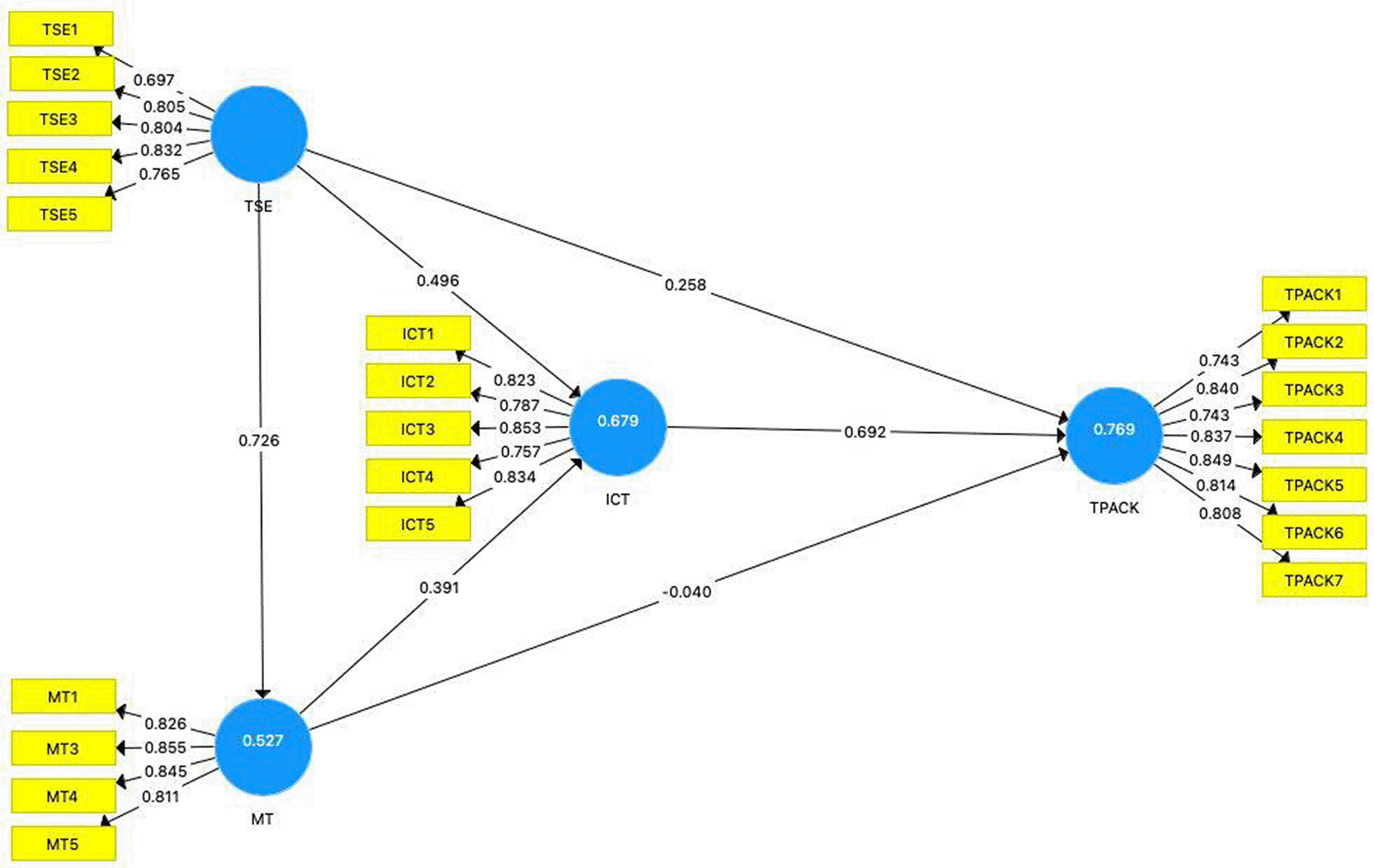
This figure presents the structural relationships among teacher self-efficacy (TSE), pedagogical motivation (MT), ICT utilization (ICT), and technology-integrated teaching (TPACK) as estimated using Partial Least Squares Structural Equation Modeling (PLS-SEM). The model shows that ICT utilization has the strongest direct effect on TPACK (β = 0.692), followed by teacher self-efficacy (β = 0.258), while motivation does not have a significant direct effect (β = −0.040). Teacher self-efficacy significantly influences ICT utilization (β = 0.496) and motivation (β = 0.726), and motivation significantly affects ICT utilization (β = 0.391). The coefficient of determination (R2 = 0.769) indicates that the model explains a substantial proportion of variance in technology-integrated teaching. Indicator loadings for each construct are also displayed, demonstrating acceptable measurement reliability. Overall, the model highlights ICT utilization as the key mediating pathway linking psychological factors to instructional practice.
Overall, the structural pattern indicates that teacher self-efficacy contributes to technology-integrated teaching both directly and indirectly, with ICT utilization serving as the most important pathway. Motivation also matters, but mainly when it encourages teachers’ actual engagement with ICT in classroom practice.
The findings place teacher self-efficacy at the center of the model as the most consistent psychological driver. Its significant direct effects on both ICT utilization and technology-integrated teaching suggest that teachers who believe they can handle digital tools, classroom interaction, and technology-supported instruction are more likely to carry that confidence into practice. This result is in line with social cognitive theory and with evidence from the United States, Germany, Bahrain, Taiwan, and other contexts showing that self-efficacy supports experimentation, persistence, and higher-quality technology use (Bandura, 1997; Barton & Dexter, 2020; Afari et al., 2023; Bowman et al., 2022; Yang et al., 2024). At the same time, the stronger pathway from self-efficacy to ICT utilization than to TPACK suggests that confidence becomes pedagogically meaningful only when it is enacted repeatedly in daily classroom work.
Motivation, by comparison, played a more conditional role. Although it significantly predicted ICT utilization, it did not show a direct effect on technology-integrated teaching. This pattern suggests that motivational readiness may help teachers begin using digital tools, but it does not automatically lead to more sophisticated technology-integrated pedagogy. The finding resonates with expectancy-value research showing that teachers’ values become most influential when accompanied by sufficiently strong expectancies or competence beliefs (Cheng et al., 2020; Cheng, 2024). It also fits self-determination-based arguments that competence development is strengthened when motivation is supported by authentic practice, collaboration, and school-level support (Deci & Ryan, 2000; Chiu et al., 2024; Pongsakdi et al., 2021).
The mediation results clarify the study’s main theoretical contribution. ICT utilization emerged as the strongest indirect pathway linking self-efficacy to technology-integrated teaching, and it also carried the effect of motivation on TPACK. Put differently, what moved teachers toward technology-integrated pedagogy was not motivation alone, but motivation that was translated into actual instructional use of ICT. This extends earlier work that has often treated self-efficacy, beliefs, and technology use as parallel predictors rather than as parts of a connected process (Backfisch et al., 2021b; Almerich et al., 2024; Consoli et al., 2023). It also reinforces the view that digital pedagogy develops through a sequence of psychological readiness, behavioral enactment, and pedagogical application.
These findings also carry practical implications for teacher professional development and school leadership. Programs that simply encourage positive attitudes toward technology are unlikely to be enough. More lasting gains are likely when schools combine mastery experiences, mentoring, collaborative lesson design, and repeated classroom experimentation so that teachers can turn confidence into practice and practice into pedagogical integration (Pongsakdi et al., 2021; Bertram et al., 2023; Vandeyar & Adegoke, 2024). In secondary schools working under uneven digital conditions, such an approach may be more realistic and sustainable than technology-first policies that assume access alone will produce pedagogical change.
This study should be read in light of several limitations. Because the design was cross-sectional, it does not support strong causal claims, and the reliance on self-reported questionnaire data may have introduced common method bias or social desirability effects. The study was also conducted in a single Indonesian province, which may limit the transferability of the findings to educational settings with different technological infrastructures, institutional supports, or policy environments. Future research could address these limitations through longitudinal or mixed-method designs, the inclusion of classroom observations or digital trace data, and comparative work across regions or school levels to test whether the pathways identified here remain stable across contexts.
This study shows that teacher self-efficacy is a central driver of ICT utilization and technology-integrated teaching among senior high school teachers in Riau Province. Self-efficacy significantly predicted both ICT utilization and TPACK, whereas motivation significantly predicted ICT utilization but did not directly predict TPACK. The findings therefore suggest that psychological readiness matters, but its pedagogical contribution depends on whether it is translated into recurring instructional action.
Overall, ICT utilization was the key pathway through which self-efficacy and motivation became visible in technology-integrated teaching. The study thus offers an integrative explanation of digital pedagogy in which self-efficacy operates as a foundation, motivation as an enabling internal condition, and ICT utilization as the central behavioral mechanism. Efforts to strengthen digital pedagogy should therefore prioritize sustained professional learning, guided classroom experimentation, and school-level support that help teachers turn confidence into pedagogically meaningful technology use.
Arvinalde Amenda (AA) led the conceptualization and design of the study, developed the research methodology, conducted the investigation, performed data curation and formal analysis using PLS-SEM, and prepared the original draft of the manuscript. AA also contributed to data visualization and participated in the review and editing of the manuscript. Mahdum (M) contributed to the conceptualization of the study, supervised the overall research process, validated the methodology and findings, and was responsible for project administration. M also critically reviewed and edited the manuscript. Sumarno (S1) contributed to formal analysis, validation of results, provision of research resources, and manuscript review and editing. Suarman (S2) contributed to conceptual development, supervision, validation of the study, provision of academic resources, and manuscript review and editing. All authors have read and approved the final version of the manuscript and agree to be accountable for all aspects of the work.
| Views | Downloads | |
|---|---|---|
| F1000Research | - | - |
|
PubMed Central
Data from PMC are received and updated monthly.
|
- | - |
Provide sufficient details of any financial or non-financial competing interests to enable users to assess whether your comments might lead a reasonable person to question your impartiality. Consider the following examples, but note that this is not an exhaustive list:
Sign up for content alerts and receive a weekly or monthly email with all newly published articles
Already registered? Sign in
The email address should be the one you originally registered with F1000.
You registered with F1000 via Google, so we cannot reset your password.
To sign in, please click here.
If you still need help with your Google account password, please click here.
You registered with F1000 via Facebook, so we cannot reset your password.
To sign in, please click here.
If you still need help with your Facebook account password, please click here.
If your email address is registered with us, we will email you instructions to reset your password.
If you think you should have received this email but it has not arrived, please check your spam filters and/or contact for further assistance.

Comments on this article Comments (0)