Keywords
International accreditation, Quality assessment tools, Pharmacy faculties.

International accreditation, Quality assessment tools, Pharmacy faculties.
International accreditation (IA) is the external evaluation of programs against international standards to ensure and improve quality.1 This concept has evolved to meet the changing needs of industry, healthcare, and education.2 In education, IA ensures that graduates are prepared to deliver high-quality patient care especially with the global expansion of medical schools and rising demand for competent health professionals.3 Recent findings indicate that, despite variations in content and teaching methods, most quality improvement curricula are well received and improve students’ knowledge.4 Recognizing the importance of applying these quality principles, several organizations such as IAO, WFME,5 ACPE-ISP, CCAPP,6 and ACGME-I,7 were established to grant international accreditation and collaborate in strengthening medical education worldwide.8 Furthermore, multiple studies have been conducted to demonstrate the importance of IA in enhancing the educational process, such as the Bologna Process in Europe,9 and in improving the national and international ranking of colleges, as suggested by a study from Saudi Arabia.10
WFME has determined global standards for quality improvement, which include mission and values, curriculum, assessment, students, academic staff, educational resources, quality assurance, and governance and administration.11 The assessment tools of quality include 8 main domains, which are institution’s vision and objectives, organization and administration Financial, human, and technical resources, academic staff, students and student services, Scientific research, academic programs, methods of teaching and learning, community service and academic ethics, assessment and evaluation.12
IA extends beyond students to include graduates, faculty, and all stakeholders involved in medical education,3 A Canadian study involving deans and academic leaders found that accreditation for academic staff improves administrative, educational, and curricular processes.13
Syria has 23 pharmacy faculties (6 public, 17 private), some with international recognition but none have formal IA. This reflects common challenges in low-income settings, where limited funding, inadequate infrastructure, and high student enrollment hinder the quality of pharmaceutical education.14 These challenges also affect hospital clinical practice, reducing the quality of medical services provided.15 These findings are supported by a study conducted in the Iranian universities, which emphasized the need for coordinated efforts between universities and accrediting authorities to enhance quality.16
This study aims to assess the knowledge of faculty members, students, and graduates of pharmacy faculties in public and private universities in Syria regarding the quality assessment tools in pharmaceutical educational institutions.
A cross-sectional study was conducted across 6 public and 16 private pharmacy colleges in the Syrian Arab Republic from June 2024 to January 2025. The participants included PhD holders, master’s degree holders, students from various academic years, and graduates of Syrian pharmacy colleges.
The study sample included individuals directly involved in quality assessment within pharmacy colleges at Syrian universities. This comprised faculty members (PhD and Master’s degree holders), pharmacy students (taking into account their year of study and whether they were enrolled in public or private universities), as well as graduates from Syrian universities.
PhD and master’s holders had to be employed at a Syrian university; students needed to be actively enrolled during the data collection period; and graduates were required to have completed their studies at a Syrian university in 2023 or earlier.
Due to the heterogeneous nature of the study population, a non-probability sampling approach was used. Participants were recruited through voluntary participation, and the questionnaire was distributed electronically to reach faculty members, students, and graduates from pharmacy colleges across Syrian universities.
Data were collected through a structured, self-administered questionnaire that included personal and demographic information. A systematic distribution strategy was implemented to achieve balanced representation within the target population. Only fully completed questionnaires were considered for analysis.
The questionnaire was developed using Google Forms and was standardized for all respondents. It was designed based on previous studies related to quality assessment and consultations with experts in the field. The questionnaire is available in the Data Availability section. A 5-point Likert scale, ranging from 1 (strongly disagree) to 5 (strongly agree), was used to assess attitudes related to study variables.
The questionnaire was divided into three sections. The first section collected demographic information, including gender, type of university (public or private), level of study (master holders, PhD holders, undergraduate [(indicating the student’s current year of study)], or graduates), and an additional field for graduates to indicate the number of years of practical experience. The second section aimed to assess respondents’ knowledge of the concept of international accreditation and comprised a total of 10 questions. The third section focused on quality assessment tools and was organized into 8 subdomains, with a total of 30 questions.
Participants were recruited by distributing the questionnaire link via email for master’s and PhD holders, and through social media channels for students and graduates. All participants provided electronic informed consent prior to participation. The consent form, including an explanation of the study objectives and details of ethical approval, was presented at the beginning of the online survey, and participants could only proceed after agreeing. No minors were included in this study.
Participation was entirely voluntary, and responses were collected using only the participants’ first names to maintain privacy and reduce response bias. The final analysis included only fully completed questionnaires. A total of 54 master’s degree holders, 53 PhD holders, 335 pharmacy students (118 from private universities and 117 from public universities across different academic years), and 107 graduate pharmacists from Syrian universities completed the survey.
The study received the necessary ethical approvals, as described in the Ethical Approval statement. Participants were informed about the study objectives, and electronic informed consent was obtained prior to participation. All responses were anonymized, and the data were securely stored. Only fully completed questionnaires were included in the analysis.
The study involved no clinical procedures, and no personally identifiable information was collected. No compensation was provided to participants.
The second section of the questionnaire consisted of 10 items addressing the core concepts of global accreditation to assess respondents’ knowledge on the topic. The third section included 30 items covering eight key domains: institutional vision and objectives, organization and administration, financial, human, and technical resources, academic staff, students and student services, Scientific research, academic programs, teaching and learning methods, community engagement and academic ethics, and assessment and evaluation.
The questionnaire’s face and content validity were evaluated by a panel of medical education specialists, who reviewed each item for relevance, clarity, and alignment with the study objectives. Based on their recommendations, certain items were refined to enhance clarity and ensure cultural appropriateness.
All participants provided informed consent electronically at the start of the survey, confirming their agreement to participate before proceeding with the questionnaire.
A pilot test was conducted on a convenience sample of 21 participants (5 master’s degree holders, 5 PhD holders, 8 pharmacy students, and 3 graduates) who were not part of the final study sample. Respondents completed the questionnaire, and their responses were analyzed to assess the instrument’s reliability and validity. No items were removed during this process.
Internal consistency was evaluated using Cronbach’s alpha. Values ranged from 0.722 to 0.858 across all domains, indicating an acceptable level of reliability in the results.
Language accuracy and clarity of the questionnaire and manuscript were further enhanced with the assistance of an AI-based tools (ChatGPT and Gemini), which were used solely for language editing.
To meet the study objectives, the data were first transferred from Google Forms to Microsoft Excel and then analyzed using the Statistical Package for the Social Sciences (SPSS, version 25; IBM Corp). Descriptive statistics, including means and standard deviations (SD), were calculated to summarize the participants’ responses. Inferential analyses were subsequently conducted using independent samples t-tests and one-way ANOVA, followed by the Least Significant Difference (LSD) test to test the study hypotheses and draw conclusions. A significance level of P < 0.05 was applied to determine statistical significance.
Quantitative variables are reported as mean (SD), whereas qualitative variables are reported as frequencies and percentages. A 5-point Likert scale was adopted, with the mean calculated for each statement (out of 5), each section of the evaluation, and the total questionnaire. Mean values and ranges were used to provide a verbal interpretation of the mean responses: strongly disagree = 1.00–1.8, disagree = 1.81–2.60, neutral = 2.61–3.40, agree = 3.41–4.20, strongly agree = 4.21–5.
The study sample consisted of a total of 107 faculty members (54 master’s degree holders and 53 PhD holders), 335 pharmacy students, and 107 graduate pharmacists from Syrian public and private universities.
Table 1 presents the distribution of the sample according to gender and type of university (public or private).
| Characteristics | Values, n (%) | ||
|---|---|---|---|
| FM | Students | Graduates | |
| Gender | |||
| Male | 29 (27.1) | 117 (38.4) | 28 (26.2) |
| Female | 78 (72.9) | 188 (61.6) | 79 (73.8) |
| University | |||
| Public | 67 (62.6) | 180 (59) | 87 (81.3) |
| Private | 40 (37.4) | 125 (41) | 20 (18.7) |
The pharmacy student sample included students from different academic years. Table 2 illustrates the distribution of pharmacy students according to their academic year.
| Characteristics | Values, n (%) |
|---|---|
| Year of study | |
| 1st Year | 14 (4.6) |
| 2nd Year | 46 (15.1) |
| 3rd Year | 91 (29.8) |
| 4th Year | 66 (21.6) |
| 5th Year | 88 (28.9) |
The questionnaire asked faculty members about their academic experience (<5 or ≥ 5 years). Table 3 shows their years of experience.
| Characteristics | Values, n (%) |
|---|---|
| Years of experience | |
| < 5 years | 41 (38.3) |
| ≥ 5 years | 66 (61.7) |
The questionnaire was completed by all participants, achieving a 100% participation rate. Table 4 presents the mean responses of the sample participants for each domain of the quality assessment tools.
The overall mean scores were calculated for faculty members (combining Master’s and PhD holders), students (combining public and private university students), and graduates, in order to facilitate a statistical comparison between the groups as a whole. Figure 1 summarizes the comparison of mean scores for each domain of the Quality Assessment.
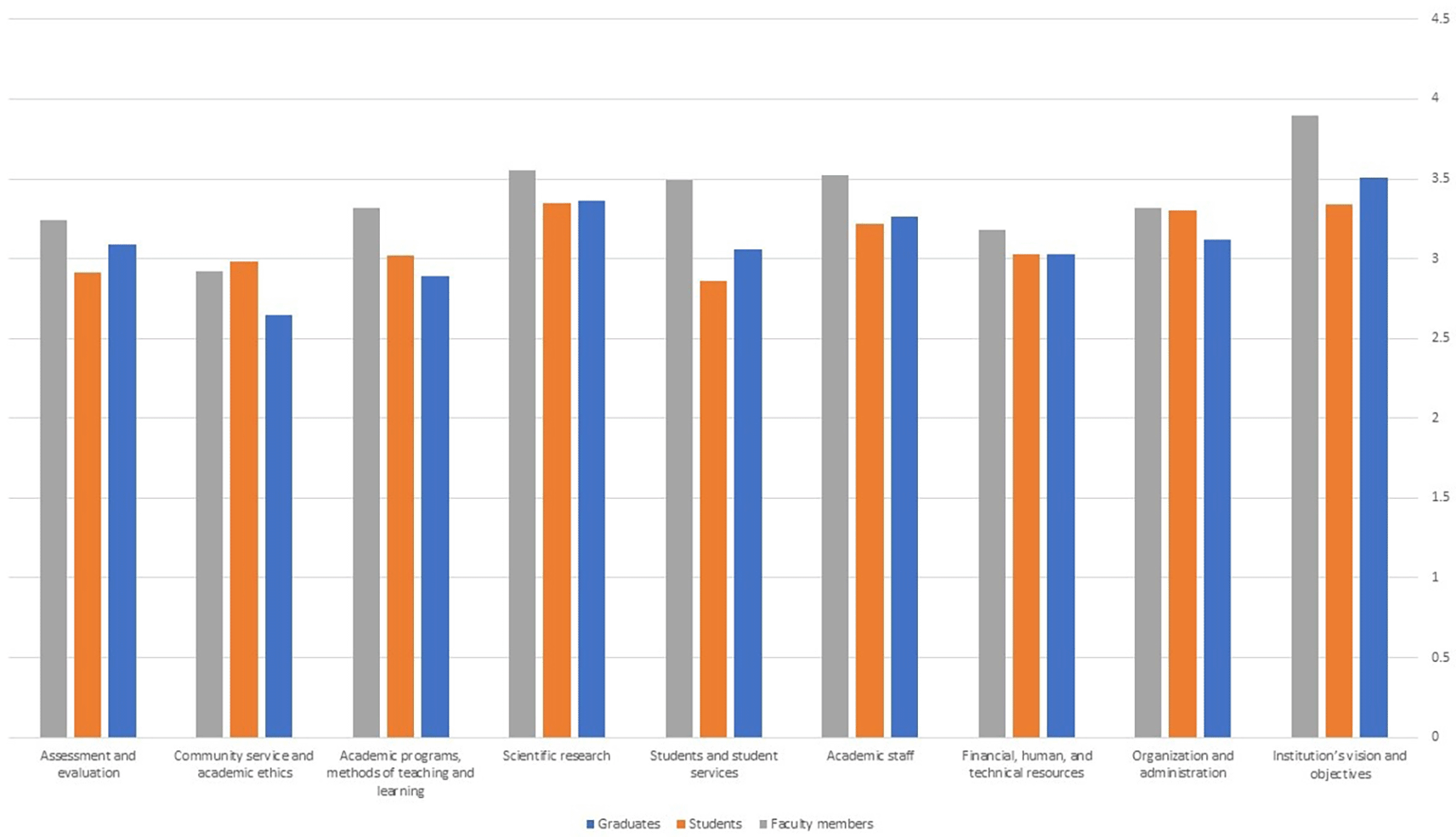
The results showed that 91.43% of the mean responses indicated a neutral level of knowledge regarding quality assessment tools across all domains among the study participants. Meanwhile, 7.14% of the responses reflected agreement, indicating good knowledge in some domains. In contrast, 1.43% of the responses indicated disagreement, reflecting a lack of knowledge in these areas. The responses were further analyzed for each domain of the quality assessment tools, as summarized in Table 4, and the results were as follows:
Institution’s Vision and Objectives: The results related to the institution’s vision and objectives showed generally moderate perceptions among the participants. Faculty members reported mean scores ranging from neutral to slightly positive (Master’s degree holders M = 2.89; PhD holders M = 3.40; overall faculty mean M = 3.90). Students from both public (M = 3.39) and private universities (M = 3.28) demonstrated neutral responses, with an overall student mean of (M = 3.34). In contrast, college graduates showed a slightly higher level of agreement with the items in this domain (M = 3.51).
Organization and administration: The findings related to the domain of organization and administration revealed generally neutral perceptions among the participants. Faculty members demonstrated neutral mean scores for both master’s degree holders (M = 2.95) and PhD holders (M = 3.31), with the overall mean for all faculty participants (M = 3.32) also reflecting a neutral evaluation of the items in this domain. Similarly, students from public universities (M = 3.31) and private universities (M = 3.29) showed neutral attitudes, with an overall student mean score of (M = 3.30). Likewise, college graduates reported a neutral perception as well, as indicated by their mean score (M = 3.12) regarding the statements associated with this domain.
Financial, human, and technical resources: The results for this domain revealed overall neutral perceptions among the participants. Faculty members showed neutral mean scores for both master’s degree holders (M = 3.10) and PhD holders (M = 2.85), while the overall mean for all faculty members (M = 3.18) also reflected a neutral evaluation. Similarly, students from public universities (M = 2.95) and private universities (M = 3.15) reported neutral responses, with the combined student mean reaching (M = 3.03). In the same vein, college graduates demonstrated a neutral perception toward the items within this domain, as indicated by their mean score (M = 3.03).
Academic staff: The results for this domain indicated varying perceptions among the participants. Faculty members reported mean scores reflecting neutral responses among master’s degree holders (M = 3.02) and PhD holders (M = 3.22), while the overall mean for all faculty members (M = 3.52) suggested general agreement with the statements in this domain. In contrast, students from public universities (M = 3.31) and private universities (M = 3.10) demonstrated neutral perceptions, with the overall student mean reaching (M = 3.22). Likewise, college graduates showed a neutral stance toward the items within this domain, as reflected by their mean score (M = 3.26).
Students and student services: The results for this domain reflected generally moderate perceptions among the participants. Faculty members demonstrated neutral responses when considered separately, with master’s degree holders reporting a mean score of (M = 2.99) and PhD holders (M = 3.40). However, the overall mean score for all faculty members (M = 3.49) indicated a tendency toward agreement with the statements related to this domain. In comparison, students from public universities (M = 2.84) and private universities (M = 2.88) expressed neutral views, with the combined student mean reaching (M = 2.86). Similarly, college graduates reported a neutral perception of the items in this domain, as reflected by their mean score (M = 3.06).
Scientific research: The findings for this domain revealed generally moderate perceptions among participants. Faculty members showed neutral responses individually, with master’s degree holders scoring (M = 2.09) and PhD holders (M = 3.24), while the overall mean for all faculty members (M = 3.55) indicated agreement with the items in this domain. Students from both public (M = 2.89) and private universities (M = 2.94) exhibited neutral perceptions, with the combined student mean score reaching (M = 3.35). Likewise, college graduates reported a neutral stance toward the items within this domain, as reflected by their mean score (M = 3.36).
Academic programs, methods of teaching and learning: The results for this domain revealed generally neutral perceptions among the participants. Faculty members reported neutral mean scores individually, with master’s degree holders (M = 2.88) and PhD holders (M = 2.95), while the overall mean for all faculty members (M = 3.32) also reflected a neutral response. Similarly, students from public universities (M = 2.98) and private universities (M = 3.07) demonstrated neutral perceptions, with the combined student mean score at (M = 3.02). College graduates likewise exhibited a neutral stance toward the items in this domain, as indicated by their mean score (M = 2.89).
Community service and academic ethics: The results for this domain reflected generally neutral perceptions among the participants. Faculty members showed neutral responses individually, with master’s degree holders (M = 2.88) and PhD holders (M = 3.02), while the overall mean for all faculty members (M = 2.92) also indicated a neutral evaluation. Students from public universities (M = 2.92) and private universities (M = 3.07) similarly demonstrated neutral perceptions, with the combined student mean reaching (M = 2.98). College graduates likewise reported a neutral stance toward the items within this domain, as reflected by their mean score (M = 2.65).
Assessment and evaluation: The findings for this domain revealed generally neutral perceptions among participants. Faculty members reported neutral mean scores individually, with master’s degree holders (M = 2.94) and PhD holders (M = 3.15), while the overall mean for all faculty members (M = 3.24) also indicated a neutral evaluation. Similarly, students from public universities (M = 2.89) and private universities (M = 2.96) exhibited neutral responses, with the combined student mean score at (M = 2.91). College graduates likewise demonstrated a neutral stance toward the items within this domain, as reflected by their mean score (M = 3.09).
Mean of all responses: The results for this domain revealed generally neutral perceptions among the participants. Faculty members reported neutral mean scores individually, with master’s degree holders (M = 2.86) and PhD holders (M = 3.17), while the overall mean for all faculty members (M = 3.38) also indicated a neutral evaluation. Students from public universities (M = 3.03) and private universities (M = 3.08) similarly exhibited neutral responses, with the combined student mean score reaching (M = 3.05). College graduates likewise demonstrated a neutral stance toward the items in this domain, as reflected by their mean score (M = 3.09).
Most faculty responses were neutral, suggesting limited understanding of quality assessment tools. This may result from insufficient awareness of quality assessment and accreditation processes, the absence of clear institutional programs in Syrian universities, and financial constraints affecting the availability of assessment tools. Such limitations may negatively influence instructors’ professional performance. This aligns with a conducted study in medical faculties in Syria, which found some staff lacked modern technical skills, teamwork, and motivation for academic development.17
Faculty members demonstrated a good understanding of their institution’s vision and objectives, likely due to regular engagement with teaching plans and ongoing communication with staff. A study in universities in the UK and Vietnam with 431 academics across various faculties suggested that a shared vision may improve research performance of academic staff, though its impact on teaching is limited.18
Participants showed a strong understanding of academic staff and student matters, likely reinforced by ongoing interactions that support effective teaching. This aligns with a study in 24 schools in Netherlands, which attributed such understanding to educators’ awareness of their responsibilities and the role of student services in ensuring the quality of the educational institution.19
Regarding the domain of teaching and its importance in educational quality, participants showed neutral responses, likely reflecting their teaching experience with students. This aligns with a study of 189 clinical teachers in nine German medical schools, which identified sustained student learning and engagement as indicators of high-quality teaching.20
Participants showed neutral responses in the Scientific research domain, likely due to their prior experience in conducting researches and publishing articles. This finding is consistent with previous studies showing that research training and coursework improve the understanding of research principles, although some faculty members perceive quality management procedures as restrictive unless they directly support educational goals. This knowledge may be further strengthened by providing faculty members with specialized courses aimed at enhancing the concept of Scientific research and its impact on the quality of the educational process. This aligns with a study involving 130 PhD scholarship recipients, which examined the impact of attending PhD coursework on participants’ understanding of fundamental research principles.21
Many universities worldwide face similar challenges in achieving a clear understanding of educational quality assessment due to various barriers. A 2025 study involving interviews with 36 administrators, faculty members, and experts from Iranian medical schools identified major barriers to IA, including cultural obstacles, weak implementation processes, and inadequate organizational structures.16 This may also lead to a negative impact on the performance of students in these colleges, as it often results in poor teaching practices or the continued use of traditional teaching methods with curricula that are not aligned with modern developments.22
Most of the students’ responses were neutral, indicating limited knowledge of educational quality assessment tools. This may be due to the absence of specialized courses on quality assessment, limited interaction platforms, and insufficient student involvement in institutional decision-making. Similar findings were reported in a study conducted at two universities in South Africa, which highlighted students’ lack of understanding of the importance of quality assessment.23
The students’ limited awareness of quality may partly result from faculty members’ insufficient understanding and the continued use of traditional teaching methods in most Syrian medical schools. Previous studies suggest that structured online educational interventions can effectively improve knowledge among medical graduates, indicating that similar approaches could enhance awareness of quality assessment tools in pharmaceutical education.24
The lowest mean score was in “Students and student services” domain, which demonstrated a big misunderstanding of students to their role in quality assessment.25 These findings are supported by a study conducted in Saudi Arabia demonstrated that accreditation (whether national or international) had a positive impact on improving the success rates of pharmacy college students in the Saudi Pharmacy Licensing Exam.6
Students’ responses on the “Academic Programs and Teaching Methods” domain were mostly neutral, reflecting limited awareness of quality assessment or dissatisfaction with current teaching methods. This aligns with a study at Dresden University, which found that medical students were dissatisfied with teaching approaches and perceived gaps between learned knowledge and its application in professional practice.26
The overall analysis indicated that students had limited knowledge of all quality assessment tools. This is consistent with a 2023 study at King Saud University, which found that college accreditation had no significant impact on students’ academic performance, possibly due to limited communication about its purpose and value.27 It is important to note that the ongoing war in Syria since 2011 has had severe impacts on the academic sector, affecting faculty members, students, and the quality of the whole educational process and consequently students’ learning outcomes.28
The graduates’ responses were predominantly neutral, suggesting limited familiarity with the tools employed to assess the quality of their educational institutions. This may be attributed to the lack of structured guidance and insufficient explanation of these concepts during their undergraduate studies in Syria.
The lowest scores were in the “Community Service and Academic Ethics” domain, indicating limited awareness of quality assessment’s role in enhancing societal services.29 This highlights the need for dedicated accreditation programs for pharmacy colleges. These findings align with a study conducted in the Arabian Gulf, which emphasized the importance of developing a specific accreditation program for pharmacy colleges due to existing gaps in understanding and applying IA principles,30 and with a Pakistani study, where challenges in quality assessment within medical education were attributed, among other factors, to the absence of formal accreditation systems.31
Participants showed neutral responses regarding “Academic Programs and Teaching Methods,” indicating limited understanding of quality assessment’s impact on learning and future careers. This aligns with a study of 699 stomatology graduates in Zhejiang, which found that improving course quality enhances graduates’ skills and recommended early English courses to strengthen language proficiency.32
The overall analysis of graduates revealed neutral responses, indicating limited knowledge of quality assessment tools. This is supported by a 2008 study of German medical universities, which highlighted the need to improve understanding of quality management systems for eLearning and emphasized establishing clear guidelines and standards for their implementation.33
The final results showed a significant lack of understanding of the tools used in quality assessment (as a step toward acquiring IA) among the sample members. This gap may negatively affect the effectiveness of the entire educational process, the professionalism of graduates, and, consequently, the quality of care delivered to patients. This highlights the need for targeted training programs, workshops, and initiatives to raise awareness and understanding of quality assessment, ensuring that all stakeholders can contribute effectively to achieving IA standards.
This study was approved by the Ethics Committee of the Syrian Virtual University, which is headed by the President of the university, Dr. Obada Al-Tamer. The ethical approvals were granted under the following reference numbers: 1190/0 for Obay Alkhador and 1189/0 for Alaa Alhadad.
| Views | Downloads | |
|---|---|---|
| F1000Research | - | - |
|
PubMed Central
Data from PMC are received and updated monthly.
|
- | - |
Provide sufficient details of any financial or non-financial competing interests to enable users to assess whether your comments might lead a reasonable person to question your impartiality. Consider the following examples, but note that this is not an exhaustive list:
Sign up for content alerts and receive a weekly or monthly email with all newly published articles
Already registered? Sign in
The email address should be the one you originally registered with F1000.
You registered with F1000 via Google, so we cannot reset your password.
To sign in, please click here.
If you still need help with your Google account password, please click here.
You registered with F1000 via Facebook, so we cannot reset your password.
To sign in, please click here.
If you still need help with your Facebook account password, please click here.
If your email address is registered with us, we will email you instructions to reset your password.
If you think you should have received this email but it has not arrived, please check your spam filters and/or contact for further assistance.

Comments on this article Comments (0)