Keywords
posttraumatic stress disorder, PTSD symptom clusters, trauma exposure modality, older adults, Vietnam Health and Aging Study, PCL-5

posttraumatic stress disorder, PTSD symptom clusters, trauma exposure modality, older adults, Vietnam Health and Aging Study, PCL-5
PTSD in older adults has been associated with reduced psychosocial functioning and elevated psychiatric comorbidity.1,2 Several age-related factors may contribute to sustained or late-onset symptom burden: declining physical resilience, major life transitions, and cognitive changes that can impair emotional regulation.1 Research indicates that cumulative traumatic events across the life course are associated with greater severity of PTSD and depressive symptoms in later life,3,4 and cross-national data suggest that socioeconomic and cultural context shape how these disorders present and persist.5
Vietnam offers a setting with documented high levels of war-related trauma exposure and an aging survivor population. Akbulut-Yuksel et al. (2024) found, using VHAS data, that Vietnamese adults who were exposed to the war as pre-teens had higher rates of late-life PTSD than those exposed at older ages, and that adverse effects on PTSD were particularly evident among female wartime children.6 The VHAS has documented the range of stressors experienced by this cohort, from direct combat involvement to loss of family members, and their associations with health in later life.7
A gap exists in how post-war mental health services in Vietnam and similar settings identify and support trauma survivors. Services have generally been organized around those with direct, documented exposure, primarily veterans.7,8 The DSM-5, however, recognizes multiple indirect pathways to PTSD under Criterion A, including witnessing traumatic events (Criterion A3) and learning about traumatic events affecting close associates (Criterion A4).9,10 Older adults whose primary wartime experiences involved witnessing the death or injury of others, or receiving news of a family member’s death, may not be captured by screening programs focused on direct personal threat. Evidence suggests that indirect exposure can precipitate clinically significant PTSD,10 though this has been less studied in older community-dwelling populations. Avoidant coping in response to trauma reminders-the focus of Cluster C in the DSM-5 framework-has been shown to impede natural recovery and predict symptom persistence,11 and may be particularly relevant to those exposed indirectly.
The present study used data from the second wave of the VHAS among community-dwelling adults aged ≥60 years in Vietnam to characterize differential PTSD symptom cluster profiles by trauma exposure modality. Three objectives were addressed: (1) to compare trauma exposure characteristics between participants with any direct exposure and those with indirect-only exposure; (2) to examine between-group differences in severity across the four DSM-5 PTSD symptom clusters; and (3) to determine whether exposure modality independently predicted clinical-level PTSD after accounting for cumulative trauma burden.
This was a cross-sectional, secondary analysis of data from the second wave of the Vietnam Health and Aging Study (VHAS), a population-based longitudinal cohort study.7 Data were collected in 2021–2022 from rural communes in Hanoi and Quang Binh provinces, selected to represent documented variation in war-related trauma exposure across northern and central Vietnam.
Participants were community-dwelling adults aged ≥60 years enrolled in the VHAS baseline wave (2018) and followed up in the second wave. Inclusion required: (1) age ≥ 60 years; (2) residence in selected communes; (3) at least one traumatic event meeting DSM-5 Criterion A, as ascertained through structured interview; (4) capacity to complete study instruments; and (5) written informed consent. Participants were excluded for unavailability, refusal, severe cognitive impairment, or severe psychiatric conditions precluding a valid PTSD assessment.
Sample derivation. Of 301 adults enrolled in the VHAS second wave, 296 completed full trauma exposure assessment and PCL-5 measurement and were considered trauma-exposed. For the present analysis, two additional pre-specified criteria were applied to this pool. First, participants required complete data on all DSM-5 Criterion A subtypes (direct personal experience, witnessing, learning about trauma, and occupational aversive details exposure), to allow unambiguous modality classification. Second, the analysis was restricted to participants who could be assigned to one of two mutually exclusive groups based on their highest level of exposure (described below). Participants with incomplete subtype data or ambiguous classification (i.e., those whose records did not permit definitive classification) were excluded. This process yielded an analytic sample of N = 147. The reduction from 296 to 147 reflects primarily the second criterion: many trauma-exposed participants had mixed or partially recorded exposure data that precluded unambiguous group assignment. This selection process may have introduced bias if excluded participants differ systematically in PTSD symptom burden. Comparisons between included and excluded participants on PTSD outcomes were not possible because excluded participants lacked the complete Criterion A subtype data required for group classification; baseline sociodemographic characteristics were comparable between the analytic sample and the full VHAS second-wave cohort (see Section 3.1). This limitation is acknowledged.
Exposure group definitions. Participants were assigned to one of two pre-specified, mutually exclusive groups based on their DSM-5 Criterion A exposure profile. The direct exposure group (n = 130) comprised individuals who reported at least one episode of direct personal trauma, defined as an actual or threatened encounter with death, serious injury, or sexual violence, regardless of whether they also had concurrent indirect exposure. This group is therefore heterogeneous with respect to indirect exposure history; it is not a ‘pure direct only’ comparison group. The indirect-only exposure group (n = 17) comprised individuals whose entire documented trauma history consisted of witnessing events occurring to others, or learning about traumatic events affecting close family members or friends, with no direct personal threat of any kind. Individuals in this group reported absolutely no direct life-threatening events or direct serious injuries to themselves and endorsed no Criterion A subcategories involving personal bodily threat. The primary comparison in this study is therefore between any direct exposure (with or without concurrent indirect exposure) and indirect-only exposure, not between mutually exclusive direct-only and indirect-only groups.
PTSD Checklist for DSM-5 (PCL-5). PTSD symptoms were measured with the Vietnamese-validated PCL-5, a 20-item self-report scale aligned with DSM-5 criteria.12 Items are rated 0–4, yielding a total score of 0–80 across four clusters: intrusion (Cluster B; 5 items), avoidance (Cluster C; 2 items), negative alterations in cognition and mood (Cluster D; 7 items), and arousal and reactivity (Cluster E; 6 items). The Vietnamese version was produced using a forward-backward translation procedure and culturally adapted for older Vietnamese adults. Validation in a VHAS sub-cohort (N = 301) demonstrated strong internal consistency (α = 0.92), a four-factor structure consistent with DSM-5 domains, and good diagnostic accuracy against the CAPS-5 gold standard (AUC = 0.967; Pham et al., manuscript under review). A cutoff of ≥11 was applied, derived from the validation study to give optimal sensitivity (92.86%) and specificity (95.12%) in this population; this threshold is lower than the conventional cutoff of 31–33 used in general adult samples, reflecting the lower baseline symptom endorsement documented in older community-dwelling Vietnamese adults (Pham et al., manuscript under review).
Sociodemographic and trauma characteristics. Age, sex, marital status, and education level were extracted from the VHAS structured database. Trauma type and modality of Criterion A exposure were assessed using structured interview modules developed for the VHAS.
Analyses were conducted in R (version 4.3.1; R Foundation for Statistical Computing). Descriptive statistics summarized demographic and trauma characteristics. Fisher’s exact test was used to compare categorical trauma exposure due to small expected cell counts. PCL-5 cluster and total scores were positively skewed in both groups, as is typical for symptom scores in non-clinical community samples; Mann-Whitney U tests were therefore used for between-group comparisons, with rank-biserial correlation (r) reported as a standardized effect size. Results are presented as means ± SD alongside test statistics, as reported in prior VHAS analyses and for consistency with the validation dataset; readers should note the skewed distributions when interpreting these central tendency estimates. Crude odds ratios with 95% confidence intervals were calculated for the proportion meeting the PCL-5 ≥ 11 threshold.
Cluster-level comparisons were treated as exploratory. No adjustment for multiple comparisons (e.g., Bonferroni) was applied across the four symptom cluster tests. This decision was based on the exploratory nature of the cluster-level analyses and the high intercorrelation among PCL-5 subscales, which would render Bonferroni correction overly conservative.13 Results should be interpreted with this in mind, and the avoidance finding in particular requires replication before it can be considered confirmatory.
A multivariate binary logistic regression examined whether indirect-only exposure independently predicted clinical PTSD (PCL-5 ≥ 11) after adjustment for cumulative trauma burden (total count of distinct Criterion A trauma types). The model was kept parsimonious, with a single covariate in addition to the exposure term, given the small number of outcome events (n = 30 clinical PTSD cases), which constrained the maximum number of predictors without risking overfitting (in line with the recommended minimum of 10 events per predictor variable).14 Cumulative trauma burden was selected as the covariate a priori based on its theoretical potential to confound the exposure-outcome relationship; additional sociodemographic variables were not included owing to sample size constraints and are acknowledged as a limitation. Sensitivity analyses incorporating age and sex were not feasible given the limited number of outcome events (n = 30). Adjusted odds ratios (AORs) with 95% CIs are reported. All tests were two-sided; α = 0.05.
Ethical approval was obtained from the Institutional Review Board of Hanoi Medical University (No. 01.18/HMU IRB, January 25, 2018) and the National Bioethics Committee of the Ministry of Health, Vietnam (No. 29/CN-HĐĐ, April 27, 2018). Written informed consent was obtained from all participants. All data were de-identified before analysis.
Of the 147 participants included, 130 (88.4%) were in the any direct exposure group and 17 (11.6%) in the indirect-only group. Mean age was 73.6 years (SD = 8.0); sex distribution was approximately equal (50.5% male, 49.5% female). Most participants were married or cohabiting (70.8%), and 71.4% had completed at least lower secondary education. Approximately 75.4% reported at least one chronic disease. These characteristics are broadly consistent with the larger VHAS second-wave cohort.
Table 1 shows trauma exposure characteristics by group. As required by the group definitions, any direct exposure group had a substantially higher prevalence of personal life-threatening events than the indirect-only group (66.2% vs. 5.9%, p < 0.001). Life-threatening events affecting others were reported by a higher proportion of the indirect-only group (70.6% vs. 51.5%). However, this difference was not statistically significant (p = 0.196), consistent with the group’s observational exposure profile. Serious injury to others was common in both groups, with a non-significant trend toward higher frequency in the any direct exposure group (66.9% vs. 41.2%, p = 0.058). Variables indicating sexual violence to self (n = 1) and exposure to aversive details (n = 0) are omitted from Table 1 due to extremely low or zero frequencies; no significant between-group differences were observed for these categories (all p ≥ 0.21).
Table 2 and Figure 1 show PCL-5 cluster scores by exposure group. PCL-5 scores were positively skewed in both groups; non-parametric comparisons are the primary test, and means are presented for descriptive purposes alongside test statistics. Total PCL-5 scores did not differ significantly between the indirect-only and any direct exposure groups (mean 8.82 ± 12.98 vs. 5.10 ± 9.68; U = 997.5, p = 0.467).
| DSM-5 symptom cluster | Any direct exposurea (N = 130) Mean ± SD | Indirect only (N = 17) Mean ± SD | U | Effect size (r) | p-value |
|---|---|---|---|---|---|
| Intrusion (Cluster B) | 2.68 ± 4.37 | 3.88 ± 5.10 | 1002.0 | 0.093 | 0.479 |
| Avoidance (Cluster C) * | 0.56 ± 1.53 | 1.35 ± 2.09 | 826.5 | 0.252 | 0.013 |
| Negative alterations in cognition/mood (Cluster D) | 0.73 ± 2.23 | 1.53 ± 3.52 | 935.0 | 0.154 | 0.098 |
| Arousal and reactivity (Cluster E) | 1.13 ± 2.48 | 2.06 ± 3.42 | 932.5 | 0.156 | 0.191 |
| Total PCL-5 Score | 5.10 ± 9.68 | 8.82 ± 12.98 | 997.5 | 0.097 | 0.467 |
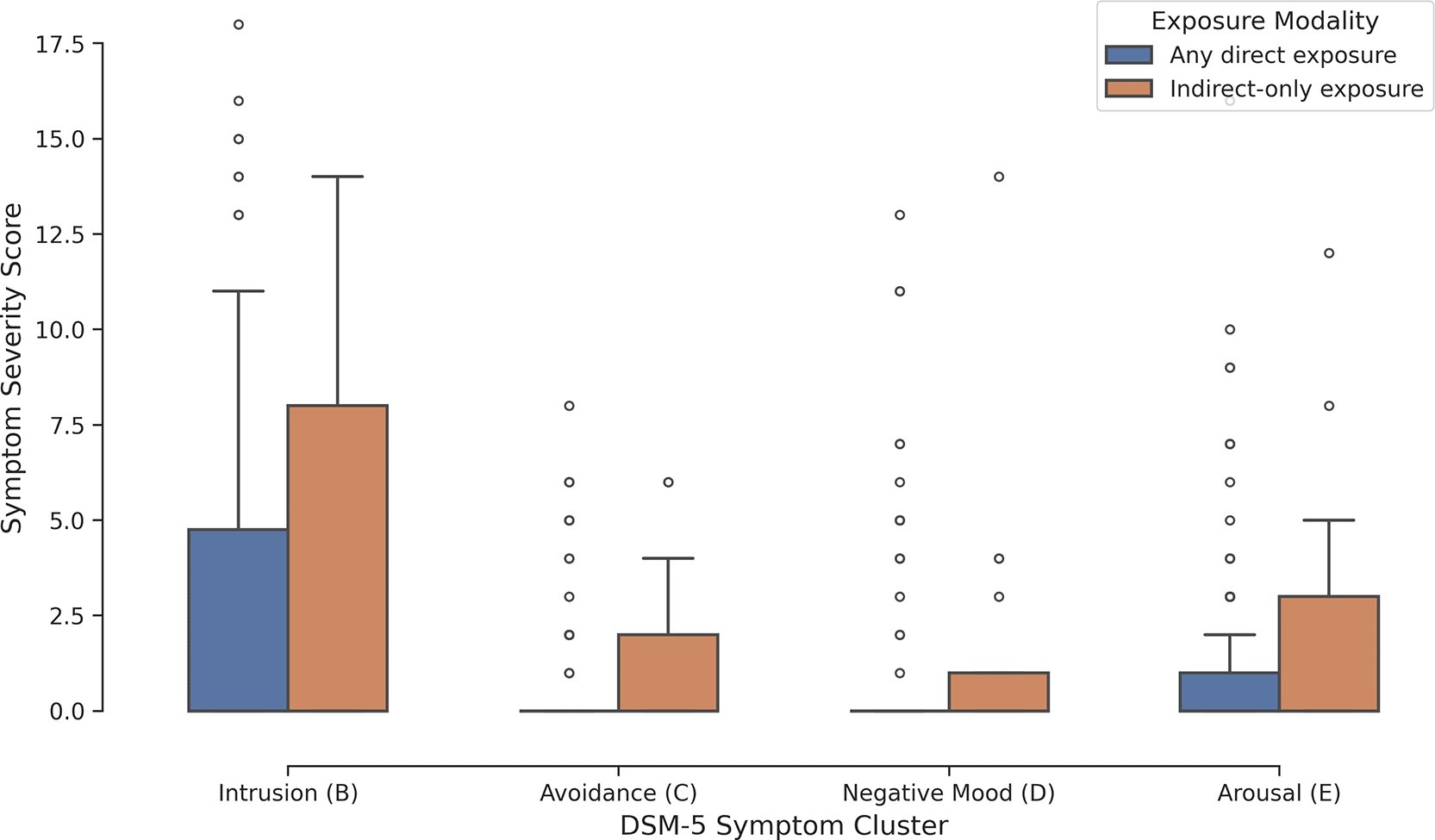
Box plots show scores for four DSM-5 PTSD symptom clusters in the any direct exposure group (n = 130) and the indirect-only exposure group (n = 17). The box represents the interquartile range (IQR); the horizontal line indicates the median; whiskers extend to 1.5 × IQR; and points beyond the whiskers represent outliers.
In exploratory cluster-level comparisons (no adjustment for multiple comparisons), only Avoidance (Cluster C) showed a statistically significant observed difference between groups. The indirect-only group had higher mean avoidance scores than the any direct exposure group (1.35 ± 2.09 vs. 0.56 ± 1.53; U = 826.5, p = 0.013), with a rank-biserial correlation of r = 0.252, indicating a small-to-medium effect size. As shown in Figure 1, avoidance scores in the any direct exposure group were compressed toward the lower end of the scale. In contrast, the indirect-only group showed greater dispersion, with a higher median. Scores for Clusters B, D, and E were numerically higher in the indirect-only group but did not reach statistical significance (all p > 0.05). These cluster-level findings are exploratory and should be interpreted cautiously pending replication.
Table 3 presents clinical PTSD rates by group. The proportion meeting the PCL-5 ≥ 11 threshold was higher in the indirect-only group than in the any direct exposure group (41.2% vs. 17.7%; OR = 3.26, 95% CI: 1.12–9.45, p = 0.048).
Table 4 shows the logistic regression results. Cumulative trauma burden was not a statistically significant predictor of clinical PTSD (AOR = 1.20, 95% CI: 0.78–1.85, p = 0.410). After adjustment, the estimated association between indirect-only exposure and clinical PTSD remained statistically significant (AOR = 3.41, 95% CI: 1.16–10.00, p = 0.025). The wide confidence interval reflects the small indirect-only subgroup (n = 17) and the limited number of outcome events (n = 30). Although the lower bound exceeds 1.0, the estimate’s precision is low, and the result should be interpreted cautiously. Sociodemographic variables were not included in the model due to sample size constraints; residual confounding by age, sex, and chronic disease burden cannot be excluded.
| Predictor variable | AOR | 95% CI (Lower - Upper) | p-value |
|---|---|---|---|
| Exposure modality | |||
| Any direct exposure | 1.00 (Reference) | - | - |
| Indirect exposure onlya | 3.41 | 1.16–10.00a | 0.025 |
| Cumulative trauma burden | |||
| Total number of trauma types experienced | 1.20 | 0.78–1.85 | 0.410 |
This study examined differential PTSD symptom cluster profiles by trauma exposure modality among community-dwelling older adults using data from the VHAS. Three principal findings emerged: (1) the indirect-only group exhibited selectively elevated avoidance symptoms without a corresponding increase in total PTSD severity; (2) indirect-only exposure was associated with approximately threefold higher estimated odds of clinical PTSD, independent of cumulative trauma burden; and (3) the small proportion of participants classified as indirect-only (11.6%) reflects the cohort’s historically high direct exposure prevalence. Each finding is discussed below.
The high proportion of participants in the any direct exposure group with personal life-threatening events (66.2%) is consistent with documented patterns of wartime exposure in the VHAS cohort, where aerial bombardment and combat involvement were widespread among this generation.7 The prevalence of witnessed serious injury across both groups (66.9% any direct exposure, 41.2% indirect-only) reflects the broad reach of the conflict across communities. These observations are in keeping with findings from Akbulut-Yuksel et al. (2024),6 who reported lasting adverse health effects among older adults who were exposed to the war as children, including those without direct combat involvement.
The small size of the indirect-only subgroup (n = 17, 11.6%) is consistent with the historical epidemiological context of this cohort, where direct personal threat appears to have been common. This group imbalance affects statistical precision and is discussed as a limitation in Section 4.4.
The selective elevation of Avoidance scores (Cluster C) in the indirect-only group (p = 0.013), in the absence of a significant difference in total PCL-5 scores, was the principal exploratory finding of this study. As illustrated in Figure 1, the distribution of avoidance scores in the indirect-only group shows a higher median and wider spread than in the any direct exposure group, where most scores were near zero. This pattern-where one symptom cluster differs between groups while global severity does not-warrants careful interpretation given the exploratory design, small subgroup size, and absence of multiple-comparison correction. Notably, despite the small sample, the between-group difference in Avoidance was not only statistically significant (p = 0.013) but also yielded the largest effect size among the four symptom clusters (r = 0.252, small-to-medium), supporting the hypothesis that indirect-only exposure may engage avoidance-specific mechanisms rather than elevating PTSD symptoms uniformly.
One hypothesized interpretation involves learned helplessness. Direct life-threatening events may elicit fight-or-flight responses manifesting as hyperarousal and intrusion (Clusters E and B). In contrast, indirect trauma may instead foster perceived helplessness with no capacity for intervention. This sense of helplessness has been hypothesized to promote persistent avoidance rather than resolve through habituation.11 This mechanism was not directly measured in the present study, and whether it accounts for the observed pattern cannot be determined from cross-sectional data.
A related hypothesis concerns survivor’s guilt or moral injury-a psychological burden arising from witnessing extreme suffering without the capacity to prevent it. Such distress may manifest primarily through shame and avoidance rather than fear and may be less responsive to standard exposure-based treatments. These interpretations remain speculative: neither mechanism was measured directly, and the present data support only an association between indirect-only exposure and avoidance severity, not a causal or mechanistic pathway. Future studies with longitudinal designs and validated measures of helplessness, guilt, and moral injury are needed to test these hypotheses.
The estimated association between indirect-only exposure and clinical PTSD (AOR = 3.41, p = 0.025), in the absence of a significant contribution from cumulative trauma burden (p = 0.410), is consistent with the possibility that exposure modality may matter independently of the number of trauma types experienced. This is in contrast to cumulative dose-response models, which predict that a greater count of traumatic events will linearly increase PTSD risk.4 These data do not support that model in this specific sample, though the small sample and wide confidence interval mean that this negative finding should not be over-interpreted. The model did not adjust for sociodemographic characteristics, and residual confounding cannot be excluded.
If replicated, these findings may have relevance for trauma-related mental health screening in post-conflict settings such as Vietnam, where services have generally targeted direct exposure survivors. Routine inquiry about experiences of witnessing and interpersonal loss in geriatric primary care may help identify individuals at elevated risk not captured by screening focused on personal threat. This suggestion is tentative, given the study’s limitations.
This study has several strengths: community-based data from a well-characterized longitudinal cohort with documented trauma histories; the use of a psychometrically validated, culturally adapted PCL-5 with a population-appropriate cutoff; strict, non-overlapping group classification that helps isolate the exposure modality effect; and a parsimonious regression model with a priori covariate selection.
Several limitations should be considered when interpreting these findings. First, the indirect-only subgroup was small (n = 17), which substantially limits statistical power in cluster-level analyses and produces imprecise regression estimates (AOR 95% CI: 1.16–10.00). Second, the cross-sectional design precludes causal inference. Third, the sample derivation process, reducing 296 to 147 through exposure-modality filtering, may have introduced selection bias if excluded participants differ systematically from included participants. Only pre-tabulated analytic data were available for this secondary analysis; individual-level raw data for excluded participants were not accessible, precluding a formal comparison of PTSD outcomes between included and excluded groups. Fourth, cluster-level comparisons were exploratory, and no adjustment for multiple comparisons was applied; the Avoidance finding, in particular, should be treated as hypothesis-generating. Fifth, the regression model did not adjust for sex, age, or chronic disease burden due to sample size constraints; residual confounding by these variables is possible. Sixth, retrospective self-report of trauma type and modality may introduce misclassification, particularly for events occurring decades prior. Seventh, any direct-exposure group is heterogeneous with respect to its indirect exposure history, so the between-group comparison does not isolate indirect-only exposure relative to a matched direct-only comparator. Finally, the sample is drawn from two rural Vietnamese provinces, which limits generalizability to urban settings, clinical populations, and other cultural contexts.
This cross-sectional study of community-dwelling older Vietnamese adults identified differential PTSD symptom cluster profiles by trauma exposure modality. Despite comparable total symptom severity, participants with indirect-only exposure exhibited selectively elevated avoidance symptoms (Cluster C) and approximately threefold higher estimated odds of clinical PTSD relative to those with any direct exposure, independent of cumulative trauma burden. These findings suggest that exposure modality may shape the structure of PTSD symptom expression rather than overall severity.
These findings are preliminary. The indirect-only subgroup was small (n = 17), the regression confidence interval was wide (1.16–10.00), covariate adjustment was limited, and the cross-sectional design does not permit causal inference. Possible mechanisms-including helplessness, survivor’s guilt, and moral injury-were not directly measured and remain hypothetical in this context.
If replicated, these differential symptom profiles would support routine screening for indirect trauma experiences in geriatric settings and may inform modality-specific approaches to assessment and intervention. Larger prospective studies with adequate covariate adjustment are needed to confirm these patterns across different post-conflict populations and to examine whether they have implications for treatment selection in this age group.
| Views | Downloads | |
|---|---|---|
| F1000Research | - | - |
|
PubMed Central
Data from PMC are received and updated monthly.
|
- | - |
Provide sufficient details of any financial or non-financial competing interests to enable users to assess whether your comments might lead a reasonable person to question your impartiality. Consider the following examples, but note that this is not an exhaustive list:
Sign up for content alerts and receive a weekly or monthly email with all newly published articles
Already registered? Sign in
The email address should be the one you originally registered with F1000.
You registered with F1000 via Google, so we cannot reset your password.
To sign in, please click here.
If you still need help with your Google account password, please click here.
You registered with F1000 via Facebook, so we cannot reset your password.
To sign in, please click here.
If you still need help with your Facebook account password, please click here.
If your email address is registered with us, we will email you instructions to reset your password.
If you think you should have received this email but it has not arrived, please check your spam filters and/or contact for further assistance.

Comments on this article Comments (0)