Keywords
Professional identity; Psychologists; Professional events participation; Educational level; Structural equation modeling; Counseling psychology.

Professional identity; Psychologists; Professional events participation; Educational level; Structural equation modeling; Counseling psychology.
Psychologists’ perceptions, attitudes, and disciplinary values are shaped by their professional identity, The present study uses multiple theoretical frameworks. First, the Communities of Practice theory suggests that professional identity emerges through active participation in shared professional activities, where learning occurs via social interaction, collaboration, and gradual integration into professional communities. The professional events which include conferences and workshops provide attendees with opportunities to engage in social learning while working on their identity development.1,2 Scholarly literature states that professional identity emerges through frequent exposure to professional situations, reflective practice, supervision, and peer-mentor interactions. The development of professional abilities and ethical standards in psychology is closely linked to practitioners’ professional community.3,4 Professional gatherings like conferences, workshops, symposia, and continuing development programs build this identity, Such activities bring practitioners together, improve expertise, expose them to psychological scientific developments. and strengthen professional values.5,6 Psychology students and early-career professionals also benefit from academic or professional activities. Which boost confidence, competence, and professional integration. According to researches, these events reinforce professional self-concept by making people feel like they contribute to the area.7 Professional event attendance is important, but empirical studies on its relevance to psychologists’ professional identity, especially in non-western cultures are scarce.8
The literature on professional identity development needs better research because its current state has critical gaps. First, previous studies have examined professional event attendance as a measurable quantity by counting attendance yet they have failed to assess how participants actively engage through their event roles and their learning activities and their focus on the event’s content. Second, the existing studies about professional participation and its impact on professional identity show mixed results because some studies found positive links while other studies revealed that this link depended on specific conditions or occurred through indirect means. Third, research studies have used structural equation modeling (SEM) as an advanced analytical approach in limited cases to investigate direct and indirect relationships between participation and contextual elements and identity development. The existing research base suffers from insufficient empirical evidence from non-Western societies which use different cultural and institutional and professional systems to develop identity. Researchers must close these gaps to gain deeper insights about how professional experiences shape professional identity development through better theoretical frameworks.
The participation of the psychologist in specialized events such as: celebrating international days that serve the specialization, psychological and scientific conferences, seminars, and workshops are very important in the crystallization of the professional personality of the psychologist.3 From the perspective of continuous professional development, some institutions are counting the attendance hours for such participation in various specialized events.9 The profession of psychologist is considered one of the important humanitarian professions which has an active role in helping everyone in need of psychological support: psychotherapy or restoring their psychosocial balance.10 The psychologist has become one of the most important elements supporting the achievements of human development and quality of life.11 Statistics indicate that increase the number of psychologists working in the United States of America amounted to 204,300 specialists.12 The wide disparity in attendance or even participation in specialized activities is still noticeable, despite the steady growth in the recruitment of psychologists and the growing need for continuous development and participation in specialized events and specialized international days is an important element in shaping and crystallizing the professional identity of the psychologist in a more specialized way. The United States of America imposes on psychologists 20–40 credit hours to renew each course, which may extend from one to two years.13 According to the American Psychological Association: 69% of psychologists work in a dual way between in-person and remote work, 19% of psychologists work fully remotely, and finally 12% work fully in person.14 According to statistics15 that 64.8% of psychologists were female and 35.2% were male. Some studies have indicated a lack of professional engagement between the sexes, especially in the academic and leadership setting.
According to a survey by the American Psychological Association, psychologists with an average age of 46 experience varying levels of stress and professional participation at different career stages.14 There are demographic disparities among psychology specialists in the United States. Data Show that 86% are white, followed by Hispanics and Latinos at 10.8%, individuals of African descent 5.1%, and Asians at 4.2%, despite ongoing efforts to increase diversity in the profession.16 Professional identity is a sense of who the people we serve are and how we should treat them with professionalism, reflecting the link between the psychologist’s identity and Professional practices.3 It represents a set of qualities that a psychologist possesses such as: knowledge, values, morals, skills, personal identity, collective identity, and influence in the context of care provided to others.17
Studies have examined the professional identity of psychologists, where a study dealt with3 the development of professional identity among clinical psychologists through a review of 24 studies. which showed that the identity is formed through the integration of personal and professional identity and changes over time. Nothing that research in this field is still emerging and requires further theorizing and the use of more advanced methodologies. A study18 using the Delphi method was conducted in three rounds with 39 sports psychology practitioners from six continents. The study identified 13 supporting factors and 10 barriers to the development of professional identity. Most notably, these factors include knowledge of career philosophy, personal meaning, professional relationships versus isolation, and role incompatibility with the professional environment. The study19 also aimed to examine the association between professional activities and competencies. The results showed that professional competence was linked to participation in professional reading, courses, and conferences; professional values were associated with age and professional communication; and professional support was associated with participation in supervision groups and case discussion. A study 20 Involving a sample of 132 licensed psychologists showed that the ability to engage in CPD varies depending on the method of licensing: the nature of the work, income, and place of residence, suggesting that professional participation is influenced more by structural factors than by individual choice alone. These findings are consistent with those of .21 In their extensive study, they explained that the selection of continuing education programs is selective and deliberate, influenced by the relevance of the programs to professional needs and the work environment, rather than merely availability or professional obligation.
An increasing body of research, both empirical and theoretical, supports the notion that professional identity (PI) is not a fixed trait, but rather a dynamic and complex construct shaped by one’s upbringing, personality, and the broader social and cultural context in which they work. The importance of professional identity (PI) in practitioners’ ability to adapt to organizational changes, their retention, and the quality of care they provide is emphasized by scoping reviews such as22 which highlights the systemic nature of the issue. The importance of formal training is highlighted by,23 who shows that structured educational activities, including coursework and internships, constantly contribute to the development of professional identities (PIs).24 Demonstrate that a sense of purpose and self-esteem moderate the relationship between self-efficacy and professional identity (PI), indicating that one’s internal motivating resources impact greatly on their sense of professional identity (PI). This underscores the crucial role of psychological mechanisms. Strong identity development is associated with improved trainee wellbeing,25 further demonstrating that professional identity (PI) confers both practical and psychological benefits. However, integrative assessments such as26 argue that, rather than forming through passive attendance at events, professional identity is formed through active “identity work” – involving ongoing participation, reflection, and socialization. These findings are supported by empirical research conducted among students and trainees. Research conducted27–30 provides evidence that professional identity (PI) evolves throughout training, influenced by factors such as motivation, educational trajectory, and the perceived importance of the profession. There is a correlation between professional identity (PI) and real work performance in clinical settings, according to field studies such as.31
At the level to professional identity, empirical and theoretical studies have agreed on their dynamic and gradual nature. A study showed that28 Professional identity among psychology students is gradually formed through cognitive, emotional, and behavioral components during the academic path, and is influenced by educational and professional activities more than incidental influences. This perspective also supports conceptual analyses, such as17 by emphasizing the multidimensional nature of professional identity (PI) and it’s close connection to the educational, value and organizational contexts. Recent exploratory reviews, , in particular study32 have shown that the professional identity to psychologists and healthcare workers is shaped by a continuous interaction between personal identity and evolving institutional requirements. They also indicate that the mere accumulation of experience or participation in professional activities does not necessarily guarantee a coherent development. Other studies3,33 confirm thatInstitutional support, professional reflection, and the quality of educational and professional experiences are more decisive factors than the number of years of experience or the size of participation.
The present field study examines psychologists’ engagement in professional activities and how it affects their professional identity. The study explores this relationship to guide professional growth, psychological institution policy design, and measures to promote the profession’s culture of continual learning.
Despite the growing interest in professional identity development, several critical gaps remain in the literature. First, prior research has predominantly conceptualized participation in professional events as a quantitative construct, focusing on frequency or attendance counts without adequately addressing the qualitative dimensions of engagement, such as depth of involvement, reflective practice, or role within the event (e.g., attendee vs. contributor). Second, existing empirical findings on the relationship between professional participation and professional identity remain inconsistent, with some studies reporting positive associations while others emphasize the conditional or indirect nature of this relationship. Third, limited research has employed advanced analytical approaches such as structural equation modeling (SEM) to simultaneously examine direct and indirect pathways linking participation, contextual factors, and identity formation. Finally, there is a notable lack of empirical evidence from non-Western contexts, where cultural, institutional, and professional structures may shape identity development differently. Addressing these gaps is essential for developing a more nuanced and theoretically grounded understanding of how professional experiences contribute to the formation of professional identity.
This study utilized a cross-sectional explanatory-correlational design approach to assess psychologists’ engagement in professional events and to analyze its correlation with professional identity. The study also examined whether educational attainment, professional experience, and workplace context moderate. The relationship between participation in professional events and professional identity, employing structural equation modeling (SEM).
Participants were recruited through a random distributed internet questionnaire aimed at evaluating psychologists’ engagement in professional events and their degree of professional identification. The poll link was disseminated via professional networks and institutional communication channels. Participation was available to psychologists of all genders, and selection was performed without stratification to guarantee extensive representation across professional environments. The ultimate analytical sample consisted of 364 psychologists. Participants were required to possess a minimum of a bachelor’s degree in psychology or a related field and to be currently engaged in the public, private, or academic sectors. Participation was entirely voluntary and dependent on informed permission following a thorough elucidation of the study’s objective.
Informed consent was obtained from all participants prior to their participation in the study. Consent was obtained electronically through the online questionnaire, which is considered a form of written informed consent. Before accessing the survey, participants were presented with a detailed information sheet explaining the purpose of the study, procedures, confidentiality measures, and their right to withdraw at any time without penalty. Participants were required to indicate their consent by selecting an agreement option before proceeding to the questionnaire. No minors were involved in this study; therefore, assent procedures were not applicable.
Participants were guaranteed that their responses would be kept secret and utilized solely for scientific research reasons. The sample exhibited equitable gender representation, with males comprising 49.2% (n = 179) and females 50.8% (n = 185). The majority of participants possessed a bachelor’s degree (67.9%, n = 247), whilst 32.1% (n = 117) indicated holding postgraduate qualifications. The majority possessed less than five years of experience (68.7%, n = 250), followed by those with five to fewer than ten years (17.0%, n = 62), and those with more than ten years of professional experience (14.3%, n = 52). In the employment sector, 63.7% (n = 232) were employed in private institutions, 26.4% (n = 96) in governmental settings, and 9.9% (n = 36) in university institutions.
Participants indicated various types of professional participation, comprising preventative actions (27.0%, n = 98), therapeutic activities (25.1%, n = 91), community-based initiatives (5.8%, n = 21), and training events (6.1%, n = 22). Significantly, almost one third of the sample (36.1%, n = 131) reported engagement in various professional activities, indicating extensive professional exposure. Questionnaires that were incomplete and replies that did not satisfy the established inclusion criteria were discarded before analysis. Ethical approval for the study was secured from the pertinent ethics committees at Imam Mohammad Ibn Saud Islamic University, and all procedures were executed in compliance with internationally acknowledged ethical norms for research involving human subjects. As shown in Table 1 which showed that The sample was approximately gender-balanced, with somewhat more women. Most participants had bachelor’s degrees, and one-third had postgraduate degrees. Psychologists with less than five years of experience were the majority, while those with more than ten years were the minority. Most participants were working in the commercial sector, followed by government entities and a minor academic sector. Engagement across all activities was the most common sort of professional event involvement, while community-based participation was the least common.
To achieve the study’s objectives, the survey’s questionnaire included items on demographic variables (e.g., gender, professional experience, working context (public, private, or academic), professional categorization, and professional event attendance) and the Professional Identity Scale in Counseling (PISC), which is outlined below.
Professional Identity Scale in Counseling (PISC)
The Professional Identity Scale in Counseling (PISC) was utilized to evaluate professional identity, which was first designed to examine counselors’ professional identity as a multidimensional construct. The scale comprises 54 items categorized into six dimensions that embody the theoretical elements of professional identity: Engagement Behaviors, Knowledge of the Profession, Professional Roles and Expertise, Attitudes toward the Profession, Philosophy of the Profession, and Professional Values. Each dimension consists of a specific collection of items that represent the behavioral, cognitive, and attitudinal facets of professional identity. Responses to the PISC are evaluated using a Likert-type scale, where elevated scores signify a more robust and cohesive professional identity. Subscale scores are derived by aggregating the pertinent elements for each dimension, while the overall professional identity score is calculated by totaling all items of the scale.
Validity and reliability
The construct validity of the PISC was determined by exploratory factor analysis (EFA) employing the principal components approach with Varimax rotation. The research revealed six unique components aligned with the theoretical framework of the scale, together accounting for 43.54% of the total variation. Convergent validity was evidenced by statistically significant relationships between the six PISC categories and the scores on the Professional Identity and Values Scale (PIVS). Furthermore, discriminant validity was affirmed by the lack of significant correlations with scores on the Marlowe–Crowne Social Desirability Scale (M–C20), suggesting that responses were not affected by social desirability bias.
The PISC’s dependability was assessed by Cronbach’s alpha coefficients. The internal consistency values for the six subscales varied from 0.67 to 0.91, although the overall scale exhibited exceptional dependability with a coefficient of 0.94. The results demonstrate a significant degree of internal consistency and validate the appropriateness of the PISC for application in psychological and counseling research settings.
The Professional Identity Scale in Counseling (PISC) was translated into Arabic through a forward-backward translation methodology. To ascertain face validity, the translated version was evaluated by a panel of subject-matter experts in counseling psychology and by professionals specializing in both Arabic and English linguistics. In response to their feedback, minor linguistic and contextual adjustments were implemented on many items to enhance clarity, cultural relevance, and appropriateness for the intended audience of professional psychologists. This study evaluated internal consistency validity by analyzing the correlations between each subscale and the overall scale score. The findings revealed statistically significant correlations, indicating adequate internal consistency. The reliability analysis conducted with Cronbach’s alpha produced a coefficient of 0.93 for the whole scale. The alpha values for the subscales were as follows: Engagement Behaviors (α = 0.88), Knowledge of the Profession (α = 0.86), Professional Roles and Expertise (α = 0.90), Attitudes toward the Profession (α = 0.85), Philosophy of the Profession (α = 0.81), and Professional Values (α = 0.84), demonstrating acceptable to high internal consistency.
Future research should use multidimensional measures of professional participation which include qualitative engagement indicators for their assessment.
Data is examined utilizing SPSS and structural equation modeling (SEM) (JASP) software. Descriptive statistics were calculated for all demographic and research variables. The internal consistency reliability of the Professional Identity Scale in Counseling (PISC) was evaluated utilizing Cronbach’s alpha. Pearson’s correlation coefficients were employed to analyze bivariate relationships among the study variables. Structural Equation Modeling (SEM) with maximum likelihood estimation was utilized to examine the direct and indirect impacts of involvement in professional events on professional identity, with educational attainment, professional experience, and workplace context conceptualized as potential mediators. The model’s fit was assessed using conventional fit indices (CFI, TLI, RMSEA, and SRMR), with statistical significance established at p < .05.
Table 2 provides descriptive statistics for all study variables. The results show that most domains of measurement display moderate engagement levels which reach their peak in psychological–mental participation (M = 8.78, SD = 2.07) while community and social involvement (M = 4.70, SD = 1.20) and health awareness activities (M = 3.11, SD = 0.88) follow behind. The data showed that people took part in educational–professional events at a rate of (M = 1.56, SD = 0.50) which represented a low level of participation.
| Mean | Std. deviation | |
|---|---|---|
| Psych_Mental | 8.783 | 2.065 |
| Health_Awareness | 3.107 | 0.883 |
| Community_Social_Issues | 4.703 | 1.197 |
| Educational_Professional_Events | 1.555 | 0.498 |
| Professional_Events_Participation | 18.148 | 4.098 |
Figure 1 shows that the overall index of professional events participation demonstrated a moderate to high level (M = 18.15, SD = 4.10) which showed that participants took part in multiple professional activities. The finding of lower participant rates in structured educational events shows that people prefer to participate in activities which involve practical applications instead of attending formal professional development programs.
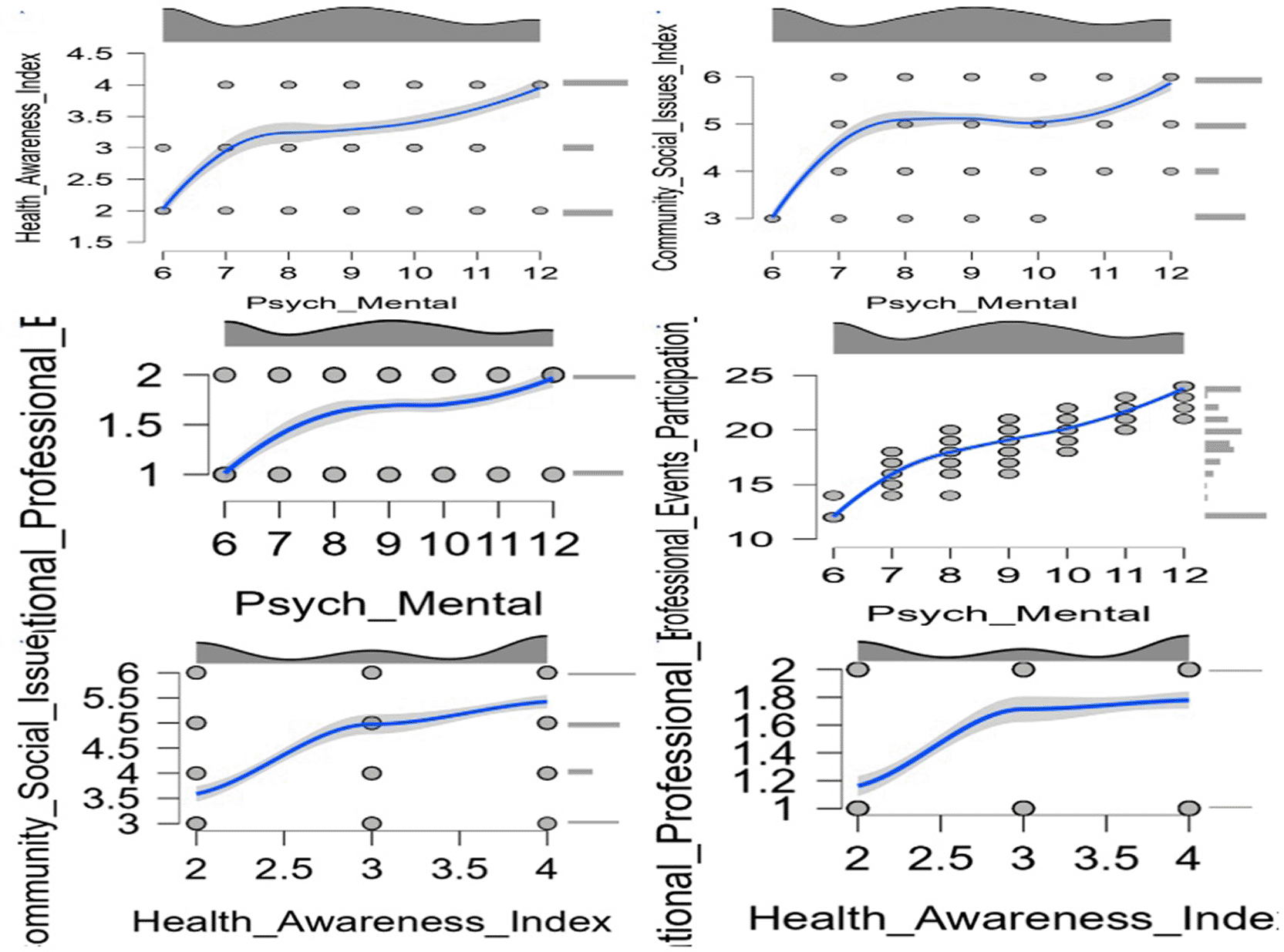
The figure presents mean values, standard deviations, and distribution patterns of key study variables, indicating moderate participation levels and acceptable distribution properties.
Although the variables deviated from normality, visual inspection of the scatter plots indicates linear and stable relationships, supporting the use of regression-based analytical models.
Table 3 displays the descriptive statistics which show the professional identity dimensions assessed with the Professional Identity Scale in Counseling (PISC) measurement. The results show that Engagement Behaviors serves as the primary dimension which shows the highest value with a measurement of (M = 58.16, SD = 8.13) because participants display their professional identity through their active participation in professional work. The next highest dimension after this measurement shows Knowledge of the Profession which has a measurement of (M = 46.46, SD = 5.62) because people possess strong cognitive abilities to understand their professional duties and industry requirements.
Figure 2 shows that participants showed positive professional attitudes with moderate scores which reached (M = 40.21, SD = 4.88) and they showed professional role expertise with moderate scores which reached (M = 38.10, SD = 5.35). The participants showed lower mean scores for the two categories of professional identity which measured their Philosophy of the Profession (M = 31.66, SD = 3.46) and their Professional Values (M = 18.81, SD = 1.90) because they showed less development for these two professional identity components which required deep reflection and value assessment. The total PISC score shows an average professional identity level with a measurement of (M = 233.40, SD = 24.23). The results show that people develop their identity through behavioral and practice-oriented methods before they develop their abstract and philosophical and value-based identity dimensions. This pattern may reflect a practice-driven professional environment in which opportunities for reflective engagement and value articulation are limited.
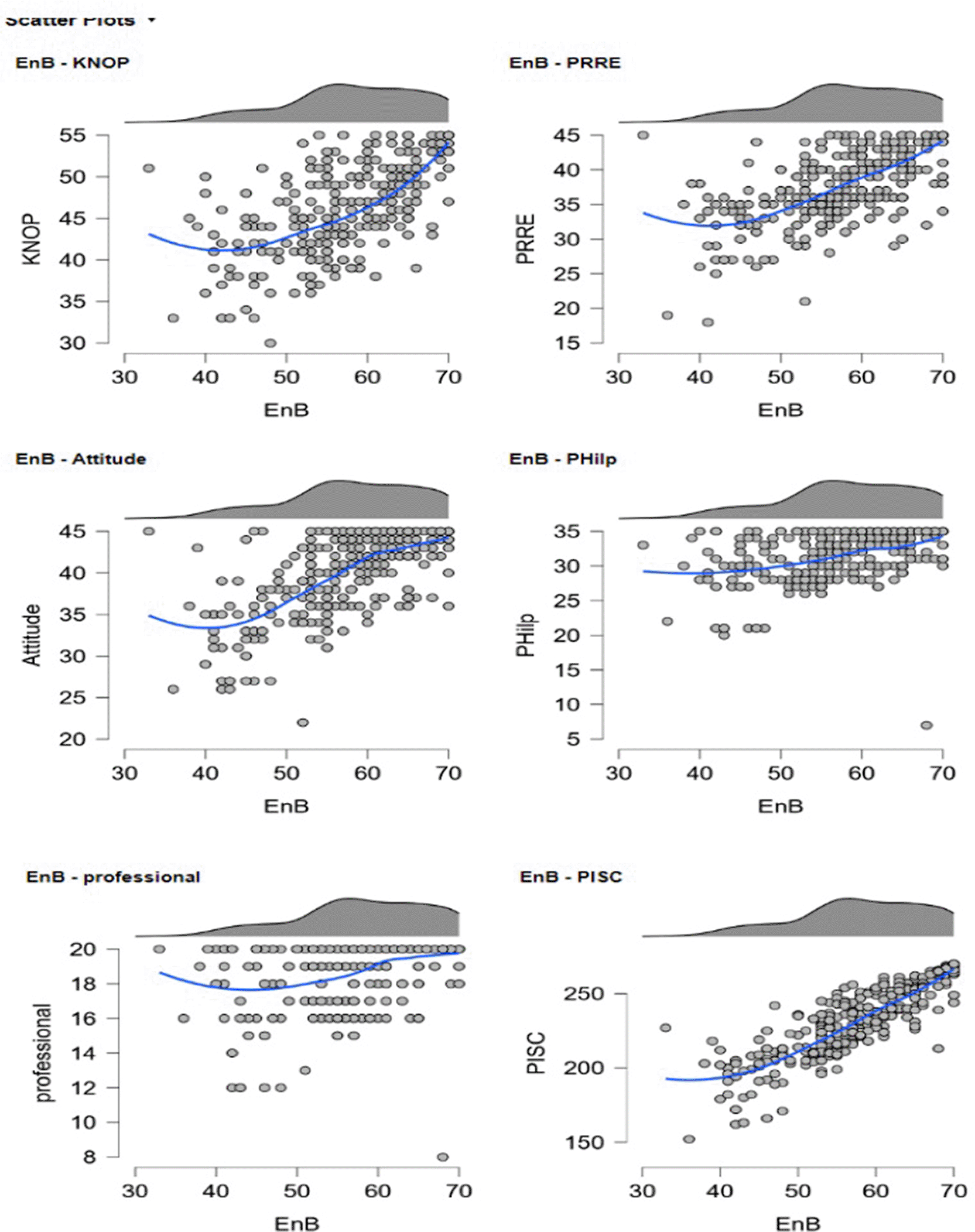
The figure illustrates the relationships between engagement behaviors and the six dimensions of professional identity, showing positive and moderately strong associations across variables.
Figure 2, scatter plots show the correlations between engagement behaviors (EnB) and the six characteristics of professional identity and the Professional Identity Scale in Counseling. The smoothed regression trends show that engagement activities positively affect all professional identity variables. Greater involvement is linked to stronger professional identity, as seen by the overall PISC score, which is strongest and most linear. Data points and smooth patterns indicate moderate to strong correlations, indicating sustained professional identity development among psychologists.
Table 4 displays the results of the measurement model for the latent construct of professional identity are shown in Table 4 The six indicators showed significant standardized factor loadings which ranged from 0.598 to 0.870 (p < .001) which proved that each dimension functioned as an accurate measure of the underlying construct. The three dimensions of Engagement Behaviors, Professional Roles and Expertise, and Attitude showed the highest loadings which indicates that these dimensions represent the main elements of professional identity within the current study population. The construct showed reliable measurement because its internal consistency assessment produced acceptable results which included Cronbach’s alpha (α = 0.861) and McDonald’s omega (ω = 0.897) values that both passed the established benchmarks. These results indicate strong internal consistency and adequate representation of the latent construct.
The measurement model shows suitable psychometric characteristics which enable researchers to use the latent construct for upcoming structural studies. The study needs to conduct additional tests which will evaluate both convergent and discriminant validity in future research investigations. In addition, the composite reliability (CR) of the construct was estimated at approximately 0.89, indicating excellent internal consistency. The average variance extracted (AVE) was approximately 0.56, exceeding the recommended threshold of 0.50 and supporting convergent validity. These findings further confirm the adequacy of the measurement model. Following confirmation of the measurement model, the structural model was evaluated using standard fit indices ( Table 5).
As shown in Table 5, Theoretical justification and model fit indices were used to create new model specifications; The model eliminated the non-significant direct path from professional event participation to professional identity while adding a new path which connected educational level to professional experience. The revised model fit indices appear in Table 5, The results indicate that the modified model achieved an acceptable level of fit. The model showed good fit because both the Comparative Fit Index (CFI = 0.921) and Tucker–Lewis Index (TLI = 0.903) surpassed the 0.90 threshold, The Root Mean Square Error of Approximation (RMSEA = 0.078) fell within acceptable limits which the Standardized Root Mean Square Residual (SRMR = 0.052) confirmed as adequate for the model, Model specification happened through theoretical grounds and statistical evidence which resulted in two changes. The model lost its direct connection between professional event participation and professional identity because non-significant paths were deleted while the educational level path to professional experience path was Adde,. The model showed an acceptable level of fit toward the revised model. The study showed that the Comparative Fit Index (CFI = 0.921) and Tucker–Lewis Index (TLI = 0.903) values exceeded the minimum threshold requirement which stands at 0.90. The model fit was confirmed through RMSEA (0.078) and SRMR (0.052) which demonstrated good performance to validate the revised structural model. This is evident in the Figure 3.
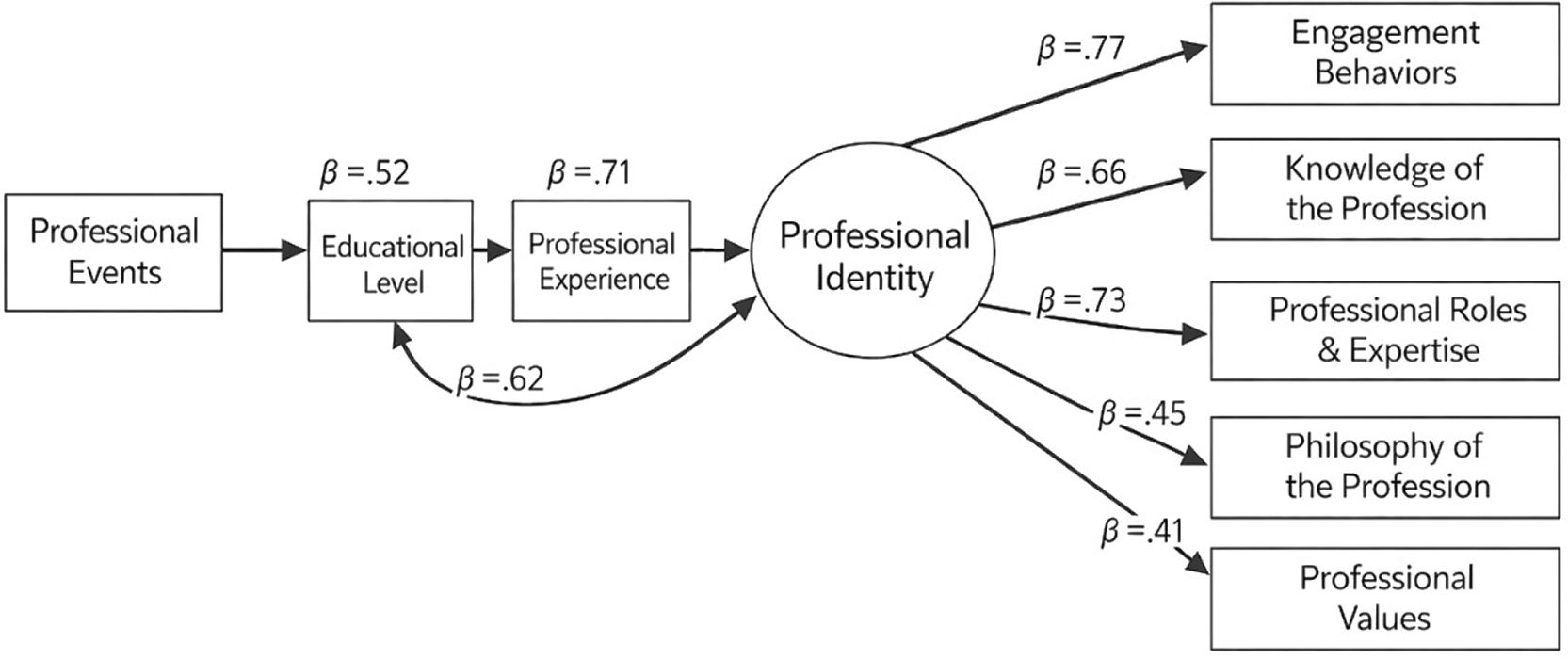
The model demonstrates that professional event participation influences professional identity indirectly through educational level and professional experience, with no significant direct effect observed.
Figure 3 shows that Theoretical justification and model fit indices were used to create new model specifications; The model eliminated the non-significant direct path from professional event participation to professional identity while adding a new path which connected educational level to professional experience. The revised model fit indices appear in Table 5, The results indicate that the modified model achieved an acceptable level of fit. The model showed good fit because both the Comparative Fit Index (CFI = 0.921) and Tucker–Lewis Index (TLI = 0.903) surpassed the 0.90 threshold, The Root Mean Square Error of Approximation (RMSEA = 0.078) fell within acceptable limits which the Standardized Root Mean Square Residual (SRMR = 0.052) confirmed as adequate for the model, Model specification happened through theoretical grounds and statistical evidence which resulted in two changes. The model lost its direct connection between professional event participation and professional identity because non-significant paths were deleted while the educational level path to professional experience path was Adde,. The model showed an acceptable level of fit toward the revised model. The study showed that the Comparative Fit Index (CFI = 0.921) and Tucker–Lewis Index (TLI = 0.903) values exceeded the minimum threshold requirement which stands at 0.90. The model fit was confirmed through RMSEA (0.078) and SRMR (0.052) which demonstrated good performance to validate the revised structural model.
Figure 3 illustrates the revised structural model, indicating that professional event participation influences professional identity indirectly through educational level and professional experience rather than through a direct pathway.
The revised structural model provides a different perspective on the relationships among the study variables. Rather than demonstrating statistically significant mediation effects, the findings suggest that professional event participation does not exert a direct influence on professional identity, but is better understood within a broader structural context. In the respecified model, educational level emerged as the only significant predictor of professional identity, highlighting its central role in shaping professional self-concept. Although professional event participation was associated with educational level and professional experience, these pathways did not result in statistically significant indirect effects.
These findings indicate that the influence of professional events may be conceptualized as theoretically indirect rather than empirically mediated within the current model. This suggests that the development of professional identity is more strongly grounded in formal education than in participation in professional events alone, These findings reinforce the structural interpretation of the model, emphasizing the limited empirical role of event participation in predicting professional identity.
Table 6 displays the Educational level emerged as the only significant predictor of professional identity, highlighting the central role of formal academic preparation in shaping counselors’ professional self-concept. Conversely, professional experience and workplace setting did not exhibit significant predictive power, The model demonstrated limited predictive capacity, with educational level emerging as the only significant predictor.
This study found that psychologists participated moderately to highly in professional events, with psychological–mental activities being the most popular, followed by community and health-awareness activities, and educational–professional activities being the least popular3 found that clinical and community-oriented commitments often take precedence due to their immediate applicability to client care and organizational expectations. Psychologists emphasize conferences and workshops that affect therapeutic competence, according to.19 However20,21 found significantly higher participation in structured educational programs in more regulation-intensive contexts, suggesting that the regulatory environment strongly influences participation patterns. In this study, lesser engagement in educational–professional events may be due to limited institutional incentives or accreditation requirements, leading to a desire for immediate professional utility. Communities of Practice theory suggests that professionals prefer activities within their core practice communities to peripheral or highly formalized educational activities.
Professional identity was moderate-to-high, with Engagement Behaviors being the most developed dimension, surpassing knowledge, roles, values, and philosophical foundations. This is congruent with28 that noted behavioral identity indicators like active involvement, initiative, and participation develop earlier than abstract cognitive and philosophical aspects. Psychology’s most visible and institutionalized aspect is identity manifested through professional behavior, according to.33 However,32 warned that externally driven professional behaviors may lead to an incomplete or fragmented sense of identity without strong attitudinal and philosophical grounding. The practice-oriented nature of professional responsibilities may offer repeated opportunities to perform identity-related actions but fewer opportunities to articulate deeper professional values or philosophical stances, which may explain the prevalence of engagement behaviors in this study. Since practical implementation generally precedes professional meaning internalization, constructivist identity theories support this perspective.
The structural equation model found no direct effect of professional event participation on professional identity, which is notable. This association is statistically insignificant, contrary to the belief that engagement inherently develops professional identity. Attendance alone does not ensure identity transformation, especially when events lack reflective, supervisory, or relational components, according to20,32 noted that corporate culture, supervisory models, and learning climate impact professional participation’s developmental worth. This contradicts7,19 who found favorable connections between professional involvement and perceived competence, professional belonging, and job clarity. This setting may have been quantitative and task-oriented rather than qualitatively developing, according to these findings. Identity-in-Practice theory suggests that identity development needs profound cognitive and social engagement, not just physical attendance or procedural involvement.
The non-significant indirect effects through education, professional experience, and workplace context support the idea that participation-identity processes are immature or structurally weak3,21 also found that psychosocial processes rather than demographic or contextual factors often shape identity. This contradicts18,19 who showed that mentorship, collegial engagement, and institutional support can help participants develop meaningful identities. The lack of mediating effects suggests a gap between professional events and institutional learning mechanisms, Socialization theory suggests that indirect effects only occur when people are entrenched in coherent social and organizational systems that actively cultivate identity, which may not be the case in the examined context.
Unlike involvement and mediation, educational degree was the only significant predictor of professional identity,28,33 noted that formal academic preparation provides the conceptual, ethical, and philosophical foundations for a coherent and well-integrated professional identity. These findings contradict with studies that say practice-based learning shapes identity, especially among experienced practitioners. However, these findings suggest that academic programs may be the only systematic way to learn professional values, principles, and role clarity. Professional Identity Formation (PIF) models explain the findings by arguing that identity is first grounded in academic indoctrination before being renegotiated in practice.
Finally, professional experience and workplace setting did not significantly contribute to professional identity, highlighting a key point: identity development is not a given outcome of time in the field or exposure to specific work contexts. This agrees with20,32 that noted identity building relied on qualitative professional encounters rather than quantitative experience. This contradicts research that suggests stronger collegial engagement or institutional reflection can boost identity in particular academic or organizational environments.7,19 Due to the limited predictive value of experience and work context, professional environments may not consistently promote reflective practice, mentorship, or identity-oriented conversation. Experience decoupling suggests that only integrative, reflective, and contextually scaffolded experience contributes to identity.
This study reports that risk perception and psychosocial variables can affect the crowd behavior of Hajj pilgrims, with factors like trust in institutions, learning experiences, and spiritually based reassurance strongly showing strong effects. As risk perception was associated with crowd behavior but did not significantly predict it when psychosocial factors were included, this study proposes that crowd management strategies may benefit from incorporating psychological, social, and spiritual factors into their design and placing them side-by-side with physical and organizational approaches. In delivering these pieces of evidence, this work provides a context-specific, exploratory, predictive framework grounded in empirical data for studying crowd behavior at large religious gatherings, contributing to the literature on crowd behavior and risk perception. Risk communication tactics that promote trust in institutions, personal readiness, and include culturally and religiously relevant messaging may increase pilgrims’ compliance with preventive measures and safer crowd behaviors. Regulators and mass event organizers stand to benefit from the guidance presented here, and the discussions deliver a useful framework for predictive and intervention-based crowd safety and well-being models.
Results evaluation must account for study constraints, Cross-sectional research challenges professional event and identity causality, examining professional identity development over time requires longitudinal techniques, Self-reported measures may be skewed despite anonymity. The study included public, private, and university psychologists, although an electronically distributed survey may have limited digitally competent participants, impacting sample representativeness. Finally, the professional events involvement index measured breadth but not quality, intensity, or duration, which may change professional identity. This study has benefits despite its shortcomings, The broad and diversified sample of professional psychologists made the findings more generalizable, For more accurate and interpretable results, use a well-validated, multidimensional professional identity measure (PISC) with good psychometric properties. The strong analytical framework of structural equation modeling facilitates direct and indirect research variable connections, quantifying professional event participation measures involvement, these aspects corroborate the study’s conclusions and make it relevant to professional psychology.
The study found that educational level was the sole significant predictor of professional identity, hence formal academic and pre-service preparation should be prioritized. Professional psychology programs should promote participation, professional expertise, and role clarity through clear identity-focused curriculum, reflective activities, and supervised learning. Restructure professional events and ongoing professional development to promote thoughtful interaction, mentoring, and professional ideals rather than attendance. Given the lower levels of philosophical and values-based professional identity, specialized programs on ethics, philosophy, and values are necessary. These recommendations emphasize the necessity for intentional, evidence-based professional growth that prioritizes identity creation and is suited for high-impact Springer journals.
Ethical approval for this study was obtained from the Graduate Studies and Scientific Research Committee, College of Social Sciences, Department of Psychology, (Approve 2459) Imam Mohammad Ibn Saud Islamic University. All procedures performed in this study involving human participants were in accordance with the ethical standards of the institutional research committee and with the 1964 Helsinki Declaration and its later amendments or comparable ethical standards.
| Views | Downloads | |
|---|---|---|
| F1000Research | - | - |
|
PubMed Central
Data from PMC are received and updated monthly.
|
- | - |
Provide sufficient details of any financial or non-financial competing interests to enable users to assess whether your comments might lead a reasonable person to question your impartiality. Consider the following examples, but note that this is not an exhaustive list:
Sign up for content alerts and receive a weekly or monthly email with all newly published articles
Already registered? Sign in
The email address should be the one you originally registered with F1000.
You registered with F1000 via Google, so we cannot reset your password.
To sign in, please click here.
If you still need help with your Google account password, please click here.
You registered with F1000 via Facebook, so we cannot reset your password.
To sign in, please click here.
If you still need help with your Facebook account password, please click here.
If your email address is registered with us, we will email you instructions to reset your password.
If you think you should have received this email but it has not arrived, please check your spam filters and/or contact for further assistance.

Comments on this article Comments (0)