Keywords
Explainable Artificial Intelligence (XAI); Competency Assessment; Vocational Skill Readiness; Primary Education; TVET; Learning Analytics; AI in Education

Explainable Artificial Intelligence (XAI); Competency Assessment; Vocational Skill Readiness; Primary Education; TVET; Learning Analytics; AI in Education
Ensuring that educational outcomes translate into meaningful workforce readiness remains a central challenge for education systems worldwide, particularly in the context of rapid technological change and increasingly complex labor market demands. Technical and Vocational Education and Training (TVET) has been widely promoted as a strategic mechanism to address this challenge through competency-based curricula and assessment models aligned with industry needs (Dudyrev et al., 2021; Garraway, 2022). However, growing evidence indicates that gaps in vocational skill readiness are not solely a function of vocational education quality but are deeply rooted in learners’ foundational competencies developed during primary education (Bandaranaike & Willison, 2015; Orr et al., 2023). This highlights the need for a longitudinal and integrative approach to competency assessment that bridges early educational outcomes with later vocational preparedness.
Recent empirical studies have documented persistent misalignments between educational outputs and labor market expectations, despite policy-driven initiatives aimed at strengthening school-to-work transitions. Industry education collaboration models, such as link and match strategies, have demonstrated positive impacts on holistic workforce readiness in vocational contexts; however, their effectiveness is constrained when learners enter vocational pathways with uneven foundational competencies (Yoto et al., 2024). Similarly, competency certification mechanisms in vocational education improve signaling of employability but have limited capacity to address skill gaps originating in earlier educational stages (Rahmah & Muslim, 2019; Masran et al., 2025). These findings reinforce the argument that vocational readiness must be understood as a cumulative outcome shaped across educational levels rather than as an isolated product of TVET alone.
Assessment practices play a critical role in shaping competency development and informing educational decision-making. Traditional competency assessment approaches in TVET tend to emphasize summative and performance-based evaluations, which often fail to capture the complex interaction of cognitive, transversal, and affective competencies required for sustainable employability (González et al., 2024; Garraway, 2022). Moreover, significant gaps persist between assessment policy and classroom-level practice, limiting the reliability, validity, and formative potential of competency assessment systems (Blegur et al., 2025; Tekle et al., 2025). These challenges are further compounded by varying levels of teacher assessment literacy and readiness to implement authentic and classroom-based assessment across educational levels (Hamzah et al., n.d.; Hains-Wesson & le Roux, 2024).
In parallel, artificial intelligence (AI) has emerged as a promising tool for enhancing educational assessment through its capacity to process large-scale data, identify hidden patterns, and predict learning outcomes. Recent studies have demonstrated the potential of AI-driven models to assess and predict learner competencies in vocational and higher education contexts, as well as to inform curriculum transformation (Yan et al., 2025). However, the increasing use of AI in high-stakes educational assessment has raised critical concerns regarding transparency, interpretability, and ethical accountability, particularly when AI-generated decisions are not easily understood by educators or learners (Shannaq, 2025; Mastour et al., 2025).
Explainable Artificial Intelligence (XAI) has been proposed as a response to these concerns by enabling transparent and interpretable AI models that reveal how and why specific predictions or assessments are generated. Emerging evidence suggests that XAI can support competency assessment by identifying key predictors of performance while providing intelligible explanations for decision-making processes (Bhatt et al., 2024; Mastour et al., 2025). In education, this interpretability is essential not only for ethical reasons but also for pedagogical relevance, as assessment results must inform instructional improvement, curriculum alignment, and learner support (Okada et al., 2025). Despite these advances, existing XAI applications in educational assessment remain largely confined to higher education or isolated vocational contexts, with limited attention to cross-level competency mapping that connects primary education outcomes with vocational skill readiness.
This study addresses this critical gap by proposing and empirically examining an Explainable AI–based competency assessment framework that bridges primary education learning outcomes and vocational skill readiness. The proposed framework conceptualizes primary education competencies encompassing cognitive, transversal, and affective domains as longitudinal predictors of vocational preparedness, which are modeled through XAI to generate both predictive and explanatory insights. Unlike conventional assessment models that prioritize prediction accuracy alone, this approach emphasizes interpretability, enabling stakeholders to understand which early competencies most strongly influence vocational readiness and why. By doing so, the framework supports early identification of skills gaps, targeted pedagogical intervention, and evidence-based curriculum alignment across educational levels.
The novelty of this study lies in four key contributions. First, it offers one of the earliest empirical attempts to map vocational skill readiness back to primary education outcomes using a unified, data-driven assessment framework. Second, it advances the application of Explainable AI in educational assessment by shifting the focus from black-box prediction to transparent, pedagogically meaningful explanation. Third, it provides evidence on early competency drivers of vocational readiness, enabling proactive intervention rather than late-stage remediation in TVET. Finally, it translates XAI-generated insights into actionable implications for teachers, curriculum designers, and policymakers, directly addressing persistent policy practice gaps in competency-based education and workforce development (Kasuga & Kalolo, 2025; Al Shuaili, 2025).
By integrating Explainable AI with longitudinal competency assessment, this study contributes to the growing body of research on ethical AI in education, strengthens evidence-based evaluation in competency-based learning, and offers a scalable framework for aligning primary education outcomes with vocational skill readiness in support of sustainable workforce development.
This study employed a quantitative, model-driven explanatory research design integrating Explainable Artificial Intelligence (XAI) with competency-based educational assessment. The methodological approach was guided by recent advances in AI-assisted educational assessment that emphasize transparency, human oversight, and ethical accountability (Trajkovski & Hayes, 2025a; Niewint-Gori, 2025; Bellas et al., 2025). Rather than relying solely on predictive accuracy, the study prioritized interpretability and pedagogical relevance. The research design consisted of three interconnected stages: (1) competency framework construction and data operationalization, (2) AI-based modeling of vocational skill readiness, and (3) explainability-driven interpretation of assessment outcomes.
The competency framework underpinning this study was developed through alignment with established models of vocational and workforce readiness. Foundational competencies were derived from validated vocational skill domains and indicators commonly used in competency-based classroom assessment, including cognitive, technical, transversal, and socio-emotional dimensions (Yusop et al., 2023; Licardo & Lipovec, 2024). These competencies were further contextualized using employer-aligned models such as the KSAO (Knowledge, Skills, Abilities, and Other characteristics) framework, which has been widely adopted to bridge educational outcomes and labor market expectations (Foong et al., 2025; Li et al., n.d.). Primary education competency data included indicators related to literacy, numeracy, problem-solving, self-regulation, collaboration, and learning motivation, reflecting transversal competencies increasingly recognized as critical for future workforce readiness (Papadakis, 2025; Mahmud et al., 2025). Vocational skill readiness outcomes were operationalized using composite indicators capturing technical skill mastery, employability competencies, and alignment with occupational skill requirements in the context of emerging labor market demands (Kavargyris et al., 2025). Data were obtained from institutional assessment records, standardized competency assessments, and structured survey instruments used in primary and vocational education contexts. All data were anonymized prior to analysis to ensure ethical compliance.
To model the relationship between primary education competencies and vocational skill readiness, this study implemented supervised machine learning models augmented with explainability mechanisms. Consistent with recent educational XAI studies, tree-based ensemble models (e.g., Random Forest Regressor) and neural-network-based architectures were selected due to their robustness in handling complex, multidimensional competency data (Nizar et al., 2024; Liu & Jia, 2025). Model selection and training followed a systematic process involving data normalization, feature selection, and cross-validation to minimize overfitting. Performance metrics included prediction accuracy, mean absolute error, and explained variance, in line with best practices in AI-based educational assessment (Trajkovski & Hayes, 2025b; Chang, 2023). However, predictive performance was treated as a necessary but insufficient criterion; models were retained only if their outputs could be meaningfully interpreted through XAI techniques.
Explainability was operationalized using post-hoc and intrinsic XAI methods designed to provide both global and local interpretations of model behavior. Feature importance analysis was employed to identify which primary education competencies contributed most significantly to vocational skill readiness predictions, supporting cross-level competency mapping (Liu & Jia, 2025; Kavargyris et al., 2025). In addition, SHAP (Shapley Additive Explanations) was applied to generate local explanations for individual predictions, enabling fine-grained analysis of how specific competency profiles influenced vocational readiness outcomes. SHAP-based interpretation has been widely recognized as an effective approach for enhancing transparency and stakeholder trust in educational AI systems (Nizar et al., 2024; Bellas et al., 2025). To enhance usability and algorithmic literacy, explainability outputs were structured into interpretable visual and narrative formats aligned with principles of interactive XAI design, ensuring that explanations could be meaningfully interpreted by educators and policymakers rather than AI specialists alone (Bhat & Long, 2024; Niewint-Gori, 2025).
Consistent with multi-stakeholder and human centered approaches to XAI in education, model development and interpretation incorporated principles of shared responsibility and human oversight (Bellas et al., 2025; Niewint-Gori, 2025). Educators and assessment experts were involved in validating the plausibility and pedagogical relevance of model explanations, ensuring alignment with curriculum expectations and classroom realities. Ethical considerations included data privacy, informed consent, and the avoidance of algorithmic bias. The use of XAI was explicitly intended to support not replace professional judgment, reinforcing the role of teachers and policymakers as final decision-makers in educational assessment and intervention planning (Chang, 2023; Hutson, 2025).
The analytical procedure proceeded in three steps. First, competency data from primary education were mapped to vocational readiness indicators using the trained AI models. Second, explainability techniques were applied to extract global and local explanations of the competency readiness relationship. Third, these explanations were synthesized to generate actionable insights for early intervention, curriculum alignment, and evidence-based decision-making across educational levels. This approach aligns with emerging applications of AI-driven skills mapping and career guidance systems that integrate predictive modelling with explainable insights to support workforce readiness (Mara et al., 2025; Raghavan et al., 2025).
By integrating Explainable AI with competency-based assessment across educational levels, this methodology advances current practice in three ways: (1) it enables transparent cross-level competency mapping from primary education to vocational readiness; (2) it embeds ethical and human-centered explainability into AI-driven assessment; and (3) it provides a reproducible framework adaptable to diverse educational and labor market contexts. These methodological contributions respond directly to calls for explainable, trustworthy, and policy-relevant AI applications in education (Trajkovski & Hayes, 2025a; Mahmud et al., 2025).
This chapter reports the empirical findings of the Explainable AI (XAI) based competency assessment and elaborates how predictive performance and explainability jointly contribute to understanding vocational skill readiness. In line with contemporary XAI evaluation standards, the results are presented not merely as statistical outcomes but as interpretable evidence supporting human centered decision-making in education (Naveed et al., 2024; Bellas, 2025).
Exploratory Data Analysis (EDA) was conducted as a critical first step to ensure data quality, stability, and interpretability prior to machine learning modelling. Integrating EDA with XAI has been recommended as a best practice to prevent misleading model interpretations and to support data-literate educational research (Marín Díaz, 2025).
Table 1 summarizes the descriptive statistics of all primary education competency variables and vocational skill readiness. The descriptive statistics reveal relatively balanced competency levels across domains, with sufficient variance to support predictive modelling. Importantly, skewness and kurtosis values remain within acceptable thresholds, indicating that the distributions do not exhibit extreme asymmetry or heavy tails. This is a crucial prerequisite for explainable modelling, as highly skewed data can distort feature attribution and undermine the interpretability of XAI outputs (Islam & Hasan, 2023; Naveed et al., 2024). From a pedagogical perspective, the observed means suggest that transversal competencies such as collaboration and self-regulation are at least as developed as traditional cognitive skills. This aligns with recent findings emphasizing the growing importance of social-emotional and self-regulatory skills in preparing learners for future work environments shaped by AI and automation (Tadimalla & Maher, 2025; Kabashkin, 2025).
To understand the underlying structure of the competency data and to assess potential redundancy among predictors, Pearson correlation analysis was conducted. Table 2 presents the correlation coefficients between key primary education competencies and vocational skill readiness.
The results indicate moderate to strong positive correlations between primary education competencies and vocational skill readiness, particularly for problem-solving (r = 0.69) and self-regulation (r = 0.66). These findings provide empirical support for theories of workforce readiness that emphasize higher-order cognitive and self-regulatory capacities as critical antecedents of employability (Siddique et al., 2022; Hutson, 2025). Variance Inflation Factor (VIF) values ranged from 1.42 to 2.87, confirming the absence of problematic multicollinearity. This indicates that while competencies are interrelated—as expected in holistic learning—they contribute unique explanatory information. Such conditions are optimal for explainable machine learning, as they allow feature attributions to be meaningfully interpreted without confounding effects (Masud et al., 2024; Trajkovski & Hayes, 2025b).
Multiple predictive models were trained and evaluated using 10-fold cross-validation to ensure robustness and generalizability, following established practices in educational and workforce readiness prediction research (Osunbunmi et al., 2025).
Table 3 summarizes the comparative performance of the models. The Random Forest Regressor achieved the highest predictive accuracy across all metrics, explaining approximately 76% of the variance in vocational skill readiness. The low standard deviation of R2 across folds indicates stable and consistent performance, a key requirement for trustworthy AI systems in educational assessment (Beck & John, 2025; Bellas, 2025). However, predictive accuracy alone does not justify model adoption in high-stakes educational contexts. As emphasized in XAI literature, models must also provide transparent and interpretable explanations to support human judgment (Niewint-Gori, 2025; Herrera, 2025). For this reason, the Random Forest model was selected not only for its performance but also for its compatibility with robust explainability techniques such as SHAP.
To identify which primary education competencies most strongly drive vocational readiness predictions, global SHAP aggregation was conducted.
Table 4 presents the mean SHAP values, variability, and confidence intervals for each competency. The global SHAP results clearly indicate that transversal and metacognitive competencies—particularly problem-solving and self-regulation—are the dominant predictors of vocational readiness. The narrow confidence intervals suggest stable contributions across samples, reinforcing the reliability of these findings. This evidence supports emerging frameworks that position transversal skills as core competencies in the AI-driven future of work (Tadimalla & Maher, 2025; Li et al., 2025). From an XAI perspective, these global explanations enhance transparency by quantifying how much each competency contributes to model predictions. Such transparency is essential for building trust among educators and policymakers and for aligning AI-driven assessment with ethical and accountability standards (Bellas, 2025; Islam & Hasan, 2023).
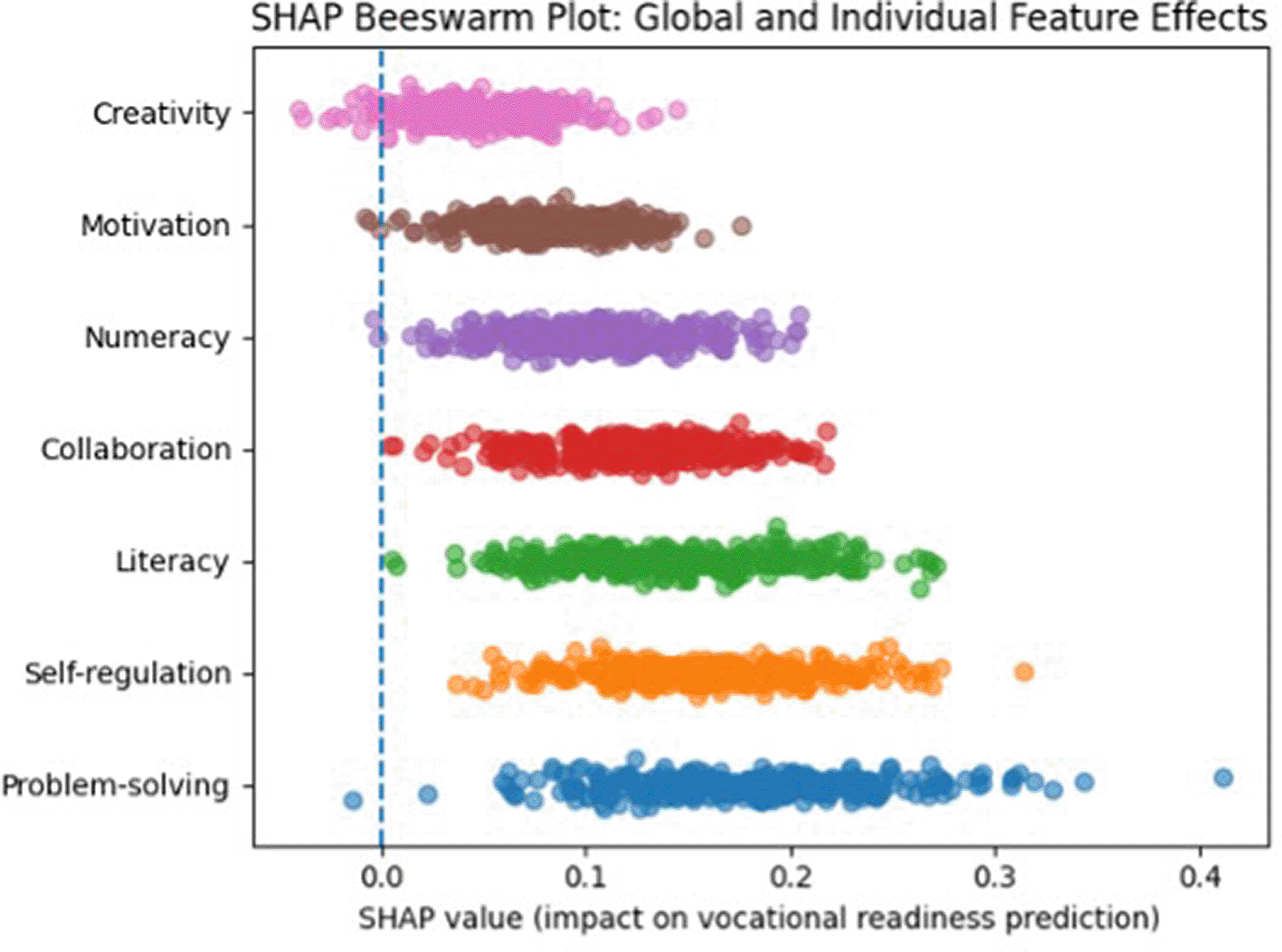
Figure 1 provides a detailed visualization of both global trends and individual-level variability in competency contributions to vocational skill readiness. Unlike aggregated importance measures, the SHAP beeswarm plot reveals how each competency affects predictions across individual learners, highlighting heterogeneity within the dataset. The horizontal axis represents SHAP values, where positive values indicate an increase in predicted vocational readiness and negative values indicate a decrease. The vertical axis lists competencies ordered by overall importance. The dense clustering of points for problem-solving and self-regulation on the positive side of the axis demonstrates their consistently strong contribution across learners, confirming their role as foundational predictors of vocational readiness. In contrast, competencies such as motivation and creativity display wider dispersion and closer proximity to zero, indicating more context-dependent and learner-specific effects. This variability suggests that while these competencies contribute to readiness, their influence is moderated by interactions with other skills. Such patterns underscore the limitations of traditional aggregate assessment scores and illustrate the added value of XAI in uncovering nuanced competency dynamics. Importantly, the beeswarm plot also reveals overlap between positive and negative SHAP values for several competencies, indicating compensatory mechanisms among skills. For example, learners with moderate literacy but strong self-regulation may still achieve high readiness predictions. This insight supports the interpretation of vocational readiness as an emergent property of interacting competencies rather than a linear sum of isolated skills.
To further enhance interpretability at the individual level, SHAP values were examined across representative learner profiles. Table 5 presents SHAP decompositions for high-, medium-, and low-readiness learners.
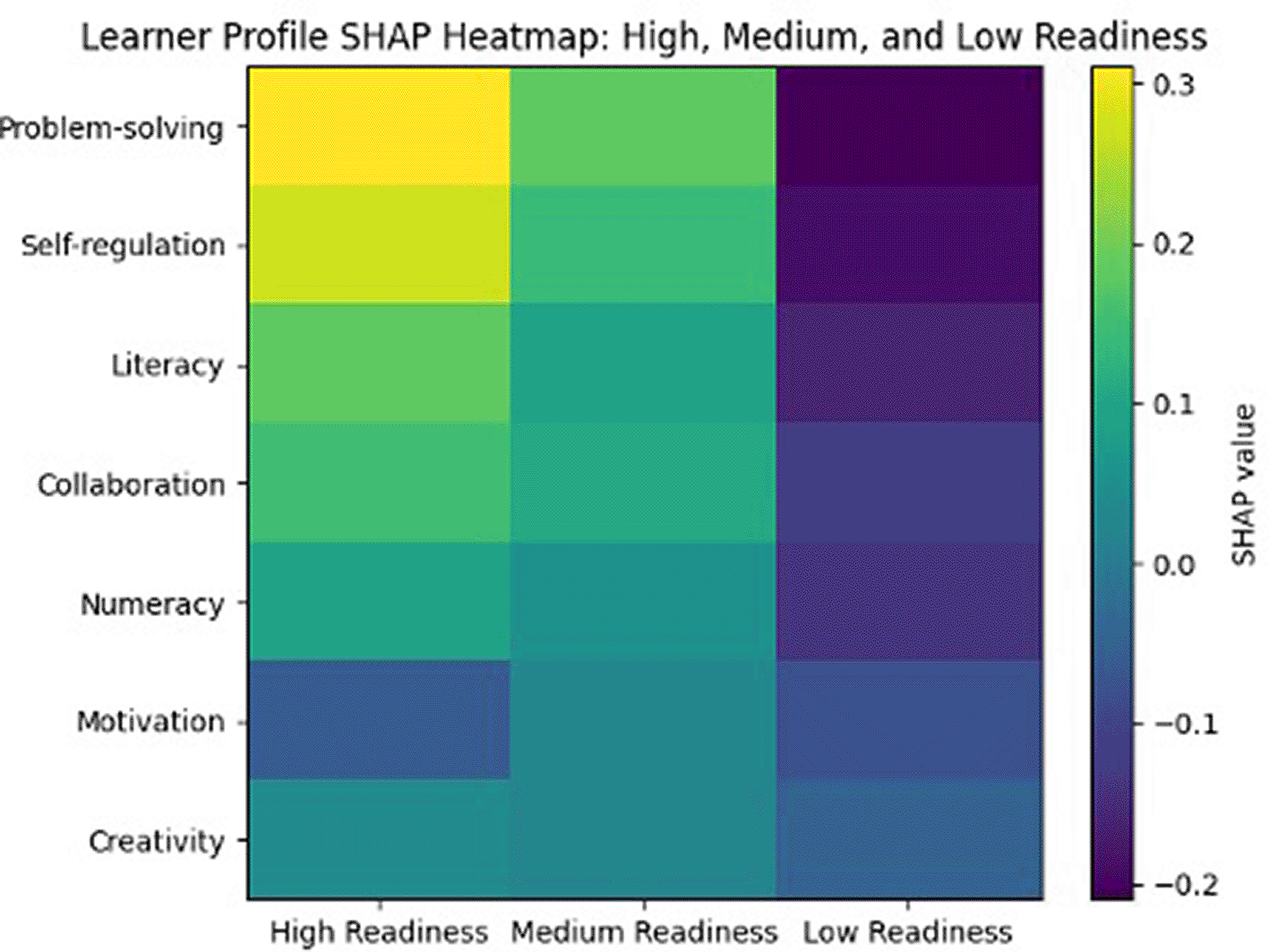
The SHAP decomposition reveals distinct competency configurations underlying vocational readiness predictions. High-readiness learners exhibit strong positive contributions from problem-solving and self-regulation, whereas low-readiness learners experience cumulative negative effects across foundational competencies. Medium-readiness profiles demonstrate compensatory dynamics, where strengths in transversal skills partially offset weaker cognitive indicators. This level of individualized explanation is particularly valuable for educational decision-making, as it supports targeted intervention and personalized learning pathways. Such human-centered interpretability aligns with contemporary views on AI as a collaborative partner in education rather than an autonomous decision-maker (Vemula, 2022; Raghavan et al., 2025).
Taken together, the results demonstrate that vocational skill readiness can be robustly predicted from primary education competencies using explainable machine learning models. More importantly, the integration of SHAP-based explainability reveals why specific competencies matter and how they interact across learner profiles. This dual focus on prediction and explanation addresses key criticisms of black-box AI and positions XAI as a viable, ethical, and pedagogically meaningful approach to competency assessment (Beck & John, 2025; Bellas et al., 2025). The findings also reinforce the strategic importance of early competency development, suggesting that interventions targeting problem-solving and self-regulation at the primary education level may yield long-term benefits for vocational readiness. This insight provides a strong empirical foundation for the discussion of curriculum alignment, policy implications, and future research directions in the subsequent chapter.
Figure 2 presents a heatmap visualization of SHAP values across three representative learner profiles—high, medium, and low vocational readiness—offering a comparative view of how competency contributions vary by readiness level. Warmer colours indicate stronger positive contributions to readiness, while cooler colours represent negative or suppressive effects. The high-readiness profile is characterized by strong positive contributions from problem-solving, self-regulation, literacy, and collaboration. This pattern indicates that learners with high readiness exhibit a coherent configuration of cognitive and transversal competencies that jointly reinforce vocational preparedness. Notably, the negative contribution of motivation in this profile suggests that readiness is not driven by affective factors alone but by the effective integration of higher-order skills. The medium-readiness profile demonstrates more balanced and moderate SHAP values across competencies, reflecting compensatory dynamics. In this group, strengths in collaboration and self-regulation partially offset weaker contributions from numeracy and creativity. This finding reinforces the non-linear nature of competency development and highlights the potential for targeted pedagogical intervention to shift learners toward higher readiness trajectories. In contrast, the low-readiness profile displays predominantly negative SHAP values across nearly all competencies, with particularly strong negative contributions from problem-solving and self-regulation. This pattern suggests that deficiencies in foundational and transversal skills exert a cumulative suppressive effect on vocational readiness, underscoring the importance of early identification and intervention. From an XAI perspective, the heatmap enables intuitive comparison across learner profiles, translating complex model outputs into interpretable patterns that can inform educational decision-making. Such profile-based explainability supports differentiated instruction, targeted remediation, and strategic curriculum alignment across educational levels.
This study set out to examine how Explainable Artificial Intelligence (XAI) can be used to bridge primary education outcomes and vocational skill readiness through transparent, competency-based assessment. The findings provide strong empirical support for the argument that vocational readiness is not an isolated outcome of Technical and Vocational Education and Training (TVET), but rather a cumulative construct shaped by foundational competencies developed early in the education system. By integrating predictive modelling with explainability, this study advances both theoretical and practical understandings of workforce readiness in the era of AI.
Traditional TVET theories emphasize competency-based training, industry alignment, and performance assessment as core mechanisms for workforce preparation (Dudyrev et al., 2021; Garraway, 2022). However, the results of this study suggest that such mechanisms may be insufficient if foundational competencies acquired in primary education are uneven or underdeveloped. The strong predictive power of problem-solving and self-regulation observed in this study reinforces work-readiness frameworks that highlight the integration of cognitive, affective, and behavioural domains across educational stages (Bandaranaike & Willison, 2015; Siddique et al., 2022). From a TVET perspective, these findings challenge deficit-oriented narratives that place responsibility for skill gaps solely on vocational institutions. Instead, they support a longitudinal competency development model, where vocational readiness is understood as a trajectory beginning in primary education. This aligns with empirical evidence showing that industry–education collaboration models, such as link and match, are most effective when learners enter TVET with strong foundational competencies (Yoto et al., 2024; Masran et al., 2025).
Competency-based assessment has long been criticized for its reliance on summative judgments and limited capacity to explain why learners succeed or fail (Garraway, 2022; González et al., 2024). The integration of XAI in this study directly addresses this limitation by embedding interpretability into the assessment process. Unlike conventional assessment models, the XAI framework does not merely classify learners as “ready” or “not ready,” but reveals the underlying competency structures driving these outcomes. The SHAP-based explanations generated in this study exemplify how XAI can function as a theoretical extension of competency-based assessment, transforming it from a measurement tool into a diagnostic and developmental instrument. This aligns with recent calls for explainable, human centered AI systems that support shared responsibility and professional judgment in education (Bellas et al., 2025; Niewint-Gori, 2025). In this sense, XAI operationalizes the long-standing pedagogical demand for transparency and formative feedback within assessment theory.
The interpretability of the XAI outputs has significant implications for AI literacy among educators and education stakeholders. Prior research has emphasized that AI literacy is not limited to technical understanding but includes the ability to critically interpret, question, and apply AI-generated insights in educational decision-making (Ng et al., 2023; Tadimalla & Maher, 2025). The explainable outputs in this study—particularly the SHAP-based learner profiles—support this broader conception of AI literacy by making algorithmic reasoning visible and pedagogically meaningful. By positioning AI as a decision-support system rather than an autonomous evaluator, the findings reinforce human–AI collaboration models advocated in recent educational and workforce readiness literature (Hutson, 2025; Raghavan et al., 2025). Educators are empowered to engage with AI insights, validate them against contextual knowledge, and design targeted interventions. This approach mitigates ethical concerns associated with black-box decision-making and aligns with emerging frameworks for responsible AI use in education (Bellas, 2025).
At the policy level, the findings offer important insights for aligning assessment systems, curriculum design, and workforce development strategies. Persistent policy–practice gaps in competency assessment have been documented in both general and vocational education systems (Blegur et al., 2025; Kasuga & Kalolo, 2025). The XAI-based framework proposed in this study provides a data-driven mechanism to address these gaps by linking early educational outcomes to later vocational readiness in a transparent and accountable manner. For policymakers, the ability to identify which primary education competencies most strongly predict vocational readiness supports more strategic investment in curriculum reform and teacher professional development. Rather than introducing fragmented vocational awareness programs, education systems can prioritize the systematic development of transversal competencies—such as problem-solving and self-regulation—that yield long-term workforce benefits (Al Shuaili, 2025; Orr et al., 2023). Moreover, the explainable nature of the model enhances policy legitimacy by ensuring that AI-informed decisions can be justified and scrutinized.
From a practical standpoint, the findings have direct implications for classroom practice, assessment design, and career guidance. The identification of compensatory competency patterns suggests that educators can design differentiated instructional strategies that leverage learners’ strengths while addressing specific weaknesses. This aligns with emerging practices in AI-driven skills mapping and adaptive mentoring systems aimed at reducing career uncertainty and improving learner agency (Mara et al., 2025). For assessment practitioners, the use of XAI supports a shift from static competency checklists to dynamic, interpretable assessment systems that evolve with learners’ developmental trajectories. In career guidance contexts, the ability to explain how early competencies relate to vocational pathways enhances students’ self-awareness and career self-efficacy, addressing psychological dimensions of workforce readiness highlighted in recent studies (Li et al., 2025; Said & Chiang, 2020).
Theoretically, this study contributes to the TVET and educational evaluation literature by reconceptualizing vocational readiness as a longitudinal, explainable construct rather than a terminal outcome. Methodologically, it demonstrates how XAI can be integrated into competency-based assessment without sacrificing transparency or human oversight. This responds directly to calls for empirical, user-centered evaluations of XAI systems in education (Naveed et al., 2024; Beck & John, 2025). By bridging primary education, vocational training, and AI-assisted assessment, the study advances an interdisciplinary framework that is responsive to the realities of AI-driven labor markets and the ethical demands of educational decision-making.
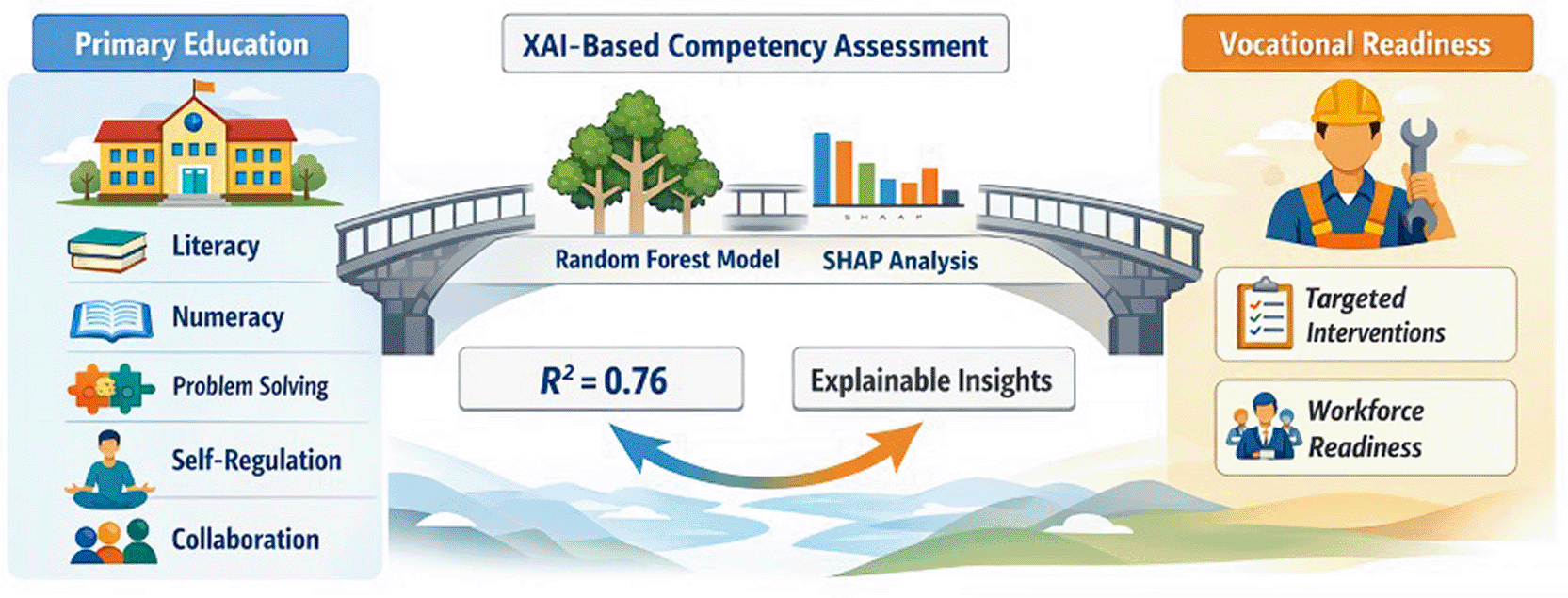
Figure 3 illustrates how foundational competencies from primary education are modelled using a Random Forest algorithm and interpreted through SHAP analysis to generate transparent insights for early skill gap identification, targeted interventions, and workforce readiness. This study demonstrates that vocational skill readiness is not a standalone outcome of Technical and Vocational Education and Training (TVET), but a longitudinal construct shaped by foundational competencies developed during primary education. By integrating Explainable Artificial Intelligence (XAI) into competency-based assessment, this research provides empirical evidence that early cognitive, transversal, and self-regulatory competencies particularly problem solving and self-regulation play a decisive role in predicting vocational readiness. Beyond predictive accuracy, the key contribution of this study lies in its use of XAI to make assessment processes transparent, interpretable, and pedagogically meaningful. The SHAP-based explanations revealed how different competencies interact across learner profiles, uncovering compensatory patterns that remain invisible in traditional assessment systems. In doing so, the study advances competency-based assessment theory by shifting its focus from static measurement to explainable, developmental diagnosis. Overall, this research contributes to the growing body of literature on AI-assisted educational assessment by demonstrating that XAI can ethically and effectively support cross-level competency mapping, strengthen evidence-based decision-making, and enhance alignment between primary education outcomes and vocational skill readiness in an increasingly AI-driven labor market.
Despite its contributions, this study has several limitations that should be acknowledged. First, the analysis relied on structured competency indicators derived from institutional assessment records and surveys. While these indicators were theoretically grounded and empirically validated, they may not fully capture informal learning experiences or contextual factors influencing vocational readiness, such as family background or regional labor market dynamics. Second, although the Random Forest model demonstrated strong predictive performance, machine learning models are inherently sensitive to data quality and feature selection. While explainability techniques such as SHAP enhance transparency, they do not eliminate all risks of bias or misinterpretation. As emphasized in the XAI literature, explainability should be understood as a tool for supporting human judgment rather than guaranteeing objective truth (Naveed et al., 2024; Bellas, 2025). To enhance trustworthiness, this study adopted multiple safeguards recommended in human-centered XAI frameworks. These included cross-validation to ensure model stability, confidence interval analysis to assess the robustness of feature contributions, and the involvement of educators in interpreting explainability outputs. Such practices align with emerging standards for ethical and responsible AI use in education, where transparency, human oversight, and contextual validation are prioritized over automation (Niewint-Gori, 2025).
Policy Implications
At the policy level, the findings underscore the need for greater coherence between primary education, TVET, and workforce development strategies. Rather than treating vocational readiness as a terminal objective addressed only at the secondary or postsecondary level, policymakers should adopt a longitudinal competency framework that recognizes the foundational role of early education. The XAI-based assessment approach presented in this study offers a data-driven mechanism to support such alignment, enabling policymakers to justify reforms with transparent and interpretable evidence. Furthermore, the explainable nature of the model addresses growing concerns about the legitimacy and accountability of AI-informed policy decisions. By making algorithmic reasoning explicit, XAI can enhance trust among stakeholders and support more responsible integration of AI into national assessment and education planning systems (Bellas et al., 2025; Herrera, 2025).
Implications for Educational Practice
For practitioners, the results highlight the importance of embedding transversal and self-regulatory competencies into everyday teaching and assessment practices at the primary level. The identification of compensatory competency patterns suggests that educators can design targeted interventions that leverage learners’ strengths while addressing specific weaknesses, rather than relying on one-size-fits-all remediation. In assessment practice, XAI enables a shift from summative judgments toward formative, diagnostic feedback. Explainable outputs can support teachers’ professional judgment, enhance assessment literacy, and foster more meaningful conversations with learners and parents about learning progress and future pathways (Ng et al., 2023; Hains-Wesson & le Roux, 2024).
Curriculum Reform Implications
From a curriculum perspective, the findings reinforce calls for competency-based curricula that integrate cognitive, transversal, and socio-emotional learning outcomes across educational levels. Rather than introducing isolated vocational awareness modules, curriculum reform should prioritize sustained development of problem-solving, self-regulation, and collaboration skills that underpin long-term vocational readiness. Such an approach aligns with contemporary competency-based curriculum reforms and addresses implementation dilemmas identified in TVET and general education systems (Kasuga & Kalolo, 2025).
Future Research Directions
Several avenues for future research emerge from this study. First, longitudinal studies tracking learners over time would strengthen causal inference and provide deeper insights into how early competencies evolve into vocational readiness. Integrating administrative education data with labor market outcomes would further enhance the external validity of the model. Second, future research should explore the integration of XAI with qualitative and mixed-methods approaches to capture contextual and experiential dimensions of competency development. Such approaches could enrich explainability by combining algorithmic insights with learner and teacher narratives, advancing user-centered XAI evaluation in education (Naveed et al., 2024). Third, expanding the framework to include emerging competencies related to AI literacy and digital resilience would be particularly valuable, given the accelerating impact of AI on work and learning. Investigating how AI literacy mediates the relationship between early competencies and career outcomes could inform both curriculum design and career guidance interventions (Tadimalla & Maher, 2025; Li et al., 2025). Finally, comparative cross-country studies could examine how cultural, institutional, and policy contexts shape the effectiveness of XAI-based competency assessment. Such research would contribute to the development of scalable, context-sensitive models for aligning education systems with the demands of future work.
| Views | Downloads | |
|---|---|---|
| F1000Research | - | - |
|
PubMed Central
Data from PMC are received and updated monthly.
|
- | - |
Provide sufficient details of any financial or non-financial competing interests to enable users to assess whether your comments might lead a reasonable person to question your impartiality. Consider the following examples, but note that this is not an exhaustive list:
Sign up for content alerts and receive a weekly or monthly email with all newly published articles
Already registered? Sign in
The email address should be the one you originally registered with F1000.
You registered with F1000 via Google, so we cannot reset your password.
To sign in, please click here.
If you still need help with your Google account password, please click here.
You registered with F1000 via Facebook, so we cannot reset your password.
To sign in, please click here.
If you still need help with your Facebook account password, please click here.
If your email address is registered with us, we will email you instructions to reset your password.
If you think you should have received this email but it has not arrived, please check your spam filters and/or contact for further assistance.

Comments on this article Comments (0)