Keywords
authentic assessment, education, citizenship education, learning evaluation, learning technology.

authentic assessment, education, citizenship education, learning evaluation, learning technology.
Civics Education plays a crucial role in preparing and shaping citizens who not only understand the concept of democracy but also possess the moral disposition and readiness to actively participate in the democratic process (Levinson & Solomon, 2021; Wulandaria et al., 2020; Tian & Tang, 2025). To achieve this goal, Civics Education requires the development of three integrated learning domains: a) the cognitive domain, encompassing public knowledge and analysis; b) the affective domain, encompassing empathy, tolerance, and commitment to values; and c) the psychomotor domain, encompassing the ability to participate, deliberate, and act as citizens (AlAfnan, 2025; Sukisno et al., 2025). However, in the increasingly advanced technology-based learning landscape, particularly in the use of digital media and immersive technologies such as Augmented Reality (AR), evaluation of learning outcomes still tends to be oriented toward measuring the cognitive domain (Çetin, 2022; Alkhattabi, 2017).
Previous studies have shown that some technology-based learning media innovations are designed to increase student engagement, visual appeal, and conceptual understanding. The use of technologies such as video and animation can create engaging learning processes and help students grasp more complex concepts (Çupi & Alimerko, 2025). Furthermore, the use of learning media that integrates Augmented Reality (AR) and Virtual Reality has been shown to increase student engagement and contribute to better knowledge retention (Fahruddin et al., 2025; Chang, 2025). Learning evaluations that accompany these technology-based learning media generally take the form of objective texts or measurement of perceptions through attitude scales, often failing to capture learning outcomes holistically (Lai & Bower, 2019; Arun et al., 2023). This reductionistic evaluation approach is less relevant to achieving the holistic goals of Civic Education. In Citizenship Education, technology is needed that can facilitate learning evaluation that can cover cognitive, affective and psychomotor aspects (AlAfnan, 2025; Muñoz & González, 2019).
To date, the affective and psychomotor domains related to moral habituation and readiness for civic action have been difficult to measure, despite being central to civic character formation (Brummer et al., 2025; Keegan, 2021). Research on AR-Based Civic Education, based on Project Citizen, has shown that the use of AR media not only significantly improves students’ cognitive achievement but also generates evidence of the development of empathy, moral awareness, and civic action plans through narrative reflection and project performance (Nugraha et al., 2023; Guzmán et al., 2024). However, these findings have not been explicitly conceptualized as an authentic assessment model integrated into learning media design.
Therefore, this article aims to reposition the implementation of AR-Based Civic Education as a learning design containing authentic assessment architecture that can evaluate learning outcomes holistically. This research does not only focus on the effectiveness of technology-based learning media, but also conceptualizes a holistic evaluation strategy for civic education learning, which includes measurements of the cognitive, affective, and psychomotor domains integrated within the learning media structure. Thus, it can produce authentic evidence of learning transformation that is expected to contribute to strengthening the assessment-embedded design paradigm in technology-based Civic Education.
Based on these considerations, this research is crucial for formulating how AR-Based Global Citizenship Education, based on Project Citizen, can be conceptualized as an authentic assessment model integrated into its application design. Thus, Civics learning media can not only serve as a means of enhancing conceptual understanding but also serve as an evaluation instrument capable of measuring moral development, civic attitudes, and readiness for action in a democratic global life.
Normatively, Civic Education is designed to shape citizens who possess a conceptual understanding of political systems and democracy, moral dispositions reflecting civic values, and readiness to participate in public life (Levinson & Solomon, 2021; Wulandaria et al., 2020; Tian & Tang, 2025). Classical and contemporary literature on civic education emphasizes that learning objectives encompass three main dimensions: civic knowledge, civic dispositions, and civic skills. Civic knowledge encompasses an understanding of the concepts, systems, and structures of citizenship, such as the political system, democratic principles, and the functions of government institutions (Haduong et al., 2024; Dias & Soares, 2018). Civic Disposition refers to civic attitudes that encompass attitudes and values that support democratic practices, such as social responsibility, respect for others, and a commitment to the common good (Owen & Irion-Groth, 2020; Sew et al., 2024). Civic skills refer to the abilities necessary for effective participation in democratic life, such as critical thinking, communication, and collaboration. These three dimensions are interrelated and collectively contribute to the development of informed, responsible citizens who are able to actively and positively participate in fostering a democratic society.
However, in learning evaluation practices, these three domains are not always holistically integrated. Evaluations more often measure the cognitive domain, which is easily measured through written tests and objective instruments (Kania & Kusumah, 2025). Consequently, this evaluation is widely used to assess educational outcomes. Meanwhile, the affective domain, such as empathy, commitment to justice, and tolerance, and the psychomotor domain, which encompasses deliberative participation and civic action, require a more contextual and performance-based evaluation approach (Stephens & Ormandy, 2019; Razali et al., 2021). This imbalance creates a gap between the holistic, normative goals of Civic Education and assessment practices that still tend to be reductionistic.
Authentic assessment developed in response to the limitations of conventional evaluation, which focuses solely on final results with right-or-wrong answers (Sabtıawan et al., 2019; Mellon & Emmett., 2025). Within the theoretical framework of authentic assessment, learning outcomes are assessed through tasks that reflect real-world situations, requiring the application of knowledge, moral judgment, and participatory performance (Vlachopoulos & Makri, 2024). This evaluation encourages deeper learning and engagement because it measures not only what students know conceptually but also how they use that knowledge in real-life social contexts (Abbasi, 2025; Brown, 2015).
In Civic Education, authentic assessment is highly relevant because the formation of civic character, which is the expected output of learning outcomes, cannot be reduced to test scores. Students’ abilities to analyze public issues, argue ethically, deliberate, and formulate solutions based on democratic values, can only be assessed through evaluation using an authentic approach (Oroh et al., 2025; Vlachopoulos & Makri, 2024). However, although authentic assessment has long been discussed theoretically in educational literature, its implementation in technology-based learning still faces challenges. Many digital-based learning innovations still maintain traditional evaluation models, so technology only functions as a learning medium in delivering material without any transformation in the learning outcome evaluation system (Fawns et al., 2025; Ajjawi et al., 2024).
The development of educational technology, including the use of Augmented Reality (AR), has enriched students’ learning experiences through visualization, simulation, and high interactivity by creating immersive and interactive learning environments (Yadav, 2025; Anila et al., 2024; AlGerafi et al., 2023). In the context of Civic Education, AR can help students explore social and public issues through the presentation of contextual and immersive content (Nugraha et al., 2023; Guzmán et al., 2024).
Previous research has shown that immersive technology can improve students’ learning motivation and conceptual understanding (Oyelere et al., 2020; Gill et al., 2024; Bhatt et al., 2025). However, most studies on the integration of AR and digital media in learning still focus on increasing student engagement and cognitive achievement (Nascimento & Marques, 2025; Kumar & Gorai, 2025). Learning evaluations generally use instruments in the form of objective quizzes or perception surveys (Çetin, 2022; Alkhattabi, 2017). The affective dimension is often measured declaratively, thus less reflective of authentic learning outcomes in the form of attitudes. Meanwhile, psychomotor dimensions that include deliberative abilities, collaboration, and public action plans are rarely used as primary evaluation indicators (Brummer et al., 2025; Keegan, 2021). This condition reflects that technology-based learning innovations are not always accompanied by innovations in terms of learning evaluation. In the perspective of Civic Education learning, this problem is crucial because learning success is not only measured by conceptual understanding, but from the formation of moral dispositions and readiness for civic action (Levinson & Solomon, 2021; Wulandaria et al., 2020). Therefore, an approach is needed that integrates media design with authentic evaluation mechanisms systematically that not only enhances the learning experience but also strengthens the quality of learning outcome assessment.
Project Citizen is a learning model that offers a participatory learning framework based on public problem identification, policy analysis, deliberative discussion, and solution development. At each learning stage, this model produces performance evidence that can be authentically evaluated, including argumentation, collaboration, moral reflection, and action plans (Fajri et al., 2021; Öztürk, 2022; Cherono & Macharia, 2025).
The integration of Project Citizen with AR-based media opens up opportunities to develop assessment-embedded design, a learning design in which evaluation is embedded within the activity structure rather than added at the end of the learning process. With this approach, immersive experiences (AR), participatory processes (Project Citizen), and structured reflection mechanisms form a single system that enables integrated cognitive, affective, and psychomotor evaluations (Nugraha et al., 2023; Adi et al., 2025). Thus, the integration of AR and Project Citizen not only enriches Civic Education learning but also provides a conceptual foundation for formulating an authentic assessment model that aligns with the goal of developing knowledgeable, character-driven, and participatory citizens.
This study uses a Design-Based Research (DBR) approach with a focus on the analysis and reformulation of evaluation design in the implementation of AR-Based Civic Education based on Project Citizen. This approach was chosen in accordance with the research objective, namely to develop authentic evaluation embedded in the learning design structure systematically. The selection of the DBR approach allows researchers to improve educational practices through iterative analysis, design development, and implementation. Thus, researchers can reflect on ongoing implementation practices and extract evaluation design principles that are theoretical and applicable (Ghosh & Kumar, 2025; Asrifan et al., 2025).
The research stages include: (1) identification of evaluation gaps in technology-based Civic Education learning; (2) analysis of the AR-Based Civic Education design structure and its integration with the Project Citizen model; (3) mapping learning evidence into a cognitive, affective, and psychomotor evaluation framework; and (4) formulation of a conceptual model of authentic assessment embedded in the learning media architecture. The analysis process is carried out iteratively by comparing empirical findings with authentic assessment and Civic Education theories.
The research data used to design the evaluation in the implementation of AR-Based Civic Education based on Project Citizen was obtained from empirical data collected in previous research on the implementation of AR-Based Civic Education based on Project Citizen in Civic Education learning. These data include: (1) pretest and posttest test results to measure students’ cognitive achievements; (2) students’ narrative reflections obtained through the final evaluation form in the application; (3) project documents and group action plans; (4) results of observations of the deliberative discussion process and presentations; and (5) assessment rubric instruments used to evaluate the cognitive, affective, and psychomotor domains.
This study positions all previous research data as a design-based secondary analysis, with the aim of identifying and mapping authentic assessment indicators that have emerged implicitly within the AR-Based Civic Education learning structure of Project Citizen. Researchers used quantitative analysis to review improvements in cognitive achievement through a comparison of pretest and posttest scores. Meanwhile, qualitative analysis was conducted using content analysis techniques on student narrative reflections and project documents to identify evidence of development in the affective and psychomotor domains (Claravall et al., 2024; Bernsteiner et al., 2025).
This study analyzed three domains of authentic evaluation holistically: cognitive, affective, and psychomotor. The cognitive domain was analyzed through indicators of students’ abilities to identify and analyze public issues and formulate policy-based arguments. The affective domain was identified through expressions of empathy, tolerance, moral awareness, and commitment to civic values that emerged in student reflections. The psychomotor domain was analyzed through indicators of deliberative participation, collaboration in the decision-making process, and civic action plans and readiness reflected in the project products. To ensure data validity, source triangulation techniques were used by comparing test results, narrative reflections, and project documents. In addition, conceptual validation was conducted through expert judgment to ensure the alignment between the identified indicators and the theoretical framework of authentic assessment.
This analysis process resulted in an assessment-embedded AR design model, an authentic evaluation model that systematically integrates cognitive, affective, and psychomotor assessments into the design of Civic Education learning applications. This model demonstrates that AR-based learning media can be developed not only as an immersive tool, but as a holistic evaluation system aligned with the goal of developing knowledgeable, character-driven, and participatory citizens.
Informed consent was obtained from all participants in this study. Participants were given complete written information regarding the purpose of the study, research procedures, potential risks and benefits, including their right to withdraw at any time without any consequences. All procedures were carried out in accordance with applicable ethical standards and have received approval from the Ethics Committee of the Faculty of Social Sciences Education, Universitas Pendidikan Indonesia with number 0814/N40.A2.1/PT.01.06/2026.
Quantitative analysis of the pretest and posttest results showed a significant increase in cognitive achievement after the implementation of AR-Based Civic Education based on Project Citizen. The average pretest score of 59.79 increased to 85.33 in the posttest. Statistical tests showed a significance value of 0.000 (p < 0.05), indicating a significant difference between before and after the implementation of the learning.
However, in the context of authentic assessment, this improvement is not simply understood as a numerical score increase. Item analysis and assignment results show that students not only memorized civics concepts but were also able to identify public issues, relate global issues to the national context, and formulate policy-based arguments. Thus, the cognitive assessment in this implementation moves from measuring factual knowledge to measuring contextual and applicable analytical skills.
The implementation of AR-Based Civic Education learning based on Project Citizen showed significant improvements in students’ cognitive domains. This improvement was reflected not only in increased learning outcomes scores but also in changes in the quality of students’ understanding of civic issues. Prior to the implementation of the learning, students’ understanding of the concept of global diversity tended to be declarative and limited to mastery of definitions or factual information. However, after participating in Augmented Reality-based learning integrated with the Project Citizen approach, students demonstrated improved abilities in analyzing public issues contextually and relating them to the social realities of their environment.
Analysis of assignments and project portfolios shows that students are able to identify various social issues related to diversity and global citizenship, such as intolerance, social stereotypes, and the importance of mutual respect in a multicultural society. Furthermore, students are able to relate these issues to broader civic values, including the principles of democracy, social justice, and respect for human rights. This ability demonstrates that learning not only enhances students’ conceptual knowledge but also fosters the development of critical and analytical thinking skills in understanding complex social issues.
From an authentic assessment perspective, this cognitive improvement demonstrates that learning evaluation is no longer focused solely on measuring factual knowledge, but rather on measuring analytical skills and the application of knowledge in real-world contexts. Project assignments, public issue analyses, and policy argumentation conducted by students serve as evaluative evidence that reflects both conceptual understanding and higher-order thinking skills. Thus, the cognitive improvement that occurs in this learning can be understood as a form of contextual evaluation, where the assessment process measures students’ ability to use civic knowledge to understand and respond to social issues reflectively and constructively.
Therefore, these findings demonstrate that the integration of Augmented Reality technology into civics learning can enrich students’ learning experiences through more immersive visualization and issue exploration. This learning experience not only increases student engagement but also strengthens the process of constructing deeper knowledge, so that the resulting cognitive evaluation reflects the critical, analytical, and contextual thinking skills that are the primary goals of civics education in the global era.
Qualitative data obtained through student narrative reflections indicated significant development in the affective domain. Analysis using NVivo revealed the emergence of themes such as immersive learning experience, emotional engagement, and value internalization. This demonstrates that AR-based learning experiences are not merely visual or cognitive but also trigger emotional resonance related to civic values.
In the mapping of evolving virtues, it was found that 45% of students identified empathy as the most prominent value developed during the learning process. In addition to empathy, student reflections also indicated an increased awareness of diversity, the importance of tolerance, and sensitivity to issues of social injustice. These narrative reflections demonstrated that students were able to explicitly articulate changes in perspective and value commitments. These findings suggest that the reflection form integrated into the application serves as an authentic assessment instrument in the affective domain, as it allows for the measurement of value internalization through contextualized reflective expression.
The development of the affective domain in AR-assisted GCED learning shows significant transformations, particularly in the dimensions of empathy, tolerance, and global social awareness. Based on the results of qualitative analysis using NVivo, it was found that the reflection process experienced by students was not only descriptive, but also developed into a critical reflection that connects learning experiences with social reality. Thematic nodes such as emotional engagement, value internalization, and global empathy emerged consistently in interview and observation data, indicating that learning not only facilitates cognitive understanding but also forms an emotional resonance towards global issues.
One key finding is the dominance of empathy as the most developed affective value, with 45% of informants demonstrating strong empathic expression. The empathy that emerged was not superficial, but rather took the form of in-depth perspective-taking, where students were able to place themselves in the situations of others affected by global issues. Immersive experiences through AR visualization acted as affective triggers that enabled students not only to understand but also to “feel” social reality more concretely. This was reflected in students’ reflective narratives, which demonstrated the ability to connect visual experiences with universal human awareness.
In addition to empathy, student reflections also demonstrated significant developments in their tolerance and appreciation of diversity. NVivo coding analysis indicated that 90% of informants experienced an increase in their ability to accept and appreciate differences, marked by a shift from passive tolerance to active appreciation of diversity. Student reflections demonstrated that differences were no longer viewed as merely tolerated, but as a source of learning and social strength. This transformation indicates a deeper internalization of values, where students not only understood the concept of diversity but also integrated it into their perspectives and social interactions.
Furthermore, qualitative analysis revealed that reflection plays a crucial role in developing critical awareness of social issues. Nodes such as issue identification and social problem analysis emerged with high frequency, indicating that students not only reacted emotionally but were also able to analytically reflect on the complexity of social problems. This process marks the integration of the affective and cognitive dimensions, where emotions serve as a gateway to developing a critical understanding of social reality.
Most significantly, student reflections did not stop at the awareness stage but developed into a moral commitment to action. Based on NVivo analysis of the transformative action and civic engagement nodes, 80% of informants formulated concrete action plans in response to learning. This indicates that development in the affective domain not only results in attitudinal changes but also encourages the emergence of action-oriented civic responsibility. Thus, reflection in AR-assisted GCED learning serves as a bridge connecting emotional experiences with commitment to action, resulting in a transformative form of affective learning.
The psychomotor domain in the implementation of AR-Based Civic Education is not measured through written tests, but rather through performance in the Project Citizen model. Students engage in the process of identifying public problems, collecting data, deliberative discussions, formulating solutions, and presenting project results. Project documents and learning observations show that students develop action plans and engage in group deliberation and collaboration. In reflection, several students expressed readiness to take concrete action, such as defending a friend who experiences unfair treatment or spreading the value of tolerance in their community.
This performance is a form of performance-based evidence that reflects readiness for civic action. Therefore, the psychomotor domain is assessed through project products, deliberative participation, and concrete action plans. Evaluation of the psychomotor domain in AR-assisted GCED learning is not only measured through physical activity but also through participatory performance that reflects students’ real involvement in civic practice. Based on the results of the Project Citizen implementation, students engage in a series of authentic activities ranging from identifying diversity issues, collecting data through observation and interviews, analyzing problems, formulating solutions and presenting citizenship portfolios. This series of activities generated performance-based evidence demonstrating that learning does not stop at understanding but continues into the practice of contextualized social action.
NVivo-based qualitative analysis reinforced these findings by demonstrating the dominance of nodes such as transformative action, civic engagement, and everyday civic responsibility in interview and observation data. Eighty percent of identified informants formulated concrete action plans in response to the issues they learned, ranging from simple actions like maintaining environmental cleanliness to social initiatives like building inclusive interactions across differences. These findings indicate that the psychomotor domain in the context of GCED encompasses not only technical skills but also reflects civic action readiness based on values and analysis. Lebih lanjut, performa peserta didik dalam proses deliberasi kelompok menunjukkan perkembangan keterampilan demokratis sebagai bagian integral dari ranah psikomotor. Aktivitas diskusi, negosiasi, dan pengambilan keputusan kolektif mencerminkan kemampuan peserta didik dalam mengelola perbedaan perspektif dan mencapai konsensus. Proses ini tidak hanya menghasilkan keputusan substantif, tetapi juga menjadi ruang praktik bagi nilai-nilai kebinekaan seperti toleransi, keterbukaan, dan penghargaan terhadap perbedaan. Dalam perspektif ini, tindakan psikomotor tidak bersifat individual, melainkan bersifat sosial dan kolaboratif yang terintegrasi dalam praktik demokrasi sehari-hari.
Furthermore, the showcase phase in Project Citizen serves as a form of performative evaluation that demonstrates students’ ability to communicate ideas, advocate for solutions, and account for their analysis in the public classroom. This activity reflects the integration of communication skills, self-confidence, and courage as part of psychomotor expression. Data shows that students experienced improvements in their courage to express opinions and presentation skills, which are important indicators of developing civic agency.
Conceptually, these findings demonstrate that psychomotor domain evaluation in AR-based GCED learning and Project Citizen moves beyond conventional approaches focused on motor skills to authentic social performance-based evaluation. The psychomotor domain is no longer understood as a separate domain, but as a concrete manifestation of the integration of knowledge (cognitive) and values (affective) in the form of concrete actions. Thus, this learning represents an embedded assessment model, where evaluation is distributed throughout the learning process and produces directly observable evidence of civic action.
The results of this study indicate that the implementation of AR-Based Civic Education based on Project Citizen produces three forms of integrated evaluative evidence: cognitive, affective, and psychomotor evidence, which collectively form an assessment-embedded learning system framework. In the cognitive domain, the significant increase in pretest–posttest scores not only reflects conceptual mastery but also demonstrates the development of civic analysis, namely students’ ability to identify, relate, and formulate solutions to public issues contextually.
In the affective domain, NVivo-based qualitative analysis identified the emergence of key themes such as immersive learning experience, emotional engagement, and value internalization, indicating that the AR-based learning experience facilitates the process of reflective internalization of values. The dominance of empathy as the most frequently occurring value (45%) indicates that learning not only results in understanding but also a transformation of moral disposition. These findings strengthen the argument that narrative reflection can function as an authentic assessment instrument capable of capturing the affective dimension more validly than declarative approaches.
Meanwhile, in the psychomotor domain, student involvement in the Project Citizen phase produces performance-based evidence that reflects civic action readiness, namely the readiness to undertake civic actions based on values and analysis. The deliberative process, collaboration, and formulation of action plans demonstrate that civic actions can be identified as authentic, measurable learning outcomes, not merely abstract potential.
Conceptually, these three findings do not stand alone, but form an integrative relationship in which knowledge (cognitive domain) becomes the basis of analysis, value disposition (affective domain) serves as moral orientation, and action performance (psychomotor domain) becomes a concrete manifestation in the form of action readiness. This relationship leads to the formation of a conceptual model of Embedded Authentic Assessment in AR-Based Civic Education, where evaluation is not placed as a final stage, but is embedded in the entire learning process. Figure 1 illustrates the AR-Based Civic Education learning model based on Project Citizen, which integrates authentic assessment into the entire learning process. This model demonstrates that learning begins with two primary inputs: an immersive experience through Augmented Reality and a participatory process through Project Citizen. These are then processed through three main domains: cognitive (issue analysis), affective (value reflection), and psychomotor (deliberation and action planning), The results of this process produce authentic evidence in the form of civic analysis skills, value internalization, and readiness for action. Ultimately, this creates an evaluation system embedded within the learning process, not as a final stage, but as an integral part of the entire learning process.
This model demonstrates that AR functions as a contextual immersive trigger that enriches the learning experience, while Project Citizen acts as a participatory assessment structure that produces performative evidence. The integration of the two reconfigures the evaluation paradigm from measurement-oriented to evidence-based and process-integrated assessment. Thus, this study not only confirms the effectiveness of technology-based learning but also provides theoretical contributions by expanding the framework of authentic assessment in Civic Education, particularly in integrating cognitive, affective, and psychomotor dimensions into a holistic and embedded evaluation system. Overall, the results of the study indicate that the implementation of AR-Based Civic Education based on Project Citizen produces three complementary forms of evaluative evidence:
1. Cognitive evidence in the form of significantly improved public issue analysis skills.
2. Affective evidence in the form of internalization of empathy and civic values identified through narrative reflection and thematic analysis.
3. Psychomotor evidence in the form of deliberative performance and civic action plans in participatory projects. Ketiga jenis bukti tersebut menunjukkan bahwa desain pembelajaran ini telah mengandung mekanisme evaluasi yang melampaui tes pengetahuan semata dan bergerak menuju authentic assessment yang mencakup dimensi kognitif, afektif, dan psikomotor secara terpadu.
The results of this study demonstrate that the implementation of AR-Based Civic Education based on Project Citizen not only enhances the learning experience but also incorporates an authentic evaluation structure. This is relevant to the problem raised in the background, namely the dominance of cognitive evaluation in technology-based Civics learning. Empirical data indicates that this learning design produces evidence of learning that extends beyond test scores to include reflection on values and participatory performance. Thus, AR does not stop at its function as an immersive medium but operates as part of an evaluation design embedded within the learning structure.
Civic Education literature emphasizes that the goals of civic education are holistic, encompassing knowledge, dispositions, and participatory skills. However, in practice, evaluation often only measures the cognitive domain. The findings of this study demonstrate that through the integration of AR and Project Citizen, these three domains can be evaluated in an integrated manner through a combination of tests, narrative reflection, and project performance.
The use of Augmented Reality (AR) in Civic Education learning represents a significant shift from simply using technology as an immersive medium to its role as an integral part of the learning evaluation system. In many previous studies, AR has often been positioned as a tool to enhance engagement and visualize concepts, thus serving primarily as a delivery tool (Yip et al., 2019; Garzón & Acevedo, 2019). However, the findings of this study demonstrate that when AR is integrated with the right pedagogical approach, particularly Project Citizen, the technology can transform into a cognitive tool that supports knowledge construction while generating authentic evaluative evidence.
Theoretically, this transformation can be explained through constructivist and socio-cognitive approaches, which emphasize that learning occurs through direct experience, social interaction, and critical reflection. AR, as an immersive medium, is capable of presenting contextual visual representations, thus triggering a restructuring of students’ thinking patterns regarding global issues (Bandura, 2018). However, the main contribution of this research is demonstrating that this immersive experience does not stop at increasing understanding but continues into an evaluation process embedded within the learning activity itself. Thus, learning no longer separates process and assessment, but rather integrates them simultaneously within an assessment-embedded framework.
Furthermore, learning evaluation cannot rely solely on conventional instruments such as written tests but must be able to capture changes in students’ thinking, attitudes, and readiness to act on global issues. This approach aligns with the authentic assessment paradigm, which emphasizes the importance of assessment based on real-life tasks and contexts as more comprehensive indicators of learning outcomes (Wiggins, 1998; Gulikers et al., 2004). In civic education, evaluation focuses on the transformation of students’ values, civic awareness, and participatory capacity. Therefore, learning success is measured not solely by cognitive achievement but also by the ability to act as reflective and responsible citizens (Banks, 2017; Westheimer & Kahne, 2004). Consistent with this, project-based learning and reflection can produce more authentic evidence of learning because they provide opportunities for students to integrate knowledge with real-life experiences (Darling-Hammond, 2020). The findings of this study reinforce this view by demonstrating that project-based activities, reflection, and AR exploration produce learning artifacts that can serve as authentic evidence of value internalization and contextual understanding.
Compared with previous research demonstrating the effectiveness of AR in improving learning outcomes, such as the meta-analysis by Li et al. (2023), this study goes further by addressing the gap between AR’s interactive potential and its pedagogical implementation. While AR has previously been frequently used in instructor-centered approaches, this research demonstrates that integrating AR into project-based and reflection-based learning designs can optimize its constructivist potential. This strengthens the argument that the effectiveness of technology in education is determined not only by the sophistication of the media, but also by pedagogical design that positions students as active actors in the learning process.
Thus, the concept of embedded authentic assessment in this research emerges as an important conceptual contribution. Evaluation is no longer positioned as the final stage of learning, but rather as a distributed process throughout all learning activities, including observation, reflection, discussion, and project performance. This approach aligns with the principles of evidence-based learning evaluation, which emphasize the importance of continuous feedback and student involvement in the assessment process (Kootsookos, 2014). Therefore, the transformation from immersive media to embedded evaluation systems not only enhances learning effectiveness but also reconfigures the evaluation paradigm in global citizenship education.
Quantitative data showed a significant increase in students’ cognitive achievement, with a pretest average of 59.79, increasing to 85.33 in the posttest, and a significance value of 0.000 (p < 0.05). Statistically, these results demonstrate the effectiveness of the learning. However, from an authentic assessment perspective, the significance of this improvement lies in the type of skills developed.
Analysis of assignments and learning outcomes showed that students were able to identify public issues, link global issues to the national context, and formulate solutions based on policy arguments. This means that cognitive evaluation not only measures conceptual mastery but also measures contextual analytical skills, which in Civic Education can be referred to as civic analysis. Therefore, this quantitative improvement serves as the foundation for authentic evaluation because it demonstrates students’ ability to apply knowledge in the context of real-world issues.
The cognitive improvement in Citizenship Education (PKn) learning using Augmented Reality (AR) in this study not only demonstrates differences in learning outcomes but also serves as quantitative validation of the effectiveness of the contextual learning implemented. In civics learning, the cognitive dimension emphasizes students’ ability to understand public issues, analyze the relationship between local and global contexts, and develop critical thinking in responding to social issues (Banks, 2017; Levstik & Tyson, 2008). This perspective emphasizes that civics learning is not solely oriented toward mastering knowledge, but also toward developing analytical and critical reasoning skills necessary for participating in democratic life (Westheimer & Kahne, 2004). Therefore, improvements in cognitive scores reflect not only mastery of the material but also the development of critical thinking capacity, a core component of civic competence.
Methodologically, the quantitative results obtained can be understood as a form of empirical validation of experiential and context-based learning designs. This approach aligns with the constructivist paradigm, which positions learning as an active process of constructing knowledge through interaction and reflection (Pashby & Sund, 2020). In this context, quantitative data does not stand alone as an indicator of academic performance, but rather serves as an evidentiary basis, confirming that dialogic, collaborative, and reflective learning processes can produce significant cognitive improvements.
Furthermore, the integration of AR into learning acts as a cognitive tool that strengthens this validation by providing an immersive and contextual learning experience. AR allows learners to visualize global issues more concretely, thus helping them connect abstract concepts to complex social realities (Yip et al., 2018; Garzón & Acevedo, 2019). This supports meta-analytic findings showing that AR-based learning has a significant effect on improving cognitive learning outcomes, although its effectiveness depends heavily on integration with a constructivist pedagogical approach (Li et al., 2023).
However, unlike most previous research that places quantitative results as the ultimate goal of evaluation, this study positions quantitative validation as the foundation for broader, contextual evaluation. Quantitative data serves as a starting point for understanding learning effectiveness, which is then expanded through qualitative analysis and student performance in real-world contexts. This approach aligns with the evaluation principles in civics education, which emphasize that learning success is measured not only by academic achievement but also by students’ ability to relate knowledge to global realities and demonstrate critical awareness of humanitarian issues (UNESCO, 2015).
Therefore, the quantitative validation in this study serves not only as evidence of improved learning outcomes but also as a conceptual basis for developing a more comprehensive contextual evaluation. These findings demonstrate that the integration of quantitative data and a contextual learning approach allows for a more holistic evaluation, where cognitive improvement serves as an initial indicator, which is then reinforced by affective and psychomotor evidence. Therefore, this study contributes to repositioning the role of quantitative evaluation from merely a measurement tool to part of an authentic, integrated evaluation system in AR-assisted civics learning.
Qualitative findings from NVivo analysis revealed the emergence of themes of immersive learning experience, emotional engagement, and value internalization. This indicates that AR-based learning experiences trigger emotional resonance related to civic values. Furthermore, 45% of students identified empathy as the virtue they most developed during the learning process.
In authentic assessment literature, the affective domain is often considered difficult to measure because it relates to internal dispositions. However, narrative reflections embedded in the application allow students to articulate changes in perspective, moral awareness, and commitment to tolerance and social justice. Unlike declarative attitude scales, narrative reflections provide evidence of the process of value internalization. These findings demonstrate that affective evaluation can be conducted authentically when reflective instruments are designed as part of the learning structure, not simply as administrative add-ons.
The development of the affective domain in Citizenship Education (PKn) learning using Augmented Reality (AR) in this study indicates that the process of value internalization does not occur instantly, but rather through in-depth reflective experiences. In civics learning, the socio-emotional dimension emphasizes the importance of empathy, social concern, and civic awareness as the foundation for developing the character of democratic citizens (Banks, 2017; Bickmore, 2014). The findings of this study indicate that students’ narrative reflection serves as the primary medium for articulating their emotional experiences, enabling the transformation of values from mere understanding to a more stable internal awareness. This approach aligns with the reflective learning perspective, which emphasizes that personal experience and critical dialogue play a crucial role in shaping students’ moral orientation and civic attitudes (Mezirow, 2000; Hess & McAvoy, 2015).
Theoretically, these findings align with the Social Emotional Learning (SEL) framework, which emphasizes the integration of emotion, cognition, and behavior in learning. SEL plays a role in developing self-awareness, social awareness, and responsible decision-making skills (Brackett et al., 2025; Wang & Zhang, 2024). In the context of this research, narrative reflection not only serves as a means of emotional expression but also serves as a self-regulatory mechanism that enables learners to understand their position within global social relations. Thus, reflective narrative can be understood as a form of affective evidence that authentically represents the process of value internalization.
Furthermore, the use of AR as an immersive medium contributes to strengthening the affective dimension through contextual and emotional learning experiences. The visualization of global issues presented through AR creates what is known in transformational learning as disorienting dilemmas, experiences that shake learners’ initial assumptions and trigger critical reflection (An et al., 2021). This process enables students not only to understand global issues rationally but also to feel them emotionally, thus strengthening the internalization of values such as empathy, tolerance, and social responsibility.
Compared to previous research, most studies on GCED tend to measure the affective dimension through survey instruments or declarative attitude scales. This approach often fails to capture the depth of the subjective and contextual process of value internalization. In this study, narrative reflection is positioned as a form of authentic evaluation capable of more comprehensively recording the dynamics of changes in students’ attitudes and dispositions. This aligns with the reflective learning approach, which emphasizes the importance of personal experience as a basis for developing new perspectives (Mezirow, 2000).
Thus, narrative reflection in this study functions not only as a learning activity but also as an evaluation instrument capable of validating the internalization of values contextually. This approach reinforces the concept of assessment-embedded learning in GCED, where evaluation is not conducted in isolation but integrated into the students’ reflective process. These findings provide a conceptual contribution by showing that the affective domain can be evaluated more authentically through reflective narratives, thus transcending the limitations of conventional evaluation approaches which tend to be static and fragmented.
The psychomotor dimension of Civic Education is often the most difficult aspect to measure, as it relates to concrete actions and participation. In this implementation, the psychomotor domain is evaluated through performance in the Project Citizen stages: public problem identification, research, deliberative discussion, decision-making, presentations, and action plan development.
Reflection data and project documents demonstrate the practice of deliberation, data-based argumentation, and concrete action plans, such as commitments to defending victims of injustice or spreading values of tolerance in the community. This evidence constitutes performance-based evidence, aligning with the principles of authentic assessment, as assessments are based on participatory processes and products, not simply statements of intent.
Thus, Project Citizen serves as a mechanism that transforms civic values from abstract concepts into observable and assessable actions. Although moral habituation cannot be concluded in a single learning cycle, indicators of civic action readiness can be identified through action plans and deliberative participation.
The development of the psychomotor domain in Civics learning with Augmented Reality (AR) in this study demonstrates a significant shift from understanding skills as technical activities to contextualized social action. The implementation of Project Citizen provides students with a platform to directly engage in problem identification, public issue analysis, and the formulation of solutions based on social realities. This activity generates performance-based evidence that reflects students’ active involvement in civic practice, ensuring that the psychomotor domain is understood not merely as a motor skill but as a manifestation of meaningful civic action.
Theoretically, these findings align with civic education, which places the action dimension as a key component in developing active and responsible citizens. This dimension emphasizes the importance of students’ ability and commitment to participate in democratic life and respond constructively to public issues (Westheimer & Kahne, 2004; Banks, 2017). In this context, Project Citizen serves as a participatory learning structure that enables students to integrate knowledge and values into concrete actions, resulting in a transformative learning experience. This approach aligns with the principles of participatory civic learning, which emphasize students’ direct involvement in decision-making and social problem-solving as part of democratic education (Torney-Purta et al., 2001; Kahne & Sporte, 2008).
Furthermore, from a constructivist and social learning perspective, collaborative activities in Project Citizen, such as group discussions, negotiations, and collective decision-making, strengthen students’ ability to construct meaning through social interaction. This aligns with Vygotsky’s (1978) perspective, which emphasizes that learning occurs through social and collaborative processes. Thus, student performance in the project reflects not only individual achievement but also collective ability to solve problems and reach consensus in a diverse context.
Compared with conventional evaluation approaches, the psychomotor domain is often measured through procedural skills separated from the social context. However, this research shows that performance-based evaluation in Project Citizen is able to capture the dimensions of civic action more authentically. Students not only demonstrate the ability to complete tasks but also to articulate solutions, advocate for ideas, and demonstrate commitment to social change. This approach aligns with the principles of authentic assessment, which emphasize the importance of evaluation based on real-life tasks relevant to students’ lives (Kootsookos, 2014).
Furthermore, the integration of AR into learning strengthens the psychomotor dimension by providing a visual context that helps students understand global issues more concretely. AR functions not only as a visualization medium but also as an experiential trigger that encourages students to act based on the understanding they develop. This supports the view that immersive technology can enhance engagement and strengthen the connection between knowledge and action in learning (Yip et al., 2019; Garzón & Acevedo, 2019).
Thus, the psychomotor domain in this study is reconceptualized as performance-based civic action, namely, citizenship actions measured through actual engagement in social activities. This finding reinforces the concept of embedded authentic assessment, where evaluation is not separated from the learning process but embedded within students’ performance during project activities. The primary contribution of this study lies in strengthening the argument that students’ actions in the learning context can serve as valid evaluative evidence, thereby broadening the understanding of psychomotor domain evaluation in global citizenship education.
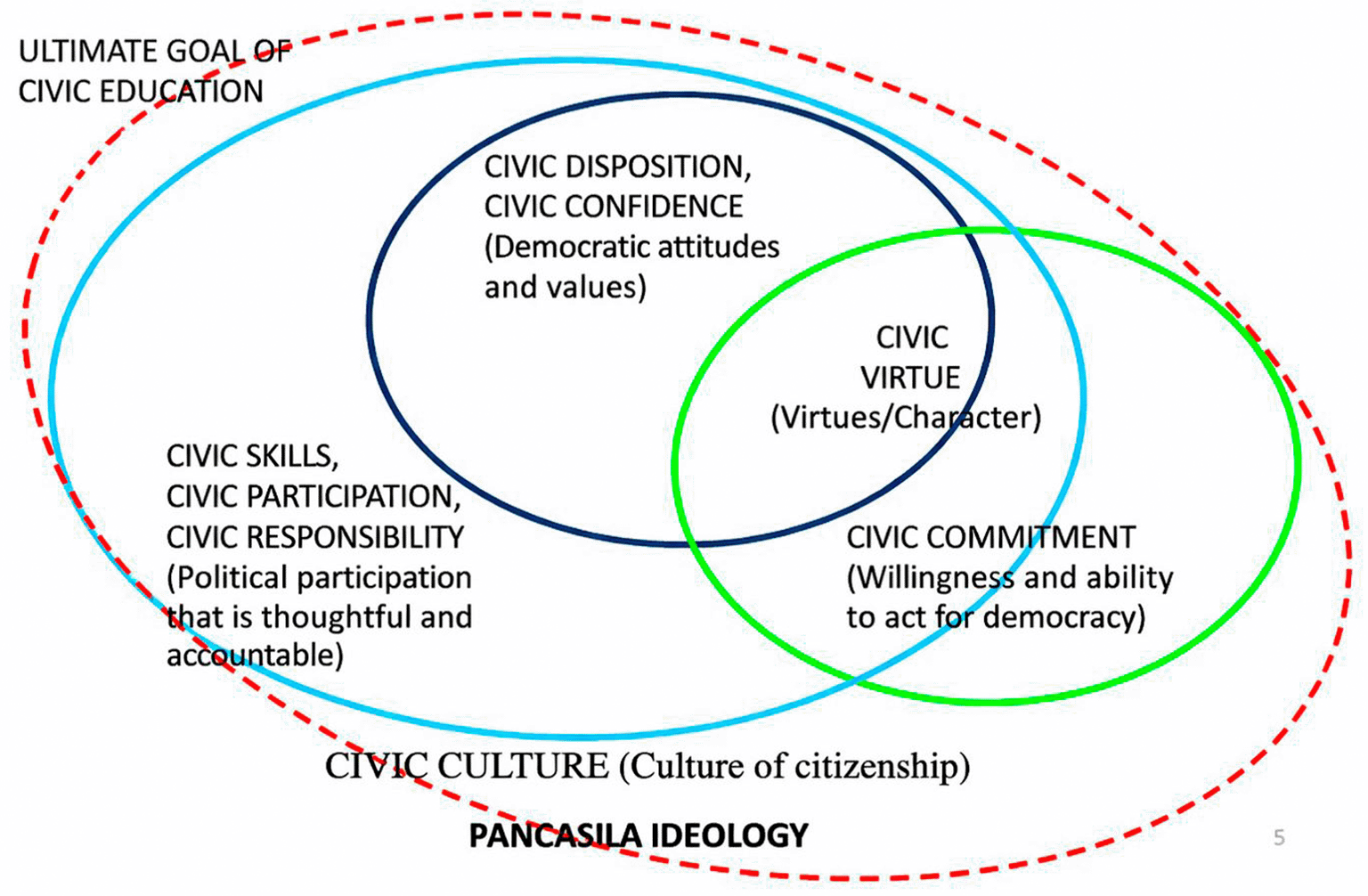
The synthesis of this research findings shows that the integration of Augmented Reality (AR) through Project Citizen in Civic Education (PKn) learning not only improves learning outcomes but also reconfigures the relationship between the learning process and evaluation into an embedded system. To understand the position of this research findings within the theoretical framework of Civic Education, reference is needed to the epistemological-pedagogical model that positions civic competence as a complete and integrated system. The framework proposed by Winataputra (2015) shows that the formation of citizens is not only based on knowledge, but also includes skills, dispositions, commitments, and civic virtues as a whole in civic culture. In the theoretical framework of civic education, as illustrated in the Figure 2 below.
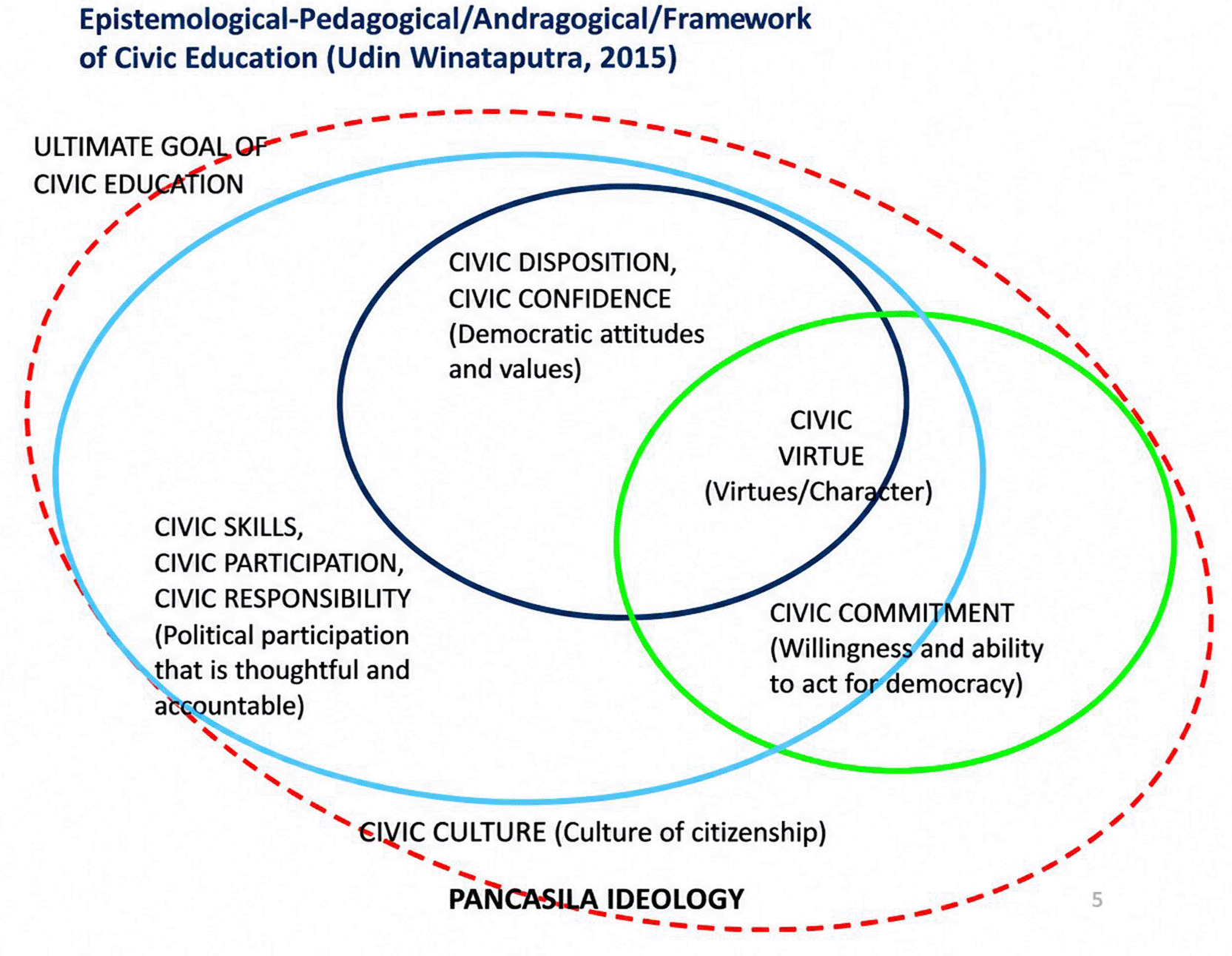
(Source: adapted from Winataputra, 2015)
As shown in the figure, civic education facilitates the development of civic knowledge, civic skills, and civic disposition, which are integrated with civic confidence, civic commitment, and civic virtue, forming a civic culture as the ultimate goal. In the context of this research, AR integration through Project Citizen strengthens the connection between these dimensions by providing a learning experience that not only enhances understanding but also encourages the internalization of civic values and readiness for action. Thus, the findings of this study confirm that embedded learning evaluation is capable of capturing the development of civic competencies holistically, in accordance with the proposed conceptual framework.
In the cognitive dimension, the improvement in global issue analysis skills serves as contextual evaluation evidence, demonstrating students’ ability to construct understanding critically and contextually. Meanwhile, in the affective dimension, students’ narrative reflections serve as affective evidence, representing the process of in-depth internalization of values. Furthermore, students’ performance in Project Citizen activities produces performance-based evidence that reflects readiness for civic action. These three forms of evidence collectively build an authentic evaluation framework, where learning outcomes are measured not only through output, but also through the learning processes and experiences experienced by students.
Theoretically, this integration can be explained through a social constructivist perspective, which emphasizes that knowledge and meaning are constructed through social interaction and reflective experience (Vygotsky, 1978; Pashby & Sund, 2020). In this context, AR functions as a cognitive and affective trigger, providing an immersive learning experience, while Project Citizen provides a participatory structure that allows students to simultaneously develop knowledge, values, and actions. Thus, learning is oriented not only toward knowledge transfer but also toward transforming students’ thinking, attitudes, and behavior as global citizens.
Compared with conventional evaluation approaches, which tend to separate the learning process from assessment, the embedded authentic assessment model in this study offers a more holistic paradigm. Evaluation is no longer positioned as a final, summative stage, but is distributed throughout the learning process through observation, reflection, discussion, and project performance. This approach aligns with the principles of evidence-based learning evaluation, which emphasize the importance of authentic evidence emerging from students’ learning activities (Kootsookos, 2014).
Furthermore, these findings address a gap in the literature regarding the use of immersive technology in education. Most previous studies position AR as a medium to enhance engagement and conceptual understanding, without explicitly linking it to a learning evaluation system (Li et al., 2023). This study expands this perspective by demonstrating that AR, when integrated with participatory and reflective pedagogical design, can function as part of an evaluation system capable of simultaneously capturing cognitive, affective, and psychomotor dimensions. Overall, the findings suggest three complementary layers of evaluation evidence:
1. Cognitive evidence through significant improvements in scores and analytical skills.
2. Affective evidence through narrative reflection and a dominant theme of empathy (45%).
3. Psychomotor evidence through project performance and participatory action plans.
This synthesis strengthens the article’s main argument that AR-Based Civic Education can be developed as an integrated, authentic assessment system. AR provides an immersive experience that enriches the learning context, while Project Citizen provides a performative structure that enables participatory assessment. When both are designed with an embedded evaluation logic, learning media no longer function merely as impressive tools, but as holistic evaluation architectures.
These findings address the criticism in the literature that educational technology often succeeds in increasing engagement but is weak in comprehensive evaluation. In this context, AR-Based Civic Education demonstrates that media innovation can go hand in hand with evaluation innovation, provided that assessment is designed as an integral part of the learning design.
Thus, the main contribution of this research lies in the development of a conceptual model for Embedding Authentic Assessment in AR-Based Civic Education, which reconfigures evaluation as an inherent process in learning. This model emphasizes that effective evaluation in Civics learning must be able to integrate various forms of learning evidence and facilitate the transformation of learners from merely understanding global issues to being able to reflect on values and take concrete action. Therefore, this approach is not only relevant in the context of citizenship education, but also has broader implications for the development of evaluation systems in 21st century education.
This research demonstrates that the evaluation gap in technology-based Civic Education, which has tended to focus on the cognitive domain, can be addressed through learning designs that systematically integrate authentic assessment. The implementation of AR-Based Civic Education, based on Project Citizen, not only significantly improved cognitive achievement (from 59.79 to 85.33; p < 0.05), but also produced authentic evidence of the development of moral dispositions and civic action readiness through narrative reflection and participatory project performance.
These findings confirm that AR media can be designed not merely as an immersive tool, but as an evaluation architecture that assesses the cognitive, affective, and psychomotor domains in an integrated manner. Therefore, embedding authentic assessment in AR-based learning designs is a strategic step to ensure that technological innovation aligns with Civic Education’s mandate to develop knowledgeable, character-based, and participatory citizens.
This research has obtained approval from the Ethics Commission of the Faculty of Social Sciences Education, Indonesian University of Education with Approval Number 0814/N40.A2.1/PT.01.06/2026. This study was conducted with prior permission and agreement from the community involved. All participants were informed about the purpose of the research, the voluntary nature of their participation, and their right to withdraw at any time without penalty. Informed consent was obtained from all individuals who took part in the study. No personal identifiers were collected, and all data were anonymized to protect confidentiality and privacy.
| Views | Downloads | |
|---|---|---|
| F1000Research | - | - |
|
PubMed Central
Data from PMC are received and updated monthly.
|
- | - |
Provide sufficient details of any financial or non-financial competing interests to enable users to assess whether your comments might lead a reasonable person to question your impartiality. Consider the following examples, but note that this is not an exhaustive list:
Sign up for content alerts and receive a weekly or monthly email with all newly published articles
Already registered? Sign in
The email address should be the one you originally registered with F1000.
You registered with F1000 via Google, so we cannot reset your password.
To sign in, please click here.
If you still need help with your Google account password, please click here.
You registered with F1000 via Facebook, so we cannot reset your password.
To sign in, please click here.
If you still need help with your Facebook account password, please click here.
If your email address is registered with us, we will email you instructions to reset your password.
If you think you should have received this email but it has not arrived, please check your spam filters and/or contact for further assistance.

Comments on this article Comments (0)