Keywords
Teledentistry, Remote consultation, Toothache, Pain measurement, Health equity, Digital health strategies.

This article is included in the Global Public Health gateway.
Teledentistry, Remote consultation, Toothache, Pain measurement, Health equity, Digital health strategies.
Teledentistry has been considered a practical and economically viable strategy to provide healthcare to underserved populations, including socially unassisted individuals who live in remote or rural areas, or who simply do not have access to routine dental care.1–5
In this context, telescreening has been linked to better patient referral, to shorter waiting lists, and to prioritization of care. Based on accurate remote screening analysis, individuals can receive appropriate primary care in a correct and individualized manner, being referred to teleassistance, or to the dental office when mandatory, minimizing unnecessary travel.6,7
However, there is still a lack of consistent scientific evidence of the advantages of telescreening in dentistry, and it is necessary to further investigate the possibilities of using telecommunication tools in health care planning, particularly to benefit of municipalities that do not have the human resources to provide specialized care, and populations in general, that do not have access to a specialist.8
Based on the aspects quoted above, this study aimed to investigate whether telescreening can be a viable alternative for pediatric dental emergency referrals, applying the comparison between the results of remote evaluations and traditional in-person evaluations. This research assesses the level of agreement, through a before-and-after study design.
Clinical trial registration: This study was registered in the Brazilian Clinical Trials Registry (ReBEC) under the registration number RBR-523hrsx. It was registered on June 8, 2022. Participant recruitment and data collection were conducted between April 2024 and July 2024.
This study is part of a controlled, blinded (evaluators), randomized clinical trial, involving 260 children aged 3 to 13 years, in dental emergency situations. All participants investigated were users of Basic Health Units, hospitals, schools or dental clinics, and residents of Carangola city, at Minas Gerais state, in Brazil. After the first contact through a messaging application, a link to access the SIAS/SMART platform was sent to each patient. All individuals were previously evaluated in a teleconsultation (“before”), by a previously trained researcher and then randomized and divided into two groups: G1, consisting of 130 patients treated through teleconsultation, and G2, consisting of 130 patients treated through teleconsultation and also in person. The in-person evaluation (“after”) was performed by a dental surgeon, who did not know the outcome of the teleconsultation.
The professional performed the anamnesis and clinical examination using a specific dental record and, at the end, answered YES or NO to the urgency of patient’s clinical situation. The dental condition that led to the patients’ inclusion in the study was treated by the researcher, and the patient’s other needs were met by the referral to the health service unit to which they belonged.
The follow-up of patients in G1 and G2 was carried out for 7 and 14 days, using specific scales to assess the absence (or presence) of pain (Wong-Baker scale).
When arriving at a Basic Health Unit, school, hospital or dental clinic outside of office hours, those parent (or legal guardian) of the children with dental pain was able to gather information through a poster fixed outside the facility, containing the contact information of one of the researchers, with a phone number and the ethics committee approval number. The service was also advertised on social media, such as: Facebook groups, WhatsApp groups, as well as on school printed calendars.
Patients were allocated to one of the treatment groups according to a sequence generated by statistical software MedCalc® (MedCalc Software 15.11, Ostend, Belgium) and distributed in sealed brown envelopes in blocks of four. The envelopes were opened immediately after initiating the teleconsultation.
The examiners and researchers were properly trained to conduct the research. This training involved a 4 hours course on dental emergencies in children, and a 4 hours calibration training course on how to apply the questionnaire.
Prior to the start, the researcher explained the study and the use of teledentistry, to the entire professional team of Basic Health Units.
Synchronous teletriage was performed using the customized NuTes-FOUSP teleconsultation platform (SIAS-SMART), which complies with the Brazilian General Data Protection Law (LGPD)10 and a questionnaire, containing objective questions to determine whether or not the case in question was a dental emergency. The time taken to complete the questionnaire was directly related to the specific time spent obtaining the answers.
At the clinical stage of the research, the time between telescreening and the in-person dental consultation was not counted, to prioritize attending the urgent cases immediately after the synchronous consultation.
The clinical situations listed below (ADA, 2020)11 were considered dental emergencies:
• Irreversible pulpitis;
• Pericoronitis;
• Abscess or localized bacterial infection, resulting in localized pain and swelling;
• Tooth fracture, resulting in pain or causing trauma to soft tissues.
• Dental trauma involving avulsion and/or luxation.
• Lost, broken, or irritating restoration causing gum irritation, requiring a temporary restoration;
• Extensive caries or defective restoration causing pain;
• Pain involving the need to replace the temporary filling of the endodontic access opening;
• Perforated or ulcerated oral mucosa involving the need to cut or adjust a wire or orthodontic appliance.
The clinical situations listed below were not considered dental emergencies:
• Initial or maintenance dental examination;
• Routine X-ray;
• Dental prophylaxis;
• Routine periodontal therapy;
• Orthodontic procedures other than those necessary to treat acute problems (e.g., pain, infection, trauma);
• Extraction of asymptomatic teeth;
• Restorative dental procedures, including treatment of asymptomatic carious lesions;
• Cosmetic dental procedures.
Before-and-after studies are considered observational studies and use a preliminary diagnostic test, in order to decide about the treatment of examined patients. These individuals undergo another diagnostic method, and then, the treatment decision can be reviewed. As this before-and-after study is nested within a randomized clinical trial (RCT), the primary outcom e of the RCT was considered for the sample size calculation, and the two experimental groups as n = 260. However, only the group evaluated using both methods (telescreening + in-person consultation) was eligible for this study. Therefore, the before-and-after study sample consisted of 130 patients.
Descriptive analytics of the diagnosis of urgent treatment needs were performed, using the teletriage questionnaire alone, and also in combination with the in-person consultation. For these analyses both for remote and in-person examinations, the possible treatment decision outcomes were: (i) urgent treatment needed, or (ii) elective treatment possible. The frequency of variation in treatment decision was calculated taking into account that changes can be from: (i) urgent to elective treatment, or (ii) from elective to urgent treatment. Explanatory variables related to children, such as gender, age (randomization extracts) and caries experience will be used in the analyses. The primary outcome of this study was any variation in the clinical treatment decision, after the in-person consultation.
Prevalence ratio (PR) values and their respective confidence intervals (95% CI) were calculated and univariated and multiple regression analyses were performed. The significance level was set at 5% and the data were analyzed using Jamovi and Rstudiol softwares.
For the before-and-after study, 130 patients that underwent telescreening sessions were also invited to attend the in-person evaluation, but 21 patients missed this subsequent appointment.
When comparing possible treatment decisions, the frequency of agreement between evaluations as elective treatment was 49.2% (n = 64), while the change from elective to urgent treatment was 0.8% (n = 1). Similarly, a frequency of 26.9% (n = 35) with agreement on the need for urgent treatment was identified, while the change from urgent to elective treatment occurred in 6.9% (n = 9) of cases. Regarding those patients who did not attend the in-person evaluation, 11.5% (n = 15) were classified as urgent in the teletriage, and 4.6% (n = 6) as elective treatment.
Fluxogram 1 - Decision change Fluxogram
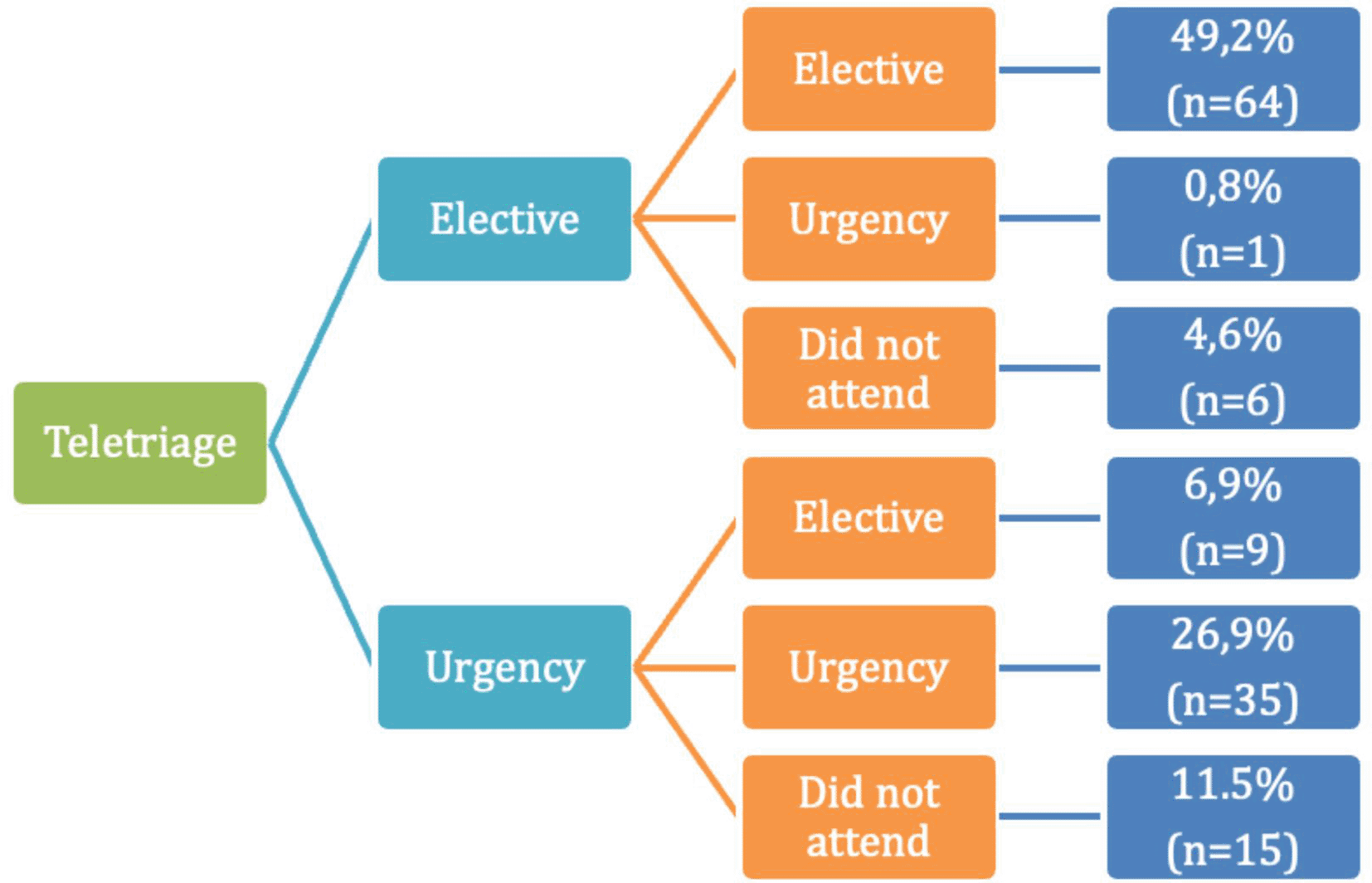
Source: The Author
In the pain assessment of these individuals of the 130 patients initially evaluated, 109 could be evaluated after 7 days, and 103 after 15 days.
The median scores were 0 at all times, with differences only in the interquartile range (IQR), which was 3 at baseline, while at 7 and 15 days it was 0; and in the maximum values found, which were 5 at baseline, 4 at 7 days, and 1 after 15 days. When the Friedman test (for categorical – non-parametric – and paired data) was performed, we found a statistically significant difference (p < 0.01). Paired comparisons, using the Durbin-Conover post-hoc test, showed differences between the results of the facial scale at baseline compared to both 7 days (p < 0.01) and 15 days (p < 0.01); and a difference between the results at 7 days vs. 15 days (p = 0.02) (Tables 1, 2 and 3).
| Statistic | p | |||
|---|---|---|---|---|
| “Faces Scale - Initial” | - | “Faces Scale - 7 Days” | 8.76 | <.001 |
| “Faces Scale - Initial” | - | “Faces Scale - 15 Days” | 11.06 | <.001 |
| “Faces Scale - 7 Days” | - | “Faces Scale - 15 Days” | 2.30 | 0.022 |
Statistical analysis confirmed a significant difference in pain scores between initial moments, after 7 days and after 15 days, indicating that telescreening was effective in identifying and managing dental emergencies, with a notable reduction in pain throughout the follow-up period.
The study demonstrated that telescreening showed a high rate of agreement between in-person and remote diagnoses, which reinforces the effectiveness of this method of evaluation in pediatric dental settings. These findings are consistent with the results obtained by Mendes et al.,12 who also observed significant agreement between remote screening and in-person clinical evaluation in a similar study. The high reliability of dental telescreening, as reported by both studies, suggests that this tool may be a viable solution for circumstances with limited access to care.
In addition, the study revealed that telescreening allows a faster response to urgent cases, especially in rural and remote areas. This finding is in line with a study,13 which pointed out that teledentistry can speed up the assessment and referral process and also can have a significant impact on children’s oral health, especially in underserved populations, as discussed by both studies.
The before-and-after (pre- and post-intervention) study design used in this research is an approach to evaluate the effectiveness of dental telescreening in children. This type of design allows for direct comparison of results, before and after the implementation of teletriage, providing a clear view of the changes that occurred due to the intervention. Studies14 have also used this design to investigate the validity of oral health interventions, demonstrating that this methodology is effective in capturing significant improvements in both clinical and operational parameters. The comparison of pre- and post-intervention results, both in the present study and in previous studies, reinforces the validity of the research design used, showing that teletriage can effectively improve the identification and referral of dental emergency cases in pediatric populations.15
Currently, the Brazilian public health network is being structured to provide urgent dental care. In the past, the absence of this approach in Brazil was a significant gap in oral health care, especially in remote and disadvantaged areas. As highlighted by some authors, the lack of specialized dental emergency services can lead to delays in treatment and worsening oral health conditions. In this context, the results of this study on the reliability of telescreening emerge as a crucial contribution. By offering a viable alternative for the evaluation and referral of urgent cases, this method can mitigate the lack of emergency dental services, providing faster and more efficient access to treatment. The data indicate that it is not only capable of adequately identifying emergencies, but also of improving pain management, which can be a significant advance for the oral health system in Brazil, where the implementation of urgent and emergency services is still in initial stages.16,17
However, the study also points to important challenges, such as patient adherence to the in-person phase, which is essential to validate the results of dental telescreening. Failure to attend the in-person appointment can compromise the continuity of dental treatment and, consequently, patient’s safety. This suggests that, for the effective implementation of programs like this, it is necessary to develop strategies that ensure patient adherence to all stages of care.18
Another relevant point is the need for continuous training for professionals who perform dental telescreening, ensuring that remote assessments are as accurate as in-person ones. This study indicates that, with proper training, it is possible to achieve a high level of agreement between both methods but, on the other hand, it also highlights the importance of clear and specific protocols to guide treatment decisions, minimizing the risk of misclassifications. In addition, it is essential to incorporate the principles of health literacy, ensuring that both professionals and patients clearly and effectively understand the exchanged information, facilitating assertive communication and more informed decisions.19
Teletriage proved to be a viable alternative for screening dental emergencies in children, with high agreement in terms of diagnoses and risk classifications, when compared to in-person evaluation. The significant reduction in pain indicates that telescreening can be effective in managing emergencies, contributing to the efficiency of dental care. However, challenges such as adherence to the in-person phase must be considered in order to optimize implementation process, and also clinical practice.
All procedures involving human beings and data were conducted in accordance with the ethical principles established in the Declaration of Helsinki. The study fully complied with international guidelines for research involving human subjects, ensuring confidentiality, integrity, safety, and autonomy of the participants. The design of this study (both the before-and-after study and the randomized clinical trial) was approved by the Research Ethics Committee of the School of Dentistry, University of São Paulo (CAAE #: 46974821.9.0000.0075) on June 1, 2021. It was also submitted to the Brazilian Clinical Trials Registry (ReBEC), with the statement code RBR-523hrsx. The study design was written following the SPIRIT (Standard Protocol Items: Recommendations for Interventional Trials) guideline.9
The study was divided into the following stages: (1) questionnaire validation, (2) randomized clinical trial, and (3) before-and-after study, each of them with specific methodologies.
For this phase of the study, participants were included upon acceptance of the Informed Consent Form (ICF) sent during the remote stage, accessed through a digital link. The legal guardians of participants allocated to the in-person consultation group (G2) also signed the ICF on site.
In both phases, questionnaire validation and the before-and-after study nested within the clinical trial, the children’s age and level of comprehension were taken into consideration during the consent process.
Consent was obtained in two ways:
- In writing, when the legal guardian accessed and signed the document provided through the digital link;
- Verbally, in cases where the participant or guardian was unable to read or access the link, with the procedure documented in accordance with the approved ethical guidelines.
Additionally, children in the G2 group who demonstrated sufficient understanding were invited to sign an in-person Assent Form, resulting in two signed documents (ICF + Assent Form) for each participant in this group.
The data collected was stored using specific procedures to ensure secrecy and confidentiality of the research participants’ information. Only remote consultation platforms with robust security standards that comply with Federal Law No. 13,709 of August 14, 2018 (General Personal Data Protection Law – LGPD) were used 10. In addition, the subjects surveyed were able to withdraw from the study at any time, without any prejudice.
| Views | Downloads | |
|---|---|---|
| F1000Research | - | - |
|
PubMed Central
Data from PMC are received and updated monthly.
|
- | - |
Provide sufficient details of any financial or non-financial competing interests to enable users to assess whether your comments might lead a reasonable person to question your impartiality. Consider the following examples, but note that this is not an exhaustive list:
Sign up for content alerts and receive a weekly or monthly email with all newly published articles
Already registered? Sign in
The email address should be the one you originally registered with F1000.
You registered with F1000 via Google, so we cannot reset your password.
To sign in, please click here.
If you still need help with your Google account password, please click here.
You registered with F1000 via Facebook, so we cannot reset your password.
To sign in, please click here.
If you still need help with your Facebook account password, please click here.
If your email address is registered with us, we will email you instructions to reset your password.
If you think you should have received this email but it has not arrived, please check your spam filters and/or contact for further assistance.

Comments on this article Comments (0)