Keywords
Loneliness, elderly, machine learning, health and well-being, artificial intelligence

This article is included in the Artificial Intelligence and Machine Learning gateway.
This article is included in the Dignity in Aging collection.
Loneliness, elderly, machine learning, health and well-being, artificial intelligence
Geriatric loneliness (GL) has emerged as a significant public health concern owing to its potential adverse effects on mental and physical health.1,2,3 The increasing prevalence of loneliness among older individuals globally, as the population ages, has been associated with several adverse outcomes, including depression, cognitive decline, and a diminished quality of life.4,5,6 Policymakers, researchers, and healthcare providers currently prioritize the resolution of this issue.
Recent advancements in machine learning (ML) techniques have shown promise in identifying and addressing loneliness among the elderly.7 These methods provide insights into the underlying causes and potential therapies for loneliness by analyzing large databases, identifying patterns, and determining risk factors.8 Moreover, machine learning models can facilitate the development of predictive tools and interventions customized to the specific needs of each patient.9,10
Despite increasing interest in this topic, a comprehensive understanding of the global research landscape remains lacking. Bibliometric analysis serves as an effective tool for investigating research trends, significant authors, collaborations, and emerging topics through a quantitative evaluation of scientific literature.11 Bibliometric studies that analyze publication trends, citation networks, and keyword co-occurrence can yield insights and inform future research directions.12
Bibliometric analysis is advantageous as it provides a more profound comprehension of the topic and suggests new avenues for exploration. An extensive evaluation of GL through machine learning and bibliometric analysis has enabled us to present an overview of the themes, trends, and bibliometric features currently found in this literature collection, covering the ten-year period from 2014 to 2024. The findings of our study offer important insights into loneliness within the geriatric population and indicate potential directions for further investigation utilizing machine learning methodologies in this rapidly developing field through bibliometric analysis.
Among the most extensive global databases of scientific literature, Scopus, we looked for relevant articles. Publications such as peer-reviewed journals, conference proceedings, commercial magazines, and book series are among the over 5,000 titles currently available on Scopus. Journal articles, conference proceedings, patents, and other publications covering any and all fields make up its approximately 75 million records. To find relevant documents, we used the following keywords: “artificial intelligence” OR “machine intelligence” OR “robot*” OR “robot technology” OR “assistant robot” OR “robot-assisted” OR “computational intelligence” OR “computer reasoning” OR “deep learning” OR “computer vision system” OR “sentiment analysis” OR “machine learning” OR “neural network*” OR “data learning” OR “expert* system*” OR “natural language processing” OR “support vector machine*” OR “decision tree*” OR “data mining” OR “deep learning” OR “neural network*” OR “bayesian network*” OR “intelligent learning” OR “feature* learning” OR “feature* extraction” OR “feature* mining” OR “feature* selection” OR “unsupervised clustering” OR “image* segmentation” OR “supervised learning” OR “semantic segmentation” OR “deep network*” OR “neural learning” OR “neural nets model” OR “graph mining” OR “data clustering” OR “big data” OR “knowledge graph”)) AND ALL ((solitude OR aloneness OR lonesomeness)) AND ALL ((“senior∗” OR “aged∗” OR “elder∗” OR “geri∗” OR “age∗” OR “older adult∗” OR “geriatric∗” OR “aging” OR “very elderly” OR “frail elderly”. After a thorough examination of every title of the retrieved articles, two experts who possess a minimum of five years of experience in conducting systematic reviews evaluated and gave their approval to our search strategy. They made their selection from among all of the publications that were pertinent, and any disagreements were settled by consulting with a third author. Finally, all of the retrieved articles were saved.
Only articles that utilized machine learning as a result and focused on generative learning were incorporated into the bibliometric analysis. No language restrictions were imposed. Letters, editorials, conference abstracts, and book chapters were excluded from consideration. In contrast, research papers and reviews published in peer-reviewed journals were included in the selection process. Due to the focus on the ten-year trend, publications issued before 2014 were excluded from consideration. Two experts in bibliometric analysis, possessing extensive experience, assessed the acquired articles in accordance with established standards and guidelines.13
To produce consistent and measurable data pertinent to policy management, bibliometric analysis14 serves as a quantitative assessment of scientific research, evaluating and examining prevailing research trends within a specific domain.15 Bibliometric analysis offers a comprehensive overview of a research subject and identifies potential areas for further investigation, along with the methodologies that authors have employed to achieve their objectives.16 Displaying the complete field will facilitate readers’ comprehension of GL research patterns and trends.
The publication patterns of the leading ten publications, institutes, authors, and countries were analyzed. The categories, percentages, and frequencies for each journal were presented. Ratios, frequencies, and percentages of related authors were computed for each country, considering both single and multiple countries. The frequency and citation rates for each author and institution were provided as well. Countries, journals, institutions, and authors were ranked based on their publication volume and research impact. Data were constructed and visualized utilizing VOSviewer (Leiden University) and Bibliometrix (an R package).
A total of 267 items were identified through the electronic database search. After screening, 112 individuals were excluded. The comprehensive bibliometric analysis comprised 155 publications. Figure 1 illustrates the growth in the number of GL articles over the past decade.
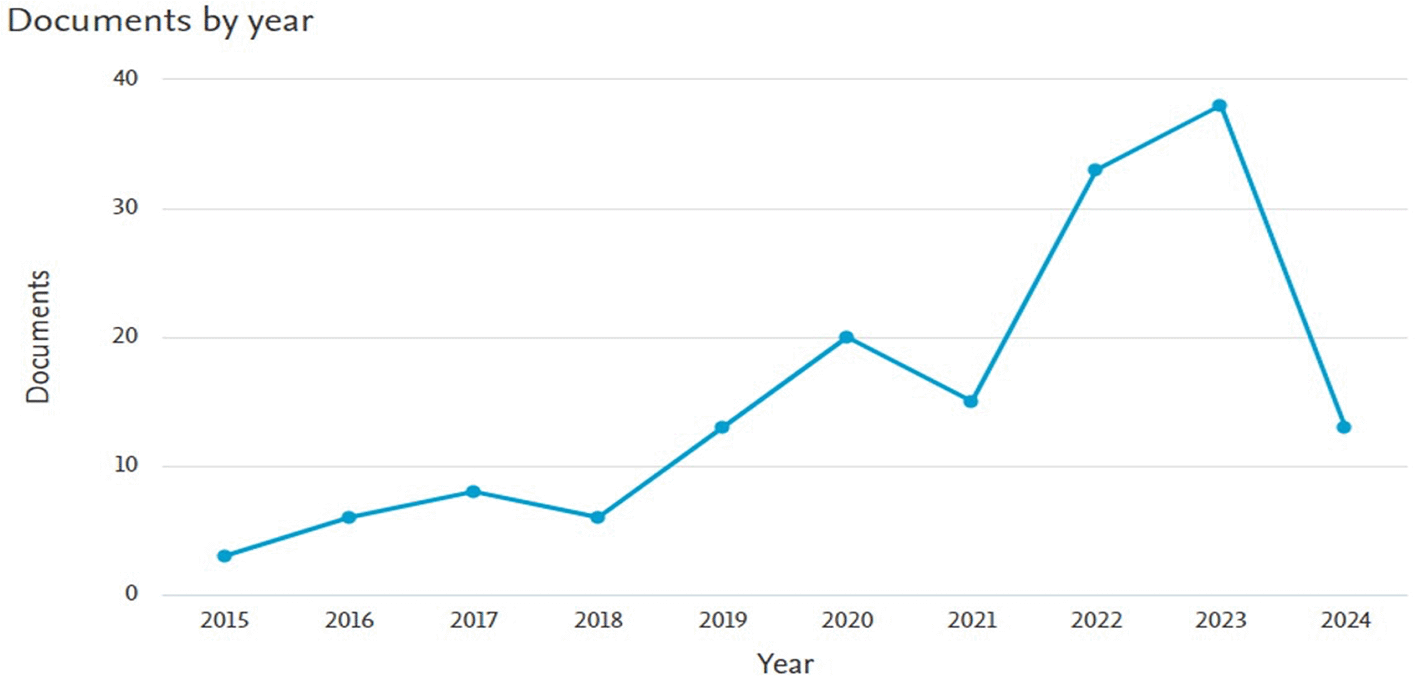
Table 1 presents the geographical distribution of the ten leading countries in GL research publications. The United States produced the highest number of publications (18), followed by China (14) and Canada (9). China exhibited the highest multiple country publication (MCP) ratio at 0.5, followed by Canada at 0.444 and the United Kingdom at 0.429. Figure 2 illustrates the countries that are linked through at least one research collaboration.
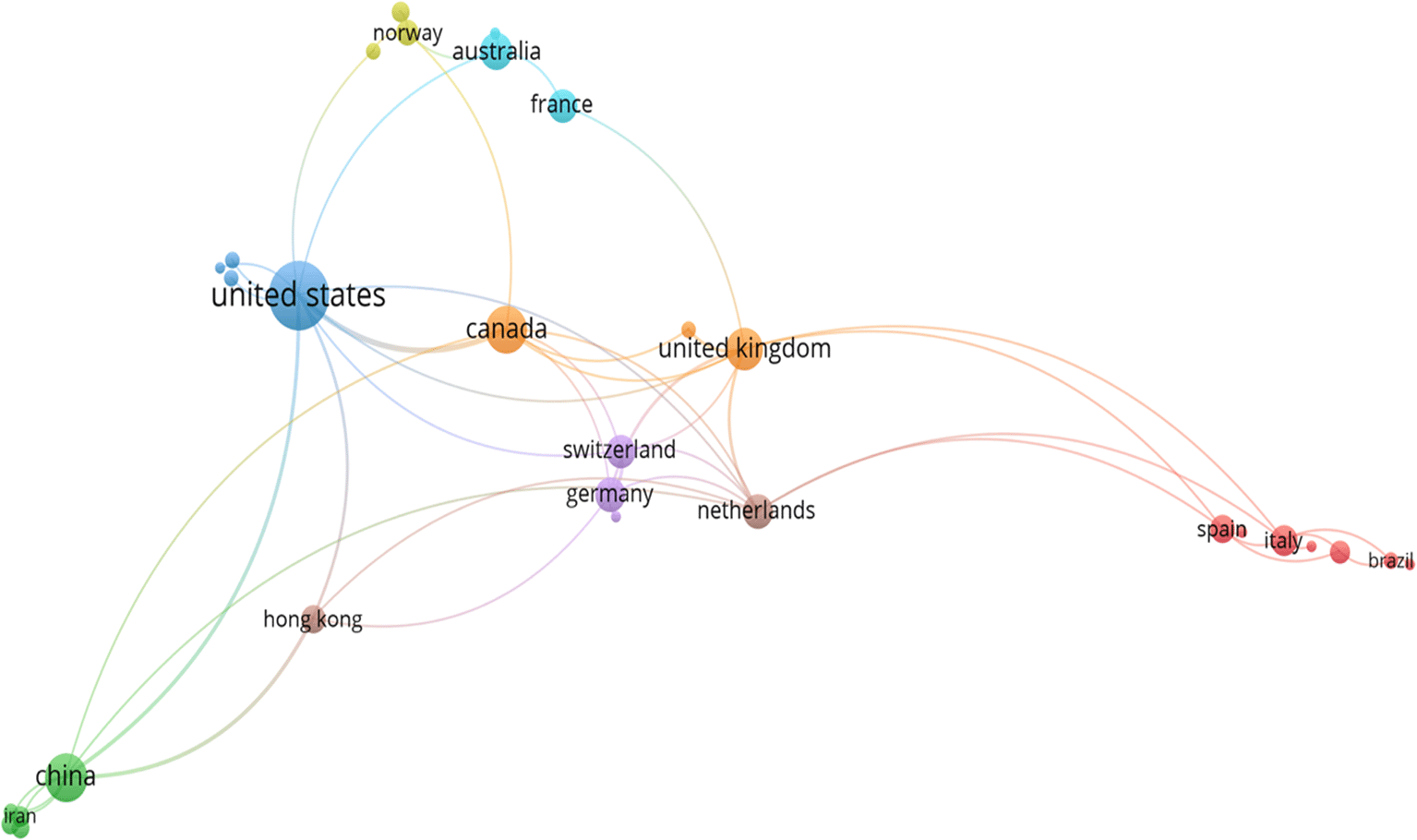
Table 2 displays the ten leading institutes in GL research productivity. The University of California and the University of Pennsylvania each published seven articles, leading all universities, while the University of Copenhagen and the University of Zurich each published six articles.
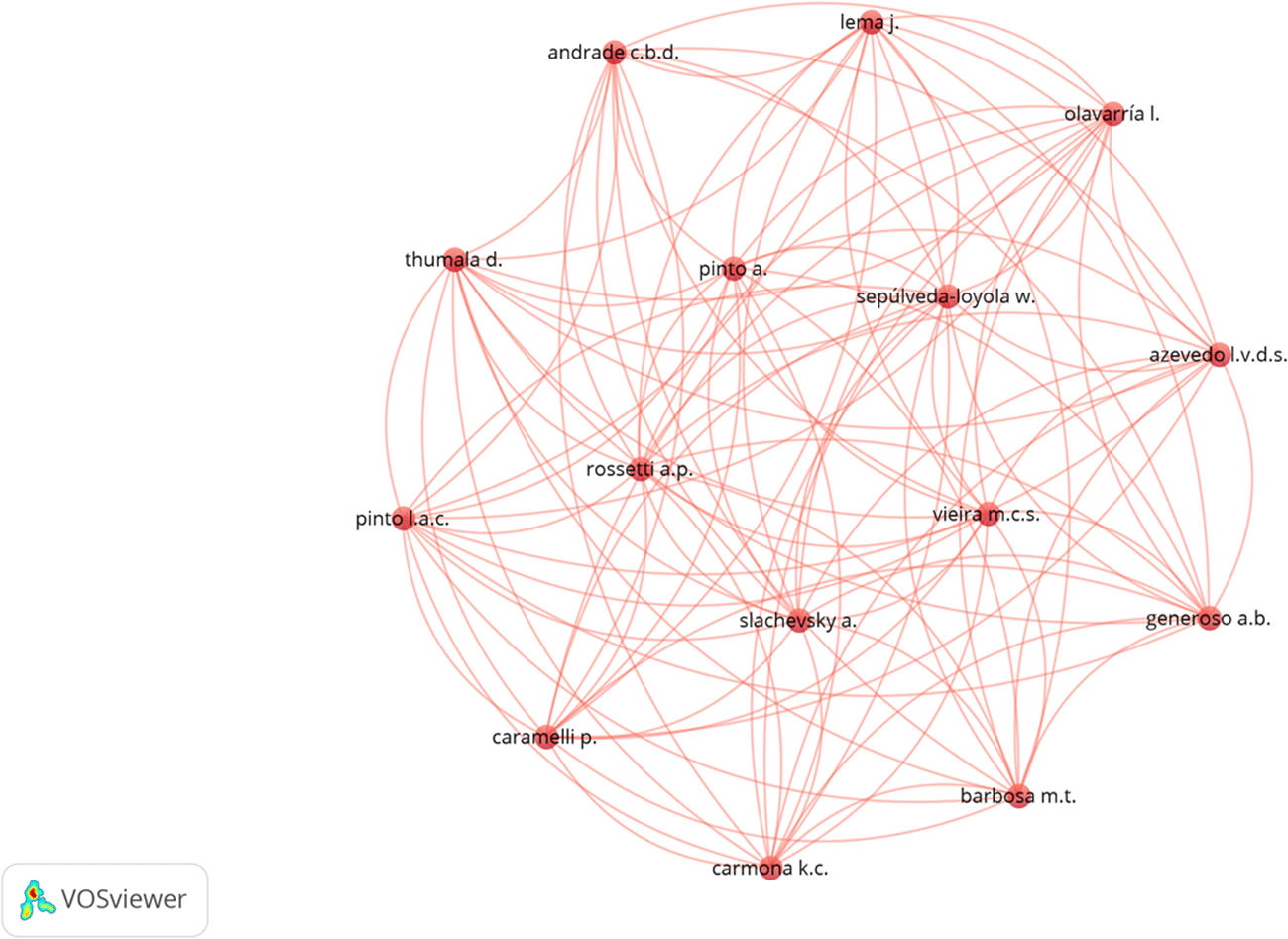
In order to conduct a co-authorship study and offer a thorough perspective of the entirety of the nation network in GL research, the VOSviewer tool was employed. The relationship between two nations is determined by the total number of publications that they have jointly authored. The study of authorship by nation produced a single cluster, which consisted of fifteen authors who are related to one another in that they have each published at least one paper. These categories are shown in Figure 3.
When it comes to the subject of GL research, 267 publications were published by 640 different authors. The most prominent ten GL research authors are enumerated in Table 3. Three papers were published by Rigaud AS, and three papers were published by Pino M, who were the leading authors.
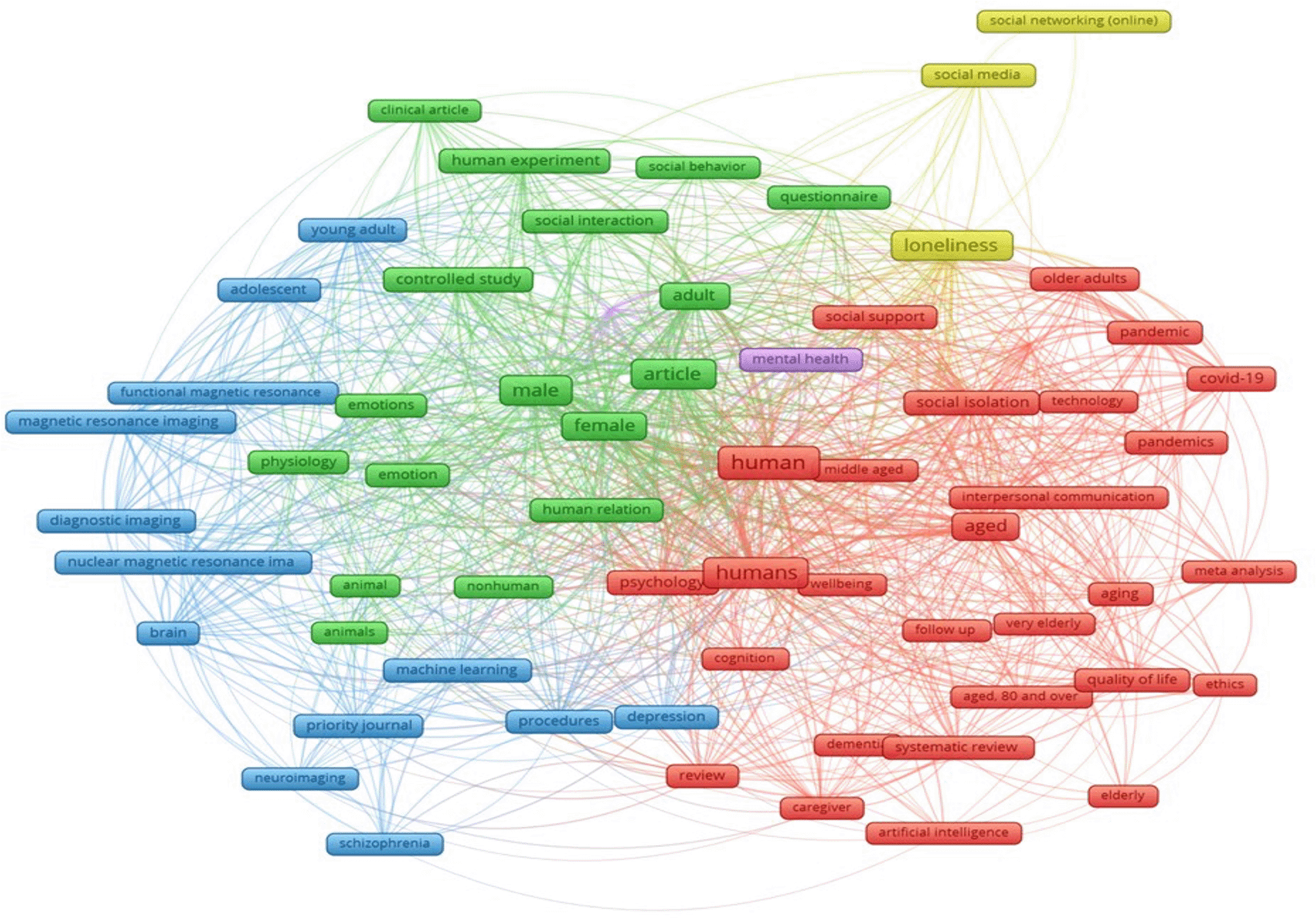
The 267 articles consisted of five distinct keyword clusters. Table 4 presents the ten most frequently used keywords in the retrieved articles. Human, ageing, male, female, and loneliness were significant categories identified. The co-occurrence analysis of the top 100 phrases revealed the research hotspots in GL ( Figure 4).
| Rank | Keywords | Occurrences |
|---|---|---|
| 1 | Human | 76 |
| 2 | Aged | 64 |
| 3 | Male | 63 |
| 4 | Female | 62 |
| 5 | Humans | 59 |
| 6 | Loneliness | 50 |
| 7 | Article | 44 |
| 8 | Adult | 36 |
| 9 | Social isolation | 36 |
| 10 | Machine learning | 21 |
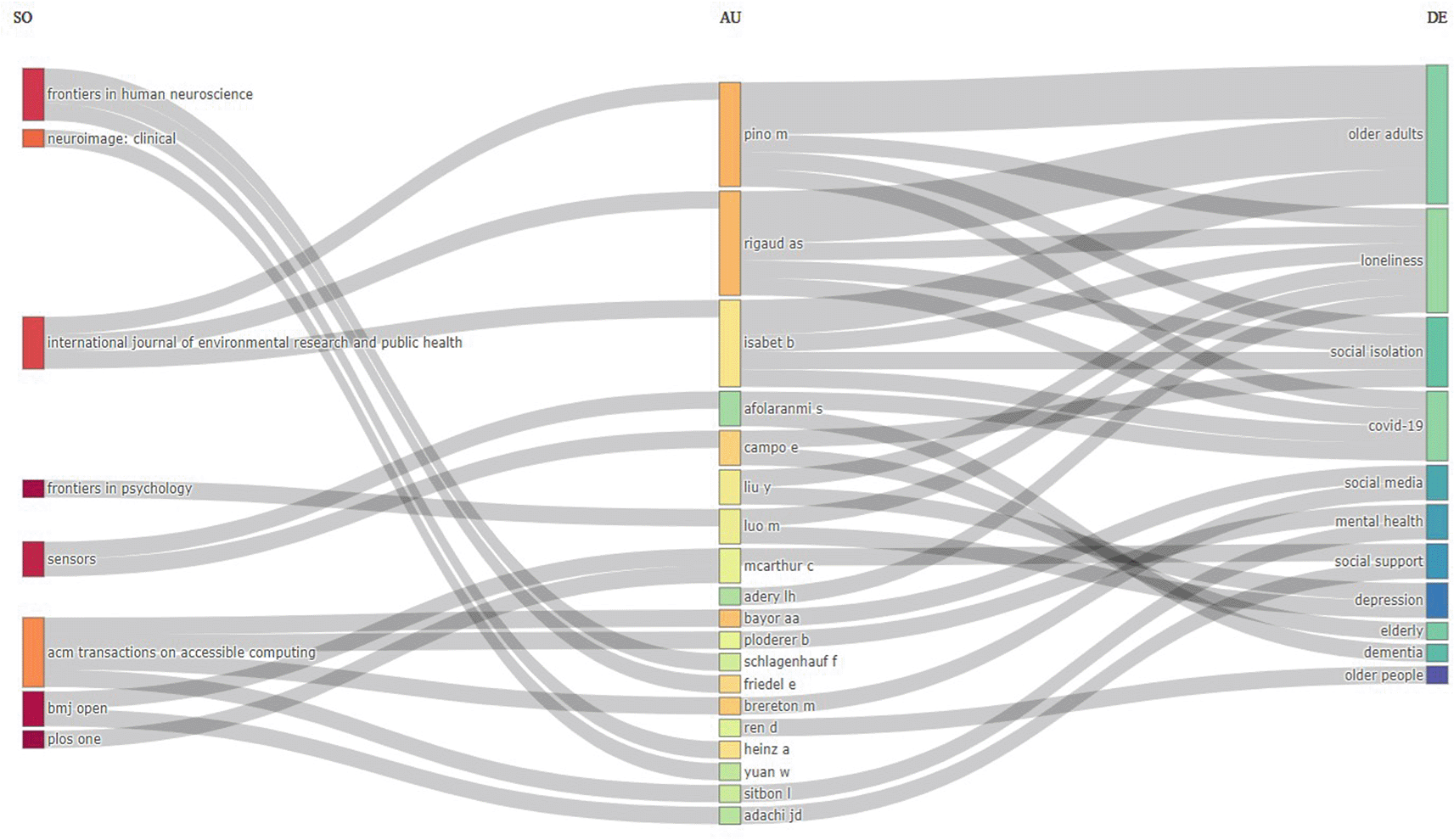
We conducted an in-depth examination of the knowledge base within the GL research domain. Table 5 presents the ten most highly cited articles. As of June 1, 2024 Arbabshirani, Plis,17 had the highest citation count, totalling 602. Published in NeuroImage in 2017. Figure 5 illustrates the three-field plot.
| Rank | First author/journal | DOI | Total citations | TC/Year |
|---|---|---|---|---|
| 1 | Arbabshirani, Plis,17 Neuroimage | 10.1016/j.neuroimage.2016.02.079 | 602 | 75.25 |
| 2 | Lim, Gleeson,26 Soc Psychiatry Psychiatr Epidemiol | 10.1007/s00127-020-01889-7 | 185 | 37.00 |
| 3 | Schriber and Guyer,27 Dev Cognitive Neurosci | 10.1016/j.dcn.2015.12.009 | 163 | 18.11 |
| 4 | Tsai, Shillair and Cotten,28 2017, J Appl Gerontol | 10.1177/0733464815609440 | 157 | 19.63 |
| 5 | Landeiro, Barrows,29 Bmj Open | 10.1136/bmjopen-2016-013778 | 136 | 17.00 |
| 6 | Shackman, Tromp,30 Psychol Bull | 10.1037/bul0000073 | 123 | 13.67 |
| 7 | Tomova, Wang,31 Nat Neurosci | 10.1038/s41593-020-00742-z | 111 | 22.20 |
| 8 | Mateos-Pérez, Dadar,32 Neuroimage Clin | 10.1016/j.nicl.2018.08.019 | 110 | 15.71 |
| 9 | Waytz and Gray,33 Perspect Psychol Sci | 10.1177/1745691617746509 | 95 | 13.57 |
| 10 | Hopkins and McKay,34 Technol Forecast Soc Change | 10.1016/j.techfore.2018.07.032 | 73 | 12.17 |
To the best of our knowledge, this is the inaugural bibliometric investigation examining GL through a machine learning methodology. This bibliometric analysis demonstrated a growing worldwide scholarly interest in utilising machine learning technologies to combat loneliness among the elderly. The persistent increase in publications over the past decade underscores the significance of this issue as a significant public health concern, as well as the potential for machine learning methodologies to provide valuable insights and solutions.1,7
This study identifies the United States, China, and Canada as leading countries due to their robust research infrastructure, funding opportunities, and ageing populations.18,19 Countries such as the United Kingdom, Switzerland, and Australia significantly contributed to the study output, indicating a heightened global awareness and commitment to addressing loneliness in the elderly population.
This study identifies key institutions and authors as the principal drivers of research in this discipline. Collaborations among these institutions and researchers facilitate information sharing, resource pooling, and the development of interdisciplinary approaches to address the complex issue of loneliness in the elderly.20
Co-occurrence analysis revealed several emerging topics and trends, such as social media, depression, and artificial intelligence.21, 22, 23 The findings highlight the relationship between loneliness and mental health disorders, along with the potential of machine learning methods for creating predictive tools and personalised therapies.
Identifying prominent authors and their research topics may facilitate future collaborations and the dissemination of information. Expanding the existing body of research and leveraging the expertise of these professionals may facilitate the exploration of new strategies to mitigate loneliness among the elderly.24,25
This bibliometric study provides valuable insights, yet it is important to acknowledge its significant limitations. Relying exclusively on the Scopus database may result in the exclusion of pertinent articles from various sources. The precision of the metadata associated with the articles imposes constraints on the analysis. Thirdly, bibliometric analysis prioritises quantitative evaluation over qualitative assessment of study findings and methodologies. The study does not account for potential biases or limitations in the machine learning techniques utilised in the analysed papers. Previous or contemporary developments may be excluded from the 2014–2024 time frame. In addition to these limitations, the findings underscore the growing importance of employing machine learning to tackle loneliness among the elderly, potentially guiding future treatment strategies and research initiatives.
In conclusion, this study highlights the increasing global focus on utilising machine learning to address the problem of loneliness in the elderly population. This bibliometric analysis emphasises key authors, collaborative efforts, and emerging themes such as social media, depression, and predictive modelling. It also indicates increasing trends in studies, primarily from the US, China, and Canada. These findings can guide future studies, collaborative efforts, and the creation of effective treatments focused on improving the quality of life for the elderly. This study underscores the significance of bibliometric analysis in tackling this crucial public health concern.
| Views | Downloads | |
|---|---|---|
| F1000Research | - | - |
|
PubMed Central
Data from PMC are received and updated monthly.
|
- | - |
Provide sufficient details of any financial or non-financial competing interests to enable users to assess whether your comments might lead a reasonable person to question your impartiality. Consider the following examples, but note that this is not an exhaustive list:
Sign up for content alerts and receive a weekly or monthly email with all newly published articles
Already registered? Sign in
The email address should be the one you originally registered with F1000.
You registered with F1000 via Google, so we cannot reset your password.
To sign in, please click here.
If you still need help with your Google account password, please click here.
You registered with F1000 via Facebook, so we cannot reset your password.
To sign in, please click here.
If you still need help with your Facebook account password, please click here.
If your email address is registered with us, we will email you instructions to reset your password.
If you think you should have received this email but it has not arrived, please check your spam filters and/or contact for further assistance.

Comments on this article Comments (0)