Keywords
Aquatic diseases prevention, Aquaculture development, Biosecurity practices, Burkina Faso aquaculture

This article is included in the Agriculture, Food and Nutrition gateway.
Aquatic diseases prevention, Aquaculture development, Biosecurity practices, Burkina Faso aquaculture
Aquaculture, defined as the controlled farming of aquatic plants and animals, has become one of the fastest-growing food production sectors worldwide. According to the Food and Agriculture Organization (FAO, 2016), global per capita fish consumption reached 20 kg in 2014, with aquaculture now supplying more than half of the fish destined for human consumption. This rapid expansion reflects the efficiency, adaptability, and technological diversification of aquaculture systems across regions.
In Burkina Faso, as in many African countries, aquaculture development remains limited. National production levels are low, and average per capita fish consumption is estimated at only 3.5 kg per year (FAO, 2016). Despite these constraints, fish farming is increasingly recognized as a strategic sector for food security, nutritional improvement, and economic development. The Loumbila commune has experienced modest growth in aquaculture activities in recent years, yet this progress is undermined by persistent health challenges, particularly the prevalence of infectious diseases that reduce productivity, profitability, and sustainability.
Biosecurity, understood as the set of preventive measures designed to reduce the introduction and spread of pathogens, is essential for safeguarding fish health and ensuring the quality of aquaculture production (Yao et al., 2019). Weak or inconsistent implementation of biosecurity protocols facilitates the transmission of bacteria, viruses, and parasites, with reported mortality rates ranging from 36 percent to 65 percent in certain aquaculture enterprises (Ryce et al., 2004; Johnson et al., 2004; Fonkwa et al., 2020). However, little is known about how fish farmers in Burkina Faso, and specifically in Loumbila, understand and apply biosecurity measures in practice. This lack of empirical evidence represents a significant gap in aquaculture health management research.
The present study, Evaluation of knowledge and practices of biosecurity in fish farming in the Loumbila commune (Oubritenga): farmers’ perceptions and implications for health management, was undertaken to address this gap. Its primary objective is to assess fish farmers’ knowledge and practices regarding biosecurity, identify critical weaknesses, and propose evidence-based recommendations to strengthen the sanitary management of aquaculture enterprises.
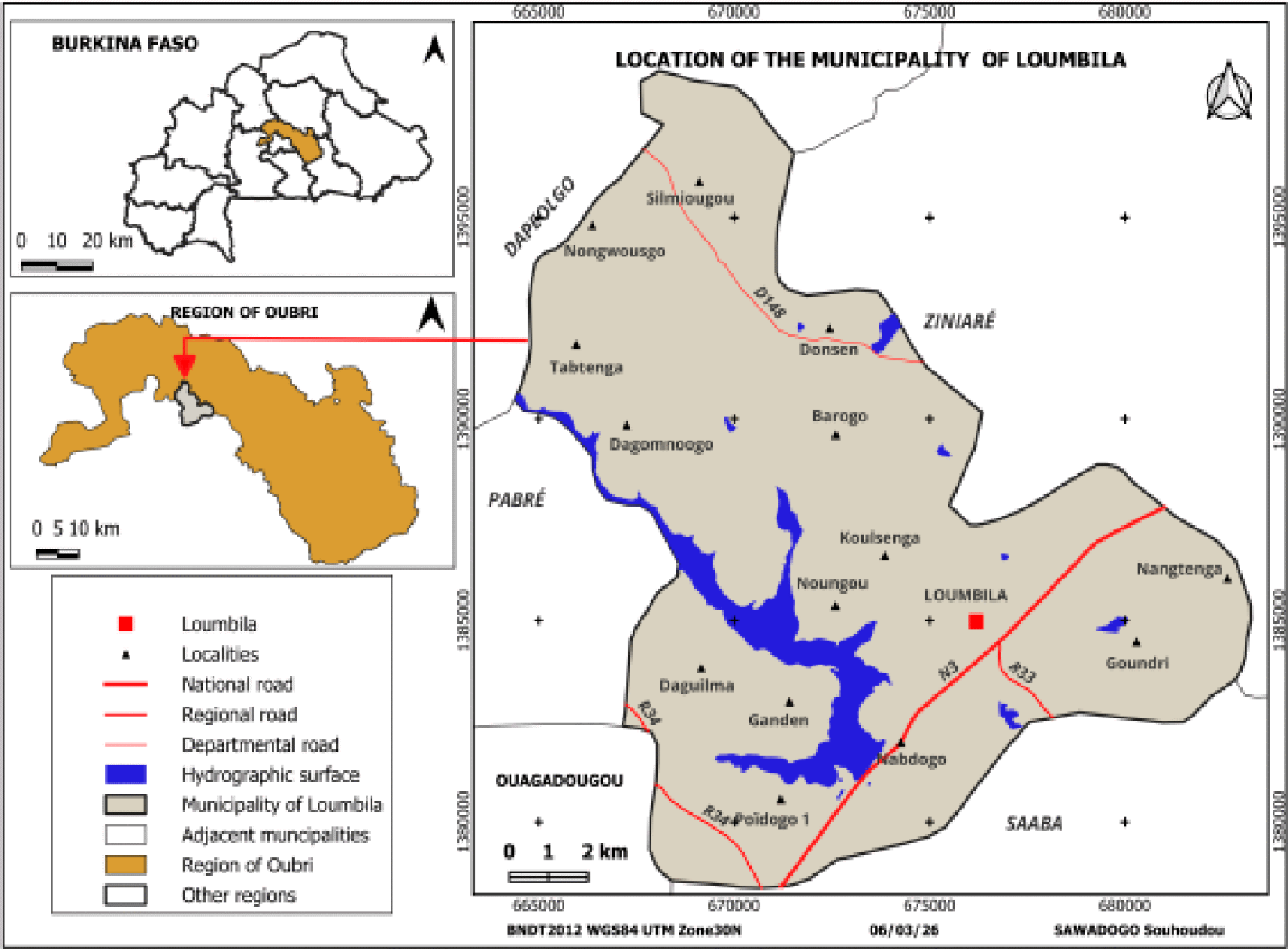
The study was conducted from June to July 2025 in Loumbila commune, located in Oubritenga province within the Central Plateau region of Burkina Faso. Loumbila covers 176.99 km2, comprises 31 villages, and lies 25 km northeast of Ouagadougou ( Figure 1). The area belongs to the Sudano-Sahelian climatic zone, with annual rainfall ranging between 600 and 900 mm. It is characterized by a long dry season (October–May) dominated by harmattan winds and a short rainy season (June–September) influenced by the monsoon. Vegetation includes grassy savanna, shrub savanna, and gallery forests. The relief consists of a broad plain at approximately 300 m altitude, interspersed with hills and granite formations. Soils are mainly erosion-deposit, skeletal, and clay-sandy types.
Data collection combined documentary review and field survey. Existing reports and records on aquaculture and biosecurity were consulted to establish background information. A purposive sampling approach was applied to select 23 fish farmers according to predefined criteria. Data were gathered through structured questionnaires (integrated into KoBo Toolbox), direct interviews, and field observations. Quantitative data focused on biosecurity practices, while qualitative observations provided contextual insights into farm operations.
Technical materials included notebooks, pens, a laptop for data entry and analysis, a mobile phone for survey administration and photography, fishing nets (dip net and cast net) for control sampling, a life jacket for safety during canoe use, and a digital scale for weighing fish.
Data collection was conducted on-site through scheduled appointments with fish farmers. Responses were recorded electronically and subsequently exported from KoBo Toolbox into Excel 2013 for preliminary descriptive analysis. Results were presented in tables and figures to highlight biosecurity knowledge, practices, and gaps among fish farmers.
For inferential statistics, the data were analyzed using SPSS software (version 25). The Chi-square test (χ2) was applied to assess associations between categorical variables, particularly to evaluate differences in biosecurity awareness, practices, and constraints across respondent groups. Statistical significance was considered at p < 0.05.
The sociodemographic profile of the 23 surveyed fish farmers is summarized in Table 1. Women represented 52 percent of respondents, while men accounted for 48 percent; this difference was not statistically significant (p = 0.412). Age distribution revealed that the majority of respondents were older than 35 years (78%), a result that was statistically significant (p = 0.031), indicating that aquaculture in Loumbila is predominantly practiced by older adults.
Experience levels showed that 65% of farmers had less than two years of practice, compared to 13 percent with 2–5 years and 22 percent with more than five years. This difference was highly significant (p = 0.007), highlighting the predominance of newcomers in the sector. Education level was skewed toward higher education (65%), with fewer respondents reporting secondary (26%) or primary education (9%). This distribution was statistically significant (p = 0.045).
Marital status was also significant (p = 0.018), with 78% of respondents being married. Regarding main occupation, 61% reported another primary activity besides aquaculture, while 39% considered fish farming their main occupation; this difference was not statistically significant (p = 0.221). Training in aquaculture was reported by 70% of respondents, a highly significant result (p = 0.002), suggesting strong exposure to technical capacity-building initiatives.
Finally, aquaculture was overwhelmingly practiced as a source of income (91%), with only 9 percent combining income generation with self-consumption. This difference was very highly significant (p < 0.001), confirming the economic orientation of fish farming in Loumbila commune.
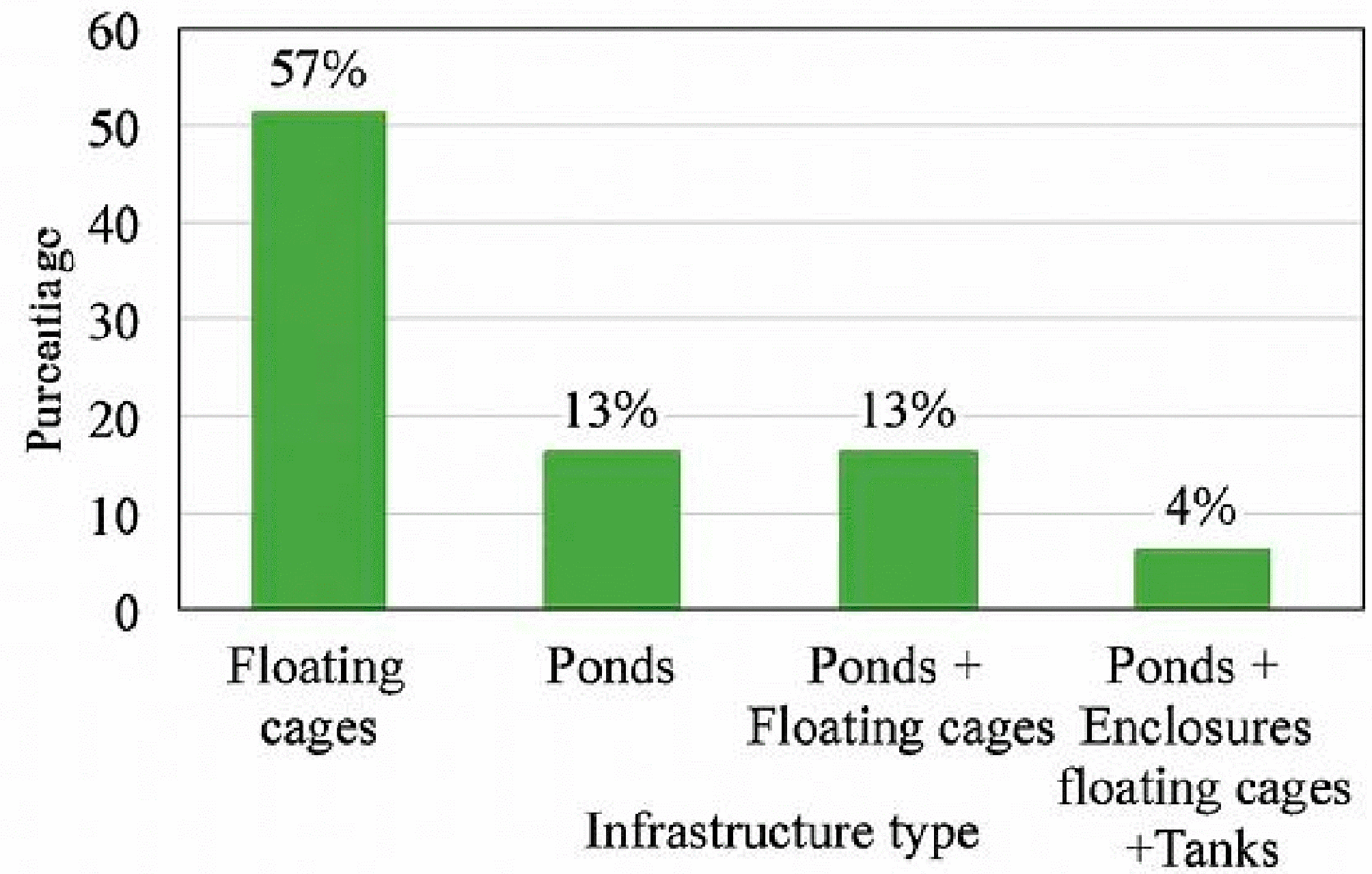
The survey results revealed that floating cages were the most prevalent aquaculture infrastructure, accounting for 57% of the systems used. Ponds alone and mixed systems combining ponds, tanks, enclosures, and floating cages were less common, each representing 4%. Intermediate configurations were also reported, including ponds (13%), ponds combined with floating cages (13%), and ponds combined with cages and enclosures (9%).
Overall, the predominance of floating cages highlights their accessibility and adaptability, while more complex or traditional systems remain marginally represented ( Figure 2).
The assessment of biosecurity knowledge among fish farmers revealed notable disparities in awareness, understanding, and training ( Table 2). A majority of respondents (78%) reported having heard of biosecurity in aquaculture, while 22% had never encountered the concept. This difference was statistically significant (p = 0.034), suggesting that biosecurity awareness is relatively widespread but not universal.
When asked to define biosecurity, 70% of respondents described it as both protecting the aquatic environment and preventing disease, whereas 11% viewed it solely as disease prevention. The remaining 19% provided unclear or alternative definitions. This distribution was statistically significant (p = 0.021), indicating variability in conceptual understanding that may influence implementation.
Regarding training, 65% of respondents had never received formal instruction on biosecurity practices, while 35% had benefited from such training ( Table 2). This gap was highly significant (p = 0.008), underscoring the need for targeted capacity-building to reinforce biosecurity measures at the farm level.
Overall, these findings highlight the importance of strengthening both awareness and technical training to ensure consistent and effective biosecurity practices across aquaculture enterprises.
The analysis of biosecurity practices among fish farmers revealed a mixed picture of awareness and implementation ( Table 3). While all respondents reported applying at least one measure, the most common practice was cleaning and disinfecting equipment (57%, p = 0.041), reflecting a baseline understanding of hygiene. However, more advanced measures were rarely adopted. For instance, only 13% required workers to wear protective clothing, and none of the farms had footbaths at their entrances (p < 0.001), underscoring significant gaps in personnel-related biosecurity. Visitor management was somewhat better, with 78% restricting access to facilities (p = 0.029), suggesting partial recognition of external contamination risks.
Equipment management practices were also insufficient. A majority (65%) did not conduct regular water quality analyses (p = 0.017), and 78% admitted sharing equipment with other farmers (p = 0.012), both of which increase the likelihood of pathogen transmission. Furthermore, 70% of farms lacked fencing (p = 0.008), leaving them vulnerable to uncontrolled access and environmental hazards. On a positive note, all respondents quarantined sick fish (p < 0.001), demonstrating strong adherence to disease containment protocols. Dead fish were most often eliminated by incineration (57%, p = 0.036), though alternative disposal methods were still common.
Risk perception mirrored these practices. Nearly half of respondents (43%) identified water pollution as the main health threat (p = 0.022), while 74% reported having suffered significant losses due to epidemics (p = 0.015). These findings highlight the dual challenge of environmental and infectious risks in aquaculture. Constraints to implementing biosecurity were primarily economic: 30% cited the high cost of equipment as a major obstacle (p = 0.027). Despite these limitations, all respondents (100%, p < 0.001) agreed that strengthening biosecurity would improve fish health, reflecting strong awareness of its importance and a willingness to adopt measures if resources allow.
The findings highlight the tangible impact of biosecurity measures on fish health and farm management. A majority of respondents (61%) reported a noticeable reduction in disease occurrence or fish mortality following the implementation of biosecurity practices. The same proportion (61%) also indicated that they had benefited from veterinary follow-up to ensure the health of their stock, underscoring the role of professional support in reinforcing farm-level biosecurity.
Despite these positive outcomes, nearly all respondents (96%) expressed a strong need for additional training or technical assistance in biosecurity. This reflects both awareness of its importance and recognition of existing gaps in knowledge and practice. Furthermore, 48% of fish farmers suggested priority actions to strengthen biosecurity in their community, including regular cleaning of facilities, quarantine of newly introduced fish, visitor control, and improved waste management. These recommendations reveal a proactive attitude among farmers and a willingness to adopt measures that align with international best practices.
Overall, the results suggest that while biosecurity measures are already yielding health benefits, their sustainability and effectiveness depend on continued training, technical support, and the institutionalization of preventive practices. Overall, the results suggest that while biosecurity measures are already yielding health benefits, their sustainability and effectiveness depend on continued training, technical support, and the institutionalization of preventive practices.
Biosecurity is increasingly recognized as a cornerstone of sustainable aquaculture, ensuring fish health, productivity, and economic viability (Aly & Fathi, 2024). Globally, disease outbreaks remain one of the most significant threats, with annual losses estimated at USD 6 billion. Catastrophic events such as infectious salmon anemia in Chile or parasitic infestations like sea lice in salmon highlight the vulnerability of aquaculture systems worldwide (Maezono et al., 2025). These examples demonstrate that biosecurity is not only a technical safeguard but also a strategic requirement for resilient food systems.
Within this global context, our study provides pioneering evidence from Burkina Faso, where aquaculture is still emerging. The predominance of women (52%) among fish farmers in Loumbila reflects socio-economic dynamics and the accessibility of aquaculture as a livelihood option. Similar patterns have been reported in Côte d’Ivoire (N’dri et al., 2016), where adult farmers dominate and youth participation is limited by financial barriers. This suggests that aquaculture in West Africa is shaped as much by socio-economic constraints as by technical challenges.
The relatively short experience of most respondents (less than two years) confirms that aquaculture in Loumbila is at an early stage of development, echoing findings from Yao et al. (2019) in Côte d’Ivoire. The predominance of floating cages, actively promoted by national policy, illustrates how institutional decisions influence farmer practices. However, without complementary training and affordable biosecurity infrastructure, these policies risk being undermined by weak implementation.
Knowledge gaps remain a major challenge. Although 78% of farmers had heard of biosecurity, only 11% could define it accurately, and most associated it with environmental protection rather than pathogen control. This partial understanding mirrors findings in other African contexts (Sop et al., 2022), where lack of training hinders effective adoption of sanitary measures. Practices such as cleaning equipment and incinerating dead fish show some awareness, but critical measures (footbaths, protective clothing, water quality monitoring) are largely absent. These deficiencies expose farms to pathogen introduction and compromise sustainability.
Economic barriers further limit adoption. High costs of equipment and limited access to veterinary services were cited as major constraints, consistent with regional studies (Yao et al., 2019). Yet, encouragingly, farmers who applied even basic biosecurity measures reported reduced disease occurrence and mortality, highlighting the tangible benefits of capacity building. The strong demand for training (96% of respondents) demonstrates readiness among farmers to improve practices if support is provided.
Overall, aquaculture in Burkina Faso faces challenges common to many developing countries: limited technical knowledge, economic constraints, and policy gaps. Addressing these issues is essential not only for fish health but also for strengthening food security and resilience of aquatic food systems in West Africa. Beyond the local context of Loumbila, these findings resonate with broader challenges faced by small-scale aquaculture in developing countries. Weak biosecurity practices increase vulnerability to disease outbreaks and undermine resilience, with direct consequences for household nutrition and income. Strengthening biosecurity through training, affordable infrastructure, and policy support is therefore essential to align aquaculture development in Burkina Faso with global sustainability goals and the UN Sustainable Development Agenda.
This study highlights critical deficiencies in biosecurity knowledge and practices among fish farmers in Loumbila, Burkina Faso. While basic sanitary measures are being adopted, significant gaps in infrastructure, training, and advanced practices leave farms vulnerable to disease outbreaks and economic losses. The predominance of floating cages, shaped by national policy, illustrates the importance of aligning institutional strategies with practical support for farmers.
To ensure sustainable aquaculture development and contribute to food security in West Africa, three priorities emerge:
– Capacity building through targeted training programs that translate formal education into practical biosecurity skills;
– Affordable infrastructure to enable adoption of essential measures such as footbaths, protective clothing, and water quality monitoring;
– Strengthened veterinary extension services to provide technical guidance and disease surveillance.
By addressing these needs, national authorities and development partners can enhance fish health, reduce losses, and align local practices with international standards. Ultimately, biosecurity must be recognized not only as a technical requirement but as a strategic investment in the resilience and sustainability of aquatic food systems, contributing directly to regional food security and livelihoods.
During the preparation of this manuscript, generative AI tools were used in a limited capacity. Specifically, Microsoft Copilot (version March 2026) was employed to assist with language refinement, harmonization of English phrasing, and the structuring of certain sentences to improve clarity. The tool was not used for generating scientific content, data analysis, or interpretation of results. Its use was restricted to editorial support, and all scientific ideas, data collection, and conclusions are the sole responsibility of the authors.
This study, entitled “Knowledge and practices of biosecurity in aquaculture in Loumbila commune: farmers’ perceptions and health management implications, Burkina Faso”, was conducted in accordance with the principles of the Declaration of Helsinki. Formal ethical approval from the “Comité d’éthique pour la recherche en santé du Burkina Faso” was not obtained because the research involved only anonymous survey data and direct observations of aquaculture practices, without collection of biological samples or identifiable personal health information. The “Centre Universitaire de ZINIARE” provided an institutional letter authorizing the study, and verbal authorization was obtained from the regional agricultural authorities of the Plateau Central. As no public link to national guidelines is available, formal approval was considered not applicable. All participants were informed of the study objectives and provided verbal consent prior to participation.
All participants were informed about the objectives of the study and the procedures involved. Participation was voluntary, and verbal informed consent was obtained prior to data collection. Written consent was not requested because the study involved only anonymous survey responses and direct observations of aquaculture practices, without collection of biological samples or identifiable personal health information. This approach was considered appropriate to ensure confidentiality and to facilitate participation. No minors were included in the study.
| Views | Downloads | |
|---|---|---|
| F1000Research | - | - |
|
PubMed Central
Data from PMC are received and updated monthly.
|
- | - |
Provide sufficient details of any financial or non-financial competing interests to enable users to assess whether your comments might lead a reasonable person to question your impartiality. Consider the following examples, but note that this is not an exhaustive list:
Sign up for content alerts and receive a weekly or monthly email with all newly published articles
Already registered? Sign in
The email address should be the one you originally registered with F1000.
You registered with F1000 via Google, so we cannot reset your password.
To sign in, please click here.
If you still need help with your Google account password, please click here.
You registered with F1000 via Facebook, so we cannot reset your password.
To sign in, please click here.
If you still need help with your Facebook account password, please click here.
If your email address is registered with us, we will email you instructions to reset your password.
If you think you should have received this email but it has not arrived, please check your spam filters and/or contact for further assistance.

Comments on this article Comments (0)