Keywords
Heart Failure; Sarcopenia; Aged; Ventricular Dysfunction, Left; Muscle Strength.

Heart Failure; Sarcopenia; Aged; Ventricular Dysfunction, Left; Muscle Strength.
Population aging has become a major global health challenge, particularly in low- and middle-income countries undergoing rapid demographic transition.1 One important consequence of aging is sarcopenia, a progressive skeletal muscle disorder characterized by loss of muscle mass, reduced muscle strength, and impaired physical performance. Sarcopenia is associated with disability, poor quality of life, hospitalization, and mortality in older adults, making it an important clinical and public health concern.1
Chronic heart failure (HF) is another common condition in older adults and is increasingly recognized as a systemic syndrome that extends beyond cardiac dysfunction.2 Several mechanisms, including reduced skeletal muscle perfusion, chronic inflammation, neurohormonal activation, and metabolic dysregulation, may contribute to the development of sarcopenia in patients with HF.3 Previous studies have shown that sarcopenia is more common in patients with HF than in the general older population and is associated with worse functional and clinical outcomes.2
Despite growing interest in the relationship between HF and sarcopenia, evidence regarding differences across HF phenotypes remains limited. In particular, HFpEF has been linked to multimorbidity, inflammation, and metabolic abnormalities that may increase vulnerability to muscle loss.4 However, data on sarcopenia across HF phenotypes in older adults, especially in Southeast Asian populations, remain scarce. Therefore, this study aimed to evaluate the association between sarcopenia and heart failure phenotypes in older adults and to identify clinical factors associated with sarcopenia in this population.
This cross-sectional comparative study was conducted to investigate the association between sarcopenia and heart failure (HF) phenotypes in older adults. The study was performed at a tertiary referral hospital in Makassar, Indonesia, involving both outpatient and inpatient participants. Participant recruitment began in December 2025 and continued until the required sample size was achieved in April 2026. Primary data were collected directly from eligible participants during the study period. All variables, including HF status and sarcopenia assessment, were measured concurrently at the time of enrollment.
Participants were adults aged 60 years or older. The HF group consisted of patients with a confirmed diagnosis of chronic HF, whereas the comparison group consisted of older adults without a diagnosis of HF. Consecutive sampling was used to recruit all eligible participants who attended the study site during the recruitment period until the target sample size was reached. A total of 140 participants were enrolled, including 70 participants with chronic HF and 70 participants without HF.
Participants were adults aged 60 years or older. The HF group consisted of patients with a confirmed diagnosis of chronic HF, whereas the comparison group consisted of older adults without a diagnosis of HF. Consecutive sampling was used until the target sample size was achieved. Inclusion criteria for the HF group were age 60 years or older, chronic HF diagnosed according to the 2023 Indonesian Heart Association guideline,5 clinical stability, and written informed consent. The comparison group included individuals aged 60 years or older without HF. Exclusion criteria for both groups were end-stage chronic kidney disease requiring dialysis, active malignancy or ongoing antineoplastic therapy, liver cirrhosis with active decompensation, acute infection, acute decompensated HF at assessment, Diabetes melitus and clinically evident peripheral edema.
Chronic HF was diagnosed according to the 2023 guideline of the Indonesian Heart Association (PERKI) on the basis of symptoms and/or signs of HF together with objective evidence of cardiac dysfunction on echocardiography.5 Only participants with established HF for at least 3 months who were clinically stable and had no evidence of peripheral edema at the time of evaluation were included. HF phenotypes were classified according to left ventricular ejection fraction (LVEF) as follows: HFrEF, LVEF ≤40%; HFmrEF, LVEF 41%–49%; HFpEF, LVEF ≥50% with echocardiographic evidence of diastolic dysfunction.5
Sarcopenia was assessed according to AWGS 2019 criteria.6 Muscle mass was measured using a seca mBCA 525 medical Body Composition Analyzer (seca GmbH & Co. KG, Hamburg, Germany). Participants were assessed while clinically stable and without peripheral edema to reduce fluid-related measurement bias. ASM was adjusted for height squared to calculate ASMI. Low muscle mass was defined as ASMI <7.0 kg/m2 for men and < 5.7 kg/m2 for women. Muscle strength was assessed using a Jamar hydraulic hand dynamometer (Patterson Medical/Sammons Preston, Warrenville, IL, USA). Measurements were performed with the participant seated, elbow flexed at approximately 90 degrees, and the best value from repeated attempts on the dominant hand was recorded. Low handgrip strength was defined as <28 kg for men and < 18 kg for women. Physical performance was evaluated using the five-times sit-to-stand test, with >12 seconds indicating poor performance. Sarcopenia was diagnosed when low muscle mass was accompanied by low muscle strength and/or poor physical performance. Severe sarcopenia was defined by the combined presence of low muscle mass, low muscle strength, and poor physical performance.
Body mass index (BMI) was calculated as weight in kilograms divided by height in meters squared (kg/m2). Nutritional status was classified using the Asia-Pacific BMI criteria for Asian populations.7 Participants were categorized as non-obese if their BMI was <25.0 kg/m2 and obese if their BMI was ≥25.0 kg/m2.
Age was analyzed as a categorical variable (60–69 years vs. ≥ 70 years). This cut-off was chosen to distinguish younger-old from older-old participants and to allow clinically meaningful stratification of age-related vulnerability to sarcopenia.
To reduce selection bias, consecutive sampling was applied throughout the recruitment period. To reduce measurement bias related to body fluid imbalance, only clinically stable patients with chronic HF without peripheral edema were included in the body composition assessment. Potential confounding factors were addressed by multivariable logistic regression analysis.
The minimum required sample size was calculated based on an expected odds ratio of 3.0, with 80% power and a 2-sided alpha of 0.05, yielding a minimum of 126 participants. To ensure adequate sample size, 140 participants were ultimately enrolled.
Statistical analysis
All statistical analyses were performed using IBM SPSS Statistics version 26.0 (IBM Corp., Armonk, NY, USA). Descriptive statistics were used to summarize participant characteristics. Categorical variables were presented as number (percentage). Associations between categorical variables were analyzed using the chi-square test. Multivariable logistic regression analysis was then performed to identify factors independently associated with sarcopenia, with results reported as odds ratios (ORs) and 95% confidence intervals (CIs). A 2-sided p-value <0.05 was considered statistically significant.
The participant recruitment process is shown in Figure 1, A total of 140 participants were enrolled, comprising 70 older adults with chronic heart failure (HF) and 70 without HF. The mean age of the study population was 66 ± 5 years (range, 60–86 years). Most participants were aged 60–69 years (106/140, 75.7%), while 34/140 (24.3%) were aged 70 years or older. Men accounted for 52.9% of the study population. Based on the predefined body mass index categories used in this study, 35.7% of participants were classified as obese and 64.3% as non-obese. The overall prevalence of sarcopenia was 40.0% (56/140) ( Table 1).
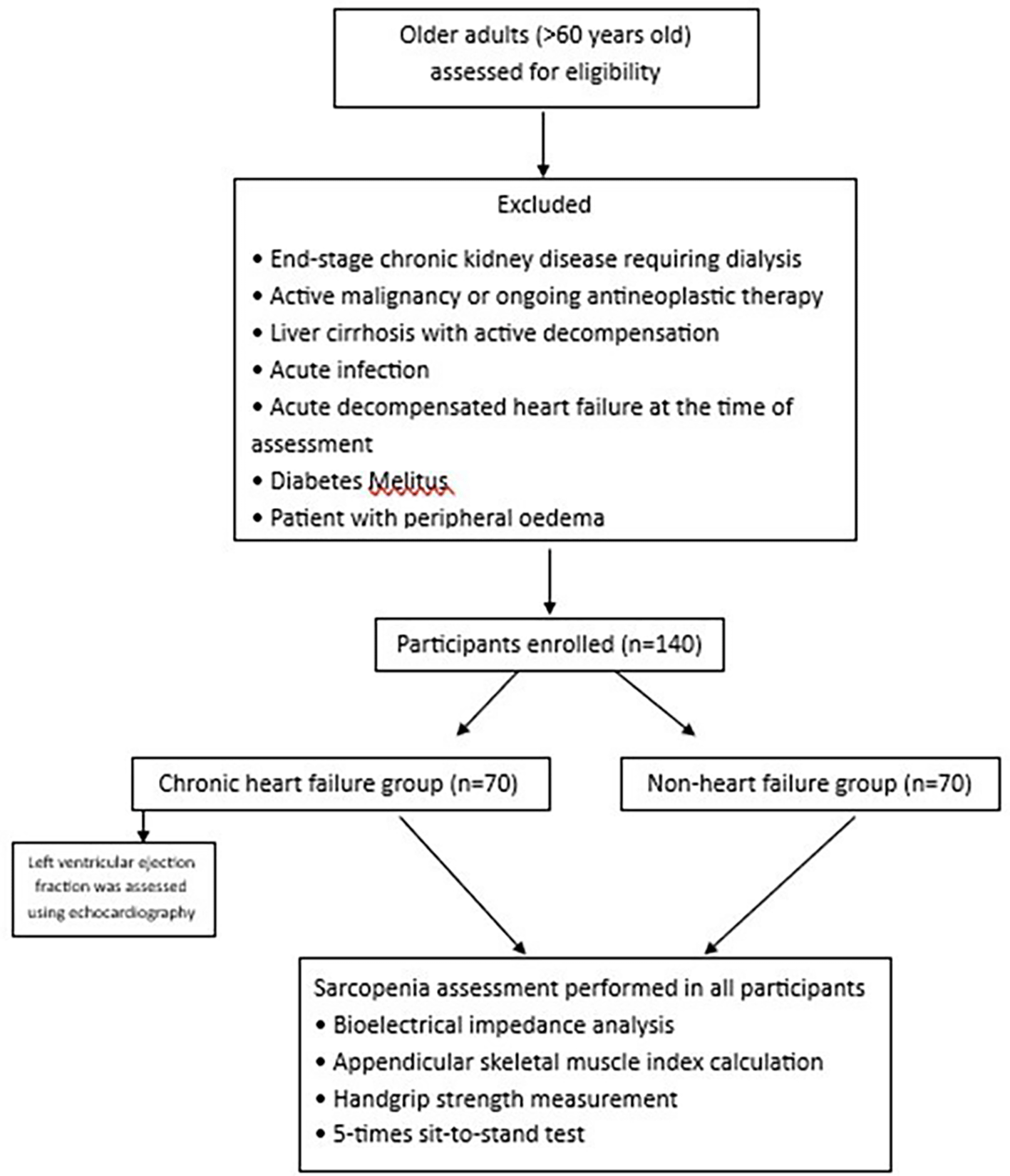
Older adults were screened based on inclusion and exclusion criteria and allocated into heart failure and non-heart failure groups.
Sarcopenia was more prevalent among participants with chronic HF than among those without HF (58.6% vs. 21.4%; p < 0.001). Chronic HF was significantly associated with sarcopenia, with an odds ratio (OR) of 5.2 (95% confidence interval [CI], 2.47–10.90) ( Table 2).
HF phenotype was significantly associated with the presence of sarcopenia (p = 0.041). Among the HF phenotypes, the highest prevalence of sarcopenia was observed in participants with HFpEF (76.2%), followed by HFrEF (62.5%) and HFmrEF (40.0%) ( Table 2).
The distribution of sarcopenia severity did not differ significantly across HF phenotypes (p = 0.575). Severe sarcopenia was observed in 73.3% of participants with HFrEF, 70.0% of those with HFmrEF, and 56.3% of those with HFpEF. The corresponding proportions of non-severe sarcopenia were 26.7%, 30.0%, and 43.8%, respectively ( Table 3).
| EF Type | Severe Sarcopenia n (%) | Non-Severe Sarcopenia n (%) | P-Value* |
|---|---|---|---|
| HFrEF | 11 (73.3%) | 4 (26.7%) | 0.575 |
| HFmrEF | 7 (70.0%) | 3 (30.0%) | |
| HFpEF | 9 (56.3%) | 7 (43.8%) |
Sex was not significantly associated with sarcopenia (p = 0.240), although sarcopenia was more frequent in men than in women (44.6% vs. 34.8%). In contrast, age was significantly associated with sarcopenia (p = 0.003). Participants aged 70 years or older had a higher prevalence of sarcopenia than those aged 60–69 years (61.8% vs. 33.0%), with an OR of 3.3 (95% CI, 1.47–7.30). Nutritional status was also significantly associated with sarcopenia (p = 0.031). Sarcopenia was more common in non-obese participants than in obese participants (46.7% vs. 28.0%), with an OR of 2.3 (95% CI, 1.07–4.73) ( Table 4).
| Variables | Sarcopenia (%) | Non-sarcopenia (%) | P-value* | OR (95% CI)* |
|---|---|---|---|---|
| Gender | ||||
| Man | 33 (44.6%) | 41 (55.4%) | 0.240 | n/a |
| Woman | 23 (34.8%) | 43 (65.2%) | ||
| Age | ||||
| 70–86 Years | 21 (61.8%) | 13 (38.2%) | 0.003 | 3.3 (1.47–7.30) |
| 60–69 Years | 35 (33.0%) | 71 (67.0%) | ||
| Nutritional Status | ||||
| Non Obese | 42 (46.7%) | 48 (53.3%) | 0.031 | 2.3 (1.07–4.73) |
| Obese | 14 (28.0%) | 36 (72.0%) | ||
Multivariable logistic regression analysis including chronic HF, age, and nutritional status showed that all 3 variables were independently associated with sarcopenia. Chronic HF showed the strongest association (adjusted OR, 6.1; 95% CI, 2.70–13.73; p < 0.001), followed by non-obese status (adjusted OR, 3.3; 95% CI, 1.40–7.83; p = 0.006) and age 70 years or older (adjusted OR, 3.2; 95% CI, 1.30–7.74; p = 0.011) ( Table 5).
| Variables | B | S.E. | Wald | OR | 95% C.I | p-value* |
|---|---|---|---|---|---|---|
| Chronic HF | 1,807 | 0,414 | 19,017 | 6.1 | 2.70–13.73 | <0.001 |
| Age (≥70 years) | 1,153 | 0,456 | 6,397 | 3.2 | 1.30–7.74 | 0.011 |
| Non Obese | 1,198 | 0,439 | 7,450 | 3.3 | 1.40–7.83 | 0.006 |
This study found a significant association between chronic heart failure (HF) and sarcopenia in older adults, with sarcopenia being substantially more prevalent among participants with HF than among those without HF. This finding supports the concept of HF as a systemic syndrome that extends beyond impaired cardiac function and affects skeletal muscle health and physical performance.8 In older adults, the coexistence of HF and sarcopenia may contribute to worsening functional status, reduced exercise tolerance, and poorer overall clinical outcomes.2
The higher burden of sarcopenia in participants with HF may be explained by several interrelated mechanisms. Chronic HF is associated with reduced skeletal muscle perfusion, persistent low-grade inflammation, neurohormonal activation, mitochondrial dysfunction, and impaired anabolic signaling, all of which may promote muscle catabolism and progressive loss of muscle mass and strength.9 These mechanisms support the biological plausibility of the observed association and reinforce the importance of recognizing sarcopenia as a clinically relevant extrapulmonary manifestation of HF rather than merely an age-related comorbidity.10
An important finding of this study was that sarcopenia prevalence was highest in participants with HFpEF. This observation is clinically relevant because HFpEF is increasingly understood as a multisystem disorder characterized by inflammation, metabolic dysfunction, multimorbidity, and reduced physiologic reserve, all of which may contribute to muscle loss and impaired physical function.4 In contrast, although the prevalence of sarcopenia differed across HF phenotypes, sarcopenia severity was not significantly associated with ejection fraction subtype. This may suggest that while HF phenotype may influence the presence of sarcopenia, the progression to more severe muscle impairment is likely multifactorial and not determined by ventricular phenotype alone.11
In addition to HF status, older age and non-obese status were independently associated with sarcopenia in this study. The relationship with age is consistent with the known biology of aging, including anabolic resistance, chronic inflammation, mitochondrial decline, and reduced physical activity, which together predispose older adults to loss of muscle mass and strength.12 The association with non-obese status may reflect lower metabolic and nutritional reserve in older adults with chronic disease.13 In the context of HF, lower body mass may also indicate reduced physiological resilience, which may further increase vulnerability to sarcopenia.14 These findings highlight the importance of evaluating body composition and nutritional status when assessing sarcopenia risk in older adults with HF.
From a clinical perspective, the present findings support routine screening for sarcopenia in older adults with chronic HF, particularly in those with HFpEF. Simple and feasible tools such as handgrip strength testing and chair stand assessment may facilitate early identification in routine clinical practice.15 Early recognition of sarcopenia may enable timely multidisciplinary interventions, including resistance exercise, nutritional optimization, and individualized management of HF and associated comorbidities.16 Such an approach may help preserve physical function and improve quality of life in this vulnerable population.
This study has several strengths. First, sarcopenia was assessed using the 2019 Asian Working Group for Sarcopenia framework, which is appropriate for Asian populations. Second, the study specifically evaluated sarcopenia across HF phenotypes, providing clinically relevant information beyond a simple comparison between participants with and without HF. Third, multivariable analysis was performed to adjust for important covariates, including age and nutritional status. Together, these strengths support the clinical relevance of the findings in older adults treated in a hospital-based setting.
This study also has several limitations. First, its single-center hospital-based design may limit the generalizability of the findings to broader community-dwelling older populations. Second, cross-sectional design precludes causal inference and does not allow determination of the temporal relationship between HF and sarcopenia. Third, bioelectrical impedance analysis may be influenced by fluid status, although only clinically stable participants were included, and those with peripheral edema were excluded to reduce this potential bias. Fourth, because of the cross-sectional design, temporal and causal relationships between chronic heart failure and sarcopenia could not be determined. Finally, biomarker and longitudinal follow-up data were not available, limiting further mechanistic and prognostic interpretation. Future multicenter studies with prospective follow-up are needed to clarify the temporal relationship between HF phenotype and sarcopenia progression.
Sarcopenia was significantly associated with chronic heart failure in older adults and was most prevalent among participants with HFpEF. Older age and non-obese status were also independently associated with sarcopenia. These findings support the importance of routine sarcopenia screening in older adults with heart failure to facilitate earlier multidisciplinary management and help preserve functional status.
This study was conducted in accordance with the ethical principles of the Declaration of Helsinki and applicable national guidelines for research involving human participants. The study was approved by the Biomedical Research Ethics Committee of the Faculty of Medicine, Hasanuddin University, Makassar, Indonesia (Registration No. 1066/UN4.6.4.5.31/PP36/2025). Written informed consent was obtained from all participants before enrollment. Participant confidentiality and anonymity were maintained throughout the study.
| Views | Downloads | |
|---|---|---|
| F1000Research | - | - |
|
PubMed Central
Data from PMC are received and updated monthly.
|
- | - |
Provide sufficient details of any financial or non-financial competing interests to enable users to assess whether your comments might lead a reasonable person to question your impartiality. Consider the following examples, but note that this is not an exhaustive list:
Sign up for content alerts and receive a weekly or monthly email with all newly published articles
Already registered? Sign in
The email address should be the one you originally registered with F1000.
You registered with F1000 via Google, so we cannot reset your password.
To sign in, please click here.
If you still need help with your Google account password, please click here.
You registered with F1000 via Facebook, so we cannot reset your password.
To sign in, please click here.
If you still need help with your Facebook account password, please click here.
If your email address is registered with us, we will email you instructions to reset your password.
If you think you should have received this email but it has not arrived, please check your spam filters and/or contact for further assistance.

Comments on this article Comments (0)