Keywords
classroom climate; teacher expectations; academic performance; HJ-Biplot

classroom climate; teacher expectations; academic performance; HJ-Biplot
The first year of university constitutes the most critical period regarding the man-agement of retention and academic success, as these have become established as strategic indicators of institutional quality and sustainability worldwide. This is because the high-est dropout rates are concentrated during this transitional stage, as students undergo a period of vulnerability in the face of psychosocial and academic adjustment demands; Zając et al. (2024) places early dropout at approximately 15% within the Australian con-text, and this attrition has reached as high as one quarter of the student body at institu-tions in the United States (Brattley, 2025). This demonstrates that the issue extends beyond a merely geographic context. Accordingly, adequate adaptation during the first semesters, characterized by social integration and emotional well-being, has become established as one of the most decisive factors for future persistence, while adjustment difficulties act as precipitating factors of dropout (Garcés-Delgado et al., 2024; Purnamasari et al., 2022).
However, within the Latin American context—characterized by significant structural gaps and marked student heterogeneity—the adequacy of predictive models focused ex-clusively on prior cognitive abilities has been questioned. It is imperative to address this issue from multidimensional approaches that explicitly incorporate the institutional con-text as an explanatory variable (Salas & Caldas, 2024). Under this premise, Demetrio et al. (2025), Rufino et al. (2025) and Sánchez-Restrepo and Louçã (2021) argue that, by failing to integrate psychosocial and structural factors, traditional assessments tend to conceal disparities of origin, disregarding “learning deprivation” and socioeconomic hierarchies, thereby conditioning academic success beyond individual talent.
Consequently, Meng and Zhang (2023) and Miao et al. (2025) suggest—from the per-spective of social cognitive theory—that performance is better explained through the syn-ergy between personal factors and the educational environment rather than static traits. Within this framework, student success is the product of a situated interaction between individual attributes and the learning environment. Furthermore, it should be considered that academic engagement and satisfaction largely depend on the quality of interpersonal relationships and the institutional culture of support, through two key constructs: class-room climate and teacher expectations (Wong & Chapman, 2023).
Classroom climate can be understood as the subjective and shared perception of the organizational, emotional, and relational dynamics of the environment; a climate charac-terized by teacher support and peer collaboration enhances the sense of belonging and emotional regulation (Kurt et al., 2021; Olivar et al., 2025). Rusticus et al. (2023) and Sá (2023) have identified that student engagement and motivation levels increase when stu-dents perceive this support, with these variables being direct precursors of academic suc-cess.
Similarly, student performance is determined by teacher expectations, which func-tion as a mechanism of interpersonal influence that defines academic success or failure. This process is known as the “Pygmalion Effect,” where in current contexts high expecta-tions translate into attainable challenges and positive reinforcement that fosters confi-dence in students (Johnston et al., 2021; Timmermans & Rubie-Davies, 2023). According to Iacob et al. (2024), the central mechanism of this effect is academic self-efficacy, which is consistent with Long and Longguang (2025), Macalisang and Bonghawan (2024), and Yang et al. (2025), who indicate that modifying teacher treatment can explain significant variance in achievement and reduce burnout, thereby promoting student self-efficacy.
However, despite the robust scientific evidence regarding the influence of these fac-tors, methodological limitations persist in educational research. Studies typically address these factors from a “variable-centered approach”, supported by linear dependency mod-els; accordingly, Otto et al. (2024) and Scrucca et al. (2023) warn that this implicitly as-sumes population homogeneity, presuming that a single causal mechanism applies to all students. Consequently, this perspective carries the risk of oversimplifying reality, ren-dering invisible those groups for whom teaching practices may not be effective or may even produce opposite results. Ignoring these between-group differences limits the under-standing of how the same pedagogical signal can be interpreted in entirely different ways by different students (Peng and Wang, 2025).
Regarding the capacity of expectations to shape complex typologies of student expe-rience (person-centered approach), a knowledge gap exists concerning how they interact with classroom climate. Ganotice et al. (2025), Perkins et al. (2021), Rentzios et al. (2025) and Stevens et al. (2023) suggest that, unlike linear methods, by centering the approach on the person it is possible to identify latent profiles or “clusters” that reveal hidden hetero-geneity, thereby enabling the identification of dissonant motivational profiles, dropout risk trajectories, among other aspects that traditional models fail to capture.
Given this structural complexity, this study adopts an exploratory multivariate analysis strategy through the HJ-Biplot technique, which, unlike standard analyses (GH or JK biplots), maximizes the quality of representation of both students and variables within a low-dimensional vector space (Cascante-Yarlequé et al., 2025; Cubilla-Montilla et al., 2021). Espinel-Obregoso et al. (2025) and Pilacuan-Bonete et al. (2022) indicate that this characteristic enables the joint exploration of individual-variable relationships, revealing interaction patterns that are lost when univariate approaches are applied. Thus, the HJ-Biplot facilitates the detection of homogeneous groupings of subjects (experience ty-pologies) that are not easily visualized, validating its robustness for determining behav-ioral heterogeneity in educational contexts (Espinoza et al., 2024; Miranda et al., 2022; Sánchez-García et al., 2025).
Furthermore, this study is relevant as it is situated within the public university sys-tem of Ecuador, transcending the local scope as a representative case, since, as Muftahu et al. (2023) indicate, it is necessary to manage retention in a context of massification and diversity, particularly given the existing tensions in emerging economies. In these re-source-scarce settings, Ssentongo (2025) and Versfeld et al. (2025) warn that low teacher interaction constrains engagement during the first year of study, which has led early so-cial integration and a sense of belonging to become established as key factors in reducing equity gaps (Kamkankaew et al., 2024; Matz et al., 2023).
Specifically, this study analyzes students in the early semesters at the Faculty of Ed-ucation, Science, and Technology (FECYT) of Universidad Técnica del Norte. This popula-tion is strategic because, as pre-service teachers, their perception of classroom climate has a dual impact, acting as a motivational resource for their own retention (Ma & Wei, 2022; Panganiban et al., 2025) and in adverse contexts, as a factor that may diminish vocational commitment (López-García et al., 2023); on the other hand, exposure to environments with high emotional intelligence equips future teachers to replicate positive climates, serving as a predictor of the performance of future generations (Arifin et al., 2024; Channa et al., 2025).
Social cognitive theory from this perspective suggests that academic behavior is not the result of isolated variables, but rather of a systemic configuration of environmental perceptions. Accordingly, it is necessary to move beyond traditional variable-centered ap-proaches to understand the complexity of the student experience and thus adopt a per-son-centered approach. In this way, it becomes feasible to identify how teacher expecta-tions and classroom climate are integrated across different experience profiles, which may condition academic performance. In this regard, this study focuses on two objectives: (1) to reveal the latent structure of the student experience by identifying typologies based on the interaction of classroom climate and teacher expectations; and (2) to determine the extent to which this perceptual heterogeneity discriminates actual academic performance, con-sidering the possible conditioning effect of sociodemographic factors.
Given its nature, this study is defined as analytical research with a quantitative ap-proach (Hurtado, 2010). The main objective was the reinterpretation of the student expe-rience by decomposing it into its intrinsic components—perceptions of climate and ex-pectations—to identify underlying patterns.
The design was field-based, non-experimental, and cross-sectional. Data were col-lected directly from reality at a specific point in time; no variables were deliberately ma-nipulated; data collection was conducted at a single temporal point to describe the current state of the variables. The scope of this study extends beyond the descriptive level, as mul-tivariate techniques were employed to establish structural relationships among latent variables.
The population comprised students from Universidad Técnica del Norte (Ecuador), specifically students in the early levels of FECYT. Purposive non-probabilistic sampling was employed, as participants were selected based on accessibility and consent criteria. The sample consisted of N = 469 students (7 records were eliminated due to missing val-ues). Inclusion criteria were: being legally enrolled and completing the entire battery of in-struments. Regarding the sociodemographic profile, the distribution was: by gender, 26% male, 73.8% female, and 0.2% who preferred not to say, with ages ranging from 17 to 52 years.
The first stage of the study—the operational phase—consisted of obtaining institu-tional permissions from FECYT and the subsequent administration of instruments (digit-ized on the Google Forms platform) through official communication channels, which re-stricted access to institutional accounts only, thereby ensuring informant authenticity and preventing case duplication. Student participation was conducted under strict ethical principles. Upon accessing the questionnaire, each participant validated an informed consent form, all data were anonymized, and the confidentiality of responses was guar-anteed, along with the voluntary nature of participation in data collection.
The following stage—the audit phase—took place once fieldwork was completed, proceeding with a data audit (data cleaning). During this stage, response vectors were cu-rated, inspected, and cleaned to identify invariance patterns or outliers that could com-promise or distort the geometric projection on the factorial planes.
Following the verification of internal consistency and database integrity, the final sample was validated for subsequent statistical processing, ensuring that all data met the quality standards required for dimensionality reduction techniques.
For data collection, a digitized psychometric battery was employed, structured in three differentiated sections:
1. Sociodemographic and Performance Variables: an ad hoc instrument designed to collect data on age, sex, program of study, and academic self-report metrics (minimum grade, maximum grade, and cumulative grade point average on a 0–10 scale).
2. Classroom Climate Scale (CCS): an adaptation of the Classroom Climate Scale (Fraser, 1998). Four dimensions of the educational environment were consid-ered—Physical Environment, Teacher-Student Interactions, Peer Relations, and Learning Orientation—using a 7-point Likert scale. The internal consistency of the instrument yielded a Cronbach’s alpha α > .70.
3. Scale of Perceived Teacher Expectations (SPED): an adaptation of the instru-ment for measuring the “Pygmalion Effect” in the classroom. It comprised four subscales: Encouragement of Participation, Personal Consideration, Avoidance of Negative Interac-tions, and Lack of Recognition, using a 5-point Likert scale.
Data analysis was based on multivariate statistical techniques, given their capacity to manage the complexity of interactions among multiple variables simultaneously. It was conducted in the R statistical environment (v.4.5.1) through the RStudio interface, sup-ported by the FactoMineR library for factorial methods and factoextra for visualization. This analysis followed three phases:
1. Descriptive and Psychometric Analysis: the reliability of each scale dimension was corroborated using Cronbach’s alpha coefficient (0.82–0.93) and McDonald’s omega (0.82–0.93), ensuring the internal consistency of the measured constructs. Subsequently, descriptive statistics of central tendency and dispersion were calculated.
2. HJ-Biplot Multivariate Technique: the HJ-Biplot technique was used to reveal the latent structure of the data (Galindo Villardón, 1986). This technique has a superior capacity compared to the Classic Biplot (Gabriel, 1971), ya que, al contrario de traditional probabilistic models —latent class analysis (LCA)—this technique does not impose strict assumptions about data distribution, allowing a geometric exploration of variables and individuals within the same metric space. This characteristic facilitates the visual inter-pretation of correlations among perceptual dimensions and the characterization of stu-dent profiles without the constraints of purely numerical algorithms, improving the qual-ity of representation of both row markers (students) and column markers (variables).
3. Classification (Cluster Analysis) and Contrast Testing: a hierarchical cluster analysis was applied to the retained factorial coordinates (dimensions 1 and 2, which ex-plain the greatest variance) using Ward’s method and squared Euclidean distance, iden-tifying student clusters with homogeneous perceptions. For external validation, the nor-mality assumption was preliminarily verified through the Lilliefors and Kolmogo-rov-Smirnov tests; this supported the use of non-parametric statistics. Subsequently, the Kruskal-Wallis H test was applied to compare academic performance across clusters and the chi-square test for categorical variables (p < .05). Finally, Dunn’s post-hoc analysis was conducted to precisely determine the specific pairs of profiles with significant differences.
The preliminary assessment of the distributional properties of the data revealed a systematic deviation from the normality assumption across all quantitative variables an-alyzed. The application of the Lilliefors and Kolmogorov–Smirnov goodness-of-fit tests revealed markedly low significance values across all variables under examination. This pattern was consistent for the academic performance indicators (Minimum Grade: D = 0.14, p < 0.001) as well as for the full range of psychometric dimensions assessed. Particu-larly pronounced deviations from normality were identified in scales such as Teaching Orientation (p ≈ 4.5 × 10−44), underscoring the systematic nature of this distributional ir-regularity. Given these findings, the assumptions underlying traditional parametric pro-cedures such as ANOVA could not be reasonably sustained. Consequently, rank-based nonparametric methods were adopted as the more appropriate analytical framework, leading to the selection of the Kruskal–Wallis H test as the primary statistic for be-tween-group comparisons.
A hierarchical cluster analysis conducted on the factorial coordinates derived from the HJ-Biplot ( Figure 1) revealed an optimal segmentation structure composed of four dis-tinct student profiles, collectively accounting for the heterogeneity observed in the univer-sity experience across the full sample (N = 469). The most prevalent of these was Profile 2, designated as Moderate-Positive Perception, which encompassed 39.9% of participants (n = 187). Students in this group reported ratings that fluctuated closely around the popula-tion arithmetic mean, positioning this cluster as a normative reference against which the remaining profiles can be meaningfully interpreted.
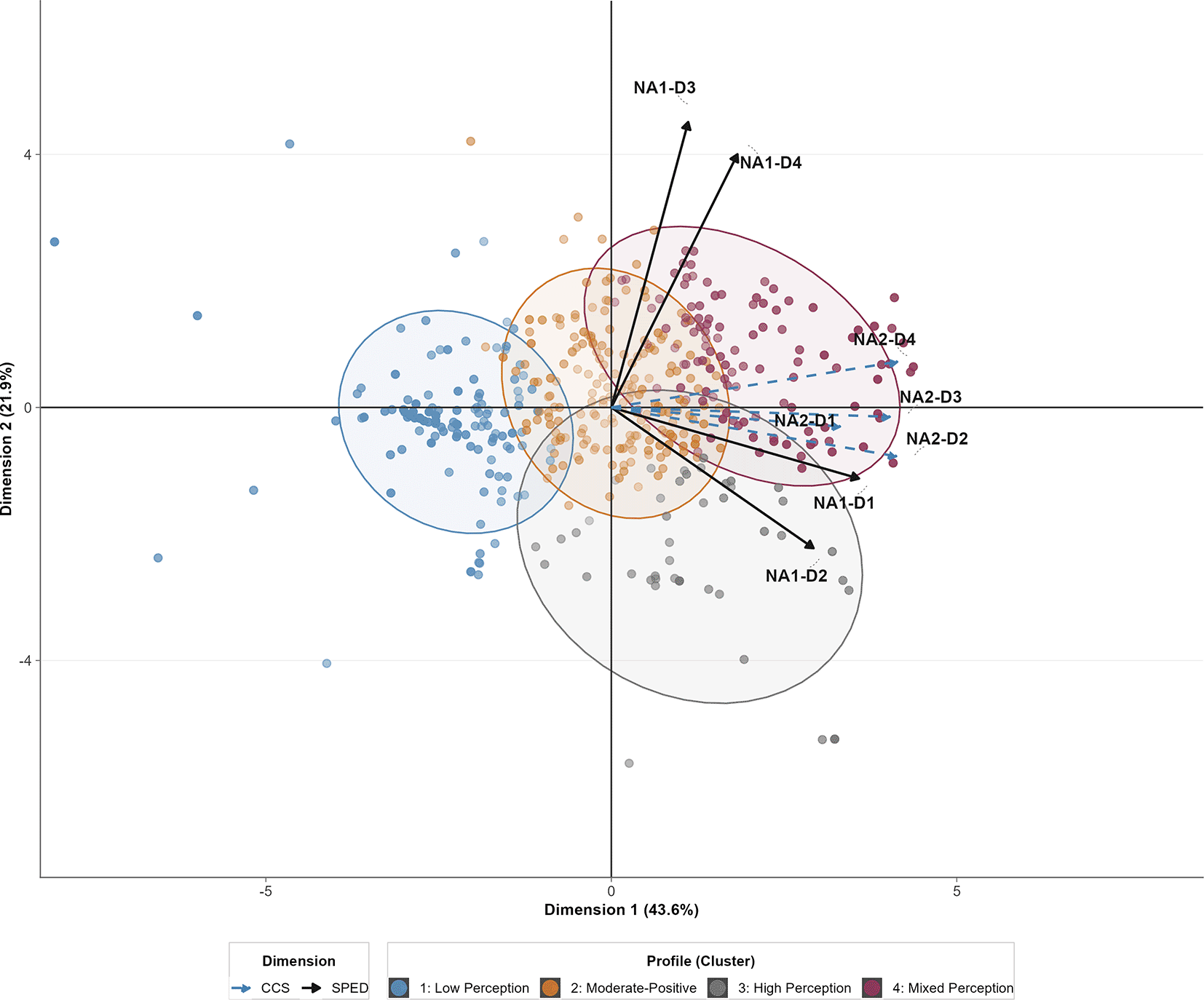
Note: The biplot displays the joint projection of individuals (students) and variables (dimensions) in a low-dimensional space, accounting for 71.5% of the total variance (Dimension 1 = 42.0%; Dimension 2 = 29.5%). Point transparency indicates the quality of representation (individual contribution to the dimensions). Ellipses represent the 95% confidence intervals for the four identified latent profiles: Cluster 1 (Low Perception), Cluster 2 (Moderate-Positive), Cluster 3 (High Perception), and Cluster 4 (Mixed Perception). Solid vectors represent the SPED dimensions: NA1-D1 (Promotion of participation), NA1-D2 (Personal consideration), NA1-D3 (Avoidance of negative interactions), and NA1-D4 (Lack of recognition). Dashed vectors correspond to the CCS dimensions: NA2-D1 (Physical environment), NA2-D2 (Faculty-student interactions), NA2-D3 (Peer relationships), and NA2-D4 (Faculty orientation toward learning). The angle between vectors reflects their correlation (acute angles indicate positive correlation), while the distance between points and vectors illustrates the specific perceptual tendencies of each cluster.
Profile 1, characterized by Low Perception and representing 26.2% of the sample (n = 123), exhibited statistically significant declines across teacher support dimensions. This was most evident in the Recognition dimension, where a critical test value of v = 6.41 (p < 0.001) indicated a systematically perceived absence of external validation from instruc-tors. At the opposite end of the experiential spectrum, Profile 3 (High Perception) captured the most favorable academic experiences recorded in the study. Although this cluster was the smallest in size, accounting for only 10.0% of students (n = 47), its members reported levels of teacher recognition substantially above the global average (v = 12.64), a finding consistent with high degrees of institutional integration and academic support.
Profile 4, labeled Mixed Perception and comprising the remaining 23.9% of the sam-ple (n = 112), presented a more nuanced pattern. Students within this cluster combined favorable ratings in learning orientation with comparatively lower scores in tangible en-vironmental aspects such as physical infrastructure, reflecting a fragmented yet function-ally adaptive educational experience.
Upon examining the relationship between these psychosocial profiles and academic performance using the Kruskal-Wallis test, a significant dissociation in performance in-dicators was detected. Although no statistically significant differences were found in the Maximum Grade (H3 = 4.26, p = 0.235, = 0.002) ( Figure 2), denoting homogeneity in performance regardless of the perception of the school climate, the impact on the Minimum Grade (H3 = 23.01, p < 0.001) is relevant, since the effect here (= 0.043) shows a small to moderate prac-tical magnitude, confirming that the variation in performance floors can be adequately explained by membership in the different perceptual profiles. η^2 η^2.
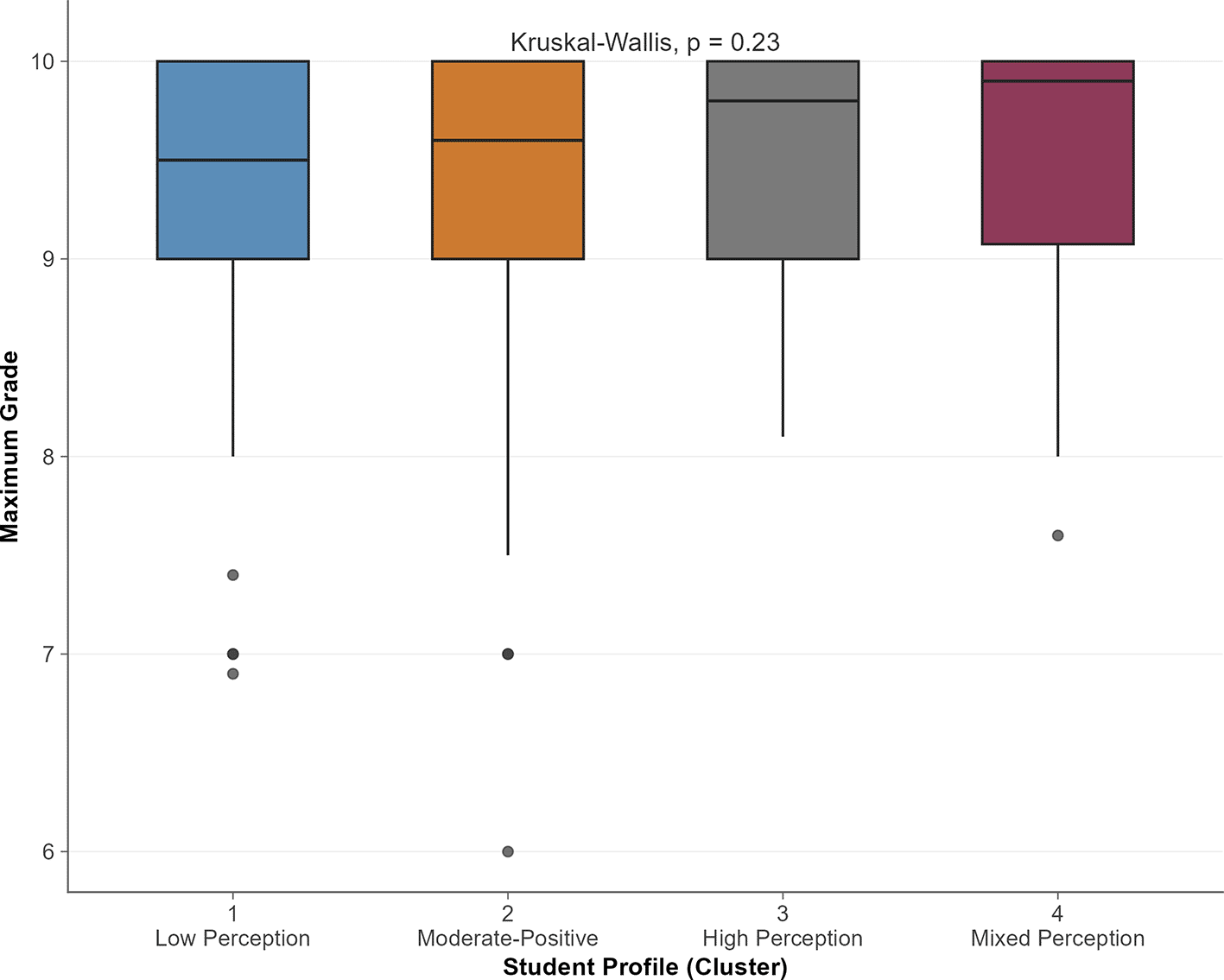
Note: Boxplots illustrate the distribution of the highest grades achieved by students across the four identified latent profiles. The central horizontal line within each box represents the median maximum grade, while the lower and upper hinges correspond to the first and third quartiles, respectively. Whiskers extend to the smallest and largest values within 1.5 times the interquartile range, with outliers plotted individually. The non-parametric Kruskal-Wallis H test indicates no statistically significant differences in maximum grades across the four profiles (p > 0.05). This demonstrates a homogeneous academic ceiling, suggesting that while perceptual profiles severely impact the minimum grades (academic vulnerability), they do not restrict the students’ capacity to achieve maximum scores.
Dunn’s post-hoc analysis with Bonferroni correction clarified that the observed dis-crepancies were not generalized across all profile comparisons but were instead concen-trated in the gap between Profile 1 (Low Perception) and the better-adjusted clusters, namely Profile 2 and Profile 4, both yielding adjusted p-values below 0.001. This result suggests that an adverse academic climate does not necessarily preclude the attainment of excellence as measured by maximum grades, yet it does appear to heighten students’ vul-nerability to academic failure or persistently low baseline performance.
The contingency analysis conducted by means of Pearson’s chi-square test further demonstrated that membership in these perceptual profiles is not a stochastic outcome but is instead structurally conditioned by sociodemographic characteristics. As presented in Table 1, variables associated with external caregiving responsibilities showed the strongest associations with profile membership. Marital status (X2 = 39.27X2 = 39.27, p = 0.004) and parenthood (X2 = 18.11X2 = 18.11, p < 0.001) emerged as particularly influential, indicating that family obligations meaningfully modulate how students perceive their educational environment. Significant associations were also observed with respect to sex and occupational status. By contrast, factors such as ethnicity, income level, and non-local student status did not exhibit a discriminant effect on profile formation, suggesting that structural constraints of a relational and economic nature operate selectively rather than uniformly across the student population.
The identification of four differentiated student profiles through hierarchical cluster analysis corroborates the usefulness of adopting person-centered approaches to unravel the heterogeneity of the university student body. While traditional variable-centered anal-yses tend to assume population homogeneity, the present findings align with the postula-tions of (Otto et al., 2024; Peng and Wang, 2025), who argue that students combine learn-ing strategies and perceptions of teacher leadership in unique ways, forming latent sub-groups that would remain hidden in global averages. In this study, the distinction be-tween a “Low Perception” profile (Cluster 1) and a “High Perception” profile (Cluster 3) is consistent with the findings of (Peng and Wang, 2025), who identified “promedio” y “alta” perception profiles of transformational leadership, demonstrating that those in high-perception groups consistently report better psychological and self-efficacy out-comes.
However, the emergence of Profile 4 (“Mixed Perception”) transcends the traditional dichotomy of positive versus negative experiences. This group suggests the existence of academic resilience—by combining a high learning orientation with deficient ratings of the physical environment—considering pedagogical and interpersonal factors such as the teacher-student relationship as mitigating elements against infrastructure deficiencies. In this regard, Depoo et al. (2022) and Wong and Chapman (2023) indicate that human in-teraction and support carry considerably greater weight in the perception of quality and satisfaction than material dimensions. Furthermore, Hikmat (2025) and Kassaw and Demareva (2023) suggest that social capital and validation compensate for deficiencies in the physical environment, a dynamic evidenced in the maintenance of performance and well-being in resource-limited contexts.
Similarly, the fact that the “High Perception” group in this study is characterized by elevated levels of teacher recognition reinforces the theory of (Johnston et al., 2021), who maintain that the communication of high expectations by faculty acts as a mechanism that instills confidence and agency in students, positively altering their academic self-concept.
A particularly revealing finding of this research is the dissociation of the impact of school climate on academic performance: the perception of the environment significantly influences the minimum grade but not the maximum grade. This suggests that a positive classroom climate and clear teacher expectations act as a protective factor against aca-demic failure, rather than as an unlimited driver of excellence, where a ceiling effect may exist.
This phenomenon could be explained by the nature of high-performing stu-dents—who typically possess robust self-regulated learning (SRL) mechanisms and in-trinsic motivation. According to Lourenço and Paiva (2024) and Martin et al. (2022), these emotional management and metacognitive skills would enable them to face academic challenges more effectively, thereby making them less dependent on and vulnerable to ex-ternal environmental conditions.
Conversely, students who exhibit lower levels of autonomy and self-regulation (at-risk students) require explicit support that provides them with a positive climate to prevent dropout, rendering them highly dependent on environmental support and design (Luo et al., 2021).
These scenarios are consistent with what is posited by (Hadwin et al., 2022), as it is evidenced that individual agency acts as a buffer; that is, as academic competence and self-regulation increase, students distance themselves from the link between an adverse context and failure, fostering greater field independence.
Likewise, this dynamic is consistent with the association of a negative climate and lack of support with academic vulnerability and dropout risk (Garcés-Delgado et al., 2024; Zając et al., 2024). Just as Kurt et al. (2021) observed that a positive classroom climate fos-ters learning and satisfaction, the current results indicate that the absence of this support (Low Perception profile) increases susceptibility to low baseline performance. This is in agreement with the perspective of (Brattley, 2025), who emphasizes that academic recov-ery interventions are critical for at-risk students, suggesting that the psychosocial envi-ronment is decisive in preventing students from falling into performance zones that jeop-ardize their retention.
On the other hand, the strong association found between cluster membership and so-ciodemographic variables such as marital status and parenthood introduces a structural dimension into the perception of the educational climate. Students with greater family burdens may experience university differently, which is congruent with what is presented by (Purnamasari et al., 2022) regarding the influence of individual and environmental factors on university adjustment.
It is pertinent to note that, contrary to the traditional approach, social stratification variables—such as economic income or ethnic self-identification—did not show a signifi-cant discriminant role in the formation of these profiles. This suggests that, in public edu-cation contexts—such as the one studied—life-cycle tensions and role conflict substan-tially condition the academic experience to a greater extent than socioeconomic status. In this regard, Conway et al. (2021) and Wladis et al. (2024) warn that “time poverty” is an underlying mechanism that can largely explain the inequalities traditionally attributed to gender, ethnicity, or income.
Among students with parenting responsibilities or other non-traditional life circum-stances, caregiving burdens and the scarcity of discretionary time emerge as decisive sources of stress with direct consequences for academic performance, institutional reten-tion, and the perception of the educational climate (O’Connor et al., 2022; Osuman et al., 2025; Pérez-Jorge et al., 2025). These realities call for a substantive reformulation of student support models, one that moves beyond narrowly economistic conceptions of student need toward equity-centered frameworks that structurally address time constraints, scheduling flexibility, and the broader challenge of reconciling academic and personal responsibilities (Chick et al., 2025; Kalavar et al., 2021).
The imperative to manage external obligations may also restrict meaningful partici-pation in extracurricular and university governance activities, which Sá (2023) identifies as foundational for the development of transversal competencies and social integration into campus life. If students with dependent children tend to concentrate within particular perceptual profiles, this pattern may reflect not merely a difference in subjective experience but the presence of structural barriers that impede full academic and social participation. This interpretation aligns with the findings of Garcés-Delgado et al. (2024), who identified work and family responsibilities as critical determinants in student trajectories toward either persistence or early departure from higher education.
In light of these findings, future research should adopt longitudinal designs that al-low for the examination of the temporal stability of these perceptual profiles and their predictive capacity for long-term dropout or graduation, overcoming the limitations of cross-sectional designs noted by (Zając et al., 2024). It would be pertinent to investigate, through mixed methods including in-depth interviews as proposed by (Garcés-Delgado et al., 2024), how students in the “Low Perception” profile negotiate their academic identities in the face of a lack of teacher validation. Likewise, investigating whether specific trans-formational leadership interventions in the classroom, such as those described by (Peng and Wang, 2025), can facilitate the mobility of students from risk profiles toward profiles of greater adjustment and self-efficacy would constitute a valuable contribution to the management of student retention.
This study demonstrates that the subjective experience of university students is not monolithic but rather is configured into typological profiles in which the perception of teacher expectations and classroom climate play a determining role as buffers against low academic performance. The evidence that a negatively perceived environment increases vulnerability in minimum grades without affecting the performance ceiling underscores the hygienic and protective function of the school climate. Combined with the condition-ing influence of family responsibilities, these results urge higher education institutions to move beyond generalist approaches and adopt differentiated support strategies that con-sider both the psychosocial diversity and structural barriers of the student body to foster successful and equitable academic integration.
It was possible to determine that the interaction between climate and expectations is not flat but hierarchical, as the Teacher Recognition dimension was the predominant dis-criminant between success and risk profiles. Furthermore, it was evidenced that high Learning Orientation can compensate for perceived deficiencies in the Environment (veri-fied by the existence of the “Mixed Profile”. It is evident that intangible fac-tors—interpersonal validation and pedagogical approach—hold functional preponder-ance over tangible infrastructure in the construction of the university experience.
Perceptual heterogeneity is not significantly conditioned by material socioeconomic factors—income—or cultural factors—ethnicity—contrary to traditional equity gap ap-proaches. This heterogeneity is primarily attributable to life-cycle variables and role bur-den—marital status and parenthood. Therefore, the issue of retention is redefined in this context, with the role conflict and time availability faced by students with family respon-sibilities constituting the main barriers to positive perceptual integration, rather than the lack of direct economic resources.
The study was conducted in accordance with the Declaration of Helsinki and approved by the Research Ethics Committee of the Universidad Técnica del Norte (Protocol code: UTN-FECYT-CEI-2026-007-C; Date of approval: 14 November 2025). Written informed consent was obtained from all subjects involved in the study via electronic forms to participate and for the use of their anonymized data for research purposes. All participating students were legally adults (18 years or older) at the time of data collection. Therefore, no minors were involved in this study and no guardian consent was required.
| Views | Downloads | |
|---|---|---|
| F1000Research | - | - |
|
PubMed Central
Data from PMC are received and updated monthly.
|
- | - |
Provide sufficient details of any financial or non-financial competing interests to enable users to assess whether your comments might lead a reasonable person to question your impartiality. Consider the following examples, but note that this is not an exhaustive list:
Sign up for content alerts and receive a weekly or monthly email with all newly published articles
Already registered? Sign in
The email address should be the one you originally registered with F1000.
You registered with F1000 via Google, so we cannot reset your password.
To sign in, please click here.
If you still need help with your Google account password, please click here.
You registered with F1000 via Facebook, so we cannot reset your password.
To sign in, please click here.
If you still need help with your Facebook account password, please click here.
If your email address is registered with us, we will email you instructions to reset your password.
If you think you should have received this email but it has not arrived, please check your spam filters and/or contact for further assistance.

Comments on this article Comments (0)