Keywords
innovative work behavior, workplace spirituality, leadership, job characteristic, coworker incivility

innovative work behavior, workplace spirituality, leadership, job characteristic, coworker incivility
Public sector organizations today operate in environments marked by rapid change, heightened uncertainty, and increasing complexity. To remain effective and responsive, they must embrace innovation and translate it into concrete practices (Afridi et al., 2020). Central to this process are employees, who serve as the primary agents of innovation by identifying opportunities, generating ideas, and implementing changes that enable organizations to adapt, improve productivity, and sustain competitiveness (Montani et al., 2018). Within this context, innovative work behavior (IWB) emerges as a critical construct for organizational success. Defined as the generation, adoption, and implementation of new ideas related to products, technologies, or work practices (Yuan & Woodman, 2010), IWB is widely acknowledged as a determinant of long-term performance (Bos-Nehles et al., 2017). Its outcomes range from service and process improvements to the development of new systems and practices that ensure organizational sustainability (Crossan & Apaydin, 2010).
The organizational environment plays an essential role in encouraging employees’ innovative efforts, as supportive conditions can significantly enhance engagement in the innovation process (Becuwe et al., 2022). In this regard, workplace spirituality (WPS) has increasingly been recognized as a promising enabler of IWB (Garg & Saini, 2023). WPS is understood as a multidimensional construct encompassing meaningful work, a sense of community, and value alignment between employees and their organizations (Fagley & Adler, 2012). Prior studies consistently show that WPS fosters creativity and innovation (Bantha & Nayak, 2020; Prasanna & Madhavaiah, 2018; Ranasinghe & Samarasinghe, 2019), while also contributing to employee well-being, lower stress, reduced turnover, and enhanced organizational commitment (Harumi et al., 2021). In contrast, the absence of WPS has been linked to absenteeism, disengagement, and diminished innovative capacity (Giacalone & Jurkiewicz, 2010).
These dynamics are particularly salient for public sector information institutions, including galleries, libraries, archives, and museums (GLAM), which face unique structural and operational challenges. Operating in environments characterized by competing demands, limited market pressures compared to the private sector, and responsibilities to deliver public value through high-quality information services, GLAM institutions often struggle to maintain innovation (Delfgaauw & Dur, 2008). Furthermore, leadership practices and workplace tensions—such as coworker incivility—may weaken employees’ ability to contribute innovatively (Srirahayu, 2023). These complexities underscore the importance of identifying mechanisms that can sustain innovation in such contexts.
Although WPS has demonstrated substantial potential in advancing innovation, the pathways through which it facilitates IWB in Indonesian information institutions remain underexplored. Addressing this gap, the present study seeks to examine the following research questions:
1. How do leadership style, job characteristics, and coworker incivility influence WPS and IWB?
2. Does WPS mediate the relationship between these factors and IWB?
3. What are the practical implications for fostering innovation in public-sector information institutions?
The objectives of this study are threefold:
1. To examine the relationships among leadership style, job characteristics, coworker incivility, workplace spirituality, and innovative work behavior in GLAM institutions.
2. To test the direct and indirect effects of workplace spirituality on innovative work behavior.
3. To provide practical recommendations for strengthening innovation through workplace spirituality in public information institutions.
This research is essential for both theoretical and practical reasons. Theoretically, it contributes to the literature by integrating workplace spirituality into the study of innovative work behavior within public sector institutions, a setting that has been underexplored compared to private organizations. Practically, the findings will offer insights for managers and policymakers in GLAM institutions to design strategies that enhance employee well-being, foster creativity, and improve institutional performance through workplace spirituality. By focusing on the Indonesian context, this study further enriches the global discourse on workplace spirituality and innovation by providing evidence from a developing-country perspective.
IWB refers to employees’ development, adoption, and implementation of new ideas for products, technologies, and work methods, and is widely recognized as a determinant of organizational success (Yuan & Woodman, 2010). Rather than focusing solely on innovation outcomes, IWB emphasizes the process through which employees identify opportunities, generate ideas, champion them, and implement solutions (De Jong & Den Hartog, 2010). Sustaining IWB is crucial for organizational effectiveness, survival, and long-term development.
Research on IWB has spanned both private and public organizations, with recent reviews highlighting personal, team, and organizational antecedents (Srirahayu et al., 2023). However, empirical studies within information institutions remain limited, with most focusing on libraries and museums. Little is known about IWB in archives and galleries, where innovation is typically examined through product-oriented practices rather than employee behavior (Hintz, 2015; Vitkauskaitė, 2017). Table 1 summarizes prior IWB studies in information institutions.
| No | Author(s), Year | Context/Institution | Method | Main Findings |
|---|---|---|---|---|
| 1 | Peng (2018) | Libraries | Quantitative | Job involvement and LMX significantly influence IWB; LMX moderates this relationship. |
| 2 | Chuang et al. (2019) | Libraries | Quantitative case study | Environmental and organizational barriers hinder IWB processes. |
| 3 | Kermani & Solhdoost (2017) | Libraries | Quantitative | Innovation climate explains 44% of variance in librarians’ IWB. |
| 4 | Sa’ari, Roslim et al. (2018) | Libraries | Quantitative case study | Media networks, organizational commitment, and teamwork cooperation support IWB. |
| 5 | Sa’ari, Idrus et al. (2018) | Libraries | Quantitative case study | Opportunity recognition for IWB is supported by knowledge, prior experience, self-awareness, and networks. |
| 6 | Kung et al. (2020) | Libraries | Quantitative | Ambidextrous leadership exerts the strongest influence on IWB. |
| 7 | Goulaptsi et al. (2019) | Museums | Quantitative | Demographics, transformational leadership, and task orientation significantly explain museum employees’ IWB. |
Coworker incivility—manifested in dismissive comments, social exclusion, or subtle disrespect—undermines psychological safety and drains cognitive-emotional resources needed for creativity. Drawing on Affective Events Theory (Weiss & Cropanzano, 1996) and Conservation of Resources Theory (Hobfoll, 1989), incivility reduces trust, knowledge sharing, and willingness to take risks, thereby inhibiting IWB (Scott & Bruce, 1994; Janssen, 2004).
Coworker incivility negatively affects IWB.
Workplace spirituality encompasses meaningful work, sense of community, and value alignment (Ashmos & Duchon, 2000). Incivility erodes trust and connectedness, weakening these dimensions and limiting employees’ sense of purpose (Giacalone & Jurkiewicz, 2010). Reducing incivility, conversely, fosters harmony and care, enhancing spiritual work climates (Rego & Pina e Cunha, 2008).
Coworker incivility negatively affects workplace spirituality.
Core job dimensions—skill variety, task significance, autonomy, and feedback—enhance intrinsic motivation and responsibility, which in turn encourage creativity and innovation (Hackman & Oldham, 1976). Autonomy fosters experimentation, while feedback supports idea refinement. Meaningful and significant tasks further strengthen engagement in innovative behaviors (De Jong & Den Hartog, 2010).
Job characteristics positively affect IWB.
Well-designed job characteristics also foster workplace spirituality by enhancing meaning, purpose, and connectedness (Ashmos & Duchon, 2000). Autonomy aligns employees’ decisions with their values, while significance and feedback enhance purpose and growth, thus nurturing spiritual fulfillment at work.
Job characteristics positively affect workplace spirituality.
Leadership shapes organizational climate and meaning-making processes. Transformational and servant leadership foster vision, hope, compassion, and ethical alignment, which strengthen workplace spirituality (Kim Quy et al., 2023; Mohammed & Elashram, 2022). Conversely, authoritarian leadership undermines these dimensions.
Leadership style positively affects workplace spirituality.
Supportive leadership is a primary driver of IWB, as it promotes trust, autonomy, and intellectual stimulation. Transformational and servant leadership foster risk-taking and knowledge sharing, which enhance idea generation, promotion, and implementation (Afsar & Umrani, 2018; Rehman et al., 2023).
Leadership style positively affects IWB.
Workplace spirituality enriches meaning, purpose, and interconnectedness, which strengthen employees’ motivation and creativity. Spiritual fulfillment enhances collaboration, reduces fear of failure, and fosters innovation-supportive climates (Petchsawang & Duchon, 2019).
Workplace spirituality positively affects IWB.
Workplace spirituality represents employees’ ability to bring their whole selves to work without being tied to specific religious practices. Prior research links workplace spirituality with job satisfaction, engagement, and productivity (Lee et al., 2014; Vyas-Doorgapersad, 2017). As an enabler, workplace spirituality is influenced by leadership style, job characteristics, and coworker interactions, and in turn enhances IWB (Garg & Saini, 2023).
Workplace spirituality mediates the relationship between coworker incivility and IWB.
Workplace spirituality mediates the relationship between job characteristics and IWB.
Workplace spirituality mediates the relationship between leadership style and IWB.
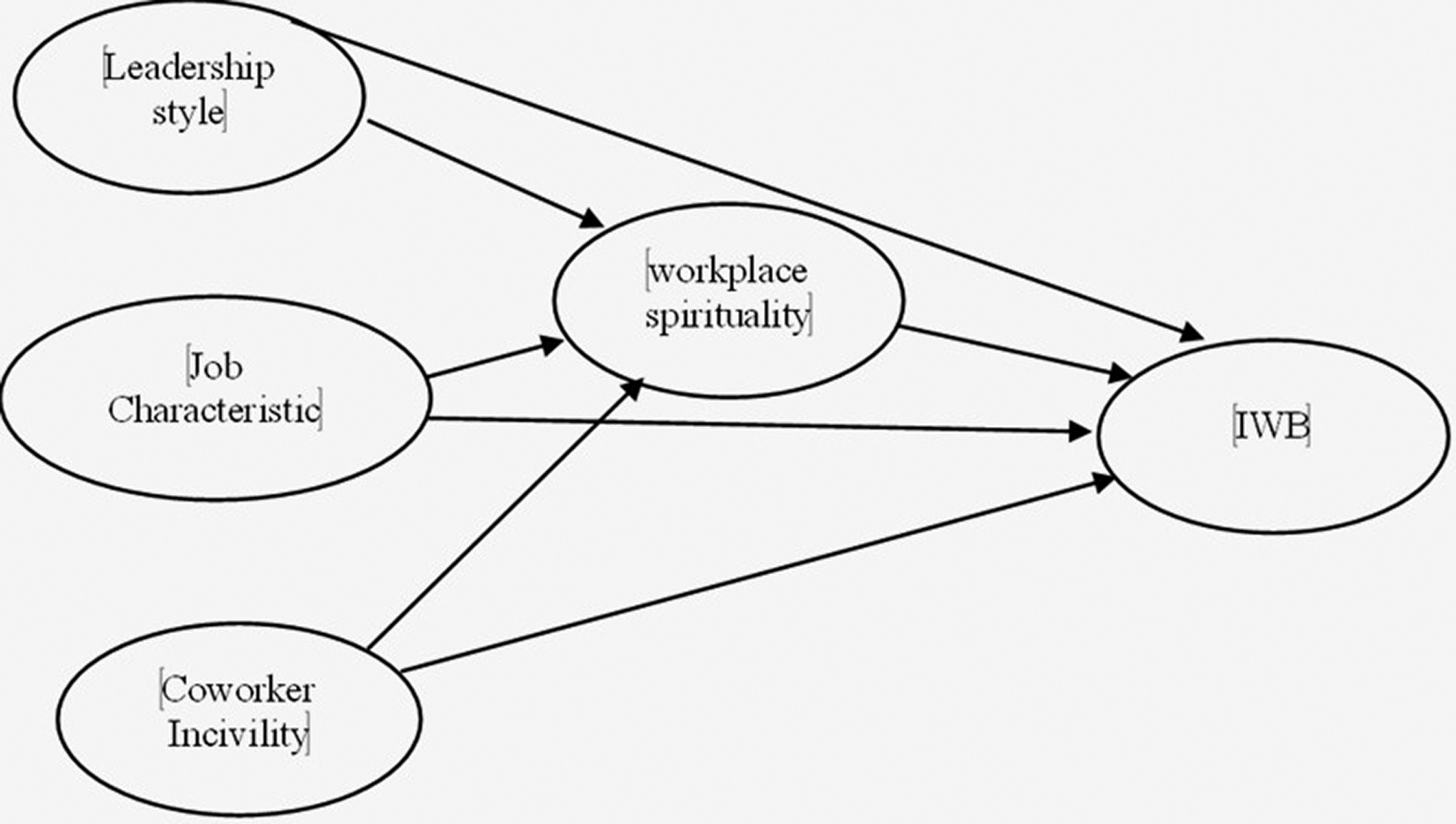
This study examines the relationships among leadership style, job characteristics, coworker incivility, workplace spirituality, and IWB ( Figure 1). Based on prior literature, leadership style (LS), job characteristics (JC), and coworker incivility (CI) are posited as antecedents of workplace spirituality (WPS). In turn, WPS functions both as an independent predictor and as a mediator influencing IWB.
This research utilized a quantitative methodology to investigate the associations among leadership style, job characteristics, coworker incivility, workplace spirituality, and innovative work behavior (IWB). A confirmatory analysis was conducted to assess the congruence of the empirical data with the proposed measurement and structural models (Gatignon, 2010).
The study concentrated on personnel employed within public-sector information institutions in Indonesia. These institutions include galleries, libraries, archives, and museums (GLAM). To address the research gap in archives and galleries, these institutions were included alongside libraries and museums. The sample consisted of 150 employees, selected through a purposive sampling approach, ensuring representation across different types of institutions. The relatively limited number of employees in galleries and museums was addressed by combining respondents from multiple institutions.
Data were collected through a structured questionnaire distributed electronically using Google Forms and disseminated via WhatsApp, social media, and professional networks. Informed consent was obtained from all participants prior to data collection. The consent was provided in written form, and participants were informed about the purpose of the study, confidentiality, and their right to withdraw at any time. Items were adapted from validated scales in previous research:
• Workplace Spirituality: Ashmos & Duchon (2000), Milliman et al. (2003)
• Innovative Work Behavior: Scott & Bruce (1994), Den Hartog & De Jong (2010)
• Job Characteristics: Hackman & Oldham (1976)
• Leadership Style: Afsar & Umrani (2018), Carmeli et al. (2010)
• Coworker Incivility: Schilpzand et al. (2016b)
The definition and examples of statements for each variable can be seen in table 2.
The data were analyzed using Partial Least Squares Structural Equation Modeling (PLS-SEM) with SmartPLS, which is suitable for complex models, smaller sample sizes, and non-normal data distributions (Hair et al., 2019). The analysis followed a two-step procedure: (1) Measurement model assessment: to evaluate reliability (Cronbach’s alpha, composite reliability), convergent validity (AVE), and discriminant validity (Fornell–Larcker criterion, HTMT); and (2) Structural model assessment: to examine path coefficients, R2 values, effect sizes (f2), and predictive relevance (Q2).
The profiles of the 150 respondents were analyzed to offer insights into the data distribution, as shown in Table 3.
To measure validity, a validity test was conducted using SmartPLS 4.0 software, which can be seen from the loading factor value for each indicator. The requirement used to assess validity is that the loading factor must be >0.50. The measurement model was first evaluated to ensure the reliability and validity of the constructs. All variables demonstrated satisfactory values of composite reliability (CR > 0.70) and average variance extracted (AVE > 0.50), confirming convergent validity (according to Hair et al. (2021). In addition, discriminant validity was established based on the Fornell–Larcker criterion. These results indicate that the measurement items adequately captured the intended constructs (table 4).
The structural model was assessed using partial least squares structural equation modeling (PLS-SEM). The overall model fit achieved a goodness-of-fit (GoF) value of 0.856 (see Table 5), which exceeds the recommended threshold of 0.36 for large effect sizes (Wetzels et al., 2009). This indicates that the proposed model has strong explanatory power and predictive relevance.
Figure 2 and Table 6 shows the results of hypothesis testing, noting which of the relationships exhibited significant effects, thus also indicating which hypotheses are accepted or rejected.
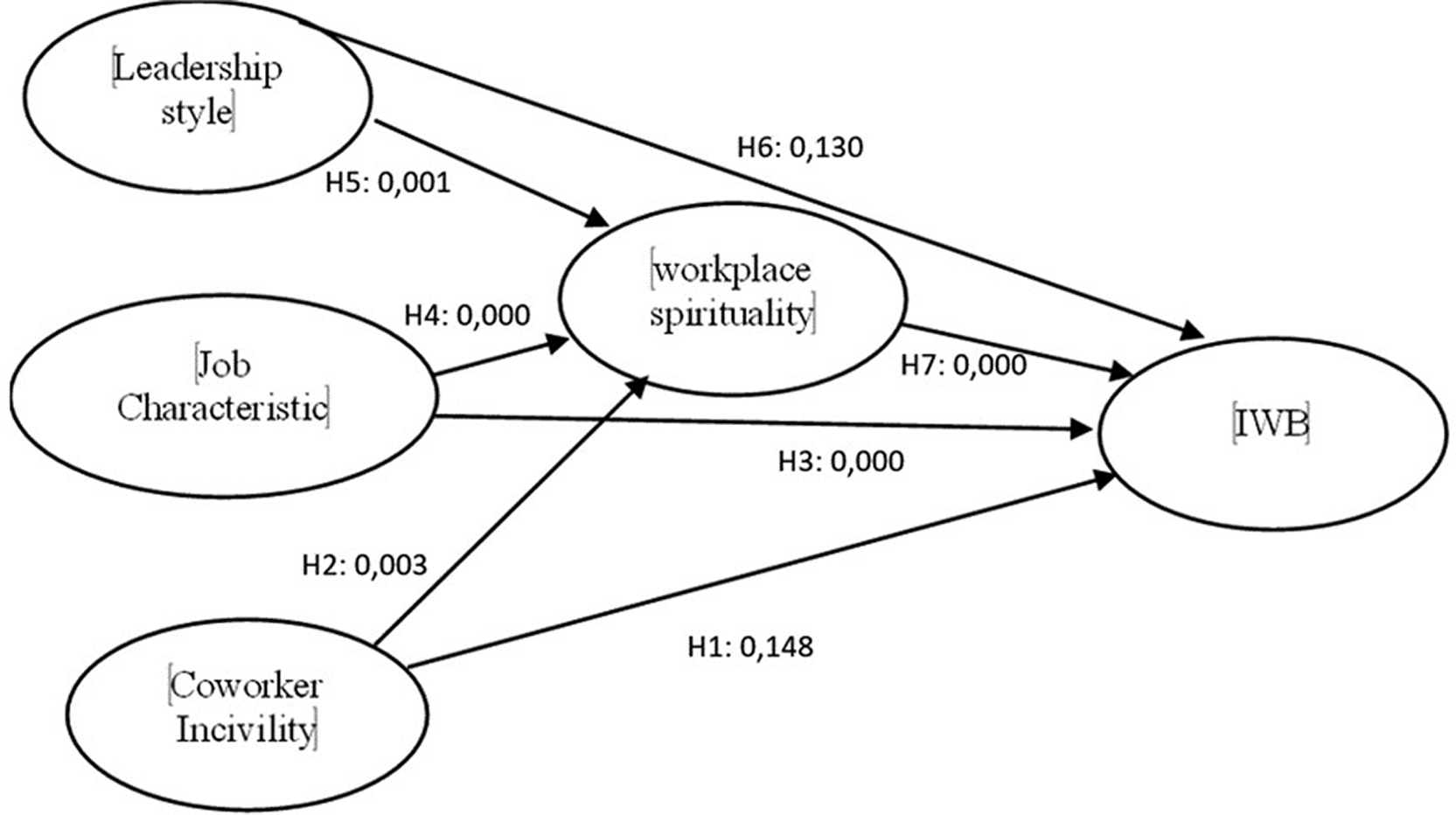
The results indicate that H1 and H6 were not supported, suggesting that coworker incivility has no direct effect on IWB, and leadership style does not directly influence IWB. However, all other hypotheses (H2, H3, H4, H5, H7, H8, H9, and H10) were supported, highlighting the central role of workplace spirituality as both an independent predictor and a mediator of IWB.
This research offers novel perspectives on the antecedents of innovative work behavior (IWB) within Indonesian information institutions. The results emphasize the significant influence of workplace spirituality (WPS) as both a direct antecedent and an intermediary factor in promoting IWB. Additionally, the study uncovers some unforeseen outcomes that contribute to the understanding of these dynamics.
The analysis indicated that coworker incivility did not exert a significant direct influence on innovative work behavior (IWB). This finding diverges from previous research, which demonstrated that negative social interactions tend to diminish employees’ propensity for innovation (e.g., Janssen, 2017; De Jong & Den Hartog, 2010). A potential explanation is that employees within information institutions may develop coping strategies or depend on organizational support mechanisms that mitigate the immediate impact of incivility on innovation-related conduct. Additionally, the collectivist cultural context in Indonesia may foster behaviors aimed at maintaining social harmony, thereby lessening the detrimental effect of incivility on innovation. Nevertheless, the indirect effect of incivility via work-related psychological states (WPS) was statistically significant, indicating that incivility diminishes employees’ sense of purpose and community. This reduction subsequently leads to a decline in IWB, suggesting that the influence of incivility operates indirectly by weakening spiritual values within the workplace (O’Brien, 2023).
Similarly, leadership style did not demonstrate a direct effect on innovative work behavior (IWB), which contrasts with previous research highlighting transformational and servant leadership as catalysts for innovation (Afsar & Umrani, 2018; Rehman et al., 2023). This discrepancy may be attributed to the specific context of public sector information institutions, where formalized procedures, bureaucratic structures, and regulatory constraints limit leaders’ capacity to directly influence employees’ innovative conduct. Instead, leadership influences IWB indirectly through workplace spiritual factors (WPS). Leaders who cultivate a sense of purpose, community, and value congruence foster an environment that intrinsically motivates employees to engage in innovative activities (HATEM, 2024). This suggests that within the public sector, leadership alone is inadequate to promote IWB unless it concurrently enhances employees’ spiritual experiences at work.
The strong connections observed between job characteristics, leadership style, workplace spirituality (WPS), and innovative work behavior (IWB) align with existing research (Hackman & Oldham, 1976; Petchsawang & Duchon, 2019; Kim Quy et al., 2023). When jobs are well-designed and leadership is supportive, employees’ sense of purpose and community is strengthened, which subsequently fosters innovation. The mediating role of WPS underscores its importance as a crucial facilitator of innovation, providing evidence that its influence extends beyond private organizations to include the public sector.
To better understand how employees engage in innovative work behavior—particularly in the process of implementing ideas—it is essential to explore the enabling factors involved. Enablers, also known as supporting, driving, or motivating factors (Craig et al., 2016; Johnson, 2017), are defined as conditions that promote specific behaviors (Lister et al., 2022). In this research, workplace spirituality (WPS) is regarded as an enabler of IWB. This perspective is supported by prior studies (Garg & Saini, 2023; Masyhuri et al., 2021; Rizkiah & Mubarok, 2022), which highlight that WPS enhances employee creativity and innovative behavior.
This study makes an important contribution to the growing body of literature on workplace spirituality (WPS) and its role in shaping innovative work behavior (IWB) within Indonesian public sector information institutions. While much of the previous scholarship has emphasized innovation in private companies, hospitals, and educational organizations (e.g., Srirahayu et al., 2023; Garg & Saini, 2023), research on information institutions—particularly archives and galleries—remains limited. By situating this study in that context, the findings extend theoretical debates while also offering practical directions for policy and practice.
The results underscore that encouraging innovation through WPS is not merely a managerial strategy but also a human-centered approach that addresses the professional and personal dimensions of work. When spirituality is integrated into daily organizational life, institutions are better equipped to strengthen performance, safeguard employee well-being, and foster resilience in facing the challenges typical of the public sector.
Another significant finding is that leadership style and coworker incivility do not directly influence IWB. Instead, their effects are transmitted through WPS, suggesting that in bureaucratic environments, innovation is less the outcome of formal authority or interpersonal dynamics alone, and more a product of employees’ spiritual engagement and value alignment with their institutions. This resonates with prior conceptualizations of WPS as a multidimensional construct comprising meaningful work, community, and value congruence (Ashmos & Duchon, 2000; Milliman et al., 2003; Giacalone & Jurkiewicz, 2003).
By bringing together leadership style, job characteristics, and coworker incivility within one structural model, this study develops a more integrated explanation of how organizational and interpersonal dynamics stimulate innovation through spirituality at work. In doing so, the results reinforce the theoretical link between non-material aspects of the workplace—such as spirituality, civility, and meaning-making—and concrete innovative outcomes, thereby broadening both the scope and practical utility of WPS research.
Job characteristics such as skill variety, task significance, autonomy, and feedback were found to positively influence both WPS and IWB, supporting earlier findings (Hackman & Oldham, 1976; Oldham & Cummings, 1996). Complex and meaningful jobs encourage employees to continuously develop knowledge, skills, and abilities, which stimulate intrinsic motivation and innovative behavior (Ohly & Fritz, 2010; Cangialosi et al., 2021). In this study, enriched job design not only facilitated IWB directly but also strengthened the mediating role of WPS, indicating that employees are more likely to innovate when they perceive their work as purposeful and aligned with organizational values.
Although coworker incivility did not have a significant direct effect on IWB (H1 rejected), it showed a strong negative influence on WPS. Persistent exposure to dismissive behaviors, gossip, or subtle disrespect can erode trust, connectedness, and harmony in the workplace, which are key components of WPS (Iqbal & Hassan, 2016; Tutar & Oruc, 2019). This supports the notion that workplace spirituality functions as a buffer, allowing employees to maintain their innovative behaviors despite interpersonal challenges. In essence, fostering a spiritually rich environment mitigates the adverse effects of incivility on innovation.
The finding that leadership style does not directly affect IWB (H6 rejected) further emphasizes the mediating role of WPS. Leaders may exhibit transformational or servant behaviors, but in rigid bureaucratic structures, the impact on employees’ innovation is dependent on whether leadership fosters spiritual engagement. Leaders who encourage meaningful work, provide autonomy, and align organizational values with employee values enhance employees’ intrinsic motivation to generate, promote, and implement ideas (Carmeli et al., 2010; Pieterse et al., 2010). This finding contributes to the literature by highlighting the contextual boundary conditions under which leadership translates into innovation.
The role of spirituality in fostering collaboration among professionals is increasingly recognized as essential for improving workplace dynamics, particularly in Indonesian organizational settings. Spirituality creates conditions that encourage open communication, empathy, and mutual respect, thereby supporting innovative work behavior (Naseer et al., 2020). The findings of this study indicate that integrating workplace spirituality into public sector institutions enhances employee well-being and creativity, which, in turn, promotes collaborative practices that strengthen institutional performance. Complementing this, research by Azzahra et al. (2025) demonstrates that organizational cultures emphasizing collaboration and empowerment tend to generate higher levels of innovation, thereby positioning spirituality as a foundational element for effective teamwork. By cultivating spiritually enriched work environments, institutions can harness the benefits of collaboration, including knowledge sharing and creative problem-solving. This holistic approach not only improves interpersonal relationships but also builds an organizational culture that sustains long-term innovation (Khazanchi et al., 2007).
The link between spirituality and innovation outcomes can be examined through multiple dimensions of workplace spirituality (WPS) that stimulate creativity and proactive behaviors. A spiritually supportive workplace enhances employees’ capacity for innovation and contributes positively to organizational performance, particularly within Indonesia’s galleries, libraries, archives, and museums (GLAM). Spiritual practices at work foster a strong sense of belonging and community while mitigating negative interactions such as coworker incivility, which may otherwise hinder innovation (Wang et al., 2020). Leadership, especially transformational and servant styles, plays a pivotal role in shaping this environment by embedding spiritual values into daily organizational practices, thereby reinforcing both WPS and innovative work behavior (Cai et al., 2018; Susilo et al., 2023). Assessing the influence of spirituality on innovation thus requires attention to how these elements collectively contribute to a culture of creativity, collaboration, and resilience. In doing so, the study underscores the importance of embedding spirituality in professional contexts as a means of sustaining innovation and advancing institutional development over the long term.
The primary innovation of this research is its identification of WPS as a crucial facilitator of IWB within information institutions. Although previous studies acknowledged WPS’s importance for employee well-being and performance (Ashmos & Duchon, 2000; Rego & Pina e Cunha, 2008), this study provides empirical evidence of its mediating function between job characteristics, leadership styles, coworker incivility, and IWB. Importantly, the results showed that leadership style and coworker incivility did not directly affect IWB but exerted significant indirect effects through WPS. This indicates that in highly formalized, bureaucratic environments such as public information institutions, innovation is less about direct managerial influence or interpersonal conflict, and more about whether employees find meaning, community, and value alignment in their work.
The novelty of this study lies in situating workplace spirituality within the context of information professionals in Indonesia, a sector that has received little attention in the global IWB literature. Prior studies on IWB in information institutions primarily focused on libraries and museums (e.g., Peng, 2018; Chuang et al., 2019; Goulaptsi et al., 2019), leaving archives and galleries largely unexplored. By including these institutions, this study fills a critical gap and highlights the unique challenges and opportunities for fostering innovation in public-sector information services.
This theoretical contribution advances the understanding of IWB by shifting the focus from conventional predictors (leadership and job design) toward the spiritual dimension of the workplace, which has been relatively underexplored in the literature on public sector innovation.
For practitioners and policymakers, the study offers several actionable insights. First, managers in information institutions should develop programs that nurture workplace spirituality, such as value-driven leadership, participatory decision-making, and community-building practices. Second, designing enriched job characteristics—with autonomy, task variety, and feedback—can further strengthen employees’ sense of purpose and innovation. Third, organizations need to mitigate coworker incivility by establishing clear behavioral norms, conflict resolution mechanisms, and trust-building initiatives. By addressing these factors, information institutions can create spiritually supportive environments that encourage employees to innovate in delivering services to the public. By prioritizing spiritual dimensions, institutions can transform bureaucratic environments into more enabling spaces for innovation.
This research expands the knowledge base on IWB by examining information institutions beyond libraries and museums, providing new empirical evidence from archives and galleries. Future studies could extend this research by:
• Testing WPS and IWB relationships in other public-sector domains to examine the generalizability of the model.
• Incorporating longitudinal designs to capture how WPS evolves over time and influences sustained innovation.
• Exploring cross-cultural comparisons, as the collectivist Indonesian context may influence the strength of relationships differently from more individualist cultures.
• Including additional mediators or moderators such as psychological safety, organizational learning climate, or digital literacy to refine the model further.
This study has several limitations. First, the cross-sectional design restricts causal inference. Second, the reliance on self-reported survey data may be prone to common method bias, although steps were taken to mitigate this. Third, the sample was drawn exclusively from Indonesian information institutions, which limits generalizability to other cultural or institutional contexts. Finally, the study did not account for organizational-level variables (e.g., funding structures, policy environment), which may also shape innovation capacity in the public sector.
This study provides empirical evidence that workplace spirituality enables innovation among Indonesian information professionals, particularly in libraries, archives, museums, and galleries. By examining the interplay of leadership style, job characteristics, and coworker incivility, the research confirms that spirituality at work—manifested through meaningful work, sense of community, and value alignment—acts as a crucial enabler of innovative work behavior. The novelty of this study lies in extending the concept of workplace spirituality to the context of information institutions in Indonesia, which has rarely been addressed in prior scholarship. Beyond theoretical contributions, the findings offer practical implications for managers and policymakers to foster spiritually enriched work environments as a lever to enhance creativity, engagement, and sustainable innovation. For the field of information and organizational studies, this research advances the understanding of how non-material workplace factors can influence innovation in public-sector institutions.
Nevertheless, the study has its limitations, including reliance on self-reported data and a geographically limited sample, which may restrict generalizability. Future research could broaden the scope to private-sector organizations or cross-cultural comparisons, as well as adopt longitudinal or mixed-method designs to deepen insights. Overall, the findings affirm that enabling innovation through workplace spirituality is both a strategic and human-centered approach to strengthening the capacity of information professionals in navigating dynamic organizational landscapes.
| Views | Downloads | |
|---|---|---|
| F1000Research | - | - |
|
PubMed Central
Data from PMC are received and updated monthly.
|
- | - |
Provide sufficient details of any financial or non-financial competing interests to enable users to assess whether your comments might lead a reasonable person to question your impartiality. Consider the following examples, but note that this is not an exhaustive list:
Sign up for content alerts and receive a weekly or monthly email with all newly published articles
Already registered? Sign in
The email address should be the one you originally registered with F1000.
You registered with F1000 via Google, so we cannot reset your password.
To sign in, please click here.
If you still need help with your Google account password, please click here.
You registered with F1000 via Facebook, so we cannot reset your password.
To sign in, please click here.
If you still need help with your Facebook account password, please click here.
If your email address is registered with us, we will email you instructions to reset your password.
If you think you should have received this email but it has not arrived, please check your spam filters and/or contact for further assistance.

Comments on this article Comments (0)