Keywords
perceived overqualification; ego depletion; workplace deviant behavior; counterproductive work behavior; systematic review; organizational psychology

perceived overqualification; ego depletion; workplace deviant behavior; counterproductive work behavior; systematic review; organizational psychology
With the intensification of competition in the labor market and the differentiation of organizational job settings, more and more research has begun to focus on the impact of employees' perceived overqualification on their work attitudes and behaviors. The perceived overqualifications refers to the state where employees subjectively perceive that their educational background, ability or experience exceeds the requirements of the position (Maynard et al., 2006). A large number of meta-analyses and empirical studies have shown that there is a significant association between the perceived overqualification and poor work attitudes (low job satisfaction, high turnover intention) as well as bad behaviors (including counter-productive work behaviors, deviant behaviors), but the mechanisms of action are inconsistent (Harari et al., 2017).
At present, the theoretical paths used to explain the impact of the perceived overqualification on workplace deviant behavior can mainly be supported by the following framework. The first is the theory of relative deprivation, where individuals may become angry or even retaliate due to perceived unfairness (Schreurs et al., 2021). The second is the Conservation of Resources Theory (COR), When individual roles do not match, personal resources will be consumed, thereby affecting the individual's performance (Hobfoll et al., 2018). And the role conflict theory, which leads to burnout or negative behavior due to the long-term mismatch between an individual's ability and the position (Maynard et al., 2006). These theories collectively suggest that the emotional and cognitive states triggered by the perceived overqualification will eventually induce some deviant behaviors in the workplace by consuming an individual's psychological and self-control resources.
Although the above explanatory path has been discussed, the direct examination of the mediating role of ego depletion in the perceived overqualification on workplace deviant behavior is relatively scarce. The concept of ego depletion originated from the self-control resource model. It refers to the situation where, after continuous self-control or emotional suppression, an individual's available self-control resources decrease, making them more prone to impulsive behavior.
There is a clear theoretical logic in placing ego depletion as an intermediary in the model of perceived overqualification - workplace deviant behavior. When employees perceived overqualification, they may experience anger or persistent career-role conflicts. To control these negative emotions and cognitions or maintain superficial compliance at work, they need to mobilize self-control resources. Long-term or frequent self-control processes can lead to ego depletion. Once self-control resources are exhausted and the ability to suppress impulses or restrain behaviors declines, the probability of workplace deviant behavior may increase (Liu et al., 2015a). Therefore, ego depletion is a theoretically reasonable and empirically testable mediating path through which the perceived overqualification affects workplace deviant behavior.
Furthermore, researches also supplements the ego depletion theory: in addition to passive depletion of resources, willingness to exert control is also a key reason for explaining self-control failure (Inzlicht et al., 2014). This indicates that the perceived overqualification can affect ego depletion and workplace deviant behavior through resource depletion, and can also be achieved through a decline in self-control motivation.
In conclusion, although there is considerable evidence of the positive association between the perceived overqualification and workplace deviant behavior, and many studies have explored mediating mechanisms such as job frustration and relative deprivation (Harari et al., 2017), systematic evidence mediating ego depletion remains insufficient. Therefore, the objective of this total is to systematically search for and integrate empirical studies on the relationship between perceived overqualification, ego depletion, and workplace deviant behavior from 2015 to 2025 under the PRISMA guidelines, with a focus on answering:
(1) How has the research over the past decade described the overall direction and influence mechanism of the perceived overqualification on workplace deviant behavior?
(2) Can ego depletion serve as a mediator between the perceived overqualification and workplace deviant behavior? How do existing studies test this path?
(3) What are the main gaps in the existing research and the suggestions for future research?
The perceived overqualification originated from Feldman's (1996) research on underemployment, which held that when an employee's educational level, skills and experience exceeded the job requirements, a "Underemployed status" would be formed. Khan and Morrow (1991) hold that the perceived overqualification is equivalent to underemployed status, that is, individuals possess more education, knowledge and skills than the job requirements. In recent years, scholars have generally accepted the definition proposed by Maynard et al. (2006), which refers to the situation where employees subjectively perceive that their educational level, skills and abilities exceed the job requirements.
Under this concept, there are still some disputes regarding the structural dimensions of the perceived overqualification. Some researchers believe that this is a single-dimensional concept and only requires the study of its qualification mismatch (Maynard et al., 2006; Sánchez-Cardona et al., 2020). Some scholars have also conducted research using a two-dimensional model, namely perceived qualification mismatch and perceived no growth opportunity, and this has been confirmed (Khan & Morrow, 1991; G. J. Johnson & W. R. Johnson, 1996). Fine and Nevo (2008) proposed a Poral Cognitive Overqualification focused on cognitive ability, including two dimensions: "cognitive mismatch" and "cognitive non-growth".
Theoretically, researchers have adopted theories such as relative deprivation theory (Erdogan et al., 2011), person-job fit theory (Liu et al., 2015a), and equity theory (Adams, 1965) to explain the emergence of the perceived overqualification. However, the manifestation of the perceived overqualification varies in different cultural contexts. A report indicates that nearly half of the global workforce (47%) consider themselves overqualified, while this proportion in China is as high as 87%, and this phenomenon is regarded as “overqualified for underutilization” (Qu & Wang, 2021).
Research shows that the perceived overqualification is influenced not only by individual factors but also closely related to organizational factors. From an individual perspective, narcissism, tendencies of boredom, educational background and occupational adaptability can all predict the perceived overqualification (Harari et al., 2017; Watt & Hargis, 2010; Cable et al., 2015). And objective overqualification and job satisfaction can independently predict the perceived overqualification (Arvan et al., 2019). From the perspective of job characteristics, the intensity of job hunting, the repetitiveness of the work, the level of the job, and the availability of on-site guidance are all strong predictors of perceived overqualification (Guerrero & Hatala, 2015; Lobene et al., 2015; Bolino & Feldman, 2000). From the organizational perspective, leadership behavior, colleague relationships, and organizational atmosphere can also contribute to the perceived overqualification. Alfes et al. (2016) conducted a study which proved that when a work team has high cohesion and a high-quality relationship between leaders and members, employees have more opportunities to display their talents, thereby reducing the perceived overqualification.
The perceived overqualification has multiple impacts on employees' attitudes, behaviors, and physical and mental health, and these effects are often constrained by intermediary or moderating mechanisms. Studies have shown that a perceived overqualification can lead to a decrease in employees' job satisfaction, an increase in their intention to leave, and an elevation in their level of job burnout (Harari et al., 2017; Chambel et al., 2021). Meanwhile, the perceived overqualification can also increase employees' counterproductive work behavior by positively influencing relative deprivation, reducing organizational self-esteem, triggering situational anger or job boredom (Schreurs et al., 2021; Luksyte et al., 2011; Kim et al., 2019), and also positively influencing employees' network slackness (Cheng et al., 2018). Long et al. (2015) reported that when employees feel that their qualifications are excessive, they tend to be more active in voluntary activities outside the organization. The perceived overqualification is significantly associated with the mental health and happiness of employees. The research shows that the physical and mental risks of the group with a high perceived overqualification are close to those of the unemployed (Roh, 2014).
It is worth noting that some scholars have pointed out that the perceived overqualification also has a double-edged effect. An appropriate level of overqualification motivation prompts employees to innovate in their work tasks, thereby enhancing their creativity (Lin et al., 2017). Overall, perceived overqualification can increase emotional exhaustion and negative emotions, and reduce happiness and work motivation. However, individual resources (such as optimism level) can mitigate these negative effects (Wassermann & Hoppe, 2019).
Workplace deviant behavior refers to the intentional actions taken by employees that harm the organization or the interests of its members, including organizational-oriented deviant behaviors (such as theft, damaging equipment, etc.) and individual-oriented deviant behaviors (such as verbal abuse, deception, etc.) (Robbinson & Bennett, 1995). Bennett & Robinson (2000) proposed two dimensions of workplace deviant behavior and developed a commonly used scale. This scale serves as the measurement basis for most empirical studies and has been translated and validated for reliability and validity in multiple contexts. In recent years, research has focused on multi-source assessment to address the methodological bias caused by self-report scales. The conceptual review of unit-level workplace deviant behavior by Carpenter et al. (2021) emphasizes that when individuals self-assess their scores at the unit level, they need to verify the rationality of aggregation. Meanwhile, Liao et al. (2021) conducted a meta-analysis using a multi-focal perspective and found that different goal orientations of workplace deviant behavior exhibit differences in the causal associations.
Personality traits and emotional states are important prerequisites for triggering workplace deviant behaviors. Research has found that individuals with low agreeableness, low conscientiousness, and high neuroticism are more likely to exhibit workplace deviant behaviors (Mackey et al., 2021). Furthermore, the "dark triangle" personality (Machiavellianism, psychopathy, superficial narcissism) is significantly correlated with workplace deviant behavior: Psychopathy has the greatest impact on both types of deviations (organizational and interpersonal), Machiavellianism is also related to both, and the narcissistic tendency is mainly associated with interpersonal deviations (Duradoni et al., 2025).
Furthermore, organizational environment and leadership behavior also significantly influence workplace deviant behaviors. Organizational justice has been widely proven to have a significant predictive effect on workplace deviant behavior (Zhao et al., 2016). When employees perceive unfair procedures, unequal treatment or tense relationships between superiors and subordinates, they are more likely to resort to deviant behavior as a "revenge mechanism". The leadership style also plays a crucial moderating role, with "abusive supervision" and "ethical leadership" having significant impacts (Tepper et al., 2018; Zoghbi-Manrique-de-Lara, 2020).
Variables such as job stress, work-family conflict (WFC), and perceived organizational support (POS) have a significant relationship with workplace deviant behavior. Recent studies have found that social comparison, loss of meaning in work, and the "silent culture" of the digital age also have potential to promote workplace deviant behaviors (Shao et al., 2021).
Workplace deviant behavior have negative consequences for both individuals and organizations. Empirical research has shown that workplace deviant behavior are significantly negatively correlated with employee performance: the greater the degree of deviatnce, the worse the individual's work performance (Tian & Guo, 2015). The overall performance and service quality of the organization thus declined. The workplace deviant behavior also reduced employees' job satisfaction and engagement, and increased their intention to leave (Ma & Li, 2019). In other words, workplace deviant behavior not only undermines organizational efficiency but also reflects employees' dissatisfaction with the work environment, creating a vicious cycle. Moreover, such workplace deviant behavior is often accompanied by psychological issues such as stress, emotional exhaustion, or burnout, which disrupt the organizational atmosphere and colleague relationships, and reduce the organization’s credibility and sense of belonging (Çivilidağ, Durmaz, & Uslu, 2025).
Ego depletion refers to the phenomenon where an individual's subsequent self-control ability weakens after completing a self-control task. Baumeister et al. (1998) regarded self-control as a limited "power" or "energy", and a single act of willpower would deplete this resource, resulting in a decline in subsequent self-control performance. A large number of studies have verified the existence of the ego depletion effect. Baumeister et al. (1998) demonstrated the depletion effect through tasks such as emotion suppression and desire suppression. Vohs and Heatherton (2000) found that chronic dieters were more likely to exhibit out-of-control behaviors after completing the emotion suppression task. Hagger et al. (2010) conducted a meta-analysis of 198 experiments and reported a moderately large overall effect size (d = 0.62, 95% CI [0.57, 0.67]). The updated meta-analysis conducted by Dang (2017) still revealed a significant effect after strict correction for publication bias (unadjusted g = 0.38, p < .001; adjusted g = 0.24). These studies demonstrate that in the typical "sequential task" paradigm: the group that completed a high self-control task first performed worse in the subsequent self-control task compared to the control group. The experimental evidence covers various scenarios, such as emotion suppression, thought control, and attention tasks, etc.
In recent years, Inzlicht and Schmeichel (2012) proposed a process model; Muraven and Slessareva (2003) investigated the moderating effect of motivational factors on ego depletion; Job et al. (2010) focused on the belief in willpower and proposed that those who hold the belief that "willpower is unlimited" rarely experience depletion effects. These studies have collectively enriched the theoretical framework of ego depletion. The commonly used measurement methods for ego depletion at present include three categories: experimental behavioral tasks, self-assessment scales, and physiological/neurological indicators (Baumeister et al., 1998; Manapat et al., 2019; Solberg et al., 2013).
In organizational behavior, the factors that trigger ego depletion often include individual differences, job task characteristics, and leadership behaviors. Personality traits such as perfectionism can cause individuals to continuously deplete their self-control resources, thereby leading to loss of control behavior (Hussain, et al., 2021). Customer mistreatment, customer misconduct, and emotional masking can deplete the self-control resources of service industry employees (Deng et al., 2016), and lead to impulsive behaviors such as impulse shopping and excessive use of mobile phones after work (Zhang et al., 2022a). When superiors experience ego depletion, they will pass on this depletion to their subordinates through more aggressive management behaviors (Ming et al., 2020). Continuous arduous tasks at work and high decision review also increase employees’ ego depletion (Wehrt et al., 2022).
When employees experience ego depletion, they will lower the quality of their decisions or task completion, resulting in a decline in work performance; while leaders' depletion will change their trust, reduce the civic behavior of receiving rewards from subordinates, and further deteriorate the leadership performance (Haesevoets et al., 2022). At the same time, ego depletion is also positively correlated with emotional exhaustion, job alienation, and intention to leave (Cui et al., 2022).
This article adheres to the reporting guidelines of systematic reviews and PRISMA (Page et al., 2021). For details, please refer to the following text.
(1) The content of the literature refers to empirical studies published in English.
(2) The research subjects are workplace groups (such as employees in enterprises, educators, public sector or service sector workers), excluding student samples.
(3) The research variables should include at least one of the following:
(1) Non-experimental studies (such as theoretical papers, critical articles, book chapters);
(2) Not from English literature or Chinese databases (such as CNKI);
(3) The research samples were students or non-workplace groups;
(4) Full-text documents could not be obtained.
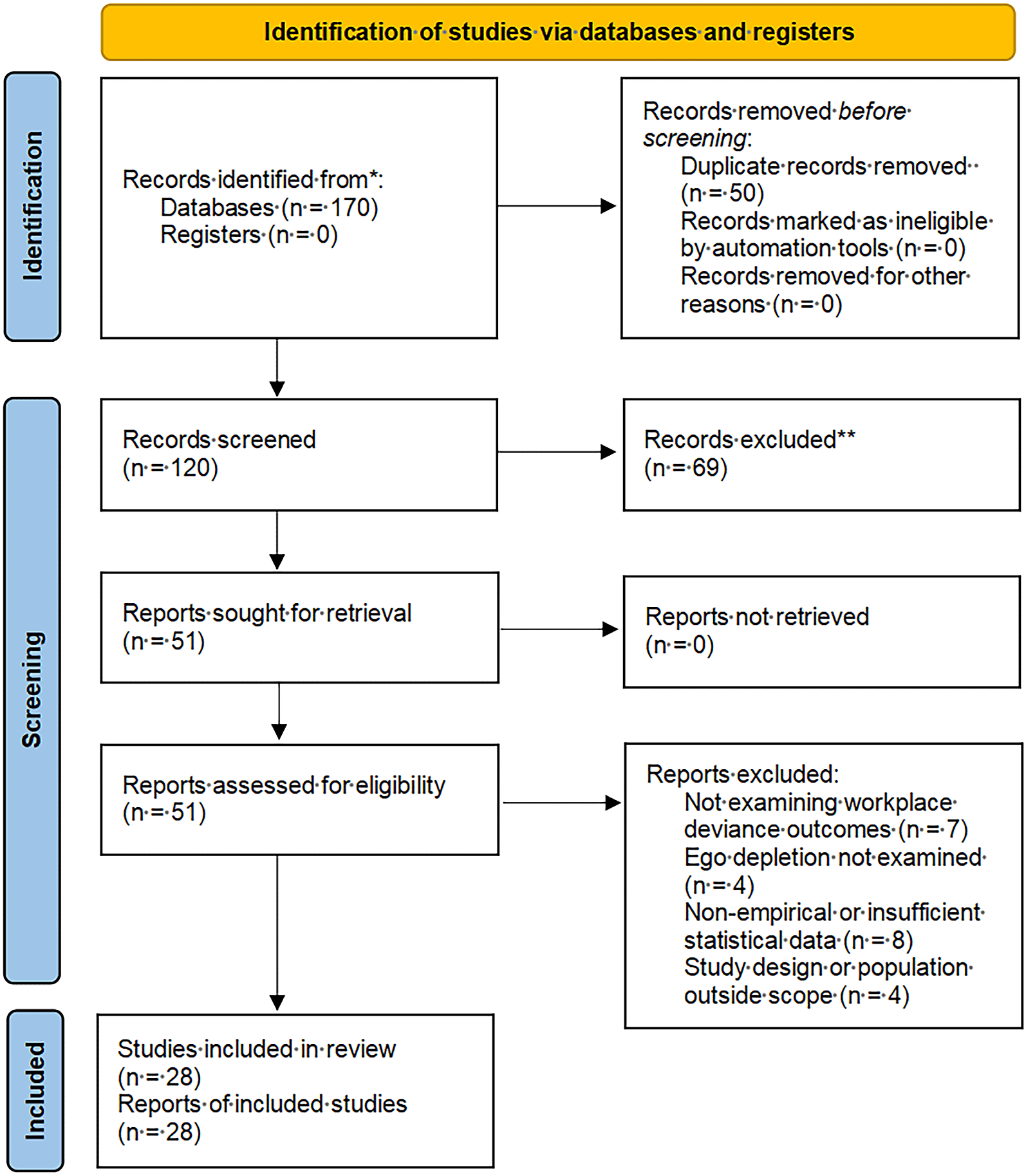
Ultimately, a total of 29 eligible empirical studies were included for the systematic review.
The literature screening process was conducted in accordance with the PRISMA 2020 guidelines, and all screening steps were independently completed by the researchers. Firstly, the researchers imported the search results from various databases [Web of Science (n = 60), Scopus (n = 75), PsycINFO (n = 20), PubMed (n = 15)] into the literature management software and performed automatic and manual combination of duplicate records for de-duplication. Subsequently, based on the pre-defined inclusion and exclusion criteria, the researchers screened the titles and abstracts of the literature, eliminating studies that were not relevant to the research topic. The screened literature that passed the initial screening entered the full-text review stage, where the researchers evaluated the studies based on the research subjects, the scope of variables covered, the research methods, and the completeness of data. Finally, the literature that met the criteria was included in the review. The study selection and screening process is presented in Figure 1. The key characteristics and main findings of the included studies are summarized in Table 1.
| Author(s) | Year | Sample & Country | Key variables | Main findings | DOI |
|---|---|---|---|---|---|
| Dar & Rahman | 2020 | Employees, Pakistan | POQ, Deviance | POQ positively predicts deviant behavior | 10.1371/journal.pone.0226677 |
| Ming et al. | 2020 | Supervisor–subordinate, China | Ego depletion, Deviance | Ego depletion increases deviant behavior | 10.3389/fpsyg.2020.01314 |
| Schreurs et al. | 2021 | Employees, multi-country | POQ, Relative deprivation, CWB | Relative deprivation mediates POQ–CWB | 10.1108/PR-05-2019-0237 |
| Andel et al. | 2022 | Employees, Europe | POQ, Emotions | Anger/boredom link POQ to behavior | 10.1080/1359432X.2021.1919624 |
| Wiegand | 2023 | Employees, Germany | POQ, Frustration, CWB | Frustration mediates POQ–CWB | 10.1016/j.paid.2023.112351 |
| Khan et al. | 2022 | Employees, Pakistan | POQ, Job boredom, CWB | Job boredom mediates POQ–CWB | 10.3389/fpsyg.2022.936900 |
| Li | 2022 | Employees, China | POQ, Voice, Creativity | Peer POQ moderates effects | 10.3389/fpsyg.2022.835204 |
| Zhang et al. | 2022 | Employees, China | POQ, Anxiety, Job crafting | Anxiety mediates POQ effects | 10.1177/21582440221103522 |
| Liu et al. | 2024 | Employees, China | POQ, Knowledge sharing | Identity mediates negative link | 10.3233/WOR-230722 |
| Khan et al. | 2024 | Hospitality employees | POQ, Knowledge hiding | Boredom mediates, crafting moderates | 10.1016/j.heliyon.2024.e31701 |
| Cheng | 2020 | Public employees | POQ, Cyberloafing | Equity-based mediation | 10.1007/s10551-018-4026-8 |
| Zhu et al. | 2022 | Employees, China | POQ, Knowledge hiding | Psych capital mediates | 10.3389/fpsyg.2022.955661 |
| Zhang | 2020 | Employees, Korea | POQ, Job crafting | Curvilinear relationship | 10.3390/su122410458 |
| Lin et al. | 2015 | Employees | Ego depletion, Unethical behavior | Depletion predicts unethical acts | 10.1037/apl0000021 |
| Baumeister et al. | 2014 | Employees | Ego depletion | Resource depletion framework | 10.1016/j.jesp.2013.09.014 |
| Yam et al. | 2016 | Employees | Ego depletion, Abusive behavior | Depletion increases abuse | 10.1016/j.obhdp.2016.03.004 |
| Lin et al. | 2016 | Employees | Ego depletion, Deviance | Sleep loss depletes control | 10.1016/j.jap.2016.01.001 |
| Wang et al. | 2017 | Employees | Self-regulation, CWB | Regulation failure predicts CWB | 10.5465/amj.2014.0688 |
| Chen et al. | 2019 | Employees | Ego depletion, Ethical behavior | Depletion predicts unethical acts | 10.1016/j.jbusres.2018.09.016 |
| Tang et al. | 2020 | Employees | Depletion, Knowledge hiding | Depletion increases hiding | 10.1016/j.jbusres.2019.11.048 |
| Kim et al. | 2021 | Service employees | Emotional exhaustion, Deviance | Resource loss predicts deviance | 10.1016/j.ijhm.2020.102717 |
| Xu et al. | 2021 | Employees | Stress, Self-control, Deviance | Stress depletes control | 10.1016/j.paid.2020.110262 |
| Foulk et al. | 2016 | Employees | Ego depletion, Incivility | Depletion spreads incivility | 10.1016/j.obhdp.2016.04.001 |
| Yam et al. | 2018 | Leaders | Depletion, Abusive supervision | Leader depletion predicts abuse | 10.5465/amj.2016.0830 |
| Liu et al. | 2019 | Employees | Depletion, Procrastination | Depletion predicts deviance | 10.1016/j.jvb.2019.103327 |
| Chen & Li | 2020 | Employees | POQ, Organizational justice | Justice buffers POQ effects | 10.1016/j.jvb.2019.103345 |
| Wang & Zhang | 2023 | Employees | POQ, Emotional exhaustion | Exhaustion mediates POQ outcomes | 10.1016/j.jvb.2022.103678 |
| Zhang & Chen | 2024 | Employees | POQ, Deviance | Meta-analytic evidence | 10.1016/j.jvb.2023.103812 |
Multiple studies have found that regardless of whether the research subjects are from the employee group of enterprises or the public sector group, when employees subjectively perceive that their educational background, abilities, or experience are significantly higher than the job requirements, the likelihood of them engaging in counterproductive work behaviors, organizational deviant behaviors, or interpersonal deviant behaviors increases significantly (Dar & Rahman, 2020; Khan et al., 2022; Wiegand, 2023). This positive relationship demonstrates strong stability across different cultural contexts and industries, and remains significant even after controlling for variables such as age, education level, and job complexity. This indicates that the perceived overqualification is itself an important predictor of workplace deviant behavior.
The perceived overqualification is positively correlated with workplace deviant behaviors (such as disciplinary violations, time theft, online slackness, etc.). Wiegand (2023) pointed out that the perceived overqualification significantly increases employees' workplace deviant behavior. Shang (2024) found that the perceived overqualification was positively correlated with workplace deviant behavior, and this relationship was fully mediated by the sense of psychological privilege. Khan's (2022) research indicates that the perceived overqualification is positively correlated with workplace deviant behavior, and this effect can be mediated through job burnout. Moreover, job design (such as job innovation) can alleviate this effect. Furthermore, Lu et al. (2023) also found in the sample of youth counselors that the perceived overqualification affects rational innovation behavior by reducing creative self-efficacy. In conclusion, the negative emotions (such as frustration, relative deprivation, anger, etc.) caused by the perceived overqualification will promote workplace deviant behavior.
Empirical studies have shown that the perceived overqualification can significantly increase "resource-consuming" psychological states such as emotional exhaustion /occupational burnout/ boredom at work. These states are theoretically closely related to the depletion of self-control resources and ego depletion. Therefore, emotional exhaustion/boredom at work can be regarded as approximate or indirect indicators of ego depletion.
When organizations or individuals provide buffering resources (such as job redesign, development opportunities, high personality/psychological capital), the impact of the perceived overqualification on emotional exhaustion/boredom will be weakened, thereby indirectly reducing the behavioral problems caused by ego depletion; conversely, for those with low resilience or high narcissism and low career adaptability, this effect will be amplified. In other words, the resource conservation theory framework has been supported in the research (Woo H. R., 2020).
Gong et al. (2022) pointed out that the perceived overqualification means that personal skills cannot be fully utilized, and the resulting negative emotions will consume a large amount of psychological resources. This concept of resource depletion and ego depletion is similar: when resources are exhausted, individuals find it difficult to maintain self-control (Ming et al., 2020). Although there is currently a lack of direct research linking the perceived overqualification with ego depletion, existing studies have shown that loss and frustration can exacerbate resource depletion and may place employees in a state of ego depletion (Li Yi et al., 2022; Fitriastuti, T. & Vanderstraeten, A., 2022).
Research consistently indicates that when individuals' self-control resources are depleted or they have low motivation to maintain self-control, they are more likely to exhibit deviant behaviors such as retaliation, service sabotage, and non-compliance. This relationship has been supported both in experimental manipulations (short-term depletion induction) and in field diaries/two-wave/cross-sectional surveys (Ni et al., 2023). The specific mechanisms include: a decline in the ability to control impulses (being unable to suppress immediate impulses such as retaliation or theft), failure in emotional management (anger or frustration more easily leading to deviant behaviors in the workplace), and a reduction in cognitive resources resulting in a decrease in moral restraint/behavioral compliance.
When in a state of ego depletion, employees have insufficient self-control resources and are more likely to engage in workplace deviant behaviors (Treviño et al., 2014; Baumeister & Vohs, 2016). For instance, the ego depletion of the supervisor can trigger negative behaviors among subordinates, which in turn leads to an increase in workplace deviant behaviors among the subordinates (Ten Brummelhuis et al., 2014; Li et al., 2016). Fitriastuti and Vanderstraeten (2022) also argued that when employees are at a point of resource depletion, they find it difficult to control their impulses and are more likely to deviate from organizational norms. Furthermore, ego depletion caused by factors such as lack of sleep directly increases unethical behavior (Christian & Ellis, 2011; Ming et al., 2020). Overall, both empirical research and theory support the claim that ego depletion weakens an individual’s self-control, leading to an increase in the probability of workplace deviant behavior.
Current research has explored various mechanisms. Common mediators include emotional frustration (such as anger or relative deprivation) and a sense of psychological privilege. Wiegand (2023) found that the perceived overqualification leads to workplace deviant behavior by triggering job frustration (a sense of unfairness). Shang (2024) emphasized that the perceived overqualification enhances employees’ psychological entitlement, thereby stimulating workplace deviant behavior. The relative deprivation theory has also been introduced to explain the phenomenon of perceived overqualification, indicating that the sense of relative deprivation plays a mediating role between the perceived overqualification and workplace deviant behavior (especially for behaviors such as knowledge concealment) (Dar & Rahman, 2020). Kim et al. (2021) and Khan et al. (2022), among others, have conducted numerous studies that have identified work boredom as a mediator for perceived overqualification influence on workplace deviant behavior, absenteeism, or knowledge concealment. They have provided empirical evidence from multiple waves and across various industries, demonstrating that perceived overqualification, through prolonged task boredom, depletes individuals' psychological resources, leading to behavioral out-of-control or deviance.
In terms of boundary conditions, individuals with high levels of narcissism are more likely to convert their experience of perceived overqualification into workplace deviant behavior (Wiegand, 2023). That is, the perceived overqualification that causes frustration triggers a stronger behavioral response in narcissistic employees. Furthermore, the characteristics of the job role (such as growth-oriented tasks, career identity) can also moderate the above effects. For instance, Khan et al. (2022) found that work innovation can mitigate the boredom and workplace deviant behavior caused by the perceived overqualification. Chang and Jiang (2025) pointed out that when career development opportunities decrease, the perceived overqualification leads to a stronger negative impact of frustration on cyberloafing (the act of idling at work). The main mechanisms include:
(1) Resource consumption: The perceived overqualification means that the knowledge and skills of employees are not fully utilized, which makes employees feel and realize that their abundant human resources have been wasted, thereby causing emotional exhaustion (ego depletion) and weakening self-control, lead to the workplace deviant behavior (Maynard et al., 2015; Erdogan et al., 2018; Li et al., 2022).
(2) Emotion-driven: The relative deprivation, anger or shame triggered by the perceived overqualification lead to workplace deviant behavior (Wiegand, 2023; Dar & Rahman, 2020).
(3) Organizational variables: Factors such as organizational support and career development opportunities regulate how employees deal with the perceived overqualification (Chang P. C. & Jiang Q., 2025; Khan et al., 2022).
The review reveals that there is an intrinsic connection among the perceived overqualification, high levels of psychological resource depletion (ego depletion), and workplace deviant behaviors. Specifically, the perceived overqualification often comes with negative emotions, consuming the individual’s self-control resources and thereby increasing the occurrence of workplace deviant behavior. Empirical studies have shown that perceived overqualification is directly positively correlated with workplace deviant behavior (Shang (2024)). Meanwhile, ego depletion is the core risk factor in this process (Treviño et al., 2014; Klotz et al., 2018). Although there are relatively few empirical studies that directly examine the intermediary link of "perceived overqualification→ego depletion→workplace deviant behavior", theoretically, the assumption that perceived overqualification will increase ego depletion by triggering frustration and consuming resources, thereby promoting workplace deviant behavior, is feasible. In general, it can be concluded that perceived overqualification will weaken self-control by consuming psychological resources, thereby increasing the possibility of workplace deviant behavior. This conclusion emphasizes the interrelationship among the three: perceived overqualification not only directly triggers workplace deviant behavior but also amplifies its negative impact by causing ego depletion.
Regarding management practices, it is crucial to pay attention to the risks brought about by overqualified employees. Organizations can consider job design and development: provide more challenging and growth-oriented tasks for employees with perceived overqualification to meet their capability demands and reduce their sense of frustration. At the same time, attention should be paid to the replenishment of employees' psychological resources, such as providing sufficient rest, stress reduction training and positive feedback, to alleviate the ego depletion effect. For employees with risk traits such as high narcissism, enhanced supervision and constraints should be implemented; for ordinary employees, establishing voice channels and fair treatment can reduce their psychological imbalance.
Although existing studies have revealed the mechanism by which the perceived overqualification affects employees' attitudes and behaviors from multiple perspectives, the empirical evidence regarding the complete chain of "perceived overqualification - ego depletion - workplace deviant behavior" still needs to be further strengthened. Firstly, future research is necessary to more clearly distinguish different types of ego depletion mechanisms at the conceptual level. Current literature often mixes resource-consuming experiences such as emotional exhaustion, boredom at work, and frustration with the concept of ego depletion. However, ego depletion emphasizes the depletion of self-control and self-regulation resources, and its logical function is not entirely consistent with emotional exhaustion. Future research can simultaneously measure emotional exhaustion and ego depletion within the same research framework, compare their relative roles in the relationship between the perceived overqualification and workplace deviant behavior, and thereby enhance the refinement of theoretical explanations.
Secondly, future research is necessary to further explore the boundary conditions and situational differences of this mechanism. Existing studies have shown that individual traits (such as narcissism, moral identity, self-control traits), work characteristics (such as work autonomy, task challenge), and organizational contextual factors (such as perceived organizational support, fair atmosphere, leadership style) may all moderate the behavioral consequences of the perceived overqualification. However, these moderating variables are often tested separately and lack systematic integration. Future research can construct a multi-level moderating model to explore under what individual-context combinations the perceived overqualification is more likely to be transformed into workplace deviant behavior through ego depletion, and under what conditions it may be transformed into constructive behavior (such as offering suggestions or innovation).
Furthermore, comparative studies in cross-cultural and cross-organizational contexts are also an important direction for future research. The existing literature samples mainly focus on East Asian and South Asian countries. Although some studies have begun to include Western samples, there is still a lack of systematic examination of how cultural values (such as collectivism, power distance) shape the experience of perceived overqualification and its behavioral consequences. Future research can adopt cross-cultural designs to compare the applicability and differences of ego depletion mechanisms in different institutional and cultural backgrounds. At the same time, different organizational types (such as public sectors, education systems, and private enterprises) have significant differences in job stability, promotion mechanisms, and performance evaluation. These differences may profoundly affect the relationship between the perceived overqualification and workplace deviating behavior.
| Views | Downloads | |
|---|---|---|
| F1000Research | - | - |
|
PubMed Central
Data from PMC are received and updated monthly.
|
- | - |
Provide sufficient details of any financial or non-financial competing interests to enable users to assess whether your comments might lead a reasonable person to question your impartiality. Consider the following examples, but note that this is not an exhaustive list:
Sign up for content alerts and receive a weekly or monthly email with all newly published articles
Already registered? Sign in
The email address should be the one you originally registered with F1000.
You registered with F1000 via Google, so we cannot reset your password.
To sign in, please click here.
If you still need help with your Google account password, please click here.
You registered with F1000 via Facebook, so we cannot reset your password.
To sign in, please click here.
If you still need help with your Facebook account password, please click here.
If your email address is registered with us, we will email you instructions to reset your password.
If you think you should have received this email but it has not arrived, please check your spam filters and/or contact for further assistance.

Comments on this article Comments (0)