Keywords
Community-Based Ecotourism, Sustainable Tourism, ASEAN, Collaborative Governance, Cultural Heritage, Indigenous Communities, Social Innovation.

Community-Based Ecotourism, Sustainable Tourism, ASEAN, Collaborative Governance, Cultural Heritage, Indigenous Communities, Social Innovation.
Ecotourism is an emerging effort to mitigate the negative consequences of mass tourism, which often leads to environmental degradation and disruption of socio-cultural values. In this context, ecotourism serves as a primary approach focused on environmental conservation, community empowerment, and local economic development (Honey, 2008; Weaver, 2001; Fennell, 2020). In its implementation, community-based ecotourism (CBET) has garnered significant attention as a method that places local communities at the forefront of tourism management, decision-making, resource management, and the distribution of economic benefits. Community-based ecotourism (CBET) is understood as an ecotourism practice in which local communities have substantial control over planning, management, and the distribution of benefits (Scheyvens, 1999; Lucchetti & Font, 2013).
CBET has the potential to be a key driver in achieving sustainability. Sustainability is implemented through the triple bottom line framework, which encompasses ecological integrity, social equity, and economic viability (Fennell, 2020). However, in practice, CBET often reflects a gap between ideal concepts and on-the-ground realities. Numerous studies indicate that the implementation of CBET is influenced by power imbalances, the dominance of certain actors, and the diminished control of local communities in planning and decision-making (Goodwin & Santilli, 2009; Hampton & Jeyacheya, 2015). In this context, the strong dominance of the government and the private sector often sidelines the role of local communities, who are forced into a marginal position in tourism management. This indicates that CBET is often merely a normative concept that emphasizes participatory and bottom-up principles, while in practice it frequently perpetuates injustices and failures in management.
Collaborative governance is widely viewed as a potential way to address the complexities of interactions among stakeholders in CBET management. Operationally, collaborative governance is defined by Emerson, Nabatchi, and Balogh (2012) as “the processes and structures of decision-making and public policy management that constructively engage the public across the boundaries of public institutions, levels of government, and/or the public, private, and civil spheres to achieve public goals that cannot be attained by other means.” This definition emphasizes three dimensions that we use as an analytical foundation throughout the synthesis process: (1) principled engagement among various stakeholders, (2) shared motivation through the building of trust and mutual understanding, and (3) the capacity to act collectively through institutional arrangements.
This approach emphasizes joint decision-making, shared responsibility, and cross-sectoral coordination among government, civil society, the private sector, and non-governmental organizations (Ansell & Gash, 2008; Bramwell & Lane, 2011; Emerson et al., 2012). Through methods such as building mutual trust, solving problems together, and unifying structures, collaborative governance becomes a symbol of recognition, cooperation, and sustainability in tourism development. Nevertheless, how well collaborative governance functions in CBETs varies significantly and is not always consistent, as it is influenced by regional differences. In Southeast Asia, known for its diverse societies, governments, and biodiversity, CBET has been widely adopted as a development approach, especially in rural, coastal, and conservation areas (Jamal & Stronza, 2008; Kontogeorgopoulos, 2017). However, the implementation of management in these areas often faces issues such as institutional fragmentation, overlapping jurisdictions, and a lack of capacity among local stakeholders (Giampiccoli & Saayman, 2018). Such situations act as barriers to achieving truly collaborative management that involves all parties.
The ASEAN region can serve as a concrete case study to examine changes in collaborative governance dynamics within CBET. Significant variations in natural environments, coupled with government regulations, make the ASEAN region a “natural laboratory” for studying how different governance structures influence sustainability outcomes. Although research on CBET in Southeast Asia has increased, most existing studies remain isolated case studies, making the findings difficult to interpret in comparative terms or for broader theoretical application (Bramwell & Lane, 2011; Nunkoo, 2017). Research that explicitly incorporates a collaborative governance perspective into CBET discussions, especially through systematic synthesis methods, is often criticized for failing to sufficiently emphasize communities as primary actors. This shortcoming represents a key issue that needs to be addressed, given that a comprehensive understanding of the relationship between governance structures is crucial for developing tourism policies that are inclusive of all segments of society.
Therefore, this study aims to fill this gap using a Systematic Literature Review (SLR) of CBET research in the ASEAN region, focusing on the collaborative governance perspective. Specifically, this study addresses three complementary research questions:
(RQ1) What is the scope and characteristics of the CBET literature in the ASEAN region during the 2008–2025 period? This question maps publication trends, geographic distribution, and dominant methodological approaches.
(RQ2) How is collaborative governance operationalized in CBET practices across five ASEAN countries, as examined through stakeholder engagement mechanisms, institutional capacity, and community participation?
(RQ3) What are the cross-national patterns and contextual barriers that enable or constrain the sustainability of CBET in the ASEAN region?
By integrating collaborative governance theory into the design of a systematic and comparative review, this study contributes to the literature on sustainable tourism governance and offers evidence-based insights for policymakers and practitioners designing adaptive and inclusive CBET models in ASEAN.
This study is a Systematic Literature Review (SLR) using the Preferred Reporting Items for Systematic Reviews and Meta-Analyses (PRISMA) approach. The following study uses the keywords (“community-based” OR “community” OR “local” OR “participatory”) AND (“ecotourism” OR “sustainable tourism” OR “eco-tourism” OR “green tourism”) AND (“governance” OR “management” OR “policy” OR “regulation”) AND (“Southeast Asia” OR “ASEAN” OR “Indonesia” OR “Malaysia” OR “Singapore” OR “Thailand” OR “Brunei Darussalam” OR “Vietnam” OR “Laos” OR “Myanmar” OR “Cambodia” OR “Philippines”) AND (“stakeholder” OR “involvement” OR “engagement” OR “collaboration”) AND (“conservation” OR “biodiversity” OR “environment” OR “resources”). The articles used in this study were sourced from Scopus.
The PRISMA selection process is illustrated in Figure 1. Using these keywords, 260 articles were identified. Document type exclusion was then performed, leaving only 195 articles. Language exclusion was conducted to obtain 193 English-language articles. Subsequently, publication type exclusion was performed, retaining 186 final articles, followed by country exclusion focusing solely on ASEAN countries, resulting in 132 articles. Year-based exclusion was also performed because there were 2 articles from 2026 that were not yet accessible. The remaining 130 articles were further screened based on their titles and abstracts, narrowing the selection down to 90 articles. The final step involved full-text exclusion, leaving 85 articles.
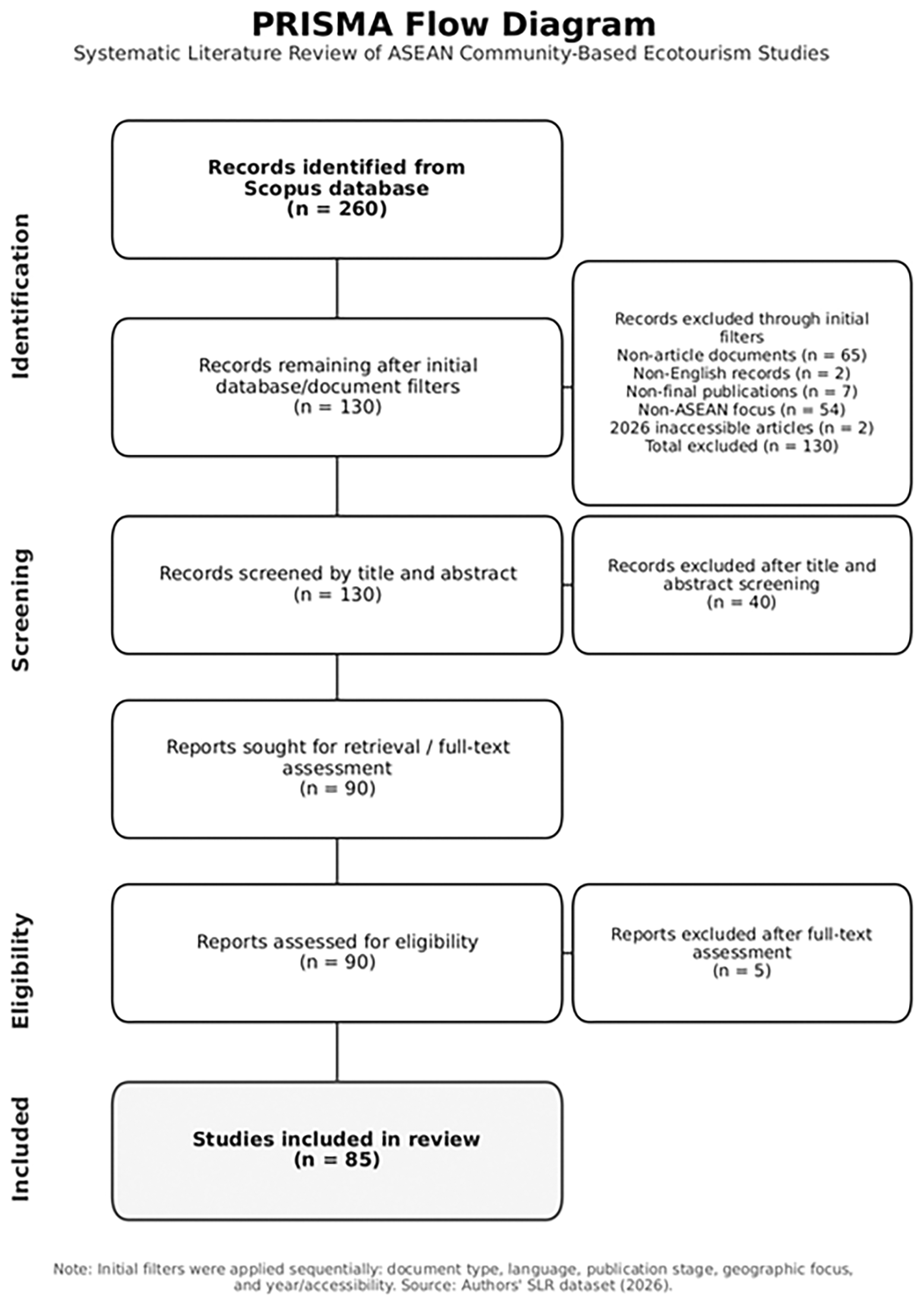
Source: Authors (2026).
This systematic review was not prospectively registered in the PROSPERO database. While prospective protocol registration is encouraged in systematic review methodology, the complete review protocol, eligibility criteria, and search strategy are fully documented in this Methods section and accompanying tables ( Tables 1 and 2) to ensure transparency and reproducibility.
As shown in Table 3, classification by year shows that the trend of publications on collaborative governance in sustainable community-based ecotourism has received relatively little attention from 2008 to 2018. There was an increase from 2019 to 2021, although the number of publications declined again in 2022. However, it subsequently increased again through 2025.
| Year | Number of articles |
|---|---|
| 2008 | 1 |
| 2009 | 1 |
| 2011 | 2 |
| 2012 | 2 |
| 2015 | 2 |
| 2017 | 2 |
| 2018 | 1 |
| 2019 | 4 |
| 2020 | 7 |
| 2021 | 12 |
| 2022 | 3 |
| 2023 | 5 |
| 2024 | 15 |
| 2025 | 28 |
| Total | 85 |
Table 4 presents the geographic distribution of included studies. Of the total 10 ASEAN member countries, research on collaborative governance in sustainable community-based ecotourism is only present in 5 countries. The majority of the research comes from Indonesia, with 57 articles. Next is Malaysia with 13 articles, Thailand with 7 articles, the Philippines with 5 articles, and finally Vietnam with 3 articles. Research from Singapore, Laos, Cambodia, Myanmar, and Brunei Darussalam is not included in this paper.
| Country | Number of articles |
|---|---|
| Indonesia | 57 |
| Malaysia | 13 |
| Thailand | 7 |
| Vietnam | 3 |
| Philippines | 5 |
| Total | 85 |
Table 5 summarizes the methodological distribution. Based on the methods used, the majority of the studies were qualitative. Next were mixed-methods studies (23), followed by quantitative studies (8), and only two semi-quantitative studies. This trend indicates that data collection using qualitative methods is widely used to address issues or problems regarding collaborative governance in sustainable community-based ecotourism in ASEAN countries.
Across the ASEAN region, the results of this study indicate that the success of collaborative governance in advancing community-based ecotourism (CBET) depends not only on the participation of various stakeholders but also on the quality of interactions among them, the distribution of power, and the capacity of institutions to manage cooperation. In more established contexts, such as in Indonesia, collaborative governance tends to be more successful due to active community involvement, coordinated adjustments among institutions, and the integration of local ideas that simultaneously support environmental conservation and community economic development. Conversely, the situation in the Philippines shows a trend toward more fragmented and top-down governance, where a lack of regulations, unequal power dynamics, and minimal public participation pose obstacles to achieving sustainability. Meanwhile, Malaysia appears to have engaged in collaboration but faces challenges regarding the distribution of benefits, capacity constraints, and a lack of consistency in sustainability efforts. This indicates that collaborative governance in the ASEAN region is moving in the same direction, where collaboration has been established but remains largely formal, moving toward a more substantive and flexible governance model.
Therefore, this study shows that the success of CBET does not stem from the formal participation of stakeholders, but rather from the governance system’s ability to address power imbalances, foster more meaningful participation, and strengthen institutional capacity within diverse socio-political frameworks. This Discussion section is structured hierarchically to address the three research questions (RQ1–RQ3). The synthesis begins with a discussion of the countries with the richest literature (Indonesia, Malaysia), followed by contrasting cases illustrating governance failures (the Philippines, Vietnam), and a thematic study in Thailand. Each country discussion serves as an illustrative case that enriches the understanding of collaborative governance mechanisms. Table 6 presents a summary of key included studies organized by country, and the cross-country synthesis is summarized in Table 7 to map patterns and variations.
| Author (Year) | Country | Method | Governance focus | Key findings |
|---|---|---|---|---|
| Daris et al. (2025) | Indonesia | Qualitative | Interpretive Structural Model (ISM), Penta-Helix | Collaboration among multi-level governments, local communities, management groups, as well as academics and the private sector implemented in infrastructure development, community empowerment, and international cooperation. |
| Christian et al. (2025) | Indonesia | Qualitative | Collaborative Governance, Ostrom’s co-management | The triadic collaboration model involves the government, society, and the business sector in resource protection, social, economic, and environmental balance, and long-term partnerships. |
| Gutierrez et al (2021) | Philippines | Qualitative | Evidence-Based Policymaking, Triple Bottom Line, Regulatory dimension | 52 Sustainability indicators include government involvement, strategic planning, regulation, and data availability. |
| Fernandez-Abila et al. (2024) | Philippines | Quantitative | Failure of collaborative governance | Factors causing failure include low community participation, environmental violations, overcrowding, and stakeholders not being well coordinated. |
| Yu et al. (2025) | Malaysia | Mixed Methods | Cross-sectoral collaboration, ecological restoration, governance outcomes | Collaboration between state institutions, local governments, NGOs, and community organizations has led to a community-led governance model (bottom-up model). |
| Mohd et al. (2008) | Malaysia | Qualitative | Cooperative management approach | Identified 4 key factors of collaborative management: joint field operations, capacity building, best practices, and intellectual forums to strengthen government-community partnerships. |
| Phoochinda (2018) | Thailand | Qualitative | Green Economy concept, community network management | Sustainable development relies on systematic community network management, stakeholder collaboration, and alignment with national and regional development plans. |
| Treephan et al. (2019) | Thailand | Mixed Methods | Participatory community-based management | Success is achieved through collective action, shared goals, and mutual benefits, supported by internal social strength and external policy support. |
| Huong et al. (2020) | Vietnam | Mixed Methods | Local community participation and cultural preservation | Local involvement is not yet optimal; new policies are needed to emphasize the preservation of local cultural values as a foundation for sustainable tourism. |
| Tien et al. (2021) | Vietnam | Mixed Methods | Policy reform and resource innovation | Sustainability challenges include financial shortages and a lack of accountability; solutions involve improving regulations and community-based fundraising. |
The synthesis of the study in Indonesia shows that collaborative governance has become the primary mechanism for implementing sustainable community-based ecotourism development. Research findings explain that sustainable development cannot be achieved by a single actor alone, as it requires interaction among all stakeholders (government, communities, and civil society). Environmental restoration through tourism development necessitates collaborative governance as a gradual recovery effort to foster local economic growth (Saining et al., 2025; Zamzami et al., 2021; Wikantiyoso et al., 2021; Wiratno et al., 2022; Yarhamdhani et al., 2024; Abbas et al., 2025; Solihin et al., 2020; Fatimatuzzahroh et al., 2020; Efani et al., 2024a; Anwar et al., 2024; Akbarini et al., 2017). Research findings by Zainal et al. (2024) and Santoso et al. (2024) also indicate that collaborative ecotourism governance is a key factor. In the process of conservation and prioritizing sustainable local economies, decisions are made collaboratively through joint planning and implementation (Triyanti et al., 2025; Turot et al., 2025; Rumondang et al., 2024; Abrahamsz & Makailipessy, 2025; Nuraini et al., 2021; Nugroho & Sari, 2023; Fachry et al., 2021; Fafurida et al., 2020).
Literature on the theme of community participation is a widely discussed topic in Indonesia. Research conducted by Nyompa et al. (2025) explains the development of ecotourism where the community serves as the primary actor in the planning, management, and monitoring of resources to develop ecotourism (Purnomo et al., 2020; Nugraha et al., 2024; Al Fikri et al., 2023; Widyaningsih et al., 2022; Hendrayani et al., 2025; Tampubolon et al., 2025). This is further supported by research by Hendriyana et al. (2025) and Yusuf et al. (2025), which emphasizes that raising community awareness to engage in the development process enhances their commitment to environmental conservation and creates opportunities for the local economy (Sarinastiti & Wicaksono, 2021; Malik et al., 2025; Intyas et al., 2021; Effendi et al., 2025; Hajad et al., 2025). Thus, the role of the community is a critical element in the governance of ecotourism development and environmental conservation (Yanti et al., 2023; Chan & Saikim, 2021).
Beyond the theme of community involvement, local innovation and creative economy strategies in ecotourism development have also emerged. This highlights approaches to showcasing local culture and ethno-entrepreneurship as key attractions to enhance visitor experiences (Efani et al., 2024b; Sawir et al., 2024; Arifin et al., 2025). Various programs to support development require training initiatives for the community as the primary actors in governance, product innovation that serves as a tourism attraction, and the integration of digital marketing platforms to promote ecotourism (Rizky et al., 2025). This has been widely implemented, for example, in mangrove tourism by creating added value in mangrove products and promoting environmental conservation (Hendriyana et al., 2025; Nyompa et al., 2025; Silalahi et al., 2024; Efni & Nik Hasan, 2025; Sholeha & Sumarmi, 2025). This is a key point where the synergy between environmental conservation and economic innovation enables collaborative governance to support environmental sustainability and economic resilience (Widyaningsih et al., 2022; Abbas et al., 2025).
The next emerging theme concerns institutional capacity and tourism resilience. This theme emphasizes that governance capacity, infrastructure, and community readiness significantly influence tourism conditions (Awfa et al., 2025; Maulana et al., 2025; Sjaifuddin, 2020). The institutional role here explains the ability to adapt to emerging issues such as environmental challenges and development pressures. Furthermore, the focus is on integrating governance into planning alongside the risk management frameworks they design within the tourism sustainability process (Yusuf et al., 2025; Prayuda et al., 2025). Beyond institutional capacity, the subsequent theme addresses governance networks. These networks emphasize the exchange of resources, knowledge, and shared responsibilities. In Indonesia itself, there are various roles: the government manages the environment, communities focus on operating tourism activities, and investment is handled by the private sector. The collaborative processes undertaken in this framework create opportunities to enhance adaptation to existing challenges (Naja et al., 2021; Nuraini et al., 2025; Puspitawati et al., 2023). One such challenge is coordination among stakeholders, which remains hindered by overlapping policies (Santoso et al., 2024; Islahuddin, 2024). This is what impedes the implementation of sustainable tourism governance processes (Saputra & Jayawarsa, 2025).
Furthermore, the transition from natural resource extraction industries to a tourism-based economy remains highly challenging. This poses a barrier to tourism development due to limited resource capacity, inadequate infrastructure, and the restricted role of communities in conservation-based tourism development (Saining et al., 2025; Prayuda et al., 2025; Kusuma et al., 2025). This challenge underscores the need for capacity building, especially in developing skills and capabilities for tourism management. Moreover, financial constraints, a shortage of technical experts, and inadequate infrastructure can reduce the effectiveness of collaborative governance. Research conducted by Awfa et al. (2025) and Hendriyana et al. (2025) indicates that community involvement functions optimally when the necessary support is adequate (Er, 2015; Nihan et al., 2025).
It can be concluded that studies in Indonesia indicate significant potential for collaborative governance in developing community-based ecotourism. However, collaboration among stakeholders, the community, and local economic innovation is necessary so that environmental conservation can be implemented and socio-economic impacts can be realized. Furthermore, institutional coordination, enhanced governance capacity, and active community participation are required to achieve long-term success. Addressing various challenges is a key factor in enhancing the effectiveness of collaborative governance to develop sustainable ecotourism in Indonesia (Satyatama et al., 2020).
A synthesis of studies in the Philippines indicates that the primary constraints in the development of community-based ecotourism (CBET) are not only related to the availability of natural resources but also to the weaknesses in collaborative governance, which is currently ineffective. Various studies consistently reveal a gap between sustainability principles and their implementation in real-world conditions, especially regarding participation, benefit distribution, and collaboration and coordination among stakeholders. According to Fernandez-Abila et al. (2024), on small islands in the Visayas region, tourism policies have not been sufficient to control violations related to environmental pollution, overtourism, and transportation issues. This finding aligns with Cabral & Aliňo (2011), who state that weak policies and regulations lead to uncontrolled participation in coastal areas, resulting in environmental degradation and conflicts over access to resources. Therefore, the absence of a strong and integrated regulatory framework is a major obstacle to achieving more effective collaborative governance.
In addition, community participation is a critical and central issue. Fernandez-Abila et al. (2024) note that vulnerable groups and those with low incomes are often marginalized in decision-making processes. Zuniga (2019) also found that in Minalungao National Park, the private sector dominates management, thereby reducing the involvement of local communities. This clearly indicates that without meaningful community involvement and supportive participation mechanisms, CBET risks becoming an exploitative and unsustainable tourism model.
From an economic perspective, the distribution of benefits from tourism remains unequal. Zuniga (2019) notes that income generated from tourism remains relatively low, especially for local communities. Additionally, Fernandez-Abila et al. (2024) identified unfavorable working conditions characterized by overly flexible working hours and limited social protection. Furthermore, Ocampo et al. (2018) & Gutierrez et al. (2021) found that local communities tend to receive smaller economic benefits compared to other stakeholders. These findings indicate the existence of structural inequities in the distribution of economic benefits that do not align with principles of justice. Moreover, differences in perspectives and interests among stakeholders serve as significant barriers to the implementation of collaborative governance. In their findings, Ocampo et al. (2018) indicated differing perspectives among local communities, tourists, and business operators regarding the application of Triple Bottom Line (TBL)-based indicators through participatory processes, including the incorporation of regulatory dimensions as a key component.
On the other hand, the resulting negative environmental and social impacts demonstrate a failure to integrate sustainability principles into tourism governance. Fernandez-Abila et al. (2024) and Cabral & Aliňo (2011) explicitly show that poorly managed tourism activities lead to environmental degradation, reduced fishing yields, and increased pressure on local resources. This indicates that an ecosystem-based approach and cross-sectoral collaboration are necessary for ecotourism development to avoid damaging the key resources that serve as its attractions.
Based on these findings, it is concluded that collaborative governance practices in CBET in the Philippines are still in the nascent stage. Existing governance models tend to be top-down, fragmented, and unable to accommodate the interests of various stakeholders in a balanced manner. Therefore, a transition toward a more inclusive, adaptive, and evidence-based governance model is needed to ensure the overall sustainability of tourism.
Based on a synthesis of various findings, the implementation of community-based ecotourism in Malaysia has experienced significant dynamics. According to research by Kunjuraman et al. (2022), community-based ecotourism serves as a vehicle for social change with considerable positive impacts, although its implementation has also resulted in negative consequences. A study conducted in Sabah examined three domains of change, which are economic, environmental, and socio-cultural. It shows that community-based ecotourism serves as a means to improve the livelihoods of local communities in economic, socio-cultural, and environmental aspects, thereby contributing to social transformation. Furthermore, in the implementation of community-based ecotourism, gender equality remains a concern. However, there is an uneven distribution of economic benefits among accommodation providers.
The success of ecotourism development is grounded in various fundamental principles and factors. First, it relates to the management of protected forest areas. Second, the participation of local communities in ecotourism. Third, adequate support from government agencies, and fourth, the awareness of key stakeholders regarding environmental conservation. Fifth, national and international marketing that are interconnected. Finally, a commitment to maintaining environmentally friendly tourism areas to minimize the carbon footprint. Through local community involvement in environmental conservation and tourism area management, they derive direct economic benefits from the tourism sector.
According to Ahmad et al. (2012), sustainability at one of Malaysia’s ecotourism destinations is highly dependent on the natural resources it possesses. Each stakeholder holds differing perspectives on these natural resources. According to the local community, their assets include a lake, forests, homes, and vast areas imbued with local myths, even though this directly threatens the water quality of the lake and the health of the forests. Tourists, however, view Tasik Chini as having good facilities; they can observe conservation efforts and sustainable concepts while experiencing interaction with local life. Yet, tourists express dissatisfaction with their visit due to signs of declining environmental quality.
Sustainable tourism practices encompass three main aspects: environmental, social, and economic. Economic benefits, social development, environmental protection, skill enhancement, and government support are key factors driving rural tourism to practice sustainable tourism. Improvements in sustainable practices are achieved through training and knowledge-sharing, the development of infrastructure and facilities in rural destinations, and efforts to enhance collaboration and participation among rural tourism stakeholders (Chan, 2023). Research in the Lower Kinabatangan focuses on environmental aspects rather than social and economic ones. Dominant practices include nature protection and conservation, reducing negative environmental impacts, using alternative energy, raising awareness of local culture, and providing quality tourism services. These findings are reinforced by collaboration with conservation agencies such as the Sabah Wildlife Department; however, aspects of ethics, integrity, governance, and responsible behavior have not yet been firmly embedded in the implementation of Responsible Tourism Practices (RTP).
Natural resources are believed to support the concept of community-based homestays in the Dagat Village area and serve as a good platform for introducing tourism activities. Beyond their economic benefits, the aim is to preserve the forest for environmental sustainability. However, various challenges exist in its development. Internal challenges include a lack of competent human resources, leadership, and financial and capital resources. External challenges include safety and security threats, insufficient development of basic infrastructure, government and state oversight systems, marketing and promotion efforts, as well as informal organizational structures (Kunjuraman & Husin, 2017).
Malaysia has Merapoh as an example of a world-class ecotourism destination, “Merapoh Cave Paradise,” supported by local narratives, history, and cultural identity, which create a strong perception that is further reinforced through various promotional media. The government focuses on developing Merapoh’s tourism sector, especially cultural heritage tourism, and is striving to restructure Merapoh Town to attract more tourists. Abdul Shakur et al. (2025). The protection of natural areas is not solely based on binding official regulations. Local community values also provide support and form the foundation for environmental management, especially among indigenous communities. The Tagang Program was adopted from the Tagal system originating from Sabah and introduced in Sarawak in 2005 as an effort to protect natural areas, especially rivers, to increase fish populations, as fishing activities are prohibited in designated areas during specific periods. The Tagang Program has raised awareness of the importance of nature conservation and its impact on local communities. The impact of the Tagang Program is evident in the development of ecotourism within local communities. The uniqueness of the village and the indigenous culture of these communities has attracted tourists to visit the village, which has spurred the development of ecotourism (Keling et al., 2021).
Based on research conducted by Er et al. (2011), ecotourism activities can aid in the development of coastal tourism. The development of coastal tourism in Kudat is driven by two factors: social and environmental factors. This article also notes that local and international Environmental Non-Governmental Organizations (ENGOs) have played a significant role in initiating conservation efforts despite limited resources, while overfishing remains a critical issue. However, practices such as cyanide fishing and blast fishing are reported to be becoming more controlled due to the involvement of local communities. Furthermore, this article emphasizes that the fair involvement of local communities and co-management with relevant authorities are key steps toward achieving sustainable coastal tourism in Kudat. Fisheries and aquaculture activities have shown significant improvement. Coastal lands and areas have been utilized appropriately in harmony with the environment. To date, the island’s local government has successfully created sustainable and resilient tourist destinations through effective leadership and a commitment to innovative and sustainable geotourism principles, without excessive exploitation. Through these efforts, the well-being of the community, culture, and the mythological history inherent to Langkawi will support the island’s ecological resort economy. The preservation of natural assets will drive a green economy, aligning with the government’s Economic Transformation Program (PET) (Hashim & Abd Latif, 2015).
Community engagement can also mitigate environmental impacts (Yu et al., 2025). Research conducted on the Lembing River shows that areas abandoned by extractive industries, specifically tin mining, do not become permanently degraded. These areas can recover through institutional development, community empowerment, and the strategic integration of cultural heritage with environmental restoration. The city’s success in creating a self-sustaining service economy based on cultural heritage tourism while achieving measurable ecological recovery provides an intriguing model for other post-extractive regions. The revitalization of the Lembing River is supported by national infrastructure investment, regional tourism marketing, and cultural heritage preservation policies that may not be present in all post-mining contexts. Other research findings also identified ecotourism, along with the status quo scenario, as the second-preferred option in the eyes of most stakeholder subgroups. Meanwhile, conservation was identified as the most desirable scenario, and intensive aquaculture as the least desirable. The methodology developed and the results of this study offer opportunities to enhance planning and decision-making processes in ecotourism aimed at achieving sustainable management of wetland ecosystems in Malaysia (Alipiah et al., 2020).
The implementation of ecotourism area management using the Ecotourism Cooperative Management (ECM) approach at one of Taman Negara’s destinations has also been carried out and evaluated. This implementation prioritizes cooperation between national park managers and local ecotourism operators. There are four factors associated with ECM. First, local institutions must take responsibility for managing ecotourism activities. Second, capacity building to enhance technical capabilities. Third, the implementation of best practices in ecotourism. Fourth, the establishment of an intellectual forum among stakeholders (Mohd et al., 2008).
There are two studies in Thailand discussing the development of ecotourism area management, especially in forests. The Dongphayayen–Khao Yai Forest Complex, a World Natural Heritage Site, features 14 flagship destinations. Within the Dongphayayen–Khao Yai Forest Complex, ecotourism management is approached from both the business and visitor perspectives. The forest complex is grouped into three clusters to support the effective distribution of tourists. This complex requires support through educational publications and communication, as well as a variety of activities for visitors. Additionally, each destination must highlight its uniqueness and distinctive characteristics to enhance its image (Saminpanya et al., 2009; Sukserm et al., 2012). Another study conducted in Thailand’s National Forest Reserve Areas explains that the development of existing attractions must be supported by standardized facilities and services. Human Resources (HR), local communities, and the government are the three parties whose capacities must be strengthened, alongside clear and strict regulations (Pongpattananurak & Phumsathan, 2025).
The Ban Hua Thang mangrove forest area has adopted a community-based ecotourism and forest conservation model. This area can serve as a learning center for tourists and generate various positive impacts for the local community. Economically, the local community gains additional income that is distributed fairly and equitably. It fosters the growth of knowledge and work ethic while providing new experiences for the local community. Local communities also take pride in their local heritage and identity (Treephan et al., 2019). The development of sustainable tourism in Thailand is inseparable from the formulation of public policies, one of which is at Khao Yai National Park as a World Natural Heritage site. The formulation of public policies is driven by local community involvement, not only by internal factors such as the community’s own willingness but also supported by the government. The community is expected to recognize its potential and manage it appropriately. This aims to preserve the environment, maintain community capacity, and sustain existing cooperative relationships (Kosol & Amornsiriphong, 2019).
In addition to forest areas, there is research evaluating a mangrove area located in Klong Kone. This area faces challenges in visitor management. The ecotourism site is nearing its carrying capacity threshold. Massive development without environmental conservation efforts will lead to damage to the site. This impacts not only the environment but also the socioeconomic conditions of the community (Swangjang & Kornpiphat, 2021). Another challenge in ecotourism development lies in stakeholder engagement and management. This has been showed in one ecotourism area in southern Thailand named Satun by Pornprasit & Rurkkhum (2019). The natural and cultural potentials must be managed more effectively by prioritizing the involvement of local communities.
Based on research findings, one of the biggest issues in developing ecotourism in Vietnam’s coastal regions is inadequate governance. This leads to the exploitation of natural resources without corresponding conservation efforts. Environmental degradation and the decline of tourist destinations due to a lack of capital, limited innovation, a lack of accountability, and economic challenges are other potential issues that may arise (Tien et al., 2021). According to Nguyen et al. (2024), policies and human resource (HR) capabilities need to be strengthened, and cultural heritage and natural resources must be managed appropriately. To achieve sustainable conservation, funding sources derived from community contributions are required. Furthermore, mangrove ecotourism development must be managed through collaboration among stakeholders. This means not relying on a single actor while prioritizing ecological, social, economic, regulatory, and institutional aspects. Clear legal frameworks significantly influence the success of such initiatives (Tien et al., 2021, 2024).
A study of various ASEAN countries found that collaborative governance plays a crucial but uneven role in supporting the development of sustainable community-based ecotourism (CBET). Generally, the core principles of CBET, such as community involvement, environmental conservation, and equitable distribution of economic benefits, have been widely endorsed. However, their implementation varies significantly depending on institutional capacity, governance structures, and the economic, social, and political contexts of each country.
Various studies indicate that the success of CBET heavily depends on multi-stakeholder collaboration involving the government, local communities, the tourism sector, and civil society organizations. In Indonesia and Malaysia, participatory governance tends to be more developed through the integration of community participation, local innovation, and relatively strong institutional support (Kunjuraman & Husin, 2017; Saining et al., 2025). Conversely, in Vietnam and the Philippines, various studies indicate that weak regulatory frameworks, policy fragmentation, and low coordination among stakeholders remain major obstacles to the implementation of collaborative governance (Cabral & Aliňo, 2011; Fernandez-Abila et al., 2024; Tien et al., 2021). Community participation is a key factor that consistently influences the success of CBET in the ASEAN region. However, such participation is often not yet inclusive and still faces various limitations. Several studies indicate that vulnerable groups and low-income communities remain underrepresented in decision-making processes and have not received economic benefits equitably (Ocampo et al., 2018; Zuniga, 2019). This suggests that the existence of participatory mechanisms is insufficient without efforts toward empowerment and the fair distribution of benefits.
Additionally, institutional capacity and governance integration are critical factors in determining the sustainability of ecotourism. Destinations with strong institutional coordination, clear regulatory frameworks, and adaptive governance mechanisms tend to be better able to maintain a balance between environmental conservation and economic development (Awfa et al., 2025; Nguyen et al., 2024). Conversely, weak governance often leads to environmental degradation, conflicts of interest, and ineffective resource management (Swangjang & Kornpiphat, 2021). Other findings indicate that local innovation and the utilization of cultural knowledge are key supporting factors in the development of CBET. The integration of cultural heritage, local wisdom, and the creative economy can enhance a destination’s competitiveness while strengthening local identity (Efani et al., 2024; Nyompa et al., 2025). Additionally, the use of technology and digital marketing is beginning to play a role in expanding market access for local communities. Nevertheless, various challenges are still generally faced across the ASEAN region, such as limited financial resources, low human resource capacity, inadequate infrastructure, and dependence on the extractive economy sector. In some regions, the transition toward a sustainable tourism-based economy has not yet proceeded optimally, especially in post-mining and rural areas (Saining et al., 2025; Yu et al., 2025).
Overall, this synthesis indicates that collaborative governance holds significant potential in supporting the development of sustainable CBET in ASEAN. However, its effectiveness heavily depends on institutional capacity building, enhancing inclusive participation, equitable benefit distribution, and the ability to adapt to local dynamics. Therefore, a more integrated and contextual governance approach is key to addressing the complexities of ecotourism development in this region.
Table 7 shows a clear gradient in the maturity of collaborative governance across the ASEAN region. Indonesia and Malaysia occupy more mature positions with adaptive coordination and active participation, although both still face challenges regarding benefit distribution and policy overlap. Thailand is in the middle with a mixed dynamic of top-down and bottom-up approaches, while the Philippines and Vietnam remain in the early stages with state/private sector dominance and weak participation. This pattern confirms the key finding that the success of CBET does not depend on the existence of a formal collaborative framework, but rather on the governance system’s ability to address power imbalances, foster substantive participation, and build institutional capacity that is adaptive to each country’s socio-political context.
Community-based ecotourism development requires support from collaborative governance. The success of community-based ecotourism is driven by several factors. Stakeholders must collaborate to protect the environment and ensure equitable distribution of economic benefits. Communities that are actively involved are more aware of the importance of environmental conservation and can support the sustainability of their livelihoods. Furthermore, a robust institutional framework is essential in terms of regulation, coordination, and resource management. Several issues still faced in ecotourism development include weak institutional capacity, unequal and uneven economic distribution, policy implementation that falls short of expectations, and a lack of resources. The application of governance cannot be one-sided but must be more practical and engage local communities.
This systematic review extends Emerson, Nabatchi, and Balogh’s (2012) collaborative governance framework in three substantive ways. First, the cross-country synthesis shows that the framework’s three core dimensions (principled engagement, shared motivation, and capacity for joint action) operate not as universal predictors of CBET success, but as context-dependent variables mediated by political economy structures. Whereas Emerson et al. (2012) theorized these dimensions as broadly applicable, this review reveals a maturity gradient across ASEAN ( Table 7) where institutional capacity becomes the binding constraint in low-maturity contexts (Vietnam, Philippines), while benefit distribution emerges as the critical issue in higher-maturity contexts (Indonesia, Malaysia). Second, this review identifies a previously underspecified mechanism: adaptive coordination between formal regulation and indigenous governance systems, especially evident in Malaysia’s Tagang program and Indonesia’s ethno-entrepreneurship cases, which existing collaborative governance literature has largely overlooked. Third, by integrating 85 ASEAN-specific empirical cases, this study challenges the implicit Western-centric assumption in collaborative governance scholarship that horizontal stakeholder coordination is sufficient. The findings show that in ASEAN contexts, vertical state-community trust-building is equally critical to CBET sustainability.
Based on the comparative synthesis, this study offers five concrete recommendations for ASEAN policymakers seeking to strengthen CBET governance:
(1) Establish multi-stakeholder coordination platforms at sub-national level that formally include local communities as decision-making partners rather than merely as consulted beneficiaries, especially in Vietnam and the Philippines where state and private sector dominance currently marginalizes community agency;
(2) Resolve overlapping sectoral policies between forestry, tourism, and indigenous rights legislation through inter-ministerial harmonization, addressing the policy conflicts documented in Indonesia and Malaysia that fragment CBET implementation;
(3) Institutionalize equitable benefit-sharing mechanisms such as community trust funds, transparent revenue distribution, and indigenous knowledge protection, to address the persistent unequal benefit distribution observed across all five countries;
(4) Invest in long-term capacity-building programs rather than short-term tourism training projects, with emphasis on local leadership, financial literacy, and digital marketing skills, to address the human resource gaps identified especially in Malaysia and Thailand;
(5) Develop ASEAN-level CBET governance standards through ASEAN Tourism Forum mechanisms, enabling cross-country knowledge transfer and addressing the absence of regional coordination identified in this review.
This study has four notable limitations that should inform interpretation of findings. First, the review relied exclusively on the Scopus database. While this ensures consistent quality control through indexed peer-reviewed sources, it likely excludes relevant studies published in regionally indexed Southeast Asian journals (e.g., SINTA in Indonesia, MyJurnal in Malaysia) and grey literature from policy institutions. Second, the inclusion criteria are sensitive to keyword selection; alternative search strings combining “ecotourism” with related terms such as “indigenous tourism” or “rural tourism” may have yielded different study pools. Third, the geographic distribution of the 85 included studies is significantly imbalanced (Indonesia n = 57, Malaysia n = 13, Thailand n = 7, Philippines n = 5, Vietnam n = 3), reflecting both the volume of Indonesian tourism research and Scopus indexing patterns; consequently, generalizations about Vietnam and the Philippines should be interpreted cautiously given the smaller sample. Fourth, the country-by-country analytical structure of the Discussion section, while preserving contextual nuance, may understate cross-cutting thematic patterns; readers seeking thematic synthesis should refer to Table 7's comparative framework.
Future systematic reviews should expand database coverage to include Web of Science, ScienceDirect, and regional databases (SINTA, MyJurnal, ThaiJO) to capture a more comprehensive literature base. Comparative case studies focused on under-represented countries (Vietnam, Philippines, Cambodia, Laos, Myanmar) would address the geographic imbalance identified here. Methodologically, mixed-methods approaches combining bibliometric analysis with qualitative meta-synthesis could yield richer insights into governance mechanisms. Finally, longitudinal studies tracking specific CBET sites across multiple years would advance understanding of how collaborative governance dynamics evolve through different stages of CBET maturity.
Ethical approval and consent to participate were not required for this study because it is a systematic review of previously published studies.
During the preparation of this manuscript, the authors used Generative AI tools to assist with brainstorming framework, editing, and language refining. All substantive intellectual content, including literature search, data analysis, synthesis, interpretation, and conclusions, is the authors’ own work. The authors carefully reviewed and verified all AI-assisted output and take full responsibility for the integrity of this manuscript.
| Views | Downloads | |
|---|---|---|
| F1000Research | - | - |
|
PubMed Central
Data from PMC are received and updated monthly.
|
- | - |
Provide sufficient details of any financial or non-financial competing interests to enable users to assess whether your comments might lead a reasonable person to question your impartiality. Consider the following examples, but note that this is not an exhaustive list:
Sign up for content alerts and receive a weekly or monthly email with all newly published articles
Already registered? Sign in
The email address should be the one you originally registered with F1000.
You registered with F1000 via Google, so we cannot reset your password.
To sign in, please click here.
If you still need help with your Google account password, please click here.
You registered with F1000 via Facebook, so we cannot reset your password.
To sign in, please click here.
If you still need help with your Facebook account password, please click here.
If your email address is registered with us, we will email you instructions to reset your password.
If you think you should have received this email but it has not arrived, please check your spam filters and/or contact for further assistance.

Comments on this article Comments (0)