Keywords
Keywords: Organ donation, knowledge, University, Students

Keywords: Organ donation, knowledge, University, Students
Organ donation and transplantation have become critical components of modern healthcare systems, offering life-saving interventions for patients with end-stage organ failure.1 Advances in transplant medicine have significantly improved both survival and quality of life for recipients, reinforcing organ donation as an altruistic act with substantial public health benefit.2 Despite these medical advancements, a profound global disparity persists between the need for transplantable organs and their availability. According to the Global Observatory on Donation and Transplantation (GODT), only 139,024 organ transplants were performed in 2017, addressing less than 10% of the global need.3 This persistent gap underscores the urgency of improving public engagement with organ donation initiatives worldwide.
In recent years, the United Arab Emirates (UAE) has intensified national efforts to expand its organ donation and transplantation capacity through legislative updates, public education campaigns, and strengthened clinical infrastructure.4 The success of these initiatives, however, depends heavily on public knowledge, perceptions, and willingness to donate. Understanding these determinants is essential for addressing misconceptions, increasing donor registration, and strengthening the overall effectiveness of national transplant programs.
Evidence from international studies reveals notable variability in public awareness and understanding of organ donation. A study from North East India demonstrated that although 79.17% of participants were fully aware of organ donation, misconceptions remained widespread; most respondents (82.5%) believed that only the cornea and kidney could be donated, while far fewer recognized liver, heart, lung, pancreas, or intestinal donation as possible.5 Similarly, a study assessing knowledge and awareness among medical students found generally high awareness of organ donation (87.3%), yet familiarity with specific organs varied considerably, with 83.7% and 78.6% of participants being aware of eye and kidney donation, respectively, while only 36.8% and 20.5% recognized whole-body and liver donation as options. Awareness of other organs ranged between 11.9% and 7.7%.6 Another study among medical and nursing students reported high awareness of kidney (92.3%), heart (87.4%), lungs (80.2%), eye (79.8%), liver (74.2%), and cornea (42.1%) donation, although understanding of additional organs remained relatively low (19.9%).7
Findings from community-based research further support the role of knowledge in shaping attitudes and willingness to donate. A general public survey in China demonstrated that knowledge had a moderating effect on both attitudes and willingness to donate, emphasizing the interplay between understanding and behavioral intention.8 A descriptive cross-sectional study among Bachelor’s level students in Nepal found that only 21.4% had good knowledge (>70%), while the majority had moderate (57.1%) or poor (21.4%) understanding of organ donation.9 In Nigeria, however, a study among healthcare workers revealed that while 93.3% had heard of organ donation, 82.5% possessed desirable knowledge.10 Collectively, these findings highlight varying levels of awareness across different populations and underscore the influence of knowledge on donation-related attitudes and behaviors.
Regional evidence from the Middle East further illustrates the variability in public understanding of organ donation and highlights important gaps that may influence donation behaviors. A meta-analysis assessing knowledge across diverse populations and settings in the Middle Eastern region reported a pooled overall knowledge level of 69%, with a 95% CI of 64.5–73.5.11 This finding underscores that although general awareness is relatively high, substantial differences persist across demographic groups and countries, signaling the need for context-specific strategies to strengthen public understanding.
Studies from the Kingdom of Saudi Arabia (KSA) contribute additional insight into these disparities. Among university students, one study found that 92.3% had heard about organ donation; however, only 11.3% were aware of the existence of donor cards, and nearly three-quarters (73%) believed that the number of donated organs remained below the growing clinical demand.12 Another hospital-based cross-sectional study from KSA revealed notable gaps in knowledge even among individuals interacting with the healthcare system. Of the 403 respondents, 35.6% were unaware that organ donation is legal within the country, and an overwhelming 97% did not know where to go if they wished to register as organ donors.13 These findings highlight persistent structural and informational barriers that can limit donor registration and participation.
Similar knowledge gaps have been documented within the United Arab Emirates. National and regional studies demonstrate variable levels of understanding, awareness of legislation, and willingness to donate among the general public. A national survey of 900 residents (with 495 complete responses) found that although participants were moderately well-informed and largely supportive of organ donation, substantial gaps remained regarding existing laws and regulatory processes.14 Notably, fewer than 40% (n = 198) accurately identified the current legal framework governing donation.14 Another UAE-based survey of 678 participants reported poor general knowledge of organ donation among 66% (n = 447) of respondents and low awareness of national organ donation laws among 55% (n = 376).15 Participants widely perceived lack of public awareness as a dominant contributor to the country’s low donation rates, with 486 responses (33%) identifying it as the primary barrier.15
Collectively, these studies emphasize the importance of enhancing public education, clarifying legal processes, and addressing misconceptions related to organ donation across the Middle East. For the UAE, where significant national investment has been directed toward strengthening its transplantation infrastructure, understanding these gaps is essential for guiding targeted interventions, improving public engagement, and ultimately increasing the number of registered donors.
A cross-sectional study was conducted to evaluate the literacy of organ donation among academic communities. The study was conducted from September 2023 to November 2024. The target populations were students, faculty, and staff at three universities in Ajman, UAE.
Non-probability, convenience sampling was used in this study. Participants were informed about the questionnaire and were given the proper knowledge about the purpose of the study. Data were collected using a validated questionnaire, comprising 11 items. These items evaluated their understanding of key concepts related to organ donation, including the term organ donation, the concept of brain death, the roles of an organ donor, the distinction between organs donated by living donors and deceased donors, the process of organ retrieval, the presence and function of the Organ Transplant Unit in the UAE, and specific procedures such as heart transplantation and kidney transplantation. Additionally, respondents were questioned about their awareness of the most commonly and least commonly donated organs and whether they or their family had received or donated organs.
For knowledge scores, participants were given scores of 1 and zero for correct and incorrect responses for each item. To assess the percentage of participants with poor knowledge scores, we consider participants whose scores were 50% or less to have poor knowledge while those whose scores were above 50% to have adequate scores.
639 people were approached, and 32 of those refused to participate (about 95% response rate), so a total of 607 respondents consented, filled out the questionnaire, and thus were included (Table 1).
| Variable | Subcategory | Frequency* | % |
|---|---|---|---|
| Age (Years) | =<30 | 508 | 83.7 |
| 31-45 | 74 | 12.2 | |
| >45 | 25 | 4.1 | |
| Gender | Male | 125 | 20.8 |
| Female | 476 | 79.2 | |
| Nationality: WHO Region | African | 24 | 4.0 |
| American | 7 | 1.2 | |
| Southeast Asia | 116 | 19.1 | |
| European | 13 | 2.1 | |
| Eastern Mediterranean Region | 421 | 69.5 | |
| Western Pacific | 25 | 4.1 | |
| Religion | Islam | 497 | 82.4 |
| Christianity | 61 | 10.1 | |
| Hinduism | 38 | 6.3 | |
| Others | 7 | 1.2 | |
| Occupation | Student | 489 | 81.09 |
| Staff | 73 | 12.1 | |
| Faculty | 45 | 7.46 | |
| University | University Offers medical programs | 421 | 69.3 |
| Other | 186 | 30.7 | |
| Year in Program | 1st | 144 | 26.7 |
| 2nd | 149 | 27.6 | |
| 3rd | 120 | 22.2 | |
| 4th | 121 | 22.4 | |
| =>5Y | 6 | 1.1 | |
| Marital Status | Single | 509 | 83.9 |
| Married | 98 | 16.1 | |
| College # | COM | 91 | 15.0 |
| COD | 105 | 17.3 | |
| CON | 201 | 33.1 | |
| COP | 36 | 5.9 | |
| COHS | 67 | 11.0 | |
| Non-Medical College | 107 | 15.5 |
Most of the people who took part (83.7%) were 30 years old or younger. The majority (79.2%) were women, and a mostly (69.5%) came from the Eastern Mediterranean Region. When it comes to religion, most people (82.4%) said they were Muslim. Also, 81.09% of the participants were students from Gulf Medical University (GMU), and 33.1% of these students were in the College of Nursing (Table 2).
| Variable | Subcategory | Frequency | % |
|---|---|---|---|
| Personal or Family history of receiving organs | No | 562 | 93.2 |
| Yes | 41 | 6.8 | |
| Personal or Family history of donating organs | No | 567 | 93.9 |
| Yes | 37 | 6.1 |
Regarding their family’s history of receiving organs, most people (93.2%) said there was no such history. Similarly, almost all respondents (93.9%) said their family had no history of donating organs (Figure 1 and Table 3).
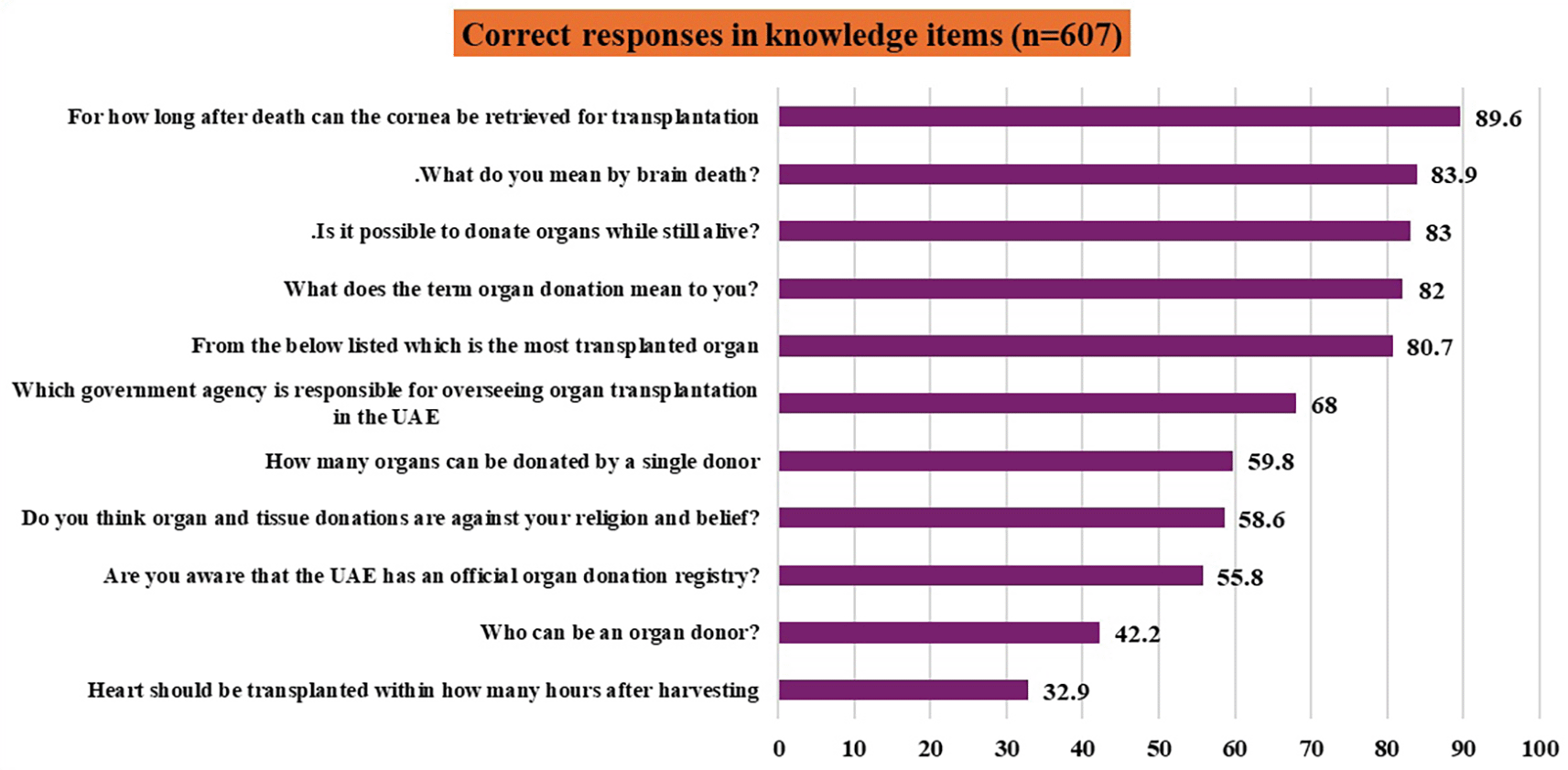
A smaller proportion of respondents knew about the time it takes to transplant a heart after being retrieved from a donor’s body, and the criteria for donors. However, more than 80% of respondents knew about the meaning of organ donation, the time it takes to transplant a cornea after being retrieved, the meaning of brain death, the possibility of donating organs while still alive, and the most transplanted organ (Figure 2).
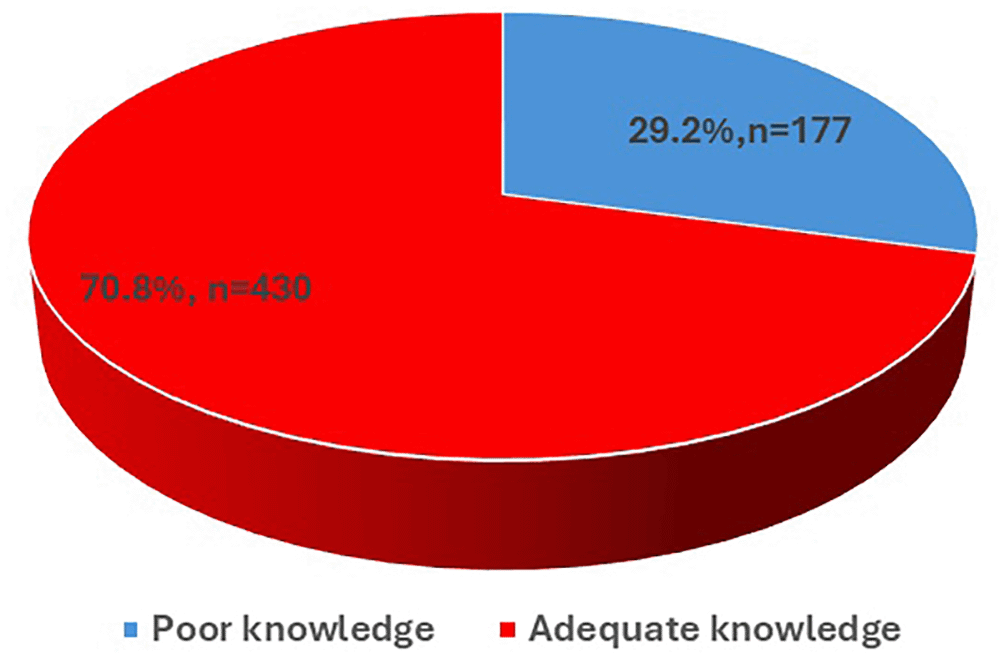
When it comes to the level of knowledge about organ donation, most people (70.8%) have adequate knowledge, while only a small less than one third of participants (29.2%) had poor knowledge about it (Tables 4 and 5).
| Variable | Subcategory | Poor knowledge | Adequate knowledge | P | ||
|---|---|---|---|---|---|---|
| n | % | n | % | |||
| Age (Years) | =<30 | 152 | 29.9 | 356 | 70.1 | 0.656 |
| 31-45 | 20 | 27.0 | 54 | 73.0 | ||
| >45 | 5 | 20 | 20 | 80.0 | ||
| Gender | Male | 41 | 32.8 | 84 | 67.2 | 0.286 |
| Female | 133 | 27.9 | 343 | 72.1 | ||
| Nationality: WHO Region | African | 3 | 12.5 | 21 | 87.5 | 0.159 |
| American | 1 | 14.3 | 6 | 85.7 | ||
| South EastAsia | 28 | 24.1 | 88 | 75.9 | ||
| European | 3 | 23.1 | 10 | 76.9 | ||
| Eastern Mediterranean Region | 136 | 32.3 | 285 | 67.7 | ||
| Western Pacific | 6 | 24.0 | 19 | 76.0 | ||
| Religion | Islam | 154 | 31.0 | 342 | 69.0 | 0.187 |
| Christianity | 12 | 19.7 | 49 | 80.3 | ||
| Hinduism | 9 | 23.7 | 29 | 76.3 | ||
| Others | 1 | 14.3 | 6 | 85.7 | ||
| Occupation | Student | 155 | 31.7 | 334 | 68.3 | 0.017 |
| Staff | 15 | 20.5 | 58 | 79.5 | ||
| Faculty | 7 | 15.6 | 38 | 84.4 | ||
| University | University Offer medical programs | 99 | 23.5 | 322 | 76.5 | <0.001 |
| Other | 78 | 41.9 | 108 | 58.1 | ||
| Year in Program | 1st | 49 | 34.0 | 95 | 66.0 | 0.369 |
| 2nd | 47 | 31.5 | 102 | 68.5 | ||
| 3rd | 36 | 30.0 | 84 | 70.0 | ||
| 4th&=>5Y | 31 | 24.4 | 96 | 75.6 | ||
| Marital Status | Single | 155 | 30.5 | 354 | 69.5 | 0.110 |
| Married | 22 | 22.4 | 76 | 77.6 | ||
| College* | COM | 21 | 23.1 | 70 | 76.9 | 0.003 |
| COD | 29 | 27.6 | 76 | 72.4 | ||
| CON | 49 | 24.4 | 152 | 75.6 | ||
| COP | 13 | 36.1 | 23 | 63.9 | ||
| COHS | 17 | 25.4 | 50 | 74.6 | ||
| Non-Medical | 48 | 44.9 | 59 | 51.1 | ||
As per the above table, Occupation, University, and College have significant associations with the level of knowledge about organ donation at p-values less than 0.05.
As per the above table, personal or family history of organ donation and attitudes are significantly associated with the level of knowledge about organ donation.
Participants who were faculty or staff demonstrated significantly higher odds of possessing adequate knowledge compared with students. Likewise, individuals affiliated with institutions offering medical programs—particularly those enrolled in or employed by colleges of medicine, dentistry, or nursing—were more likely to exhibit adequate knowledge than those from non-medical colleges. Personal or family experience with receiving an organ did not influence knowledge levels; however, an individual or family history of organ donation was associated with substantially higher odds of adequate knowledge. Additionally, respondents who expressed supportive attitudes toward organ donation were significantly more likely to demonstrate adequate knowledge.
In this study, more than two-thirds of the respondents (70.8%) demonstrated adequate knowledge of organ donation. This level of knowledge is notably higher than that reported in several studies across the region. For example, Alwahaibi et al. found that only 34.1% of 2,125 university students in Oman had good knowledge regarding organ donation.16 Similarly, Mohamed et al. reported that among students at Minia University in Egypt, only 28% demonstrated good knowledge, while 40% had fair knowledge and 32% had poor overall knowledge.17
Likewise, Majeed et al. observed even lower levels of good knowledge among nursing students in Iraq, with only 12% classified as having good knowledge, compared to 71% with fair and 17% with poor knowledge.18 Our findings are consistent with a recent meta-analysis that reported a pooled knowledge level of 69% in Middle Eastern populations.11 Taken together, this suggests that university stakeholders in the UAE may possess relatively higher awareness compared to peers in neighbouring countries.
Regarding specific knowledge items, most respondents in our study accurately identified fundamental concepts related to organ donation, including the meaning of organ donation (82.0%), the definition of brain death (83.9%), the possibility of donating organs while alive (83.0%), and the feasibility of postmortem corneal harvesting (89.6%). Awareness of brain death in our sample was substantially higher than that reported by Vincent et al., in which only 46.9% and 42.1% of respondents recognized brain death and corneal donation, respectively.7 Similarly, Asmita et al. found that only 61.7% of participants understood that organs can be donated either before or after death.9 These comparisons underscore relatively strong foundational knowledge among studied populations
Despite these strengths, substantial knowledge gaps were noted in areas related to organ donation legislation and regulatory oversight in the UAE. Only 68% of participants knew which government entity oversees transplantation, and just 55.8% were aware of the existence of an official national organ donation registry. These findings align with earlier studies showing persistently low awareness of organ donation laws in the UAE, including a national study reporting that fewer than 40% of participants were familiar with transplantation legislation,14 and another by Seddiq et al., where only 55% demonstrated awareness of legal frameworks.15 Low awareness of legal provisions is not unique to the UAE; a cross-sectional study among 2,743 Egyptians showed that only 36.9% were aware of four to six key legal articles governing organ donation,19 and a Saudi Arabian study reported awareness as low as 11.3%.20 Collectively, these findings highlight a widespread knowledge deficit regarding regulatory structures across the Eastern Mediterranean region.
The most pronounced gaps in our study involved understanding donor eligibility criteria and the timeframes required for organ viability, with 57.8% and 67.1% of participants, respectively, demonstrating inadequate knowledge. Comparable gaps were reported by Alessa et al., who found that 53.46% of social media users lacked knowledge of organ donation requirements.21 Misconceptions regarding the religious permissibility of organ donation were also prevalent, reported by 41.4% of respondents. Similar misconceptions have been documented in Turkey (22%),22 Saudi Arabia (39.29%),23 and Jordan (66%).24 These findings emphasize the need for targeted educational interventions that address not only biomedical and legal aspects, but also common cultural and religious misunderstandings surrounding organ donation.
In this study, no significant differences in knowledge levels were observed across sociodemographic variables such as age, gender, nationality, or religion. Existing literature shows mixed evidence in this regard. Our findings align with those of El-Sherief et al., who reported no significant gender differences in knowledge scores among students at Minia University in Egypt.25 In contrast, Alwahaibi et al. found that female students in Oman demonstrated higher levels of good knowledge compared with males (36.8% vs. 28.5%, p < 0.001), although age was not associated with knowledge in their sample.16 Somaili et al. reported yet another pattern, noting significant differences across age and marital status groups, but no differences by gender or educational level.23 Similarly, a study among healthcare professionals found no variation in knowledge across religious groups, which is consistent with our findings, but reported significant differences across age, gender, and occupation.26 Together, these divergent findings underscore the complex and context-dependent nature of sociodemographic influences on organ donation literacy.
Our study identified university and college affiliation as important determinants of knowledge. Participants affiliated with medical colleges or universities offering medical programs demonstrated significantly higher knowledge scores. These findings mirror those of Almutairi, who observed higher knowledge levels among medical and physiotherapy students in Saudi Arabia (p < 0.001).27 Likewise, both El-Sherief et al.25 and Alwahaibi et al.16 reported superior knowledge among medical compared to non-medical students. Furthermore, we found that faculty had markedly higher rates of adequate knowledge than both staff and students (84.4% vs. 68.3%), with faculty exhibiting a 2.668-fold increased likelihood of adequate knowledge compared with students (CI: 1.095–6.502, p = 0.031). This pattern is consistent with findings from Krishna et al., who reported significantly higher knowledge among faculty and residents compared to students and interns in medical colleges in Eastern India (73.9% vs. 41.5%).28 Collectively, these observations highlight potential shortcomings in current university curricula, suggesting that organ donation education may not be sufficiently embedded across academic programs. Strengthening curricular emphasis on organ donation could help boost the knowledge of young adults, who represent a critical demographic for sustaining national organ donation initiatives.
Unexpectedly, our study revealed a lower rate of adequate knowledge about organ donation among participants with a personal or family history of receiving or donating organs. Specifically, individuals with such a donor history had a 74.2% lower likelihood of demonstrating adequate knowledge compared with those without this background. This counterintuitive finding may reflect insufficient education or counseling provided to donors, recipients, and their families during the donation or transplantation process. Targeted educational efforts for these groups may therefore be essential to strengthen public understanding and support for organ donation programs. Our results contrast with those of Gupta et al., who reported that students with a family history of organ donation had more than twice the odds of possessing good knowledge [OR 2.25 (CI: 1.90–2.75), p < 0.01].29
A strong association was also observed between knowledge and attitudes toward organ donation. Participants with positive attitudes were significantly more likely to have adequate knowledge. This relationship is supported by Alwesmi et al., who found that nursing students willing to donate their organs had higher knowledge levels.30 Fan et al. similarly reported that both higher knowledge and more favorable attitudes were independently associated with greater willingness to donate among the general public in China.8 Evidence from these studies suggests a bidirectional relationship between knowledge and attitudes, with improvements in one likely reinforcing gains in the other. This underscores the importance of comprehensive educational strategies that address both cognitive and affective components of organ donation literacy
This is one of the few studies in the UAE to assess organ donation knowledge across multiple groups within universities, including students, faculty, and staff. The inclusion of three major universities enhances the diversity and representativeness of the sample within the Ajman Emirate. We tried to improve the reliability of the study by using a validated questionnaire with a structured scoring system; also, the application of multivariable logistic regression allowed for the identification of independent predictors of knowledge after controlling for possible confounding effects of other variables. The study has some limitations, like the use of convenience sampling, which limits generalizability to all university populations in the UAE. Also, the self-administered questionnaire approach that we had used may be prone to self-selection of some participants who were more interested and perhaps more aware of organ donation.
This study demonstrates that most university stakeholders in Ajman, UAE, possess adequate knowledge about organ donation (70.8%); however, important gaps remain across demographic groups and institutional settings. Knowledge levels varied significantly among students, faculty, and staff, and were notably higher among individuals affiliated with medical colleges and universities offering medical programs. Personal or family experience with organ donation or transplantation failed to increase the level of knowledge. Attitudes toward organ donation were a strong predictor of knowledge, highlighting the need for targeted educational initiatives that address misconceptions and foster positive perceptions.
To improve organ donation literacy, organize regular educational campaigns, workshops, and seminars with medical professionals and transplant organizations. Integrate organ donation topics into academic curricula and use digital platforms to spread awareness. Collaborate with health authorities for donor registration drives and invite donors and recipients to share their experiences. Establish peer education programs to encourage grassroots engagement.
The study titled “Organ Donation Literacy Among University Stakeholders: A Cross-Sectional Study in the UAE” was approved by the Institutional Research Board of Gulf Medical University on 25th April 2023 (Ref. no. IRB-COM-FAC-76-APRIL-2023).
After a clear explanation of the study objectives and procedures, written informed consent was obtained from all participants via an attached consent form embedded in the Google survey. Participation in the questionnaire was permitted only after consent was provided; individuals who did not consent were unable to proceed with the survey.
| Views | Downloads | |
|---|---|---|
| F1000Research | - | - |
|
PubMed Central
Data from PMC are received and updated monthly.
|
- | - |
Provide sufficient details of any financial or non-financial competing interests to enable users to assess whether your comments might lead a reasonable person to question your impartiality. Consider the following examples, but note that this is not an exhaustive list:
Sign up for content alerts and receive a weekly or monthly email with all newly published articles
Already registered? Sign in
The email address should be the one you originally registered with F1000.
You registered with F1000 via Google, so we cannot reset your password.
To sign in, please click here.
If you still need help with your Google account password, please click here.
You registered with F1000 via Facebook, so we cannot reset your password.
To sign in, please click here.
If you still need help with your Facebook account password, please click here.
If your email address is registered with us, we will email you instructions to reset your password.
If you think you should have received this email but it has not arrived, please check your spam filters and/or contact for further assistance.

Comments on this article Comments (0)