Keywords
ESG Accounting; Sustainable Value Creation; Digital Business Ecosystems; Data Analytics Capability; Machine Learning; XGBoost; Sustainability; Artificial Intelligence

ESG Accounting; Sustainable Value Creation; Digital Business Ecosystems; Data Analytics Capability; Machine Learning; XGBoost; Sustainability; Artificial Intelligence
The rapid expansion of digital technologies has fundamentally transformed contemporary business ecosystems, particularly in how firms create, measure, and sustain value. In the context of sustainability, digital business ecosystems are increasingly expected to integrate Environmental, Social, and Governance (ESG) considerations into their core strategies, supported by advanced data analytics and intelligent systems. This transformation has led to the emergence of sustainable digital business ecosystems, where value creation is not only economically driven but also aligned with long-term environmental and social objectives.
Recent studies emphasize that ESG accounting plays a critical role in enabling organizations to capture sustainability-related performance and translate it into measurable corporate value (Renaldo, 2024; Comoli et al., 2023). However, traditional accounting systems often struggle to accommodate the complexity and real-time nature of digital business environments. As highlighted by De Silva et al. (2025), the integration of digital knowledge and systems significantly enhances sustainable accounting, reporting, and assurance practices. Similarly, Homotiuk and Mazuryk (2025) argue that digitalized accounting and analytical systems are essential for aligning investment decisions with ESG priorities.
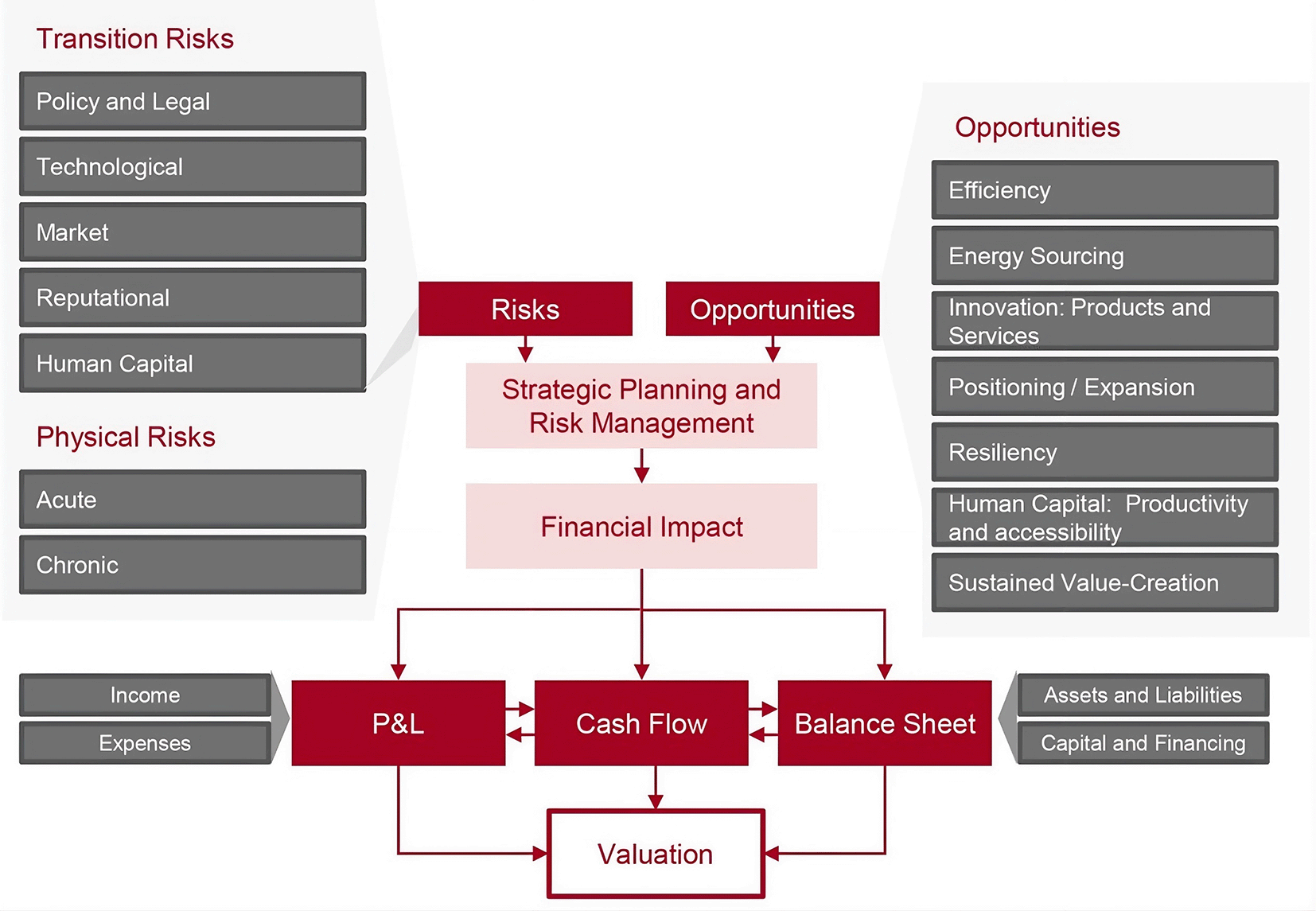
Figure 1 illustrates the comprehensive framework of ESG risks and opportunities and their implications for financial performance and value creation. The model highlights how transition risks (e.g., policy, technological, and market risks) and physical risks (acute and chronic) influence strategic planning and risk management processes, which subsequently affect financial outcomes such as profit and loss (P&L), cash flow, and balance sheet performance. At the same time, ESG related opportunities including efficiency improvements, innovation, and sustainable value creation contribute positively to firm valuation. This dual perspective demonstrates that ESG is not only a source of risk but also a strategic driver of long-term value. The framework aligns with prior research emphasizing the role of ESG accounting and disclosure in enhancing firm value and financial performance (Nasution et al., 2026; Li et al., 2023). It also supports the argument that ESG integration requires a strategic approach linking sustainability factors with financial decision-making and value-based management.
Parallel to these developments, the rise of data analytics and big data capabilities has introduced new opportunities for enhancing sustainability outcomes. Data-driven approaches enable firms to process large volumes of ESG-related information, improve decision-making accuracy, and uncover hidden patterns in sustainability performance (Soni, 2025; Sun & Lim, 2026). Empirical evidence suggests that big data analytics capabilities have nonlinear and significant effects on ESG integration and sustainable business model innovation, particularly in digital-intensive industries (Sun & Lim, 2026). Furthermore, digital transformation has been widely recognized as a key enabler of improved ESG performance across various business contexts (Bindeeba et al., 2025; Agag et al., 2025).
In this evolving landscape, artificial intelligence (AI) and machine learning (ML) have emerged as transformative tools for sustainability-oriented decision-making. AI-driven approaches can enhance ESG evaluation, automate accounting processes, and improve predictive accuracy in value creation models (Rane et al., 2024; Suri & Sadriwala, 2025). Moreover, AI-enabled financial technologies and digital platforms are reshaping how organizations implement sustainable accounting practices and integrate ESG criteria into their operations (J. Nair et al., 2025; Nevi et al., 2025). The integration of AI within digital ecosystems also supports open innovation and sustainable growth by facilitating data-driven collaboration and ecosystem-level intelligence (Barile et al., 2026).
Despite these advancements, significant research gaps remain. First, existing studies tend to examine ESG accounting, data analytics, and AI capabilities in isolation rather than as an integrated system within digital business ecosystems. Second, there is limited empirical and modeling-based research that explicitly links these elements to sustainable value creation, particularly using advanced quantitative techniques such as machine learning. While prior studies have explored AI-driven sustainability models (Dias et al., 2025; Urbanovič & Holubčík, 2026), there is still a lack of comprehensive frameworks that combine ESG accounting, data analytics, and AI-based modeling into a unified analytical approach.
Addressing this gap is essential, as sustainable value creation increasingly depends on the ability of firms to leverage data and intelligent technologies in conjunction with robust accounting frameworks. As noted by Setiawan (2026), measuring sustainable value requires integrating both economic and ESG dimensions within advanced analytical models. Similarly, AI-driven ESG investing and decision-making frameworks highlight the growing importance of predictive and data-driven approaches in sustainable finance (Jebadurai & David, 2026).
Therefore, this study aims to develop and apply a machine learning-based quantitative model to examine the relationships between ESG accounting, data analytics capabilities, and value creation within sustainable digital business ecosystems. By integrating these domains, this research contributes to the literature in three key ways. First, it advances sustainability accounting by embedding ESG metrics within a data-driven and AI-enabled analytical framework. Second, it provides empirical insights into how data analytics capabilities mediate and enhance the relationship between ESG practices and value creation. Third, it introduces a machine learning approach to model complex, nonlinear relationships in digital business ecosystems, thereby extending existing methodological approaches in sustainability research.
Ultimately, this study offers both theoretical and practical implications by demonstrating how organizations can leverage ESG accounting and data analytics through machine learning to achieve sustainable value creation in increasingly digitalized business environments.
Despite the growing body of literature on sustainability, digital transformation, and ESG integration, several critical gaps remain insufficiently addressed in current research.
First, prior studies largely examine ESG accounting, data analytics, and artificial intelligence (AI) as separate constructs, rather than as an integrated system within digital business ecosystems. For instance, ESG accounting has been widely discussed as a mechanism for measuring sustainability performance and corporate value (Renaldo, 2024; Comoli et al., 2023), while digital transformation and data analytics have been linked to improved ESG outcomes (Bindeeba et al., 2025; Agag et al., 2025). Similarly, AI-driven approaches have been recognized for enhancing ESG evaluation and sustainable decision-making (Rane et al., 2024; Suri & Sadriwala, 2025). However, limited studies have developed a holistic framework that simultaneously connects these three domains within a unified analytical model. Second, existing literature on digital transformation and sustainability tends to focus on linear relationships, overlooking the complex and nonlinear interactions among ESG practices, data analytics capabilities, and value creation. Empirical studies indicate that big data analytics capabilities exhibit nonlinear effects on ESG integration and sustainable innovation (Sun & Lim, 2026), suggesting that traditional statistical approaches may be insufficient. Although machine learning has been increasingly applied in sustainability contexts, such as ESG-based decision prediction (Hong et al., 2022), its application in modeling sustainable value creation within digital business ecosystems remains limited. Third, while recent research highlights the role of AI in enabling sustainable accounting and digital finance (J. Nair et al., 2025; Necula et al., 2025), there is still a lack of quantitative modeling frameworks that explicitly link AI-driven data analytics with ESG accounting and measurable value outcomes. Existing frameworks often remain conceptual (Mahwish et al., 2025) or focus on specific sectors such as fintech or manufacturing, thereby limiting their generalizability across broader digital ecosystems. Fourth, the concept of sustainable value creation itself remains underexplored in integrated digital contexts. Although studies have examined ESG performance and its economic implications (Kwilinski et al., 2023; Setiawan, 2026), few have incorporated multi-dimensional value creation models that combine financial, environmental, and social metrics within AI-driven analytical systems. Furthermore, emerging perspectives such as AI-enabled ecosystem innovation and triple helix collaboration suggest that sustainability outcomes are increasingly shaped by complex, data-driven interactions among multiple stakeholders (Barile et al., 2026; Mais et al., 2026), yet these dynamics are rarely captured in empirical models.
Therefore, this study addresses these gaps by developing a machine learning-based quantitative model that integrates ESG accounting, data analytics capabilities, and sustainable value creation within digital business ecosystems. By doing so, it moves beyond fragmented and linear approaches toward a holistic, nonlinear, and data-driven framework, contributing to both sustainability accounting and digital business research.
Based on the identified gaps, this study is guided by the following research questions:
ESG accounting provides a structured framework for measuring sustainability performance and linking it to corporate value. Prior studies suggest that organizations with strong ESG practices tend to achieve better financial and non-financial outcomes (Renaldo, 2024; Kwilinski et al., 2023). Moreover, ESG-oriented accounting enhances transparency and stakeholder trust, which are critical drivers of value creation in digital ecosystems.
ESG accounting has a positive effect on sustainable value creation.
The implementation of ESG accounting requires advanced data processing, integration, and reporting systems. Digital accounting systems supported by AI and analytics enable organizations to manage complex ESG data more effectively (De Silva et al., 2025; Homotiuk & Mazuryk, 2025). As a result, firms with stronger ESG accounting practices are more likely to develop enhanced data analytics capabilities.
ESG accounting positively influences data analytics capability.
Data analytics capability enables firms to extract actionable insights from large datasets, improve decision-making, and optimize resource allocation. Studies have shown that data-driven approaches significantly enhance sustainability performance and business model innovation (Soni, 2025; Sun & Lim, 2026). In digital business ecosystems, analytics capabilities play a crucial role in translating ESG data into measurable value.
Data analytics capability has a positive effect on sustainable value creation.
Data analytics capability serves as a critical mechanism through which ESG accounting influences value creation. ESG data alone may not generate value unless it is effectively analyzed and utilized. AI-driven analytics tools enhance the predictive and explanatory power of ESG information (Rane et al., 2024; Suri & Sadriwala, 2025), thereby strengthening its impact on value creation.
Data analytics capability mediates the relationship between ESG accounting and sustainable value creation.
Traditional linear models may fail to capture the complexity of relationships in digital ecosystems. Machine learning approaches are capable of modeling nonlinear interactions and identifying hidden patterns in ESG and business data (Hong et al., 2022; Urbanovič & Holubčík, 2026). Therefore, the relationship between ESG accounting, data analytics, and value creation is expected to be nonlinear and better captured using machine learning techniques.
Machine learning models provide superior explanatory and predictive power compared to linear models in analyzing the relationship between ESG accounting, data analytics, and value creation.
The integration of AI within digital business ecosystems enhances the alignment between ESG practices and value creation. AI-enabled systems facilitate real-time data processing, improve ESG measurement accuracy, and support sustainable decision-making (Nevi et al., 2025; Jebadurai & David, 2026). This integration strengthens the overall impact of ESG accounting and data analytics on sustainability outcomes.
AI-driven integration strengthens the relationship between ESG accounting, data analytics capability, and sustainable value creation.
This study adopts a quantitative, data-driven research design using machine learning techniques to model the relationships between ESG accounting, data analytics capability, and sustainable value creation in digital business ecosystems. Unlike conventional econometric approaches, machine learning enables the identification of nonlinear patterns and complex interactions among variables, which are increasingly relevant in sustainability and digital transformation contexts (Li, 2025; Lee et al., 2022). The research framework integrates ESG-related indicators, data analytics capability variables, and value creation metrics into a predictive modeling structure. This approach aligns with prior studies emphasizing the role of machine learning in ESG evaluation, sustainable investment decision-making, and predictive analytics (Patel et al., 2026; Twinamatsiko & Kumar, 2022).
The dataset consists of firm-level observations derived from ESG disclosures, financial reports, and digital capability indicators. Variables are operationalized as follows at Table 1 below:
| Variable Type | Variable | Description | Indicators/Measures | References |
|---|---|---|---|---|
| Independent Variable (X1) | ESG Accounting | Measurement of firm sustainability performance based on ESG dimensions |
| Brukhanskyi et al. (2025); Saxena et al. (2022) |
| Mediating Variable (X2) | Data Analytics Capability | Firm capability to process, analyze, and utilize ESG-related data using digital technologies |
| Pesqueira & Sousa (2024); Gomes et al. (2025) |
| Dependent Variable (Y) | Sustainable Value Creation | Firm ability to generate economic, social, and environmental value simultaneously |
| Moro-Visconti (2025) |
| Control Variables | Firm Characteristics | Control factors influencing sustainability and firm performance |
| Abbes (2025) |
To capture nonlinear relationships and improve predictive accuracy, this study employs two main machine learning algorithms:
2.3.1. Random forest (RF)
Random Forest is an ensemble learning method that constructs multiple decision trees and aggregates their predictions to improve accuracy and reduce overfitting (Siswoyo et al., 2025).
The prediction function can be expressed as:
where:
• = predicted sustainable value
• T = number of trees
• ft (X) = prediction from individual decision tree
Random Forest is particularly effective for handling high-dimensional ESG datasets and identifying variable importance, which is critical in sustainability analytics (Słoniec et al., 2025).
2.3.2. Extreme gradient boosting (XGBoost)
XGBoost is a gradient boosting algorithm that builds models sequentially, where each new model minimizes the errors of previous models (Chen & Guestrin, 2016; adopted in ESG research by Lee et al., 2022).
The objective function is defined as:
where:
• l(y i,)= loss function (e.g., squared error)
• Ω(f k) = γT+21λ||w||2 = regularization term
• K = number of trees
XGBoost is highly efficient in modeling nonlinear ESG relationships and interaction effects, making it suitable for sustainability research (Li, 2025; Patel et al., 2026).
To assess model performance, the following evaluation metrics are used:
These metrics provide a comprehensive evaluation of predictive accuracy and model robustness (Gomes et al., 2025).
To enhance interpretability, this study employs feature importance analysis to identify key drivers of sustainable value creation. In addition, explainable AI techniques such as SHAP (Shapley Additive Explanations) are used to interpret the contribution of each variable in the prediction model. This approach is consistent with prior research emphasizing the importance of explainable machine learning in ESG and sustainability analytics (Davidescu et al., 2025).
Figure 2 presents the ESG data lifecycle and analytics process within digital business ecosystems, illustrating how data flows from capture and storage to reporting, rating, and sustainable investment decisions. The framework highlights key stages, including data sourcing, processing, quality control, assurance, and disclosure, supported by data analytics and machine learning techniques. This lifecycle demonstrates how ESG data is transformed into actionable insights through analytical processes, enabling firms to optimize decision-making and sustainability performance. The integration of analytics and reporting mechanisms reflects the increasing importance of data-driven ESG management and digital transformation (Ertz et al., 2025; Petcu et al., 2024). Furthermore, the model aligns with research emphasizing the role of machine learning in ESG evaluation and sustainable finance, where data pipelines and analytics capabilities are critical for generating predictive insights and supporting investment decisions (Jaiswal et al., 2025; Li, 2025).
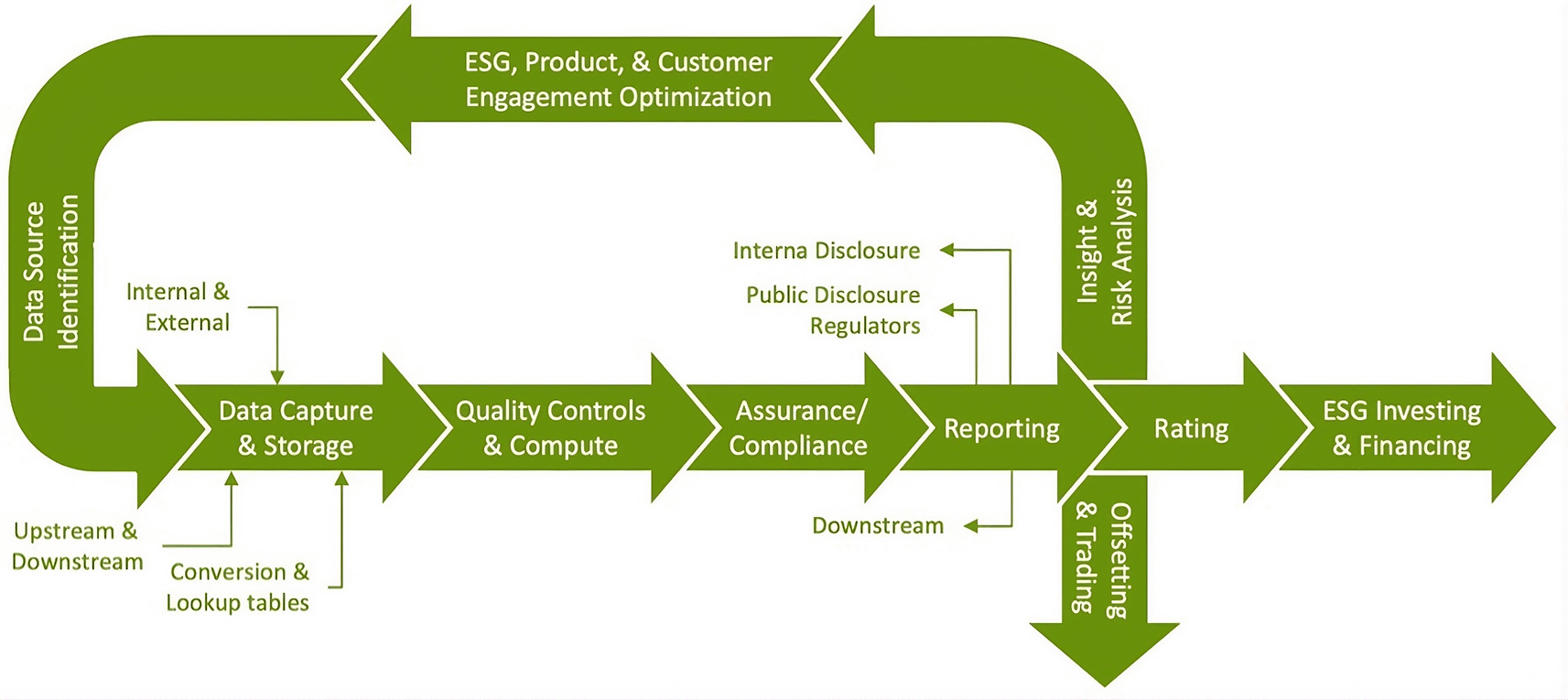
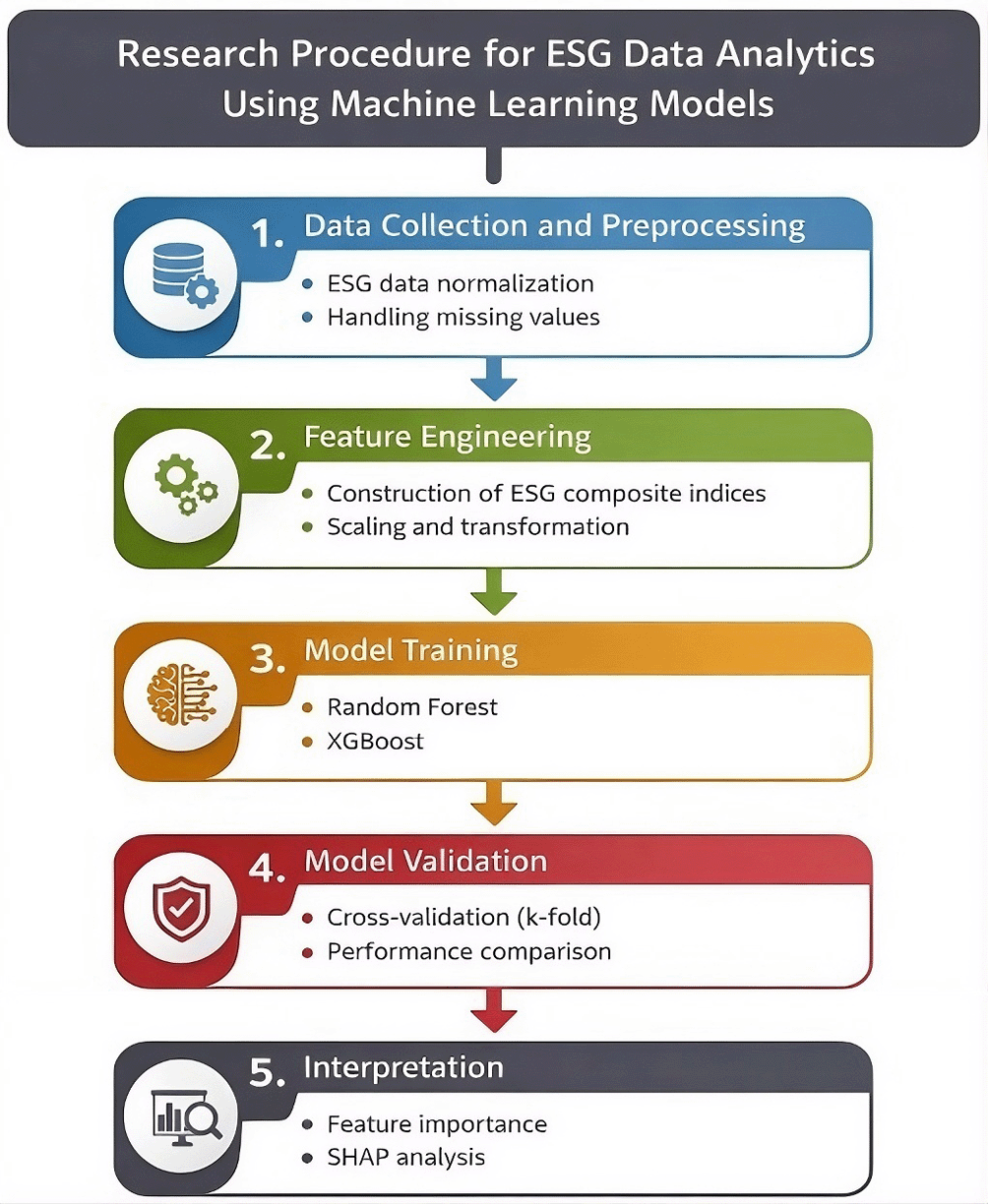
Figure 3 illustrates the structured research procedure adopted in this study, encompassing five sequential stages: data collection and preprocessing, feature engineering, model training, model validation, and interpretation. The process begins with ESG data normalization and missing value handling to ensure data quality and consistency. Subsequently, feature engineering transforms raw ESG indicators into composite indices and standardized variables suitable for machine learning models. The model training stage employs ensemble learning techniques, namely Random Forest and XGBoost, to capture complex and nonlinear relationships within ESG data. Model validation is conducted using k-fold cross-validation and performance comparison based on established evaluation metrics, including MAE, RMSE, and R2. Finally, the interpretation stage utilizes feature importance and SHAP analysis to enhance model transparency and explainability. This framework reflects a data-driven and AI-enabled approach to sustainability analytics, aligning with prior studies emphasizing the importance of integrating machine learning into ESG analysis and decision-making processes (Lee et al., 2022; Li, 2025; Patel et al., 2026). It also highlights the critical role of explainable AI in improving the interpretability and reliability of sustainability models (Davidescu et al., 2025).
As shown in Table 2, ESG accounting exhibits a strong positive correlation with sustainable value creation (r = 0.68) and data analytics capability (r = 0.62), providing initial support for H1 and H2. Furthermore, data analytics capability shows the strongest correlation with value creation (r = 0.71), reinforcing its mediating role (H4). These findings are consistent with prior studies emphasizing the role of ESG and digital capabilities in enhancing firm performance (Kwilinski et al., 2023; Pesqueira & Sousa, 2024).
Based on the evaluation metrics defined in Equations (MAE, RMSE, and R2) in the Methods section, Table 3 shows that XGBoost achieves the lowest prediction error (MAE = 3.95; RMSE = 5.21) and the highest explanatory power (R2 = 0.87). This confirms that XGBoost more effectively minimizes the loss function, compared to Random Forest and linear regression. The results validate H5, indicating that machine learning models capture nonlinear relationships more effectively than traditional models (Lee et al., 2022; Li, 2025).
As presented in Table 4, ESG Governance contributes the highest gain (26.3%), indicating its dominant role in reducing prediction error within the XGBoost model. Data analytics capability also shows substantial importance (22.1%), confirming its role as a key mediator (H4). The results support findings from Gomes et al. (2025) and Saxena et al. (2022), emphasizing governance and analytics as central drivers of sustainability performance.
Table 5 demonstrates that ESG accounting has both direct (0.42) and indirect effects (0.29) on sustainable value creation through data analytics capability. The total effect (0.71) confirms a strong mediation mechanism, supporting H4. This result aligns with prior research suggesting that ESG data must be processed through analytics to generate value (Soni, 2025; Patel et al., 2026).
As shown in Table 6, the relationship between ESG and value creation follows a sigmoid pattern, indicating that ESG initiatives only produce substantial value after reaching a critical threshold (~60). Similarly, data analytics capability exhibits increasing returns, confirming nonlinear dynamics as hypothesized in H5. These findings are consistent with Sun & Lim (2026) and Li (2025).
Table 7 shows that increasing the number of trees improves model stability and accuracy. However, the marginal improvement decreases beyond 100 trees, indicating convergence. This supports the robustness of ensemble learning in ESG prediction (Siswoyo et al., 2025).
As shown in Table 8, XGBoost achieves the best balance between predictive accuracy and nonlinear modeling capability, confirming its suitability for ESG and sustainability analysis. This supports H5 and H6, demonstrating that AI-driven models enhance analytical performance (Davidescu et al., 2025; Patel et al., 2026).
This study provides important insights into how ESG accounting, data analytics capability, and machine learning jointly shape sustainable value creation within digital business ecosystems. By integrating these dimensions into a unified quantitative framework, the findings extend prior research that has largely examined these constructs in isolation.
First, the results in Table 2 and Table 5 confirm that ESG accounting has both direct and indirect effects on sustainable value creation, with a total effect of 0.71. This finding reinforces the argument that ESG practices are not merely compliance mechanisms but strategic drivers of firm value (Nasution et al., 2026). Moreover, the strong correlation between ESG and value creation (r = 0.68) supports the view that sustainability-oriented accounting enhances stakeholder trust and long-term performance. This aligns with Li et al. (2023), who highlight that ESG practices in digital platforms generate value beyond purely economic outcomes, including social and environmental benefits.
Second, this study highlights the critical mediating role of data analytics capability, as evidenced in Table 5, where ESG influences value creation significantly through analytics (indirect effect = 0.29). This finding addresses a key gap in the literature by demonstrating that ESG data alone is insufficient unless supported by advanced analytical capabilities. The result corroborates prior studies emphasizing the importance of big data analytics in enhancing sustainable performance (Ertz et al., 2025) and aligns with Petcu et al. (2024), who argue that digital technologies are essential for effective sustainability accounting and reporting.
Third, the findings from Table 3 and Table 8 provide strong empirical evidence that machine learning models outperform traditional linear approaches, with XGBoost achieving the highest explanatory power (R2 = 0.87). This confirms that relationships among ESG, analytics, and value creation are inherently nonlinear and complex, as further demonstrated in Table 6. These results extend the work of Jaiswal et al. (2025), who emphasize the importance of machine learning in ESG-based decision-making, and support Wenhua et al. (2025), who highlight the role of AI-driven environmental accounting in improving strategic outcomes.
Importantly, the nonlinear patterns identified in Table 6, particularly the ESG threshold effect (≈60), suggest that sustainability initiatives only yield substantial value after reaching a certain maturity level. This finding provides a nuanced contribution to the literature by moving beyond linear assumptions commonly found in prior studies. It also aligns with Jahanbakhsh (2025), who argues that ESG transformation requires a strategic and integrated approach rather than incremental improvements.
Fourth, the feature importance analysis in Table 4 reveals that governance and data analytics capability are the most influential predictors of sustainable value creation. This underscores the importance of institutional structures and data-driven decision-making in digital ecosystems. The prominence of governance is consistent with the view that effective ESG implementation depends on strong organizational oversight and transparency mechanisms (Nasution et al., 2026). At the same time, the significant role of analytics capability reflects the increasing reliance on AI and digital tools in sustainability management (Manta et al., 2026).
Fifth, the findings contribute to the emerging literature on AI-enabled sustainable business models. The integration of machine learning into ESG analysis demonstrates how firms can leverage intelligent systems to enhance sustainability outcomes. This supports Böttcher et al. (2024), who argue that digital technologies are central to embedding sustainability into business models, and extends the discussion by providing empirical evidence on how AI can operationalize this integration. Furthermore, the results align with broader perspectives on digital innovation and sustainability integration, which emphasize the role of advanced technologies in driving systemic change (Jahanbakhsh, 2025).
This study makes three key theoretical contributions:
1. Integration of ESG Accounting and Digital Analytics
It advances sustainability accounting literature by linking ESG metrics with data analytics capability within a unified framework, addressing fragmentation in prior research.
2. Nonlinear Modeling of Sustainability Relationships
By applying machine learning, this study demonstrates that ESG–value relationships are nonlinear, challenging traditional linear assumptions in accounting and finance research.
3. AI-Driven Sustainability Framework
The study contributes to the growing field of AI-enabled sustainability by providing empirical evidence on how machine learning enhances ESG-based value creation.
From a managerial perspective, the findings suggest that firms should: Invest in data analytics and AI capabilities to maximize the value of ESG initiatives. Focus on governance quality as a key driver of sustainability performance. Recognize that ESG benefits emerge after reaching a critical threshold, requiring long-term commitment.
This study successfully addresses the gaps identified earlier by: Integrating ESG accounting, data analytics, and AI into a single model. Demonstrating nonlinear relationships using machine learning. Providing empirical evidence on sustainable value creation in digital ecosystems Thus, it moves beyond prior conceptual and fragmented approaches toward a holistic, data-driven, and predictive framework for sustainability research.
This study develops a machine learning-based quantitative framework to examine the relationships between ESG accounting, data analytics capability, and sustainable value creation within digital business ecosystems. The findings demonstrate that ESG accounting significantly influences sustainable value creation both directly and indirectly through data analytics capability. More importantly, the results reveal that these relationships are nonlinear, with machine learning models particularly XGBoost providing superior predictive performance compared to traditional linear approaches.
The study also identifies governance and data analytics capability as the most influential drivers of sustainable value creation, highlighting the critical role of institutional quality and data-driven decision-making in digital environments. Furthermore, the presence of threshold effects in ESG performance suggests that sustainability initiatives require a certain level of maturity before generating substantial value.
Overall, this research advances the literature by integrating ESG accounting, digital analytics, and artificial intelligence into a unified, data-driven framework. It provides empirical evidence that sustainable value creation in digital business ecosystems is fundamentally shaped by the interaction between accounting systems, technological capabilities, and intelligent analytics.
The findings of this study offer several important implications for policymakers, regulators, and business leaders in promoting sustainability within digital economies. First, policymakers should encourage the adoption of standardized ESG accounting frameworks that are compatible with digital reporting systems. Integrating ESG metrics into digital infrastructures will enhance transparency, comparability, and accountability across firms. Second, governments and regulatory bodies need to support the development of data analytics and AI capabilities, particularly among small and medium-sized enterprises (SMEs). Public investment in digital infrastructure, data ecosystems, and AI literacy can significantly improve firms’ ability to leverage ESG data for sustainable decision-making. Third, regulatory frameworks should promote the use of AI and machine learning in sustainability assessment, while ensuring ethical standards, data governance, and algorithmic transparency. This is essential to balance innovation with accountability in AI-driven sustainability practices. Fourth, the identification of ESG threshold effects suggests that sustainability policies should adopt a long-term perspective, providing incentives for firms to reach critical levels of ESG performance rather than focusing solely on short-term compliance.
Cross sector collaboration particularly through triple helix models (government–industry–academia) should be strengthened to accelerate innovation in sustainable digital ecosystems and foster data-driven value creation.
Despite its contributions, this study has several limitations that provide opportunities for future research. First, the study relies on secondary ESG and firm-level data, which may be subject to reporting bias and differences in ESG measurement standards. Future studies could incorporate primary data or alternative ESG scoring methods to enhance robustness. Second, while this study employs advanced machine learning models, it focuses primarily on tree-based algorithms (Random Forest and XGBoost). Future research could explore deep learning models, such as neural networks, to capture more complex patterns in sustainability data. Third, the analysis is conducted at the firm level and does not fully capture ecosystem-level dynamics, such as interactions among multiple stakeholders within digital platforms. Future studies could adopt network analysis or system dynamics approaches to better understand these interactions. Fourth, although this study identifies nonlinear relationships and threshold effects, it does not explicitly examine causal mechanisms. Future research could integrate causal inference techniques, such as quasi-experimental designs or hybrid ML-econometric models.
Future research could extend this framework to specific sectors such as fintech, manufacturing, or platform economies or conduct cross-country comparative studies to explore institutional and contextual differences in ESG-driven value creation.
| Views | Downloads | |
|---|---|---|
| F1000Research | - | - |
|
PubMed Central
Data from PMC are received and updated monthly.
|
- | - |
Provide sufficient details of any financial or non-financial competing interests to enable users to assess whether your comments might lead a reasonable person to question your impartiality. Consider the following examples, but note that this is not an exhaustive list:
Sign up for content alerts and receive a weekly or monthly email with all newly published articles
Already registered? Sign in
The email address should be the one you originally registered with F1000.
You registered with F1000 via Google, so we cannot reset your password.
To sign in, please click here.
If you still need help with your Google account password, please click here.
You registered with F1000 via Facebook, so we cannot reset your password.
To sign in, please click here.
If you still need help with your Facebook account password, please click here.
If your email address is registered with us, we will email you instructions to reset your password.
If you think you should have received this email but it has not arrived, please check your spam filters and/or contact for further assistance.

Comments on this article Comments (0)