Keywords
Crowd wisdom; Entrepreneurial intention; Theory of Planned Behavior; Entrepreneurship education; Mentoring; Peer learning.

Crowd wisdom; Entrepreneurial intention; Theory of Planned Behavior; Entrepreneurship education; Mentoring; Peer learning.
The term “crowd wisdom” refers to the collective intelligence of a group of people working together to solve a problem or make a decision. (Busse, 2019). Recently, interest has grown in how the wisdom of crowds might influence decision-making across various disciplines, including business. Quite a few studies have examined the connection between the crowd’s wisdom and the desire to start a business (Y. M. Wang et al., 2021). Entrepreneurs who participated in crowdsourcing competitions were more likely to have a greater intention to launch a new business (Busse, 2019). Therefore, the relationship between the audience’s knowledge and the entrepreneurs’ wants appears complicated and reliant on circumstance (Busse, 2019; De Souza et al., 2016; Y. M. Wang et al., 2021). Studying additional aspects that contribute to this relationship is vital if business owners hope to successfully tap into their customers’ collective intelligence. Whereas existing research predominantly focuses on personal psychological factors, such as self-efficacy, in the context of entrepreneurial intention, this study takes a unique approach. Hence, it seeks to address a critical gap by considering insights derived from the crowd in informing these intentions. As firms increasingly tap into collective intelligence, insights into the role of crowd wisdom on entrepreneurial intention are essential, and this study plays a vital part in this, especially in a digital economy.
Several studies have also examined how various forms of crowd wisdom might affect business owners’ decisions. For instance, the quality of advice from online peer networks positively increased entrepreneurial inclinations (Woraphiphat & Roopsuwankun, 2023). Past researchers have examined the impact of exposure to various crowdfunding initiatives, such as equity and reward-based (Y. M. Wang et al., 2021; Woraphiphat & Roopsuwankun, 2023). Furthermore, some research has examined the psychological mechanisms by which crowd wisdom may influence business owners’ actions. It was observed that participants’ self-efficacy and, consequently, their entrepreneurial inclinations were boosted when exposed to positive comments on a crowdsourcing platform (De Souza et al., 2016). However, it is essential to note that the crowd’s wisdom may also have some potential negatives for business owners. Crowdsourcing sites remained more inclined to perceive decision weakness, thereby reducing their capacity to make judgments that were actually in their best interests (De Souza et al., 2016; Y. M. Wang et al., 2021). The link between the crowd’s wisdom and the entrepreneurs’ objectives is a complex relationship that depends on several factors (Geng et al., 2022; Woraphiphat & Roopsuwankun, 2023). While earlier research shows how crowdsourcing and online communities affect business results, little is known about how crowd wisdom mainly affects entrepreneurial intentions. This study fills this need by experimentally examining how guest speakers, mentoring programs, and peer-to-peer learning influence entrepreneurial intent—dimensions of crowd wisdom.
In this context, this study offers three key contributions. First, it defines crowd wisdom as a second-order latent construct comprising guest speakers, mentoring programs and peer-to-peer learning - a definition previously unaddressed. Second, it expands the Theory of Planned Behavior by proposing crowd wisdom as an independent contextual variable that influences subjective norms and attitudes towards entrepreneurship. Third, it offers empirical evidence from a university environment in a developing country (Bangladesh), where crowd-based learning mechanisms are becoming pertinent to entrepreneurship policy but have not been empirically studied. The rest of the paper is organised as follows: Section 2 briefly reviews prior literature and proposes the hypothesis; Section 3 outlines the research design; Section 4 reports the data analysis; and Section 5 offers discussion, implications, and avenues for future research.
The concept of crowd wisdom — broadly defined as the collective intelligence that emerges when diverse groups collaborate to solve problems or make decisions — has garnered significant scholarly attention as a source of valuable insight for organizational and entrepreneurial decision-making (Troise, 2020). Researchers have investigated the role of collective intelligence in various settings, including guest speakers, mentor programs, and peer-to-peer learning. On the other hand, surprisingly little is known about how the crowd’s wisdom influences would-be students’ decisions to launch a new enterprise. A number of studies have been conducted to explore the correlation between crowd wisdom and entrepreneurs’ intentions. Indicatively, it was found that engagement on social media and in online communities may be more inclined towards the intention of entrepreneurs to start a new business (Cai et al., 2021; Troise, 2020). Online communities can also help entrepreneurs by providing them with knowledge, tools, and social support, all of which are required to start and develop a new business. Likewise, entrepreneurs who participate in crowdfunding campaigns may receive feedback and encouragement from readers, which may boost their motivation and confidence (Elitzur & Solodoha, 2021; Woraphiphat & Roopsuwankun, 2023). The literature has investigated the impact of specific features of crowd wisdom. The variety of opinions in online communities can positively influence entrepreneurs’ intentions (Saengchai & Sutduean, 2019). The negative effect of the student on the decision of the entrepreneurs creates a sense of rivalry and decreases the perceived uniqueness of the initiative (Saengchai & Sutduean, 2019; Y. M. Wang et al., 2021). Therefore, these studies offer helpful new perspectives on the connections between crowd wisdom and entrepreneurs’ intentions. In addition, there have yet to be many studies done on the methods through which the wisdom of the public might impact the purpose of business owners, such as the function of social comparison, social identification, and social learning (Busse, 2019; De Souza et al., 2016; Saengchai & Sutduean, 2019; Woraphiphat & Roopsuwankun, 2023). Indeed, the following factors of crowd wisdom and entrepreneurs’ intention literature reviews have been extended. This research paper extends Ajzen’s Theory of Planned Behavior (TPB) to enter the conversation on entrepreneurial intention, making a significant contribution to the field. While the TPB identifies attitudes, subjective norms, and perceived behavioral control as predictors of intention, our study suggests that crowd wisdom acts as a contextual element changing subjective norms and individual attitudes. This extension of the TPB is a crucial aspect of our research, enhancing crowdsourcing and the body of knowledge on entrepreneurship.
Crowd wisdom allows people to share their experiences, viewpoints, and insights; crowd wisdom can be an excellent resource for entrepreneurship education by generating three dimensions: guest speakers, mentoring programs, and peer-to-peer learning (De Souza et al., 2016; Geng et al., 2022; Lu et al., 2017; Woraphiphat & Roopsuwankun, 2023). Thus, these are just a few examples of how crowd wisdom can be used to convey entrepreneurship.
Guest Speakers - Invite successful business founders to share with students the reality about starting and sustaining a business (Sahedan et al., 2020). The key speakers will have an opportunity to share their experiences, provide recommendations, and respond to audience questions. The contributions of guest speakers have a significant influence on crowd wisdom because they offer new ideas, sharing their knowledge and experience, and stimulate discussion among the audience (Sahedan et al., 2020; Sjögren & Yusuf, 2021). Overall, the knowledge held by the crowd can be influenced by guest speakers through offering new information, provoking discussion, and serving as role models (Onjewu et al., 2021; Sahedan et al., 2020; Sjögren & Yusuf, 2021). By inviting guest speakers with diverse experiences and backgrounds, organizations can not only improve their quality decision-making processes but also encourage their audience to agree with their goals and aspirations. Hence, the higher-order hypothesis is as follows:
Guest speakers, as a dimension of crowd wisdom, positively affect entrepreneurial intention.
Mentoring Programs – Students should be offered mentoring opportunities with experienced entrepreneurs who can offer appropriate advice and support during their start-up process (Jaiswal, 2020). Mentors may contribute to the development of business ideas, connect students with the right resources, and offer guidance based on their experiences (Jaiswal, 2020; Onjewu et al., 2021). Mentoring programs have become increasingly popular as an excellent tool to develop and nurture entrepreneurial objectives and ambitions (DuBois et al., 2011). Similarly, research involving immigrant entrepreneurs and recent college graduates in developing countries reports that formal mentorship programs enhance entrepreneurial self-efficacy, networking and attractiveness of entrepreneurship (Nowiński et al., 2019; Onjewu et al., 2021). These consistent findings confirm that mentoring is an effective approach to building entrepreneurial intent in diverse institutional and cultural settings. Therefore, the higher-order hypothesis is as follows:
Mentoring programs, as a dimension of crowd wisdom, positively influence entrepreneurial intention.
Peer-to-Peer Learning– Peer-to-peer learning for entrepreneurship is a collaborative learning strategy in which prospective or early-stage business owners join together to share information, insights, and knowledge about launching and operating a company (Markussen & Røed, 2017; G. Wang et al., 2019). It entails utilizing the group’s collective knowledge, viewpoints, and peer help to improve entrepreneurial skills, problem-solving techniques, and business development tactics (Markussen & Røed, 2017). By sharing their knowledge and personal observations, students can learn from others’ knowledge and observations and gain a more profound understanding of entrepreneurship (Onjewu et al., 2021). Peer-to-peer learning is a type of collaborative learning in which individuals with similar knowledge or skill levels gather to discuss and share knowledge, ideas, and skills (Markussen & Røed, 2017; Onjewu et al., 2021; G. Wang et al., 2019). This method of teaching gives much attention to interaction and engagement among all the participants, creating a dynamic learning environment. It can take place in a range of settings, including classrooms, workplaces, the Internet, and in schools (DuBois et al., 2011; Sahedan et al., 2020). Therefore, the higher-order hypothesis is as follows:
Peer-to-peer learning, as a dimension of crowd wisdom, positively influences entrepreneurial intention.
Entrepreneurial intention has been recognized as the most proximal cognitive predictor of entrepreneurial behavior, which plays a crucial connection between individual cognition and venture creation. Intention, based on the Theory of Planned Behavior (TPB), is defined as the result of three theoretically different but interconnected determinants: attitude towards the behavior, subjective norms and the perceived behavioral control. In the entrepreneurial domain, attitude encompasses the extent to which one has a positive or negative assessment of the value of initiating a new venture; subjective norms include the perceived social expectations and normative pressures of salient referents, such as family members, peers and role models in entrepreneurship; and perceived behavioral control represents a perceived ability and self-efficacy to carry out entrepreneurial activities.
Crowd wisdom can positively impact business objectives and decision-making (Moritz & Block, 2015; Pavlidou et al., 2020). An entrepreneur’s vision and actions may be influenced by other persons’ collective knowledge and insights (Kitano, 2017). Entrepreneurs should carefully study and assess the crowd wisdom they get, considering the sources’ veracity, authenticity, and applicability (Franke et al., 2009; Pavlidou et al., 2020). Crowd wisdom can be an invaluable source of information, yet to ensure it is applicable to the entrepreneurial context, it is essential to subject it to critical analysis and contextualization (Pavlidou et al., 2020). Crowd wisdom can affect entrepreneurs’ goals by providing feedback and validation, market insights, product and process innovation, risk mitigation, resource discovery, improved decision-making, and networking (Busse, 2019; Geng et al., 2022; Lu et al., 2017; Pavlidou et al., 2020). Thus, influence is the capacity to persuade or convince others to behave or act in a specific way, while impact is the consequence, effect or ramifications resulting from an event (Franke et al., 2009; Moritz & Block, 2015; Onjewu et al., 2021; Pavlidou et al., 2020; Piller & Walcher, 2006). Therefore, the following central hypothesis is developed from the above literature, which has identified the variables that are:
Crowd wisdom and entrepreneurs’ intentions to launch a business have a strong positive relationship.
Following the literature review, a deductive approach was used to establish the conceptual framework ( Figure 1) linking the two variables. The predictor variable is represented by crowd wisdom, measured by three dimensions (guest speakers, mentoring programs, and peer-to-peer learning). The second variable is the entrepreneurs’ intention, which counts as a response variable. However, the predictor variable is displayed in second order, and the response variable comes in first order. Therefore, the following conceptual framework is drawn from the research structural equation model (SEM) and tested using Amos software to evaluate the survey data, with results approved for statistical significance in the analysis.
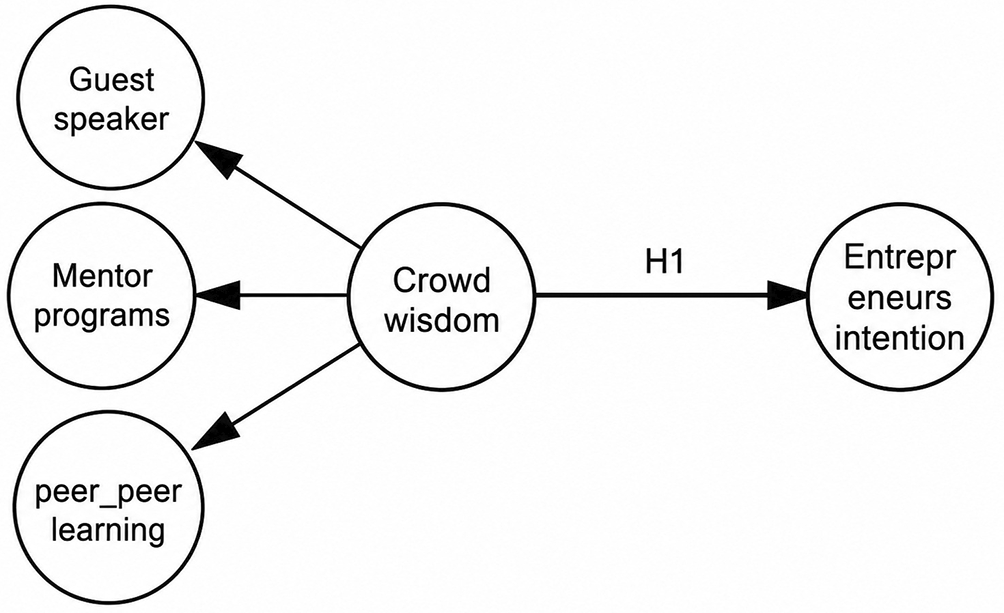
Legend: The conceptual model of the hypothesized relationships between crowd wisdom and entrepreneurial intention is shown in Figure 1. Crowd wisdom is treated as a second-order latent construct with three first-order latent variables, namely guest speakers (H1a), mentoring programs (H1b) and peer-to-peer learning (H1c). Based on this, the central hypothesis (H1) is proposed that there is a direct positive relationship between crowd wisdom and entrepreneurial intention.
Source: Data from the literature search conducted by the authors.
The compass of the methodology was a systematic process of classifying, screening, and analyzing the research findings (Mia, Rizwan, et al., 2022a; Patel & Patel, 2019). There are three common paradigms in social science research: qualitative, quantitative, and mixed methods (Hair Jr. et al., 2017; Iqbal & Mia, 2020). The SEM approach supplements the conceptual framework commonly utilized in business and social sciences to develop models or test hypotheses (Hair et al., 2014; Hair Jr. et al., 2017). The research design used in the study is a quantitative research design, which is appropriate for testing theoretically based relationships via covariance-based structural equation modeling (CB-SEM) (Mia, Zayed, et al., 2022b; PH. and Chang, 2009). The suggested idea was tested empirically in terms of IBM SPSS Statistics to preliminarily analyze the data and IBM SPSS AMOS to estimate the structural model, which allowed the strict evaluation of both measurement and structural elements (Iqbal & Mia, 2021).
Primary data collection was conducted between September 2025 and November 2025, following ethical approval (approval number 002130/DBA019, dated August 09, 2025). However, primary data were gathered through a survey-based method, which systematically collects quantifiable information from a sample of the population and provides strong statistics. A closed-ended questionnaire comprising structured questions was created after a review of a wide range of literature. All constructs were also measured using a five-item Likert scale ranging from 1 (strongly disagree) to 5 (strongly agree), which is one of the most common tools for measuring the attitude and perception of respondents (Boone & Boone, 2012; Hair et al., 2014).
To ensure an appropriate representation of all the relevant subgroups within the target population, which was the students of the Faculty of Business and Entrepreneurship at Daffodil International University, a stratified random sampling was used. This method increases the representativeness and generalizability of the sample by capturing heterogeneity among the strata (Abdelfatah & Mazloum, 2016; Boone & Boone, 2012; Hair et al., 2014). It can swiftly gather a sample that accurately reflects the population under study (Bornstein et al., 2013). In this study, a survey form was conducted for the chosen model. To analyze the data used by SPSS and Amos, statistical software was used to align with the research aim, using descriptive statistics and inferential statistical analysis. This work uses a structural equation modeling (SEM) technique since it is appropriate for evaluating sophisticated theoretical models and latent variable analysis. To reflect many points of view on entrepreneurial intention, the sample consists of 382 undergraduate business students stratified by age and gender. However, this study applies SEM to investigate crowd wisdom’s direct impact on entrepreneurial intention. Responses were scored using a consistent five-point Likert scale to ensure reliability.
All individual participants in this study gave their written informed consent before the study was conducted. All participants had been fully informed of the purpose and nature of the research, were assured that participation would be voluntary, and could withdraw at any time without any consequences, and that their information would be kept confidential and anonymous. Before data collection, participants gave their written consent. This study was conducted with university-level students, and no participant was under 18, as verified by the university’s records. There were no incentives, and participation was voluntary.
Data analysis is of two popular kinds, descriptive analysis and inferential statistics. The descriptive statistics examined the demographic factors; the inferential statistics assessed data normality, factor analysis, and internal consistency to test the structural model using a covariance-based structural equation model (CB-SEM), which will be shown below.
Descriptive statistics briefly summarize data’s fundamental characteristics in a study, including measures that describe the sample, written descriptions, or graphic representations (charts, tables, graphs). Descriptive statistics aims to summarise data in a way that is easy to understand. Table 1 presents the distribution of people by age group, by gender, using a crosstabulation of gender and age. Three age ranges are shown in Table 1: 18–20, 21–23, and 24–26. There are other totals for each gender and age group. The findings show that the sample comprises 382 people: 41% (154) are women and 59% (228) are men. The percentage distributions are calculated based on the number of individuals in each gender group. The age distribution of the male respondents is 85 ages 18–20, 78 ages 21–23, and 65 ages 24–26. Based on these numbers, 228 men responded. Conversely, 42 of the female respondents are aged 18–20, 60 are aged 21–23 and 52 are aged 24–26. These numbers amount to 154 female interviewees.
| Age | ||||||
|---|---|---|---|---|---|---|
| 18–20 | 21–23 | 24–26 | Total | |||
| Gender | male | 85 | 78 | 65 | 59% male | 228 |
| female | 42 | 60 | 52 | 41% female | 154 | |
| Total | 127 | 138 | 117 | 100% | 382 | |
Exploratory factor analysis (EFA)
Exploratory Factor Analysis (E.F.A.) is a statistical technique for identifying latent (unobserved) correlations between variables (Fabrigar et al., 1999). EFA primarily aims to reduce the number of observable variables to smaller latent components (Costello & Osborne, 2005). These variables are supposed to indicate underlying processes that explain the observed intercorrelations.
The Kaiser-Meyer-Olkin (KMO) measure, according to Table 2, is a statistical measure used to evaluate whether the data used in a factor analysis is adequate (Costello & Osborne, 2005). It focuses on how correlated the variables of the data are and how the variables can be utilized in identifying meaningful factors. The KMO measure is a 0–1 scale. The values that are nearer to 1 are a better indication of sufficient sampling (Costello & Osborne, 2005; Fabrigar et al., 1999). Here, the KMO measure = 0.881, which shows that the data are highly correlated and can be analyzed by factor analysis. This implies that the common variance between the variables is sufficient to yield useful factors.
| Kaiser-Meyer-Olkin Measure of Sampling Adequacy. | 0.881 | |
| Bartlett’s test of Sphericity | Approx. Chi-Square | 4600.183 |
| df | 190 | |
| Sig. | <0.001 | |
Bartlett’s test of Sphericity examines whether the correlation matrix is an identity matrix, indicating no correlations between variables (Hair et al., 2014). Suppose the p-value of the test is less than the chosen significance. In that case, the null hypothesis can be rejected, meaning that the variables are significantly correlated (Costello & Osborne, 2005; Hair et al., 2014). In this case, the p-value of Bartlett’s test is <0.001, which is less than 0.05. Therefore, we can reject the null hypothesis and conclude that the variables are significantly correlated. It supports factor analysis to extract meaningful significance from the data.
The rotated component matrix of Principal Component Analysis with Varimax rotation is shown in Table 3. Four factors were identified, matching the four constructs: Guest Speakers (GS), Mentoring Programs (MP), Peer-to-Peer Learning (PPL), and Entrepreneurial Intention (EI). For the Guest Speaker factor, two items (GS3 and GS5) showed the highest loadings (0.84 each), indicating a good fit. For the Mentoring Programs factor, the highest items were MP2 (0.89) and MP3 (0.85). Peer-to-Peer Learning saw its highest loadings on PPL3, PPL4, and PPL5 (all 0.80). Finally, the indicators for Entrepreneurial Intention were EI3 (0.86) and EI4 (0.82). All item loadings are above 0.60, and most are above 0.70, which is the accepted threshold for an item to be related to its underlying factor (Hair et al., 2014). There were no cross-loadings, confirming factorial distinctiveness. These findings confirm the factorial validity of the scale and suggest that the four constructs are distinct, allowing the next step in reliability assessment.
| Component | |||||
|---|---|---|---|---|---|
| 1 | 2 | 3 | 4 | ||
| GS1 | 0.67 | ||||
| GS2 | 0.78 | ||||
| GS3 | 0.84 | ||||
| GS4 | 0.78 | ||||
| GS5 | 0.84 | ||||
| MP1 | 0.82 | ||||
| MP2 | 0.89 | ||||
| MP3 | 0.85 | ||||
| MP4 | 0.78 | ||||
| MP5 | 0.71 | ||||
| PPL1 | 0.6 | ||||
| PPL2 | 0.7 | ||||
| PPL3 | 0.8 | ||||
| PPL4 | 0.8 | ||||
| PPL5 | 0.8 | ||||
| EI1 | 0.65 | ||||
| EI2 | 0.83 | ||||
| EI3 | 0.86 | ||||
| EI4 | 0.82 | ||||
| EI5 | 0.76 | ||||
Data Internal Consistency
Several statistical measures are used to evaluate internal consistency (Hair et al., 2014). Cronbach’s alpha, which provides an extent of the inner surface of a test or scale and is stated as a value between 0 and 1, is the one that is utilized the majority of the time (Santos, 1999). If the alpha value is more significant than 0.70, then the level of internal consistency can be regarded as good (Hair et al., 2014; Santos, 1999).
Table 4 shows that Cronbach’s alpha exceeds 0.70, indicating that all measured variables were reliable and further analysis, including testing the measurement model through confirmatory factor analysis, is possible. Hence, the discussion in the next section is based on it. Convergent validity was measured by Average Variance Extracted (AVE), all constructs yielded an AVE of above 0.50 (Guest Speakers: AVE = 0.61; Mentoring Programs: AVE = 0.64; Peer-to-Peer Learning: AVE = 0.60; Entrepreneurial Intention: AVE = 0.58), The Fornell-Larcker criterion was used to determine discriminant validity, with the square root of the AVE of each construct, larger than the correlations between it and the others. These results confirm the convergent and discriminant validity of the measurement model, indicating that the structural model should be tested.
Confirmatory factor analysis (CFA)
This is a statistical method to test a measurement model of a construct in CB-SEM (Covariance-Based Structural Equation Modeling) (Hair et al., 2014). CB-SEM is a statistical approach used to determine the relationships between latent and measured variables (unobserved constructs) (Iqbal & Mia, 2021). Model fit evaluation in CB-SEM assesses how well the CFA model fits the observed data. Popular fit indices include the chi-square test, the comparative fit index (CFI), the Tucker-Lewis index (TLI), the root mean square error of approximation (R.M.S.E.A.), and the standardized root mean square residual (S.R.M.R.) (Hair et al., 2014; Iqbal & Mia, 2021). Therefore, the appropriate indices should be interpreted to evaluate whether the model adequately matches the data.
CFA results (see Figure 2) indicate that the measurement model is well-fitting. The Goodness of Fit Index (GFI = 0.927) and Adjusted Goodness of Fit Index (AGFI = 0.906) are greater than the recommended 0.90. Comparative Fit Index (CFI = 0.969) and Tucker-Lewis Index (TLI = 0.964) exceed the recommended threshold of 0.90, indicating a good fit (Hu and Bentler, 1999). The Root Mean Square Error of Approximation (RMSEA = 0.048) is lower than the recommended level of 0.08 (Browne and Cudeck, 1992), and the CMIN/DF ratio (1.865) falls within the recommended range of 1–3. A combination of these indices suggests that the measurement model fits the data quite well; hence, it is reasonable to proceed to testing the structural model.
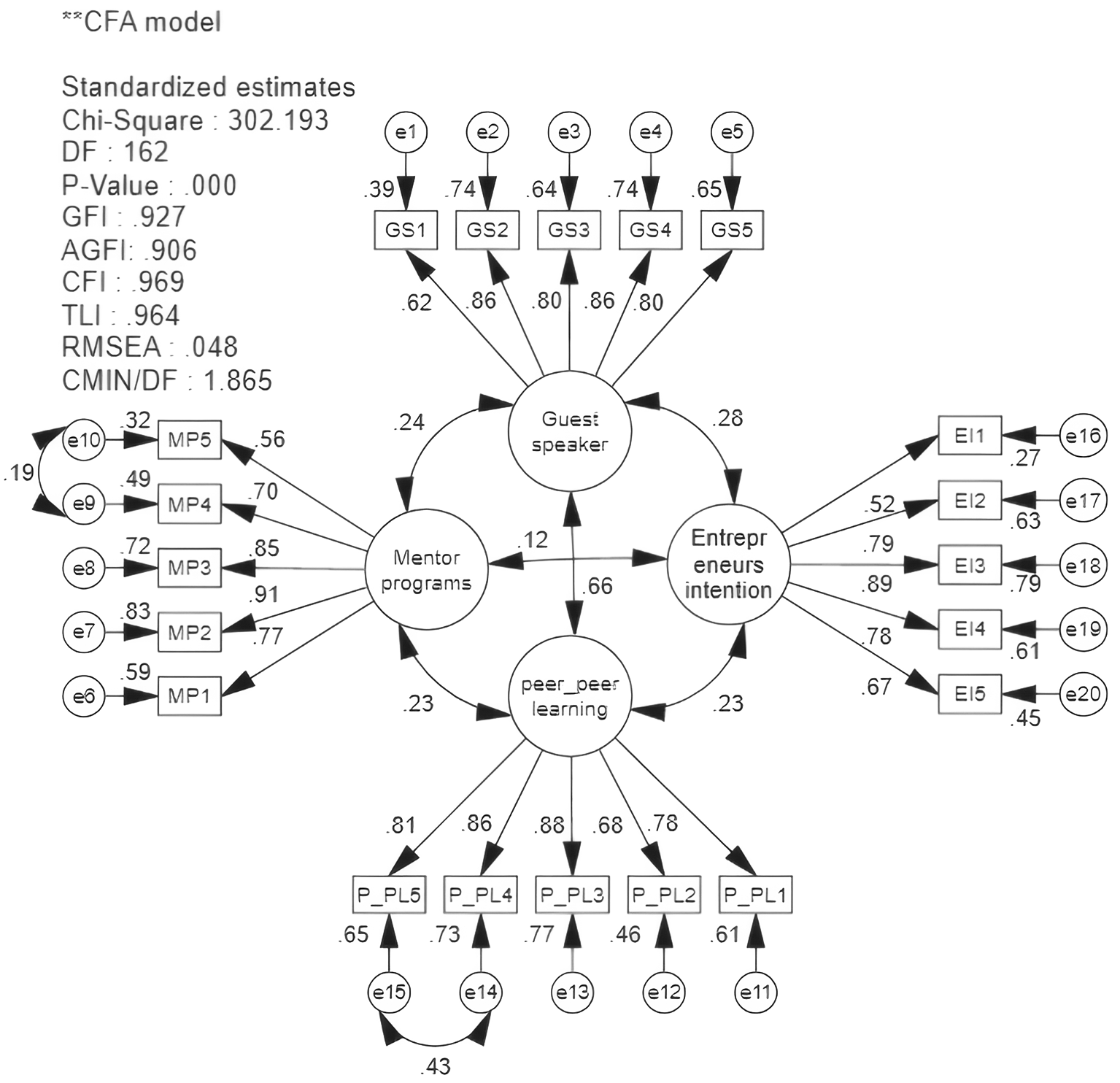
Legend: The result of the measurement model analysis for confirmatory factor analysis (CFA) is shown in Figure 2. The figure shows the factor loadings of all 20 observed variables on the four latent constructs: Guest Speakers (GS1 – GS5); Mentoring Programs (MP1 – MP5); Peer-to-Peer Learning (PPL1 – PPL5); Entrepreneurial Intention (EI1 – EI5). Model fit indices: GFI = 0.927, AGFI = 0.906, CFI = 0.969, TLI = 0.964, RMSEA = 0.048, CMIN/DF = 1.865. Convergent validity is confirmed by all standardizations having values greater than 0.50.
Source: Data from the survey provided by AMOS (IBM Corp., 2015).
CB-SEM
When a structural equation model, a covariance analysis, is considered, it fits the data well. The CMIN/DF ratio of 1.846 is less than the recommended value of 2, indicating a reasonable model fit, and the p-value of less than 0.001 indicates that the model fits much better than a null model (Kline & Kenny, 2005).
The goodness-of-fit measures also indicate a good model fit. The GPI of 0.927 and AGFI of 0.906 indicate an excellent fit of the model (Hu & Bentler, 1999). The two indices exceed the recommended cutoff of 0.90 (Hu & Bentler, 1999), and this means that the model fits well. The CFI is 0.969, and the TLI is 0.964. The RMSEA of 0.047 is also below the recommended cut-off level of 0.08, indicating that the model is useful in the investigation of the associations among the variables (Browne & Cudeck, 1992). Thus, the results of the covariance-based structural equation model analysis indicate that the model is useful and can be applied to study the associations between the variables.
Figure 3 and Table 5 present the results of the structural equation model, which evaluated three dimensions and one central hypothesis. All three dimensions and the central hypothesis received sufficient support from the approved data. The first dimension (Guest speaker <−-- Crowd wisdom) examined whether guest speakers influenced the crowd wisdom. A regression weight estimation of 1.00 indicates a perfectly positive association between guest speakers and crowd wisdom. It led to the acceptance of the idea.
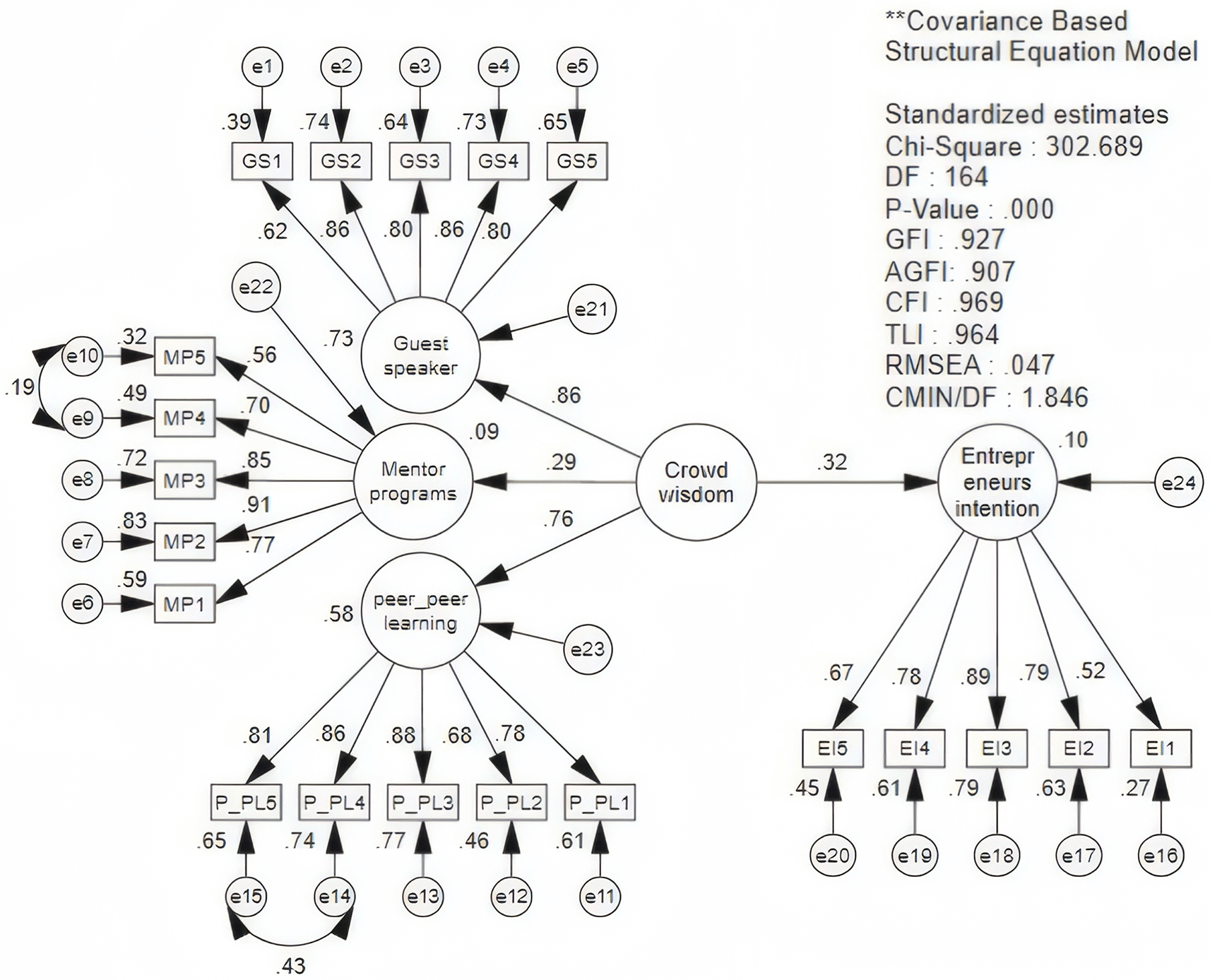
Legend: Hypothesized structural equation model that represents the second-order CB-SEM results. Crowd wisdom is represented as a second-order factor with three first-order dimensions: Guest Speakers (β = 1.00), Mentoring Programs (β = 0.289, CR = 4.398, p < 0.001), and Peer-to-Peer Learning (β = 0.905, CR = 6.332, p < 0.001). The relationship between crowd wisdom and entrepreneurial intention is significant (β = 0.297; CR = 4.636; p < 0.001), which supports the central hypothesis H1. Model fit indices: GFI = 0.927, AGFI = 0.906, CFI = 0.969, TLI = 0.964, RMSEA = 0.047, CMIN/DF = 1.846.
Source: AMOS (IBM Corp., 2015) is the source of the survey’s data output.
| Estimate | S.E. | C.R. | P-value | Remark | |
|---|---|---|---|---|---|
| Guest speaker <−-- Crowd wisdom | 1.00 estimate for regression weight | Higher- order supported | |||
| Mentor programs <−-- Crowd wisdom | 0.289 | 0.066 | 4.398 | *** | Higher-order supported |
| Peer-to-peer learning <−-- Crowd wisdom | 0.905 | 0.143 | 6.332 | *** | Higher-order supported |
| Entrepreneurs’ intention <−-- Crowd wisdom | 0.297 | 0.064 | 4.636 | *** | H1 is supported |
The second dimension (Mentor programs <−-- Crowd wisdom) tested the consensus-building potential of mentor programs. The critical ratio was 4.398, and the regression weight estimate was 0.289, significantly different from 1 at the 0.001 level. Therefore, the hypothesis was accepted, showing a favorable correlation between mentor programs and crowd wisdom.
The third dimension (Peer-to-peer learning <−-- Crowd wisdom) investigated their connection. At the 0.001 significance level, the estimated regression weight was 0.905, with a standard error of 0.143 and a critical ratio of 6.332. It supports the premise of a positive correlation between peer-to-peer learning and crowd wisdom.
Finally, in CB-SEM, the absolute value for the critical ratio becomes more significant than the critical value of 1.96 at a p-value of less than 0.05 (Bentler, 1990; Hair et al., 2014; Howard, 2013; Hu & Bentler, 1999; Iqbal & Mia, 2021). The hypothesis (Entrepreneurs’ intention <−-- Crowd wisdom) yielded a critical ratio of 4.636 and a standard error of 0.064, resulting in a final regression weight estimate of 0.297. These two values had a p-value <0.001, indicating they were statistically significant. However, the central hypothesis H1 was shown to be statistically significant.
Based on the findings, the study’s goal of exploring how crowd wisdom affects entrepreneurs’ intentions has been accomplished. The scale used to measure the constructs has good internal consistency and reliability, according to Cronbach’s alpha coefficient of 0.90. Furthermore, the confirmatory factor analysis findings show that the measurement model utilized in this study successfully matches the data.
The significant loading of guest speakers on the crowd wisdom construct (β = 1.00) supports the findings of Onjewu et al. (2021) and Sjögren and Yusuf (2021), who found that exposure to entrepreneurial role models boosts aspirational intentions among students. In the TPB model, guest speakers are driven primarily through the subjective norms channel, as peers’ knowledge of successful entrepreneurs reinforces the social desirability of entrepreneurship. The significant loading of mentoring programs (β = 0.289, CR = 4.398, p < 0.001) confirms the findings of DuBois et al. (2011) and that structured mentoring enhances entrepreneurial self-efficacy - a construct that parallels TPB’s perceived behavioral control. The peer-to-peer learning dimension (β = 0.905, CR = 6.332, p < 0.001) had the second-largest loading, corroborating Markussen and Røed (2017), who reported that peers act as a catalyst to institutionalize entrepreneurial behavior. These three dimensions validate that crowd wisdom is a multi-dimensional contextual predictor of entrepreneurial intention, which augments the TPB by moving from individual to community learning processes.
The findings also show that crowd knowledge significantly influences entrepreneurs’ intentions favorably. At the 0.05 level, all five regression coefficients for the three components of crowd wisdom (GS, MP, and PPL) are positive and statistically significant. It implies that those who seek out and apply crowd knowledge are more likely to have a more determined intent to engage in entrepreneurial endeavors. In general, the results underline the importance of crowd wisdom as a source of information on business mindsets. It implies that those more receptive to seeking and using crowd wisdom are more likely to be motivated to engage in entrepreneurial intentions. These findings significantly impact entrepreneurs and policymakers because they show that encouraging crowd wisdom can create an environment more conducive to entrepreneurship. In conclusion, the study indicates that crowd wisdom significantly impacts entrepreneurs’ intentions, as evidenced by the second-order SEM model’s use of crowd wisdom platforms.
This study has a limitation of a small sample size since it only included undergraduate students in one university. Therefore, caution should be exercised when interpreting the results. It is recommended that a larger and more representative sample should be employed in future studies. The data is also self-reported, making it a limitation. As with any self-reports, there might be social desirability problems, and participants might not have been absolutely honest and truthful in their reporting. It would be beneficial to have other methods, including observations or physiological measurements, to supplement self-reports in future research.
This study was conducted in accordance with the Declaration of Helsinki and local and national guidelines for research involving human subjects. The study received ethical approval from the Office of the Ethics Committee, Faculty of Business and Entrepreneurship, at Daffodil International University, with approval number 002130/DBA019, dated August 09, 2025. All procedures were conducted under conditions as specified in the approval.
| Views | Downloads | |
|---|---|---|
| F1000Research | - | - |
|
PubMed Central
Data from PMC are received and updated monthly.
|
- | - |
Provide sufficient details of any financial or non-financial competing interests to enable users to assess whether your comments might lead a reasonable person to question your impartiality. Consider the following examples, but note that this is not an exhaustive list:
Sign up for content alerts and receive a weekly or monthly email with all newly published articles
Already registered? Sign in
The email address should be the one you originally registered with F1000.
You registered with F1000 via Google, so we cannot reset your password.
To sign in, please click here.
If you still need help with your Google account password, please click here.
You registered with F1000 via Facebook, so we cannot reset your password.
To sign in, please click here.
If you still need help with your Facebook account password, please click here.
If your email address is registered with us, we will email you instructions to reset your password.
If you think you should have received this email but it has not arrived, please check your spam filters and/or contact for further assistance.

Comments on this article Comments (0)